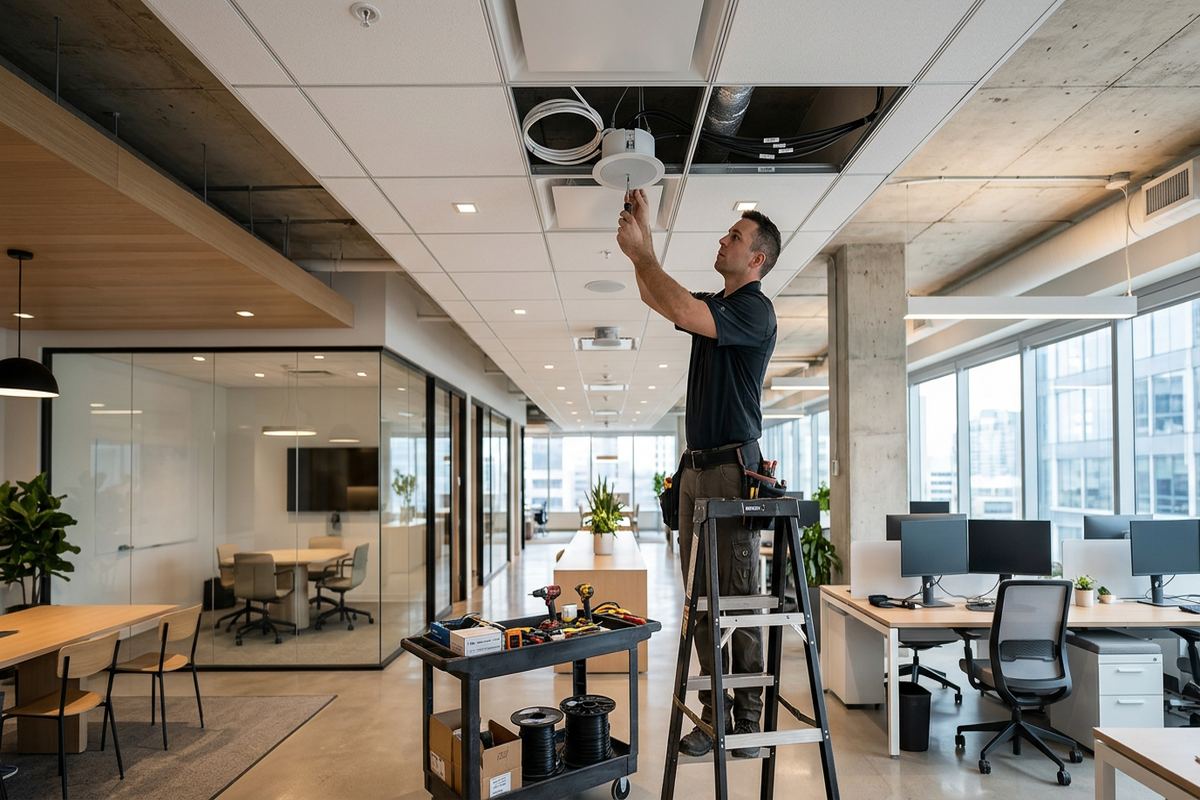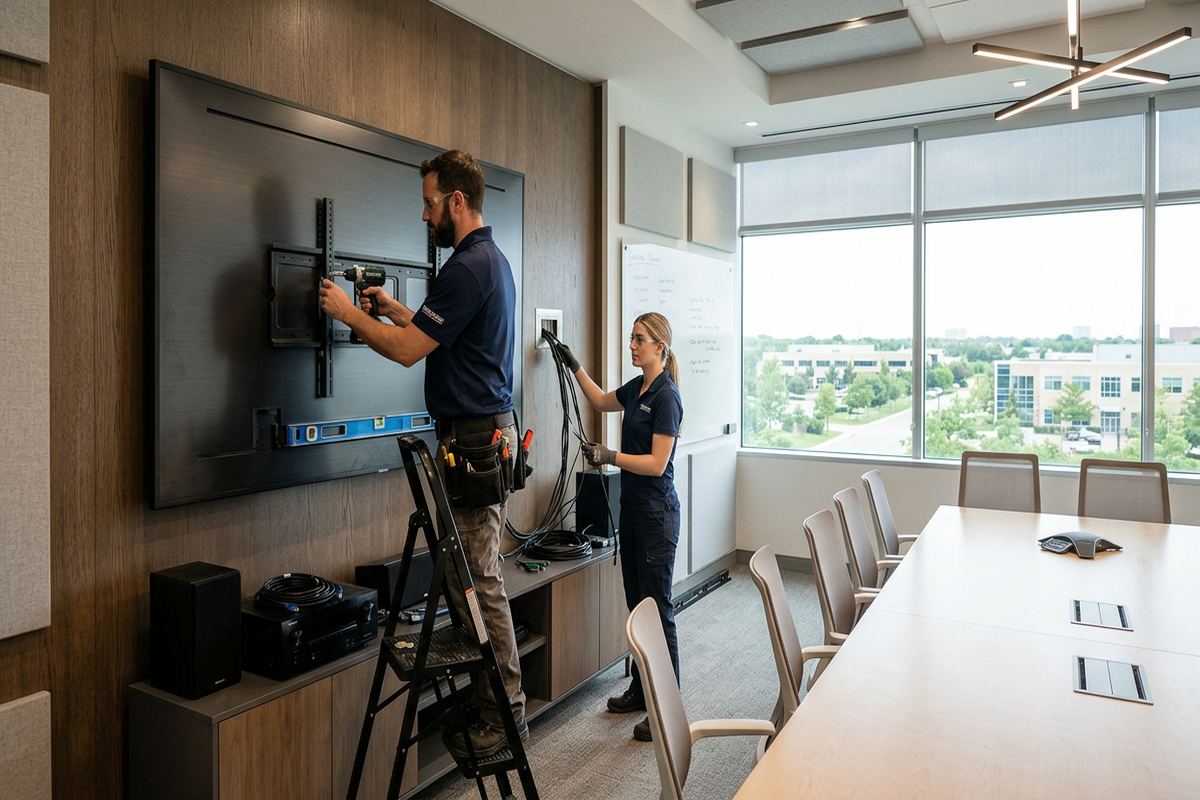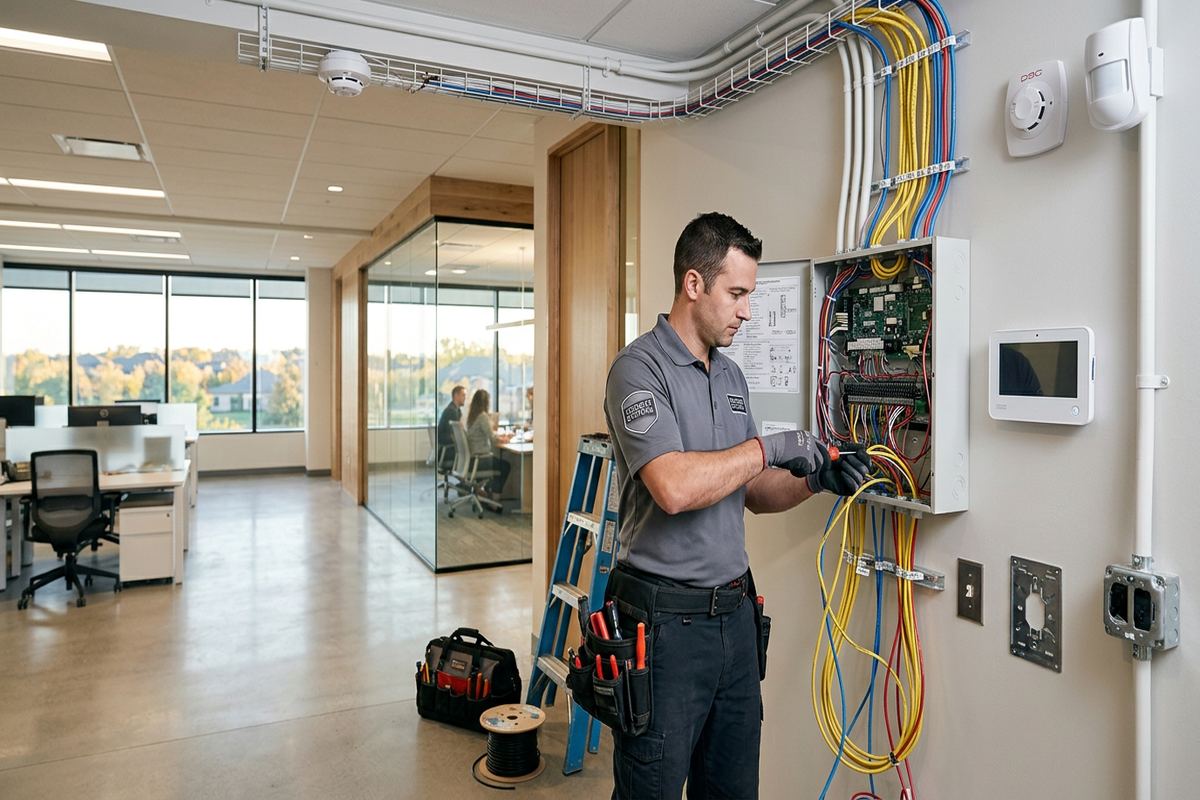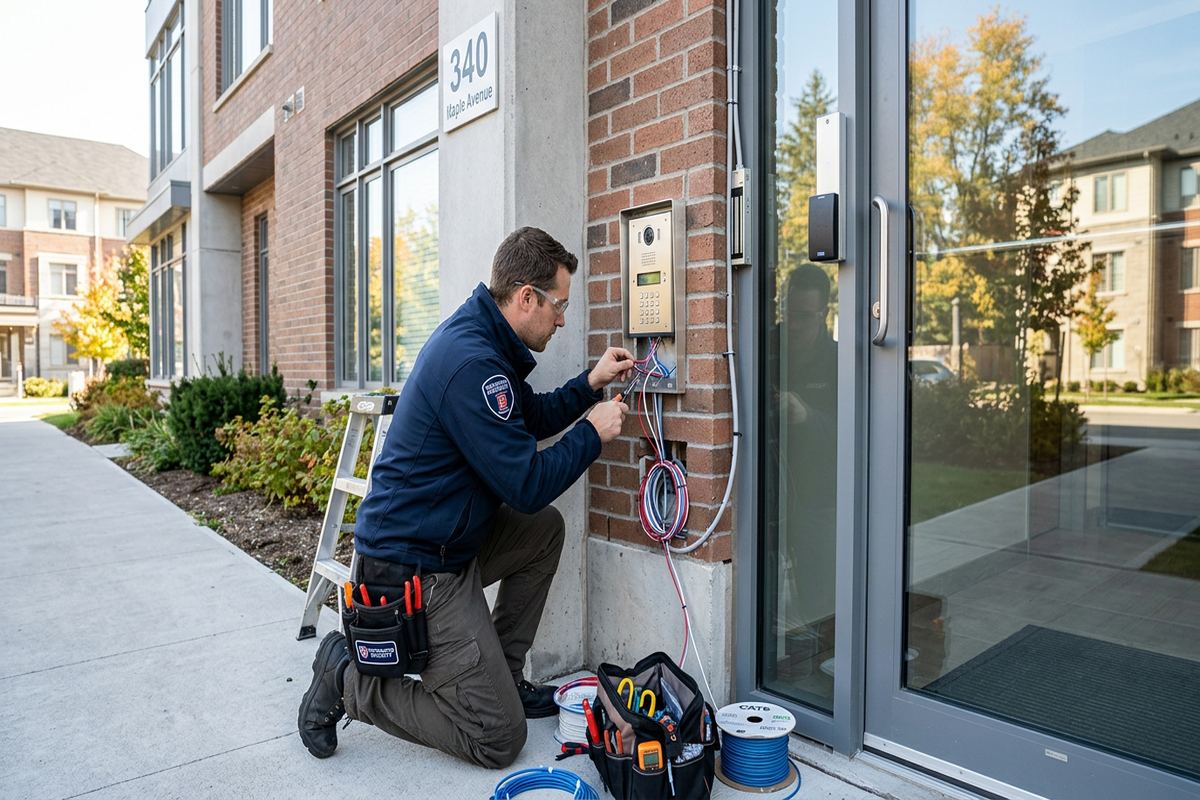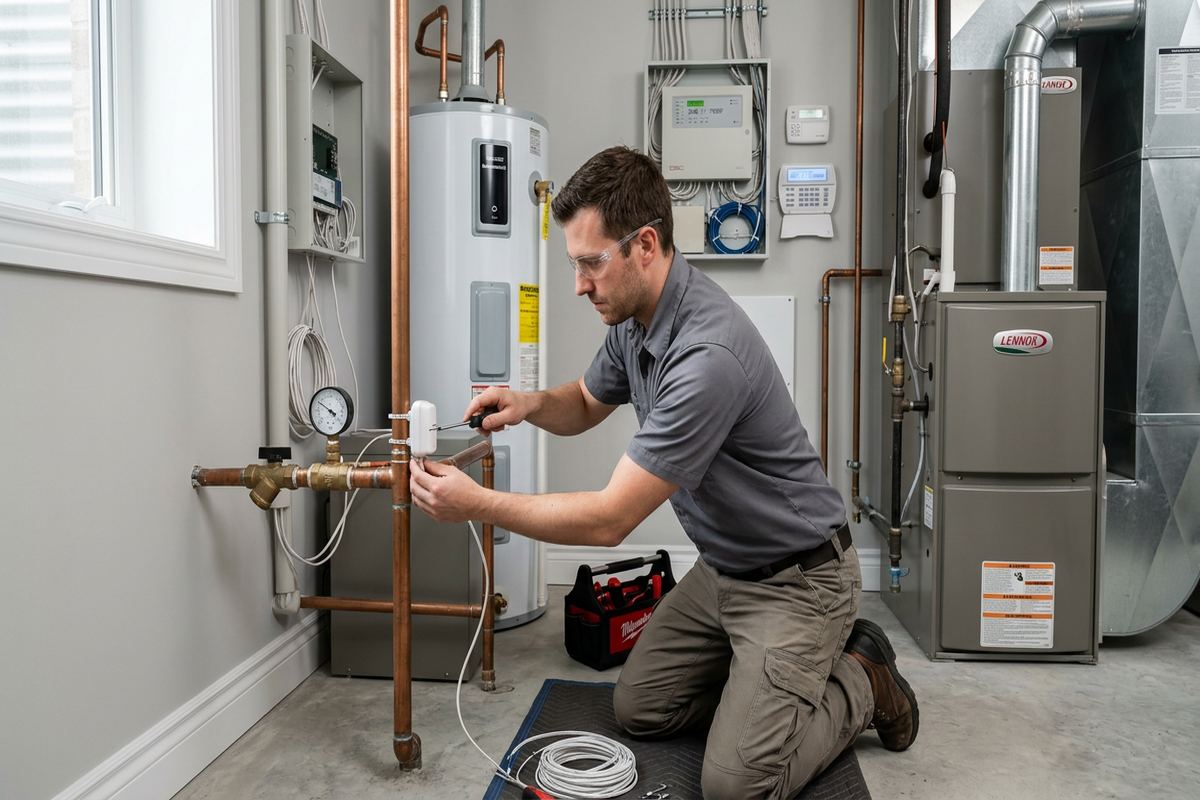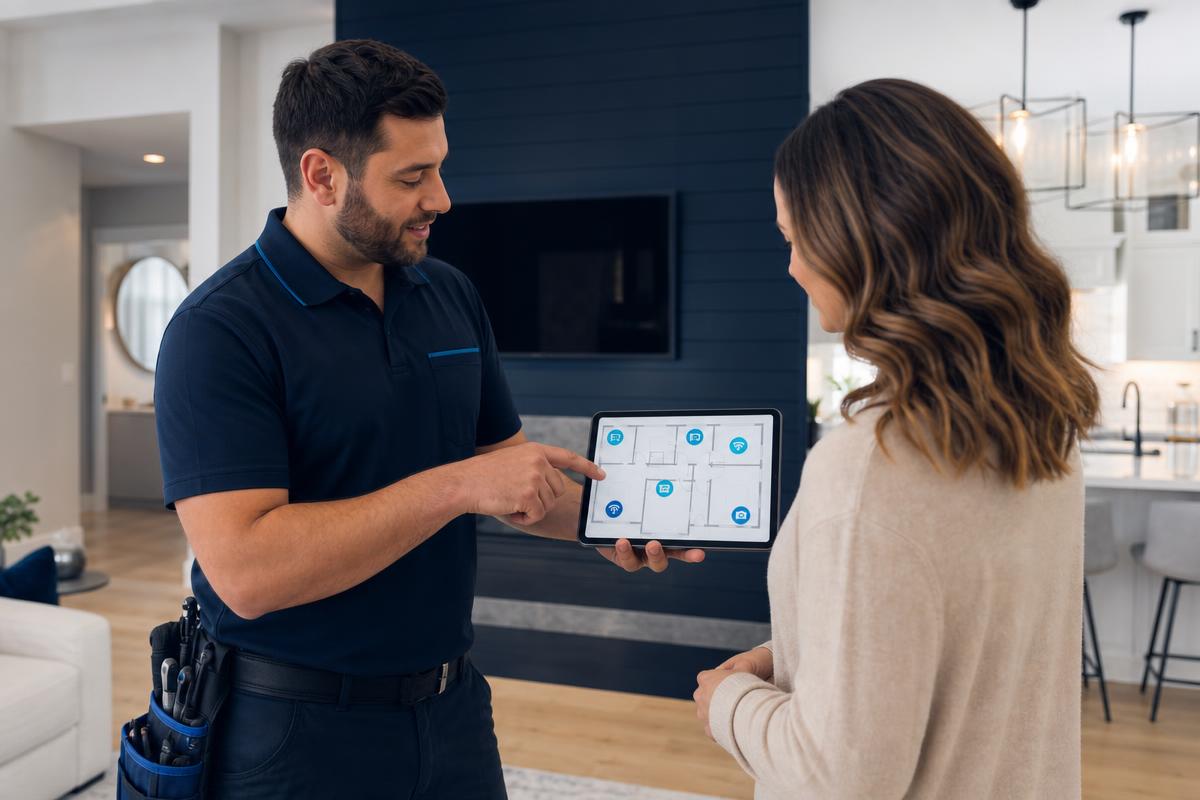
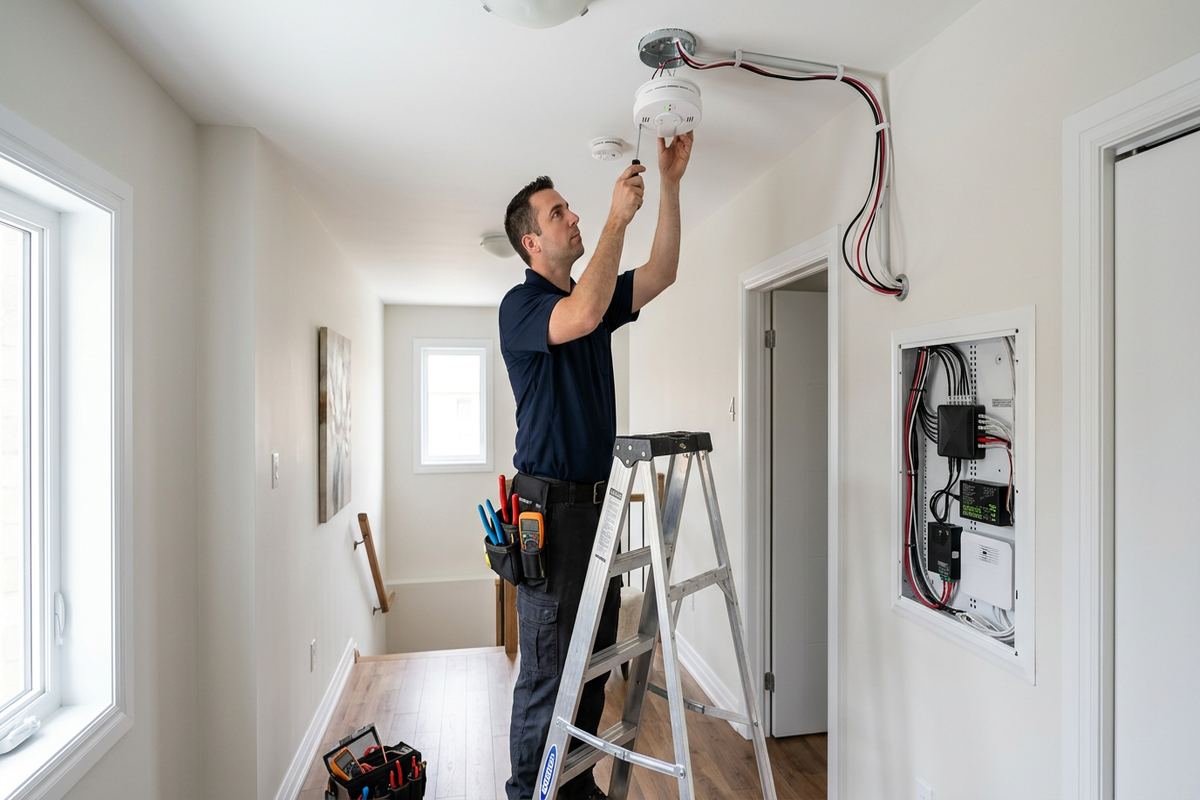
UnifiedLink installs wireless alarm systems for homes and businesses across Cornwall and Eastern Ontario. Each project starts with a site assessment to confirm coverage, entry points, construction conditions and communication options. We then provide a written scope, install and configure the equipment on site, and hand over the system using credentials controlled by the customer.

Wireless Alarm Planning for Cornwall Properties
A wireless alarm is more than a collection of battery-powered sensors. Reliable operation depends on panel location, radio coverage, building construction, entry-point selection and the way occupants use the property. During a Cornwall site assessment, UnifiedLink reviews doors, accessible windows, attached garages, loading areas, basements and interior circulation routes. We also discuss pets, regular opening schedules, staff access and notification preferences. This information determines which devices are appropriate and where they should be installed, rather than relying on a generic package that may leave important areas unprotected.
Cornwall projects commonly include riverfront homes, logistics warehouses and older housing stock, each presenting different design conditions. A frame house may allow straightforward radio coverage, while thick masonry, additions or metal-clad industrial spaces can reduce communication between devices and the control panel. Warehouses may also have long distances, high ceilings and moving inventory that affect detector placement. The assessment identifies these limitations before equipment is selected. Where necessary, the design can use compatible repeaters, alternative panel locations or a divided layout to maintain dependable communication throughout the protected property.
Before pricing, customers receive a written scope describing the proposed equipment, device placement, cable routes where any wired connections are required, exclusions, equipment ownership and warranty. The document separates included work from optional features, helping a homeowner, landlord or facility manager review the same clear plan. It can also identify responsibilities such as electrical receptacles, internet availability, monitoring arrangements or building approvals. This approach reduces uncertainty during installation and provides an agreed reference if property conditions change after walls, ceilings, storage racks or access procedures are reviewed more closely.
- Control panel and communicator location planning
- Door, window and motion sensor selection
- Radio coverage review across the property
- Written scope before installation begins
How Wireless Alarm Systems Work in Cornwall
Wireless alarm devices communicate by radio with a central control panel, but the system may still need power, internet or cellular service for remote notifications and monitoring. Door contacts report openings, motion detectors watch defined interior areas, and specialty devices can supervise selected environmental conditions when compatible equipment is included. UnifiedLink configures device names and zones so alerts identify meaningful locations such as “rear loading door” or “basement window.” Clear labels make events easier to interpret than numbered zones, particularly for businesses where several employees or managers may receive system notifications.
For Cornwall homes, wireless equipment can limit disruption to finished walls, decorative trim and older plaster. It is especially useful when cable routes are inaccessible or when renovations have created separate additions. Wireless does not mean that every component is completely wire-free: the main panel normally needs a dependable power source, and some keypads, sirens or communicators may require connections. Any new cable installed by UnifiedLink is run continuously and labelled. The scope explains these requirements so the owner understands which devices use batteries and which depend on building power or network service.
A system can support local audible alarms, app-based control or connection to a compatible monitoring service, depending on the selected platform and communication path. These functions are reviewed separately because internet-only, cellular and dual-path arrangements have different dependencies. UnifiedLink configures the approved features on site and tests communication under normal property conditions. Customers receive access using their own credentials rather than an installer-controlled account. The handover includes an as-built record showing installed device locations and relevant system information, giving the owner a practical reference for operation, maintenance or future changes.
- Named zones for understandable alarm events
- Battery-powered sensors where suitable
- Internet or cellular communication options
- Compatible app and monitoring integration
Sensors for Older Cornwall Homes
Older housing in Le Village and Cornwall Centre may combine masonry foundations, wood framing, plaster walls, replacement windows and several generations of renovation. These details influence mounting and detection. A contact that fits a modern door may not suit an uneven frame, while fragile trim may require a different mounting position. Thick masonry can also weaken radio signals between basement devices and an upstairs panel. UnifiedLink checks surfaces and clearances before fastening equipment, then verifies each device from its final location instead of assuming that an open-air range specification applies inside the building.
Motion detector placement requires equal care. Staircases, radiators, forced-air vents, fireplaces, direct sunlight and moving curtains can influence the area seen by a detector. Pets and normal household routes must also be considered. Rather than placing a sensor wherever mounting is easiest, the installer reviews its field of view and likely movement through the room. Door and window contacts are used where perimeter awareness is useful, while interior detection adds another layer for selected spaces. The final arrangement reflects the home’s layout, daily occupancy and practical arming routine.
Riverdale and the Guindon Park area include properties where detached garages, sheds or additions may sit beyond dependable radio range from a panel in the main house. Separate structures also introduce temperature, power and construction concerns. An assessment determines whether a compatible device can communicate reliably or whether another design is more appropriate. Exterior-facing openings are inspected for alignment and seasonal movement. Cornwall’s winters and freeze-thaw cycles can shift doors and frames, so contacts need appropriate spacing, secure mounting and testing without leaving a marginal gap that may cause intermittent supervision faults.
- Contacts selected for existing frames
- Radio testing through plaster and masonry
- Motion coverage planned around heat sources
- Detached-area feasibility assessed before inclusion
Cornwall, Ontario
Wireless alarm installation in Cornwall, scoped in writing first
Book a site assessment and get equipment, routes, exclusions, and warranty on paper before anything is installed.
Cornwall Commercial and Warehouse Alarm Design
Logistics warehouses and industrial units in the Business Park need alarm layouts based on operations, not residential assumptions. Large floor areas, steel cladding, concrete walls, racking and stored goods can affect wireless paths. Loading doors may vibrate, personnel doors may see heavy use, and high-bay areas can make device access difficult. UnifiedLink reviews these conditions with the facility contact and identifies practical detection points. Panel, keypad and communicator locations are chosen to support coverage, daily arming and future maintenance without interfering with loading, material handling or controlled work areas.
Commercial strips and mixed-use properties often have multiple suites, shared entrances, rear service corridors or landlord-controlled utility rooms. The alarm scope should define the area belonging to the customer and distinguish it from common space. Written approval may be needed before equipment is attached to exterior surfaces, common walls or building systems. UnifiedLink can document proposed locations for review, but the tenant or owner remains responsible for obtaining required authorization. This avoids an installation that conflicts with a lease, property-management rule or another contractor’s equipment serving the same Cornwall building.
User permissions are particularly important when a business has managers, opening staff, cleaners or temporary users. A properly configured system can provide separate codes or app access according to platform capabilities, reducing the need to share one credential. Device and zone names should match the language used on site, including specific loading doors, offices and stock areas. During handover, UnifiedLink demonstrates normal arming, disarming and alert review with designated representatives. The customer receives administrator access through its own credentials, supporting internal control when staffing, access responsibilities or operating schedules later change.
- Warehouse radio and mounting assessment
- Loading and personnel door protection
- Separate user permissions where supported
- Clear boundaries for multi-tenant properties
Exterior Devices and Cornwall Winters
Exterior alarm equipment must be selected and mounted for its actual exposure. Cornwall winters bring snow, ice, wind-driven moisture and repeated freeze-thaw conditions that can affect housings, fasteners and door alignment. A sheltered entrance differs from an exposed riverfront elevation, even on the same property. UnifiedLink checks the manufacturer’s environmental limits and chooses mounting locations that reduce unnecessary exposure while preserving the required detection. Indoor-rated devices are not treated as exterior equipment simply because they fit beneath a small overhang. Suitability is confirmed before installation is included in the scope.
Penetrations through brick, siding or exterior trim require deliberate sealing. The attachment method must suit masonry or frame construction without creating an avoidable path for water. Where a cable is required, its entry should be positioned and sealed for the surface and exposure, with a continuous labelled run to the connected equipment. Surface-mounted wireless devices still need stable backing and suitable fasteners. UnifiedLink documents any surface condition that limits mounting, such as deteriorated mortar, loose cladding or inaccessible framing, so repairs or alternate placement can be addressed before installation proceeds.
Seasonal movement is a practical concern for overhead doors, gates and older exterior doors. A contact mounted with insufficient tolerance may report an opening when cold weather changes alignment, while excessive spacing can prevent dependable operation. Warehouses add vibration and impact risks around loading areas. Device placement must keep equipment away from routine damage without compromising detection. Following installation, each opening is operated and tested under normal conditions. Customers should still report later alignment changes, damaged housings or repeated low-temperature faults because building movement can develop after the original installation and may require adjustment.
- Weather suitability checked before installation
- Exterior penetrations sealed for exposure
- Fasteners matched to masonry or framing
- Door alignment and contact spacing tested
Installation, Configuration and Handover
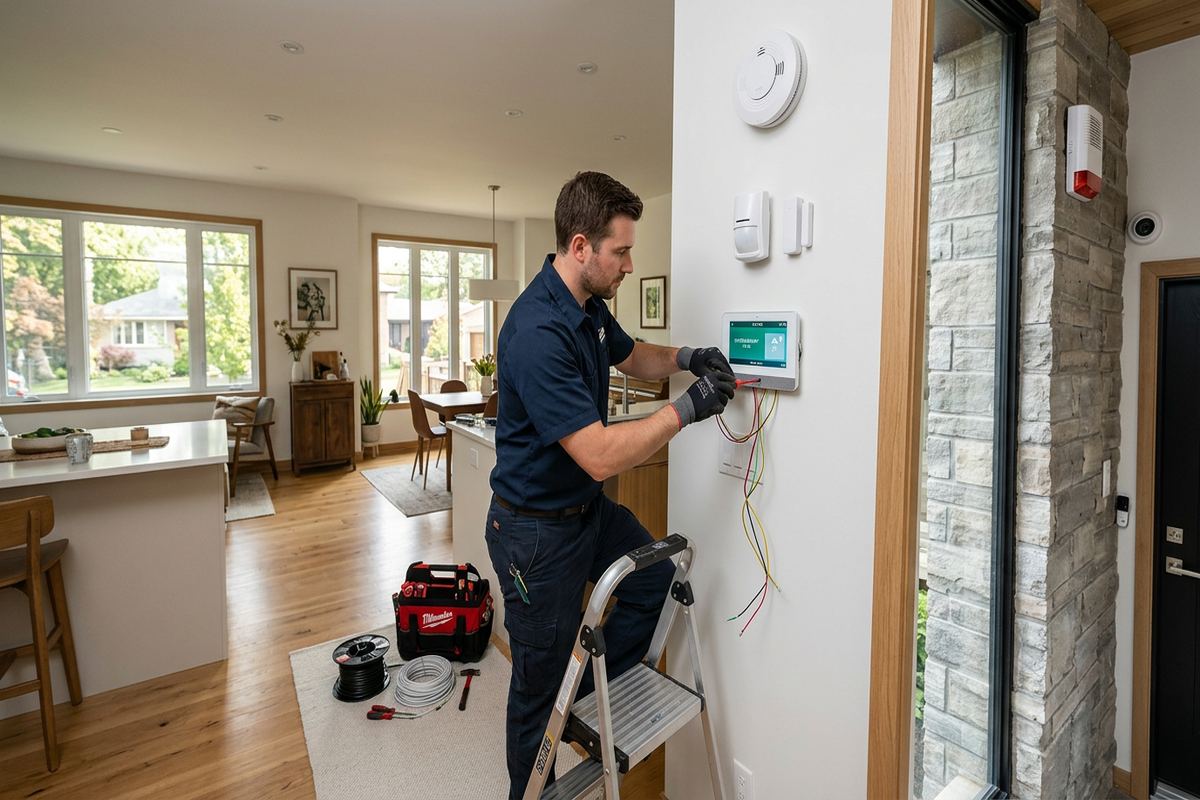
On installation day, the approved scope guides device placement and configuration. The installer confirms access to work areas, reviews any changed conditions and protects nearby finishes before mounting begins. Sensors, keypads and the control panel are installed in the agreed locations, with continuous labelled cable runs used wherever hardwired power or communication is part of the design. Wireless signal strength and device supervision are checked after final mounting. If a planned location proves unsuitable because of concealed construction, interference or unsafe access, the alternative is discussed rather than changed without the customer’s knowledge.
Configuration turns installed hardware into a usable alarm system. UnifiedLink assigns understandable zone names, sets entry and exit areas, connects approved communication services, and establishes user access supported by the chosen platform. Notification settings are reviewed so the customer knows which events can reach an app, a local siren or a monitoring provider. Testing covers sensor activation, tamper conditions, communication and normal arming routines. For a Cornwall business, the test can include representative opening and closing procedures; for a residence, it can reflect common entrances and overnight arming habits.
Handover is completed using credentials owned by the customer. UnifiedLink does not leave the property dependent on an installer-only login for routine administration. The designated user is shown how to arm and disarm, interpret common alerts, manage authorized users where supported, and respond to low-battery or communication messages. An as-built record identifies installed equipment and device locations, including relevant wired routes recorded during the work. Equipment ownership and warranty terms follow the written scope. This documentation gives the owner a clear baseline for support, renovation planning and later system expansion.
- Installation follows the approved written scope
- Every installed device tested on site
- Customer-controlled administrator credentials
- As-built record supplied at handover
Approvals for Cornwall Rentals and Condos
Tenants should confirm what their lease allows before alarm equipment is fastened to doors, windows, walls or common property. In Cornwall rental homes and commercial units, the landlord may need to approve mounting locations, exterior devices or communication hardware. Wireless equipment can reduce cable work, but it still creates physical attachments and may require power near the panel. UnifiedLink can prepare a defined scope showing the proposed devices and locations for the customer to share with the property owner. Installation proceeds after the customer confirms that necessary permissions are in place.
Condominium projects require attention to the boundary between the private unit and common elements. A suite door, corridor wall, balcony, exterior window or shared network room may be subject to condominium rules even when it appears to serve one owner. Building management may also regulate work hours, elevator use, parking and contractor access. The assessment identifies likely approval points, but the corporation or manager determines its own requirements. Keeping the alarm mainly within the unit can simplify a project, provided the resulting design still offers useful coverage and dependable communication.
Ownership and removal should be clarified when the customer does not own the property. The written scope states equipment ownership and exclusions, helping the tenant and landlord understand what remains after a lease ends. Adhesive-mounted devices are not automatically damage-free, and screw-mounted equipment can leave holes or marks when removed. Batteries, monitoring accounts and app access also need a responsible owner. During handover, credentials are issued to the designated customer, while any landlord access is configured only when authorized and supported by the selected alarm platform.
- Proposed locations documented for approval
- Common-element boundaries reviewed
- Building access rules confirmed by customer
- Equipment ownership stated in writing
Support and Future Changes in Cornwall
Alarm systems need periodic attention as batteries age, doors shift and property use changes. A low-battery alert should be addressed with the correct replacement type and safe access method, especially for devices mounted above stairs or warehouse floors. Repeated supervision messages can indicate distance, interference, damage or a changed radio environment rather than a simple battery issue. UnifiedLink can review the event details and installed record before recommending work. Customers should avoid relocating the panel, router or repeaters without checking how that change may affect communication across the property.
Renovations can alter alarm performance even when no device is directly removed. New masonry partitions, metal shelving, insulated doors or additions may block radio paths or create unprotected routes. In Cornwall’s older homes, opening walls can also reveal construction that differs from the original assessment. Businesses may reconfigure offices, warehouse racks or loading operations as tenants and inventory change. A revised site review can confirm whether existing devices remain suitable, need relocation or should be supplemented. Any expansion should be documented so the as-built record continues to match the installed system.
Cornwall service requests sent during business hours are answered the same day, while after-hours requests are answered the next business day. Site assessment timing depends on the requested service and travel distance within Eastern Ontario. UnifiedLink remains one accountable contractor for the defined alarm work, from assessment and written scope through installation, configuration and handover. When requesting service, customers can provide the property type, neighbourhood, approximate number of entrances, current alarm information and any known approval requirements. These details help identify what should be examined during the assessment without replacing an on-site review.
- Battery and supervision issue review
- System updates after renovations
- Documented additions and device changes
- One contractor for the defined work
Cornwall neighbourhoods we cover
- Le Village
- Riverdale
- Cornwall Centre
- Guindon Park area
- Business Park
Wireless alarm installation in Cornwall — common questions
Will wireless sensors work in an older Cornwall house?
They can, but construction must be checked first. Plaster, masonry foundations, additions and metal ductwork can affect radio communication. UnifiedLink tests proposed locations during the Cornwall assessment and selects panel, sensor or repeater locations accordingly. Wireless equipment can reduce disturbance to finished walls, but dependable coverage matters more than simply avoiding cable.
Do I need internet for a wireless alarm?
The sensors usually communicate with the alarm panel using their own compatible radio protocol, not household Wi-Fi. Internet may be required for app functions or certain notification services, while cellular communication may be available with suitable equipment and service. For a Cornwall property, the written scope identifies the planned communication path and its dependencies.
Can you install an alarm in my Cornwall rental or condo?
Yes, subject to the permissions that apply to the property. A landlord, condominium corporation or manager may need to approve attachments, exterior equipment, common-element work or installation access. UnifiedLink can provide a written scope with proposed device locations, but the customer is responsible for confirming approvals before work begins.
How are outdoor sensors protected from Cornwall winters?
Only equipment suitable for the expected environment should be installed outdoors. Mounting must account for snow, moisture, temperature limits, freeze-thaw movement and the exposure of each elevation. UnifiedLink also checks the mounting surface, uses appropriate fasteners and seals required penetrations. Sheltered placement does not make an indoor-rated device suitable for exterior use.
Can a wireless alarm cover a Cornwall warehouse?
Potentially, although warehouses require a site assessment because steel cladding, concrete, racking, long distances and stored goods can affect radio performance. Loading doors and high mounting locations also need appropriate devices and service access. UnifiedLink tests the planned design and may recommend different panel placement, compatible repeaters or another arrangement where needed.
What will I receive when installation is complete?
UnifiedLink configures and tests the approved system on site, then hands it over using credentials controlled by the customer. The designated user receives operating guidance and an as-built record of installed equipment and device locations. The written scope also covers equipment ownership, warranty, exclusions and any continuous labelled cable runs included in the Cornwall project.
Coverage in Cornwall is confirmed against the address before we quote. See everything we install in Cornwall or the province-wide wireless alarm installation page.