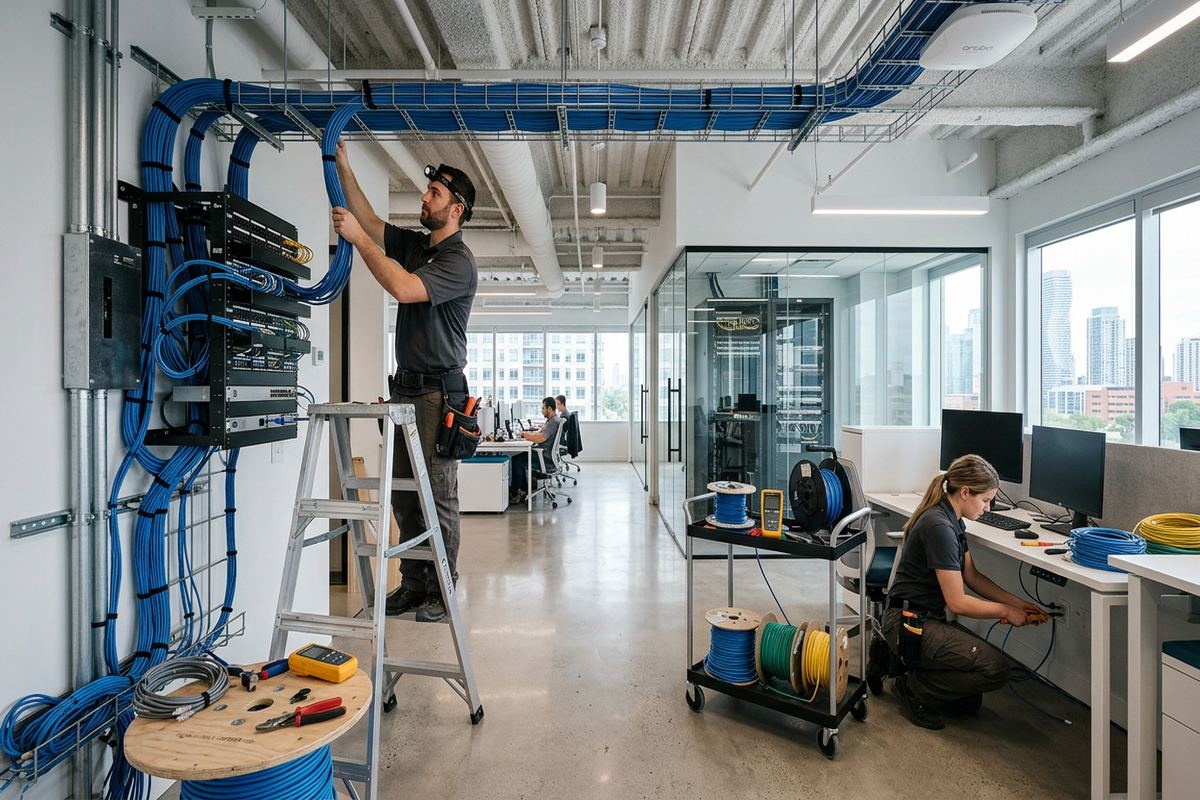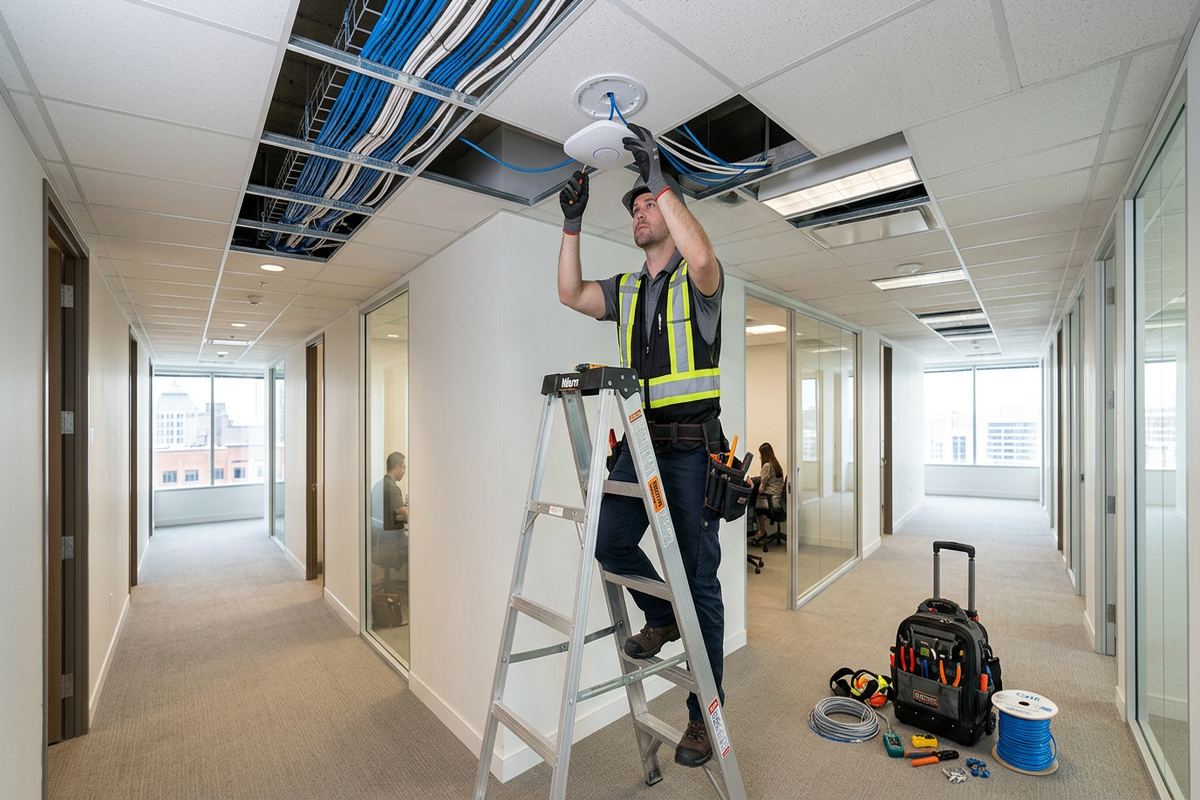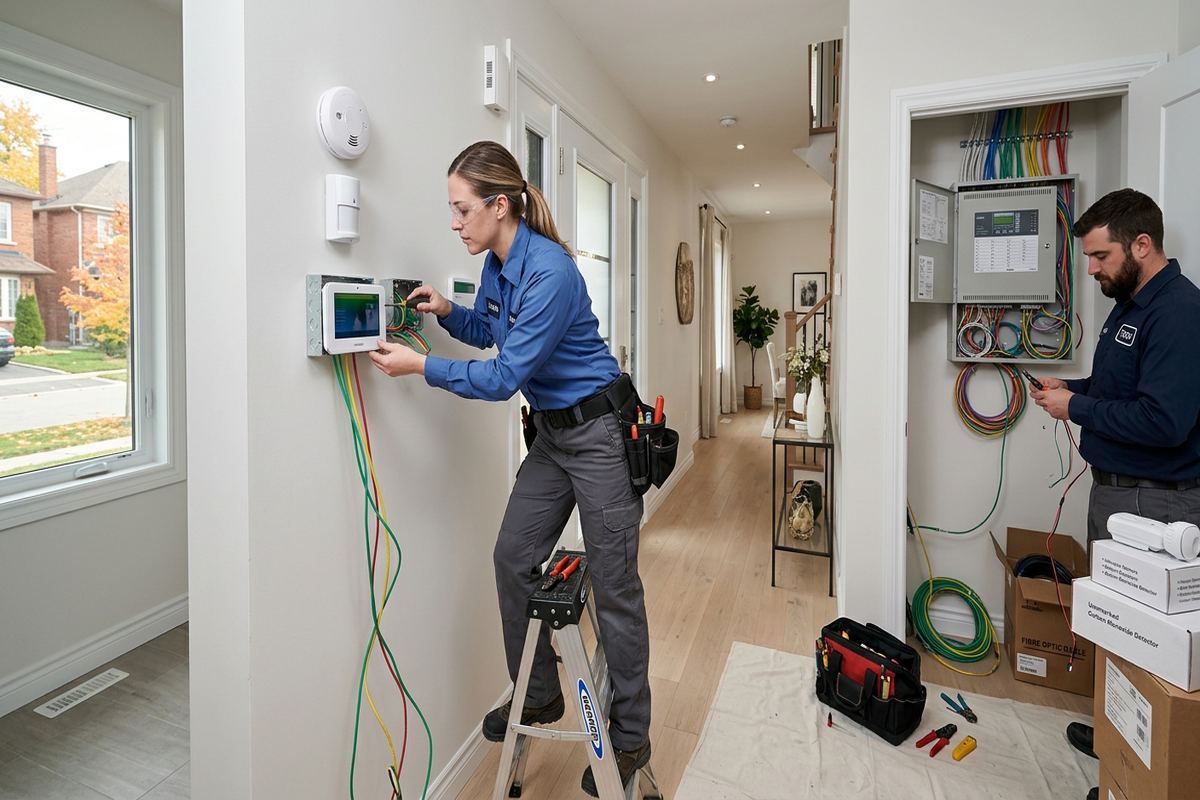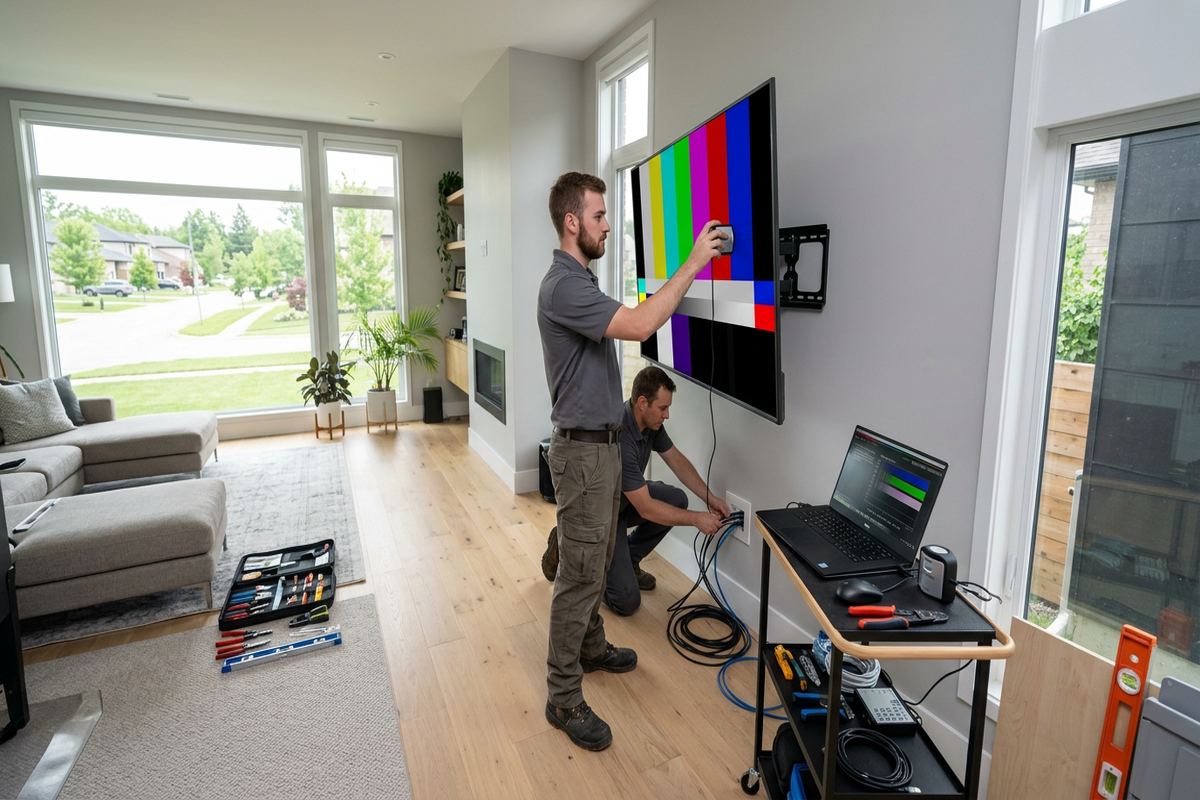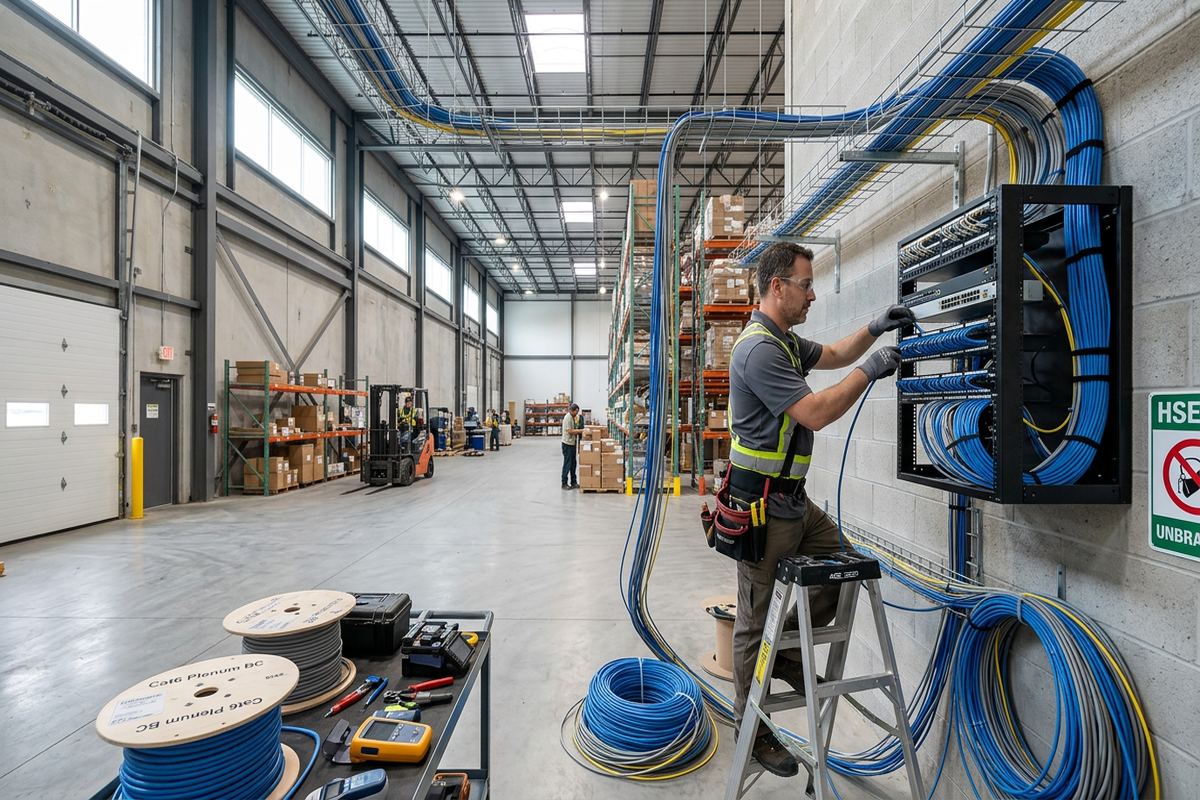
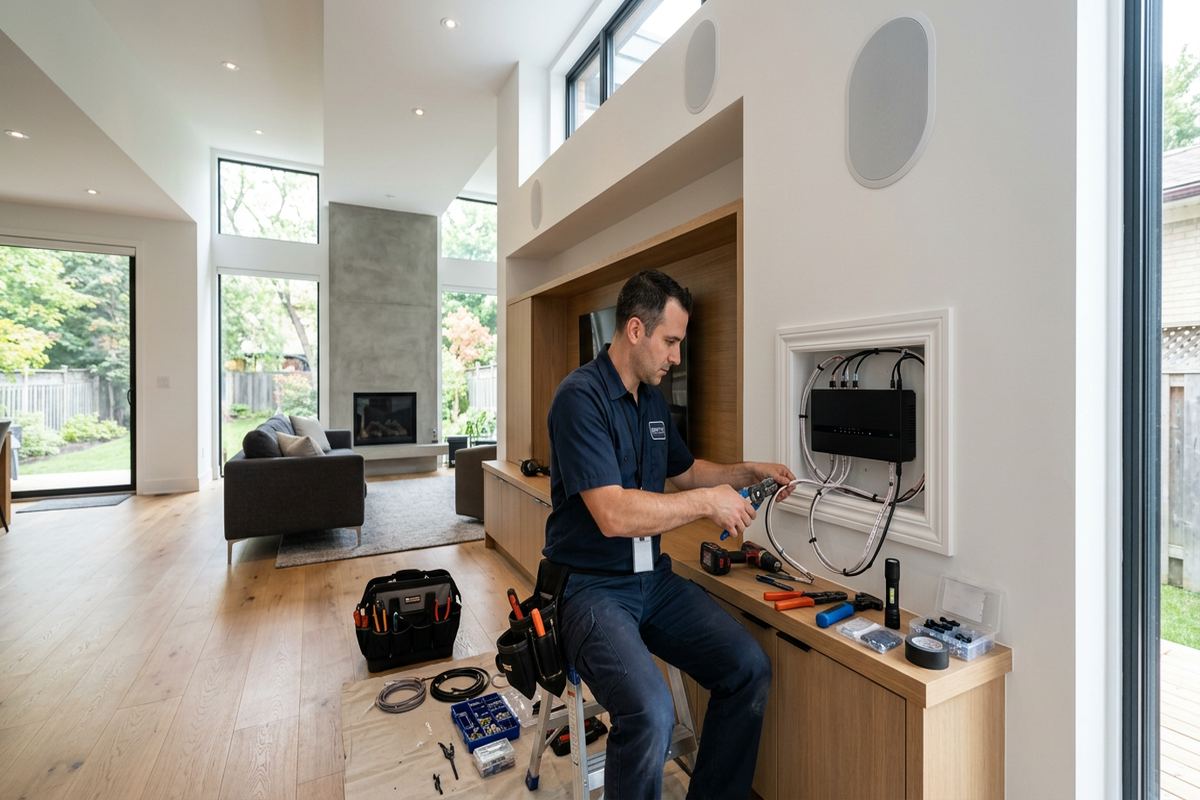
UnifiedLink installs in-ceiling speakers for homes and commercial properties across Cornwall. We assess the room, ceiling construction, cable routes, listening areas, and equipment before preparing a written scope. Installation includes labelled cabling, secure speaker mounting, system configuration, testing, and a practical handover using the customer’s own credentials.
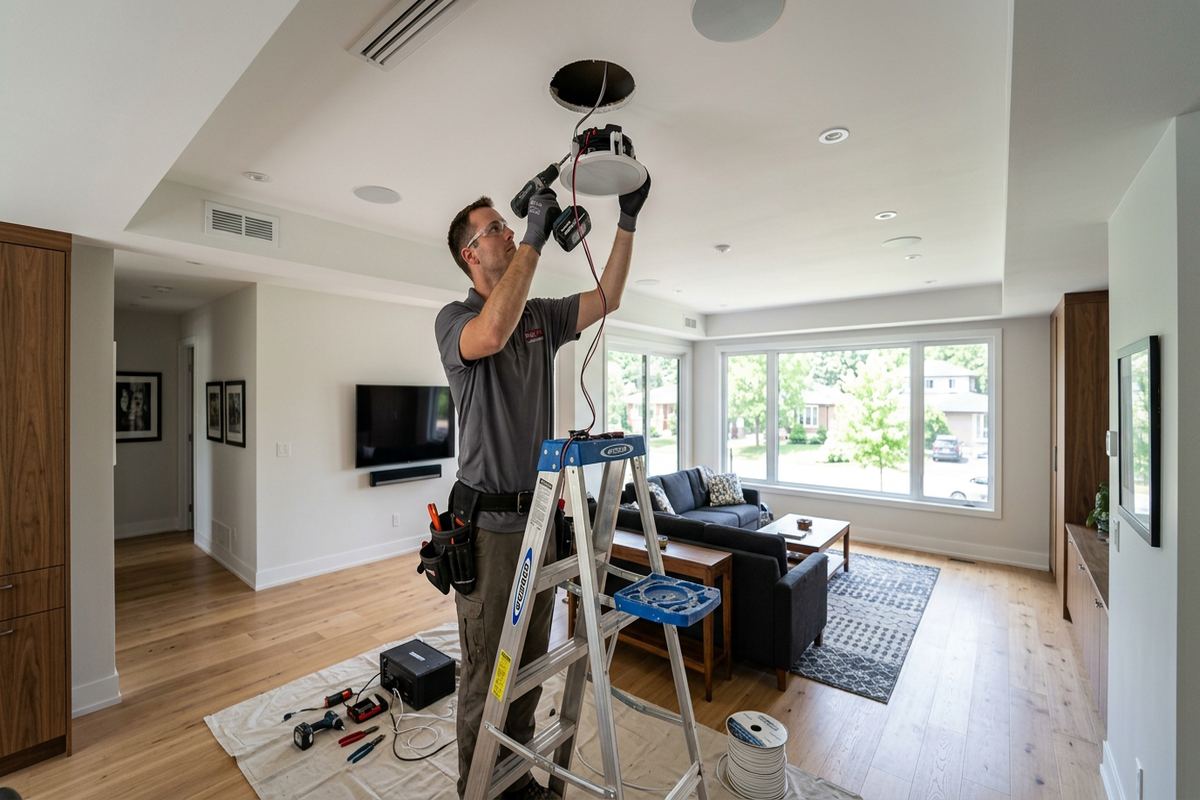
In-Ceiling Speaker Installation for Cornwall Properties
A properly installed in-ceiling audio system should sound balanced without making the room look crowded. UnifiedLink plans speaker locations around seating, room dimensions, ceiling height, lighting, joists, ducts, and other services. This is particularly important in Cornwall properties where newer additions may connect to much older structures. Before cutting the ceiling, we assess accessible spaces and confirm likely obstructions. The resulting layout is intended to provide useful coverage while keeping speakers aligned with the room and avoiding unnecessary openings in finished surfaces.
Cornwall’s mix of riverfront homes, older housing stock, logistics warehouses, and conventional commercial space calls for different installation methods. A framed residential ceiling may allow cable fishing through joist cavities, while masonry walls or concrete sections can require surface raceway or another agreed route. Suspended ceilings in offices and industrial units present separate support and access considerations. We identify the construction type during the assessment, explain where concealment is practical, and document any visible cabling, access panels, patching responsibilities, or other exclusions in the written scope.
The installation can support background music, television audio, focused listening, paging, or multiple independent zones. Equipment selection depends on room use, expected volume, ceiling depth, moisture exposure, amplifier compatibility, and the number of listening areas. We do not treat every ceiling speaker as interchangeable. Speaker impedance, power handling, enclosure requirements, and coverage pattern must work with the amplifier and proposed wiring arrangement. Once installed, the system is configured and tested on site, then handed over with operating information and an as-built record of device and cable locations.
- Single-room and multi-room speaker layouts
- Residential and commercial audio systems
- Flush-mounted and suitable enclosed speakers
- Amplifier, receiver, and source integration
- Documented locations and cable routes
Planning Speaker Coverage in Cornwall Rooms
Speaker count alone does not determine whether a room will sound even. Placement must account for where people sit, stand, work, or move through the space. In a Riverdale living room, that may mean balancing television viewing with general music. In a Cornwall Centre shop, the priority may be consistent background audio without loud areas beneath individual speakers. We map the intended listening zone, consider furniture and fixtures, and keep suitable separation from walls, corners, lighting, ceiling fans, sprinklers, and heating or ventilation components.
Open-plan rooms often need more careful zoning than small enclosed rooms. A kitchen, dining area, and living room may share one ceiling but have different noise levels and listening needs. Installing speakers at regular visual intervals is not always enough because cabinets, bulkheads, vaulted sections, and room openings affect coverage. We determine whether one zone can serve the area or whether separate volume control is more practical. Where an existing amplifier is being retained, its channel capacity and supported loads are checked before the speaker design is finalized.
Commercial layouts introduce other operating requirements. Offices may need low, consistent levels that do not interfere with conversation, while warehouse or Business Park units can have higher ambient noise and taller ceilings. The audio system must also avoid conflicts with building systems and tenant improvements. We confirm the intended source, control location, daily operating method, and any paging or scheduling needs. For leased premises, the property owner or landlord may need to approve ceiling penetrations, equipment locations, exposed raceway, and restoration terms before installation work begins.
- Coverage based on occupied listening areas
- Speaker spacing matched to ceiling height
- Zones planned around room use
- Existing amplifier compatibility checked
- Lighting and mechanical conflicts considered
Ceiling Construction and Cable Routes
Older Cornwall homes can conceal uncertain framing, renovations, plaster, wood lath, insulation, blocking, and abandoned wiring. These conditions affect both cable access and the risk of damaging finished ceilings. An attic above the room may simplify the route, but insulation depth, limited footing, roof slope, and seasonal temperature conditions still matter. Where no accessible cavity exists, options may include carefully fishing through framing, using an adjacent closet, following an unfinished basement route, or installing a discreet raceway. The selected method is reviewed before work proceeds.
Masonry and frame construction require different fastening and cable strategies. Frame walls and ceilings usually offer cavities, although cross-bracing and fire blocking can interrupt a route. Solid masonry cannot be treated as an empty wall, so cabling may need to follow a surface path or enter through an agreed penetration. In mixed buildings around Le Village and Cornwall Centre, original masonry sections may sit beside framed renovations. We avoid assuming that construction remains consistent from one room to the next and verify accessible conditions wherever practical.
Every installed audio cable is run as a continuous labelled length between defined termination points unless the approved design requires another connection method. Labels help identify the speaker, zone, amplifier channel, and route during future service. Cable type is selected for the installation environment and pathway rather than simply hidden wherever space appears available. We maintain separation from electrical wiring where required, support cables appropriately, and avoid resting runs on suspended-ceiling tiles. The as-built record notes speaker positions, terminations, and relevant route information for the customer.
- Routes assessed before ceiling openings
- Continuous labelled speaker cable runs
- Methods for frame and masonry construction
- Appropriate support above suspended ceilings
- As-built cable and speaker record
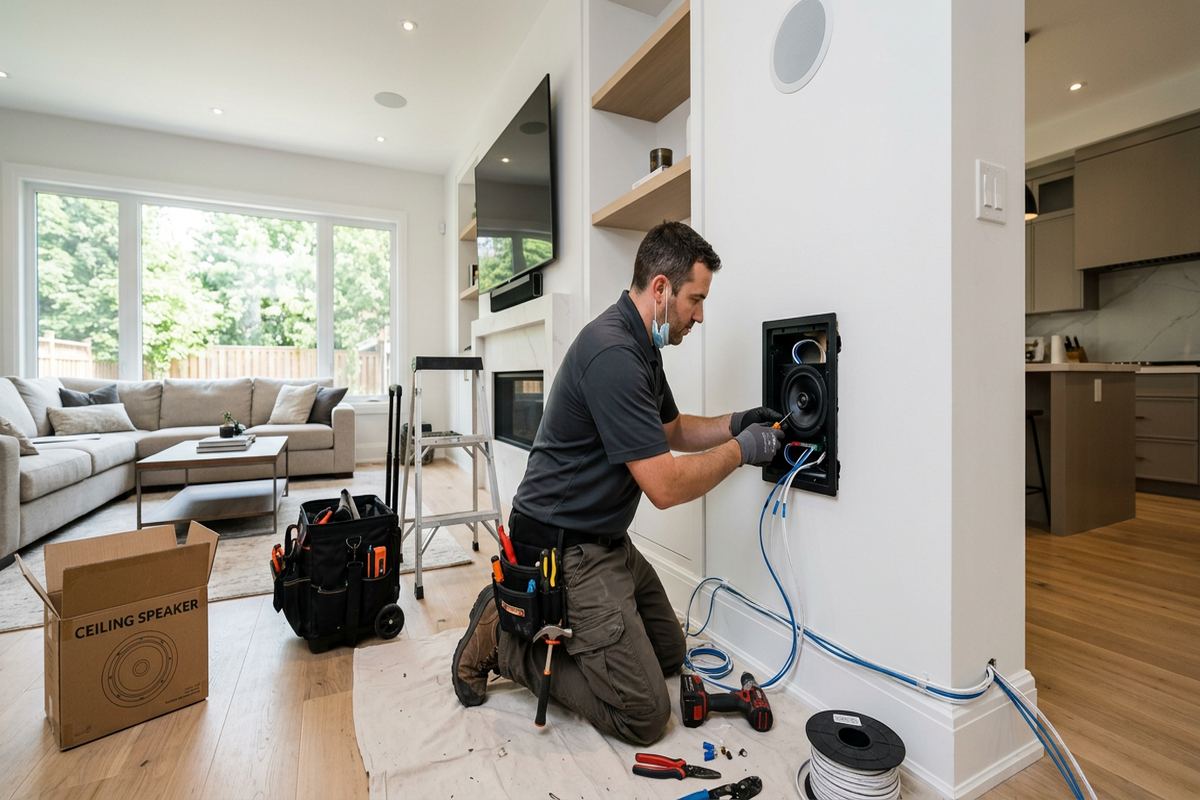
Cornwall, Ontario
In-ceiling speaker installation in Cornwall, scoped in writing first
Book a site assessment and get equipment, routes, exclusions, and warranty on paper before anything is installed.
Cornwall Home Audio and Multi-Room Systems
Home installations can range from two speakers in a bedroom to several independently controlled listening zones. The first decision is how each area should operate. Some households want one source playing throughout the home, while others need separate content and volume in the kitchen, living room, bedrooms, or covered outdoor area. We review control preferences, available network connectivity, amplifier location, and future expansion. Central equipment should remain accessible for ventilation, updates, troubleshooting, and cable service rather than being sealed inside an inaccessible cabinet or ceiling cavity.
Television audio requires different planning from general background music. In-ceiling speakers can support a media room, but placement should correspond with the screen and seating instead of following a generic grid. Depending on the system, dialogue may come from a dedicated front or centre speaker rather than only overhead channels. We confirm whether the project is for stereo listening, television reinforcement, or a surround format before cutting openings. Existing receivers are checked for channel assignment, supported speaker loads, input connections, and control features that affect the final layout.
Riverfront homes and properties near the Guindon Park area may include covered decks, sunrooms, additions, or rooms exposed to larger seasonal temperature and humidity changes. An indoor ceiling speaker should not automatically be used in a damp or partly exterior location. We review the ceiling assembly, environmental exposure, and manufacturer requirements before specifying equipment. If cabling passes toward an exterior area, penetrations must be positioned and sealed appropriately. Cornwall’s winter conditions and freeze-thaw cycles make casual exterior holes and incomplete sealing unsuitable installation practices.
- Stereo, television, and multi-room audio
- Independent source and volume zones
- Accessible central equipment locations
- Suitable speakers for damp areas
- Integration with existing receivers
Audio Installation in Older Cornwall Buildings
Renovation history matters when installing speakers in Cornwall’s older housing stock. A ceiling that appears uniform may contain several layers of material, repaired sections, shallow strapping, or framing that changes direction. Decorative plaster, crown moulding, and original finishes can also limit practical access. During the site assessment, we look for attic or basement pathways, existing openings, and signs of previous alterations. No non-invasive inspection can reveal every concealed condition, so the written scope identifies assumptions and explains how unexpected obstructions or hazardous-looking materials will be handled.
Cutting into plaster needs more control than cutting standard gypsum board. Vibration can loosen surrounding material, and irregular backing can make a conventional mounting clamp unsuitable. Where the ceiling condition does not support a reliable installation, we may recommend another location, reinforcement, a surface-mounted speaker, or preliminary repair by an appropriate trade. UnifiedLink’s scope states which cutting and installation work is included and whether cosmetic patching or painting is excluded. This prevents an audio project from quietly expanding into undefined restoration work after the ceiling has been opened.
Condominiums, rental homes, and leased commercial spaces can impose additional limits. Ceiling assemblies may form part of a fire-rated or acoustic separation, and building rules may restrict drilling, cable pathways, work hours, or equipment in shared spaces. Owners and tenants should obtain required condo, landlord, or property-management approvals before installation. We can document proposed speaker and equipment locations for review, but approval remains with the responsible building authority. Shared risers, corridors, electrical rooms, and ceiling voids are not used without clear permission and suitable access arrangements.
- Assessment of layered or altered ceilings
- Controlled openings in plaster finishes
- Alternatives where mounting is unsuitable
- Written patching and painting exclusions
- Condo and landlord approval planning
Commercial In-Ceiling Audio Across Cornwall
Commercial audio should be designed around daily operations rather than residential listening assumptions. Restaurants, clinics, offices, shops, and customer areas may need unobtrusive background music with simple staff controls. A clear operating plan helps prevent accidental high volume, inaccessible source devices, or dependence on one employee’s personal account. We determine who controls the system, where the amplifier will be housed, and whether zones need different schedules or levels. Equipment ownership and account responsibility are stated in the written scope, and customer-controlled services are handed over using the customer’s own credentials.
In logistics warehouses and industrial units, ceiling height, machinery noise, open loading areas, and changing storage layouts can reduce the usefulness of standard low-ceiling speakers. The correct approach may involve higher-output distributed audio, carefully directed speakers, or separate coverage for offices and work areas. In-ceiling products are only recommended where the ceiling and acoustic conditions make them suitable. We also coordinate placement around lighting, racking, doors, ducts, and fire-protection components, while maintaining access to equipment that building staff or other trades may need to inspect.
Commercial strips and Business Park properties often change as tenants move or interior layouts are revised. A documented, labelled installation makes later alterations more manageable. Speaker circuits can be assigned by zone, and amplifier channels can be identified rather than left as an untraceable bundle. If an existing system is being extended, we test what is reasonably accessible and document limitations before connecting new equipment. One accountable contractor handles the agreed speaker cabling, installation, configuration, testing, and handover, reducing uncertainty about responsibility between separate installers.
- Background music for customer areas
- Office and staff-area audio zones
- Warehouse suitability assessment
- Clearly labelled amplifier channels
- Controls planned for daily operations
- Coordination with other building systems
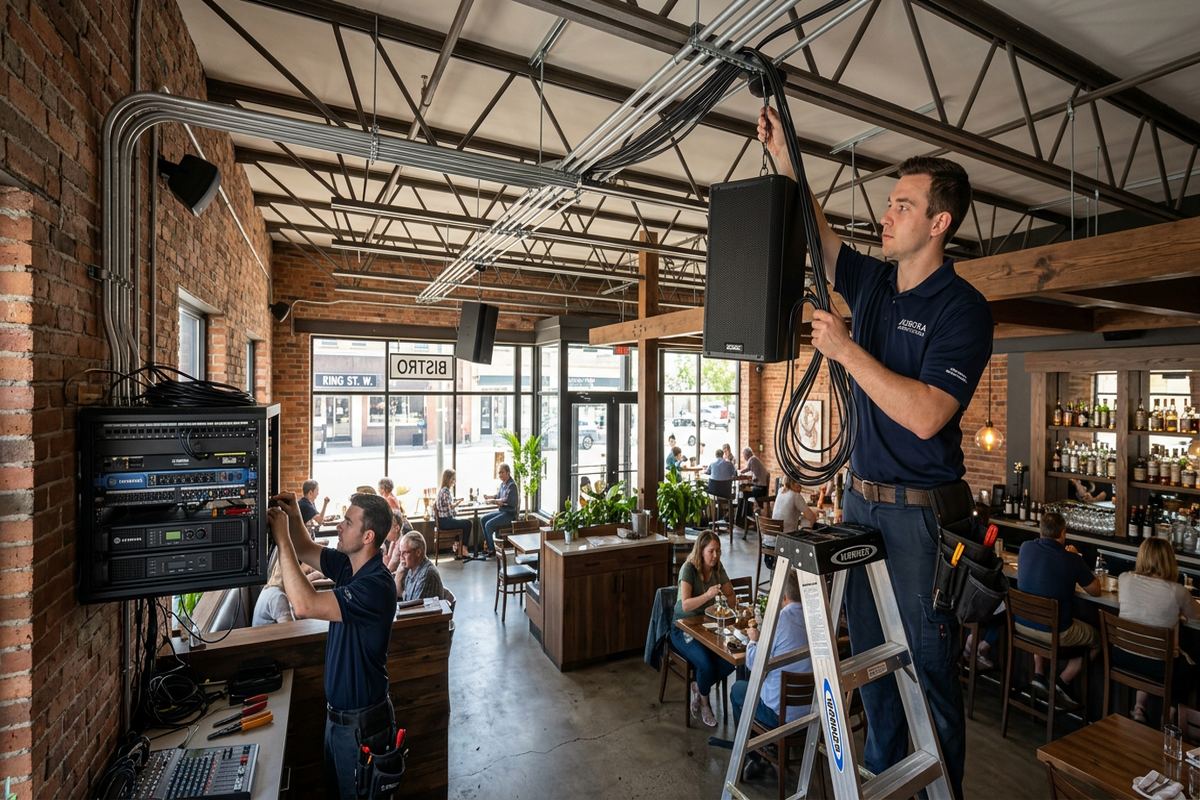
Exterior-Adjacent Speakers and Cornwall Winters
A speaker under a roof does not necessarily occupy a dry indoor environment. Covered patios, soffits, unheated sunrooms, entrance canopies, and loading areas can still experience wind-driven moisture, condensation, cold temperatures, and seasonal movement. Cornwall winters add freeze-thaw stress to exterior penetrations and mounting surfaces. We choose equipment according to the actual location and route cables without creating obvious water paths. Where a penetration crosses the building envelope, its position, sleeve or protection method, and compatible sealing approach must suit the surrounding material.
Brick, stone, siding, and framed assemblies each require suitable drilling and sealing methods. A hole through masonry should not be treated like a penetration through vinyl siding or a wood-framed soffit. Exterior cable entries are generally kept limited, protected, and sloped or arranged to discourage water migration. Existing cracks, damaged mortar, loose cladding, or uncertain concealed cavities may need correction before audio work proceeds. The project scope identifies the intended route and any envelope repair that falls outside low-voltage installation work.
Riverfront exposure can make wind and moisture considerations more noticeable, but all exterior-adjacent installations require careful planning. Speakers should remain serviceable without unsafe access or unnecessary disturbance to sealed surfaces. We also consider whether sound will carry toward nearby homes, shared condo areas, or property boundaries. Zoning and volume control can help owners use outdoor or semi-outdoor areas without driving every speaker at the same level. Equipment is configured on site, but responsible operating levels remain part of the customer’s ongoing use.
- Location-rated speaker selection
- Planned and sealed exterior penetrations
- Methods matched to cladding or masonry
- Freeze-thaw conditions considered
- Separate control for outdoor zones
Cornwall Assessment, Installation, and Handover
Each project begins with a site assessment before pricing. We review room use, desired coverage, ceiling materials, accessible cable routes, equipment location, network needs, electrical availability, and any existing audio components. For a Cornwall home, this may involve checking attic and basement access; for a commercial unit, it may require coordination with a landlord or facilities contact. Assessment timing depends on the service and travel distance. Requests sent during business hours are answered the same day, while after-hours requests are answered the next business day.
Following the assessment, UnifiedLink provides a written scope covering equipment, cable routes, device placement, exclusions, equipment ownership, and warranty. The document also identifies assumptions about concealed conditions and notes whether customer-supplied equipment will be reused. This stage is important because speaker projects often interact with finished ceilings, cabinetry, network services, and third-party accounts. Changes to room layout or equipment selection should be resolved before installation where possible. A defined scope gives the Cornwall property owner a clear basis for approving the work without relying on verbal descriptions.
Installation includes the agreed cable runs, terminations, speaker mounting, and on-site configuration. We test speaker operation, channel assignment, zone control, and basic source functions covered by the scope. At handover, the customer receives control using their own credentials rather than an installer-owned account. We also provide an as-built record showing relevant speaker, cable, and equipment information. The goal is a system that the owner can operate and another technician can understand later, with one accountable contractor responsible for the agreed installation from assessment through completion.
- Site assessment completed before pricing
- Detailed written project scope
- On-site setup and listening tests
- Customer-owned accounts and credentials
- As-built installation record
- One accountable low-voltage contractor
Cornwall neighbourhoods we cover
- Le Village
- Riverdale
- Cornwall Centre
- Guindon Park area
- Business Park
In-ceiling speaker installation in Cornwall — common questions
Can speakers be installed in an older Cornwall ceiling?
Often, but the construction must be assessed first. Older Cornwall homes may have plaster, wood lath, multiple finish layers, insulation, blocking, or previous renovations above the visible surface. We examine accessible spaces and plan a practical cable route before cutting. If the ceiling cannot safely support a flush speaker, we may recommend reinforcement, another position, or a surface-mounted alternative.
How many in-ceiling speakers does my room need?
The number depends on room dimensions, ceiling height, seating, expected volume, speaker coverage, and whether the system is for music or television. A small enclosed room may need only a pair, while an open Cornwall living area may benefit from multiple zones. We plan around occupied areas and room use rather than applying a fixed speaker count to every property.
Can you connect speakers to my existing receiver?
Yes, when the receiver supports the planned speaker load, channel arrangement, and required inputs. During the Cornwall site assessment, we review the accessible model information, current connections, amplifier channels, and control method. Older equipment may still be usable, but it should not be connected to additional speakers until impedance, power, and zoning compatibility have been checked.
Do I need landlord or condo approval?
Approval may be required because in-ceiling installation involves cable routes and openings in a building assembly. Cornwall tenants and condo owners should review their lease, condominium rules, and property-management requirements before work begins. Fire-rated or acoustic separations may also impose restrictions. We can provide proposed device and route details, but the owner, landlord, condominium, or building authority must issue any required permission.
Can in-ceiling speakers be installed on a covered patio?
Possibly, provided the speakers and cabling suit the actual exposure. Covered areas in Cornwall can still experience moisture, condensation, cold, and freeze-thaw conditions. We assess the ceiling assembly and select location-appropriate equipment. Any building-envelope penetration must be planned and sealed for the surrounding material. A standard indoor speaker is not automatically suitable simply because the area has a roof.
What will I receive after installation?
After installation, UnifiedLink tests the agreed speakers, zones, amplifier channels, and source functions on site. Cornwall customers receive control through their own credentials, not an installer-owned account. We also provide an as-built record identifying relevant speaker locations, cable runs, terminations, and equipment. The written scope defines equipment ownership, exclusions, and warranty information for future reference.
Coverage in Cornwall is confirmed against the address before we quote. See everything we install in Cornwall or the province-wide in-ceiling speaker installation page.