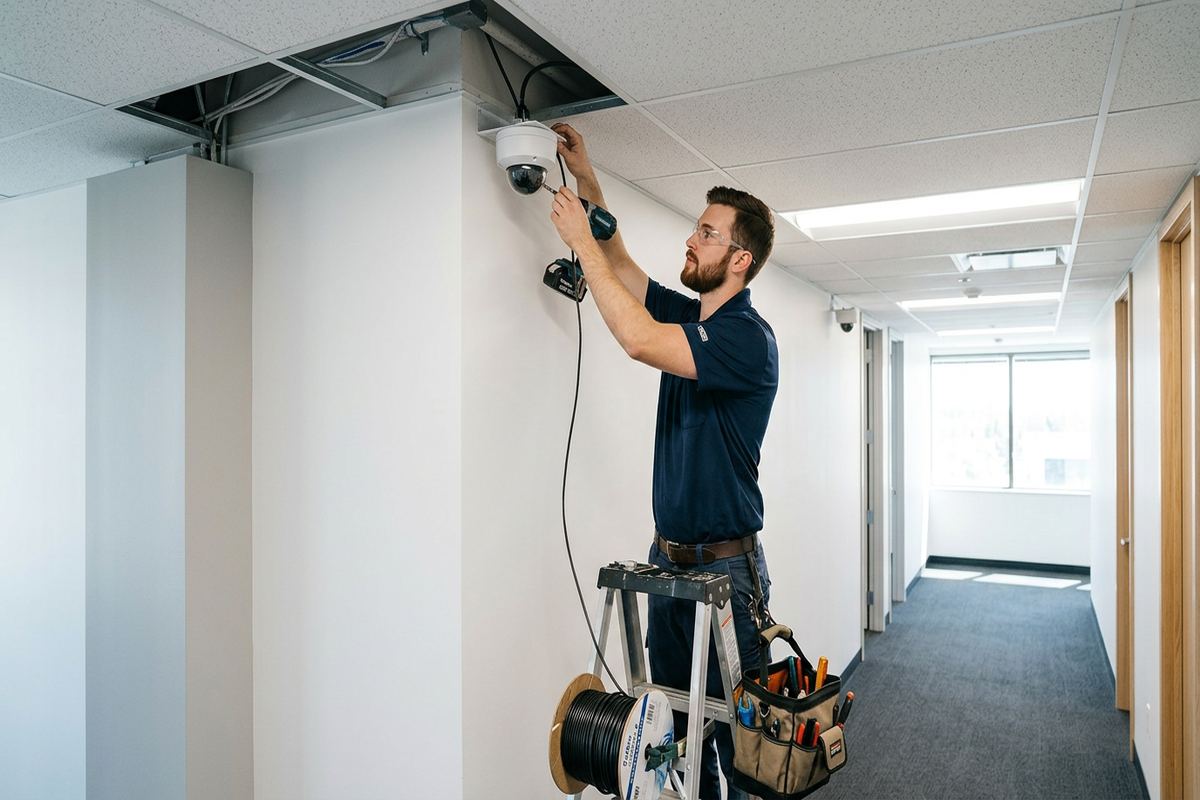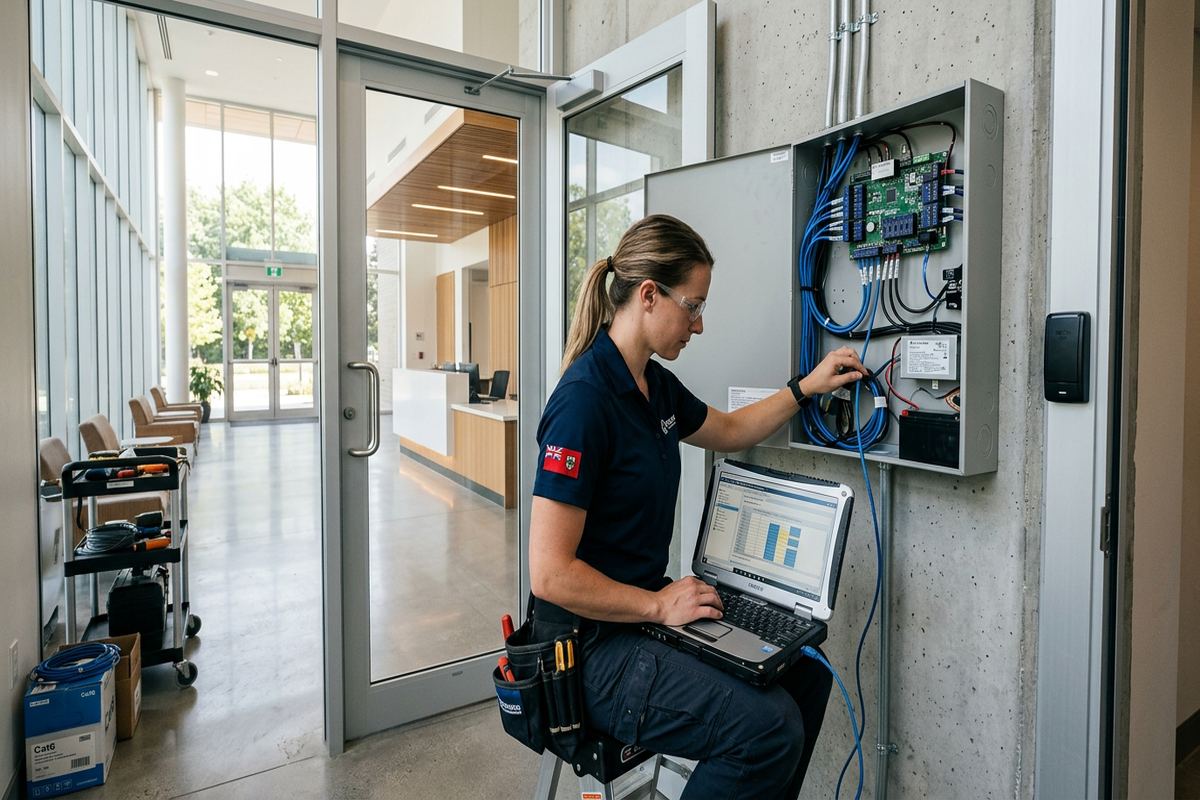
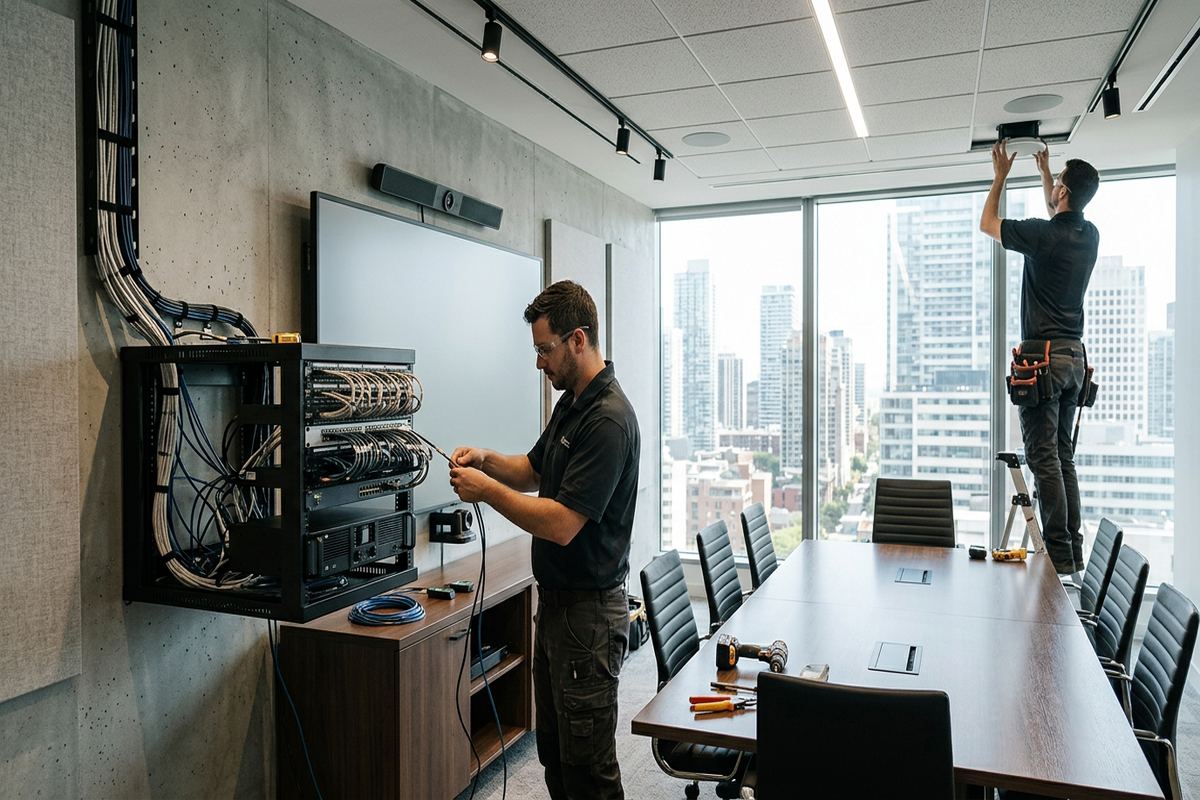
UnifiedLink plans and installs whole-home audio systems for Cornwall houses, condos, commercial spaces and mixed-use properties. We assess room layouts, construction, listening needs and control preferences before pricing. The completed system can provide consistent music, television audio or independent listening zones, with labelled cabling, on-site configuration and a documented handover using your own credentials.
Whole-Home Audio Planning for Cornwall Properties
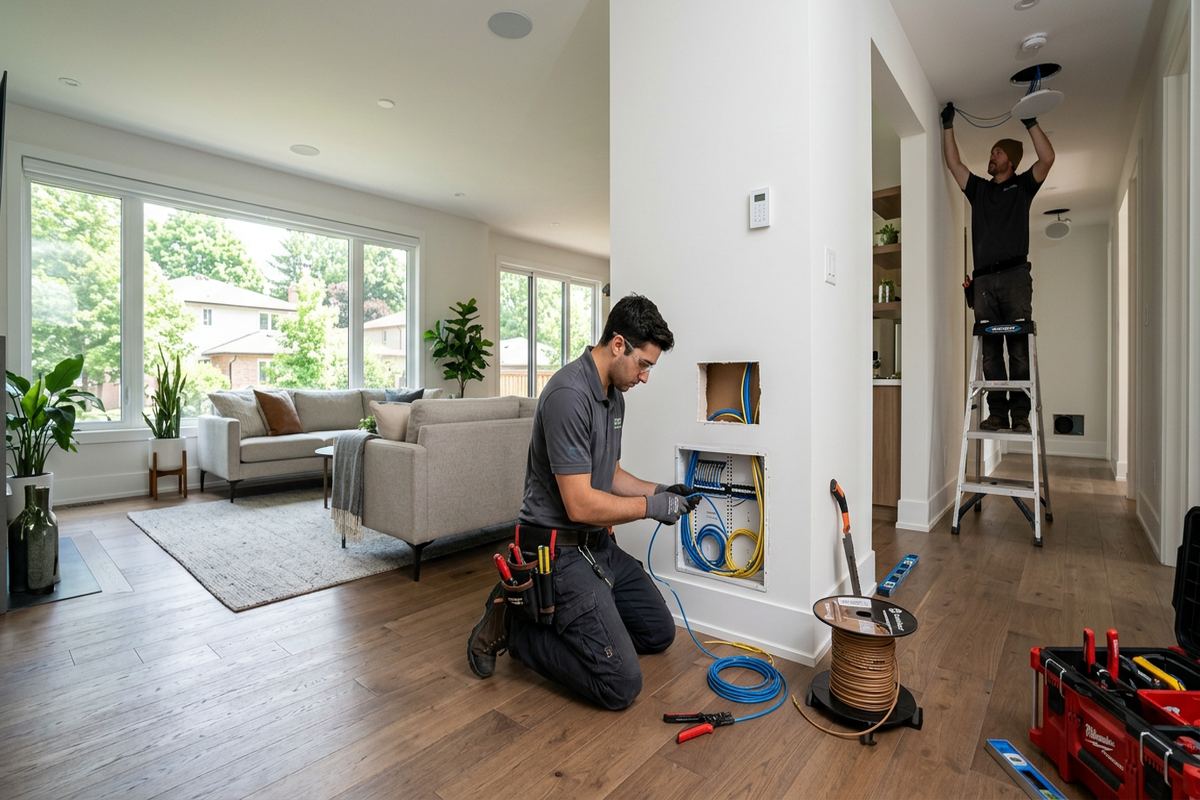
A whole-home audio system should make everyday listening simpler, not add a collection of unrelated apps, visible wires and volume controls. In Cornwall, we start by mapping the rooms, listening habits, construction and available network or equipment space. The design can cover background music, television sound, focused listening or several uses at once. Each zone is planned for sensible speaker coverage and independent control, while shared sources and amplifiers are located where ventilation, access and future servicing remain practical for the property owner over time and changing room needs.
Local building conditions affect almost every audio decision. Older housing stock in Le Village and Cornwall Centre may have plaster, masonry, irregular framing, previous renovations or limited pathways between floors. Riverfront homes can include large glazed areas, open rooms and exterior spaces that change sound coverage and mounting options. A site assessment lets us inspect these conditions before proposing equipment. We identify likely cable routes, access points, obstructions and finish risks rather than assuming that every ceiling or wall can accept the same speaker, bracket or installation method without additional preparation.
Planning also determines how the system will be operated after installation. Some households want simple room-by-room control from phones, while others need wall controls, television integration or a shared source available throughout the property. We discuss who uses each area, whether guests need access and which functions should remain independent. The written scope records equipment, device placement, cable routes, exclusions, equipment ownership and warranty. That gives Cornwall property owners a clear basis for reviewing the work before speaker openings are cut or permanent cabling begins on the agreed installation plan.
- Room-by-room listening and coverage assessment
- Written equipment and placement scope
- Cable-route review before openings are made
- Amplifier ventilation and access planning
- Control options matched to regular users
Speaker Placement and Listening Zones in Cornwall
Good coverage depends on placement, speaker type and the surfaces around the room. We consider ceiling height, seating position, cabinetry, hard floors, windows and openings into neighbouring spaces. A pair of speakers may suit a defined room, while a larger or irregular area can require additional speakers operated at lower levels for even sound. In Cornwall riverfront homes, broad windows and open layouts can create reflective areas that need careful positioning. The objective is useful, balanced coverage without forcing one loud speaker to carry an entire living area during normal daily listening.
Zones establish where audio can play and how independently each area behaves. A kitchen and dining room may operate together, while bedrooms, a home office and an outdoor area need separate volume and source selection. We define these relationships before selecting amplifier channels or control hardware. This prevents avoidable limitations, such as two spaces being permanently tied together when occupants expect separate control. For properties near Riverdale or the Guindon Park area, the plan can also accommodate additions, finished basements and seasonal spaces without treating every room as an identical acoustic or construction environment.
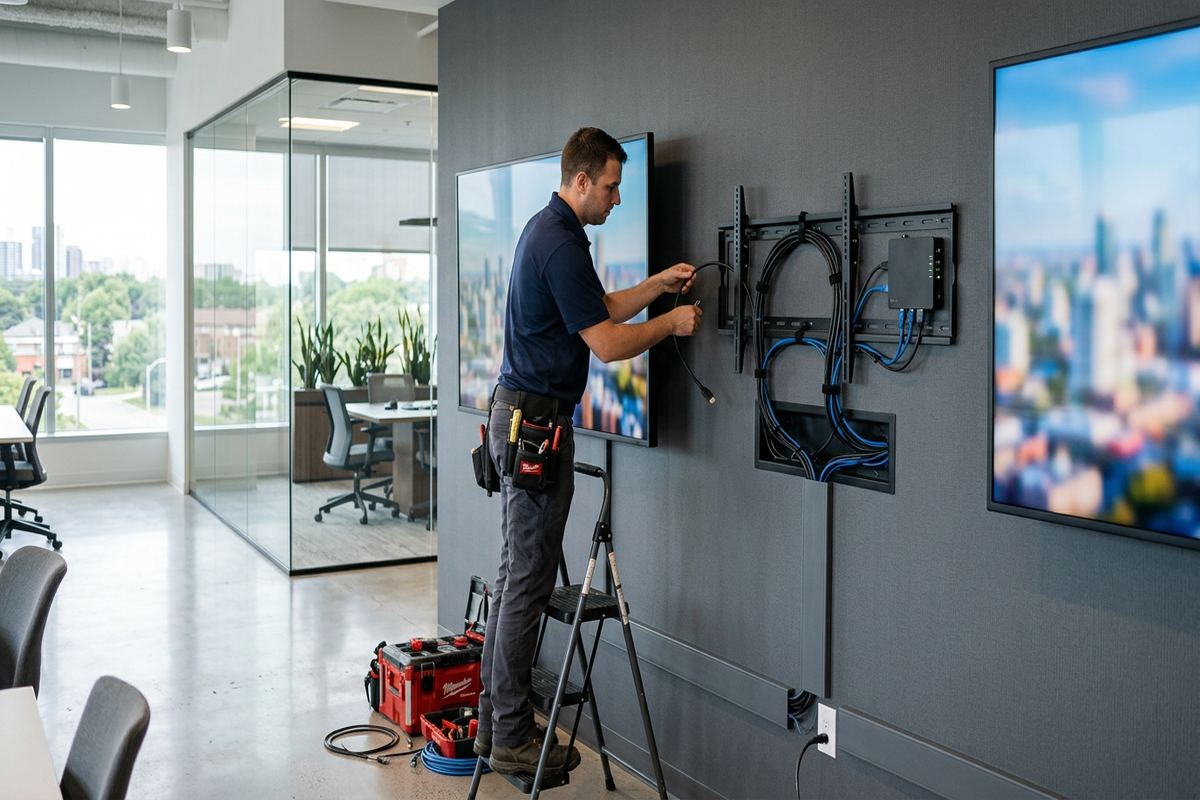
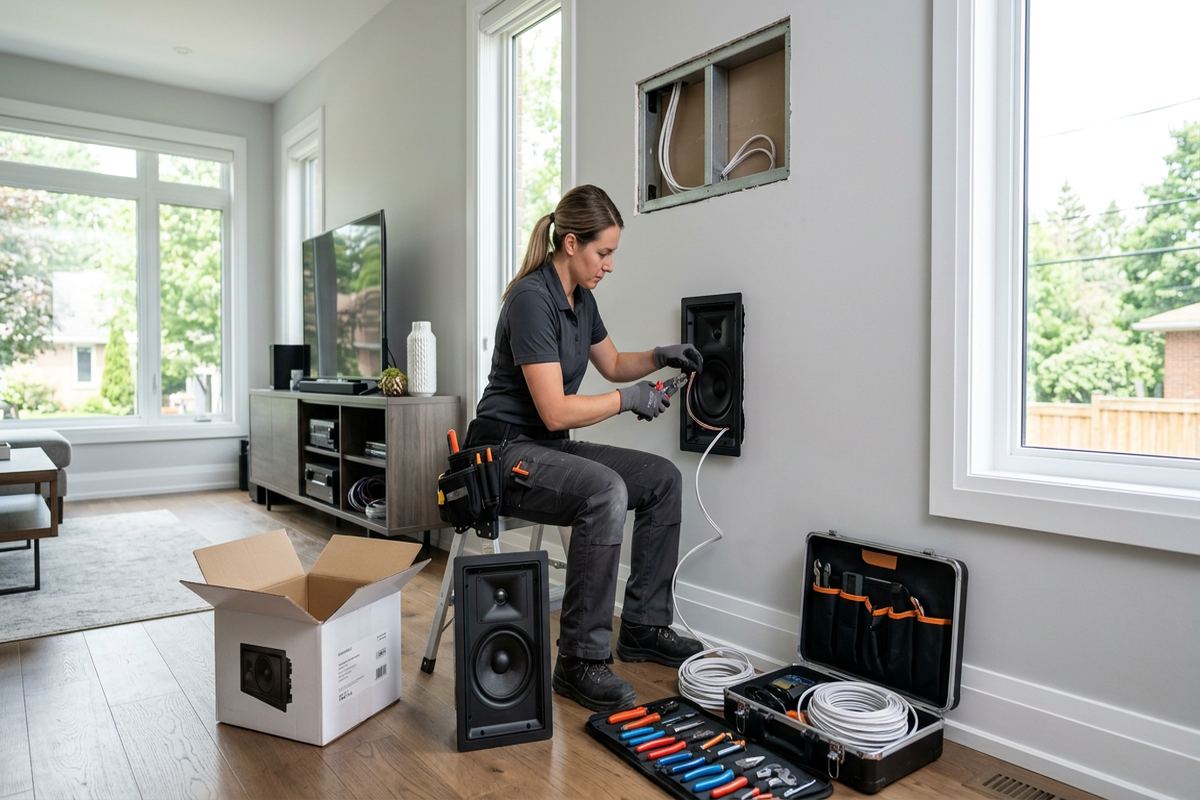
Speaker appearance matters, but it cannot be separated from access and performance. In-ceiling speakers provide a low-profile finish where cavities are suitable, in-wall models can support television or focused listening areas, and surface-mounted speakers work where cutting is impractical. Freestanding equipment may remain appropriate for dedicated listening rooms. We review grille finishes, mounting depth, clearance and service access with the owner. Where insulation, ductwork, plumbing or masonry prevents the preferred position, we explain the constraint and adjust the layout instead of placing a device where it cannot be securely installed or properly supported.
- Independent zones for different rooms
- Placement based on seating and room shape
- In-ceiling, in-wall or surface-mounted options
- Television and music use considered together
- Service clearance checked before installation
Cabling Older Cornwall Homes
Older Cornwall homes often require more investigation than newer frame construction. Finished basements, plaster walls, masonry partitions, shallow cavities and several generations of renovation can interrupt an apparently direct cable route. We use the site assessment to locate practical pathways through attics, basements, closets and utility areas while considering electrical wiring, plumbing and heating systems. The installation scope identifies where concealed routing is expected and where a small access opening, surface pathway or alternate speaker location may be required. Finish repair or painting is treated as an exclusion unless it is specifically included in writing.
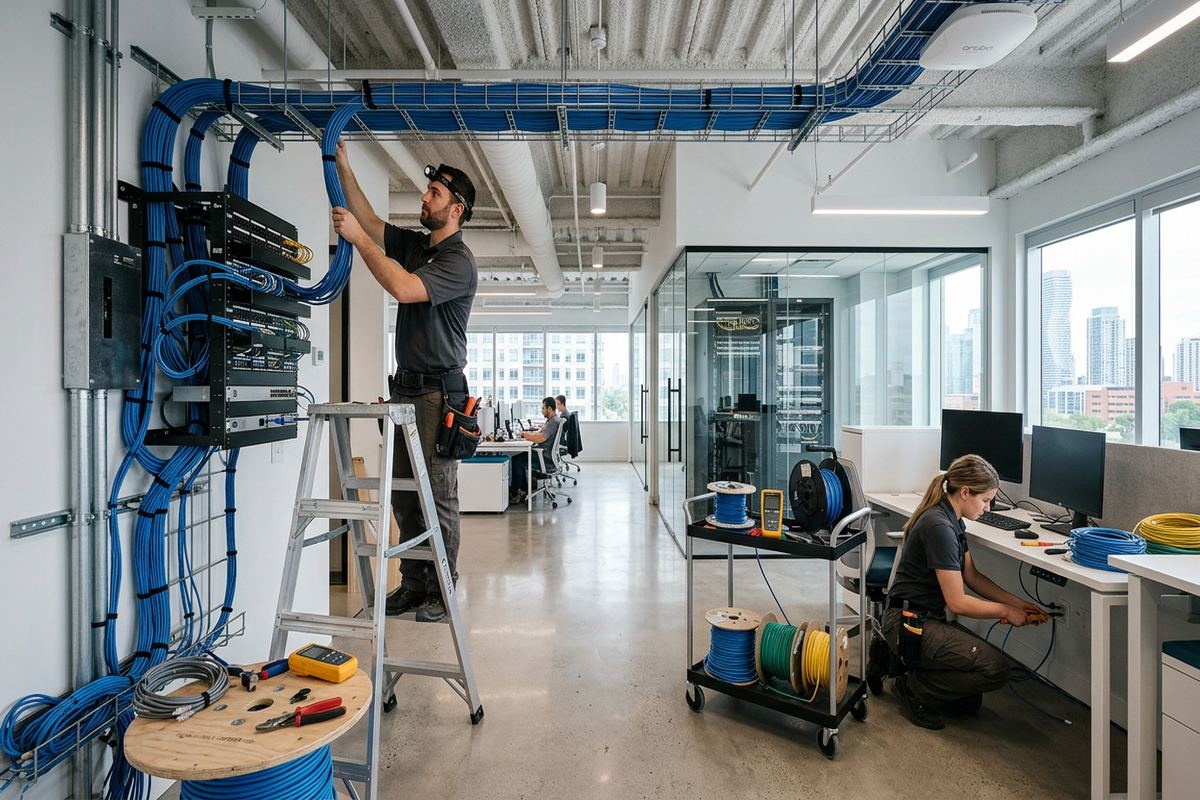
Continuous labelled cable runs reduce hidden connections and make future diagnosis more practical. Speaker cable is selected for the route and installation environment, then run from the designated equipment location to each speaker or control point. Labels identify the destination at accessible ends, helping owners and technicians understand the system later. We avoid burying undocumented joins behind finished surfaces. Where wiring passes through framing or near building services, routing and support are planned to protect the cable and preserve access. An as-built record documents final destinations and material changes from the original Cornwall installation plan.
Masonry and frame buildings call for different mounting methods. A wood-framed ceiling may accept a purpose-made speaker once clearances and support are verified, while brick, concrete or block can require surface mounting, suitable anchors and a different cable route. Commercial strips and converted mixed-use properties in Cornwall Centre may contain both construction types within one unit. We inspect the actual substrate before choosing hardware. That approach helps avoid loose brackets, damaged finishes and cable paths that cannot be completed, while keeping visible components aligned with the room and accessible for adjustment or replacement.
- Routes assessed through existing finished areas
- Continuous cable without hidden undocumented joins
- Both cable ends clearly labelled
- Mounting hardware matched to substrate
- As-built cable record supplied at handover
Cornwall, Ontario
Whole-home audio installation in Cornwall, scoped in writing first
Book a site assessment and get equipment, routes, exclusions, and warranty on paper before anything is installed.
Outdoor Audio for Cornwall Seasons
Outdoor audio needs equipment, cabling and mounting methods suited to exposure. Cornwall winters, wind-driven moisture and repeated freeze-thaw cycles can affect brackets, penetrations, connectors and surface materials. We distinguish weather-resistant equipment from indoor products and choose locations that reduce direct exposure where practical. Exterior speakers are mounted to a verified substrate rather than only to siding or trim that cannot carry the load. Cable entry points are planned to limit water paths, and penetrations are sealed with materials appropriate to the surrounding surface and expected seasonal movement.
Coverage outdoors is planned around the area people use, not simply the back wall of the house. Decks, patios, pools and larger riverfront lots may need different speaker directions and levels to keep sound useful near listeners. Several speakers operating at moderate volume can be more controlled than one device aimed across the property. We discuss neighbouring properties, seating areas and whether the outdoor zone should operate separately from indoor rooms. The design also considers safe mounting height, vegetation, snow accumulation and access for inspection after severe weather or exterior renovation work.
Exterior routes sometimes cross brick, poured concrete, wood framing or finished siding within a short distance. Each transition needs an appropriate fastening and sealing approach. We plan drip paths, protect exposed cable where necessary and avoid placing connectors where water can collect. If an ideal speaker location would compromise the building envelope or require work outside the audio scope, we identify another option. Cornwall owners receive the final locations in the as-built record, making it easier to recognize audio routes before future siding, roofing, deck or landscaping projects disturb installed wiring.
- Weather-suitable speakers and connection methods
- Penetrations sealed for seasonal exposure
- Mounting checked against exterior substrate
- Coverage directed toward occupied areas
- Outdoor zones controlled separately when required
Audio Controls, Sources and Network Setup
A multi-room system depends on controls that household members can understand. We configure the selected platform on site, create logical room names and test ordinary tasks such as choosing a source, changing volume and grouping compatible zones. Where the system uses a customer network, we assess connection requirements and identify coverage or capacity concerns that could affect control reliability. Audio equipment does not repair an unsuitable network by itself. If Wi-Fi or structured cabling work is needed, that requirement is documented rather than hidden inside assumptions about how streaming equipment will operate throughout the Cornwall property.
Source planning prevents confusion over what can play in each zone. Streaming services, televisions, turntables and other components have different connection, account and distribution requirements. We confirm which sources are included, where they will sit and whether they can be shared or used independently. Television audio may require a direct connection or dedicated equipment near the display, while a turntable can need appropriate signal handling. We avoid promising compatibility without reviewing model information. Customer accounts remain under the customer’s control, and handover is completed using the owner’s own credentials instead of installer-owned accounts.
Equipment racks, cabinets and shelves require ventilation, power and service access. Amplifiers and networked audio components should not be packed into an unventilated cupboard or placed where routine access means moving furniture. We review the proposed equipment location for heat, dust, moisture and cable entry space. In a house, this might be a utility area or purpose-built cabinet; in a Business Park unit, it may share an organized communications space. The location and ownership of installed equipment are recorded in the scope so responsibility remains clear after the Cornwall project is completed.
- Room names configured for clear control
- Customer-owned accounts and credentials
- Sources checked for connection compatibility
- Network requirements identified before commissioning
- Equipment located with ventilation and access
Whole-Home Audio for Condos and Rentals
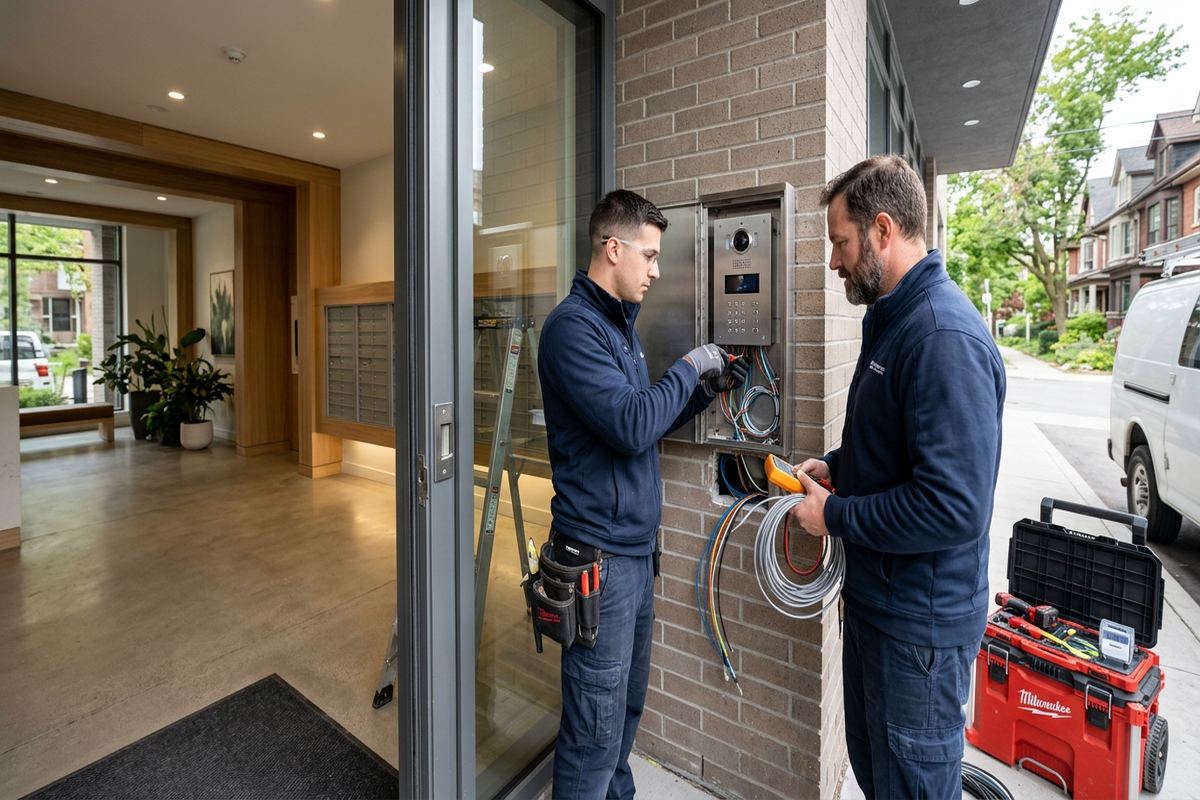
Condo and rental work begins with permission as well as technical planning. Owners, tenants and landlords may need written approval before speakers are recessed, cables cross common elements or exterior devices are mounted. Condominium rules can restrict drilling hours, equipment access, penetration of fire separations and changes to balconies or shared walls. We ask the customer to confirm applicable approvals before work begins. Where permanent alterations are not permitted, surface-mounted speakers, furniture-based equipment or less invasive cable pathways may provide a workable alternative without representing unauthorized modifications as part of the Cornwall installation.
Shared walls and compact layouts also affect how sound should be distributed. More speakers do not automatically produce a better result in a condo; suitable placement and controlled volume are usually more important. We plan zones around actual rooms, seating and neighbouring units, then select mounting positions that avoid unnecessary vibration transfer where practical. Built-in speakers still create sound through the structure, so they cannot guarantee isolation. For Cornwall Centre apartments or converted buildings, we also verify whether wall and ceiling assemblies conceal masonry, services or separations that must not be disturbed without further authorization.
Landlords and commercial tenants need the scope to separate building improvements from tenant-owned equipment. A written record identifies equipment ownership, included cabling, exclusions and warranty information. If a tenant expects to remove amplifiers or source devices later, fixed speakers and concealed cable should still be addressed explicitly. We also document final routes and device locations for the property record. One accountable contractor coordinates the audio portion, but approval from the property owner, condominium corporation or other authority remains the customer’s responsibility and may affect scheduling, design choices or whether a proposed route can proceed.
- Approval requirements reviewed before drilling
- Alternatives for restricted permanent alterations
- Shared-wall placement considered carefully
- Equipment ownership recorded in writing
- Final routes documented for property records
Commercial Audio Across Cornwall
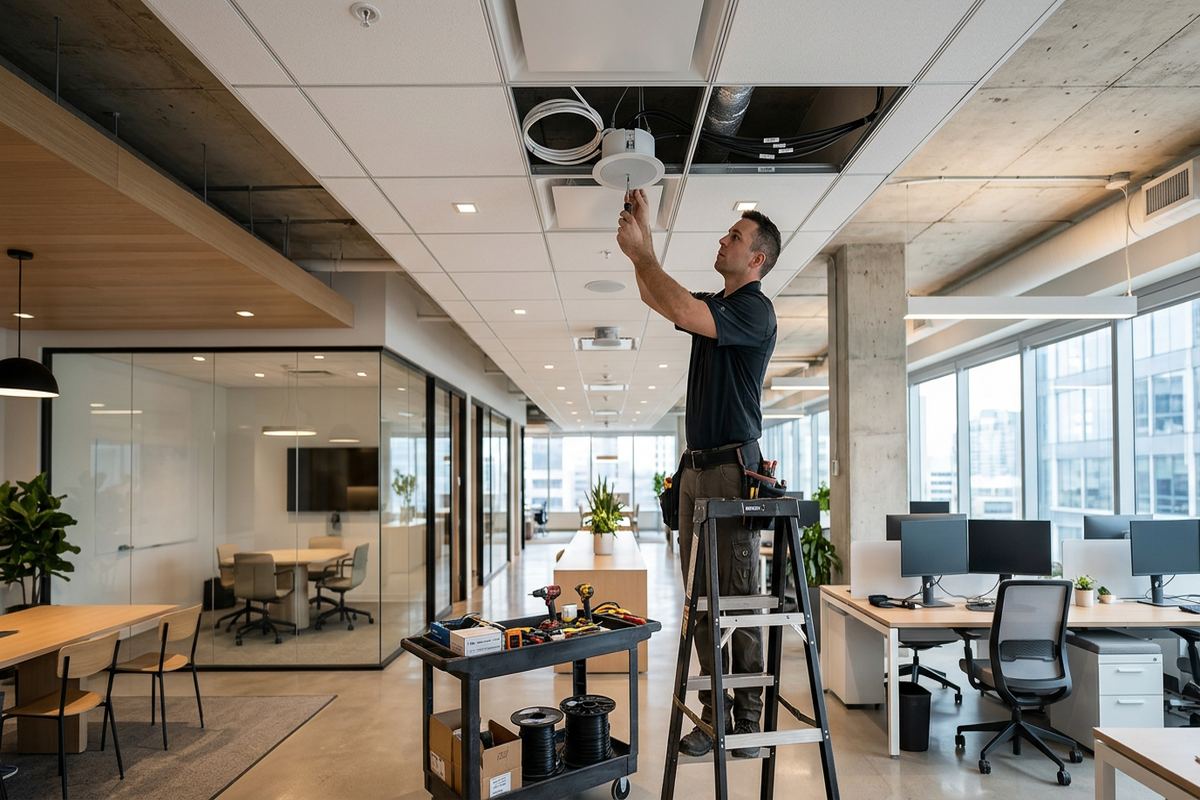
Whole-site audio is also useful in offices, retail spaces, restaurants, clinics and customer areas when the system is designed for the business purpose. A commercial installation may prioritize even background coverage, straightforward staff control and separation between public and private zones. Commercial strips around Cornwall Centre can have long, narrow units with hard surfaces, while Business Park properties may combine offices, reception areas and industrial space. We assess ceiling construction, operating noise, occupancy patterns and access restrictions before recommending speaker quantities, amplifier capacity or control locations for the specific premises.
Logistics warehouses require different expectations from residential rooms. High ceilings, open structure, machinery noise and changing storage layouts influence audibility and mounting access. Background audio should not be confused with an emergency communication or life-safety system. If paging, evacuation messaging or code-regulated functions are required, they must be identified and scoped separately with suitable equipment and responsibilities. For ordinary music in office or staff areas, we can keep zones distinct from active warehouse space. Cable routes are coordinated around racking, doors, lighting and building services rather than installed across future operational access points.
Commercial work also benefits from scheduled coordination. We identify areas that must remain open, suitable times for disruptive drilling and any lift, ceiling or access requirements known during assessment. Device positions should remain serviceable after furniture, displays or warehouse storage are installed. Staff controls can be limited to the functions needed for daily use, reducing accidental changes to system settings. At handover, we test the included zones, provide operating guidance and turn over credentials and as-built information to the designated Cornwall business representative, giving the organization a clear record of what was installed.
- Coverage planned for business operating noise
- Public and staff areas separated by zone
- Warehouse routes coordinated with operations
- Daily controls simplified for designated staff
- Life-safety functions scoped separately
Cornwall Installation, Testing and Handover
Installation starts from the accepted written scope, not an informal list of speakers. We confirm device positions and cable routes before cutting finished surfaces, then install continuous labelled runs and mounting hardware suited to the verified substrate. Changes discovered during the work are discussed when they affect placement, access, exclusions or equipment. This is especially important in older Cornwall properties, where concealed renovation layers can differ from visible construction. Keeping decisions documented helps the owner understand why a route changed and prevents unapproved substitutions from becoming part of the finished system without review.
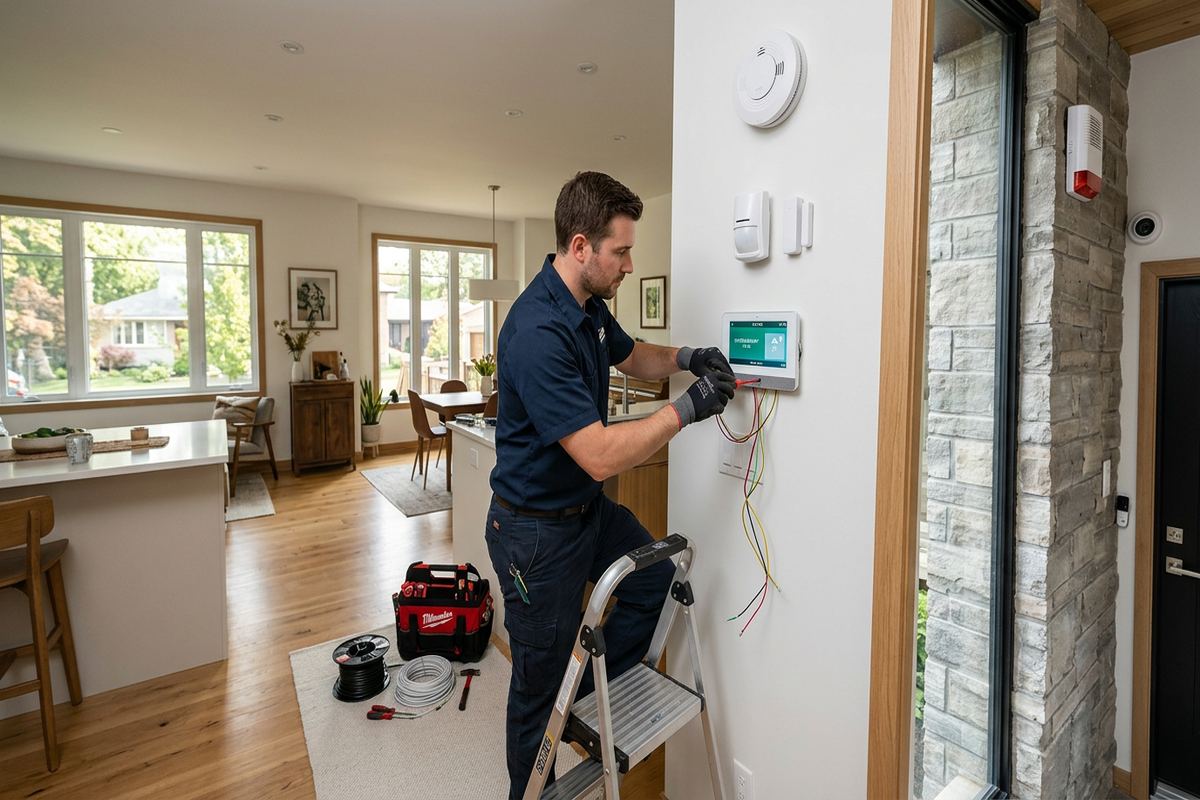
Commissioning covers every included speaker, zone, source and control path. We check channel assignment, speaker operation, practical volume range and room names, then configure supported functions on site. Outdoor devices are inspected for firm mounting and sealed penetrations. Network-connected components are tested on the available customer network, although internet services and third-party platforms remain outside the installer’s control. Where television or customer-supplied equipment is included, the applicable connection is tested within the written scope. Problems found during commissioning are addressed or recorded before handover rather than left as unexplained behaviour.
Handover gives the owner control of the completed system. We provide access using the customer’s own credentials, explain routine operation and deliver an as-built record showing final device and cable information. Equipment ownership and warranty details follow the written scope. UnifiedLink remains one accountable contractor for the included audio installation, from assessment through configuration and handover. Requests sent during business hours are answered the same day, while after-hours requests are answered the next business day. Site assessment timing in Cornwall depends on the service requirements and travel distance, so the appointment is confirmed individually.
- Accepted scope checked before permanent work
- Every included zone tested on site
- Customer credentials used for handover
- As-built device and cable record provided
- One contractor accountable for included work
Cornwall neighbourhoods we cover
- Le Village
- Riverdale
- Cornwall Centre
- Guindon Park area
- Business Park
Whole-home audio installation in Cornwall — common questions
Can you install audio in an older Cornwall house?
Yes, subject to a site assessment. Older Cornwall houses may contain plaster, masonry, shallow framing, finished basements or undocumented renovations that affect cable access. We inspect likely routes before pricing and explain where concealed wiring is practical. If access is restricted, the written scope can include surface pathways, alternate speaker positions or clearly identified openings and finish-work exclusions.
Can outdoor speakers stay installed through Cornwall winters?
Outdoor speakers can remain installed when the equipment, mounting hardware, cabling and connections are suitable for exterior use. Cornwall freeze-thaw cycles and moisture make substrate selection and sealing important. We verify the mounting surface, reduce direct exposure where practical and seal cable penetrations appropriately. Exterior equipment should still be inspected after severe weather or nearby building work.
Do I need separate controls for every room?
Not necessarily. Cornwall homeowners can group related spaces, such as a kitchen and dining area, while keeping bedrooms, television rooms and outdoor areas independent. The right arrangement depends on how occupants listen and whether different sources must play simultaneously. We define zones before selecting amplification and controls so expected room independence is reflected in the equipment and written scope.
Will the system work with my television and streaming services?
Often, but compatibility depends on the television, audio platform, source devices, accounts and available connections. During the Cornwall assessment, we record the sources you want included and review relevant model information. Streaming accounts are configured using your credentials. Any limitations, required adapters or customer-supplied equipment are identified in the scope rather than assumed after installation.
Do I need condo or landlord approval?
You may need approval before drilling, recessed speaker installation, exterior mounting or work affecting common elements and shared assemblies. Cornwall condo owners and tenants should confirm applicable rules with the condominium corporation, landlord or property owner. We can document proposed placements and routes, but obtaining authorization remains the customer’s responsibility. Less invasive alternatives can be considered when permanent alterations are restricted.
How do I get pricing for a Cornwall audio installation?
UnifiedLink completes a site assessment before pricing. We review rooms, construction, cable routes, sources, controls, exterior exposure and equipment locations. You then receive a written scope covering equipment, cable routes, placement, exclusions, ownership and warranty. Requests sent during business hours are answered the same day; after-hours requests are answered the next business day. Assessment timing depends on service needs and travel distance.
Coverage in Cornwall is confirmed against the address before we quote. See everything we install in Cornwall or the province-wide whole-home audio installation page.