UnifiedLink installs commercial security camera systems for Cornwall offices, stores, warehouses, multi-unit properties and mixed-use buildings. Each project starts with a site assessment and a written scope covering camera placement, cable routes, recording requirements and exclusions. Installation includes labelled cable runs, on-site configuration and a documented handover using credentials controlled by the customer.
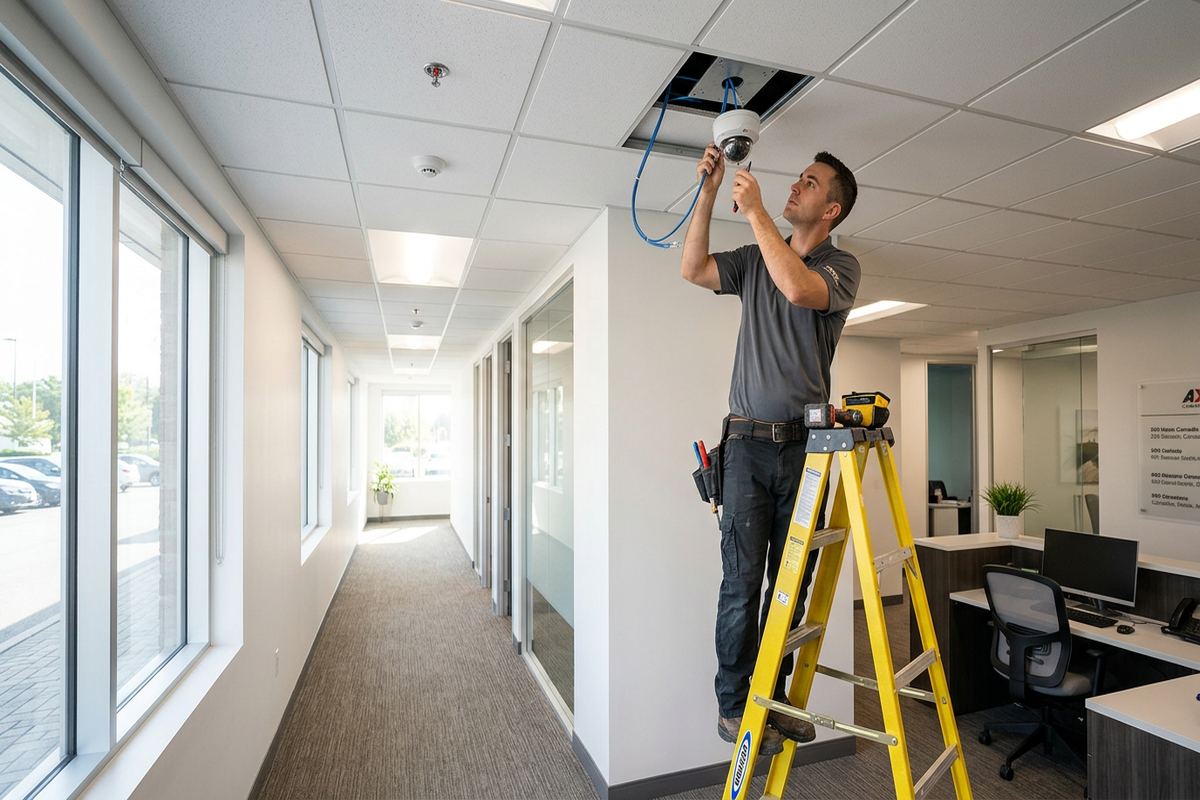
Commercial Camera Planning for Cornwall Properties
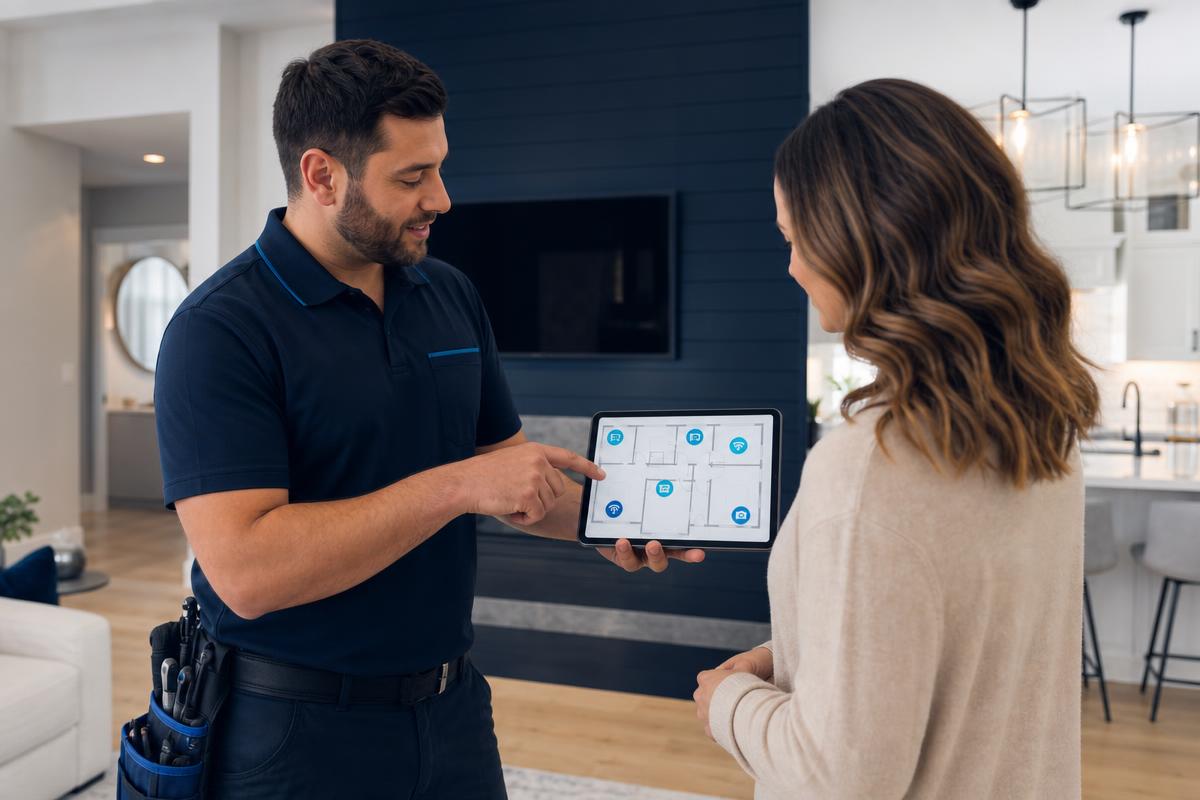
A useful camera system begins with the activity that needs to be recorded, not with an arbitrary camera count. During a Cornwall site assessment, we review entrances, shipping doors, customer areas, parking spaces, service corridors and exterior boundaries. Camera positions are then planned around identification, general observation and incident review. The written scope records proposed equipment, viewing directions, cable routes, recorder location, exclusions, equipment ownership and warranty. This process gives building owners and managers a clear basis for comparing the proposed system with operational needs before installation work or final pricing proceeds.
Cornwall commercial properties vary from older masonry storefronts in Cornwall Centre and Le Village to newer industrial units in the Business Park. Those buildings cannot all use the same mounting method or cable path. Solid brick, concrete block, framed additions, suspended ceilings and exposed warehouse structures each require different anchors and routing decisions. We examine accessible service spaces, wall construction, ceiling conditions and potential obstructions before confirming installation details. Where a property includes leased units, shared entrances or residential space above a business, the assessment also identifies areas requiring landlord, condominium or property-management approval before drilling, cabling or mounting begins.
Coverage design considers what staff may need to verify after an event. A wide view can show movement through a loading area, while a narrower view may be needed to distinguish a person at a controlled entrance. Bright windows, vehicle headlights, deep overhangs and changing daylight can reduce useful detail if positions are chosen without testing. We assess likely viewing conditions and place cameras to reduce avoidable backlighting, excessive distance and blocked sightlines. For exterior areas, the plan also considers snow accumulation, roof runoff, plowed snowbanks and seasonal vegetation that could obscure a Cornwall camera during part of the year.
- Entrance, exit and reception coverage planning
- Loading-door and shipping-area views
- Parking, yard and perimeter assessment
- Recorded-detail and retention requirements
- Documented exclusions and equipment ownership
Camera Selection and Recording Design
Camera type should follow the scene, mounting location and required evidence. Fixed cameras suit defined entrances, counters and corridors, while varifocal models allow the field of view to be adjusted during commissioning. Dome, turret and bullet housings have different mounting and maintenance considerations, particularly where equipment is exposed to weather or reachable from the ground. For Cornwall warehouses and commercial strips, we also review night lighting, reflective surfaces and long exterior approaches. The objective is not simply a sharp live image; recorded footage must remain practical to search, export and interpret under the conditions expected at the property.
Recording design includes resolution, frame rate, retention goals, storage capacity and the number of simultaneous camera streams. These elements affect one another, so retention should not be promised without defining recording settings and expected activity. We discuss whether continuous, scheduled or motion-based recording fits the site and its incident-review needs. The recorder is placed in a controlled, ventilated location with appropriate network access and space for service. Where remote viewing is requested, access is configured using the customer’s own accounts. Administrative credentials are provided at handover rather than retained as unknown installer-only information.
Existing camera systems can sometimes be expanded, but compatibility needs to be checked before equipment is reused. Network cameras, analogue formats, recorders, power methods and software platforms may not work together merely because their connectors appear similar. During the assessment, we identify available model information, inspect accessible cabling and review the current recorder’s capacity. Any proposed reuse is stated in the scope, along with limitations or items that cannot be verified. Cornwall owners then have a clear distinction between retained equipment and new components, avoiding assumptions about warranty, storage performance, image quality or support for older devices.
- Fixed and adjustable-lens camera options
- Recorder and storage planning
- Day, night and backlight review
- Compatibility checks for existing equipment
- Secure remote-viewing configuration
Coverage for Cornwall Warehouses and Industrial Units
Logistics warehouses and industrial units often require separate coverage strategies for people, vehicles and goods. A camera watching an entire yard may document general movement but may not provide the detail needed at a shipping door or pedestrian entrance. In Cornwall’s Business Park, we plan complementary views for loading bays, dock approaches, receiving areas, staff doors and selected interior aisles. Camera placement must also account for racking, trailers, raised doors and moving equipment. The scope identifies each intended view so managers understand which activities are covered and where operational changes could later create an obstruction.
Long cable distances and high mounting points require careful planning in warehouse environments. We review network-room location, pathway capacity, available power, lift access and separation from electrical conductors or sources of interference. Continuous labelled cable runs make later testing and maintenance more direct, especially when several cameras converge above ceilings or along structural members. Cable supports are selected for the pathway rather than allowing loose wire to rest on ceiling tiles or unrelated services. Where a run cannot be completed within suitable distance or pathway limits, the design can include an intermediate network location, subject to power, security and environmental requirements.
Industrial recording areas should be selected with workplace operations and privacy responsibilities in mind. Cameras may support review of access points, material movement and after-hours incidents, but they should not be aimed casually into lunchrooms, washrooms or neighbouring properties. We discuss intended views with the responsible owner or manager and document notable exclusions. Signage, employee policies and legal obligations remain the customer’s responsibility unless specifically included in the scope. For shared yards or leased Cornwall units, approval from the property owner may be required before cameras, conduit or network cabinets are attached to exterior walls or common structures.
- Loading-bay and receiving coverage
- Yard and vehicle approach views
- High-bay cable pathway planning
- Racking and trailer obstruction checks
- Shared-property approval requirements
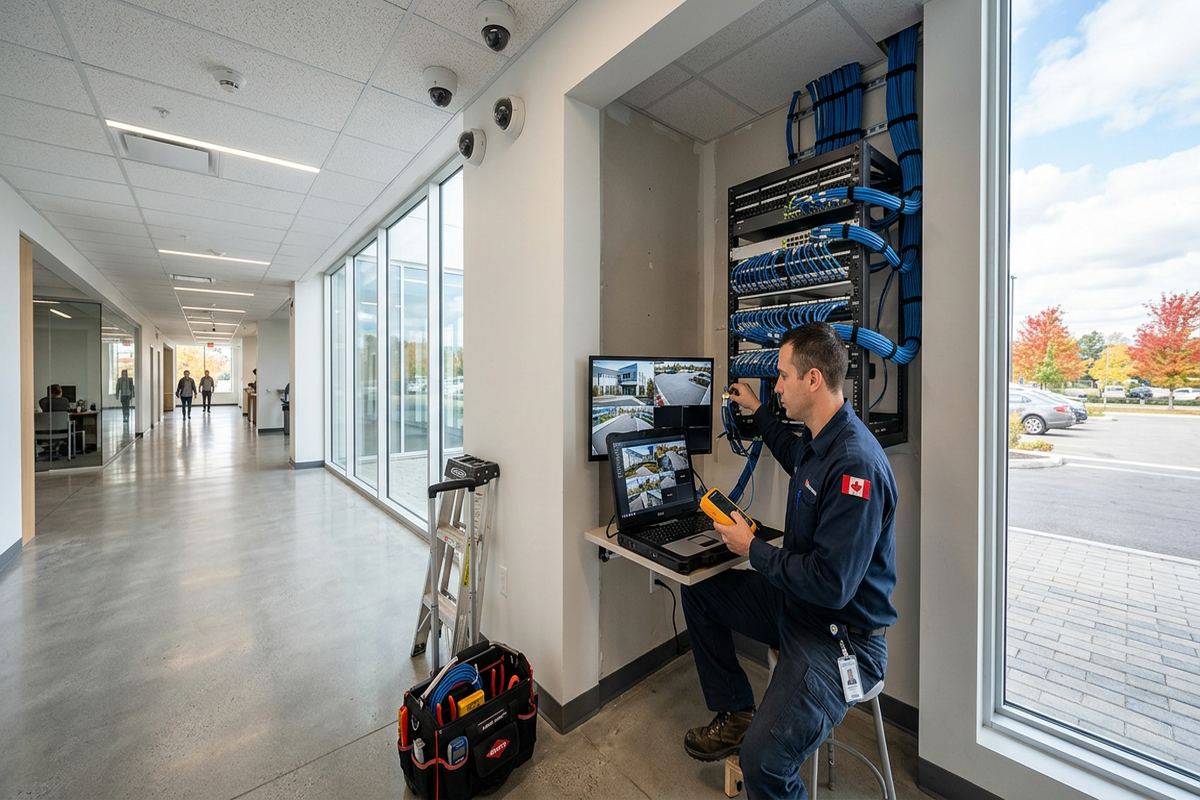
Cornwall, Ontario
Commercial security camera installation in Cornwall, scoped in writing first
Book a site assessment and get equipment, routes, exclusions, and warranty on paper before anything is installed.
Exterior Installation for Cornwall Winters
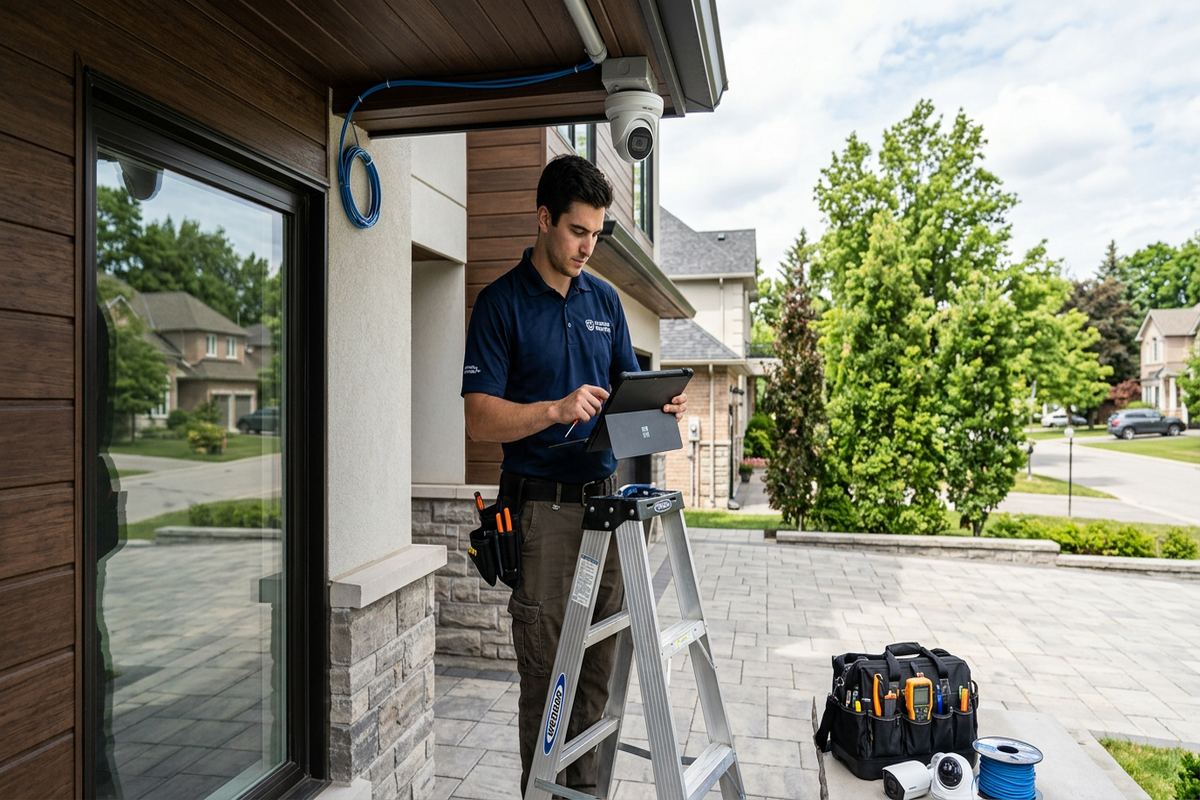
Exterior camera work in Cornwall must account for winter cold, freeze-thaw cycles, wind-driven rain and snow. A weather-rated camera alone does not make the complete installation weather resistant. Mounting surfaces, junction boxes, cable entries, fasteners and seals all contribute to long-term performance. We route entries to limit water travel, use suitable exterior fittings and seal penetrations according to the wall assembly and mounting detail. Drip paths and exposed connectors are avoided where practical. Camera positions are also chosen with access for future cleaning and adjustment, without placing equipment directly beneath roof runoff or where accumulated ice is likely to strike it.
Masonry and frame construction require different exterior methods. Older brick in Cornwall Centre or Le Village may have variable mortar conditions, previous penetrations or layered renovations behind the visible wall. Fastener selection and drilling locations need to reflect the actual substrate rather than relying on a surface assumption. Frame walls require attention to cladding, drainage planes and appropriate backing. Penetrations should not trap water or compress finishes improperly. During the assessment, we look for practical cable routes from inside to outside and identify visible conduit where concealed routing is unavailable, so appearance and building-envelope implications are understood beforehand.
Seasonal changes can alter an otherwise acceptable camera view. Low winter sun may create glare at entrances, while darkness arrives during active business hours and snow can reflect infrared illumination back toward the lens. In summer, foliage or outdoor storage may block areas that were open during installation. We consider these conditions when selecting mounting height, angle and night-view settings. Final commissioning is completed on site, but some seasonal limitations can only be anticipated rather than reproduced immediately. The as-built record documents device locations, enabling a Cornwall property manager to identify cameras that may need later adjustment after operational or landscaping changes.
- Sealed exterior cable penetrations
- Weather-suitable boxes and fittings
- Freeze-thaw and runoff considerations
- Snow, glare and infrared review
- Masonry-specific mounting assessment
Cabling, Networks and Power
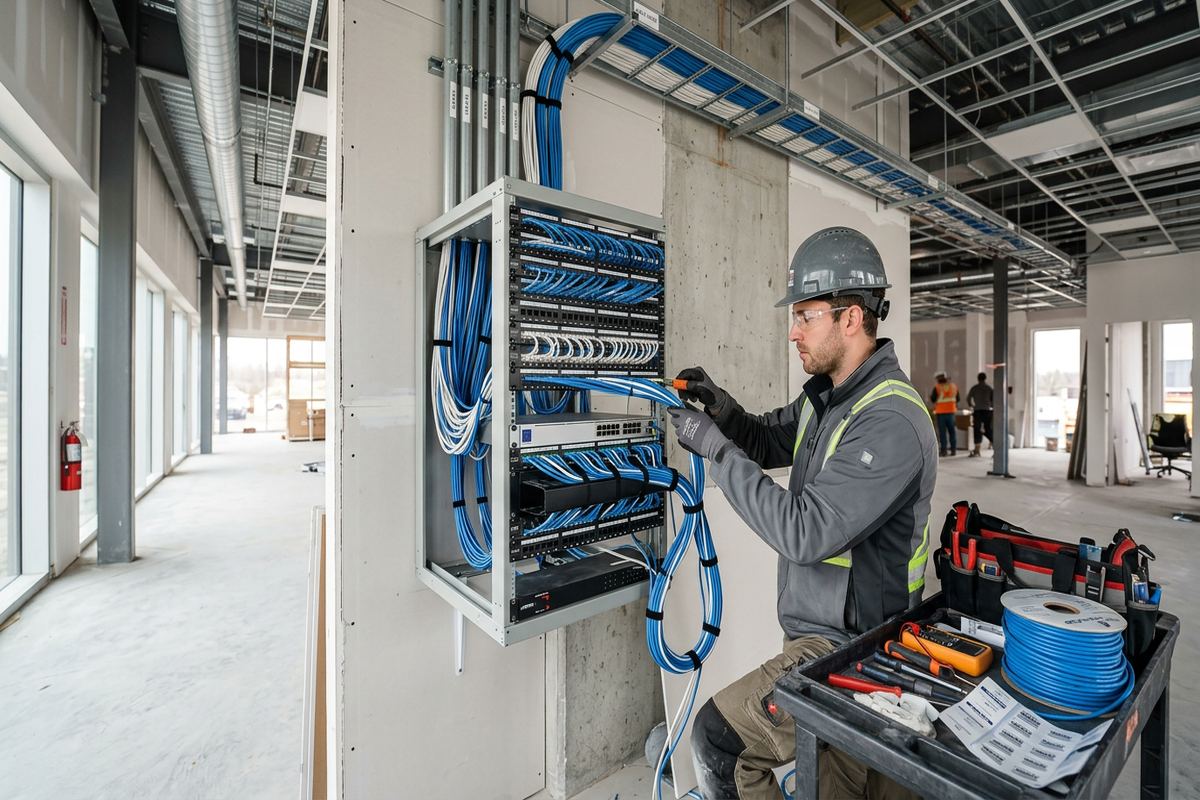
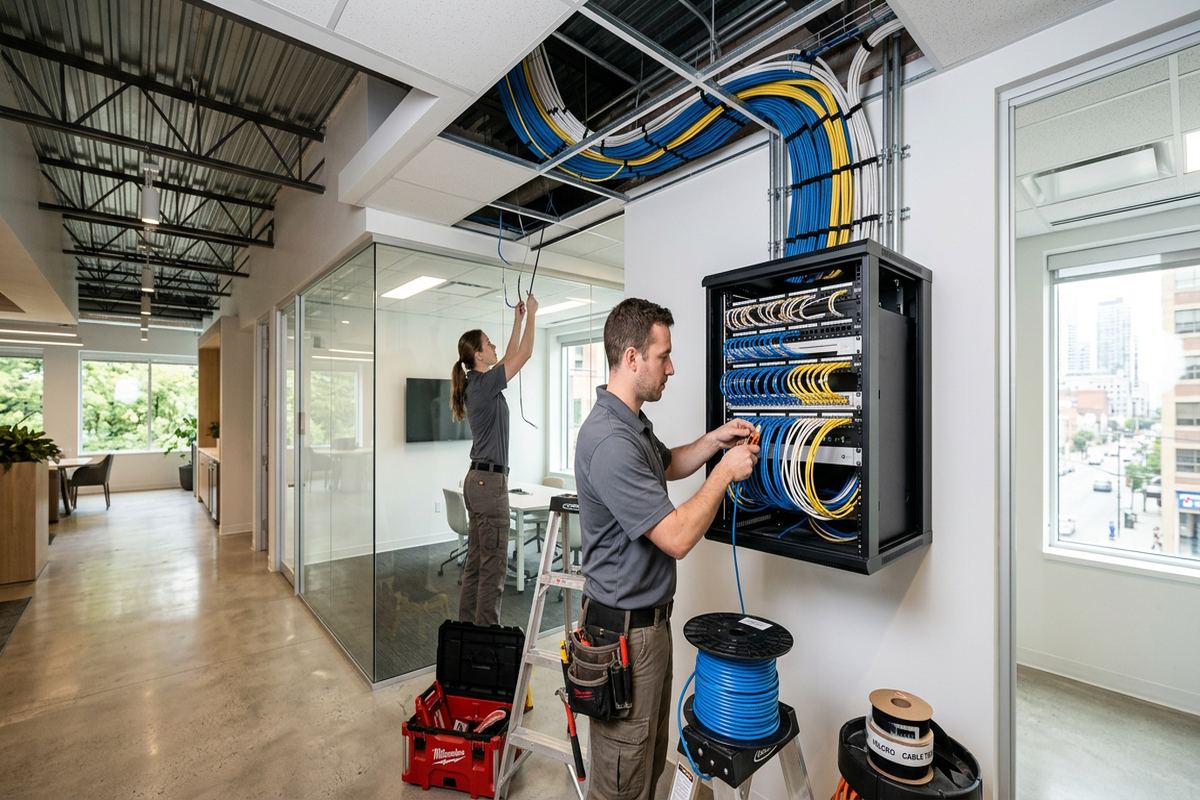
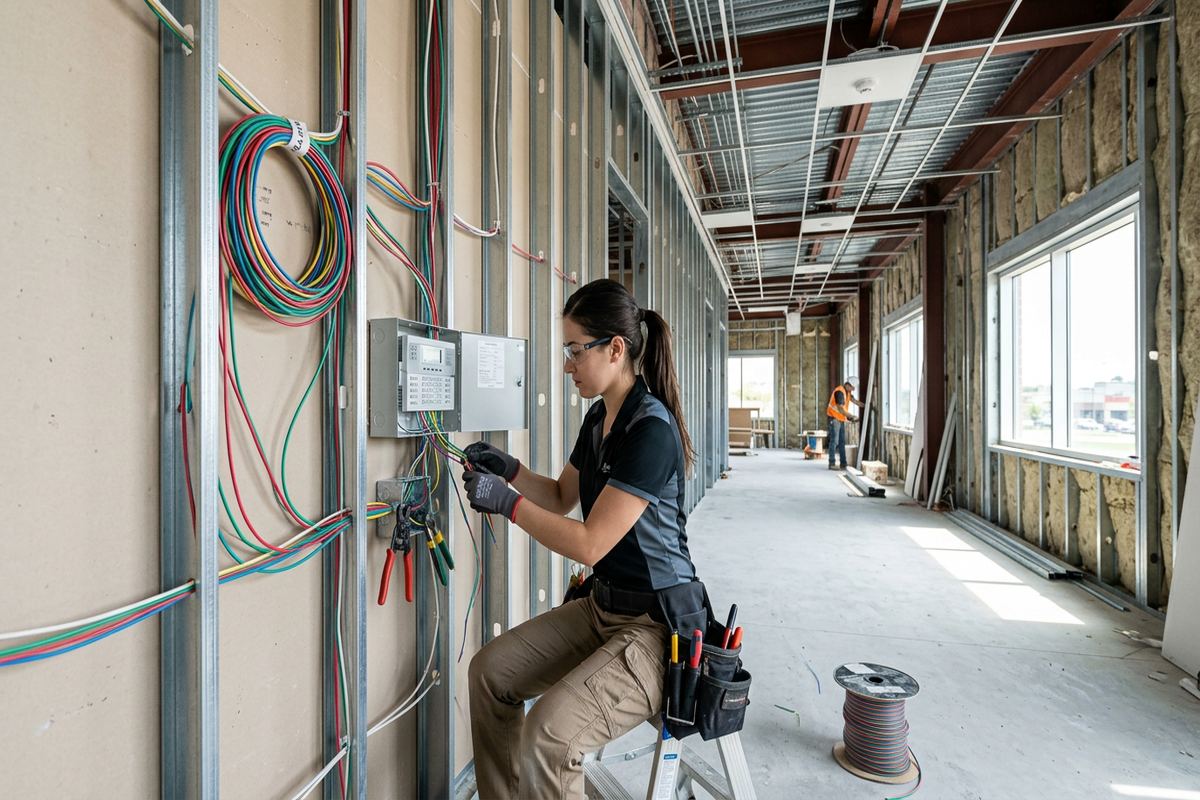
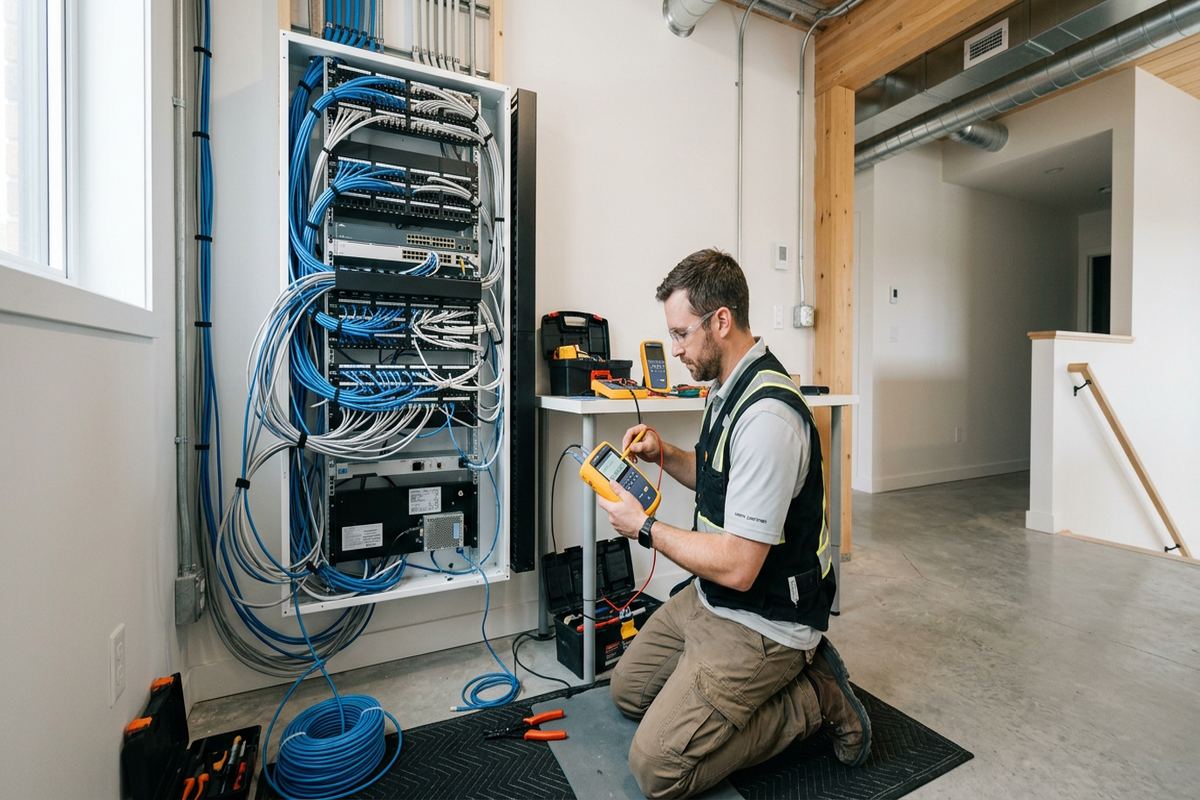
A commercial camera system depends on cabling and network design as much as camera hardware. UnifiedLink installs continuous labelled cable runs between devices and their designated termination points, subject to the agreed pathway. Labels correspond with camera names and documentation, making faults easier to isolate without tracing unidentified cables through the building. Routes are planned around ceiling access, fire separations, exposed structure and occupied work areas. If conduit, coring, patching, painting or after-hours access is needed, those items are included or excluded explicitly in the written scope rather than assumed once installation has started.
Network cameras commonly receive data and power through structured cabling, but switch capacity and power availability must be confirmed. We review port count, power budget, uplink requirements and the physical security of network equipment. Camera traffic may be separated from general business devices where the network design supports it. Remote access is configured using supported methods and customer-controlled credentials, not informal password sharing. For Cornwall businesses with managed information technology services, we can work from the network requirements supplied by their IT provider. Responsibility for firewall changes, internet service and ongoing network administration is recorded in the project scope.
Power interruptions can stop recording even when cameras remain physically intact, so the recorder, network switch and related components should be considered together. Backup power may be discussed where continued operation during short interruptions is an operational requirement, but runtime depends on the connected load and selected equipment. We do not treat a battery backup as indefinite power. Equipment also needs ventilation and protection from dust, moisture, accidental disconnection and unauthorised access. In older Cornwall buildings, available receptacles and electrical conditions may need review by an appropriate electrical contractor before camera equipment can be installed in the preferred location.
- Continuous labelled data cabling
- Network switch capacity review
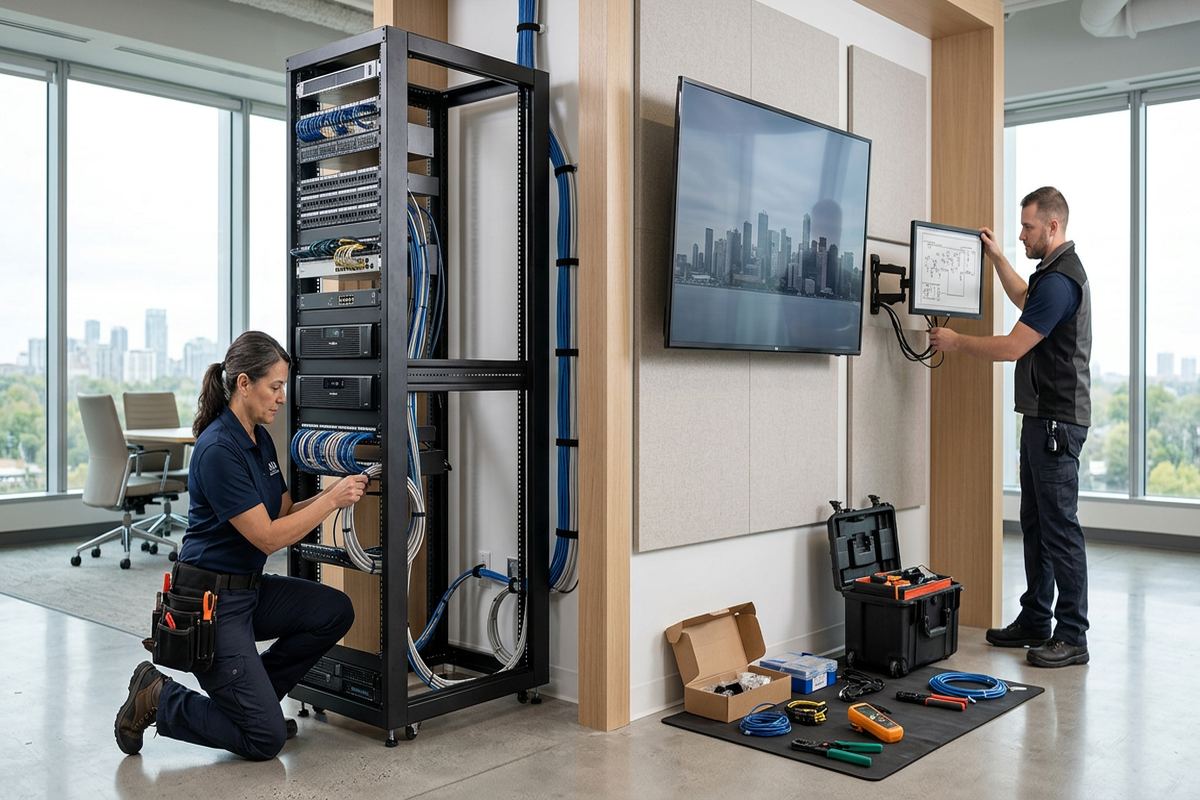
- Recorder and equipment-room planning
- Customer-controlled remote access
- Power and backup-power considerations
Cameras for Stores and Mixed-Use Buildings
Retail and service properties require views that support daily operations without creating unnecessary blind spots or privacy concerns. Typical areas include public entrances, transaction zones, stockroom doors, delivery points and selected exterior approaches. In Cornwall Centre and Le Village, narrow storefronts and older layouts can produce long sightlines interrupted by shelving, signs or structural walls. We assess the actual layout rather than relying on a floor plan alone. Camera angles are coordinated so one prominent display, seasonal fixture or open door does not remove useful coverage from the area the camera was intended to observe.
Mixed-use properties add approval and access considerations. A commercial tenant may control the interior of its unit but not the exterior wall, common hallway, residential entrance or shared network room. Before work proceeds, the owner should confirm written permission from the landlord, condominium corporation or property manager where applicable. Cameras serving a business should be directed toward authorised areas and avoid windows or doors belonging to residents and neighbouring tenants. The scope can distinguish private commercial coverage from common-property work, helping Cornwall owners understand which pathways and mounting locations depend on third-party approval or coordinated building access.
Riverfront homes make up part of local project work, and some Cornwall properties combine residential space with an office, clinic, workshop or rental unit. Commercial-grade camera planning can still be appropriate, but the boundaries between personal, tenant and public areas need careful treatment. Exterior views should be limited to the customer’s legitimate coverage needs, particularly where lots are close together. Older housing stock may also lack accessible ceiling routes or a central network location. We identify likely finished-wall disruption, visible surface pathways and approval requirements before proposing the installation, rather than assuming residential construction provides an easy route.
- Storefront and transaction-area planning
- Stockroom and delivery-door coverage
- Mixed-use privacy considerations
- Landlord or condominium approvals
- Visible pathway options for finished spaces
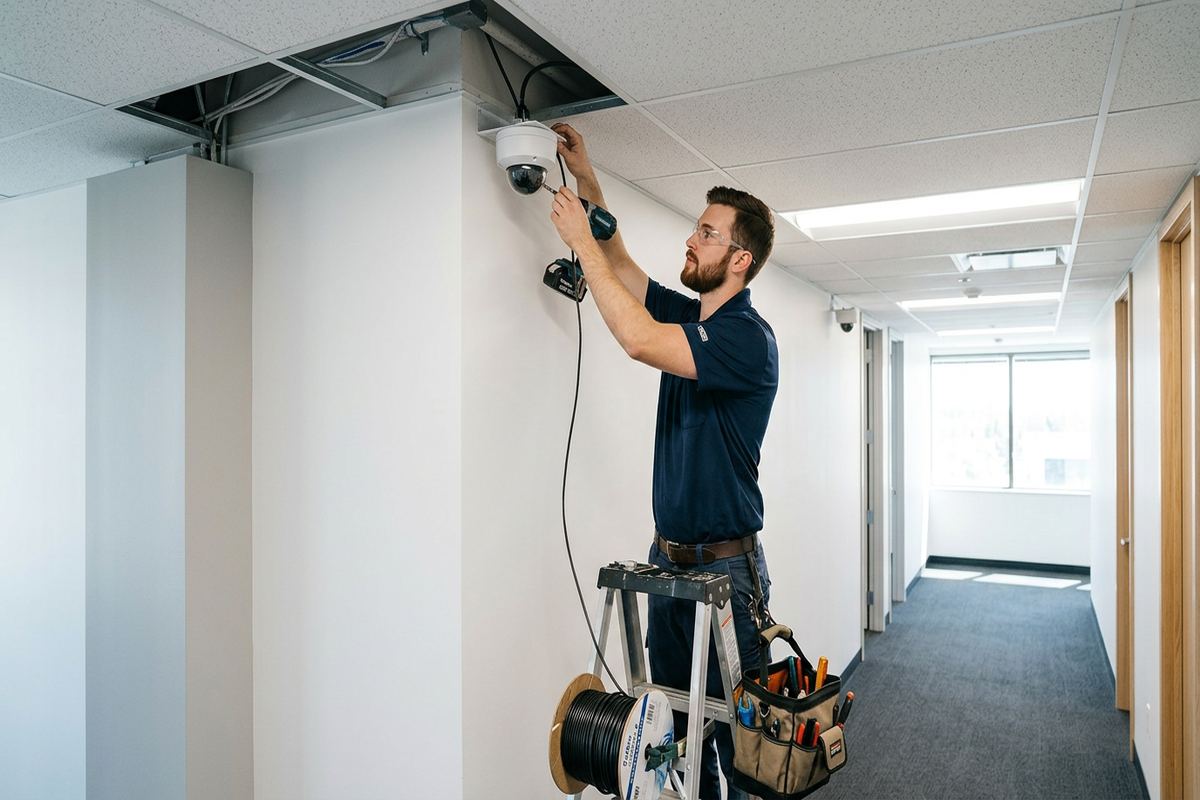
Installation and Handover in Cornwall
Once the scope is approved and site conditions are ready, installation follows the documented camera positions and cable routes. Devices are mounted, continuous cables are pulled and labelled, and recorder or network connections are completed within the agreed responsibilities. Any concealed condition that materially affects the plan is raised before a different route or mounting method is adopted. This is particularly relevant in older Cornwall properties where renovations may hide blocked cavities, abandoned wiring or unexpected masonry. Keeping one accountable contractor for camera mounting, low-voltage cabling, configuration and documentation reduces gaps between separate installers and makes project decisions easier to track.
On-site configuration turns installed hardware into an operational recording system. Camera names are matched to meaningful locations, image orientation and fields of view are checked, recording schedules are applied, and available date and time settings are confirmed. We test live viewing, recorded playback and footage export using the functions included in the selected platform. Where remote viewing forms part of the scope, it is set up on supported customer devices with customer-controlled accounts. Final image choices are reviewed against the stated purpose, although future changes to lighting, fixtures, inventory or landscaping may require the customer to request later adjustment.
Handover includes the customer’s own administrative credentials and an as-built record of installed device locations and labelled runs. We explain routine tasks such as live viewing, playback and export to the designated customer representative, within the capabilities of the installed system. Equipment ownership, warranty information and any outstanding exclusions remain documented in the written scope or handover material. Customers should store credentials securely and maintain access when employees or property managers change. For multi-site Cornwall operators, naming and documentation can follow a consistent location format, helping authorised users distinguish cameras without relying on generic factory labels or installer-held accounts.
- Installation to the written scope
- On-site image and recording setup
- Playback and export verification
- Customer-owned administrative credentials
- As-built device and cable record
Requesting a Cornwall Site Assessment
The first step is a discussion about the property, operating hours, current equipment and the incidents or activities the system should help review. Useful information includes floor plans, photographs, desired viewing areas, network contacts and any landlord or condominium restrictions. A site assessment is completed before pricing because camera count alone does not reveal cable difficulty, mounting surfaces, access equipment or recorder requirements. Timing depends on the service and travel distance. Requests sent during business hours are answered the same day, while after-hours requests are answered the next business day. This wording refers to the initial response, not a guaranteed installation date.
During a Cornwall assessment, access should be available to proposed camera areas, ceiling spaces where practical, the network or recorder location and relevant electrical outlets. A manager familiar with shipping, customer flow, previous incidents and restricted areas should participate. For occupied stores, warehouses or multi-unit properties, we also discuss work-zone control and suitable installation periods. If lifts, escorts, keys or tenant notices are required, responsibilities are recorded. Conditions that cannot be inspected, such as inaccessible cavities or concealed pathways, are identified as assumptions or exclusions so they are not mistaken for confirmed installation routes.
After assessment, the written scope sets out equipment, camera placement, cable routes, recording design, exclusions, equipment ownership and warranty. It can also identify customer-supplied network services, permits or approvals, electrical work, patching and other dependencies. The scope provides a technical reference for the project rather than leaving key decisions in informal conversations. Whether the site is near Riverdale, Guindon Park, the Business Park or central Cornwall, the same planning sequence applies: verify conditions, define intended coverage, document responsibilities, install to the agreed design, configure on site and complete a customer-controlled handover.
- Site assessment before pricing
- Building and network condition review
- Written equipment and pathway scope
- Clear customer and contractor responsibilities
- Assessment timing based on service and travel
Cornwall neighbourhoods we cover
- Le Village
- Riverdale
- Cornwall Centre
- Guindon Park area
- Business Park
Commercial security camera installation in Cornwall — common questions
How many cameras does my Cornwall business need?
The number depends on the views and recorded detail required, not only the building’s size. Entrances, transaction areas, loading doors, yards and corridors may each need different coverage. A Cornwall site assessment identifies priorities, obstructions, lighting and practical mounting points before camera quantities are proposed. The written scope then links each camera to an intended area rather than presenting an unexplained device count.
Can you reuse our existing cameras or cabling?
Existing equipment may be reusable if its format, condition and performance are compatible with the proposed recorder and network. We inspect accessible cabling, identify available model information and test what can reasonably be verified. Older Cornwall buildings may contain undocumented or damaged runs, so reuse is not assumed. The scope states which items will remain, their limitations and whether warranty applies only to newly supplied equipment.
Will exterior cameras handle Cornwall winters?
Exterior equipment is selected and installed with Cornwall cold, freeze-thaw, snow and wind-driven moisture in mind. We consider the complete mounting detail, including boxes, cable entries, fasteners and seals, rather than relying only on the camera’s weather rating. Placement also accounts for roof runoff, ice, glare and reflected infrared light. No exterior installation is maintenance-free, so lenses and seals should be inspected periodically.
Do I need landlord or condo approval?
Approval is commonly required when a tenant wants cameras or cabling on exterior walls, common hallways, shared entrances or building network spaces. Cornwall condominium and mixed-use properties may also have rules for appearance, privacy, penetrations and contractor access. The customer is responsible for obtaining required permission unless the written scope states otherwise. We can provide proposed device locations and pathway information for an owner or property manager to review.
Can I view the cameras remotely?
Remote viewing can be configured when the selected system, network and internet service support it. UnifiedLink uses customer-controlled accounts and completes setup on supported devices included in the scope. Cornwall businesses with managed IT should involve their provider where firewall, network segmentation or account policies apply. Remote access depends on internet and network availability, and it should use secure credentials rather than shared default or installer-only passwords.
What will I receive after installation?
At handover, you receive administrative access through your own credentials and an as-built record showing installed camera locations and labelled cable runs. We review live viewing, playback and footage export with the designated representative. The written documentation also identifies equipment ownership, warranty information and exclusions. Cornwall customers should retain these records securely and update authorised access whenever staff, tenants, managers or service providers change.
Coverage in Cornwall is confirmed against the address before we quote. See everything we install in Cornwall or the province-wide commercial security camera installation page.