UnifiedLink installs structured cabling for homes, warehouses, offices and commercial units across Cornwall, Ontario. We plan cable routes, install continuous labelled runs, terminate and test each connection, and organize the network around current equipment and future needs. Every project starts with a site assessment so the written scope reflects the building, access requirements and intended use.
Structured Cabling for Cornwall Properties
Structured cabling creates a permanent pathway between network equipment and connected devices. In Cornwall, that can mean data outlets for a Riverdale home office, ceiling cables for wireless access points, or organized rack connections throughout a logistics warehouse. Each run should follow a planned route from the network location to its endpoint without hidden couplers or improvised extensions. UnifiedLink assesses the property before pricing, identifies practical pathways, and documents device locations. The resulting system supports computers, cameras, access control, phones, displays and other low-voltage equipment through one organized cabling foundation.
Local construction affects how those pathways are planned. Cornwall’s older housing stock often contains finished basements, additions, plaster, blocked cavities or wiring completed during several different renovations. Riverfront homes may also have limited utility spaces or exterior structures requiring network service. New cable routes must account for framing direction, masonry walls, insulation, fire separations and existing electrical work. Rather than assuming every outlet can be reached from above or below, the assessment confirms accessible routes and identifies where surface raceway, discreet drilling, conduit or small access openings may be needed before installation begins.
Commercial projects present different constraints but require the same disciplined planning. Units in Cornwall Centre, the Business Park and local commercial strips may combine customer areas, offices, storage rooms and service spaces within one network. Warehouses can involve long distances, high ceilings, equipment movement and changing workstation layouts. Cable selection and routing must match the environment instead of relying on residential methods. The written scope covers equipment, cable routes, device placement, exclusions, equipment ownership and warranty, giving the owner or manager a clear basis for approving the work before cables are installed.
- Home and small-business data outlets
- Wireless access point cabling
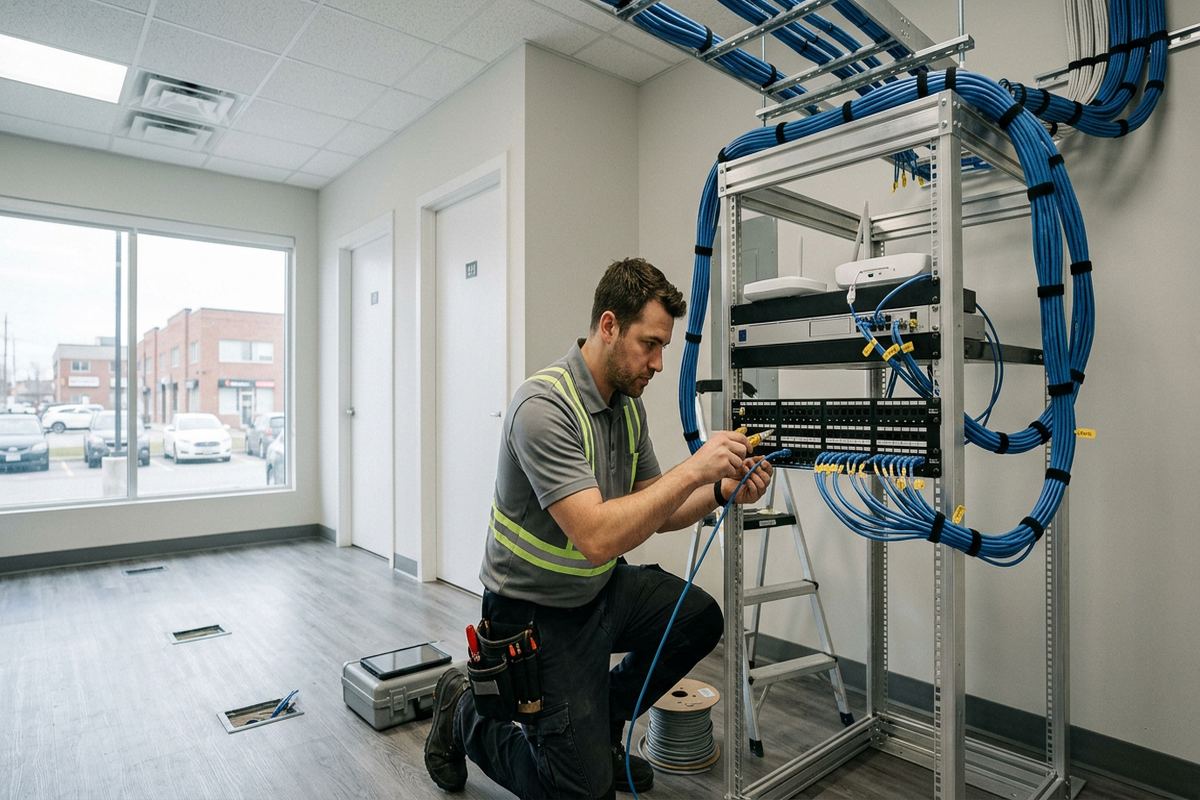
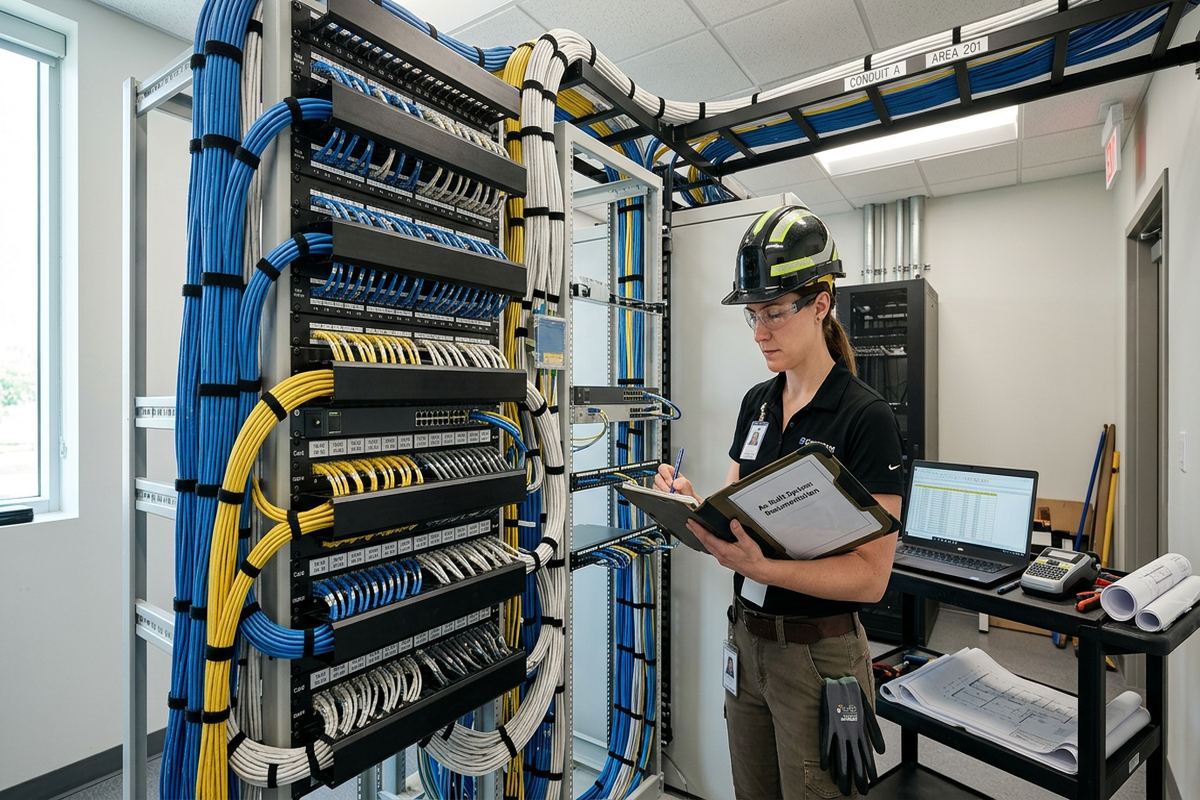
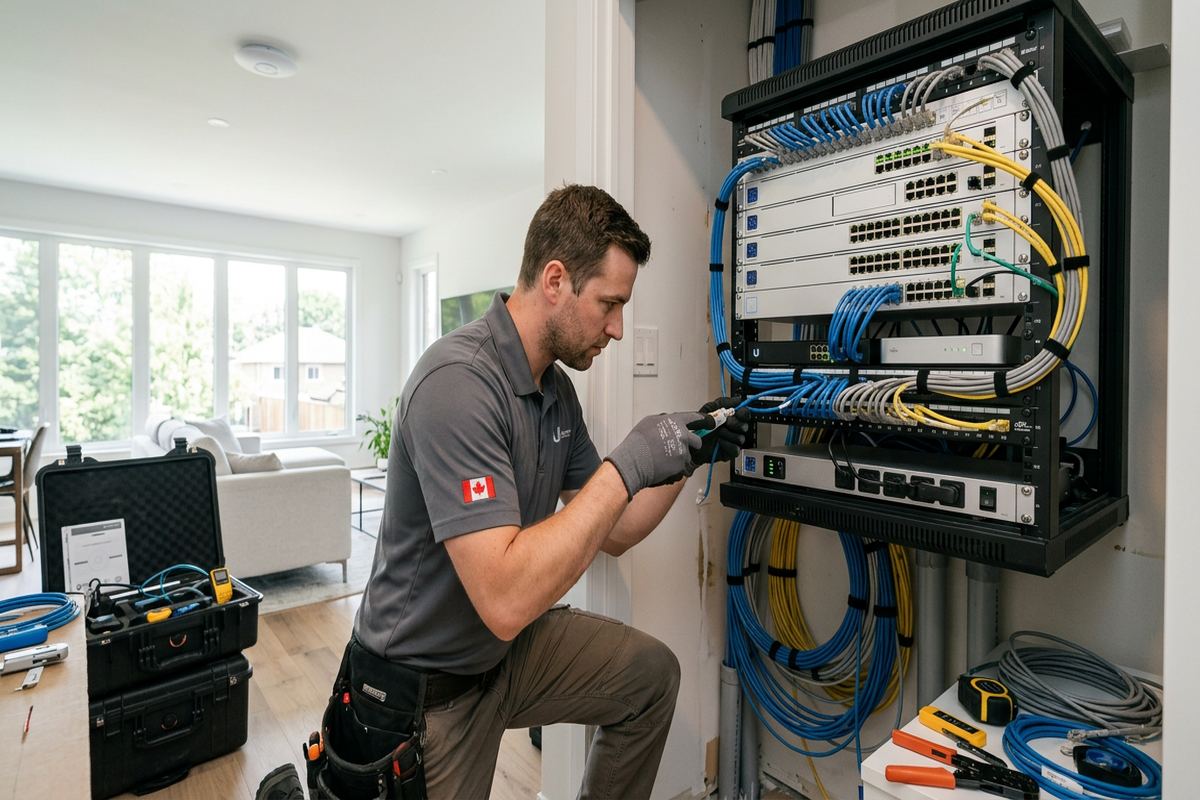
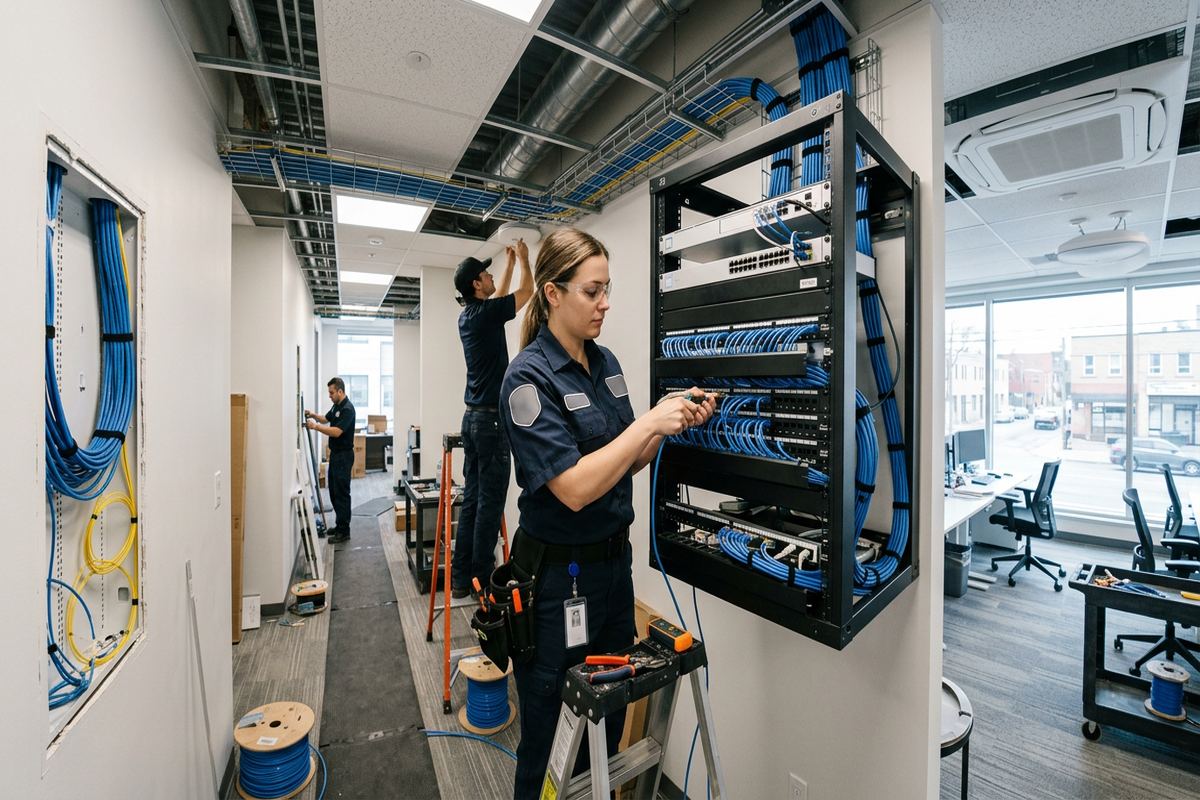
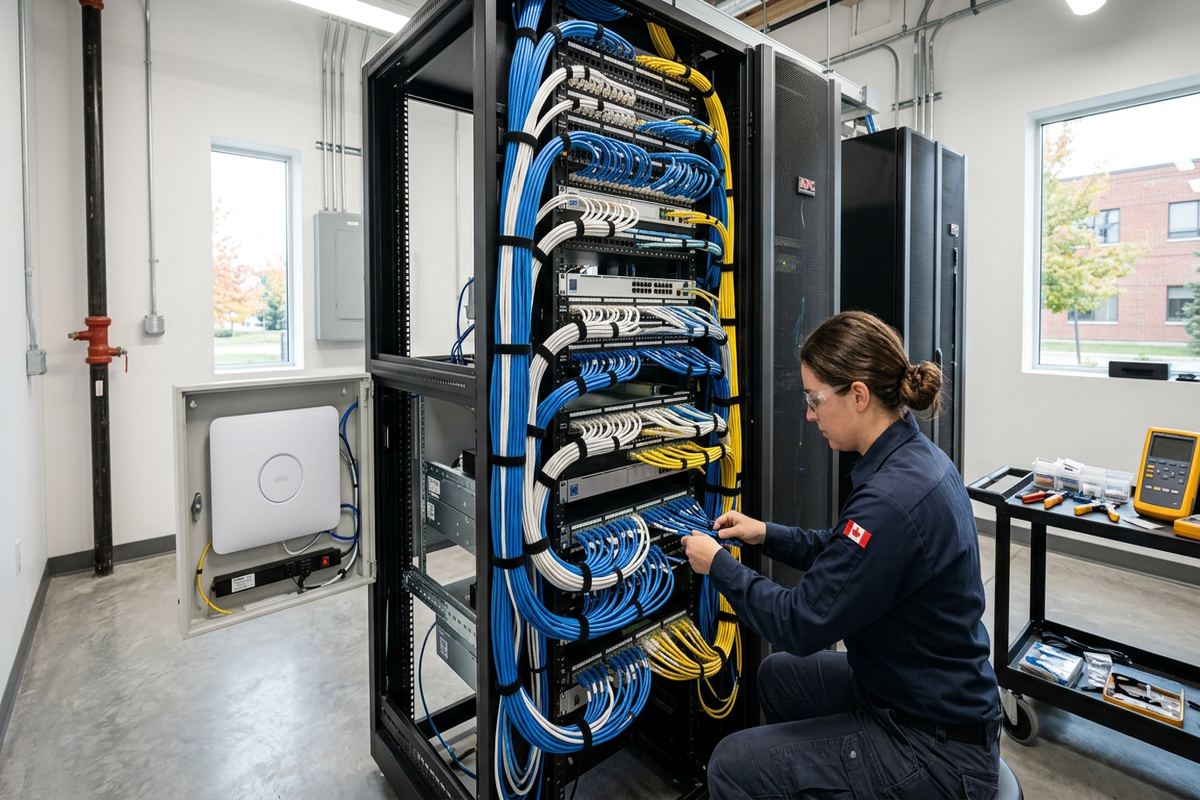
- Rack and patch-panel organization
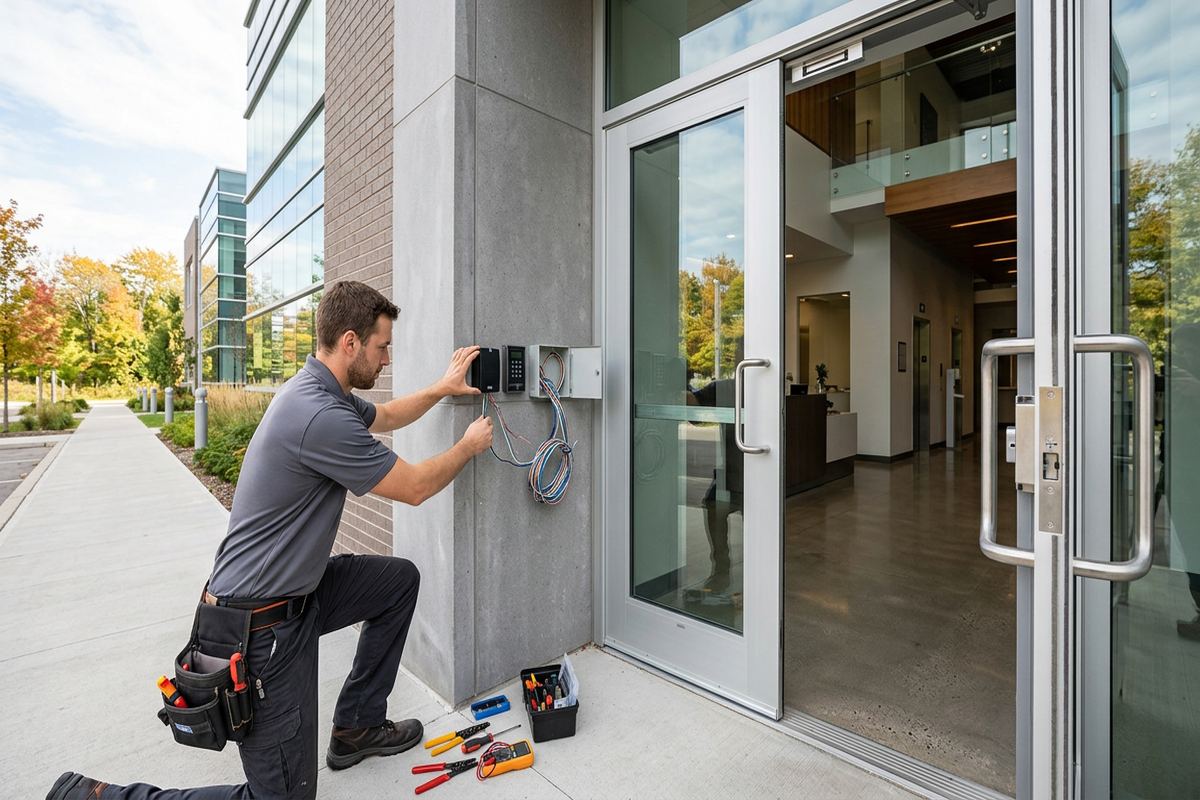
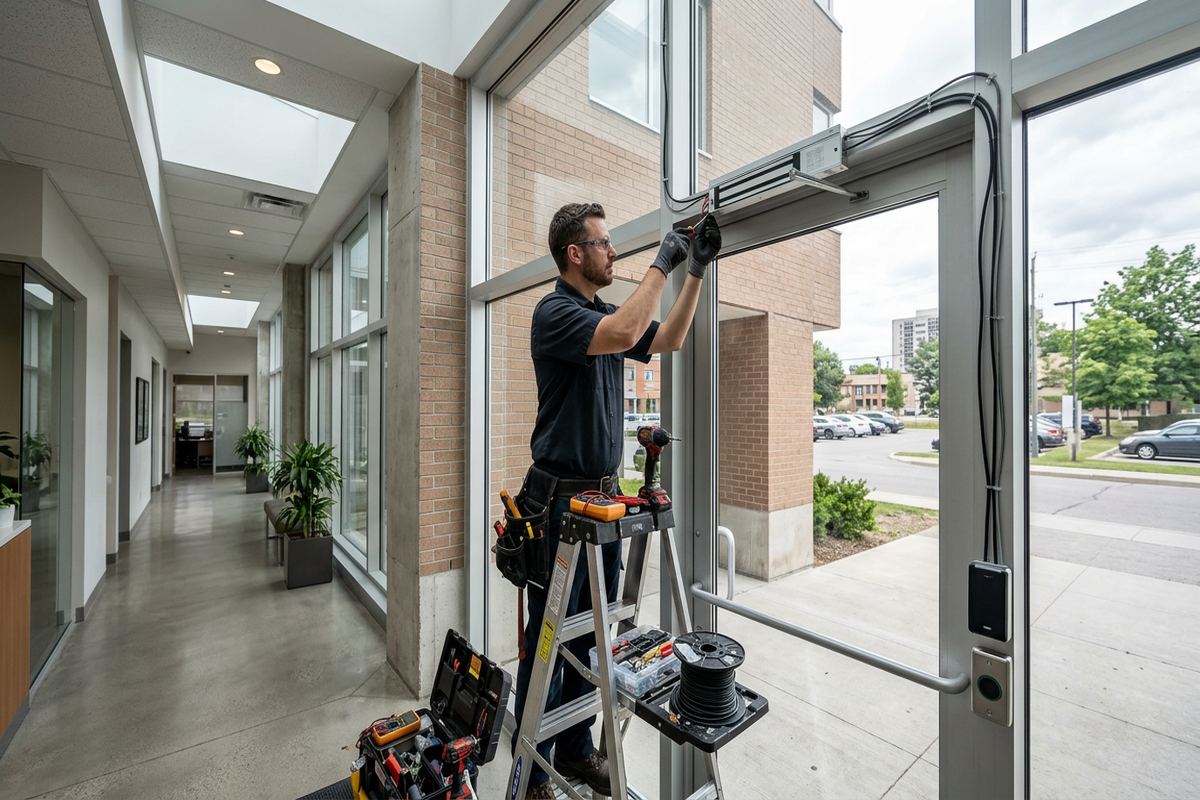
- Camera and access-control network links
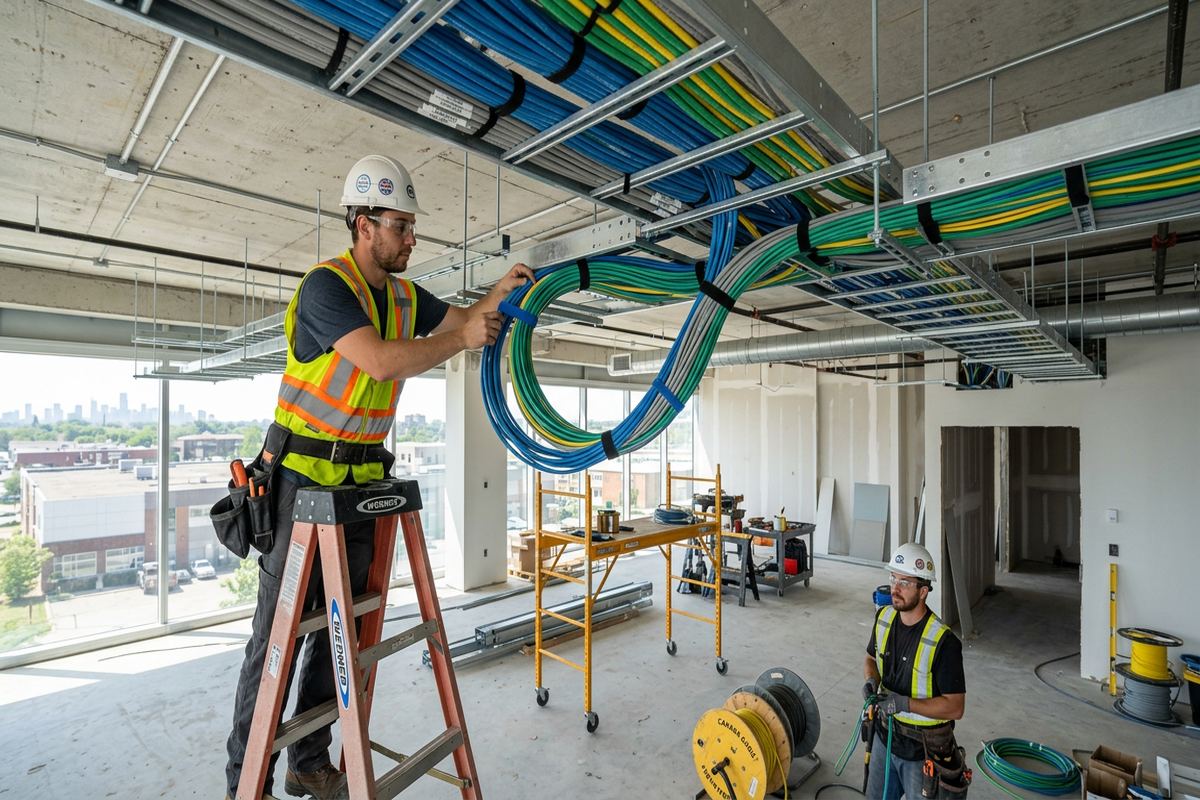
- Warehouse and office cable pathways
Planning Cable Routes in Cornwall Buildings
A useful cabling plan begins with what the network needs to support now and what is reasonably likely to change. During a Cornwall site assessment, UnifiedLink reviews the internet entry point, modem or firewall location, switches, equipment cabinets and proposed endpoints. Outlet positions are considered alongside desks, televisions, printers, cameras, access points and building controls. The plan also examines cable length, pathway capacity and service access. This avoids placing the network equipment in a cramped corner, damp basement area or inaccessible ceiling space that makes future troubleshooting and equipment replacement unnecessarily difficult.
Masonry and frame construction call for different installation methods. A frame house may provide routes through joist spaces and stud cavities, although insulation and previous renovations can limit access. Solid masonry, concrete block and older plaster assemblies usually require more visible planning. In those settings, carefully placed penetrations, surface raceway or existing chases may be preferable to unnecessary wall disturbance. Cornwall properties often combine construction types where additions meet original buildings. The route is therefore confirmed section by section, with attention to bend limits, cable support, separation from power and protection from sharp edges.
Approvals must be settled before work begins in shared or rented properties. Condo boards, landlords and commercial property managers may control drilling, common-area access, risers, ceiling spaces or exterior penetrations. Tenants should not assume that a desired pathway is permitted simply because it appears accessible from inside their unit. UnifiedLink can define the proposed route and device locations for the customer’s approval process, but the customer remains responsible for securing required permissions. The final scope records relevant exclusions and access conditions, helping prevent delays when work affects common elements, neighbouring units or landlord-owned finishes.
- Assessment of existing network locations
- Pathway checks before pricing
- Masonry and frame route planning
- Coordination around occupied spaces
- Clear approval and access requirements
Cable Types and Network Capacity
Cable category should be chosen from actual performance requirements, installation conditions and connected equipment rather than from a label alone. Copper data cabling is commonly used for room outlets, wireless access points, cameras, phones and other Ethernet devices. Fibre may be appropriate between distant areas, separate buildings or network rooms where distance, capacity or electrical isolation matters. In Cornwall warehouses and larger commercial units, the backbone design can be different from the short runs serving desks. The assessment establishes endpoint use, expected speeds, power requirements and equipment compatibility before a cable type is included in the scope.
Power over Ethernet can carry network data and power to compatible access points, cameras, phones and access-control components. It reduces the need for separate receptacles at every endpoint, but it does not remove the need for proper design. Switch capacity, power budget, cable quality, heat, distance and equipment standards must work together. A ceiling access point in a Cornwall home has different demands from multiple devices spread across an industrial unit. UnifiedLink reviews the intended equipment and termination layout so the cabling system supports on-site configuration without relying on unverified assumptions about existing switches or injectors.
Capacity planning also includes physical space. A patch panel with no spare positions, an undersized cabinet or a pathway packed tightly with cable can make later additions difficult. Reasonable allowance for future outlets is most useful when it is tied to likely changes, such as another office, a relocated workstation, added cameras or improved Wi-Fi coverage. Empty conduit or pull paths may be sensible in hard-to-reach areas, while unnecessary cable everywhere adds complexity. The written design distinguishes installed connections from optional preparations, allowing Cornwall owners to understand what is active, what remains available and what future work would require.
- Copper data cabling for endpoints
- Fibre backbone options where appropriate
- Power over Ethernet planning
- Patch panels sized for the scope
- Practical allowance for future additions
Cornwall, Ontario
Structured cabling installation in Cornwall, scoped in writing first
Book a site assessment and get equipment, routes, exclusions, and warranty on paper before anything is installed.
Cornwall Home Network Cabling
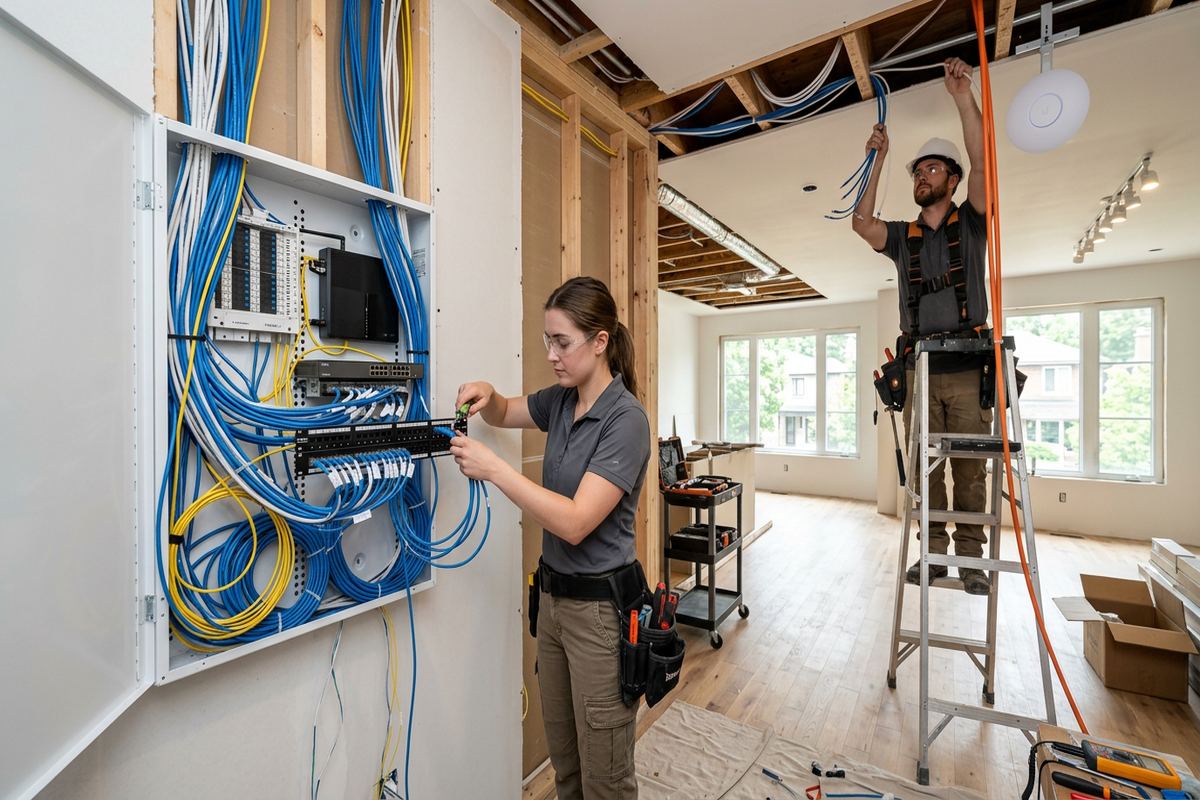
Home cabling should place reliable wired connections where they make a practical difference. In Riverdale, Le Village and the Guindon Park area, that may include home offices, entertainment spaces, detached work areas, wireless access points or security devices. A central network location can keep the modem, router, switch and patching organized while individual runs serve rooms directly. Wired backhaul also lets compatible Wi-Fi access points communicate without depending on a weak wireless link between floors. Placement is based on room use, wall construction and furniture plans rather than simply choosing the easiest drilling point.
Older Cornwall homes require particular care because previous renovations are not always visible from the finished surfaces. Plaster and lath, narrow cavities, fire blocking, low basement ceilings and mixed wiring methods can affect access. An exploratory route may reveal that a planned concealed run is impractical without opening finishes. When that happens, alternatives can include a closet route, basement pathway, attic approach or neatly installed raceway. The scope identifies expected access work and exclusions before installation, reducing surprises while respecting original trim, finished rooms and sections of the building that the owner does not want disturbed.
Riverfront homes and detached structures introduce exterior considerations. A cable should not be passed through an outside wall and left with an unsealed opening. Penetrations need a suitable location, drip management and sealing compatible with the surrounding material. Cornwall winters and repeated freeze-thaw cycles can expose weak seals, loose exterior clips and poorly protected cable. Outdoor-rated pathways, conduit or fibre may be appropriate depending on distance and exposure. The route must also avoid creating a moisture path into wall assemblies. Exterior work is assessed in context rather than treated as an extension of an indoor cable run.
- Home-office and media-room outlets
- Wired backhaul for Wi-Fi access points
- Careful routes through older finishes
- Protected exterior wall penetrations
- Connections to suitable detached spaces
Warehouse and Business Park Cabling
Logistics warehouses in Cornwall need cabling layouts that reflect operations on the floor. Network drops may serve shipping stations, label printers, office areas, wireless access points, cameras or controlled doors. Routes must stay clear of loading activity, storage systems and equipment movement while remaining accessible for inspection. High ceilings can affect pathway choice, lift access and installation sequencing. The assessment reviews working areas and building access before pricing. Where operations must continue during installation, the scope can divide work by zone and identify shutdowns or restricted areas that the customer needs to coordinate.
Industrial and commercial units commonly change as tenants adjust offices, racking or production areas. Cabling should not be fastened to temporary furniture, unsupported across open space or routed where future movement will damage it. Proper supports and defined pathways help preserve separation from electrical conductors and reduce strain at terminations. In Cornwall’s Business Park, units may include concrete block walls, steel structure and finished office sections under one roof. Each area can require a different method, with transitions planned carefully so the complete run remains continuous, labelled and traceable back to the correct panel position.
Network rooms deserve the same attention as field cabling. Tangled patch leads, unidentified ports and equipment placed on improvised shelving make service difficult even when permanent cables are sound. UnifiedLink can organize patch panels, cable managers and compatible customer equipment within the agreed scope. Ports are labelled using a consistent scheme connected to outlet locations. On-site configuration verifies how installed devices connect to the network, while passwords and administrative accounts remain with the customer. At handover, the customer receives their own credentials and an as-built record showing the completed cabling arrangement.
- Warehouse workstation data drops
- High-bay access point cabling
- Organized racks and patch panels
- Routes clear of operating equipment
- Zone planning for occupied facilities
Installation, Termination and Testing in Cornwall
Installation starts after the route, endpoint positions and access conditions are approved. Cable is pulled with attention to bend limits, pulling tension, support spacing and separation from sources of interference. Continuous labelled runs are used between the patching location and each endpoint, avoiding concealed joins that complicate testing and repairs. In Cornwall buildings with tight cavities or busy ceiling spaces, the easiest path is not always the correct one. Cables must be protected from sharp metal, hot surfaces, moving components and areas where future trades are likely to damage or disconnect them.
Termination quality has a direct effect on network reliability. Each cable must be prepared and terminated using components suited to its category and intended application. Excessive untwisting, crushed cable, poor strain relief or inconsistent pinning can create intermittent faults that are difficult to diagnose later. Outlet labels and patch-panel labels are matched so a technician can identify both ends without guessing. Where faceplates, surface boxes or rack hardware are included, they are positioned for normal use and maintenance. The aim is an orderly installed system, not merely a connection that happens to work on installation day.
Testing confirms the status of installed runs and helps separate cabling faults from equipment or internet-service problems. The appropriate test depends on the scope, cable type and performance requirement. Results are associated with the labelled endpoints so failed or misidentified runs can be corrected before handover. On-site configuration may include connecting agreed equipment, checking links and confirming that intended devices are visible to the network. This does not change the internet service supplied to a Cornwall property, but it establishes whether the new physical connections and included network components operate as documented.
- Continuous point-to-point cable runs
- Consistent outlet and panel labels
- Terminations matched to cable type
- Testing tied to endpoint identifiers
- On-site configuration of included equipment
Upgrading Existing Cornwall Cabling
An existing cable does not automatically need replacement, but it should not be assumed usable without inspection. Renovations, water exposure, tight staples, unmarked joins and damaged connectors can affect performance even when the cable looks acceptable at one end. UnifiedLink reviews accessible pathways, termination points, labels and equipment before recommending reuse or replacement. In older Cornwall housing stock, obsolete telephone wiring may share similar jacks but may not be suitable for the intended network connection. The assessment distinguishes confirmed infrastructure from unidentified cable hidden behind finishes, keeping assumptions out of the written scope.
Commercial upgrades often need to preserve operations while correcting years of additions. A Cornwall Centre office or commercial strip unit may contain abandoned cables, unmanaged switches and outlets with no matching panel label. Tracing can identify useful runs, but removal or consolidation may require access above ceilings and coordination with the property manager. New work can be introduced in stages so agreed services remain available. The scope defines which existing components will stay, which will be disconnected, and which equipment belongs to the customer, landlord or previous provider before any changes are made.
Wi-Fi complaints are another common reason to review cabling. Adding a faster internet package does not correct poor access point placement, weak wireless backhaul or congestion caused by all devices using one location. Wired connections can support properly positioned access points and move fixed equipment off the wireless network. However, coverage expectations should reflect wall materials, floor layout and neighbouring signals. A Cornwall assessment can identify suitable cable destinations and equipment positions, followed by on-site configuration within scope. The customer receives administrative credentials rather than being locked into an installer-controlled account.
- Inspection of reusable existing runs
- Tracing of unidentified outlets
- Replacement of damaged terminations
- Staged upgrades for active workplaces
- Cabling for better access point placement
Scope, Handover and Service in Cornwall
Every project begins with a site assessment before pricing. Timing depends on the service and travel distance, particularly when a Cornwall project includes multiple buildings, high-access work or occupied commercial areas. Following the assessment, UnifiedLink provides a written scope covering equipment, cable routes, device placement, exclusions, equipment ownership and warranty. This document gives the customer a practical reference for comparing requested work with what will actually be installed. Changes discovered after access begins are discussed rather than added silently, especially where concealed conditions, landlord requirements or unavailable pathways affect the original route.
One accountable contractor can coordinate the structured cabling portion with related low-voltage needs, including Wi-Fi, security cameras, access control, alarms, audio or displays. That does not mean every system should share identical cable or equipment. Each connection is designed for its intended technology, while pathways and rack space are coordinated to reduce conflicts. For Cornwall businesses, this can simplify communication between the owner, property manager and operating staff. For homeowners, it creates one documented plan for the network foundation instead of several unrelated cable runs installed without consistent labels or records.
Handover is completed with the customer’s own credentials and an as-built record of the installed work. Labels, endpoint locations and patching information allow future changes to begin from documented conditions. Equipment ownership is confirmed so there is no uncertainty about customer-owned devices and any components supplied under the project. Service requests sent during business hours are answered the same day; after-hours requests are answered the next business day. This response wording concerns the initial request, while assessment and site timing still depend on the service, access requirements and travel distance.
- Assessment completed before pricing
- Written scope with routes and exclusions
- One contractor for coordinated low-voltage work
- Customer-controlled administrative credentials
- As-built record supplied at handover
Cornwall neighbourhoods we cover
- Le Village
- Riverdale
- Cornwall Centre
- Guindon Park area
- Business Park
Structured cabling installation in Cornwall — common questions
Can you add network cabling to an older Cornwall home?
Yes, subject to a site assessment and practical access. Older Cornwall homes can contain plaster, blocked framing cavities, additions and previous wiring that affect concealed routes. UnifiedLink reviews basement, attic, closet and surface-raceway options before pricing. The written scope identifies proposed routes, likely access points and exclusions so the owner understands where finishes may be affected.
Do I need landlord or condo approval?
Approval may be required when cabling passes through common areas, shared ceilings, exterior walls or landlord-owned finishes. Cornwall tenants and condo owners should confirm applicable rules before installation. UnifiedLink can document the proposed route and device placement for the approval process, but the customer is responsible for securing permission from the landlord, condominium corporation or property manager.
Can you cable a Cornwall warehouse without stopping operations?
Many warehouse projects can be divided into work zones, although the options depend on access, lift use, ceiling height and operating hazards. During the Cornwall site assessment, UnifiedLink reviews loading areas, equipment movement and active workstations. The written scope identifies restricted areas, customer coordination requirements and any planned interruption needed to terminate or connect network equipment.
Will structured cabling improve my Wi-Fi?
Structured cabling can support better Wi-Fi by providing wired connections to access points placed where coverage is needed. It does not guarantee a particular wireless result because walls, layout, interference and equipment also matter. In Cornwall properties, masonry, plaster and multi-level construction can strongly affect signals. The assessment considers suitable access point locations and practical cable routes before equipment is specified.
How are exterior cable penetrations handled in Cornwall?
Exterior routes are assessed for exposure, wall material, drainage and entry location. Penetrations should be protected and sealed using methods compatible with the surrounding construction. Cornwall winters and freeze-thaw cycles make loose fittings or incomplete sealing particularly unsuitable. Depending on distance and conditions, outdoor-rated cable, conduit or fibre may be recommended instead of an unprotected indoor cable.
What do I receive when installation is complete?
At handover, you receive the agreed installed system, consistent cable labels, your own administrative credentials for configured equipment, and an as-built record showing completed endpoints and patching. The scope also identifies equipment ownership and warranty. Testing and on-site configuration are completed as specified, giving a Cornwall homeowner or business a documented basis for future maintenance or expansion.
Coverage in Cornwall is confirmed against the address before we quote. See everything we install in Cornwall or the province-wide structured cabling installation page.