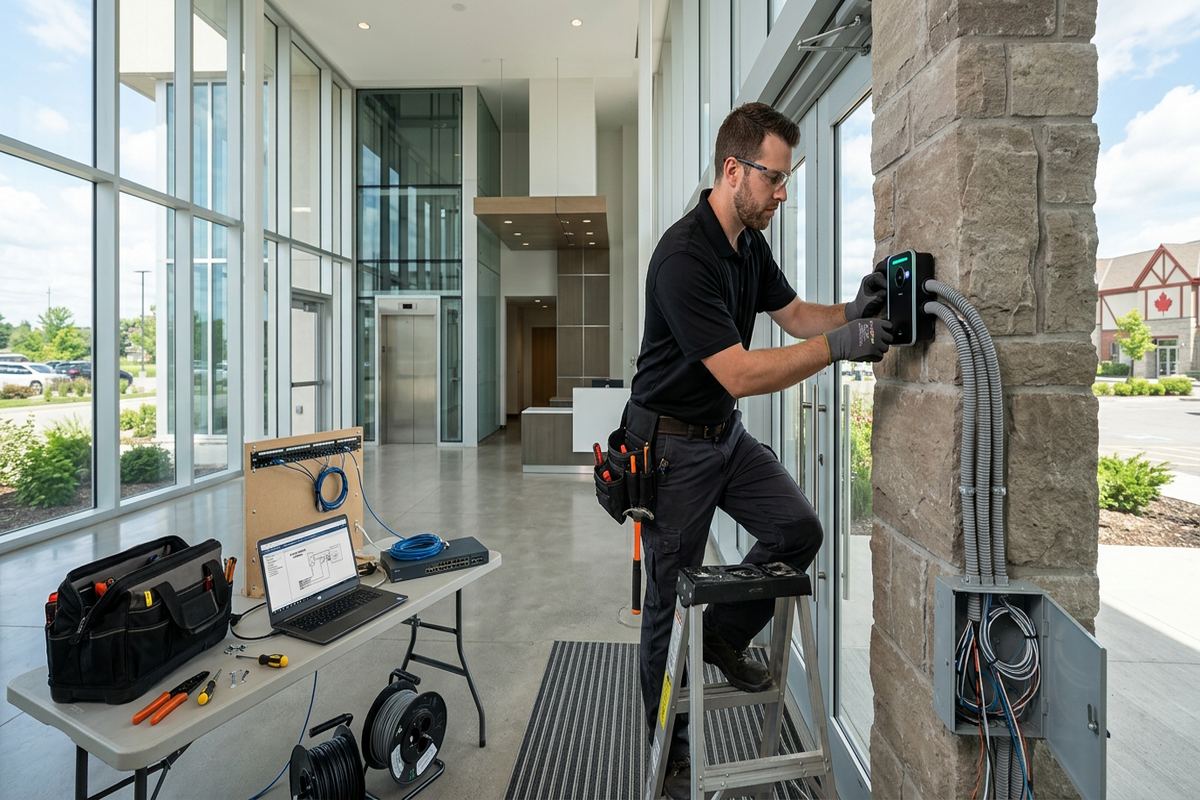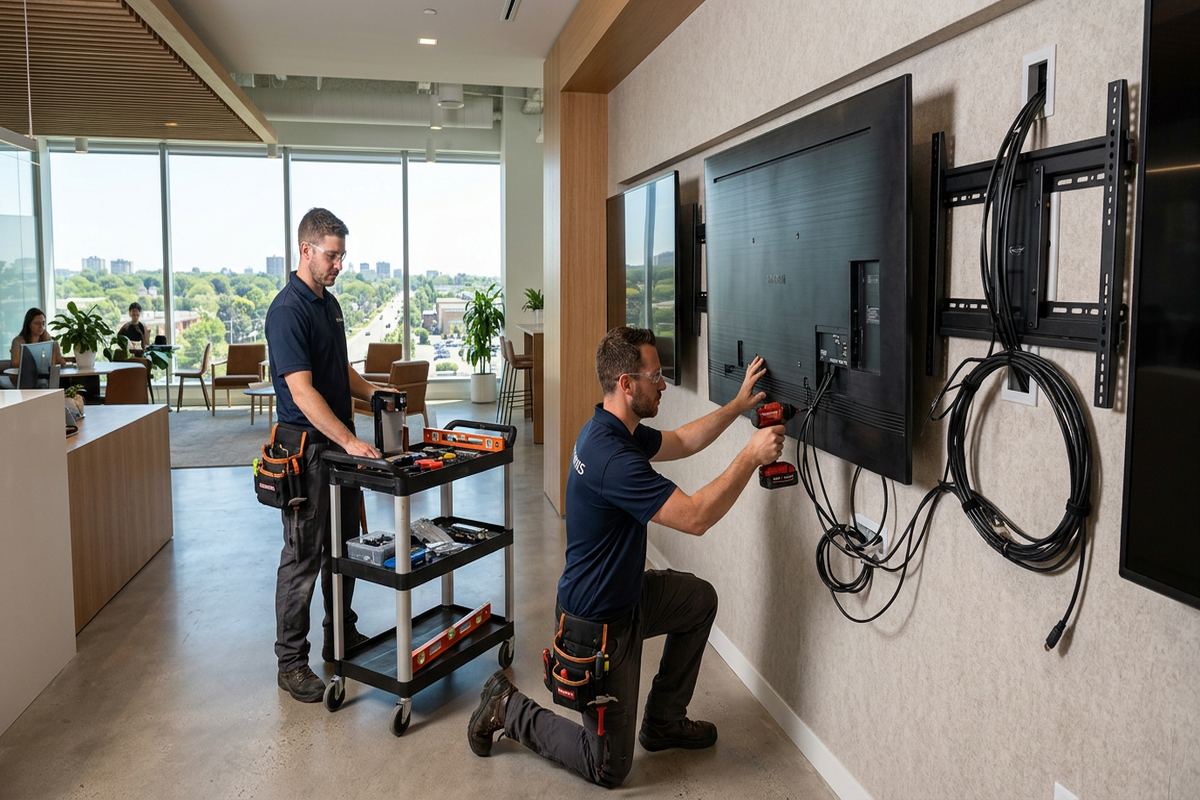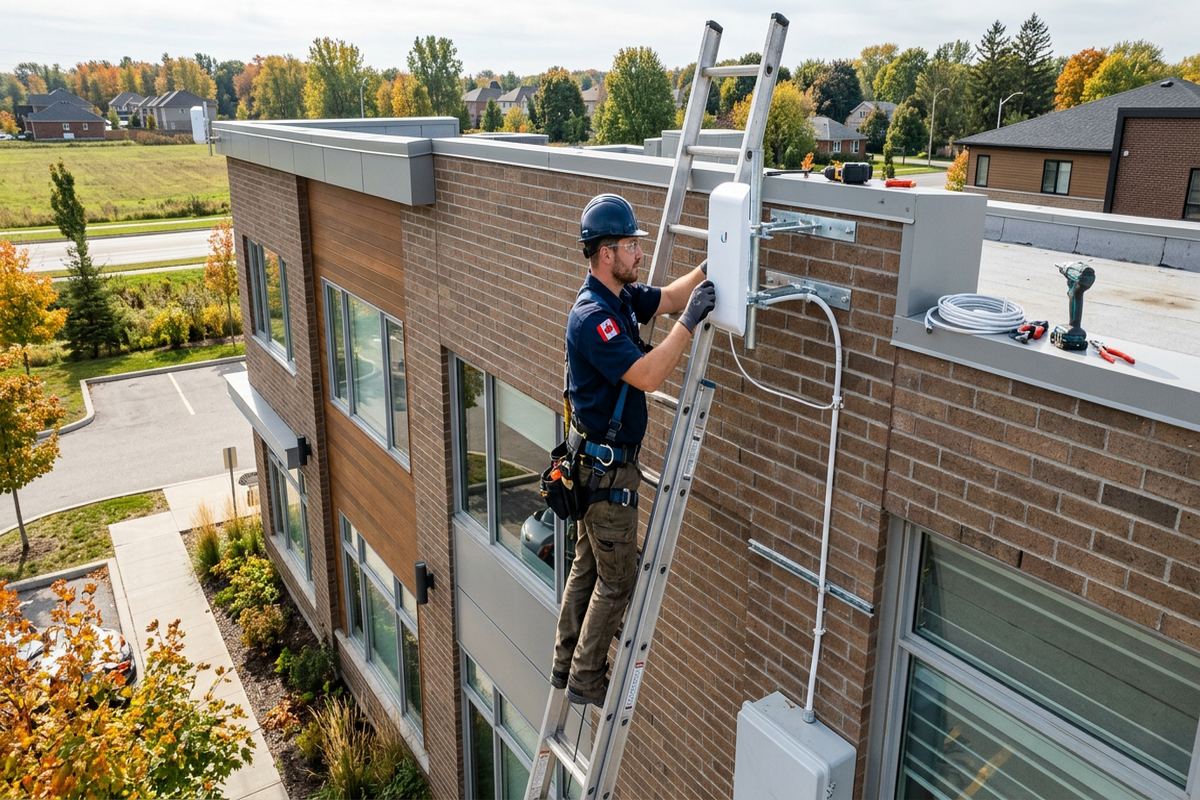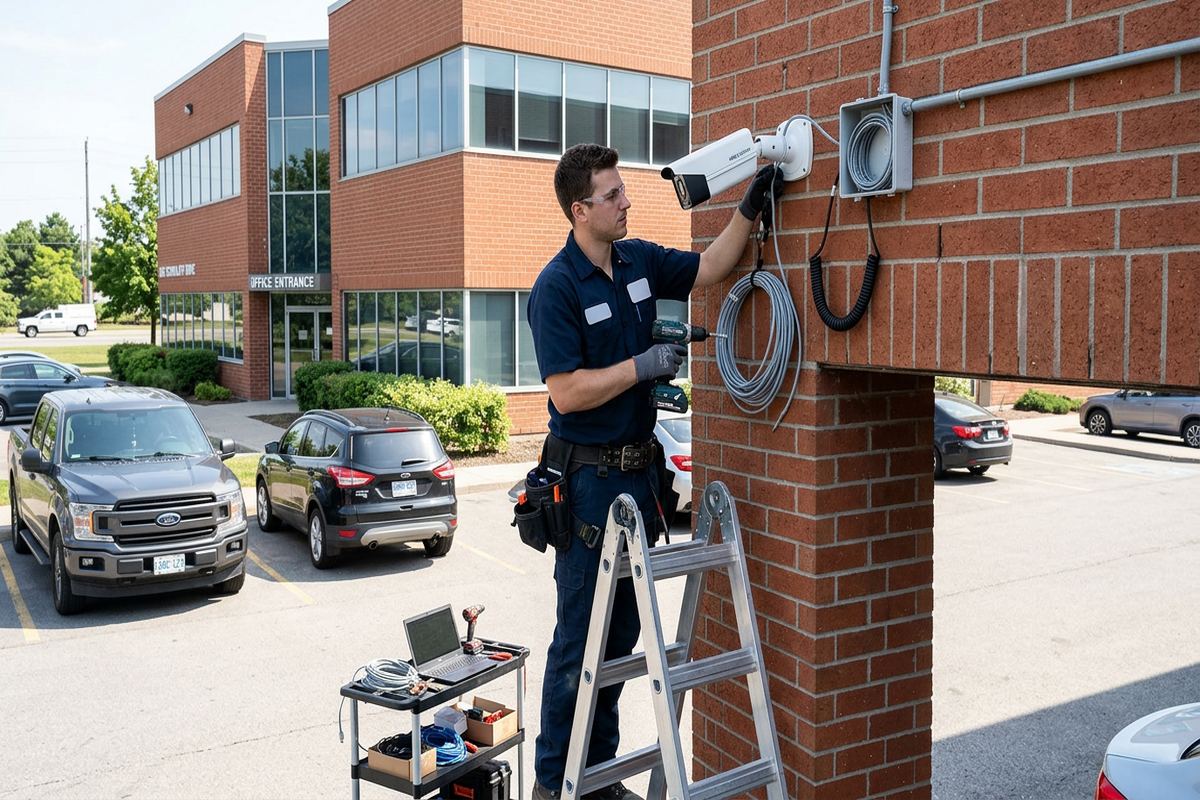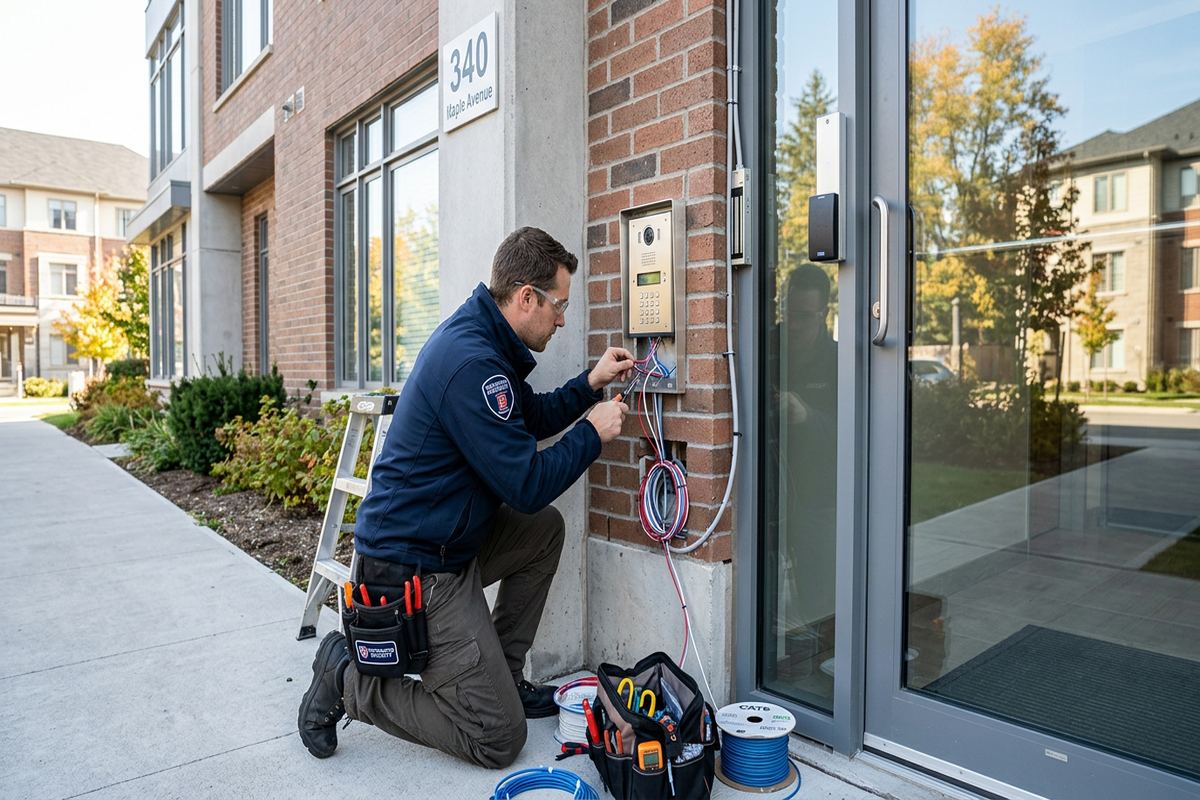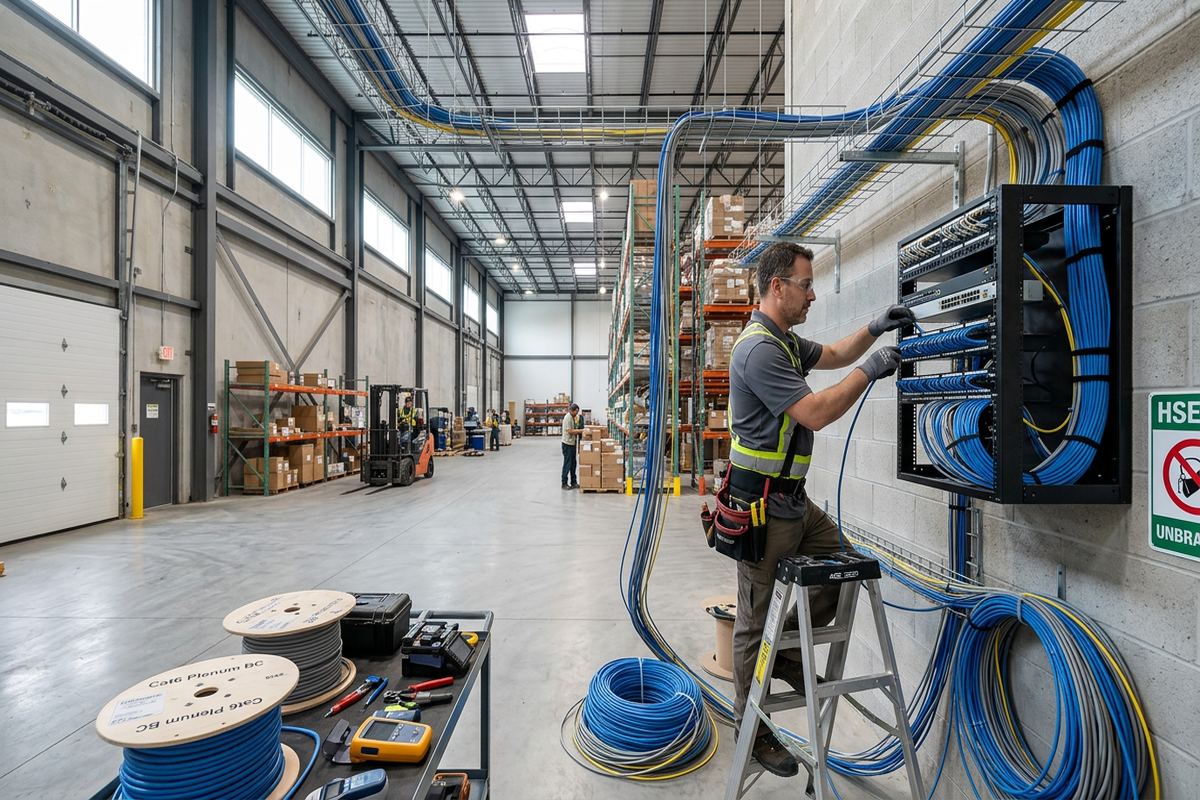
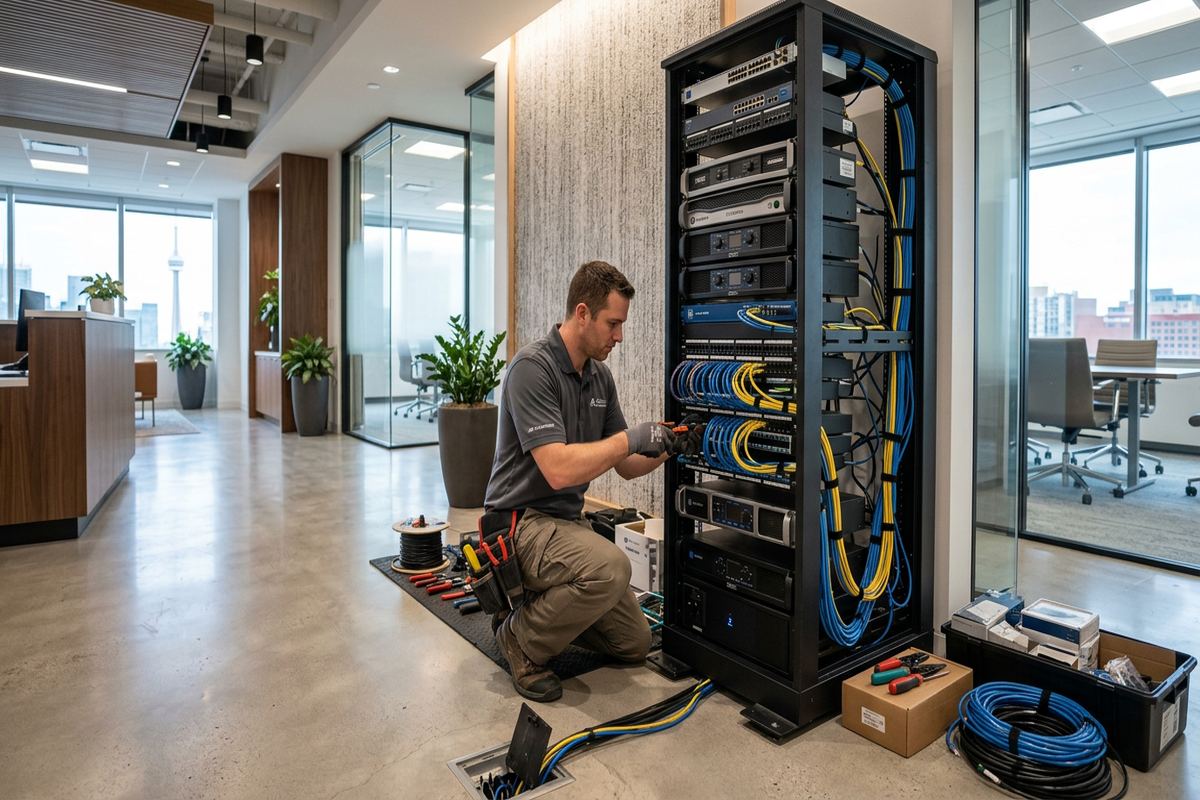
UnifiedLink installs outdoor speaker systems for Cornwall homes, commercial properties and industrial sites. We plan speaker placement, cable routes, mounting methods and controls around the space, building construction and expected use. Each system is configured on site and handed over with the customer’s own credentials, labelled cabling and an as-built record.
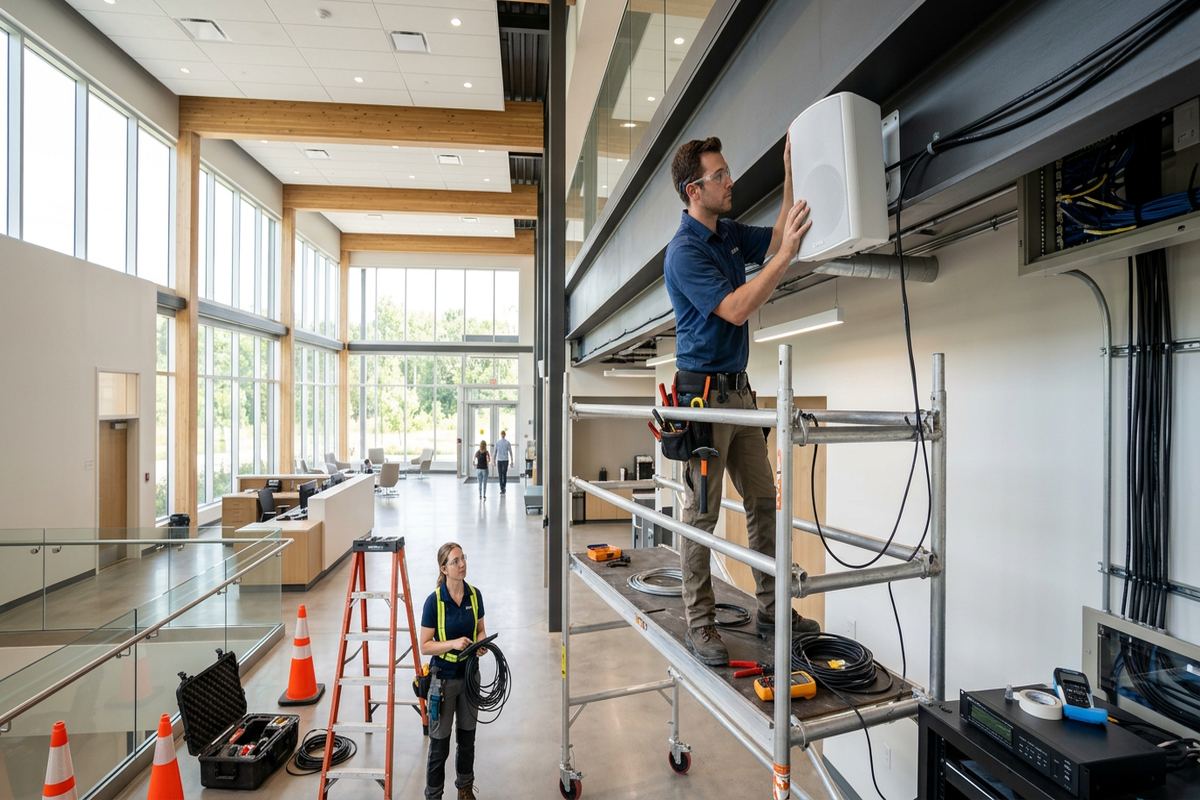
Outdoor Speaker Installation for Cornwall Properties
Outdoor audio should provide even, understandable sound without forcing one speaker to carry an entire yard, patio or loading area. In Cornwall, project conditions vary from open riverfront lots to compact older homes and large logistics properties. We assess listening areas, nearby walls, likely sound paths and the intended volume before selecting locations. The design may use wall-mounted speakers, landscape speakers or a combination, depending on coverage and appearance. The objective is controlled sound where people need it, with practical access for future inspection or service.
A useful design begins with how the space will actually be used. Background music on a residential deck needs different placement and control than announcements near warehouse doors or audio across a restaurant patio. We discuss source equipment, listening zones, daily operating needs and whether users want independent volume in separate areas. Speaker quantity is based on coverage rather than simply choosing the loudest available model. This approach reduces harsh hot spots, weak areas and unnecessary sound spilling toward adjacent Cornwall properties, streets or shared outdoor spaces.
Before pricing, UnifiedLink completes a site assessment appropriate to the service and travel distance. The written scope identifies equipment, proposed cable routes, device placement, exclusions, equipment ownership and warranty information. It also records whether existing amplifiers, network devices or source components are expected to remain. This gives homeowners, property managers and business operators a clear basis for reviewing the work. Where construction details remain concealed, such as blocked wall cavities or unknown conduit conditions, those limitations are identified instead of being treated as assumptions.
- Residential decks, patios and pool areas
- Restaurant and hospitality outdoor spaces
- Warehouse yards and loading areas
- Landscape and wall-mounted speaker options
- Single-zone or separately controlled audio
Planning Coverage Across Cornwall Outdoor Areas
Speaker layout depends on distance, obstacles and the direction each device will face. A pair of speakers mounted under the eaves may suit a small patio, while a long yard often benefits from several devices operating at lower levels. Cornwall riverfront homes can have exposed lots where wind and open space affect perceived sound. Fences, masonry walls, landscaping and neighbouring buildings also change how audio carries. During assessment, we identify primary listening positions and avoid aiming speakers toward nearby residences when another mounting angle can provide effective coverage.
For larger commercial or industrial areas, distributed audio can provide more consistent output than a few high-powered speakers. Logistics warehouses in the Business Park may need music or paging near employee entrances, loading areas, fenced yards or covered work zones. Equipment selection must account for the required intelligibility, mounting height and background noise. If paging is involved, we also review source priority and zone control. Outdoor audio is not a substitute for a regulated life-safety system, and the project scope clearly distinguishes general paging or music from emergency communication requirements.
Separate zones make a system easier to operate without broadcasting everywhere at once. A Cornwall business might keep a customer patio independent from a staff area, while a homeowner may want distinct control for a deck and garden. Zone design can use an amplifier, audio matrix, impedance-matching controls or network-based equipment, depending on the project. We confirm how users will select sources and adjust volume, including whether controls belong in an equipment room, on a wall plate or in an application tied to the customer’s credentials.
- Listening-area and sound-path assessment
- Speaker spacing based on usable coverage
- Independent volume zones where practical
- Paging and music source planning
- Consideration for neighbouring properties
Weather-Ready Mounting in Cornwall
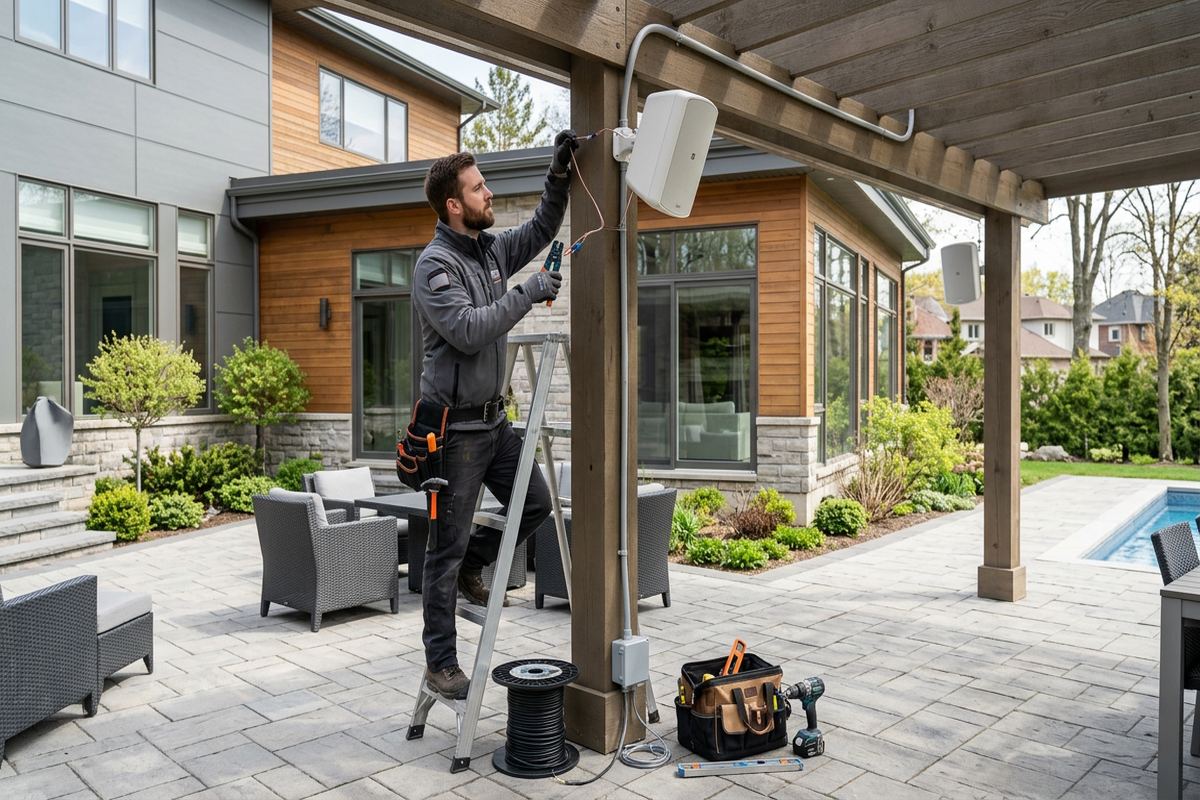
Cornwall winters place specific demands on exterior equipment and penetrations. Repeated freezing, thawing, snow, wind-driven moisture and summer heat can expose weaknesses in brackets, cable entries and seals. Outdoor-rated speakers still need appropriate placement; a weather rating does not make every mounting position equally suitable. Whenever possible, devices are located where roofs, soffits or architectural features provide some protection without blocking sound. Mounting hardware and fasteners are selected for the substrate, speaker load and exposure rather than relying on general-purpose interior anchors.
Exterior penetrations must shed water instead of directing it into a wall. Cable entries are positioned and sealed with compatible materials, with drip loops used where exposed wiring approaches equipment. The method varies between vinyl siding, wood, concrete, brick and metal cladding. Older housing stock in Le Village and Cornwall Centre may include layered renovations or brittle finishes that need careful drilling. We inspect accessible conditions before mounting and discuss visible routing when concealed pathways would create avoidable damage or cannot be confirmed without opening finished surfaces.
Landscape speakers require equally careful placement because soil movement, snow clearing and yard maintenance can affect them. Devices should not sit in drainage channels, beneath roof runoff or where shovels and equipment commonly travel. Cable routes need protection from gardening, edging and regular foot traffic. For riverfront homes, exposure and changing ground moisture may influence the suitable product and route. We document intended locations during the scope stage, then confirm them on site before installation so property features and seasonal maintenance needs are not overlooked.
- Exterior-rated speakers and connection methods
- Substrate-specific brackets and fasteners
- Sealed penetrations and managed drip loops
- Routes protected from snow-clearing activity
- Placement away from runoff and drainage paths
Cornwall, Ontario
Outdoor speaker installation in Cornwall, scoped in writing first
Book a site assessment and get equipment, routes, exclusions, and warranty on paper before anything is installed.
Cabling for Older Homes and Newer Buildings
Cable routing often determines whether an outdoor speaker project remains neat and serviceable. UnifiedLink installs continuous labelled cable runs, avoiding hidden splices that complicate troubleshooting later. Routes may pass through basements, utility rooms, attics, soffits, conduit or accessible ceiling areas before reaching exterior devices. The selected cable must suit the amplifier design, run length and installation environment. Where wiring travels outdoors, through wet locations or underground pathways, the cable and protective method are chosen for those conditions rather than extending ordinary indoor speaker wire beyond its intended use.
Cornwall’s older housing stock can contain plaster, masonry partitions, additions and inaccessible cavities. A route that appears direct on the outside may be blocked by structural members, insulation or previous renovations. In Le Village or Cornwall Centre, surface raceway or a carefully planned exterior segment may be less disruptive than opening several finished areas. Frame construction usually offers more cavity access, but vapour barriers and insulated walls still require care. We explain routing choices and identify patching, painting or restoration exclusions in the written scope before work proceeds.
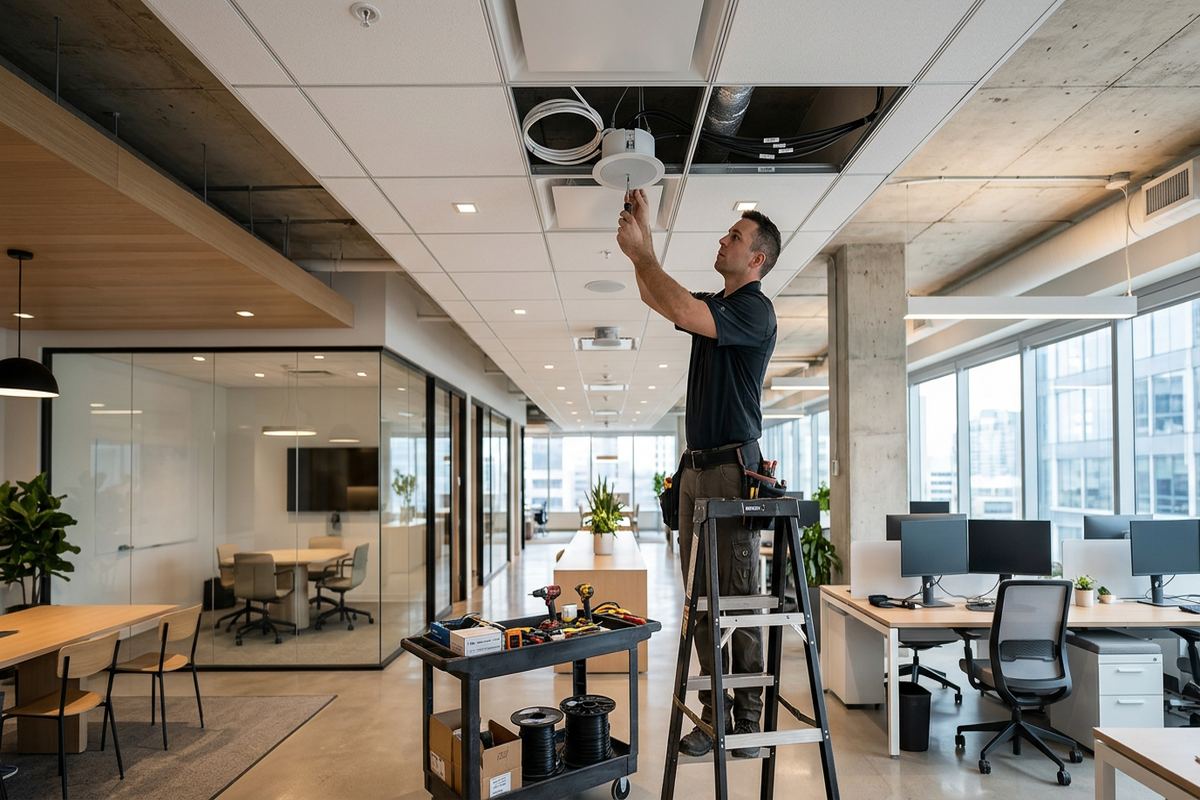
Commercial strips and industrial units present different routing options, including open ceilings, cable tray, steel structure and existing conduit. These pathways are useful only when capacity, ownership and permitted use are confirmed. Speaker cable is kept organized and supported independently where required, rather than draped across ceiling systems or mechanical services. In a warehouse, device height also affects installation access and future maintenance. The assessment records lift requirements, operating restrictions and areas that must remain clear so the installation can be coordinated with normal Cornwall business activities.
- Continuous runs without concealed splices
- Labels at equipment and device ends
- Indoor, outdoor or underground-rated cable
- Raceway and conduit options where suitable
- Routing documented in the written scope
Audio Equipment and Controls in Cornwall
Outdoor speakers must be matched to suitable amplification. Compatibility involves more than connector type: the amplifier needs to support the speaker load, expected number of zones and required output without being operated beyond its design. Residential systems may use conventional low-impedance speakers, while distributed commercial layouts may use constant-voltage equipment. We determine the appropriate approach from coverage, cable distance and control needs. Existing receivers can sometimes remain, but only after their available channels, supported loads, ventilation and condition are reviewed during the Cornwall site assessment.
Source selection should reflect how the owner wants to use the system every day. Options may include a network streamer, television audio, a commercial music source, a paging input or an existing media system. We configure approved network-connected equipment on site using the customer’s own accounts and credentials. Access is not left tied to an installer’s personal profile. If an application depends on a third-party subscription or cloud service, that dependency is identified so the customer understands which functions require internet access, licensing or an active service account.
Controls need to be convenient without allowing accidental changes to critical settings. A homeowner may prefer application-based source and volume control, supplemented by a simple local control. A restaurant or warehouse may need restricted staff access, preset levels or clearly identified zones. We establish normal operating ranges and test switching between sources before handover. For network-based audio in Cornwall, reliable Wi-Fi or wired connectivity at the equipment location is also reviewed. Audio performance cannot remain stable if the control device or streamer has an unreliable network connection.
- Amplifiers matched to speaker loads
- Residential and distributed commercial systems
- Streaming, television and paging inputs
- Independent source and volume controls
- Customer-owned accounts and credentials
Installation for Cornwall Homes and Condos
Residential outdoor audio should fit the property without creating unnecessary visual clutter. In Riverdale, the Guindon Park area and other Cornwall neighbourhoods, a typical project may cover a deck, pool area, gazebo or deeper section of the yard. Speaker colour, bracket position and cable entry points are reviewed alongside coverage. Mounting everything at one corner is not always the least visible or most effective choice. A balanced layout can operate at lower volume while still providing useful sound across seating and activity areas.
Condo, rental and multi-unit properties require approval before work affects common elements, exterior walls or shared electrical and communications spaces. The owner, landlord or condominium corporation may have rules for visible equipment, drilling, work hours and contractor access. UnifiedLink can provide the proposed device positions and cable route for review, but the customer remains responsible for obtaining required authorization unless the written scope states otherwise. Work does not proceed through shared or restricted areas based only on verbal assumptions from a tenant or occupant.
Riverfront homes can combine attractive outdoor spaces with greater exposure to wind and moisture. Placement under a covered deck or eave may improve equipment protection, but the structure must still support the bracket and intended aiming angle. Docks and shoreline structures introduce additional routing, power and ownership questions that require case-specific review. We avoid assuming that a land-based outdoor speaker is suitable for every shoreline location. The assessment identifies the listening area, available pathways and environmental exposure before equipment is included in the Cornwall project scope.
- Deck, gazebo, pool and garden coverage
- Low-visibility mounting where practical
- Condo and landlord approval coordination
- Placement for exposed riverfront properties
- Controls suited to household use
Commercial and Industrial Outdoor Audio
Businesses use outdoor audio for different purposes, including customer music, staff communication and general paging. A Cornwall restaurant patio needs controlled, even sound that supports conversation, while a logistics site may prioritize clear speech near loading zones. We document which areas need coverage and which should remain quiet. Operating hours, neighbouring properties and staff responsibilities also affect the design. Where local rules, lease conditions or internal policies govern outdoor sound, the property owner or operator should confirm those requirements before regular operation.
Industrial buildings often have high mounting points, metal cladding, wide doors and substantial ambient noise. These conditions affect both speaker output and installation method. In Cornwall’s Business Park, mounting may require coordination around truck movement, racking, security devices or production activity. Equipment should remain accessible for service without creating a collision risk. We review proposed heights, protective locations and cable pathways with the site contact. If lifts, escorts, shutdowns or special access procedures are necessary, they are identified in the scope rather than introduced without planning.
Commercial outdoor audio may need to integrate with an existing rack, network, paging source or background music system. Integration begins by documenting available inputs, outputs and ownership. We do not assume that landlord equipment can be modified or that an existing amplifier has spare capacity. Testing confirms each approved zone, source and control point. At handover, designated staff receive practical operating guidance, customer-controlled credentials and an as-built record. This keeps responsibility clear when managers, tenants or service providers change after the Cornwall installation is complete.
- Patio music and general paging
- Warehouse entrance and yard coverage
- Coordination around loading operations
- Integration with approved existing equipment
- Documented controls for designated staff
Cornwall Assessment, Installation and Handover
Every project starts by defining the listening areas and inspecting realistic cable routes. During a Cornwall assessment, we review wall construction, exterior finishes, equipment locations, network availability and access constraints. We also note nearby properties, drainage, roof runoff and areas affected by snow storage or maintenance equipment. The resulting written scope covers equipment, cable routes, device placement, exclusions, equipment ownership and warranty. This process gives both parties a shared reference before installation and allows uncertain conditions to be discussed while changes remain practical.
Installation includes mounting, continuous labelled cable runs, terminations and on-site configuration for the equipment included in scope. Speakers are aimed and tested from the intended listening areas rather than checked only beside the wall. Each zone is verified for source selection, volume control and basic operation. Exterior entries are finished using a method suited to the visible substrate and exposure. If concealed conditions differ materially from what could be assessed, we stop and review the routing or scope instead of making an unapproved alteration to the Cornwall property.
Handover is completed using the customer’s own credentials for supported applications and connected equipment. We provide an as-built record showing installed device locations and relevant cable or equipment details, along with practical operating guidance. One accountable contractor coordinates the defined low-voltage work, which reduces gaps between speaker mounting, cabling and configuration. Requests sent during business hours are answered the same day; after-hours requests are answered the next business day. Site assessment timing depends on the service requirements and travel distance within Eastern Ontario.
- Site assessment completed before pricing
- Written equipment and routing scope
- On-site aiming, testing and configuration
- Customer credentials used at handover
- As-built record for future reference
Cornwall neighbourhoods we cover
- Le Village
- Riverdale
- Cornwall Centre
- Guindon Park area
- Business Park
Outdoor speaker installation in Cornwall — common questions
Can outdoor speakers stay installed through a Cornwall winter?
Yes, when the selected speakers are rated for the location and installed with suitable mounting, cable entry and connection methods. Cornwall’s freeze-thaw cycles, snow and wind-driven moisture still make placement important. We look for protected positions where practical, use substrate-appropriate fasteners and seal penetrations. Outdoor-rated equipment should not be treated as maintenance-free, so accessible mounting is preferred for future inspection.
How many outdoor speakers will my yard need?
The number depends on the yard’s shape, listening positions, obstacles and expected volume. A compact Cornwall patio may need only a pair, while a long riverfront lot or divided garden may benefit from several speakers operating more quietly. We plan for even coverage instead of relying on one loud device. Speaker type, mounting height, neighbouring properties and separate zone requirements are reviewed during the site assessment.
Can you install speakers on an older brick home?
Yes, subject to the brick, mortar and accessible cable routes being suitable. Many older Cornwall homes have masonry, plaster, additions or previous renovations that affect drilling and concealed pathways. We select mounting hardware for the actual substrate and plan penetrations to manage water. If concealed wiring would cause excessive disruption, the written scope may propose exterior-rated cable, conduit or surface raceway in an agreed location.
Do I need condo or landlord approval?
Usually, approval is needed when speakers, brackets or cabling affect exterior walls, balconies, common elements or shared service spaces. Cornwall condominium corporations and landlords may also set work-hour, appearance and access requirements. We can document proposed speaker positions and cable routes for review. Unless the written scope says otherwise, the customer is responsible for securing authorization before installation begins in restricted or jointly controlled areas.
Can outdoor speakers connect to my existing receiver?
Possibly. We first check the receiver’s available channels, supported speaker load, zone functions, condition and ventilation. Some Cornwall homes have receivers that can operate a small outdoor pair, while multi-zone or larger systems may need separate amplification. Long cable runs and commercial distributed speakers can also require a different design. Compatibility is confirmed before the existing equipment is included in the written scope.
How does booking and pricing work?
UnifiedLink completes a site assessment before pricing. Assessment timing depends on the service and travel distance from the Cornwall project location. You then receive a written scope covering equipment, cable routes, speaker placement, exclusions, ownership and warranty information. Requests submitted during business hours are answered the same day, while after-hours requests are answered the next business day. Installation is scheduled after the scope is reviewed and accepted.
Coverage in Cornwall is confirmed against the address before we quote. See everything we install in Cornwall or the province-wide outdoor speaker installation page.