UnifiedLink installs commercial alarm systems for offices, shops, warehouses, mixed-use properties and managed buildings in Cornwall. Each project starts with a site assessment and a written scope. We plan sensors, keypads, communications and cable routes around the property, configure the system on site, and provide a documented handover using the customer’s own credentials.

Commercial Alarm Planning for Cornwall Properties
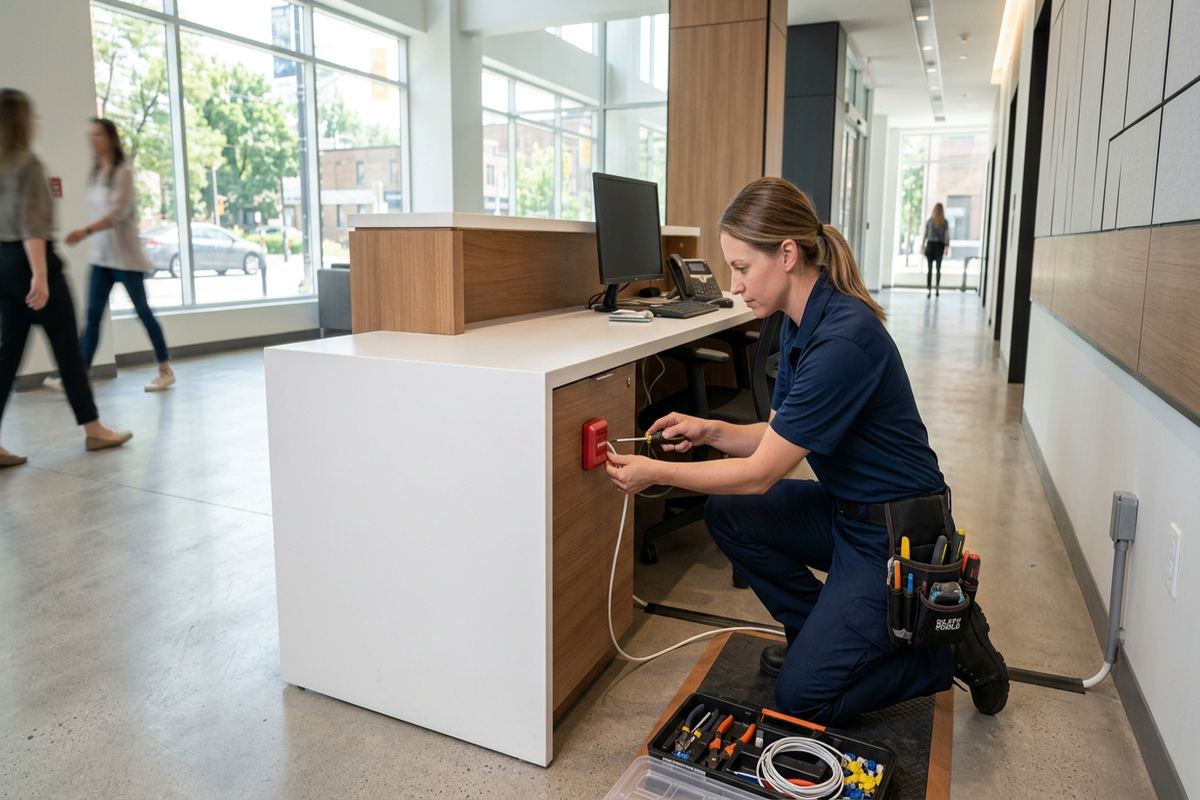
A useful commercial alarm system starts with the building rather than a standard equipment package. During a Cornwall site assessment, we review entrances, loading areas, accessible windows, interior circulation, utility rooms and spaces holding valuable equipment or records. We also discuss operating hours, staff access and the way deliveries or cleaners enter after hours. These details determine where door contacts, motion detectors, glass-break sensors, keypads and audible devices belong. Pricing follows the assessment, so the proposed system reflects actual site conditions instead of assumptions made from floor plans alone.
Cornwall projects frequently involve very different property types within a short distance. A logistics warehouse in the Business Park has broad doors, high ceilings and multiple operational zones, while a commercial unit in Cornwall Centre may share walls, entrances or service areas with neighbouring occupants. Older converted properties can have additions, irregular framing and limited pathways between floors. We trace practical cable routes and identify construction constraints before preparing the scope. The goal is dependable detection without placing devices where normal activity, vibration, heat or changing environmental conditions are likely to create avoidable alarms.
The written scope identifies equipment, cable routes, proposed device placement and known exclusions. It also states who owns the installed equipment and describes the applicable warranty, preventing uncertainty during handover or a future tenant change. If monitoring, telephone, cellular or network communication is being considered, responsibilities for those services are identified separately. Commercial alarm installation often overlaps with access control, cameras and structured cabling, but each system has a distinct purpose. UnifiedLink coordinates the work as one accountable contractor while keeping the alarm functions and dependencies clearly documented.
- Entrance, window and loading-door review
- Risk-based detector and keypad placement
- Communication-path planning
- Written equipment and installation scope
- Clear exclusions, ownership and warranty terms
Alarm Devices Selected for the Actual Risk
Device selection should account for how each room is built and used. Door contacts provide direct opening detection, while motion detectors cover interior movement when the area is unoccupied. Glass-break detection may suit exposed storefront glazing, but placement depends on glass type, room acoustics and nearby sources of sharp noise. Warehouses can require different motion technologies or mounting locations because of ceiling height, racking, heaters and moving equipment. We match the detection method to the opening or space rather than relying on a single sensor type throughout the Cornwall property.
Keypads and arming controls need to support daily routines without creating unnecessary complexity. A small office may use one partition and a straightforward closing procedure, whereas an industrial unit may need separately controlled office, warehouse and shipping areas. Individual user codes improve accountability and can be changed without distributing a shared code again. We review who opens, closes, manages users and responds to notifications. Duress, panic or hold-up functions can also be discussed where appropriate, but their operation, monitoring requirements and staff procedures must be understood before they are included in the design.
Commercial alarm panels can supervise intrusion devices, selected environmental inputs and communication faults, subject to the equipment and service configuration. Useful options may include low-temperature, water or equipment-status inputs, although an alarm panel is not a replacement for required fire protection or dedicated building controls. In Cornwall, freeze-related concerns can be significant in seasonal spaces, service rooms and buildings with vulnerable plumbing. We define exactly what each input detects, where it reports and what happens after an event. Clear expectations are more valuable than adding sensors without an established response procedure.
- Door and overhead-door contacts
- Interior motion detection
- Glass-break sensor assessment
- Individual user codes and partitions
- Optional environmental inputs
Wired and Wireless Alarm Options
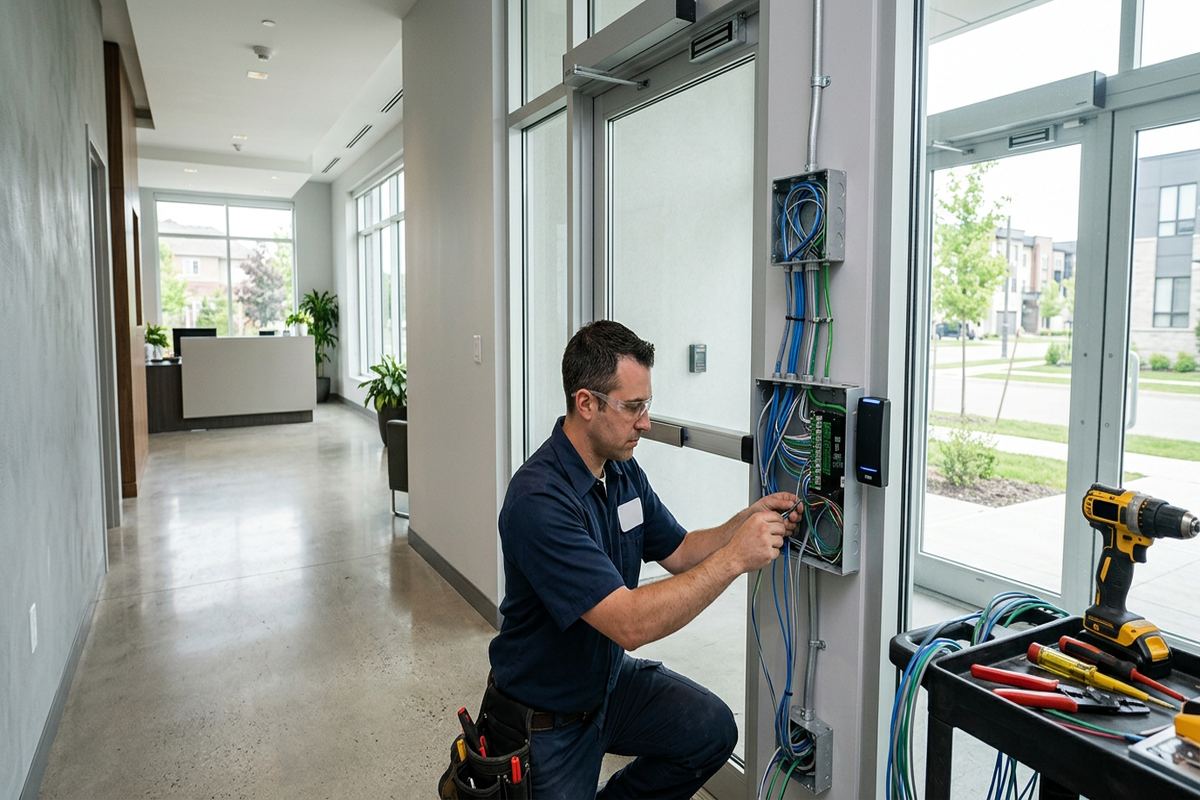
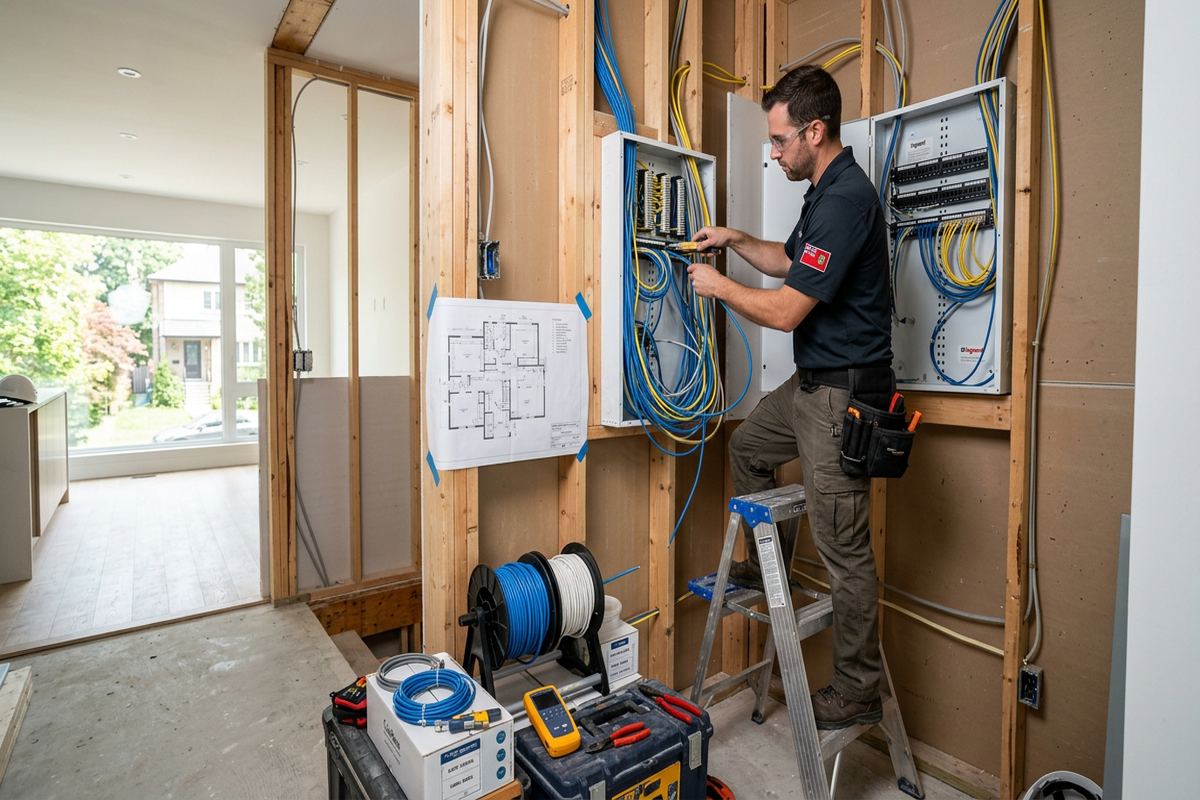
Wired detection remains practical where cable routes are accessible, renovations have opened walls, or long-term serviceability is a priority. UnifiedLink installs continuous labelled cable runs rather than hidden intermediate joins that complicate troubleshooting. Each run is routed with attention to electrical interference, physical protection and future access. In older Cornwall buildings, usable pathways may pass through basements, ceiling spaces or service chases, but they must be verified on site. Masonry walls, finished ceilings and previous alterations can limit options, so the route is documented before installation proceeds.
Wireless devices can reduce disruption in finished offices, leased spaces and heritage-era construction where new cabling would require extensive surface work. They still require deliberate placement, signal testing and an ongoing battery-maintenance plan. Thick masonry, metal shelving, mechanical equipment and long distances can affect communication with the control panel. Wireless should therefore be treated as an engineered option, not an automatic shortcut. Hybrid systems can combine wired devices in accessible areas with wireless detection elsewhere, allowing the Cornwall installation to respond to construction conditions while maintaining a consistent user experience.
The final choice also depends on ownership and approval requirements. Tenants may need written landlord permission before drilling, routing cable through common areas or mounting equipment on an exterior wall. Condominium boards can control penetrations, visible devices and work affecting shared electrical or communication rooms. We identify these dependencies before scheduling installation, but the customer remains responsible for obtaining required approvals unless the written scope says otherwise. Any restoration, painting or specialized fire-stopping requirements should also be assigned clearly so that installation boundaries are understood by all participating parties.
- Continuous labelled alarm cabling
- Wireless signal and battery planning
- Hybrid system design where appropriate
- Landlord and condominium approval checks
- Documented pathways and penetrations
Cornwall, Ontario
Commercial alarm system installation in Cornwall, scoped in writing first
Book a site assessment and get equipment, routes, exclusions, and warranty on paper before anything is installed.
Cornwall Installation for Masonry and Frame Buildings
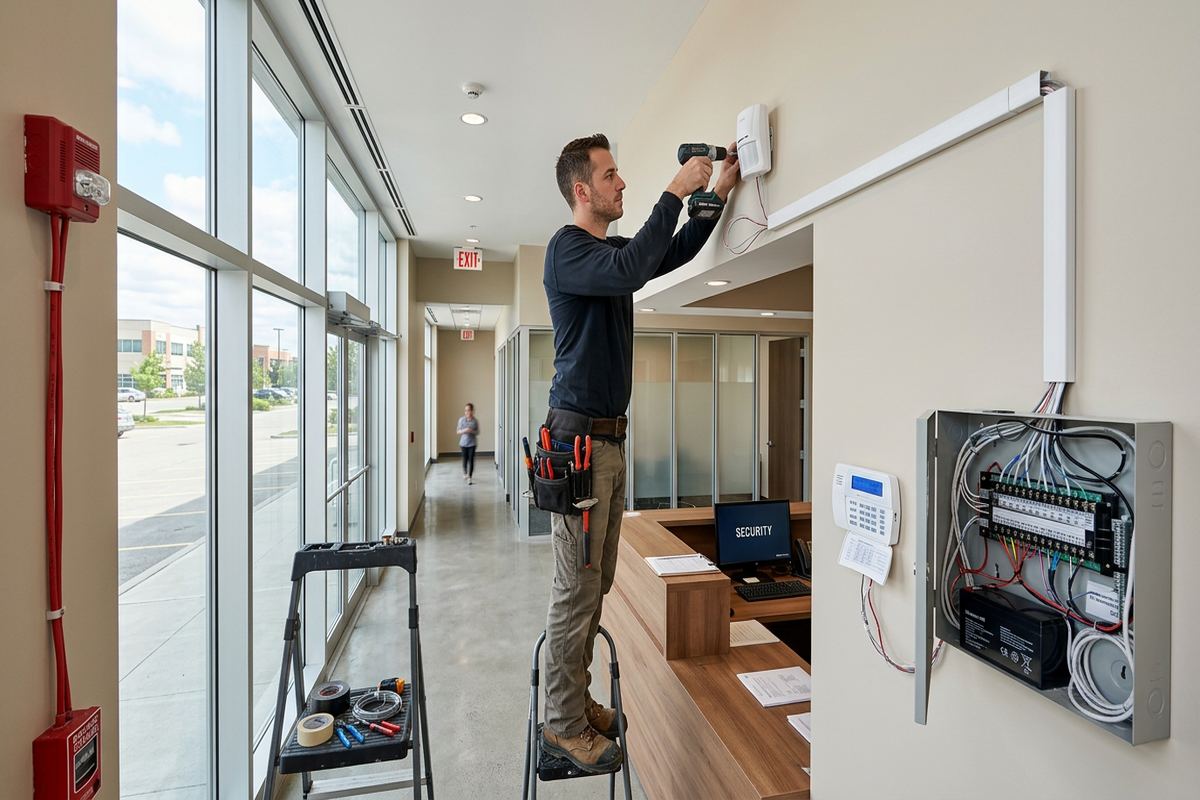
Construction methods directly influence mounting and cable routing. Many older Cornwall properties combine masonry exterior walls with frame partitions, later additions or renovated storefronts. Masonry may require surface raceway, carefully selected anchors or routing from an accessible basement or ceiling space. Frame construction can offer concealed pathways, although insulation, blocking and previous renovations may interrupt them. Before drilling, we consider visible finishes, likely concealed services and the device’s required position. A neat installation depends on planning these details rather than attempting to force the same mounting method onto every surface.
Exterior contacts, sirens and communication equipment need protection from Cornwall’s winter conditions. Repeated freeze-thaw cycles can open gaps around poorly sealed penetrations, allowing moisture to reach cabling or the building envelope. We use suitable exterior-rated components where the design calls for outdoor equipment, provide drip-aware cable routing, and seal penetrations according to the surface and application. Mounting locations should also reduce direct exposure to snow accumulation, roof runoff and physical impact. Outdoor equipment cannot be made maintenance-free, so periodic inspection remains important after severe weather or exterior building work.
Inside the property, installation is coordinated around business activity and safe access. High mounting locations in warehouses may require suitable lift access and scheduling that avoids loading operations. Retail or office work may need to occur in stages so that entrances and customer areas remain usable. Dust, drilling and temporary device outages are discussed before work begins. Existing alarm components are not assumed to be compatible merely because they remain attached to the building. We inspect accessible wiring and equipment, then identify what can be retained, replaced or isolated within the written scope.
- Masonry-appropriate anchors and pathways
- Frame-wall routing where accessible
- Exterior-rated devices when required
- Sealed outdoor cable penetrations
- Work coordinated around site operations
Alarm Coverage for Cornwall Warehouses and Shops
Logistics warehouses around Cornwall and the Business Park present distinct alarm challenges. Large overhead doors need contacts designed for their movement and mounting environment, while personnel doors, roof access and internal cages may require separate consideration. Air movement, unit heaters, loading activity and tall storage racks can influence motion-detector performance. Partitioning allows office staff to work while warehouse sections remain armed, if operations support that arrangement. We review normal opening patterns, late shipments and contractor access so the system reflects actual use rather than an idealized schedule that employees cannot follow.
Commercial strips and Cornwall Centre properties often combine public storefronts with rear stockrooms, shared corridors or upper-level occupancies. Detection must distinguish between the leased premises and common areas controlled by the landlord. Front glazing, rear service doors and basement access may each require a different method. In Le Village, older mixed-use buildings can include uneven layouts and additions that are not obvious from the main floor. A walkthrough helps locate hidden connections between spaces, confirm approval boundaries and determine where audible devices or keypads can be installed without affecting neighbouring occupants unnecessarily.
Smaller offices, clinics and service businesses generally need simple operation more than numerous features. Staff should know which doors to use, how to identify an open zone and whom to contact when the system will not arm. We can configure named zones, user permissions and arming areas on site, then demonstrate normal procedures during handover. If cleaners, property managers or delivery personnel require access, separate credentials can limit code sharing. Notification choices should correspond to a documented response plan, including who receives events and who has authority to attend the Cornwall premises after hours.
- Overhead and personnel-door protection
- Warehouse partition planning
- Storefront and stockroom coverage
- Named zones for easier operation
- Separate credentials for staff and contractors
System Communication and Monitoring Readiness
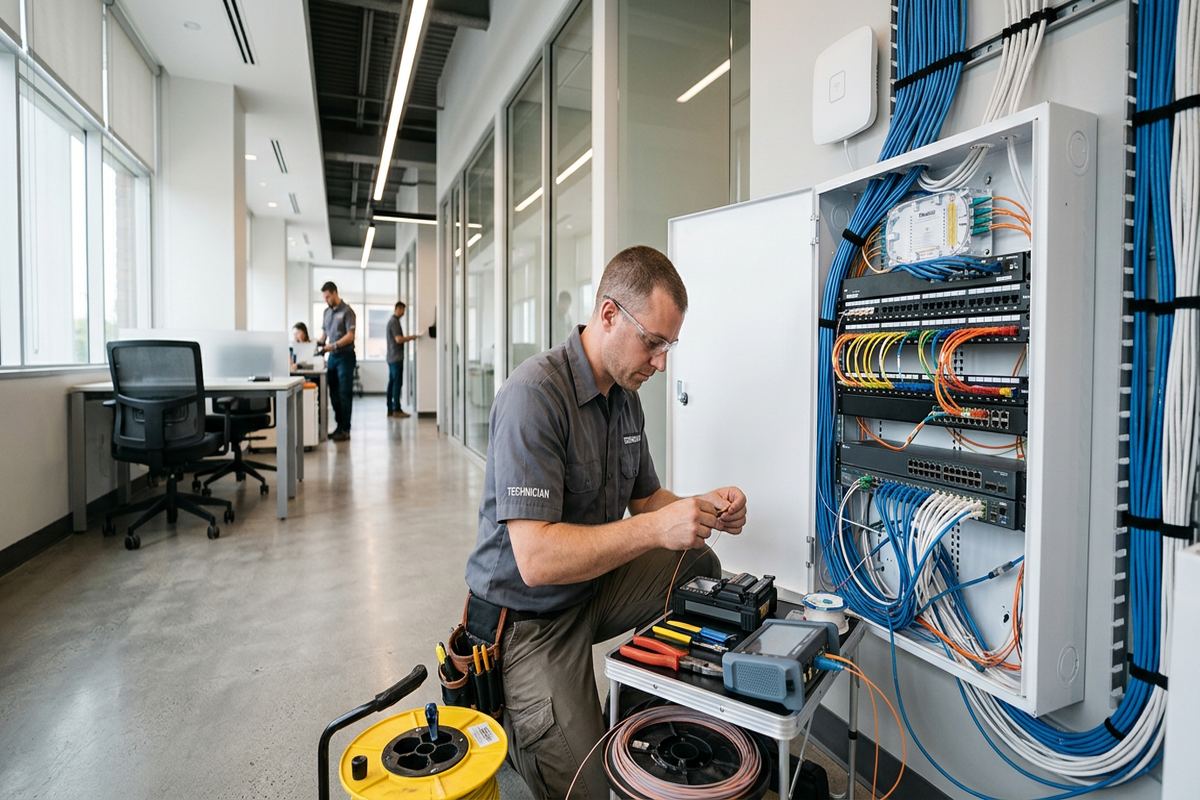
An alarm panel needs a defined method for reporting events if remote notification or professional monitoring is required. Depending on the selected equipment and available services, communication may use cellular, internet or another supported path. Each option has dependencies, including signal strength, network equipment, power and an active service arrangement. UnifiedLink tests configured communication functions on site, but monitoring accounts and ongoing service terms must be identified in the scope. We do not describe a system as monitored unless the applicable connection, account and response process have been established and verified.
Network-connected alarm equipment should not be installed with generic shared credentials. At handover, the customer receives control using credentials they own, along with the information needed to manage authorized users. Where an application or portal is included, we explain basic arming, disarming, notifications and user administration. The customer should also maintain access to the email address and mobile number used for account recovery. If a landlord, former tenant or unrelated contractor controls an existing account, ownership must be resolved before that equipment can be relied upon for the new Cornwall installation.
Power interruptions deserve attention because winter storms and building maintenance can affect local electrical service. Alarm panels commonly use standby batteries, but available operating time depends on panel load, battery condition and system activity. Batteries are consumable components and require periodic testing and replacement. Network-based reporting may also stop if routers, switches or internet equipment lose power, even while the alarm panel remains operating. We document these dependencies and can discuss suitable network power provisions within the project scope. A communication test should form part of regular system maintenance and any service-provider change.
- Cellular or network reporting assessment
- Signal and communication testing
- Customer-controlled account credentials
- Standby battery condition review
- Documented reporting dependencies
Cornwall Alarm Configuration and Handover
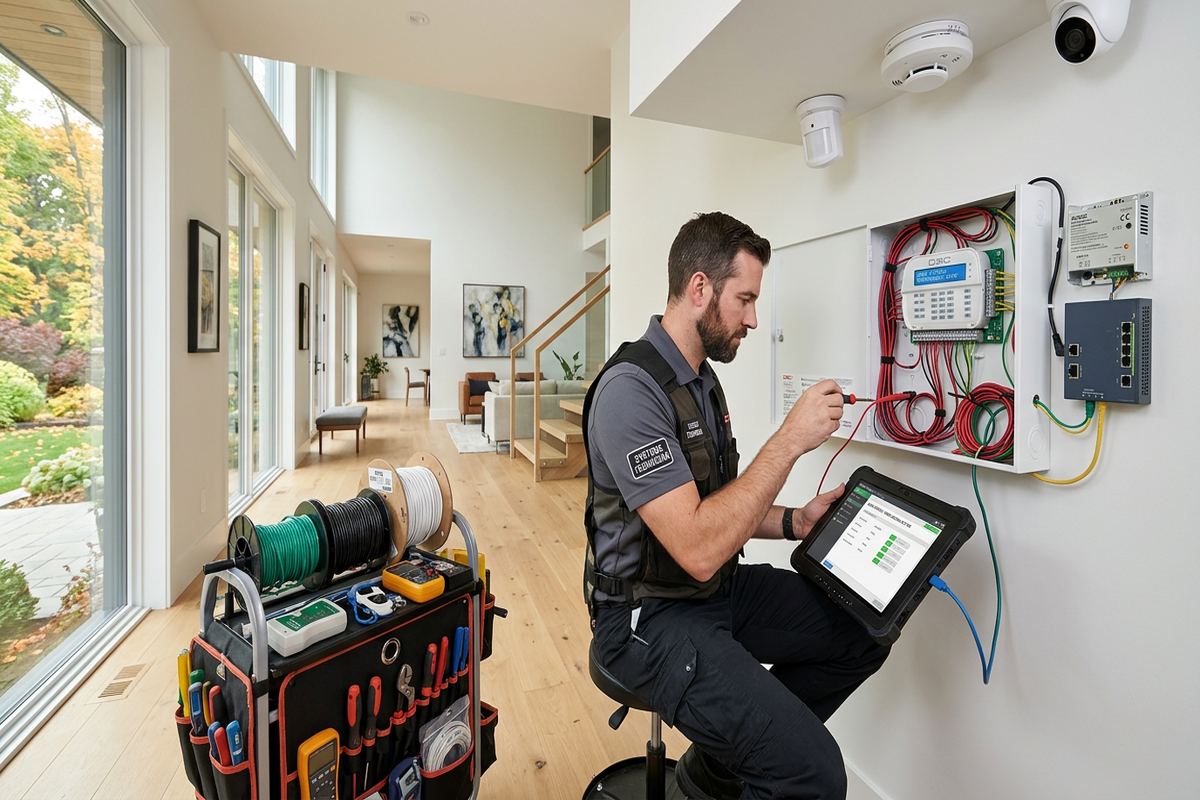
Installation is followed by on-site configuration, testing and practical adjustment. Every protected opening is operated to confirm the correct zone response, and motion or glass-break devices are tested using methods appropriate to the selected equipment. Keypads, audible outputs, partitions and programmed delays are checked against the approved operating plan. We also confirm that zone names are understandable to staff. Labels such as “Zone 4” provide little direction during a fault, while a precise description such as “rear shipping door” helps users locate the issue and secure the Cornwall building.
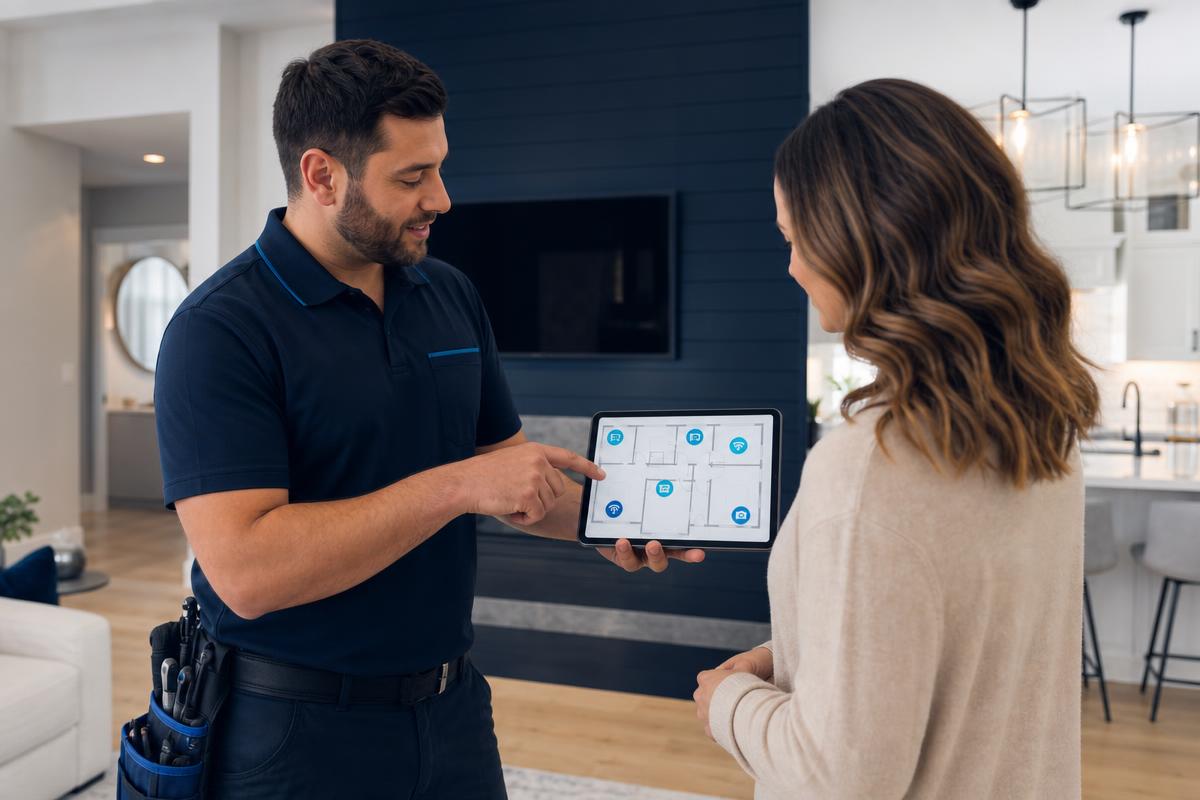
Handover covers routine arming and disarming, user-code administration, bypass functions, alarm silencing and the meaning of common trouble indications. Managers should understand the difference between an intrusion alarm, a communication failure, a low battery and an open zone. Where remote access is included, setup uses the customer’s own credentials rather than an installer-controlled account. We encourage the customer to nominate internal administrators and establish a process for removing former employees promptly. Training is based on the installed configuration, because procedures can differ between a single-area office and a partitioned warehouse.
An as-built record is provided to capture the installed system rather than only the original proposal. It records device locations, zone descriptions and relevant cable or panel information, subject to safe documentation practices. This record supports future service, renovations and tenant changes without requiring technicians to rediscover every component. Any approved deviations from the scope are reflected in the final documentation. Equipment ownership and warranty information are also confirmed at handover. Keeping these records with controlled building documents helps Cornwall property managers maintain continuity when staff, contractors or monitoring arrangements change.
- Full zone and opening tests
- Clear device and area names
- Manager and user instruction
- Customer-owned login credentials
- As-built system record
Maintaining a Commercial Alarm in Cornwall
Alarm systems should be reviewed as the property and business change. New partitions, shelving, signs or equipment can obstruct motion coverage, while replacement doors may alter contact alignment. Staff turnover creates a need to remove old codes and review administrator access. Renovations can damage concealed wiring or leave devices serving spaces that no longer exist. A periodic functional test helps identify these changes before an actual event. Cornwall property owners should also schedule a review after major exterior work, roof repairs or alterations near alarm cable routes and mounted devices.
Seasonal conditions can expose weaknesses that were not obvious during installation. Freeze-thaw movement may affect exterior door alignment, surface-mounted conduit or seals around penetrations. Warehouses can develop condensation around loading areas, and unheated sections may experience temperatures outside a device’s intended range. Riverfront exposure can also increase the importance of checking exterior hardware and weather sealing. These conditions do not automatically mean a device has failed, but they justify inspection when repeated troubles appear. Service should address the underlying mounting, environmental or building issue rather than repeatedly clearing the same alert.
When an existing Cornwall alarm produces frequent false activations, the cause should be diagnosed systematically. Useful information includes the exact zone, event time, weather, occupancy and activity immediately before the alarm. A loose contact, moving door, unsuitable detector, low battery or changed room layout can each produce different symptoms. Replacing the panel without testing field devices may leave the original problem in place. UnifiedLink can assess the system, document findings and prepare a defined repair or replacement scope. Requests sent during business hours are answered the same day; after-hours requests are answered the next business day.
- Testing after renovations or layout changes
- User-code review after staff turnover
- Battery and communication checks
- Exterior seal and mounting inspection
- Zone-based false-alarm diagnosis
Cornwall neighbourhoods we cover
- Le Village
- Riverdale
- Cornwall Centre
- Guindon Park area
- Business Park
Commercial alarm system installation in Cornwall — common questions
How does commercial alarm installation begin in Cornwall?
It begins with a site assessment of the Cornwall property. We review entrances, windows, loading areas, interior zones, business routines, construction and available cable pathways. Afterward, we provide a written scope covering equipment, routes, placement, exclusions, ownership and warranty. Site assessment timing depends on the required service and travel distance, and pricing is prepared only after the assessment.
Can you install an alarm in an older Cornwall building?
Yes, subject to an on-site review. Older Cornwall buildings may combine masonry, frame construction, additions and finished areas with limited cable access. We evaluate concealed and surface-routing options, suitable anchors, wireless signal conditions and landlord requirements where applicable. The resulting scope identifies the proposed approach and any restoration or access work that falls outside the alarm installation.
Should my warehouse use wired or wireless sensors?
The answer depends on size, construction, accessible pathways, racking and sources of interference. Wired devices can provide straightforward long-term service where routes are practical. Wireless or hybrid designs may reduce disruption in finished or difficult areas. For Cornwall warehouses, we also assess overhead doors, heaters, ceiling heights, metal storage and operational zones before recommending a system architecture.
Can the alarm have separate areas for staff?
Yes, compatible commercial alarm systems can often be divided into partitions or areas. A Cornwall business might arm its warehouse while office staff remain inside, or give cleaners access only during approved periods. The design must match actual opening and closing procedures. We configure authorized users on site and explain how area control, open zones and alarms appear at the keypad.
Do I need landlord or condominium approval?
Approval may be required if the work affects common areas, exterior walls, shared communication rooms or building finishes. Cornwall tenants and condominium occupants should confirm requirements before installation. UnifiedLink can document intended device locations, penetrations and cable routes to support the approval process, but the customer is responsible for obtaining permission unless responsibility is assigned differently in the written scope.
What do I receive when installation is complete?
After testing, you receive an operational handover using credentials owned by your organization. We explain normal use, user management, partitions, trouble messages and configured reporting functions. The handover also includes an as-built record describing installed device locations and zones, along with applicable equipment ownership and warranty information. This documentation supports future service and property changes in Cornwall.
Coverage in Cornwall is confirmed against the address before we quote. See everything we install in Cornwall or the province-wide commercial alarm system installation page.