UnifiedLink installs outdoor security cameras for homes, warehouses, commercial properties and multi-unit buildings in Cornwall. Each project starts with a site assessment focused on useful coverage, exterior construction, lighting, network access and local weather exposure. We provide a written scope before work begins, then install, configure and document the completed camera system.
Outdoor Camera Planning for Cornwall Properties
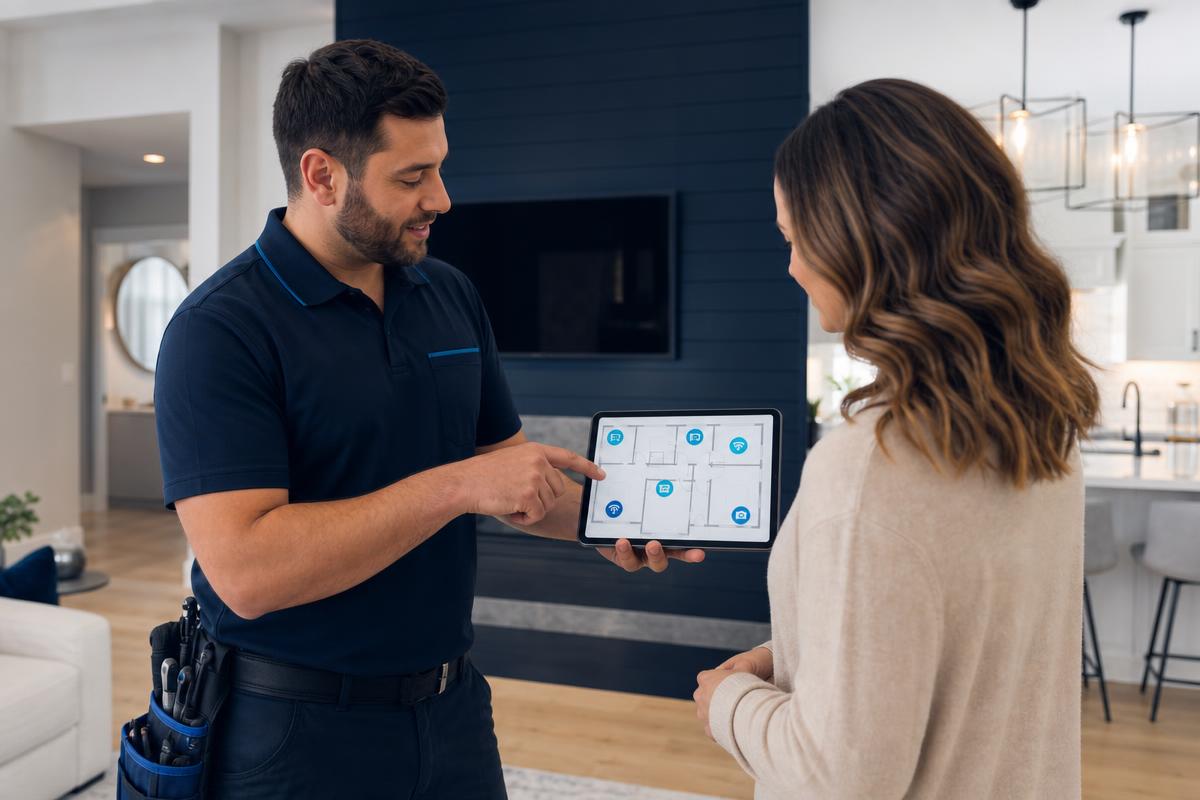
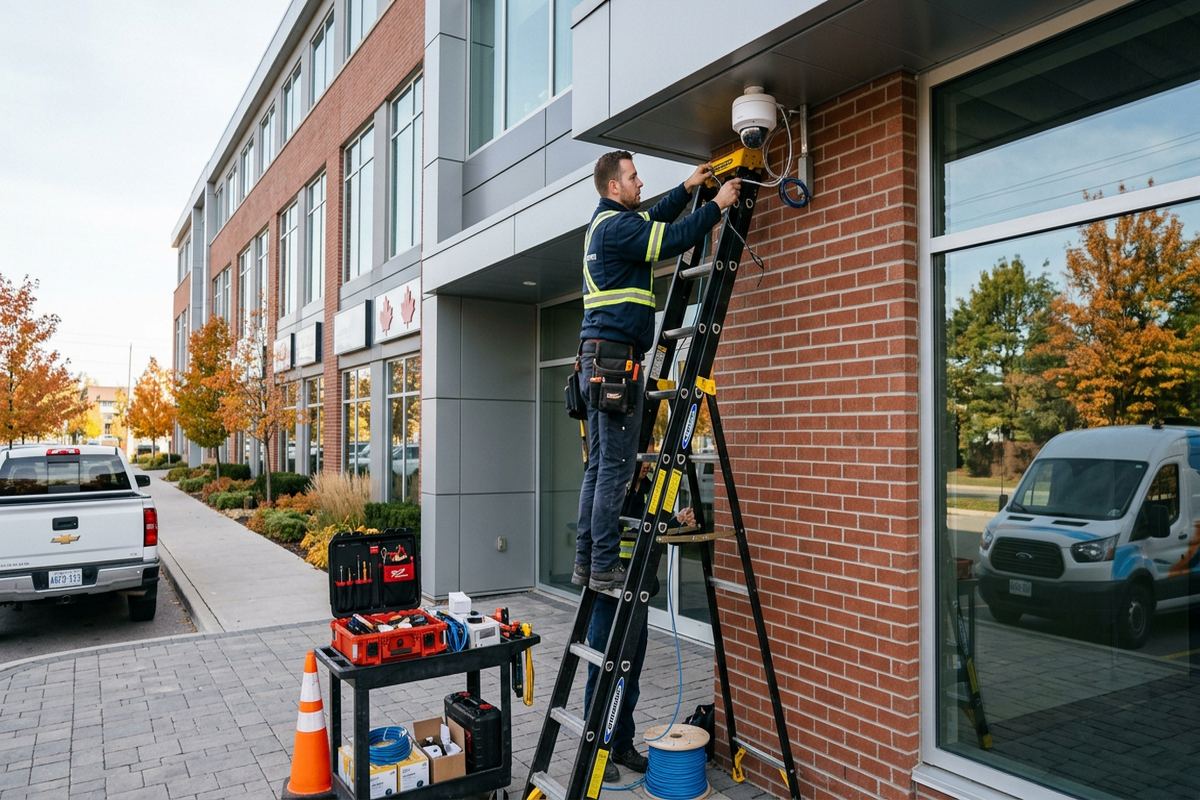
Useful outdoor surveillance begins with understanding what needs to be seen, when it needs to be seen and how recorded footage may be used. During a Cornwall site assessment, we examine entrances, driveways, loading areas, side passages, detached buildings and accessible windows. Camera positions are chosen to capture practical identification views rather than broad scenes with limited detail. We also consider sunlight, existing exterior lights, nearby roads, vegetation and seasonal obstructions. The resulting plan matches camera types and recording requirements to the property instead of relying on a standard package or arbitrary device count.
Cornwall projects commonly involve riverfront homes, logistics warehouses and older housing stock, each with different installation constraints. A riverfront property may have open approaches, glare, wind-driven moisture and detached structures requiring careful coverage. Older homes can contain finished basements, additions or limited cable pathways that affect routing. Warehouses usually require longer viewing distances, controlled coverage of loading doors and coordination around active operations. These details are reviewed before pricing so that proposed equipment, mounting locations and cable routes reflect the actual building, grounds and operational priorities.
Every proposal includes a written scope identifying equipment, cable routes, device placement, exclusions, equipment ownership and warranty. This gives homeowners, landlords and business operators a clear basis for reviewing the work before installation. If an area cannot be covered reliably from the preferred location, that limitation is discussed rather than hidden. The assessment also identifies whether lifts, special access, network changes or approvals may be needed. Site assessment timing depends on the service and travel distance, while requests received during business hours are answered the same day and after-hours requests the next business day.
- Entrance, driveway and perimeter coverage review
- Assessment of lighting, glare and seasonal obstructions
- Camera selection based on required image detail
- Written equipment and installation scope
- Clear identification of exclusions and access needs
Weather-Resistant Mounting in Cornwall
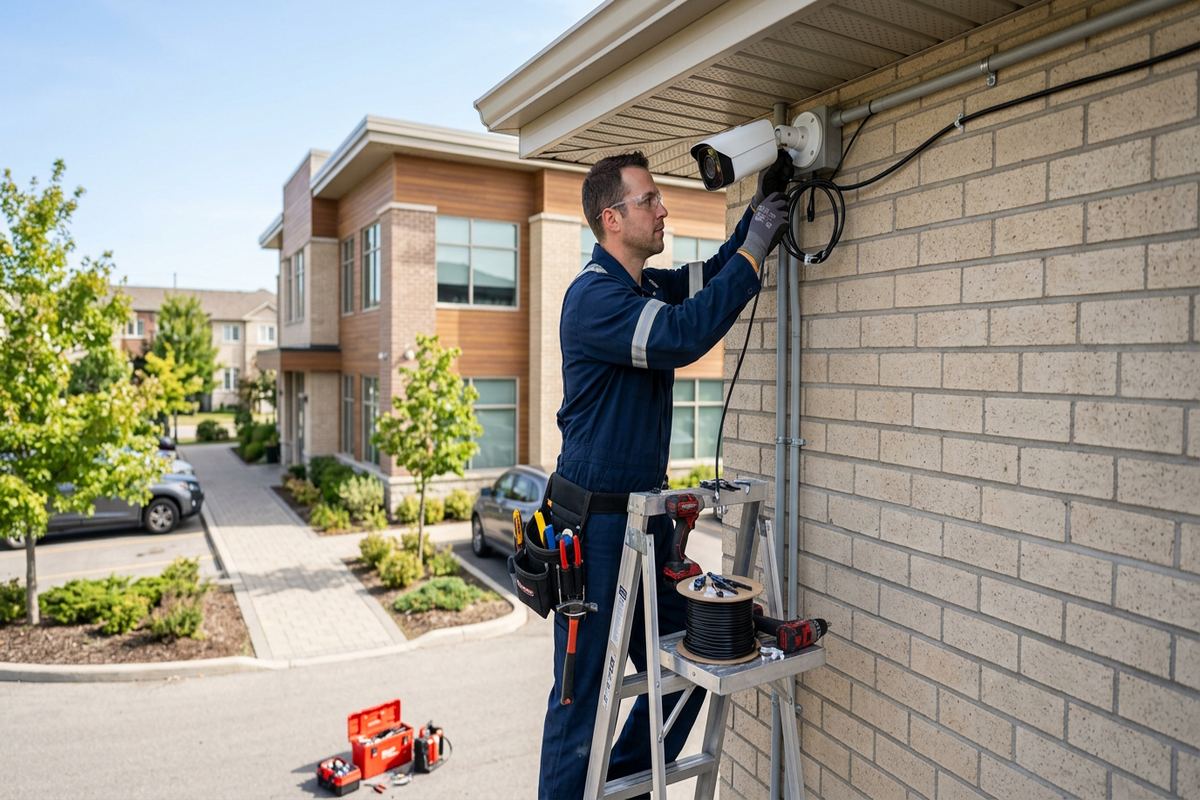
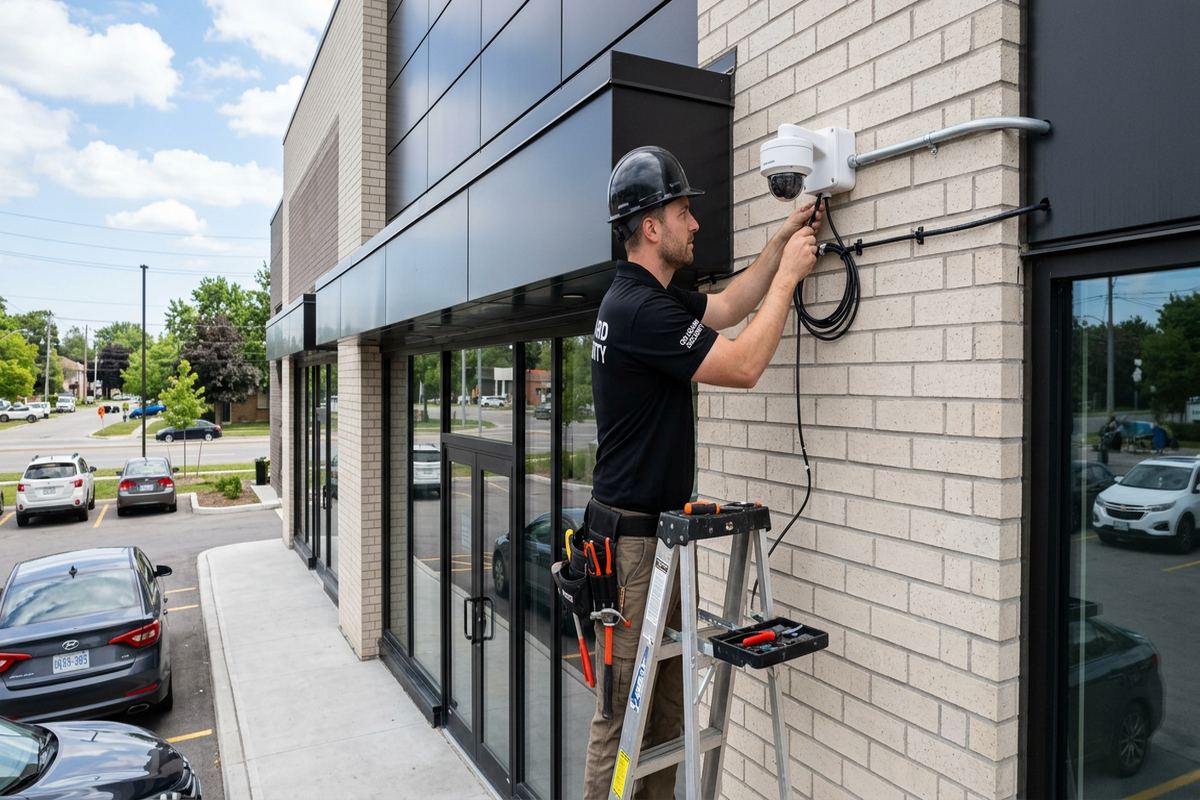
Exterior cameras in Cornwall must remain secure through snow, freezing rain, summer heat and repeated freeze-thaw cycles. Mounting is therefore treated as part of system performance, not a cosmetic detail. We select stable attachment points, use appropriate exterior fasteners and avoid surfaces that may shift or deteriorate. Cable entries are positioned and sealed to limit water intrusion, while service loops and connectors are managed to reduce exposure. Camera housings are oriented so snow accumulation, roof runoff and direct precipitation are less likely to obstruct the lens or reach vulnerable terminations.
Masonry and frame construction require different installation methods. Brick walls need suitable anchors and careful drilling locations that avoid unnecessary damage, while siding may require mounting blocks or attachment to structural material behind the exterior finish. Older Cornwall housing can include mixed construction created by additions and renovations, so wall composition is confirmed before drilling. Cable penetrations are kept controlled, sealed and placed with interior routing in mind. Where a preferred camera angle would create a poor attachment or exposed cable path, we explain the trade-off and recommend a more maintainable position.
Cold weather also affects where power supplies, network equipment and recorders should be located. Devices intended for conditioned indoor spaces are not placed in damp sheds, unheated attics or exposed enclosures without considering their operating requirements. At riverfront homes and properties near Guindon Park, open exposure can increase wind, moisture and drifting snow around eaves and outbuildings. The site review considers these conditions alongside manufacturer requirements. A sound installation protects cable entries, provides physical support and keeps future access practical for cleaning, adjustment or replacement.
- Exterior-rated mounting materials and fasteners
- Sealed and controlled wall penetrations
- Reduced exposure for connectors and terminations
- Mounting methods matched to wall construction
- Accessible placement for future servicing
Camera Placement and Image Detail
A camera only helps when its field of view supports a defined purpose. Wide-angle coverage can show general activity, but it may not provide useful facial or vehicle detail at the point that matters. We plan separate views for identification points such as doors, gates, walkways and loading entrances when required. Mounting height, lens selection and distance are considered together. Cameras placed excessively high may mainly record the tops of heads, while low or exposed positions can invite interference. The goal is balanced coverage that is useful without creating avoidable blind spots.
Lighting conditions around Cornwall properties can change sharply throughout the day and across seasons. Low winter sun may shine directly into a camera, while bright wall fixtures can leave nearby faces underexposed. Infrared reflection from soffits, white siding, snow, glass or nearby walls can also reduce night image clarity. During planning, we review these likely sources of glare and reflection and adjust the angle, mounting surface or lighting strategy. Where appropriate, separate illumination or a different camera location may produce more consistent results than relying on specifications alone.
Coverage must also respect neighbouring properties and spaces where surveillance would be inappropriate. In Riverdale or Le Village, closely spaced homes can make careful framing especially important. We aim cameras at the customer’s doors, yard, driveway and access routes while limiting unnecessary views into adjacent windows or private areas. For rental, condominium or shared properties, the owner may need landlord, condominium board or property management approval before cables or devices are attached to common elements. Those permissions remain the customer’s responsibility and should be confirmed before scheduling installation.
- Identification views at priority access points
- Angles adjusted for glare and infrared reflection
- Balanced mounting height and tamper exposure
- Privacy-aware framing near neighbouring properties
- Approval requirements identified before installation
Cornwall, Ontario
Outdoor camera installation in Cornwall, scoped in writing first
Book a site assessment and get equipment, routes, exclusions, and warranty on paper before anything is installed.
Cabling and Network Design in Cornwall
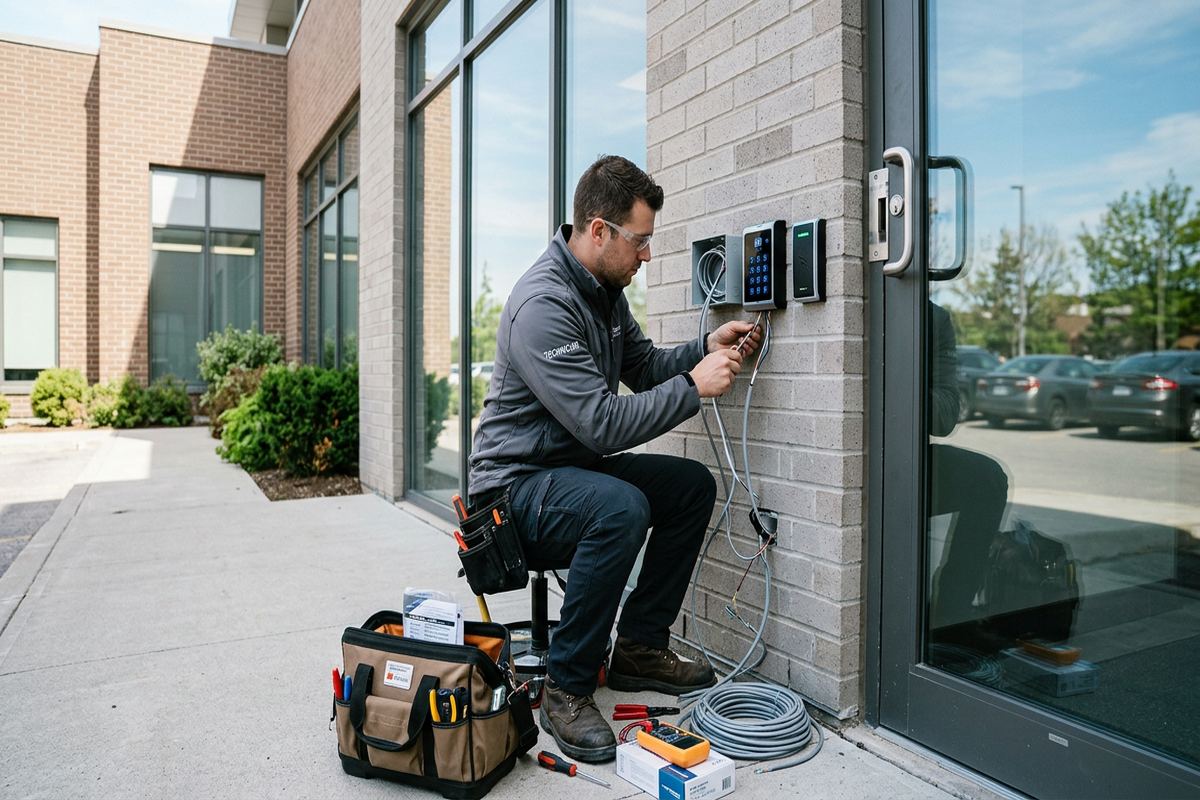
Hard-wired cameras generally depend on reliable data cabling, suitable power delivery and a stable network path to the recorder or management platform. UnifiedLink installs continuous labelled cable runs between supported endpoints, avoiding hidden intermediate joins that complicate troubleshooting. Routes are planned through basements, utility areas, ceiling spaces or exterior pathways according to the building. In older Cornwall homes, finished surfaces, fire stops and previous renovations can limit access. The written scope shows the intended routes and identifies areas where visible cable, surface raceway or selective access may be necessary.
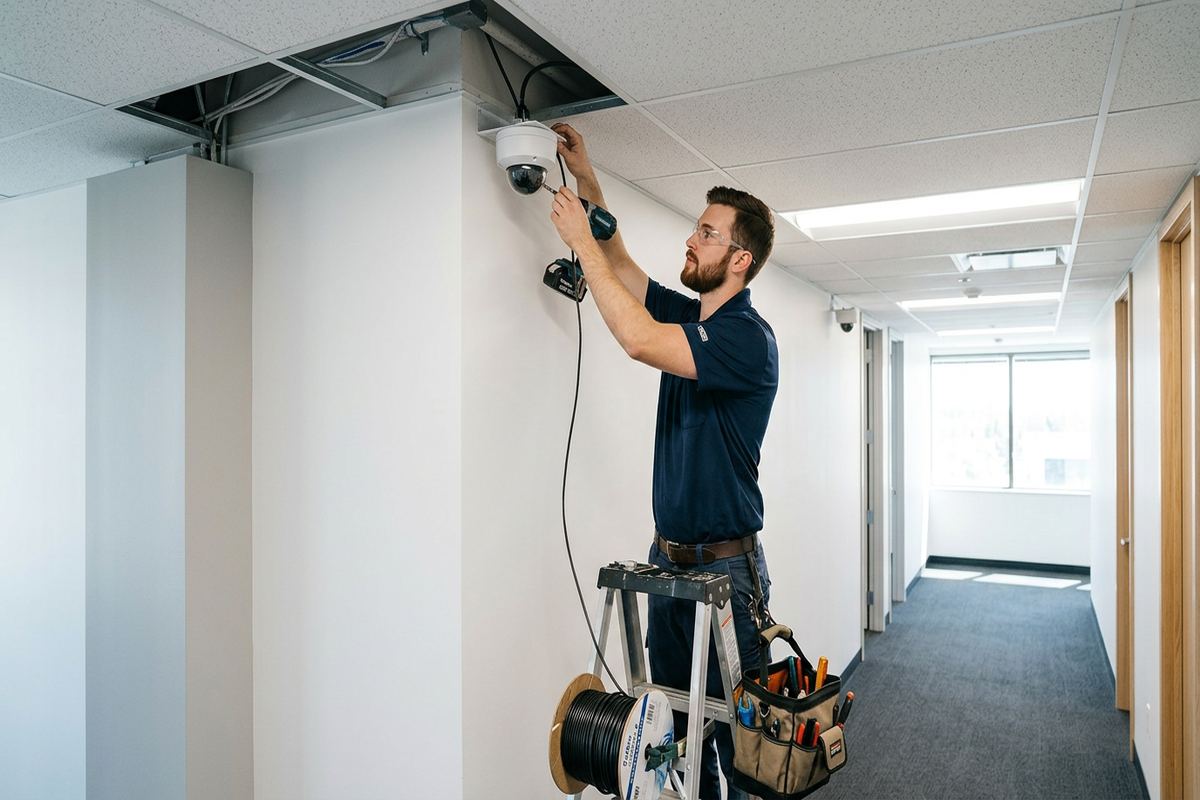
Commercial strips, industrial units and logistics warehouses often require longer pathways and coordination with existing electrical, network and life-safety systems. In the Cornwall Business Park, cable routes may pass through high ceilings, service rooms or active loading areas where installation access must be planned. We assess pathway length, equipment location, network capacity and power requirements before confirming the design. Camera traffic may be separated or managed according to the network environment, but changes are documented. Cabling is supported, labelled and terminated for an orderly system that another technician can understand later.
Wireless cameras still need dependable power and Wi-Fi coverage, and exterior signal quality can differ from an indoor speed test. Masonry, metal cladding, insulated walls, distance and neighbouring networks can weaken a connection at the actual mounting point. Battery-operated devices also introduce charging, temperature and maintenance considerations. We evaluate these limitations before recommending wireless equipment. Where a wired route is practical, it often provides a more predictable connection for continuous recording. When wireless is selected, access-point placement and signal conditions are considered as part of the system rather than assumed to be adequate.
- Continuous labelled cable runs
- Routes planned around finished and older structures
- Network and power requirements reviewed
- Commercial pathways coordinated with operations
- Wireless signal checked at camera locations
Recording, Remote Viewing and Secure Setup
Recording design depends on camera resolution, frame rate, motion settings, retention goals and the events a property owner needs to review. We discuss these factors without presenting storage duration as a fixed promise, because scene activity and configuration directly affect available history. A busy Cornwall Centre storefront may generate more motion than a quiet residential side entrance. Recorder capacity and settings are selected around the intended use, then configured on site. Time, date, camera names and recording schedules are checked so exported footage can be located and understood efficiently.
Remote viewing is configured using the customer’s own account and credentials. We do not build the system around installer-owned access that leaves the customer dependent on an unknown login. Where supported, secure password practices, account recovery details and multi-factor authentication should be used. Remote access also relies on the property’s internet service, local network and the manufacturer’s platform, so those dependencies are explained during handover. Users are shown how to view live cameras, search recordings and export relevant clips from the installed interface.
Alerts require deliberate adjustment because outdoor scenes contain legitimate movement from snow, rain, shadows, animals, trees, headlights and passing traffic. A notification zone aimed at a Cornwall sidewalk or warehouse yard may need different sensitivity and scheduling than a protected rear door. We configure available motion or analytics features around the agreed priorities and test representative activity on site. No analytic feature should be treated as infallible. The customer receives an explanation of practical limitations, along with guidance for refining alerts after normal seasonal and operational patterns become clear.
- Recording settings matched to intended use
- Customer-owned accounts and credentials
- On-site live view and playback configuration
- Practical motion zones and alert schedules
- Export process reviewed during handover
Outdoor Cameras for Cornwall Businesses
Business camera systems need to support daily operations as well as incident review. For Cornwall warehouses and industrial units, that can include loading doors, trailer approaches, employee entrances, fenced areas and exterior inventory. Camera views are planned around movement patterns and choke points rather than simply covering every wall. We coordinate device placement with door operation, vehicle clearance, exterior lighting and safe installation access. If work affects active areas, scheduling and site rules are discussed beforehand so the scope reflects operational constraints and required coordination.
Retail and office properties around Cornwall Centre may have public sidewalks, rear service lanes, shared parking or neighbouring tenants within a compact area. These conditions call for controlled fields of view and clear responsibility for mounting surfaces. Property owners or tenants should confirm lease permissions before authorizing penetrations, exterior conduit or equipment in shared telecommunications rooms. We can document proposed locations and cable routes for approval discussions. The final configuration focuses on the customer’s entrances and managed areas while avoiding unnecessary capture of unrelated interiors or adjacent private spaces.
A commercial system may also need defined access for owners, managers or designated staff. User permissions should reflect who can view live video, search recordings, change settings or export footage. During configuration, we establish available roles using customer-provided account information and review how access can be removed when responsibilities change. Equipment ownership is stated in the written scope, which is particularly important for leased premises or managed buildings. Handover includes an as-built record showing installed camera locations, cable identification and core system details for future maintenance or expansion.
- Loading, parking and service-area coverage
- Coordination with leases and shared property areas
- User roles based on operational responsibility
- Camera placement around vehicle movement
- As-built documentation for future changes
Residential Installation Across Cornwall
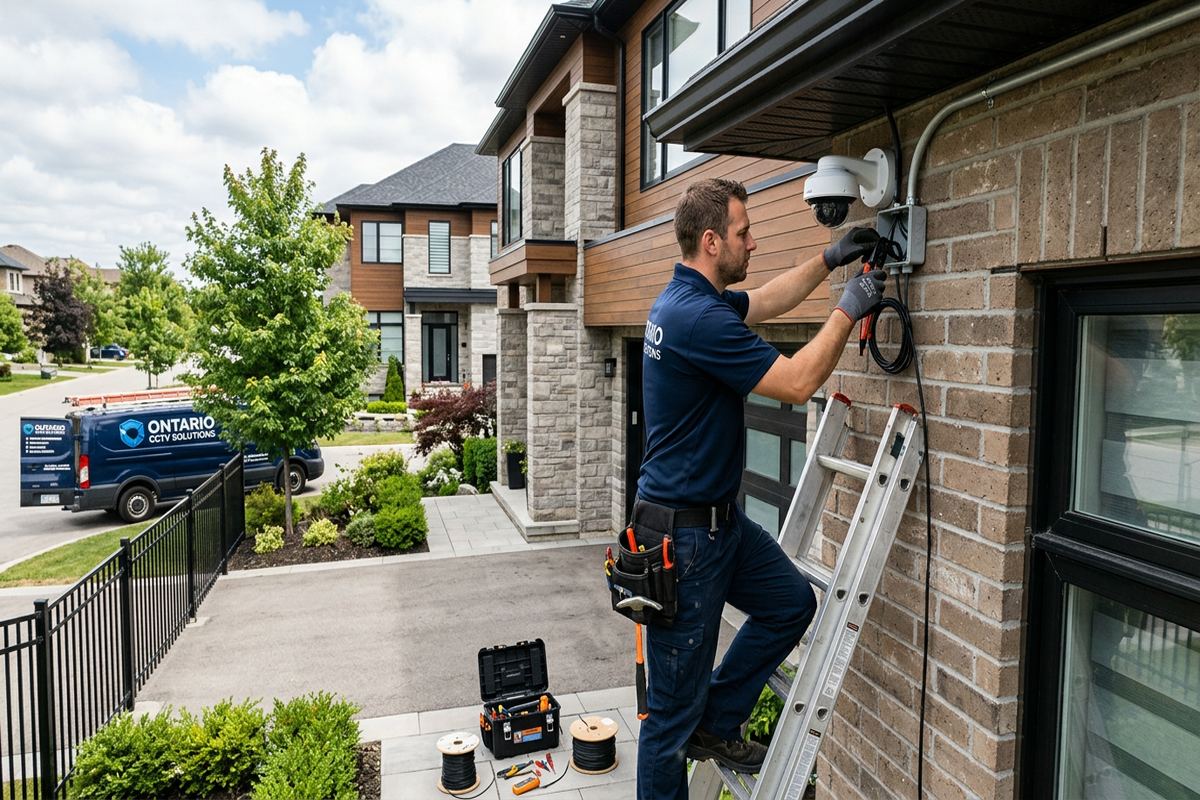
Residential projects often focus on the front entrance, driveway, side gate, backyard and detached garage. In Le Village, Riverdale and established streets near Cornwall Centre, lot size and building spacing can limit useful camera angles. We look for positions that capture a person approaching rather than only recording activity after someone reaches the door. Existing porch lights, soffits, downspouts and overhead services are considered before selecting mounts. Cable routes are planned to limit disruption to finished rooms while keeping exterior wiring supported, protected and reasonably discreet.
Older housing stock can hide construction changes that are not visible from outside. Plaster walls, renovated ceilings, enclosed porches and multiple additions may interrupt an expected cable path. Rather than promise concealed routing everywhere, we identify accessible pathways during assessment and explain alternatives when cavities cannot be reached. These may include a different camera position, a basement route, exterior-rated cable protection or surface raceway in an agreed area. Any exclusions or assumptions are recorded in the scope so the homeowner understands the planned finish before installation begins.
Riverfront homes and larger properties may require coverage between the main house, driveway entrance, garage, dock approach or other detached structures. Distance, line of sight, power availability and network connectivity determine whether direct cabling, fibre, wireless bridging or a separate equipment location is appropriate. The design must also account for open weather exposure and future access. We do not assume that a consumer Wi-Fi signal reaching a phone outdoors will reliably support continuous camera traffic. Each connection method is assessed against the actual property layout and recording requirements.
- Door, driveway and side-access views
- Routing options for older finished homes
- Coverage planning for detached structures
- Neighbour-aware residential camera framing
- Weather exposure reviewed at each mount
Installation, Testing and Handover in Cornwall
Once the written scope is accepted and required approvals are in place, installation follows the agreed device positions and cable routes. Cameras are mounted, cables are supported and labelled, and network or recording equipment is connected in its planned location. If concealed conditions differ materially from what could be assessed, the issue is explained before changing the approach. One accountable contractor handles the camera installation, cabling, configuration and handover, reducing gaps between separate trades. Work areas are reviewed at completion, and device labels correspond with the system names and as-built information.
Testing takes place under the conditions available on installation day. We verify live images, focus where applicable, camera orientation, recording, timestamps, remote access and configured notifications. Exterior views are checked for immediate obstructions, excessive wall in the frame and likely infrared reflection. Some conditions, including heavy snow cover, leaf growth or low seasonal sunlight, may only appear later. Cornwall customers are shown how to recognize these issues and how to request an adjustment if site conditions reveal a practical problem that could not be reproduced during the original visit.
Handover is intended to leave the owner able to operate the system without relying on installer-controlled credentials. The customer receives access through their own accounts, an overview of playback and export functions, and an as-built record of installed devices and labelled runs. Warranty information and equipment ownership follow the written scope. We also explain routine tasks such as keeping lenses clear, checking time settings and reviewing user access. This documentation provides a useful baseline when the Cornwall property changes, internet equipment is replaced or additional coverage is considered later.
- Installation follows the approved written scope
- On-site image and recording tests
- Customer-owned login and account access
- As-built camera and cable record
- Operating guidance provided at handover
Cornwall neighbourhoods we cover
- Le Village
- Riverdale
- Cornwall Centre
- Guindon Park area
- Business Park
Outdoor camera installation in Cornwall — common questions
How do you choose outdoor camera locations in Cornwall?
We begin with a site assessment and ask what activity or access point needs to be documented. Mounting height, distance, lighting, exterior construction, privacy and cable access are reviewed together. Cornwall conditions such as snow, low winter sun, freeze-thaw and closely spaced properties can affect the final position. The written scope records proposed camera locations and cable routes before installation.
Can cameras be installed on an older brick home?
Yes, although the attachment and cable route must suit the actual construction. Many older Cornwall homes combine brick, frame additions, enclosed porches and renovated interiors. We inspect likely wall composition and accessible pathways before proposing the installation. Appropriate anchors, controlled penetrations and exterior sealing are used. If concealed cabling is not practical, the scope can identify an alternative route or protected surface-mounted option.
Will outdoor cameras work during a Cornwall winter?
Equipment must be selected and installed for its expected environment, but winter performance also depends on mounting, power, network connectivity and maintenance. In Cornwall, snow, freezing rain, condensation and freeze-thaw can obstruct views or stress poorly sealed entries. We position and seal devices with these conditions in mind. Owners should still keep lenses clear and check views after major storms or unusual ice buildup.
Do I need permission from my landlord or condo board?
Possibly. Tenants and condominium owners should confirm permission before cameras, cable, conduit or fasteners are attached to exterior walls or other common elements. Cornwall property managers or condominium boards may also have rules about appearance, privacy and approved contractors. We can provide proposed device locations and cable routes for review, but obtaining landlord, board or property-management approval remains the customer’s responsibility.
Can I view my Cornwall cameras from my phone?
Remote viewing can be configured when the selected system, internet connection and network support it. Setup uses your own credentials rather than an installer-owned account. We configure the application on site, check access and show you how to view live video, search recordings and export clips. Remote service still depends on your Cornwall property’s internet connection, network equipment and the camera platform’s availability.
How long does an outdoor camera installation take?
Timing depends on camera quantity, building construction, cable pathways, mounting height, network work, access requirements and whether approvals are already complete. A Cornwall home with accessible basement routes differs from an operating warehouse requiring lift access and scheduling around loading activity. Site assessment timing also depends on the service and travel distance. The written scope identifies the planned work before an installation date is arranged.
Coverage in Cornwall is confirmed against the address before we quote. See everything we install in Cornwall or the province-wide outdoor camera installation page.