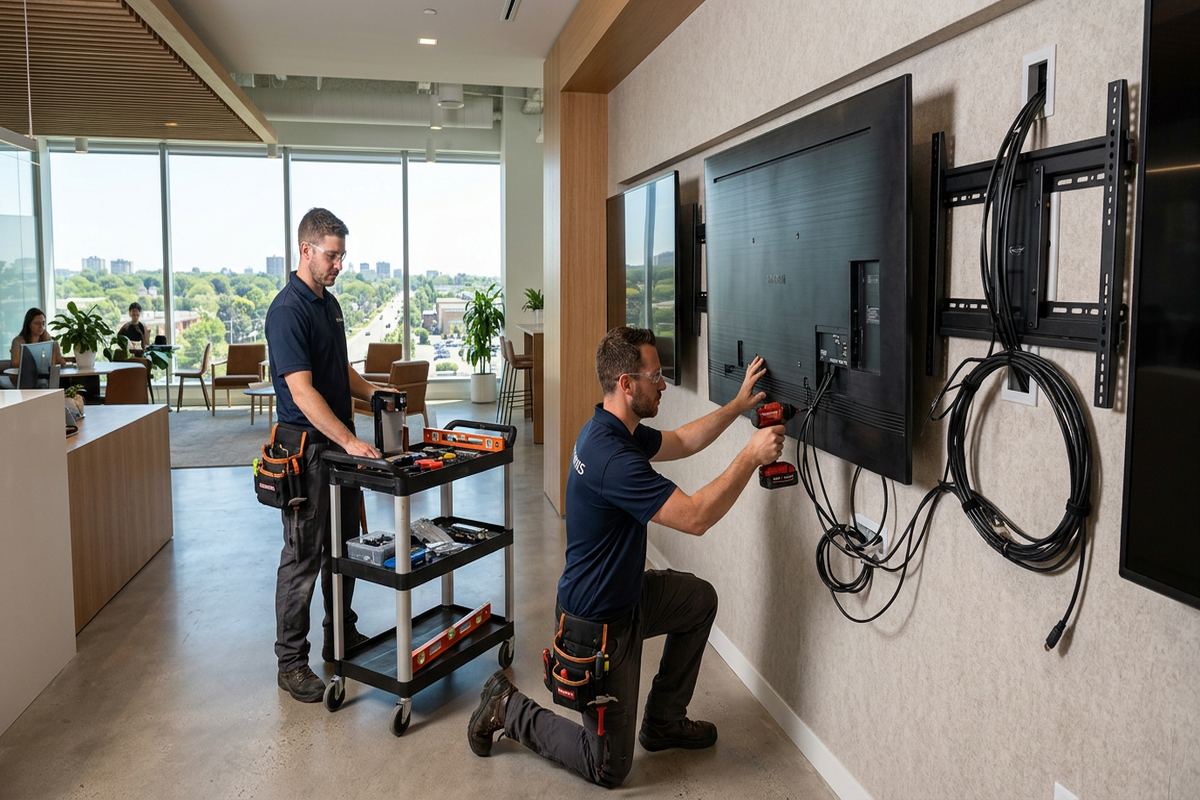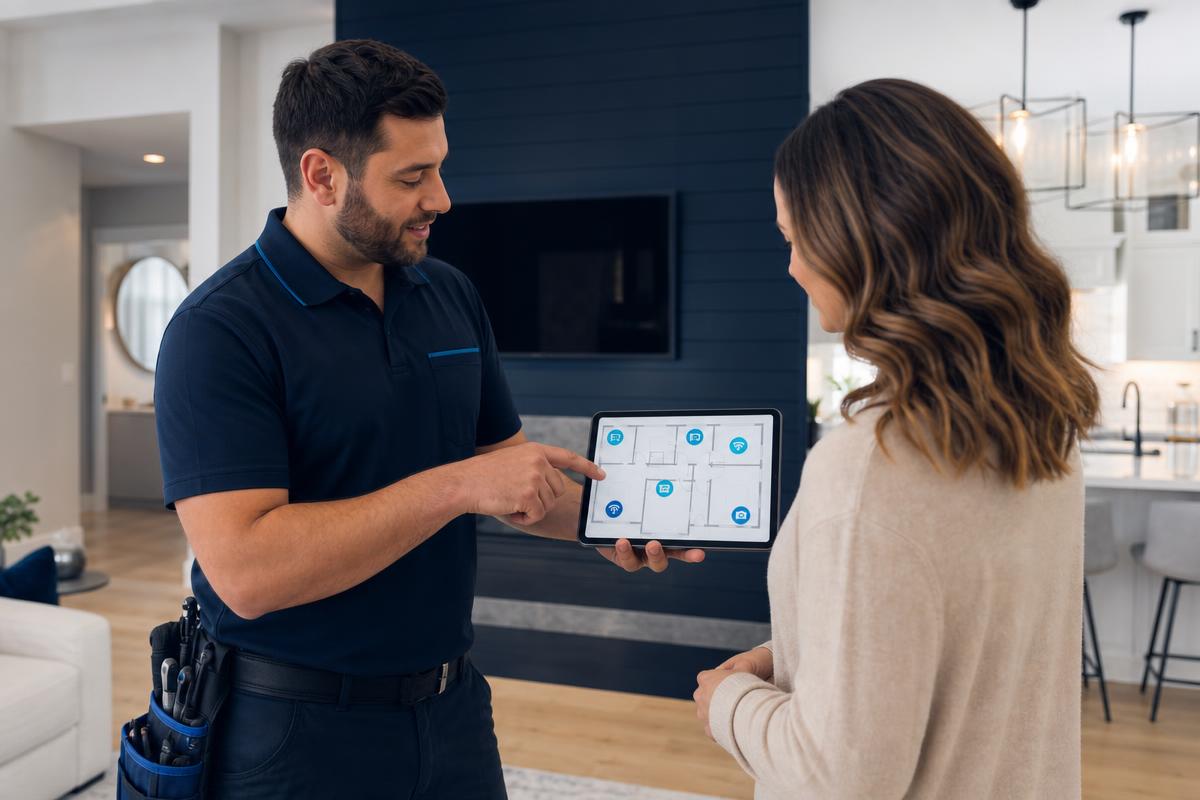
UnifiedLink installs commercial access control systems in Cornwall and surrounding Eastern Ontario communities. We plan doors, credentials, controllers, cabling and network connections around the building’s construction and operating needs. Each project begins with a site assessment and proceeds under a written scope, followed by on-site configuration, testing and documented handover using the customer’s own credentials.
Commercial Access Control Planning in Cornwall
A reliable access control project starts with the doors, users and operating rules rather than a product list. During a Cornwall site assessment, UnifiedLink reviews public entrances, staff doors, loading areas, interior restricted rooms and emergency egress requirements. We identify who needs access, when permissions should apply and how administrators will add or remove credentials. The assessment also considers existing locks, door closers, frames, power availability and network locations. These findings support a written scope instead of assumptions made from photographs or an incomplete equipment schedule.
Cornwall properties vary considerably, from older buildings around Le Village and Cornwall Centre to newer industrial units in the Business Park. Masonry walls, wood-frame additions, renovated storefronts and insulated warehouse panels require different cable routes and mounting methods. An older opening may be out of square, have limited frame space or use hardware that is unsuitable for electrification. Before pricing, we document these conditions and determine whether a locksmith, electrician, fire alarm contractor, property manager or other trade must participate in the work.
The written scope defines equipment, cable routes, controller and reader placement, exclusions, equipment ownership and warranty terms. It also identifies assumptions about network access, electrical work, door hardware and approvals. This matters when a commercial tenant does not own the doors or when a condominium, landlord or property manager controls common areas. Clarifying responsibilities early reduces changes during installation and gives the customer a practical basis for comparing solutions. Site assessment timing depends on the requested service, property access and travel distance within Eastern Ontario.
- Door and frame condition review
- User roles and access schedules
- Cable-route and controller planning
- Landlord or condominium approval requirements
- Written equipment and installation scope
Access Control Systems for Cornwall Properties
The correct system depends on the number of doors, the sensitivity of each area and the people managing daily access. A small Cornwall office may need readers on two exterior doors and a straightforward web interface. A logistics warehouse may require separate permissions for office staff, drivers, supervisors and contractors, along with controlled access to shipping areas or inventory rooms. Multi-unit properties can have another set of requirements, including common entrances, utility spaces and management access. We match system architecture to current operations while allowing sensible capacity for planned doors.
Credential options include cards, fobs, mobile credentials and keypad codes, depending on the selected platform and site policy. Each method has administrative and operational implications. Shared codes are simple but provide limited accountability, while individually assigned credentials can be disabled without changing access for everyone. Mobile access may reduce physical credential handling but depends on compatible phones, applications and user onboarding. UnifiedLink explains these trade-offs before selection, then configures named access groups, schedules and door behaviour on site using information approved by the customer’s designated administrator.
Access control can operate as a stand-alone system or connect with other low-voltage systems where supported. Useful integrations may include video surveillance, intrusion alarms, intercoms or directory systems, but integration should serve a defined purpose. For example, linking an access event to recorded video can help staff review a disputed entry. It does not replace appropriate camera placement or access policies. We verify platform compatibility, network requirements and licensing before including integration in the scope, rather than promising connections based only on brand names or general product descriptions.
- Card, fob, mobile or keypad credentials
- Role-based permissions and schedules
- Single-door and multi-door platforms
- Optional camera or alarm integration
- Local and cloud-managed system options
Door Hardware and Safe Egress
Electronic access control must secure an opening without interfering with safe exit. Reader selection is only one part of the door assembly. Electric strikes, electrified locksets, magnetic locks, request-to-exit devices, door contacts and power supplies each have different applications. Existing panic hardware, fire ratings, accessibility needs and the direction of egress can affect the design. UnifiedLink records door and frame details during assessment and identifies work that belongs with a qualified locksmith, electrician or other responsible trade. Hardware is not substituted casually once installation has started.
Older Cornwall buildings often present practical door problems before electronics are added. A worn closer may fail to latch the door, a shifted frame may bind in cold weather, or previous renovations may have left concealed cavities and patched masonry. Access control cannot compensate for a door that does not close consistently. We test the mechanical operation and distinguish between access control work and required door repair. Where corrective work is outside our scope, it is documented as an exclusion or prerequisite so the customer understands what must happen before commissioning.
Emergency release behaviour is planned according to the opening, selected hardware and applicable requirements. Some doors remain mechanically free for exit, while certain locking arrangements need release inputs or connections coordinated with other building systems. Backup power expectations also need definition: customers should know which components remain active during an outage and for approximately what designed duration under stated conditions. Final testing covers authorized entry, denied entry, door position reporting, request-to-exit operation and configured release behaviour, with deficiencies recorded rather than hidden during handover.
- Electric strikes and electrified locksets
- Door contacts and request-to-exit devices
- Panic hardware coordination
- Power supply and backup planning
- Documented functional testing
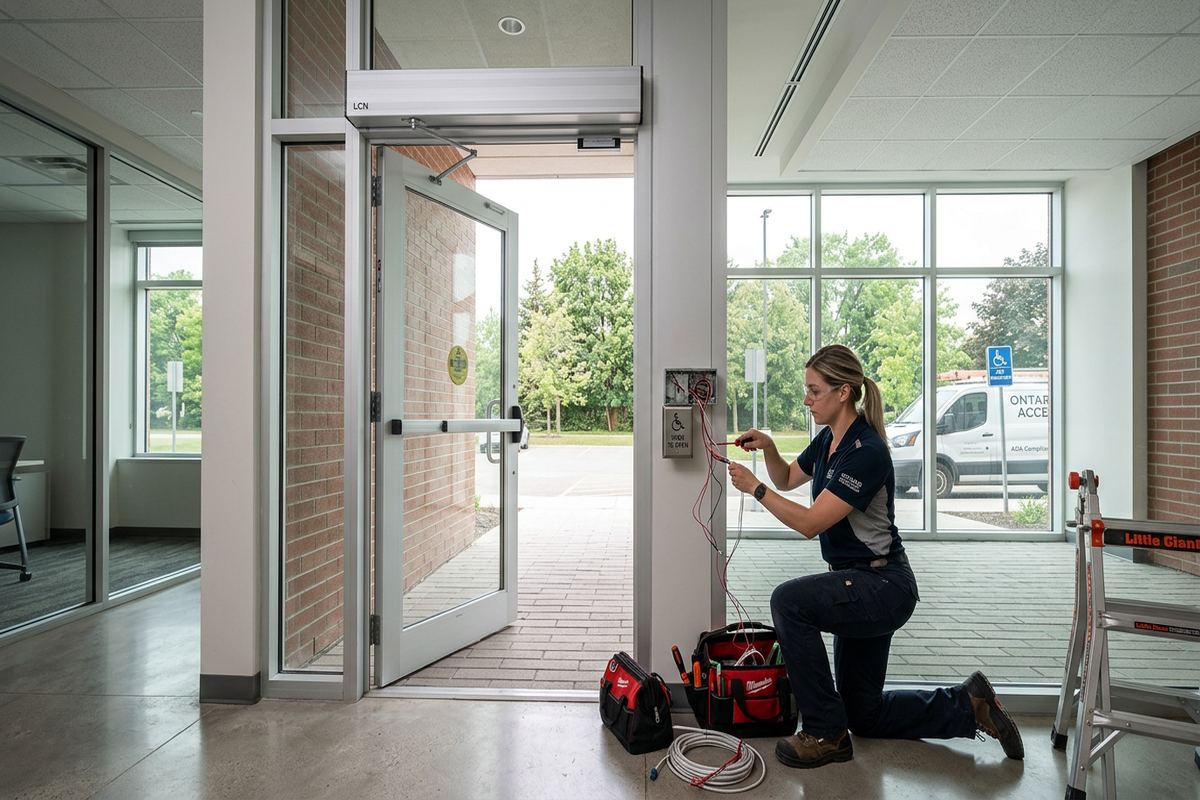
Cornwall, Ontario
Commercial access control installation in Cornwall, scoped in writing first
Book a site assessment and get equipment, routes, exclusions, and warranty on paper before anything is installed.
Cornwall Cabling and Controller Installation
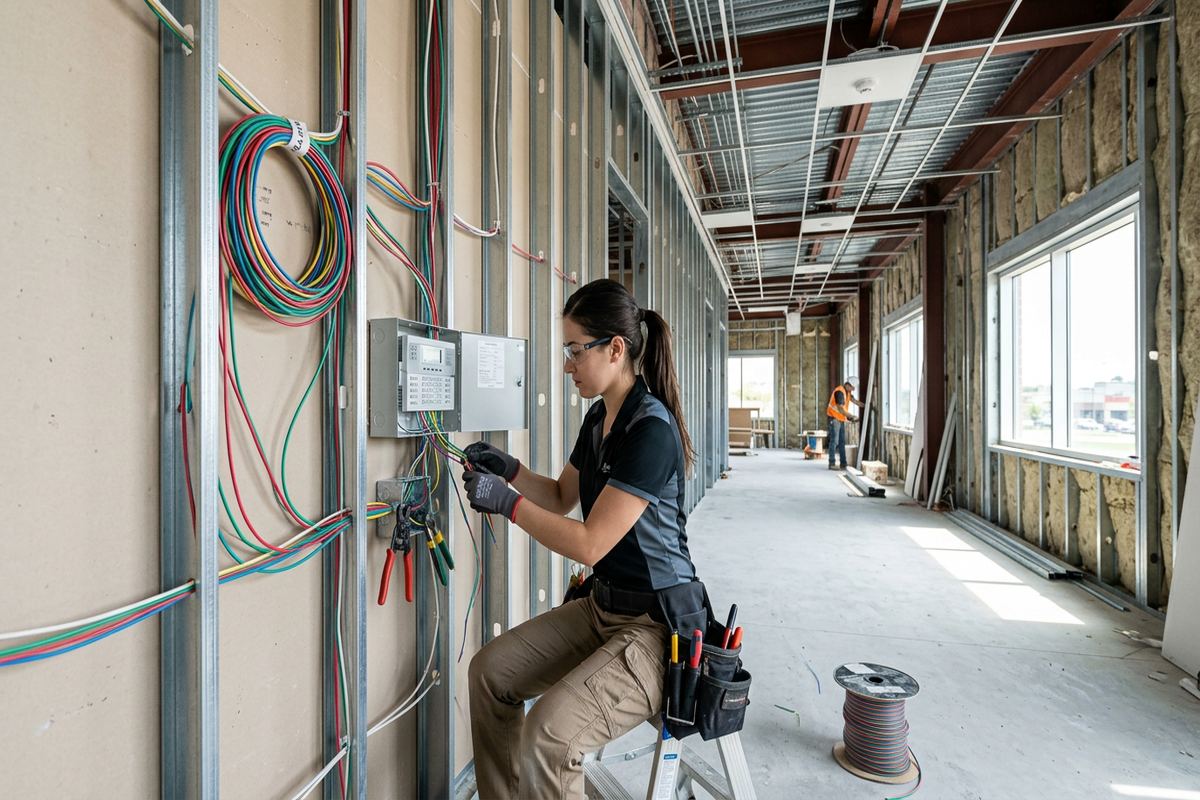
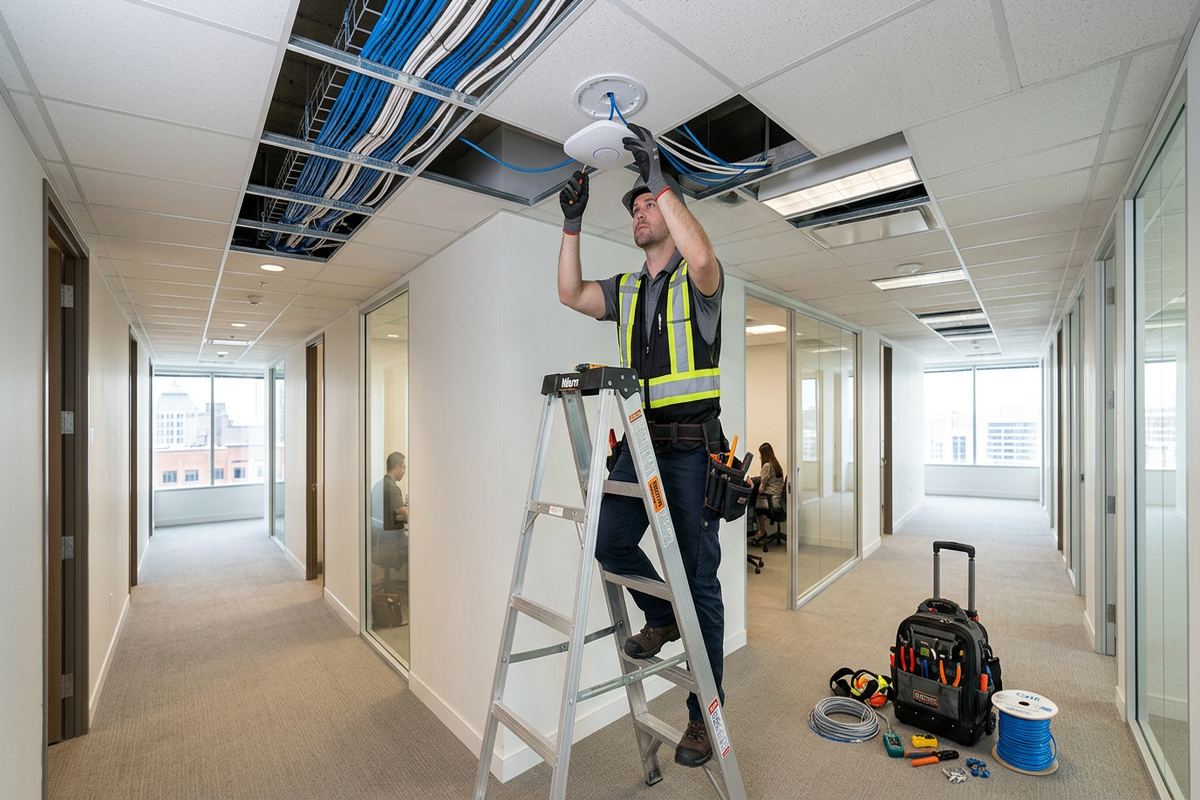
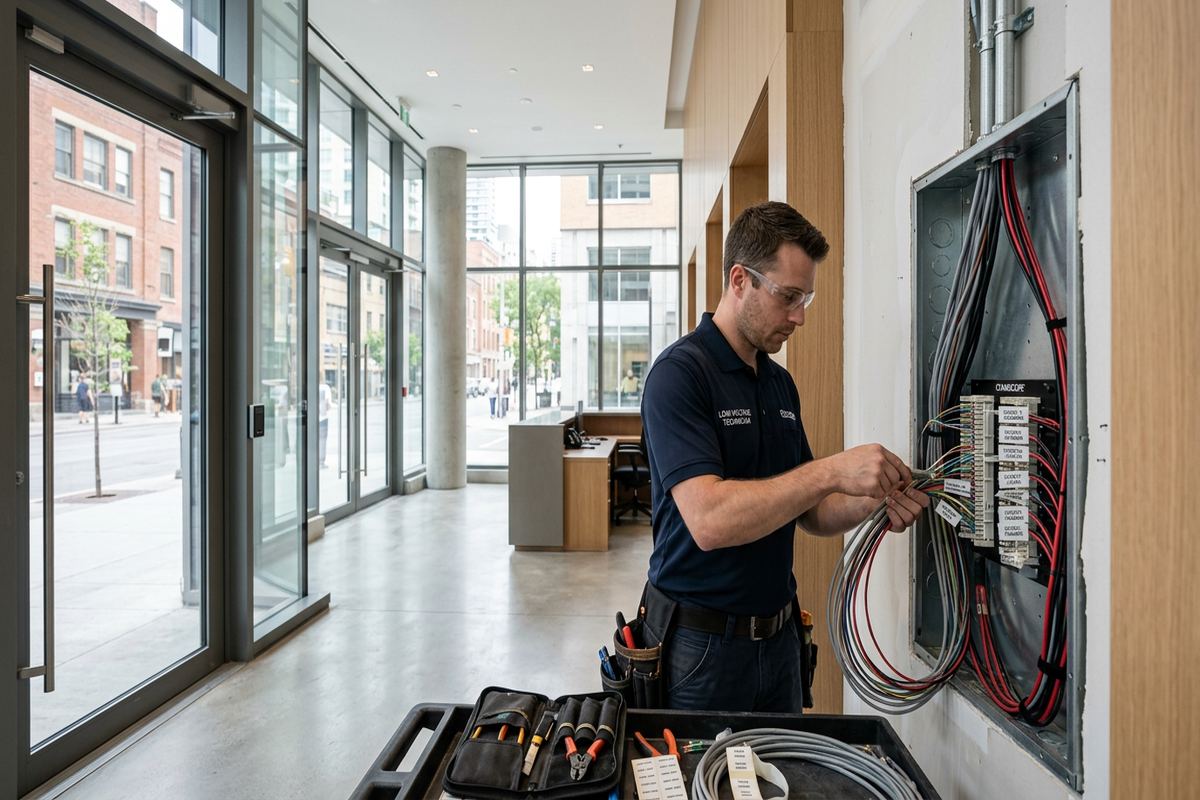
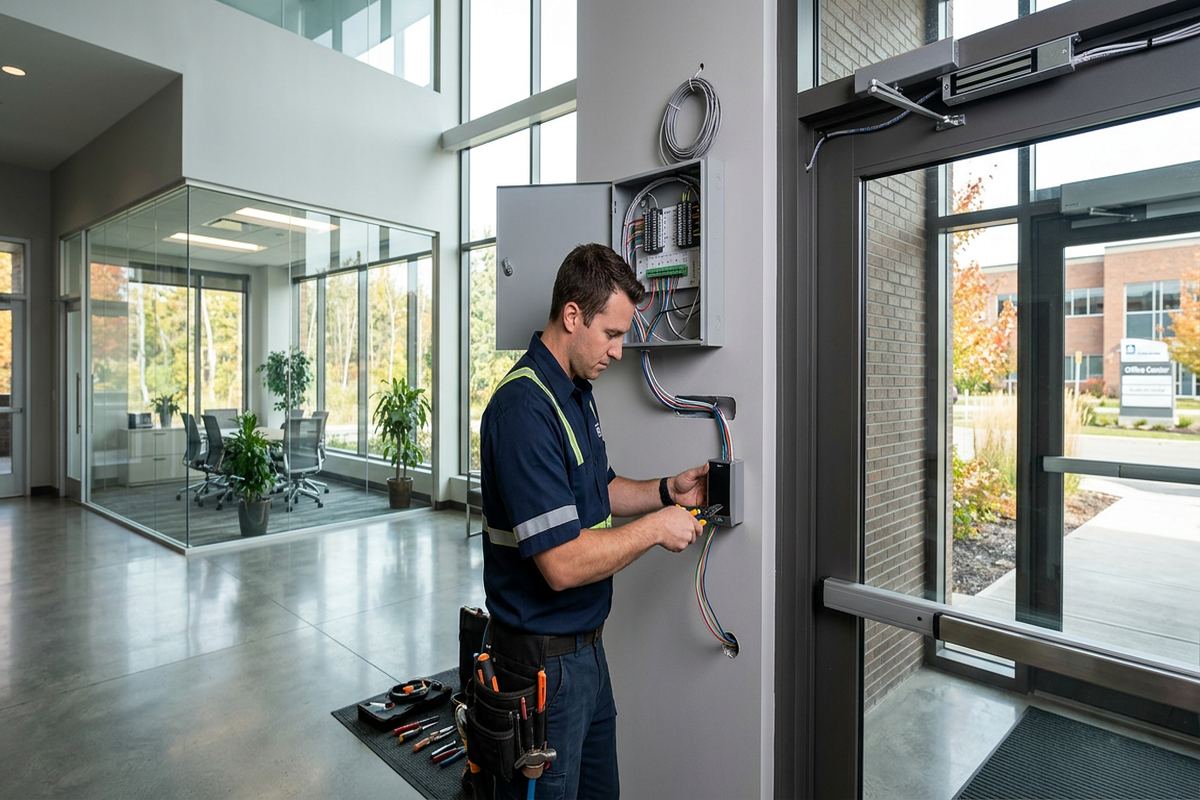
Access control wiring carries power, reader data, lock control and door-status signals between openings and secured equipment. UnifiedLink installs continuous labelled cable runs according to the approved routes, avoiding undocumented splices that complicate troubleshooting. Cables are selected for the device, distance, environment and pathway. At the head end, conductors are organized and labelled to match door names in the software and as-built record. Controller locations are chosen for service access and protection, not simply placed above the nearest ceiling tile or inside an unsecured public room.
Construction type shapes the installation method. Masonry buildings in Cornwall Centre may require surface raceway, careful drilling or routes through accessible service spaces. Frame construction can offer concealed pathways, although finished walls and insulation still limit access. In warehouse and Business Park units, open structure may permit conduit or supported low-voltage pathways across larger distances. We discuss visible versus concealed cabling before work begins. Penetrations, fire separations and transitions between conditioned and unconditioned spaces are also reviewed, with specialist work assigned where it falls outside the access control scope.
Network-connected controllers require coordination with the customer’s information technology contact. We document requested network ports, addressing method, outbound connectivity and any remote-management requirements. Access control equipment should not be connected through an unknown switch or shared account without administrative ownership being clear. Where practical, controllers, power supplies and network interfaces are installed in controlled locations with labelled terminations. On-site configuration includes communications checks and basic administrative setup. The customer receives access using its own credentials rather than relying on an installer account that remains the only path into the system.
- Continuous labelled cable runs
- Protected controller and power locations
- Masonry and open-structure pathways
- Network requirements documented in advance
- Customer-owned administrative access
Exterior Readers in Eastern Ontario Winters
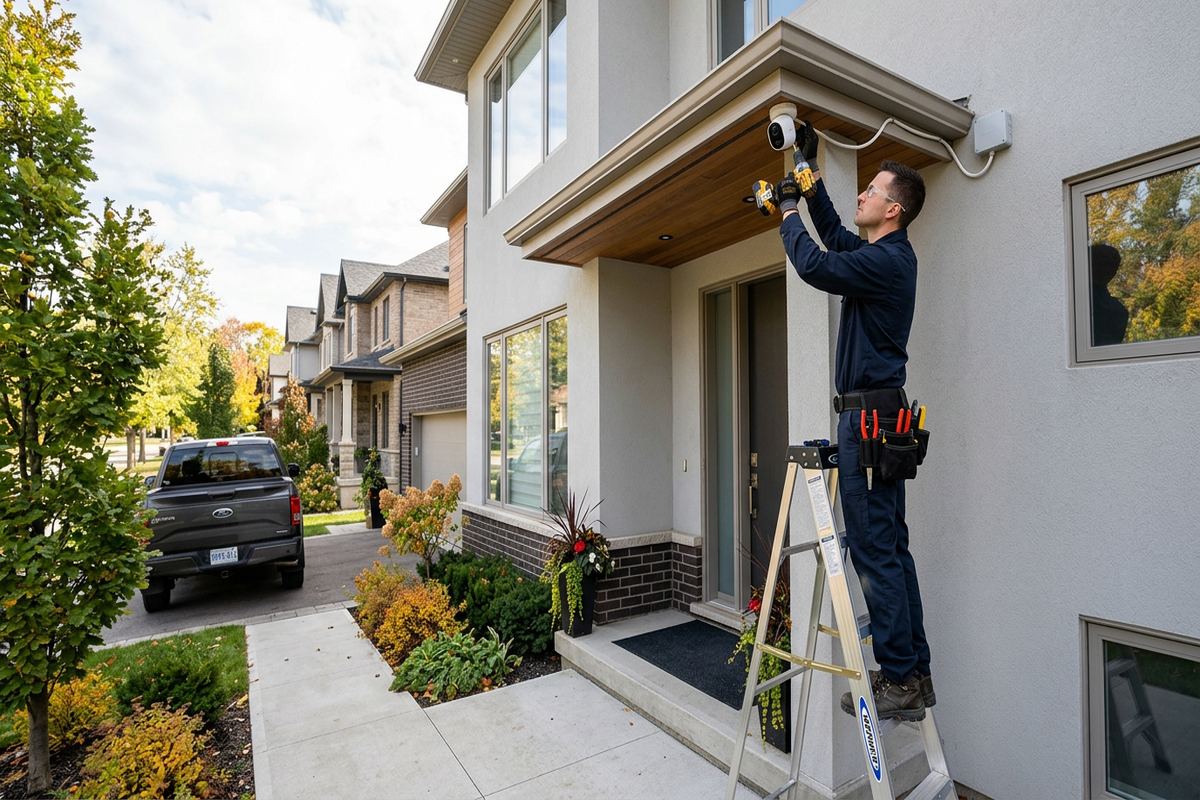
Exterior devices in Cornwall face snow, wind-driven moisture, road salt and repeated freeze-thaw cycles. A reader listed for outdoor use still needs suitable placement and installation. Mounting surfaces must be stable, cable entries need protection, and openings should be sealed using methods compatible with the wall and device. We also consider whether roof runoff, piled snow or direct exposure will affect normal use. Choosing an outdoor-rated component without addressing the penetration behind it can allow water into the cable path, wall assembly or reader backplate.
Thermal movement affects masonry, metal frames and exterior sealants differently. For that reason, reader mounting on brick, concrete, siding or insulated metal panels is planned according to the substrate. Fasteners and anchors must suit the material, while penetrations should avoid unnecessary damage to flashing or drainage paths. In riverfront areas and around Guindon Park, exposed conditions can make placement particularly important. A sheltered location may improve usability, but it must still support an accessible approach and a practical cable route to the controlled opening.
Cold weather can reveal mechanical issues that were less obvious during warmer months. Doors may contract, seals may stiffen and closers may respond differently, preventing a latch from engaging cleanly. During commissioning, we verify that electronic hardware works with the actual door rather than testing the relay alone. Customers should continue routine inspection of closers, hinges, weather stripping and latching surfaces. If seasonal movement is already evident, the scope can identify adjustment or locksmith work as a prerequisite, reducing the chance that access events are blamed for mechanical failure.
- Outdoor-rated reader selection
- Sealed and protected cable entries
- Substrate-appropriate anchors and fasteners
- Freeze-thaw and snow exposure review
- Cold-weather door-operation testing
Access Management for Cornwall Workplaces
Good access control administration is based on roles, not a growing collection of one-off permissions. A Cornwall warehouse might define groups for receiving staff, office employees, cleaners, supervisors and temporary contractors. An office may separate normal business-hour entry from access to records, server rooms or management areas. UnifiedLink helps translate these policies into groups and schedules during configuration. The customer remains responsible for approving who belongs in each group, while the system provides a consistent way to issue, change and revoke access as staffing or tenancy changes.
Lost cards and employee departures should follow a defined process. Individually assigned credentials allow an administrator to disable one user without collecting every key or changing a shared code. Temporary access can be limited by date, time or door when the chosen platform supports those controls. Reports may help investigate events, but they must be used in accordance with workplace policies and privacy obligations. We show designated administrators how to search common events and manage credentials without presenting the access system as a replacement for supervision, human resources procedures or security policies.
For multi-tenant and mixed-use properties, administrative boundaries deserve careful planning. A landlord may need control of common entrances while each tenant manages only its own suite. In other cases, a single property administrator controls all doors and receives requests from occupants. Riverdale properties converted from older housing stock can have shared vestibules, additions and door arrangements that were not designed for modern credentials. Written approval should identify controlled openings, who owns installed equipment and who may authorize changes before cables or hardware are fitted to common property.
- Named roles and access groups
- Time-limited contractor permissions
- Simple lost-credential cancellation
- Event search training
- Separate landlord and tenant administration
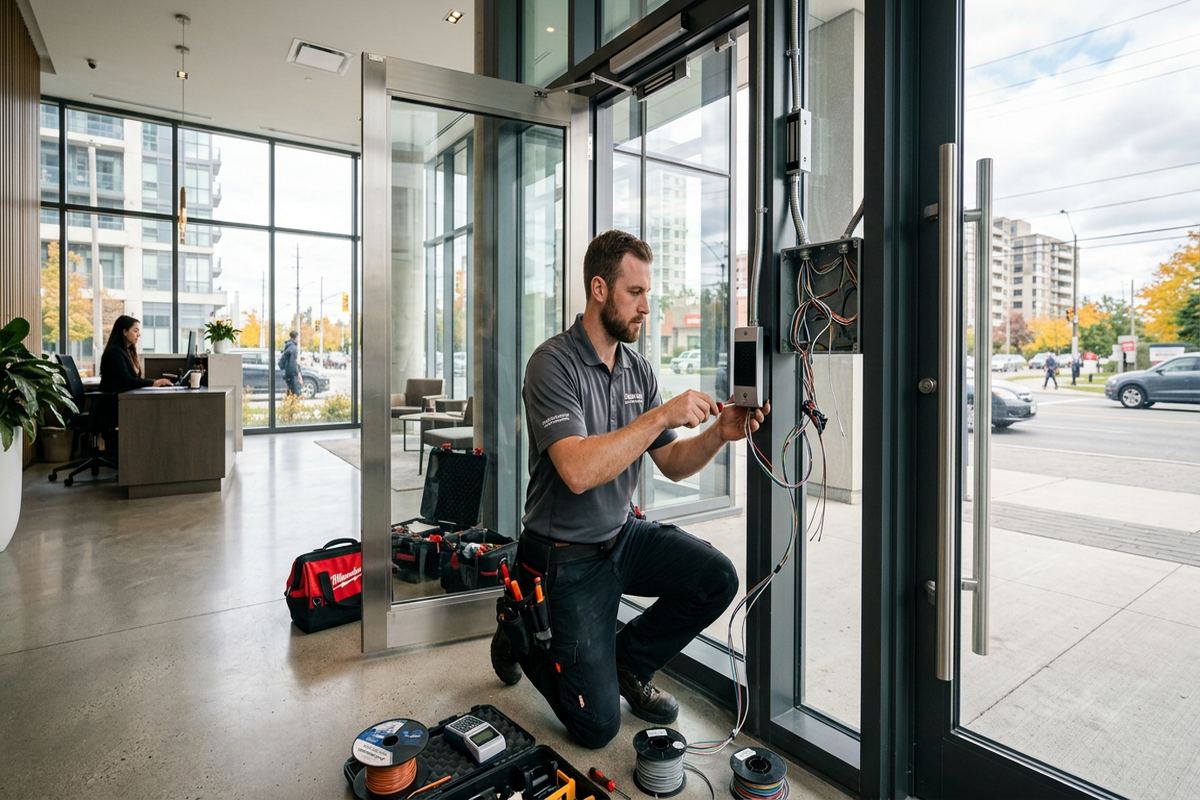
Installation, Testing and Handover
Once the scope is approved, installation is coordinated around site access and normal operations. Busy commercial strips may require work outside customer-facing periods, while logistics facilities need loading doors and travel paths kept clear. We confirm shutdowns, ceiling access, lift requirements and areas containing sensitive operations before arriving. One accountable contractor manages the access control portion, including labelled cabling, device mounting, controller terminations and system configuration. Dependencies on electricians, locksmiths, internet providers or fire system contractors remain visible in the project plan rather than being treated as unexpected site conditions.
Commissioning is performed door by door. Testing includes valid and invalid credentials, access schedules, lock response, door contact status, request-to-exit operation and configured alerts. Where backup power is included, the relevant operating condition is checked according to the design and available test method. Integrations are verified against the written scope. A camera bookmark, alarm input or intercom release is not considered complete merely because both systems are online. Results and unresolved items are recorded, and changes from the approved design are documented for customer review.
At handover, the customer receives administrative access through its own credentials and an as-built record showing installed devices, controller locations and labelled cable information. We review routine tasks such as adding a user, disabling a credential, adjusting a schedule and finding an event. Equipment ownership and warranty terms follow the written scope. The handover also notes exclusions and outstanding work assigned to other trades. This documentation is particularly useful when a Cornwall property changes managers, tenants or information technology providers and the original project contacts are no longer available.
- Operational installation coordination
- Door-by-door commissioning
- Integration checks against scope
- Customer credential setup
- As-built records and administrator review
Commercial Access Control Service in Cornwall
Access control systems need attention when doors change, tenants move, credentials stop reading or network settings are updated. Service begins by identifying whether the issue is mechanical, electrical, cabling-related, network-related or administrative. A reader that appears inactive may have a damaged cable, failed power source, controller communication problem or incorrect schedule. Likewise, a door that reports forced open may simply be failing to latch. Structured diagnosis avoids replacing hardware before the actual cause is established and helps define whether another trade is required.
Expansion planning should revisit controller capacity, power demand, software limits and cable pathways before another door is added. An available relay does not automatically mean the existing enclosure, supply or licence supports the proposed opening. For Cornwall businesses taking over adjacent units, the assessment also considers demising walls, landlord permissions and whether existing cabling belongs to the tenant or property owner. Any addition should preserve consistent door naming, labels and access groups so that the system remains understandable rather than becoming a series of undocumented modifications.
UnifiedLink handles commercial access control work across Cornwall and nearby Eastern Ontario locations, including Le Village, Riverdale, Cornwall Centre, the Guindon Park area and the Business Park. Requests sent during business hours are answered the same day, while after-hours requests are answered the next business day. This wording refers to the response to the request, not a guaranteed arrival or repair time. Site assessment timing depends on the service, building access and travel distance. Pricing follows assessment and a written scope rather than an unsupported remote estimate.
- Fault isolation before replacement
- Existing-system expansion assessment
- Door and credential changes
- Updated labels and records
- Clear response and assessment expectations
Cornwall neighbourhoods we cover
- Le Village
- Riverdale
- Cornwall Centre
- Guindon Park area
- Business Park
Commercial access control installation in Cornwall — common questions
Can access control be added to an older Cornwall building?
Yes, but the door, frame, wall construction and available cable routes must be assessed first. Older Cornwall properties may have masonry walls, altered openings, worn closers or limited space for electrified hardware. UnifiedLink documents these conditions before pricing and identifies any locksmith, electrical, fire system, landlord or condominium approvals needed before installation begins.
Which credentials should our business use?
Cards and fobs are practical for individually assigned access, while mobile credentials can simplify distribution for some Cornwall workplaces. Keypad codes may suit limited applications but shared codes offer less accountability. The choice depends on user turnover, phone compatibility, administrative policy, internet requirements and the selected platform. We review those factors during the site assessment.
Will the system work during a power outage?
That depends on the lock type, controller, power supply and backup capacity included in the design. Some components can remain active on battery backup for a defined design period, while door hardware must also follow the required safe-egress behaviour. For Cornwall projects, the written scope states the planned backup arrangement and any dependencies rather than assuming every device remains operational indefinitely.
Can you reuse our existing readers or cabling?
Existing equipment may be reusable if it is compatible, serviceable and suitable for the proposed platform. Cabling must be inspected for type, condition, routing, labelling and continuity. In older Cornwall buildings, undocumented splices or abandoned wiring can make reuse unreliable. The assessment separates components that can reasonably remain from items that should be replaced or tested further.
Do I need landlord or condo approval?
Approval is usually needed when doors, frames, common walls, entrances or shared systems are not solely owned by the customer. This is relevant for Cornwall commercial tenants, mixed-use buildings and condominium properties. Written approval should define which openings may be modified, who owns the installed equipment and who will administer access before drilling, cabling or hardware work starts.
What do we receive when installation is complete?
After commissioning, UnifiedLink provides access through the customer’s own administrative credentials and an as-built record covering installed devices, controller locations and labelled cable information. We review common user and schedule tasks with designated administrators. The final documentation also records equipment ownership, warranty terms, exclusions and any outstanding work assigned to other trades on the Cornwall project.
Coverage in Cornwall is confirmed against the address before we quote. See everything we install in Cornwall or the province-wide commercial access control installation page.