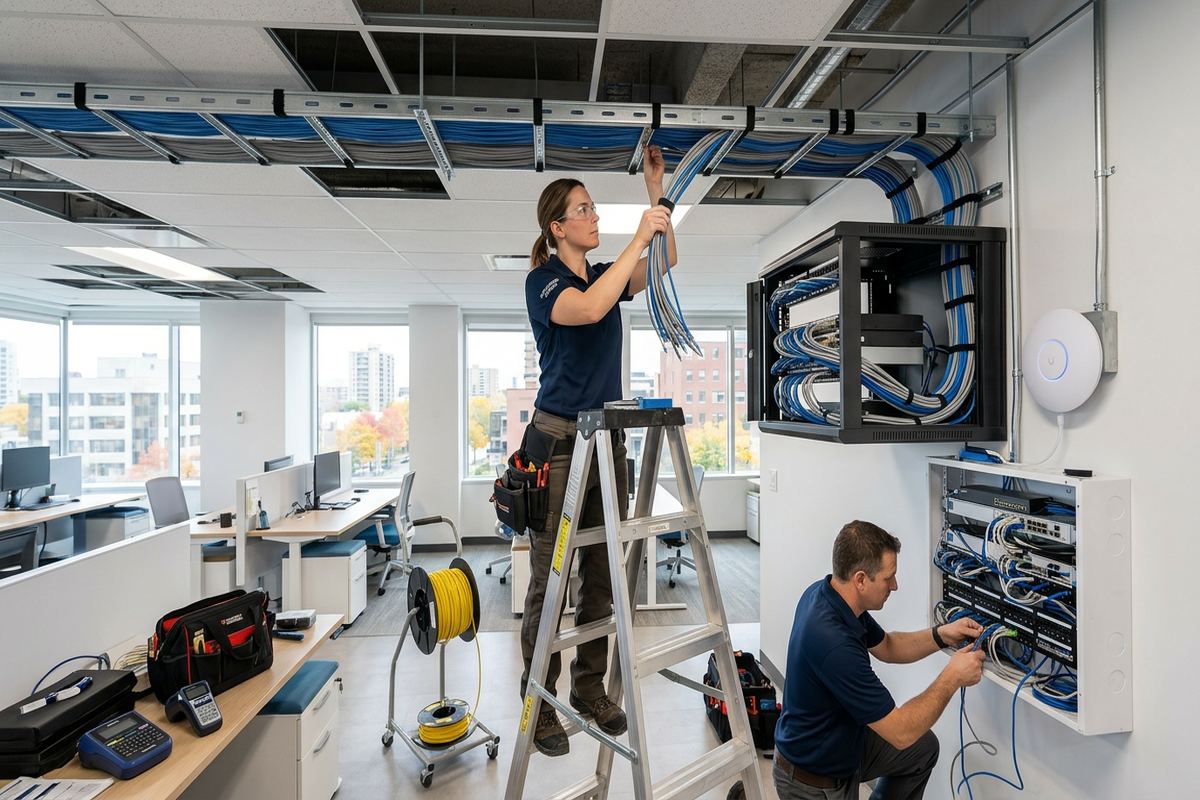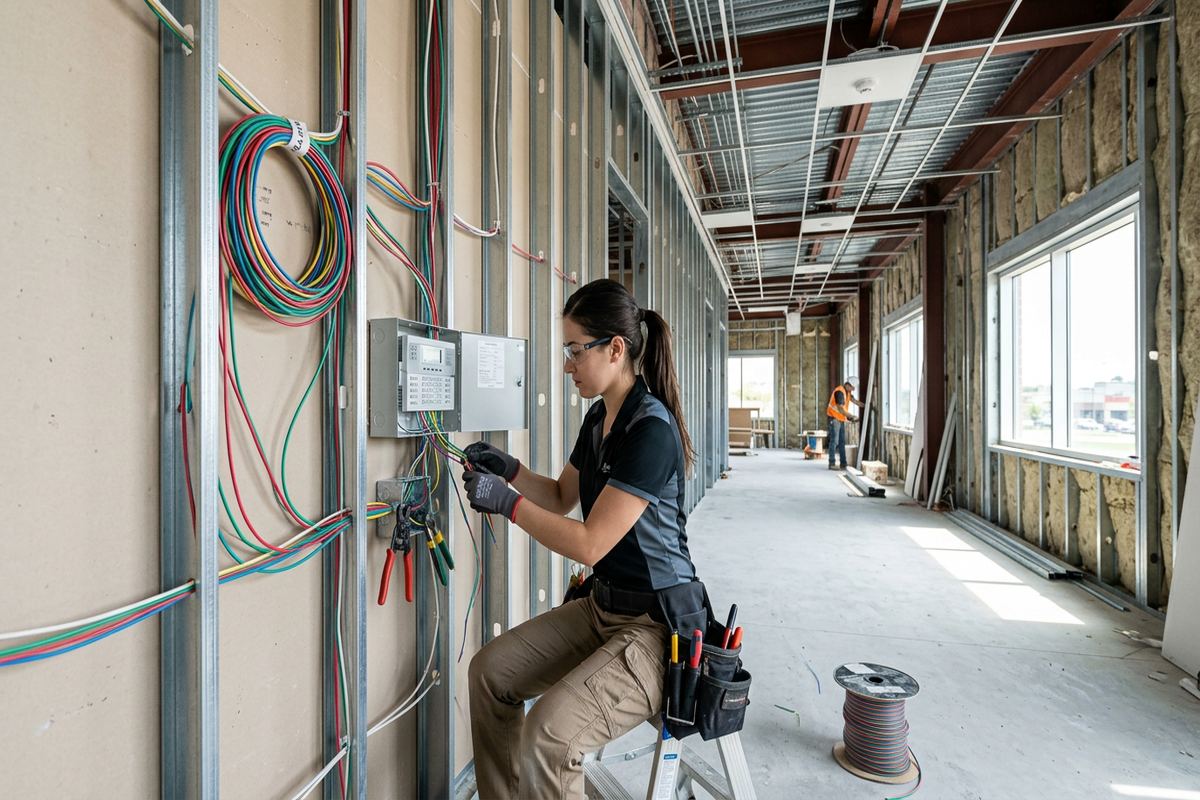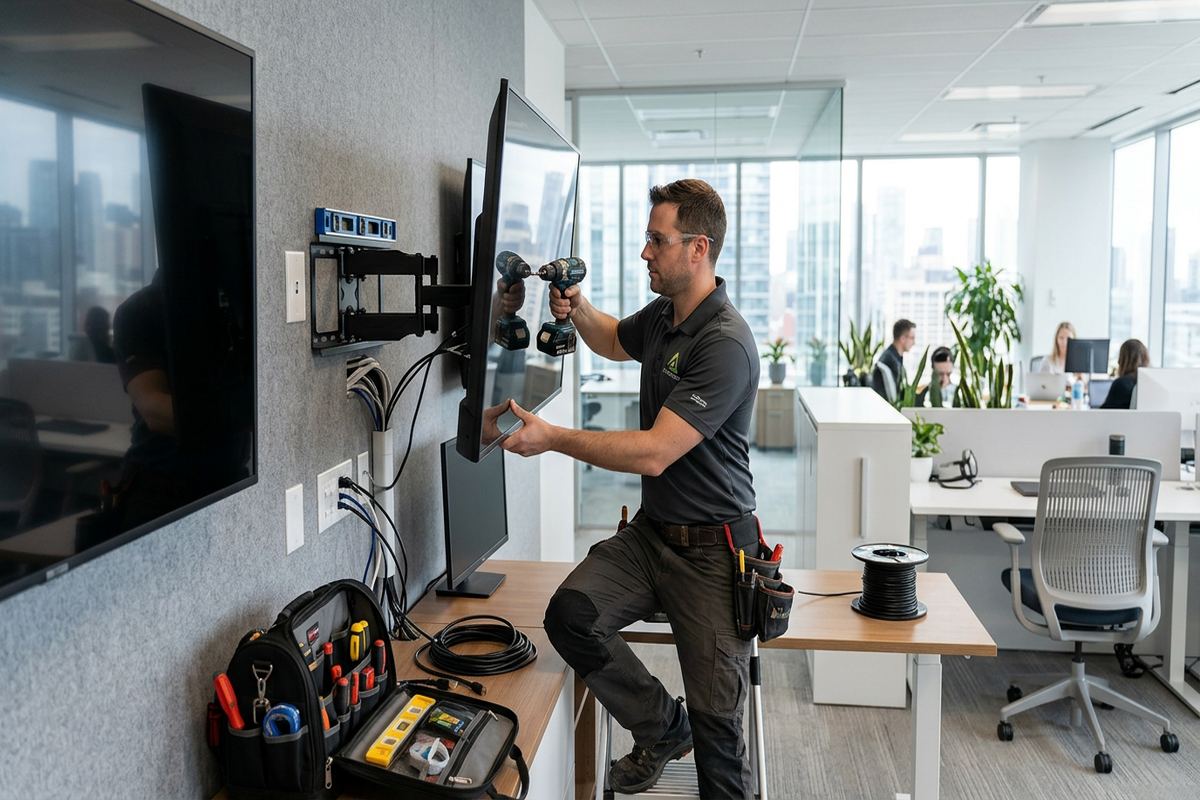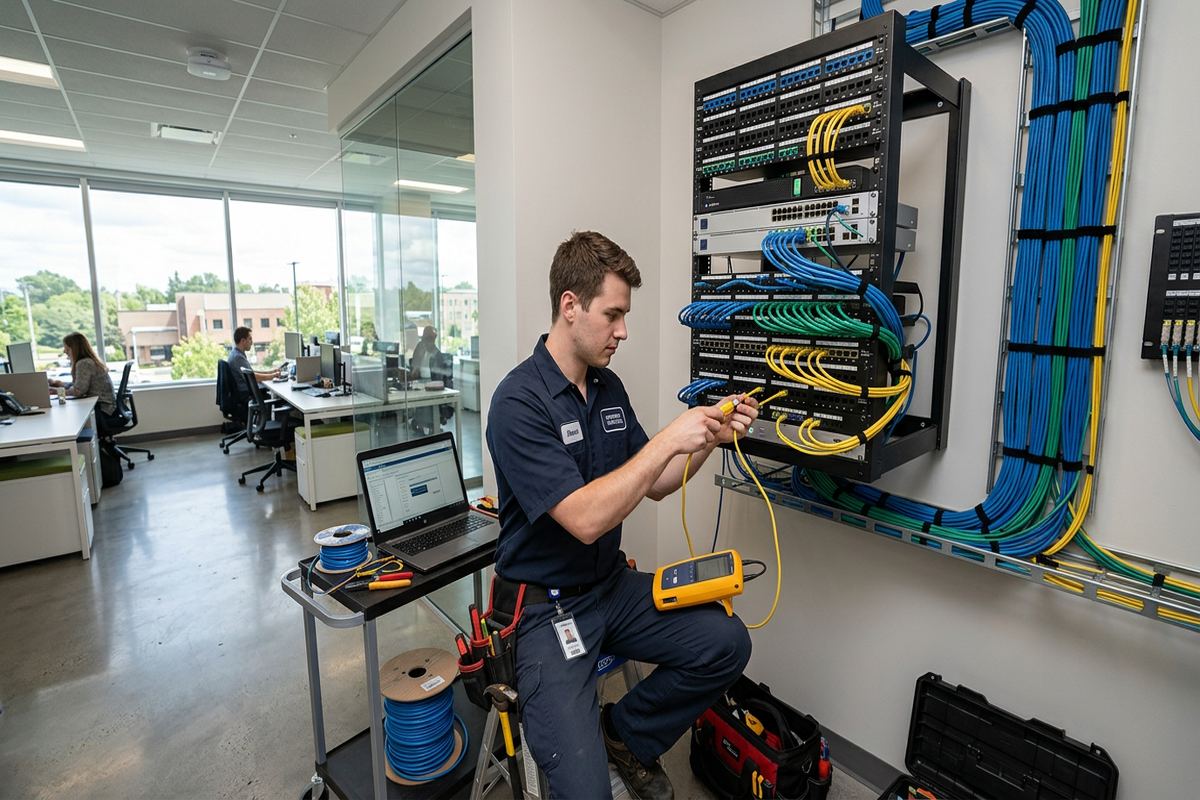
UnifiedLink installs home alarm systems for houses, condominiums and mixed-use properties in Cornwall. Each project begins with a site assessment to identify entry points, interior risks, communication options and practical cable routes. We provide a written scope, configure the system on site and complete handover using credentials controlled by the property owner.
Planning a Home Alarm System in Cornwall
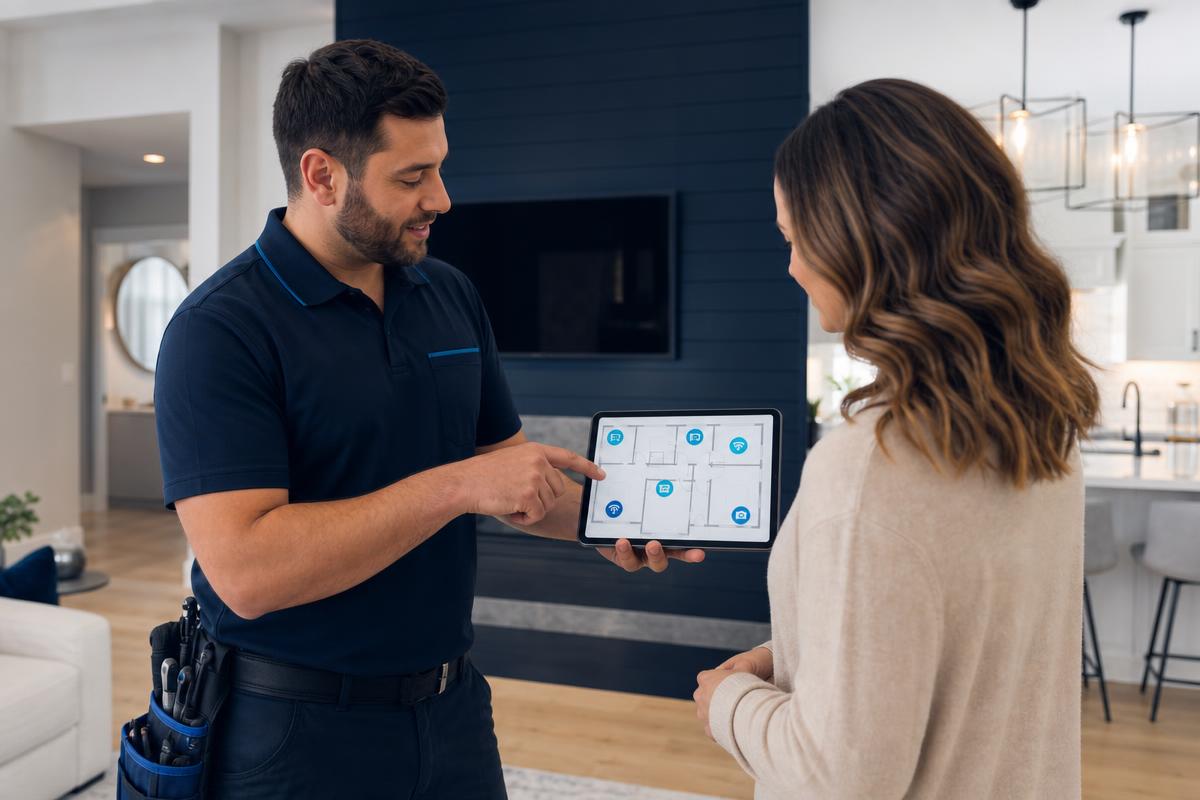
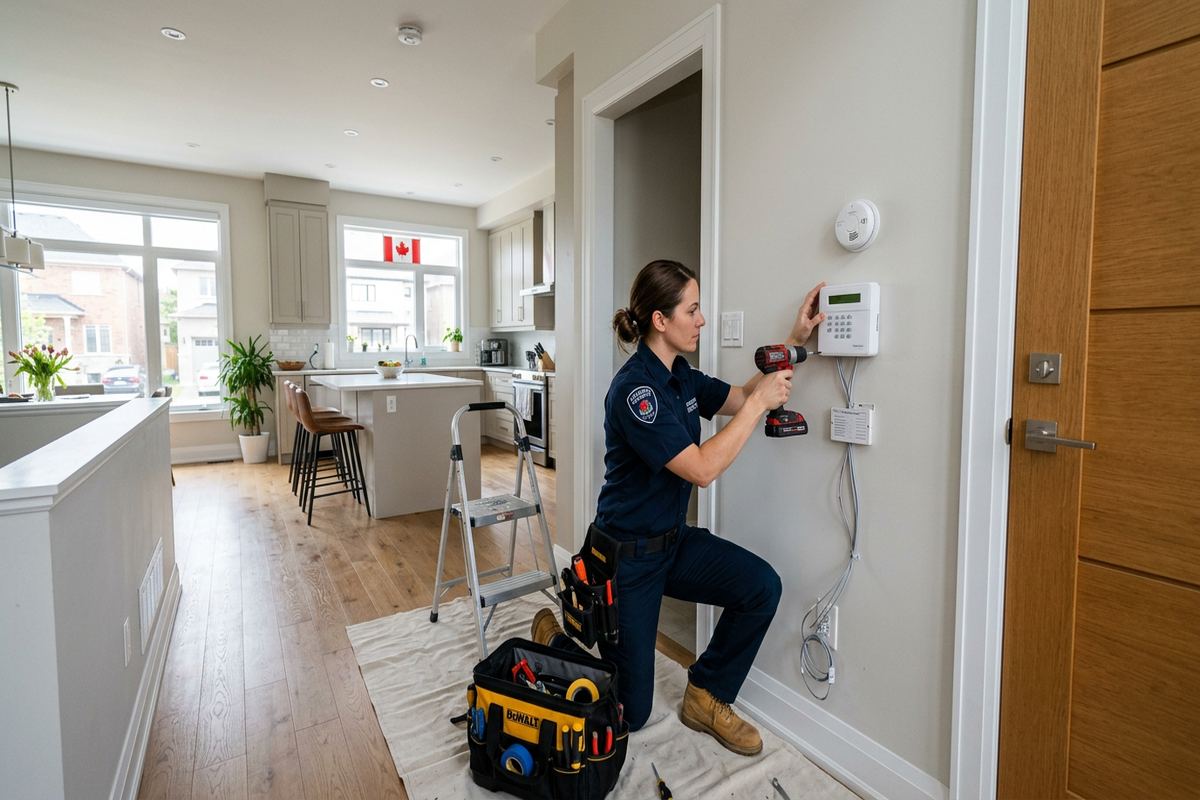
A useful alarm system starts with the building rather than a standard equipment package. During a Cornwall site assessment, we review exterior doors, accessible windows, attached garages, lower levels, utility entrances and routes between occupied areas. We also discuss how residents enter the property, whether pets move through protected rooms and who needs keypad or app access. This information determines sensor types, panel location and communication needs. It also prevents unnecessary devices from being added where a better placement can cover the same practical risk without complicating daily use.
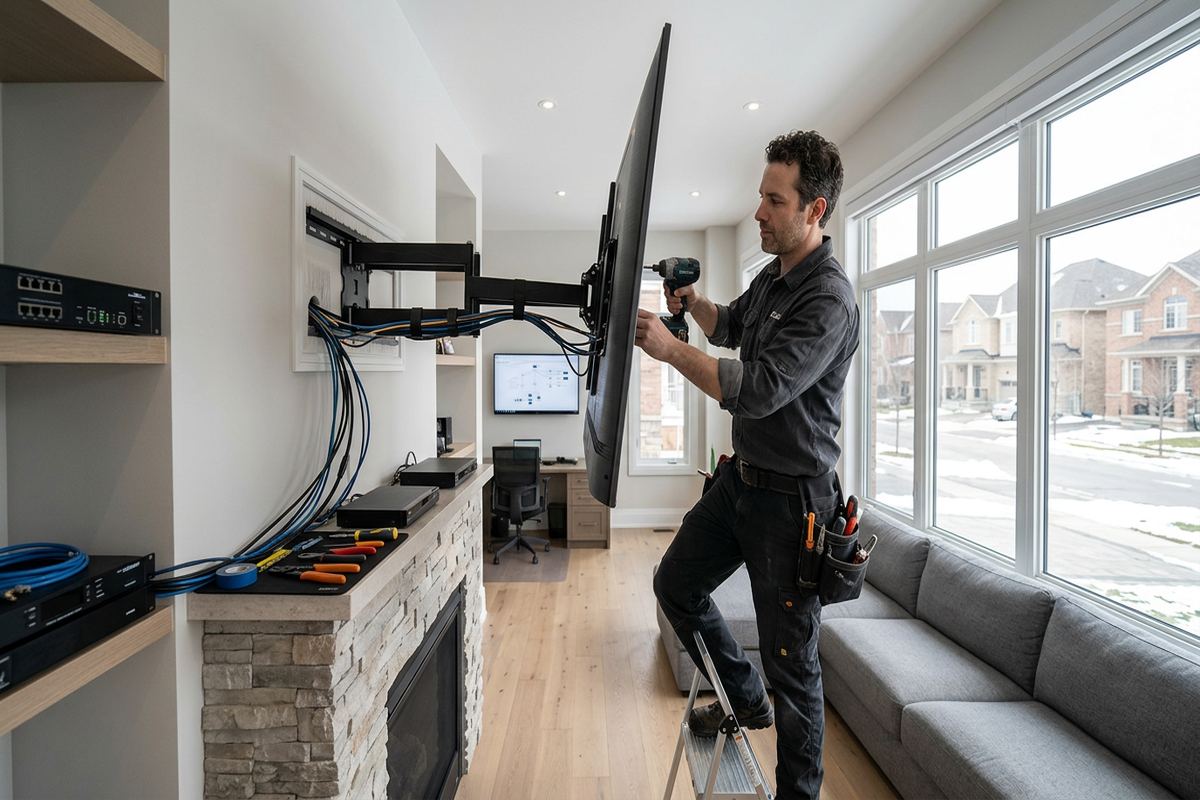
Cornwall properties include older frame houses, masonry buildings, riverfront homes and newer residential construction, so installation methods must vary. Plaster walls, finished basements, additions and previous renovations can limit hidden cable routes or reveal mixed construction behind finished surfaces. A site assessment helps identify those conditions before drilling begins. We plan routes that protect interior finishes while keeping serviceable components accessible. When wired devices are appropriate, continuous labelled cable runs reduce undocumented joints and make future troubleshooting, replacement or expansion easier for the homeowner and the technician working on the system.
The written scope sets clear expectations before installation proceeds. It identifies the alarm panel, keypads, detectors, sirens and communication equipment included in the work, along with proposed cable routes and device locations. The scope also records exclusions, equipment ownership and applicable warranty information. If a homeowner wants monitoring, self-notifications or integration with other systems, that requirement is discussed separately and documented. This approach gives Cornwall customers a practical reference for comparing the proposed system with their routines, building layout and preferred method of receiving alarm events.
- Assessment of doors, windows and lower-level access
- Review of pets, occupants and normal entry routines
- Documented panel, keypad and detector locations
- Defined equipment ownership and warranty terms
- Planned routes for wired alarm devices
Alarm Equipment for Cornwall Homes
Device selection depends on what must be detected and how the space is used. Door and window contacts identify openings, while motion detectors can protect interior paths when a property is unoccupied. Glass-break detection may suit rooms with broad or multiple panes, provided room acoustics and placement support reliable operation. Keypads should be reachable from common entrances without being visible through nearby glazing. Audible devices need locations where occupants can hear them, but mounting must also allow future service. UnifiedLink selects and places components according to the assessed layout rather than relying on a fixed room-by-room package.
Older housing stock in Cornwall can affect the choice between wired, wireless and hybrid alarm equipment. Existing alarm cable may be reusable when its condition, routing and conductor identification can be verified, but abandoned wiring is not automatically suitable. Wireless devices can limit disruption to finished plaster, masonry or renovated rooms, although battery access and radio communication still require planning. A hybrid design may preserve useful wiring while supporting new sensors in additions or difficult areas. The final approach considers installation access, system serviceability, signal paths and whether the homeowner expects to expand the alarm later.
Alarm communication also requires a deliberate choice. Depending on the selected equipment and service arrangement, alerts may use internet, cellular or supported combinations of communication paths. Internet-only operation needs careful consideration because local network equipment, electrical power and service interruptions can affect availability. Cellular equipment must be positioned where communication is reliable within the building. We explain the role of the alarm panel, local siren, app notifications and any third-party monitoring service without treating them as interchangeable. Cornwall owners can then choose a communication arrangement that matches occupancy, travel patterns and expectations for event reporting.
- Door and window contact installation
- Interior motion detector placement
- Glass-break detection where conditions support it
- Wired, wireless or hybrid system design
- Internet and cellular communication planning
Sensors for Older Cornwall Properties
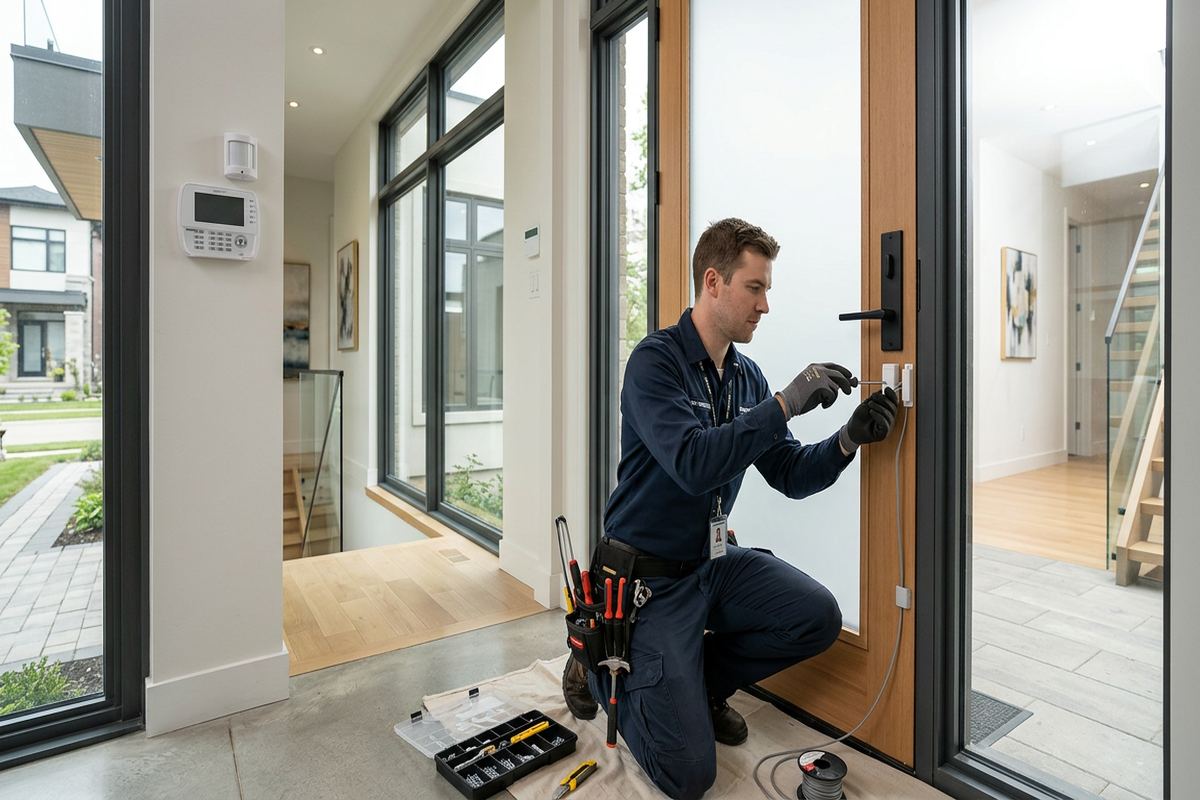
Renovations completed over several decades often leave Cornwall homes with concealed changes around doors, windows and wall cavities. A replacement door may have different clearances from its original frame, while added trim can interfere with a standard surface contact. Basement windows may sit within deep masonry openings, and enclosed porches can create an extra perimeter that changes how the main entrance should be protected. We inspect these details before choosing mounting hardware. The goal is a secure, stable installation that does not depend on improvised spacing or place a sensor where seasonal movement will repeatedly affect alignment.
Masonry and frame construction call for different fastening and routing methods. In a frame wall, cable may be routed through accessible cavities when insulation, blocking and finished surfaces allow it. Solid masonry can require surface pathways, carefully selected penetrations or alternate wireless placement. Any exterior penetration must be limited, mechanically sound and sealed for the exposed material. Around Cornwall, winter moisture and freeze-thaw cycles can enlarge poorly finished openings, loosen unsuitable anchors and allow water behind trim. Mounting and sealing therefore form part of system reliability, not simply the appearance of the completed alarm installation.
Detached garages, sheds and riverfront accessory structures need separate evaluation rather than an assumption that the main-house system will reach them. Distance, construction materials, temperature, power and wireless signal conditions all affect available options. Unheated spaces can expose devices and batteries to temperatures outside their intended operating range, while metal siding may weaken radio paths. For riverfront homes, wind-driven moisture and exposed elevations deserve added attention at doors and exterior interfaces. We confirm environmental suitability, communication feasibility and cable protection before including an outbuilding or exposed opening in the Cornwall alarm system scope.
- Assessment of altered doors and window frames
- Suitable fasteners for masonry or frame walls
- Sealed exterior penetrations
- Environmental review for unheated structures
- Signal testing for detached buildings
Cornwall, Ontario
Home alarm system installation in Cornwall, scoped in writing first
Book a site assessment and get equipment, routes, exclusions, and warranty on paper before anything is installed.
Cornwall Alarm Installation and Cabling
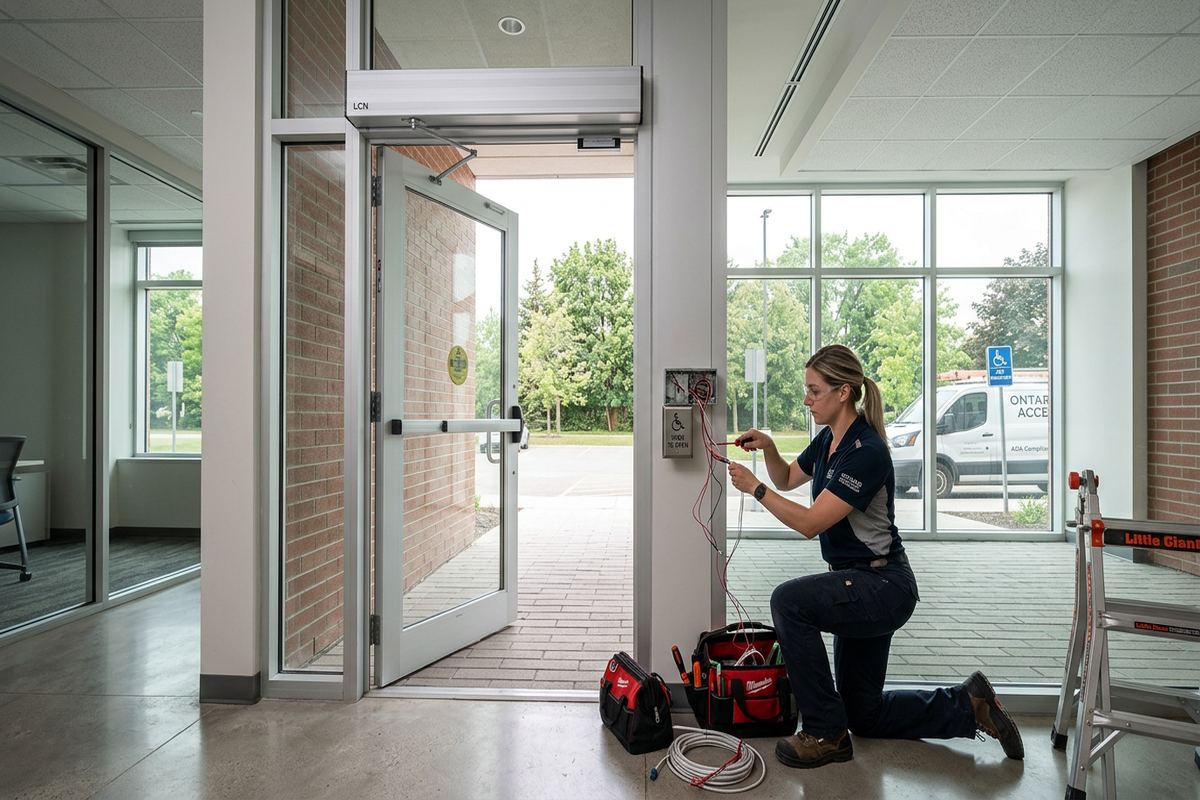
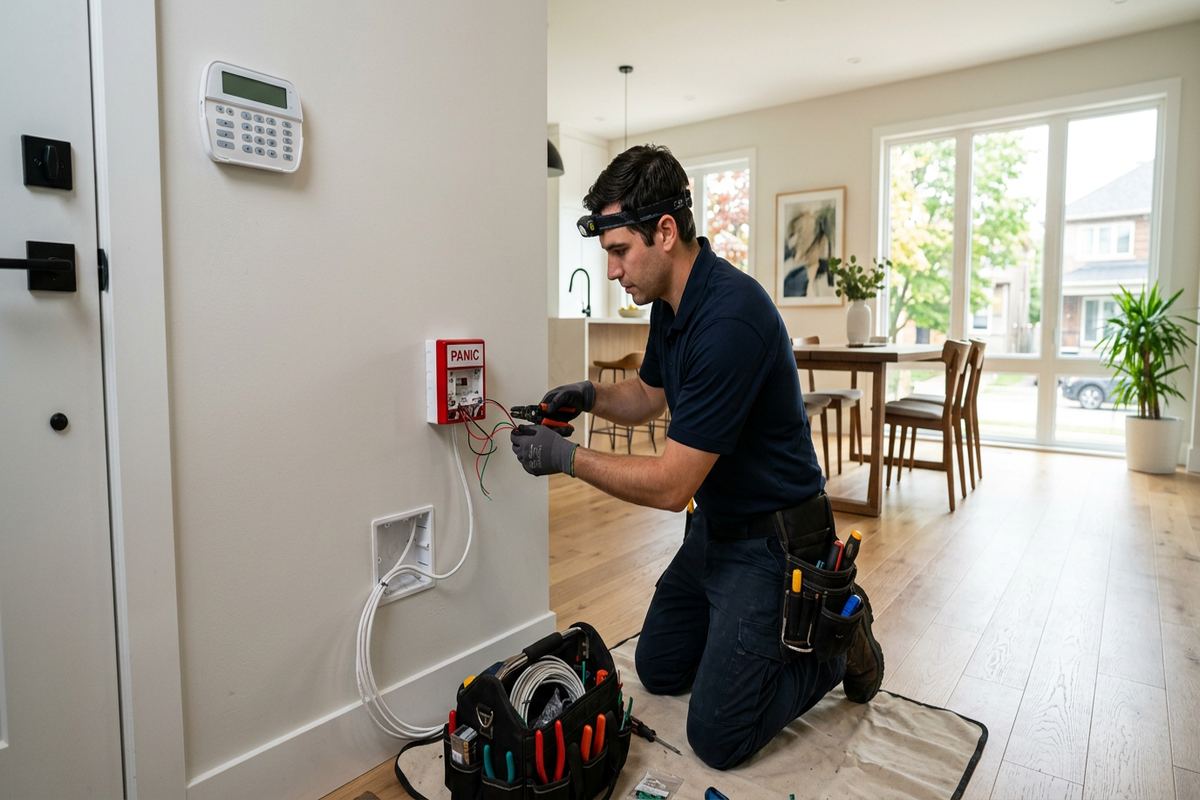
Installation follows the approved device plan and written scope. We confirm locations on site before making penetrations, then install the panel, power components, keypads and sensors using methods suited to each surface. Wired alarm devices receive continuous labelled cable runs wherever the planned route permits. Labels identify endpoints and support efficient testing, maintenance and later alterations. Cable is secured and protected rather than left loose above ceilings or near mechanical equipment. Where exposed pathways are necessary, the routing is discussed with the owner so that protection, accessibility and the appearance of occupied rooms remain properly balanced.
Winter conditions influence exterior work throughout Eastern Ontario. Sealants and mounting products must be appropriate for the material, exposure and installation temperature, and some exterior tasks may need suitable conditions to be completed correctly. Door contacts mounted near weather-exposed thresholds require stable alignment despite seasonal movement. Exterior sirens, if specified, need compatible environmental ratings and secure attachment to the underlying structure. We do not treat caulking as a substitute for proper fastening. For Cornwall properties, careful penetration sizing, flashing awareness and durable sealing help reduce moisture entry during snow, rain and repeated freeze-thaw cycles.
Power and network dependencies are checked during configuration. The alarm panel needs a suitable supply and backup arrangement supported by the chosen equipment, while internet-connected features depend on the property’s router and account settings. We avoid leaving system administration under installer-controlled personal credentials. Instead, the customer receives access through their own credentials during handover. If network changes, electrical work or third-party monitoring activation fall outside the alarm installation scope, those exclusions are recorded clearly. This allows the owner to understand which functions operate locally, which rely on outside services and what must remain active after installation.
- Continuous labelled alarm cable runs
- Protected routes and secured cable
- Surface-appropriate sensors and fasteners
- Weather-conscious exterior installation
- Power and network dependency checks
Alarm Use in Le Village and Riverdale
In Le Village, older homes and mixed-use buildings can combine street-facing entrances, rear access, shared walls and renovated interior layouts. An alarm plan should distinguish private residential areas from any common or commercial space rather than placing every opening in one operating group. Separate partitions may help occupants arm selected areas while another area remains in use, subject to panel capability. Masonry walls can also shape wireless coverage and cable routing. Before installation, we identify ownership boundaries and confirm whether exterior devices, shared corridors or common electrical areas require permission from a landlord, condominium corporation or another property owner.
Riverdale and the Guindon Park area include homes where garages, yards and secondary entrances affect normal movement through the property. A garage-to-house door often deserves detection even when the overhead door has separate protection. Walkout lower levels and patio doors require sensor placement that tolerates regular use without being bypassed for convenience. Where residents have pets, motion coverage is planned around animal size, movement patterns, stairs and furniture rather than relying only on a detector label. Good zoning lets Cornwall homeowners identify the source of an event and isolate a device if service is required.
Condominium and rental installations involve authority as well as technology. Owners and tenants should confirm what may be fastened to doors, frames, corridors, balconies and exterior walls before work is scheduled. A condominium corporation may control common elements even when they appear to serve only one unit. Landlords may also set requirements for penetrations, wiring or equipment removal at the end of a tenancy. UnifiedLink can document proposed locations and routes for approval, but the customer remains responsible for obtaining required permission. Approved constraints are then incorporated into the written installation scope.
- Partition planning for mixed-use layouts
- Garage and lower-level entry protection
- Pet-aware motion detector positioning
- Condo and landlord approval planning
- Clear identification of shared property boundaries
Cornwall Centre and Business Park Applications
Although this service focuses on homes, some Cornwall properties combine living space with a storefront, office, workshop or storage area. Cornwall Centre commercial strips can present rear service doors, public entrances and upper residential units within one building. These areas should not automatically share identical arming permissions. The assessment maps who uses each entrance, when different areas are occupied and whether employees or tenants need limited access. A compatible alarm panel can then separate areas into partitions, preserve useful event records and reduce the need to share a single code among unrelated users.
Industrial units and logistics warehouses in the Business Park have different alarm priorities from a detached house. Large doors, long interior distances, metal construction, loading areas and changing storage layouts can affect detector choice and communication. Offices within a warehouse may need separate protection from the main floor, while emergency exits require alarm coverage that does not obstruct life-safety operation. Commercial clients should also identify lease responsibilities and obtain property-owner approval for exterior devices or penetrations. These projects receive a written scope suited to the building and are not treated as enlarged versions of a residential package.
For a home-based business, user permissions can separate family access from staff or service-provider access when the selected system supports it. Individual credentials make it easier to change one user without distributing a replacement code to everyone. Schedules and notifications should reflect actual operating hours, but they should not prevent authorized entry during unusual circumstances. We configure practical names for zones, partitions and users so alerts are understandable. During handover, the Cornwall property owner learns how to add or remove users, review events and manage routine arming without depending on installer-held administrative credentials.
- Partitioning for residential and work areas
- Individual user codes and permissions
- Loading-door and service-entry assessment
- Practical zone and area naming
- Owner approval for leased commercial units
Configuring and Testing the Alarm System
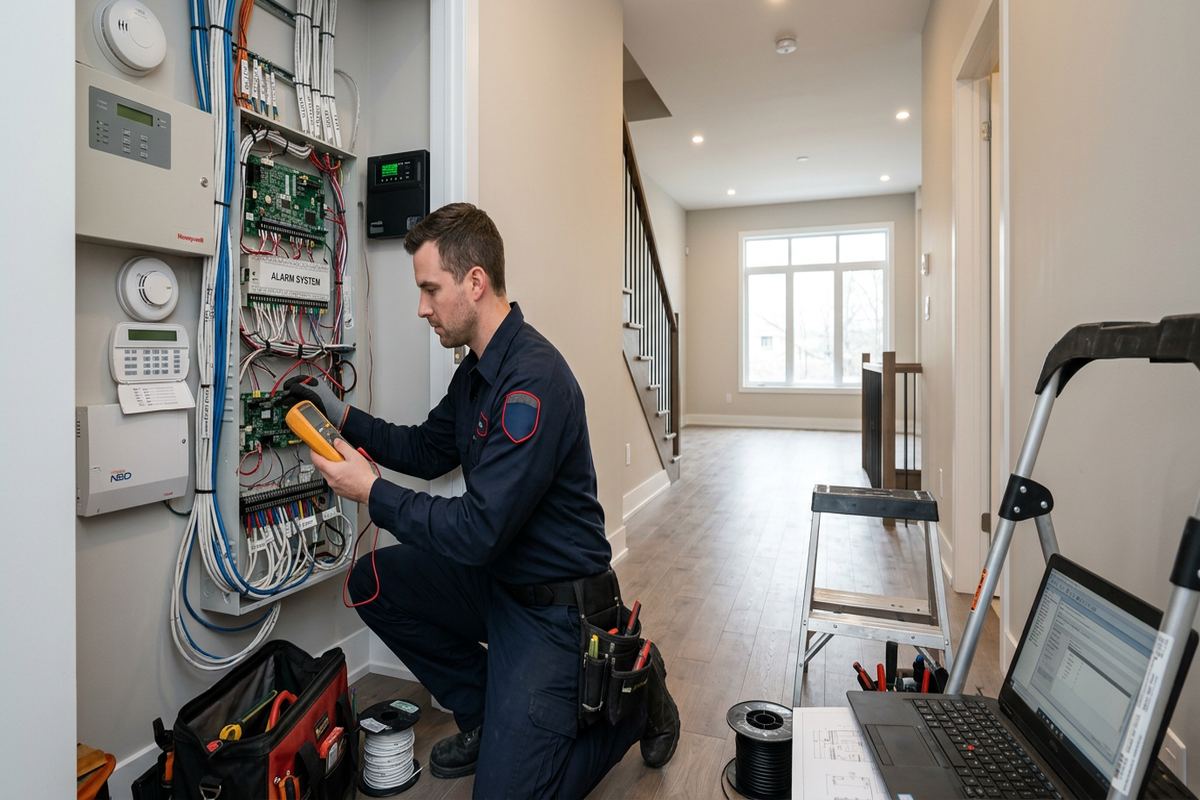
Configuration turns installed hardware into a system occupants can use consistently. Each zone receives a clear name tied to its actual location, such as the east basement window or garage entry door, rather than a vague number. Entry and exit behaviour is set around normal routes, and partitions are assigned where the approved design calls for independent areas. Notification settings are reviewed using accounts controlled by the customer. We also explain which changes may affect monitoring or communication services, since app settings, panel programming and third-party account settings can have different roles in alarm operation.
Testing covers each installed detector, keypad, audible device and configured communication function within the project scope. Door and window contacts are checked for correct open and closed reporting. Motion devices are walk-tested after placement, with attention to intended coverage and likely sources of unwanted activation. We verify that zone names appear correctly and that relevant users can arm and disarm authorized areas. If external monitoring is included through a selected provider, activation and test procedures must follow that provider’s requirements. Results and unresolved dependencies are reviewed before the Cornwall system is handed over.
Handover is completed with the customer’s own credentials and an as-built record. The record identifies installed equipment, final device locations and relevant cable or system details available from the completed work. We demonstrate routine arming, disarming, bypassing, user management and event review as supported by the selected panel. The owner also receives information about equipment ownership, warranty and exclusions established in the written scope. Keeping these details together helps future service work, especially when a property is renovated, sold or managed by someone who was not present during the original Cornwall installation.
- Clear names for every alarm zone
- Walk-testing of motion coverage
- Verification of contacts and audible devices
- Customer-controlled administrative credentials
- As-built record at handover
Maintaining a Cornwall Home Alarm System
Alarm systems require periodic attention because buildings and occupancy change. Doors can settle, window replacements can alter contact spacing and furniture can block a motion detector’s intended view. Wireless device batteries eventually need replacement, while communication equipment may be affected by a changed router, internet provider or account. Cornwall homeowners should test their system according to equipment and monitoring-provider instructions, review the event display after unusual activity and address recurring trouble messages promptly. A repeated fault should be investigated rather than routinely bypassed, because bypassing removes the affected opening or area from normal alarm protection.
Seasonal inspection is particularly useful after harsh winter weather or exterior renovations. Freeze-thaw movement can affect door alignment, exposed fastening points and seals around penetrations. Snow clearing, siding work, new trim or replacement windows may also disturb sensors or concealed cable. Owners of riverfront homes should watch for moisture exposure at weather-facing openings and report physical damage before relying on the device. Interior changes matter as well: new shelving, tall plants, heating equipment or room partitions can change motion coverage. A review can determine whether adjustment, relocation or a different detector is appropriate.
UnifiedLink remains one accountable contractor for the assessed alarm installation, cabling, configuration and documented handover. When changes are requested, we first identify the installed system, affected zones and any building work completed since the original scope. Requests sent during business hours are answered the same day, while after-hours requests are answered the next business day. Site assessment timing depends on the service and travel distance. This communication wording concerns request handling, not a guaranteed emergency response. Active alarm events should be handled using the homeowner’s monitoring arrangement, emergency plan and applicable emergency services.
- Sensor checks after door or window replacement
- Battery and communication trouble review
- Seasonal inspection of exterior mounting
- Updates after renovations or occupancy changes
- One contractor for scoped system changes
Cornwall neighbourhoods we cover
- Le Village
- Riverdale
- Cornwall Centre
- Guindon Park area
- Business Park
Home alarm system installation in Cornwall — common questions
Can you install an alarm in an older Cornwall house?
Yes. Older Cornwall homes often contain plaster finishes, masonry sections, additions and wiring from previous systems. We assess accessible routes and test any existing alarm cable before deciding whether it can be reused. Wired, wireless or hybrid equipment may be appropriate. The written scope identifies device placement, cable routes, exclusions and any visible pathway needed to avoid unnecessary damage to finished surfaces.
Will wireless sensors work through masonry walls?
They may, but masonry, metal, distance and building layout can reduce radio performance. Cornwall properties with solid walls, detached garages or metal-clad additions need an on-site assessment rather than an assumption based on floor area. We evaluate proposed panel and sensor locations, and use compatible wired, wireless or hybrid methods where appropriate. Environmental conditions must also suit any device installed in an unheated or exposed space.
Do I need approval in a condo or rental?
Possibly. Cornwall condominium corporations may control doors, frames, corridors, balconies and exterior walls as common elements. A landlord may also restrict drilling, cabling or permanently mounted equipment. Customers should obtain required written approval before installation. UnifiedLink can document proposed device locations and cable routes to support that process, then incorporate approved conditions into the final scope. Approval requirements remain the customer’s responsibility.
Can the alarm cover a garage or detached building?
Yes, when the distance, construction, power, temperature and communication conditions support reliable equipment operation. Detached structures around Cornwall may present cold temperatures, metal siding or weak wireless paths. We assess those conditions and determine whether protected cable, wireless equipment or a separate arrangement is suitable. An attached garage can also be zoned to identify overhead-door, side-door and house-entry events separately, depending on the selected panel.
Who controls the alarm app and credentials?
The property owner receives handover using their own credentials. UnifiedLink does not leave the system dependent on an installer’s personal account. During configuration, we help establish supported users, permissions, zone names and notification settings within the agreed scope. Cornwall owners are shown how to add or remove users and review events. Third-party monitoring or cloud services may have separate accounts, terms and activation requirements.
How quickly will you respond to my request?
Requests sent during business hours are answered the same day, and after-hours requests are answered the next business day. Site assessment timing in Cornwall depends on the required service and travel distance. This is a commitment for responding to enquiries, not a guaranteed emergency dispatch time. For an active alarm event, follow the procedures established with your monitoring provider and contact emergency services when circumstances require it.
Coverage in Cornwall is confirmed against the address before we quote. See everything we install in Cornwall or the province-wide home alarm system installation page.