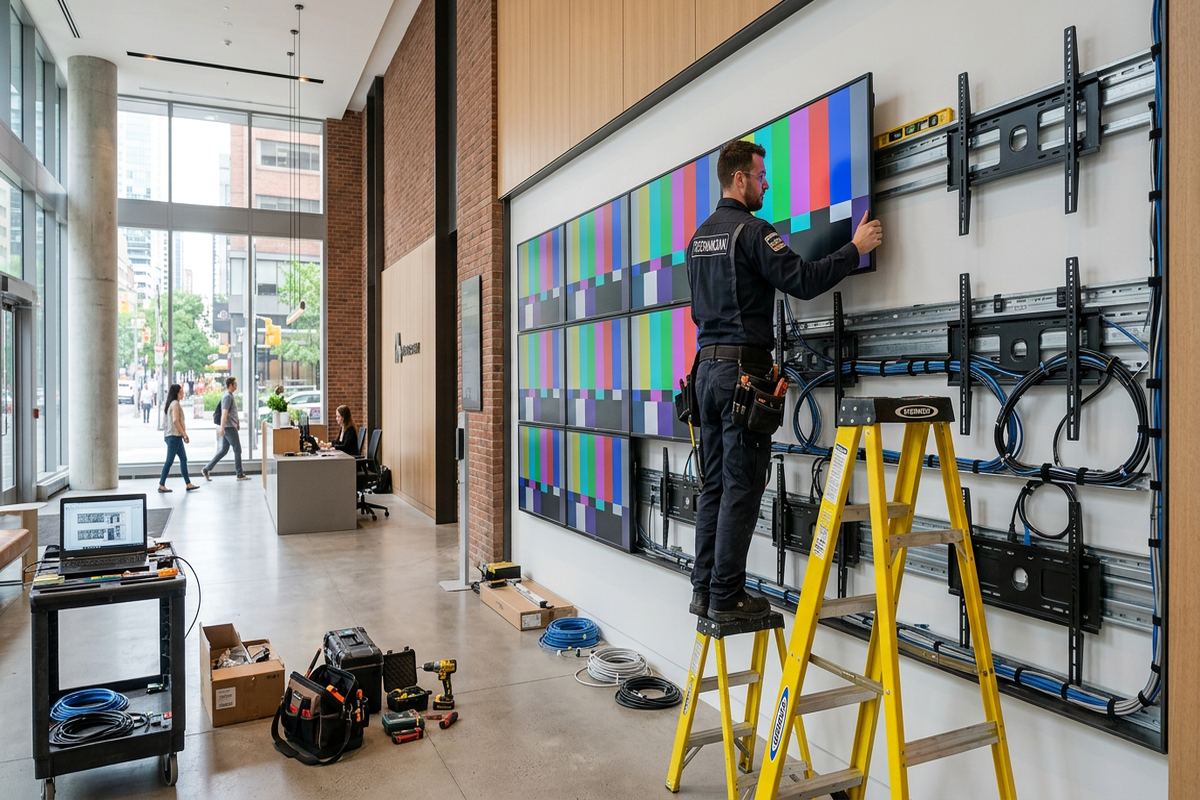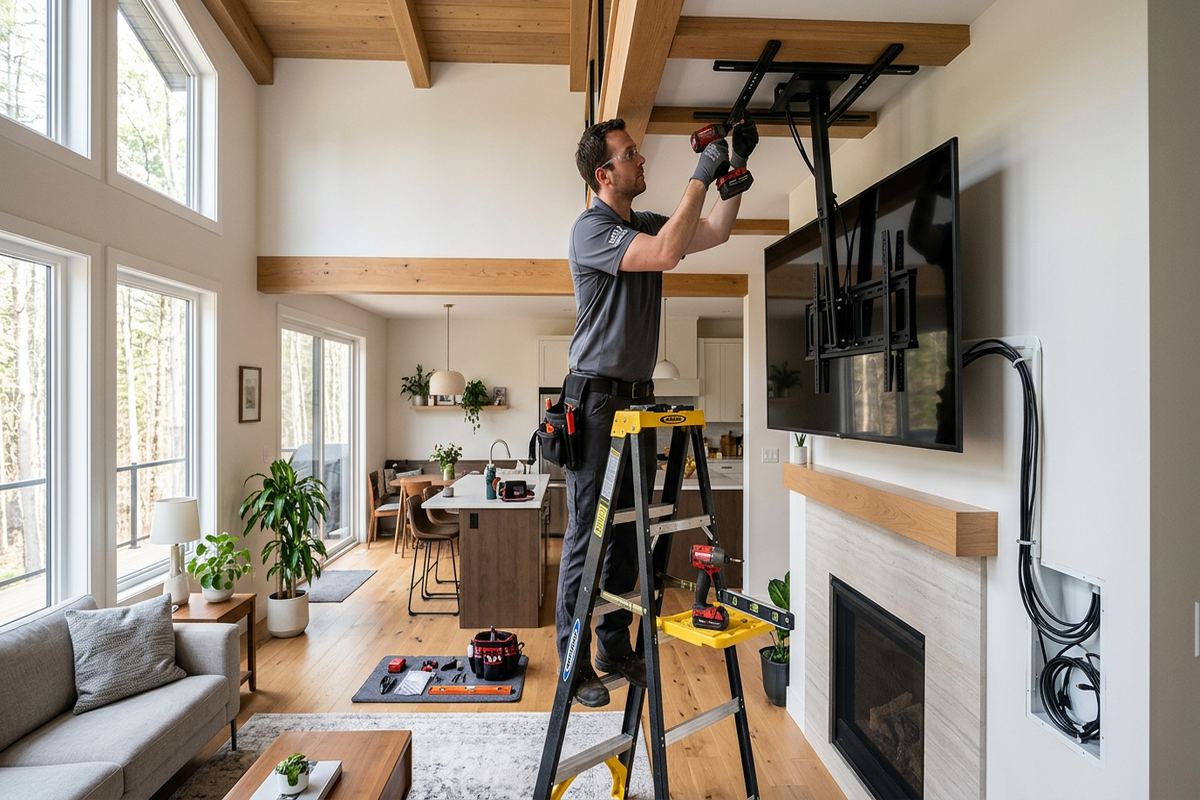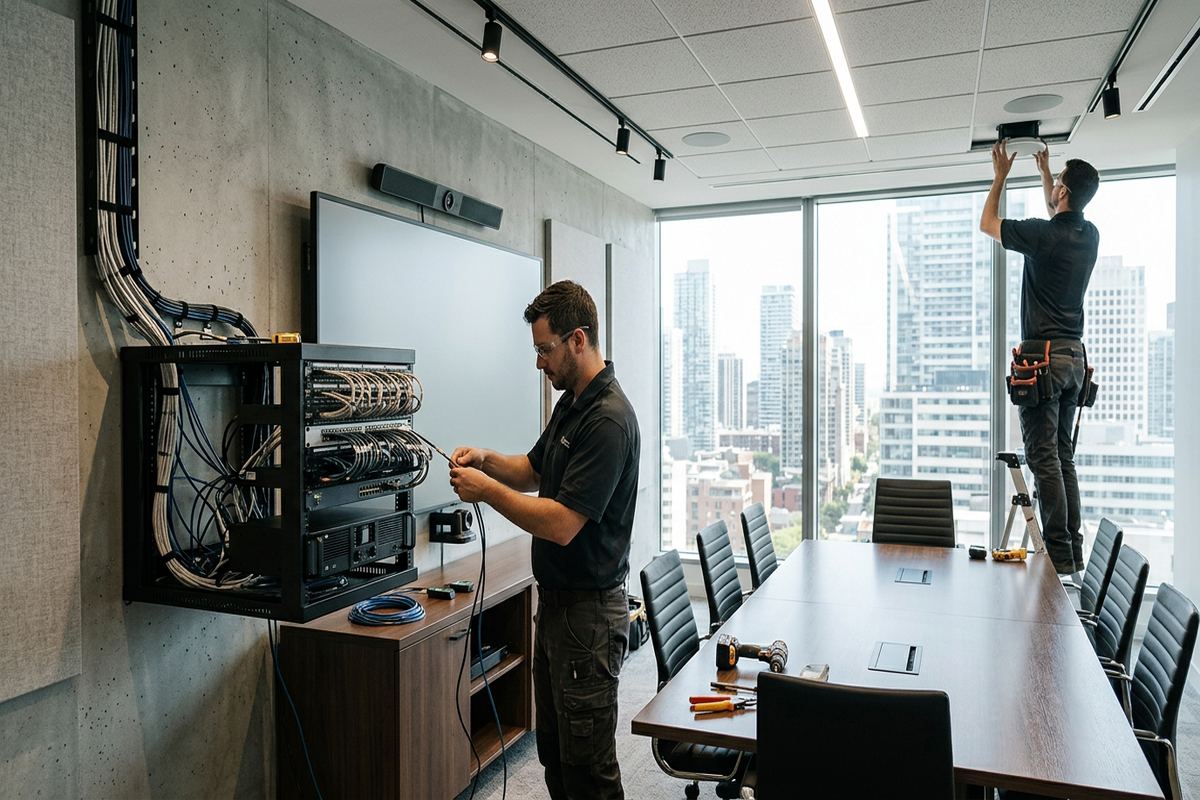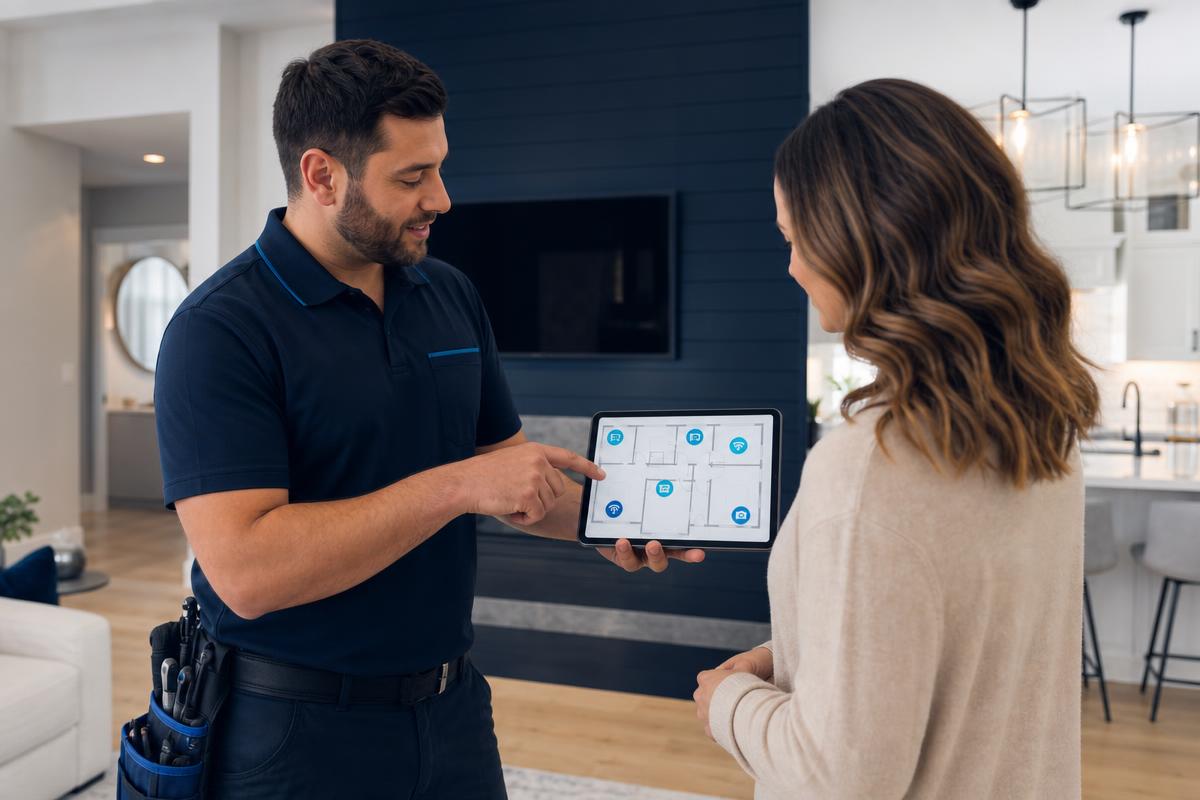
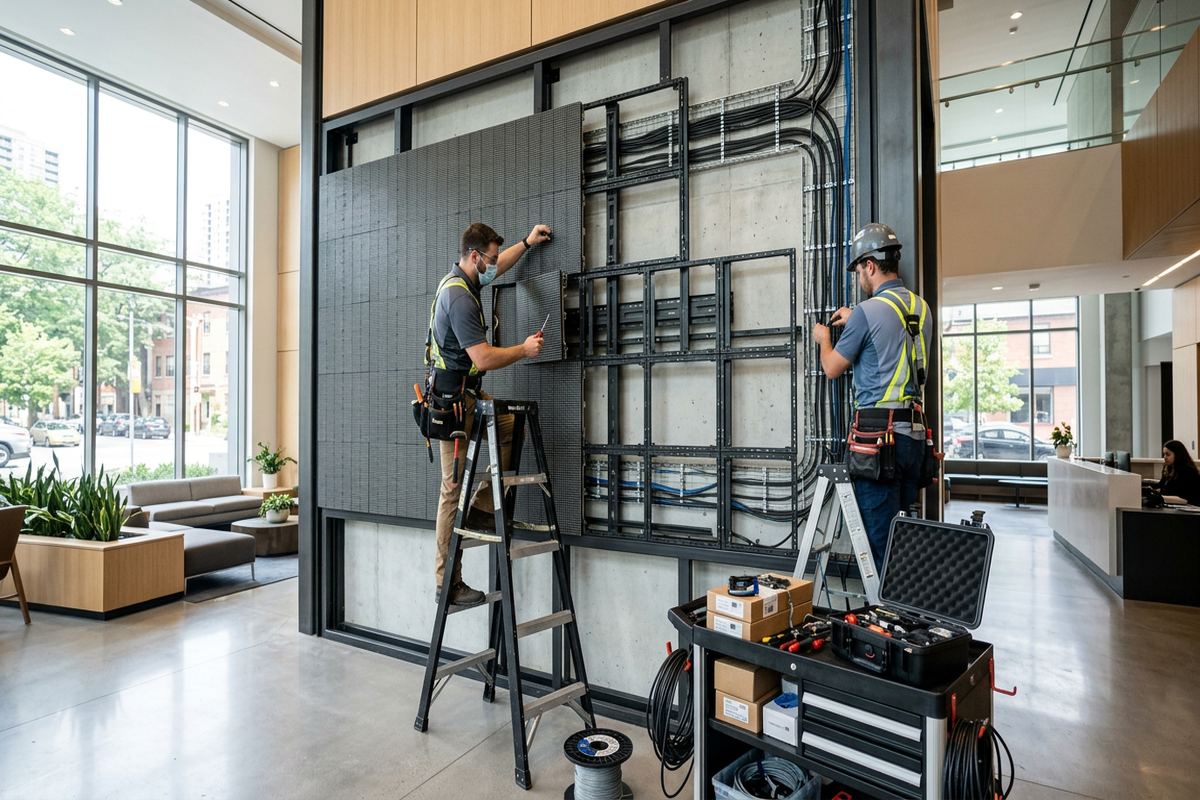
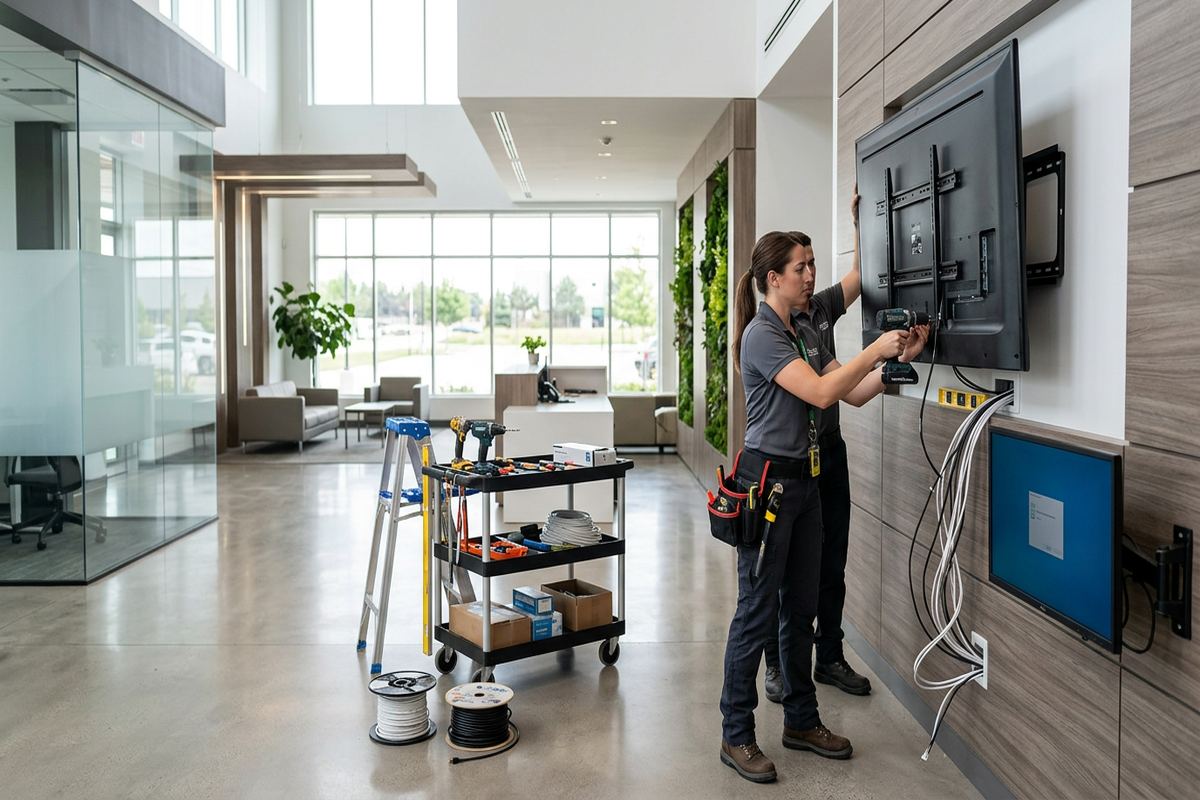
UnifiedLink plans and installs TVs above fireplaces in Cornwall homes and commercial spaces. We assess heat exposure, wall construction, viewing height, mounting points, power and cable routes before pricing. The installation includes secure hardware, concealed low-voltage cabling where practical, on-site configuration and a clear handover using your own account credentials.
Fireplace TV Mounting for Cornwall Properties
Mounting a television over a fireplace requires more planning than installing one on an open wall. Heat, wall depth, chimney construction, mantel projection and the television’s viewing angle all affect whether the position is suitable. In Cornwall, older housing stock can include renovated fireplaces, uneven masonry, shallow framing and previous repairs hidden behind finished surfaces. We begin with a site assessment, identify the likely structure and review practical cable routes. If the proposed location presents unresolved heat, support or access concerns, those issues are discussed before equipment is mounted or openings are made.
Riverfront homes, houses in Riverdale and properties near Guindon Park can have very different fireplace assemblies despite similar finished appearances. One may have conventional wood framing around a gas insert, while another has solid masonry, a chimney breast or a decorative finish over an unknown substrate. The television mount must fasten to suitable structural material rather than veneer, drywall or thin cladding alone. We select the fixing approach after checking accessible construction details, fireplace documentation where available and the combined requirements of the display and mount. Assumptions are recorded when concealed conditions cannot be confirmed without investigation.
A written scope is prepared after the assessment and before pricing. It identifies the television and mount, intended placement, expected fastening method, cable routes, device locations, exclusions, equipment ownership and applicable warranty details. This is particularly useful when carpentry, electrical work, fireplace servicing or finish repairs must be coordinated with another trade. UnifiedLink remains the accountable contractor for the display and low-voltage portion of the work. The scope also clarifies whether cables can be concealed, whether surface raceway is required and what access must remain available for future service or equipment replacement.
- Site assessment before pricing
- Fireplace and wall conditions reviewed
- Mounting substrate identified where accessible
- Written equipment and cable scope
- Trade dependencies documented before work
Heat, Clearances and Viewing Height in Cornwall
Heat is the first technical question for any fireplace TV installation. The temperature above a fireplace depends on the appliance type, venting, mantel geometry, operating pattern and surrounding construction. A location that feels acceptable when the fireplace is idle may become unsuitable during extended winter use. Cornwall’s cold season often means fireplaces operate for longer periods, so placement should reflect normal household use rather than a brief demonstration. We review manufacturer information supplied for the fireplace and television, look for required clearances and discuss temperature testing when the available documentation does not settle the question.
A mantel can redirect rising heat, but its presence does not automatically make every mounting position acceptable. Its depth, height and material need to be considered alongside the fireplace opening and the proposed bottom edge of the television. Where clearances force the screen too high, a different wall may provide a better result. A pull-down fireplace mount can sometimes improve viewing height, although it introduces movement, additional depth and specific clearance requirements. We explain these trade-offs during the assessment rather than treating a specialty mount as a universal answer for difficult fireplace layouts.
Comfortable viewing matters because a securely installed screen can still be unpleasant to use if it sits above a natural sightline. Seating distance, chair height, room arrangement, screen size and mount movement all influence the result. In compact Le Village rooms or older Cornwall homes with fixed architectural features, there may be limited freedom to reposition seating or lower the display. We mark out the proposed screen outline when useful, allowing the customer to judge height before drilling. Tilt can help manage reflections and sightlines, but it does not fully correct an excessively high installation.
- Fireplace documentation reviewed when available
- Mantel depth and heat path considered
- Screen outline checked before drilling
- Fixed, tilt or pull-down options assessed
- Alternative wall placement discussed when appropriate
Masonry and Frame Wall Mounting
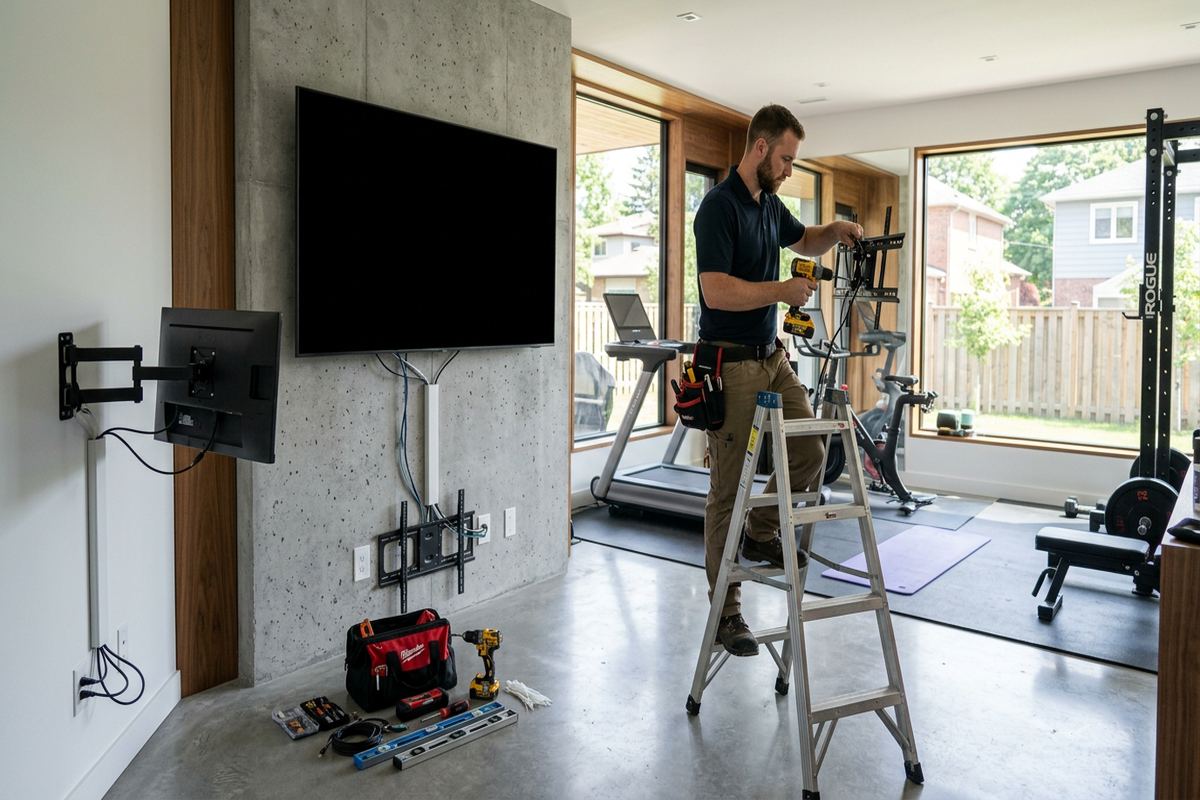
Finished fireplace walls can conceal brick, concrete block, stone veneer, wood studs, steel framing or combinations of several materials. Each assembly calls for a different fastening and cable-routing plan. Solid masonry may accept purpose-selected anchors, while framed construction usually requires attachment to studs or installed structural backing. Decorative stone and tile are treated as finishes, not assumed to be load-bearing. Before installation, we examine edges, outlets, access panels, drawings and other available clues. Small investigative steps may be proposed, but openings and finish risks are identified in the scope before work begins.
Older Cornwall housing may contain plaster, lath, irregular framing or masonry that has been covered during previous renovations. These conditions can make electronic stud readings uncertain and can limit the space available for recessed boxes. A mount cannot be positioned solely to centre it on a mantel if the required structural support is absent. Depending on the wall, the practical solution may involve a mount with lateral adjustment, added backing by a carpenter or a revised display position. We document any outside work that must be completed before the mounting appointment can proceed safely and cleanly.
Modern frame construction presents its own constraints around fireplace chases. The visible wall may project into the room, yet contain venting, electrical wiring, gas components or restricted cavities that cannot be drilled through casually. Factory-built fireplace instructions may also limit penetrations or combustible materials in certain areas. We avoid blind cable fishing where the route could interfere with the appliance or its enclosure. When construction information is incomplete, an accessible surface route or coordination with the fireplace installer may be more appropriate than forcing a concealed path through a cavity with unknown services.
- Anchors matched to confirmed substrate
- Veneer never treated as structural support
- Stud and backing locations assessed
- Restricted fireplace cavities avoided
- Finish risks identified in writing
Cornwall, Ontario
Fireplace TV mounting in Cornwall, scoped in writing first
Book a site assessment and get equipment, routes, exclusions, and warranty on paper before anything is installed.
Cable Routing and Power Planning in Cornwall
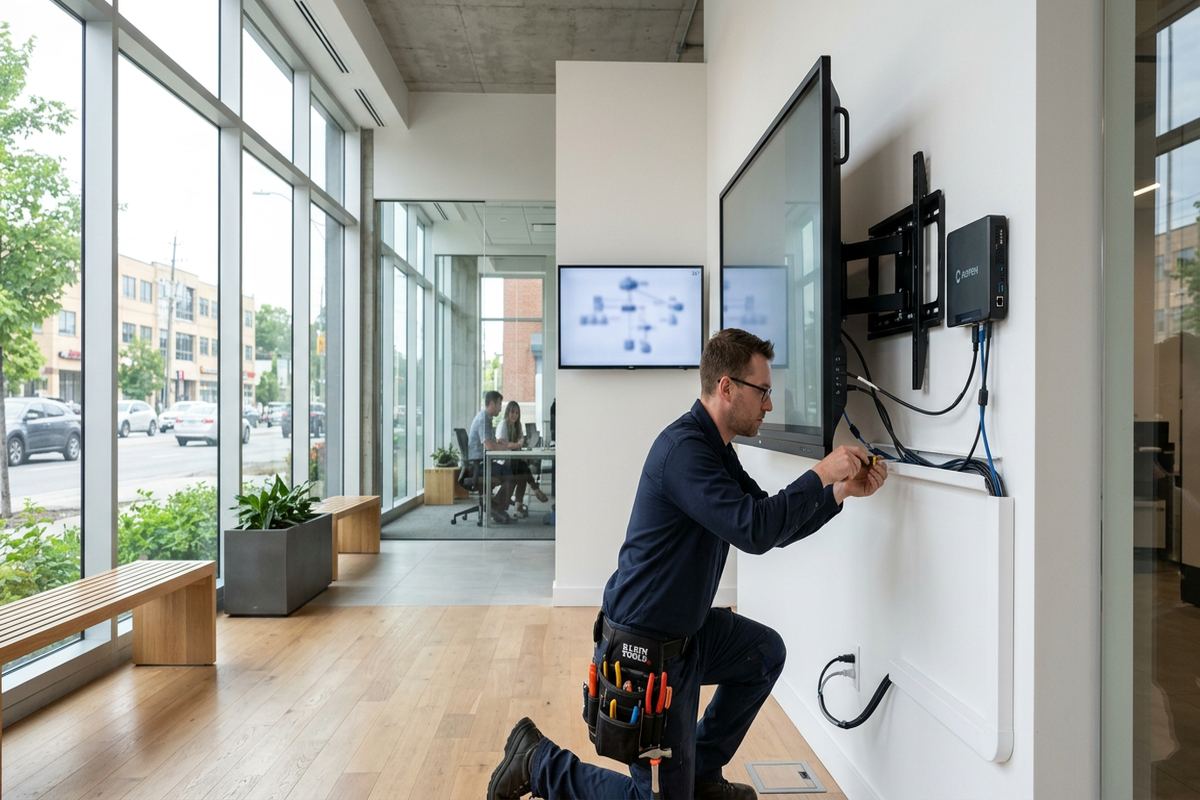
A fireplace television usually needs power, network connectivity and one or more signal paths to source equipment. Low-voltage cables may include HDMI, Ethernet, optical audio or speaker connections, depending on the system. We plan continuous labelled cable runs and avoid inaccessible couplers where practical. Power cords and extension cords are not routed inside wall cavities as substitutes for permanent wiring. If a suitable receptacle is not present near the television, electrical work must be completed through an appropriate electrical provider. The scope separates that work clearly from UnifiedLink’s display and low-voltage installation responsibilities.
Cable routes in Cornwall homes vary with wall construction. Frame walls may allow a path to a cabinet beside the fireplace, although blocking, insulation and the firebox chase can interrupt the cavity. Masonry fireplaces often require surface raceway, routing through adjacent cabinetry or carefully planned access from another room. In renovated Cornwall Centre properties, previous wiring may appear convenient but still needs examination before reuse. We do not assume an unlabelled cable supports the required signal format or remains continuous. Where existing cabling is serviceable, its role and limitations are included in the system plan.
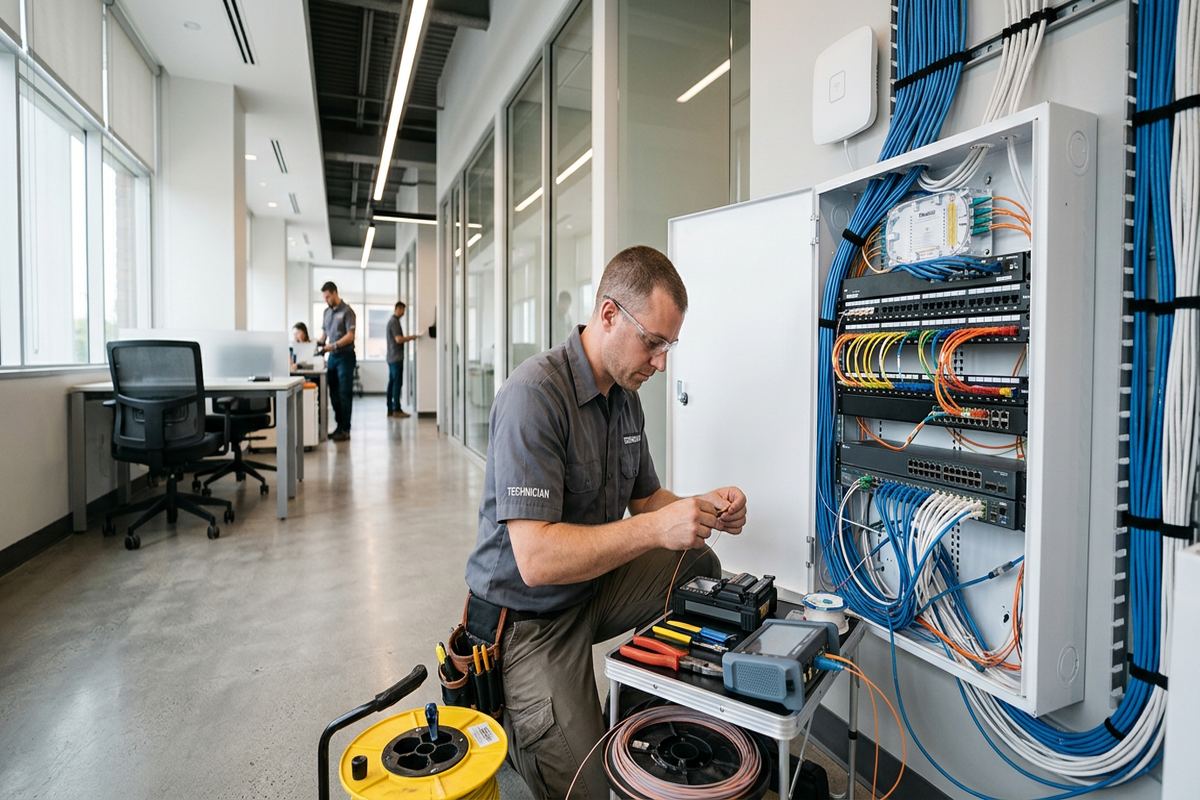
Equipment should remain accessible after the screen is installed. Streaming devices can sometimes sit behind the television, but ventilation, wireless performance, remote operation and future replacement need consideration. Cable boxes, game systems and audio components are often better placed in nearby furniture or built-in cabinetry. For longer HDMI paths, cable capability must match distance and required video features rather than relying on connector shape alone. We label the installed runs, configure connected sources on site and provide an as-built record showing cable destinations and device placement, reducing guesswork when equipment is changed later.
- Continuous labelled low-voltage runs
- No in-wall extension cord routing
- Electrical requirements identified separately
- Source equipment kept serviceable
- As-built cable and device record provided
Fireplace Displays for Cornwall Businesses
Fireplace-mounted displays are not limited to living rooms. Hospitality spaces, reception areas, meeting rooms and customer lounges may use a fireplace feature wall as a visual focal point. In Cornwall commercial strips and Business Park units, the display may show presentations, television programming, dashboards or digital signage. The operating schedule and content source affect equipment selection and cable planning. A consumer television, commercial display and signage player have different control, warranty and duty-cycle considerations. We establish what the screen must do before selecting a mount position or deciding where supporting equipment should be housed.
Commercial and industrial units can combine metal studs, concrete block, demising walls and decorative fireplace assemblies added during tenant improvements. Building management or landlord approval may be required before drilling, opening walls or routing cable above ceilings. Fire separations and rated assemblies cannot be treated like ordinary partitions. We ask the customer to confirm applicable permissions and available building information, then reflect known restrictions in the written scope. Where another trade must restore a rated assembly or provide structural backing, that dependency is documented rather than being left as an informal assumption during installation.
Business installations also need a practical handover. UnifiedLink configures the display, connected sources and network settings on site using credentials controlled by the customer. We do not leave shared personal accounts as the operating method for staff. The as-built record identifies the display, cable routes, source devices and relevant connection points, while the written scope establishes equipment ownership and warranty responsibilities. For a logistics warehouse office or customer area, this record helps facilities staff understand which components belong to the tenant, which connections serve the display and where to begin if the layout changes.
- Commercial display requirements reviewed
- Landlord and building approvals identified
- Rated assemblies treated as restricted
- Customer-controlled credentials used
- Ownership and warranty responsibilities recorded
Audio and Device Integration
A television above a fireplace often has limited space for audio equipment. A soundbar may fit below the screen, attach to the television mount or sit above the mantel, but each option affects clearances and movement. If a pull-down mount is used, the soundbar and its brackets must travel without striking the mantel or fireplace surround. We assess the combined arrangement rather than mounting each component independently. Existing speakers or an audio-video receiver can also be incorporated when their connections, supported formats and control method are suitable for the new television and expected sources.
Control problems commonly appear after equipment is hidden. An infrared remote may not reach a cable box inside a closed cabinet, while wireless devices can perform poorly behind dense masonry or metal fireplace framing. HDMI control can simplify operation, but compatibility varies between televisions, soundbars and source devices. We configure the available control features on site, confirm normal power and input behaviour, and explain any limitations. For Cornwall properties with difficult wireless coverage, a wired Ethernet run or a broader Wi-Fi assessment may be preferable to repeatedly relocating a streaming device without addressing the underlying connection issue.
The handover is based on the customer’s own accounts and credentials. We can connect supported streaming devices, displays and network equipment without retaining passwords as a substitute for proper ownership. Inputs are named where the equipment permits, basic operating steps are reviewed and the final device positions are recorded. If an installer-supplied mount, cable or accessory is included, its ownership and warranty treatment appears in the written scope. This approach keeps the television system understandable for the household, landlord, tenant or business staff who will actually operate and maintain it after installation.
- Soundbar clearance planned with mount movement
- Audio formats and connections checked
- Remote and HDMI control configured
- Wired networking considered where useful
- Customer retains account credentials
Exterior and Semi-Outdoor Mounting Near Cornwall
Riverfront homes and covered outdoor areas sometimes include fireplaces with a television proposed above or beside them. Exterior and semi-outdoor mounting introduces moisture, condensation, wind-driven rain, sunlight and temperature variation beyond normal indoor conditions. A covered location is not automatically a dry indoor environment. The display, mount, receptacle, cabling and connection enclosures must suit the exposure identified for the site. We review the mounting surface and protection available, then state any limitations. Indoor-only equipment should not be presented as an exterior solution simply because it sits beneath a roof overhang.
Cornwall’s winters and repeated freeze-thaw cycles can affect masonry joints, penetrations and exposed mounting points. Exterior holes need an appropriate sealing approach that respects the wall assembly and allows water to drain rather than trapping it behind finishes. Brick veneer, solid masonry and framed exterior walls each manage moisture differently, so a generic bead of sealant is not a complete mounting plan. Existing cracks, loose mortar or deteriorated finishes may require repair before hardware is installed. Any required masonry restoration or building-envelope work is identified as a dependency outside the display installation scope.
Outdoor cable routes also need protection from ultraviolet exposure, physical damage and water entry. Penetrations should be positioned and dressed to reduce water tracking along the cable, while service loops and enclosures must not create collection points. Network performance can be affected by exterior walls, foil-backed insulation and distance from an indoor access point. We test practical connectivity during configuration and recommend wired service where the route and equipment support it. Seasonal storage, winter shutdown and fireplace operation should be considered during planning, particularly for properties near the river where exposure can differ sharply across elevations.
- Exposure level reviewed on site
- Exterior-rated components specified where required
- Freeze-thaw effects considered at masonry
- Penetrations planned for water management
- Outdoor network connectivity assessed
Approvals, Installation and Handover in Cornwall
Before work starts in a condo, rental property or managed commercial unit, the customer should confirm permission for penetrations, mounting hardware and cable routes. Condominium rules may restrict work in shared walls or require specific documentation, while landlords may set conditions for restoration. Cornwall property managers can also require scheduling, access arrangements or proof from other trades involved in the project. UnifiedLink records known approval requirements in the scope, but the property owner or authorized customer remains responsible for obtaining permission unless another arrangement is expressly documented. Work does not proceed on assumptions about authority.
On installation day, the planned display position and equipment are confirmed before drilling. The mount is attached to the assessed structure, the television is secured according to the applicable hardware arrangement, and low-voltage cables are routed as scoped. Connected devices are configured on site and tested for expected picture, audio, input selection, network access and mount movement. If hidden conditions differ materially from the assessment, we pause and explain the options rather than improvising through restricted cavities or inadequate support. Changes affecting cable routes, finish work or third-party trades are documented before proceeding.
Handover includes the customer’s own credentials, basic operating guidance and an as-built record of installed cable routes and device locations. Labels are applied to continuous cable runs so future service does not depend on memory. The final documentation also reflects equipment ownership, exclusions and warranty information established in the scope. Requests sent during business hours are answered the same day, while after-hours requests are answered the next business day. Timing for a Cornwall site assessment depends on the service requirements and travel distance. This process keeps planning, mounting, configuration and documentation with one accountable contractor.
- Condo or landlord permission confirmed
- Placement verified before drilling
- System tested under normal operation
- Hidden-condition changes documented
- Labelled runs and as-built record supplied
Cornwall neighbourhoods we cover
- Le Village
- Riverdale
- Cornwall Centre
- Guindon Park area
- Business Park
Fireplace TV mounting in Cornwall — common questions
Can every fireplace support a mounted TV?
No. The finished surface may hide unsuitable framing, loose masonry, restricted venting or a fireplace chase that should not be penetrated. Heat and required clearances can also make the location impractical. For Cornwall properties, UnifiedLink assesses the wall, fireplace information, mantel and proposed cable route before pricing. An alternate wall, added structural backing or work by another trade may be recommended.
Will heat from my fireplace damage the television?
That depends on the fireplace, mantel, operating pattern, clearances and television requirements. Cornwall winters can involve sustained fireplace use, so the assessment should reflect realistic operation rather than an idle appliance. Manufacturer documentation is reviewed where available. Temperature testing may be appropriate when heat exposure remains uncertain. If the required position is too hot or too high, we will discuss another location.
Can you hide the cables in an older Cornwall home?
Often, but not in every wall. Older Cornwall homes may contain solid masonry, plaster and lath, irregular framing, blocking or renovated fireplace chases. These conditions can prevent a safe concealed route. We assess the likely path before pricing and may propose adjacent cabinetry, another-room access or surface raceway. Permanent electrical work is separate, and extension cords are not placed inside walls.
Do I need condo or landlord approval?
Approval is commonly required when the work involves drilling, wall openings, shared walls or changes to a rental unit. Cornwall condo boards, landlords and commercial property managers may set their own documentation and restoration conditions. The authorized customer is responsible for securing permission unless the written scope states otherwise. We can identify the proposed mount, fasteners and cable route so the request is based on a defined plan.
Can you mount a soundbar with the TV?
Yes, when the television, mount, soundbar and fireplace clearances allow it. The soundbar may attach to the TV mount or use separate structural fastening. For pull-down mounts, its movement must clear the mantel and surround. We also check the available audio connection and control method, then configure supported equipment on site. Any brackets or cabling supplied are listed in the written scope.
Do you install TVs above outdoor fireplaces in Cornwall?
We assess exterior and semi-outdoor locations around Cornwall, including covered riverfront spaces. The display, mount, cabling, power provision and enclosures must suit moisture, temperature and sunlight exposure. Freeze-thaw conditions and exterior sealing also affect the fastening plan. Indoor equipment is not assumed suitable simply because an area is roofed. Building-envelope repairs or electrical work may need to be completed by another provider.
Coverage in Cornwall is confirmed against the address before we quote. See everything we install in Cornwall or the province-wide fireplace tv mounting page.