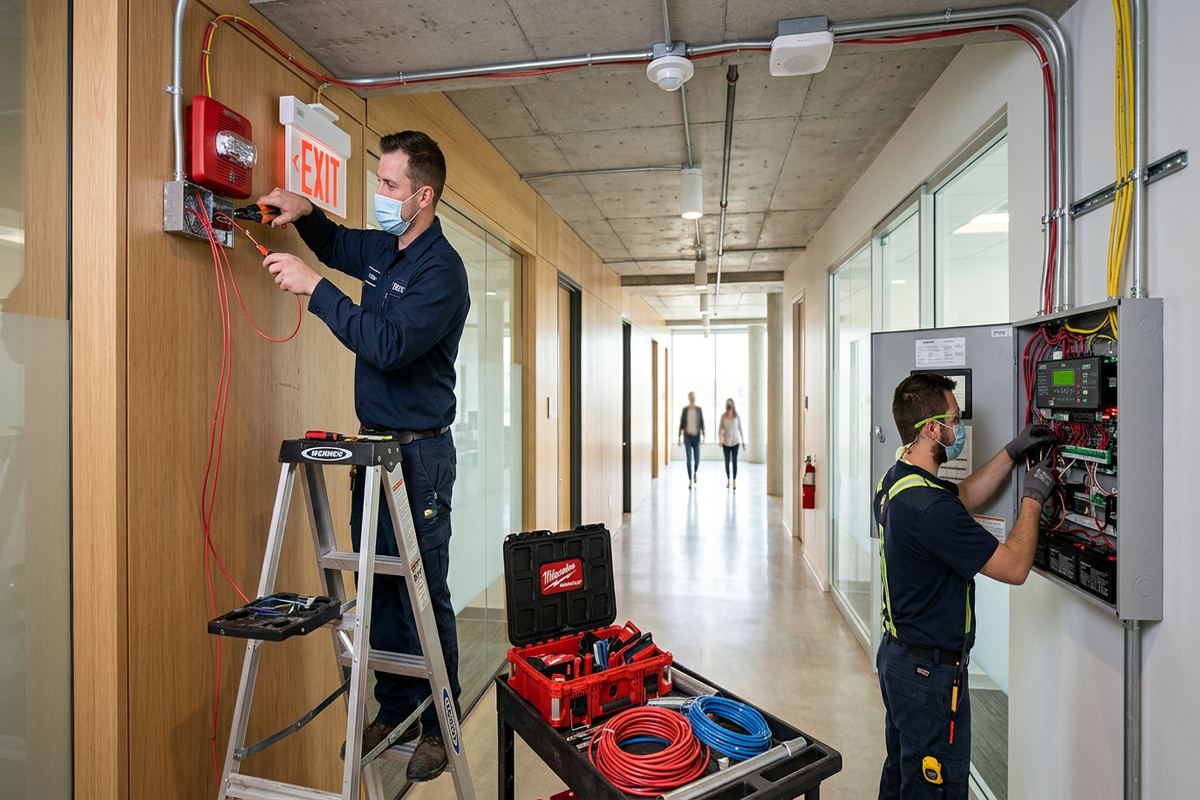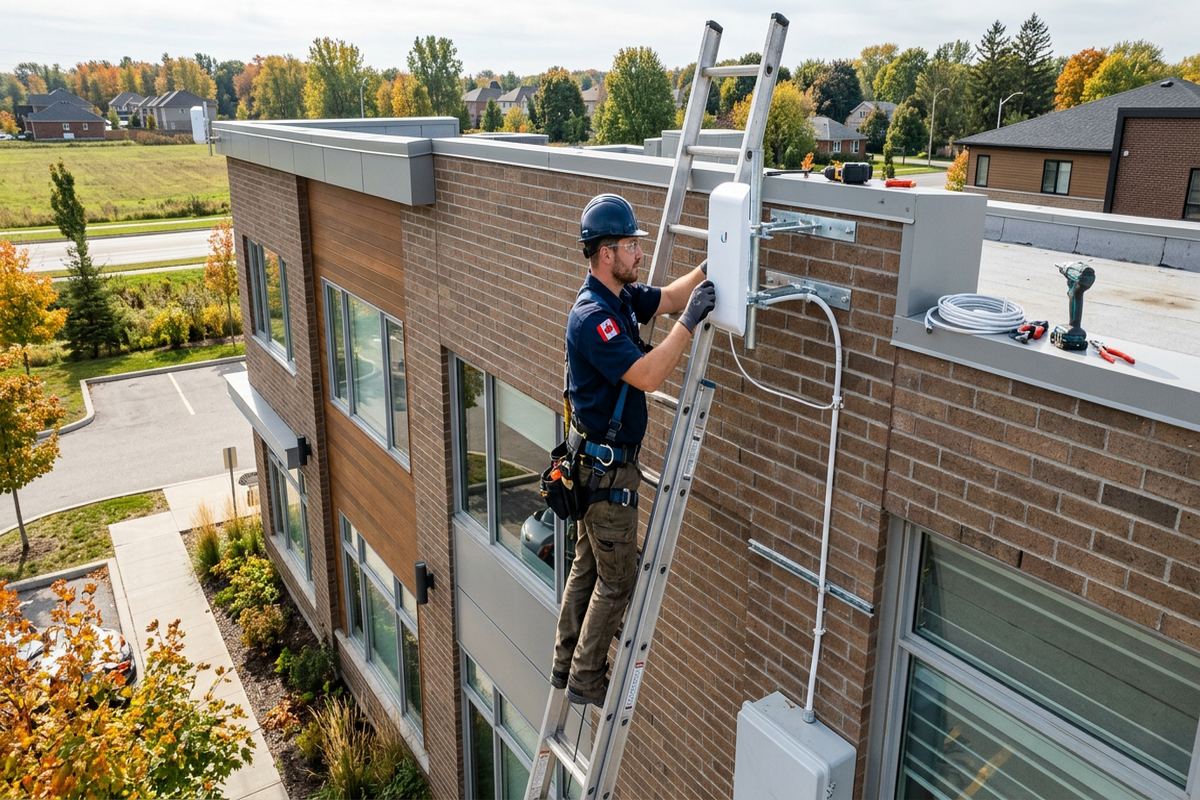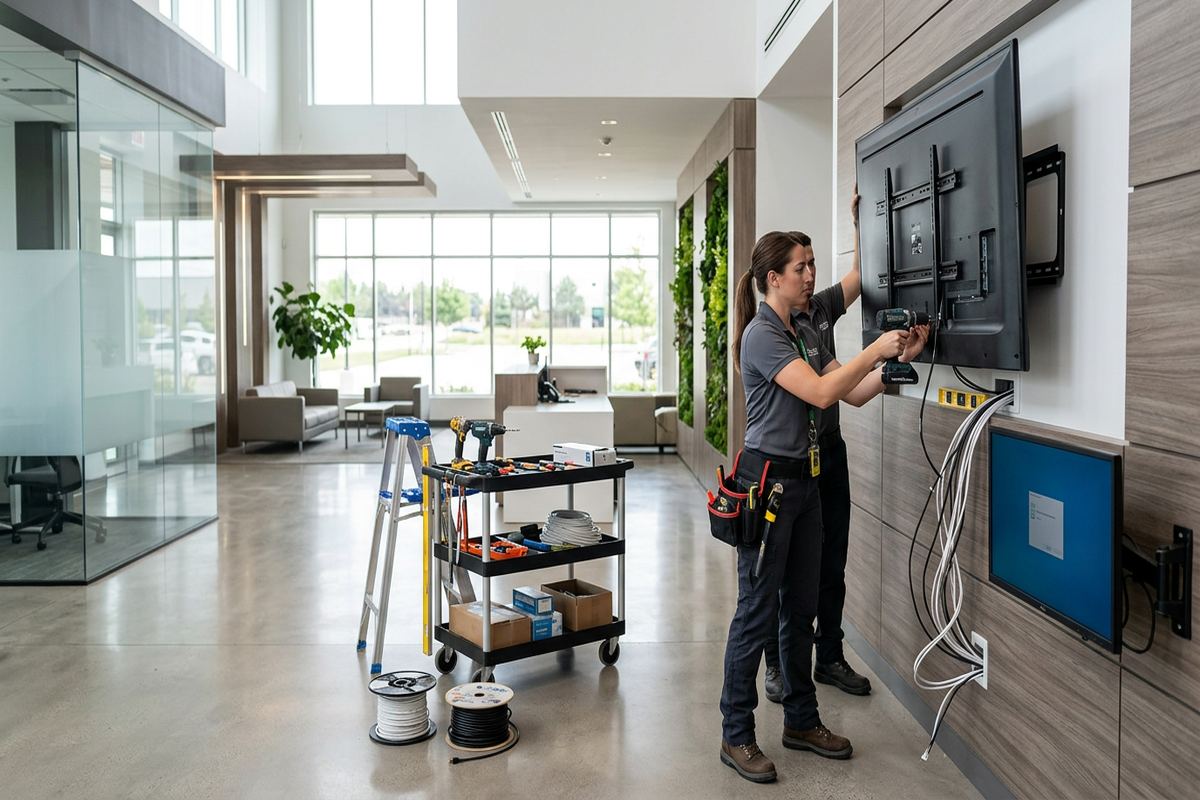
UnifiedLink provides TV wall mounting for homes, offices, shops and industrial units across Cambridge and Waterloo Region. Each installation starts with an assessment of the wall, viewing position, equipment and cable route. We mount the display, connect and configure its sources, manage visible wiring, and document the completed work for a practical handover.
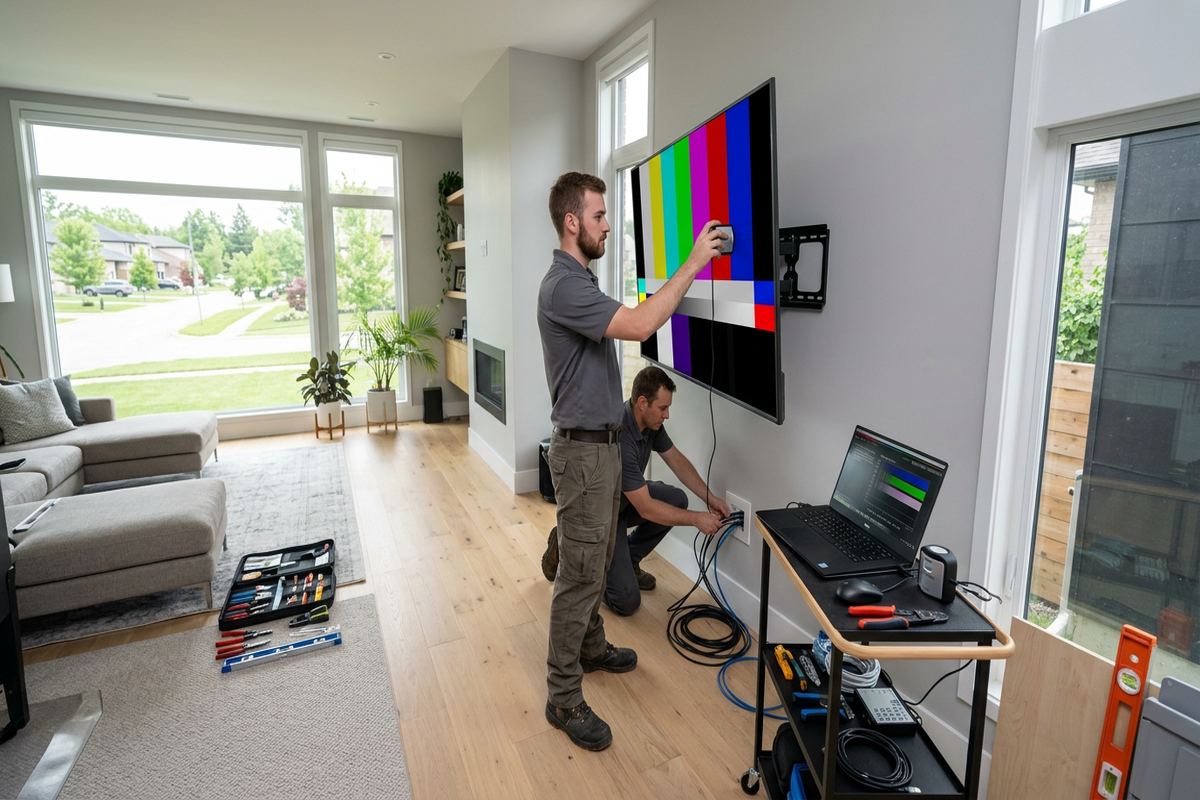
TV Wall Mounting for Cambridge Properties
A secure TV installation starts with the wall rather than the display. Cambridge properties include stone heritage buildings, newer frame houses, condominium units, commercial strips and industrial facilities, so one fastening method does not suit every address. During the site assessment, we identify the wall construction, stud or masonry condition, display dimensions, mount pattern and expected viewing position. We also check nearby power, source equipment and network access. This planning determines whether a fixed, tilting or articulating mount is suitable and helps avoid poorly placed holes, strained connections or an uncomfortable final height.
Homes in Galt and West Galt may contain solid masonry, plaster, wood framing or walls altered during earlier renovations. A surface that looks straightforward can conceal irregular framing, brittle finishes, old service routes or a masonry substrate behind furring. We use appropriate locating and inspection methods before choosing fasteners or opening a cable route. On stone or brick, joint condition and material strength matter as much as anchor type. Where the proposed location is unsuitable, we explain the constraint and recommend a safer position, mounting approach or backing solution before proceeding with installation work.
Cambridge businesses often need displays for meeting rooms, reception areas, menu content, production information or staff communications. These installations require attention to sightlines, public reach, equipment security and operating access. An industrial unit may have concrete block, steel framing or insulated wall assemblies, while a renovated commercial unit may have several finish layers over an unknown substrate. UnifiedLink provides one accountable contractor for mounting, cabling and configuration. The written scope identifies equipment, cable routes, device placement, exclusions, equipment ownership and warranty so the installation requirements are clear before work starts.
- Fixed, tilting and articulating mount assessment
- Residential and commercial display placement
- Stud, masonry and concrete wall review
- Source equipment and network planning
- Written scope before installation
Planning TV Placement in Cambridge Rooms
Good placement balances viewing comfort with the practical limits of the room. We consider seating distance, typical eye line, screen size, glare, windows, doors and furniture before marking the wall. A display mounted too high can be tiring to watch, while one set too low may be blocked by furniture or vulnerable in a public area. Fireplaces, built-ins and asymmetrical room layouts can further restrict the useful positions. In Cambridge homes, we also account for radiators, older trim, additions and renovated walls that may influence both mounting height and the available path for power and signal cabling.
Articulating mounts need more planning than fixed brackets because the display transfers changing loads to the wall as it extends and turns. We confirm that the supporting structure is appropriate, that the screen can move without striking trim or shelving, and that connected cables have enough controlled slack. A full-motion arm should not be used to compensate for a wall that cannot safely support it. In narrow rooms, corners or open-concept spaces, a modest tilt or carefully centred fixed mount may provide a cleaner result with fewer mechanical and cable-management complications.
For offices and customer-facing spaces, placement also affects accessibility, content visibility and daily operation. A meeting-room screen should align with the table and camera position, while a reception or retail display may need to remain visible from several approaches. We discuss who will operate the system, where source devices will sit and whether controls must be reachable without exposing wiring. In Cambridge commercial strips and mixed-use buildings, landlord approval, permitted work hours and shared-wall restrictions may apply. Those conditions should be confirmed before drilling, running cable or changing any permanent building finish.
- Viewing height and seating review
- Glare and window considerations
- Clearance for articulating mounts
- Fireplace and built-in assessment
- Commercial sightline planning
Mounting on Masonry, Frame and Heritage Walls
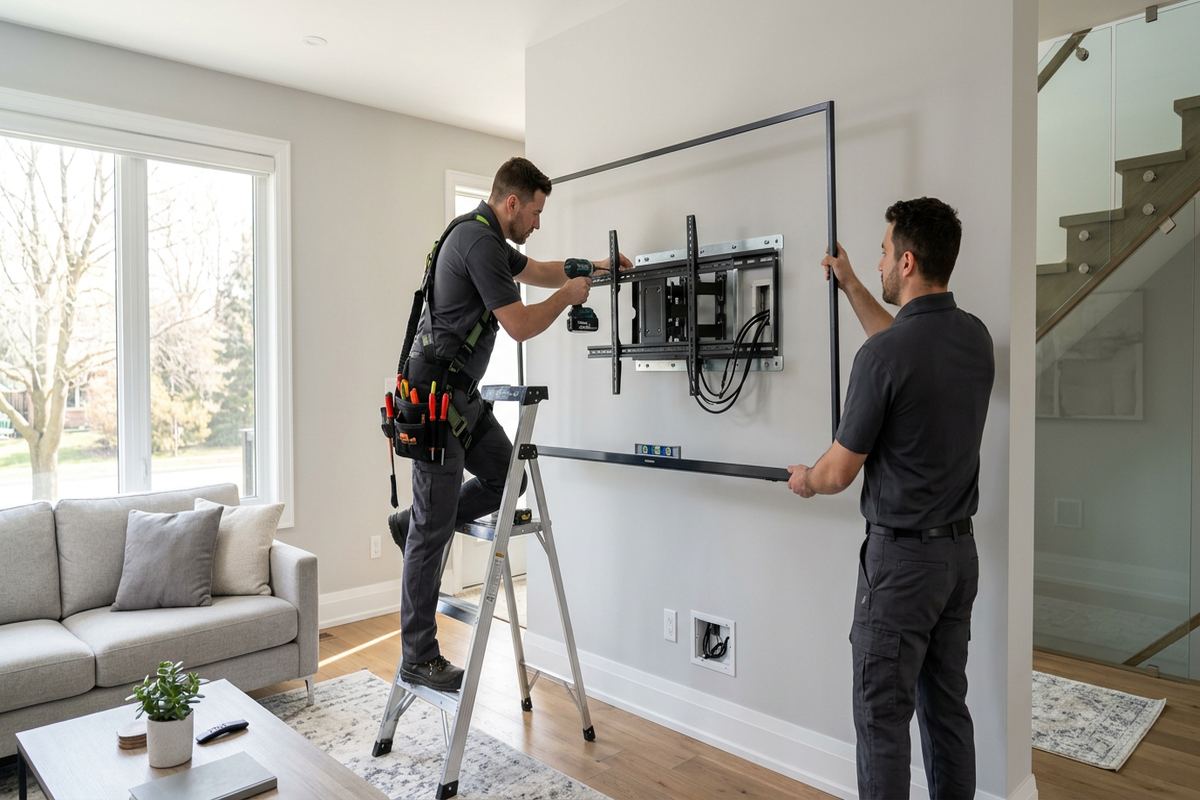
Wall construction governs the fastening plan. Conventional wood framing can provide reliable support when studs are correctly located and the mount holes align with sound structural material. Metal studs, concrete block and poured concrete require different hardware and load-distribution decisions. Drywall alone is not treated as a universal supporting structure for a large moving display. If the desired position falls between usable supports, additional backing or a different mount may be needed. We assess these conditions before pricing so the proposed scope reflects the actual substrate rather than assumptions based only on the visible wall surface.
Stone heritage buildings in Cambridge require particular care because wall depth, mortar condition and interior finishes can vary. In parts of Galt and Blair, an interior wall may combine stone, wood furring, plaster and later drywall. Drilling without understanding those layers can damage finishes or create an unreliable fixing point. We review access, likely wall composition and the reversibility of the proposed work. Decorative masonry, original woodwork and fragile plaster may justify a less invasive cable route or an alternate wall. Heritage status, tenancy conditions or renovation rules remain the property owner’s responsibility to confirm.
Frame construction presents its own uncertainties, especially where basements, additions or renovated rooms have concealed changes. Stud spacing may shift around openings, blocking may be absent, and plumbing or electrical services can pass near the planned fasteners. We do not rely only on a single locator reading when conditions are unclear. A combination of inspection, measurements and controlled verification helps establish the fixing area. The objective is a mount secured to appropriate structure, positioned level and installed without unnecessary wall openings. Any known finish repairs or carpentry outside the mounting scope are identified as exclusions in writing.
- Fasteners matched to verified substrate
- Wood and metal stud assessment
- Concrete and block mounting options
- Care around plaster and heritage finishes
- Backing requirements identified before work
Cambridge, Ontario
TV wall mounting in Cambridge, scoped in writing first
Book a site assessment and get equipment, routes, exclusions, and warranty on paper before anything is installed.
Concealed Cabling for Cambridge TV Installations
A wall-mounted television looks unfinished when power, HDMI and network cables hang below it. Before proposing concealment, we check whether the wall cavity is open, insulated, fire-separated or blocked by framing and masonry. Low-voltage cables can often follow an in-wall route, but mains power must use an appropriate electrical solution and cannot be replaced by an ordinary extension cord hidden inside the wall. Where electrical work is required beyond our permitted scope, it is identified for coordination. Surface raceway is a practical alternative when opening the wall is unsuitable, prohibited or likely to damage valuable finishes.
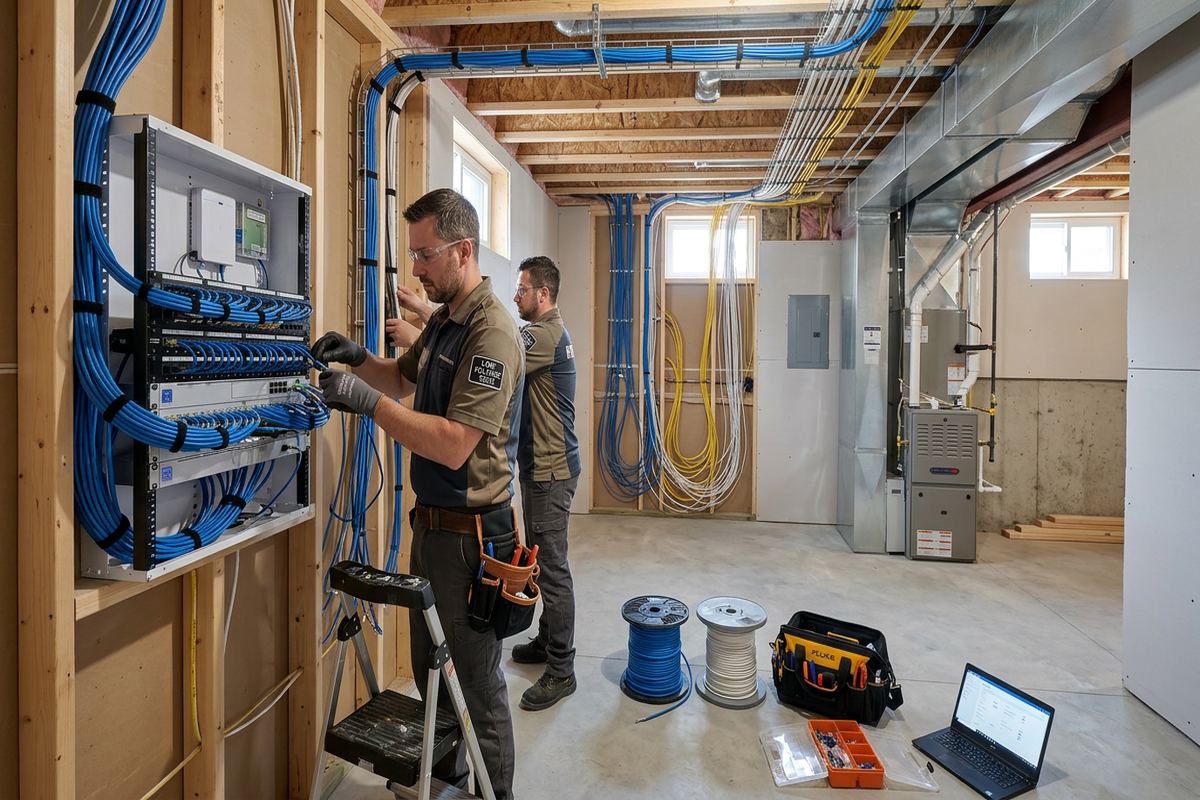
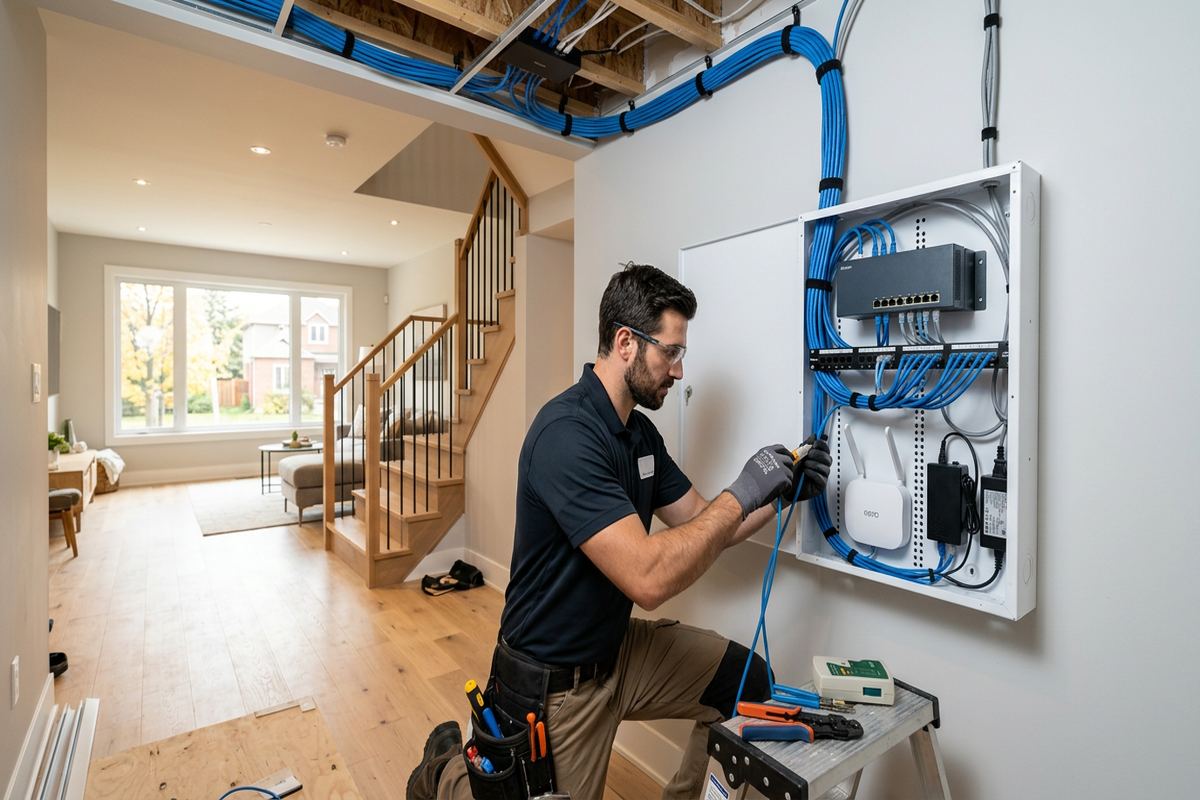
UnifiedLink installs continuous labelled low-voltage cable runs rather than burying unnecessary couplers or loose adapters in inaccessible cavities. Cable type and pathway depend on the signal, distance, source equipment and expected display features. HDMI, data, control and audio connections should be separated and supported appropriately, with enough service allowance for connection without leaving a tangled bundle behind the screen. If source equipment is located in a cabinet, nearby room or communications area, ventilation and remote-control operation also need consideration. The written scope records the intended routes and identifies any pathways that depend on site access.
In Cambridge condominiums and rental properties, cable concealment may be limited by common walls, concrete construction, fire separations or alteration rules. Owners should obtain condominium approval where required, and tenants need the landlord’s authorization before permanent drilling or wall openings. We can plan a surface-mounted route that keeps wiring orderly when in-wall work is not allowed. Commercial tenants face similar constraints in leased offices and storefronts. A clear route plan helps the property manager understand where penetrations, raceway or equipment will be located and which finishes could require restoration by another trade.
- Labelled HDMI and data cabling
- In-wall routes where construction permits
- Neat surface raceway alternatives
- Power requirements identified early
- Remote equipment location planning
- Condo and landlord constraints considered
Exterior and Semi-Outdoor Displays in Cambridge
Mounting a display outdoors or in a partially sheltered area involves more than choosing a bracket marked for exterior use. Cambridge winters, moisture and repeated freeze-thaw cycles affect fasteners, masonry penetrations, cable jackets and enclosures. The display itself must be suitable for the intended exposure, temperature range and brightness conditions. A residential television designed for a dry indoor room should not be assumed appropriate for a patio, loading area or open vestibule. We review shelter, direct precipitation, sun, wind exposure and operating conditions before defining the mounting and cable requirements.
Exterior penetrations need a deliberate sealing approach. Water should not be given a path into masonry cavities, wall assemblies or cable entry points, and sealants must be compatible with the surrounding material. On brick or stone, drilling location matters because damaged units and weak mortar can worsen through winter weathering. Cables also need support, drip management and protection from abrasion or accidental impact. Where a route crosses an exterior wall, the installation plan accounts for both sides of the penetration rather than relying on a cosmetic bead of sealant around the visible opening.
Commercial and industrial sites may use screens in covered service areas, shipping spaces or entrances where dust, vibration and temperature changes are greater than in an office. Cambridge industrial parks can also contain precast concrete, block walls, metal cladding and insulated panels, each with distinct fastening and sealing constraints. We confirm whether the building owner restricts penetrations into cladding or envelope systems. If the proposed location cannot provide suitable structural support or environmental protection, we will identify that issue during assessment and discuss a different location, enclosure or mounting structure instead of treating the installation as an indoor wall mount.
- Weather exposure reviewed before mounting
- Freeze-thaw effects considered
- Exterior penetrations sealed appropriately
- Outdoor-rated components specified where needed
- Industrial wall systems assessed
- Building-envelope restrictions documented
Display Sources, Audio and Network Setup
Physical mounting is only one part of a usable display system. We confirm which devices will connect, how they will be controlled and where they can operate without overheating. Common sources include streaming devices, television receivers, computers, game systems and commercial media players. Connection planning should account for port access, cable direction and the space between the screen and wall. A very slim fixed mount may not leave enough room for rear-facing plugs or a bulky adapter. Right-angle connections, recessed locations or an appropriate mount depth can prevent pressure on ports and allow the display to sit correctly.
Network performance matters for streaming, wireless presentation and managed content. We can connect the television or media player to the available wired or wireless network and complete on-site configuration using the customer’s own accounts and credentials. If Wi-Fi is weak at the display location, that should be addressed rather than hidden by repeated application resets or an unreliable temporary connection. For Cambridge offices and industrial units, a wired data run may provide a more consistent connection for meeting-room platforms or digital signage. Network changes and additional equipment are included only when they form part of the agreed written scope.
Audio requirements should be planned before the television is fixed tightly to the wall. A soundbar may attach to the display mount, mount separately below the screen or sit on furniture, with each method affecting spacing and cable paths. Existing receivers and speakers can require audio-return, optical or other connections, and equipment cabinets need ventilation. We configure selected inputs, basic display settings and connected devices on site, then demonstrate normal operation. Handover uses the customer’s own credentials and includes an as-built record showing the installed devices and relevant cable routes.
- Streaming and source-device connections
- Wired or wireless network setup
- Soundbar placement and cabling
- Port clearance checked before mounting
- Customer-owned credential handover
- As-built installation record
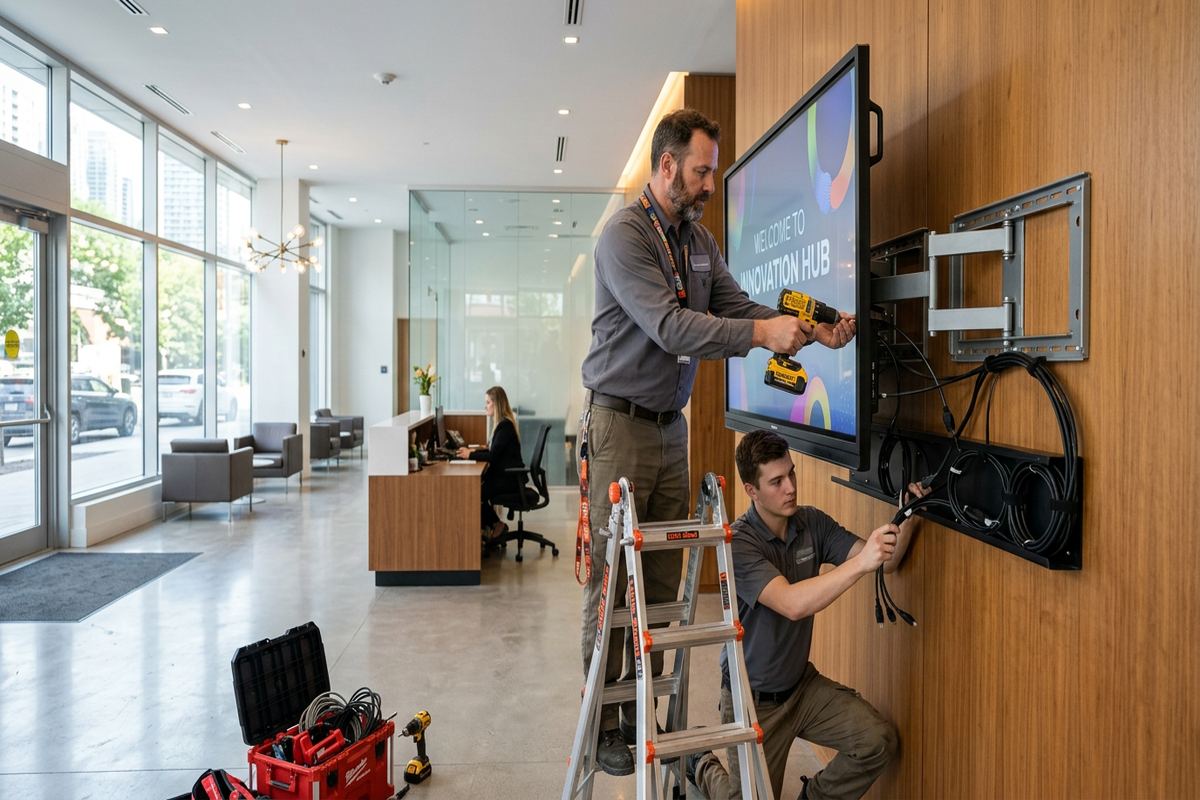
Commercial TV Wall Mounting in Cambridge
Business displays are often used longer and handled by more people than a typical home television. Mounting decisions therefore consider duty, public access, tamper risk and how staff will restart or service equipment. In a Cambridge meeting room, a display may need to coordinate with a camera, speakers, table connection and wireless presentation system. In a shop or reception area, the priority may be clear visibility and protected source equipment. We establish the operating purpose first, then document display placement, mount type, cable route and equipment location as one coordinated installation scope.
Industrial facilities introduce practical conditions such as concrete block walls, exposed structure, dust and moving equipment. A production information screen should not obstruct doors, safety devices, signs or circulation routes. Mounts and cables also need protection from carts, stored materials and routine maintenance activity. In Hespeler and other Cambridge employment areas, units may combine finished offices with warehouse or production space, requiring different installation methods within one site. We review each location individually rather than extending an office-wall assumption into a block, steel or insulated-panel area without verification.
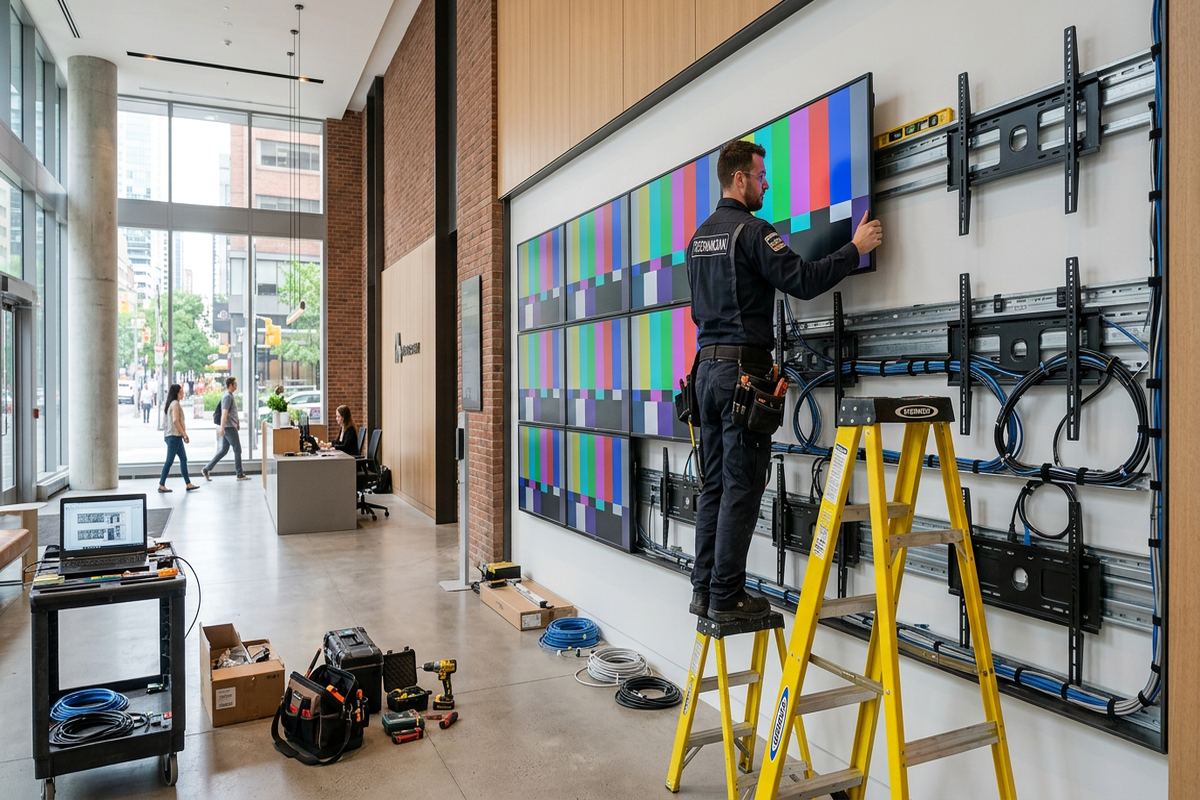
For multi-display projects, consistency helps staff operate and maintain the system. We can standardize mounting heights, input naming, cable labels and basic configuration where room conditions allow. The assessment also identifies access equipment, furniture movement, occupied-area controls and coordination with property management or other trades. Requests sent during business hours are answered the same day; after-hours requests are answered the next business day. Site assessment timing depends on the service and travel distance. Installation scheduling follows the approved scope, equipment availability, site access and any building requirements that affect the work.
- Meeting-room display installation
- Reception and digital-signage mounting
- Industrial display location review
- Consistent labels across multiple rooms
- Property-management coordination
- One accountable installation contractor
Assessment, Installation and Handover in Cambridge
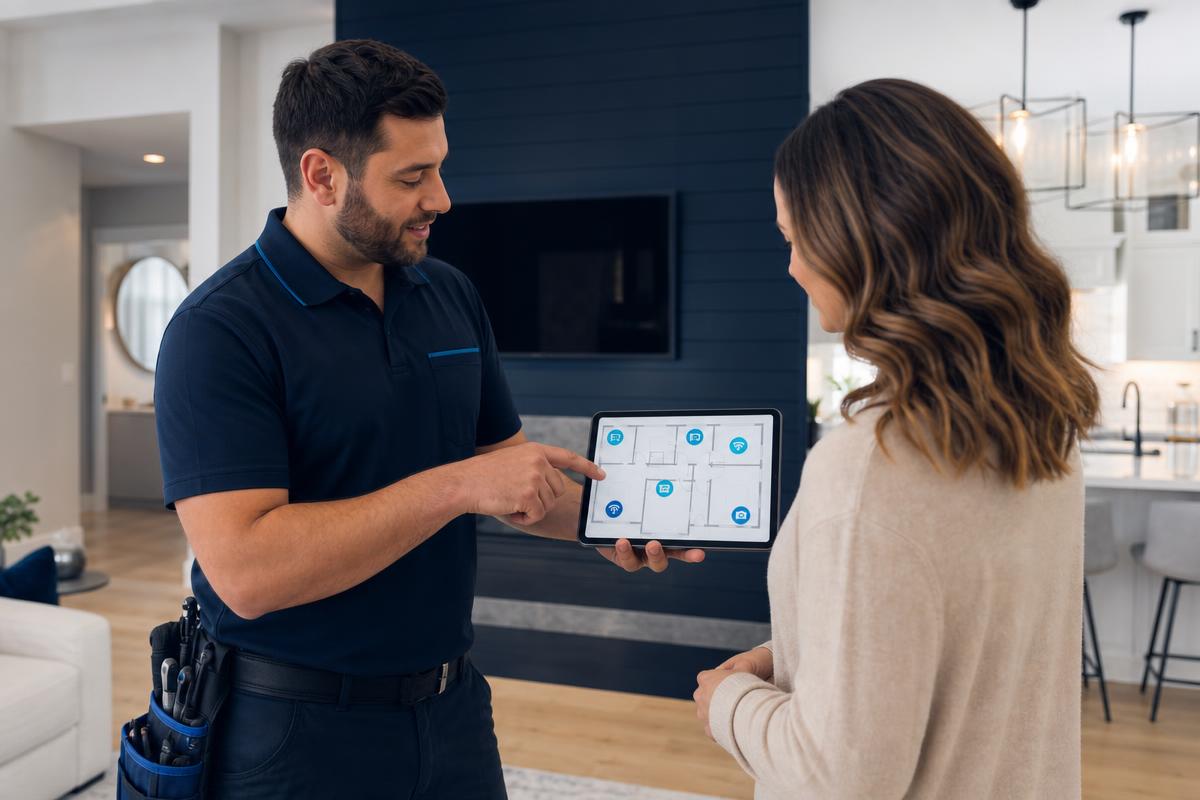
Every project begins with enough information to define the work accurately. Photos and display details can help with an initial discussion, but wall composition, cable access and site restrictions may require an on-site assessment before pricing. We review the television model and size, mount compatibility, proposed height, wall substrate, power location, sources, audio and network needs. In Preston, Clemens Mill or another Cambridge community, the same process applies while the actual recommendations reflect that property. Assessment timing depends on the service, travel distance and the access available at the site.
Before installation, the written scope sets out equipment, cable routes, device placement, exclusions, equipment ownership and warranty. This is particularly important when a customer supplies the television or bracket, because compatibility and condition still need to be checked. On the scheduled visit, we verify the mounting area again, protect the immediate workspace, install the approved hardware and make the agreed connections. Continuous cable runs are labelled where applicable. We then configure the display and included sources on site, check movement and clearances, and confirm that normal controls can be used without pulling or pinching cables.
Handover is intended to leave the owner or operator able to use and understand the installation. We demonstrate the relevant inputs, remotes, source selection, sound operation and any network-connected functions included in scope. Customer accounts remain under the customer’s own credentials rather than an installer-controlled login. The as-built record documents device placement and relevant cable information for future service or changes. If wall repair, electrical work, custom carpentry, hazardous-material investigation or another specialist task is excluded, that remains clearly identified. The result is a defined Cambridge installation with mounting, cabling and configuration handled through one accountable contractor.
- Site assessment before pricing
- Compatibility and substrate verification
- Documented equipment ownership
- On-site connection and configuration
- Customer-credential handover
- As-built record supplied
Cambridge neighbourhoods we cover
- Galt
- Preston
- Hespeler
- Blair
- West Galt
- Clemens Mill
TV wall mounting in Cambridge — common questions
Can you mount a TV on a brick or stone wall in Cambridge?
Yes, when the masonry is suitable and an appropriate fixing location can be established. Cambridge stone and brick walls vary in composition, condition and interior finish, particularly in older Galt properties. We assess the substrate, wall layers, mortar and proposed cable route before selecting hardware. Fragile masonry, heritage finishes or concealed furring may require a different position or a less invasive mounting plan.
Can TV cables be hidden inside the wall?
Often, but it depends on the wall construction and building rules. Frame walls may allow an in-wall low-voltage route, while masonry, insulation, blocking, fire separations or condominium restrictions can prevent it. In Cambridge condos and rental units, approval may be required before opening a wall. Where concealment is unsuitable, we can specify a neat surface raceway and identify any separate electrical work needed.
Do I need to supply the TV mount?
You can supply a compatible mount, or the required mounting hardware can be included in the written scope. We verify the television’s mounting pattern, weight requirements, desired movement, wall structure and connector clearance before installation. A bracket that physically fits the screen may still be unsuitable for the substrate or intended viewing position, especially when a full-motion arm is proposed.
Can you mount a TV above a fireplace?
Sometimes, after checking the wall, clearances, heat exposure, viewing height and cable route. Fireplace installations can place a screen higher than is comfortable and may leave limited room for connections. Cambridge homes also vary between masonry chimneys, framed surrounds and renovated fireplace assemblies. We assess the specific construction rather than assuming the visible finish provides suitable support or that an internal cable route is available.
Do Cambridge condos or rental properties require approval?
Many do. Condominium corporations may restrict drilling into common walls, concrete, fire separations or exterior assemblies, while tenants generally need landlord authorization for permanent holes and concealed cabling. The owner or tenant is responsible for obtaining approval. UnifiedLink can provide a defined placement and cable-route plan so the property manager understands the proposed work before installation is scheduled.
Can you connect streaming devices, soundbars and Wi-Fi?
Yes, when those tasks are included in the agreed scope. We can connect source devices, position or mount a soundbar, join supported equipment to the available network and configure normal inputs on site. Cambridge businesses can also request wired data planning for meeting-room or signage displays. Accounts are handed over using the customer’s own credentials, and relevant installed devices and cable routes are recorded.
Coverage in Cambridge is confirmed against the address before we quote. See everything we install in Cambridge or the province-wide tv wall mounting page.