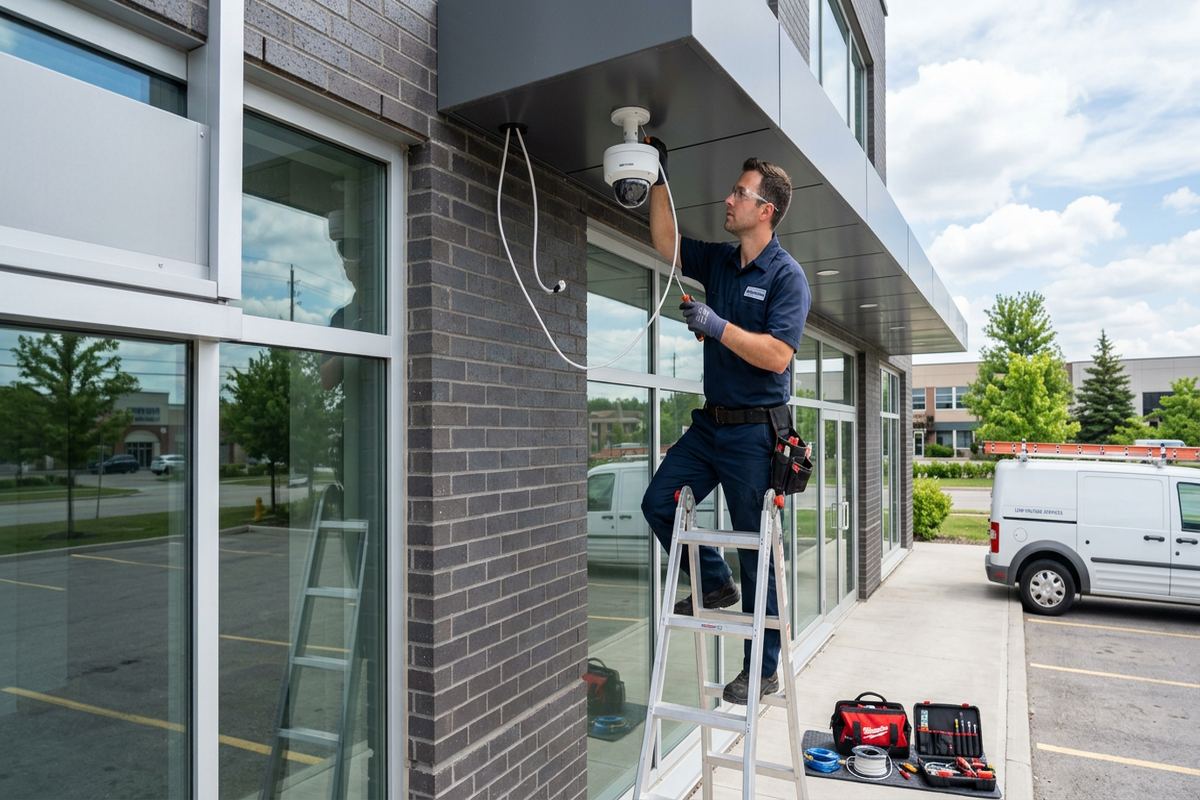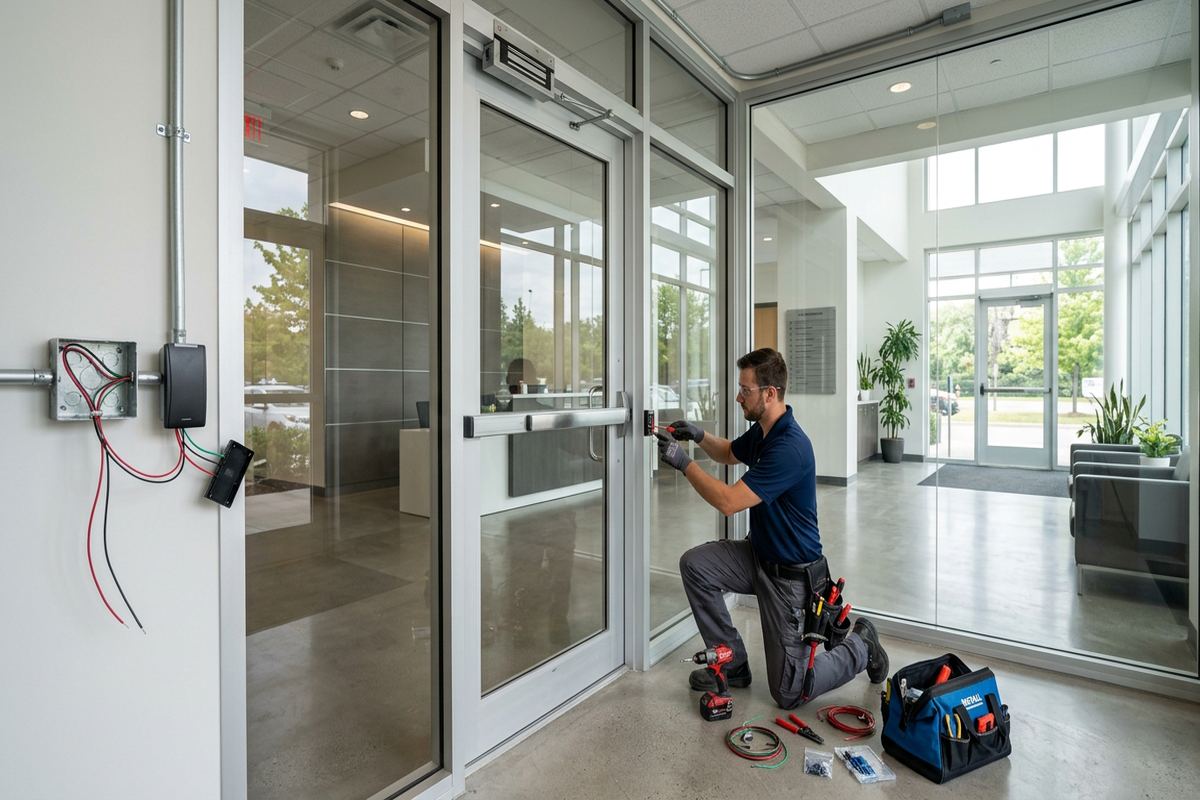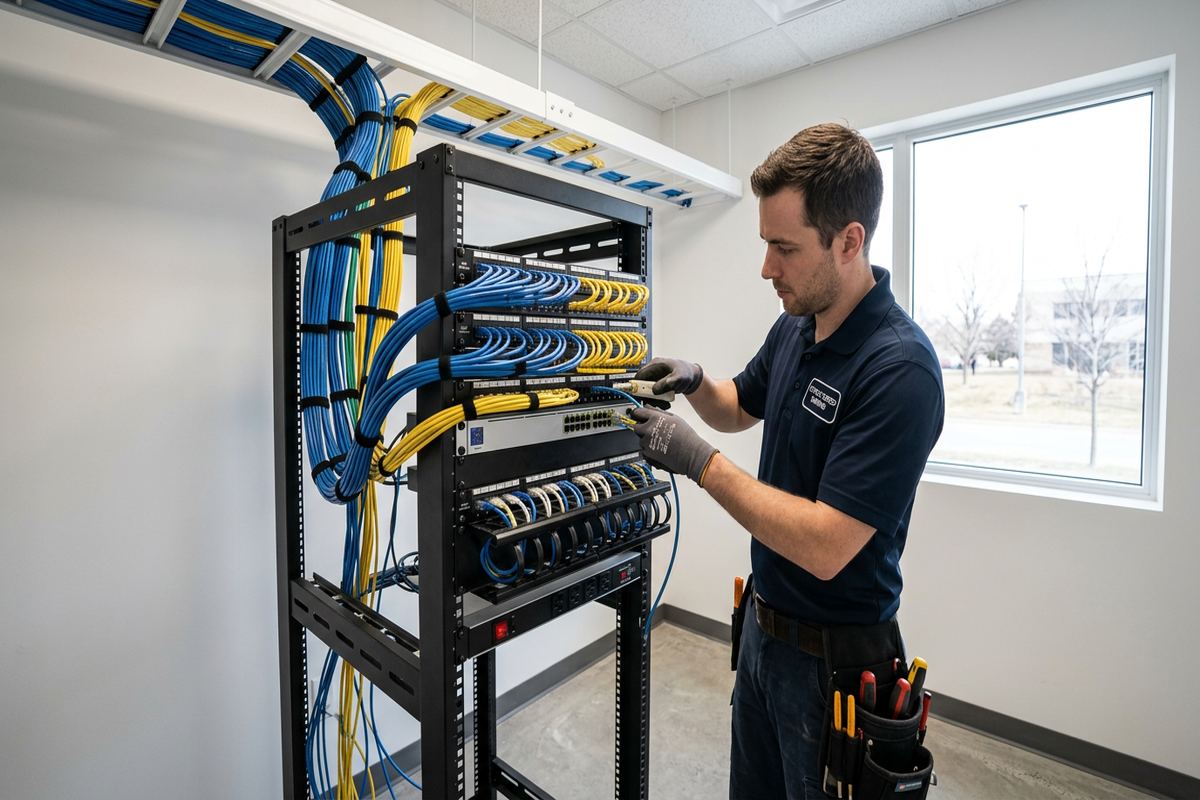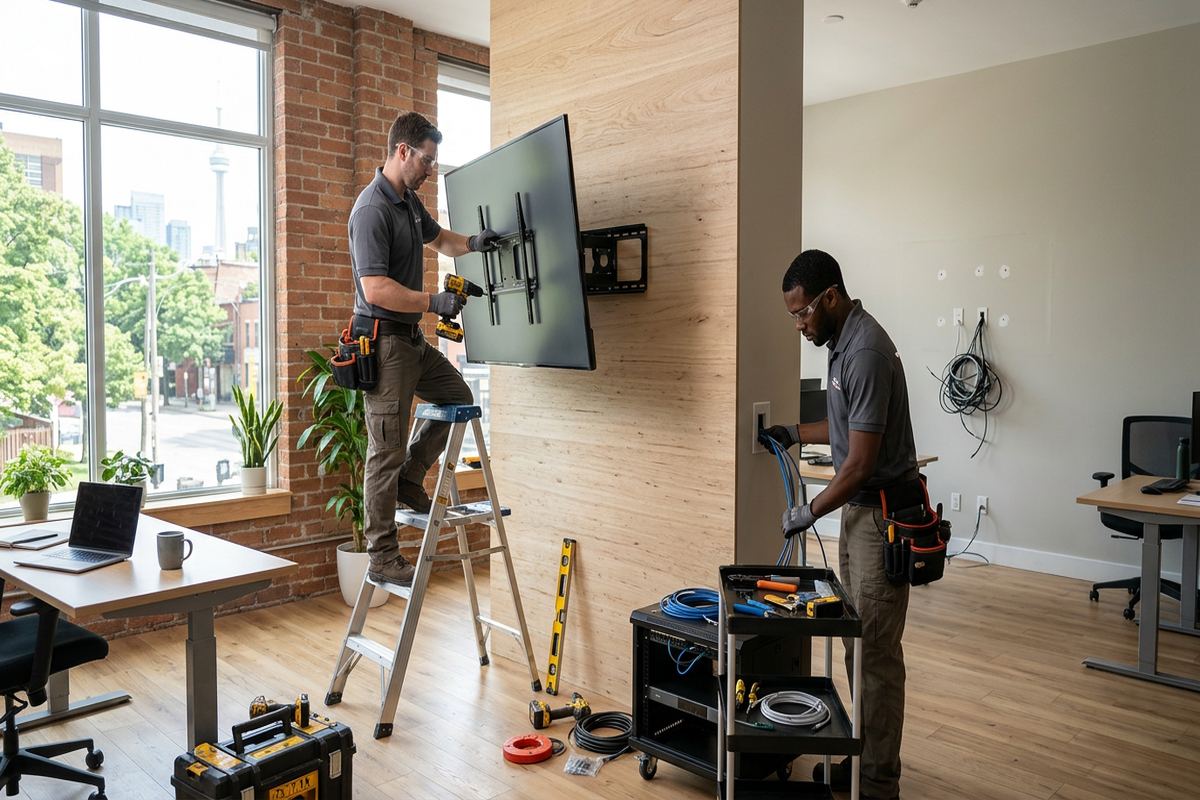
UnifiedLink installs wired and wireless security camera systems for homes, rental properties and small businesses across Cambridge. Each project starts with a site assessment to review coverage, lighting, construction and cable routes. The resulting scope defines equipment, placement, exclusions, ownership and warranty before installation proceeds.
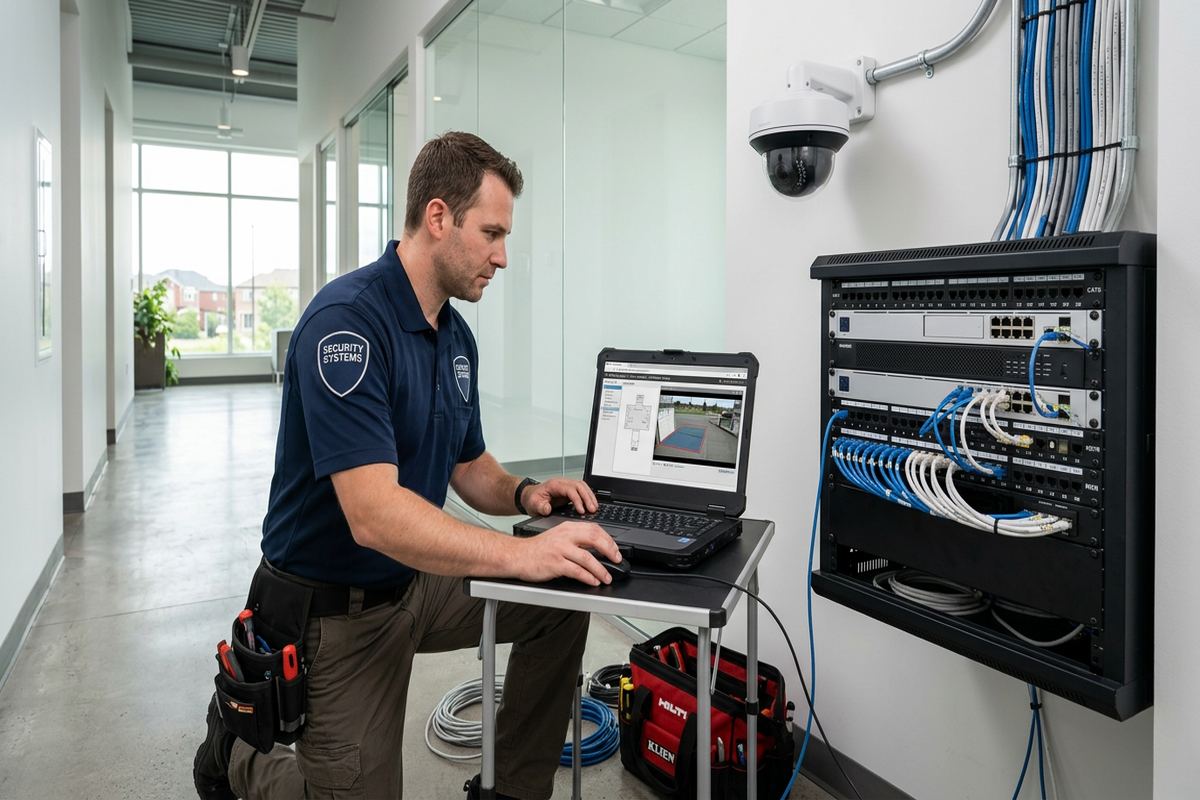
Planning Home Security Cameras in Cambridge
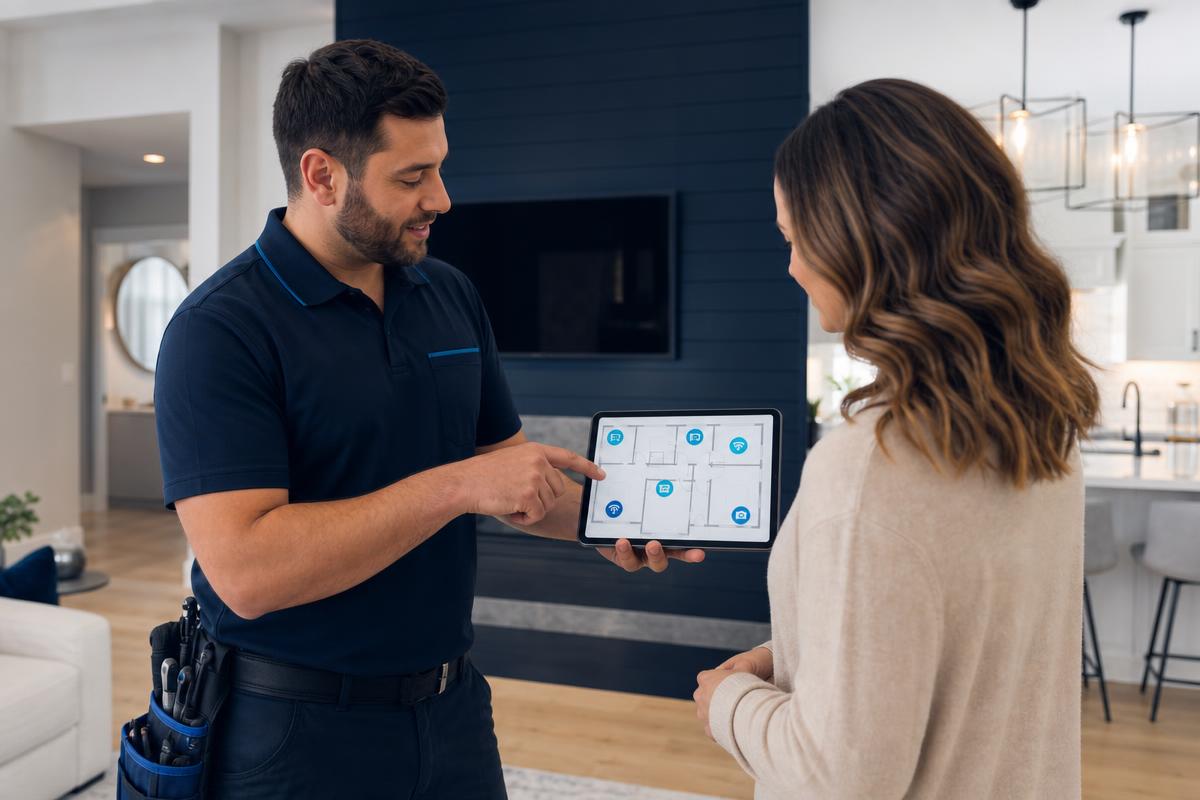
A useful camera system begins with the areas that need evidence, not with an arbitrary camera count. During a Cambridge site assessment, we review doors, driveways, walkways, garages, side yards and other practical approaches. Sightlines are checked from realistic mounting positions, including the effect of vehicles, fences, trees and seasonal foliage. We also discuss what identification detail is expected at each location. A broad overview camera may show movement across a property, while a more focused view is normally needed to identify a person clearly at an entrance or gate.
Cambridge properties vary considerably between established streets, newer subdivisions and rural-edge lots. Stone heritage buildings in Galt may offer limited concealed pathways and require careful decisions around visible conduit or masonry penetrations. Frame houses in Clemens Mill can provide easier access through attics, soffits and unfinished basements, although insulation and finished ceilings may still restrict routes. The assessment separates assumptions from confirmed conditions so that device placement, recording equipment, network connections and any required access work are documented before the installation date and reflected in the written scope.
Camera specifications are matched to each view instead of applied uniformly across the building. Resolution, lens angle, low-light performance, infrared behaviour and mounting height all affect the usable result. Lighting from porch fixtures, vehicle headlights or nearby commercial signs can make an apparently simple position difficult after dark. We review representative daytime and nighttime conditions where practical, identify likely glare or reflection, and select positions that reduce avoidable backlighting. The written plan also states equipment ownership, warranty information, exclusions and proposed cable routes, giving the property owner a clear basis for approval.
- Entrance, driveway and yard coverage review
- Day and night sightline planning
- Documented camera and recorder locations
- Written scope before installation
Camera Placement for Cambridge Properties
Placement must balance useful coverage with the appearance and use of the property. Cameras mounted too high often record the tops of heads, while low devices may be easily reached or obstructed. At Cambridge homes, we commonly evaluate front entries, attached or detached garages, side passages and rear doors as separate evidence points. A camera facing a public sidewalk is framed to prioritize the owner’s property and immediate approach. Where neighbouring windows, yards or shared spaces enter the view, angle adjustments and privacy masking may help limit unnecessary observation.
Older homes in West Galt and Blair can present uneven masonry, deep rooflines, additions from different periods and few direct cable paths. Drilling location matters because a fastening suitable for wood trim may not be appropriate for stone, brick or mortar. We choose mounting surfaces based on stability, service access and the ability to seal the penetration properly. Heritage character also deserves consideration: discreet placement and carefully planned conduit can reduce visual impact. Any exterior route is reviewed with the owner before work, especially where original finishes or prominent elevations could be affected.
Newer frame construction creates different constraints. Vinyl or aluminium soffits are not automatically suitable structural supports, and fastening only to thin cladding can allow movement. We look for solid backing and consider how the cable enters the building without creating a water path. In attached homes or condominiums, exterior walls, soffits, corridors and parking areas may be common elements rather than owner-controlled surfaces. Written condo, property manager or landlord approval should be obtained where required. UnifiedLink can describe intended locations and routes for that approval process but does not replace it.
- Mounting heights suited to identification
- Privacy masking where appropriate
- Masonry and frame fastening methods
- Placement coordinated with property approvals
Exterior Mounting for Cambridge Winters
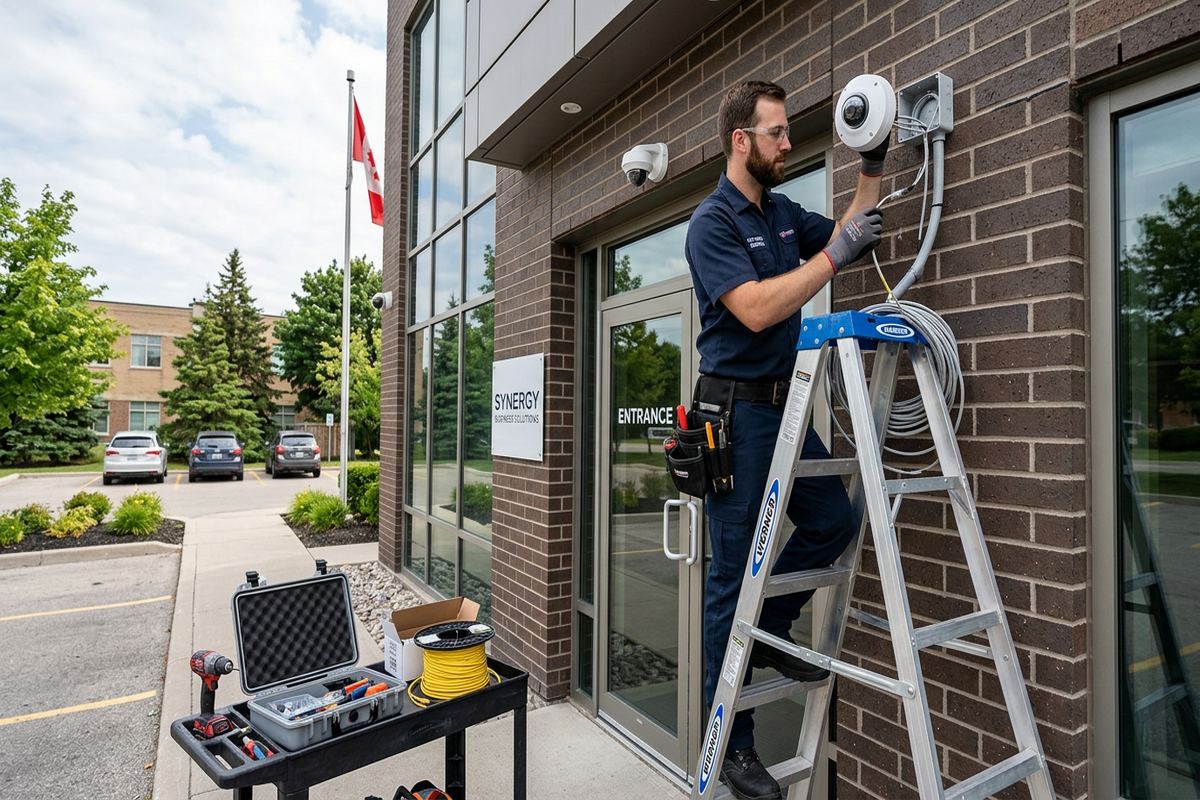
Outdoor installations in Cambridge must account for winter moisture, snow, ice and repeated freeze-thaw cycles. A small unsealed opening can admit water, and trapped moisture may expand as temperatures change. Exterior penetrations are positioned and sealed to shed water rather than collect it. Cable entries use suitable bushings, glands or junction boxes where the design requires them. Connections are protected from direct exposure instead of being left loose behind a camera. The mounting surface is also checked for cracks, soft trim or deteriorated mortar that could prevent a stable, lasting attachment.
Weather resistance depends on the complete installation, not only the rating printed on a camera. A device may be designed for outdoor use while its connector remains vulnerable when improperly enclosed. Drip loops, downward-facing entries and sealed enclosures help control water movement. On riverside neighbourhood properties, open exposure and wind-driven precipitation can influence the selected wall or soffit position. Snowbanks, icicles and seasonal vegetation are considered as possible obstructions. Service access remains important as well, because a camera should be reachable for cleaning or adjustment without disturbing unrelated exterior finishes.
Infrared cameras can lose nighttime clarity when mounted beside reflective siding, pale soffits, downspouts or projecting masonry. Spider webs, rain droplets and snow close to the lens may also reflect infrared light and obscure the scene. We test framing and image behaviour on site, then adjust the angle, infrared settings or nearby lighting where supported by the equipment. Some locations benefit from controlled exterior illumination rather than stronger infrared output. Final views are checked with the customer so expectations for facial detail, vehicle coverage and general activity monitoring are understood before handover.
- Sealed and weather-managed penetrations
- Protected outdoor cable connections
- Stable mounting on suitable backing
- Night image and reflection checks
Cambridge, Ontario
Home security camera installation in Cambridge, scoped in writing first
Book a site assessment and get equipment, routes, exclusions, and warranty on paper before anything is installed.
Wired Camera Cabling in Cambridge Homes
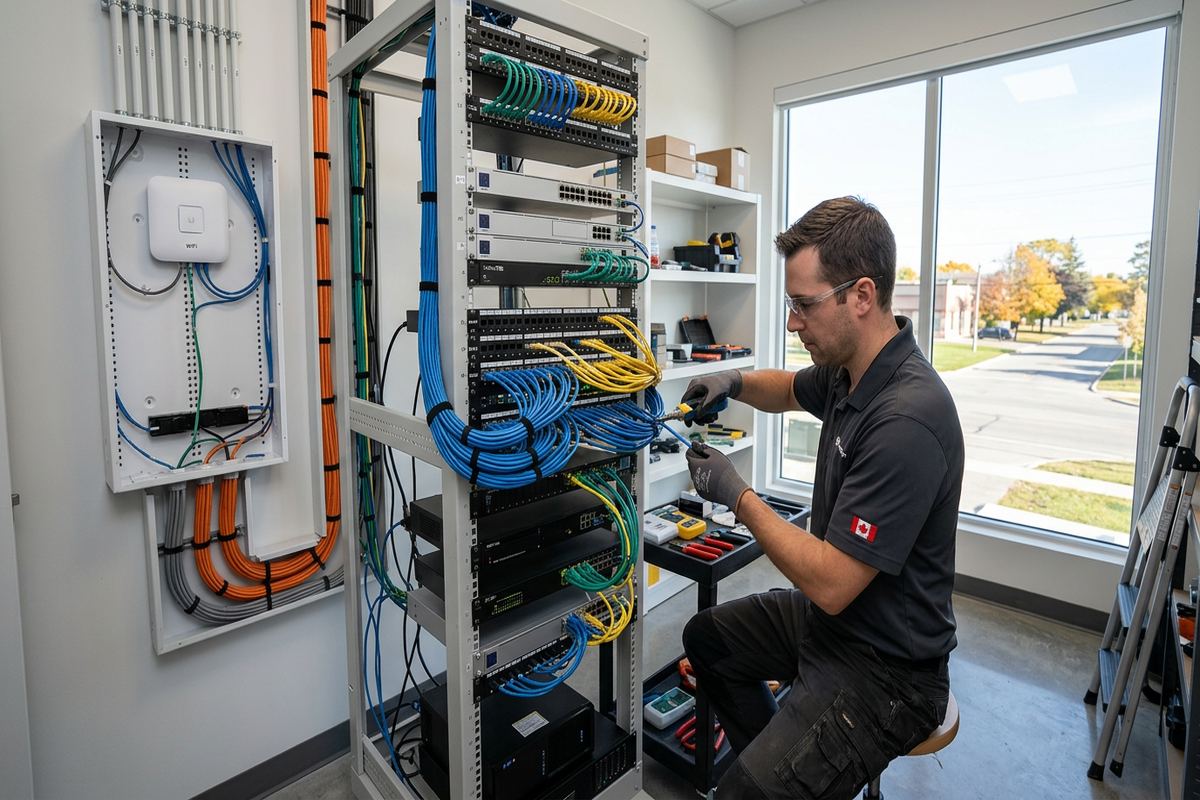
Wired cameras are often selected for predictable connectivity and centralized recording. Where Power over Ethernet equipment is used, one network cable can provide both data and power from an appropriate switch or recorder. UnifiedLink installs continuous labelled cable runs rather than joining short sections inside inaccessible walls. Each route is planned around electrical interference, heat sources, sharp edges and areas where future renovations could damage the cable. Labels correspond with recorder channels or network documentation, making later testing and service more direct for the homeowner or another qualified contractor.
Cable access differs from one Cambridge property to another. An unfinished basement and accessible attic may permit concealed vertical routes, while finished lower levels can require surface raceway, exterior conduit or limited openings. Solid masonry walls and stone foundations frequently rule out routes that would be straightforward in modern frame construction. Before drilling, we review visible services and likely concealed obstacles, but no exploratory method removes every unknown. The written scope identifies proposed routes and exclusions, including patching, painting or specialist restoration where those tasks are not part of the camera installation.
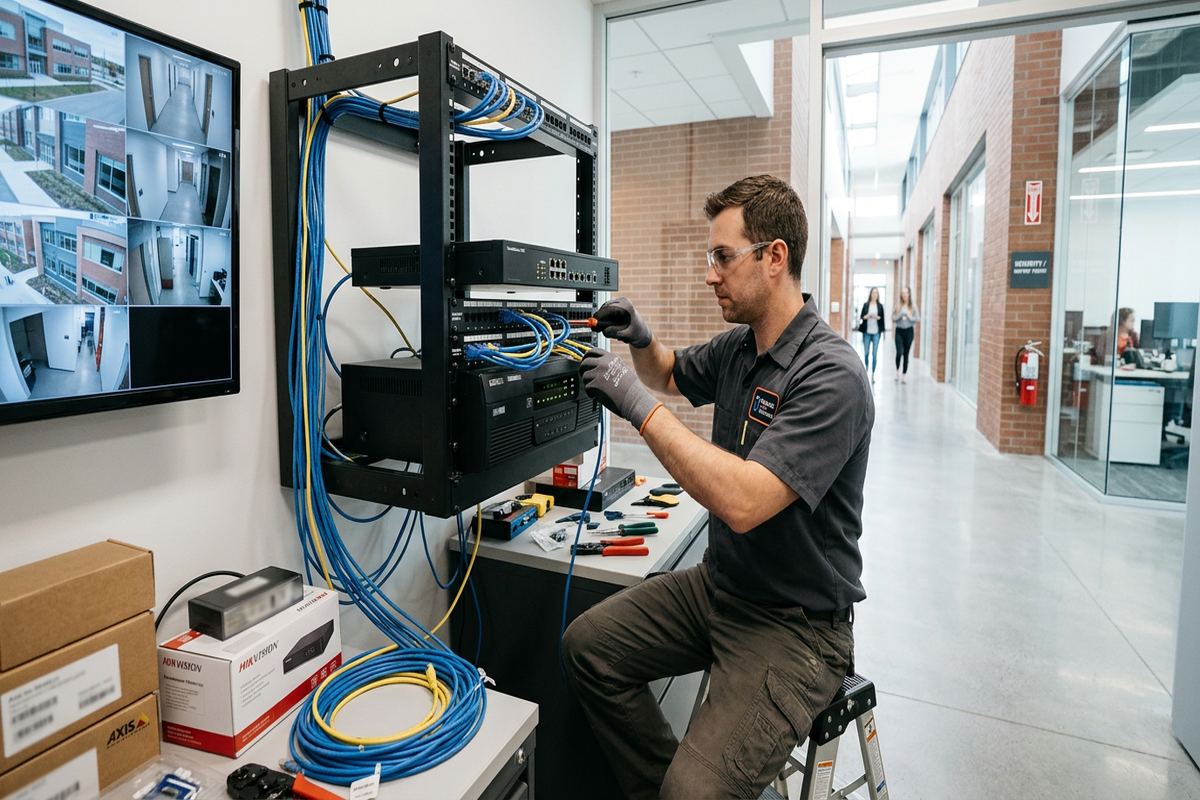
The recorder, network switch and power equipment need a deliberate location. A living-room shelf may be easy to reach but can expose the recorder to accidental disconnection or theft. Better options may include a ventilated utility, network or storage area with appropriate power and network access. Heat buildup, dust, moisture and physical clearance are reviewed before mounting equipment. If remote viewing is required, the home internet connection and router arrangement are assessed. Camera traffic can be separated or managed where the existing network supports that design, without relying on insecure default settings.
- Continuous point-to-point cable runs
- Labels at cameras and equipment
- Routes planned around building constraints
- Recorder location and ventilation review
Recording, Remote Viewing and Security
Recording design starts with how footage will be used. Continuous recording provides a complete timeline but consumes storage differently from motion-based recording. Event recording can make searches faster, although poorly configured detection may miss activity or create excessive alerts. We discuss desired retention without promising a fixed duration before camera count, resolution, frame rate and activity levels are known. The recorder is then configured on site, with time, date, recording schedules and available detection zones checked. Sample playback confirms that footage can be found and exported using the selected platform.
Remote access should not depend on an installer retaining control of the customer’s account. During handover, the owner uses their own credentials for the recorder, camera application and related services. Default passwords are changed where applicable, and administrative access is limited according to the equipment’s capabilities. If more than one household member or manager needs access, separate users may be created when supported. Owners remain responsible for safeguarding passwords, recovery methods and authorized devices. The as-built record identifies installed devices and relevant network details without unnecessarily reproducing confidential passwords.
Internet-connected cameras rely on more than the cameras themselves. Weak Wi-Fi, an overloaded router or an unreliable uplink can affect live viewing and notifications even when local recording continues normally. For wired Cambridge installations, we test the local network link and explain the distinction between recorder operation and remote application access. Firmware settings, notification options and supported security features are reviewed during configuration. Cloud subscriptions, third-party applications or ongoing service terms are identified where applicable, and any customer-paid account remains in the customer’s name rather than being bundled under installer-controlled credentials.
- Recording schedules configured on site
- Playback and export demonstrated
- Customer-controlled accounts and credentials
- Remote access dependencies explained
Cameras for Cambridge Rentals and Condos
Rental and condominium installations require authority to alter the property, even when the resident purchased the equipment. A tenant should obtain landlord approval before drilling, routing cable or attaching devices to exterior finishes. Condo owners may need permission for cameras facing corridors, balconies, parking spaces or common entrances. Rules can differ between properties, so approval should cover the proposed mounting points and cable paths rather than a general intention to add security. In Cambridge, this is particularly relevant for converted older buildings, stacked units and developments with shared exterior elements or underground parking.
A camera at a rental unit should focus on the space the occupant is entitled to monitor. Shared hallways, neighbouring entrances and common recreation areas can raise privacy and property-management concerns. We can narrow the field of view, use privacy masks where supported, or recommend a door-area solution that avoids unnecessary coverage. Audio recording requires separate consideration because microphones can capture conversations beyond the intended area. The property owner or occupant is responsible for determining applicable legal obligations and obtaining consent or professional legal advice when the proposed use is uncertain.
Moves and tenancy changes should be considered before equipment is permanently installed. Surface raceway or less invasive routes may be preferable when concealed work is not authorized, although every route still needs secure fastening and suitable fire separation. The scope records who owns the cameras, recorder, cabling and any subscription account. This prevents confusion when a tenant leaves or a property changes management. At handover, the approved customer receives credentials and an as-built record. Access for former occupants, managers or contractors should be removed promptly when their authorization ends.
- Approval-ready placement and route details
- Views limited around shared areas
- Equipment ownership documented
- Credential changes planned for turnover
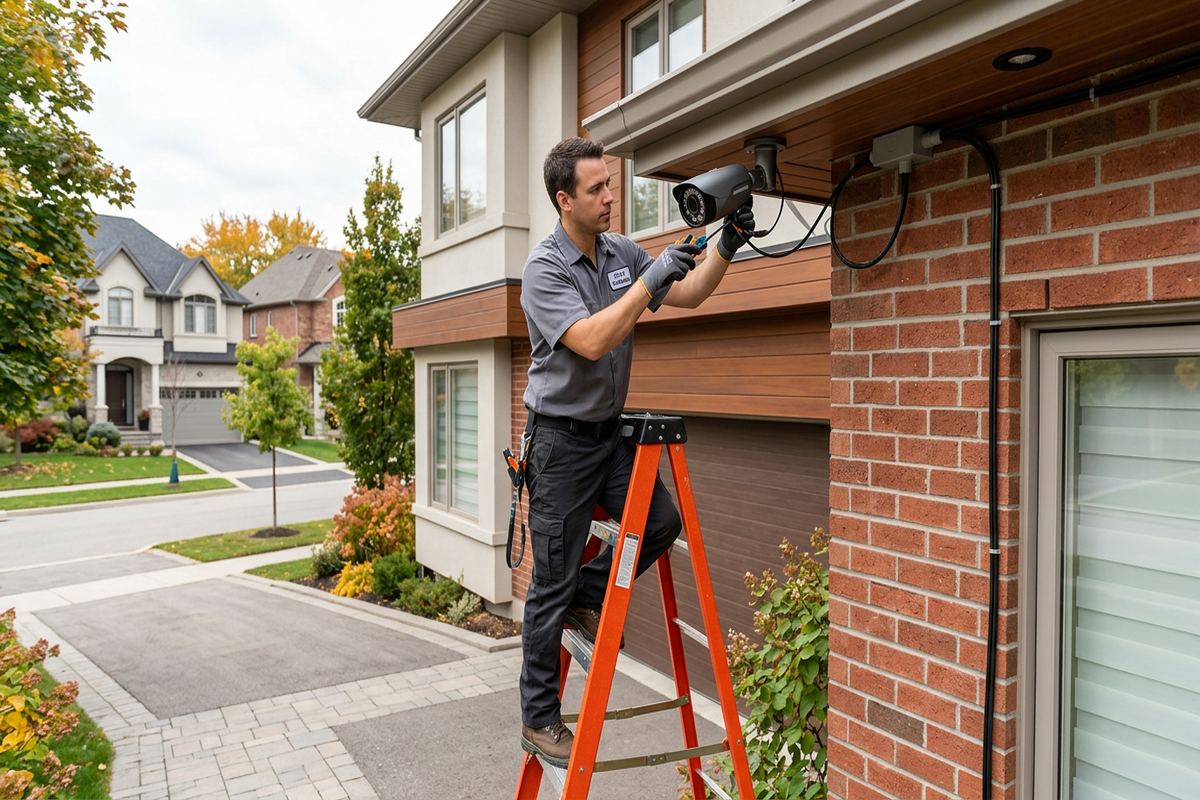
Cambridge Shops and Home Businesses
Some Cambridge properties combine residential use with customer visits, workshops, detached garages or small commercial activity. Their camera needs can differ from those of a conventional home. Deliveries, cash-handling points, stock areas and employee entrances may need focused views, while private family spaces should remain outside the frame. We separate operational objectives from general perimeter coverage and identify who will review footage. If staff or customers may be recorded, the owner should address notice, policy and privacy obligations appropriate to the setting rather than treating the system as purely residential.
Commercial strips and industrial parks introduce wider yards, loading areas, metal siding, high mounting points and stronger exterior lighting. A camera selected for a porch may not provide useful identification across a vehicle lot or warehouse approach. We assess distance, lens requirements, mounting structure and safe future access before defining equipment. Metal-clad industrial units can also complicate wireless coverage and cable entry. Where a business occupies leased premises, landlord approval and coordination with building management may be needed for rooflines, shared walls, utility rooms or exterior conduit.
For a home business, alerts should be configured around meaningful activity rather than every passing vehicle or pedestrian. Detection zones can exclude a busy road or public walkway when the camera supports that feature. Schedules may distinguish business hours from overnight periods, and user permissions can separate administrative control from routine viewing. These settings are tested on site, but they may require adjustment as seasons, lighting and site use change. The owner receives an explanation of available controls so routine changes do not require surrendering account ownership to the installer.
- Coverage for deliveries and work areas
- Lens selection based on actual distance
- Detection zones for relevant activity
- Separate user access where supported
Cambridge Installation and Handover
Once the Cambridge site assessment is complete, UnifiedLink provides a written scope before pricing. It covers proposed equipment, device placement, cable routes, exclusions, equipment ownership and warranty. This document gives the owner an opportunity to confirm visible conduit, recorder location, exterior penetrations and any preparation by other trades. Site assessment timing depends on the service and travel distance. Requests sent during business hours are answered the same day, while after-hours requests are answered the next business day. An answer to a request is not a promise that an assessment or installation will occur immediately.
Installation follows the agreed scope, with changes discussed when concealed conditions differ from what could reasonably be observed. Cameras are fixed to suitable surfaces, cable runs are labelled, and connections are terminated at the planned network or recording equipment. Configuration is completed on site rather than leaving the customer with an unconfigured collection of devices. Views, recording and supported notifications are checked after mounting. If additional work becomes necessary because of blocked routes, damaged construction or approval restrictions, the implications are documented before proceeding instead of making unapproved changes to the property.
Handover turns an installed system into one the owner can operate. We demonstrate live view, recorded playback, footage export and routine user functions supported by the selected equipment. The customer receives control through their own credentials, along with an as-built record showing device names, locations and cable information. Basic maintenance includes keeping lenses clean, checking that time remains accurate and reviewing views after landscaping or building changes. One accountable contractor coordinates the camera equipment, cabling, configuration and documentation, reducing uncertainty about responsibility across the completed installation.
- Site assessment before pricing
- Scope approved before physical work
- On-site testing and configuration
- As-built record supplied at handover
Cambridge neighbourhoods we cover
- Galt
- Preston
- Hespeler
- Blair
- West Galt
- Clemens Mill
Home security camera installation in Cambridge — common questions
How many cameras does my Cambridge home need?
The number depends on the views you need rather than house size alone. A site assessment considers entrances, driveway geometry, side access, rear doors, garages, fences and likely approach paths. Some Cambridge homes need separate overview and identification views because one wide camera cannot provide useful detail everywhere. The proposed count and placement are documented in the written scope before pricing.
Can cameras be installed on stone or brick homes?
Yes, but masonry condition, fastening method and cable entry need careful review. Stone heritage buildings around Galt can have irregular surfaces, thick walls and sensitive exterior finishes. We identify stable mounting locations, plan penetrations and sealing, and discuss visible conduit when concealed routing is impractical. Specialist masonry repair or heritage approvals may be excluded and will be identified in the scope.
Will outdoor cameras work through a Cambridge winter?
Outdoor-rated equipment can operate in local winter conditions when it is selected and installed appropriately. The full installation matters: stable fastening, protected connectors, sealed penetrations, drainage and suitable cable all affect reliability. Cambridge freeze-thaw cycles, snow and wind-driven moisture are considered during placement. Cameras may still need occasional lens cleaning and checks after severe weather, ice buildup or exterior building work.
Do I need permission for a condo or rental camera?
Possibly. Tenants should obtain landlord approval before drilling or attaching equipment, and Cambridge condo owners may need corporation or property-manager approval for common elements such as exterior walls, balconies, corridors and parking areas. Approval should address exact camera locations and cable routes. The owner or occupant must also consider privacy obligations where a view includes shared areas, neighbouring property or recorded audio.
Can I view my Cambridge cameras from my phone?
Remote viewing is available with equipment that supports it and a suitable internet connection. UnifiedLink configures supported access on site using the customer’s own account and credentials. Live viewing and alerts depend on the recorder, application, network and internet service; local recording may continue during an internet outage if the system is designed that way. Any third-party subscription or account requirement is identified in the scope.
What do I receive after installation?
After a Cambridge installation, you receive configured equipment, control through your own credentials and an as-built record identifying camera locations and cable information. Handover includes a demonstration of live view, playback, footage export and available user controls. The written scope also records equipment ownership, warranty and exclusions. Keep this documentation with your network records for future service, renovations or a change of property manager.
Coverage in Cambridge is confirmed against the address before we quote. See everything we install in Cambridge or the province-wide home security camera installation page.