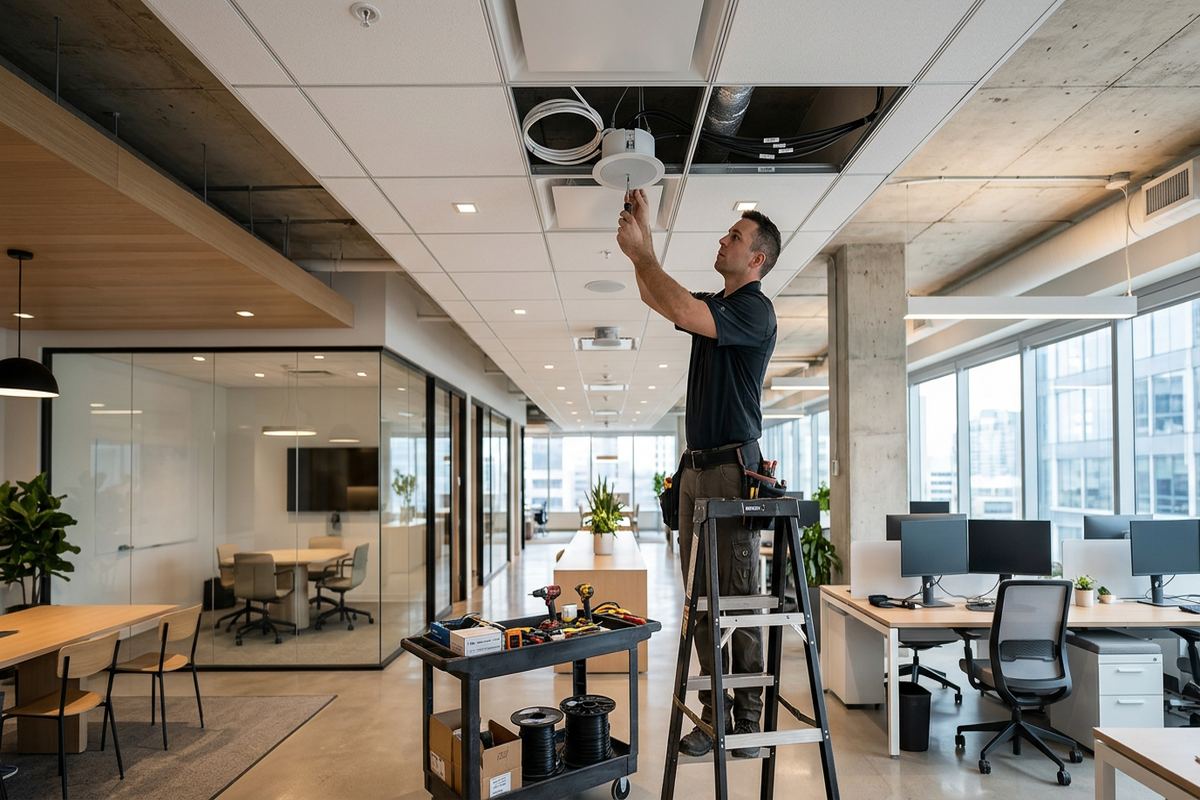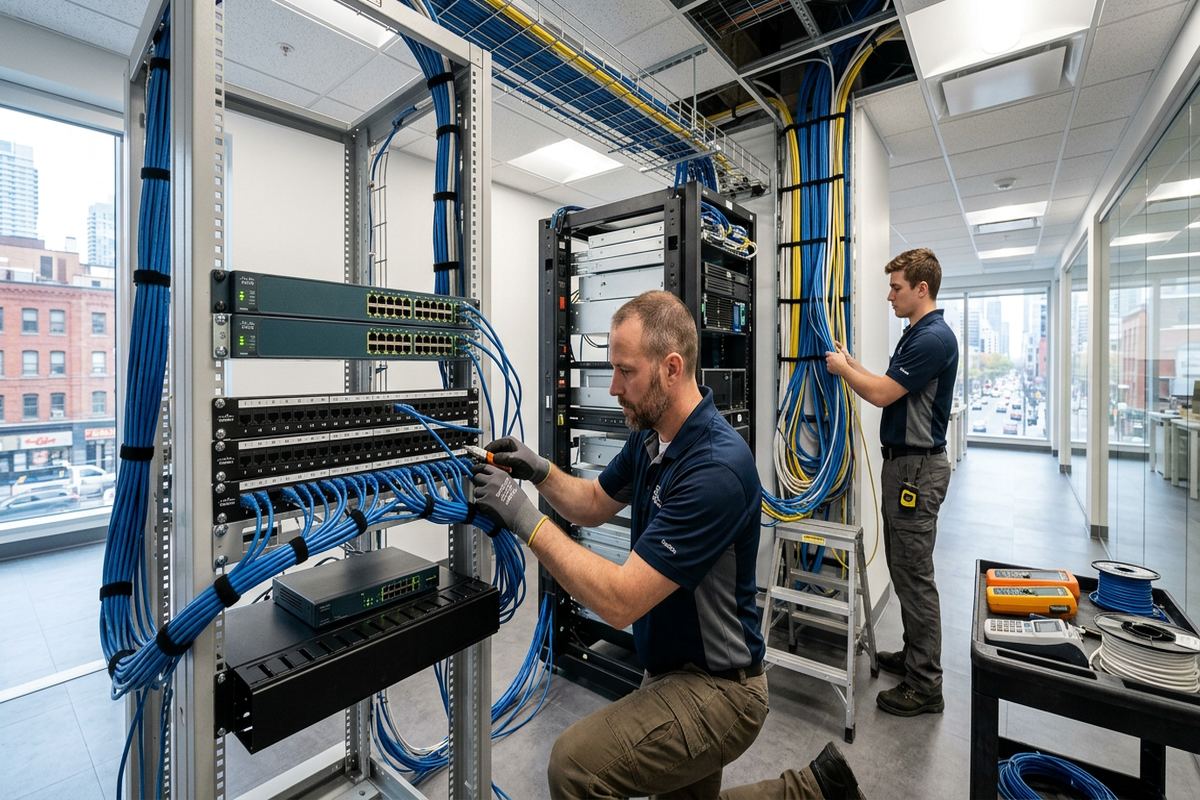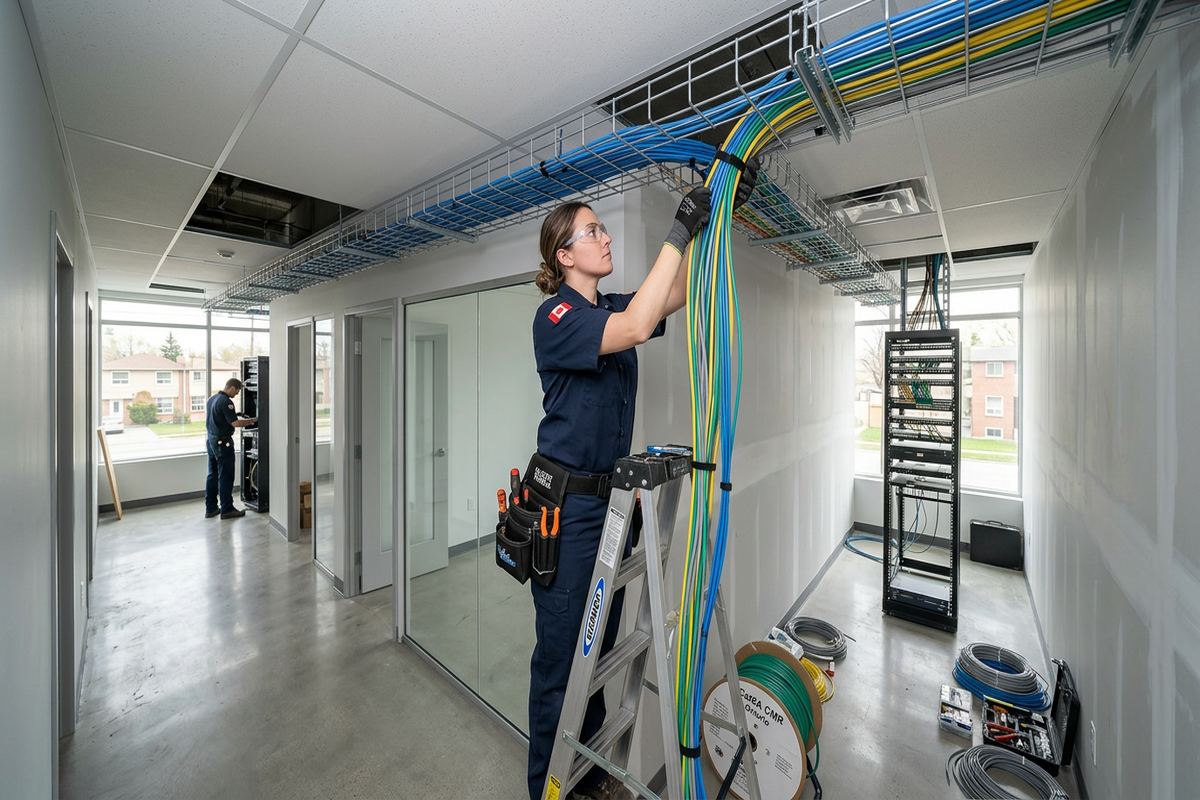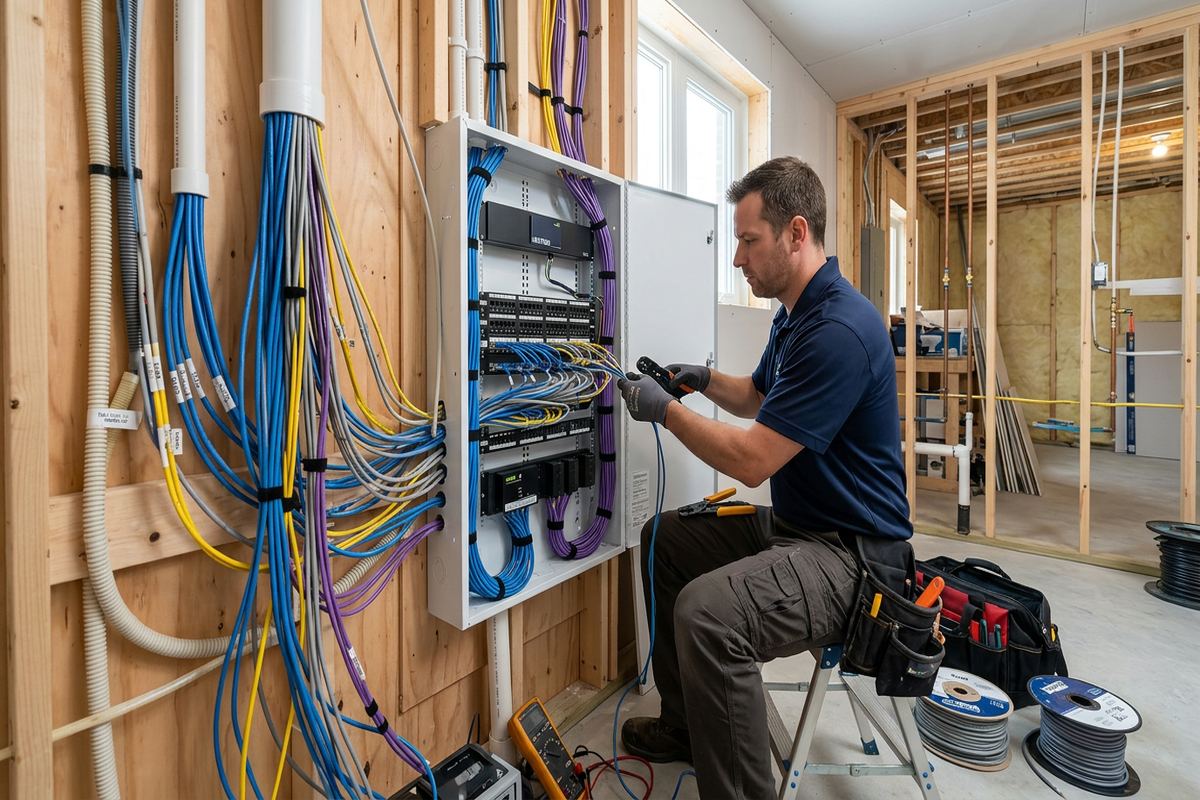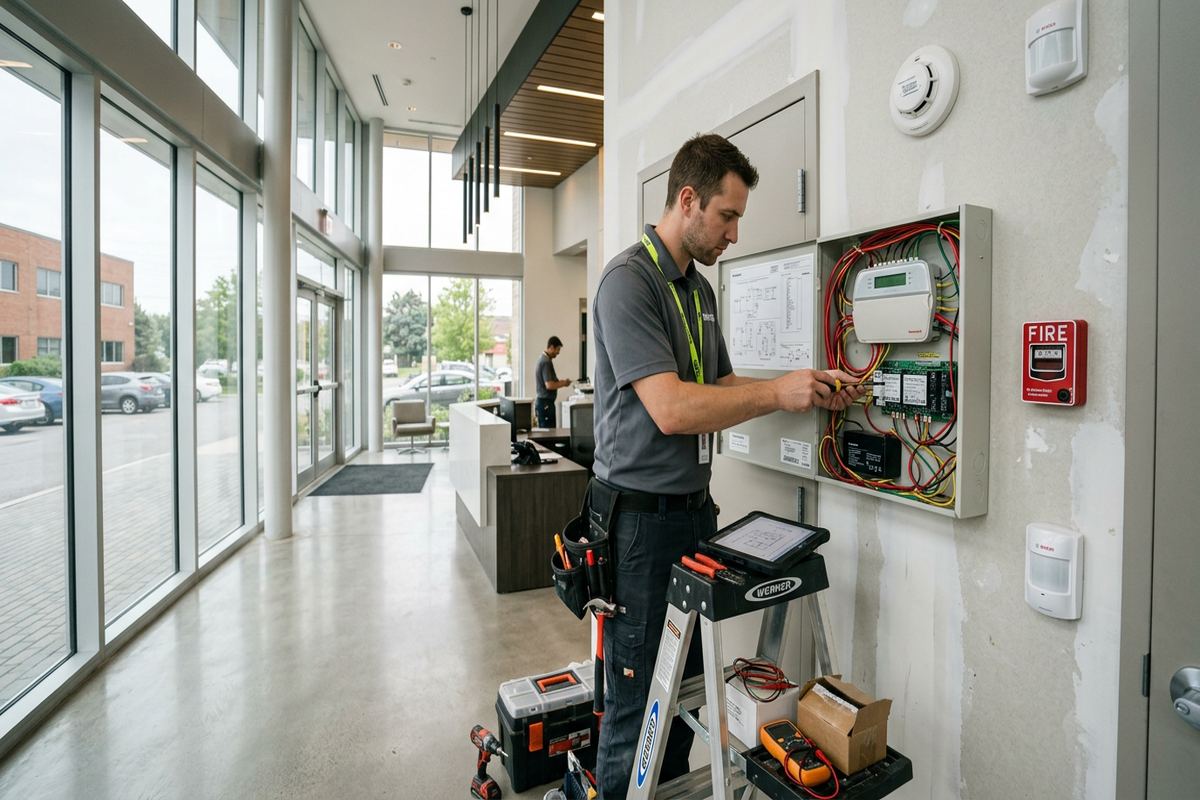
UnifiedLink installs commercial alarm systems for offices, shops, warehouses, industrial units and mixed-use properties in Cambridge. Each project starts with a site assessment to identify entry points, operating risks and building constraints. We then provide a written scope covering equipment, cable routes, placement, exclusions, ownership and warranty before installation proceeds.
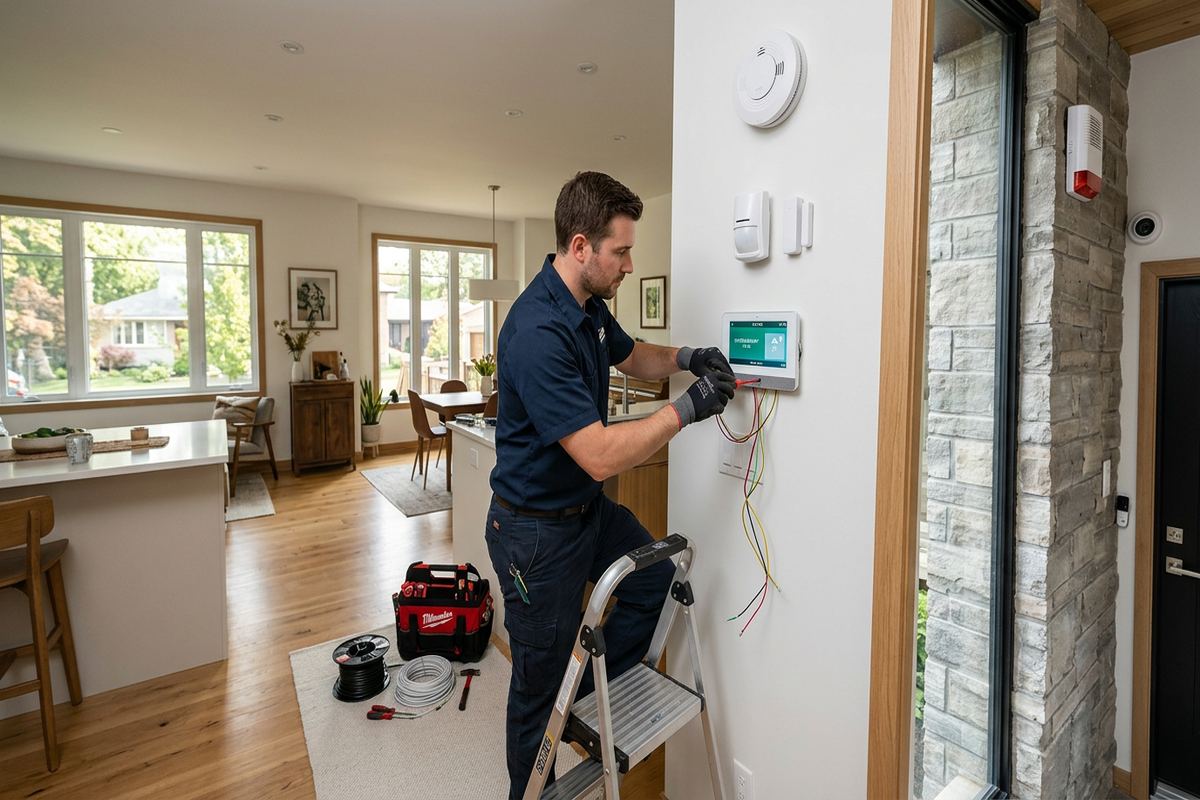
Commercial Alarm Installation for Cambridge Properties
Commercial alarm design begins with the property, not a standard equipment package. Cambridge includes stone heritage buildings, riverside neighbourhoods, modern commercial strips and industrial parks, each with different installation constraints. During the assessment, UnifiedLink reviews doors, windows, loading areas, interior circulation and likely after-hours activity. We also examine wall construction, ceiling access, available pathways and the location of electrical and communications rooms. This information supports practical device placement while avoiding unnecessary drilling, exposed cable and sensors positioned where normal operations could cause repeated alarms.
A retail unit in Galt does not require the same approach as a warehouse or fabrication space in a Cambridge industrial park. Storefront glazing, public entrances and shared service corridors shape one design, while loading doors, tall ceilings and separated work areas shape another. Alarm contacts, motion detectors, keypads, sirens and communications equipment must be selected and located for the actual environment. The written scope identifies what will be protected, how users will operate the system and which conditions remain outside the proposed work.
Installation planning also considers the people who open, close and manage the premises. A system may need separate areas for offices, stockrooms, workshops or leased sections so authorized users can control only the spaces assigned to them. UnifiedLink confirms operating requirements before programming begins and configures the equipment on site. At handover, the customer receives access using their own credentials, along with an as-built record identifying installed devices and cable routes. This makes future service, changes and troubleshooting more straightforward.
- Door, window and loading-area protection
- Motion detection planned around normal operations
- Separate alarm areas where operations require them
- On-site programming and user setup
Cambridge Site Assessment and Written Scope
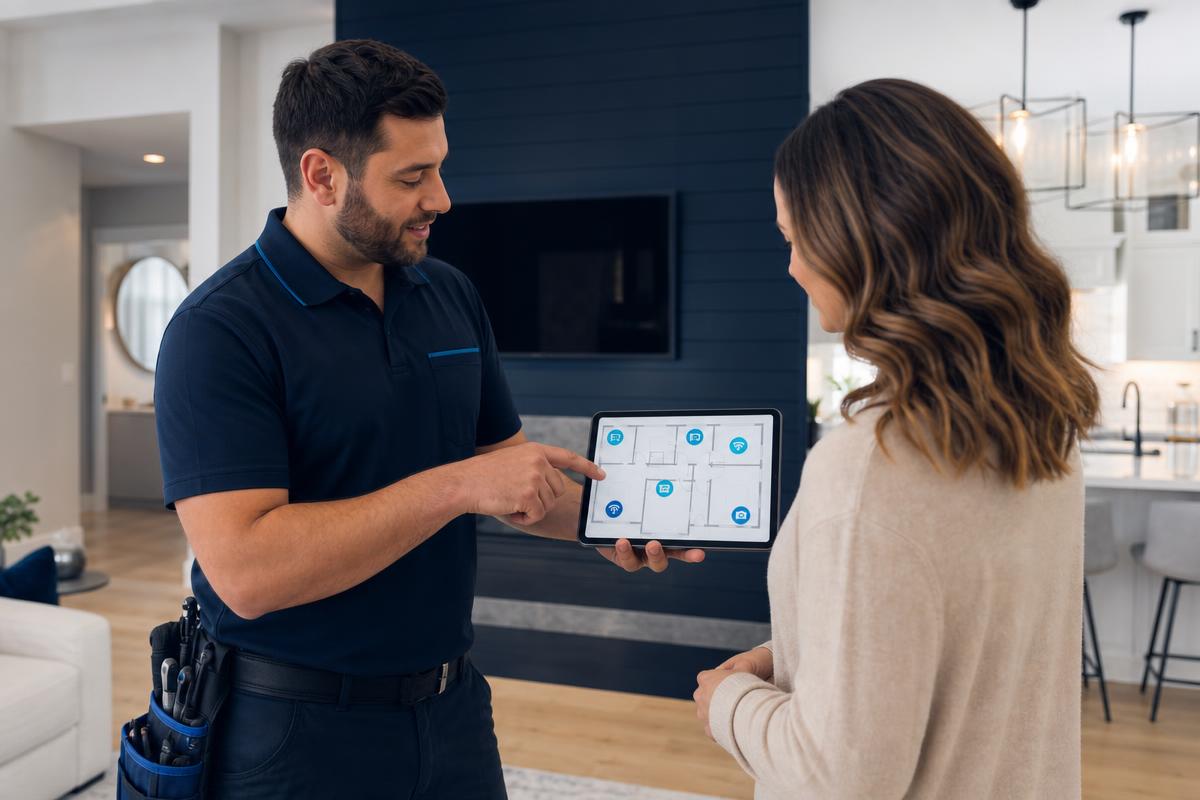
Before pricing, UnifiedLink conducts a site assessment appropriate to the service and travel distance. The visit is used to verify construction details that cannot be confirmed from drawings or photographs alone. In Cambridge, that may include thick stone walls, later renovations, inaccessible ceilings or shared entrances in converted buildings. We identify practical cable routes, mounting surfaces, device positions and panel locations. Existing alarm equipment is also reviewed where present, but continued use depends on its condition, compatibility, ownership and suitability for the proposed system rather than appearance alone.
A written scope follows the assessment so the customer can review the proposed work before committing. It lists equipment, cable routes, device placement and known exclusions. It also states who owns the installed equipment and describes the applicable warranty. These details matter when commercial premises are leased, when a landlord controls common areas or when another provider previously supplied equipment under a separate arrangement. Clear documentation helps property owners, tenants and managers understand which work is included and which approvals or preparations remain their responsibility.
Scope development is also the point where operational priorities are resolved. Management may be concerned about a rear delivery entrance, while staff need a simple opening procedure at the main door. A multi-tenant property may require controlled access to a shared hallway without combining every unit into one alarm area. By addressing these conditions before installation, the design can support daily use rather than forcing staff to work around it. If site conditions change after the assessment, the effect on routing, placement or equipment is documented before related work proceeds.
- Assessment before system pricing
- Equipment and placement documented in writing
- Cable routes and exclusions clearly identified
- Ownership and warranty terms recorded
Detection Devices and Alarm Coverage
Effective coverage uses several types of detection where the risk and building layout justify them. Door contacts identify openings at designated entrances, while motion detectors can cover interior routes after the premises are closed. Glass-related detection, panic devices or other inputs may be considered where operations call for them. More devices do not automatically create a better system; incorrect placement can increase nuisance alarms and complicate operation. UnifiedLink selects positions based on room use, sightlines, environmental conditions and the sequence an intruder would likely follow through the property.
Commercial spaces frequently change over time. Shelving is moved, partitions are added and stock may be stored higher than originally planned. These changes can obstruct motion detection or alter how employees move through protected areas. During the Cambridge assessment, we discuss foreseeable layout changes and avoid placing devices where routine activity is likely to undermine coverage. Warehouses and industrial units require particular attention because tall structures, overhead doors, equipment and temperature variations can affect device selection. Final placement is confirmed on site before permanent mounting and configuration.
Alarm annunciation and communications must also match the building and the intended response process. Interior sounders should be placed where users can recognize an alarm condition, while exterior equipment requires suitable mounting and weather protection. Communications options are reviewed in relation to available services and the customer’s operating requirements. UnifiedLink does not treat notification as a substitute for physical security or staff procedures. Instead, the system is configured as one part of a broader plan that may also involve locks, access control, cameras, lighting and documented opening or closing routines.
- Contacts for designated doors and windows
- Motion coverage based on room use
- Audible devices positioned for occupied areas
- Alarm inputs configured to operating needs
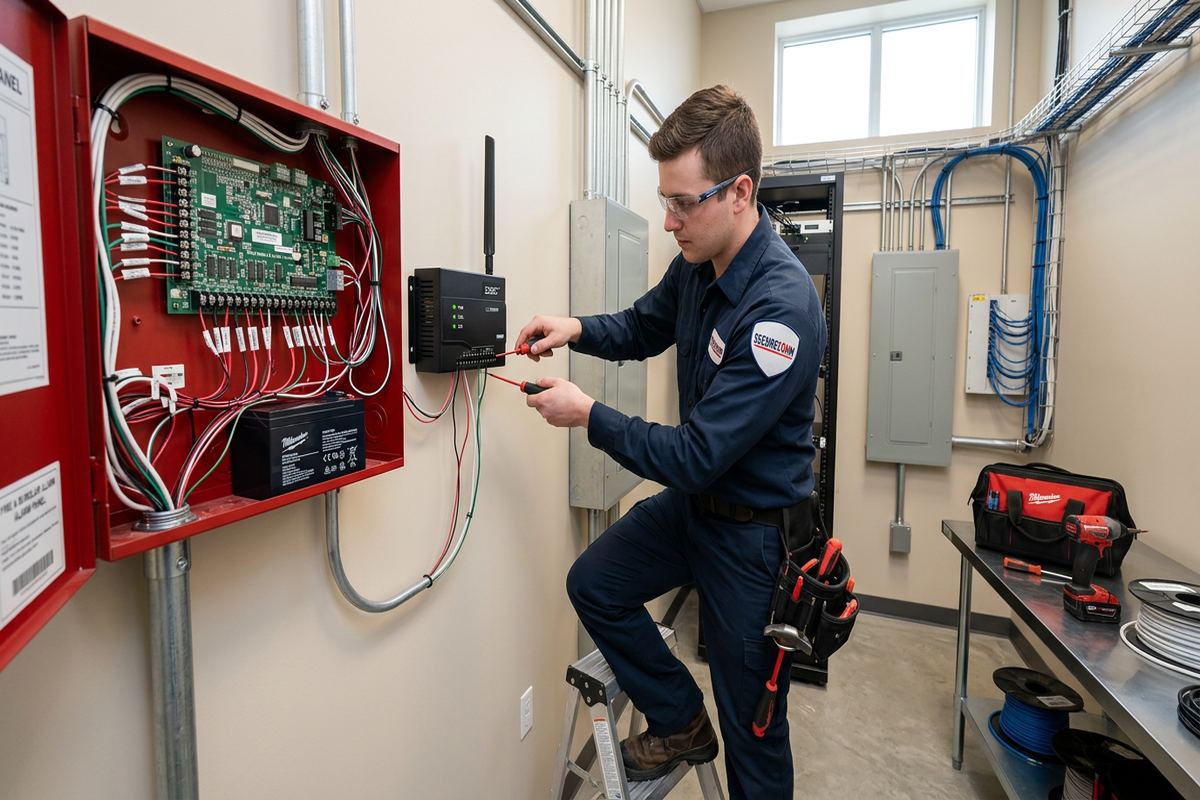
Cambridge, Ontario
Commercial alarm system installation in Cambridge, scoped in writing first
Book a site assessment and get equipment, routes, exclusions, and warranty on paper before anything is installed.
Cabling Alarm Systems in Cambridge Buildings
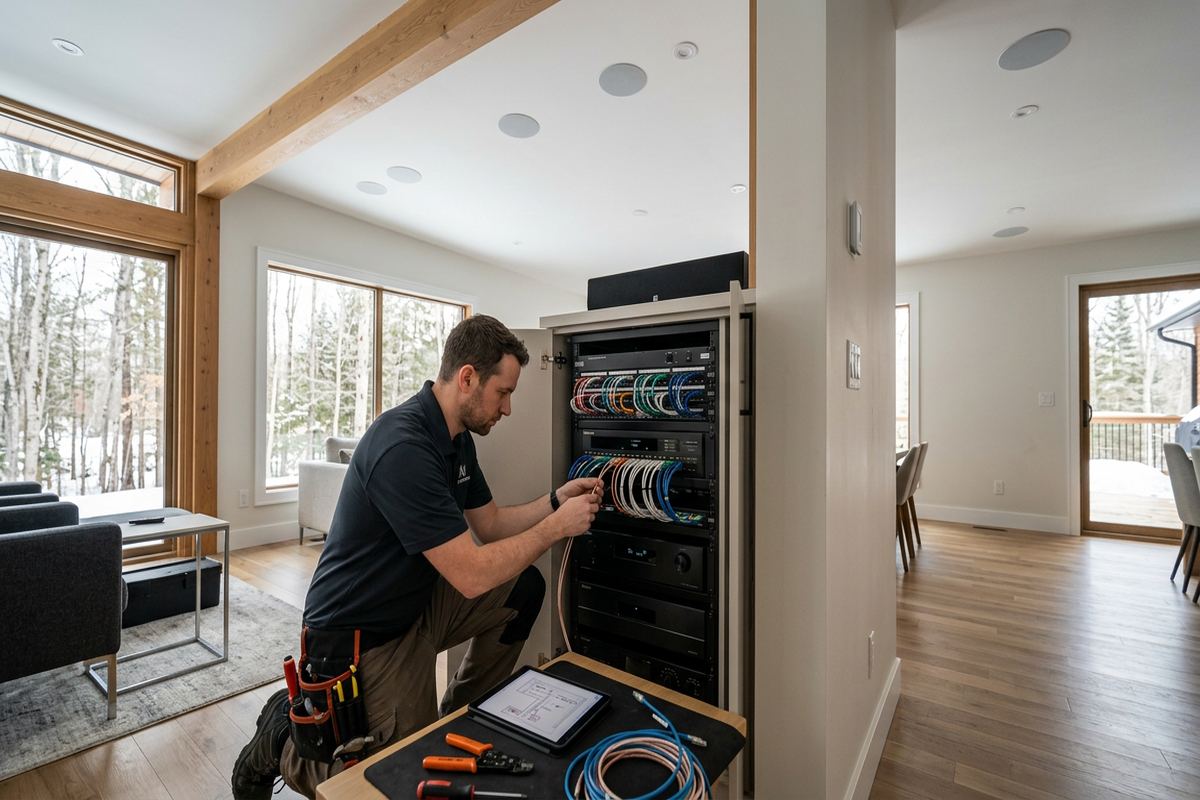
Cable routing can be the most building-specific part of a commercial alarm installation. Cambridge stone heritage buildings may have thick masonry walls, limited cavities and finished surfaces that should not be disturbed without an agreed route. Frame construction often provides more concealed pathways, but fire separations, insulation and previous renovations can still restrict access. UnifiedLink maps routes during the assessment and uses continuous labelled cable runs for hardwired devices. Labels correspond with the system documentation, allowing a future technician to identify endpoints without tracing every cable through the property.
In newer commercial strips, suspended ceilings may appear to provide simple access, yet demising walls, mechanical systems and shared spaces can interrupt the path. Industrial units can present long distances, high ceilings and active production areas that require installation sequencing with the customer. Cable must be supported and routed purposefully rather than laid across ceiling tiles or mixed carelessly with unrelated services. Where pathways pass through controlled parts of a leased property, landlord or property-management approval may be needed before drilling, coring or entering common areas.
Visible routing is sometimes the practical choice, particularly in solid masonry or finished spaces where opening walls would create disproportionate disruption. When surface pathways are proposed, their location and appearance are discussed in advance. Exterior penetrations receive equal attention because Cambridge winters and repeated freeze-thaw cycles can expose weak seals. Entry points are positioned to limit water travel, and penetrations are sealed for the mounting condition. Device bases, fasteners and cable entries must suit masonry, frame construction or metal cladding rather than relying on one universal mounting method.
- Continuous cables between planned endpoints
- Labels matched to the as-built record
- Routes adapted for masonry or frame walls
- Exterior penetrations sealed for local conditions
Alarm Systems for Galt, Preston and Hespeler
Properties in Galt can combine older masonry, street-facing storefronts and upper-level residential or office areas. Commercial alarm work in these settings requires careful separation between the protected business, shared stairs and other occupancies. Existing finishes may limit concealed cable routes, while heritage-related considerations or landlord rules can affect exterior devices and drilling. UnifiedLink identifies those constraints before finalizing the scope. The system can then be divided into practical areas, provided the selected equipment supports the required operation and authorized users have clearly defined responsibilities.
Preston and Hespeler include varied commercial properties, from smaller street-level premises to stand-alone buildings and light industrial units. Construction may reflect several renovation periods, leaving blocked wall cavities, abandoned cable or undocumented additions. Existing wires are not assumed to be reusable simply because they reach a convenient location. Their route, condition and compatibility must be assessed. Where replacement is appropriate, new continuous labelled runs provide a known foundation. Device locations are then selected around current entrances, room layouts and business operations rather than inherited positions from an older system.
Blair, West Galt and Clemens Mill introduce further differences in access, property layout and approval requirements. A business operating from a condo-style commercial unit may need consent for work affecting common walls, corridors or exterior surfaces. A landlord may also require drawings, insurance documentation or a defined restoration method before installation. Customers should confirm these conditions early because approvals can influence routes and scheduling. UnifiedLink documents known exclusions and coordinates the alarm scope around permitted work, but building authorization remains separate from technical system design and should not be assumed.
- Planning for older Galt masonry
- Renovation constraints checked in Preston
- Mixed commercial layouts addressed in Hespeler
- Landlord and condo approvals identified early
Exterior Devices and Cambridge Winter Conditions
Exterior alarm equipment is exposed to more than low temperatures. Wind-driven rain, snow accumulation, sunlight and Cambridge freeze-thaw conditions can affect fasteners, cable entries and mounting surfaces. A device suitable for a sheltered doorway may not be appropriate on an exposed loading wall. UnifiedLink reviews the environmental rating, location and mounting details before specifying exterior equipment. Whenever possible, cable entries are protected from direct runoff, penetrations are sealed for the substrate, and a drip path is considered so water is not guided toward the building interior or device housing.
Masonry requires particular care because brick, block, stone and mortar do not behave identically. Fasteners and drilling locations must suit the material, and an exterior penetration should not create an easy path for moisture. Metal-clad industrial units present different issues, including panel profiles, movement and the need to avoid poorly supported equipment. Frame walls may permit concealed entry but still require proper sealing at the exterior envelope. The written scope identifies expected routes and positions, while final mounting decisions account for conditions uncovered once access is available.
Overhead and loading doors also need an installation approach suited to their movement and commercial use. A contact should not be placed where pallets, carts, door hardware or snow clearing will repeatedly strike it. Flexible connections, where part of the design, need protection from pinching and routine traffic. Interior motion detection near large doors must account for the operating environment and normal workflow. In Cambridge industrial parks, coordination with site contacts helps installers work around shipping periods, restricted areas and active equipment without treating the premises like an empty construction site.
- Mounting suited to the exterior substrate
- Sealed cable entries and penetrations
- Locations protected from routine impacts
- Loading-door hardware planned around movement
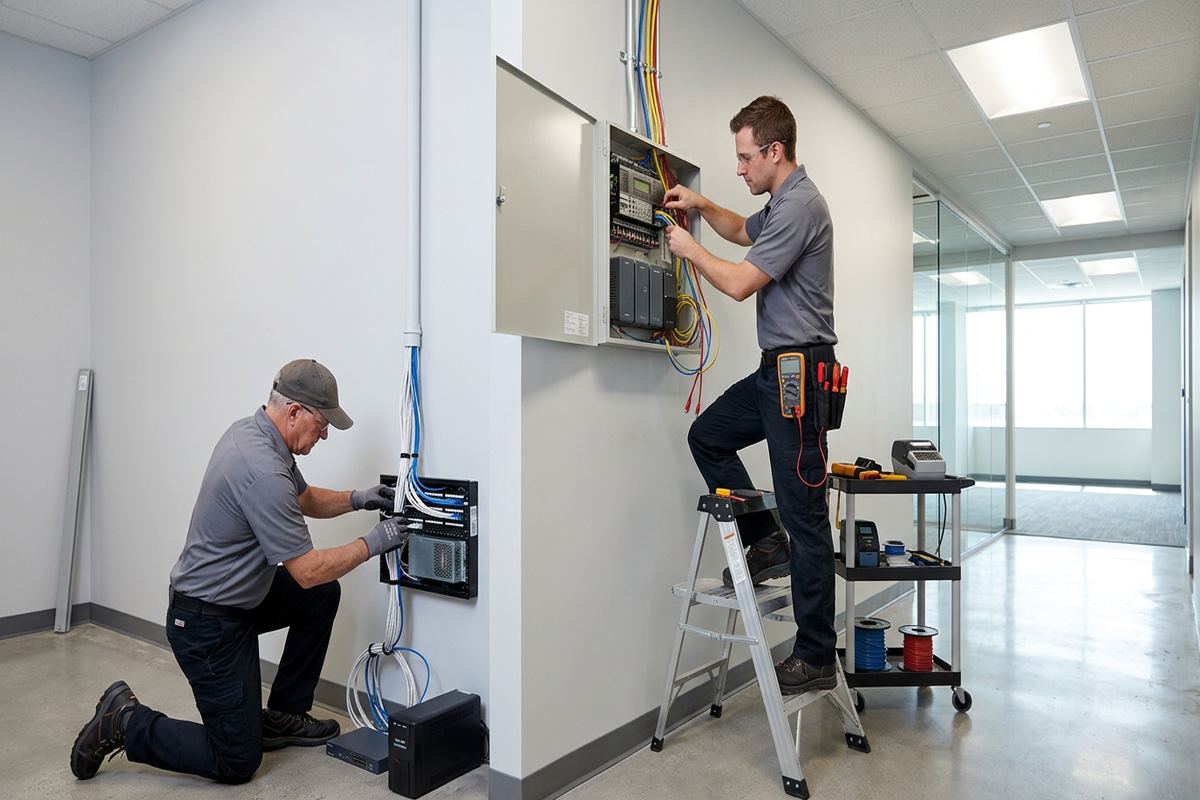
Installation, Programming and Handover
Once the scope is approved and required permissions are in place, installation proceeds according to the agreed routes and device locations. UnifiedLink acts as one accountable contractor for the alarm work, reducing gaps between cabling, device mounting and configuration. Installers verify each cable endpoint, terminate devices and label the runs. Any material site condition that prevents the planned route is raised with the customer rather than hidden behind an undocumented change. Work areas are coordinated with the site contact so occupied offices, customer-facing areas and active industrial spaces can be managed safely.
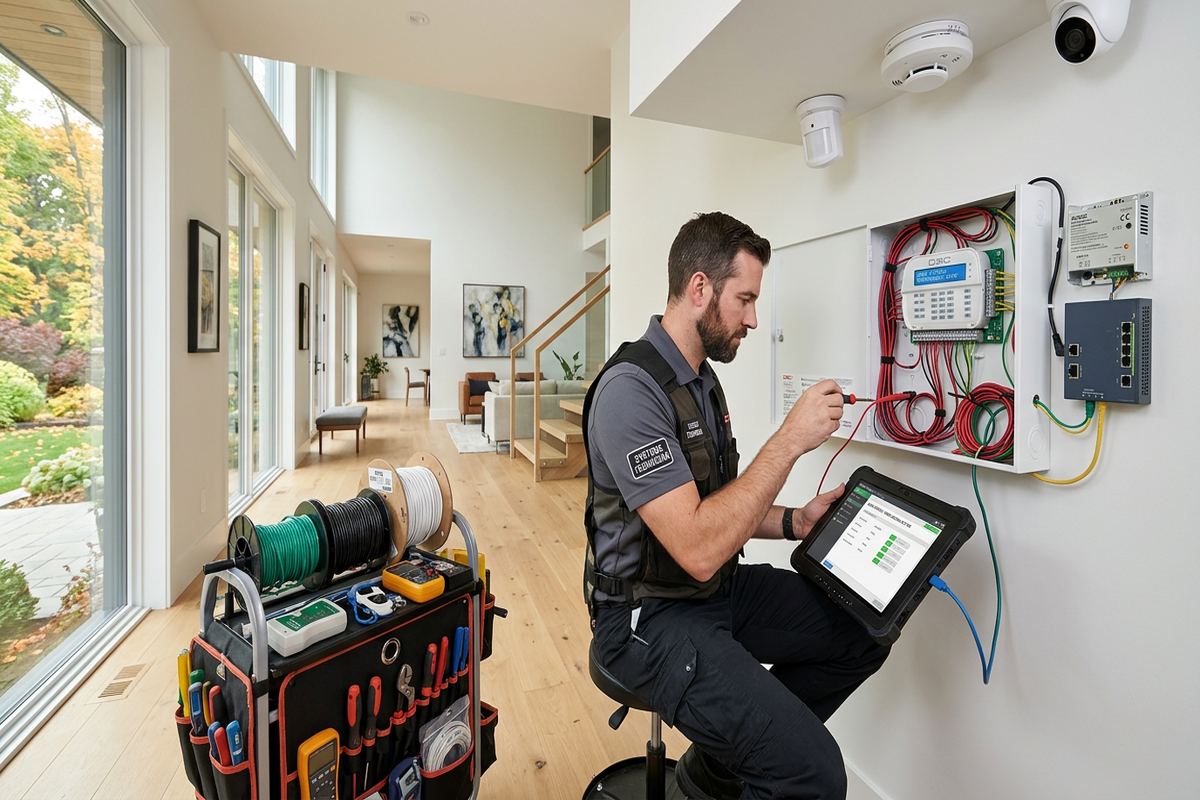
Programming turns installed hardware into an operational system. Alarm areas, entry and exit behaviour, user permissions and notification functions are configured on site according to the approved design. User names and permissions should reflect actual responsibilities rather than relying on shared codes across the business. Where the equipment supports event history or remote functions, customers are shown how those features fit their procedures. Final testing checks each included detector, contact, keypad, sounder and configured communication path to confirm that the installed system responds as intended under the documented setup.
Handover is completed using the customer’s own credentials, not an installer-controlled account that leaves ownership unclear. UnifiedLink provides an as-built record showing relevant device and cable information, along with the agreed equipment and warranty details. The customer receives an operational walkthrough covering arming, disarming, alarm recognition and basic user administration. Managers should decide who may add or remove users and how credentials will be withdrawn when roles change. Good handover supports routine operation and gives future service work a documented starting point instead of relying on memory.
- One contractor for cabling and configuration
- Every included device function-tested
- Customer controls the system credentials
- As-built information supplied at handover
Planning a Cambridge Commercial Alarm Project
A useful first discussion covers the property type, operating hours, number of entrances and the areas that require protection. Cambridge business owners should also identify whether they own or lease the premises, whether an existing system is present and whether common spaces are involved. Photographs or drawings can help with initial review, but they do not replace an assessment where construction and routing affect the design. Site assessment timing depends on the service and travel distance. Requests sent during business hours are answered the same day; after-hours requests are answered the next business day.
Before the assessment, gather any available landlord requirements, renovation drawings and information about existing alarm arrangements. Staff who regularly open or close the premises can provide valuable detail about delivery doors, cleaning schedules and areas that remain occupied later than others. If exterior equipment is being considered, note snow-clearing routes, vehicle traffic and locations exposed to roof runoff. These practical details help identify device positions that are less likely to be damaged or interfere with normal work. They also make the written scope more accurate and easier for decision-makers to review.
Commercial alarm installation should be coordinated with related construction and technology work. New partitions, door replacements, ceiling work or network changes can alter pathways and device locations. If access control, security cameras or structured cabling are also planned, routes and equipment spaces should be considered together even when the systems remain operationally separate. UnifiedLink documents the alarm portion clearly, including exclusions, ownership and warranty, so responsibilities do not become blurred. For Cambridge renovations, early coordination can prevent finished surfaces from being reopened and reduce conflicts with other contractors’ work.
- Property use reviewed before design
- Lease and approval conditions confirmed
- Related renovations considered in routing
- Written responsibilities established before work
Cambridge neighbourhoods we cover
- Galt
- Preston
- Hespeler
- Blair
- West Galt
- Clemens Mill
Commercial alarm system installation in Cambridge — common questions
Do you assess my Cambridge property before quoting?
Yes. UnifiedLink completes a site assessment before pricing the commercial alarm installation. The assessment checks entrances, room use, construction, available cable pathways and existing equipment. In Cambridge, it may also identify masonry constraints, exposed exterior mounting locations or shared areas requiring approval. The timing of the assessment depends on the service and travel distance.
Can you install alarms in older Galt buildings?
Yes, subject to the building conditions and required permissions. Older Galt properties may have thick stone or brick walls, limited ceiling access and finishes that restrict concealed cabling. UnifiedLink reviews practical routes and mounting surfaces during the assessment. The written scope records proposed pathways, device locations and exclusions so visible routing or special access requirements are understood beforehand.
Can my existing alarm wiring be reused?
Possibly, but it must first be inspected for condition, route, labelling and compatibility with the proposed equipment. Cambridge buildings that have undergone several renovations may contain abandoned or undocumented cable. UnifiedLink does not assume a wire is suitable solely because it reaches the right area. Where new wiring is required, continuous labelled cable runs are installed and documented.
Do I need landlord or condo approval?
Approval may be required when alarm work affects common corridors, exterior walls, shared ceilings or other controlled building areas. This is relevant for leased commercial units and condo-style properties across Cambridge. Customers should check their lease, condominium rules or property-management requirements before work begins. UnifiedLink can define proposed routes and mounting locations, but authorization from the owner or corporation remains separate.
How do you protect exterior alarm equipment in winter?
Exterior equipment is selected and mounted for its specific exposure. Cambridge winters, moisture and freeze-thaw cycles make sealing and substrate-appropriate fasteners important. Cable entries are positioned to reduce direct water travel and penetrations are sealed for the mounting condition. Locations are also reviewed for snow clearing, vehicle movement, roof runoff and routine impacts around loading or service doors.
What do I receive after installation?
UnifiedLink configures and tests the included alarm equipment on site, then hands the system over using the customer’s own credentials. You receive an operational walkthrough and an as-built record identifying relevant devices and cable information. The written project documentation also addresses equipment ownership and warranty. This gives Cambridge owners and managers a clear reference for user administration, future changes and service.
Coverage in Cambridge is confirmed against the address before we quote. See everything we install in Cambridge or the province-wide commercial alarm system installation page.