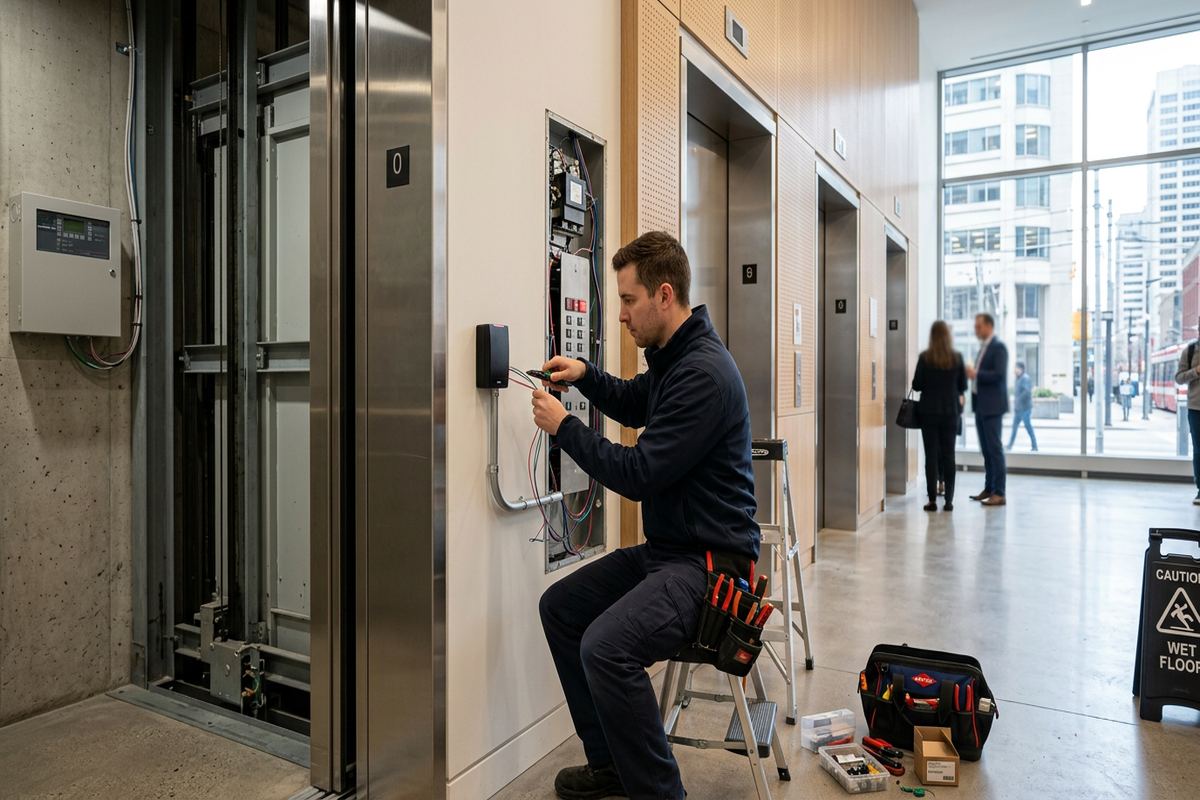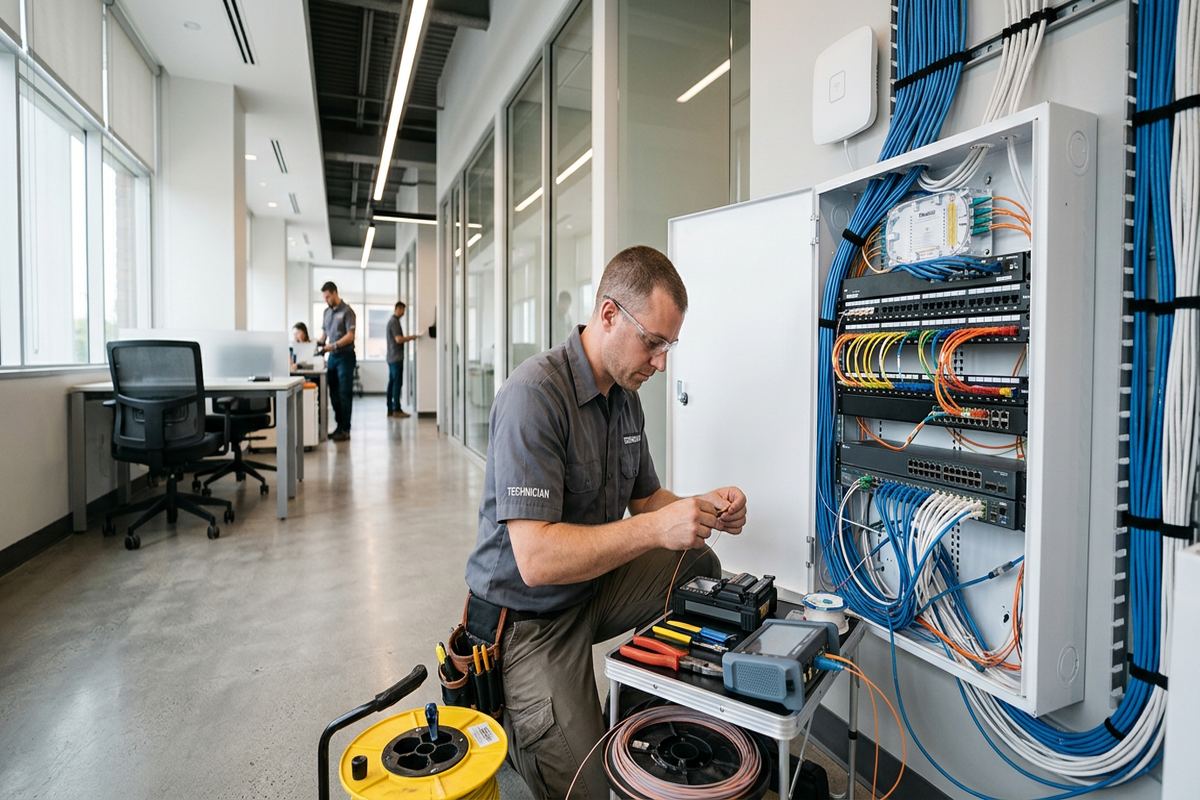
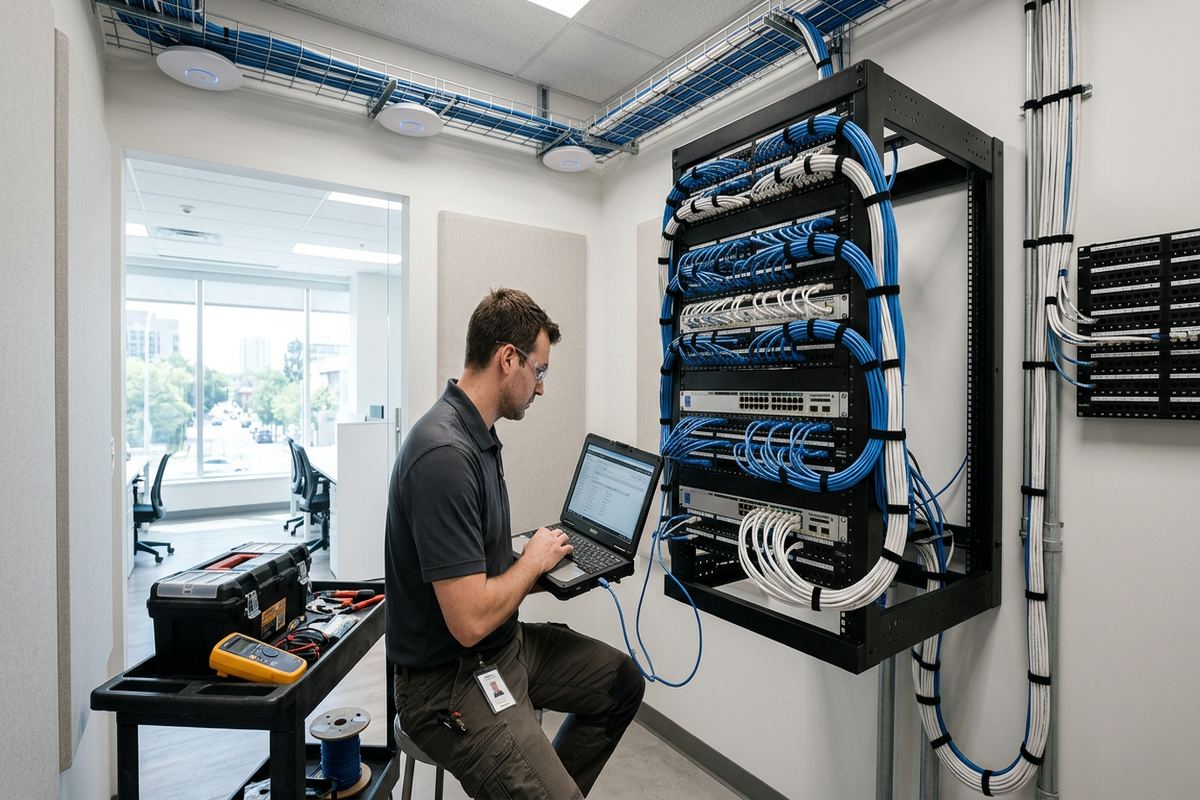
UnifiedLink plans and installs commercial networks for Cambridge offices, shops, mixed-use properties and industrial units. Work can include structured cabling, racks, switches, Wi-Fi access points and network outlets. Each project begins with a site assessment, followed by a written scope that addresses cable routes, device locations, building constraints, testing, configuration and handover documentation.
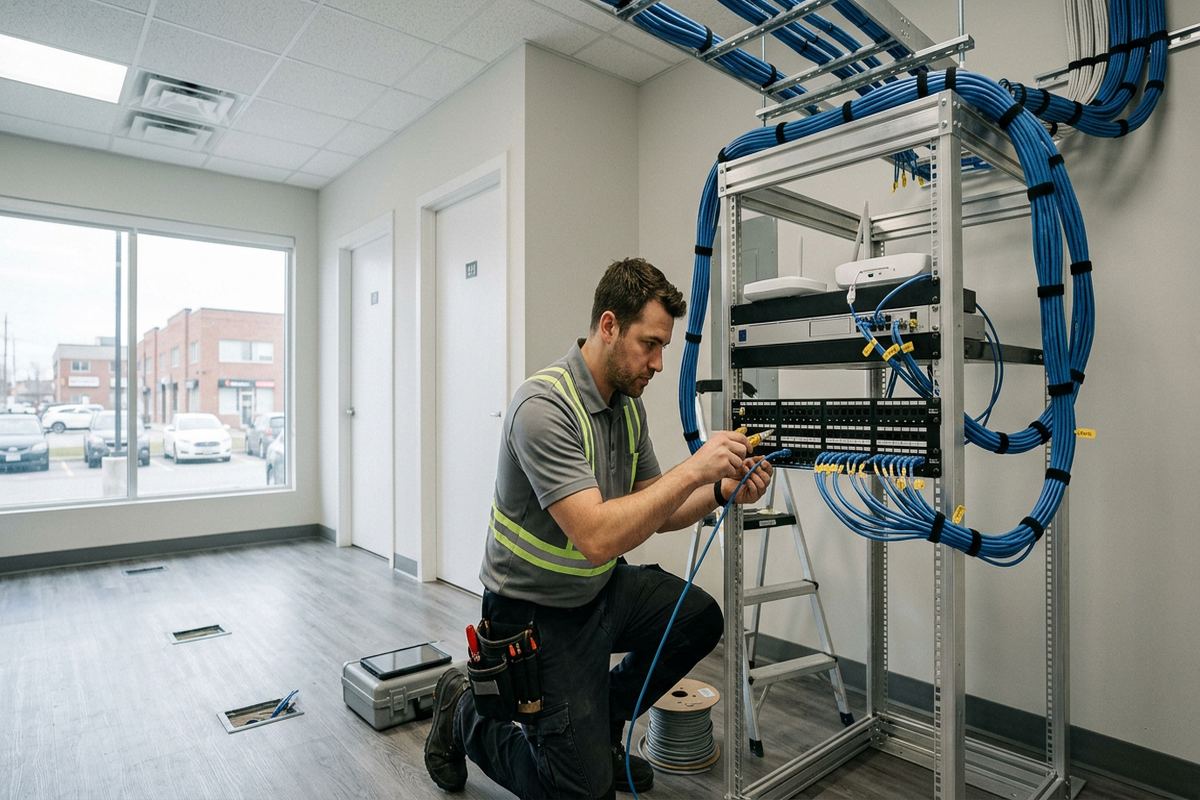
Commercial Network Installation Planning in Cambridge
Commercial network installation starts with understanding how people, devices and applications use the building. In Cambridge, that may mean an office in a converted Galt property, a retail unit in Preston, or production space in an industrial park. We assess internet entry points, floor plans, work areas, equipment rooms and likely growth before proposing cable routes. The design separates practical needs from optional upgrades, so switching, wireless coverage, outlets and rack capacity align with operations rather than a generic network package. This planning also identifies access limits and disruptive work early.
A site assessment gives us the information needed to develop an accurate written scope. We look above ceilings, inside available service spaces and around possible rack locations while noting masonry walls, fire separations, electrical equipment and areas that cannot be interrupted. Where drawings exist, we compare them with visible site conditions instead of assuming every route remains accessible. The resulting scope covers equipment, cable routes, device placement, exclusions, equipment ownership and warranty. Site assessment timing depends on the requested service, building access and travel distance.
Network requirements should be defined before cables are pulled. We review workstation counts, phones, printers, point-of-sale terminals, cameras, access control panels, building systems and wireless devices that may share the infrastructure. Bandwidth demand, Power over Ethernet requirements and separation between business, guest and operational traffic also affect equipment selection. For leased premises, the plan can identify landlord approvals, permitted penetrations and restoration responsibilities before installation begins. This reduces the chance of routing conflicts, unsuitable hardware or unapproved work delaying a Cambridge commercial project after materials have arrived.
- Internet service entry and demarcation review
- Rack, cabinet and power location planning
- Cable pathway and penetration assessment
- Device count and bandwidth review
- Landlord or condominium approval requirements
Structured Cabling for Cambridge Workplaces
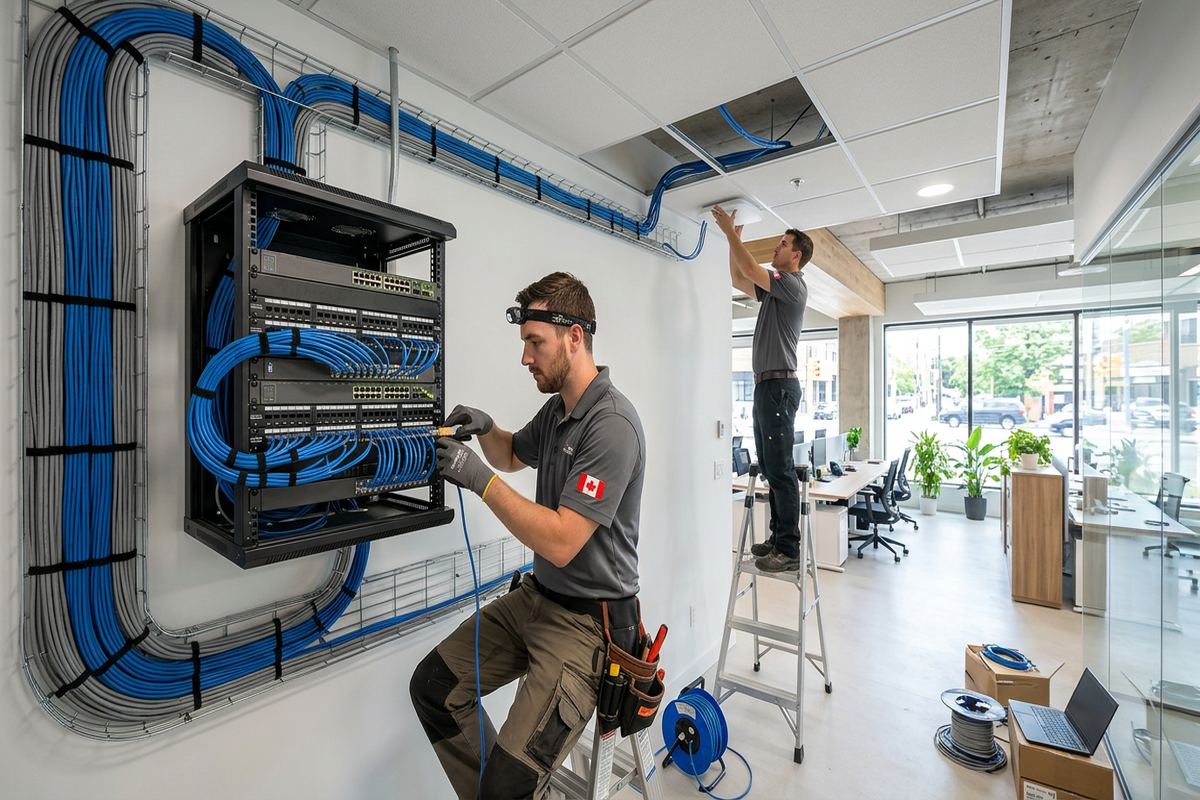
A reliable wired network depends on consistent cable installation, not only the category printed on the box. UnifiedLink installs continuous labelled cable runs from the rack or cabinet to each network outlet, wireless access point or connected device. Routes are planned to avoid unnecessary proximity to electrical conductors, motors and other interference sources. Bend limits, support spacing and termination practices are considered throughout the run. Each endpoint receives a practical identifier that corresponds with rack-side labelling, making later troubleshooting, moves and equipment changes easier for staff, service providers and future contractors.
Cambridge building construction can change how a cable route is approached. Stone heritage buildings in Galt may offer limited concealed pathways and walls that should not be cut without careful review. Frame construction can provide more routing options, although insulation, finished ceilings and hidden blocking still matter. In commercial strips, shared wall cavities and neighbouring tenancies require clear boundaries. We discuss visible conduit, surface raceway or alternate routes where concealed installation would create excessive damage. Penetrations and supports are selected for the actual substrate rather than treating masonry, drywall, concrete and steel as interchangeable.
Cabling choices should account for connected equipment and the useful service life expected from the installation. We confirm whether outlets need data only or Power over Ethernet for phones, cameras, access points or access control hardware. Patch panels, faceplates, patch cords and rack layouts are selected as parts of one system. Installed runs are tested, and results are used to identify termination or cable faults before handover. The as-built record documents outlet identifiers and relevant routes, giving the Cambridge customer a usable reference when desks move, tenants change or additional network devices are introduced.
- Copper data cabling and network outlets
- Patch panels, faceplates and patch cords
- Continuous runs without hidden cable joints
- Clear identification at both cable ends
- Testing before final handover
Racks, Switching and Network Equipment
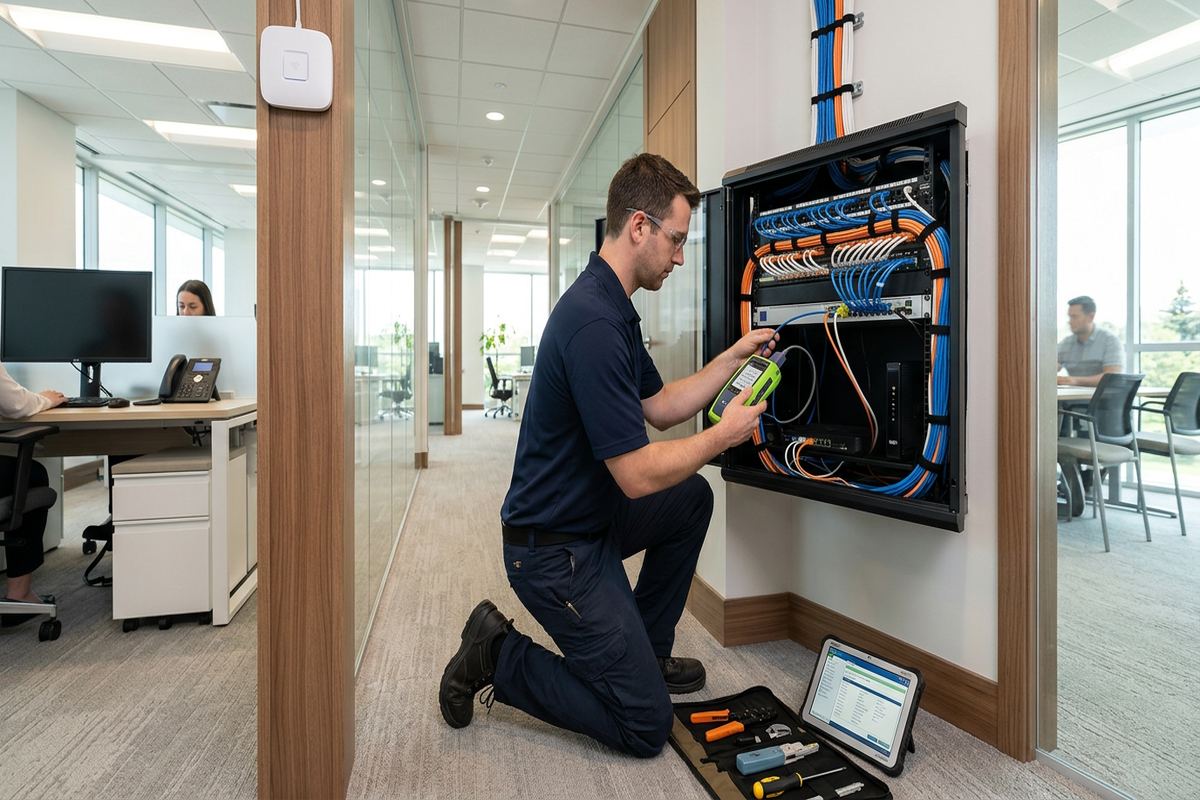
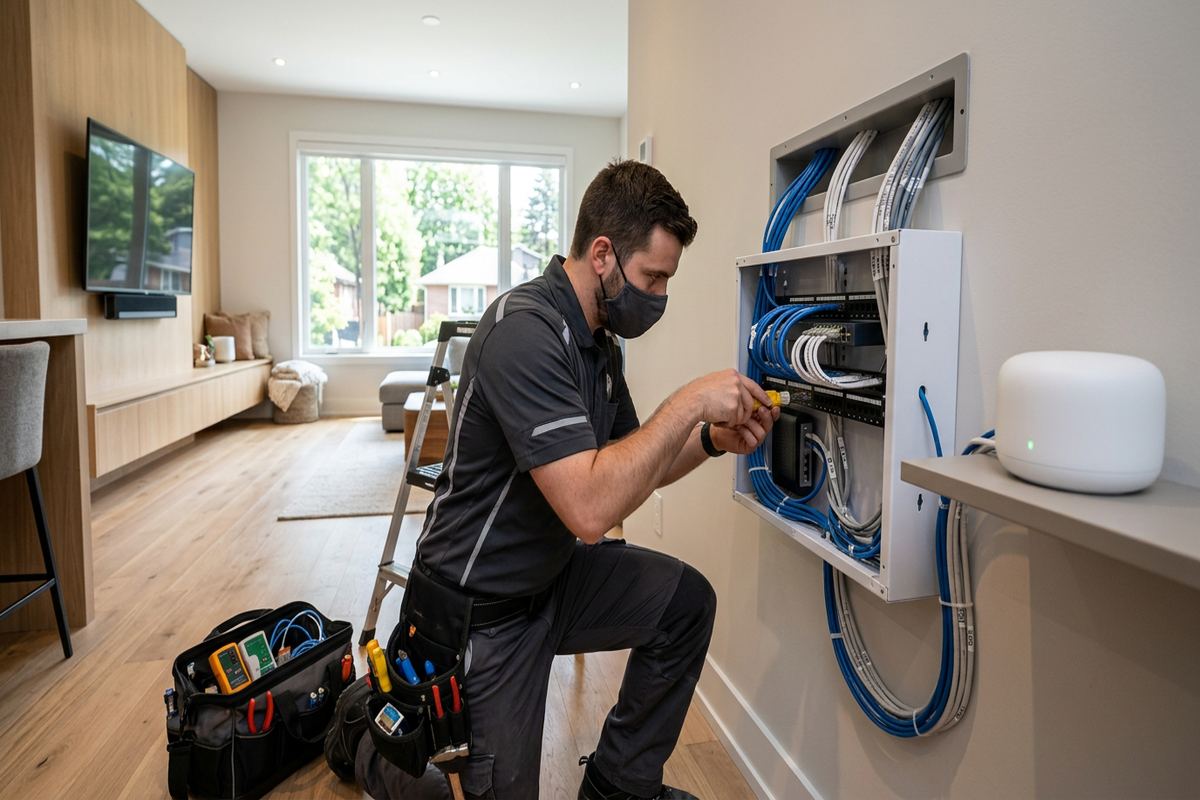
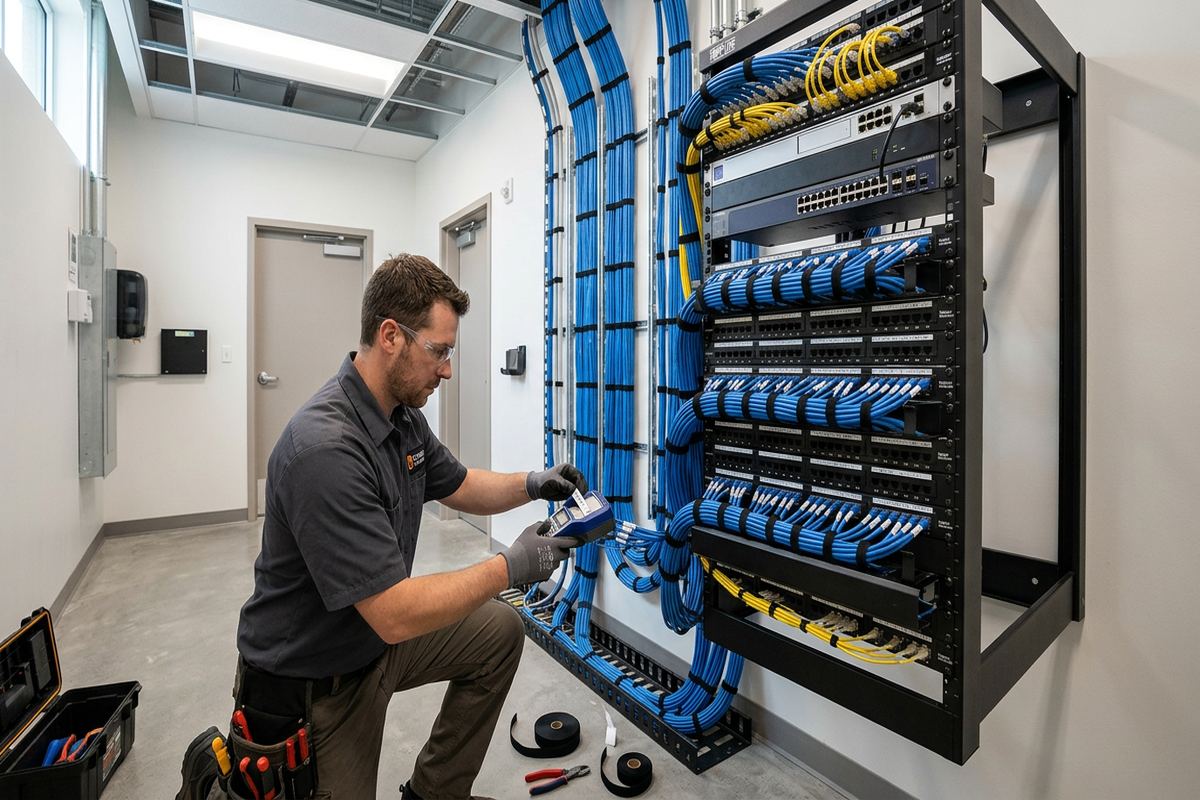
The communications rack is the working centre of a commercial network, so location and layout matter. It needs suitable wall or floor support, service clearance, power and a reasonable environment for active equipment. A cabinet placed beside heat sources, water lines or uncontrolled dust can create avoidable maintenance problems. We organize patch panels, switches, cable management and other approved equipment so ports remain accessible and labels can be read. Where an existing rack is crowded or poorly arranged, the assessment identifies what can remain, what should move and which changes require an outage.
Switch selection follows the number and type of network connections rather than relying on port count alone. Wireless access points, phones, cameras and access control components may require Power over Ethernet, with available power distributed across the switch. Uplink speeds, fibre requirements, virtual network support and spare capacity can also affect the design. Industrial units in Cambridge may need network links between offices, production areas and outbuildings, but route length and electrical conditions must be checked first. We specify equipment responsibilities clearly, including whether hardware belongs to the customer or another service provider.
On-site configuration can include switch setup, port assignment, wireless network creation and coordination with the internet provider or customer’s IT contact. Business, guest and device traffic may be separated where the approved equipment and operational requirements support it. Administrative access is handed over using the customer’s own credentials, rather than leaving the network dependent on installer-controlled accounts. Configuration details included in the agreed handover are documented alongside the physical as-built record. This gives the organization control of its system and provides a clearer starting point for future IT support or network expansion.
- Wall cabinets and floor-standing racks
- Patch panel and switch organization
- Power over Ethernet capacity planning
- Customer-owned administrative credentials
- Coordination with IT and internet providers
Cambridge, Ontario
Commercial network installation in Cambridge, scoped in writing first
Book a site assessment and get equipment, routes, exclusions, and warranty on paper before anything is installed.
Business Wi-Fi Design in Cambridge
Commercial Wi-Fi should be designed around coverage, capacity and building materials. A single access point near the internet modem may not serve meeting rooms, stock areas or multiple floors consistently. During assessment, we consider room layout, wall construction, ceiling height, device density and the locations where wireless service is operationally important. Stone, concrete, metal shelving and mechanical equipment can weaken or reflect radio signals. Cambridge properties ranging from older Galt buildings to newer Clemens Mill units therefore require placement decisions based on their interiors, not a standard access-point spacing rule.
Access points work best when connected by dedicated structured cabling and positioned for the intended service area. We plan cable routes and mounting locations together, avoiding placements hidden above unsuitable materials or directly beside major interference sources. In warehouses and industrial spaces, high ceilings, moving inventory and metal racking can change expected coverage. Offices may need more capacity in boardrooms or shared work areas, even when the physical area is smaller. Where practical, the design leaves options for additional access points if occupancy, layout or application requirements change after the initial Cambridge installation.
Wireless configuration can distinguish staff, guest and dedicated device networks according to the project scope. Security settings, network names and access credentials are established with the customer or their IT representative, while administrative ownership remains with the customer at handover. Wi-Fi does not replace every wired connection: fixed workstations, phones, displays and operational equipment often benefit from dedicated cabling. A balanced design uses wireless for mobility and wired links for stable, predictable connectivity. Testing after installation confirms that access points are operating and helps identify areas requiring adjustment before the project is closed.
- Access-point location and cabling plans
- Staff, guest and device network setup
- Coverage checks in occupied work areas
- High-ceiling and metal-racking considerations
- Customer-controlled wireless administration
Exterior and Multi-Building Network Links
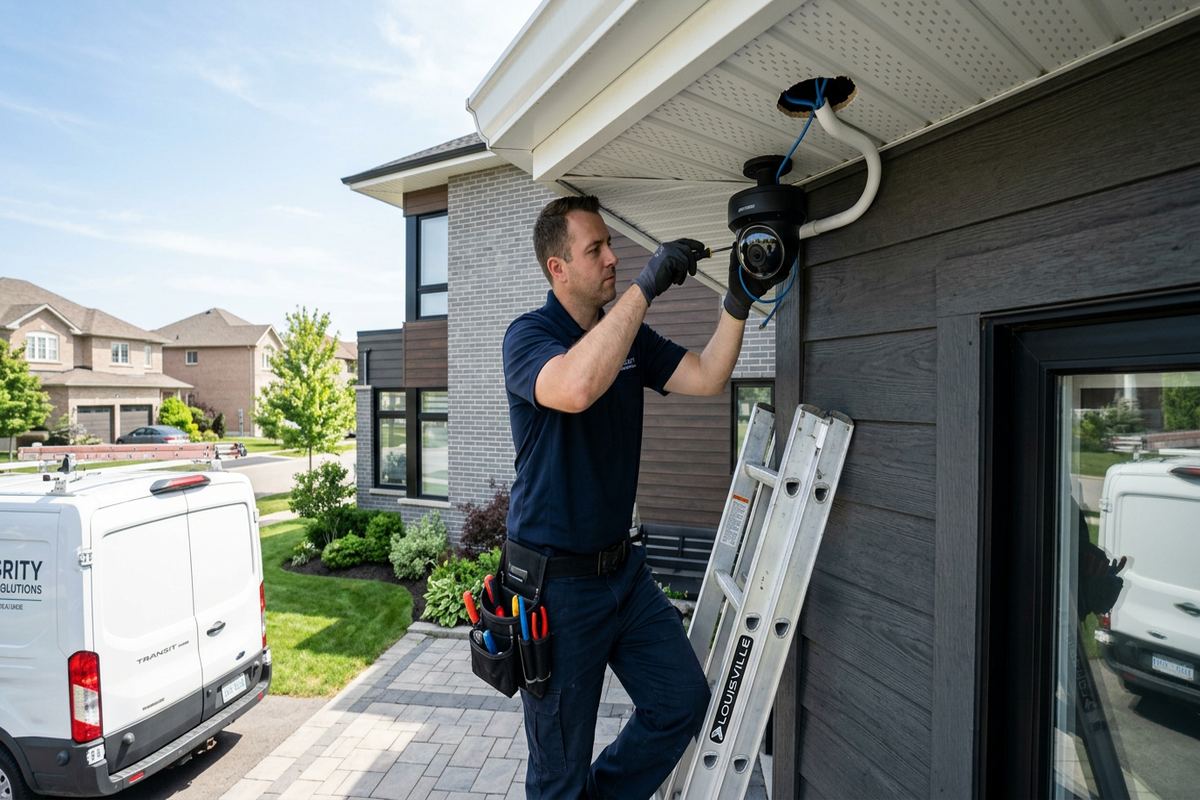
Connecting exterior devices or separate buildings requires additional attention to pathway, exposure and electrical conditions. A route used for an indoor office cable may not be appropriate outdoors, underground or between structures. We review distance, available conduit, mounting surfaces and the need for fibre or purpose-rated cable. Fibre can provide electrical separation between buildings and support longer links, but termination locations and equipment still require planning. For exterior access points, cameras or other network devices, cable entry points are positioned and sealed to limit water movement into the wall assembly or equipment space.
Cambridge winters and repeated freeze-thaw cycles can expose weak exterior mounting and sealing work. Water that enters an unprotected opening may expand, damage surrounding material or follow a cable toward the interior. We select attachment and sealing methods for the substrate and exposure, then form routes that reduce direct water travel where possible. Stone, brick, concrete, siding and metal cladding require different fastening approaches. Existing penetrations are not automatically reused; their condition, size and location must suit the planned cable, conduit or fitting without compromising the building envelope.
Riverside neighbourhoods and exposed commercial sites can also present moisture, wind and access considerations. Exterior work is planned around safe access and suitable installation conditions rather than forcing sensitive sealing tasks during unsuitable weather. Any trenching, buried conduit or work on shared property must be identified in the written scope, including responsibilities and exclusions. Landlord, condominium or property-management approval may be required before drilling exterior surfaces or crossing common areas. For multi-building Cambridge sites, we also coordinate endpoint power, equipment space and network configuration so the physical link can be commissioned properly.
- Fibre and copper pathway assessment
- Weather-appropriate exterior cable entries
- Substrate-specific fasteners and sealing
- Separate-building network connections
- Approval planning for common property
Networks for Cambridge Offices and Industrial Units
Different commercial settings place different demands on network infrastructure. Offices often need dense workstation cabling, meeting-room connections, phones, printers and dependable Wi-Fi. Retail and service units may combine point-of-sale systems, staff devices, displays and security equipment within a limited back-room cabinet. Industrial properties can add long routes, high ceilings, dust, vibration, metal structures and electrically noisy equipment. We identify these conditions during the Cambridge assessment and develop pathways, mounting methods and equipment locations that fit the operation instead of transferring an office-only design into every type of building.
In Hespeler and Preston commercial strips, network work may need to fit around customers, neighbouring units and restricted access to ceiling spaces. A landlord may control risers, roof areas, utility rooms or exterior walls, while a condominium corporation may require drawings or contractor information before approving penetrations. The scope records known approval dependencies and identifies work that another party must complete. Scheduling can be coordinated around business operations, but any shutdown, furniture movement, lift access or after-hours requirement needs to be discussed before the installation plan and responsibilities are finalized.
Industrial parks often include phased renovations, subdivided units and network equipment inherited from previous occupants. Existing jacks may be unlabelled, abandoned cables may fill pathways, and the apparent rack may not serve every area shown on a floor plan. We trace and test what is practical before deciding whether existing infrastructure can be reused. Production systems or managed equipment may also fall under a separate vendor’s responsibility. One accountable contractor can manage the approved low-voltage installation while coordinating boundaries with internet providers, IT teams, electricians, security vendors and building management.
- Office and meeting-room connectivity
- Retail and point-of-sale network outlets
- Warehouse access-point and device cabling
- Existing cable tracing where practical
- Coordination across project vendors
Installation, Testing and Cambridge Site Protection
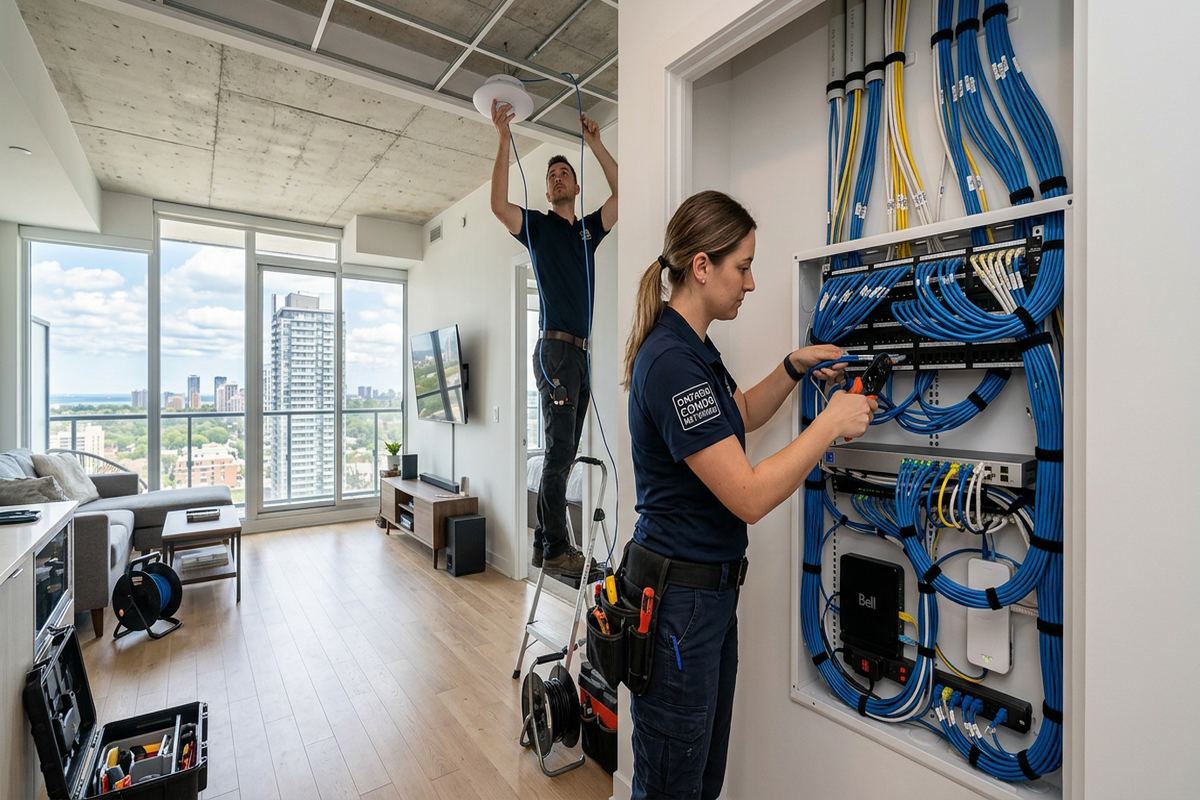
Installation planning includes how technicians will move through the property and protect occupied areas. Before work begins, cable routes and device positions are confirmed against the approved scope. Access above desks, stock, machinery or finished surfaces may require the customer to clear specific areas or arrange operational shutdowns. Dust-producing drilling is managed according to the surface and site conditions, and visible pathways are kept orderly. In older West Galt or Blair properties, finished woodwork, stone and plaster may justify alternate routes rather than invasive attempts to conceal every section of cable.
Each run is installed continuously between its designated termination points and labelled at both ends. Cables are supported independently where required rather than laid across ceiling systems or attached casually to unrelated services. At the rack, cable management preserves access to patch panels and switches. At the device end, outlets and mounting positions are checked for usability before final termination. Testing is completed after installation so open pairs, wiring errors or other faults can be corrected. Fibre links, where included, receive the appropriate termination and verification defined for the project.
Site conditions sometimes reveal concealed obstructions that could not be confirmed during assessment. A blocked wall cavity, undocumented fire separation or inaccessible ceiling can require a route change. We explain the issue and agree on the revised approach before proceeding outside the written scope. Fire stopping, sleeves or specialist work are addressed according to the documented responsibilities and applicable site requirements. This change control is particularly important in Cambridge heritage properties and renovated commercial units, where multiple construction periods may sit behind one finished wall and available drawings may not reflect current conditions.
- Confirmed routes before cable pulling
- Protection for occupied and finished areas
- Supported and labelled cable installation
- Post-installation cable testing
- Documented handling of route changes
Handover and Future Network Changes
A network project is not complete when the last outlet is terminated. At handover, we review the installed equipment, outlet labels, rack layout and relevant configuration with the customer or designated IT contact. Administrative access is provided using the customer’s own credentials, supporting direct ownership and future serviceability. The as-built record identifies installed endpoints and documented cable routes to the extent included in the scope. Warranty information, exclusions and equipment ownership are also confirmed, reducing uncertainty about which party is responsible when a device, internet service or connected system later needs attention.
Clear documentation is especially useful when a Cambridge business adds staff, rearranges a floor or takes over neighbouring space. Labelled outlets can be matched to patch-panel ports without testing every cable again, while spare rack capacity and known pathways make expansion easier to evaluate. Future work still requires review because building use, code requirements and available routes can change. However, an organized starting point helps an owner, IT provider or low-voltage contractor distinguish active infrastructure from abandoned wiring and understand how the existing network was intended to operate.
UnifiedLink provides one accountable contractor for the approved network scope, including cabling, equipment mounting, on-site configuration and documented handover where specified. Requests sent during business hours are answered the same day, while after-hours requests are answered the next business day. Site assessment timing depends on the service and travel distance. After reviewing the Cambridge property, operational requirements and approval constraints, we prepare a written scope before pricing. That process gives both parties a common reference for equipment, routes, device placement, exclusions, ownership, warranty and the work required to complete the installation.
- Customer-owned network credentials
- As-built outlet and route record
- Equipment ownership documented
- Warranty and exclusions identified
- Written scope before pricing
Cambridge neighbourhoods we cover
- Galt
- Preston
- Hespeler
- Blair
- West Galt
- Clemens Mill
Commercial network installation in Cambridge — common questions
Do you assess the Cambridge property before pricing?
Yes. Commercial network installation begins with a site assessment before pricing. We review the Cambridge building, available pathways, internet entry, rack location, required outlets, wireless coverage and access constraints. Assessment timing depends on the service and travel distance. We then prepare a written scope covering equipment, cable routes, device placement, exclusions, equipment ownership and warranty.
Can you install cabling in older stone buildings?
Yes, subject to the building assessment and any required approvals. Stone heritage buildings in Cambridge can have thick masonry, limited cavities and sensitive finishes. We may recommend surface raceway, conduit or alternate pathways instead of unnecessary cutting. Exterior penetrations require substrate-appropriate fastening and sealing, particularly because winter freeze-thaw cycles can expose weak openings.
Will you work with our IT provider?
Yes. We can coordinate cabling, racks, switches, Wi-Fi and handover requirements with your internal or third-party IT provider. The written scope defines responsibilities so internet service, firewall management, switching, credentials and connected systems are not left ambiguous. Configuration included in the project is completed on site, and Cambridge customers receive their own administrative credentials at handover.
Do I need landlord or condo approval?
Approval may be required if the Cambridge premises are leased, part of a condominium, or involve common walls, risers, roofs, exterior surfaces or shared service rooms. The property owner or manager determines the approval process. We can identify proposed routes and mounting points for review, but approval should be secured before work affecting controlled or common property begins.
Can you reuse our existing network cabling?
Existing cabling may be reusable if its type, condition, route, termination and test results suit the current requirement. In Cambridge commercial units, inherited cables are often unlabelled or connected to equipment from a previous tenant. We trace and test practical candidates, then identify what can remain. Reuse is not assumed until the infrastructure has been reviewed.
What documentation do we receive?
The agreed handover includes an as-built record showing installed endpoints and relevant cable routes, along with clear outlet and patch-panel labels. We also document included equipment, ownership, warranty and exclusions. Where UnifiedLink configures network equipment, access is handed over using the Cambridge customer’s own credentials so future administration does not depend on installer-controlled accounts.
Coverage in Cambridge is confirmed against the address before we quote. See everything we install in Cambridge or the province-wide commercial network installation page.