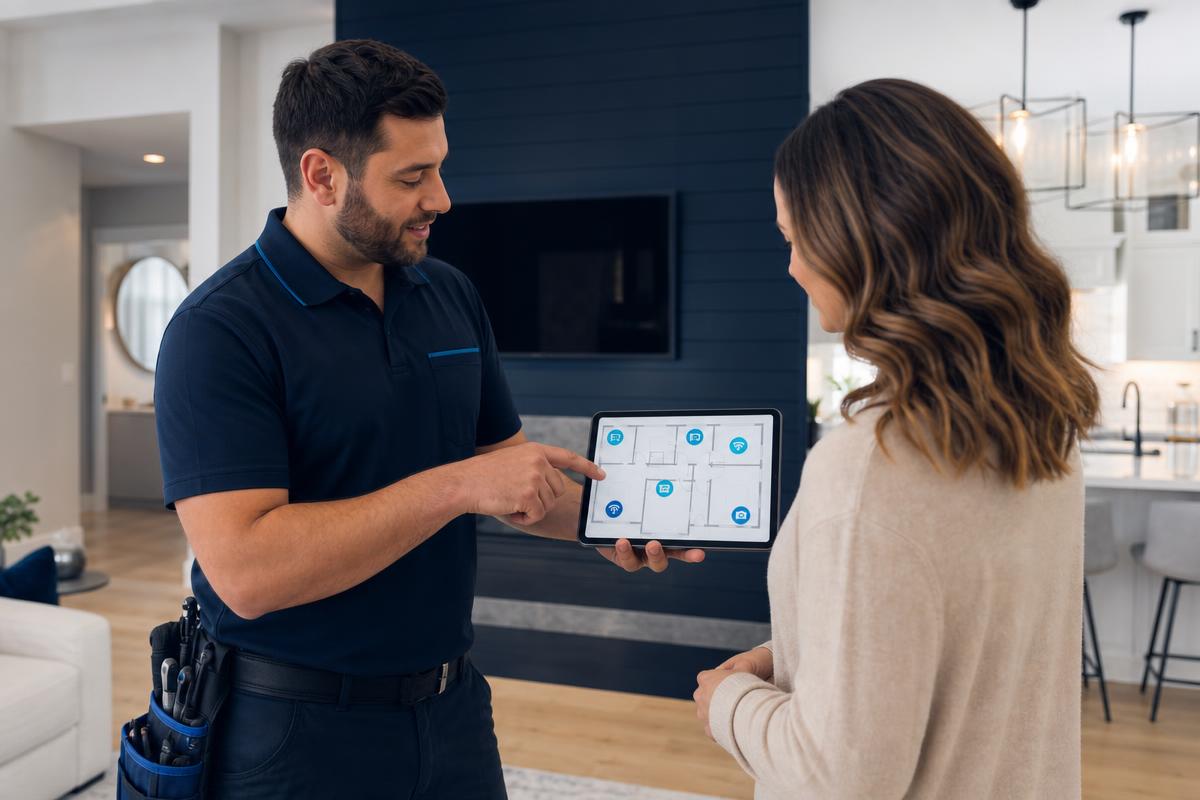
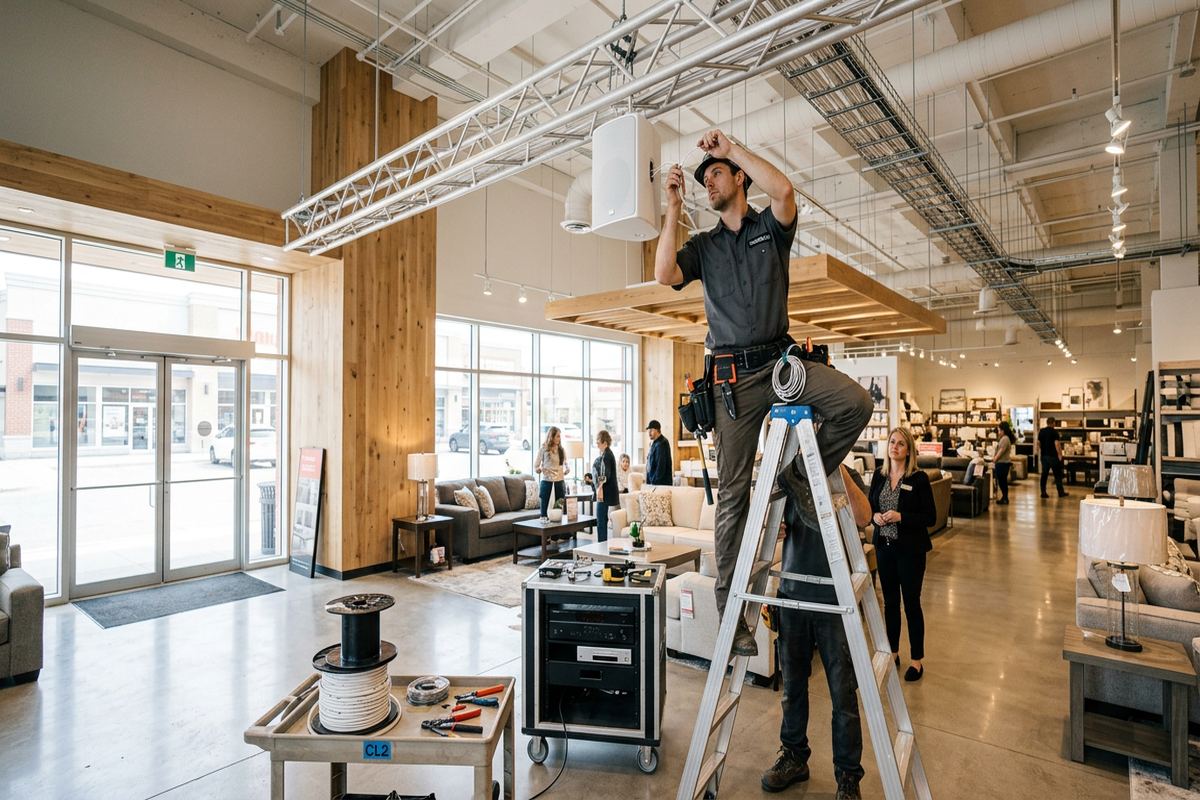
UnifiedLink installs outdoor speaker systems for homes, restaurants, offices and commercial properties in Cambridge. We assess the site, plan coverage and cable routes, mount suitable equipment, configure the system and document the completed work. Designs account for Cambridge building materials, seasonal weather, neighbouring properties and the way each outdoor area will actually be used.
Outdoor Speaker Installation for Cambridge Properties
An effective outdoor audio system starts with the listening area rather than a speaker count. During a Cambridge site assessment, we review patios, decks, pools, gardens, entrances, loading areas or customer seating, then identify where sound should be clear and where it should remain controlled. Speaker locations are planned around normal activity, likely listening distance, nearby windows and property boundaries. This approach usually produces more even coverage at practical volume levels than placing one loud speaker near the building and expecting it to serve the entire area.
Cambridge properties vary considerably between stone heritage buildings, riverside neighbourhoods and industrial parks. Each setting introduces different mounting surfaces, cable paths, electrical considerations and sound-control needs. Older masonry may require careful drilling and appropriate anchors, while frame construction can offer concealed routes through basements, attics or service spaces. Industrial units may have long runs, metal cladding or active work areas. We account for those conditions before finalizing equipment locations, reducing avoidable surface wiring, unnecessary penetrations and weak coverage zones.
The assessment also establishes how the outdoor system will connect to the rest of the property. It may operate as a dedicated patio zone, share sources with indoor rooms or form part of a multi-zone audio system. We confirm source devices, amplifier location, network dependencies and everyday controls before preparing pricing. The written scope covers equipment, cable routes, device placement, exclusions, equipment ownership and warranty, so a Cambridge homeowner, landlord or business can review what is included before installation begins.
- Patios, decks, gardens and pool areas
- Restaurant terraces and customer waiting areas
- Commercial entrances and staff break spaces
- Warehouses, yards and loading areas
- Dedicated or integrated audio zones
Speaker Placement and Coverage in Cambridge
Speaker placement determines whether music sounds balanced or becomes intrusive. Several speakers operating at moderate levels can distribute audio more evenly than a single unit driven hard from one wall. We consider mounting height, aiming angle, seating arrangements, landscaping and reflective surfaces when planning coverage. In compact Cambridge yards, this can help keep sound directed toward listeners rather than neighbouring homes. For larger properties, separate zones may allow a deck, lawn and pool area to operate together or independently without making every speaker play at the same level.
In established areas such as Galt and West Galt, lot layouts, mature trees, additions and detached garages can complicate an otherwise simple design. A rear wall may not provide a clear path to every listening position, and hard stone surfaces can create reflections that affect speech and music clarity. We may compare wall-mounted, under-eave, landscape and surface-mounted options, depending on the site. The goal is not maximum output; it is usable, consistent sound in intended areas while limiting spill toward adjacent properties and quiet parts of the lot.
Commercial coverage requires a different review. A restaurant patio may need clear background music around tables without directing excessive sound toward the street or nearby residences. An industrial property may require audio in a staff area while avoiding machinery, vehicle routes and loading operations. Cambridge commercial strips and industrial units can also involve shared walls, landlord standards or restricted mounting areas. We document intended zones and controls, then position speakers so staff can operate the system without relying on complicated adjustments throughout the day.
- Listening areas mapped before device placement
- Aiming planned to reduce sound spill
- Multiple speakers used for even coverage
- Independent zones where operations require them
- Controls located for practical daily use
Equipment for Ontario Outdoor Conditions
Outdoor equipment must be selected for exposure, not merely placed outside. We identify whether each speaker will sit under a protected soffit, on an open wall, near landscaping or in a fully exposed area. Suitable products and mounting hardware are chosen according to those conditions and the system design. Grilles, brackets, terminals and connection points all need attention because moisture can enter through small weaknesses. Indoor speakers are not substituted where weather-rated equipment is required, even when a mounting position appears partly sheltered during the initial visit.
Cambridge winters bring freezing temperatures and repeated freeze-thaw conditions that can stress exterior penetrations, brackets and poorly protected connections. Water entering a wall opening can freeze, expand and damage surrounding material, while exposed cable connections can corrode and become intermittent. We plan downward-facing or otherwise protected cable entries where practical, create drip loops when appropriate and seal penetrations using methods compatible with the exterior surface. Cable and hardware are selected for their location, including ultraviolet exposure, moisture and movement caused by seasonal temperature changes.
Equipment compatibility matters as much as weather resistance. Speaker quantity, impedance, amplifier load, cable distance and required output must work together. Landscape systems may use a different distribution method from a small pair of patio speakers, and commercial zones may need independent level control. We confirm the intended design before running cable so the amplifier is not mismatched or placed in an unsuitable area. Where equipment will rely on an app or network connection, we also review Wi-Fi availability and the customer’s preferred control devices.
- Weather-rated speakers for exposed locations
- Corrosion-conscious brackets and connection methods
- Cable selected for the installed environment
- Amplifiers matched to speaker load
- Network requirements checked before setup
Cambridge, Ontario
Outdoor speaker installation in Cambridge, scoped in writing first
Book a site assessment and get equipment, routes, exclusions, and warranty on paper before anything is installed.
Exterior Mounting on Cambridge Buildings
Mounting methods must suit the building rather than forcing every property into the same installation pattern. Cambridge stone heritage buildings can have irregular masonry, deep walls, sensitive façades and limited routes between indoor equipment and exterior speakers. We inspect the proposed area before drilling, consider mortar joints and substrate condition, and choose anchors appropriate to the mounting surface. Heritage status, ownership rules or planned restoration work may affect what is permitted, so approvals and restrictions should be settled before irreversible work begins.
Frame homes in Preston, Hespeler and Clemens Mill may offer routes through unfinished basements, garages, attics or soffits, but concealed installation is not automatic. Insulation, fire blocking, finished ceilings and later additions can prevent direct access. We identify practical cable paths during the assessment and explain where limited surface routing may be preferable to unnecessary wall openings. At every exterior transition, the route is planned to avoid obvious water traps and vulnerable edges. Speaker brackets are secured to structural material suitable for the expected load.
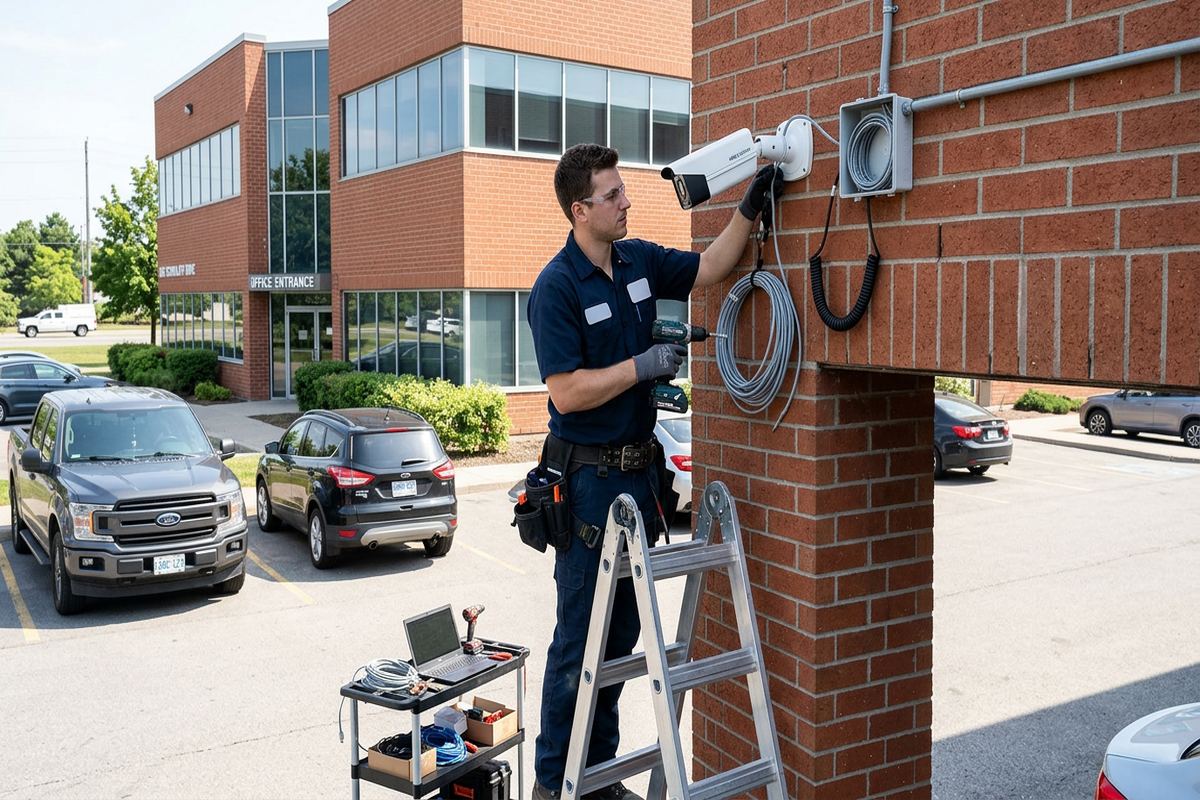
Commercial buildings present their own mounting constraints, including concrete block, brick veneer, steel cladding and precast panels. In Cambridge industrial parks, cable routes may need to avoid overhead doors, racking, process equipment, electrical services and active vehicle areas. Penetrations through rated assemblies or specialized building envelopes require suitable methods and may need coordination with other trades or property management. The written scope identifies known access assumptions and exclusions, helping the owner understand whether lifts, shutdowns, approvals or additional building work must be arranged separately.
- Anchors matched to masonry or framing
- Penetrations planned and sealed
- Routes avoid doors and active equipment
- Heritage and landlord restrictions reviewed
- Mounting heights confirmed before work
Outdoor Audio Cabling and System Connections
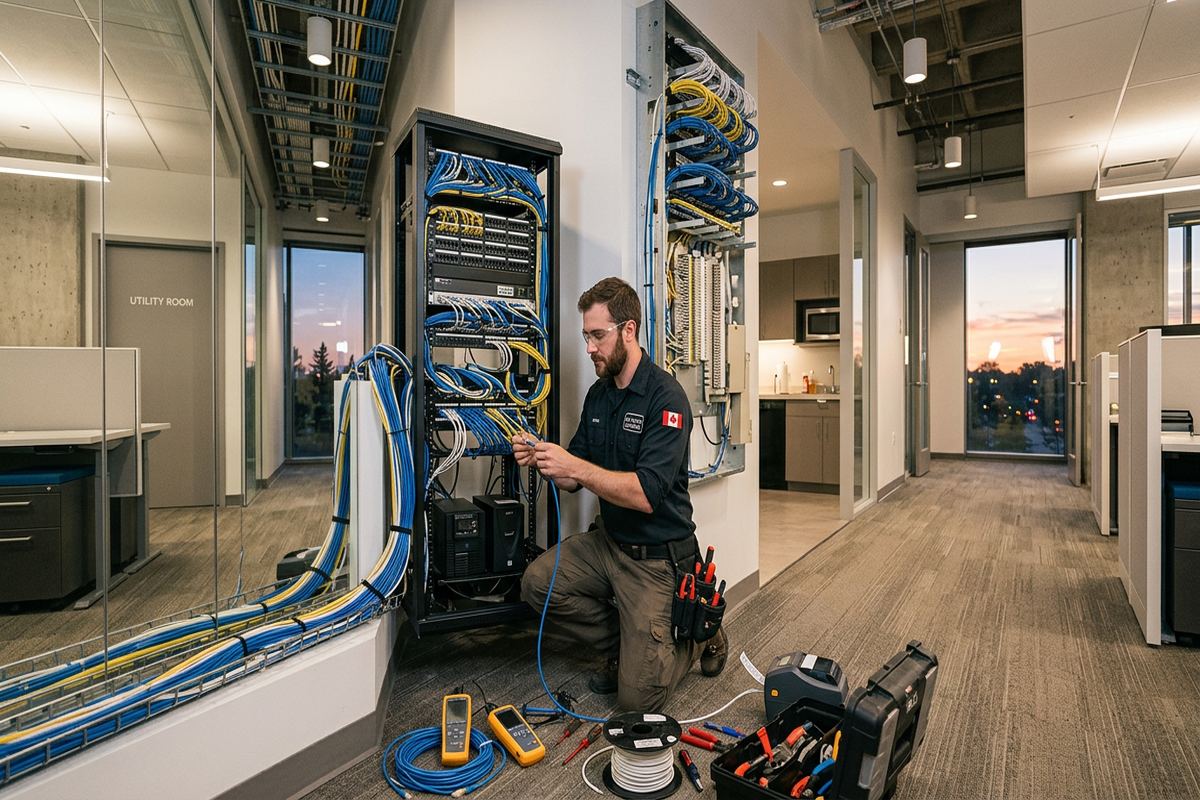
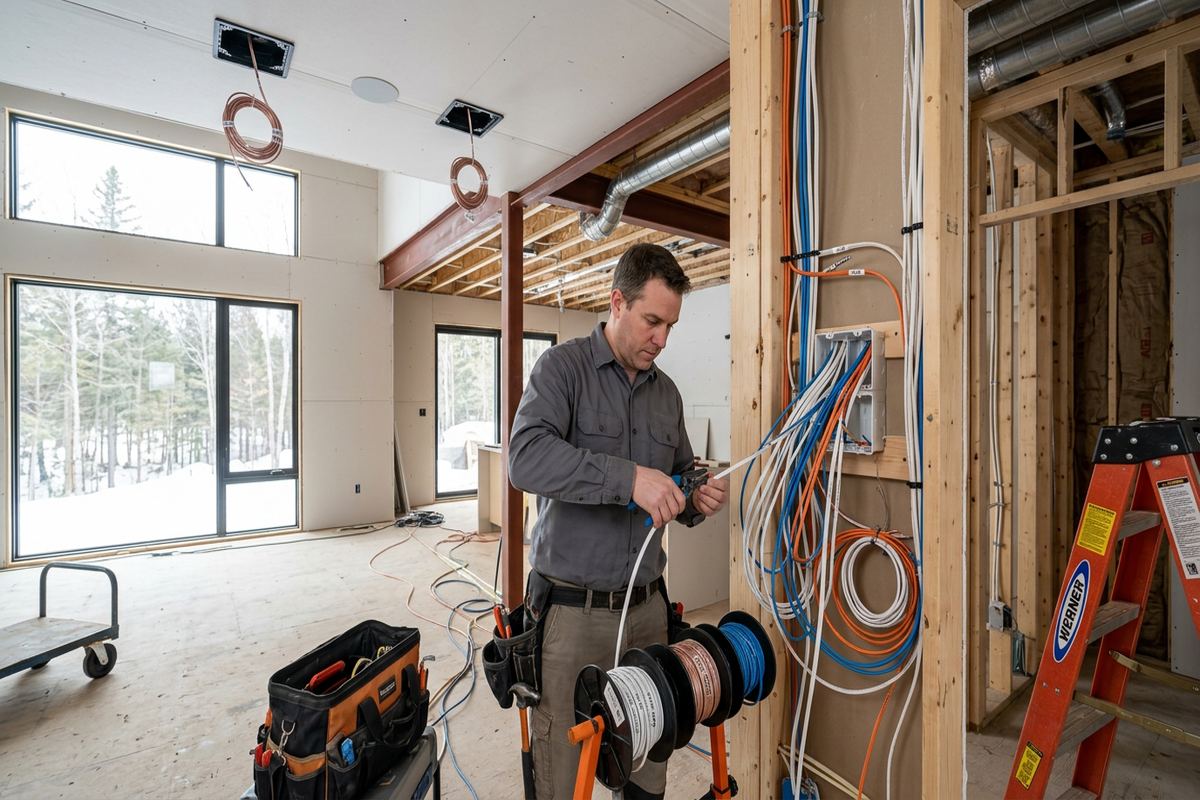
Reliable outdoor audio depends on cable work that remains understandable after walls, ceilings and landscaping are closed. UnifiedLink installs continuous labelled cable runs between the amplifier or distribution point and each speaker wherever the design allows. Labels identify destinations at accessible ends, reducing guesswork during setup and future service. Cable routes are kept separate from electrical conductors where required, supported rather than left loose, and protected from sharp edges. Any visible sections are planned to be orderly and appropriate for the exposure they will receive.
A renovation or finished Cambridge home may limit concealed pathways. Before installation, we discuss whether cable can travel through a basement ceiling, utility room, garage, attic, soffit or an exterior route. Fishing cable through unknown cavities can encounter blocking, insulation and hidden services, particularly in older or altered buildings. We do not promise invisible routing before checking access. The scope records the agreed route and identifies areas where patching, painting, trenching or restoration by another trade may be required after low-voltage work is complete.
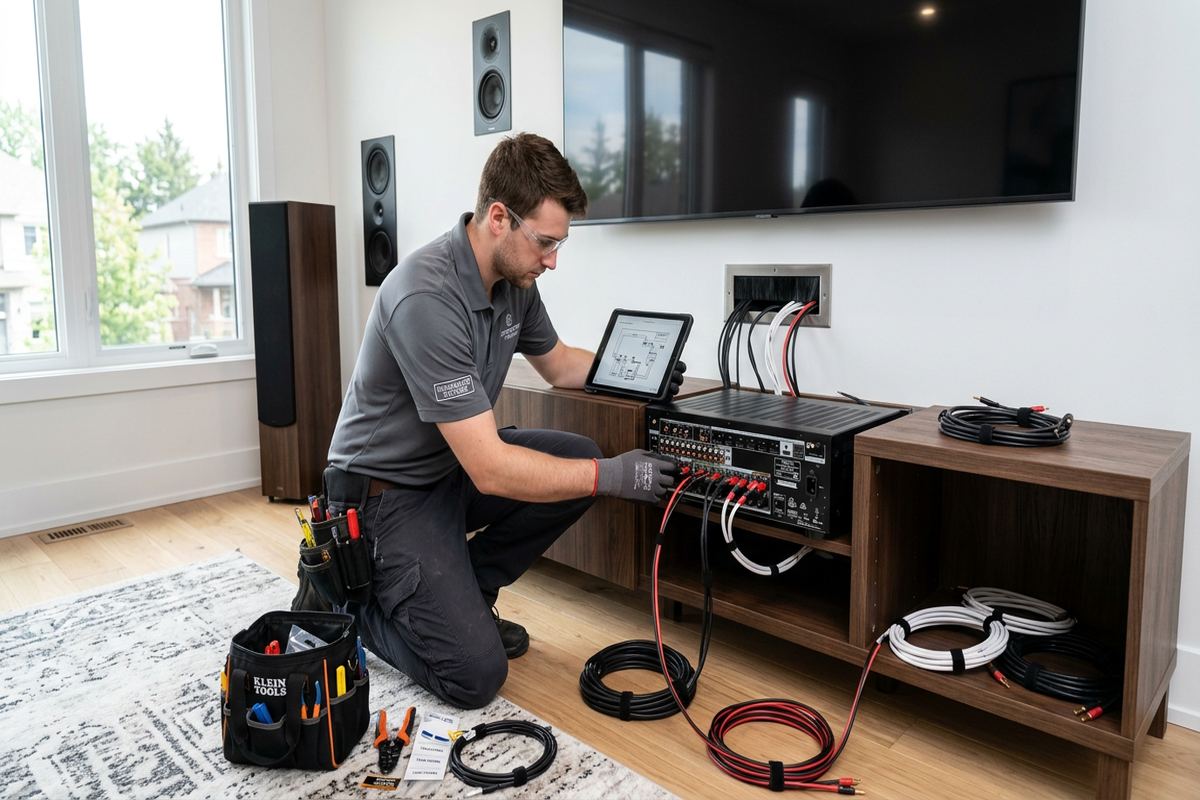
Source and amplifier connections are organized for straightforward operation. Depending on the approved design, the system may accept streaming audio, television sound, a commercial music source or an existing audio component. We verify signal connections, speaker polarity and zone assignments, then test each output under normal operating conditions. Equipment should remain ventilated, dry and accessible rather than being hidden in an exterior cabinet without suitable protection. If network-based control is used, it is configured on site with access provided through the customer’s own accounts and credentials.
- Continuous labelled speaker cable runs
- Agreed indoor and exterior cable routes
- Protected transitions at building exteriors
- Organized amplifier and source connections
- Testing for polarity and zone assignment
Cambridge Residential and Multi-Unit Projects
Home systems should be convenient enough to use without turning routine listening into a technical task. For a Cambridge deck or backyard, that may mean one outdoor zone controlled from a phone, a wall control or an existing multi-room platform. Larger properties can separate a covered patio from a garden or pool area, allowing each space to be adjusted according to occupancy. During planning, we ask who will use the system, which sources matter and whether outdoor audio should operate independently from indoor rooms.
Condos, townhomes and rental properties need approval before equipment is attached to common elements or exterior walls. A balcony railing, façade, soffit or shared wall may fall under condominium rules even when it appears to belong to the unit. Cambridge tenants should obtain written landlord permission, while condo owners should confirm board or property-management requirements. We can provide proposed device positions and cable routes for review, but the property owner or customer remains responsible for securing authorization before installation. Volume rules and permitted operating hours may also influence design.
Riverside neighbourhoods and tightly spaced residential streets deserve particular attention to sound direction. Water, masonry walls and open yards can carry or reflect sound in ways that are not obvious from the speaker location alone. Rather than aiming speakers outward across a property, we generally plan coverage back toward occupied areas where the mounting options allow. Proper zoning and closer speaker spacing can support comfortable listening at lower levels. Final volume remains the user’s responsibility, including compliance with municipal requirements, condominium rules, leases and reasonable expectations from neighbours.
- Simple controls for regular household use
- Separate deck, garden or pool zones
- Condo and landlord approvals identified
- Placement planned around neighbouring homes
- Customer-selected streaming and audio sources
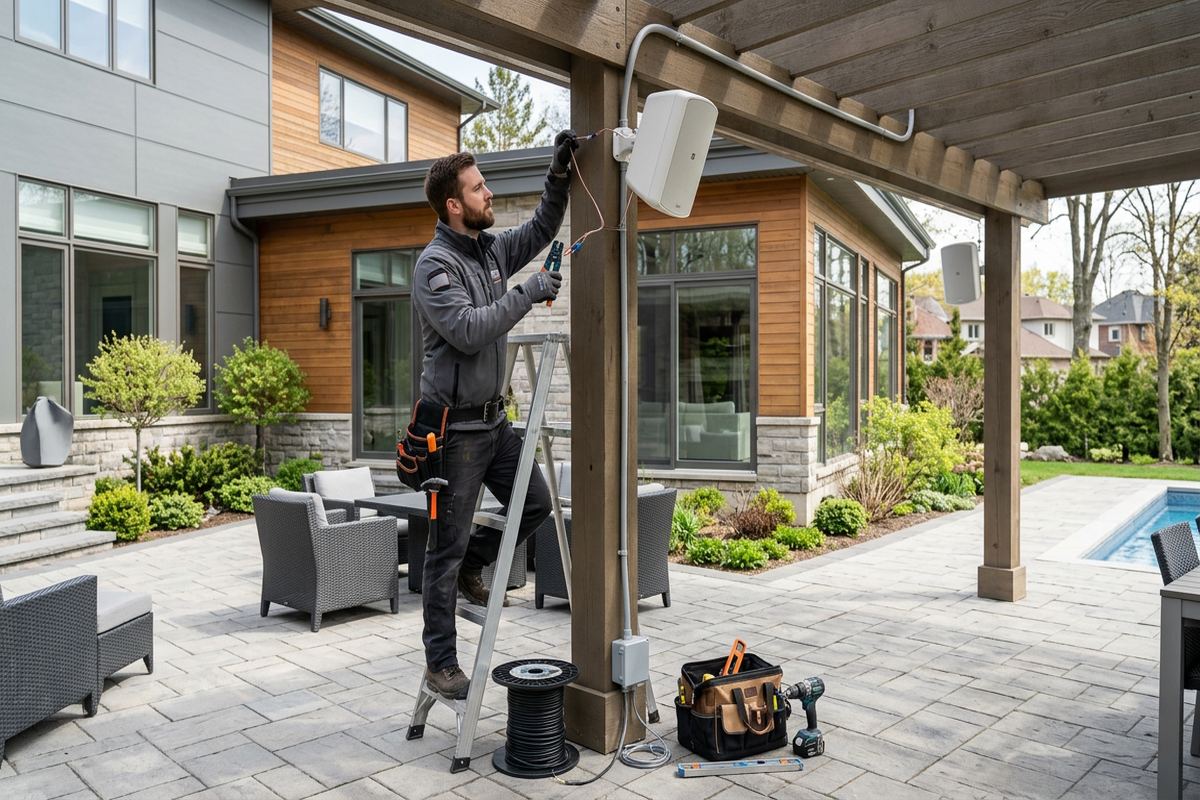
Commercial Outdoor Speakers in Cambridge
Businesses often need outdoor audio to support a defined operational purpose. Restaurants may want consistent background music across a patio, while offices may need sound in an employee courtyard. Retail properties, service businesses and industrial units can have entrances, pickup areas or staff spaces with different coverage requirements. We document the intended use before selecting equipment because background music, paging integration and occasional event audio are not interchangeable. A system designed around actual operations is easier for staff to control and less likely to create uneven sound.
Cambridge commercial installations can involve landlord approval, building-management rules and coordination around customer hours. Work above entrances, patios or loading routes may need an access plan, while shared buildings can restrict cable pathways and equipment locations. We identify these constraints during assessment and note who is responsible for approvals, access and any work by other trades. In active industrial units, mounting and cable installation are planned around machinery, stored material, overhead doors and vehicle movement. Equipment is positioned for service access without interfering with normal operations.
Control permissions also matter in a workplace. An unrestricted consumer app can create inconsistent volume or source changes, while controls placed in a public location may be adjusted accidentally. Depending on the chosen equipment, we can organize zones and configure available control features for the people responsible for the system. Staff receive a practical handover covering source selection, normal level adjustment and shutdown. The customer receives ownership through their own credentials rather than relying on an installer-controlled account, which supports future administration and equipment changes.
- Restaurant and hospitality patio coverage
- Office courtyards and staff areas
- Retail entrances and pickup spaces
- Industrial break and exterior work areas
- Operational controls assigned during setup
From Cambridge Site Assessment to Handover
Every project begins with enough information to define the work properly. We review the listening areas, construction, mounting surfaces, equipment location, available power, network access and likely cable routes. Photos and plans can help with early discussion, but an on-site assessment may be needed before pricing where building access or exterior conditions affect the design. Site assessment timing depends on the service and travel distance. Requests sent during business hours are answered the same day; after-hours requests are answered the next business day.
Following assessment, UnifiedLink provides a written scope covering equipment, cable routes, device placement, exclusions, equipment ownership and warranty. This gives the Cambridge customer a practical basis for reviewing the proposed installation and obtaining any landlord, condo or property-management approval. Changes should be settled before cable is installed, particularly where they affect speaker quantity, amplifier capacity or exterior penetrations. If hidden conditions are discovered during work, they are discussed rather than concealed within an undocumented change. One accountable contractor coordinates the low-voltage installation described in the accepted scope.
Installation includes mounting, continuous labelled cable runs, terminations and on-site configuration of the approved system. We test speaker operation, zone controls and source selection, then explain normal use to the customer or designated staff. Handover uses the customer’s own credentials for connected services and includes an as-built record showing installed device and cable information relevant to future support. The completed system remains understandable without dependence on an installer-owned account. Any exclusions, owner-supplied equipment limitations or follow-up work by another trade are recorded clearly.
- Site assessment before project pricing
- Written equipment and route scope
- One accountable low-voltage contractor
- On-site configuration and functional testing
- Customer credentials and as-built record
Cambridge neighbourhoods we cover
- Galt
- Preston
- Hespeler
- Blair
- West Galt
- Clemens Mill
Outdoor speaker installation in Cambridge — common questions
How many outdoor speakers does my Cambridge property need?
The number depends on the listening area, mounting options, desired volume and surrounding properties. A compact Cambridge patio may use a pair, while a long yard or commercial terrace may need several speakers distributed across separate zones. We assess coverage and aiming before recommending quantities. More speakers at moderate output can provide more even sound and less spill than one speaker operating loudly.
Can you install speakers on an older stone home?
Yes, subject to the condition of the wall, available cable routes and any heritage or ownership restrictions. Cambridge stone buildings require careful selection of mounting points, anchors and drilling methods. We inspect the proposed surface before finalizing the approach. If the property has heritage controls, restoration plans or condominium rules, the customer must secure the relevant approval before any exterior penetration or permanent mounting begins.
Will outdoor speakers survive Cambridge winters?
Equipment must be suitable for its actual exposure, and installation details matter. Cambridge freeze-thaw cycles can affect brackets, connections and unsealed wall openings. We use weather-rated equipment where required, protect cable transitions and seal exterior penetrations using methods compatible with the surface. No outdoor product is maintenance-free, so owners should periodically check for physical damage, loose hardware or changes caused by building movement.
Can outdoor speakers connect to my existing audio system?
Often, but compatibility must be confirmed first. We review the existing amplifier, available zones, speaker load, connection types and control platform. Some receivers can support a simple outdoor pair, while larger Cambridge properties may require separate amplification or a dedicated distribution system. Existing equipment is tested where practical, and any limitations or customer-supplied equipment exclusions are recorded in the written scope before installation.
Do I need condo or landlord approval in Cambridge?
Usually, if speakers, brackets or cable will attach to an exterior wall, balcony, soffit or other controlled area. Condo corporations and landlords may regulate common elements, penetrations, visible wiring and permitted operating hours. The owner or tenant is responsible for obtaining written approval. We can document proposed locations and routes for the application, then install according to the approved scope and applicable site restrictions.
How long does the installation process take?
Timing depends on speaker quantity, cable access, mounting height, construction and required approvals. A straightforward Cambridge patio differs from a finished heritage property or active industrial unit. We assess the site before pricing and identify known access requirements in writing. Requests sent during business hours are answered the same day, and after-hours requests the next business day; assessment timing depends on service needs and travel distance.
Coverage in Cambridge is confirmed against the address before we quote. See everything we install in Cambridge or the province-wide outdoor speaker installation page.