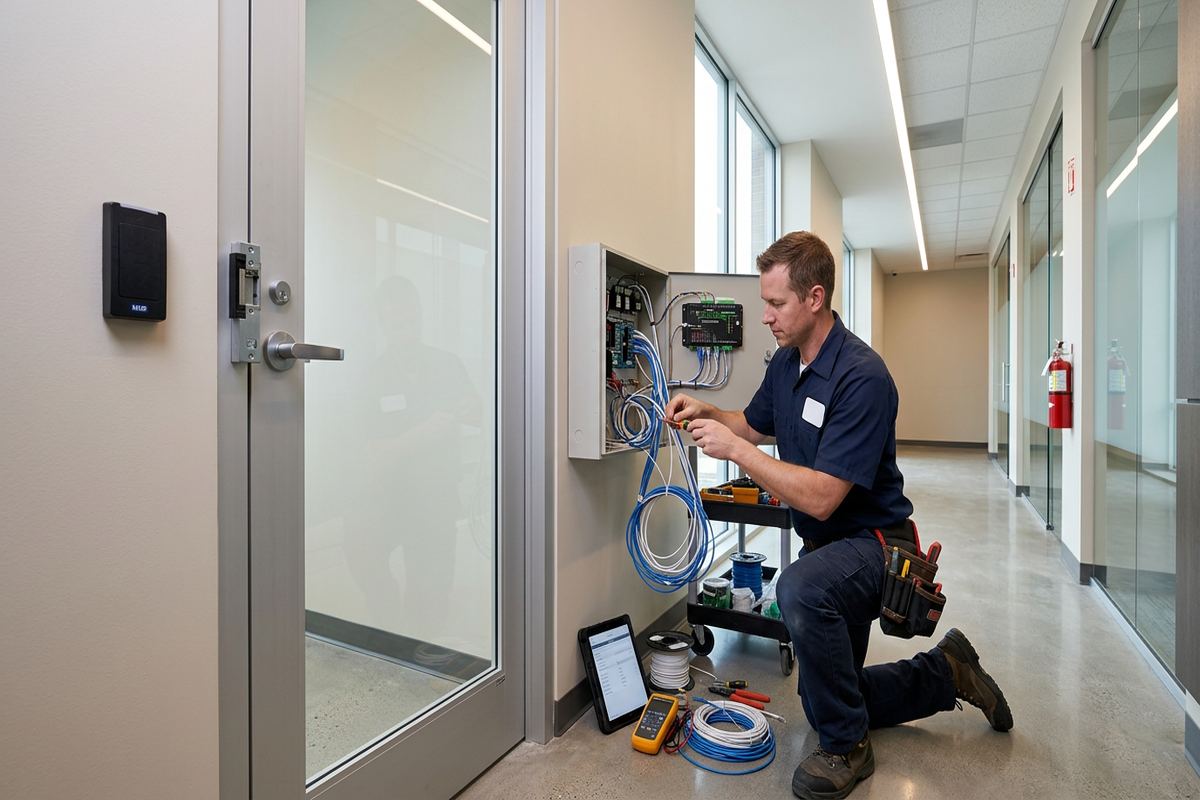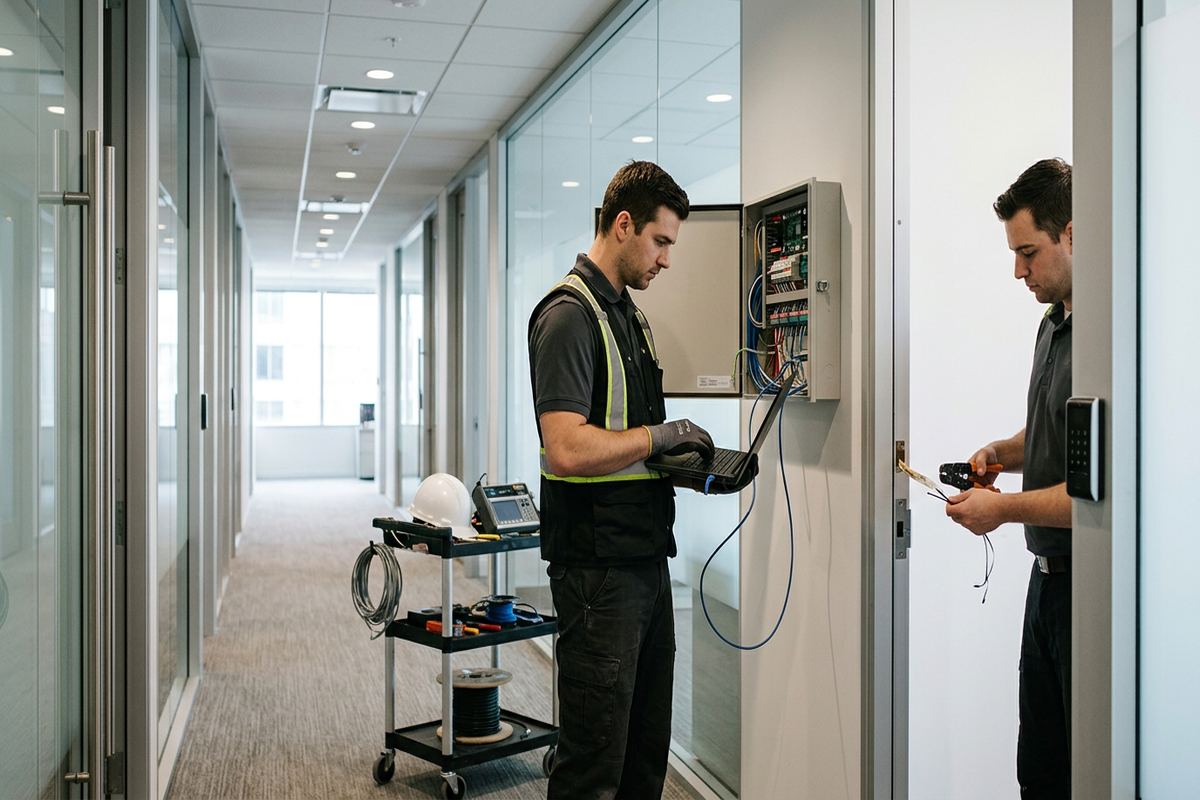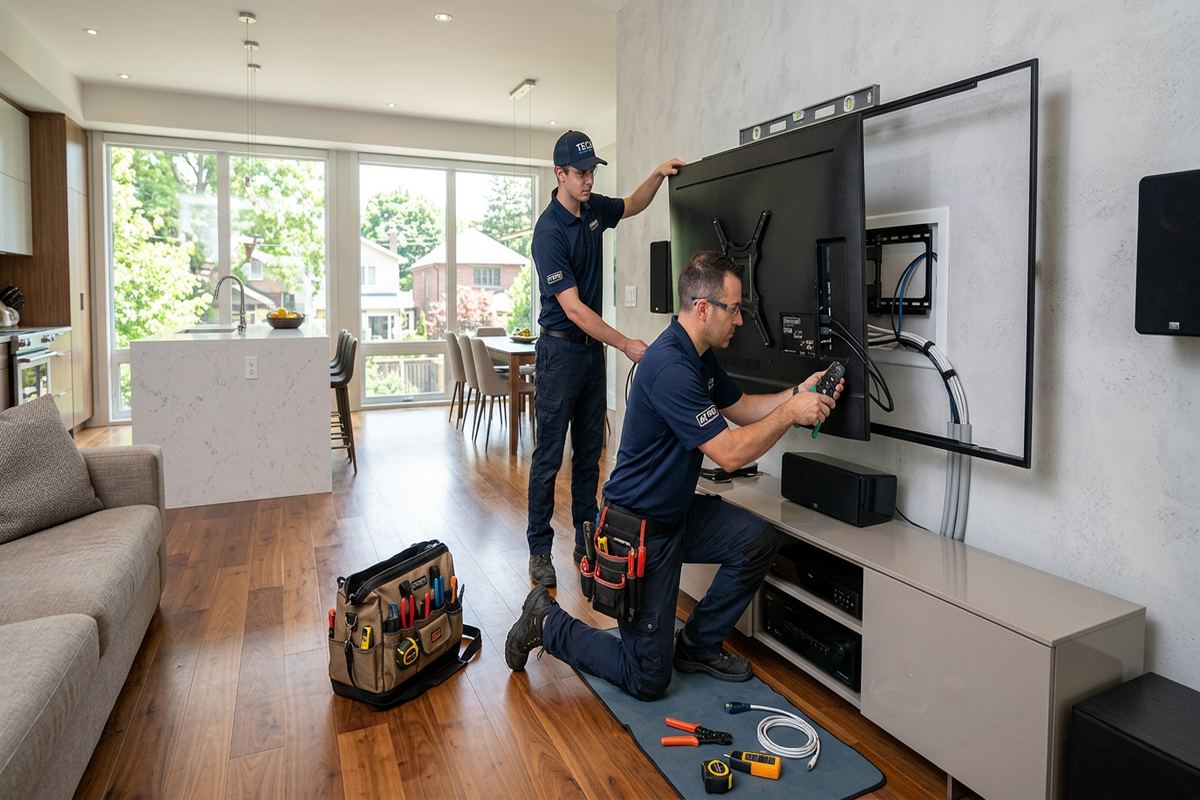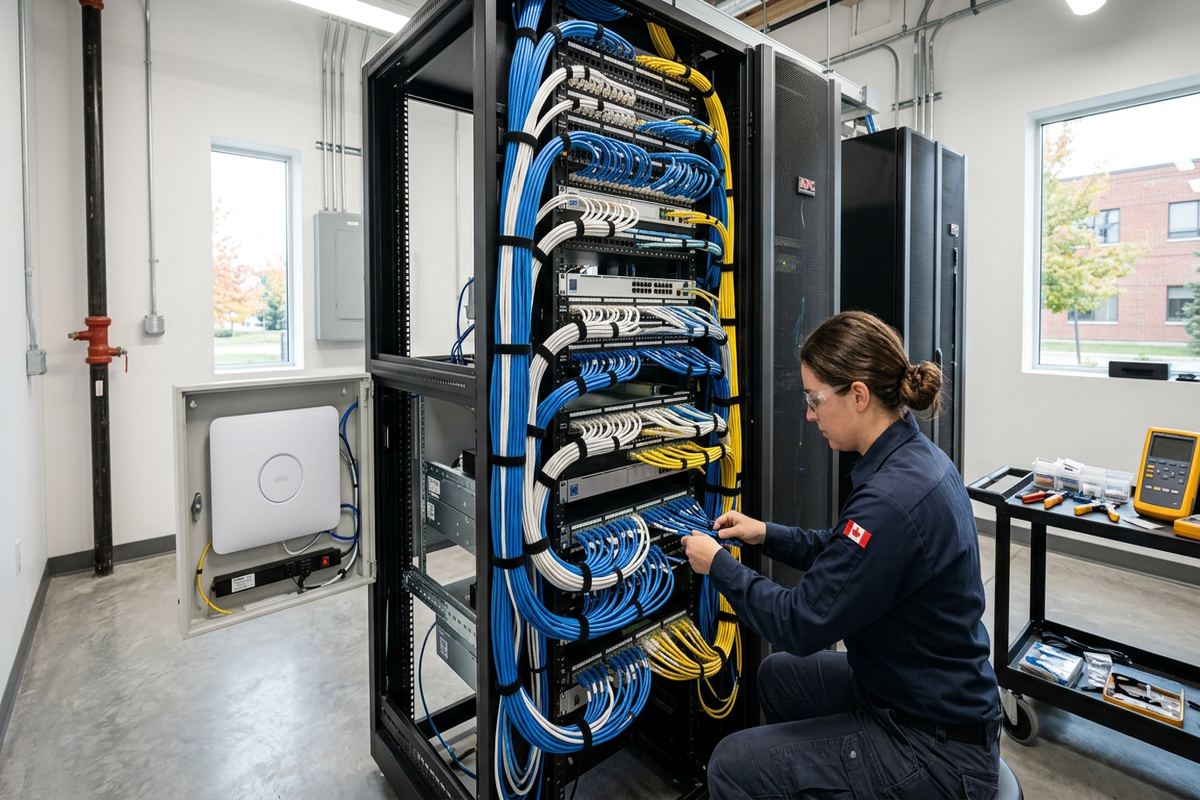
UnifiedLink installs structured cabling for homes, offices, commercial spaces and industrial units across Cambridge and Waterloo Region. We plan cable routes, install continuous labelled runs, terminate and test each connection, and provide an as-built record. Every project begins with a site assessment so the written scope reflects the building, network requirements and access conditions.
Structured Cabling for Cambridge Properties
Structured cabling creates a permanent physical foundation for internet, Wi-Fi, telephones, cameras, access control and other connected systems. In Cambridge, the right installation method varies considerably between stone heritage buildings, riverside neighbourhoods, commercial strips and newer industrial properties. UnifiedLink assesses wall construction, ceiling access, network equipment locations and the number of required connections before recommending routes. The goal is an orderly installation that supports current devices without leaving inaccessible joins, unidentified wires or loosely planned pathways for the next person to interpret.
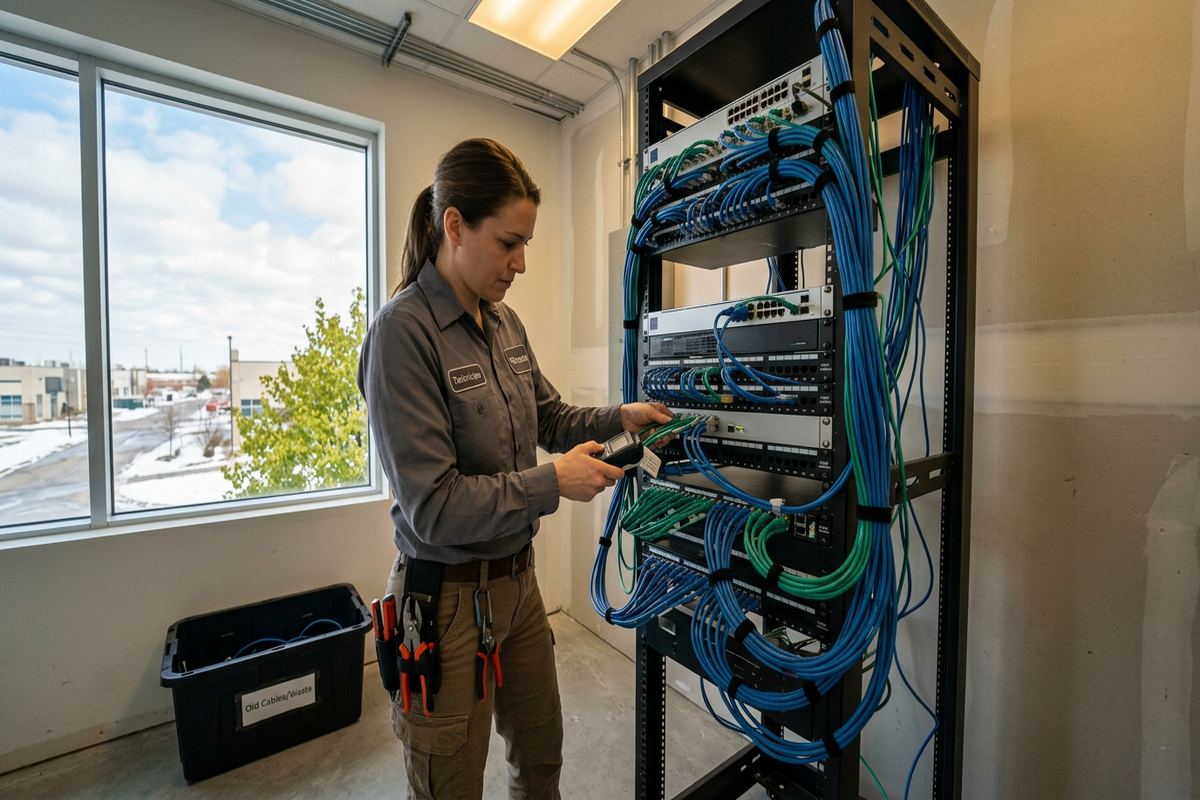
Homes and businesses often add network wiring gradually, leaving a mixture of old telephone cable, short patch leads and undocumented runs. We trace useful existing infrastructure, identify what should remain and separate abandoned wiring where the scope allows. New cables are installed as continuous labelled runs between the outlet and an agreed central location. This approach makes faults easier to isolate and future changes easier to plan, whether the property is a West Galt house, a Hespeler storefront or an industrial unit elsewhere in Cambridge.
A complete cabling project involves more than pulling wire through a ceiling. Outlet positions must suit desks, televisions, wireless access points, security devices and equipment racks without creating unnecessary visible cable. Pathways also need suitable separation from electrical wiring and sources of interference. During the assessment, we discuss expected network use, room layouts and likely additions. The resulting written scope covers equipment, cable routes, device placement, exclusions, equipment ownership and warranty, giving the customer a defined basis for reviewing the work before installation begins.
- Residential Ethernet and network outlets
- Office workstations and shared equipment
- Wi-Fi access point cabling
- Camera and access control pathways
- Rack and communications-room organization
Planning Cable Routes in Cambridge Buildings
Cambridge building stock requires route planning rather than a standard drilling pattern. Stone walls in parts of Galt and Blair can be thick, irregular and difficult to patch cleanly, while frame construction may offer accessible stud cavities but contain blocking, insulation or previous renovations. Commercial units can add suspended ceilings, fire separations and shared service areas. We inspect practical routes from the network location to each outlet, then explain where concealed installation is feasible and where surface raceway, conduit or another visible pathway may be the more controlled option.
Before openings are made, device locations are checked against furniture, cabinetry, doors and how each room will actually be used. A technically possible route can still be inconvenient if the outlet ends up behind fixed millwork or forces equipment into a poor position. For offices and shops, planning also considers workstation groups, payment terminals, printers, displays, telephones and wireless access points. In homes, television areas, workspaces and ceiling-mounted access points are common priorities. Agreed locations are documented so installation follows the reviewed layout rather than assumptions made on the day.
Condo corporations, landlords and property managers may control drilling, common areas, risers, exterior walls or working hours. Customers should obtain required approvals before work begins, particularly where a route crosses shared space or changes a visible surface. UnifiedLink can provide a written scope showing proposed routes and device locations for that review. In leased Cambridge commercial units, we also distinguish customer-owned equipment from building infrastructure and note exclusions clearly. This reduces uncertainty at handover and helps prevent cabling from being installed in an area that the customer was not authorized to alter.
- Wall and ceiling access review
- Masonry and frame route options
- Condo or landlord approval planning
- Visible raceway where concealment is impractical
- Locations coordinated with room use
Cable Types and Network Layouts
Cable selection should follow the application, pathway and connected equipment rather than a broad assumption that every run is identical. Copper data cabling is common for workstations, access points, cameras and other Ethernet devices, while fibre may be appropriate between network areas, across longer links or where electrical conditions require it. The assessment considers run length, pathway environment and network design. We identify the proposed cable and termination type in the scope so customers know what will be installed and can confirm compatibility with switches, patch panels, devices and service-provider equipment.
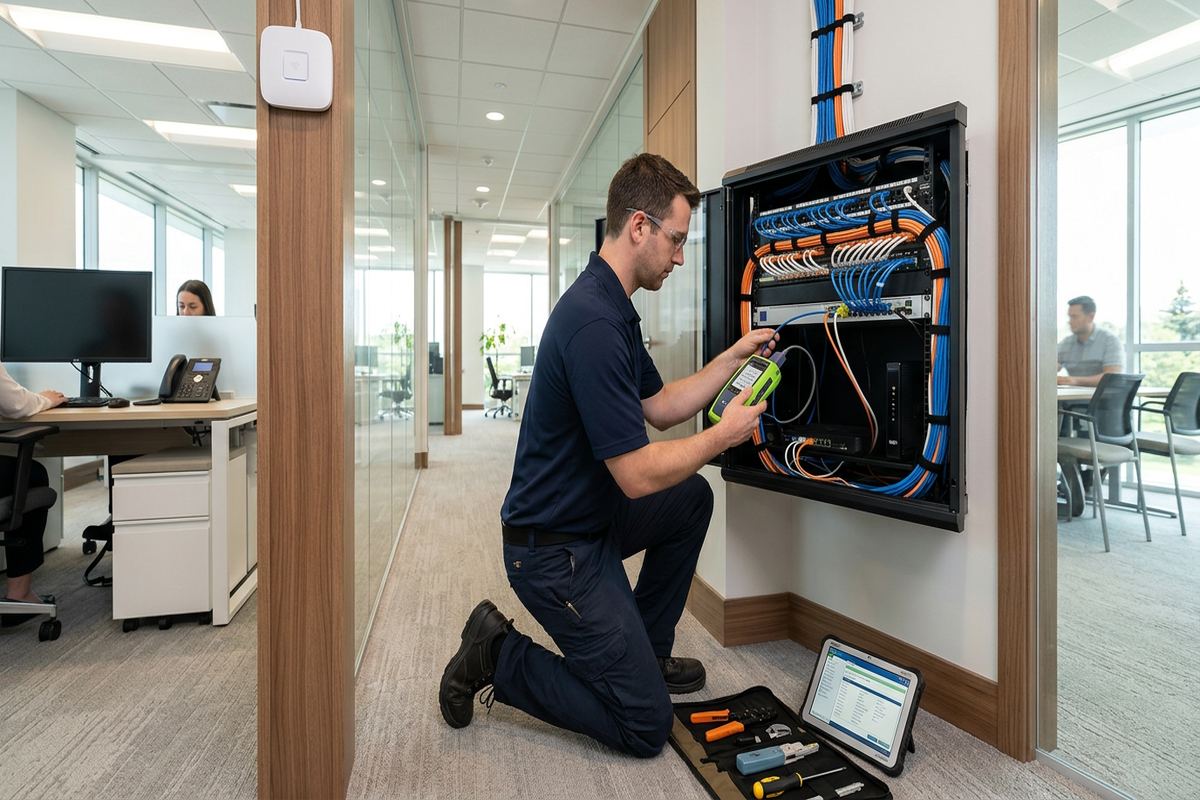
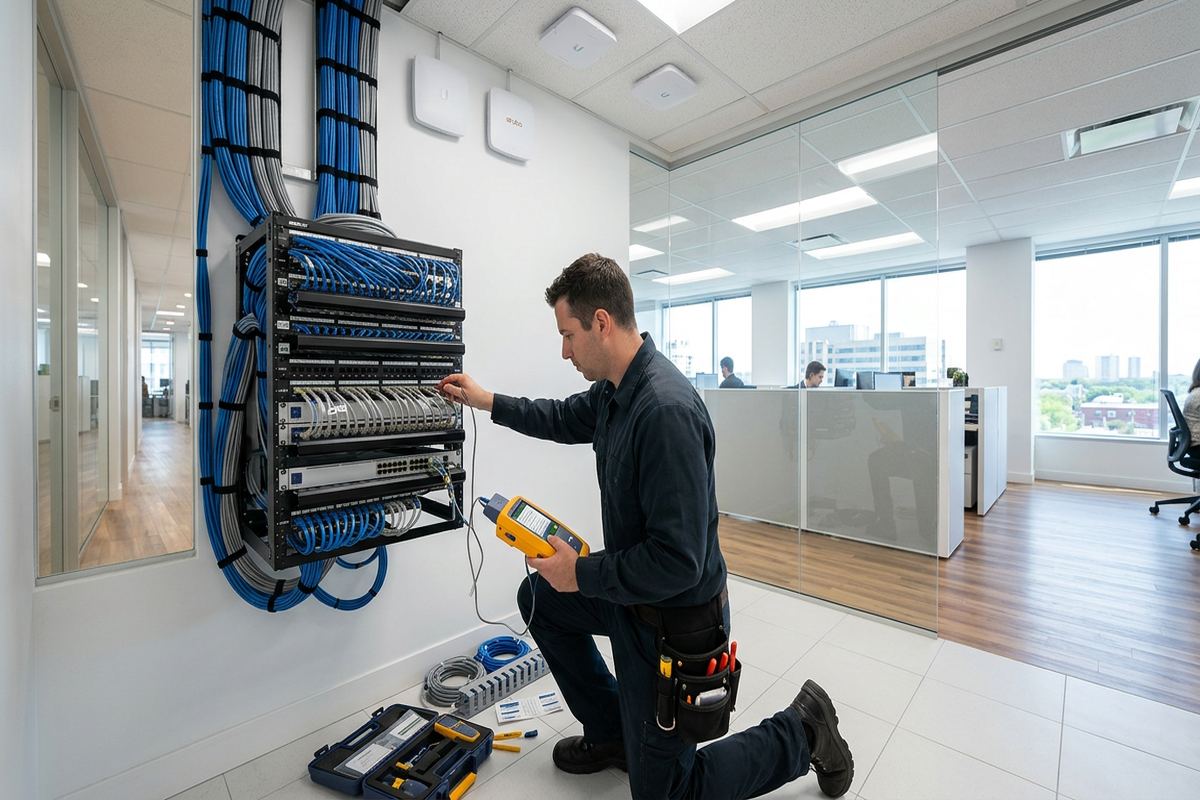
A centralized layout usually brings permanent runs back to a rack, cabinet or suitable communications area. That location needs sufficient space, ventilation, power and service access; placing it in a cramped corner can make future maintenance unnecessarily difficult. Patch panels provide an organized boundary between fixed building cable and replaceable patch cords. For smaller Cambridge homes, a compact wall-mounted arrangement may be suitable, while offices or industrial units may need a larger rack plan. We size the physical layout around the agreed connections without presenting unused capacity as a substitute for careful planning.
Power over Ethernet can carry data and electrical power to compatible access points, cameras, phones and access-control devices through one network cable. Successful use depends on the powered device, switch capability, cable design and total power requirements. We do not assume that an existing switch can support every proposed device. During planning, equipment details are reviewed and ownership is recorded. Where UnifiedLink configures network hardware on site, the customer receives control through their own credentials at handover rather than being left dependent on an installer-controlled account.
- Copper Ethernet cabling
- Fibre backbone options where appropriate
- Patch panels and equipment racks
- Power over Ethernet device runs
- Centralized home and business layouts
Cambridge, Ontario
Structured cabling installation in Cambridge, scoped in writing first
Book a site assessment and get equipment, routes, exclusions, and warranty on paper before anything is installed.
Installation Methods for Cambridge Conditions
Once routes are approved, cable is supported and protected according to the accessible structure and intended environment. Runs should not be draped across ceiling tiles, left on sharp edges or joined at an inaccessible point. UnifiedLink installs continuous labelled cables and uses suitable pathways, supports and termination hardware for the agreed design. Penetrations are kept deliberate and limited to what the route requires. In occupied Cambridge properties, work areas are coordinated with the customer so desks, stock, machinery or household contents can be moved or protected before access is needed.
Exterior routes require specific attention because Cambridge winters and repeated freeze-thaw cycles can expose weak penetrations and unsuitable materials. An exterior cable or mounting point must use components intended for that environment, with entries positioned and sealed to limit water movement into the building. Masonry drilling also differs from drilling through frame siding, both in tool choice and in how the opening is finished. We assess whether an exterior route is necessary, whether conduit offers suitable protection and where a transition back indoors can be made without creating a vulnerable low point.
Industrial parks introduce constraints that are less common in a finished home. High ceilings, open structure, production equipment, electrical services and active loading areas all affect pathway selection and work access. A cable route may require conduit, tray coordination or protected drops rather than an exposed path near moving equipment. Operations may also need sections kept available during installation. We review these conditions before pricing and identify access assumptions in the scope. If specialized access or coordination with another trade is required, it is addressed before work proceeds rather than treated as an unplanned site change.
- Supported continuous cable pathways
- Purposeful and sealed penetrations
- Exterior-rated materials where required
- Protected routes in industrial spaces
- Work-area coordination before installation
Testing, Labelling and Cambridge Project Records
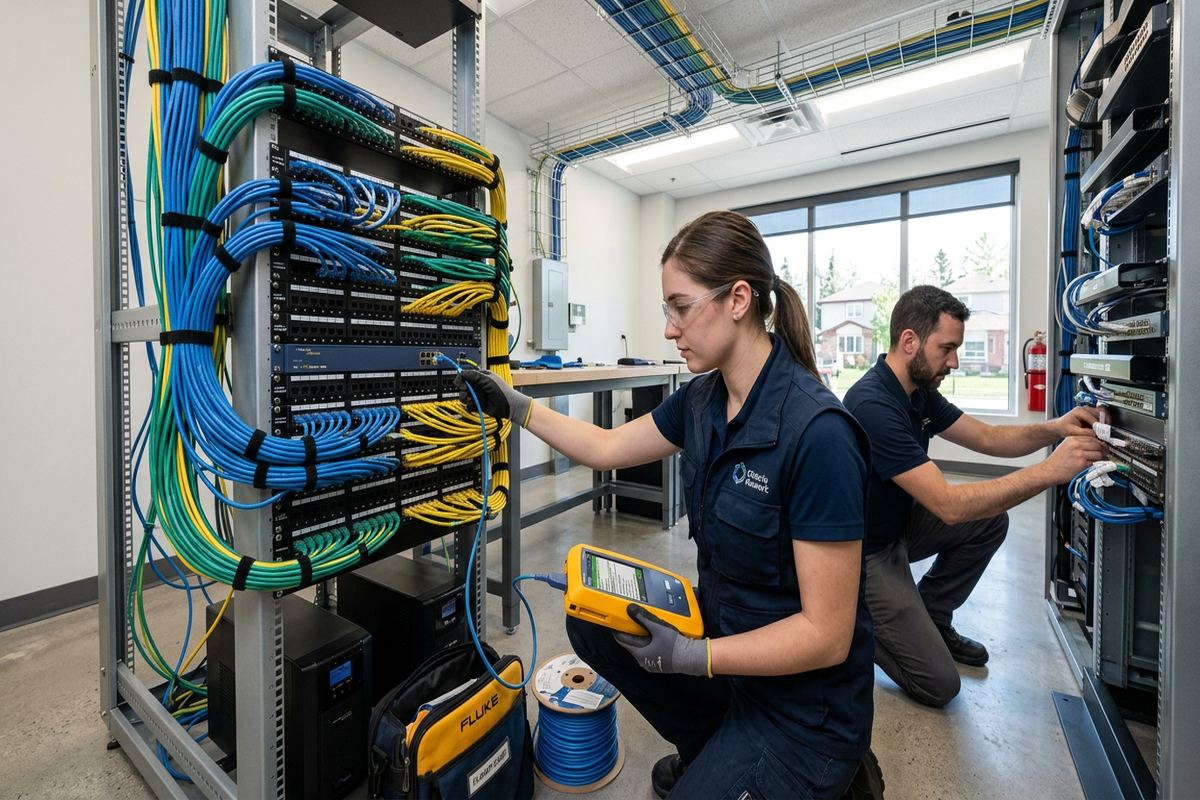
Every completed run needs an identity that is understandable at both ends. Labels are applied using a consistent scheme linked to rooms, outlets or panel positions, rather than relying on cable colour alone. We check terminations and test installed connections for the agreed cabling system, then correct installation faults found within the project scope. Clear labelling is particularly useful in multi-room Cambridge offices and mixed-use properties, where several tenants, systems or equipment changes can otherwise turn a simple connection request into time spent tracing unknown wires above ceilings and behind furniture.
Testing confirms whether a terminated run is connected as intended, but it should not be confused with a guarantee of internet speed. Actual performance can also depend on the service plan, router, switches, wireless conditions, endpoint hardware and network configuration. We explain that distinction during handover and identify any observed limitation that sits outside the cabling scope. If the project includes on-site configuration, settings are applied to the agreed equipment and checked with available devices. Customers retain their own account credentials, which supports independent administration and future service by another qualified provider if desired.
The as-built record documents the finished installation rather than only the original proposal. It can show outlet identifiers, termination points, cable destinations and relevant notes about pathways or equipment. This record is useful when adding a wireless access point, moving a workstation or investigating a damaged connection later. UnifiedLink provides it at handover along with the agreed equipment and credential information. For Cambridge landlords or businesses managing multiple units, a current record can also help distinguish base-building cabling from tenant additions, provided ownership boundaries were confirmed and included in the written scope.
- Matching labels at both ends
- Termination and connection testing
- Documented outlet and panel identifiers
- As-built record at handover
- Customer-controlled account credentials
Wi-Fi, Offices and Connected Devices
Good Wi-Fi often depends on wired cabling to correctly placed access points. Adding another consumer extender may repeat a weak signal without addressing coverage, congestion or building materials. Stone, masonry, mechanical systems and dense interior finishes can affect radio propagation in Cambridge properties. During cabling planning, access point positions are considered in relation to occupied areas and practical ceiling routes. Wired backhaul gives each compatible access point a direct network connection, helping the system avoid reliance on a wireless hop between devices. Final performance still depends on equipment, configuration, interference and internet service.
Office cabling should reflect how people and equipment are arranged, including any planned changes to the floor layout. A single outlet hidden behind one desk may not serve a group of workstations, phones and shared devices without unmanaged switches or loose cords. We discuss connection counts at each location and provide dedicated runs where included in the design. In commercial strips around Preston or Hespeler, routes may need to work around finished tenant spaces, basement services or shared walls. Surface raceway can offer an orderly alternative when opening those assemblies would be disruptive or prohibited.
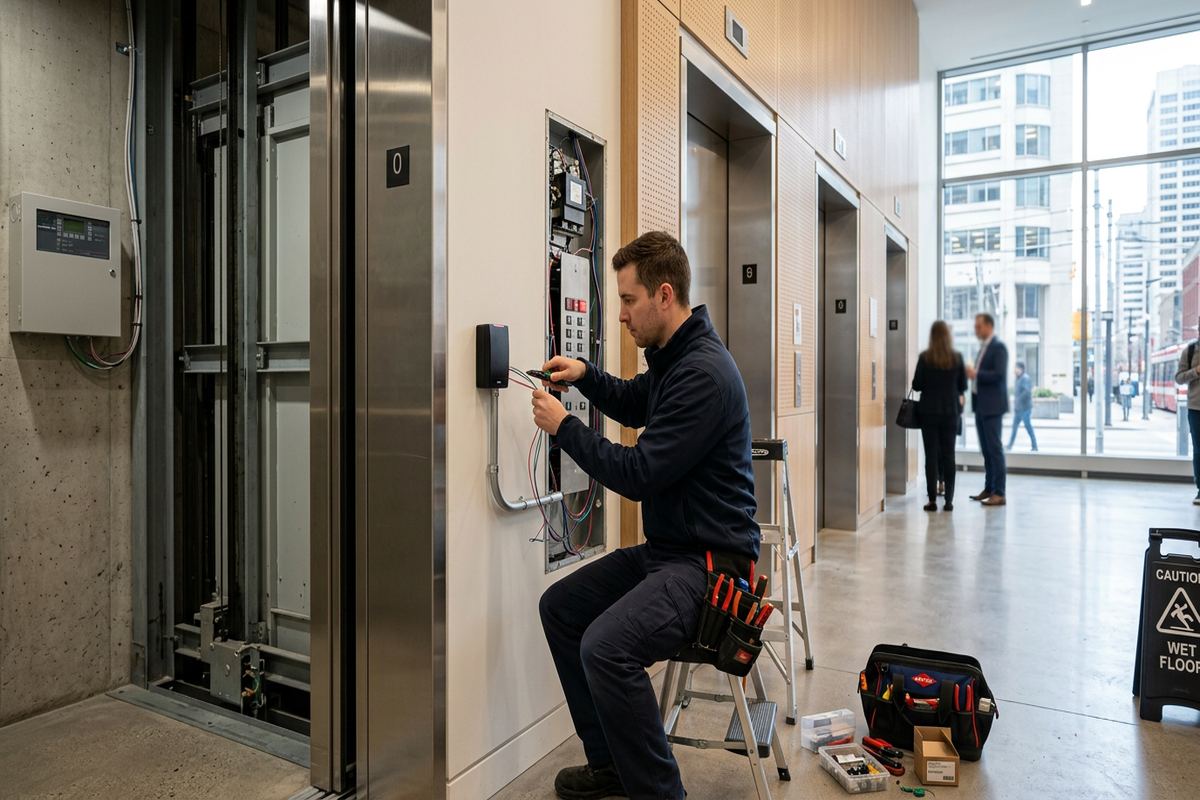
Network cabling can also support security cameras, access control, audio equipment and commercial displays, but each system has its own placement and equipment requirements. Planning these services together helps avoid duplicate pathways and an undersized central equipment area. UnifiedLink acts as one accountable contractor for the agreed low-voltage scope, coordinating cable destinations and on-site configuration where included. The written scope separates included devices from future allowances, customer-supplied hardware and work by other trades. That distinction matters when a network outlet is installed now for equipment that will be purchased or commissioned later.
- Wired access point connections
- Planned workstation outlet counts
- Cabling for phones and printers
- Network links for security devices
- Coordinated low-voltage pathways
Upgrades, Repairs and Renovations in Cambridge
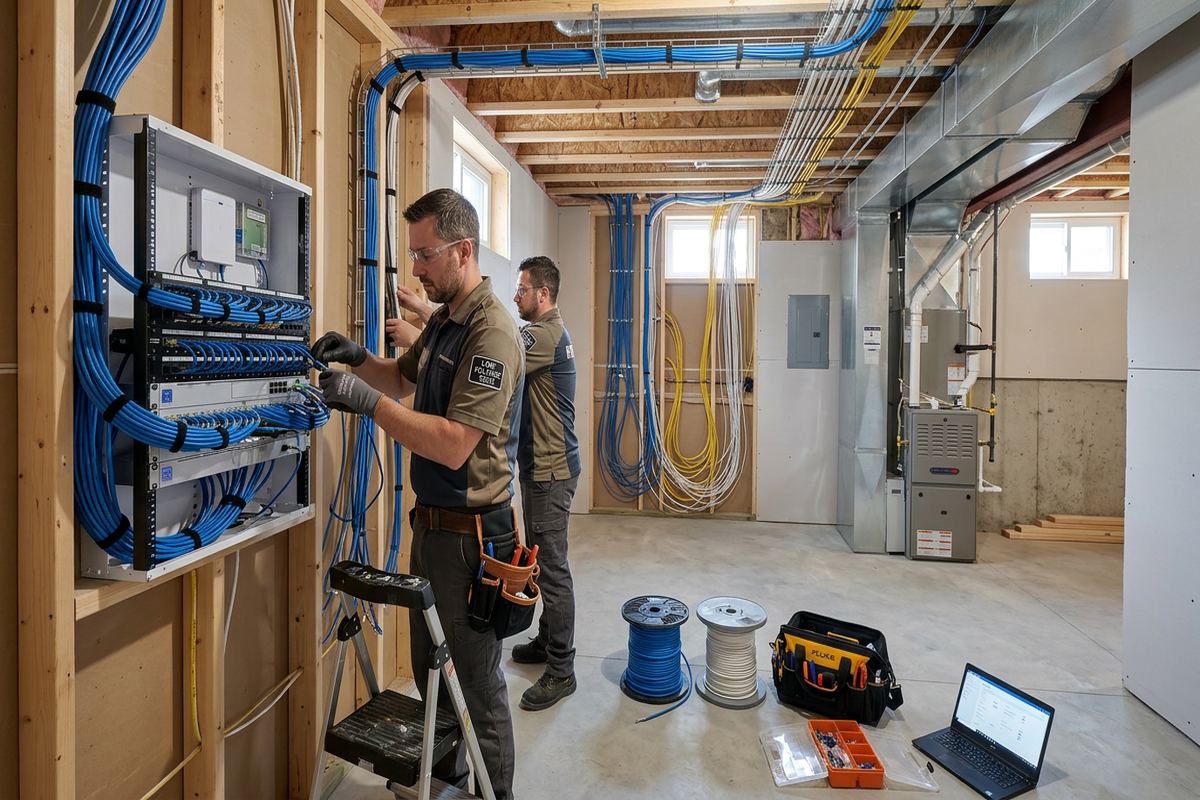
Renovations are a practical time to install cabling because framing and ceiling spaces may be exposed, but the work still needs coordination. Cable can be damaged when drywall, insulation, cabinetry or mechanical systems are installed afterward. We agree on termination locations, leave appropriate protection where required and document unfinished-stage conditions. In older Cambridge houses, previous renovations may have created isolated cavities or concealed layers that are not apparent from room surfaces. Route assumptions are confirmed as access becomes available, and any material change to the approved scope is discussed before proceeding with additional work.
Existing cabling can sometimes be reused, although appearance alone does not confirm its category, route or condition. We inspect accessible markings and terminations, trace destinations where feasible and test connections relevant to the requested work. Damaged ends may be reterminated if enough suitable cable remains, but hidden splices, moisture exposure or uncertain pathways can make replacement the more dependable option. In riverside neighbourhoods, any sign of water entry or persistent dampness near a pathway should be addressed as a building issue before network components are installed. Low-voltage work should not conceal or normalize an active moisture problem.
Changes in room use often expose the limits of an earlier network layout. A bedroom becomes an office, a retail counter moves, or an industrial unit adds connected equipment far from the original cabinet. We assess whether new runs can return to the existing network point or whether the layout needs another distribution area. In Clemens Mill and West Galt homes, finished basements can make vertical routes more constrained than they appear. Options may include closets, utility spaces, attached garages or discreet raceway, subject to construction, approvals and the customer’s preference for visible finishes.
- Pre-drywall cable installation
- Existing cable tracing and assessment
- Damaged outlet and termination repair
- New runs for changed room use
- Routes around finished renovations
Arranging Structured Cabling in Cambridge
A Cambridge structured cabling request starts with the property type, location, required connections and the systems those connections will serve. Photos, floor plans and equipment lists can help establish context, but pricing follows a site assessment because route access and construction conditions affect the work. Assessment timing depends on the service and travel distance. Requests sent during business hours are answered the same day, while after-hours requests are answered the next business day. This response wording applies to the initial request and should not be interpreted as a guarantee of immediate attendance or project completion.
During the site assessment, we review outlet positions, central equipment space, accessible pathways, exterior sections and any approval requirements. Customers should identify known asbestos, moisture, electrical or structural concerns and provide access to the relevant rooms. For operating businesses, it helps to note restricted areas, production schedules and times when work could interrupt staff or customers. In Cambridge condos and leased units, written permission may be needed before drilling or entering shared areas. These factors are incorporated into the scope so both parties understand site responsibilities and constraints before an installation date is arranged.
The written scope sets out equipment, cable routes, device placement, exclusions, equipment ownership and warranty. After approval, UnifiedLink completes the defined installation, labels and tests the runs, performs included on-site configuration and prepares the handover information. Customers receive their own credentials and an as-built record of the finished work. Using one accountable contractor for the agreed scope avoids dividing responsibility for the cable, terminations and configuration among unrelated providers. Future additions can then be reviewed against the documented layout rather than beginning with an undocumented network and uncertain ownership.
- Site assessment before pricing
- Written routes and device locations
- Clear ownership and exclusions
- On-site configuration when included
- Documented handover after completion
Cambridge neighbourhoods we cover
- Galt
- Preston
- Hespeler
- Blair
- West Galt
- Clemens Mill
Structured cabling installation in Cambridge — common questions
Do you provide pricing before visiting?
Pricing follows a site assessment because Cambridge properties can differ in wall construction, ceiling access, cable length and equipment location. Stone buildings, finished basements and active commercial units may require different pathways or access arrangements. After assessment, UnifiedLink provides a written scope covering equipment, routes, device placement, exclusions, ownership and warranty so the proposed work can be reviewed before approval.
Can you install Ethernet in an older Cambridge home?
Yes, subject to suitable routes and the condition of the building. Older Cambridge homes may have stone or masonry walls, layered renovations, blocked framing cavities or finished ceilings. We assess concealed route options first and explain when discreet surface raceway or another visible pathway is more practical. Any required landlord, condo or heritage-related approval remains the property owner’s responsibility.
Can existing network cable be reused?
Existing cable may be reusable if its type, condition, route and terminations suit the intended network. We inspect accessible markings, trace destinations where feasible and test the relevant connections. In Cambridge renovations, hidden joins, damaged sections or moisture exposure can make replacement preferable. Reuse is not assumed until the cable has been assessed, and any limitations are identified in the project scope.
Will new cabling improve my Wi-Fi?
Cabling can provide wired backhaul to properly positioned access points, which removes the need for those devices to rely on a wireless link. This can support a more controlled Wi-Fi design in Cambridge buildings with masonry, stone or difficult layouts. Results also depend on access point selection, placement, configuration, interference, connected devices and internet service, so cabling alone does not guarantee a particular speed.
Do you install cabling in operating businesses?
Yes. For Cambridge offices, shops and industrial units, we review working areas, customer access, machinery, ceiling height and any restricted periods before installation. The scope identifies pathway assumptions and required access. Where work could affect operations, the customer and installer agree on practical sequencing. Specialized access, landlord approval or coordination with another trade is addressed before work proceeds.
What do I receive after installation?
At handover, you receive labelled connections, the agreed testing information and an as-built record showing the finished cable destinations. If UnifiedLink configured included network equipment on site, access is handed over using the customer’s own credentials. The documentation also reflects agreed equipment ownership and relevant project notes, helping Cambridge property owners plan later moves, repairs or additions without retracing every installed run.
Coverage in Cambridge is confirmed against the address before we quote. See everything we install in Cambridge or the province-wide structured cabling installation page.