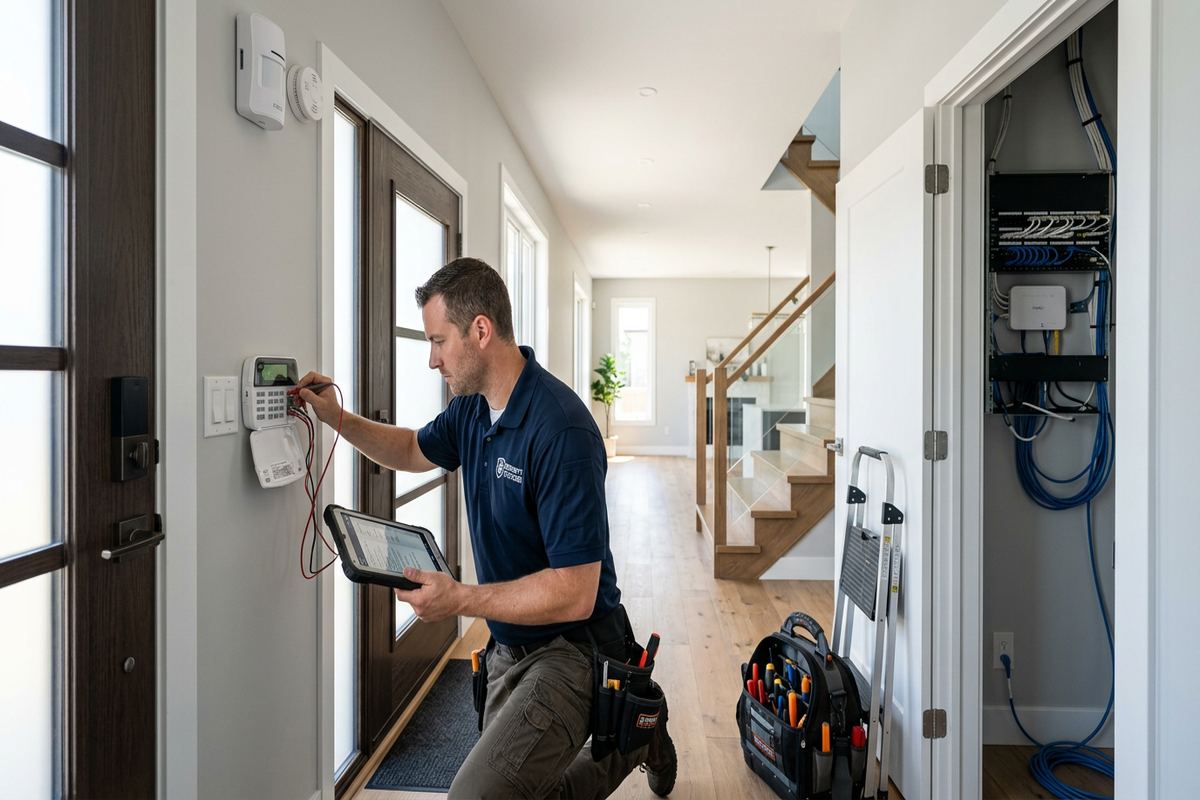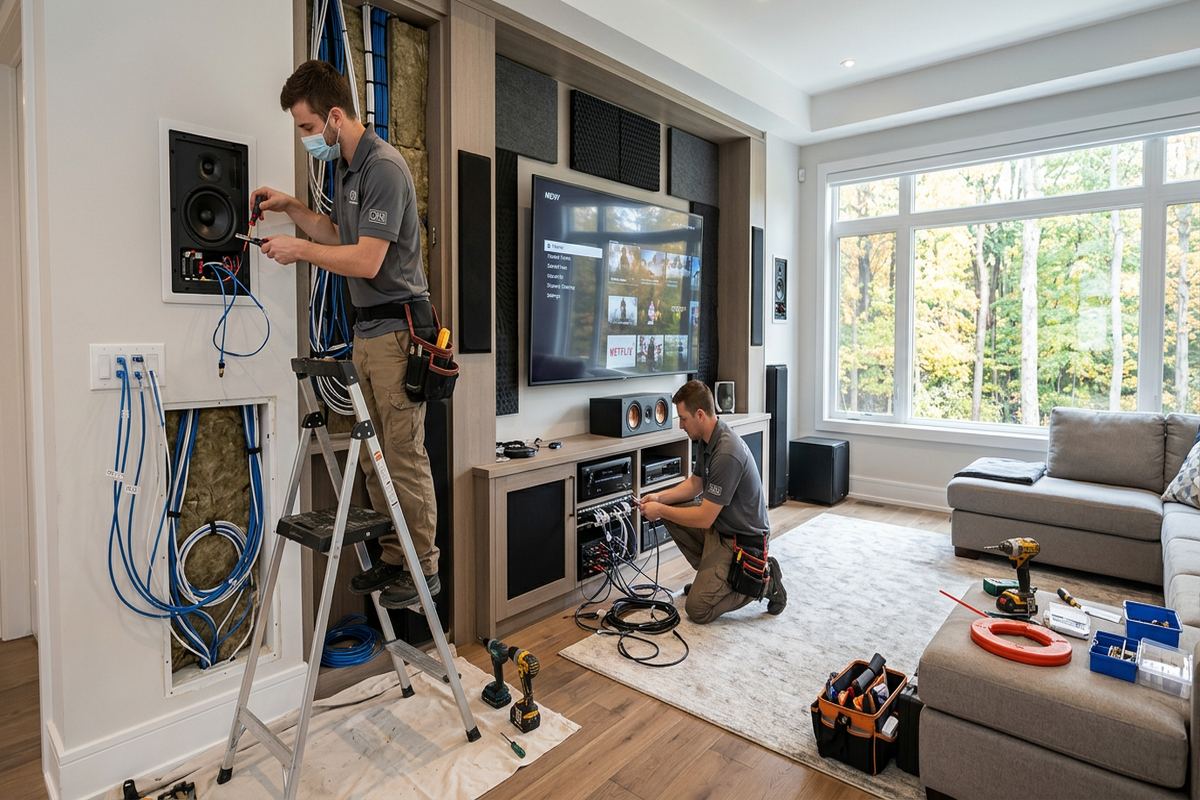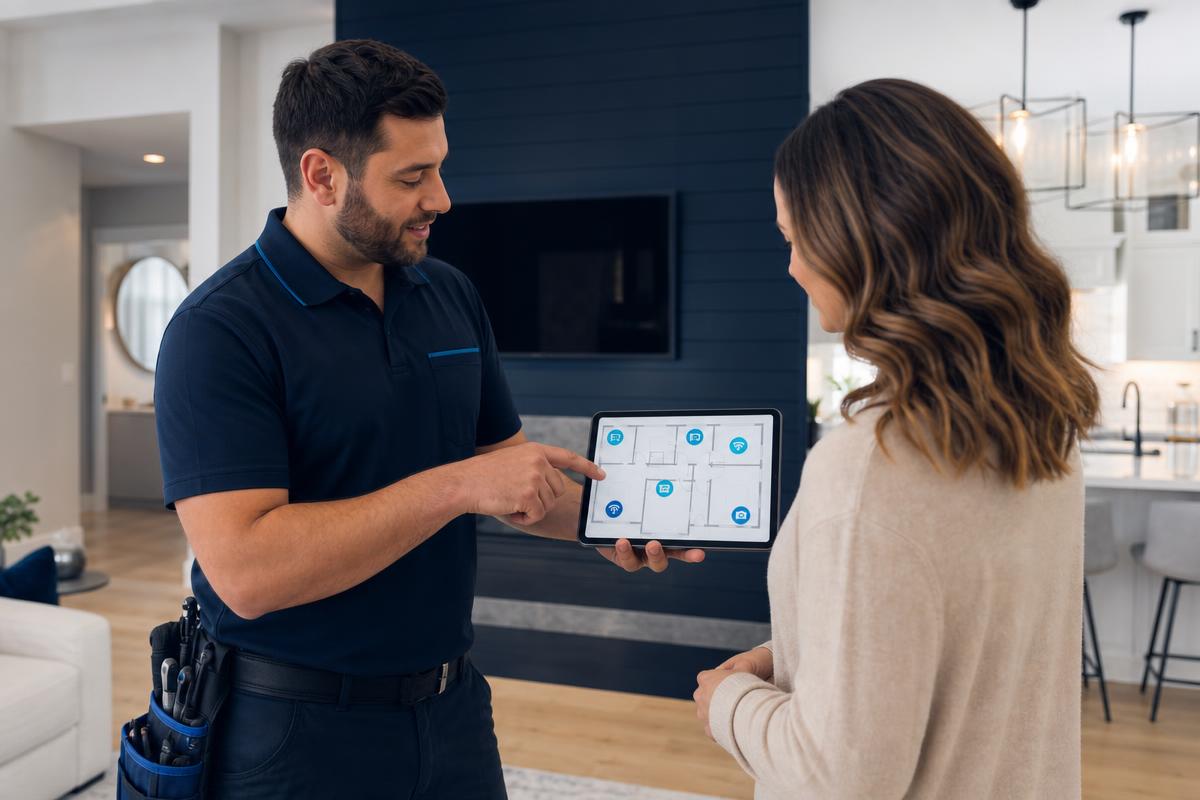
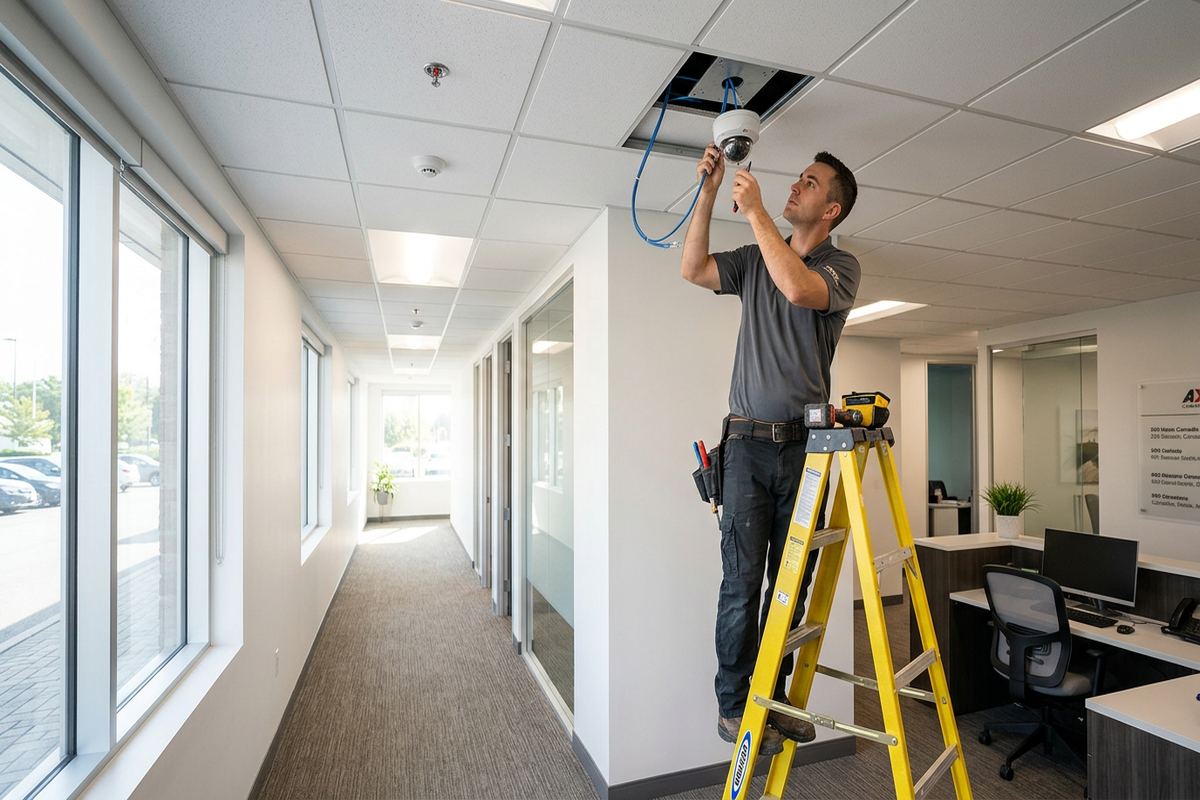
UnifiedLink installs outdoor security cameras for homes, multi-unit properties and businesses across Cambridge. Each project starts with a site assessment to plan useful views, cable routes, mounting surfaces and weather protection. The finished system is configured on site and handed over using your own credentials, with labelled cabling and an as-built record.
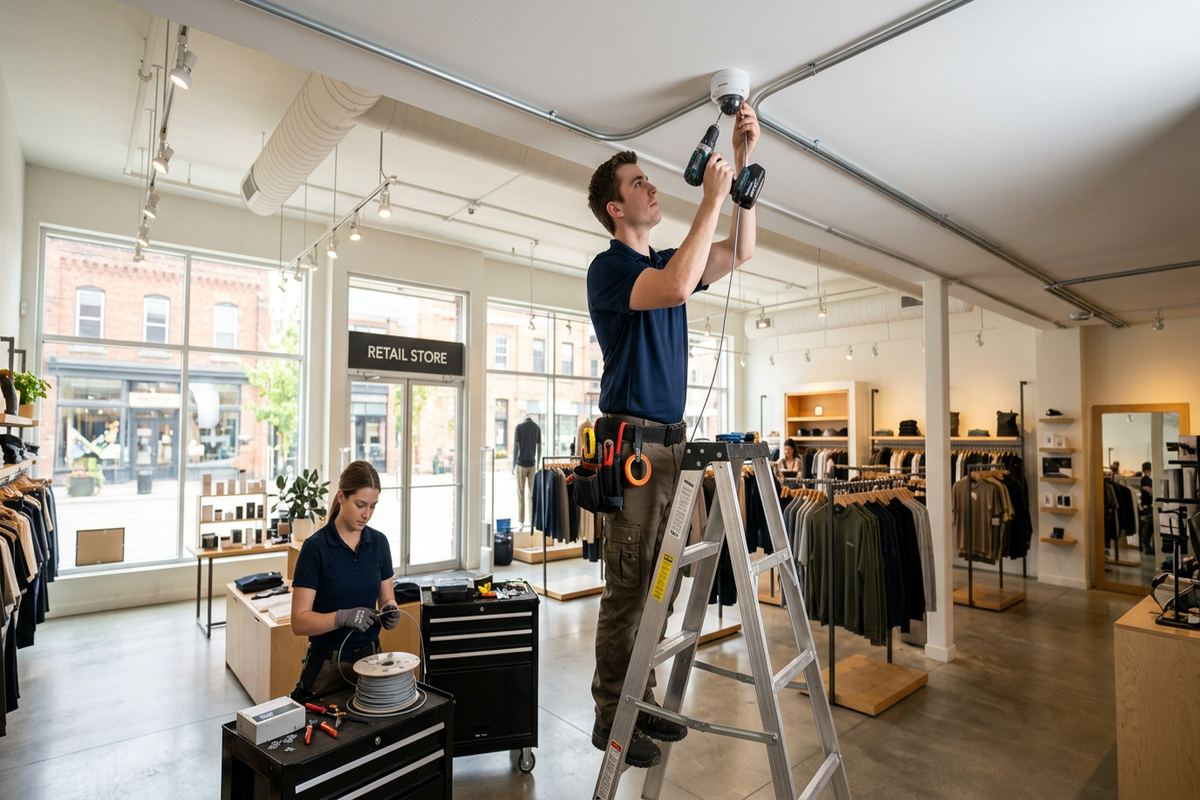
Outdoor Camera Planning for Cambridge Properties
Useful outdoor surveillance starts with the purpose of each view, not with a camera count. During a Cambridge site assessment, we identify doors, walkways, driveways, loading areas, detached buildings and other locations that need coverage. We then consider viewing distance, target detail, lighting and likely movement through the property. This process helps distinguish between a broad overview and a view intended to identify a person or vehicle. It also prevents devices from being placed too high, pointed through obstructions or aimed across areas that do not belong to the customer.
Cambridge properties vary considerably between Galt, Preston, Hespeler and newer surrounding developments. Stone heritage buildings, riverside neighbourhoods and industrial parks each carry their own installation constraints. Mature trees may block a summer view that appears open during winter, while narrow lots can make privacy boundaries especially important. Commercial façades may offer limited mounting positions because of signs, lighting or shared walls. Planning accounts for these physical conditions before cable is installed, reducing avoidable changes and helping each camera provide a clear, relevant view throughout the normal range of seasonal conditions.
The site assessment also establishes where recording and network equipment can be located securely. Cable distance, available pathways, electrical service, network access and future maintenance all influence that decision. UnifiedLink provides a written scope before pricing, covering equipment, proposed cable routes, device placement, exclusions, equipment ownership and warranty. If approvals, repairs or third-party work are required, those dependencies can be identified before installation begins. This gives homeowners, property managers and business operators a practical basis for reviewing the project without relying on vague coverage descriptions or assumptions about what the finished system includes.
- Entrance, driveway and perimeter coverage planning
- Review of lighting, obstructions and privacy boundaries
- Recorder and network location assessment
- Written equipment and installation scope
- Identification of approvals and project dependencies
Exterior Mounting and Weather Sealing in Cambridge
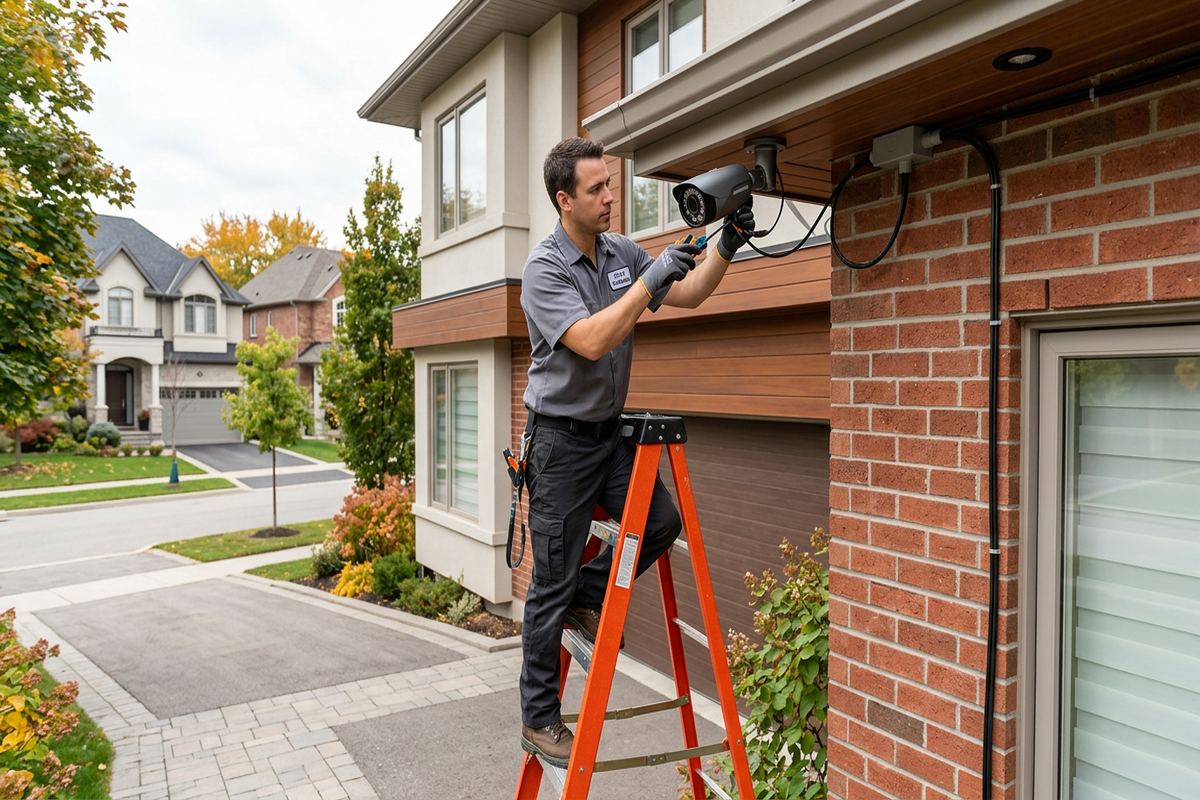
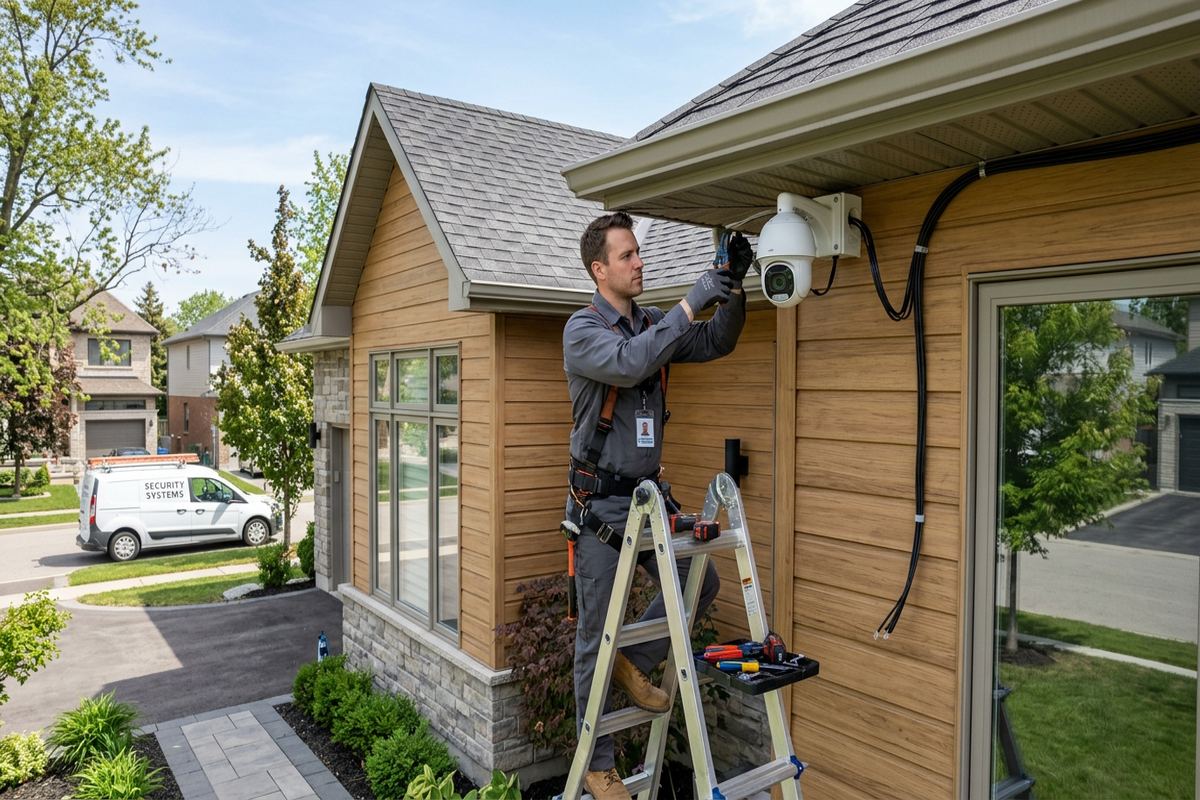
An exterior camera remains dependable only when its mount, cable entry and connections are suited to the surface and exposure. Cambridge winters bring freezing conditions and repeated freeze-thaw cycles that can exploit poorly sealed openings. We select fastening and entry methods according to the wall, soffit, pole or other approved mounting point. Penetrations are positioned and sealed to limit water entry, and exterior connections are protected rather than left exposed behind a loose camera base. The installation must also allow the camera to be aimed securely without creating an unnecessary opening in the building envelope.
Stone and brick require a different approach from wood framing, vinyl siding or metal cladding. On older Galt buildings, drilling locations may need to respect irregular masonry, deep joints and existing exterior details. Frame construction can offer concealed pathways, but the visible siding is not always an adequate structural mounting surface by itself. Industrial units may have concrete panels, steel walls or high exterior elevations that affect access and fastener selection. Where the proposed surface is unsuitable, the scope can identify an alternative position, mounting hardware or preparatory work rather than forcing an unreliable attachment.
Weather protection also depends on cable management. Exterior cable should not sag across a wall, create a path for water or remain vulnerable to abrasion and accidental impact. Drip loops, protected transitions and suitable conduit may be used where the route requires them. Camera housings still need sensible placement because an environmental rating does not eliminate problems caused by direct runoff, heavy ice or inaccessible mounting. In Cambridge, we also consider snow accumulation, seasonal vegetation and low winter sun when choosing the final angle. These details support stable images while making later inspection and adjustment more practical.
- Fasteners selected for the mounting material
- Sealed wall and soffit penetrations
- Protected exterior cable transitions
- Placement accounting for snow and runoff
- Secure, serviceable camera adjustment
Camera Views, Lighting and Image Detail
Camera specifications do not compensate for an unsuitable field of view. A wide image may show an entire Cambridge driveway while providing too little detail at the sidewalk or vehicle entrance. We plan each view around the area where useful detail is required, then confirm mounting height, lens selection and angle. Entrances often benefit from tighter framing, while yards and parking areas may need broader context. When both objectives matter, separate views can be more effective than asking one camera to cover every distance. The proposed placement is reviewed before permanent mounting wherever site conditions allow.
Outdoor lighting can improve images, but poorly positioned fixtures may cause glare, deep shadows or rapid exposure changes. Infrared illumination can reflect from soffits, walls, downspouts, spider webs and nearby landscaping. Headlights present another challenge at driveways and industrial entrances. The assessment examines existing fixtures and likely nighttime conditions so cameras are not aimed directly into predictable sources of interference. In riverside neighbourhoods or properties with open approaches, fog, moisture and changing ambient light may also affect visibility. Configuration balances these conditions while recognizing that no camera can guarantee identification in every environment or incident.
Device positioning must respect neighbouring properties, public areas and the intended security purpose. In compact areas such as Preston or West Galt, a small change in angle can determine whether a camera records a customer’s own entrance or looks unnecessarily into an adjacent yard or window. Privacy masking and motion zones can be configured when supported by the selected system, but physical placement remains the first control. For commercial sites, views may also need to avoid employee break areas or unrelated tenant spaces. Property owners remain responsible for using recorded video in accordance with applicable requirements.
- Views matched to identification or overview needs
- Night lighting and infrared reflection review
- Headlight and backlight considerations
- Privacy-conscious camera angles
- Motion zones configured where supported
Cambridge, Ontario
Outdoor camera installation in Cambridge, scoped in writing first
Book a site assessment and get equipment, routes, exclusions, and warranty on paper before anything is installed.
Cabling and Network Design for Cambridge Sites
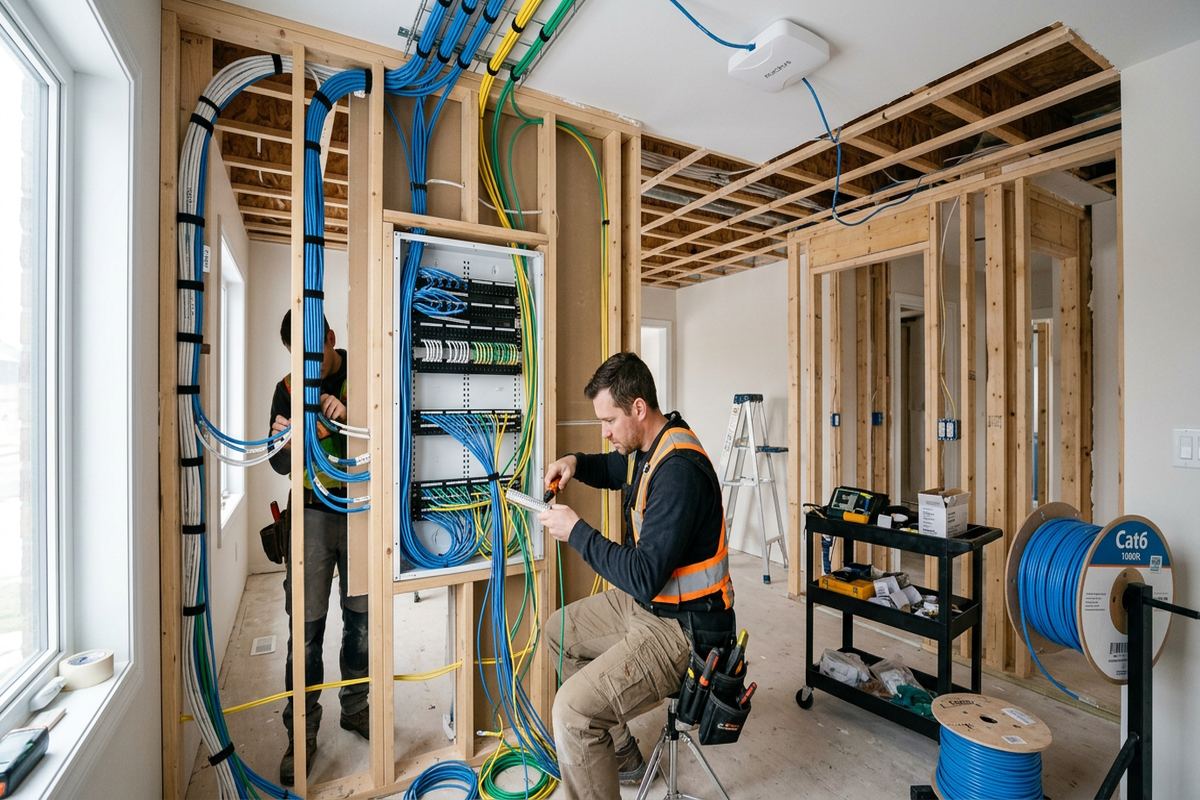
A wired camera system depends on the pathway between each device and the recording or network location. UnifiedLink installs continuous labelled cable runs, avoiding concealed joins that complicate troubleshooting. Routes are planned through accessible interior spaces where practical, with exterior sections protected according to exposure and physical risk. Cambridge homes may require pathways through basements, attached garages, attics or finished utility areas. Commercial installations can involve suspended ceilings, service corridors or warehouse structures. The written scope records expected routes so the customer can understand where cable will be visible and where access may be needed.
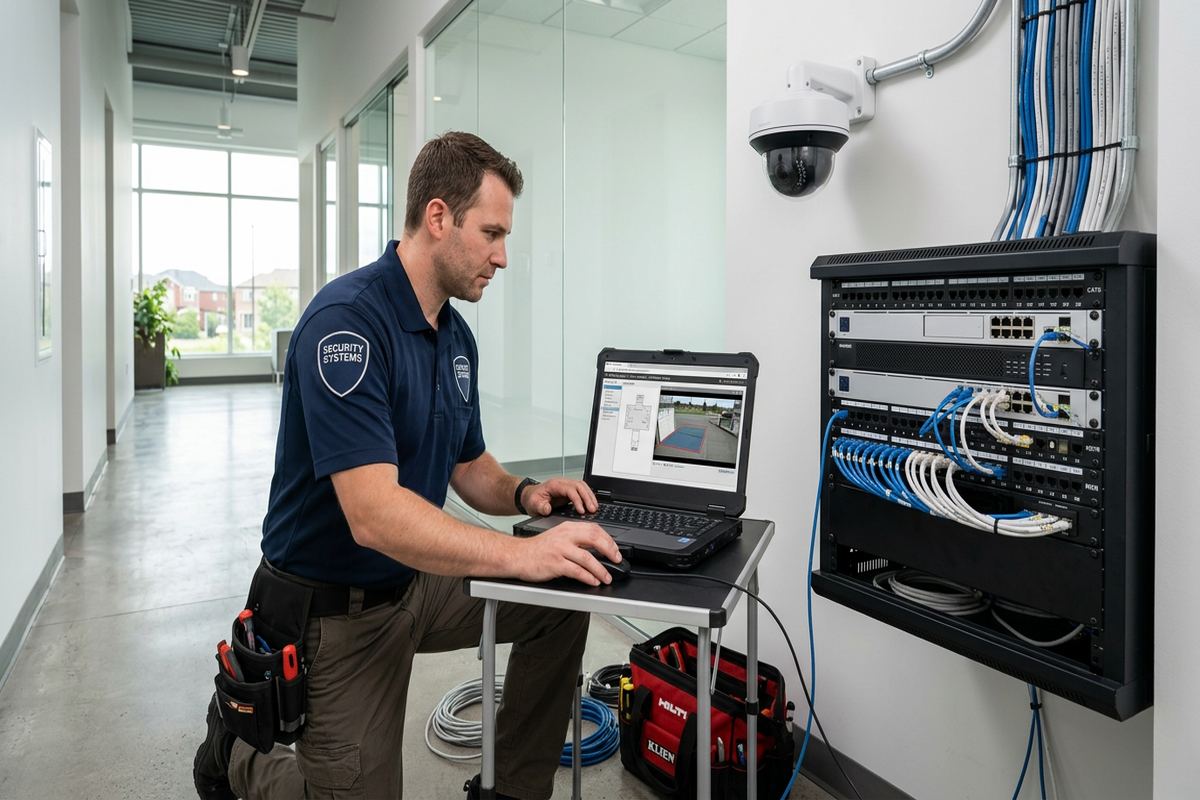
Network cameras require more than a physical connection. Available switch capacity, Power over Ethernet requirements, recorder connections, internet access and remote viewing expectations need to be considered together. Existing customer networks are reviewed for relevant limitations, but camera traffic should not be added without understanding the equipment already in place. For larger industrial units or detached structures, cable distance and building separation may require a different design. Wireless bridging or fibre may be considered where appropriate, although power and environmental protection are still necessary at the remote location. Final selections are defined in the project scope.
Recording capacity is affected by resolution, frame rate, image complexity, camera quantity and retention settings. Rather than presenting storage duration as a fixed promise, we configure the selected system around the agreed operational requirements and explain the factors that can change actual retention. The recorder should be placed in a secure, ventilated and serviceable location, not left beside an easily reached exterior door. If remote access is included, it is established using the customer’s own account credentials. Customers receive an as-built record identifying installed devices and cable destinations for future reference.
- Continuous point-to-point cable runs
- Labels at cable and equipment ends
- Power over Ethernet capacity review
- Secure recorder location planning
- Documented cable and device destinations
Homes, Condos and Rental Properties
For a detached Cambridge home, the most useful starting points are usually normal approaches to the building: front and side doors, driveways, gates and paths leading to rear areas. Device placement should support those views without covering unnecessary portions of neighbouring lots. Detached garages and sheds require particular planning because power, network connectivity and cable pathways may not already exist. In Clemens Mill or Hespeler, construction type, finished basements and attached garages can influence whether cable can remain concealed. The assessment separates feasible routes from options that would require opening or repairing finished surfaces.
Condominium installations involve boundaries that are not always visible from outside. Exterior walls, soffits, balconies, common hallways and parking areas may be common elements even when they appear connected to one unit. Owners should obtain any required condominium approval before drilling, attaching equipment or routing cable through those areas. We can provide proposed device locations and routing information for review, but the condominium corporation determines its own approval process. Shared networks and electrical supplies should not be assumed available. The final scope can be adjusted once written conditions or permitted mounting locations are known.
Tenants similarly need landlord authorization for penetrations, permanently attached cameras and cable routes. A landlord may set requirements for equipment ownership, removal or restoration at the end of a tenancy. Those details should be resolved before installation rather than after a camera has been mounted. For multi-unit rental properties, entrance and parking views also raise privacy considerations because several occupants and visitors may pass through the recorded area. UnifiedLink works from the approved scope and records exclusions clearly. The property owner or authorized representative must confirm permission for the work and the intended system use.
- Coverage for doors, driveways and gates
- Detached garage connectivity assessment
- Condo approval requirements identified
- Landlord authorization confirmed before work
- Privacy-aware multi-unit placement
Commercial and Industrial Cameras in Cambridge
Commercial strips and industrial parks in Cambridge often require coverage across service doors, loading areas, customer entrances, fenced yards and vehicle approaches. These areas differ from residential sites because viewing distances are longer and activity may continue under changing lighting. High mounting positions can reduce tampering but may also make faces or licence plates too small or steeply angled. We plan camera roles individually, considering how people and vehicles move through the property. Existing signs, exterior lights, canopies, rooftop equipment and delivery traffic are included in the placement review before mounting points are finalized.
Industrial units may contain high ceilings, concrete walls, metal cladding and long cable routes. They can also include shared demising walls or leased areas where the occupant cannot approve every penetration. Coordination with the property owner or manager may be required, especially for conduit, lifts, roof access or work near active operations. Installation planning identifies access restrictions and reasonable work sequencing. Cameras can be integrated with a suitable dedicated recorder or compatible network environment, depending on the approved design. Unsupported assumptions about existing cabling or network capacity are avoided during scoping.
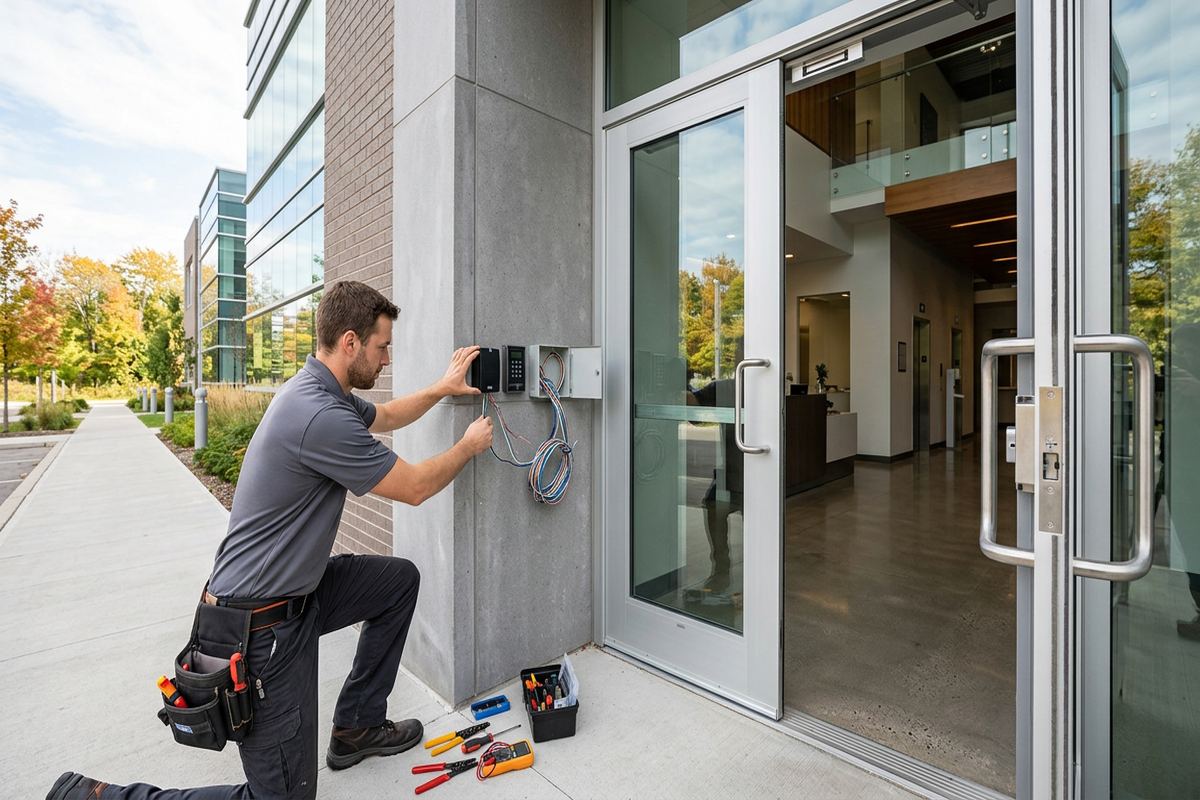
For retail and customer-facing properties, an outdoor system should complement operational procedures rather than collect irrelevant footage. Views at entrances can document arrivals and departures, while parking or delivery views provide wider context. Recording settings, user permissions and export procedures should match the people responsible for managing incidents. During handover, authorized users are shown how to access live and recorded video, subject to the functions of the chosen platform. Cambridge business owners receive their own credentials and an as-built record, helping them manage staff changes, service requests and future additions without depending on undocumented installer accounts.
- Loading, parking and entrance coverage
- Planning for long industrial cable routes
- Property manager and landlord coordination
- User permissions established during setup
- Video search and export handover
Installation, Configuration and Handover
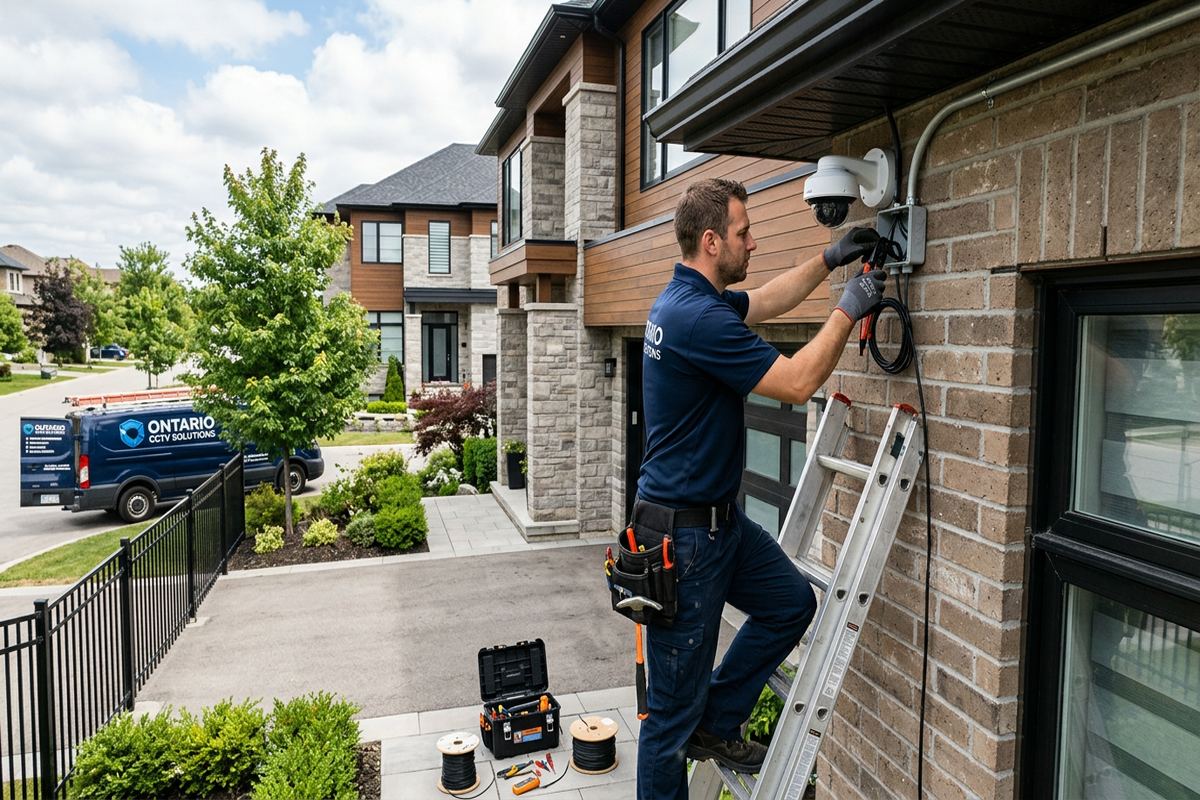
Once the scope is approved and site requirements are ready, installation follows the documented device locations and cable routes. Cameras are mounted, cable runs are completed and labels are applied at relevant endpoints. Equipment is connected and configured on site rather than shipped with generic settings. The installer checks live views, focus where applicable, orientation, time settings and recording status. Exterior penetrations and visible routing are inspected before completion. If an unexpected obstruction or unsafe route is found, the change is discussed instead of silently moving a device to a position that undermines the agreed coverage.
System configuration includes the functions supported by the selected equipment and included in the written scope. These may involve recording schedules, motion areas, notifications, user permissions and remote access. Alerts require careful adjustment because moving branches, snow, rain, insects, headlights and public traffic can all create unwanted events. Cambridge weather makes it important to treat detection settings as a practical starting point rather than a permanent universal setting. Users are shown where adjustments can be made, and any limitations caused by the scene, network or platform are explained during handover.
Handover places control of the system with the customer. Accounts are created or transferred using the customer’s own credentials, and authorized users receive guidance on routine live viewing, playback and video export. The as-built record identifies installed cameras, equipment locations and cable destinations. Equipment ownership and warranty terms are documented in the scope, along with relevant exclusions. UnifiedLink serves as one accountable contractor for the included camera, cabling and configuration work, reducing gaps between separate trades. Customers should retain their records and keep recovery information secure for future administration or service.
- On-site camera and recorder configuration
- View and recording checks before handover
- Customer-controlled accounts and credentials
- Basic playback and export guidance
- As-built installation record supplied
Requesting Outdoor Camera Installation in Cambridge
A useful request begins with the property address, building type and the areas you want to monitor. Mention whether the site is a house, condominium, rental property, commercial unit or industrial facility, and note any known restrictions. Photos can help identify masonry, siding, soffits, existing conduit and likely equipment locations, although they do not replace an on-site assessment. For Cambridge properties with detached buildings, shared walls, finished interiors or high exterior elevations, include that information early. It helps determine what must be reviewed and whether access equipment or approvals may affect the project.
Every project is assessed before pricing. The visit is used to verify mounting surfaces, camera views, cable pathways, network conditions, equipment locations and access requirements. Site assessment timing depends on the service and travel distance. Requests sent during business hours are answered the same day, while after-hours requests are answered the next business day. This response wording applies to the initial request, not a guaranteed installation or arrival time. Once site conditions are understood, UnifiedLink prepares a written scope that allows the customer to compare the proposed work with their actual security and operational needs.
Before approving the work, review the scope for device placement, coverage purpose, visible cable, exclusions, customer responsibilities and ownership terms. Condo consent, landlord permission, network access and any required preparatory work should be confirmed in writing. If landscaping, construction or exterior repairs are planned, camera installation may need to be coordinated with that work. Cambridge sites range from older stone buildings in Galt to frame homes and industrial units, so a repeatable product list is not a substitute for site-specific planning. Clear decisions before installation support a cleaner route and more useful result.
- Provide the address and property type
- Describe the areas requiring coverage
- Identify condo or landlord restrictions
- Schedule a site assessment before pricing
- Review and approve the written scope
Cambridge neighbourhoods we cover
- Galt
- Preston
- Hespeler
- Blair
- West Galt
- Clemens Mill
Outdoor camera installation in Cambridge — common questions
How do Cambridge winters affect outdoor cameras?
Freezing temperatures, snow, ice and repeated freeze-thaw cycles make mounting and sealing important. Cable entries must be protected from water, and cameras should not sit directly beneath predictable runoff. Placement also needs to account for snow accumulation, low winter sun and infrared reflection. The site assessment reviews these Cambridge conditions along with the manufacturer’s operating requirements for the proposed equipment.
Can cameras be mounted on an older stone or brick building?
Often, but the masonry condition and cable route must be assessed first. Older stone buildings in Cambridge can have irregular surfaces, deep joints or exterior details that limit suitable drilling locations. The mounting method should support the camera without treating every stone or mortar joint as equivalent. Proposed penetrations, visible cable and any preparatory work are documented in the written scope before installation.
Do I need approval for a condo or rental installation?
Possibly. Cambridge condominium owners may need approval for cameras attached to exterior walls, soffits, balconies or other common elements. Tenants should obtain landlord permission for penetrations, permanent mounts and cable routes. UnifiedLink can document proposed locations and routing for review, but the condo corporation, property manager or landlord sets its own conditions and must provide the required authorization.
Can you connect cameras to my existing network?
That depends on available network capacity, compatible equipment, cable distances, Power over Ethernet requirements and the customer’s security preferences. During the Cambridge site assessment, relevant switches, recorder locations and internet access can be reviewed. Existing infrastructure is not assumed to be suitable without verification. Any required network hardware, configuration responsibilities and exclusions are then identified in the written scope.
Will I control the camera accounts and recordings?
Yes. Handover uses the customer’s own credentials rather than leaving routine access tied to an undocumented installer account. Authorized users are shown the included live-view, playback and export functions. The customer also receives an as-built record identifying installed devices, equipment locations and cable destinations. Equipment ownership, warranty terms and any platform limitations are stated in the written scope.
How quickly can I arrange a Cambridge site assessment?
Requests sent during business hours are answered the same day, and after-hours requests are answered the next business day. Site assessment timing depends on the service and travel distance, so the initial reply is not an arrival-time guarantee. Provide the Cambridge address, property type, desired coverage areas and any access or approval restrictions to help establish the appropriate next step.
Coverage in Cambridge is confirmed against the address before we quote. See everything we install in Cambridge or the province-wide outdoor camera installation page.