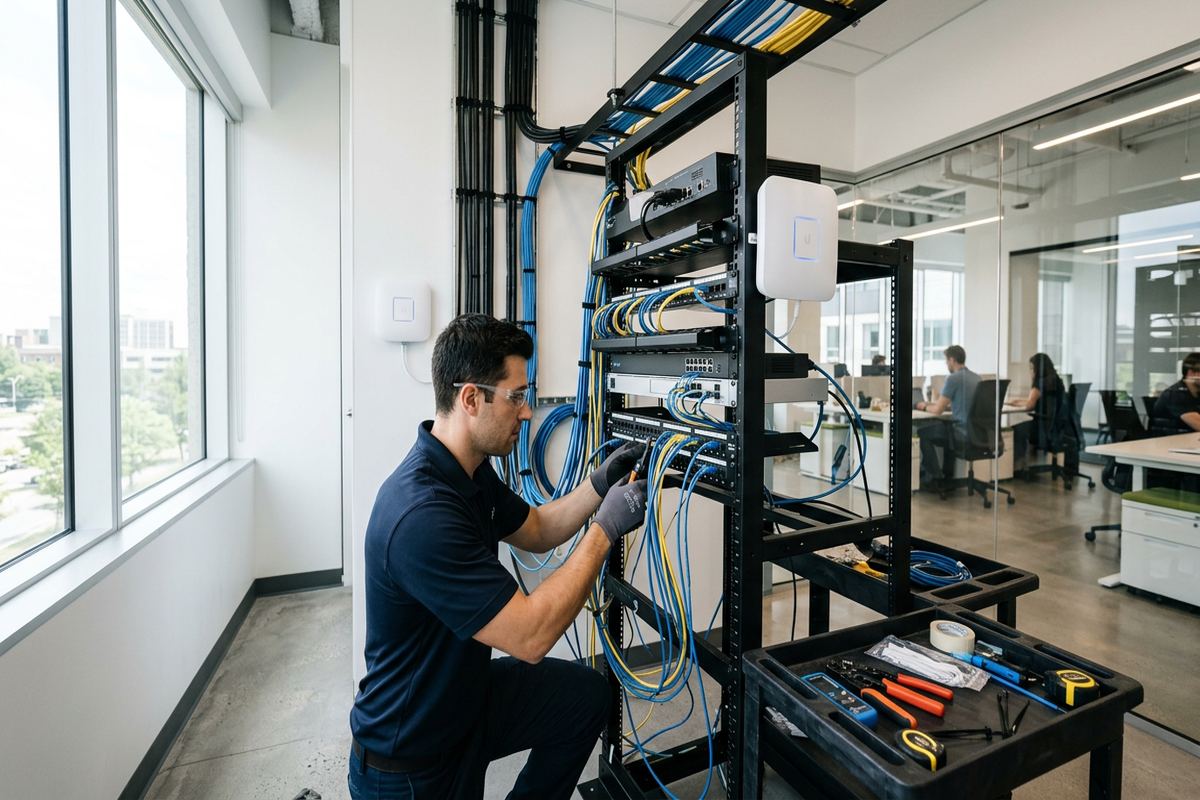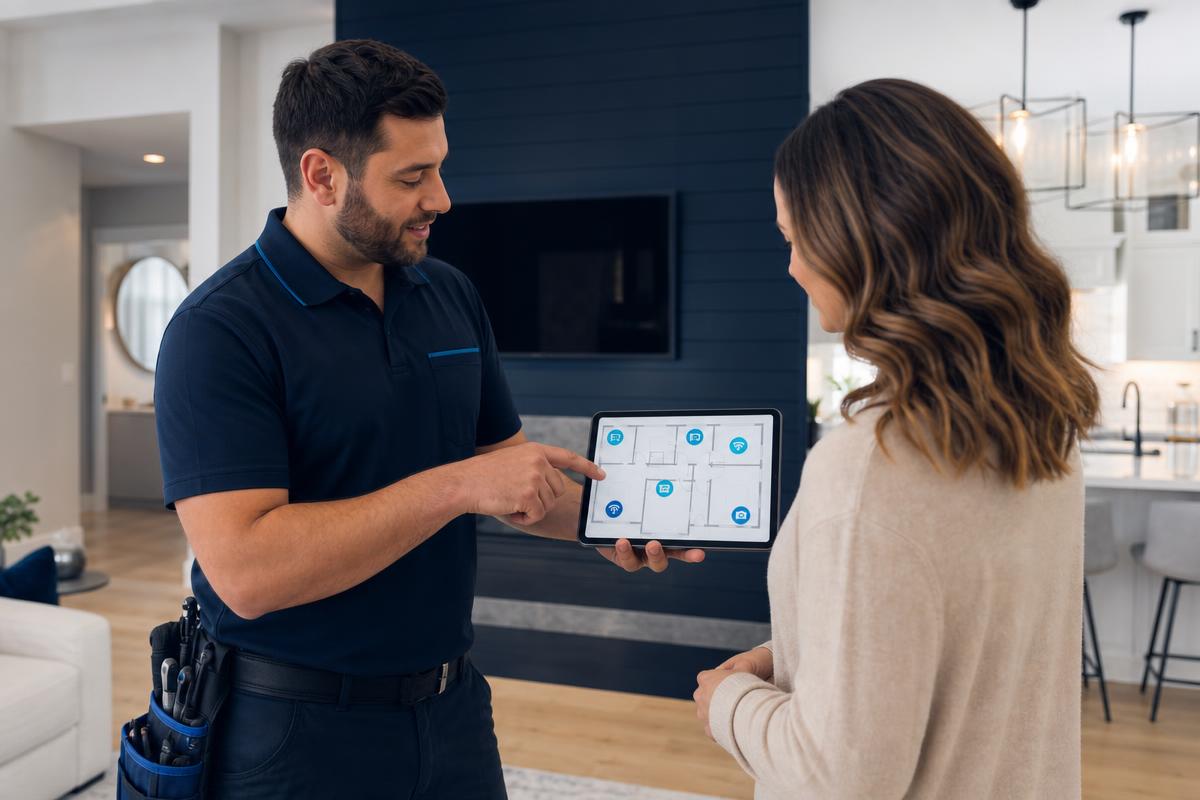
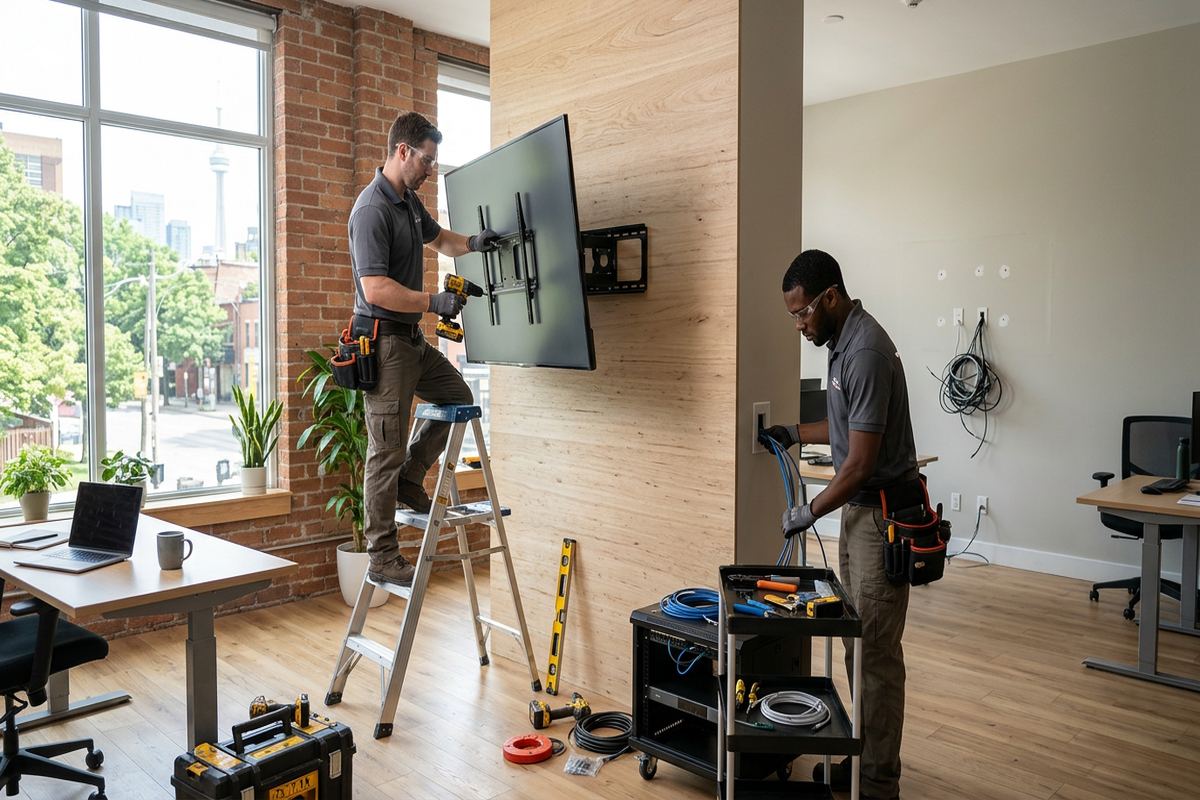
UnifiedLink provides fireplace TV mounting for homes and commercial spaces across Cambridge and Waterloo Region. We assess the fireplace, wall construction, heat exposure, viewing height, power, cable routes and equipment before preparing a written scope. The installation includes secure fastening, on-site configuration, labelled cabling where applicable and a documented handover using your own credentials.
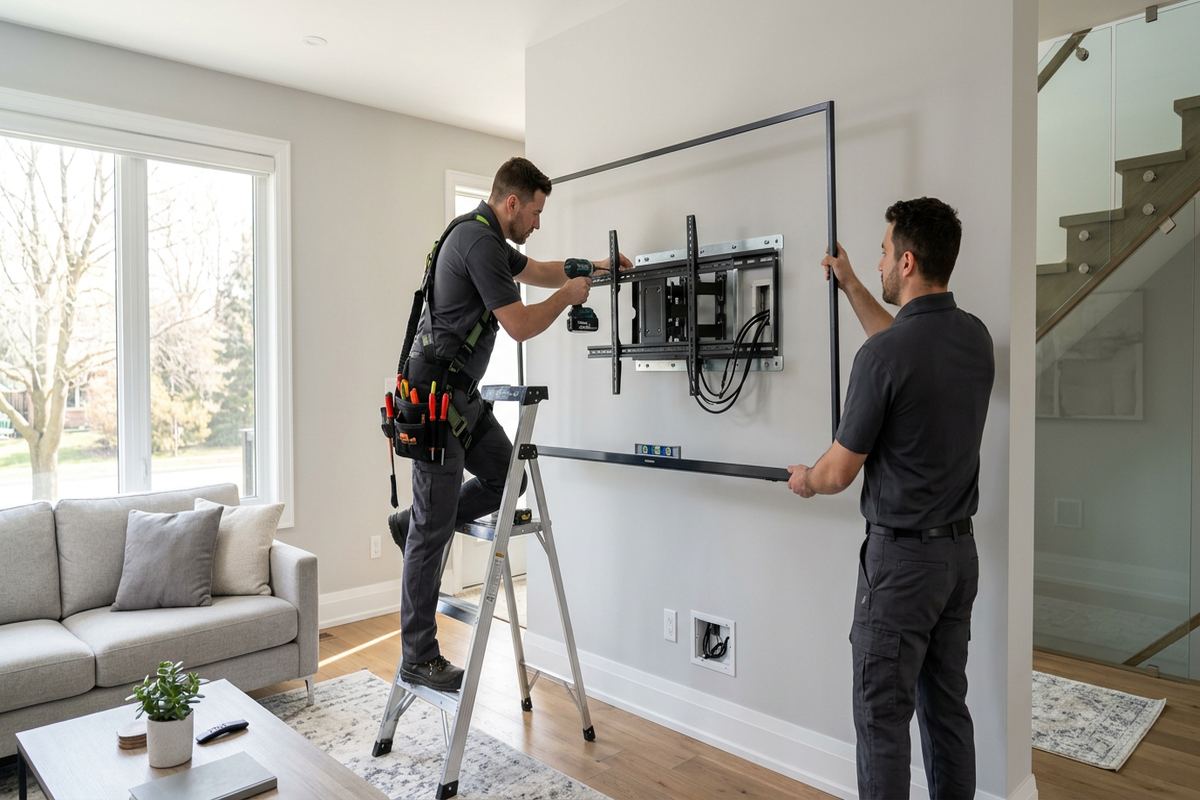
Fireplace TV Mounting Assessments in Cambridge
A fireplace changes the mounting process because heat, wall structure and viewing height must be considered together. Before pricing a Cambridge installation, UnifiedLink assesses the fireplace type, mantel depth, wall finish, available power and intended screen size. We also look for vents, flues, chimneys, concealed services and signs that the visible surface may not reflect the supporting structure behind it. This avoids treating a stone, brick or tiled fireplace like an ordinary framed wall and helps establish whether the proposed position is safe, practical and comfortable for regular viewing.
Heat is measured and evaluated where the television and connected equipment are expected to sit. A mantel may deflect some rising heat, but its effectiveness depends on its depth, fireplace output and the distance between the opening and screen. Manufacturer clearance requirements remain important, including requirements for televisions, mounts and fireplace systems. If temperatures or clearances are unsuitable, the scope may recommend a higher mantel, a different location or another display arrangement. We do not conceal uncertainty behind the finished wall; limitations and required changes are identified before mounting begins.
Cambridge properties vary considerably, so the assessment also considers the building rather than only the fireplace. Stone heritage buildings, riverside neighbourhoods and newer frame construction create different fastening and cable-routing conditions. A West Galt masonry wall may require a different approach from a framed family room in Clemens Mill. The written scope records equipment, device placement, proposed cable routes, exclusions, equipment ownership and warranty information. Site assessment timing depends on the service and travel distance, while pricing follows only after the relevant conditions have been reviewed.
- Fireplace type and operating temperature review
- Mantel depth and clearance check
- Wall structure and finish identification
- Power and signal route planning
- Written scope before pricing
Mounting on Masonry, Stone and Framed Walls
Secure attachment depends on what carries the load behind the finished surface. Brick, concrete, natural stone, manufactured stone, tile, steel studs and wood framing cannot share one fastening method. During a Cambridge fireplace assessment, we determine whether the visible material is structural, a veneer or a finish over another substrate. Anchor selection, embedment depth and drilling locations are then planned around the mount geometry and television weight. Mortar joints, brittle tile edges and unsupported decorative panels are not assumed to provide suitable support simply because they appear solid.
Older properties around Galt and Blair can include layered renovations, irregular masonry and fireplace surrounds added long after the original structure. These conditions may limit access or make common stud-finding methods unreliable. Where exploratory work is justified, it is discussed as part of the scope rather than performed without approval. Drilling is planned to reduce damage to stone faces, tiles and grout, although some dust and vibration are unavoidable. The mount must bear on an appropriate substrate, and cosmetic trim is never treated as structural support unless its construction is verified.
Frame construction presents different questions, especially when a fireplace chase contains metal studs, wood studs, ducts or factory-built fireplace components. Fasteners must reach appropriate framing without entering the firebox, vent system or restricted clearance zones. Blocking may be required when stud positions do not match the mount or when an articulating arm creates higher leverage. UnifiedLink records exclusions where concealed conditions cannot be confirmed. If opening and repairing a wall is needed, that work is identified before installation so the customer understands responsibilities and the intended finished result.
- Anchors matched to verified substrate
- Mount loads distributed across suitable support
- Tile and stone drilling planned carefully
- Fireplace vents and clearances protected
- Blocking needs identified in advance
Heat, Height and Viewing Comfort in Cambridge
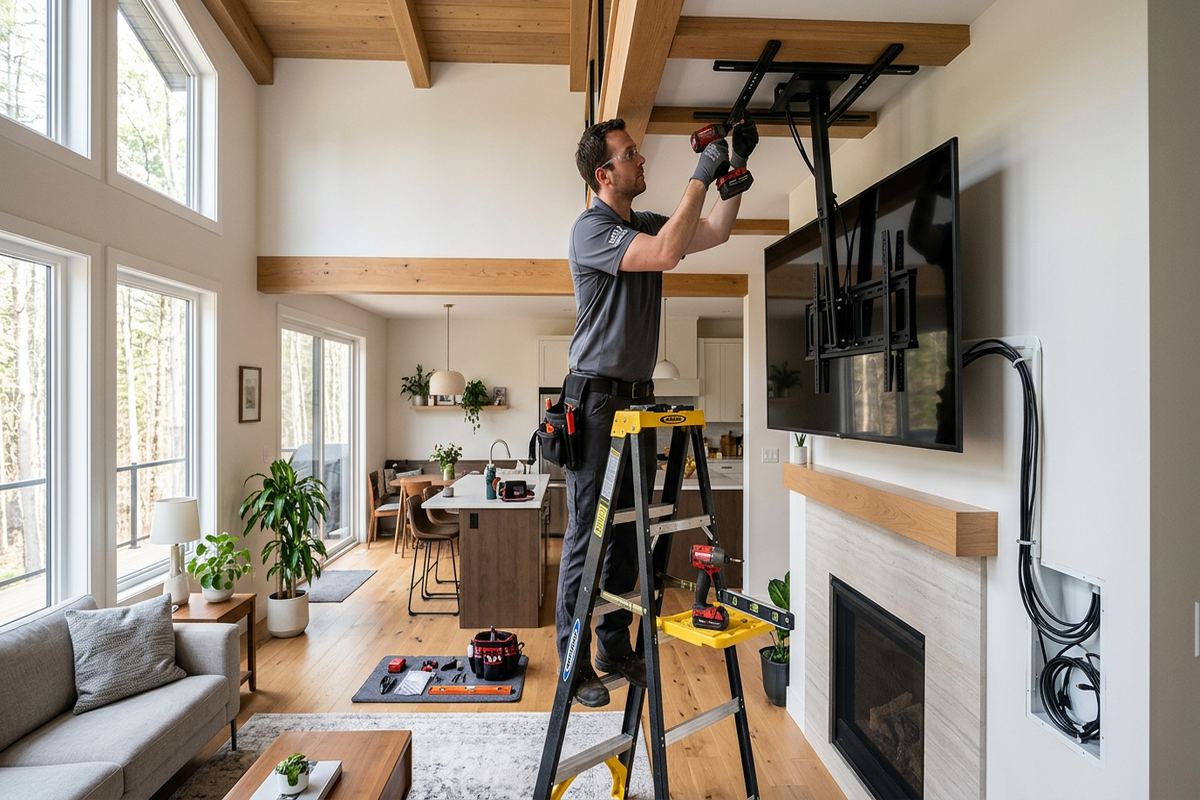
Placing a television above a fireplace often raises the screen beyond normal seated eye level. The correct decision depends on room depth, seating position, screen size, mantel height and how the room is used. We review these factors on site rather than applying a standard height to every Cambridge living room. A tilting mount can improve the viewing angle, while some lowering mounts can bring the screen down for use and return it above the mantel afterward. Each option must still maintain fireplace clearances and operate without striking the surround.
A larger screen does not automatically make a high mounting position comfortable. Neck angle becomes more noticeable in shallow rooms, and reflections can interfere when windows face the display. Riverside neighbourhoods may have rooms oriented toward water or natural light, while older stone homes can have narrow layouts that restrict seating changes. During planning, the proposed screen outline can be checked against the room from likely seats. This practical review helps determine whether fireplace mounting is reasonable or whether an adjacent wall, cabinet system or freestanding display would produce a better result.
Equipment around the screen also needs protection from heat. Streaming devices, signal extenders, power supplies and control hardware should not be placed in hot cavities or pressed behind the television without ventilation. Recessed boxes must be suitable for their intended purpose and cannot interfere with the mount. Fireplace use patterns matter as well; occasional decorative operation differs from sustained winter heating. Cambridge winters can lead to longer fireplace run times, so the assessment considers realistic use during cold weather rather than relying on conditions measured while the fireplace remains off.
- Seated viewing angle reviewed on site
- Screen outline checked before drilling
- Tilt or lowering mount options assessed
- Heat exposure considered for all devices
- Window glare and room depth evaluated
Cambridge, Ontario
Fireplace TV mounting in Cambridge, scoped in writing first
Book a site assessment and get equipment, routes, exclusions, and warranty on paper before anything is installed.
Power and Concealed Cabling for Cambridge Fireplaces
A clean fireplace installation requires a lawful, serviceable route for power and low-voltage signals. Television power cords and ordinary extension cords are not run inside walls unless specifically rated and permitted for that use. Where electrical work or a new receptacle is required, it must be included through an appropriate electrical trade. UnifiedLink plans low-voltage routes for network, HDMI, control or audio connections while keeping them separated from heat sources and sharp masonry edges. The scope distinguishes our work from electrical, fireplace, drywall, plaster, painting or millwork responsibilities.
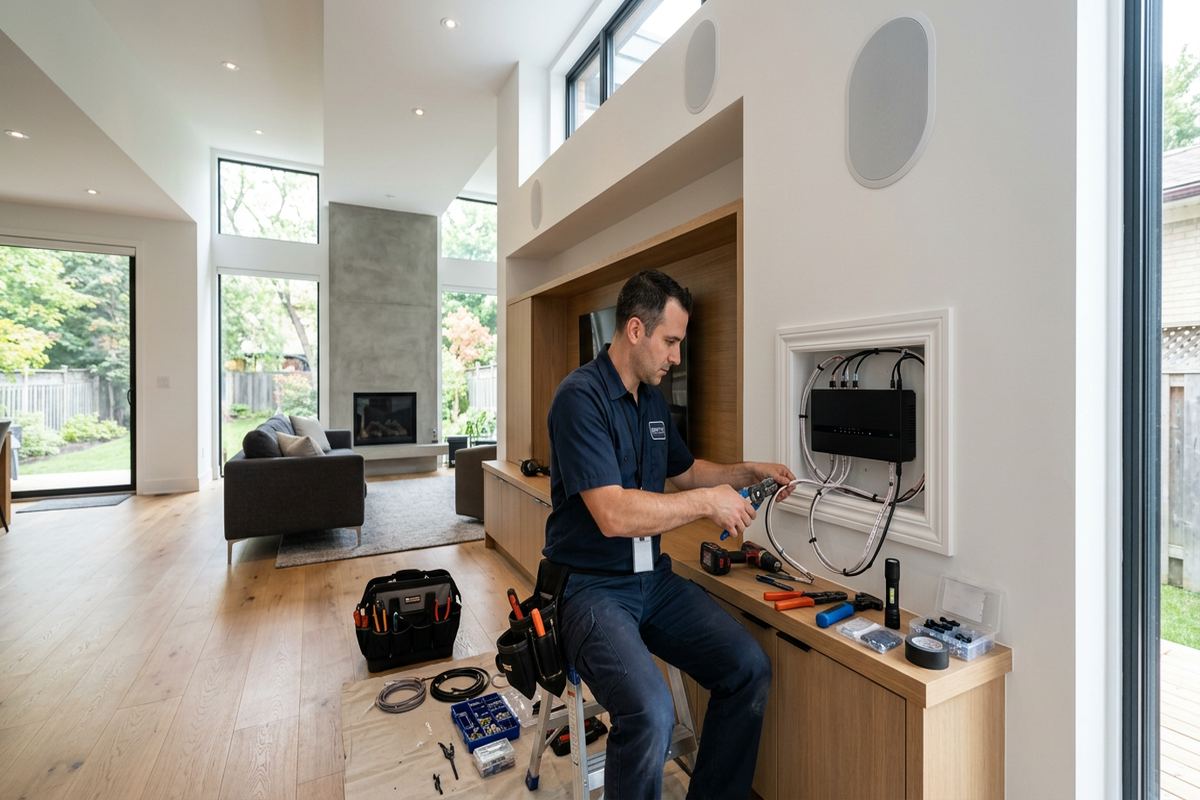
Cable concealment can be straightforward in a framed chase, but solid masonry and stone veneers may leave no usable cavity. Options can include an existing conduit, an accessible side route, surface raceway, carefully placed cabinetry or routing from an adjoining room. In Cambridge heritage properties, preserving original material may take priority over fully hidden cabling. We explain visible sections and access requirements before work starts. Any continuous cable runs installed by UnifiedLink are labelled at their accessible ends, avoiding undocumented couplers or hidden joins that complicate future service and equipment replacement.
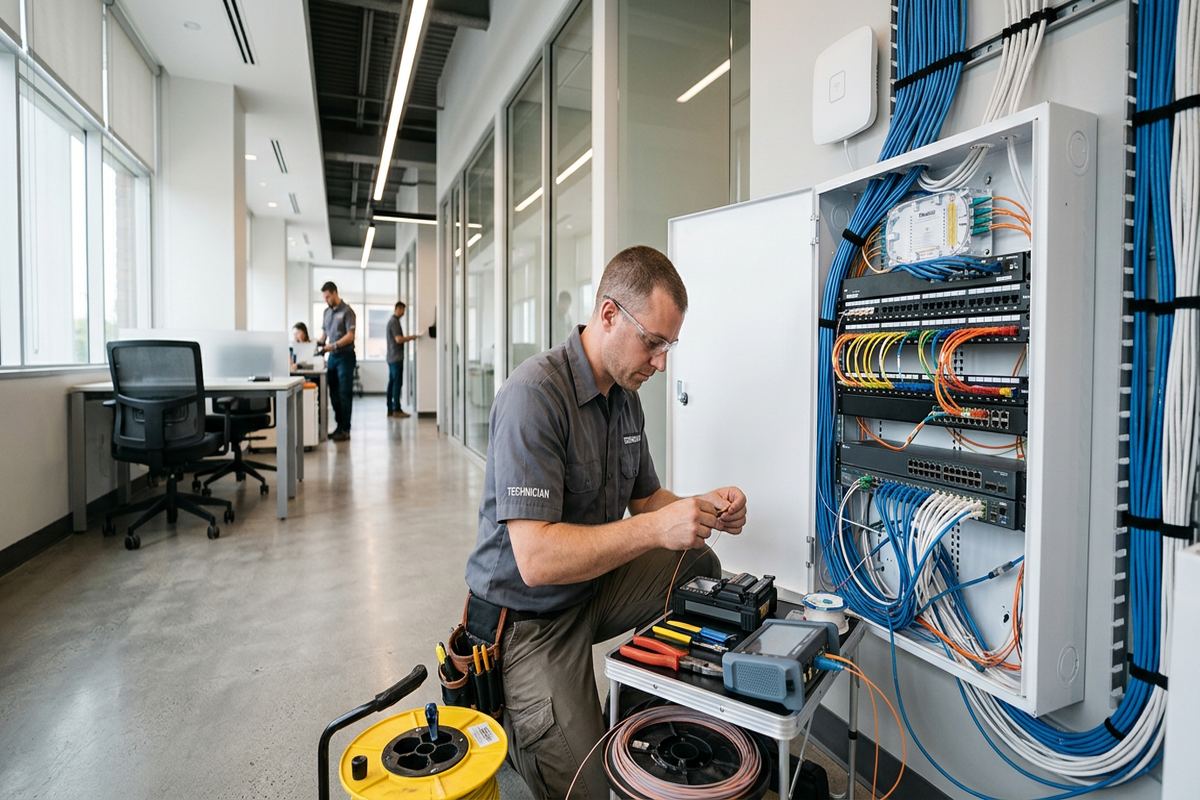
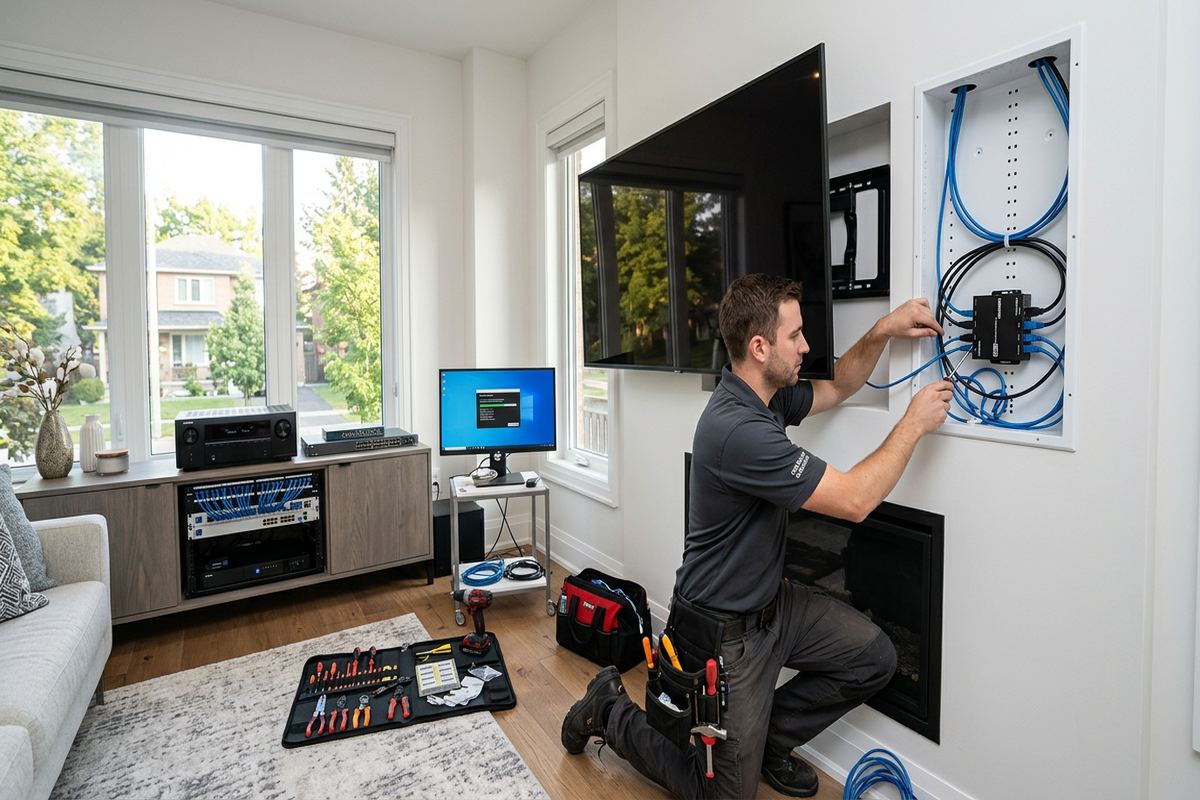
Modern displays may need more than one signal path. A hard-wired network connection can improve reliability for streaming and commercial content, while HDMI links must support the required distance and equipment format. Soundbars, remote equipment cabinets and control devices also affect cable quantities and outlet locations. We check connector clearance behind the screen so plugs are not crushed by a low-profile bracket. At handover, the customer receives an as-built record showing installed cable routes and terminations, along with configuration completed using the customer’s own accounts and credentials.
- No ordinary extension cords inside walls
- Continuous low-voltage runs where installed
- Accessible cable ends clearly labelled
- Connector clearance checked behind display
- As-built cable record supplied
Mount and Equipment Selection
The mount must fit both the television and the fireplace arrangement. Selection begins with the display’s VESA pattern, weight, mounting-hole location and connector layout. We then consider the wall substrate, required tilt, extension, lateral adjustment and access for future servicing. A fixed mount gives a shallow profile but limited cable access. A tilting bracket can improve a high viewing angle, while an articulating mount increases leverage on the wall and needs stronger support. Lowering fireplace mounts involve moving parts, clearances and operating space that must be reviewed carefully.
Fireplace surrounds often leave less usable width than the wall suggests. The bracket plate, arms and fasteners must fit within the structural mounting area without landing on unsupported veneer or crossing decorative joints unnecessarily. Soundbars can attach to the television, mount independently or sit on a mantel, but each arrangement changes weight, movement and cable routing. If the screen is intended to extend over deep trim, the bracket geometry must allow it without binding. Equipment compatibility is confirmed in the written scope so substitutions are not made casually during the installation.
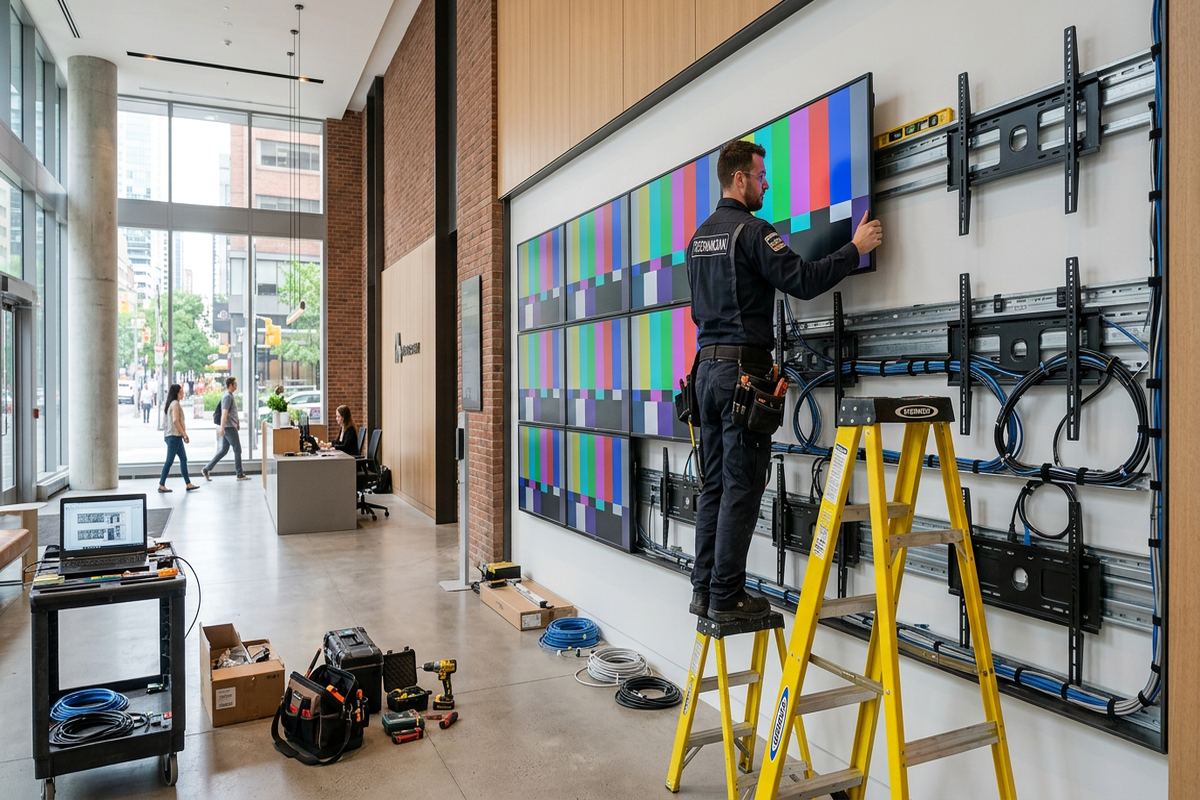
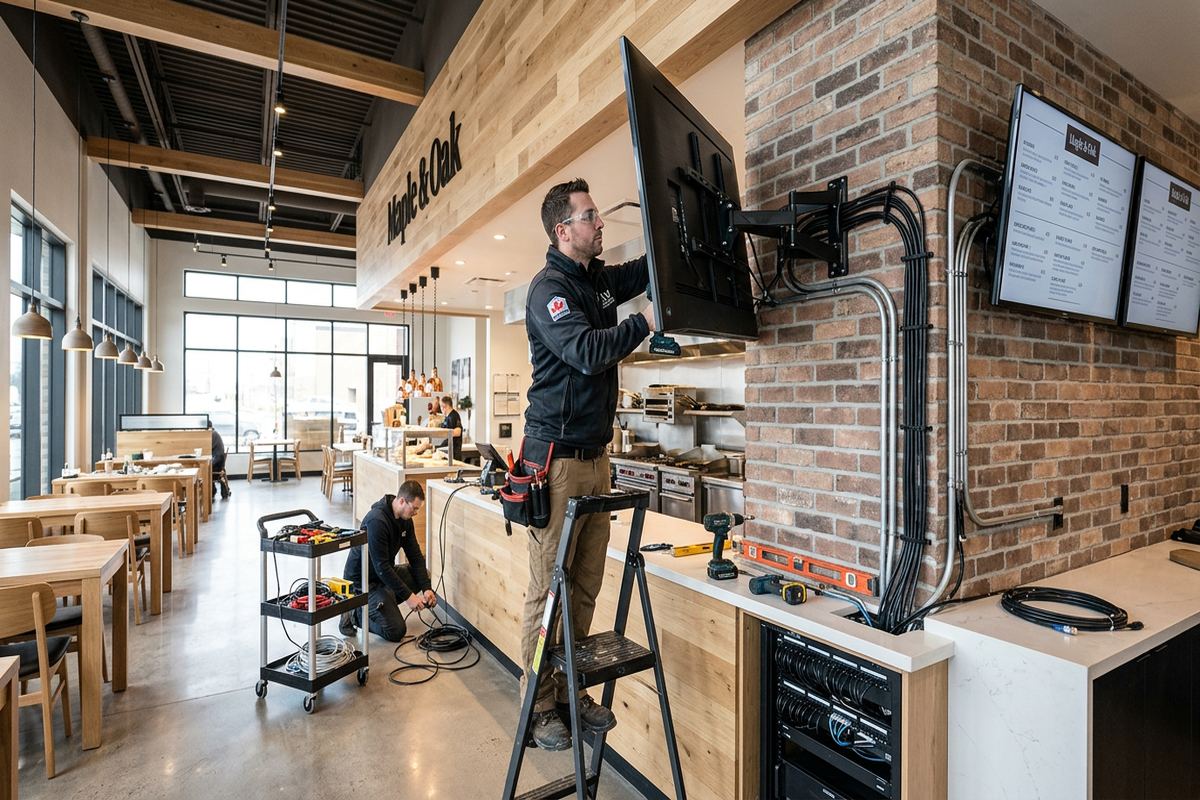
Commercial displays have different requirements from household televisions. A screen above a fireplace in a Cambridge restaurant, office reception area or commercial strip may operate for longer periods and show scheduled content. Controls must remain accessible to authorized staff, and the mounting position should account for public reach, glare and service access. Industrial units may use a display in an office, showroom or staff area where wall construction differs from the surrounding warehouse. We assess the specific room and provide one accountable contractor for the defined display, cabling and configuration scope.
- VESA pattern and display weight confirmed
- Mount movement matched to wall strength
- Soundbar position included in planning
- Service access retained behind screen
- Commercial operating needs considered
Cambridge Installation and On-Site Configuration
Installation starts by confirming the approved position and checking that site conditions still match the written scope. Floors, the mantel and nearby finishes are protected before drilling. The mounting surface is marked, fastening points are verified and the bracket is levelled independently of irregular stone or trim lines. Dust-control methods are selected for the material, particularly when drilling masonry. Once the bracket is secured, the display is attached, safety hardware is engaged and movement is tested. Cables are dressed to avoid pinching, heat exposure and interference with articulating components.
On-site configuration covers the functions included in the scope rather than ending when the television reaches the wall. This may include network connection, input naming, basic display settings, streaming-device connection, soundbar setup and testing of customer-supplied sources. Accounts are configured with the customer’s own credentials, which remain under the customer’s control. We do not create shared installer accounts that make future access dependent on us. Remote controls and applications are checked from the normal seating area, and any equipment limitations discovered during setup are recorded for the customer.
The handover provides a practical record of what was installed. It identifies mount and display placement, low-voltage cable routes, labelled terminations and relevant configuration details. Equipment ownership and warranty responsibilities follow the written scope, which is especially useful where a landlord, tenant, condominium corporation or business occupies the premises. The customer is shown how to move an adjustable mount safely, access connections and recognize any clearance restrictions. For service requests, messages received during business hours are answered the same day; after-hours requests are answered the next business day.
- Approved position confirmed before drilling
- Room finishes protected during installation
- Mount movement and safety locks tested
- Customer-owned credentials used for setup
- As-built record provided at handover
Approvals, Exterior Walls and Local Conditions
Ownership and approval need to be settled before holes are drilled. Cambridge condominium owners may require permission for work affecting common elements, shared walls or fireplace systems. Tenants should obtain written landlord approval, including agreement on restoration obligations and ownership of installed cabling or brackets. Commercial tenants may also need property-management approval, particularly in multi-unit strips or industrial parks. UnifiedLink can document the proposed mounting location and cable route in the scope, but the customer remains responsible for securing building, landlord or condominium authorization unless another arrangement is expressly included.
An interior fireplace may sit against an exterior wall, which changes cable planning and sealing requirements. Penetrations through insulation, air barriers or vapour-control layers should be minimized and sealed appropriately to reduce drafts and moisture movement. Cambridge winters and repeated freeze-thaw cycles can expose exterior masonry defects, especially where previous penetrations were left unsealed. We inspect accessible conditions around the proposed route and avoid assuming that a visible gap is suitable for cabling. Repairs to deteriorated masonry, flashing or building-envelope components are identified as separate work when they fall outside the installation scope.
Exterior display mounting requires additional review beyond an indoor fireplace installation. The television, mount, cabling, connectors and enclosure must be suitable for the exposure, and penetrations need compatible weather sealing. Water should not be directed toward openings, and cable paths should include appropriate drip management. In riverside areas, wind-driven moisture and seasonal temperature changes make sheltered placement important. Stone walls also demand careful anchor and sealant selection. An indoor television is not converted into an outdoor-rated display simply by placing it beneath an overhang, so equipment limitations are documented before installation.
- Condo or landlord approval confirmed
- Exterior-wall penetrations kept controlled
- Air and moisture layers considered
- Outdoor equipment suitability verified
- Weather sealing included where scoped
Fireplace TV Mounting Across Cambridge Properties
Different parts of Cambridge call for different installation decisions. Galt and West Galt include stone and masonry buildings where walls may be thick, irregular or altered through several renovations. Preston properties can combine older construction with later additions, creating transitions between masonry and framing. Hespeler and Clemens Mill homes may offer more conventional framed chases, although fireplace vents, factory clearances and concealed services still need verification. Blair properties can include distinctive finishes where preserving stone, woodwork or plaster influences the chosen bracket and cable route.
Commercial strips and industrial parks add operational concerns that are less common in a private living room. Access may need to be coordinated around customers, staff or production activity. Wall assemblies can include concrete block, steel studs, insulated panels or demising walls with restrictions on penetrations. Displays in reception rooms, staff spaces and showrooms may require hard-wired networking, scheduled operation or connections to remotely located source equipment. A site assessment establishes the physical constraints and confirms which party is responsible for power, network service, wall repair, lifts or access outside ordinary occupied areas.
A successful fireplace TV installation is defined by secure support, controlled heat exposure, usable viewing and understandable documentation. UnifiedLink handles the agreed display mounting, low-voltage routing and configuration as one accountable contractor, while clearly identifying work that belongs to other trades. Cambridge customers receive a written scope before installation, including device placement, cable routes, equipment, exclusions, ownership and warranty information. After testing, labelled connections and the as-built record make later changes easier to understand. The result is an installation planned for the property rather than a bracket attached without context.
- Service across Cambridge communities
- Heritage finishes considered before drilling
- Industrial wall assemblies assessed on site
- Commercial access requirements documented
- One contractor for the defined scope
Cambridge neighbourhoods we cover
- Galt
- Preston
- Hespeler
- Blair
- West Galt
- Clemens Mill
Fireplace TV mounting in Cambridge — common questions
Can any TV go above a fireplace?
Not always. The television, mount and fireplace must meet their respective clearance and temperature requirements. During a Cambridge site assessment, we review fireplace type, mantel depth, operating heat, wall structure and viewing height. If the proposed location is too hot or uncomfortable, the scope may recommend another wall, a different mantel arrangement or a suitable lowering mount.
Can you mount into stone or brick?
Yes, when the masonry or supporting substrate is suitable. Cambridge stone and brick surrounds vary from structural masonry to thin veneer, so the visible finish cannot be assumed to carry the television. We identify the substrate, select appropriate anchors and plan drilling around fragile edges, mortar joints, vents and concealed fireplace components before proceeding.
Can the wires be completely hidden?
That depends on the fireplace construction and available route. Framed chases may provide an internal path, while solid masonry or stone can require conduit, cabinetry, an adjoining-room route or surface raceway. We explain any visible sections in the Cambridge installation scope. Ordinary extension cords are not concealed inside walls, and required electrical work is assigned to an appropriate trade.
Do I need condo or landlord approval?
Approval is often required when you rent, live in a condominium or plan to penetrate a shared wall or common element. Cambridge customers should confirm permission before installation, including restoration requirements and ownership of the mount or cabling. UnifiedLink can provide a written scope showing the proposed placement and route, but authorization remains the customer’s responsibility unless specifically included.
Will a lowering fireplace mount work?
A lowering mount may improve viewing comfort, but compatibility depends on the television, wall strength, mantel projection, fireplace clearances and available movement. During the Cambridge assessment, we check whether the screen can travel safely without contacting trim, cables or the fireplace surround. The supporting structure must also handle the additional leverage created by the moving bracket.
What do I receive after installation?
After the Cambridge installation, we test the mount, connected sources and included display functions. Configuration uses your own credentials. You receive an as-built record covering installed low-voltage routes and labelled terminations, along with relevant equipment and placement details. We also explain mount movement, connection access and any heat or clearance restrictions that must be observed.
Coverage in Cambridge is confirmed against the address before we quote. See everything we install in Cambridge or the province-wide fireplace tv mounting page.