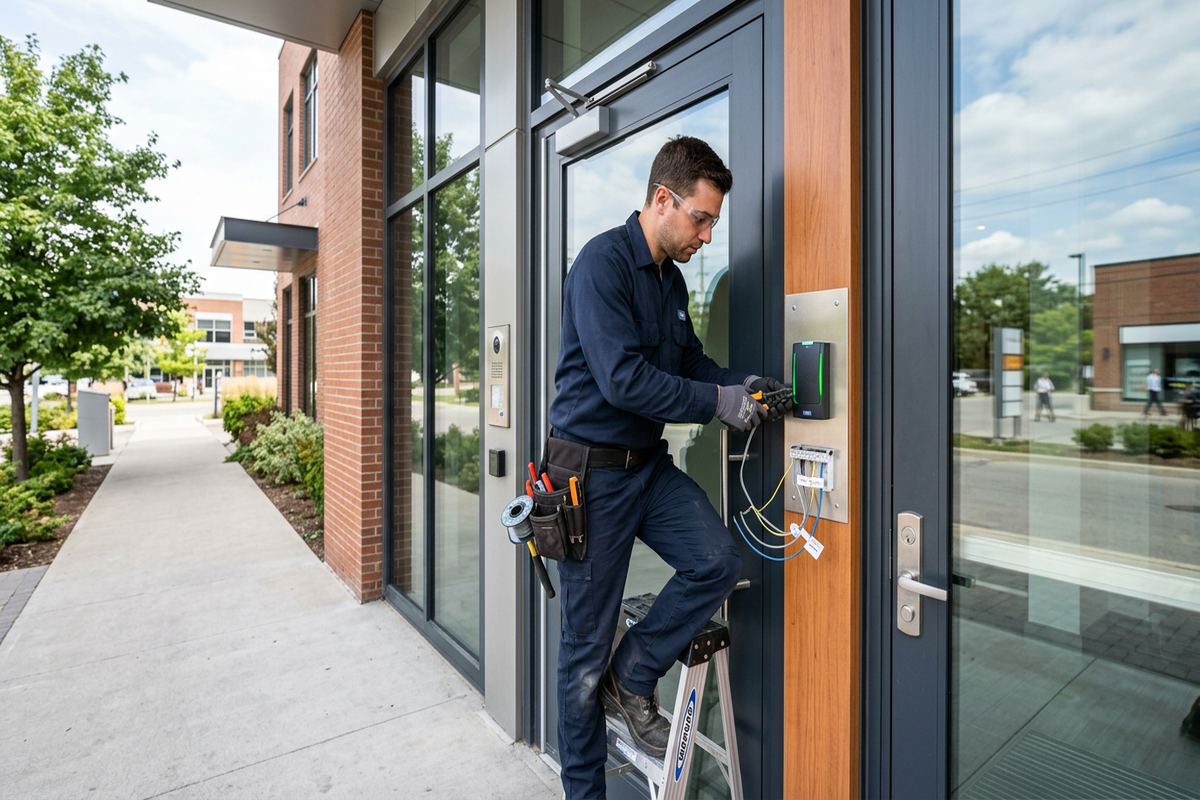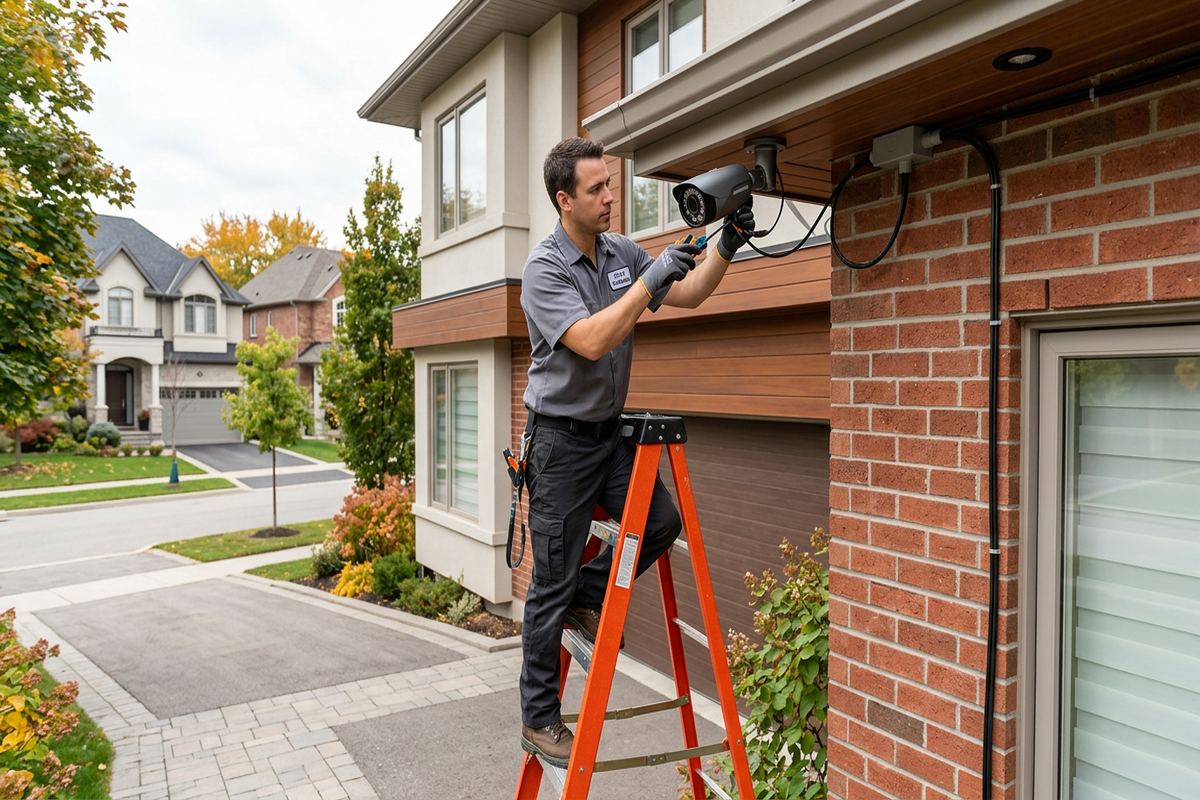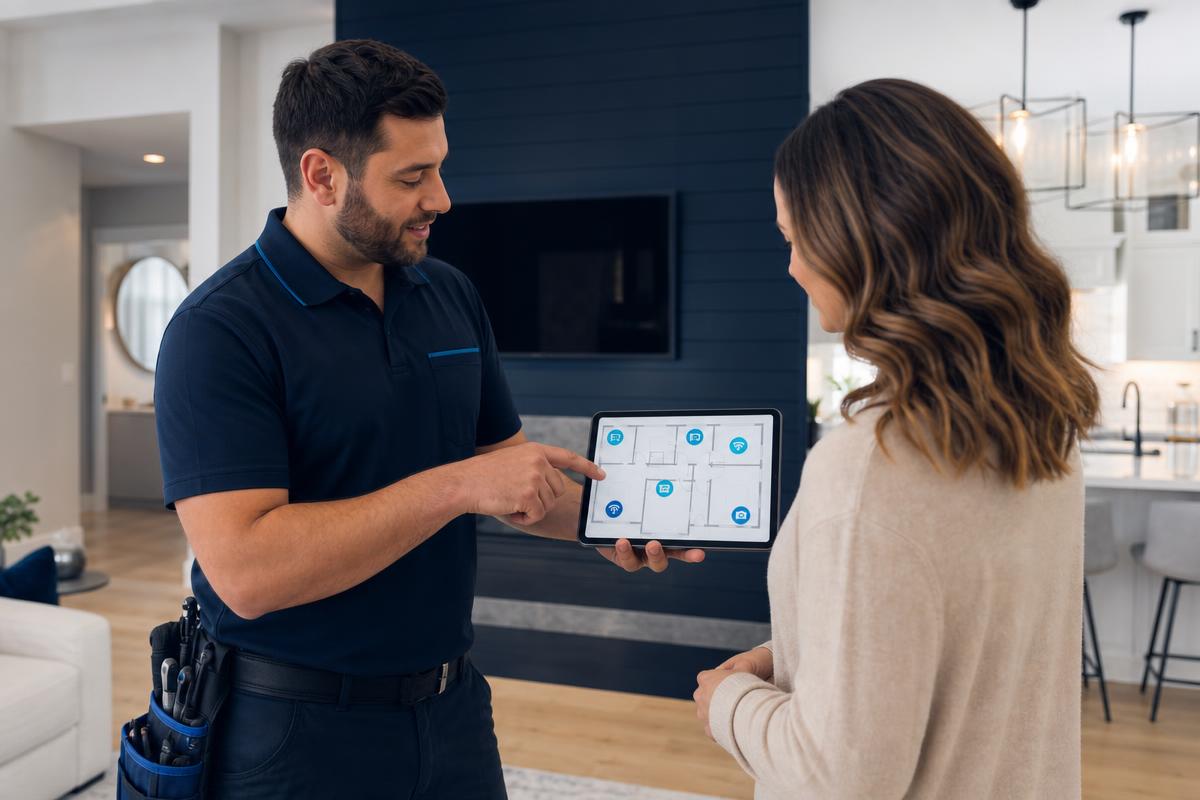
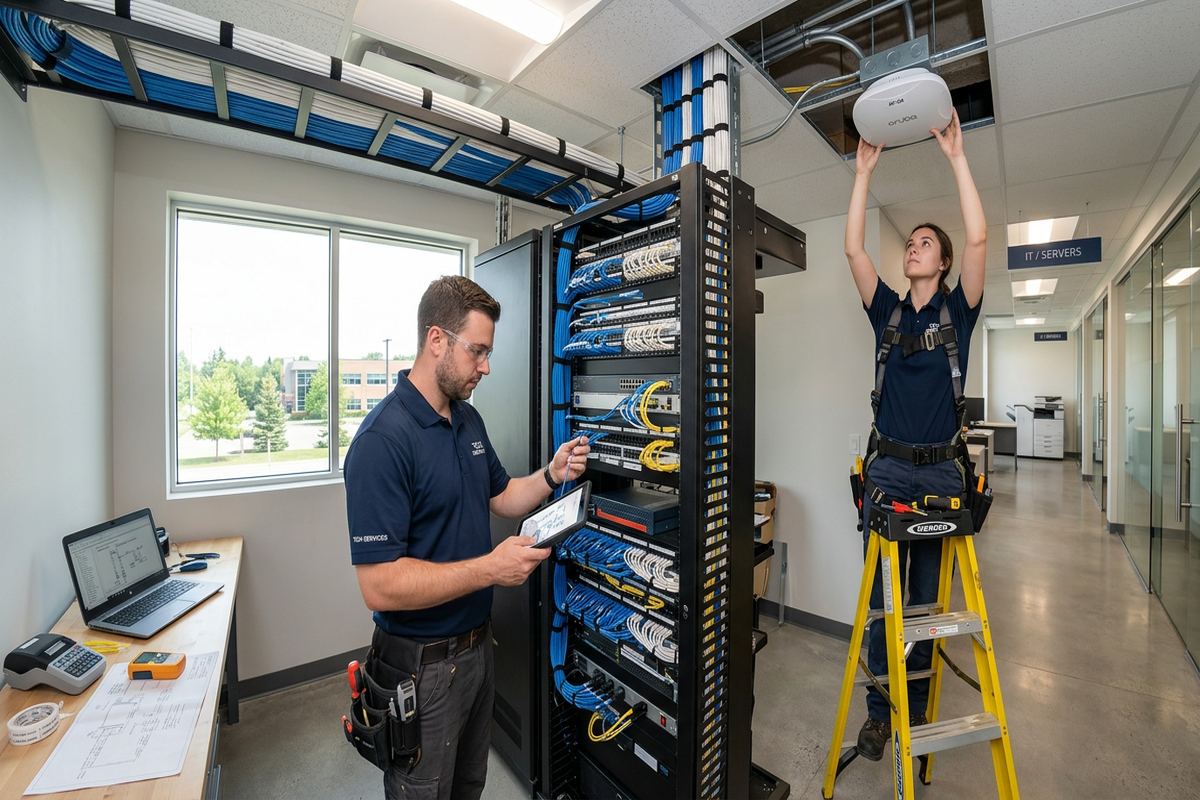
UnifiedLink installs wired and wireless home networks across Brampton and Peel Region. We plan cable routes, network equipment, Wi-Fi access points and device locations around the property’s construction and coverage needs. Each installation includes on-site configuration, labelled cabling and a documented handover using credentials controlled by the customer.
Home Network Planning for Brampton Properties
A reliable home network starts with the building, not a box of equipment. During a site assessment, UnifiedLink reviews the internet service entry, electrical panel area, utility room, wall construction, finished spaces and places where people actually use connected devices. We also identify televisions, workstations, cameras, doorbells, gaming systems and smart-home equipment that should have wired connections. This planning establishes practical cable routes and access-point locations before installation begins, reducing visible wiring, avoidable wall openings and wireless dead zones throughout the Brampton property.
Brampton’s fast-growing subdivisions include frame-built homes with several finished levels, attached garages and basements that may already have completed ceilings. These conditions can restrict direct cable paths between a utility area and upper floors. Homes in Bramalea or Downtown Brampton may present different challenges, including older finishes, masonry sections or previous renovations with undocumented wiring. We inspect rather than assume. Where concealed routes are unavailable, we discuss surface raceway, carefully selected wall openings or exterior-rated pathways before placing equipment or preparing the written scope.
The assessment also considers how the household uses its connection. Video meetings, cloud backups, media streaming and gaming create different demands from casual browsing, while cameras and other always-connected devices benefit from stable wired links. UnifiedLink separates coverage problems from internet-plan limitations and equipment faults so the proposed work addresses the actual issue. Before pricing, customers receive a written scope covering equipment, cable routes, device placement, exclusions, equipment ownership and warranty, providing a clear basis for approving the Brampton network installation.
- Internet entry and utility-area review
- Proposed Ethernet and access-point locations
- Finished-wall and basement route planning
- Device and usage requirement review
- Written scope before pricing
Wired Ethernet Installation in Brampton
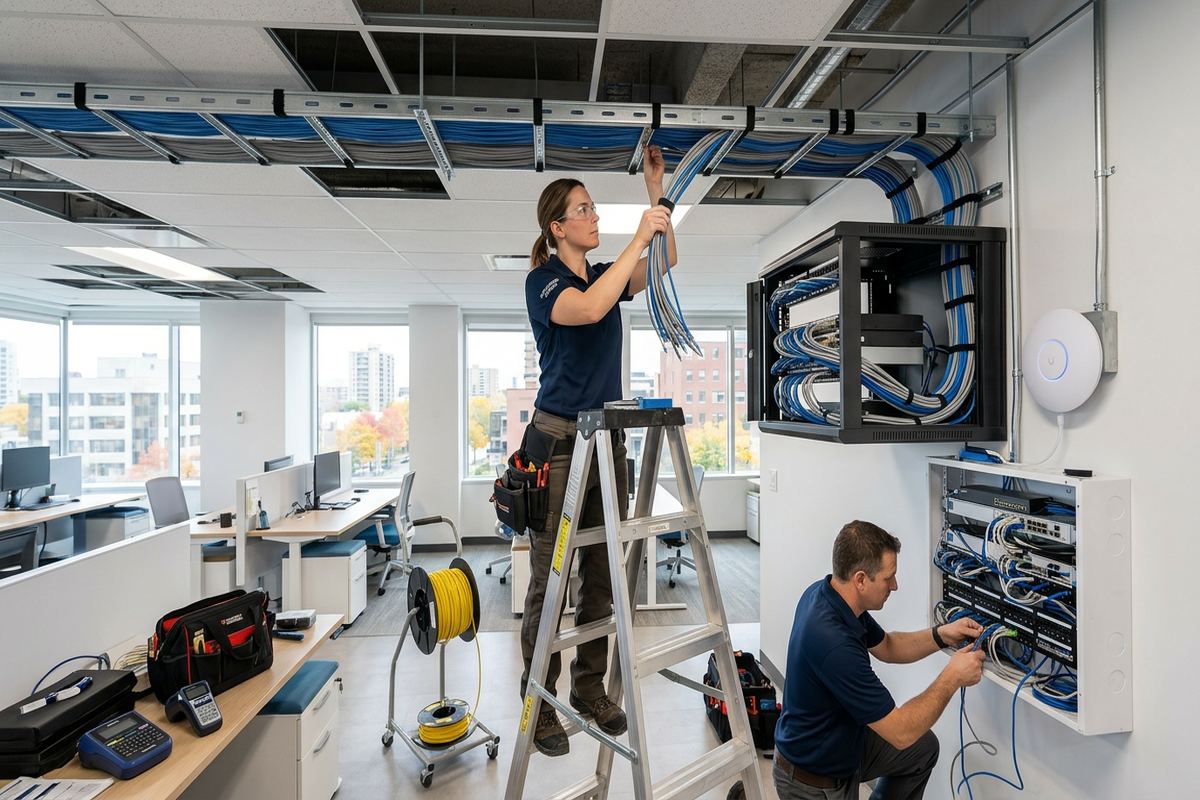
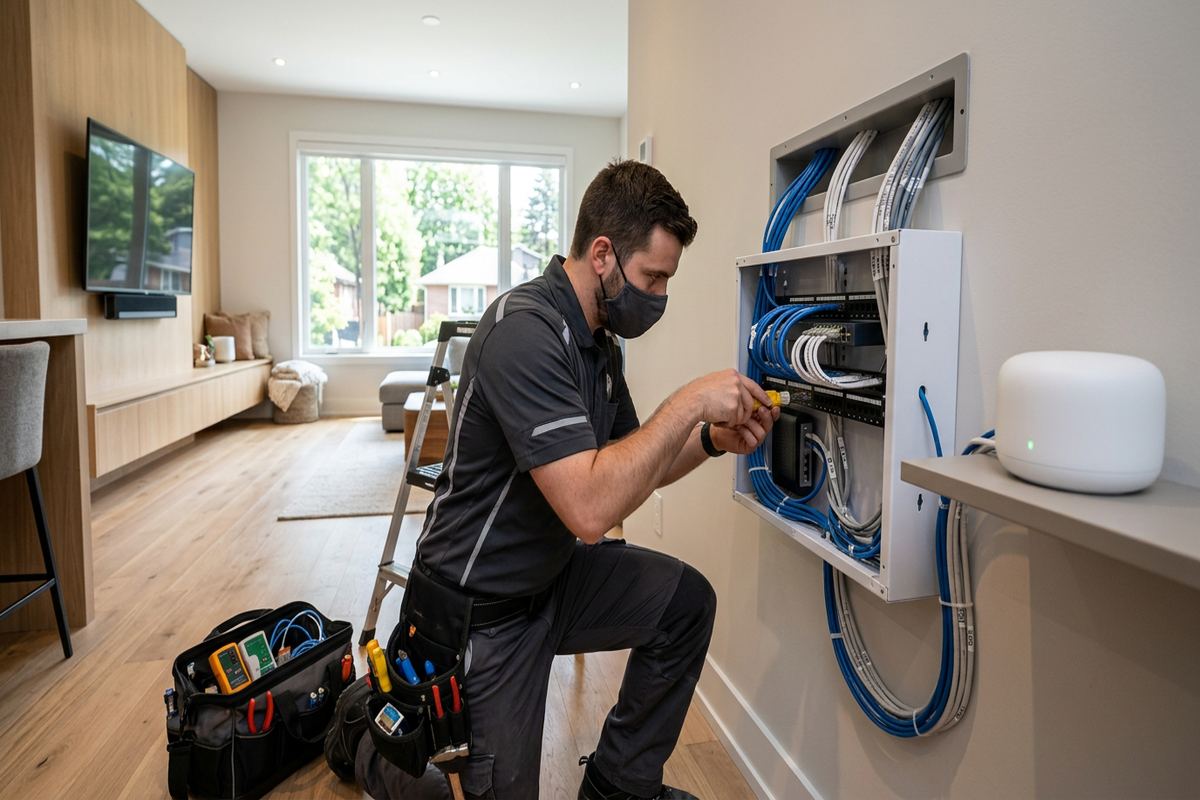
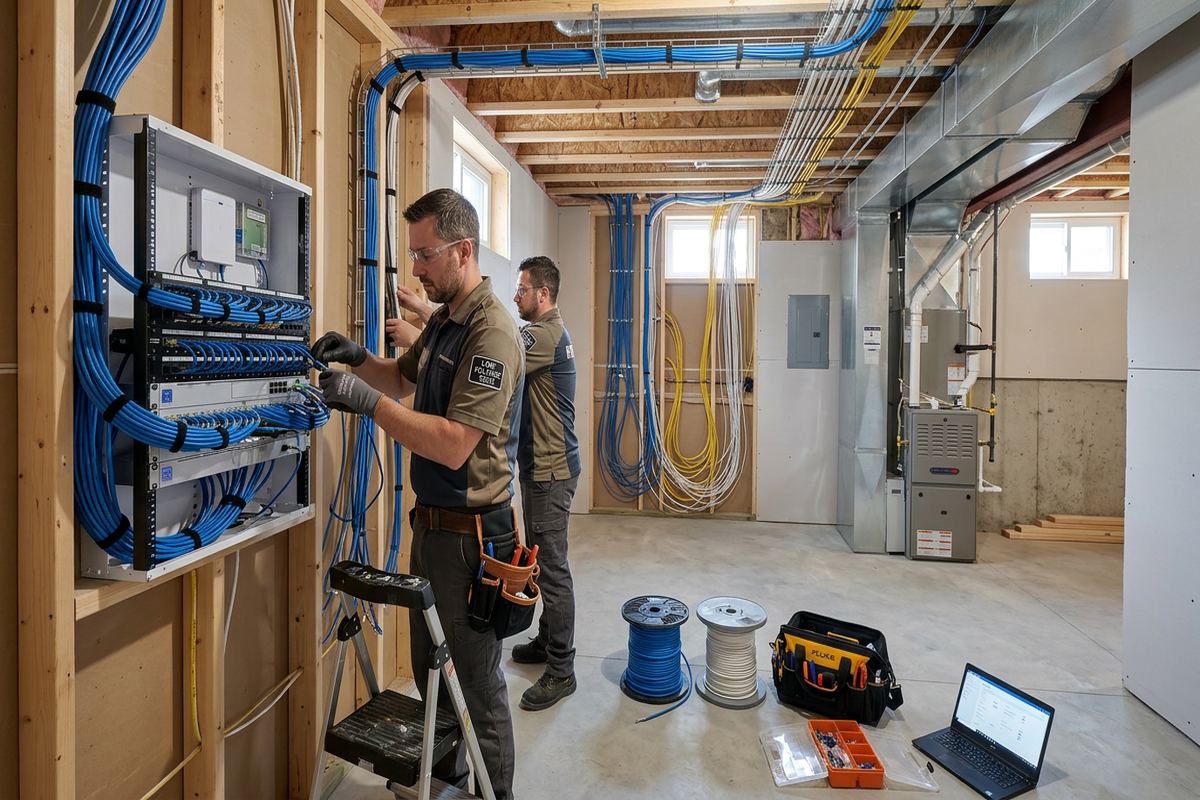
Ethernet provides a stable foundation for equipment that does not need to move. UnifiedLink installs continuous labelled cable runs from the network location to approved wall outlets, ceiling access points, work areas and compatible devices. Each route is selected around framing, mechanical systems, electrical wiring and finished surfaces. Cable ends are terminated using suitable jacks, patch panels or plugs for the application, then identified consistently. This approach makes future troubleshooting and changes more manageable than loose, spliced or undocumented cabling hidden throughout a Brampton house.
Finished basements are common in Brampton subdivisions and often contain offices, recreation rooms or rental living areas. Once drywall ceilings are closed, reaching the main floor or upper storeys may require closets, bulkheads, utility chases or a discreet exterior route. We review these options with the owner before work starts. Drilling through masonry, brick veneer or concrete requires different tools and sealing methods than passing through wood framing. Penetrations are positioned carefully, fitted appropriately and sealed against moisture rather than left as exposed holes.
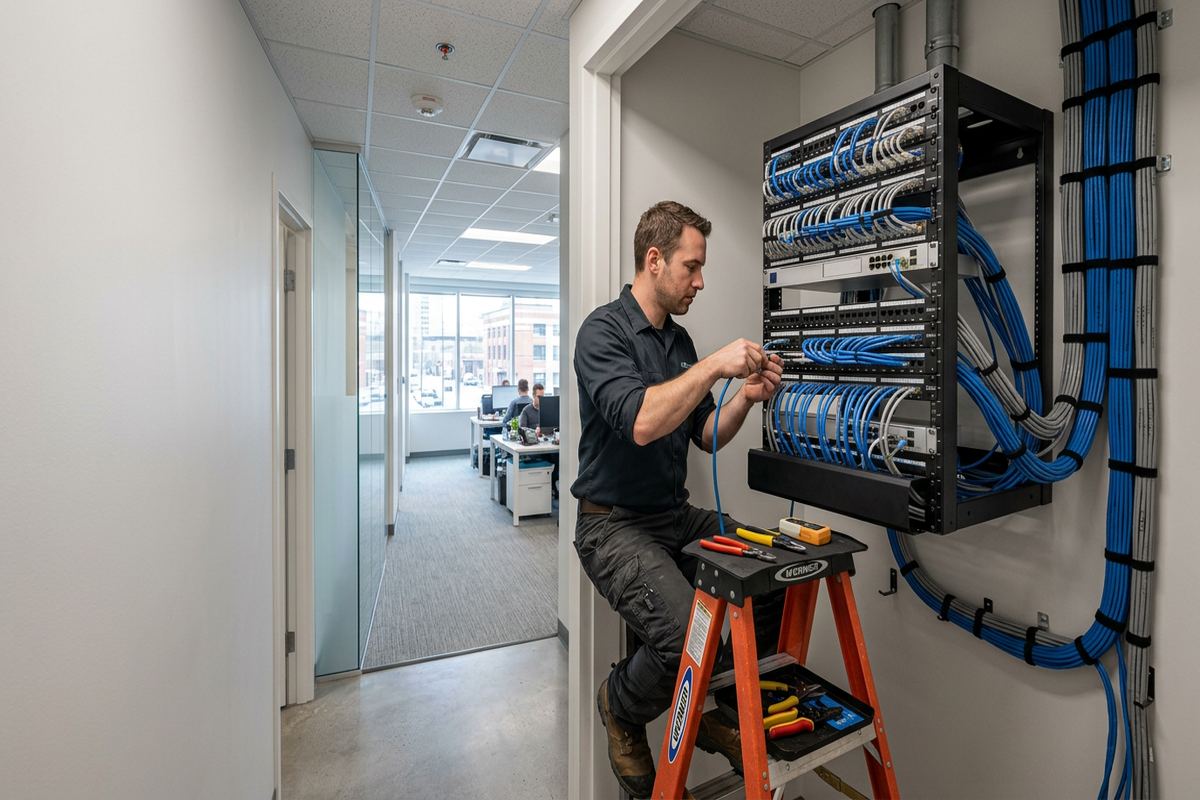
A central network location should be accessible, ventilated and large enough for the modem, router, switch, patching and any power equipment included in the scope. It should not be buried behind stored belongings or placed where heat and moisture can shorten equipment life. We organize patch leads and labels so each room or device can be identified without tracing cables repeatedly. If the property already contains Ethernet or telephone-style cabling, we inspect its routing, terminations and suitability before recommending reuse in the completed Brampton network.
- Continuous labelled cable runs
- Patch-panel and wall-jack termination
- Routes planned around finished surfaces
- Masonry and frame drilling methods
- Organized central network location
Wi-Fi Coverage Across Brampton Homes
Wi-Fi performance depends on access-point position, building materials, channel conditions and the capabilities of connected devices. A powerful router in one corner rarely provides balanced coverage across multiple floors. UnifiedLink plans access points closer to the areas they serve and uses wired backhaul where practical. Ceiling or high-wall locations can improve distribution while keeping equipment away from furniture and clutter. For larger Brampton homes, multiple coordinated access points generally provide a more consistent design than relying on repeaters that rebroadcast an already weak wireless signal.
Construction varies between communities such as Springdale, Heart Lake and Mount Pleasant. Wood framing is usually easier for radio signals to cross than concrete, masonry, metal ductwork, mirrors or foil-backed materials. Finished basements add another barrier when the router remains near the service entry and daily use occurs two floors away. We account for these obstructions when choosing preliminary locations, then configure the installed system on site. Coverage is checked in the rooms and work areas identified during planning, rather than judged only beside the equipment.
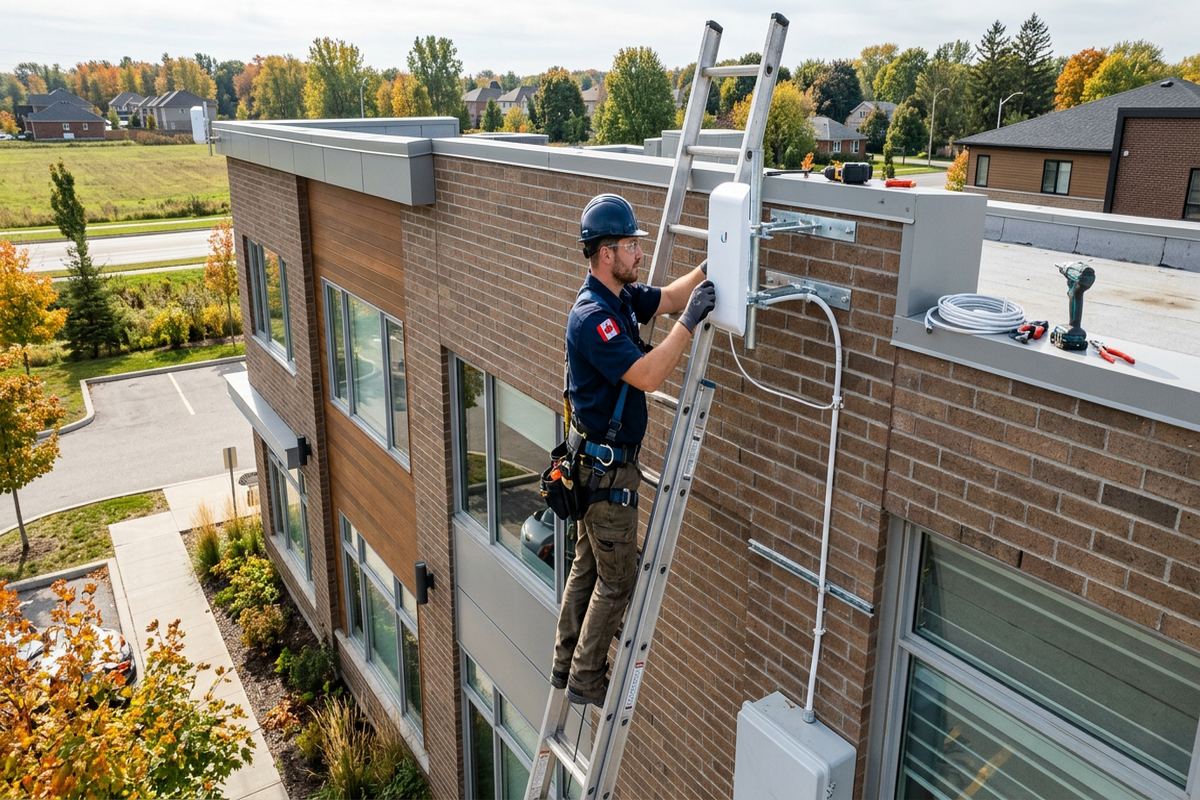
Outdoor coverage for a porch, yard, detached structure or camera requires equipment and cabling suited to the location. Brampton winters, temperature changes and freeze-thaw cycles make exterior mounting and sealing important. Cable jackets, entry points, drip paths and mounting surfaces must be considered together; indoor patch cable should not simply be passed through an unsealed window or wall. Outdoor Wi-Fi also needs realistic expectations because neighbouring networks, foliage, masonry and distance affect performance. Any exterior component is defined in the scope before installation proceeds.
- Access points with wired backhaul
- Coverage planned across occupied floors
- On-site wireless configuration
- Exterior-rated pathways where required
- Testing in identified use areas
Brampton, Ontario
Home network installation in Brampton, scoped in writing first
Book a site assessment and get equipment, routes, exclusions, and warranty on paper before anything is installed.
Network Equipment and Secure Configuration
Network equipment is selected according to layout, connection speed, wired device count, wireless demand and management preferences. The system may include a router, Ethernet switch, access points, patch panel and power components, depending on the approved design. UnifiedLink does not specify equipment solely by advertised range or maximum laboratory throughput. Port capacity, power delivery, mounting, software support and interoperability matter in a working installation. The written scope states what equipment is included, who owns it and what existing provider hardware remains part of the Brampton setup.
On-site configuration establishes the network name, wireless security, administrator access and essential operating settings. Where the equipment supports it and the use case warrants it, separate networks can be considered for guests, smart devices or business equipment. Segmentation is not a substitute for updating devices or using strong credentials, but it can reduce unnecessary access between device groups. Configuration choices are explained in practical terms so the owner understands what is being separated, which devices connect where and how future changes could affect service.
Control stays with the customer after handover. Administrative accounts and wireless credentials are created or transferred using the customer’s own information rather than credentials retained only by the installer. We record installed equipment, labelled cable destinations and relevant configuration details in an as-built record. Provider account passwords and other sensitive information do not need to be printed in general site documentation. This handover helps a Brampton owner manage routine changes, speak with an internet provider and arrange future expansion without depending on undocumented knowledge.
- Router, switch and access-point setup
- Customer-controlled administrator credentials
- Optional guest or device separation
- Equipment ownership stated in writing
- As-built network record
Renovations, Basements and Multi-Unit Needs
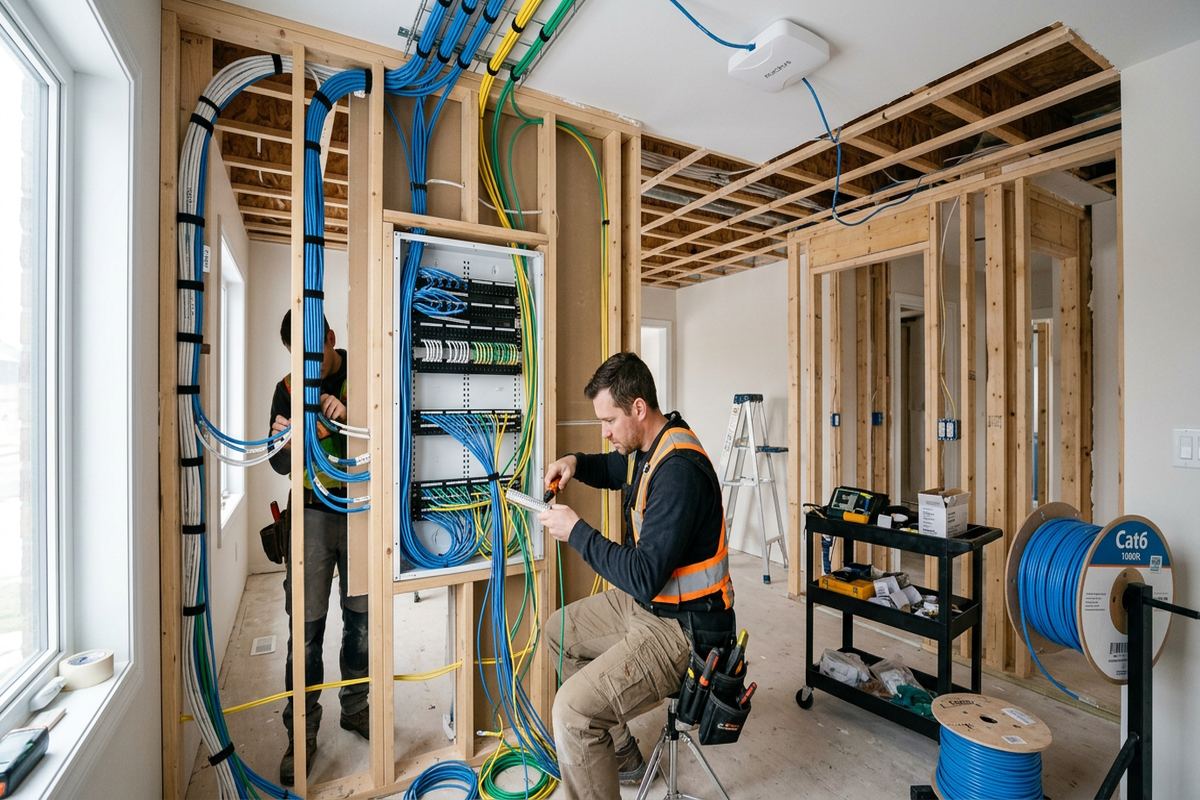
Renovation is often the most efficient time to install network cabling because framing and ceiling spaces may be open. UnifiedLink can coordinate the low-voltage routes defined in the scope with the owner or general contractor before drywall closes access. Cable locations should reflect the finished furniture plan, television positions, office layout and likely access-point mounting points. Leaving coils without labels or placing outlets from an outdated plan creates avoidable work later. Even during open construction, network cable must be routed carefully and protected from damage by other trades.
A finished basement requires a different approach, especially when it contains a home office, entertainment area or separate occupants. Network design should consider privacy, equipment access and whether one household or several users will manage the service. UnifiedLink installs the approved physical network, but the property owner remains responsible for internet service terms and lawful use of the space. Where a basement is rented, permission for work, access to shared utility areas and decisions about shared or separated wireless networks should be settled before the Brampton installation date.
Condo and landlord approvals can affect drilling, cable pathways, equipment mounting and work in shared spaces. Owners and tenants should obtain required permission before installation, particularly where a route crosses common property or alters an exterior surface. In condominium units, concrete walls and ceilings can limit concealed cabling and wireless propagation, making route planning especially important. We document exclusions when approval is pending or a pathway is unavailable. One accountable contractor handles the agreed cabling, equipment configuration and handover, reducing gaps between separate network installers.
- Pre-drywall cabling coordination
- Finished-basement route assessment
- Shared-use network planning
- Condo approval requirements identified
- Landlord permission confirmed by customer
Home Offices and Mixed-Use Brampton Sites
A home office should not depend on marginal Wi-Fi if a practical wired connection is available. Ethernet can support a workstation, dock, network printer or voice equipment while leaving wireless capacity for mobile devices. We assess desk position, cable entry, power availability and how the room may be rearranged. In Fletcher’s Meadow, Castlemore and other subdivision communities, an upstairs bedroom or finished basement frequently becomes the work area even though the internet equipment is located elsewhere. Planned cabling can connect that workspace without moving the provider’s service entry.
Some Brampton properties combine residential use with a permitted business activity, workshop or small commercial space. The network requirements may include payment terminals, displays, cameras, staff devices or separate guest access. These systems should be planned around operational needs rather than attached to an unmanaged household router without documentation. UnifiedLink identifies the required outlets, equipment locations and separation options within the installation scope. The customer remains responsible for provider agreements, application security and any rules governing business activity at the site.
Peel Region’s heavy base of warehouse and logistics sites also shapes surrounding commercial strips and industrial units. Although a home network project differs from a warehouse deployment, owners may need connectivity in a small office, shipping area or mixed-use unit. Metal racking, concrete walls, long distances and neighbouring wireless systems can change the design significantly. We do not treat these spaces as oversized houses. A site assessment determines whether the request fits a home-network scope or requires a broader commercial networking and structured-cabling plan.
- Wired connections for workstations
- Separate guest access where appropriate
- Planning for cameras and displays
- Mixed-use requirements documented
- Commercial scope identified when necessary
Exterior Routes and Brampton Weather
Exterior routing can provide a practical path when finished interiors block access, but it must be treated as an exposed installation. UnifiedLink selects cable, fittings and mounting methods according to the approved location. Routes are kept orderly and positioned to reduce physical damage and unnecessary visibility. Entry points are drilled with the wall assembly in mind, not merely the shortest line between rooms. Brick veneer, poured concrete, siding and wood framing each require an appropriate approach to avoid loose fittings, cracked finishes or poorly supported cable.
Brampton’s winters and recurring freeze-thaw conditions can expose weak seals and unsuitable materials. Water that reaches a penetration may move along cable, enter a wall assembly or expand during freezing. Exterior entries therefore need suitable bushings or fittings, sealant and a cable path that discourages water travel. Mounting on masonry also requires anchors matched to the substrate. While no exterior installation removes every environmental risk, careful material selection and sealing are basic requirements for a durable network route, outdoor access point or connected exterior device.
Detached garages, backyard work areas and exterior cameras may need network access beyond the main building. The correct method depends on distance, available pathways, electrical conditions and whether trenching or overhead routing is permitted and practical. Copper Ethernet is not automatically appropriate between separate buildings because electrical and environmental considerations may favour another design. We assess the site before proposing a route and identify excluded civil, electrical or restoration work in writing. Approvals and property-line considerations remain the owner’s responsibility before work begins.
- Exterior-rated cable where specified
- Sealed and supported wall entries
- Mounting suited to masonry or siding
- Freeze-thaw conditions considered
- Separate-building routes assessed individually
Brampton Installation, Testing and Handover
Installation follows the approved scope so device locations and cable routes do not change without discussion. Technicians protect the immediate work area, install the planned pathways and terminate each continuous run at its designated endpoints. Labels correspond with the patching and as-built record. When hidden conditions differ from the assessment, work pauses at the affected area so the owner can review alternatives, exclusions or scope changes. This is particularly important in renovated Brampton homes, where concealed blocking, abandoned wiring or inaccessible ceiling spaces may only become clear after work starts.
Testing confirms physical cable connectivity and supports fault isolation before equipment is placed into normal use. The network equipment is then configured on site, connected to the available internet service and checked at the locations included in the scope. Wireless results can vary by client device and provider performance, so handover distinguishes local network operation from the internet service itself. We also verify labels, explain basic restart procedures and identify which equipment belongs to the customer or provider. Any limitations observed during commissioning are documented rather than hidden.
At completion, the customer receives their credentials and an as-built record showing the installed network components and labelled cable destinations. UnifiedLink remains one accountable contractor for the scoped cabling, configuration and handover. Requests sent during business hours are answered the same day, while after-hours requests are answered the next business day. Site assessment timing depends on the service and travel distance within Brampton and Peel Region. Pricing follows the assessment and written scope, allowing route conditions, equipment requirements and exclusions to be reviewed before the work is authorized.
- Work completed to written scope
- Cable connectivity and labels checked
- On-site equipment commissioning
- Customer credentials provided at handover
- As-built record supplied
- One accountable contractor
Brampton neighbourhoods we cover
- Downtown Brampton
- Bramalea
- Springdale
- Heart Lake
- Mount Pleasant
- Castlemore
- Fletcher's Meadow
Home network installation in Brampton — common questions
Can you improve Wi-Fi in a finished Brampton basement?
Yes, subject to a site assessment. Finished ceilings and walls can limit concealed cable routes, so we review utility chases, closets, bulkheads, surface raceway and discreet exterior options. A wired access point in the basement is often more dependable than a wireless repeater, but the appropriate design depends on construction, existing cabling and the rooms needing coverage.
Do you install Ethernet in older Brampton homes?
Yes. Older homes around Downtown Brampton or Bramalea may include masonry, renovations, limited wall cavities or undocumented telephone wiring. We inspect available pathways before proposing work. Existing cable is reused only when its type, condition, route and terminations are suitable. The written scope identifies planned openings, surface routes, exterior sections and restoration exclusions before pricing.
Will one router cover my whole house?
It depends on the home’s size, layout, construction and router location. Multiple floors, finished basements, masonry and metal ductwork can weaken signals. Many Brampton homes benefit from strategically placed access points connected by Ethernet, but we do not assume that every property needs the same arrangement. Locations are planned after reviewing where reliable coverage is actually required.
Do I need condo or landlord approval?
Possibly. Brampton condo corporations and landlords may restrict drilling, exterior mounting, alterations to common elements or access to shared utility areas. The customer is responsible for obtaining required permission before work begins. We can provide the proposed cable route and device locations for review, and the scope will identify areas that cannot proceed without approval.
Can you connect a detached garage or backyard office?
Yes, after assessing the distance, existing pathways, building separation and environmental conditions. Copper cable is not always the right choice between buildings, and trenching or electrical work may fall outside the network scope. Brampton freeze-thaw conditions, exterior sealing and physical cable protection are considered. Required permissions and property-line checks remain the owner’s responsibility.
What do I receive after installation?
You receive configured equipment covered by the approved scope, customer-controlled credentials and an as-built record identifying installed components and labelled cable destinations. We also explain basic operation and note relevant limitations. Equipment ownership, warranty, routes, exclusions and device placement are set out in writing before pricing, so the final Brampton handover can be checked against the agreed work.
Coverage in Brampton is confirmed against the address before we quote. See everything we install in Brampton or the province-wide home network installation page.