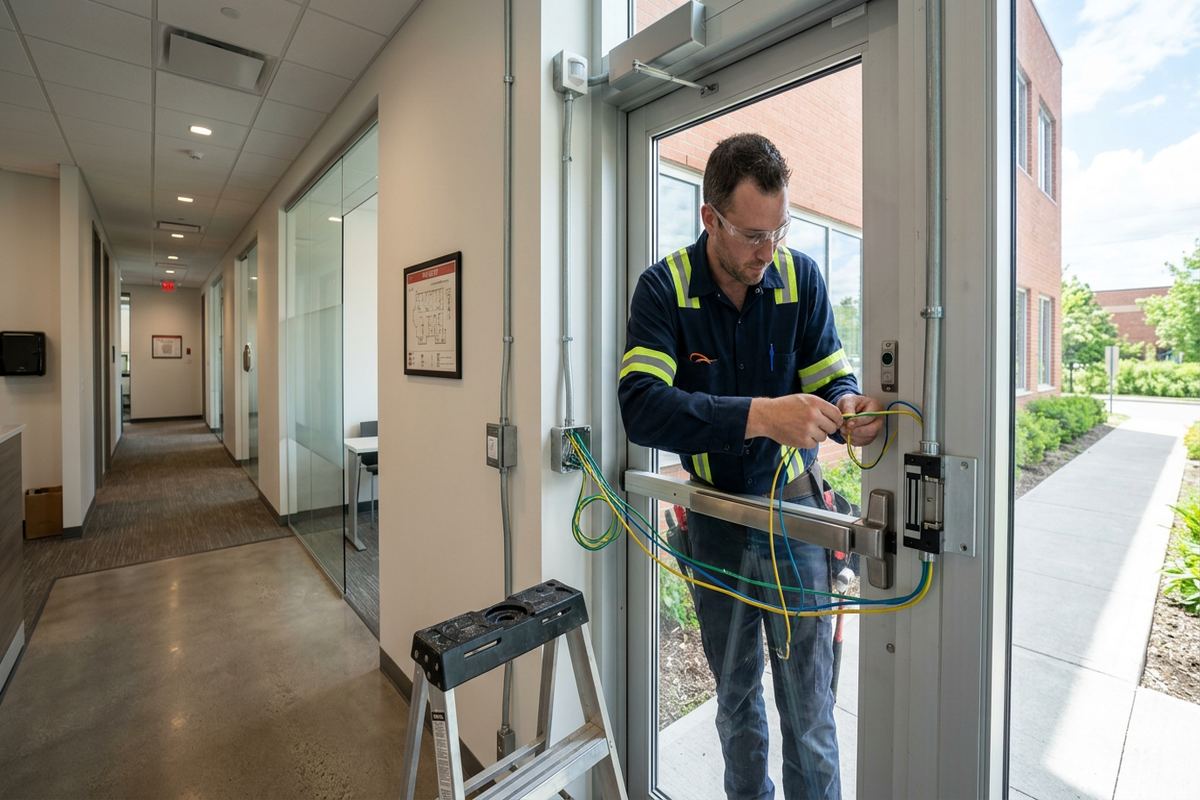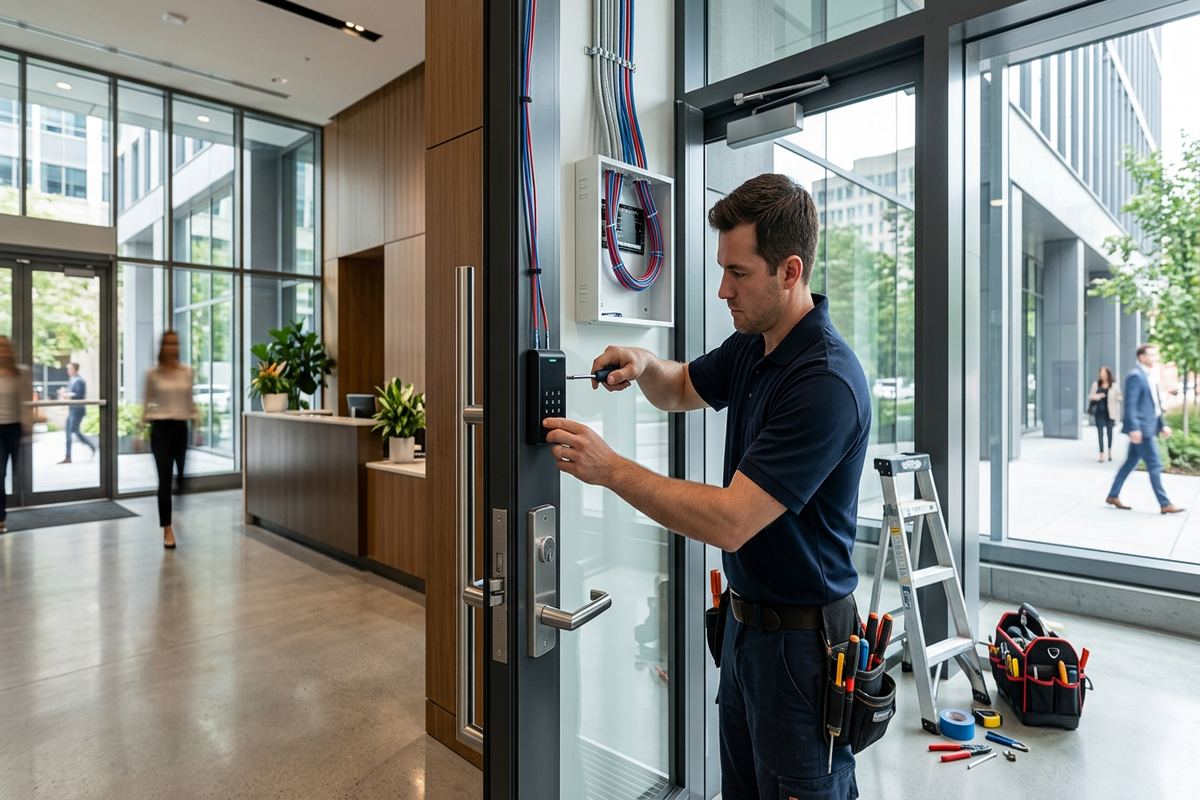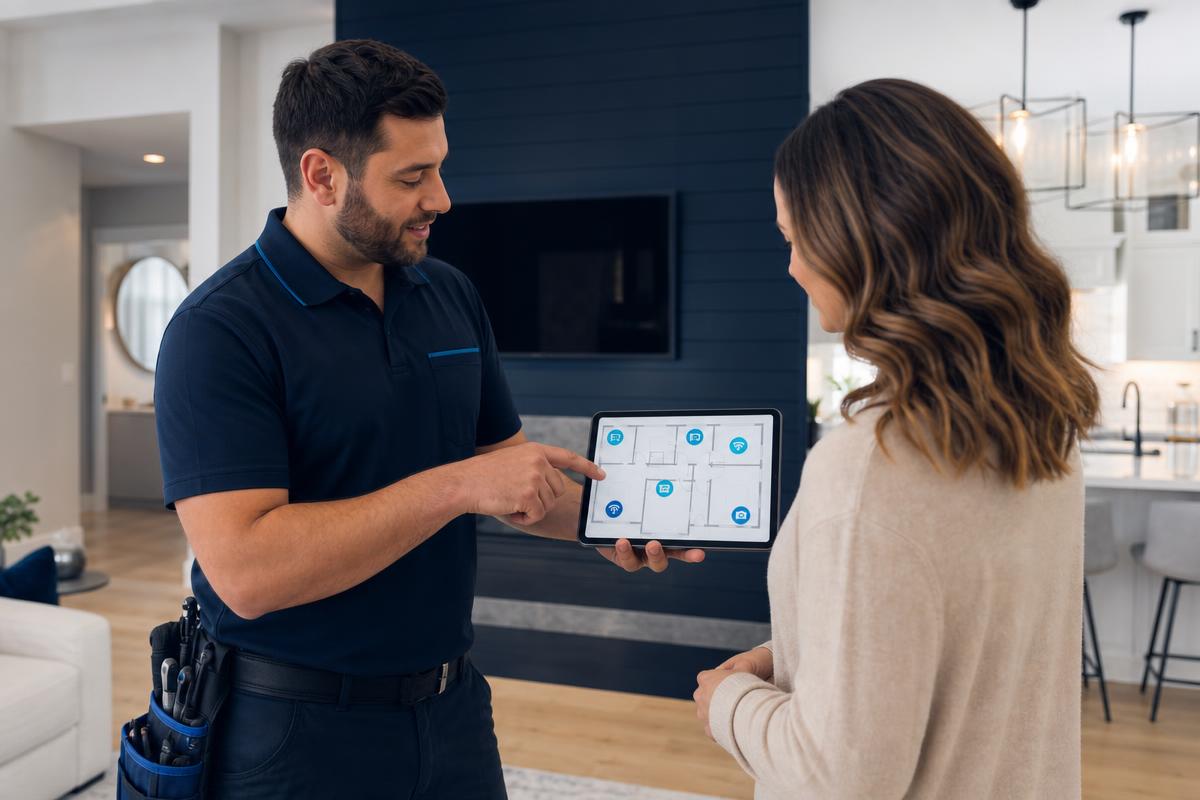
UnifiedLink installs whole-home audio systems for houses, condos and mixed-use properties across Brampton. We plan speaker locations, equipment space, controls and cable routes around the building rather than treating each room separately. Every project begins with a site assessment, followed by a written scope that defines the system, installation work, exclusions, ownership and warranty.
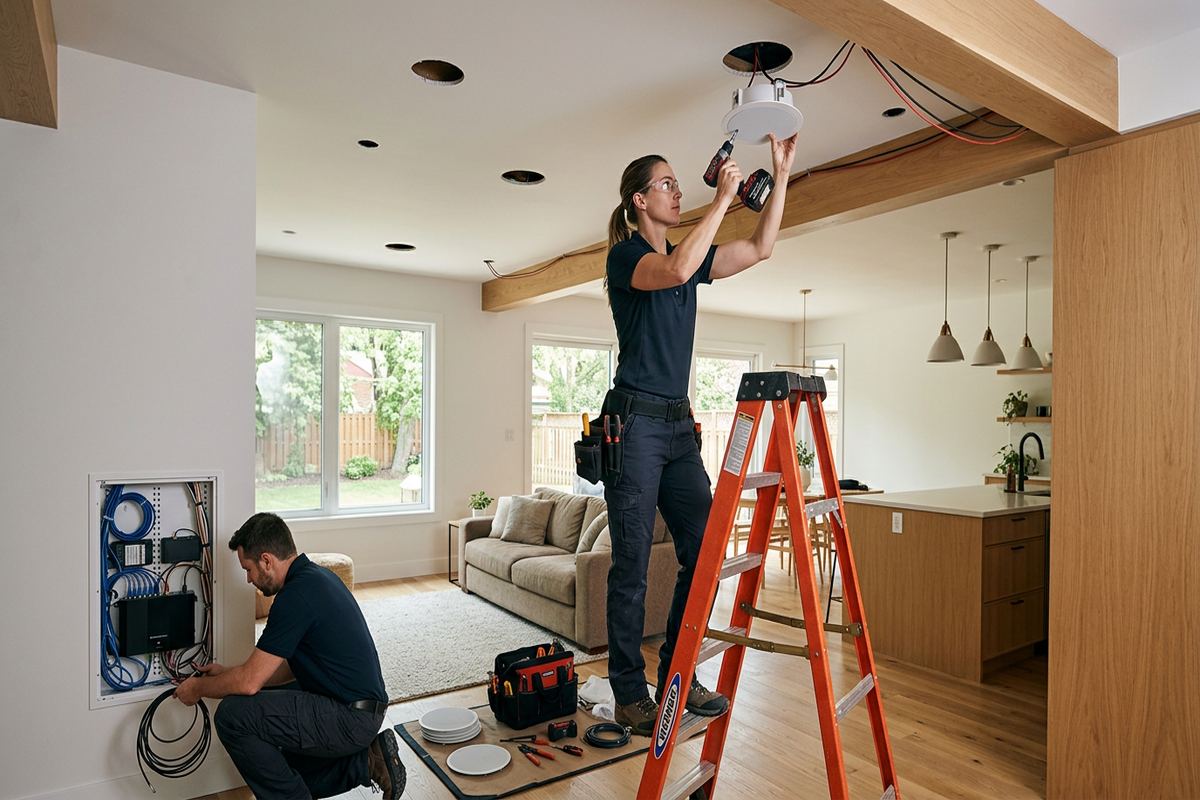
Whole-Home Audio Planning for Brampton Properties
A useful whole-home audio system starts with how the property is occupied, not with a speaker count. During a Brampton site assessment, we identify rooms that need independent control, spaces that can share a source and areas where volume must remain limited. We also review television locations, preferred music services, equipment storage and the people who will operate the system. This creates practical audio zones for everyday listening instead of forcing the same source and volume through every room, floor or outdoor area.
Brampton’s fast-growing subdivisions include open main floors, finished basements and additions completed at different stages. Those conditions affect cable access, speaker spacing and equipment ventilation. An unfinished mechanical area may provide a sensible central location, while a finished basement can require routes through closets, bulkheads or accessible ceiling sections. We inspect framing direction, insulation, ductwork and electrical interference before proposing pathways. The objective is a serviceable installation with concealed wiring where practical, without unnecessary openings or assumptions about hidden construction.
A written scope follows the assessment and records equipment, device placement, intended cable routes and exclusions. It also states who owns the supplied equipment, the applicable warranty and which existing devices will be reused. This is important when audio must integrate with televisions, streaming players, home networks or customer-provided amplifiers. Defined zone names and control requirements reduce confusion during configuration. The scope gives the property owner a clear basis for reviewing the installation before cables are pulled or ceiling openings are approved.
- Room-by-room listening and control review
- Defined indoor and outdoor audio zones
- Equipment location and ventilation planning
- Written routes, placements and exclusions
- Compatibility review for existing audio equipment
Speaker Placement Across Brampton Homes
Speaker placement determines whether a room sounds even or noticeably louder in one chair than another. In-ceiling speakers are often suitable for kitchens, dining areas, hallways and open family rooms, but their positions must account for lights, joists, ducts and ceiling features. Wall-mounted or bookshelf speakers may serve rooms where ceiling access is restricted or more focused listening is wanted. We set layouts around the actual seating and circulation pattern, then confirm that proposed cut locations are clear before making permanent openings.
In communities such as Springdale, Castlemore and Fletcher’s Meadow, large open-plan rooms can connect kitchens, breakfast areas and family spaces without full walls. One pair of speakers may not cover those spaces evenly at comfortable levels. Several correctly placed speakers can provide more consistent sound without driving one location too hard. Vaulted ceilings, tall windows and reflective finishes also influence placement. The design considers listening height, stereo separation and likely furniture positions while keeping grilles aligned neatly with architectural features wherever site conditions permit.
Bedrooms, bathrooms and home offices need a different approach from entertainment rooms. Lower background levels, straightforward controls and separation from neighbouring zones are usually more useful than high output. Bathrooms also require equipment selected for the location and installation conditions. In attached homes or condos, sound transfer through ceilings and party walls deserves particular attention. We discuss intended use and reasonable volume expectations, but speaker installation cannot eliminate structural sound transmission. The layout should support controlled listening rather than create unnecessary disturbance in adjoining spaces.
- Layouts based on seating and room use
- Coordination with joists, lights and ductwork
- Even coverage for open-plan main floors
- Separate control for quiet rooms
- Suitable speaker types for each location
Finished Basement Audio Design
Finished basements are common in Brampton and frequently serve several purposes at once: television room, play area, office, gym or secondary living space. Audio design should match those uses without letting one activity dominate the entire level. Before choosing speaker locations, we identify bulkheads, pot-light patterns, low ceiling areas and accessible utility spaces. A basement renovated after the original house was built may contain unexpected framing or wiring, so visible conditions and exploratory access points must guide the final route.
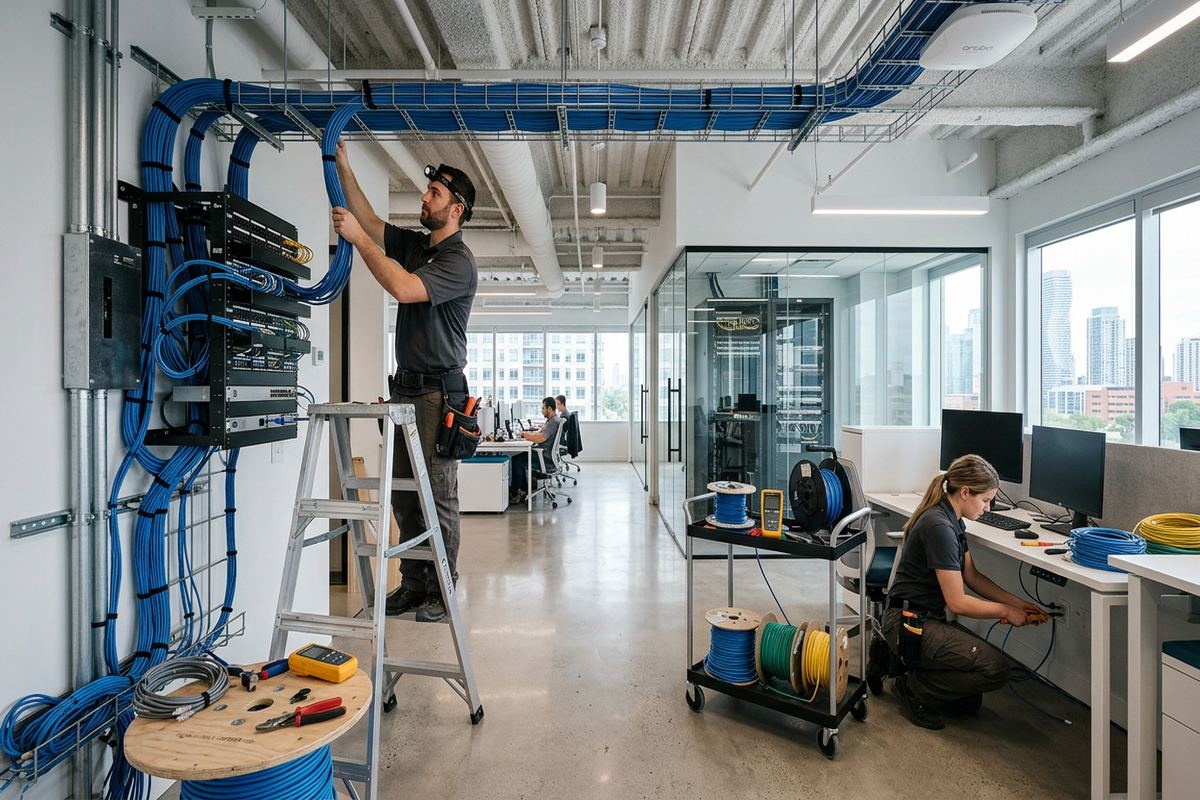
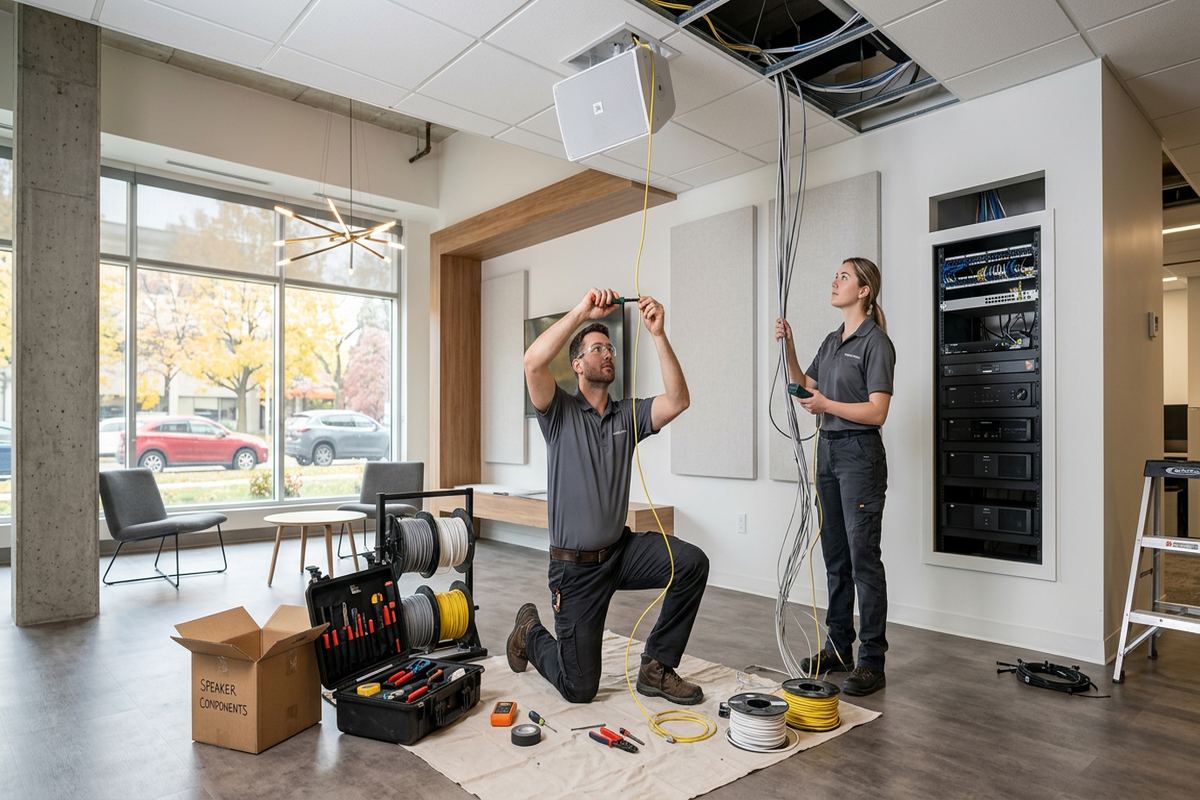
Where drywall is already complete, cable routing may use unfinished furnace rooms, storage spaces, closets or aligned wall cavities. Some routes can be fished with limited openings, while others require clearly identified access cuts and later finishing by the appropriate trade. We do not assume every ceiling bay continues past beams, ducts or plumbing. Continuous labelled cable runs are installed between the defined endpoints, avoiding hidden couplers that complicate troubleshooting. Cable type is selected for the signal, distance, environment and equipment arrangement described in the scope.
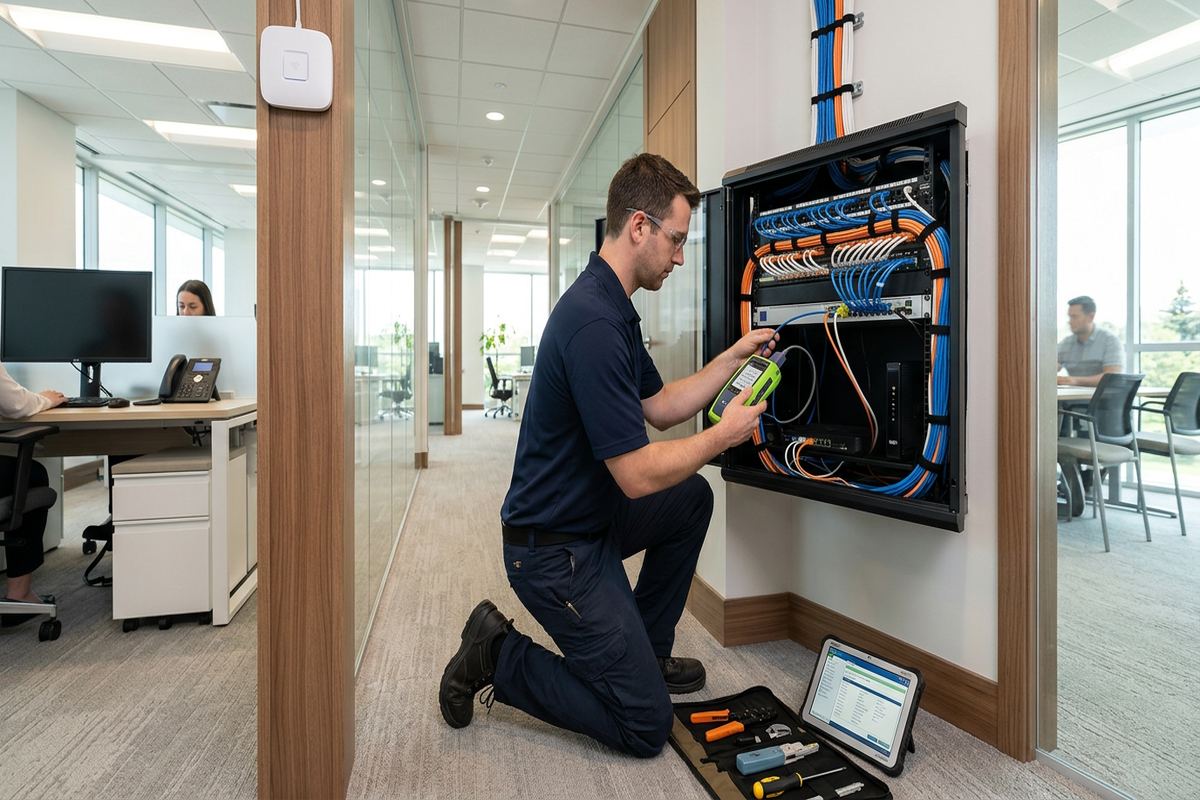
Basement audio equipment needs airflow, power access and room for future service. Placing amplifiers inside a tightly packed cabinet can cause heat buildup and make connections difficult to inspect. We assess shelf depth, door clearance, ventilation and network availability before confirming an equipment location. If a rack or cabinet also supports security, data or television systems, cable management becomes especially important. Audio leads, network connections and power cords should remain identifiable, supported and accessible rather than forming an undocumented bundle behind finished millwork.
- Basement zones matched to actual activities
- Routes through accessible service spaces
- Labelled home runs without hidden couplers
- Ventilated amplifier and equipment locations
- Coordination with lighting and ceiling layouts
Brampton, Ontario
Whole-home audio installation in Brampton, scoped in writing first
Book a site assessment and get equipment, routes, exclusions, and warranty on paper before anything is installed.
Audio Cabling for Brampton Renovations and New Builds
Renovation timing can make the difference between a direct cable route and extensive finished-surface work. During framing, cables can be placed before insulation and drywall, with speaker positions referenced to final lighting and cabinetry plans. In an occupied Brampton home, routing requires more restraint and verification. We look for attic, basement and closet pathways, then explain where access is practical and where repairs may be needed. Audio, control and network cables are kept appropriately separated from electrical conductors and sources of interference.
Masonry and frame construction require different mounting methods. Many Brampton houses use framed interior partitions with masonry exterior walls, while older buildings and commercial units may present concrete block, poured concrete or layers from previous renovations. A route that is simple through wood framing may need surface raceway, core drilling or an alternate equipment position near masonry. Any drilling must account for concealed services and structural limitations. The written scope identifies the anticipated method, but concealed conditions can require review before work continues.
Pre-wiring should support a defined design rather than leave unidentified cable loops for a future installer to interpret. We label both ends, record destination names and preserve suitable service length at speakers and equipment. When construction will continue around the wiring, cable positions need protection from screws, sharp edges and other trades. Photographs and route notes can assist before walls close. At handover, the as-built record reflects installed endpoints and relevant changes, giving the owner usable information for maintenance, upgrades or later room alterations.
- Pre-wire coordination before insulation and drywall
- Routes planned for finished occupied homes
- Methods suited to frame or masonry construction
- Separation from electrical interference sources
- As-built endpoint and route documentation
Outdoor Audio and Brampton Weather
Outdoor speakers must be selected and positioned for exposure, coverage and the way the yard is used. Brampton winters bring freezing conditions, while repeated freeze-thaw cycles can stress mounting points, cable entries and poorly sealed penetrations. We avoid treating an exterior speaker as an indoor device placed outside. Mounting surfaces, fasteners, drip paths and manufacturer requirements all matter. The aim is controlled sound across a patio or seating area, not excessive volume projected towards neighbouring properties or beyond the intended listening zone.
Exterior cable penetrations require deliberate sealing. On brick or masonry walls, the route and entry angle should help shed water rather than direct it indoors. Suitable sleeves, bushings and sealants protect cable edges and limit moisture entry, while drip loops may be used where appropriate. Fasteners must suit the substrate instead of relying on trim or mortar without review. Vinyl, stucco and other cladding systems also need care because crushing, cracking or trapping water can create problems beyond the audio installation.
Seasonal use affects where controls and equipment belong. Amplifiers and streaming devices generally require an indoor, ventilated location unless specifically rated and installed for another environment. Outdoor speaker wiring can return to that central point, allowing the patio or yard to operate as its own zone. In Heart Lake or Mount Pleasant homes with decks, pergolas or detached yard structures, route feasibility depends on access and property layout. Underground or exposed pathways require suitable cable methods and a scope that identifies restoration responsibilities.
- Weather-suitable outdoor speaker selection
- Freeze-thaw-conscious mounting and sealing
- Controlled coverage around patios and decks
- Indoor placement for protected source equipment
- Defined exterior routes and restoration limits
Controls, Streaming and Networks in Brampton
Modern whole-home audio often depends as much on the network as on the speakers. Streaming services, mobile applications and networked amplifiers need reliable connectivity at their installed locations. During assessment, we review wired network access, Wi-Fi coverage and how the customer expects to choose sources or adjust zones. A strong signal in the kitchen does not guarantee dependable service inside a basement equipment cabinet. Where network improvements are needed, they should be identified rather than masked by repeated application resets or temporary wireless workarounds.
Control should remain understandable for the people using the property. Some Brampton households prefer app-based operation, while others benefit from wall controls, television remotes or clearly named presets. We configure zone names around familiar spaces, such as Kitchen, Basement or Patio, instead of default device labels. Shared and independent sources are tested according to the agreed design. We also explain what happens when a phone leaves the network, an account password changes or a streaming provider modifies its service requirements.
At handover, the system is configured using the customer’s own credentials rather than an installer-controlled account. This helps the owner retain access to supported settings and services after the project is complete. We document installed equipment, zone names and relevant network connections in the as-built record, then demonstrate normal operation. Passwords should be handled directly by the customer and stored securely. Third-party subscriptions, application updates and service availability remain subject to their providers, so those dependencies are identified without promising permanent compatibility.
- Review of wired and wireless connectivity
- Clear names for rooms and audio zones
- Customer-owned accounts and credentials
- Testing of shared and independent sources
- Documented network and equipment connections
Condos, Rentals and Commercial Audio
Condo audio work requires approval before drilling, cable routing or changes to common elements. A Brampton condominium corporation may set rules for work hours, contractor access, elevator use, ceiling penetrations and acoustic impact. Unit boundaries can also limit available pathways, particularly where ceilings are concrete. We review the owner’s approved plans and building requirements, but the customer remains responsible for obtaining written permission where required. Surface-mounted speakers or localized systems may be more practical than recessed speakers when structure and common services cannot be altered.
Rental properties similarly require landlord authorization for permanent openings, mounted equipment and concealed wiring. The scope should distinguish fixtures that remain with the property from customer-owned components that may be removed later. This avoids uncertainty around speaker grilles, cabling, amplifiers and wall controls when occupancy changes. For a legal secondary unit or shared house, separate zones and account control may be necessary. Audio design must not interfere with required alarms, fire separations, electrical systems or other regulated building components.
Brampton’s commercial strips, warehouses and logistics sites create different audio requirements from houses. A showroom, office, lunchroom or customer area may need background music or paging integration, while a warehouse has higher ceilings, equipment noise and larger coverage distances. We assess mounting structure, operating areas and cable access before defining speaker types and amplifier capacity. Commercial installations may also require landlord, property manager or site-safety coordination. One accountable contractor can handle the defined low-voltage audio scope and related cabling documentation.
- Review of condo and landlord requirements
- Non-invasive options where structure is restricted
- Clear ownership of removable equipment
- Zones for offices and customer-facing areas
- Planning for warehouses and industrial units
Whole-Home Audio Installation and Handover in Brampton
Installation begins after the Brampton site assessment and written scope are accepted. Equipment, cable routes and speaker positions are checked against current site conditions before permanent work proceeds. Continuous labelled runs connect the agreed endpoints, and speakers are mounted using methods suited to the ceiling, wall or exterior substrate. If concealed obstructions differ from what could reasonably be observed, the route is reviewed with the customer. This approach keeps changes visible rather than allowing undocumented compromises to become part of the finished system.
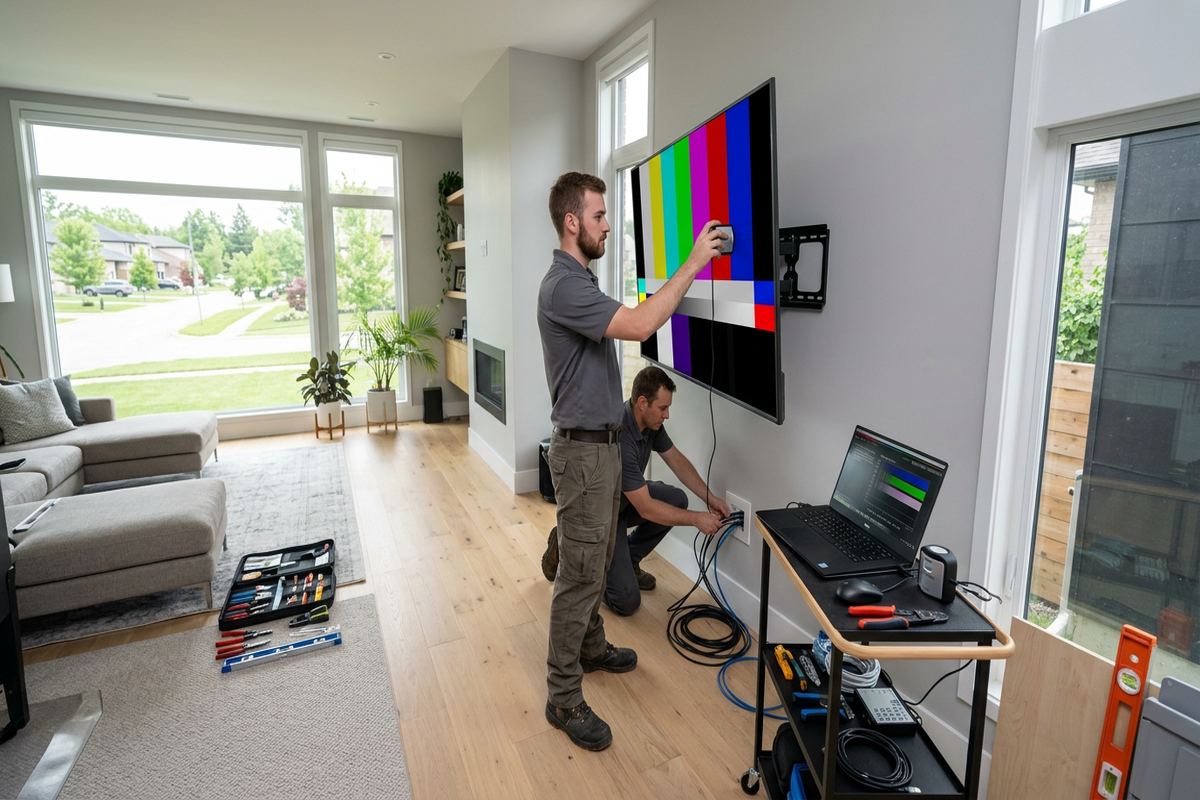
On-site configuration covers zone naming, source selection, level checks and supported control functions within the agreed scope. Each speaker zone is tested for correct channel assignment, basic operation and expected control. Network-dependent components are connected to the available infrastructure, and customer accounts are used where credentials are required. Testing cannot correct poor source material, unsupported third-party services or unrelated network faults, but those issues can be distinguished from installation defects. Any scope exclusions or outstanding customer actions are recorded for clarity.
Handover gives the Brampton property owner practical control of the installed system. We demonstrate everyday operation, identify equipment locations and provide an as-built record of relevant devices, cable endpoints and zone names. Warranty terms and equipment ownership follow the written scope. Requests sent during business hours are answered the same day; after-hours requests are answered the next business day. Site assessment timing depends on the service and travel distance, including work in Downtown Brampton, Bramalea and communities across Peel Region.
- Site assessment completed before pricing
- Installation checked against the written scope
- On-site zone and source configuration
- Customer credentials used at handover
- As-built record for future service
- One accountable low-voltage contractor
Brampton neighbourhoods we cover
- Downtown Brampton
- Bramalea
- Springdale
- Heart Lake
- Mount Pleasant
- Castlemore
- Fletcher's Meadow
Whole-home audio installation in Brampton — common questions
Can you install audio in a finished Brampton home?
Yes. Many Brampton projects involve finished main floors and basements. We inspect attics, utility rooms, closets, bulkheads and accessible wall cavities before proposing cable routes. Some wiring can be fished with limited openings, while other routes may need access cuts or surface raceway. The written scope identifies the expected method, exclusions and any finishing work that is not included.
How many audio zones does my house need?
The right number depends on how rooms are used, not simply the house size. A Brampton home might use separate zones for an open main floor, basement, bedrooms and patio, while adjoining kitchen and dining areas may share control. During the site assessment, we review listening habits, source requirements and volume independence before defining practical zones and amplifier needs.
Can outdoor speakers stay installed through Brampton winters?
Outdoor speakers can remain installed when the equipment, mounts, cable methods and penetrations are suitable for exterior use. Brampton’s freezing temperatures and freeze-thaw cycles make sealing and substrate selection important. We assess brick, siding, stucco or other surfaces, use appropriate mounting methods and position coverage towards the intended yard area. Amplifiers and ordinary source equipment generally remain in a protected indoor location.
Do I need condo or landlord approval?
Usually, approval should be confirmed before permanent drilling, recessed speaker installation or concealed cabling. Brampton condo corporations and landlords may restrict work hours, common-element penetrations, concrete ceilings and changes to walls. The customer is responsible for securing required written permission. We can develop a scope around approved conditions and consider surface-mounted or localized alternatives where concealed installation is not allowed.
Will the audio system work with my Wi-Fi?
That depends on coverage, network capacity and the selected equipment. Streaming amplifiers and app controls need reliable connectivity where the hardware is installed, including basement cabinets that may have weak Wi-Fi. During a Brampton assessment, we review available wired and wireless connections. If network changes are advisable, they are identified separately rather than assuming the audio equipment will resolve an existing coverage problem.
What do I receive when installation is complete?
UnifiedLink configures the agreed system on site, tests the defined zones and demonstrates normal operation. Handover uses your own credentials for supported accounts and includes an as-built record covering relevant equipment, zone names and cable endpoints. The written scope also states equipment ownership, exclusions and warranty. This documentation is useful when a Brampton property is renovated, serviced or expanded later.
Coverage in Brampton is confirmed against the address before we quote. See everything we install in Brampton or the province-wide whole-home audio installation page.