UnifiedLink installs wired and wireless security camera systems for homes in Brampton and surrounding Peel Region communities. Each project starts with a site assessment to determine useful views, practical cable routes, recording requirements and exterior mounting conditions. Installation includes on-site configuration, customer-controlled credentials, labelled cabling and a clear as-built record for future service.
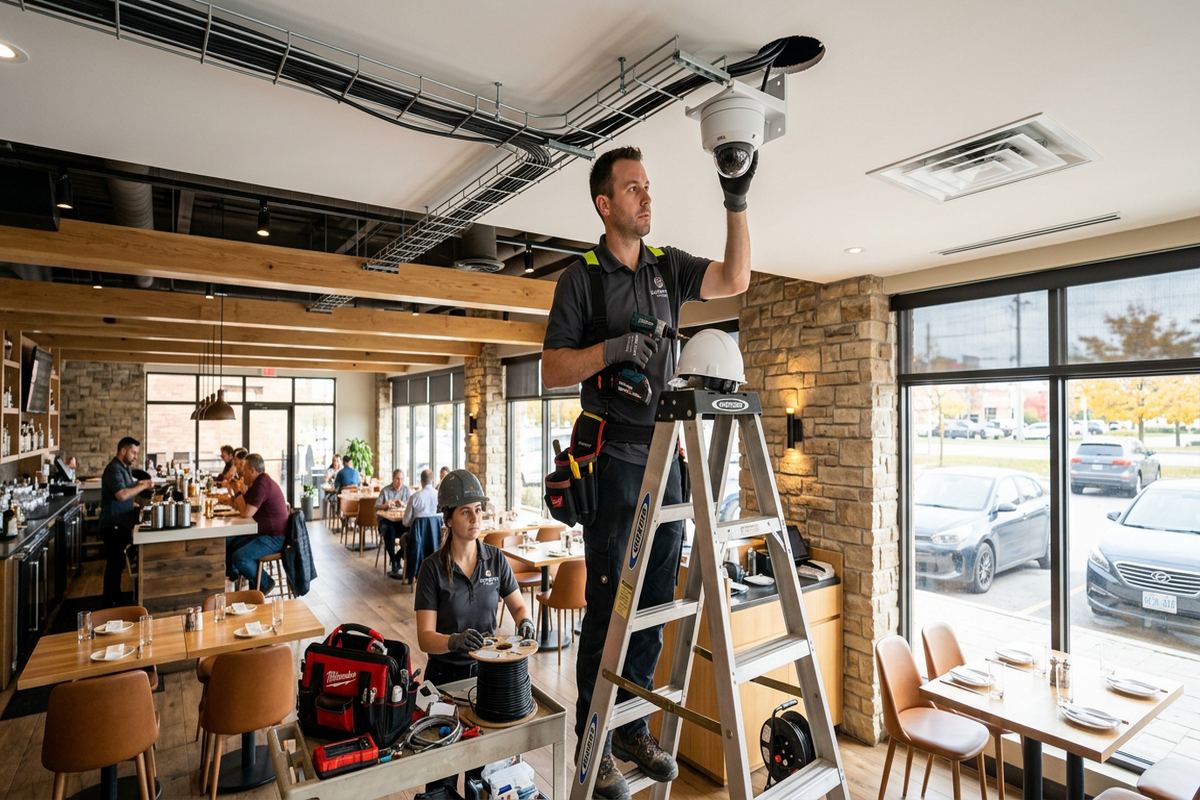
Home Security Camera Planning in Brampton
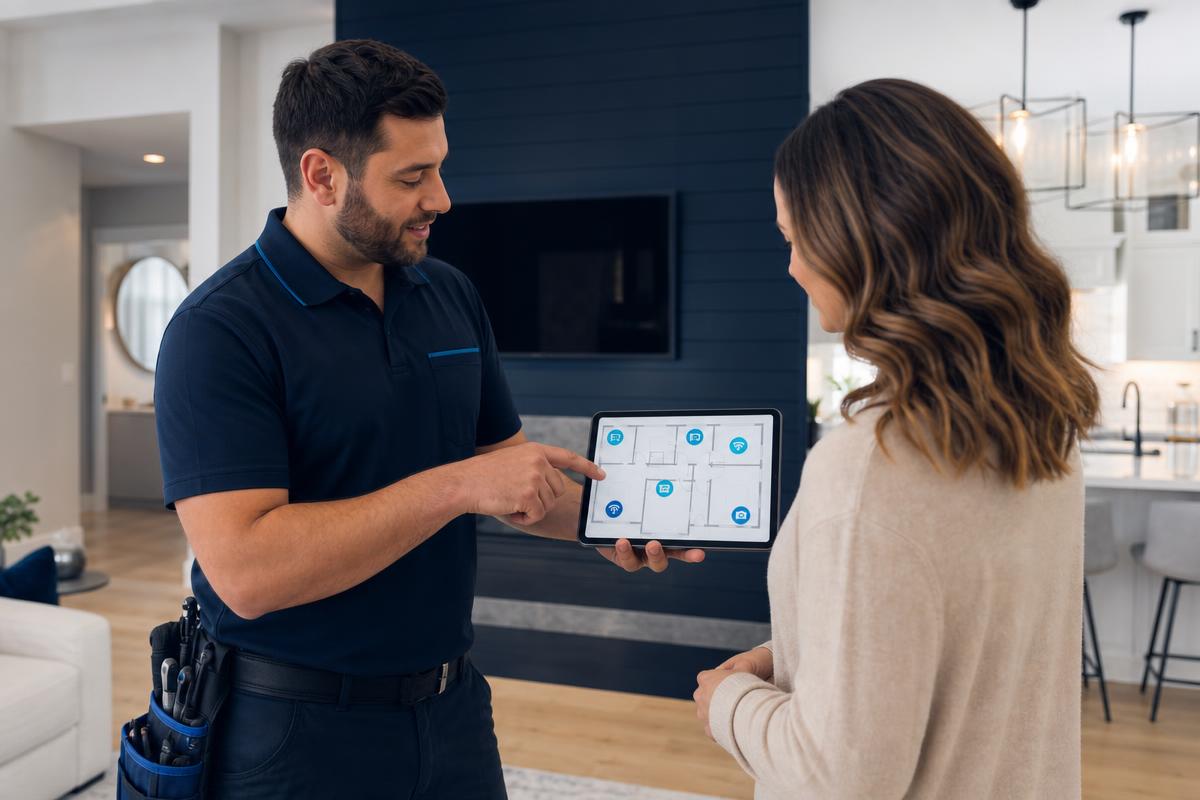
A useful camera system begins with coverage planning rather than a device count. During a Brampton site assessment, we review doors, driveway approaches, side passages, garage access and lower-level windows. The objective is to identify where a person will enter the property and where a camera can capture usable detail without looking through glass or directly into strong lighting. We also consider soffit height, landscaping, parked vehicles and seasonal changes. The resulting plan distinguishes identification views from wider overview views, helping avoid blind areas and unnecessary overlap between cameras.
Brampton’s fast-growing subdivisions include detached houses, townhouses and newer properties with finished basements. Those finishes can make cable routing more involved because joist spaces, utility rooms and ceiling cavities may already be enclosed. We assess routes before equipment is selected or pricing is prepared. Options may include unfinished furnace areas, garage ceilings, attic spaces, closets or carefully placed surface raceway. The written scope records proposed routes, device positions and exclusions, so homeowners understand where access holes or visible pathway materials may be required before work starts.
Every assessment also considers what the cameras should accomplish after dark. A camera covering a short porch needs different positioning from one watching a long driveway or rear lot line. Existing lights, reflective siding, pale masonry and nearby walls can affect infrared performance. We check whether fixtures will place subjects in silhouette and whether insects, snow or rain close to the lens could trigger excessive motion events. Practical planning establishes realistic views under the property’s actual conditions instead of relying only on camera specifications or demonstration footage.
- Entry, driveway and side-yard coverage review
- Camera height and field-of-view planning
- Night lighting and infrared reflection checks
- Cable-route assessment before pricing
- Written device placement and scope
Camera Placement for Brampton Homes
Placement decisions in Brampton vary by lot shape and neighbourhood design. Homes in Springdale and Fletcher’s Meadow may have closely spaced side passages, front-facing garages and fenced rear yards, while properties in Castlemore can involve longer approaches or larger building footprints. A high, wide view may document general activity but miss faces beneath hats or hooded clothing. We therefore plan a combination of overview and closer approach views where appropriate. Cameras are aimed to keep important movement within the useful part of the image, not merely at the edge of a broad scene.
Front-door cameras should show the approach as well as the doorstep. Mounting directly above a door can produce mostly top-down images, while a position exposed to afternoon sun can reduce facial detail. Driveway coverage must account for vehicles blocking one another and people approaching beside parked cars. At side gates, narrow field-of-view choices can provide better detail than an extremely wide image. Rear cameras are planned around patio doors, basement entrances, decks and sheds while avoiding intrusive views into neighbouring windows or private outdoor areas.
Finished basements deserve specific attention because they often contain separate entrances, walkouts, rental spaces or valuable equipment. Where a legal secondary unit or tenant is involved, camera placement must respect privacy and control boundaries. Cameras should not be installed inside tenant living areas or aimed where occupants reasonably expect privacy. The property owner is responsible for obtaining required landlord, tenant, condominium or other permissions. We can document proposed locations and recording access so the parties can review the arrangement before holes are drilled or cables are installed.
- Porch and walkway identification views
- Coverage around parked driveway vehicles
- Side-gate and fenced-yard monitoring
- Basement entrance camera planning
- Privacy-conscious viewing angles
Wired and Wireless Camera Options
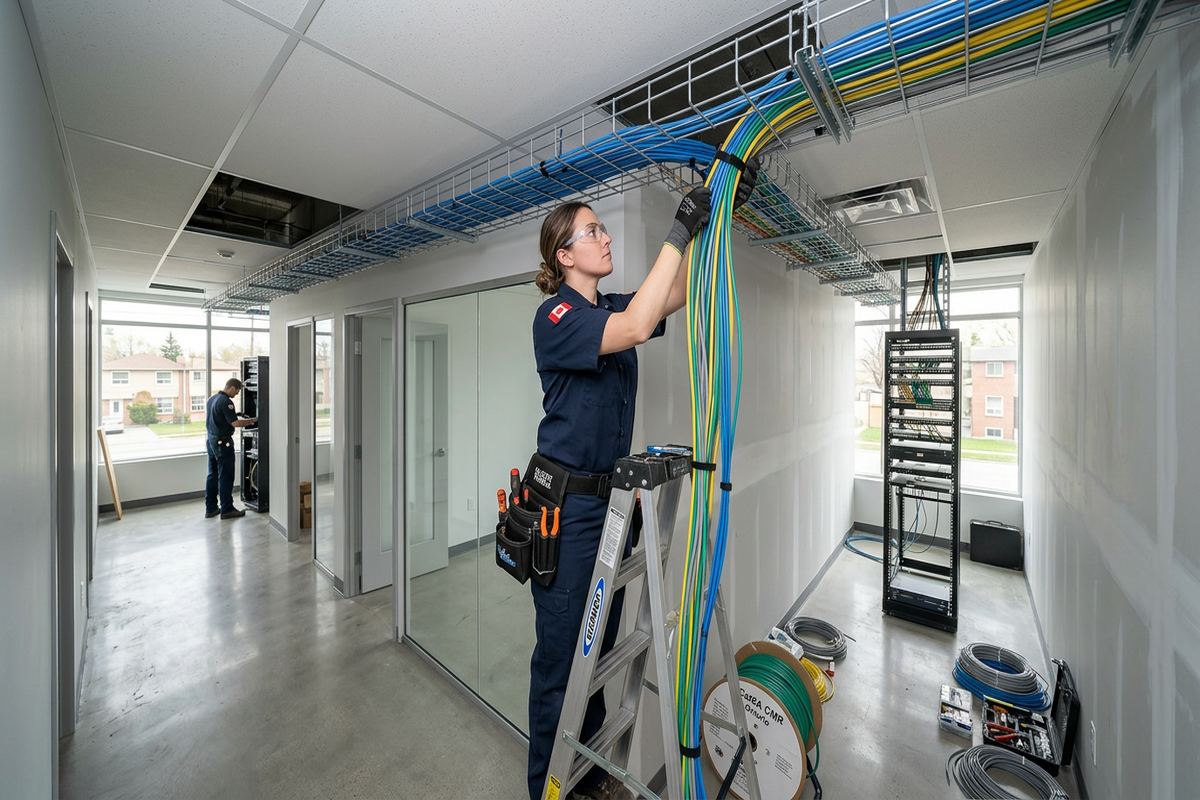
Wired Power over Ethernet cameras are often appropriate when reliable cable routes are available. One network cable carries power and data between each camera and the recorder or network equipment, reducing dependence on outdoor receptacles and individual wireless connections. UnifiedLink installs continuous labelled cable runs rather than concealed mid-span joins. Cable selection and pathway planning depend on whether a run crosses a heated interior, an attic, a garage or an exterior section. The recorder location also needs ventilation, power, network access and enough physical protection to avoid being easily removed during an incident.
Wireless cameras can be useful where opening finished surfaces would be disproportionate or where a temporary installation is required, but wireless does not mean infrastructure-free. Each device still needs dependable power, adequate Wi-Fi coverage and a practical method for maintenance. Battery operation can introduce charging intervals and performance changes during cold weather. Busy residential radio environments can also affect connection quality. Before recommending wireless equipment, we consider distance, wall construction, access-point placement and the amount of video traffic expected. A camera should not be selected solely because a phone shows a strong signal nearby.
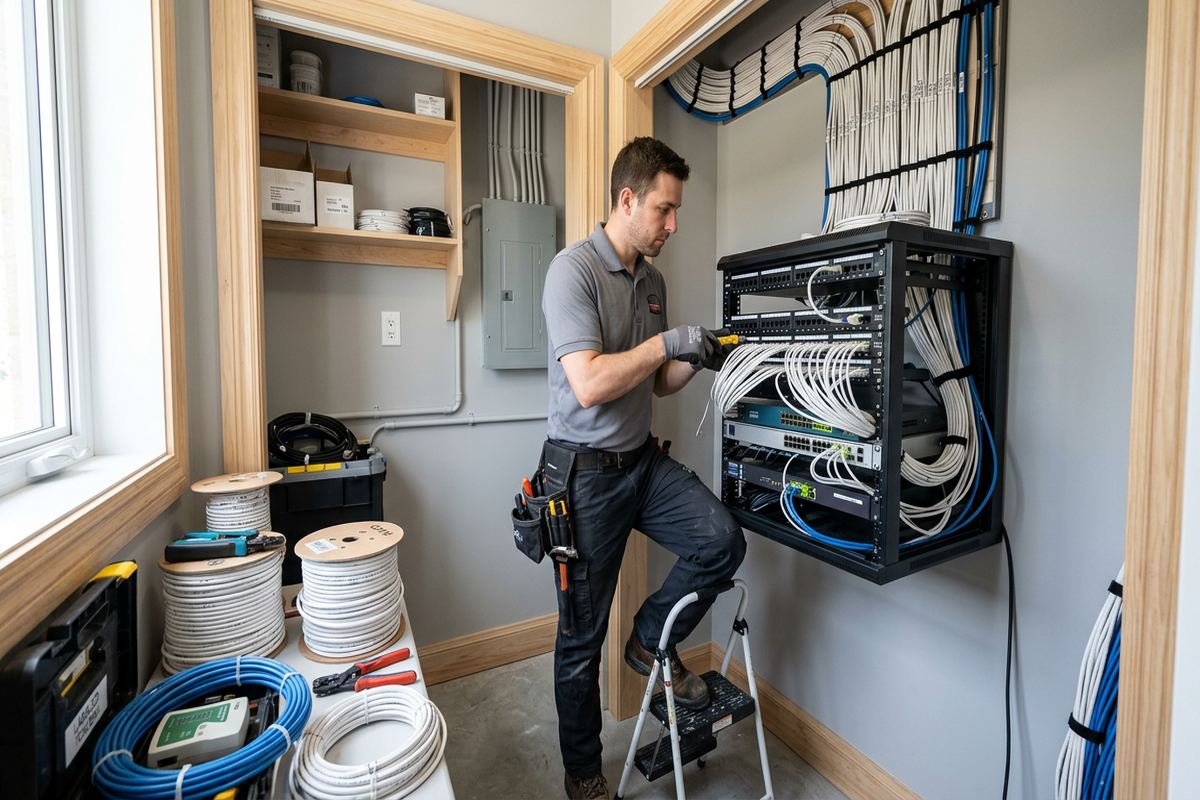
Hybrid designs can solve properties with mixed construction or difficult additions. A wired group may cover the main house while a suitable wireless bridge or separately connected device serves a detached garage, subject to site conditions. Existing cabling is tested before reuse because an installed cable may be damaged, incorrectly terminated or unsuitable for the required data and power. We also clarify whether cameras record locally, use a cloud service or combine both methods. Any recurring service or account requirement is identified in the written scope rather than discovered during commissioning.
- Power over Ethernet camera systems
- Wireless feasibility and signal review
- Existing cable testing before reuse
- Local, cloud or hybrid recording options
- Recorder ventilation and placement planning
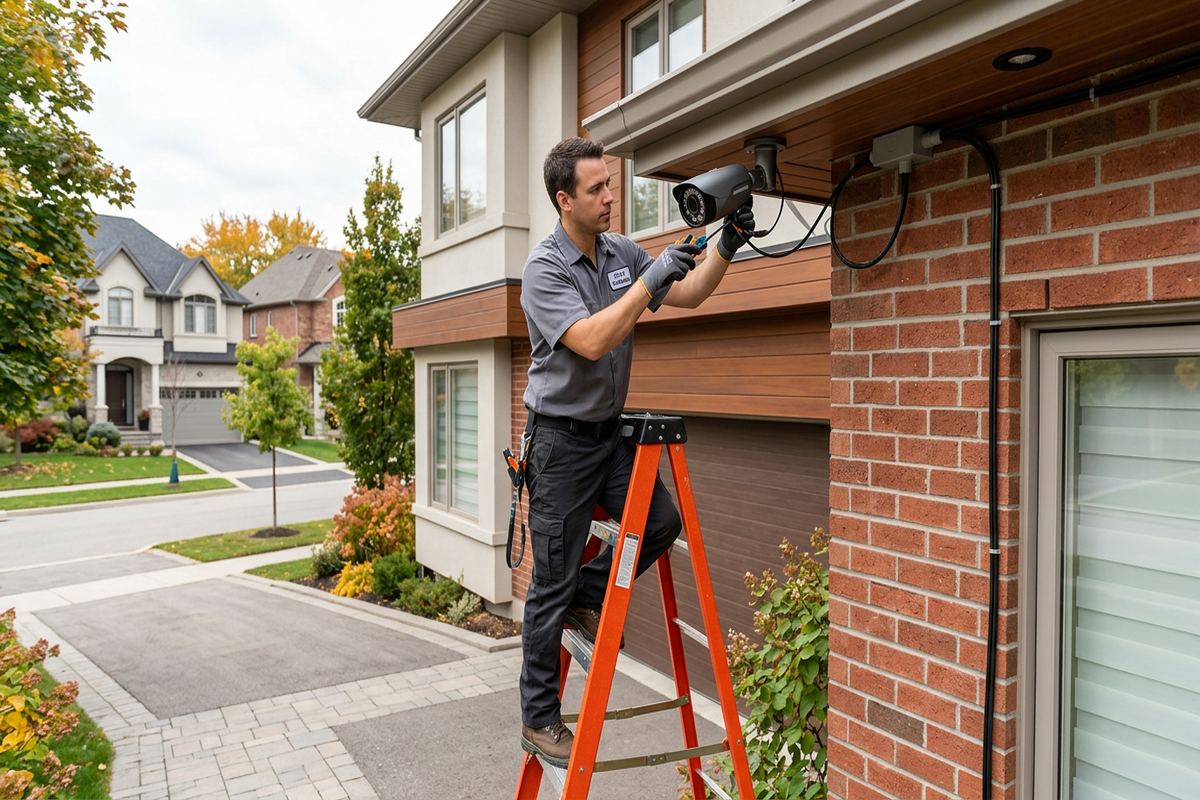
Brampton, Ontario
Home security camera installation in Brampton, scoped in writing first
Book a site assessment and get equipment, routes, exclusions, and warranty on paper before anything is installed.
Exterior Mounting for Brampton Weather
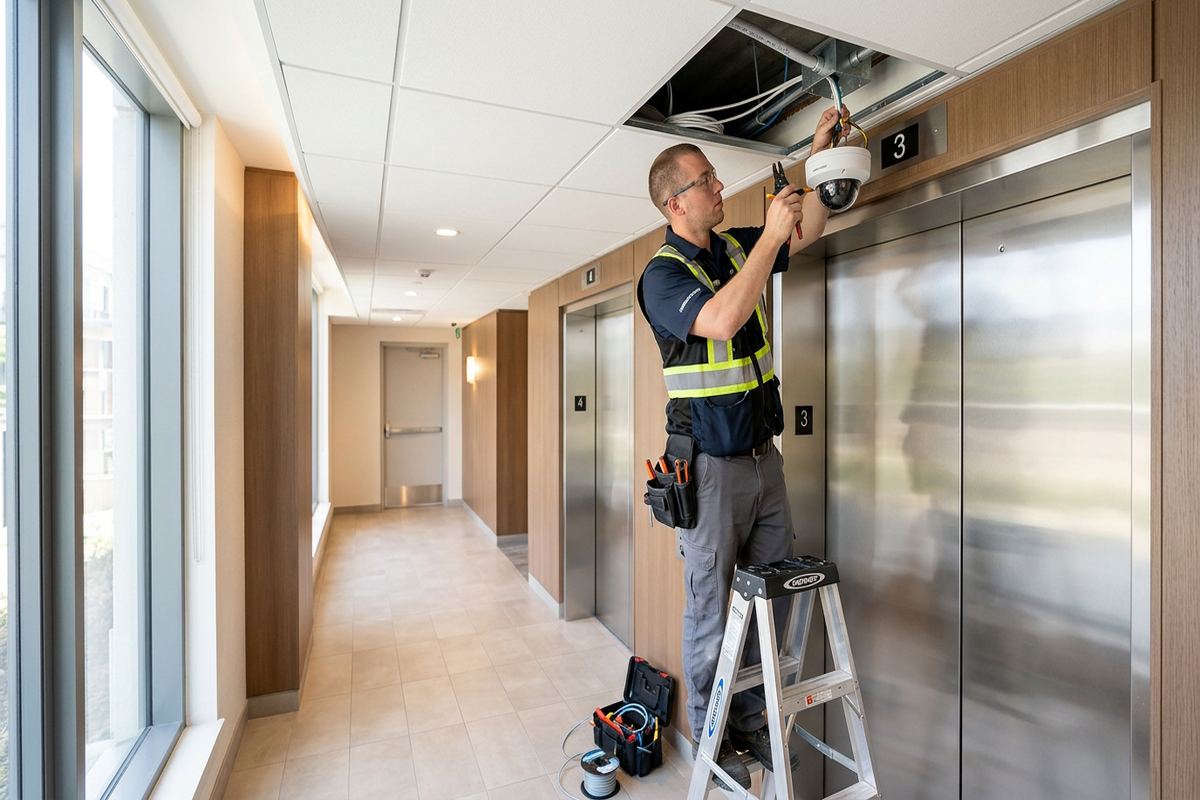
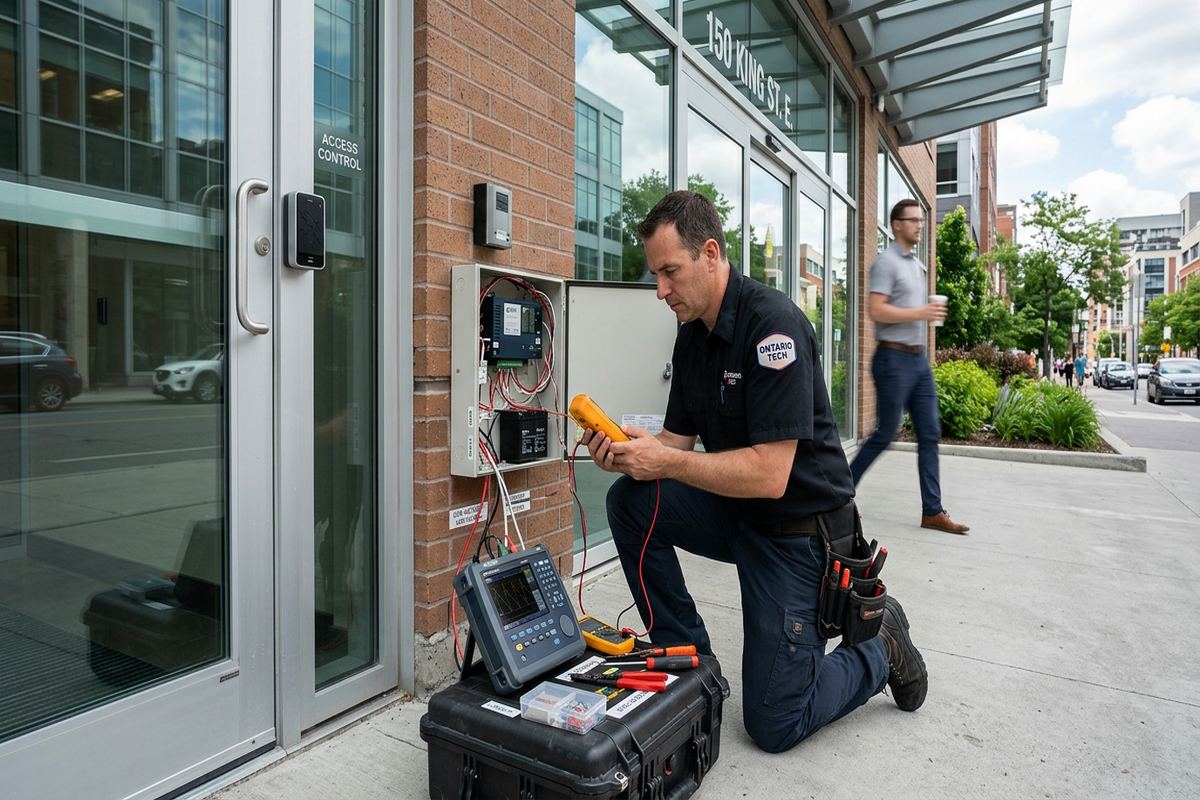
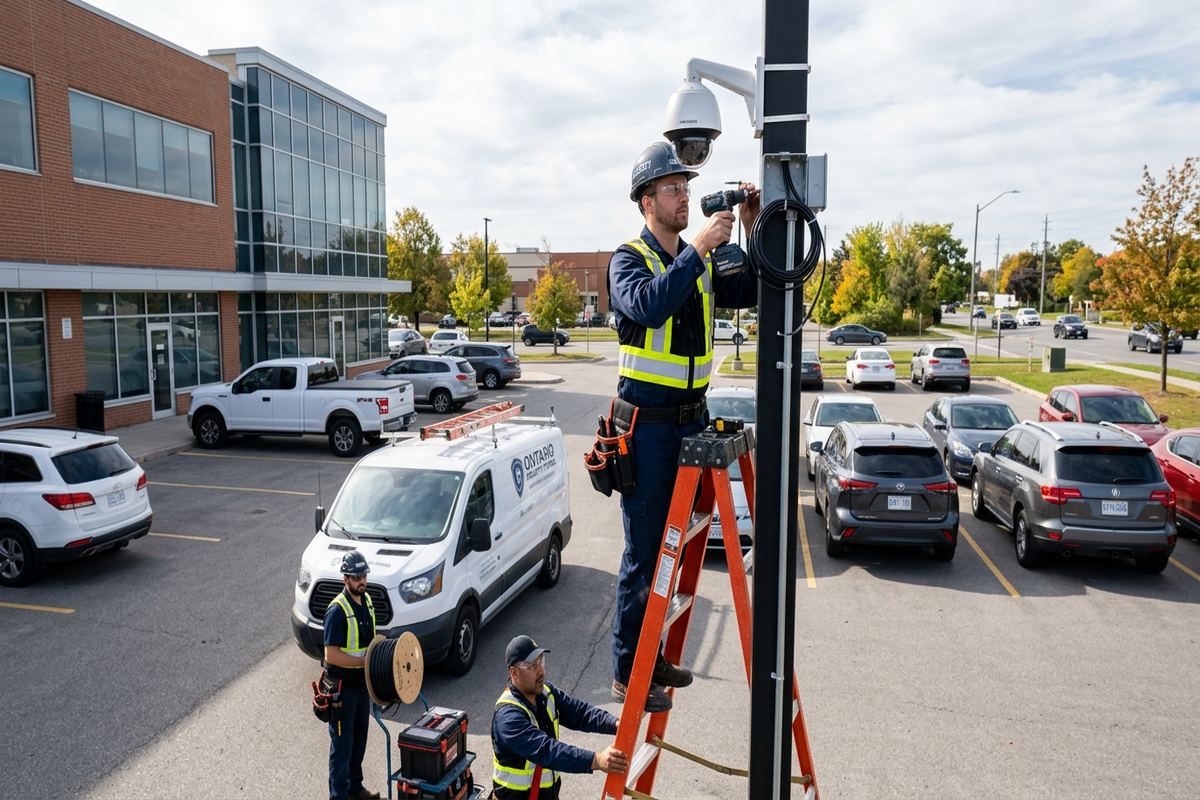
Brampton winters expose exterior devices to snow, wind, moisture and repeated freeze-thaw cycles. Mounting and sealing must keep water from following a cable into the wall or collecting behind a camera base. Exterior penetrations are positioned and sealed for the substrate, with cable entries protected from direct runoff where practical. Drip loops, suitable fittings and enclosed terminations help control moisture at vulnerable points. A camera’s environmental rating matters, but it does not replace correct installation. Junctions and connectors need protection even when the camera itself is intended for outdoor service.
Construction type changes the mounting method. Brick veneer and concrete require different anchors and drilling practices from wood framing, vinyl siding or aluminum soffit. Masonry joints are not automatically the right place for every fixing, and hollow soffit panels may not provide adequate support without backing. On frame construction, the route must avoid damaging wiring, plumbing, membranes or concealed drainage details. We select mounting positions after checking accessible conditions and explain when a backing plate, junction box, raceway or alternative location is needed to create a stable and serviceable installation.
Cold weather also affects the image itself. Blowing snow, condensation, icicles and nearby reflective surfaces can obscure a lens or cause repeated motion alerts. Cameras mounted under deep eaves may stay cleaner but can suffer infrared reflection from fascia or soffit material. Units placed fully in the open need accessible maintenance positions and suitable weather protection. We configure detection zones and schedules on site, then test night views where timing permits. Seasonal adjustment may still be needed as snowbanks, foliage, holiday lighting and changing sunrise angles alter what the camera sees.
- Sealed and protected exterior penetrations
- Mounting suited to masonry or framing
- Weather-protected cable terminations
- Infrared reflection and glare checks
- Accessible positions for lens maintenance
Recording, Network and Remote Viewing Setup
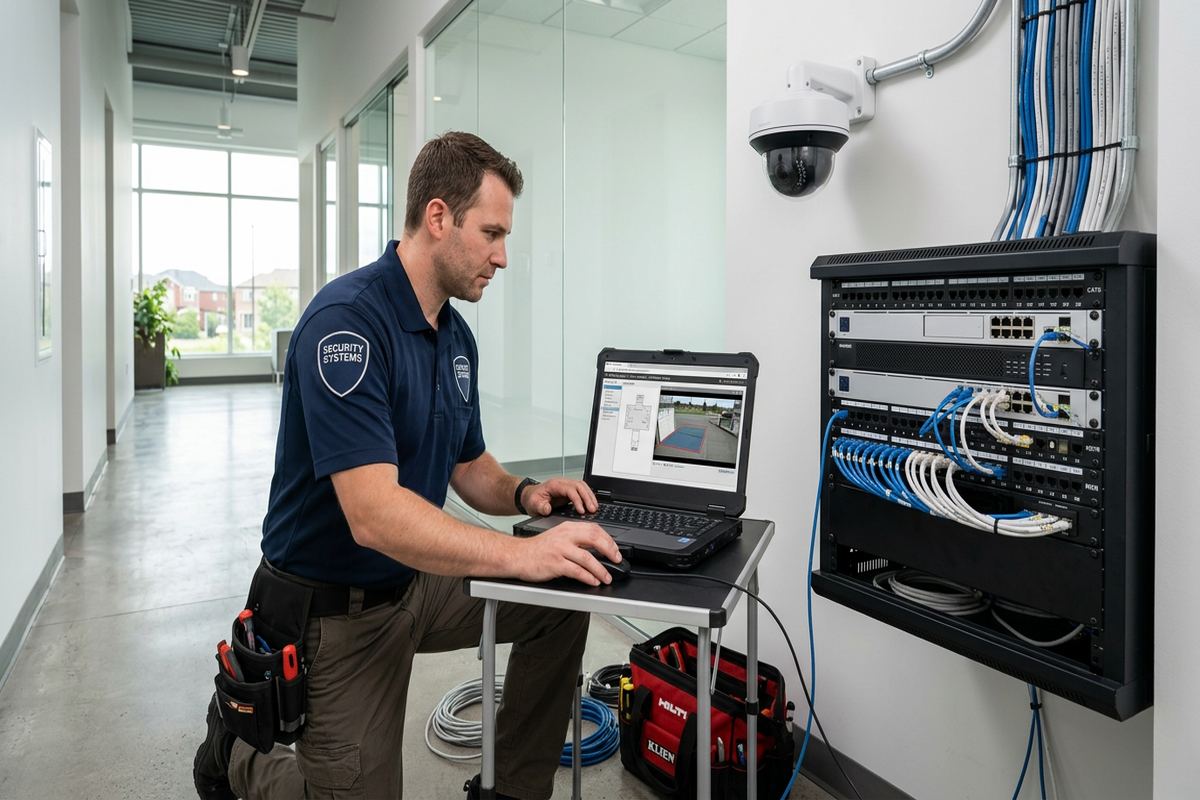
Recording design starts with the required evidence, not a generic retention promise. Image resolution, frame rate, scene activity, camera quantity and storage capacity all influence how much history is available. Continuous recording uses storage differently from event-based recording, and motion settings that are too sensitive can fill timelines with irrelevant activity. We discuss the desired balance and document the proposed recording method. Playback is tested during handover so the customer can find an event, select a time range and export footage without learning the process during a stressful incident.
Remote viewing depends on the home’s internet service, local network and account configuration. A camera system may continue recording locally during an internet interruption while remote access remains unavailable, depending on its design. We connect and configure equipment on site, apply available firmware updates where appropriate and establish access using the customer’s own email address and credentials. Passwords are not retained as installer-owned access. If multiple family members need the application, permissions can be arranged according to the platform’s supported roles rather than sharing one unrestricted account among everyone.
Warehouse and logistics activity is a major part of Brampton’s broader property environment, and some homeowners also operate from small industrial units or commercial strips. Those sites can require longer cable runs, loading-door views, higher mounting positions and coordination with managed network equipment. A home camera package should not simply be copied into that setting. Where a customer needs coverage at both a residence and business unit, each location is assessed separately, with distinct ownership, network, retention and remote-access requirements recorded in the scope.
- Recording mode and storage planning
- Event detection zone configuration
- Customer-controlled application accounts
- Playback and export testing
- Separate planning for business locations
Installation in Finished Brampton Properties
Installing in an occupied, finished property requires careful route selection. In Mount Pleasant and other newer Brampton subdivisions, basement ceilings and utility spaces may be fully drywalled even when the house was recently built. We look for practical paths through mechanical rooms, attached garages, closets and attic areas before proposing invasive work. Small access openings may still be necessary where framing blocks a route or no service chase exists. The scope identifies expected access, visible cabling and restoration exclusions so that the homeowner can make an informed decision before installation begins.
Older sections near Downtown Brampton and parts of Bramalea can present a different mix of masonry, renovations, additions and legacy wiring. Construction may change between floors or across an extension, making an apparently direct cable route impractical. Existing telephone, coaxial or alarm cable is not assumed to support modern network cameras. We inspect and test any pathway proposed for reuse. Where concealed routing is not reasonable, neatly installed raceway may provide a maintainable alternative. The aim is a dependable route that can be traced later, rather than a cable forced through unknown cavities.
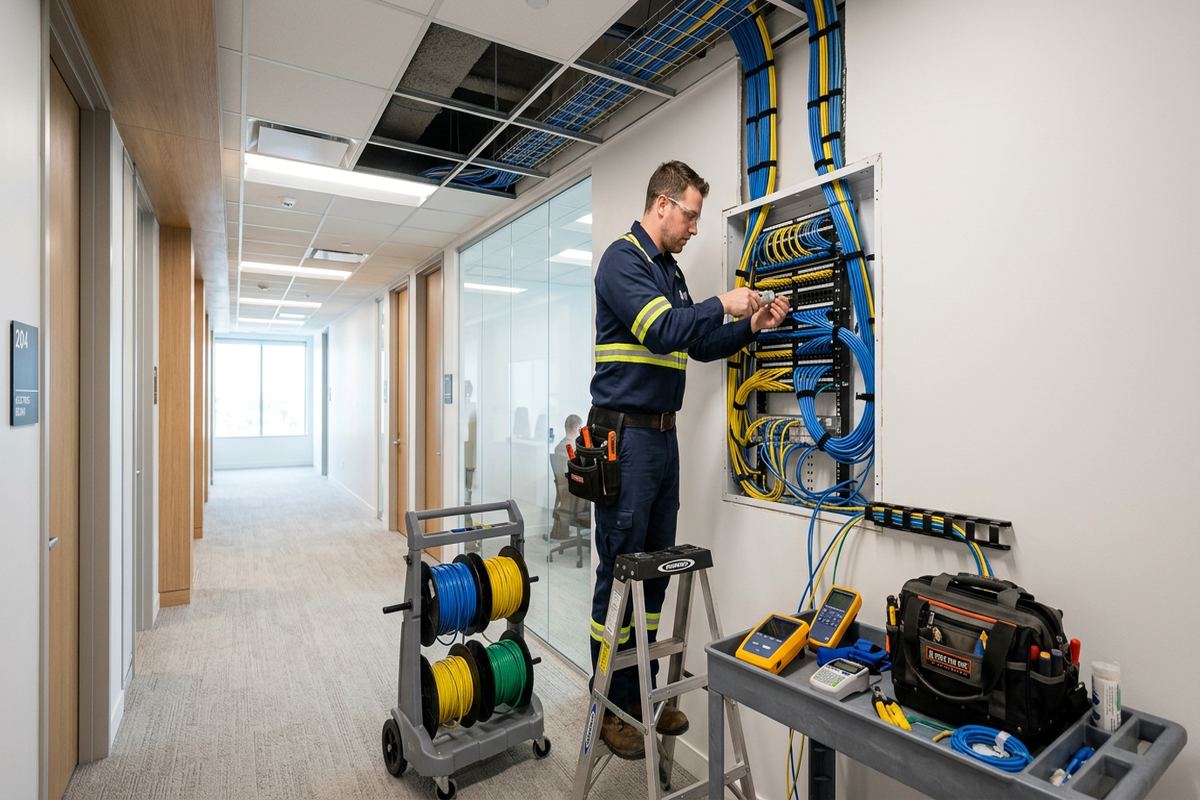
At completion, cable runs are labelled at the camera and equipment ends, and connected views are checked from the intended recording system. We confirm date and time settings, recording behaviour, remote access and basic user permissions. The customer receives an as-built record showing device locations and cable destinations, along with equipment information available for the installed system. Equipment ownership and warranty responsibilities are stated in the written scope. This handover helps another technician understand the installation later without guessing where cables travel or which account controls the devices.
- Routes through finished basements assessed
- Legacy wiring inspected before reuse
- Neat raceway where concealment is impractical
- Both ends of each cable labelled
- As-built device and cable record
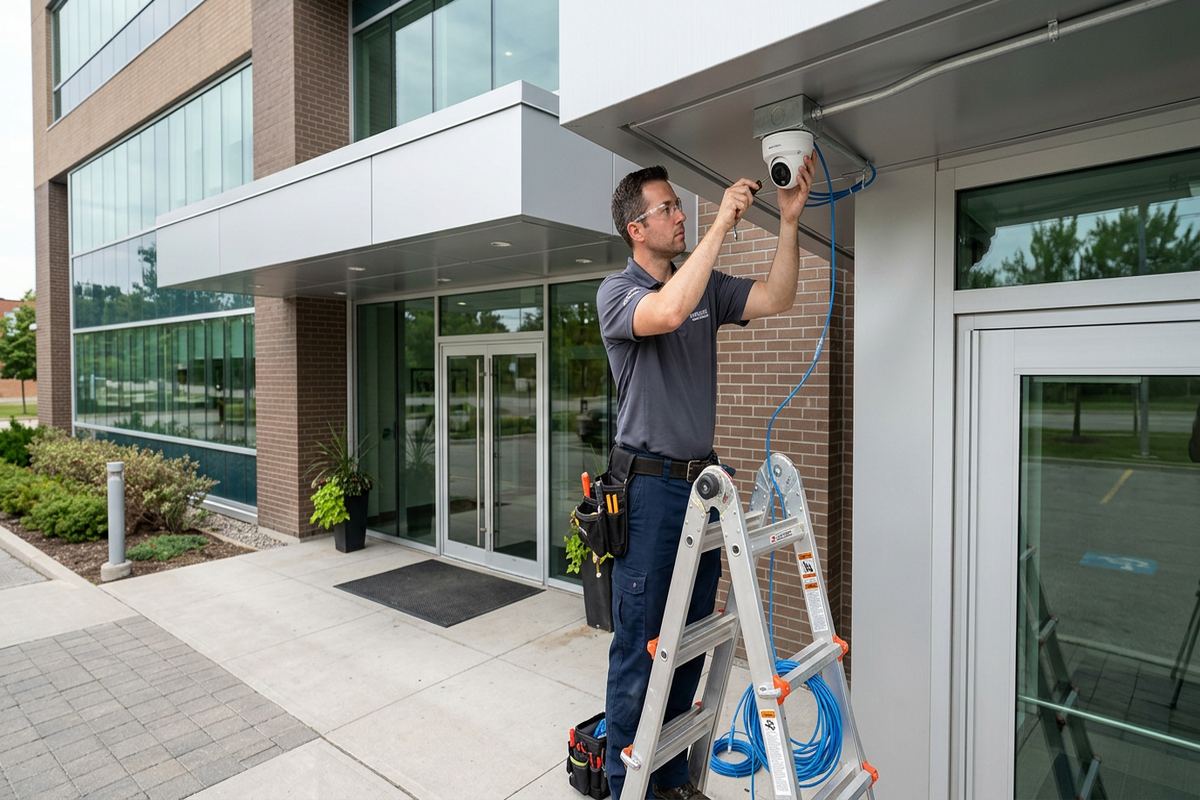
Approvals, Privacy and Shared Properties
Condominiums, rental properties and shared exterior walls require approval before installation. A condo corporation may restrict drilling through cladding, mounting devices in common elements or routing cable through shared spaces. Landlords may need to approve penetrations and equipment attached to the building, while tenants need clear information about cameras near their entrances. UnifiedLink does not assume that an owner’s request automatically provides every required permission. We can supply planned locations and route details for review, but the customer remains responsible for securing approvals before installation is scheduled.
Privacy should be considered when aiming any residential camera in a dense Brampton subdivision. Useful coverage can usually be focused on the customer’s doorway, driveway, gate or yard rather than a neighbour’s windows and private spaces. Digital privacy masks may help block irrelevant portions of a scene, although physical placement remains the first control. Audio recording introduces additional considerations and should not be enabled casually. Customers are responsible for using their system in accordance with applicable laws, agreements and policies, including any workplace obligations when cameras monitor employees or service providers.
Shared driveways and townhouse rows can make boundaries less obvious. Before fixing a camera, we confirm the intended area and identify whether the proposed wall, soffit or fence belongs solely to the customer. Doorbell cameras may also capture a common corridor or neighbouring entrance, requiring a narrower view or building approval. In mixed-use properties and commercial strips, signage, employee notification and lease terms may affect deployment. These issues are best addressed during planning because moving a camera later can leave unnecessary penetrations and require changes to cable routes.
- Condo and landlord approval planning
- Views focused within property boundaries
- Privacy masks for irrelevant areas
- Audio recording considered separately
- Shared-wall ownership checked before drilling
Brampton Camera Installation Scope and Handover
Every Brampton project is priced after a site assessment because cable access, construction and coverage needs vary from property to property. The written scope identifies equipment, camera locations, proposed cable routes, recording arrangements and known exclusions. It also states equipment ownership and applicable warranty responsibilities. This avoids relying on an informal device list that does not explain installation details. If site conditions change after concealed areas are opened, the impact is reviewed with the customer before work continues rather than quietly changing the planned route or finished appearance.
During installation, one accountable contractor coordinates the camera work, cabling and on-site configuration included in the scope. Continuous labelled runs are installed between defined endpoints, devices are mounted, and views are adjusted against the agreed coverage areas. Network connection and application setup are completed with customer participation where credentials or verification codes are required. We test live views and recording functions before handover. Any items outside the agreed work, such as electrical changes, wall restoration or third-party network administration, remain clearly identified instead of being treated as assumed inclusions.
Support begins with a system the customer can actually control. Handover includes the customer’s own credentials, an as-built record and a practical review of live viewing, playback and footage export. Requests sent during business hours are answered the same day; after-hours requests are answered the next business day. Site assessment timing depends on the service and travel distance. For Brampton properties, the next step is to describe the building, desired coverage, finished areas and any approval constraints so an appropriate assessment can be arranged.
- Site assessment completed before pricing
- Detailed written scope and exclusions
- One accountable installation contractor
- On-site configuration and testing
- Customer credentials and as-built handover
Brampton neighbourhoods we cover
- Downtown Brampton
- Bramalea
- Springdale
- Heart Lake
- Mount Pleasant
- Castlemore
- Fletcher's Meadow
Home security camera installation in Brampton — common questions
How many cameras does my Brampton home need?
The number depends on entrances, lot shape, parked vehicles and the level of detail required. A typical planning process considers the front approach, driveway, side access, rear doors and any basement entrance. During a Brampton site assessment, we identify priority views and possible blind areas before recommending quantities. More cameras are not automatically better if their views overlap or their mounting positions cannot capture useful detail.
Can you run camera cables through a finished basement?
Often, but the available route must be assessed first. Many Brampton subdivisions have fully finished basement ceilings and enclosed utility areas, limiting access between the recorder and exterior walls. We check mechanical rooms, garages, closets, attics and existing pathways. Small access openings or visible raceway may be necessary. The proposed route, expected access and restoration exclusions are documented in the written scope before installation.
Will outdoor cameras work during Brampton winters?
Outdoor-rated equipment can operate in winter when it is selected and installed for the location. Brampton’s freeze-thaw conditions make stable mounting, protected connectors and properly sealed penetrations important. Snow, ice, condensation and infrared reflection can still affect image quality or motion alerts. We position and configure cameras to reduce these issues, although occasional lens cleaning and seasonal detection adjustments may be required.
Do I need permission to install cameras at a condo or rental?
Possibly. Brampton condo corporations may control exterior walls, common corridors, soffits and other shared elements. Landlords may also restrict drilling, cabling or equipment attached to a rental property. The customer is responsible for obtaining required approvals. UnifiedLink can provide proposed camera locations and cable-route details for review before installation, helping the owner, landlord or corporation assess the work accurately.
Can I view my Brampton cameras from my phone?
Remote viewing is available with many camera systems when the property has suitable internet and network connectivity. We configure supported applications on site using the customer’s own account and credentials. We also explain whether local recording continues during an internet outage, since this depends on system design. Handover includes a review of live viewing, playback and footage export rather than only confirming that the application opens.
Can you install cameras at my Brampton business too?
Yes, security camera planning can also cover commercial strips, offices, warehouses and industrial units. Brampton’s warehouse and logistics properties often involve loading doors, long cable distances, higher mounting points and managed networks. Each business location requires its own assessment and scope. If cameras are used around employees or shared premises, the owner must also address applicable privacy, lease, notification and approval requirements.
Coverage in Brampton is confirmed against the address before we quote. See everything we install in Brampton or the province-wide home security camera installation page.