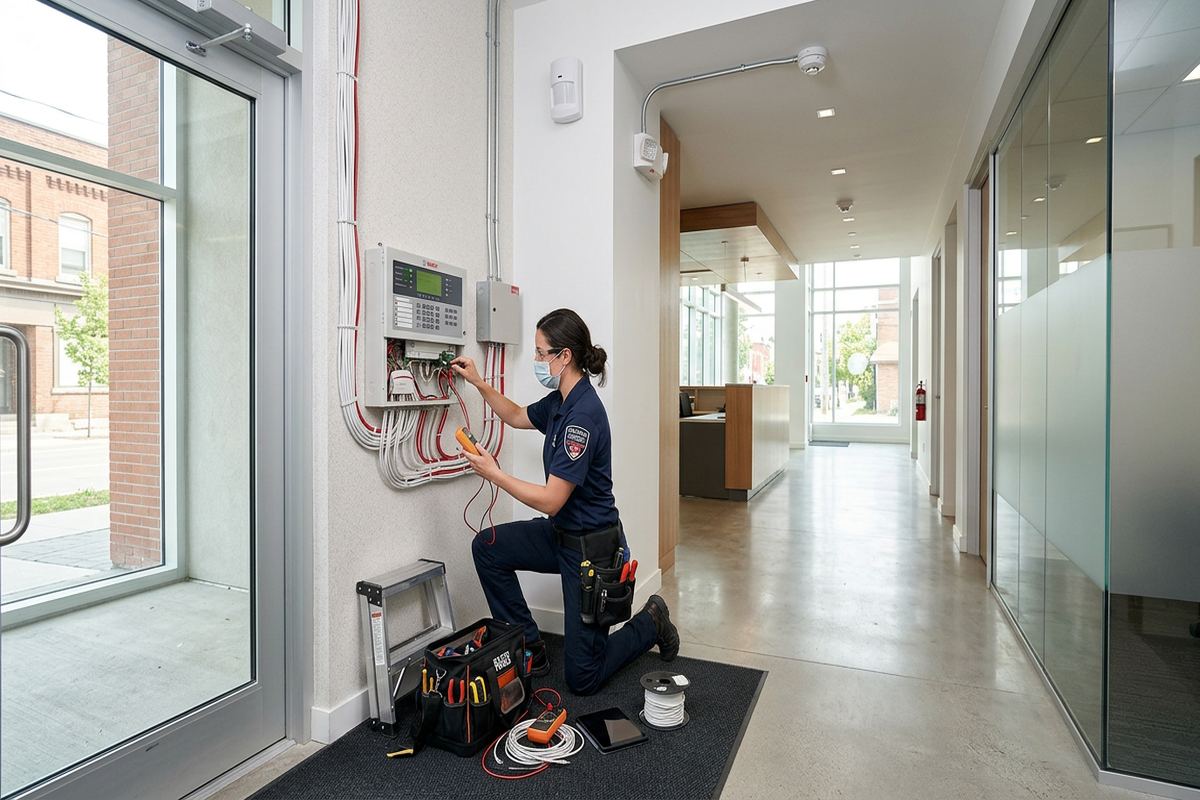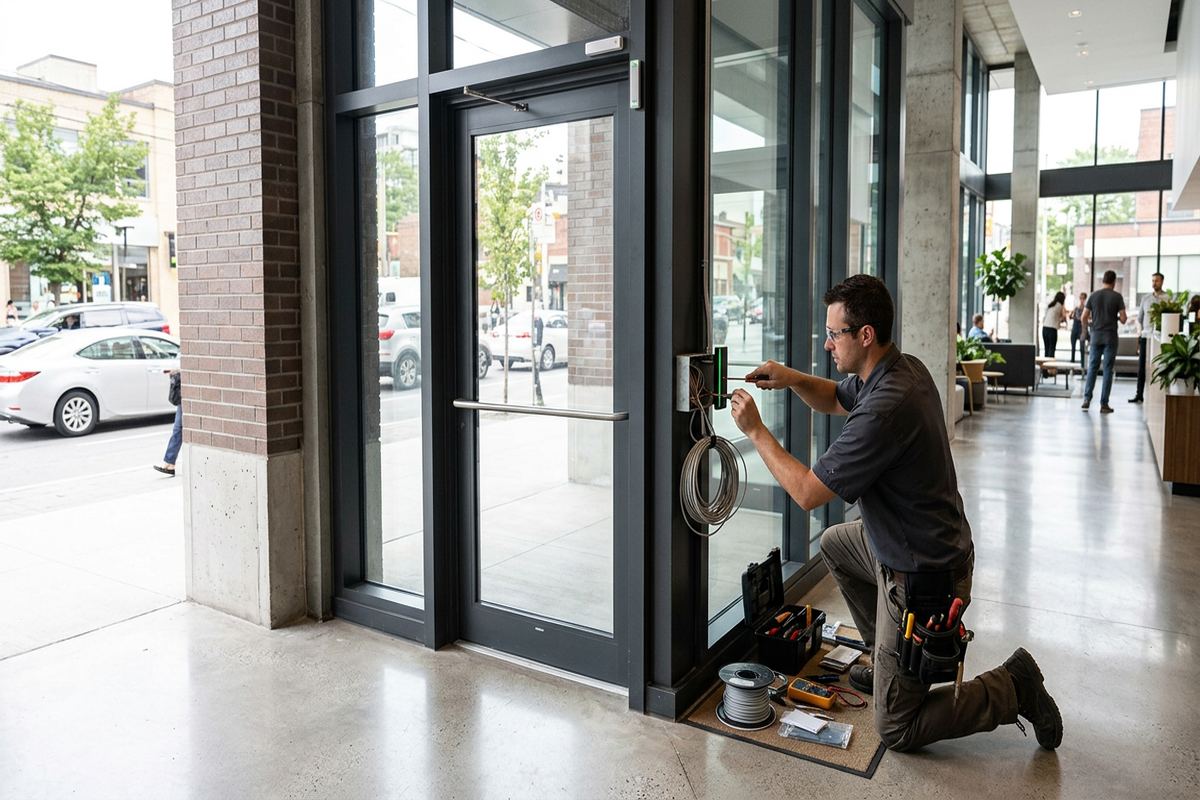
UnifiedLink installs wireless alarm systems for Brampton homes, commercial units, warehouses and logistics facilities. We assess the property before pricing, plan sensor and keypad locations, configure the system on site and provide a documented handover. Each scope accounts for construction, signal paths, access points, exterior conditions and the way occupants actually use the building.
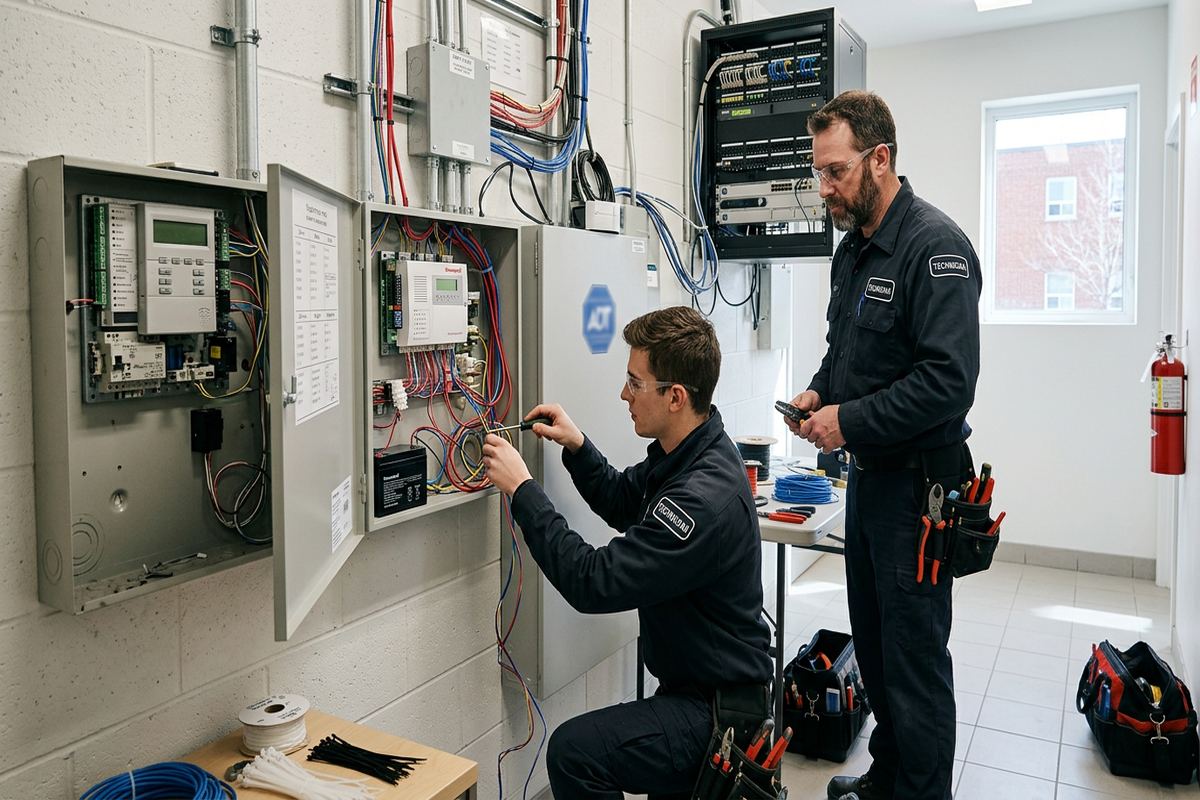
Wireless Alarm Planning for Brampton Properties
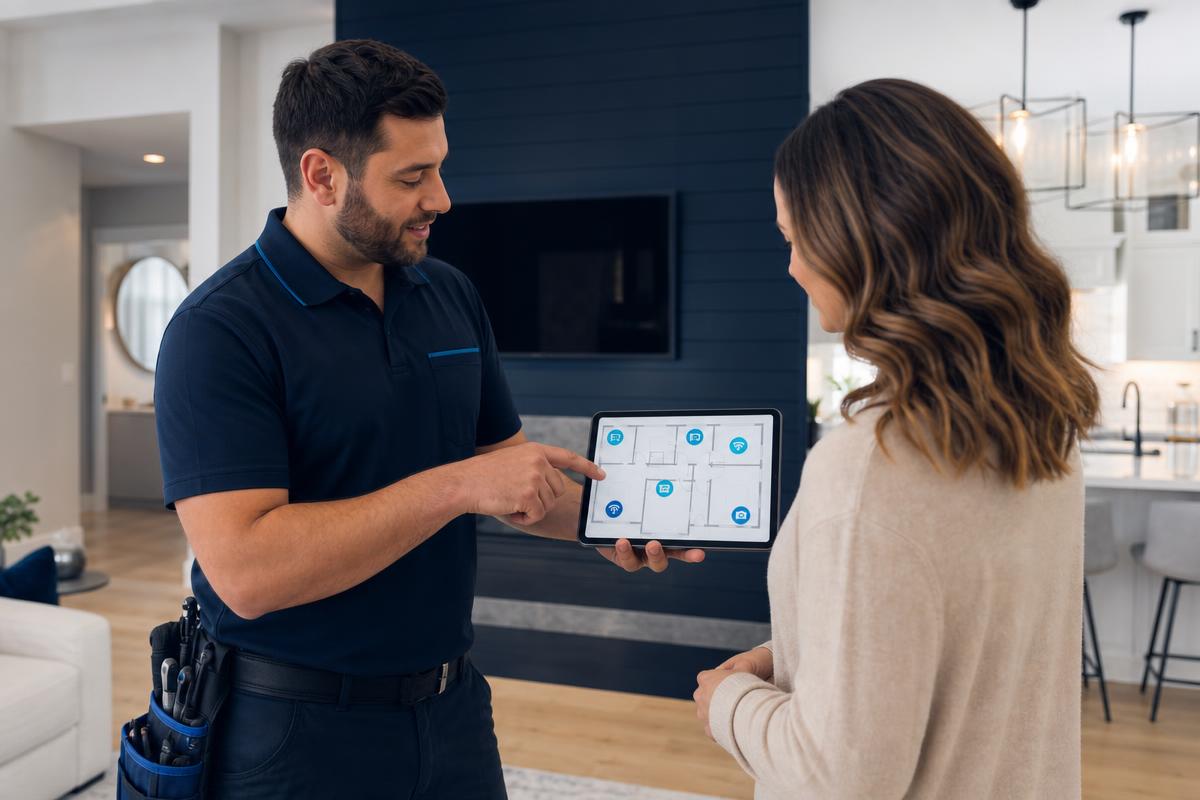
A wireless alarm installation should begin with the building, not a box of devices. During a Brampton site assessment, we review entry points, room uses, daily traffic, likely intrusion paths and areas where radio signals may be weakened. Finished basements, attached garages, additions and detached structures can change the design considerably. We also identify where keypads, sirens, control equipment and communication hardware can be installed without creating avoidable damage or making routine operation inconvenient for occupants.
Brampton’s fast-growing subdivisions include houses built in different periods, with varying wall assemblies, window styles and basement layouts. A newer frame-built house in Mount Pleasant may support a straightforward wireless layout, while a renovated property near Downtown Brampton may contain masonry, plaster, metal ductwork or later additions that affect signal travel. Sensor selection and placement are therefore based on actual construction and tested communication, rather than assumptions made from floor plans or property listings.
Commercial requirements are different from residential ones. Warehouses, logistics sites, commercial strips and industrial units often have long distances, high ceilings, loading doors, metal racks and changing internal layouts. These conditions can block or reflect wireless signals and create zones that require careful testing. We map openings and work areas, consider staff access patterns, and determine whether wireless devices alone are suitable. Where necessary, the written scope can identify supporting wired infrastructure or other practical design changes.
- Review doors, windows, rooms and circulation routes
- Test likely wireless paths through the building
- Account for finished basements and detached areas
- Document proposed devices, locations and exclusions
Choosing Wireless Alarm Devices in Brampton
Device choice depends on what must be detected and how the space is used. Typical systems may include door and window contacts, indoor motion detectors, glass-break detection, keypads, sirens, panic devices and environmental sensors where appropriate. We do not add devices simply to increase the equipment list. Each component should address a defined opening, room or operating risk, remain accessible for service, and communicate reliably with the control equipment from its intended mounting location.
Homes in Springdale, Heart Lake and Fletcher’s Meadow commonly have multiple exterior doors, garage access, open main floors and finished lower levels. Pets, heating vents, curtains, direct sunlight and furniture placement can influence motion detection. Window contacts also require attention to frame design and operating clearances. We review these details before fixing locations, then configure detection settings on site. The objective is usable coverage that supports normal routines without relying on poorly positioned sensors or unnecessarily complicated arming procedures.
For a Brampton warehouse or logistics operation, overhead doors, personnel entrances, shipping offices and separated storage areas may need different detection methods. Large metal doors can affect contact mounting, while forklifts, suspended heaters, air movement and after-hours cleaning can influence motion detector placement. Partition walls and racking may also change over time. The design should keep important devices clear of routine impacts and allow future adjustments without losing track of the original zone names, locations and intended protection.
- Door and window contact selection
- Motion detection matched to room conditions
- Clearly located keypads and audible devices
- Zone naming based on actual spaces
Wireless Coverage Through Finished and Mixed Construction
Wireless does not mean that every device will communicate equally well from every location. Radio performance can be reduced by concrete, masonry, metal studs, foil-backed insulation, ductwork, electrical equipment and dense storage. Brampton properties often combine several of these materials, particularly where a basement has been finished after the original construction. We test intended device locations instead of treating advertised range as a substitute for site conditions. The final arrangement must work through the real building while doors, furnishings and equipment are in normal positions.
Finished basements are a frequent reason to consider wireless alarm equipment because opening completed ceilings and walls may be disruptive. Even so, the basement layout needs careful review. Utility rooms, steel beams, mechanical ducts and foundation walls can interrupt communication between lower-level devices and an upstairs control point. In a Bramalea split-level or a Castlemore home with extensive basement finishes, relocating the control equipment or using appropriate signal-supporting hardware may produce a more dependable result than placing every component where it is visually convenient.
Masonry and frame construction require different mounting decisions. A frame wall may permit simple fastening, while brick, concrete block or poured concrete requires suitable anchors and attention to hidden services. Commercial demising walls can also include metal framing that affects both mounting and signal paths. Before drilling, we consider the surface, device weight, service access and cable or pipe risks. Where a device cannot be securely or reliably installed at the first proposed point, the location is revised and recorded in the scope.
- Signal checks at proposed mounting points
- Planning around concrete, steel and ductwork
- Mounting methods suited to each surface
- Options for difficult basement communication paths
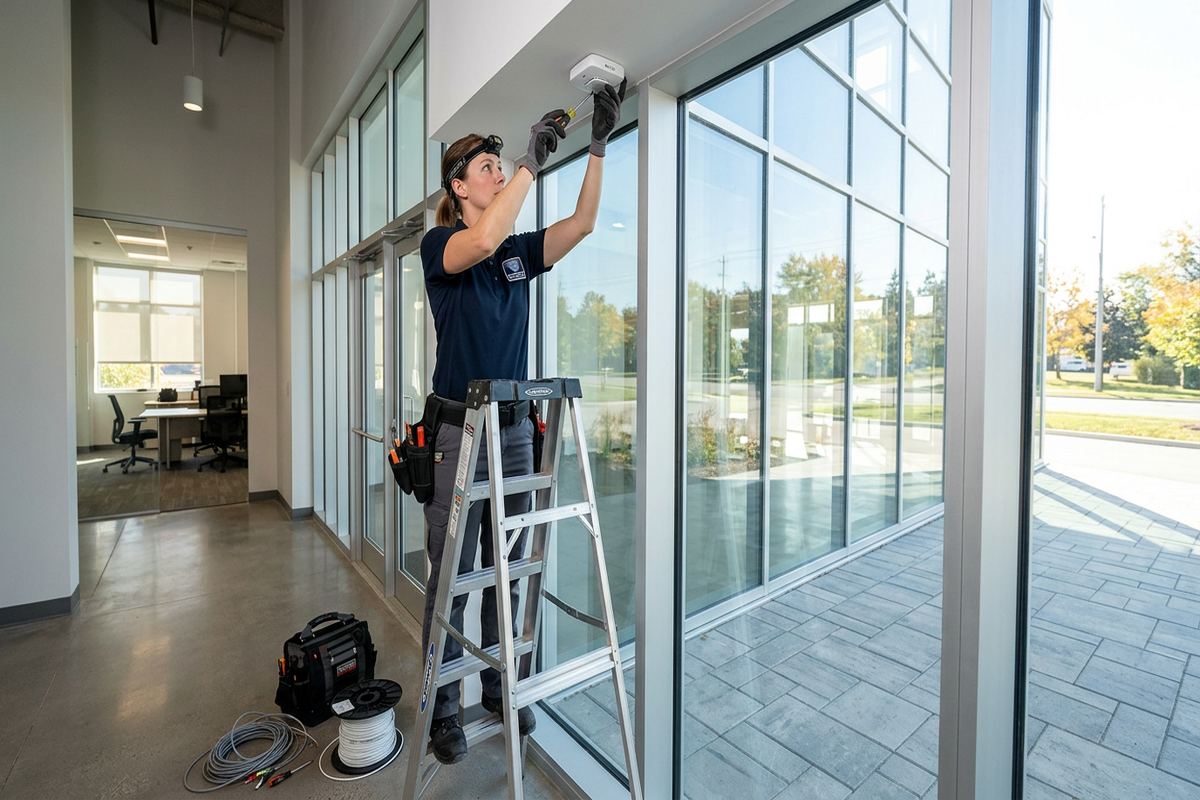
Brampton, Ontario
Wireless alarm installation in Brampton, scoped in writing first
Book a site assessment and get equipment, routes, exclusions, and warranty on paper before anything is installed.
Exterior Alarm Devices and Brampton Weather
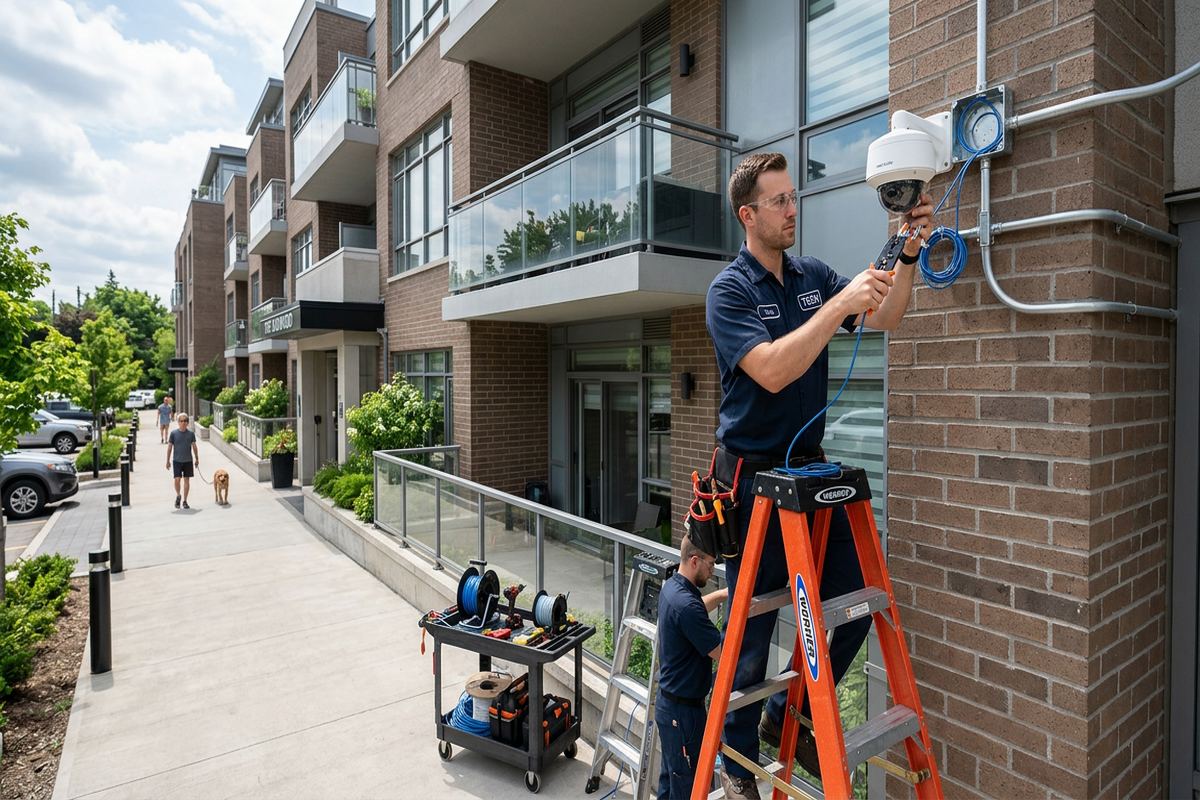
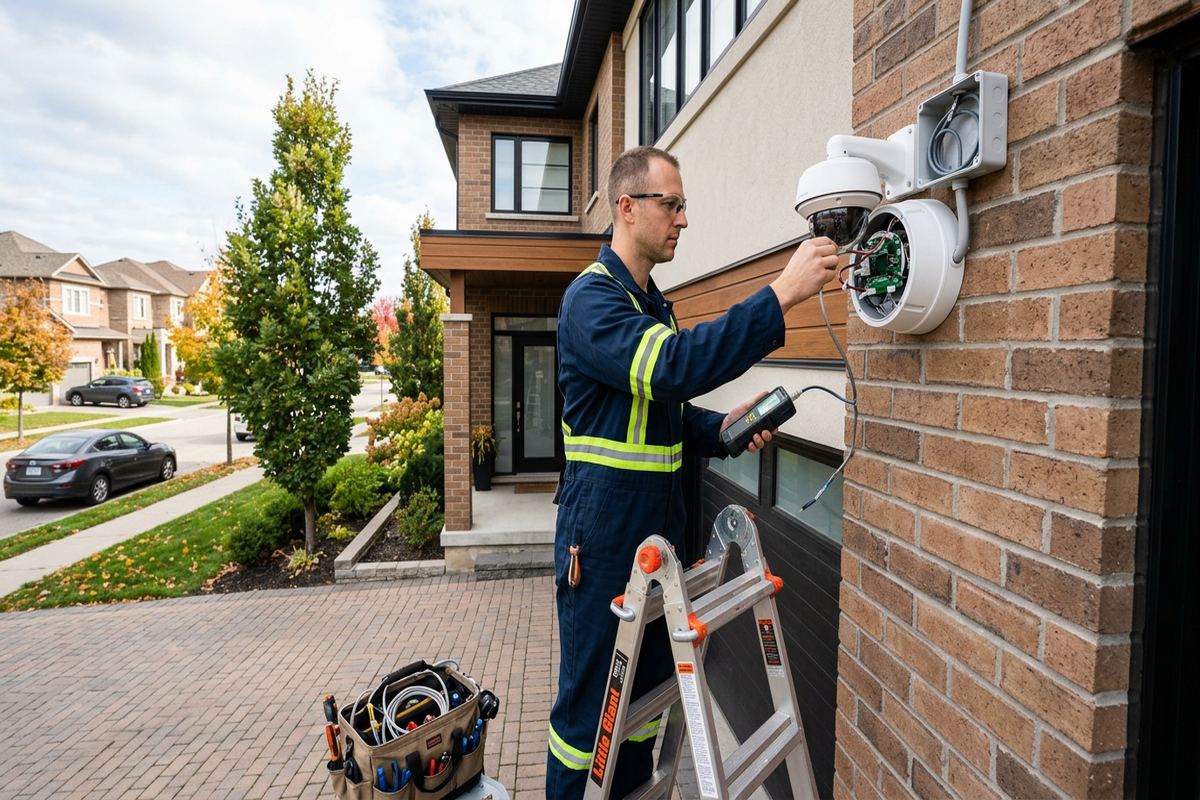
Exterior alarm components face conditions that indoor devices do not. Brampton winters bring freezing temperatures, snow, moisture and repeated freeze-thaw cycles, all of which matter when mounting equipment near doors, gates, loading areas or detached buildings. Devices must be suitable for the intended environment, and attachment points need to resist movement as materials expand and contract. We also consider snow accumulation, roof runoff, direct sun and accidental contact before selecting an exterior location.
Sealing is especially important where fasteners or wiring pass through brick veneer, siding, concrete or exterior trim. A poorly formed penetration can admit water behind the cladding and may worsen over successive freeze-thaw cycles. We use mounting and sealing methods appropriate to the surface and avoid drainage paths, mortar damage or unnecessary penetrations where possible. Exterior devices are positioned so their covers can be opened for inspection without disturbing the weather seal or requiring unsafe access.
Detached garages, backyard structures and remote commercial doors present an additional wireless challenge. Distance alone does not determine performance; masonry walls, metal cladding, vehicles, shelving and neighbouring radio activity can affect the path. At Brampton industrial units, a loading door may also sit behind racks or trailers during normal operations. Testing should reflect those conditions. If dependable wireless communication cannot be established, we explain the limitation and include a practical alternative in the written scope rather than installing an uncertain device.
- Weather-suitable device selection
- Sealed penetrations through exterior finishes
- Freeze-thaw and snow exposure considered
- Communication tests to garages and loading doors
Installation in Occupied Brampton Homes
Installation in an occupied home requires a clear sequence and controlled work areas. We confirm device locations before fastening anything, protect nearby finishes and limit drilling to the agreed scope. Wireless equipment can reduce the need to open walls, but some power, communication or control components may still require a cable route. Any planned cable runs are continuous and labelled. If site conditions make a proposed route unsuitable, the change is discussed before work proceeds rather than concealed behind a finished surface.
Daily use is considered during configuration. Household members need practical entry and exit delays, understandable zone names, reachable controls and a defined method for arming selected areas. In Brampton homes with basement apartments, shared entrances or multigenerational layouts, the alarm plan must reflect who can enter each area and when. We review these routines with the customer, while avoiding configurations that create confusing permissions or leave common access points outside the intended protection. Any landlord or occupant responsibilities should be settled before installation.
Condominium work can require approval for drilling, exterior-facing devices, common-area access or changes near shared building systems. Landlords may also need to authorize installation in a rental property, particularly when equipment will be fastened to the building or connected to internet and power services. Customers should confirm these permissions before the scheduled work. Our written scope identifies known access requirements and exclusions, but it does not replace condominium rules, lease obligations or approvals from the property owner or manager.
- Confirmed locations before drilling
- Protection for occupied and finished areas
- Labelled continuous runs where cabling is required
- Planning for shared entrances and user access
Brampton Warehouse and Commercial Alarm Layouts
Warehouses and logistics sites form a substantial part of Brampton’s property base, and their alarm layouts need to follow operations closely. A system should distinguish loading areas, offices, inventory zones, staff entrances and restricted rooms using clear zone descriptions. We review shift changes, deliveries, cleaners, contractors and after-hours access before configuration. This helps prevent a simple residential-style setup from being applied to a building where different sections may be occupied, secured or released at different times.
High-bay spaces introduce practical installation constraints. Lifts may be needed for suitable detector placement, while roof structure, suspended services and heater locations can affect the available mounting points. Metal wall panels and racking can alter wireless performance, especially as stock levels change. For a Brampton industrial unit, we assess communication at working height and around normal obstructions. Devices are kept accessible for service where possible, without placing them within easy reach of impacts, tampering or routine warehouse activity.
Commercial strips and multi-unit buildings require attention to boundaries. A tenant’s alarm should cover its leased premises without relying on devices installed in another unit or interfering with common access. Rear service corridors, shared vestibules and utility rooms need to be identified accurately. We confirm which doors belong to the customer’s space and note areas that are excluded. If property management approval is needed for mounting, cable routes or work in shared areas, that requirement is documented before the installation date.
- Zones aligned with operational areas
- Loading and personnel doors assessed separately
- High-bay mounting and access considerations
- Tenant boundaries and common areas documented
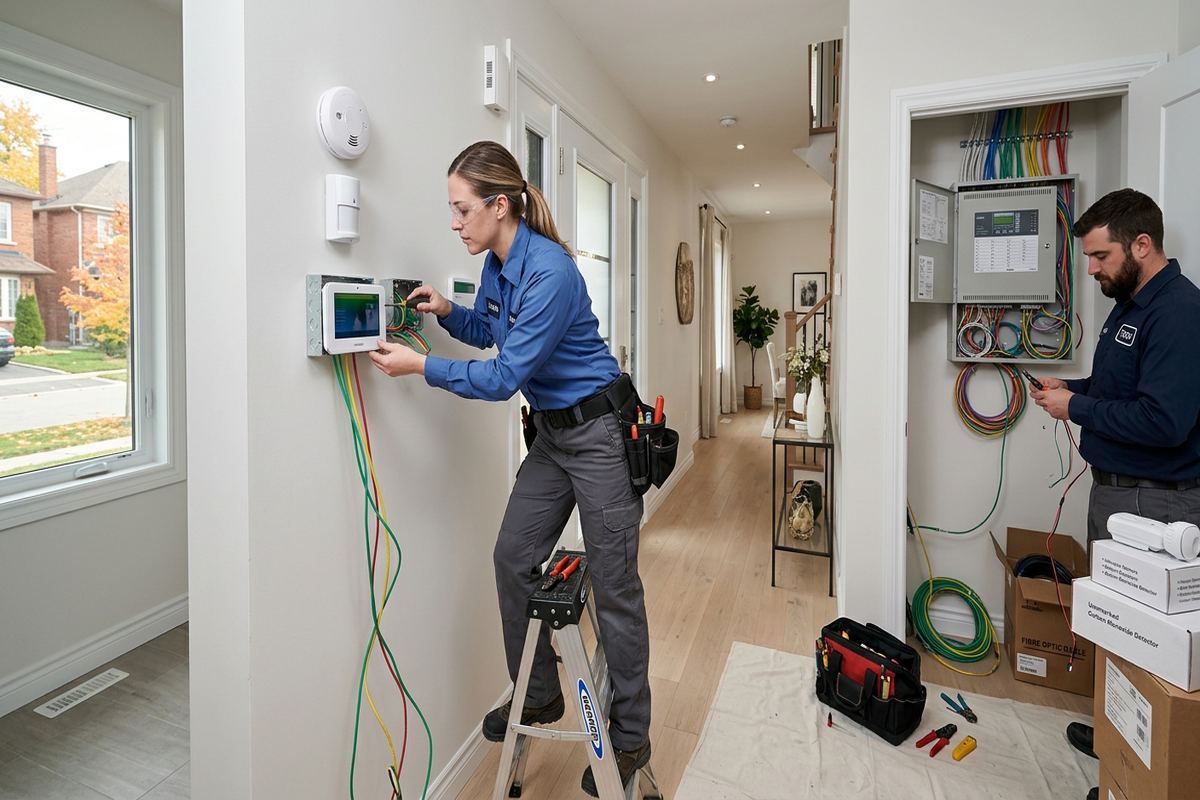
Configuration, Testing and Handover in Brampton
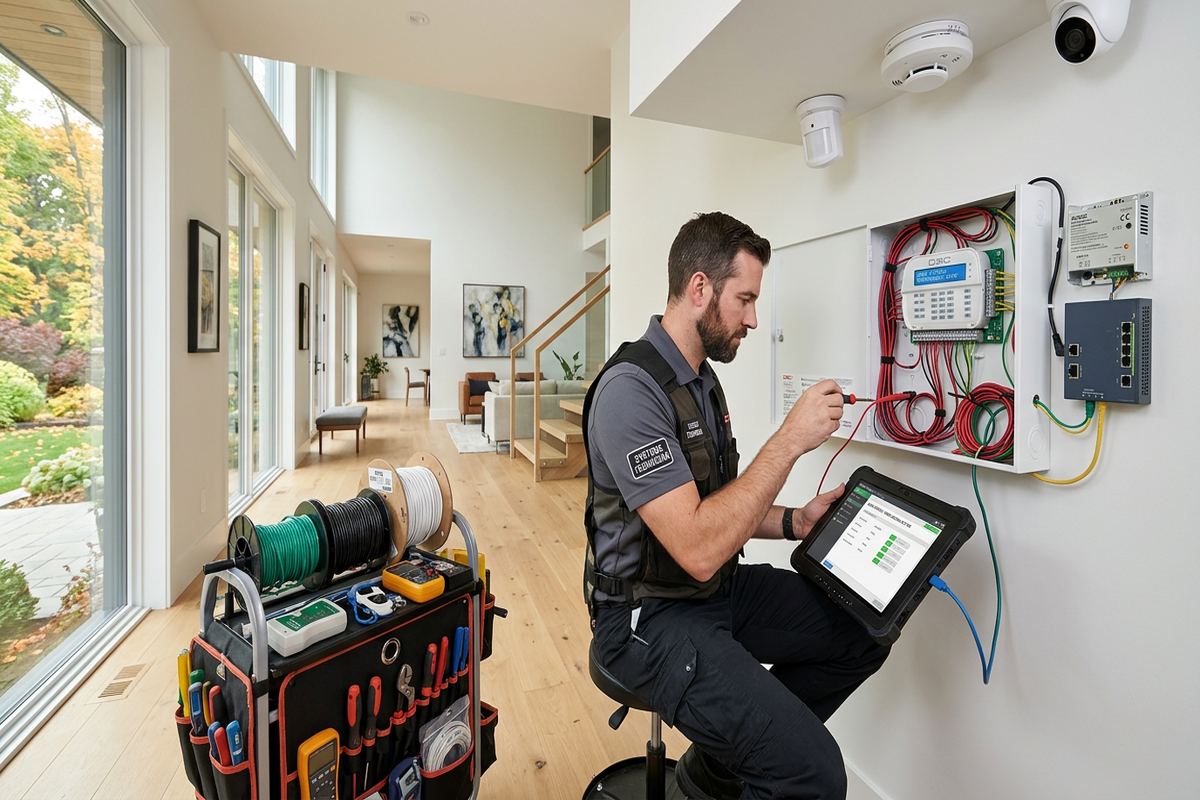
Once devices are mounted, configuration is completed on site using the property’s agreed operating plan. Each sensor is assigned a clear name, and entry, exit, instant and interior functions are set according to how the doors and rooms are used. We test detection, audible notifications and communication from installed locations. The process also checks that users can arm and disarm the relevant areas without bypassing zones simply because labels or sequences are difficult to understand.
Handover is completed with the customer’s own credentials rather than installer-controlled accounts. Authorized users receive guidance on routine operation, basic status checks and the actions to take when the system reports a fault, open zone or low battery. For a Brampton business, this may also include reviewing separate user access and opening or closing procedures. Credentials should not be shared casually, and former staff or occupants should be removed according to the customer’s internal access process.
An as-built record provides a useful reference after installation. It identifies installed equipment, device locations, zone names and relevant cable or communication details. The written scope also covers equipment ownership, exclusions and warranty information, so responsibility is clear. This documentation is particularly useful when a finished basement is renovated, a warehouse adds racking, or a commercial tenant changes its layout. Future service can then begin with an accurate record instead of tracing an undocumented system throughout the property.
- On-site programming and functional testing
- Clear zone and device names
- Handover using customer-owned credentials
- As-built record for future reference
Scope, Pricing and Ongoing Changes
Pricing follows a site assessment because device count alone does not describe the work. Construction, mounting surfaces, access, signal conditions, user requirements and any necessary supporting cabling all affect the scope. Site assessment timing depends on the service and travel distance. Requests sent during business hours are answered the same day, while after-hours requests are answered the next business day. This response wording applies to the initial request and is not a promise that an assessment or installation will occur immediately.
Before work begins, UnifiedLink provides a written scope covering equipment, cable routes, device placement, exclusions, equipment ownership and warranty. This gives Brampton homeowners and business operators a defined basis for reviewing the installation. It also identifies customer responsibilities such as internet availability, electrical access, landlord permission or condominium approval. If a requested feature depends on a third-party service, that dependency should be understood before installation. One accountable contractor coordinates the assessed low-voltage work within the accepted scope.
Alarm needs can change when rooms are renovated, tenants move, warehouse racking is reconfigured or new exterior doors are added. Existing wireless devices should not simply be moved without confirming mounting, zone programming and communication at the new location. Brampton properties with finished basements or expanding commercial operations may also outgrow the original arrangement. Keeping the as-built record current makes later changes easier to assess. Any expansion should be tested as part of the complete system rather than treated as an isolated add-on.
- Site assessment before pricing
- Written equipment and installation scope
- Ownership, exclusions and warranty documented
- Changes tested against the complete system
Brampton neighbourhoods we cover
- Downtown Brampton
- Bramalea
- Springdale
- Heart Lake
- Mount Pleasant
- Castlemore
- Fletcher's Meadow
Wireless alarm installation in Brampton — common questions
Is a wireless alarm suitable for my Brampton home?
It can be, particularly where finished walls or basements make new cable routes disruptive. Suitability depends on construction, distances, interference and the locations requiring protection. During a Brampton assessment, we test likely communication paths and review doors, windows, room use and control equipment placement. If part of the property cannot support dependable wireless communication, the written scope will identify an alternative.
Will you need to open finished basement walls?
Wireless sensors often reduce the need to open finished walls, but they do not eliminate every possible cable requirement. Control equipment, power or communication hardware may still need an appropriate route. In Brampton finished basements, we first assess existing access points, utility spaces and signal conditions. Any required route is included in the written scope, and installed low-voltage runs are continuous and labelled.
Can wireless sensors work in a warehouse?
Yes, where testing confirms reliable communication and the devices suit the operating environment. Brampton warehouses can contain metal racks, overhead doors, long distances and changing stock levels that affect wireless signals. We assess device locations under realistic conditions and consider loading activity, heaters and high ceilings. Where wireless coverage is uncertain, supporting infrastructure or a different device arrangement may be recommended.
Do I need condo or landlord approval?
Possibly. Brampton condominium rules may restrict drilling, exterior-facing equipment, work in common areas or connections near shared systems. Rental installations may require the property owner’s authorization, especially when equipment is fastened to the building. Customers are responsible for obtaining the applicable approvals before work. The scope can identify known access and mounting requirements, but it does not override a lease or condominium rules.
How are outdoor devices protected from Brampton winters?
Outdoor devices must be suitable for their environment and mounted with moisture, snow, temperature changes and freeze-thaw cycles in mind. We assess the surface, drainage, sun exposure and service access before installation. Penetrations are sealed using methods appropriate to brick, siding, concrete or trim. A protected location is preferred where it still provides the required detection and dependable wireless communication.
What documentation do I receive after installation?
You receive a handover using your own credentials and an as-built record describing installed devices, locations and zone names. The written scope covers equipment, cable routes where applicable, exclusions, equipment ownership and warranty. For Brampton businesses, the record can also support future changes to staff access, tenant layouts or warehouse zones without requiring the original installation to be traced from the beginning.
Coverage in Brampton is confirmed against the address before we quote. See everything we install in Brampton or the province-wide wireless alarm installation page.