UnifiedLink installs office access control systems across Brampton and Peel Region. We assess doors, user flows, cable routes and management requirements before recommending equipment. Each project receives a written scope, on-site configuration and documented handover using the customer’s own credentials. One contractor remains accountable for readers, controllers, locks, cabling and system integration.
Office Access Control Planning in Brampton
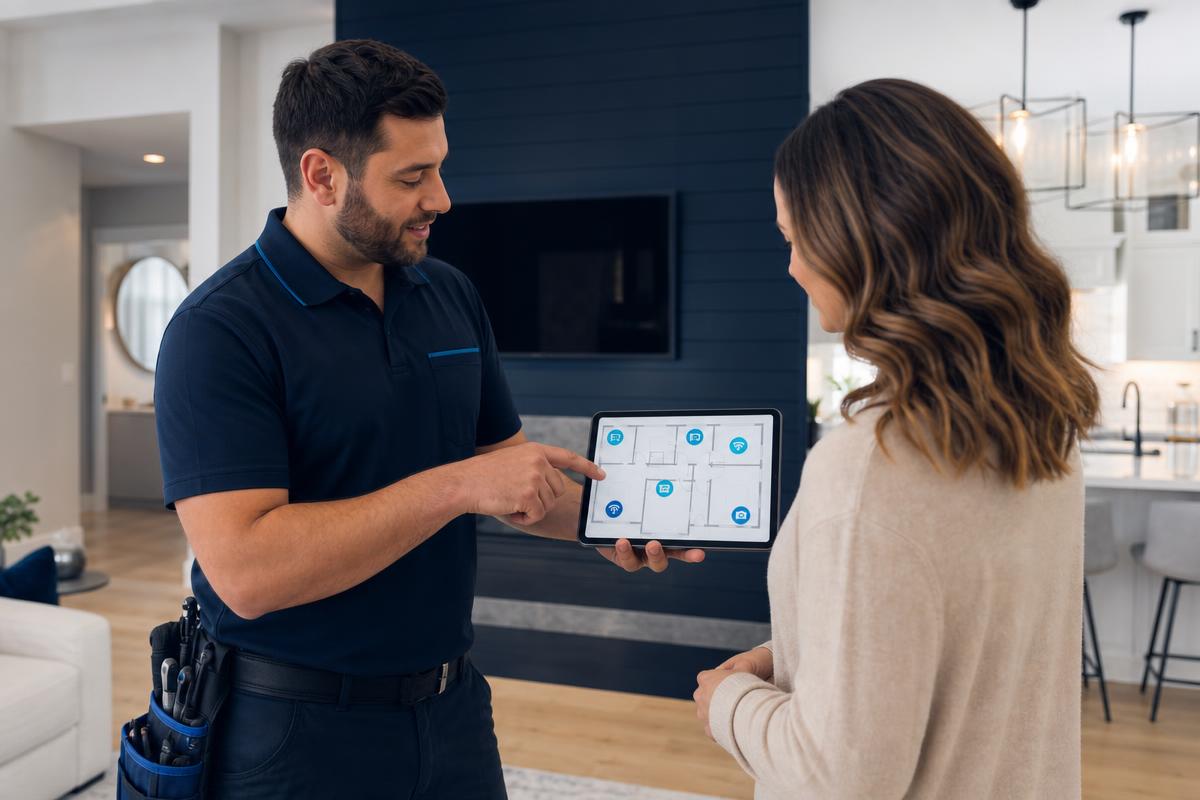
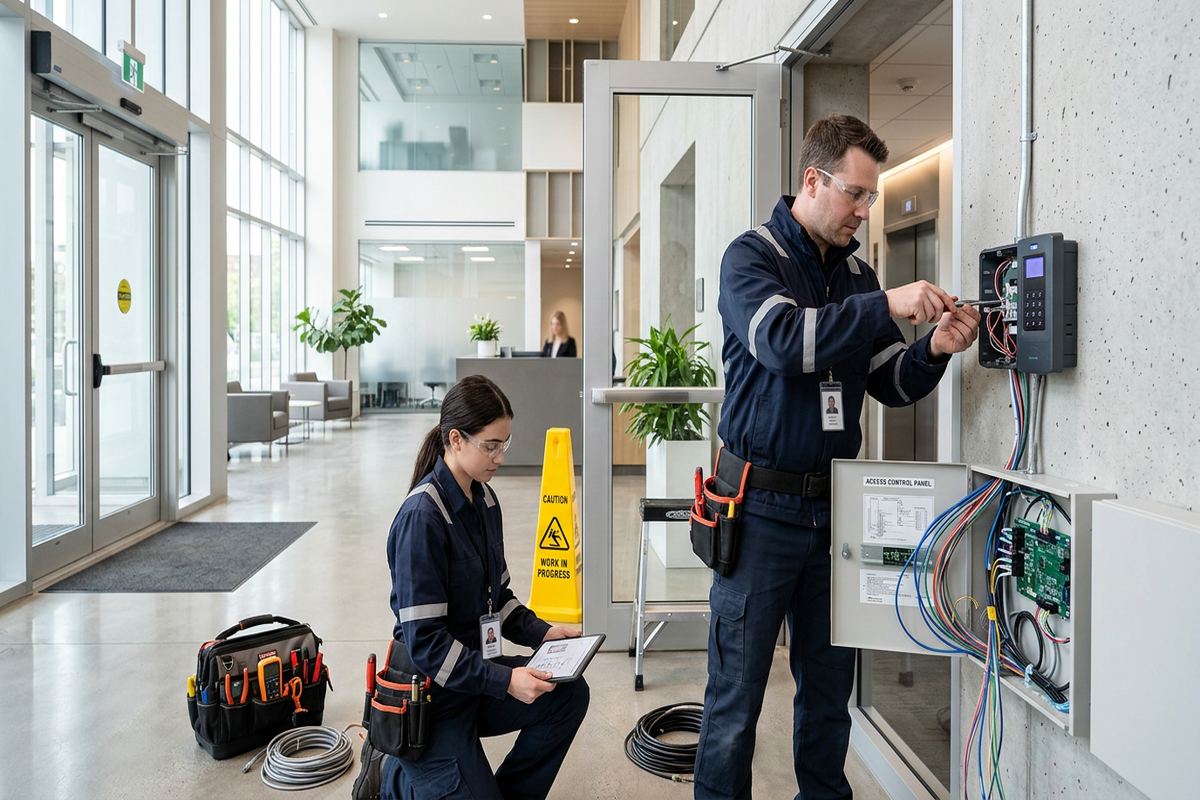
Effective access control begins with how people actually use an office, not with a list of readers and locks. During a Brampton site assessment, UnifiedLink reviews public entrances, staff doors, reception areas, interior zones, emergency exits and shared building access. We identify who needs entry, when access should apply and how administrators will add or remove credentials. The assessment also considers door condition, existing hardware, available power, network locations and practical cable routes. Findings are used to prepare a written scope before pricing, reducing assumptions that can cause changes during installation.
Brampton offices vary from converted units near Downtown Brampton to newer workplaces in Springdale and Mount Pleasant. A street-facing professional office may need a controlled public entrance and a simple reception release, while an industrial office attached to a warehouse may require separate permissions for administration, shipping and operational areas. The plan should reflect those differences. We review tenant boundaries, landlord-controlled doors and common corridors so the proposed system does not interfere with base-building equipment or place customer devices where written property approval is required.
Every written scope identifies the proposed equipment, device placement, cable routes, exclusions, equipment ownership and applicable warranty. It also records assumptions involving doors, frames, network connections and electrical work. This detail matters when several parties are involved, including property managers, locksmiths, electricians or internal information technology staff. UnifiedLink remains the accountable low-voltage contractor for the defined access control work and coordinates interfaces that affect it. Clear responsibilities help prevent a reader, lock, power supply or network connection from being omitted because each trade expected another party to provide it.
- Door-by-door site assessment
- Staff and visitor flow review
- Written equipment and cabling scope
- Landlord and base-building coordination
- Defined ownership and warranty terms
Choosing Door Hardware for Brampton Offices
Door construction determines whether an electric strike, electromagnetic lock or another controlled hardware arrangement is appropriate. UnifiedLink examines the leaf, frame, latch, hinges, closer and existing locking function before specifying an approach. Hollow metal doors in Brampton industrial units differ from aluminum storefront entrances, wood office doors and fire-rated openings. The selected equipment must support normal operation, authorized entry and required egress without creating an awkward user experience. Where specialist door work is necessary, the scope defines that dependency rather than treating every opening as a standard reader installation.
Commercial strips and mixed-use properties around Bramalea or Heart Lake often have aluminum-framed entrances with limited space for cabling and lock hardware. Industrial premises may instead use masonry walls, steel frames and long distances between the office entrance and communications room. Frame buildings can offer concealed pathways, but finished surfaces and occupied rooms may restrict access. These conditions affect reader mounting, conductor type, power supply placement and labour. A site assessment confirms feasible routes before equipment is ordered, helping avoid exposed cable where a concealed or protected pathway is reasonably available.
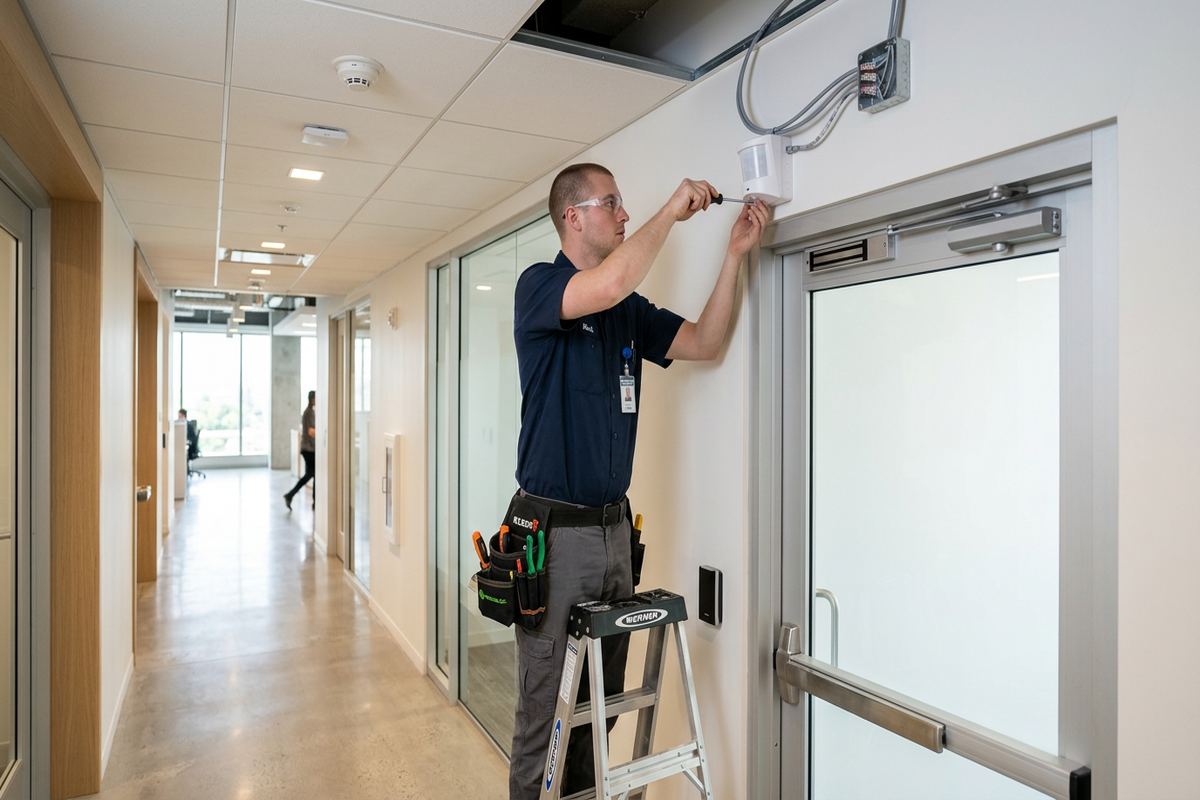
Life-safety and accessibility requirements remain central to controlled-door design. Access control should not prevent occupants from leaving through required egress routes, and hardware behaviour during power loss or fire-alarm operation must match the opening’s function and applicable requirements. Automatic door operators, panic hardware, request-to-exit devices and door position contacts may also influence the design. UnifiedLink documents these interfaces and coordinates with the appropriate parties where necessary. The objective is controlled entry with predictable operation, not simply an electronic lock added to a door without considering the complete opening.
- Electric strike and lock assessment
- Door position monitoring options
- Request-to-exit device planning
- Fire-alarm interface coordination
- Accessible entrance considerations
Credentials and Permissions for Brampton Staff
A useful office system lets administrators control access without distributing keys that cannot be easily tracked or cancelled. Credentials may include cards, fobs, mobile credentials or codes, depending on the selected platform and workplace policies. UnifiedLink configures users, schedules and door groups on site using an agreed permissions structure. Brampton employers can separate everyday staff access from management, cleaning, maintenance and temporary contractor permissions. Lost credentials can then be disabled without replacing a mechanical cylinder, while activity records can support internal reviews when authorized administrators need to investigate a door event.
Permissions should follow job needs rather than giving every user unrestricted access. Reception staff may require the main office and common rooms, while finance, records, server or inventory areas can remain limited to designated groups. Warehouses and logistics sites across Brampton frequently need different schedules for office employees, drivers, supervisors and after-hours contractors. We help translate those operational rules into clearly named access levels. Sensible naming and documentation make future administration easier, particularly when personnel change or another manager assumes responsibility for issuing and cancelling credentials.
Visitor entry needs a separate workflow from permanent staff access. Depending on the office, reception may release a door from a desk station, answer an intercom call or issue a temporary credential with a defined schedule. The appropriate method depends on staffing, entrance visibility and whether deliveries use the same door. UnifiedLink can connect compatible access control and intercom functions where included in the scope. We also discuss what happens when reception is unattended, ensuring the selected process does not encourage staff to prop doors open or share permanent credentials with visitors.
- Cards, fobs or mobile credentials
- Role-based access groups
- Time-limited contractor permissions
- Reception door release options
- Documented administrator setup
Brampton, Ontario
Office access control installation in Brampton, scoped in writing first
Book a site assessment and get equipment, routes, exclusions, and warranty on paper before anything is installed.
Cabling and Controller Installation in Brampton
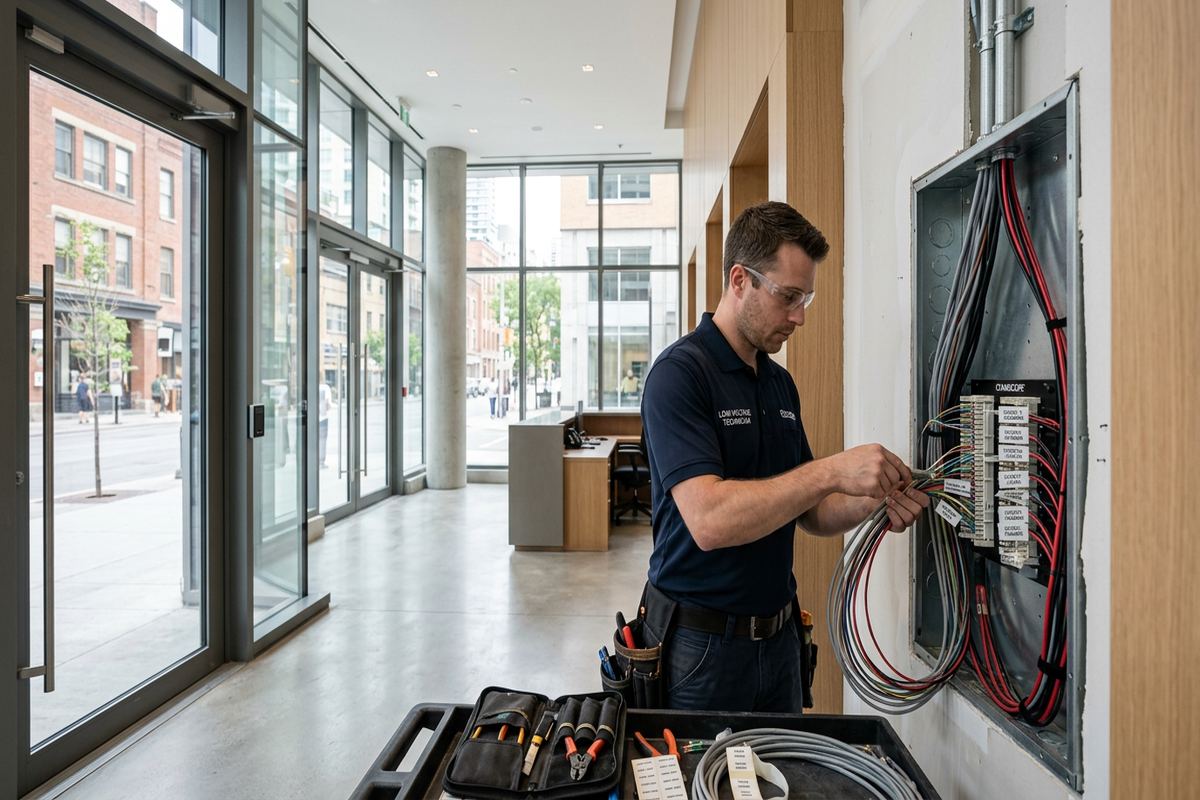
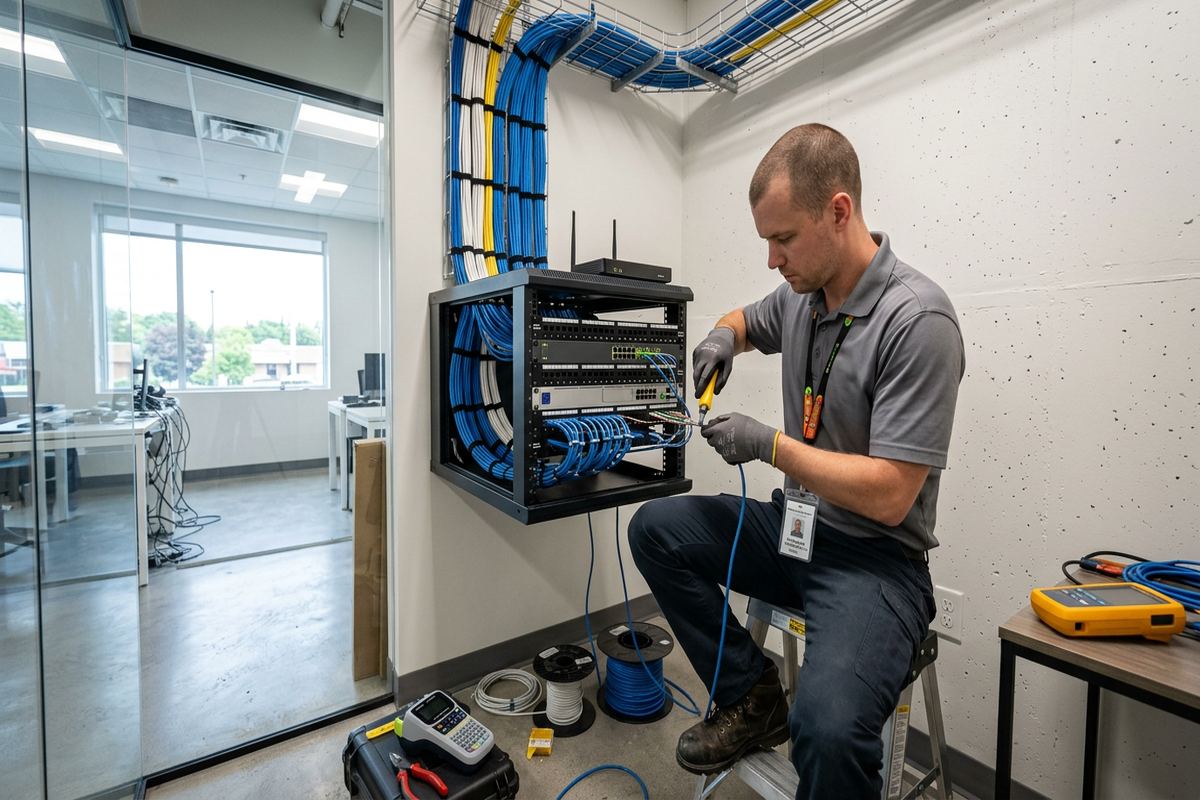
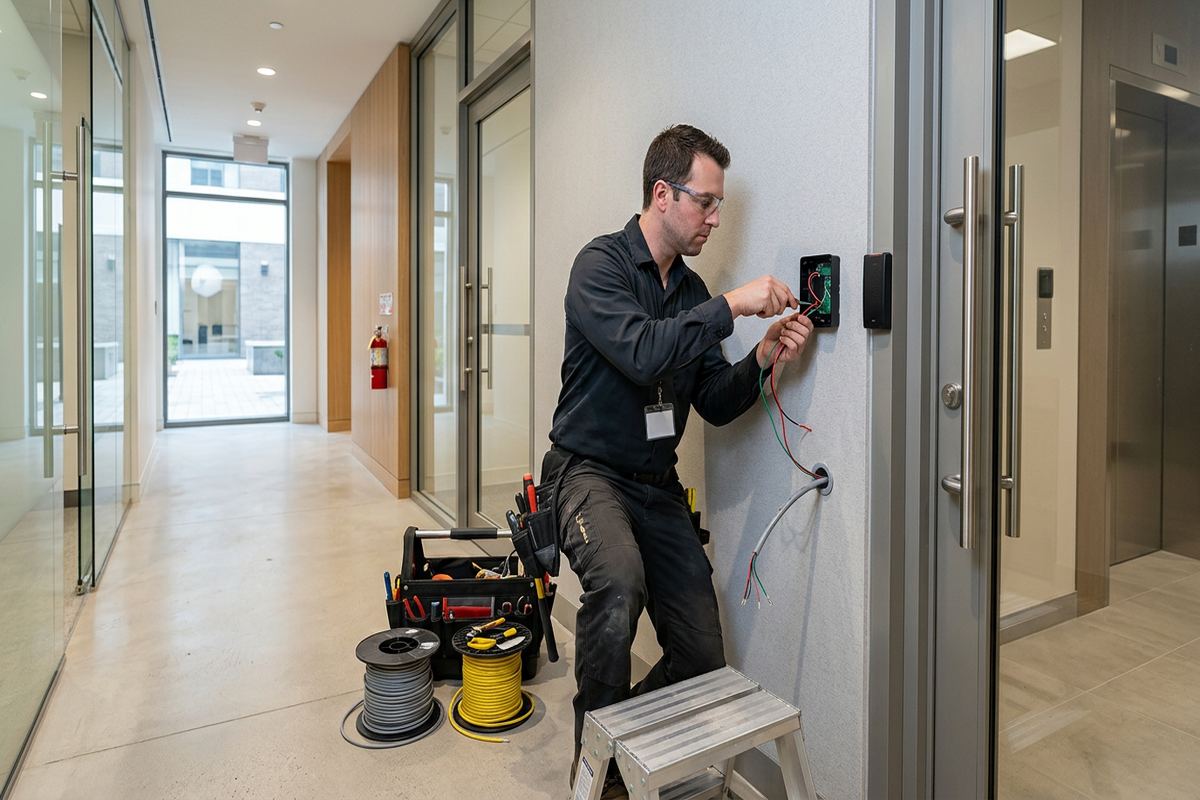
Reliable door control depends on cabling that is planned for the actual hardware and distances involved. UnifiedLink installs continuous labelled cable runs between field devices and their designated termination points, avoiding undocumented joins hidden above ceilings or inside walls. Reader, lock, contact and request-to-exit circuits are identified at both ends. Controller and power supply locations are chosen for service access, environmental suitability and practical connection to the network where required. In larger Brampton offices, structured pathways and organized enclosures make later troubleshooting or expansion considerably more manageable than loosely routed, unlabelled conductors.
Cable routing changes with the property. Masonry walls may require surface raceway, sleeves or carefully selected penetrations, while frame construction can permit concealed routes if ceiling and wall cavities remain accessible. Finished offices demand protection of existing surfaces and coordination around occupied work areas. Fast-growing Brampton subdivisions also contain finished basements used as professional or administrative spaces, where closed ceilings and completed walls can constrain pathways. We identify those limitations during assessment and describe visible raceway, access openings or restoration exclusions in writing before installation begins.
Controllers, power supplies and network-connected components require an appropriate location rather than whichever cupboard happens to be closest. We consider ventilation, moisture, physical access, electrical availability and the customer’s communications layout. Equipment should not be placed where stored goods can damage it or where unauthorized users can readily disconnect it. For multi-door systems, enclosure organization and accurate labels simplify future maintenance. UnifiedLink completes on-site configuration and records controller, door and cable identifiers in the as-built information provided at handover, giving the customer a usable reference for the installed system.
- Continuous labelled cable runs
- Organized controller enclosures
- Protected masonry penetrations
- Documented termination points
- Practical service access
Exterior Readers and Brampton Weather
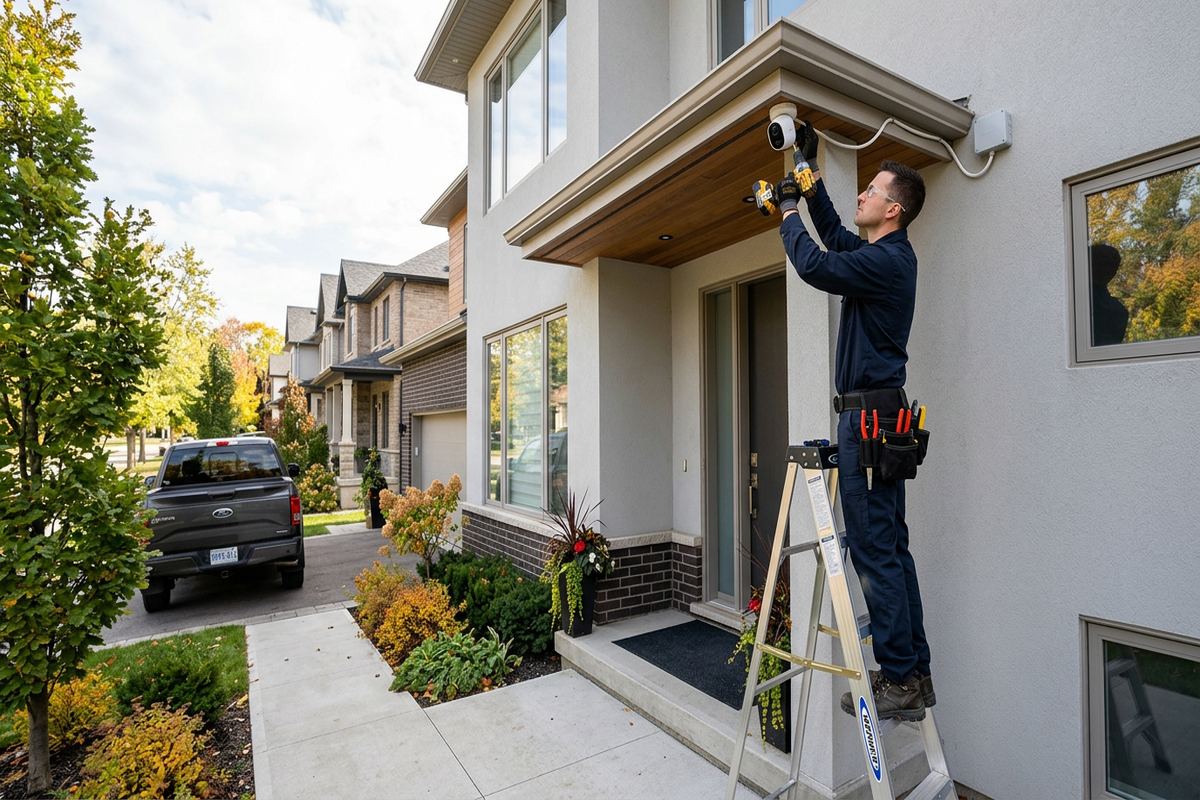
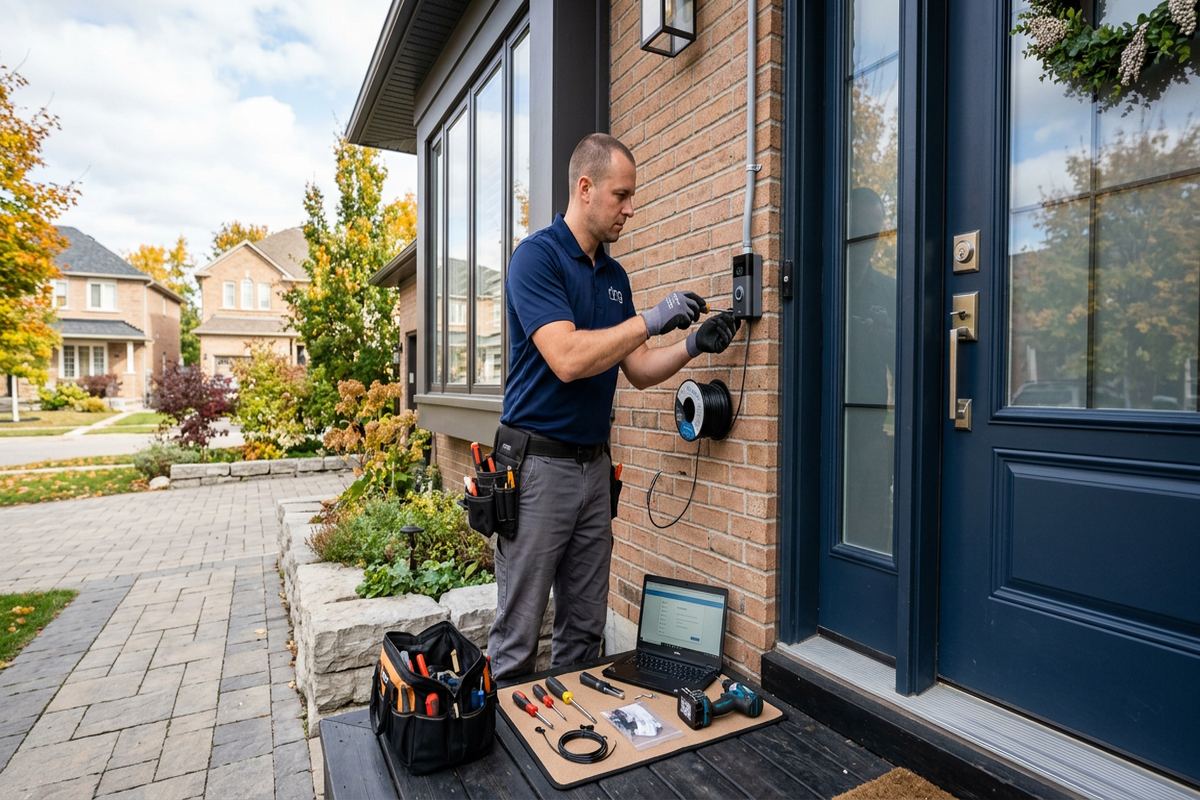
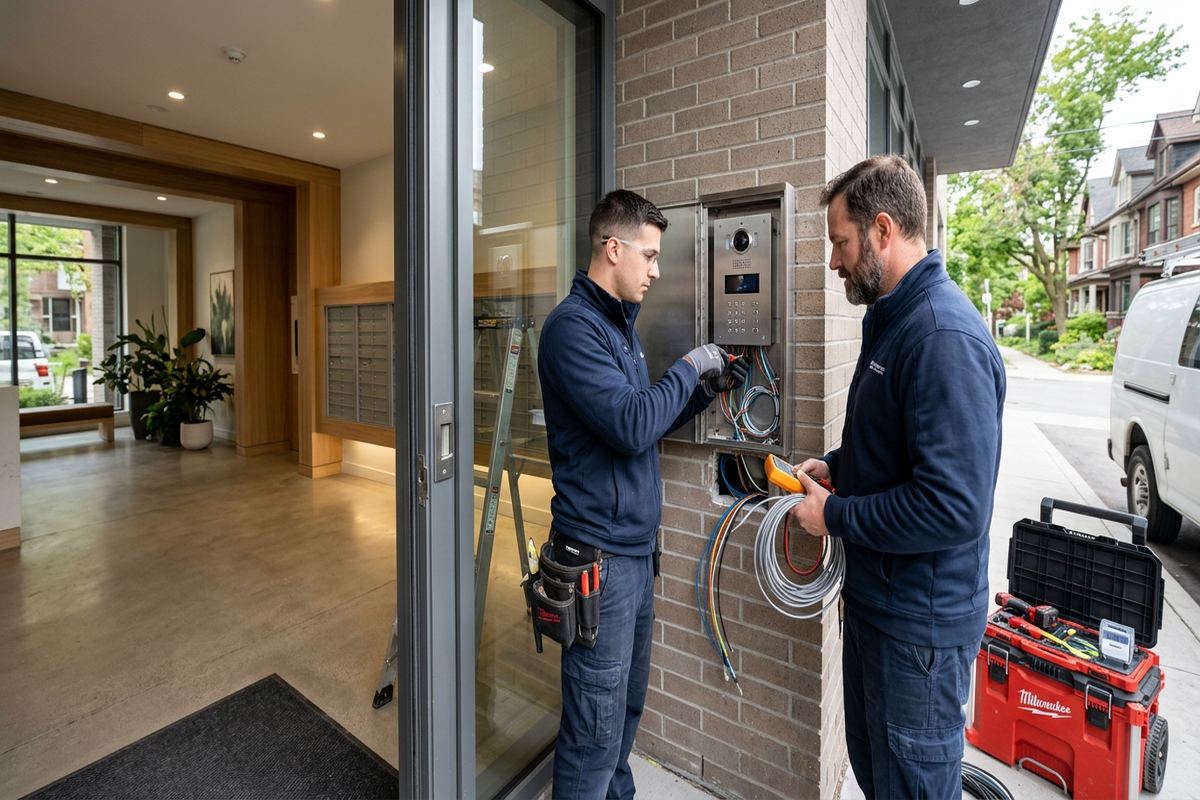
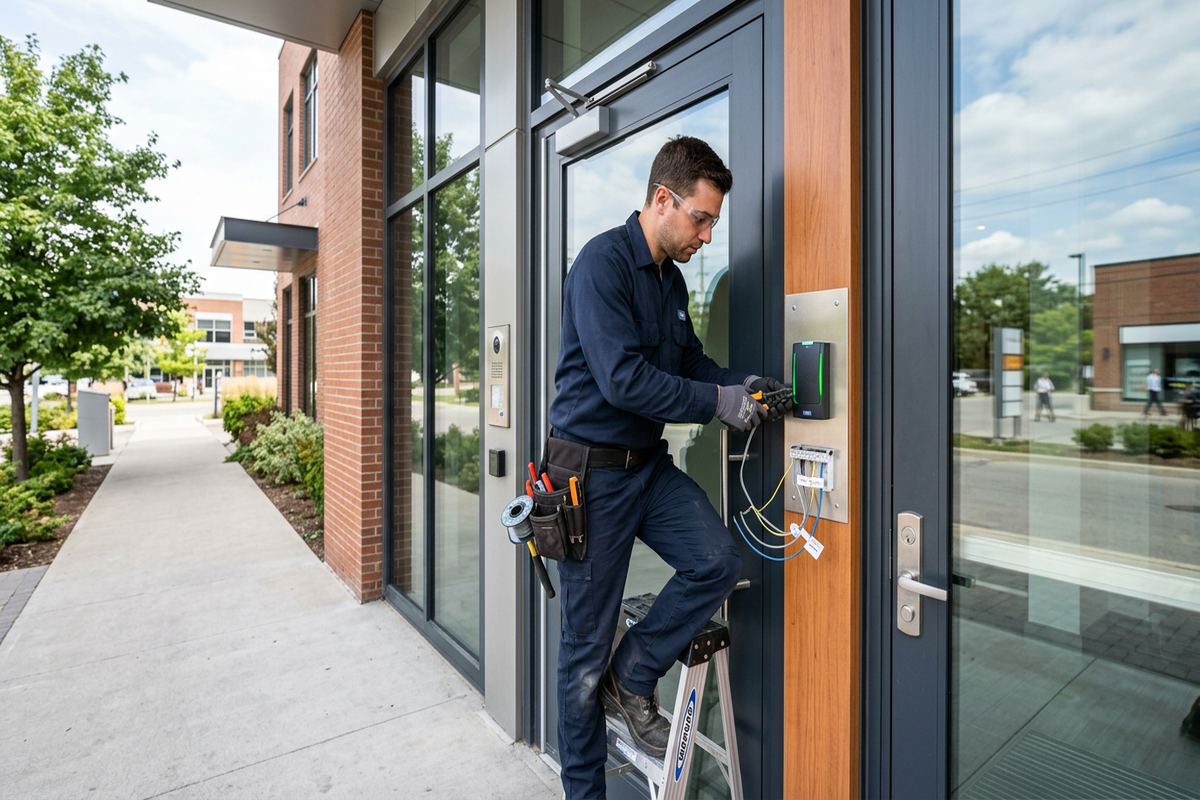
Outdoor access devices in Brampton must tolerate winter cold, moisture and repeated freeze-thaw cycles. Reader placement should limit direct exposure where practical while remaining convenient for authorized users. Mounting surfaces, cable entries and penetrations require suitable sealing so water does not track into a wall, frame or device enclosure. UnifiedLink assesses canopies, drainage, snow accumulation and the likelihood of physical impact before confirming placement. Exterior equipment is selected for the installation environment, and exposed cable is protected through an appropriate pathway rather than left vulnerable beside the entrance.
Freeze-thaw movement can gradually challenge poorly sealed penetrations in brick, block and exterior cladding. Masonry installations require suitable anchors and careful drilling to avoid unnecessary damage, while frame construction demands attention to membranes, cavities and trim details. A reader mounted beside an aluminum storefront also presents different routing constraints from one installed on a warehouse block wall. Across Castlemore, Fletcher’s Meadow and other Brampton communities, we adapt mounting methods to the building rather than applying one detail to every surface. Any anticipated patching or specialist restoration is identified as an exclusion or coordinated item.
Exterior doors also experience alignment changes caused by temperature, use and settlement. An access control command cannot compensate for a latch that binds, a closer that fails to secure the door or weather stripping that prevents consistent closure. During assessment, we check basic door operation and identify visible hardware concerns that may require adjustment by the appropriate trade. Door position monitoring can report a door held or left open, but it works best when the opening closes reliably. Addressing mechanical conditions before commissioning supports more predictable operation through Brampton’s changing seasons.
- Weather-suitable exterior readers
- Sealed cable entries
- Protected outdoor pathways
- Masonry-specific mounting methods
- Door alignment review
Integration With Office Security Systems
Access control can operate independently or share defined workflows with video surveillance, intrusion alarms and intercoms. A door event linked to a nearby camera can help an authorized administrator review who entered, while an intercom can provide a practical method for handling visitors. Integration depends on platform compatibility, licensing, network design and the customer’s operational requirements. UnifiedLink reviews these factors rather than assuming products will communicate because they appear in the same security category. The written scope states which integrations are included, which systems remain separate and what customer or third-party information is required.
For alarm integration, the desired sequence must be clearly defined. Some workplaces want authorized entry to affect an intrusion area, while others keep alarm operation separate to reduce accidental changes. Warehouses with attached offices may need distinct areas for shipping, inventory and administration. Camera placement should show the person using the door without creating avoidable blind spots, but recording and access permissions still need appropriate management. UnifiedLink configures included interfaces on site and tests the agreed events, leaving administrators with a documented understanding of what each connected system does and does not automate.
Networked access control also requires coordination with the customer’s information technology policies. Controllers or gateways may need assigned addresses, outbound connectivity, switch ports or a segregated network, depending on the platform. Cloud-managed products require the customer to understand account ownership and continuing service dependencies, while locally managed systems need a plan for administration and backup. At handover, UnifiedLink uses the customer’s own credentials rather than retaining control through an installer-owned account. This supports clear ownership and allows the organization to manage users without depending on shared passwords.
- Camera event association
- Intercom and reception workflows
- Defined alarm interactions
- IT network coordination
- Customer-controlled administration
Installation and Handover Across Brampton
Installation is scheduled around the office’s operating needs and the practical sequence of door, cable and configuration work. Occupied workplaces may require noisy drilling or brief door interruptions to occur at agreed times. UnifiedLink protects work areas, labels installed cabling and tests each included device against the approved scope. Where another trade must modify a door, provide power or approve a base-building connection, that dependency is coordinated before final commissioning. This staged approach is particularly important in busy Brampton commercial and logistics properties where entrances cannot be taken out of normal operation without planning.
Testing covers more than presenting a credential to a reader. Each opening is checked for valid and invalid credential response, scheduled access, door status, exit detection and the intended lock behaviour. Included reception releases, intercom functions or system integrations are also verified. Administrators receive practical guidance on adding users, cancelling credentials, reviewing events and responding to common alerts. The system is handed over using the customer’s own administrative credentials, helping keep control with the business rather than an individual installer account or an undocumented password known only to a technician.
Handover includes an as-built record of the completed installation. Depending on scope, this can identify door names, device locations, controller positions, cable labels and relevant configuration details. The record is valuable when an office changes managers, renovates a floor or adds another controlled opening. We also review equipment ownership, warranty information and any exclusions that remain after completion. One accountable contractor for the defined low-voltage work gives the customer a clear contact for questions involving installed readers, controllers, cabling and configured access functions, rather than requiring separate investigations between multiple vendors.
- Work scheduled around occupancy
- Door-by-door functional testing
- Administrator operating guidance
- Customer-owned login credentials
- As-built installation record
Expanding Office Access Control in Brampton
A well-planned system should support reasonable changes without requiring the original installation to be discarded. Brampton businesses may take over an adjacent unit, add an interior records room or separate warehouse access from office access as operations grow. During initial design, UnifiedLink can discuss likely expansion and select controller capacity, enclosure space and cable pathways accordingly. Spare capacity is not assumed to be unlimited, so the written scope records what is included. Planning for realistic next steps can reduce disruption while avoiding unnecessary equipment installed solely for a possible future requirement.
Existing access control can sometimes be extended, but compatibility must be confirmed first. Readers, credentials, controller boards, software versions and licensing can limit what new hardware will work with an older platform. We inspect available documentation and installed components before proposing additions. If proprietary or unsupported equipment prevents a reliable extension, the options are explained without concealing the limitation. Offices in Downtown Brampton, Bramalea and industrial areas may also inherit systems from previous tenants; ownership and administrator access should be established before relying on those devices or connecting them to a new network.
Service requests begin with enough information to identify the affected door, symptoms and operational impact. Requests sent during business hours are answered the same day, while after-hours requests are answered the next business day. Site assessment timing depends on the service and travel distance. For planned additions, current as-built records and clearly labelled cabling can shorten investigation and reduce uncertainty. UnifiedLink reviews the installed condition before pricing modifications, then provides a written scope covering equipment, routes, placement, exclusions, ownership and warranty so the expansion remains documented to the same standard as the original work.
- Capacity planning for added doors
- Compatibility review for existing systems
- Tenant system ownership checks
- Documented expansion scope
- Clear service request process
Brampton neighbourhoods we cover
- Downtown Brampton
- Bramalea
- Springdale
- Heart Lake
- Mount Pleasant
- Castlemore
- Fletcher's Meadow
Office access control installation in Brampton — common questions
What does office access control installation include?
A Brampton installation can include readers, credentials, controllers, locking hardware interfaces, door contacts, request-to-exit devices, power supplies, cabling and management software. The exact scope depends on each opening and the required workflows. UnifiedLink assesses the site before pricing and provides a written scope covering equipment, cable routes, device placement, exclusions, ownership and warranty.
Can access control be installed in a leased Brampton office?
Yes, although landlord or property manager approval may be required for door modifications, exterior readers, penetrations, common-area work or connections to base-building systems. We identify likely approval points during assessment. The tenant should obtain written authorization before work begins, particularly in commercial strips, condominiums or multi-tenant industrial properties where the entrance or frame may not belong solely to the occupant.
Will the system work during a power outage?
Power-loss behaviour depends on the lock type, door function and system design. Battery backup may keep selected access control equipment operating for a defined period, but requirements vary by site. In Brampton offices, we review required egress, fire-alarm interfaces and operational priorities before specifying backup. The written scope explains included power supplies and batteries without implying indefinite operation during an outage.
Can we keep our existing cards or fobs?
Possibly, but the credential technology and format must be compatible with the proposed readers and controller platform. Existing cards may also be controlled by a landlord or another system owner. UnifiedLink checks available information before confirming reuse. For a Brampton tenant, maintaining separate office credentials may be preferable when base-building cards cannot be independently issued, cancelled or audited by the business.
How disruptive is installation in an occupied office?
Disruption depends on construction, cable routes and the number of controlled doors. Masonry drilling, ceiling access and door hardware work can create noise or require brief entrance interruptions. In occupied Brampton offices, work can be sequenced around agreed operating needs. Any dependencies involving electricians, locksmiths, landlords or information technology staff are identified so access and scheduling can be coordinated before installation.
Can homeowners add access control to a Brampton home office?
Access control can be considered for a dedicated home office, finished basement workspace or controlled interior room, but the door, egress needs and practical benefit should be assessed first. Brampton’s newer subdivisions often have finished walls and ceilings that restrict concealed cable routes. Exterior changes may also require condominium or community approvals. We document proposed pathways, visible raceway and exclusions before pricing.
Coverage in Brampton is confirmed against the address before we quote. See everything we install in Brampton or the province-wide office access control installation page.