UnifiedLink installs home alarm systems for houses, condos and mixed-use properties across Brampton and Peel Region. Each project starts with a site assessment to confirm entry points, interior layout, communication options and cable routes. The completed system is configured on site and handed over using the customer’s own credentials, with clear operating information and an as-built record.
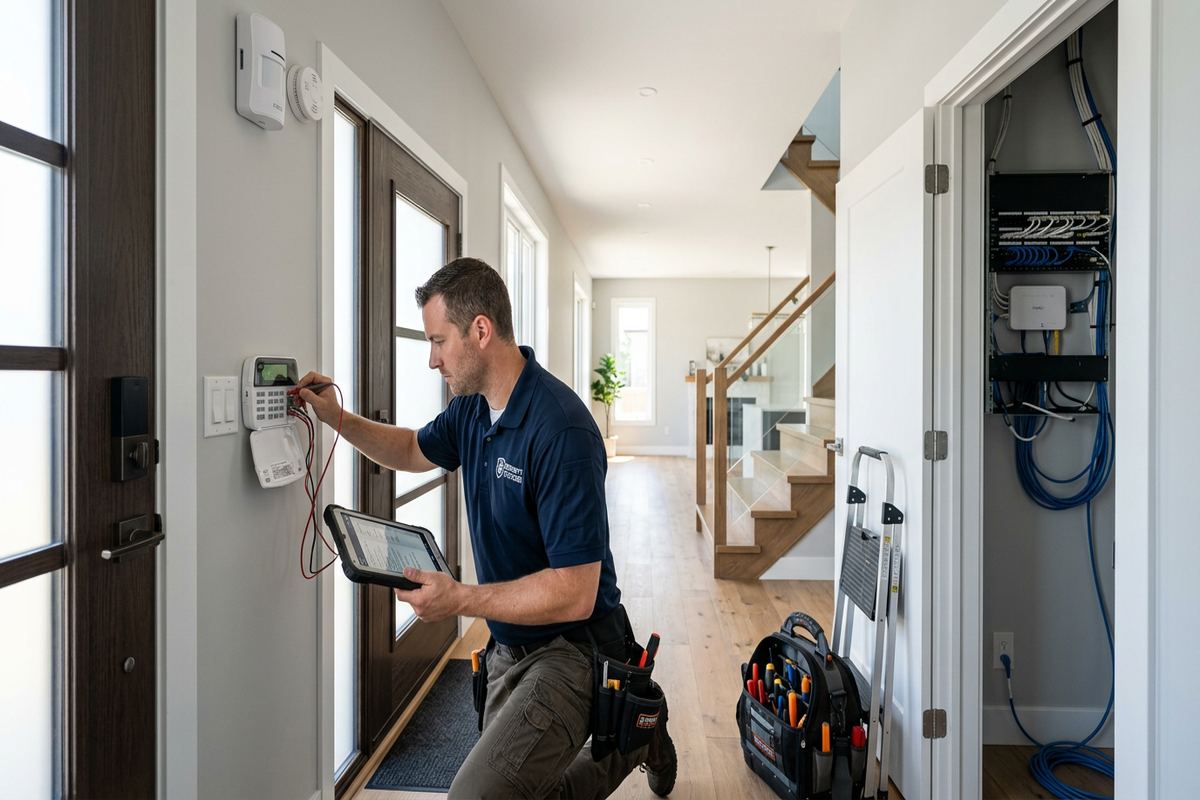
Planning a Brampton Home Alarm Installation
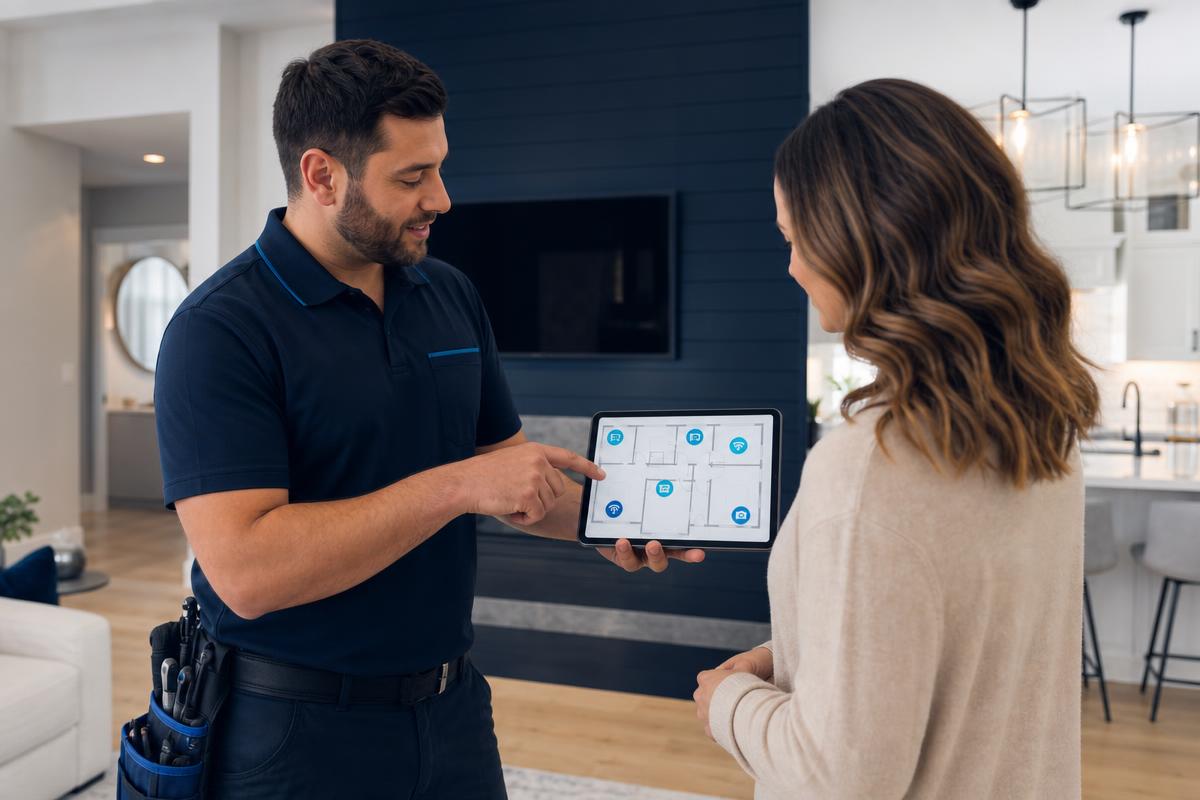
An effective alarm system begins with the building rather than a standard equipment package. During a Brampton site assessment, we review exterior doors, accessible windows, attached garages, basement entries and routes between occupied areas. We also discuss who uses the property, when it is normally vacant and whether pets or frequent deliveries affect sensor selection. This information establishes which openings need direct protection, where motion detection is appropriate and how occupants can arm or disarm the system without creating avoidable false alarms during normal routines.
Brampton housing varies from older homes near Downtown Brampton and Bramalea to newer subdivisions in Springdale, Mount Pleasant and Castlemore. Construction type changes the installation approach. Open framing in an unfinished area may permit concealed cable routes, while a renovated house or finished basement often requires careful use of closets, utility spaces and existing chases. Masonry walls, decorative finishes and additions also affect drilling and device mounting. The assessment identifies these conditions before equipment, labour and restoration responsibilities are documented in the written scope.
Planning also covers system ownership, communication paths and future changes. A homeowner may want local sirens and mobile notifications, professional monitoring compatibility, or integration with selected locks and automation devices. Those functions depend on the chosen panel, available internet or cellular service and third-party subscription terms. UnifiedLink documents the proposed equipment, cable routes, device placement, exclusions, equipment ownership and warranty before pricing. That process gives the customer a defined installation plan instead of relying on assumptions made after work has already started.
- Review doors, windows and basement access
- Confirm wired, wireless or hybrid design
- Identify practical keypad and panel locations
- Document equipment ownership and exclusions
Alarm Equipment for Brampton Houses
Alarm components should match the opening, room and risk they are intended to cover. Door contacts provide direct status for commonly used entrances, while window contacts can protect accessible openings without depending on movement inside. Motion detectors add broader interior coverage when positioned away from heating vents, direct sunlight and areas regularly occupied by pets. Glass-break detectors may support rooms with several large panes, but they are not an automatic substitute for perimeter contacts. The final combination is selected after inspecting sightlines, room use and likely paths through the house.
Control equipment needs a secure, serviceable position with suitable power and communications. In many Brampton homes, the basement utility area is practical, but finished basements can limit access between floors. We examine nearby electrical sources, internet equipment and possible cable paths before choosing the panel location. Keypads are normally placed where occupants can reach them when entering or leaving, without exposing the main control equipment. Wireless devices may reduce finished-surface work, although battery access, radio range, interference and long-term replacement requirements still need to be considered.
Audible and notification functions are configured around how the household uses the property. Interior sirens must be noticeable without being mounted where they can be easily disabled. Entry and exit delays should provide enough time for ordinary use while avoiding unnecessarily long unprotected periods. Mobile applications, user codes and alert recipients are set up with the customer’s own credentials. Where monitoring is requested, compatibility and account responsibilities are clarified in the scope because monitoring service, installation and equipment ownership are separate parts of the overall alarm arrangement.
- Door and window contact installation
- Interior motion detector positioning
- Keypad, panel and siren setup
- Mobile alert and user configuration
Wired, Wireless or Hybrid Systems
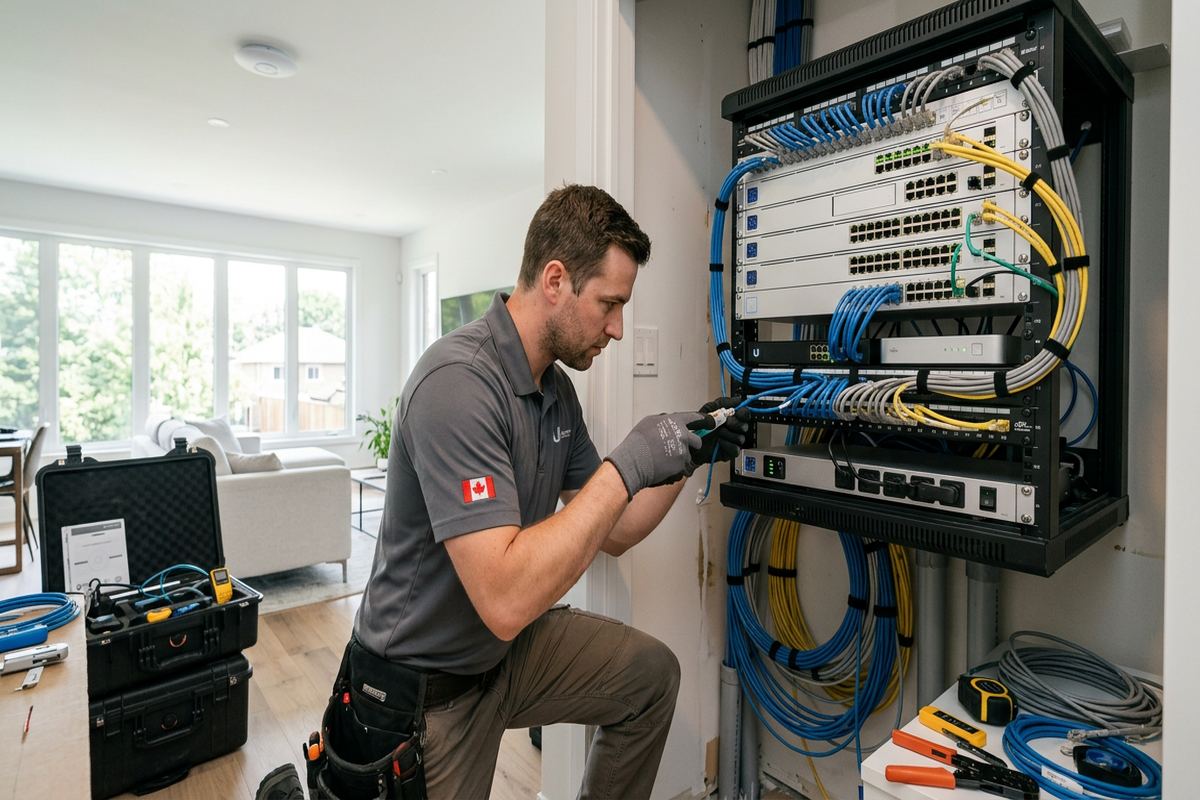
The right connection method depends mainly on access, finishes and the condition of any existing alarm wiring. Continuous wired runs can provide stable device connections and reduce routine battery replacement, but they require viable routes from each device to the control panel. Wireless equipment is useful where finished walls, tiled surfaces or completed basements make new cabling disruptive. A hybrid panel can retain serviceable existing wires while adding wireless devices in renovated areas. We test accessible infrastructure rather than assuming that an old cable is suitable because it reaches the correct room.
Fast-growing Brampton subdivisions often include finished lower levels, closely spaced rooms and upgrades completed after the original build. These conditions can leave hidden obstructions or disconnected pre-wire behind drywall. Cable routes may use mechanical rooms, joist spaces, closets or existing structured wiring pathways where available. We do not represent an inaccessible cable as tested. Any new alarm wiring is installed as a continuous labelled run, without concealed intermediate joints, and its route is recorded for future troubleshooting, renovation planning or system expansion by the property owner.
Radio-based devices also require deliberate planning. Brick exteriors, concrete foundation walls, metal ductwork, mirrors and nearby wireless equipment can affect signal performance inside a house. Device placement is checked on site before final fastening, particularly for detached garages, basement entrances and sensors at the edge of panel range. Batteries remain a maintenance item even when the system reports low-battery conditions. The handover identifies installed wireless devices, expected maintenance responsibilities and the correct procedure for replacing batteries without damaging contacts, tamper switches or finished surfaces.
- Test reusable alarm wiring
- Use continuous labelled new cable runs
- Check wireless range before fastening
- Record wired and wireless device locations
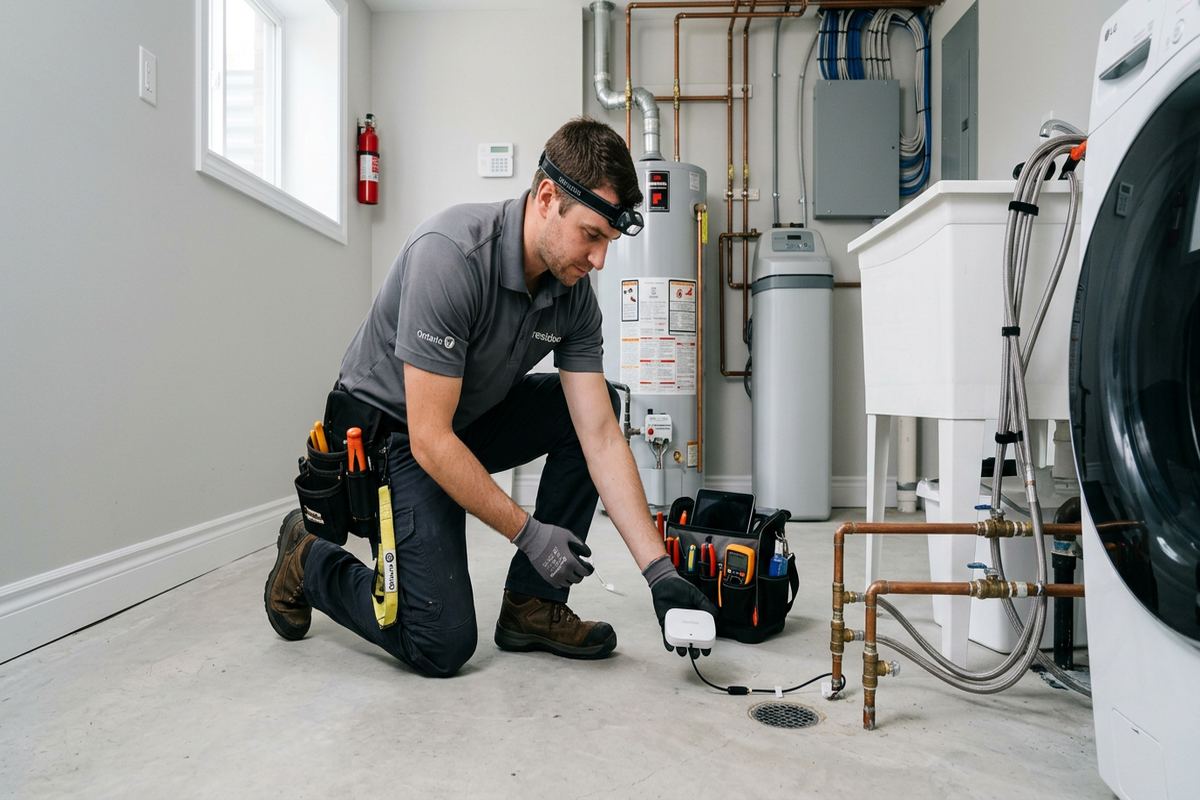
Brampton, Ontario
Home alarm system installation in Brampton, scoped in writing first
Book a site assessment and get equipment, routes, exclusions, and warranty on paper before anything is installed.
Brampton Basement and Entry Protection
Finished basements are a major design consideration in Brampton because they can contain bedrooms, recreation areas, rental spaces or separate exterior entrances. Protection should account for the basement door, accessible windows and movement toward stairs or upper floors. Sensor placement must also respect regular occupancy so that residents can use designated areas while other parts remain armed, where the selected panel supports partitioning or stay modes. Before drilling, we consider concealed plumbing, electrical wiring, insulation and finished ceilings that may restrict safe routes to the panel.
A separate living area may require distinct user codes, carefully selected delays and a clear understanding of who receives notifications. If the property is rented, the owner should confirm lease responsibilities and obtain any required landlord or tenant consent before equipment is installed in occupied space. An alarm system does not resolve occupancy, fire-code or legal requirements, and it should not be presented as doing so. Our scope distinguishes intrusion devices from smoke, carbon monoxide or life-safety equipment and identifies any third-party work or approvals outside the alarm installation.
Garage connections and side entrances also deserve attention. Attached garages commonly provide an interior route into the house, while overhead doors have different movement and mounting conditions than standard hinged doors. Contacts must allow normal door travel and avoid positions exposed to impact, water or accumulated road salt. Exterior keypads or devices require products suited to their location, along with appropriate fastening and cable protection. Where an unheated area meets conditioned space, the route is sealed carefully to limit moisture movement and unwanted air leakage around penetrations.
- Protect separate basement entrances
- Plan stay and partition functions
- Cover attached garage access points
- Separate intrusion from life-safety scope
Exterior Devices and Winter Conditions
Brampton winters and repeated freeze-thaw cycles affect exterior mounting decisions. A device fixed outdoors may face moisture, ice, temperature changes and movement between dissimilar materials. We select mounting positions that reduce direct exposure and avoid creating drainage paths into the wall assembly. Penetrations are sized carefully, fastened into suitable material and sealed with an exterior-appropriate method. Cable is protected from abrasion, tension and accessible damage. Indoor-rated alarm components are not placed outside simply because an overhang provides partial cover from rain or snow.
Masonry and frame construction require different fastening and routing methods. Brick veneer should not be treated as though every point provides structural support, and mortar joints are not automatically the preferred location for each device. On frame walls, siding type, sheathing and the position of studs influence mounting. The installation plan also considers future removal so that service does not cause unnecessary damage. When a route passes from outside to inside, the penetration is sealed around the cable while preserving a suitable drip path and avoiding compression that could damage insulation.
Exterior alarm devices are not appropriate for every property or every detection objective. Outdoor motion detection can be affected by animals, vegetation, moving shadows, snow accumulation and activity beyond the property line. In many cases, perimeter contacts and properly positioned interior detection produce more controllable results. If an exterior siren, contact or detector is proposed, we explain its operating limits and maintenance needs. Device testing includes activation, tamper response and communication with the panel under conditions available during the visit, followed by documentation in the as-built record.
- Use location-suitable exterior equipment
- Seal wall penetrations against moisture
- Match fasteners to masonry or framing
- Test tamper and panel communication
Alarm Installation in Brampton Condos and Rentals
Condominium work requires approval before drilling, cable routing or mounting on elements controlled by the corporation. Unit boundaries and rules vary, so owners should provide current requirements rather than relying on what was permitted in another building. Hallway doors, exterior walls, balconies and shared communication rooms may be common elements even when they are beside the unit. We can prepare device and route information for an approval request, but the owner remains responsible for obtaining authorization from the condominium corporation, property manager or landlord before the scheduled installation.
Inside a condo unit, wireless equipment often reduces disruption, although it still requires suitable signal paths and accessible battery locations. Metal doors, concrete walls and dense neighbouring wireless networks can influence placement. The system should avoid devices projecting into shared corridors or creating audible issues beyond the unit without prior consideration. We review the intended arming routine, emergency contact process and internet equipment location. If mobile alerts depend on building-provided internet, the customer should understand how an outage, router replacement or changed network credentials can affect remote communication.
Rental properties need a clear division of control between owner and occupant. The written scope identifies who owns the panel and sensors, who controls administrative credentials and who is responsible for monitoring or connectivity accounts. User codes can be assigned without sharing the main administrator credential. For homes around Fletcher’s Meadow, Heart Lake or other Brampton communities with basement tenancies, separate entrances and shared spaces need particular attention. Handover information should be available to the responsible parties without exposing one occupant’s private codes or notification settings to another.
- Confirm condo or landlord approval
- Keep administrator credentials separate
- Document equipment and account ownership
- Plan devices around shared spaces
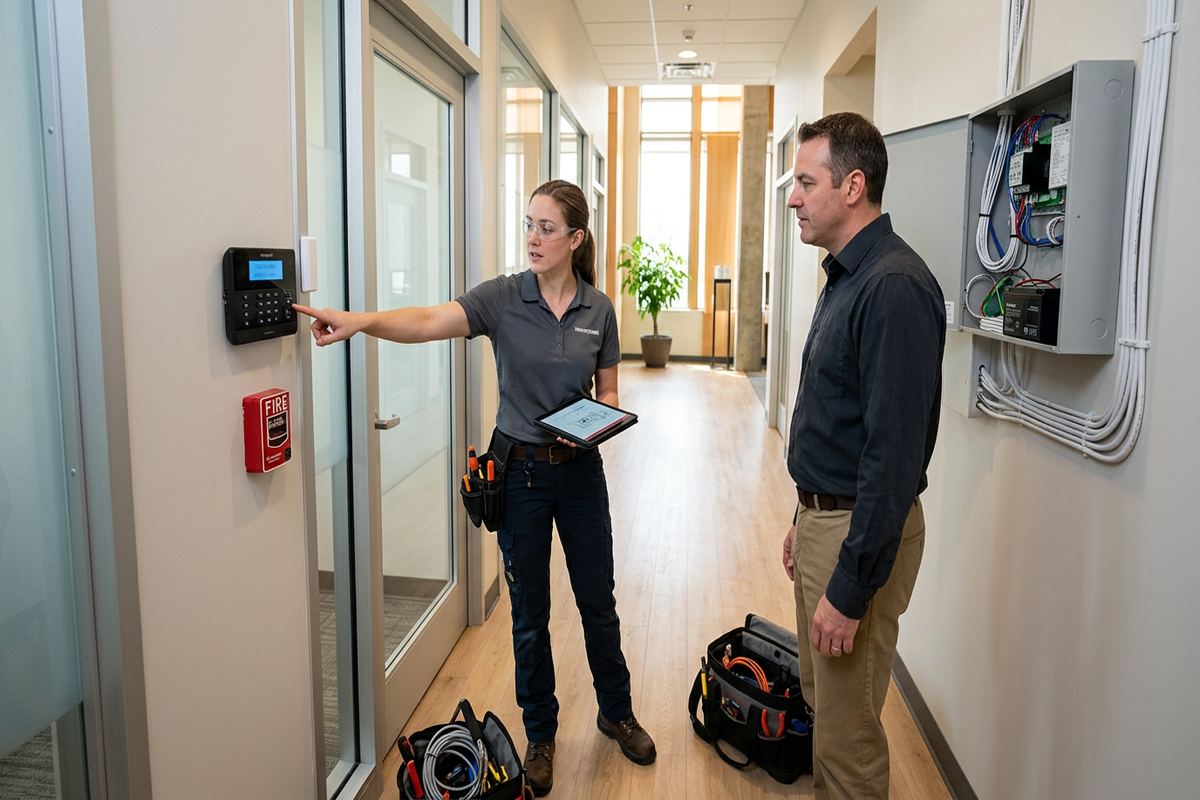
Commercial and Mixed-Use Alarm Considerations
Brampton’s heavy base of warehouse and logistics sites shapes local security planning even when the requested work includes an office, storefront or owner-occupied mixed-use property. Larger doors, loading areas, employee entrances and long interior sightlines need a different design from a house. We review operating hours, keyholder responsibilities, restricted rooms and after-hours access. The system can then be divided into practical areas where supported, allowing authorized users to manage their section without disarming unrelated space or receiving every notification generated elsewhere on the premises.
Commercial strips may combine public entrances, rear service doors, stockrooms and upper residential areas. Alarm zones should identify a meaningful location rather than using vague labels that slow investigation. Motion detectors must account for shelving, signage, heating equipment and changing merchandise layouts. Glass-fronted units may need several layers of detection, but each proposed device requires a defined purpose. Where a landlord controls exterior walls, roof spaces or telecom rooms, written approval and coordinated access may be necessary before cable routes or communication equipment can be finalized.
Industrial units present practical installation issues such as high ceilings, concrete block walls, metal cladding and active loading operations. Device mounting must remain reachable for testing while resisting casual interference and impact. Cable routes should avoid doors, forklifts, stored goods and areas likely to be altered by future racking. Alarm work may also overlap with access control, video surveillance or structured cabling, but those systems require separate scope details. UnifiedLink can coordinate the low-voltage work under one accountable contractor while documenting boundaries between each system and any third-party service.
- Zone loading and office areas clearly
- Protect public and service entrances
- Coordinate landlord-controlled cable routes
- Separate alarm and access-control functions
Brampton Installation, Testing and Handover
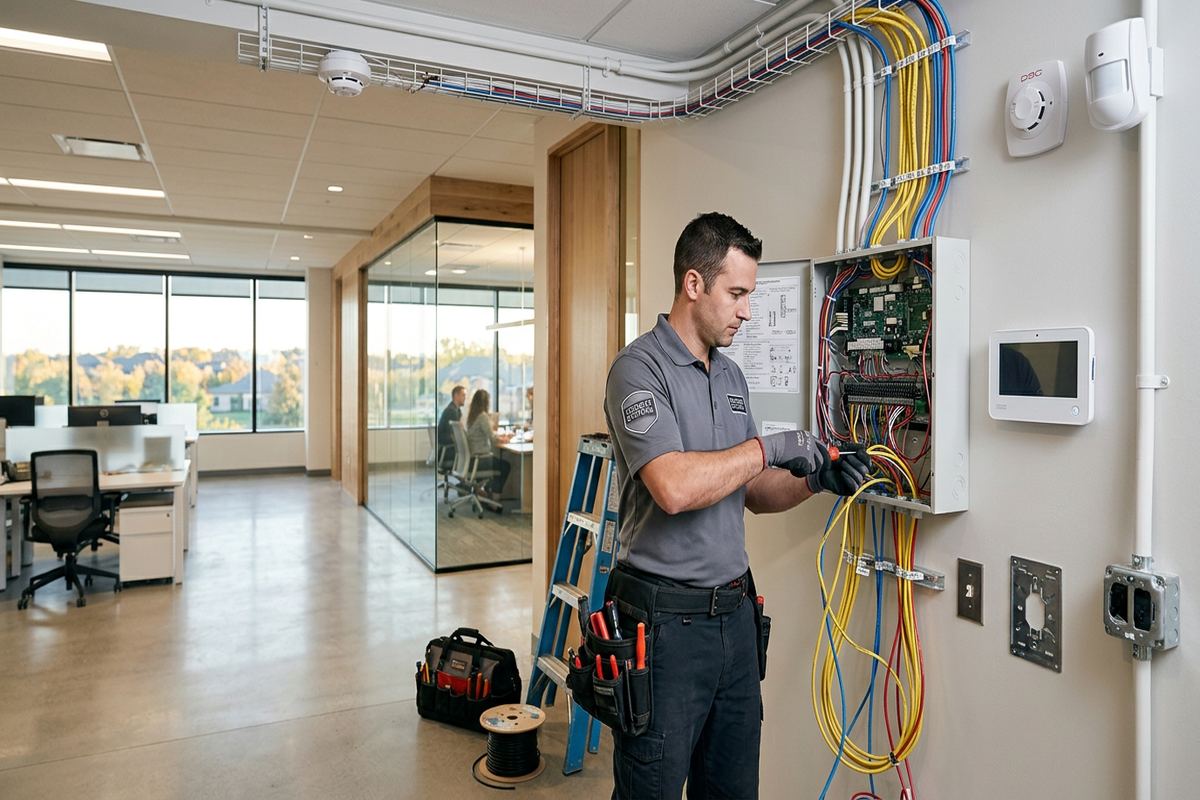
Once the scope is approved, installation follows the documented device positions and routes, subject to concealed conditions discovered on site. Surfaces are checked before fastening, and any material change is discussed rather than improvised without the customer’s knowledge. New cable runs are continuous and labelled at serviceable ends. Devices are mounted for reliable operation and reasonable future access. The panel, keypads, contacts, detectors and sirens are then connected and configured on site, including zone names that correspond to recognizable Brampton property locations such as front entry, basement window or garage door.
Testing covers each installed detection point, the associated zone display, audible functions and configured communications. Doors and windows are operated through their normal travel to confirm that contacts restore correctly. Motion detectors are walk-tested within practical site conditions, while user codes, delays and arming modes are reviewed with the customer. Mobile alerts are verified where the selected service and available connection permit. Testing cannot reproduce every future outage or environmental condition, so the handover also explains routine checks, battery maintenance and circumstances that should prompt a service request.
At completion, the customer receives control through their own credentials rather than an installer-owned account. Handover includes operating guidance and an as-built record showing installed equipment and device locations. Warranty information, exclusions and any third-party subscriptions remain consistent with the written scope. Requests sent during business hours are answered the same day, while after-hours requests are answered the next business day. Timing for a Brampton site assessment depends on the requested service and travel distance. This process keeps assessment, installation, configuration and documentation with one accountable contractor.
- Configure recognizable zone names
- Test every installed alarm point
- Provide customer-controlled credentials
- Supply an as-built system record
Brampton neighbourhoods we cover
- Downtown Brampton
- Bramalea
- Springdale
- Heart Lake
- Mount Pleasant
- Castlemore
- Fletcher's Meadow
Home alarm system installation in Brampton — common questions
Can you install an alarm in a finished Brampton basement?
Yes, subject to suitable device positions and cable routes. Finished basements may require wireless sensors, existing serviceable wiring, or carefully selected routes through utility rooms, closets and accessible ceiling spaces. During the Brampton site assessment, we check the basement entrance, windows, occupancy pattern and panel access before documenting the proposed approach and any expected surface work.
Should I choose a wired or wireless alarm system?
The choice depends on the property. Wired devices suit accessible framing and usable existing cable, while wireless devices can reduce disruption in finished Brampton homes and condos. Hybrid systems may combine both. We assess cable access, radio range, wall construction, battery maintenance and future expansion before recommending a design. Existing alarm wire is tested where accessible rather than assumed to be reusable.
Do I need approval for a Brampton condo installation?
Possibly. Condominium rules and unit boundaries determine whether drilling, corridor-door devices, exterior mounting or shared-space access requires approval. Brampton condo owners should confirm requirements with their corporation or property manager before installation. Renters should obtain the landlord’s permission where required. UnifiedLink can provide proposed equipment and route details, but the customer is responsible for securing necessary authorization.
Can the alarm send alerts to my phone?
Compatible systems can provide mobile alerts when the required internet, cellular path, application and account are available. During setup, the application is configured using the customer’s own credentials. We explain which functions rely on third-party services and what may happen during an internet, power or cellular outage. Subscription terms and monitoring arrangements are identified separately from the physical Brampton installation.
Can you reuse the alarm wiring already in my house?
Existing wiring may be reusable if its route, conductor condition and operation can be confirmed. Brampton renovations and finished basements sometimes leave disconnected, spliced or inaccessible alarm cable behind walls. We test accessible runs and document limitations. New wiring is installed as continuous labelled cable runs. If an old cable cannot be verified, the scope may recommend replacement or a compatible wireless device.
How does the installation process start?
It starts with a site assessment before pricing. We review the Brampton property, entry points, occupancy needs, construction, cable routes and communication options. You then receive a written scope covering equipment, placement, routes, exclusions, ownership and warranty. Requests sent during business hours are answered the same day; after-hours requests are answered the next business day. Assessment timing depends on service and travel distance.
Coverage in Brampton is confirmed against the address before we quote. See everything we install in Brampton or the province-wide home alarm system installation page.