UnifiedLink provides TV wall mounting for Brampton homes, offices, warehouses and commercial units. We assess the wall structure, viewing position, power access and cable route before pricing. Each written scope identifies the mount, equipment, placement, exclusions, ownership and warranty, followed by installation, configuration and a practical handover using your own credentials.
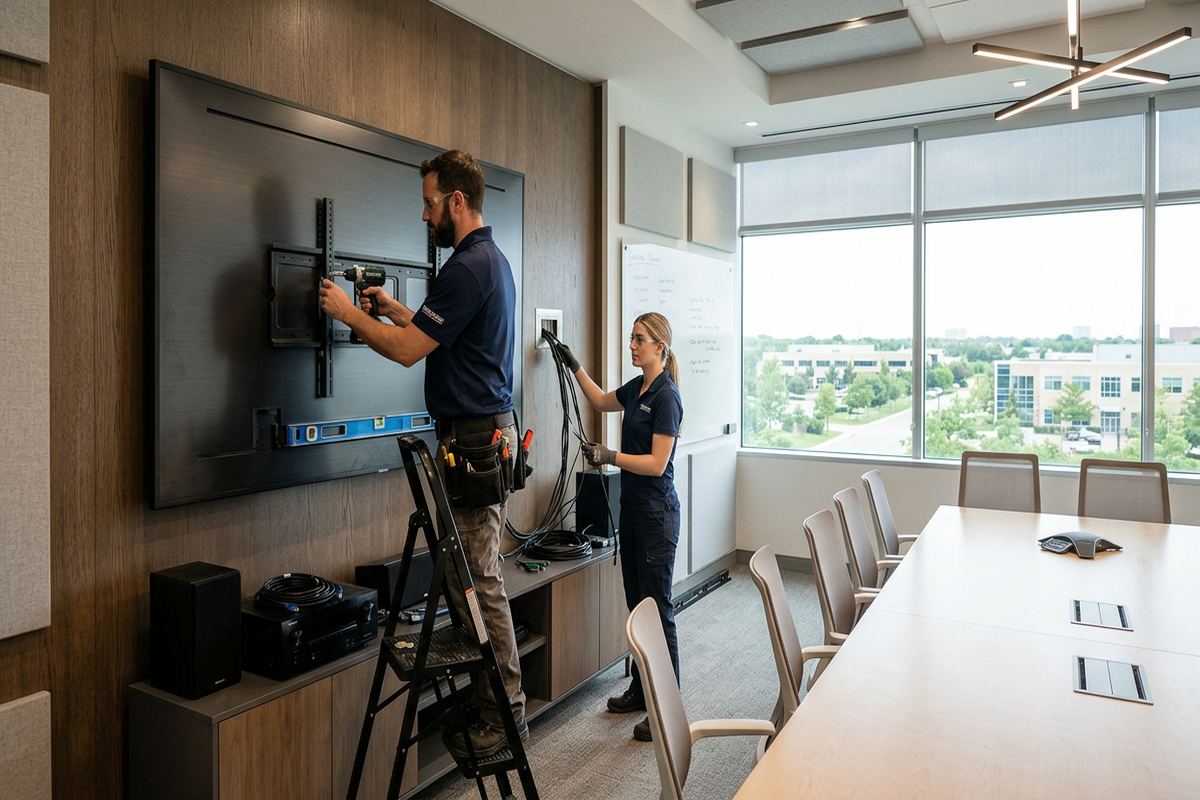
TV Wall Mounting for Brampton Properties
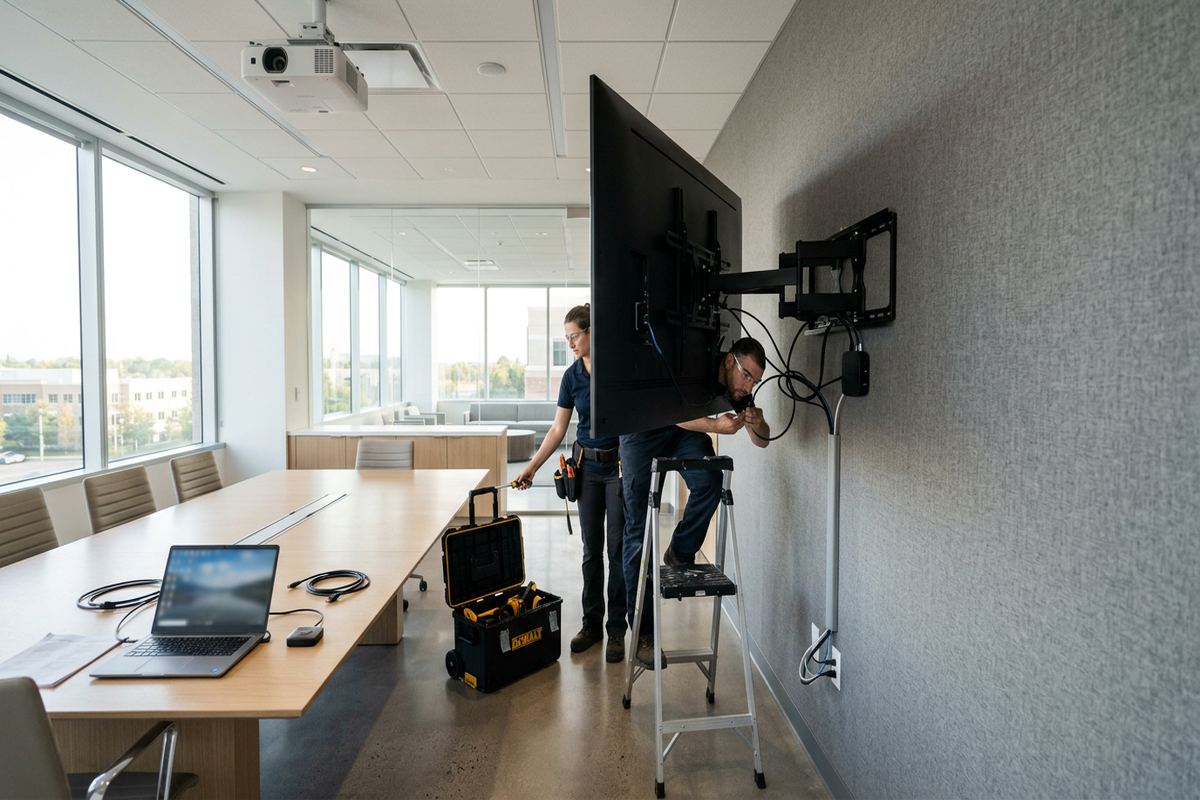
A secure installation begins with the wall, not the television. Brampton properties include newer wood-frame subdivisions, older houses with varied renovations, condominium units, finished basements and commercial spaces built with concrete block or steel studs. We examine the mounting surface, stud spacing, wall finish, display weight, bracket type and nearby services before proposing attachment methods. This avoids relying on drywall alone or assuming every wall follows residential framing conventions. The assessment also considers seating, glare, door swings and safe movement through the room, so placement works after the tools are packed away.
Fast-growing subdivisions around Mount Pleasant, Springdale and Fletcher's Meadow often have open layouts, fireplaces and finished basements that affect mounting decisions. A television above a fireplace may look suitable while placing the screen too high, exposing equipment to heat or leaving no practical cable path. Basement walls may be framed in front of concrete, with insulation, vapour barriers or limited cavities. We identify these conditions before cutting openings. When concealed wiring is practical, routes are planned around framing and obstacles rather than improvised after the bracket has been attached to the wall.
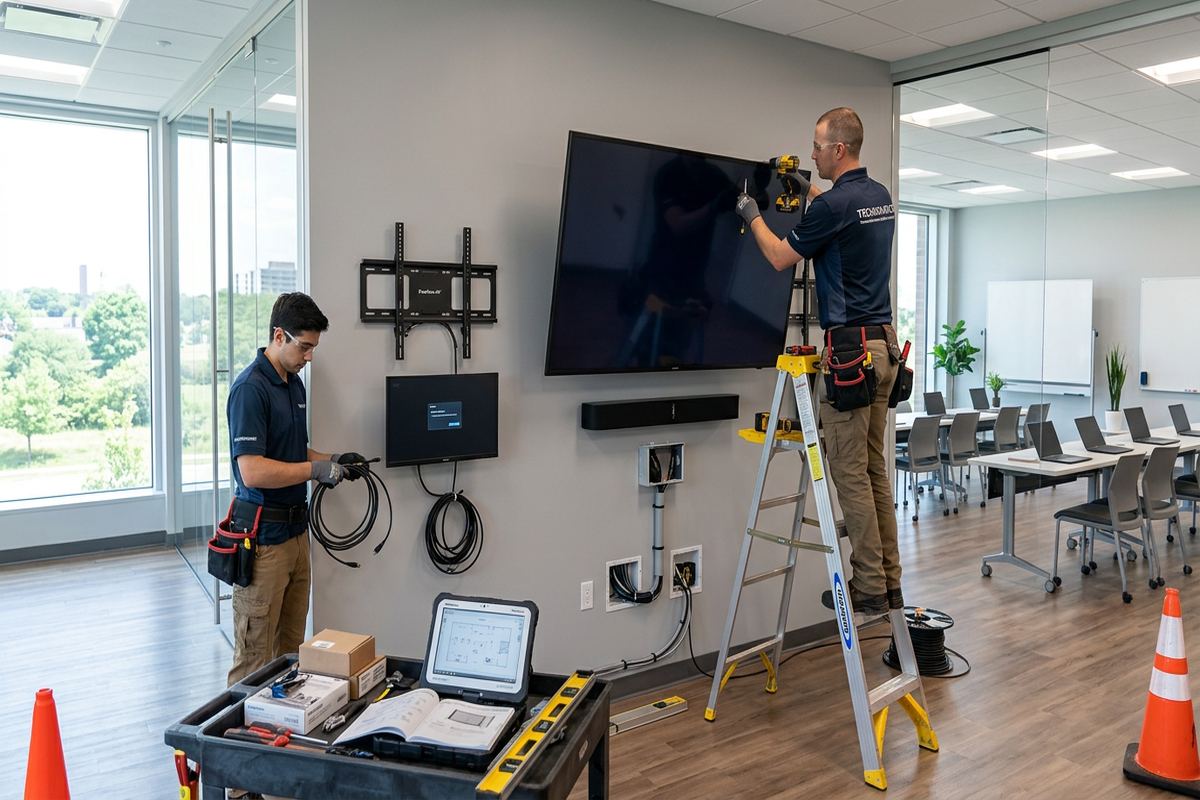
Commercial installations require the same structural care, with additional attention to daily operations. Brampton's warehouse and logistics base includes reception areas, dispatch counters, lunchrooms, training rooms and operational displays. Walls may use concrete block, poured concrete, steel studs or insulated panels, and each requires compatible hardware and loading decisions. Device placement must also account for forklifts, carts, doors, shelving and public traffic. We coordinate a mounting position and cable path that supports visibility without creating avoidable impact risks, exposed wiring or interference with equipment used by staff throughout the working day.
- Fixed, tilting and full-motion bracket planning
- Wood stud, masonry and steel stud assessment
- Fireplace height and heat considerations
- Residential and commercial display placement
- Cable routes reviewed before wall openings
Planning Brampton Viewing Height and Position
Screen size alone does not determine a useful mounting position. We consider the normal seating location, viewing distance, eye level, furniture height and whether people will watch while seated, standing or moving through a work area. In a Brampton family room, a centred position may need adjustment for a sectional sofa or an open kitchen. In a reception area, the display may need to remain visible above furniture without forcing viewers to look sharply upward. Measurements are discussed on site, and the proposed centreline can be marked before drilling begins for customer confirmation.
Full-motion brackets help when a screen must turn toward different parts of a room, but they also create greater leverage on the wall. The display can project farther into a walkway, and cables need enough controlled slack to move without pulling at the ports. Fixed mounts keep the screen close to the wall, while tilting mounts can improve the angle when higher placement is unavoidable. We match the bracket style to the wall structure, display pattern and intended use instead of selecting it solely for appearance or advertised screen-size range.
Glare is another placement factor, particularly in newer Brampton homes with large windows and open main floors. A screen facing direct daylight may remain difficult to view even when mounted correctly. Before installation, we review window orientation, overhead lighting and the range of movement offered by the selected bracket. In offices or training spaces, camera position and presentation use may further affect height. Planning these details early reduces later changes, protects finished surfaces from unnecessary holes and provides a reference point for locating power, data, source equipment and any nearby speakers.
- Seated and standing sightlines considered
- Bracket movement checked against walls and furniture
- Glare and window orientation reviewed
- Final centreline confirmed before drilling
- Display ports kept accessible where practical
Concealed Cabling in Brampton Homes
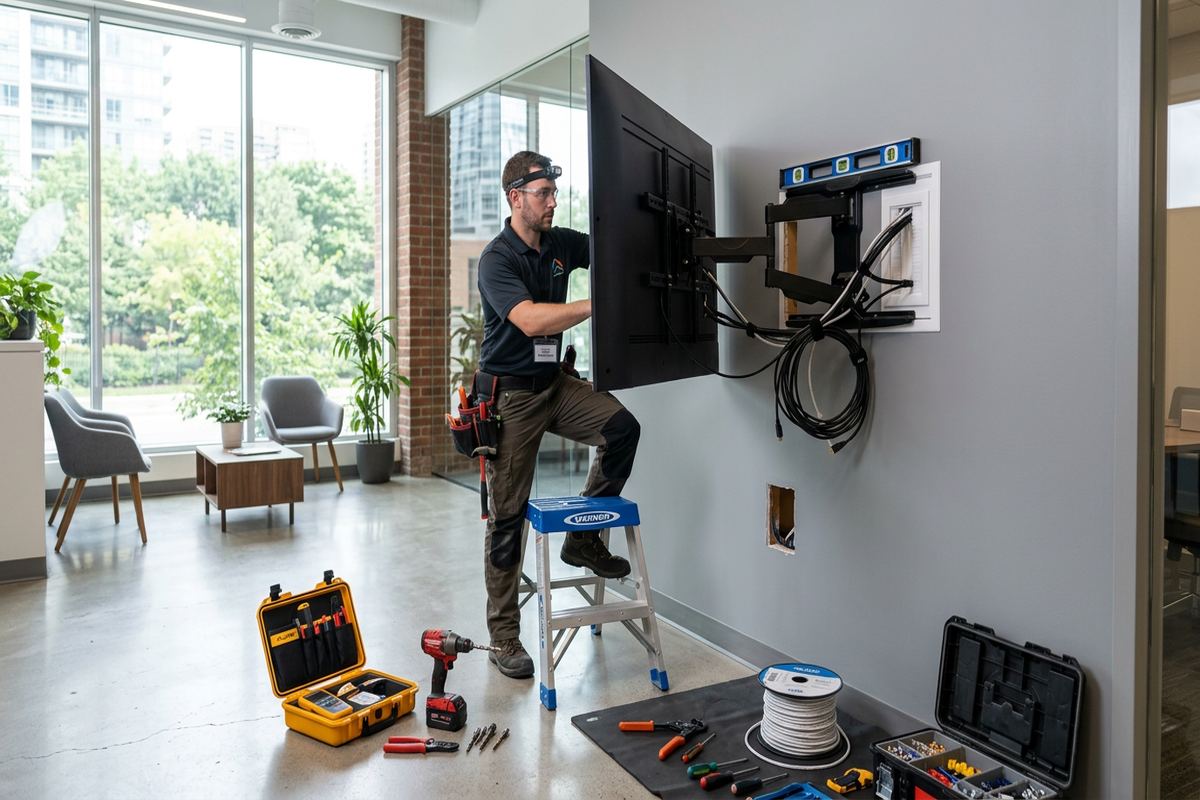
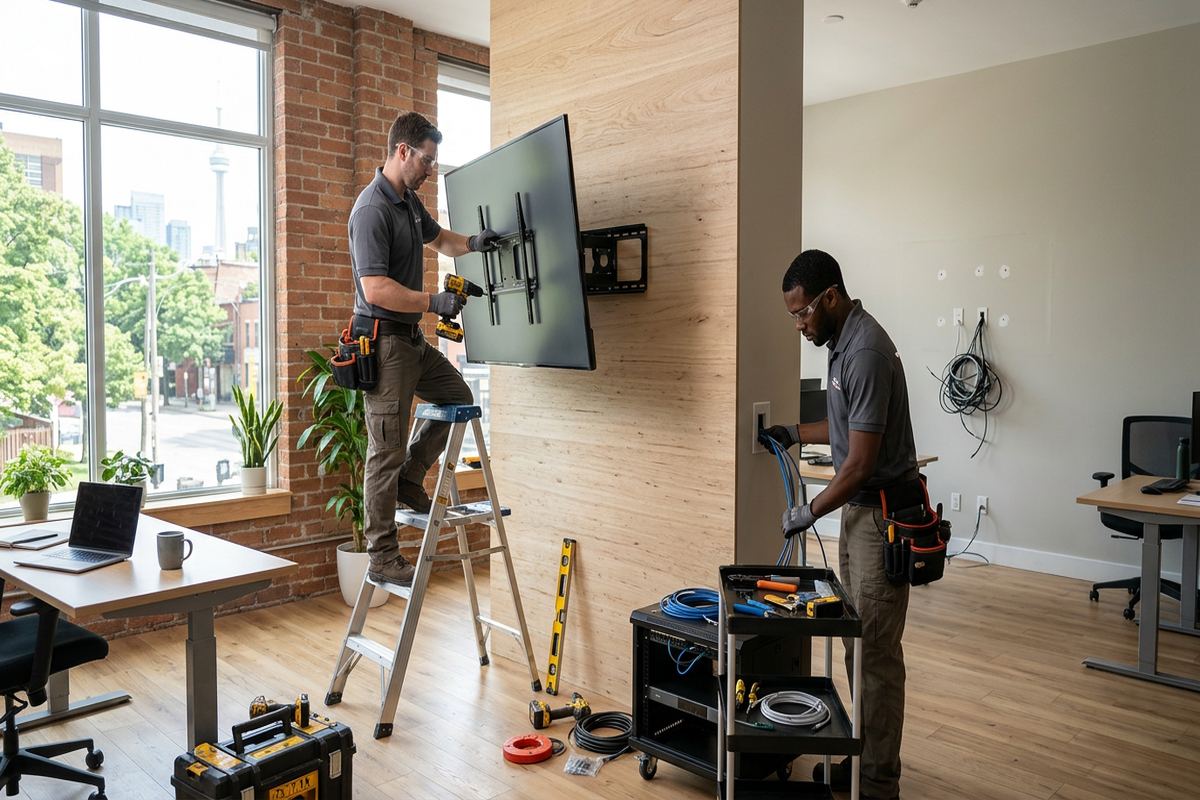
A wall-mounted television still needs power and usually requires connections for streaming devices, game systems, receivers, soundbars or network service. Loose cords can undermine an otherwise clean installation and may become accessible to children, pets or cleaning equipment. We plan cable routes during the assessment, including where source devices will sit and how future access will work. Low-voltage cables can often be routed through suitable wall cavities, but power wiring must follow applicable electrical requirements. Where electrical work is outside the agreed scope, that exclusion is documented and coordination requirements are identified before mounting starts.
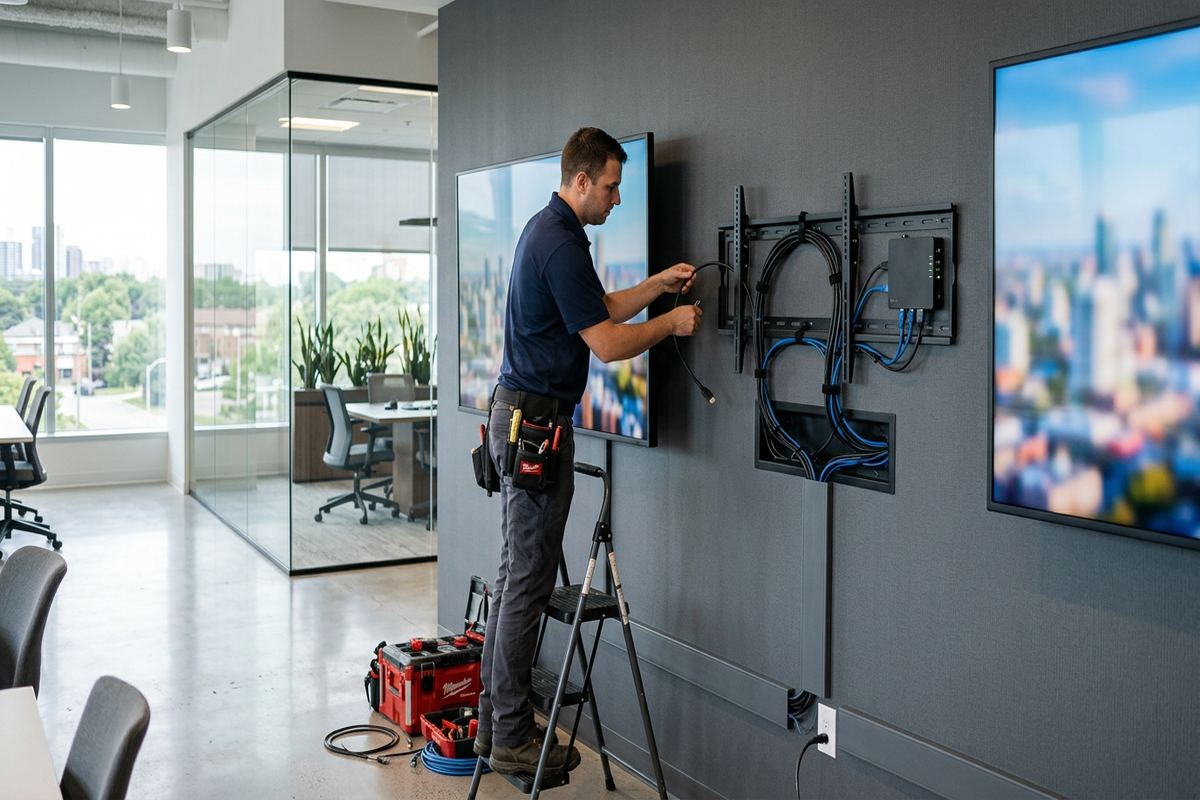
Finished basements found throughout Brampton can make concealed routes less predictable than their finished surfaces suggest. Bulkheads, fire blocking, insulation and concrete foundation walls may interrupt the cavity between the television and an equipment cabinet. Rather than promising invisible wiring before inspection, we assess likely paths and explain where access openings, surface raceway or an alternate device location may be required. Continuous labelled low-voltage cable runs are used within the approved scope. Labels make it easier to identify HDMI, network and control connections during handover or when equipment is changed later.
Cable selection also matters. Long HDMI paths, high-resolution sources and devices placed in cabinets can introduce compatibility or signal issues if the route and cable type are not considered together. Tight bends, crushed cables and unsupported couplers should not be hidden inside a wall. We review connection length, equipment location, ventilation and service access before specifying the route. For network-connected televisions in busy Brampton households or workplaces, a wired data connection may be considered where reliable Wi-Fi coverage is uncertain. Any added cabling is listed clearly in the written scope rather than assumed.
- Continuous labelled low-voltage cable runs
- In-wall and surface-raceway options
- Source equipment locations planned first
- Service loops managed without port strain
- Power requirements identified before installation
Brampton, Ontario
TV wall mounting in Brampton, scoped in writing first
Book a site assessment and get equipment, routes, exclusions, and warranty on paper before anything is installed.
Wall Types Across Brampton
Mounting methods change with construction. Wood-frame walls normally provide studs for secure attachment, although spacing, plumbing and previous alterations can complicate the expected layout. Steel studs require hardware and load planning suited to thinner framing, while concrete and concrete block call for masonry drilling and appropriate anchors. Older properties near Downtown Brampton may include plaster finishes, masonry walls or renovations completed in different periods. We use inspection and measurement to determine the likely structure, then verify conditions as work proceeds. Drywall anchors alone are not treated as a universal answer for heavy moving displays.
Masonry mounting creates different practical concerns from frame construction. Drilling can produce dust, encounter joints or reveal hollow block where a solid wall was expected. Cable concealment may require surface raceway because masonry does not provide an open cavity. In commercial strips and industrial units, painted block walls are common and often support practical, exposed pathways. We discuss whether conduit or raceway is acceptable, how it will approach the display and whether the finish needs additional work by another trade. The aim is a secure installation with a route that remains understandable and serviceable.
A finished wall may hide conditions that cannot be confirmed until controlled access begins. Stud finders and measurements help, but they do not replace judgement where multiple layers, resilient channels, tile, panelling or previous repairs are present. The written scope explains the assumed wall type and identifies exclusions or possible changes if concealed conditions differ. In Castlemore homes with detailed fireplace surrounds, or Bramalea properties that have undergone remodelling, trim and finishes may limit bracket placement. We stop and review material changes rather than selecting a weaker attachment point simply to preserve the original plan.
- Wood, steel and masonry attachments assessed
- Concrete block routes planned for serviceability
- Finished wall conditions documented
- Tile and fireplace surrounds reviewed
- Concealed-condition changes discussed before proceeding
Exterior and Semi-Outdoor Displays in Brampton
A television installed on a covered patio, loading area or exterior-facing wall must be treated differently from an indoor living-room display. Brampton winters bring freezing conditions, while seasonal temperature changes and freeze-thaw cycles place stress on exterior penetrations and mounting materials. The display, bracket and connected equipment must be suitable for the intended environment. A roof overhang does not necessarily prevent wind-driven moisture, condensation or cold exposure. We assess shelter, wall construction, sun direction, drainage and cable entry points before determining whether the requested location can support a practical installation.
Exterior wall penetrations require deliberate sealing. Fasteners, sleeves and cable entries can create paths for water if they are placed or sealed incorrectly, particularly through masonry veneer or siding assemblies. We plan penetrations to respect drainage and avoid casual drilling through building-envelope components. Sealants and entry methods must suit the materials and exposure. Where the requested route presents unresolved envelope risks, we explain the concern and may recommend another location or coordination with an appropriate building professional. The scope identifies exterior work separately so weather-related limitations and restoration responsibilities are understood before work begins.
Semi-outdoor commercial installations can include information screens near shipping areas, covered entrances or customer pickup points. These locations may experience dust, vibration, temperature swings and accidental contact from carts or materials. Visibility must be balanced against protection, service access and cable security. In Brampton warehouse settings, a display should not obstruct marked routes, doors or operational equipment. We review mounting height, enclosure needs and nearby power and network connections. Configuration is completed on site, but content platforms, weatherproof enclosures or electrical changes are included only when they appear in the agreed written scope.
- Freeze-thaw exposure reviewed
- Exterior entries planned and sealed
- Sun, moisture and condensation considered
- Commercial traffic and impact risks assessed
- Outdoor-rated equipment requirements documented
Business TV Mounting in Brampton
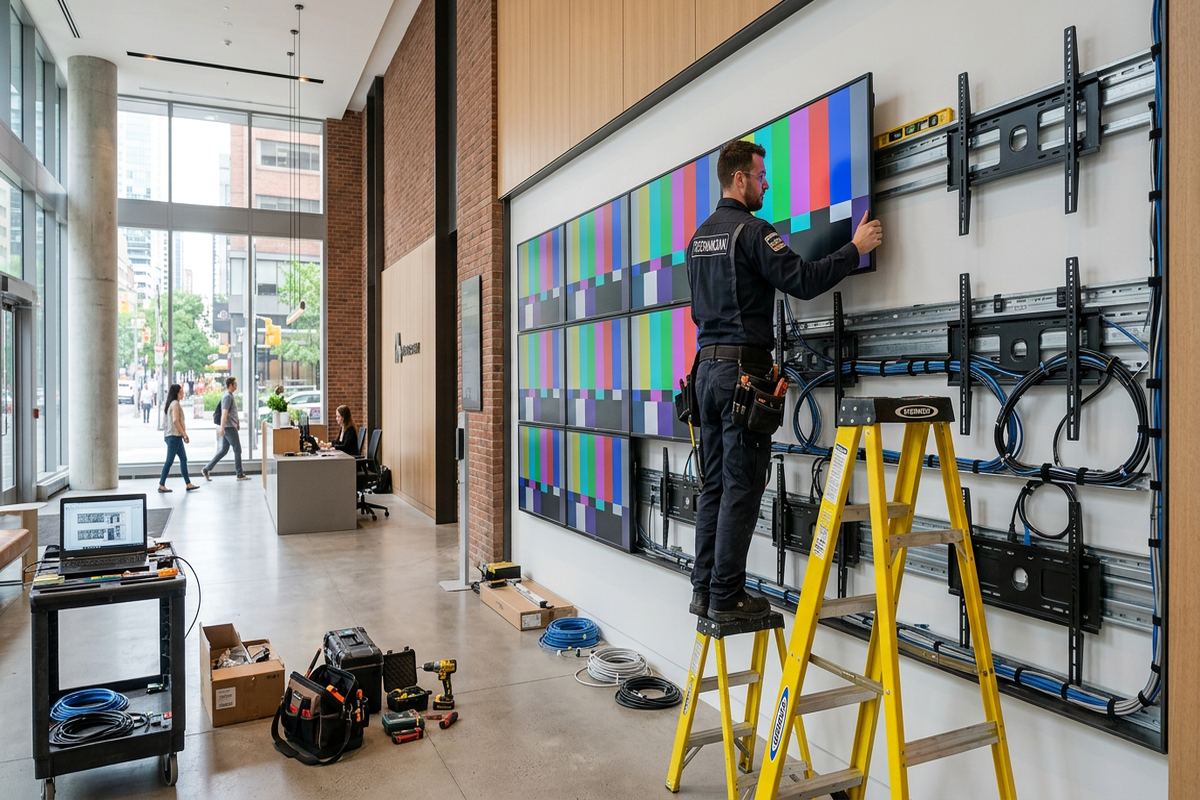
Brampton businesses use wall-mounted displays for meetings, menus, schedules, training, surveillance viewing and operational information. Each purpose creates different requirements for height, visibility, connections and control. A meeting-room display may need laptop inputs and a camera, while a warehouse information screen may prioritize readability and protected cabling. We begin by identifying users, source devices, wall construction and the content workflow. This prevents a display from being mounted neatly but left without the correct cable, network connection or accessible control method needed by staff during normal operations.
Installation in an occupied business also needs coordination. Commercial strips may have shared walls, limited service space or landlord rules concerning penetrations. Industrial units may have active shipping schedules, high shelving and restricted work zones. We confirm the work area, access conditions and shutdown needs during assessment, then reflect them in the scope. Mounting above desks, counters or equipment can require temporary clearing by the customer. If lifts, special access or work outside normal site conditions are required, those details must be identified before scheduling rather than introduced as an unplanned change on installation day.
One accountable contractor can handle the defined display mounting, low-voltage cabling and on-site configuration, reducing gaps between separate mounting and network tasks. At handover, the customer's own credentials are used for supported sign-ins and device setup. We do not retain personal streaming, administrator or business account passwords. The as-built record notes device placement and completed cable routes within the project scope. Staff can then identify connections and understand the basic operating arrangement. Equipment ownership, warranties, exclusions and responsibility for third-party subscriptions or content services are also stated in writing before installation proceeds.
- Meeting and training room displays
- Warehouse and logistics information screens
- Reception, menu and waiting-area mounting
- Low-voltage connections coordinated in one scope
- Customer credentials used at handover
Condo, Rental and Landlord Requirements
Condominium and rental installations can require approval before holes are drilled or cables are routed. Brampton condo corporations may regulate work hours, elevator use, noise, common-area access and penetrations near shared building components. Landlords may also limit concealed wiring or require restoration at the end of a tenancy. Customers are responsible for obtaining applicable permission, but we can provide a written description of the proposed mounting and cable work. Approval should be confirmed before scheduling, especially where concrete walls, shared services or building management access could affect the installation method.
Concrete condo walls may appear straightforward but can contain reinforcing steel, electrical pathways or building systems that restrict drilling. Partition walls can use steel studs and may not support every full-motion arrangement without additional planning. We assess the proposed surface and consider whether a fixed or tilting mount would reduce loading. If building drawings, scan requirements or designated drilling zones apply, those conditions need to be provided. Surface raceway can sometimes avoid extensive wall openings while keeping cables orderly, although the route remains visible. Available options are documented rather than presented as interchangeable solutions.
Renters should also consider how equipment will be removed. A bracket attached securely to studs or masonry leaves holes that may require repair, and concealed cables should not be abandoned without a plan. We can discuss a more limited route using surface raceway, nearby furniture or a compact device behind the television when permissions restrict in-wall work. The customer remains responsible for landlord conditions and later restoration unless those tasks are specifically included. For Brampton rental properties, documenting the approved location and keeping the as-built information can simplify maintenance, equipment replacement and eventual removal.
- Condo work-hour restrictions considered
- Landlord permission confirmed by customer
- Concrete and steel-stud walls assessed
- Surface raceway available where suitable
- Removal and restoration responsibilities documented
Brampton Assessment, Installation and Handover
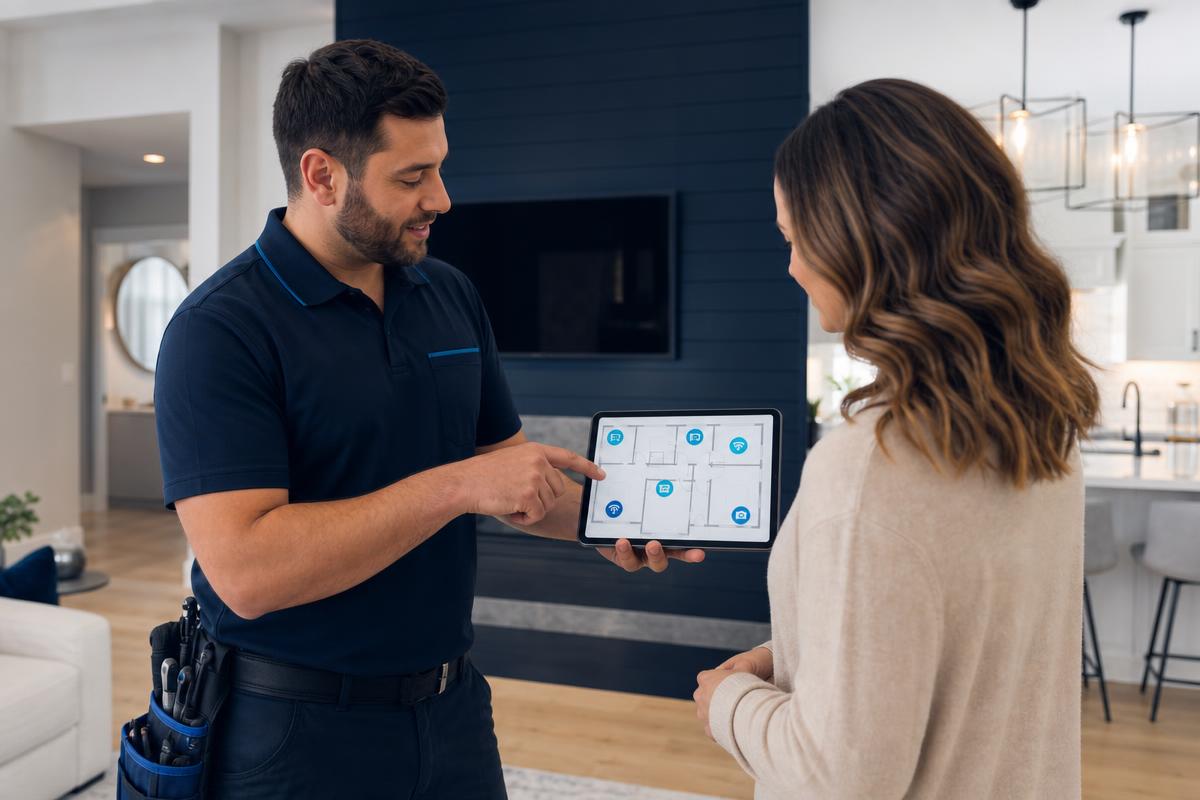
Every project starts with enough information to define the work properly. During a Brampton site assessment, we review the television model, bracket, wall construction, viewing position, cable sources, power availability and access conditions. Site assessment timing depends on the service and travel distance. Pricing follows the assessment rather than relying on assumptions about hidden framing or existing wiring. The resulting written scope covers equipment, cable routes, device placement, exclusions, equipment ownership and warranty. Customers can review what is included and raise placement or connectivity questions before installation is scheduled.
On installation day, the work area should be clear enough to handle the display safely and reach the wall. We verify the planned position, locate attachment points, protect nearby surfaces and complete drilling and cable work within the agreed scope. The television is attached, levelled and checked through the bracket's intended movement. Connected devices are arranged with suitable cable slack and ventilation. On-site configuration can include supported display settings, network connection and source checks. Any newly discovered wall condition that materially changes the method is discussed before extra openings or alternate routing proceeds.
Handover is intended to leave the installation understandable, not merely switched on. We demonstrate normal bracket movement, input selection and the agreed device connections. Customer-owned accounts are configured with the customer's own credentials, and an as-built record identifies installed low-voltage routes and device locations. Requests sent during business hours are answered the same day; after-hours requests are answered the next business day. This availability statement concerns request handling, not a guaranteed visit time. For Brampton homes and businesses, follow-up questions can then refer to the written scope and completed installation record.
- Site assessment completed before pricing
- Written scope provided for review
- Mount alignment and connections tested
- Customer credentials retained by customer
- As-built installation record supplied
Brampton neighbourhoods we cover
- Downtown Brampton
- Bramalea
- Springdale
- Heart Lake
- Mount Pleasant
- Castlemore
- Fletcher's Meadow
TV wall mounting in Brampton — common questions
Can you mount a TV above my fireplace?
Possibly, but the fireplace, wall structure, mantel depth, heat output and viewing height must be assessed first. In Brampton homes with finished fireplace surrounds, concealed cable routing may also be limited. We mark the proposed screen position and review the viewing angle before drilling. If heat or excessive height makes the location unsuitable, we will explain alternatives rather than assume every fireplace installation is workable.
Can you hide all the TV cables?
Many low-voltage cables can be concealed where the Brampton property's wall cavities and route permit it. Fire blocking, insulation, masonry, concrete and finished basements can limit access. Power must be handled according to applicable electrical requirements. We identify in-wall, surface-raceway or equipment-location options during assessment, then list the selected route and any exclusions in the written scope before installation.
Do I need condo or landlord approval?
Approval may be required for drilling, concealed cabling, work hours, elevator access or changes to walls. Brampton condo residents and tenants should confirm applicable rules before scheduling. We can provide a description of the proposed mounting and low-voltage route, but the customer is responsible for obtaining permission. Building requirements involving scans, designated drilling zones or restoration must be shared during the assessment.
Can you mount TVs on concrete or brick?
Yes, where the masonry condition, location and selected hardware support the installation. Concrete, concrete block and brick require different drilling and anchoring decisions, and concealed cable routes may not be available. Brampton commercial units often use painted concrete block, where orderly surface raceway can be practical. We inspect the surface, discuss visible routing and document the attachment approach before work starts.
Do you install customer-supplied mounts?
A customer-supplied mount can be considered if it is compatible with the television, wall structure, mounting pattern, weight and intended movement. Missing hardware, damage or unsuitable ratings may prevent its use. During the Brampton assessment, we review the mount and identify concerns before pricing. Equipment ownership and warranty responsibilities are stated in the written scope so the difference between supplied and installed equipment is clear.
How soon will you answer my request?
Requests sent during business hours are answered the same day, while after-hours requests are answered the next business day. This applies to the initial response, not a guaranteed Brampton assessment or installation time. Site assessment timing depends on the service and travel distance. Once the wall, equipment, cable route and access conditions are understood, a written scope can be prepared for review.
Coverage in Brampton is confirmed against the address before we quote. See everything we install in Brampton or the province-wide tv wall mounting page.