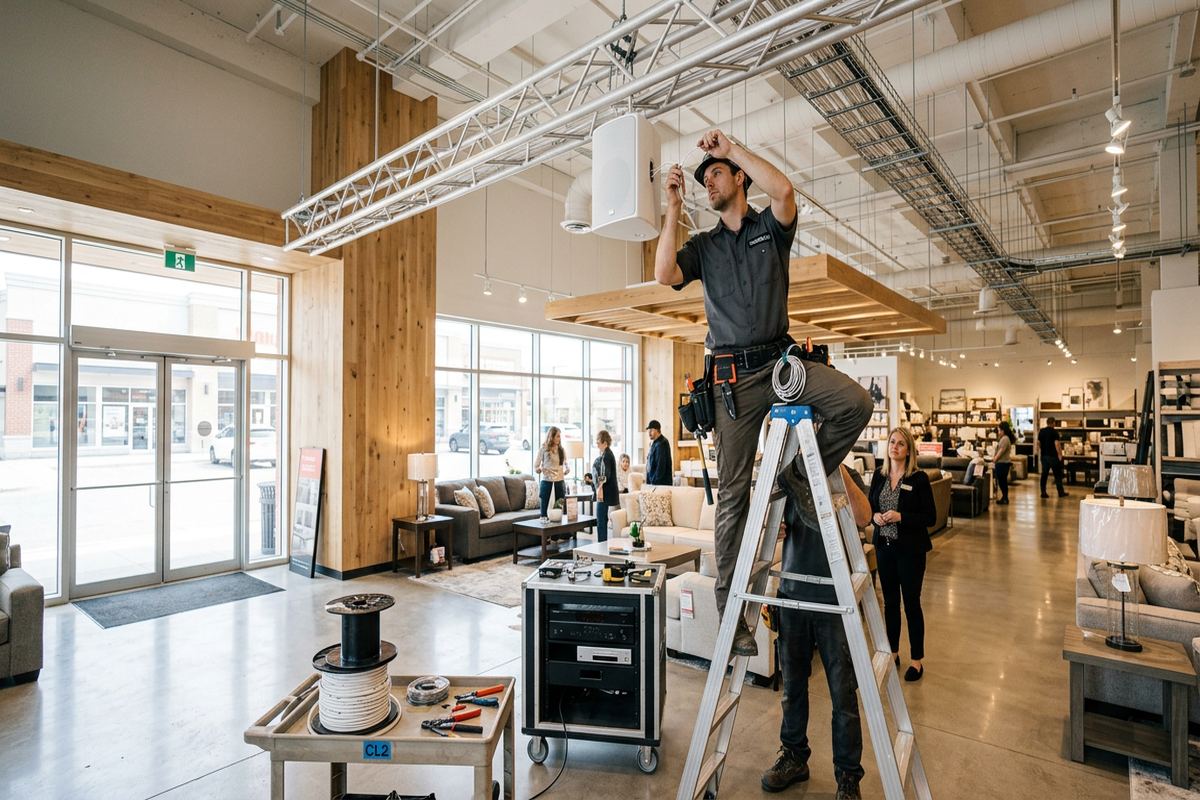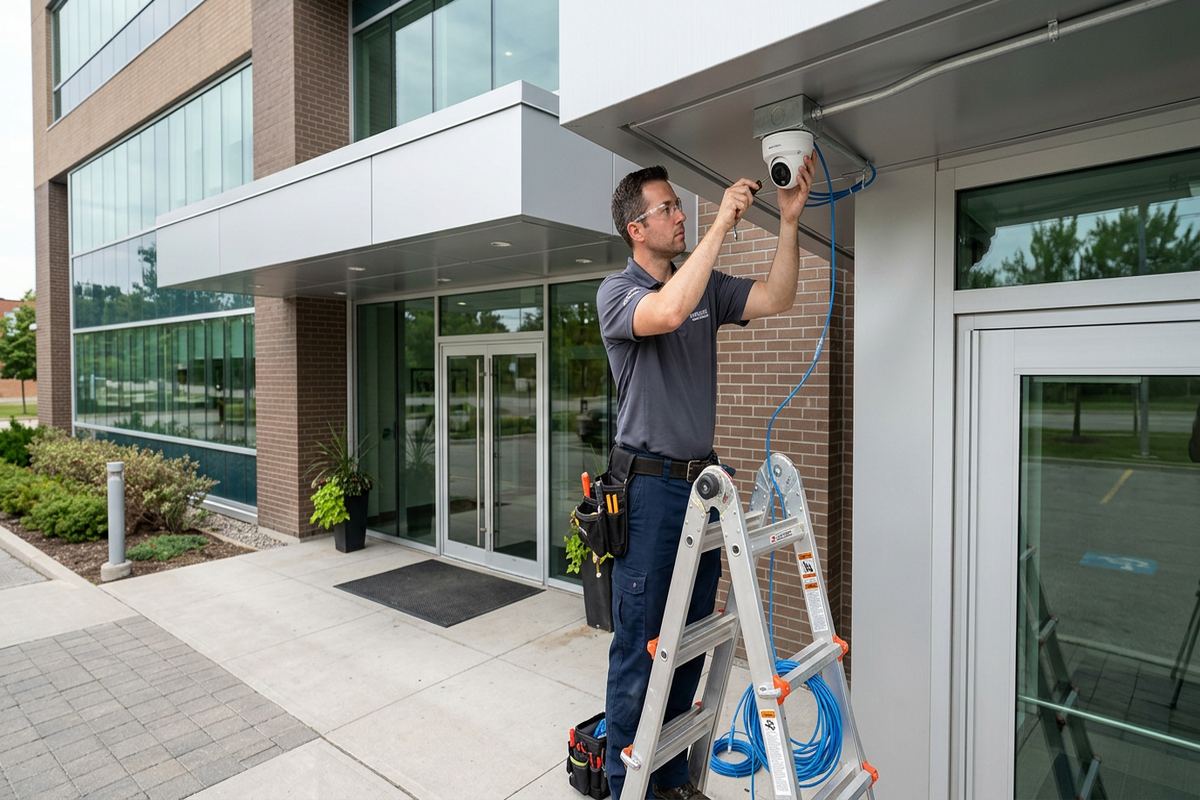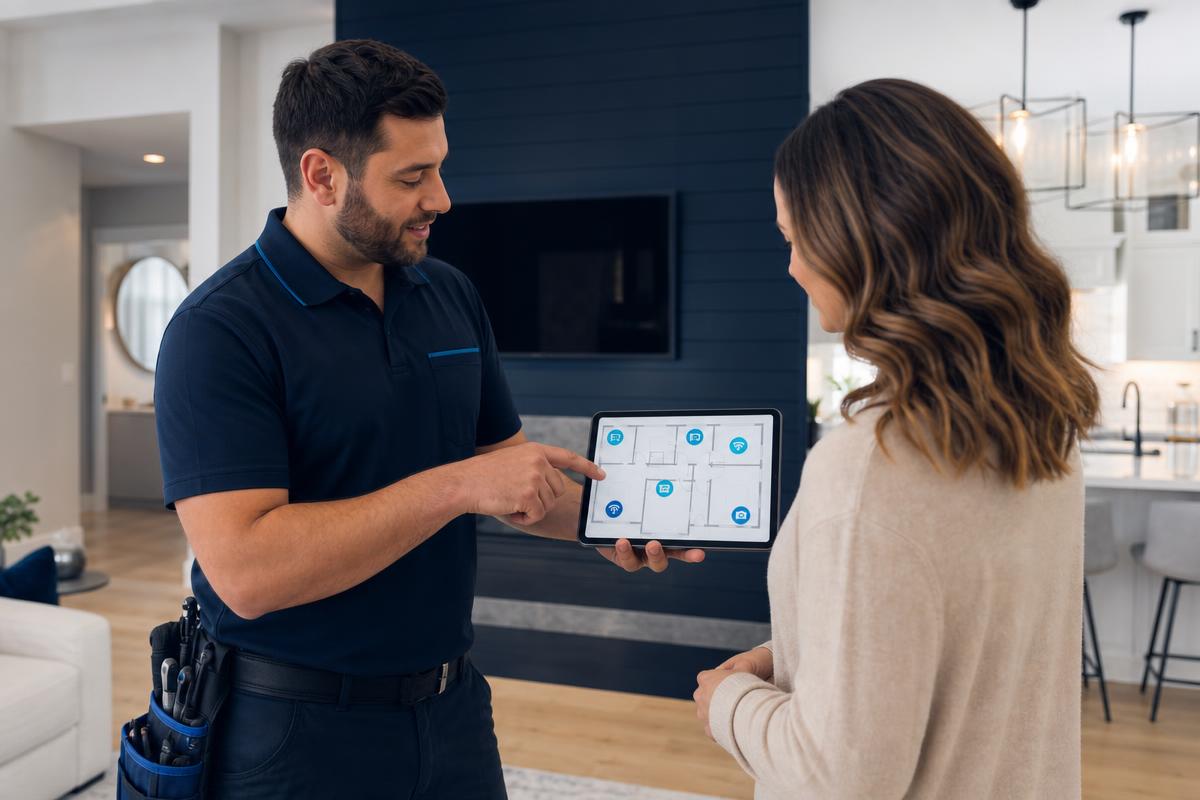
UnifiedLink designs and installs whole-home audio systems for houses, condos and commercial properties in Brockville. We plan speaker locations, audio zones, controls, cabling and equipment around the building’s construction and the way each space is used. Every project begins with a site assessment before pricing and finishes with on-site configuration, documented handover and customer-owned credentials.
Whole-Home Audio Planning in Brockville
A whole-home audio system should let you choose what plays, where it plays and how loudly, without making the house look like an equipment showroom. In Brockville, planning starts with room use, listening priorities, construction type and the locations available for cable, speakers, amplifiers and network equipment. We assess whether music should follow one source throughout the property or whether independent zones need separate control. The resulting design balances coverage, speech clarity, bass, practical volume limits and discreet placement for everyday listening and occasional entertaining without unnecessary hardware or visible wiring.
Room-by-room planning prevents common problems such as one speaker being too close to a seating position, uneven sound across an open floor or controls that are difficult for guests to understand. Kitchens, living rooms, bedrooms, patios and workshops each need different coverage. A television area may require clearer dialogue and stronger front-channel sound, while a dining room often benefits from even background audio. We also consider how doors, high ceilings, hard floors and connected rooms affect sound movement before selecting speaker type, quantity, orientation and appropriate amplification for each planned zone.
The site assessment also confirms where central equipment can operate safely and remain accessible for service. Amplifiers, streamers, network switches and source components need ventilation, stable power and suitable cable pathways. They should not be buried behind finished walls or placed where moisture, dust or household storage blocks airflow. Before pricing, UnifiedLink provides a written scope covering equipment, cable routes, device placement, exclusions, equipment ownership and warranty. This gives Brockville property owners a practical basis for reviewing the installation before any drilling, cable pulling or equipment mounting begins.
- Room-by-room speaker and zone planning
- Equipment location and ventilation review
- Cable-route assessment before pricing
- Written scope with ownership and warranty details
- Listening priorities documented before installation
Speaker Placement for Brockville Homes
Brockville’s mix of stone heritage homes, later frame houses and riverfront properties requires more than a standard speaker layout. Thick masonry can restrict cable routes and make ordinary retrofit methods damaging or visually intrusive. Frame construction may offer easier access through basements, attics or service cavities, but insulation, blocking and previous renovations still need investigation. We choose mounting positions after checking the structure and finish materials, with particular attention to plaster, original trim, stonework and visible sightlines. The aim is reliable coverage with the least practical impact on the building.
Ceiling speakers can provide clean, even coverage when joist spaces, insulation and mechanical services allow proper placement. In-wall speakers may suit some frame homes, although wall cavities must be checked for plumbing, wiring, fire stops and structural members. Where cutting finished surfaces is inappropriate, compact surface-mounted or cabinet speakers can provide a controlled alternative. Downtown Brockville properties may have layered renovations that make drawings unreliable, so physical inspection matters. We do not assume that an open-looking cavity continues across the room or that two similar walls have the same internal construction.
Riverfront rooms often contain large windows, hard flooring and open layouts that reflect sound. Rather than compensating with excessive volume, we use suitable speaker spacing, direction and zone control to improve consistency. Outdoor-facing glass, fireplaces and stone walls also affect where speakers can be mounted without dominating the room. If original finishes need protection, the design may use existing service routes or reversible mounting methods where practical. Any uncertain concealed condition is identified in the scope, and proposed speaker locations are reviewed with the customer before openings are made.
- Ceiling, in-wall and surface speaker options
- Low-impact mounting around heritage finishes
- Placement adjusted for reflective rooms
- Cavities checked before openings are made
- Speaker locations approved before installation
Audio Zones and Everyday Control
Useful zoning follows how people actually move through the property. A kitchen and connected dining area may work as one zone, while bedrooms, a home office and an exterior space usually need independent volume and source selection. In larger Brockville homes, grouping every speaker together can waste power and make quiet listening difficult. We define zones during planning, identify which areas should operate together and confirm whether users need wall controls, mobile applications, handheld remotes or integration with compatible automation. Controls are configured to remain understandable after the installer leaves.
Source planning is equally important. Customers may want streaming services, television audio, radio, a turntable or locally stored music available in selected rooms. Each source has different connection, network and control requirements, and not every product works with every service. We verify expected use before specifying equipment and avoid promising unsupported integrations. Where television sound feeds other rooms, delay and lip-sync behaviour must also be considered. The system is configured on site using the customer’s own accounts and credentials rather than installer-controlled logins that create avoidable access problems later.
Volume limits and startup behaviour can be configured for bedrooms, rental areas, offices or spaces close to neighbouring properties. This is useful in condos and attached buildings where sound transfer matters. North Brockville and Centennial homes with finished lower levels may also need separate control between upper living spaces and recreation rooms. We test each zone for source selection, volume response and normal shutdown behaviour, then explain the controls during handover. Labels and an as-built record help identify speaker runs, equipment connections and zone names if the system is expanded or serviced later.
- Independent source and volume control
- Streaming and television audio integration
- Practical zone names and presets
- Customer-owned accounts and credentials
- Tested controls for every listening area
Brockville, Ontario
Whole-home audio installation in Brockville, scoped in writing first
Book a site assessment and get equipment, routes, exclusions, and warranty on paper before anything is installed.
Structured Cabling for Brockville Audio Systems
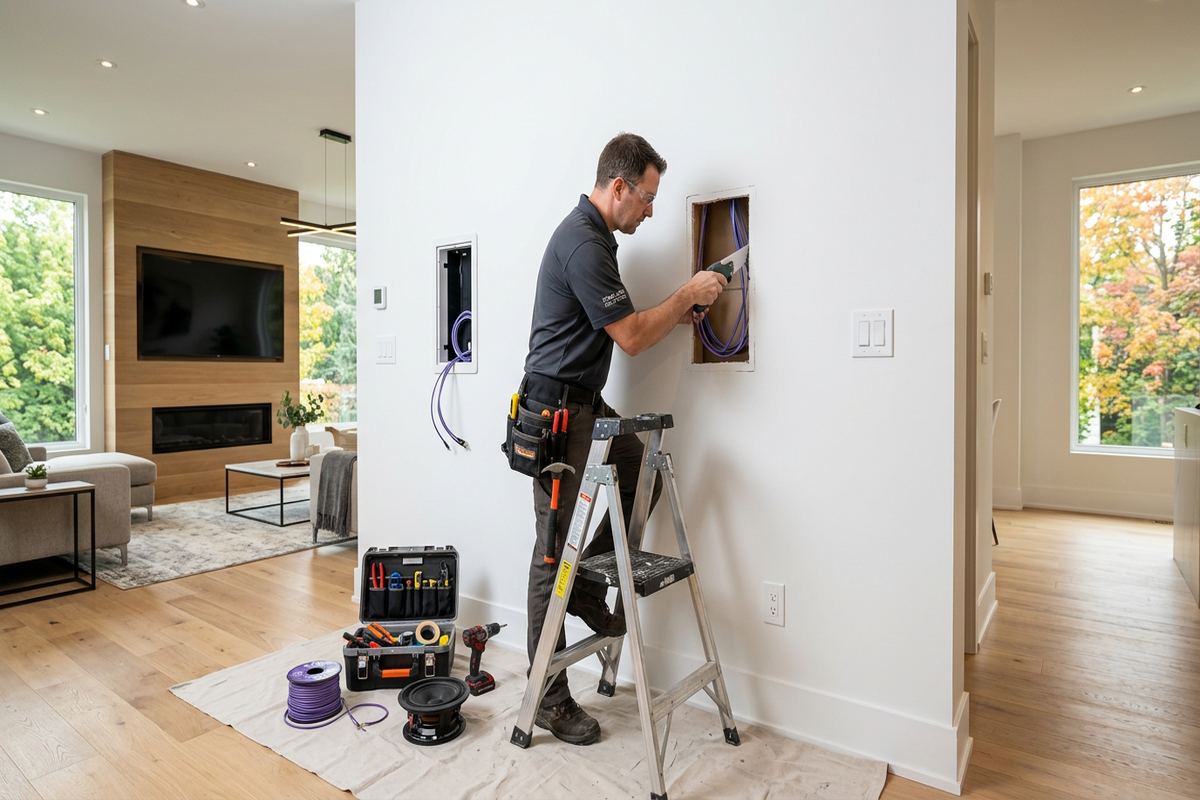
Reliable audio depends on cabling that suits the speaker load, route length, amplifier and installation environment. UnifiedLink installs continuous labelled cable runs rather than joining short sections inside inaccessible walls. Speaker cable, network cable and control wiring are routed separately from electrical conductors where required to reduce interference and support safe, orderly service. In Brockville retrofits, available routes may pass through basements, utility rooms, attics or existing chases. Every route is assessed for structure, moisture, heat, access and the effect that drilling could have on finished surfaces.
Stone and masonry construction can require surface raceway, carefully selected penetrations or a route through adjacent frame additions. We discuss these options before work begins because the least visible path is not always the safest or most serviceable. Penetrations through exterior walls need suitable sleeves and sealing to limit water and air movement. Brockville winters and repeated freeze-thaw cycles make exterior details especially important. Sealants and mounting methods must suit the substrate and exposure, while cable entries should be arranged to shed water rather than direct it toward the building.
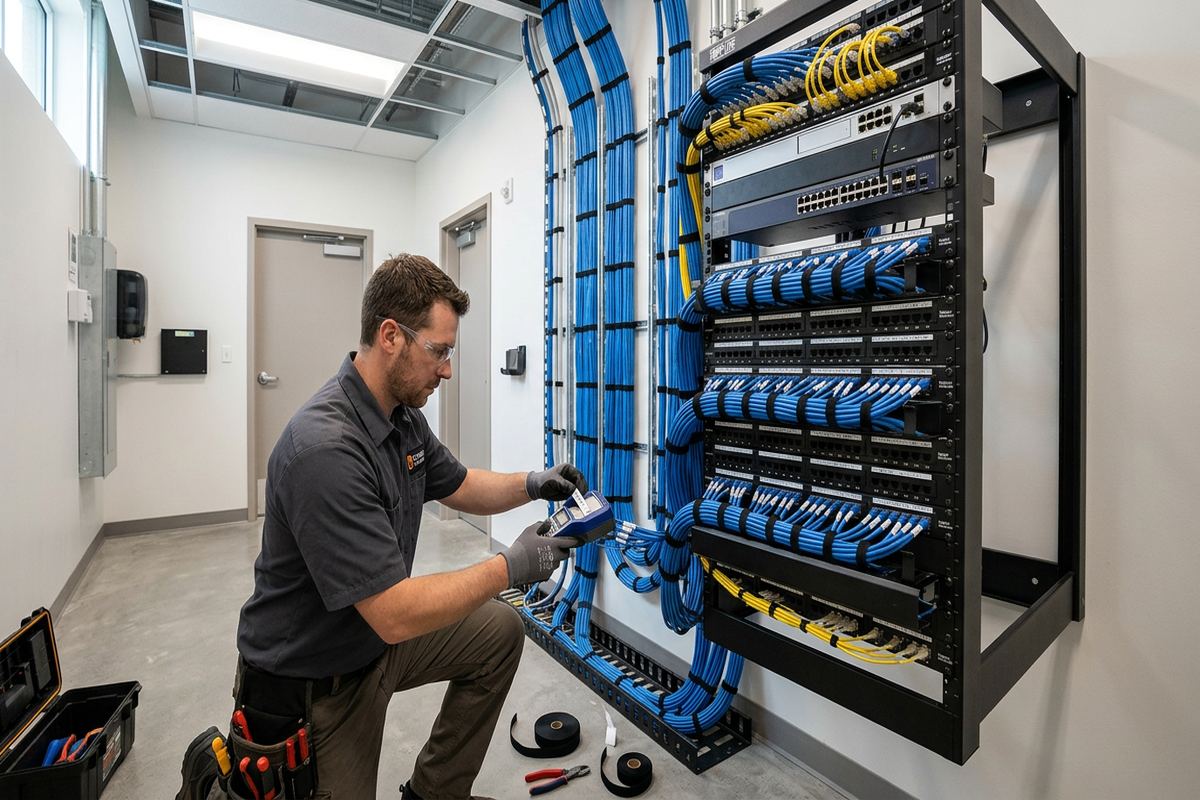
At the equipment end, cables are dressed, labelled and terminated so individual zones can be identified without tracing wires through the house. Adequate slack is retained for service without leaving tangled coils that obstruct ventilation. Network-connected audio components are also coordinated with the property’s switching and Wi-Fi arrangement because unstable connectivity can appear to be an audio failure. Testing covers cable continuity, speaker polarity, network connection and operation under normal use. The as-built record documents cable destinations and equipment relationships, providing a useful reference for future renovations, troubleshooting or additions.
- Continuous cable runs without hidden splices
- Labels at equipment and destination ends
- Exterior penetrations sealed for local weather
- Speaker polarity and continuity testing
- As-built cable and connection record
Outdoor Audio and Riverfront Properties
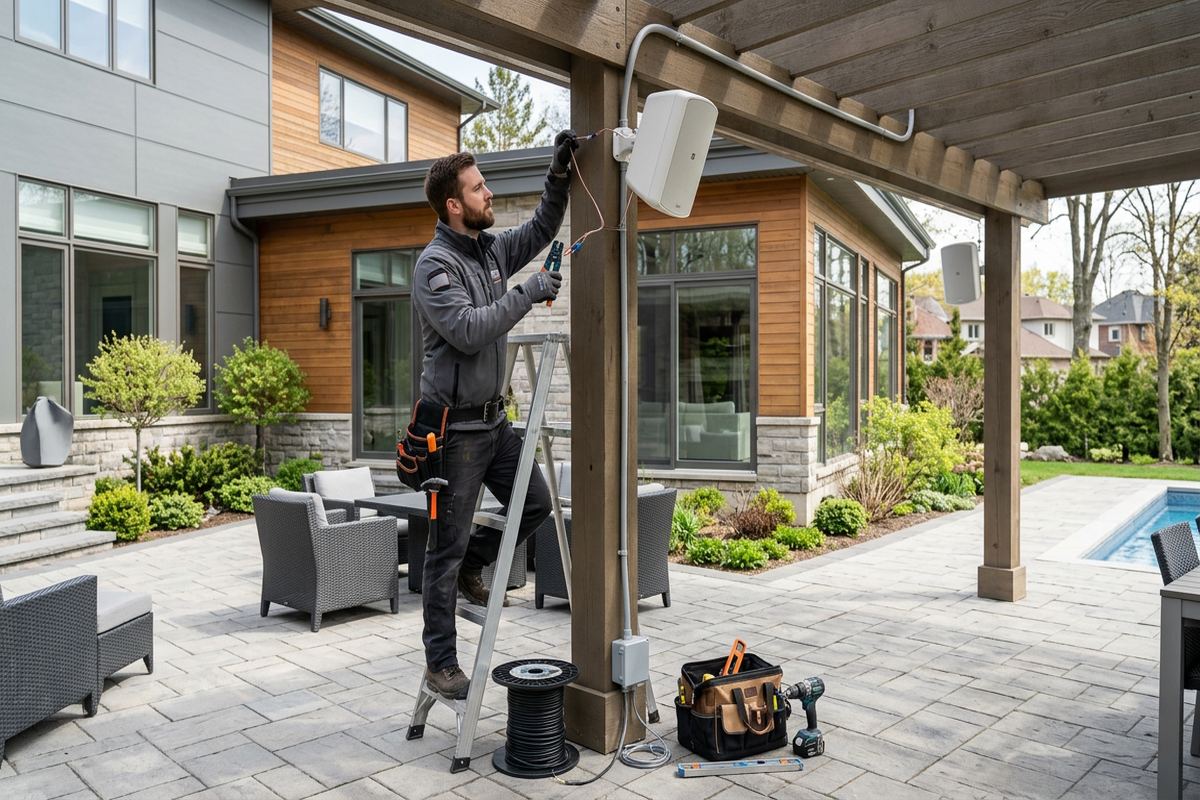
Outdoor audio requires controlled coverage, weather-suitable equipment and realistic expectations about surrounding noise. Patios, decks and riverfront seating areas generally sound better with several speakers operating at moderate levels than one speaker aimed loudly across the property. We consider seating direction, neighbouring homes, reflective walls and the boundary of the intended listening area. Speaker selection is based on the mounting location and degree of exposure. Equipment described as moisture resistant still needs correct orientation, secure mounting and cable entries that do not collect or channel water.
Exterior mounting in Brockville must account for snow, wind-driven rain, seasonal temperature changes and freeze-thaw movement. Fasteners and anchors are chosen for the actual substrate, whether wood framing, masonry or another finished surface. Stone should not be drilled casually, particularly on heritage or visually prominent elevations. Where practical, mounting under protected structures or on less sensitive surfaces can reduce exposure and physical impact. Cable penetrations are kept limited, sloped appropriately and sealed with compatible materials. The scope identifies proposed exterior routes so owners can review their appearance before installation.
Outdoor zones may share a source with the kitchen or family room, but they should normally retain independent volume control. This prevents exterior speakers from operating unintentionally when indoor music starts and allows lower levels near property lines. Seasonal shutdown and storage considerations are explained where equipment is removable or partly exposed. For riverfront properties, we also review network coverage if mobile control is expected at the shoreline-facing end of a large lot. An audio zone cannot remain convenient if its control device repeatedly loses the local network connection.
- Weather-suitable exterior speaker selection
- Coverage directed toward listening areas
- Independent outdoor volume control
- Compatible anchors for masonry or framing
- Sealed and documented exterior penetrations
Retrofits, Renovations and Property Approvals
Finished homes require a different installation approach from open renovations. In an occupied Brockville property, we first identify accessible routes and areas where small investigative openings may be acceptable. Existing basements, attics and utility spaces can reduce disruption, although they do not guarantee access to every room. During a renovation, coordinating before drywall installation usually provides more placement options and cleaner cable routing. We can work from the agreed audio scope while coordinating pathways with the owner, renovator or other trades, but responsibilities and scheduling dependencies are documented before installation starts.
Condos, rental homes and shared commercial properties may require written approval before cables, speakers or exterior devices are installed. Owners should confirm condominium rules, landlord consent and any restrictions affecting common elements, fire separations, exterior walls or working hours. UnifiedLink can provide the proposed equipment locations and cable routes for review, but authorization remains the customer’s responsibility unless the written scope states otherwise. This is particularly relevant where a wall or ceiling assembly separates units. Audio work must not compromise rated assemblies or create an unapproved opening into common building space.
Businesses along commercial strips, offices and industrial units may use distributed audio for background music, staff areas, meeting rooms or customer-facing displays. These projects need consideration of operating hours, ceiling construction, ambient machinery noise and access to shared telecommunications rooms. Consumer-style equipment is not always appropriate for a larger or noisier space. We assess the intended coverage and control requirements rather than simply adding more speakers. Music licensing and content permissions are operational matters for the business; the installation scope addresses the physical system, configured sources and agreed network connections.
- Retrofit routes assessed before cutting
- Pre-drywall coordination for renovations
- Condo and landlord approvals identified
- Fire separations kept in scope
- Commercial and industrial coverage planning
Network and Equipment Integration in Brockville
Modern multi-room audio relies heavily on the local network, even when speakers use dedicated cable. Streaming players, control applications, televisions and automation interfaces need consistent addressing and connectivity. A weak wireless signal can cause delayed controls, missing zones or interrupted playback. During a Brockville assessment, we review where audio equipment will connect and whether existing wired or wireless coverage reaches the intended control areas. If network improvements are needed, they are identified separately so the customer can distinguish the audio installation from optional Wi-Fi or structured cabling work.
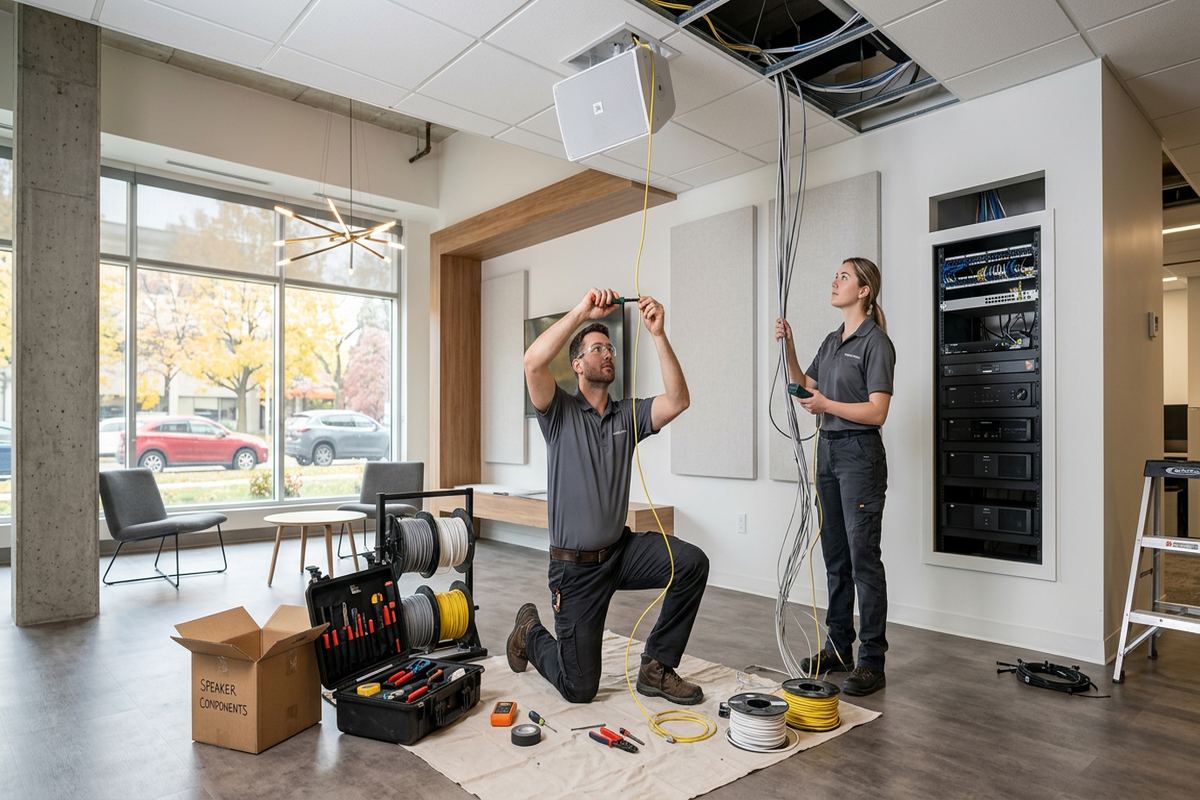
Central equipment should be accessible without becoming visually intrusive. A ventilated cabinet, utility area or suitable rack location may hold amplifiers, streamers, switching and power components, provided heat and dust can be managed. Butler’s Creek and Rivers Edge properties with finished basements may need careful route planning to connect these locations without opening prominent ceilings. Equipment is arranged so labels and connections remain readable. We also avoid placing wireless components inside enclosures that significantly weaken their signal unless an appropriate wired connection or external network arrangement is part of the design.
Integration testing is completed on site rather than relying only on factory settings. We confirm each source, zone, speaker pair and control method under the customer’s normal network environment. Where compatible television or automation functions are included, their agreed operations are tested as well. Software updates, account access and device naming are handled using customer-owned credentials. Handover includes a practical explanation of daily controls, basic restart procedures and the as-built record. It also distinguishes installation warranty matters from third-party subscriptions, internet service issues and manufacturer-controlled platform changes.
- Wired and wireless connectivity reviewed
- Ventilated, serviceable equipment placement
- On-site source and zone testing
- Customer credentials used for configuration
- Clear handover of network dependencies
From Assessment to Handover in Brockville
Every project begins with a site assessment before pricing. The visit establishes room dimensions, construction conditions, proposed listening areas, available pathways, network requirements and equipment locations. It also gives the owner an opportunity to identify finishes that must not be disturbed and areas where access is restricted. Site assessment timing depends on the service and travel distance. Requests sent during business hours are answered the same day, while after-hours requests are answered the next business day. These response terms apply to the initial request, not a guaranteed installation or attendance time.
Following the assessment, the written scope sets out equipment, cable routes, device placement, exclusions, equipment ownership and warranty. Changes should be resolved before installation because moving a speaker after a ceiling opening is made can create avoidable repair work. If concealed conditions differ from what could reasonably be observed, we explain the issue and review practical alternatives before proceeding beyond the affected area. Brockville heritage finishes, unknown masonry cavities and previous renovations are examples of conditions that may require adjustment. Any effect on scope is documented rather than treated as an informal site decision.
Installation includes mounting, continuous labelled cable runs, termination and on-site configuration of the agreed system. We test operation by zone and confirm that sources, controls and network-connected components behave as intended. At handover, the customer receives control using their own credentials and an as-built record showing the installed arrangement. We explain routine use and any known dependencies, such as internet access or third-party streaming accounts. One accountable contractor coordinates the low-voltage audio scope, reducing uncertainty about responsibility for speaker wiring, equipment setup, system testing and final documentation.
- Site assessment completed before pricing
- Written scope reviewed before work starts
- Concealed conditions addressed transparently
- System tested zone by zone
- Documented handover with customer credentials
Brockville neighbourhoods we cover
- Downtown Brockville
- North Brockville
- Rivers Edge
- Butler's Creek
- Centennial
Whole-home audio installation in Brockville — common questions
Can you install audio in a Brockville stone home?
Yes, subject to a site assessment. Stone walls can limit concealed cable routes and require carefully selected anchors or alternative mounting surfaces. We review basements, attics, additions and existing chases before proposing a route. Where concealed installation would risk original masonry or plaster, surface-mounted speakers or discreet raceway may provide a lower-impact option. Proposed openings and visible routes are included in the written scope.
Can different rooms play different music?
Yes. A properly designed multi-zone system can provide independent source and volume control for selected rooms. The available combinations depend on the amplifier, streaming platform, source equipment and network. During the Brockville assessment, we define which spaces should work independently and which can be grouped. We then configure zone names and controls on site using the customer’s own accounts and credentials.
Do outdoor speakers stay installed through Brockville winters?
Many outdoor speakers are designed for permanent installation, but suitability depends on their rating, mounting position and exposure. Brockville snow, wind-driven moisture and freeze-thaw conditions require secure substrate-specific mounting and properly sealed cable entries. Protected placement is preferred where practical. We document seasonal care and any shutdown considerations during handover, but weather resistance does not make equipment immune to poor mounting or direct water entry.
Will you need to open finished walls or ceilings?
Not always, although some concealed routes require access openings. We first check basements, attics, utility areas, existing chases and frame cavities. Brockville stone homes and heavily renovated properties may offer fewer concealed pathways than modern frame construction. Any expected openings, exclusions and repair responsibilities are identified in the written scope. We review alternatives before cutting prominent finishes or drilling masonry.
Do I need condo or landlord approval?
Approval may be required if the work affects common elements, exterior surfaces, shared walls, rated assemblies or building rules. Brockville condo owners and tenants should obtain written authorization before installation. UnifiedLink can document proposed speaker positions, cable routes and equipment locations for review. Unless the scope says otherwise, the customer remains responsible for securing permission from the condominium corporation, landlord or property manager.
Can whole-home audio use my existing Wi-Fi?
Possibly. The answer depends on signal coverage, network capacity, equipment location and the audio platform. We assess connectivity in the areas where controls and streaming devices will operate. If the existing Brockville property network is unsuitable, wired connections or separate Wi-Fi improvements may be recommended. Those requirements are identified clearly so audio equipment is not installed on a network that cannot support dependable daily control.
Coverage in Brockville is confirmed against the address before we quote. See everything we install in Brockville or the province-wide whole-home audio installation page.