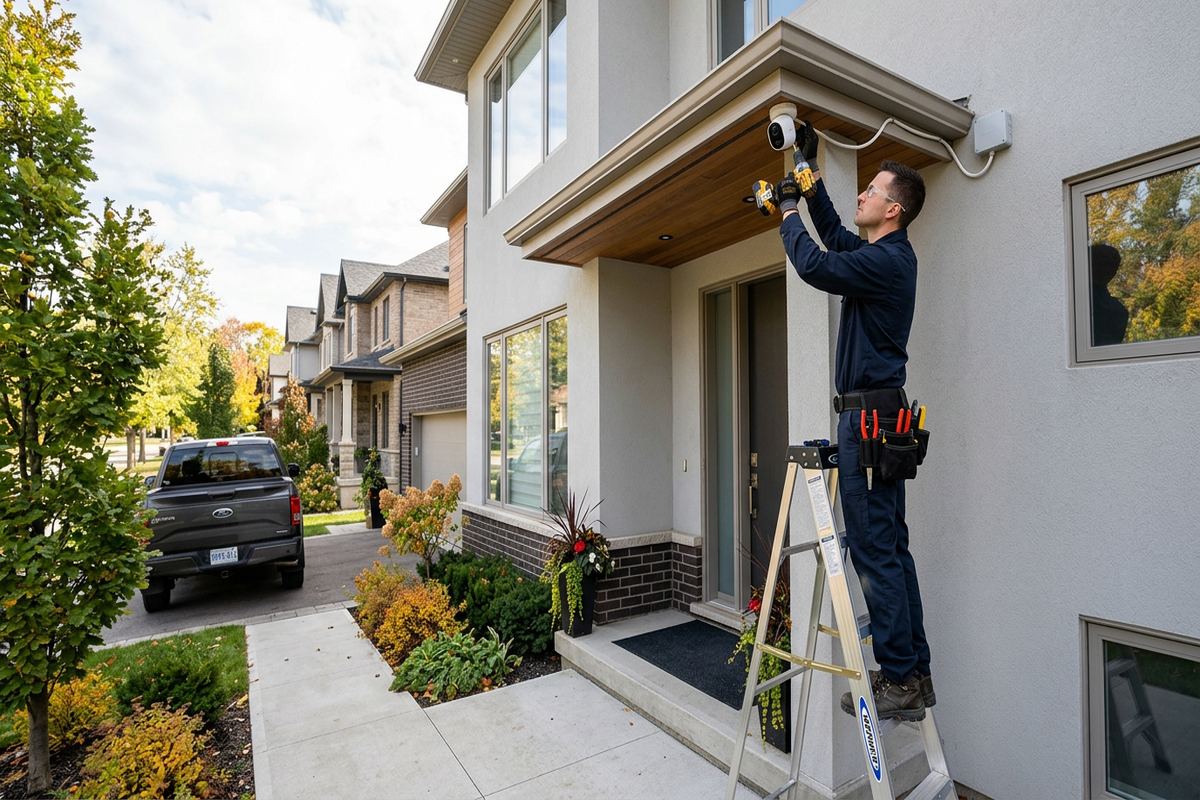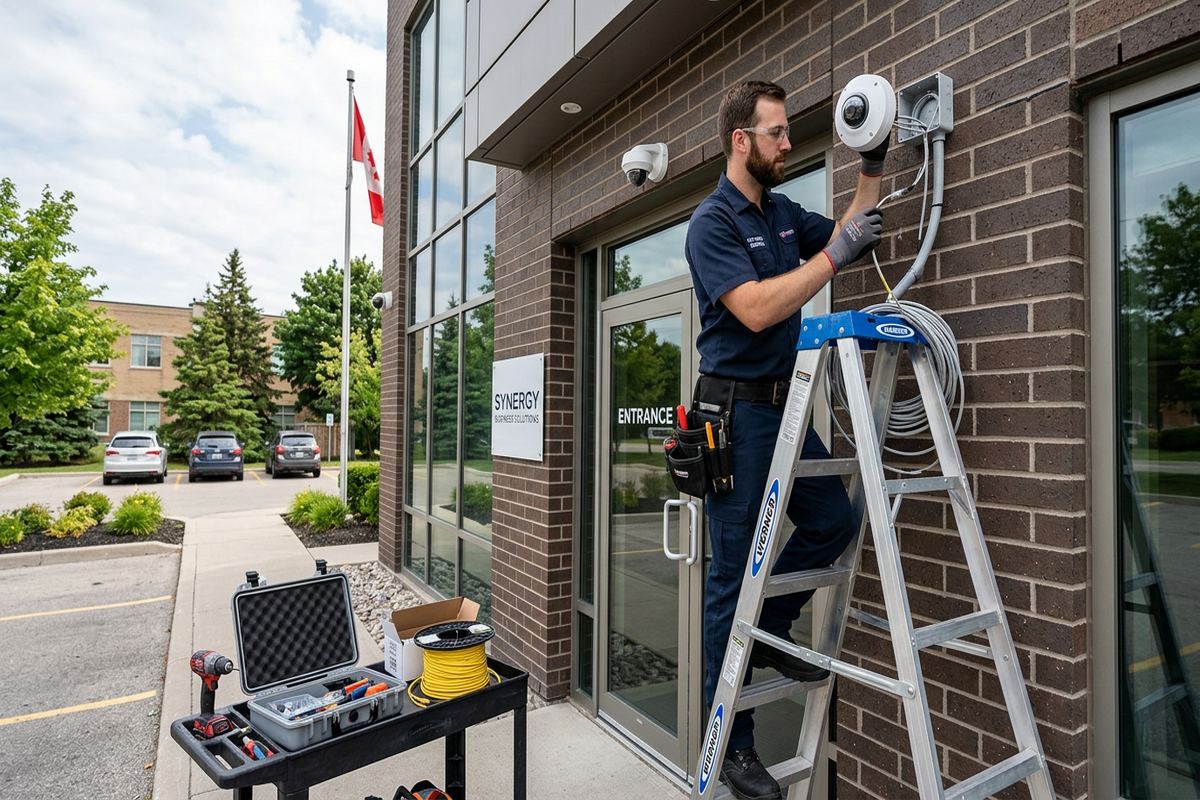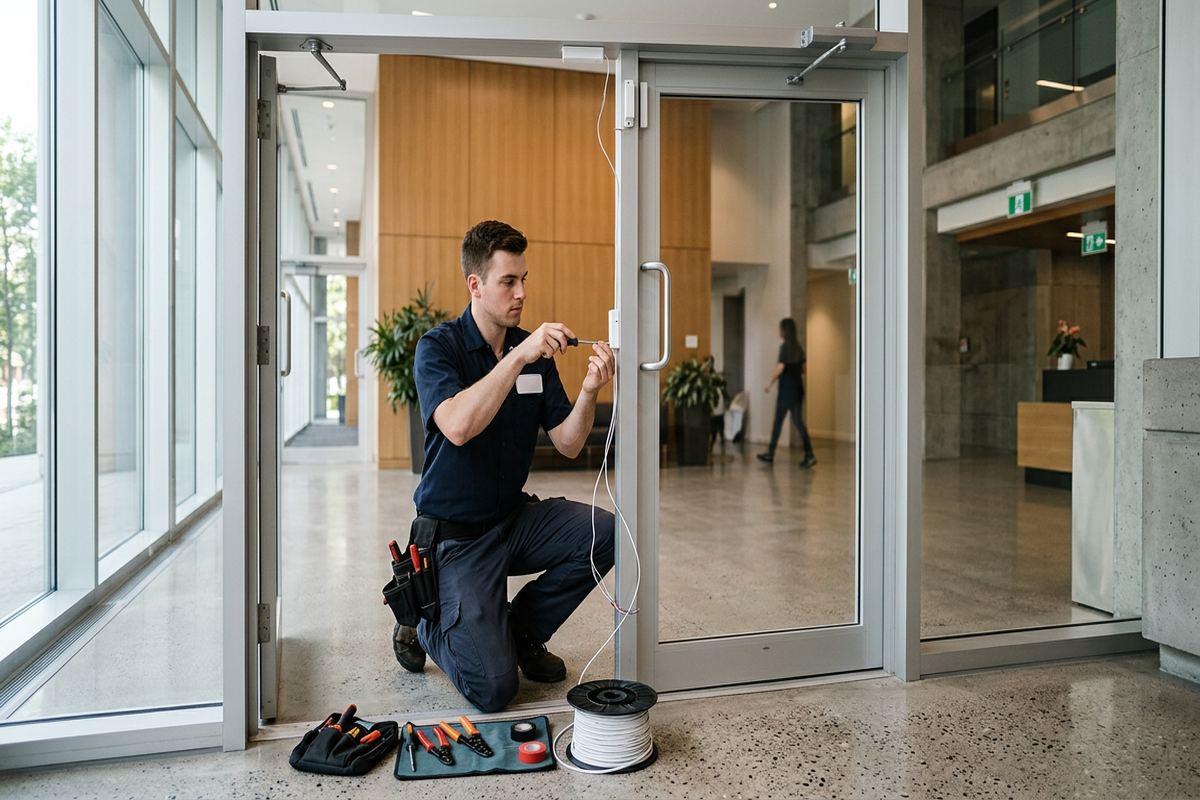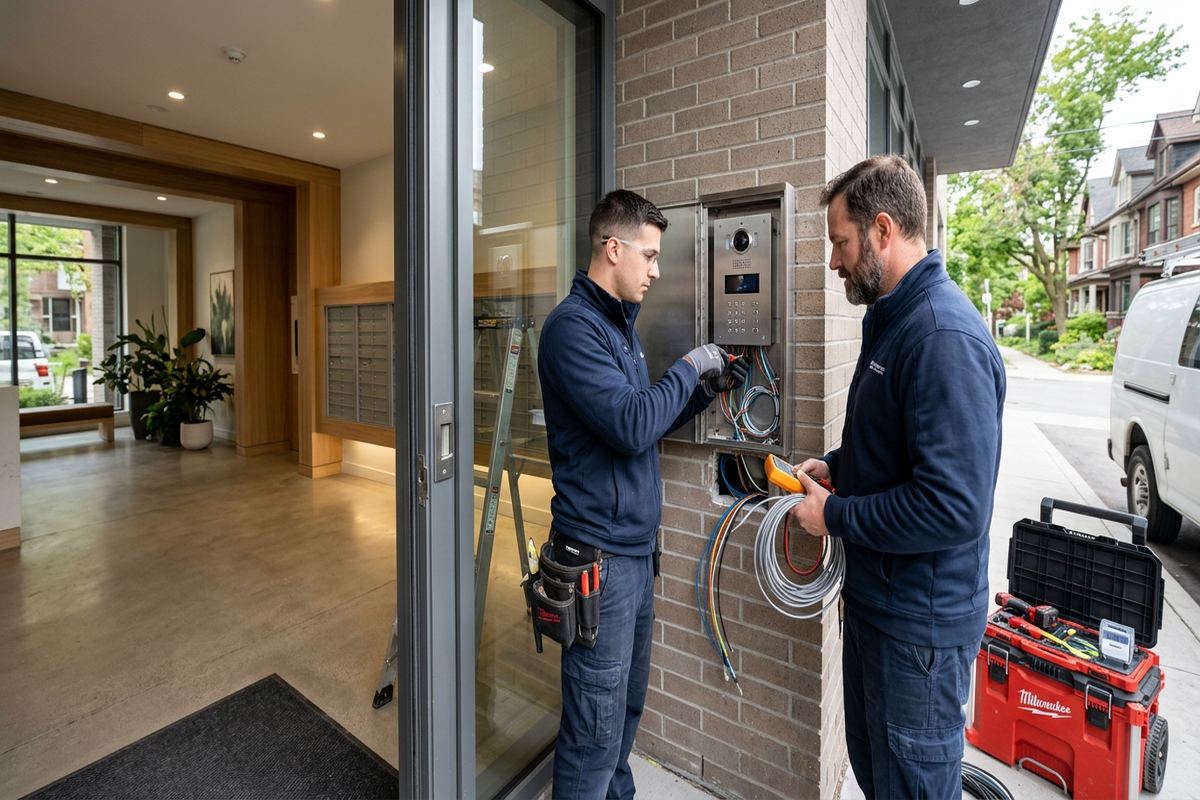
UnifiedLink installs and configures condo access control systems in Brockville for entrances, shared amenities, garages, elevators, and service areas. We assess the property before pricing, document the proposed equipment and cable routes, and coordinate work around residents, property managers, boards, and landlords. Each system is configured on site and handed over using the customer’s own administrative credentials.
Planning Condo Access Control in Brockville
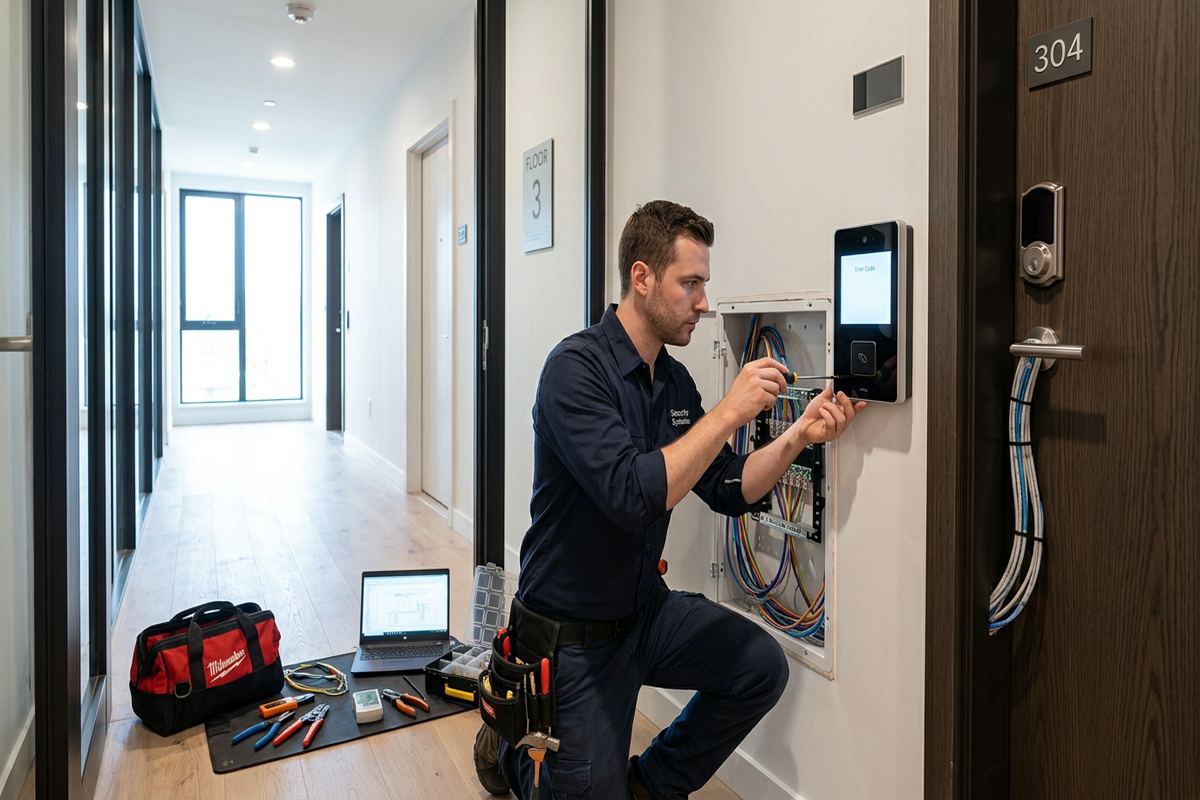
A condo access control project begins with understanding how residents, visitors, contractors, and staff actually move through the property. In Brockville, that may involve a converted masonry building Downtown, a newer complex in North Brockville, or a riverfront property with multiple exterior approaches. We review controlled doors, common rooms, garages, gates, elevators, and emergency exits before recommending equipment. The assessment also considers existing locks, door condition, available pathways, network access, electrical capacity, accessibility needs, and the management process for issuing or cancelling credentials.
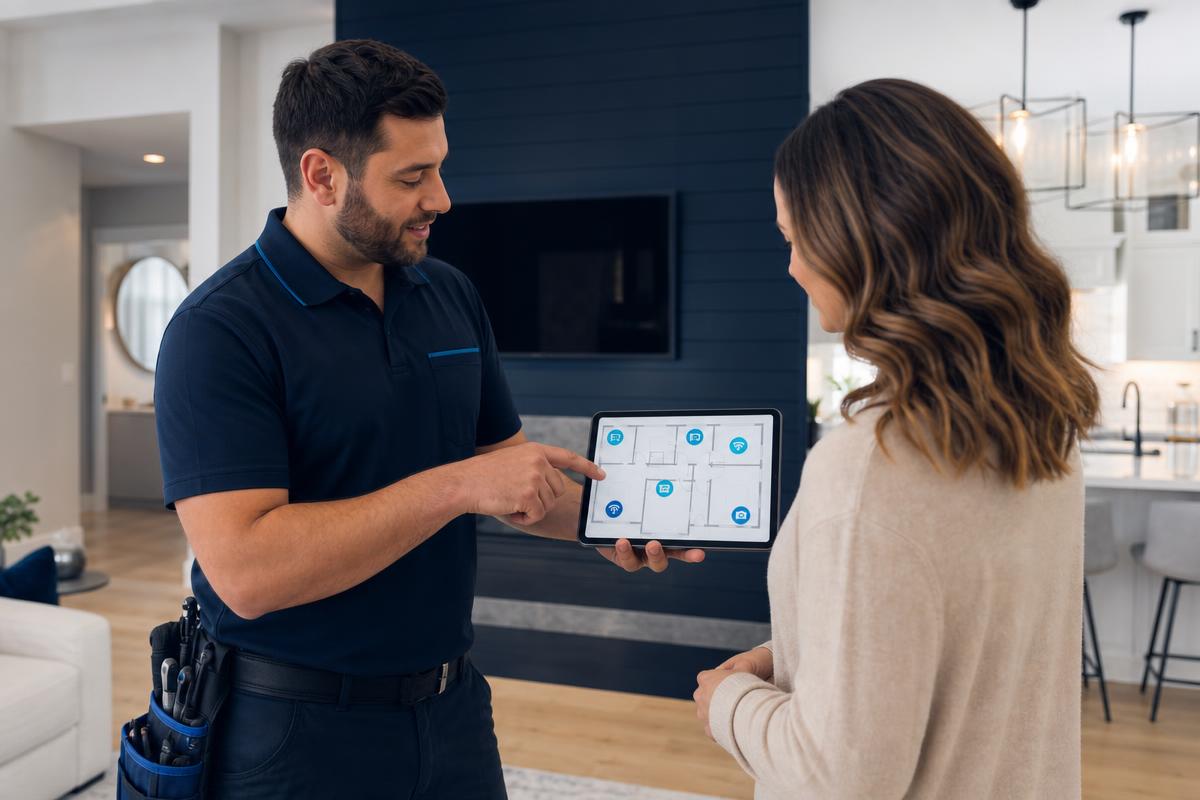
Condo boards and property managers need a clear basis for approving work. Following the assessment, UnifiedLink provides a written scope covering equipment, cable routes, device placement, exclusions, equipment ownership, and warranty. This helps the board compare the proposed result with its operating requirements rather than relying on a general equipment list. Where landlord, condo corporation, heritage, or shared-property approval is required, the scope can support that review. Site assessment timing depends on the requested service, property access, and travel distance within Eastern Ontario.
Planning also identifies which decisions belong to the installer and which remain with the corporation. Management decides who should enter each area, when access applies, and who can administer the system. We translate those policies into door schedules, access groups, and credential permissions. Residents may need continuous entry to main doors while cleaners, trades, or delivery personnel receive narrower permissions. Defining these rules before installation reduces improvised changes and gives Brockville property managers a practical structure for adding users, removing former occupants, and reviewing unusual entry events.
- Door, gate, garage, and amenity review
- Existing hardware and cable-path assessment
- Written scope for board or landlord review
- Access groups based on property policy
Brockville Building Conditions and Installation Methods
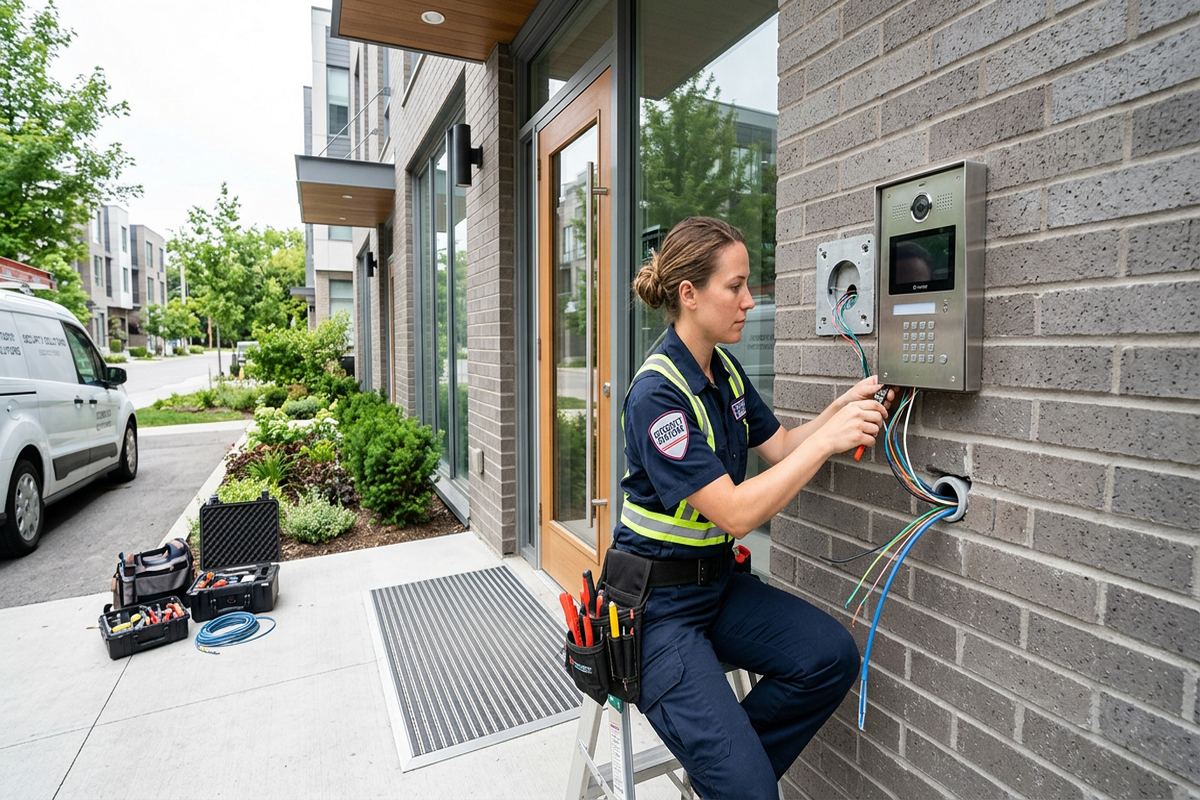
Brockville’s building stock requires installation methods matched to the structure rather than a standard mounting detail. Stone heritage homes, converted residences, and riverfront properties often call for discreet, low-impact mounting that limits visible conduit and unnecessary penetrations. Masonry walls may require different anchors, drilling methods, and cable routes than frame construction. We examine wall composition, door frames, trim, service spaces, and previous alterations before work begins. Device placement must remain usable and maintainable without creating avoidable damage to stone, brick, finished wood, or historically sensitive exterior surfaces.
Winter conditions affect every exterior reader, intercom, request-to-exit device, and door connection. Repeated freeze-thaw cycles can expose weak seals, loosen unsuitable mounting methods, and allow moisture into penetrations or enclosures. Exterior work therefore requires appropriate device selection, stable mounting, sealed cable entries, drip-aware routing, and attention to how snow or ice may collect around an entrance. Door alignment and closer performance also matter because an access controller cannot compensate for a leaf that binds, fails to latch, or changes position as temperatures and humidity vary.
Cable routing differs between solid masonry buildings and modern frame construction. A newer condo may offer ceiling spaces, risers, and communication rooms, while an older Downtown Brockville property may require carefully placed surface raceway or routing through existing service areas. UnifiedLink uses continuous labelled cable runs and avoids hidden, undocumented joins. Where a pathway must remain visible, we discuss its finish and placement before installation. Fire separations, rated assemblies, shared utility spaces, and penetrations are considered when selecting routes, with specialized building work identified as an exclusion or coordination item when applicable.
- Low-impact mounting on stone and brick
- Sealed exterior penetrations and cable entries
- Continuous labelled access control cabling
- Routes suited to masonry or frame construction
Doors, Readers, Fobs, and Mobile Credentials
The visible reader is only one part of a controlled opening. Reliable operation depends on the door, locking hardware, power supply, controller, credential technology, and method used to confirm that the door has closed. During design, we distinguish between electrified strikes, magnetic locks, electrified exit devices, and existing mechanical hardware because each arrangement has different operational and life-safety implications. We also identify doors needing position monitoring, request-to-exit detection, forced-door alerts, or held-open notifications. Hardware compatibility is checked before the access rules are programmed and the opening is commissioned.
Credential selection should reflect who uses the Brockville condo and how administration will be handled. Fobs and cards are straightforward to issue and replace, while mobile credentials may suit properties prepared to manage supported phones, applications, and user invitations. Keypads can help in selected areas but shared codes are harder to attribute and control. A mixed approach may be appropriate for residents, staff, contractors, and short-term visitors. The written scope states the proposed credential method and included quantities without assuming that one technology fits every building or resident population.
A usable system lets authorized administrators add a resident, cancel a lost credential, and adjust access without contacting an installer for routine changes. UnifiedLink configures the platform on site and hands it over with the customer’s own credentials rather than retaining control through an installer-owned account. We explain core tasks such as creating users, assigning groups, setting schedules, and viewing relevant events. Administrative permissions can be separated so a superintendent handles daily credentials while a property manager retains broader configuration authority. Responsibility for user records and access approvals remains with the customer.
- Fob, card, keypad, or mobile options
- Door position and request-to-exit monitoring
- Role-based administration for property staff
- Customer-owned system credentials
Brockville, Ontario
Condo access control systems in Brockville, scoped in writing first
Book a site assessment and get equipment, routes, exclusions, and warranty on paper before anything is installed.
Condo Entrances and Shared Areas in Brockville
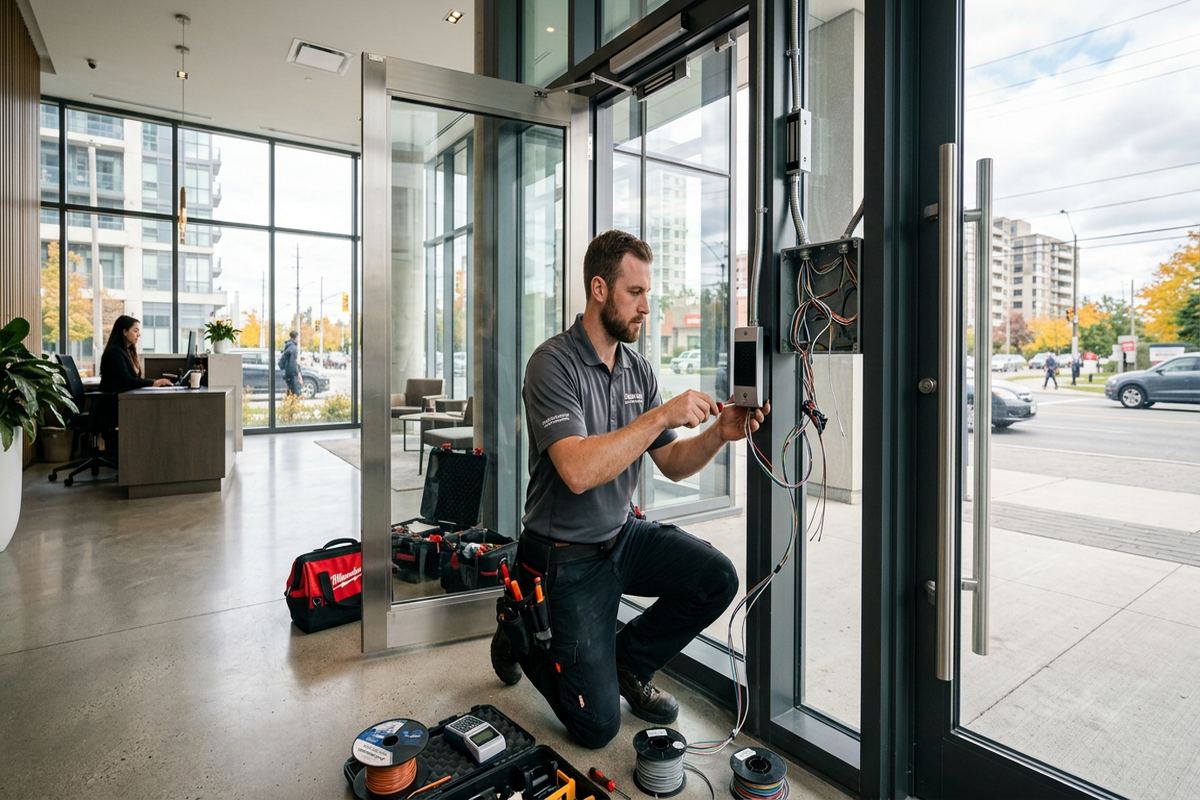
Main entrances must balance resident convenience with controlled visitor access. In Brockville condos, that often means coordinating the access reader with an intercom, vestibule, automatic operator, or existing mechanical key system. We review how a visitor calls a resident, how the door is released, and what happens when communications or network service is unavailable. The design can keep resident credentials separate from visitor entry while preserving required egress. Where two vestibule doors exist, timing and locking behaviour are documented so the entrance does not become confusing or unexpectedly restrictive.
Shared amenities need access rules that match their actual operation. Laundry rooms, fitness areas, lounges, bicycle storage, waste rooms, and rooftop or river-facing common spaces may require different schedules or user groups. A resident credential can be permitted at the main entrance while being limited at an amenity after closing. Staff and service contractors may receive scheduled permissions that do not extend to residential floors. For properties in Rivers Edge or Centennial, exterior approaches and detached shared facilities also require careful consideration of weather exposure, network reach, lighting, and safe cable pathways.
Garage and parking access introduces additional equipment and movement patterns. A controlled overhead door, pedestrian entrance, or vehicle gate may use a reader, remote credential, intercom, or other supported activation method. We assess sightlines, mounting positions, vehicle approach, pedestrian separation, and the location of gate or door controls. The access platform may record authorized activations, but it must be coordinated with the operator and its safety devices. Any work on specialized gate machinery, overhead door equipment, or vehicle detection is clearly assigned in the scope rather than left ambiguous.
- Resident and visitor entry coordination
- Scheduled access to common amenities
- Garage and pedestrian-door integration
- Clear responsibility for specialized operators
Intercom, Video, Elevator, and Alarm Integration
Access control can operate independently, but many condo properties benefit from coordinated intercom and video functions. An entry intercom may call suites, mobile devices, or a staffed desk, depending on the selected platform and available connectivity. Cameras can provide visual context at entrances, although video surveillance and access records remain separate data sources unless supported integration is specified. We identify the desired workflow before equipment selection: who receives visitor calls, who can release a door, which entrances need video, and how management will handle changes when residents move in or out.
Elevator access requires early coordination because elevator controls are specialized building systems. A condo may want residents to reach only authorized floors, restrict service areas, or permit visitor travel after entry release. The final arrangement depends on the elevator equipment, available interfaces, authority requirements, and participation of the elevator contractor. UnifiedLink can define and install the access control portion included in its scope while documenting required third-party connections. Testing is planned jointly where another contractor must provide relays, programming, supervised interfaces, or access to elevator control spaces.
Alarm integration can communicate selected access events, but the purpose and response must be defined. A forced door, held-open entrance, cabinet tamper, or controller fault may create a local notification, software event, or supported signal to another system. Not every event should generate the same response, especially in a busy condo where propped doors may reflect deliveries or maintenance. For Brockville properties with several entrances, we help classify events by location and operational importance. Integration boundaries, network dependencies, monitoring arrangements, and customer responsibilities are recorded before commissioning.
- Suite or mobile visitor calling options
- Defined video and access event workflow
- Coordinated elevator contractor interfaces
- Door alarms classified by operational priority
Installation and Commissioning Across Brockville
Once the scope is approved, installation is organized to reduce disruption to residents and building operations. Work may require scheduled access to suites, electrical rooms, ceilings, risers, lobbies, parking areas, or management offices. In occupied properties around Butler’s Creek, North Brockville, and Downtown Brockville, notices and access arrangements are usually handled by the property manager or condo board. We identify expected shutdowns, noisy drilling, temporary door conditions, and areas needing protection. One accountable contractor manages the defined low-voltage work, configuration, testing, documentation, and handover.
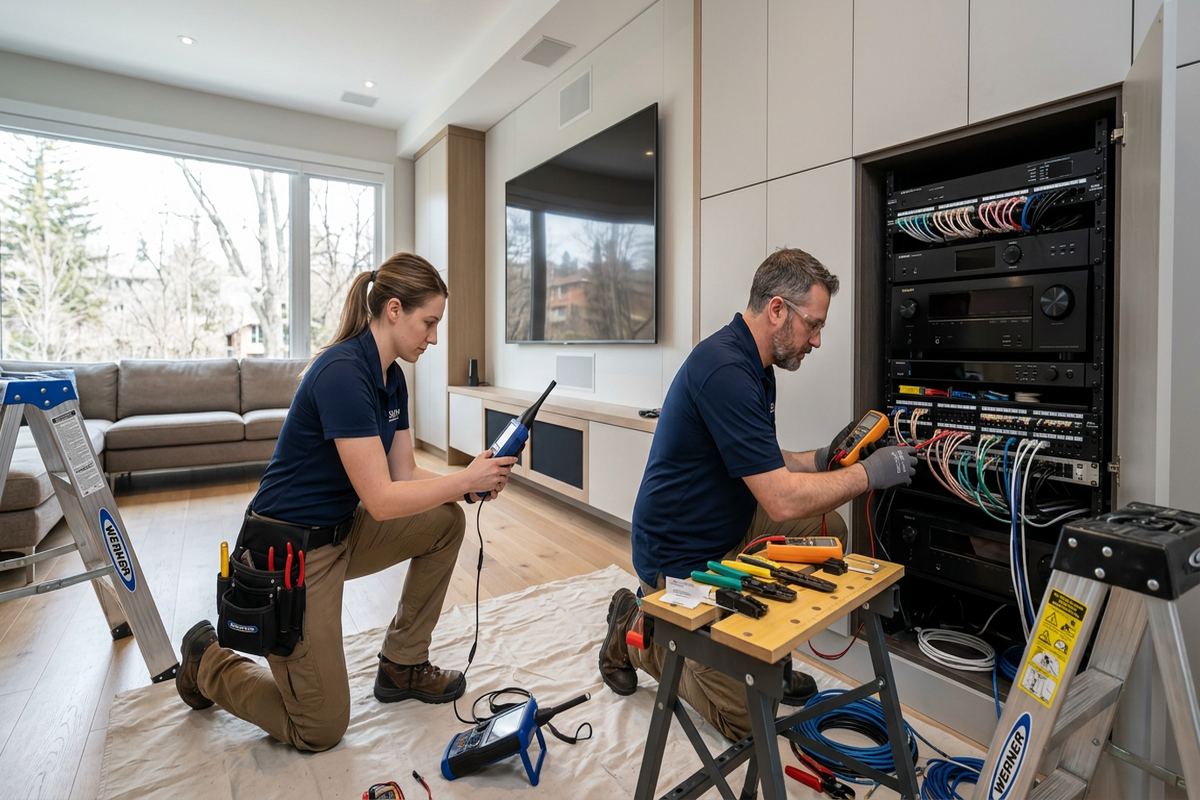
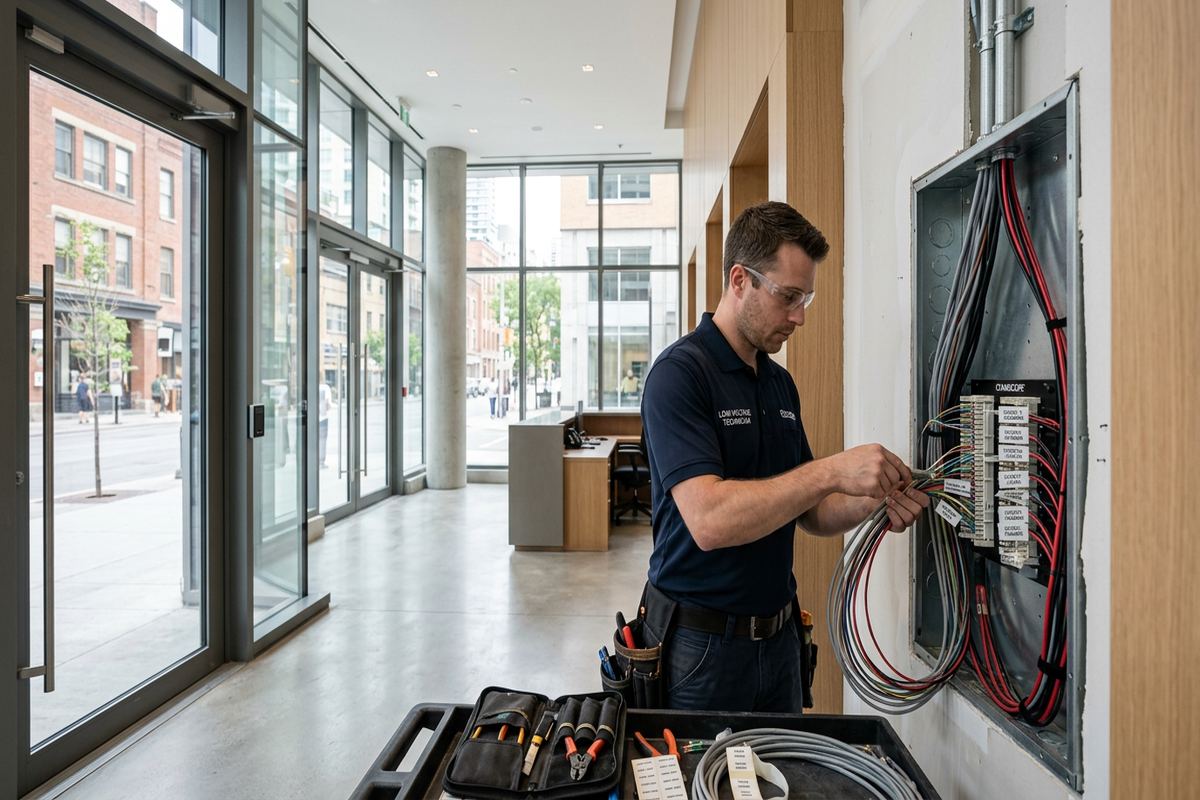
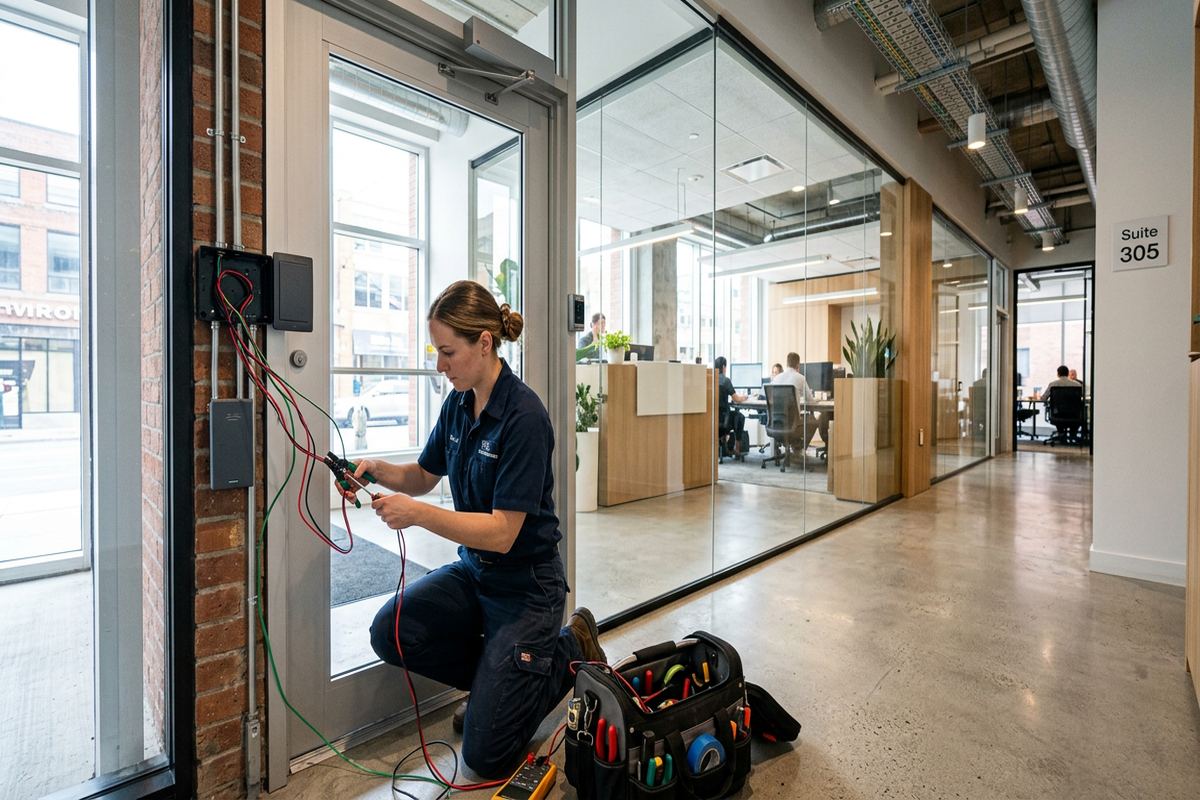
Cabling is installed as continuous labelled runs between the documented field device and its controller or termination point. Labels support future troubleshooting and reduce uncertainty when staff or another technician opens a cabinet. Controllers, power supplies, network components, and interface modules are mounted in accessible locations suitable for service. Exterior penetrations are sealed, and routes are selected with moisture, physical exposure, and freeze-thaw movement in mind. Before devices are finalized, we check reader height, door swing, hardware clearances, and the practical use of credentials from the resident’s approach.
Commissioning verifies more than whether a reader beeps. Each controlled opening is tested for valid and invalid credentials, schedules, lock operation, request-to-exit behaviour, door-position reporting, and expected event records. Battery-backed equipment and network-dependent functions are reviewed within the installed design, and integrations are tested with participating contractors where applicable. Identified deficiencies are separated into access control issues, door or hardware conditions, network problems, and third-party responsibilities. This gives the Brockville condo corporation a clear account of what was tested, what passed, and what still requires action.
- Resident-conscious installation scheduling
- Labelled controllers, devices, and cable runs
- Exterior sealing suited to seasonal conditions
- Functional testing at every controlled opening
Handover, Records, and Ongoing Administration
At handover, the customer receives administrative access using credentials it controls. We provide an as-built record showing the installed system and relevant device or cable information within the agreed scope. The handover also identifies equipment ownership, warranty information, exclusions, and dependencies such as customer networks, third-party subscriptions, elevator interfaces, or gate operators. Property representatives are shown the routine functions they are expected to perform. Keeping this information with the condo corporation reduces reliance on undocumented installer knowledge when a manager changes or future work is planned.
Credential administration works best with a written internal process. Management should decide who approves new residents, who can issue replacements, how lost fobs are cancelled, and when contractor access expires. Naming conventions should be consistent enough to locate records without placing unnecessary personal information in event descriptions. Access groups are preferable to making one-off permissions for every user because they simplify changes to schedules and doors. Brockville condos with seasonal occupants, rental units, or frequent service access should also define how owners, tenants, agents, cleaners, and trades are distinguished.
Periodic review helps ensure that access reflects current occupancy and operations. Administrators can check for credentials assigned to former residents, temporary permissions that never expired, doors repeatedly held open, or events suggesting a hardware problem. Physical inspection remains important because software cannot correct loose hardware, damaged weather seals, door misalignment, or water entering an exterior device. Before Brockville’s winter conditions intensify, exterior openings may benefit from checking latch operation, closers, seals, and reader mounting. Any maintenance arrangement should clearly state included tasks, dependencies, and customer responsibilities.
- Customer-controlled administrator accounts
- As-built record and warranty information
- Documented move-in and move-out procedures
- Seasonal inspection of exterior openings
Choosing a Brockville Condo Access Control Scope
A useful proposal should define the operational result rather than simply list readers and controllers. For each opening, the scope should identify the locking arrangement, reader, monitoring points, release method, cable route, and intended access behaviour. It should also explain which existing components are reused and which conditions require another trade. Brockville condo boards can then evaluate whether the design covers resident entrances, amenities, parking, service areas, and administration needs. Assumptions about network service, electrical power, fire alarm interfaces, door repairs, and approvals should be visible before work is authorized.
Phased work may be suitable when a property has several buildings, uncertain door conditions, or budget approval spread across planning periods. The first phase can establish compatible control equipment and administration while addressing priority entrances. Later phases may add amenities, garages, or secondary doors if capacity and pathways were considered from the start. However, phasing should not leave an opening in an unsafe or operationally unclear state. The design needs documented boundaries, temporary arrangements where required, and confirmation that retained hardware can support the intended later work without unsupported assumptions.
UnifiedLink responds to requests sent during business hours the same day, while after-hours requests are answered the next business day. Site assessment timing depends on the service and travel distance. For a Brockville assessment, useful preparation includes current floor plans, door and hardware information, existing system details, network requirements, approval contacts, and a list of access problems. We then review the site before pricing and prepare a written scope. This process gives the board, landlord, or property manager a defined installation basis without relying on unverified allowances or generic equipment packages.
- Opening-by-opening equipment and behaviour schedule
- Explicit exclusions and third-party responsibilities
- Phasing planned around compatible infrastructure
- Site assessment completed before pricing
Brockville neighbourhoods we cover
- Downtown Brockville
- North Brockville
- Rivers Edge
- Butler's Creek
- Centennial
Condo access control systems in Brockville — common questions
Can you reuse our existing condo door hardware?
Possibly, but it must be inspected before it is included in the design. Existing strikes, magnetic locks, exit devices, closers, and door contacts may be reusable if they are compatible and in serviceable condition. At a Brockville site assessment, we check the opening, available wiring, power requirements, and expected access behaviour. Reused components and any associated exclusions are identified in the written scope.
How do you install readers on older Brockville masonry?
We first examine the stone, brick, trim, door frame, and available interior pathways. Discreet surface raceway, existing service routes, or carefully selected penetrations may be preferable to unnecessary drilling. Mounting and sealing details must suit exterior exposure and freeze-thaw conditions. Where heritage, condo, or landlord approval applies, device positions and visible routes should be approved before installation begins.
Can residents use phones instead of fobs?
Mobile credentials may be available when the selected access platform, phones, network services, and administrative process support them. They are not always the right choice for every resident or building. Many Brockville condos use fobs or cards alone, while others adopt a mixed system. We define credential options, account ownership, ongoing dependencies, and the process for adding or removing users before equipment is selected.
Will access control work with our intercom?
Integration depends on the existing intercom model, available interfaces, wiring, and the visitor-entry workflow the condo wants. A compatible arrangement may allow a resident or staff member to answer a call and release a controlled entrance. During the Brockville assessment, we document the current system and determine whether it can be connected, must remain separate, or should be replaced under a clearly defined scope.
Who approves installation in a condo building?
Approval commonly involves the condo corporation or board, property manager, and sometimes a landlord, owner, heritage authority, or another contractor. The exact process depends on ownership and the areas affected. UnifiedLink provides a written scope covering device placement, cable routes, equipment, exclusions, ownership, and warranty so Brockville decision-makers can review the proposed work before installation is scheduled.
What records do we receive after installation?
The condo receives access using its own administrative credentials, along with an as-built record for the installed work. Handover information identifies relevant equipment, device or cable details, ownership, warranty, exclusions, and system dependencies within the agreed scope. We also review routine administration such as issuing credentials, cancelling lost fobs, assigning access groups, and checking events, allowing Brockville property staff to manage normal changes directly.
Coverage in Brockville is confirmed against the address before we quote. See everything we install in Brockville or the province-wide condo access control systems page.