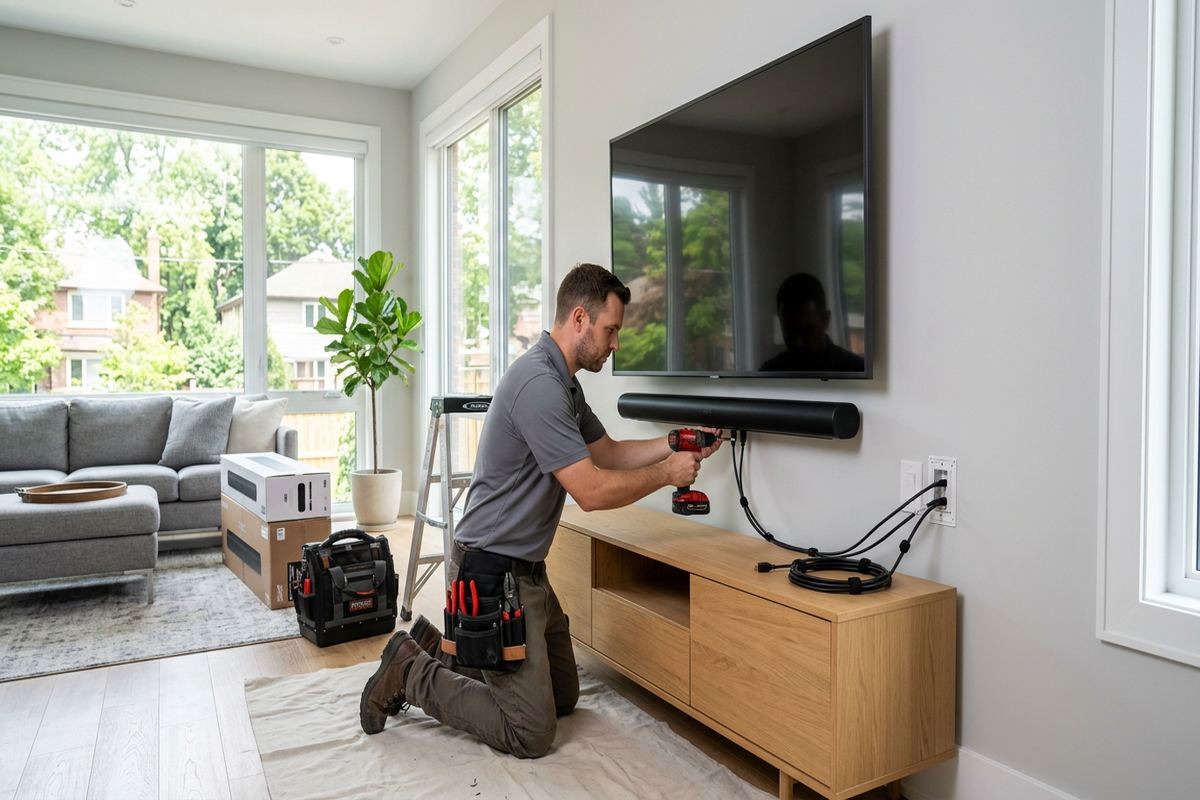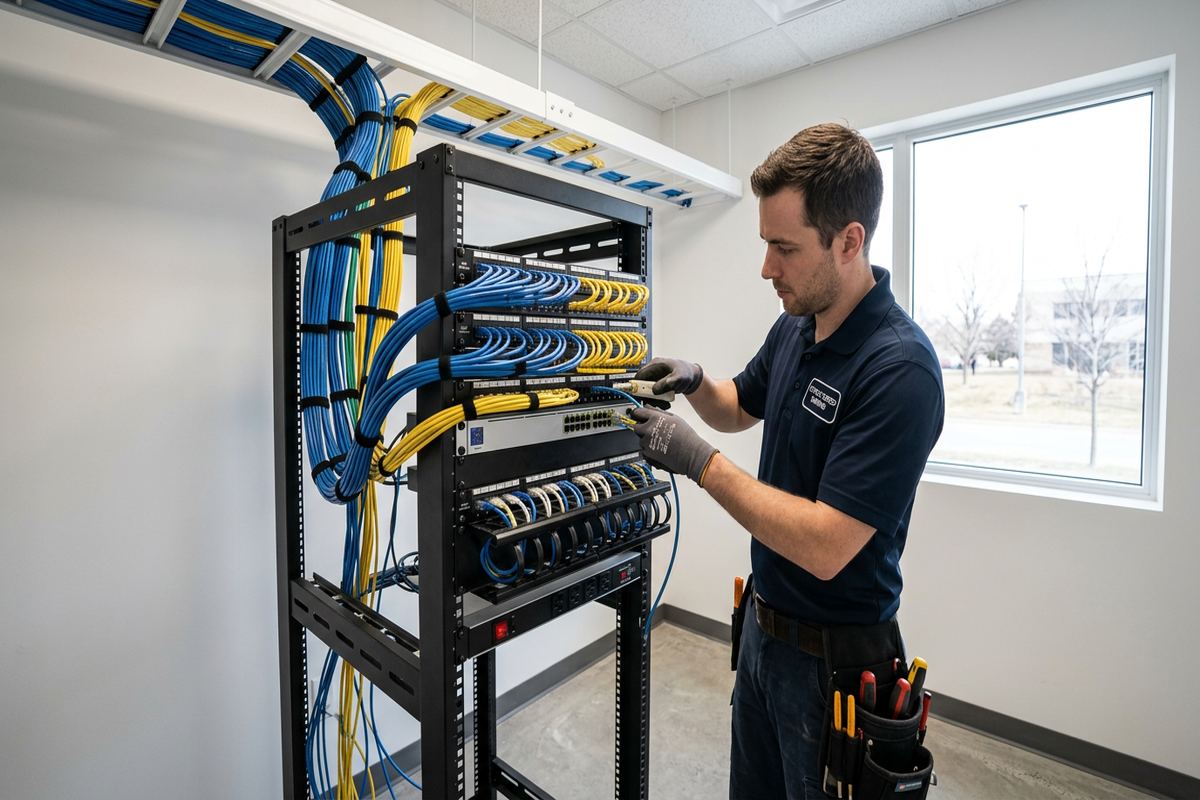
UnifiedLink installs outdoor security cameras for homes, commercial properties and industrial units in Brockville. We assess sightlines, lighting, construction materials, cable routes and network capacity before defining the work. Each installation is planned for Eastern Ontario weather, practical identification coverage and discreet placement, with particular care around masonry, heritage details and exposed riverfront locations.
Outdoor Camera Planning for Brockville Properties
A useful outdoor camera system begins with the reason for recording, not with a device count. During a Brockville site assessment, we identify entrances, vehicle approaches, gates, loading areas, side passages and other points that need coverage. Viewing distance, target direction, available light and likely movement determine camera position and lens choice. This avoids installing wide views that show plenty of property but too little facial or vehicle detail. The resulting plan separates general awareness views from locations where identification evidence may be required after an incident.
Brockville properties vary considerably, so mounting methods must suit the building rather than follow a standard template. Stone heritage homes in Downtown Brockville can require low-impact routes that avoid unnecessary drilling through visible masonry or decorative trim. Frame homes in North Brockville and Centennial may offer attic, soffit or basement paths, although each route still needs inspection. Riverfront properties can have exposed elevations, reflected light and fewer sheltered mounting points. We account for those conditions while keeping cameras accessible enough for future cleaning, adjustment or replacement.
The assessment also establishes how recordings will be stored and viewed. Depending on the property, cameras may connect to a local network video recorder, compatible existing recorder or another approved platform. We review retention goals, camera resolution, available storage, internet dependence and remote-access expectations before specifying equipment. Network capacity and power availability are checked rather than assumed. Before pricing, UnifiedLink provides a written scope covering equipment, cable routes, device placement, exclusions, equipment ownership and warranty, giving the Brockville property owner a defined installation plan rather than an open-ended estimate.
- Entrance, driveway and perimeter coverage planning
- Camera views matched to identification needs
- Network, power and storage assessment
- Written scope before installation
Weather-Ready Camera Mounting in Brockville
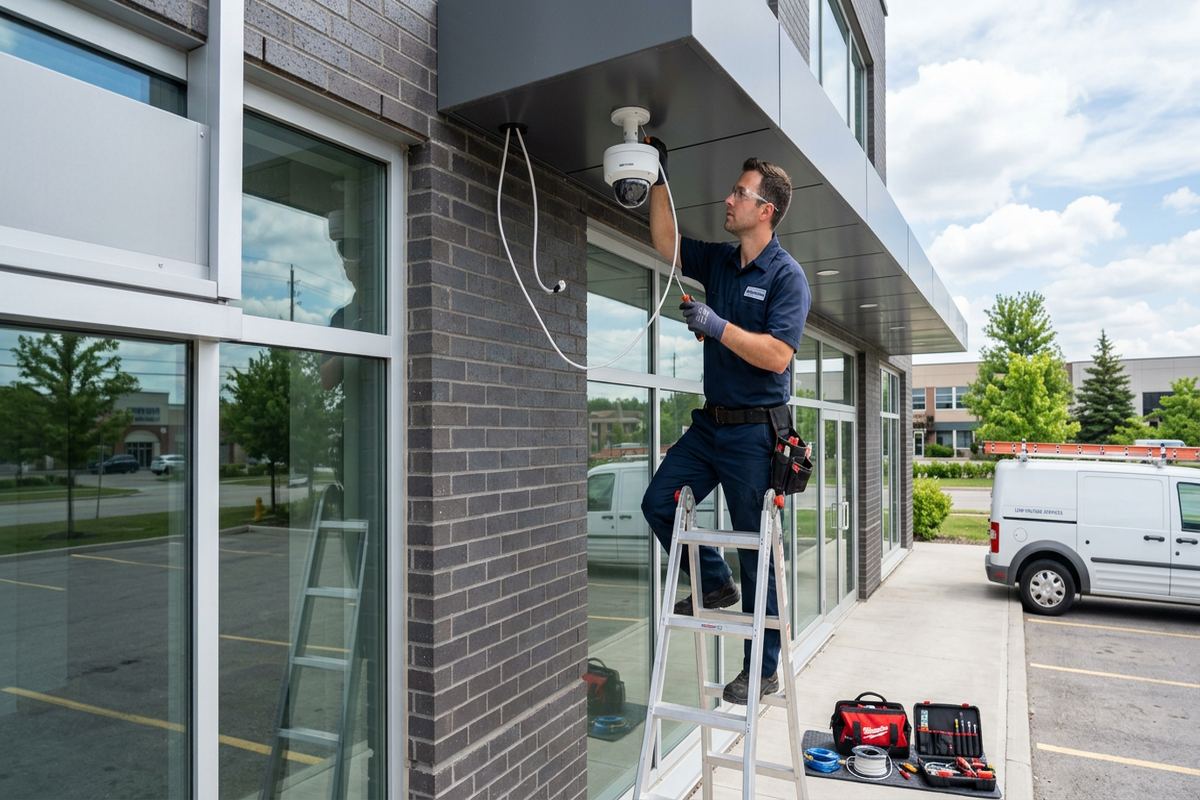
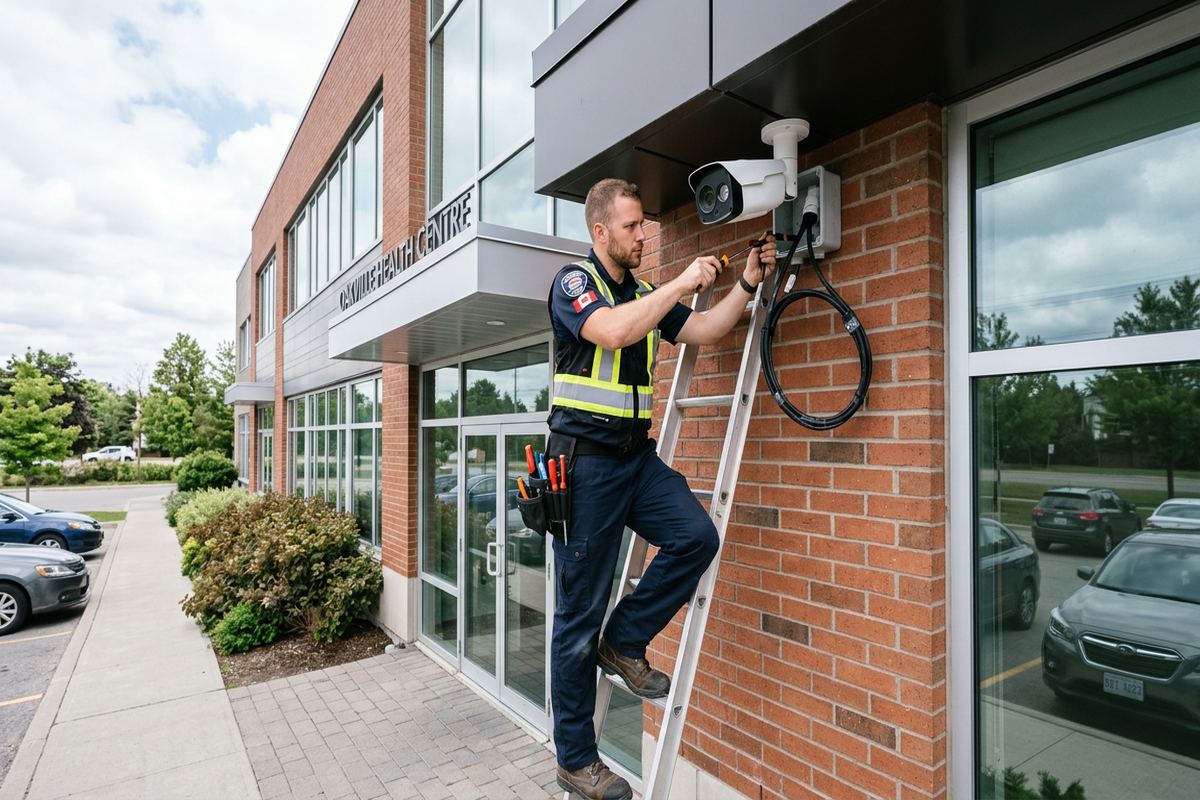
Eastern Ontario winters place real demands on exterior equipment and connections. Camera bodies may be outdoor-rated, but reliability also depends on junction boxes, cable entries, fasteners, drip paths and sealing details. Freeze-thaw movement can expose weak penetrations, while wind-driven rain and snow can reach poorly protected connectors. For Brockville installations, we select mounting locations that provide useful views without leaving terminations unnecessarily exposed. Exterior cable entries are sealed using materials appropriate to the surface, and connections are enclosed so routine weather does not directly reach plugs, couplers or unfinished cable ends.
Mounting height involves a practical balance. A camera placed too low may be easily reached or blocked, while one mounted too high can capture mostly hats, vehicle roofs or the tops of heads. We consider the subject distance and angle before drilling. On riverfront properties, glare from water, shifting sunlight and open wind exposure can change an otherwise straightforward view. The installation plan may use sheltered wall positions, adjusted fields of view or separate overview and identification cameras rather than forcing one device to cover every purpose. Vegetation and seasonal snow storage are considered as well.
Condensation and water entry often begin at small installation details rather than through the camera housing itself. Exterior-rated cable, compatible glands, protected junctions and downward-facing entries help control those risks. Cable should not be stretched across siding, left unsupported or routed where ice can pull against it. We also avoid relying on sealant as the only means of supporting a device. Mechanical fastening must suit the wall, soffit, pole or structural backing. Once mounted, each Brockville camera is aimed and tested on site under available conditions, with adjustments recorded during commissioning.
- Exterior-rated cameras and cable components
- Protected connectors and junction boxes
- Surface-appropriate fasteners and sealing
- Views checked for snow and glare
Masonry, Heritage and Frame Construction
Older stone and brick buildings require deliberate routing because an easy cable path can cause permanent visual or material impact. In Downtown Brockville, we look first for existing service routes, utility spaces, rear elevations and less prominent transition points. Where masonry penetration is necessary, the route, fastener type and sealing method are selected for the actual substrate and condition. Cameras are positioned to limit disruption to heritage character while still producing useful evidence. We do not assume that every stone wall has the same composition, cavity or safe drilling location, particularly around repaired or weathered sections.
Frame construction offers different opportunities but still needs inspection. Soffits may appear suitable while concealing limited access, loose panels, insulation or no structural backing. Vinyl and aluminium siding should not carry camera loads without an appropriate mounting method. Routes through garages, basements or attics must avoid electrical hazards, heat sources, sharp edges and areas where future maintenance could damage cable. In North Brockville and Centennial, a concealed interior route may be practical, but the assessment confirms access before it is included. Exterior conduit can be specified where concealed cabling is unavailable or unsuitable.
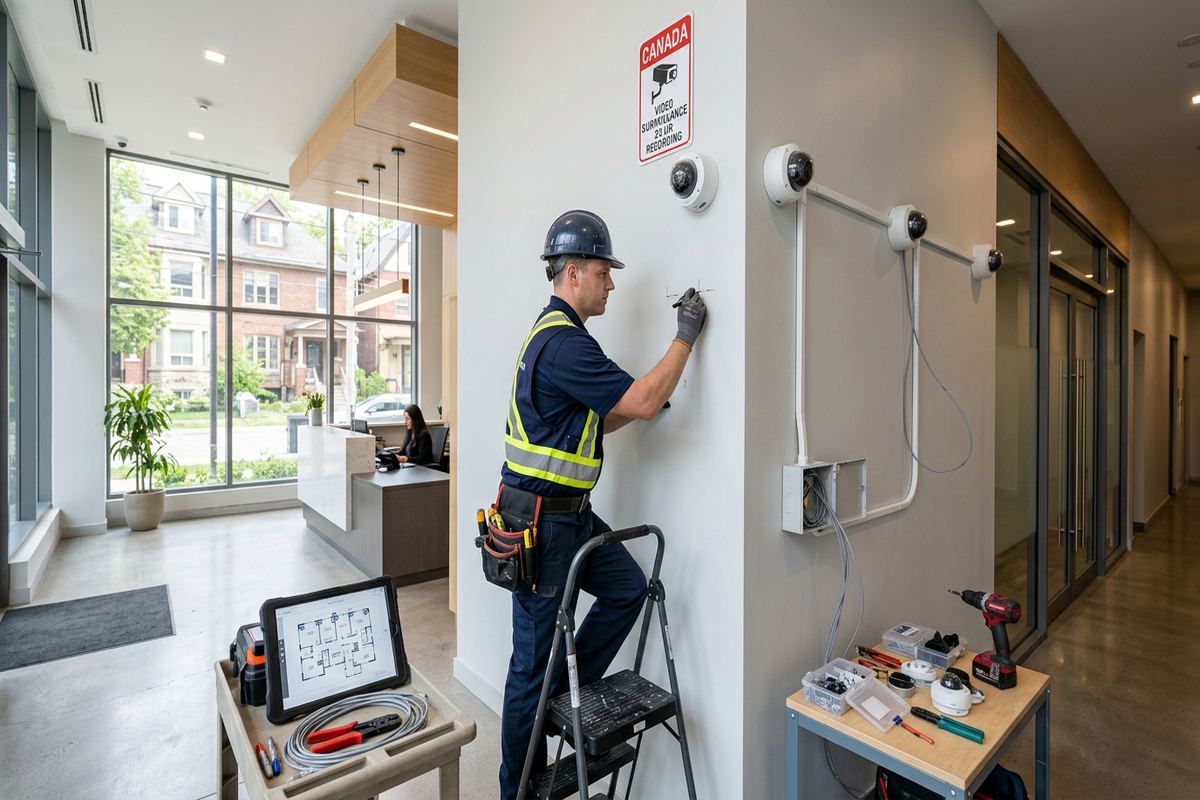
Low-impact work also means planning how equipment can be serviced later. A camera installed above fragile trim, steep roofs or inaccessible masonry may create unnecessary maintenance difficulty even if its initial view looks acceptable. We assess ladder access, cleaning needs, nearby trees and the possibility of future façade repairs. Continuous labelled cable runs are installed between defined endpoints, avoiding concealed intermediate couplers that complicate troubleshooting. Penetrations are kept orderly and limited to the agreed routes. The as-built record identifies camera locations and cable destinations, helping future owners or contractors understand the completed system without exploratory work.
- Discreet routes for stone façades
- Mounting matched to wall construction
- Structural backing checked before fastening
- Labelled cable endpoints documented
Brockville, Ontario
Outdoor camera installation in Brockville, scoped in writing first
Book a site assessment and get equipment, routes, exclusions, and warranty on paper before anything is installed.
Camera Coverage for Homes and Riverfront Properties
Residential coverage should support everyday use without unnecessarily recording neighbouring private areas. Typical Brockville priorities include the main entrance, driveway, detached garage, side access and rear doors. Camera placement is adjusted to the actual property boundaries, approach paths and lighting rather than copied from a generic diagram. Where practical, privacy masking or tighter fields of view can reduce irrelevant coverage. Doorbell cameras, fixed exterior cameras and driveway views may work together, but overlapping devices should have distinct purposes. We explain what each view can identify and where blind spots or limitations will remain.
Riverfront homes can present open approaches, long setbacks and strong contrast between bright outdoor areas and shaded entrances. Reflections from the St. Lawrence River may also affect a view at particular times, while seasonal foliage can alter sightlines. A site assessment allows us to test practical camera positions and decide whether supplemental lighting, wider dynamic range or a second angle is appropriate. Mounting must also account for wind exposure and limited sheltered surfaces. The goal is stable, usable coverage without placing prominent hardware across architectural details or creating cable routes that dominate the exterior.
In neighbourhoods such as Rivers Edge and Butler's Creek, property layouts may include attached garages, fenced yards, walkways or shared sightlines that shape the plan. We discuss where motion notifications are valuable and where constant alerts from roads, trees or neighbouring activity would become distracting. Detection zones and schedules are configured on site using the selected platform’s supported features. Night testing checks for infrared reflection from soffits, walls, downspouts or nearby surfaces. Customers receive their own administrator credentials, rather than depending on an installer-controlled account, and are shown how to review recordings and manage access.
- Door, driveway and garage coverage
- Privacy-conscious fields of view
- Night image and reflection testing
- Motion zones configured on site
Commercial Outdoor Cameras in Brockville
Commercial sites need coverage tied to operating risks and daily procedures. For Brockville storefronts and commercial strips, that may include public entrances, rear delivery doors, parking areas, waste enclosures and service lanes. Industrial units may need loading bays, fenced compounds, overhead doors and vehicle approaches monitored. We review when each area is occupied, how staff enter, where deliveries wait and what image detail is needed. Camera positions should support incident review without interfering with signs, exterior lighting, awnings, doors or routine vehicle movement around the property.
Long buildings and multi-tenant units can require network and power planning beyond the camera itself. Cable distances, telecommunications rooms, switches, recorder location, rack space and backup power options are reviewed during assessment. If existing infrastructure is suitable, the scope can identify what will be retained and what requires replacement or expansion. New runs are continuous and labelled at both ends. Outdoor pathways may use conduit or approved transitions where interior access is not practical. The written scope also states exclusions, preventing assumptions about network upgrades, electrical work, lifts, trenching or repairs outside the agreed installation.
Image access should follow business roles rather than being shared through one general password. During commissioning, authorised users can be established according to the capabilities of the selected system. We configure recording, time settings, camera names and remote viewing on site, then verify that footage can be located and exported. The handover includes the customer’s own credentials and an as-built record. For landlords or tenants in Brockville commercial properties, equipment ownership and access responsibilities are documented so there is less ambiguity when leases change, staff leave or a recorder requires future service.
- Storefront, parking and delivery coverage
- Loading bay and yard monitoring
- Role-based user access where supported
- Recorder and network capacity review
Approvals, Privacy and Shared Properties
Permission should be confirmed before holes are drilled or cables are attached to shared building elements. Brockville condo owners may need approval from their condominium corporation for exterior cameras, doorbell devices, conduit or penetrations. Tenants should obtain written landlord permission and clarify whether equipment stays when the tenancy ends. Commercial occupants may also need property-management approval for façade work or cabling through common areas. UnifiedLink can define the proposed locations and routes in the written scope, giving the owner or manager concrete information to review before installation is scheduled.
Outdoor cameras should be aimed for a legitimate property-security purpose and limited to relevant areas where practical. A wide field of view is not automatically better if it records neighbouring windows, private yards or unrelated pedestrian activity. We can adjust camera angles, digital privacy masks and detection areas when supported by the equipment, but the property owner remains responsible for how the system is used. Audio recording requires separate consideration because legal and privacy implications differ from ordinary video. We identify whether microphones are present and can disable audio when it is unnecessary or not approved.
Shared driveways, townhouse layouts and mixed-use buildings require especially clear coverage decisions. One camera may see entrances used by several residents, customers or tenants, so access to recordings should not be treated casually. We discuss administrator accounts, user permissions and practical retention goals before commissioning. In Downtown Brockville, rear lanes and closely spaced buildings can create useful but narrow camera angles, while upper-floor routes may pass through common areas. Approvals and access arrangements need to be resolved before work begins, avoiding last-minute changes that compromise mounting, sealing or cable quality.
- Condo approval requirements identified
- Landlord permission confirmed before work
- Privacy masks configured where supported
- Equipment ownership stated in writing
Cabling, Network Setup and Recording
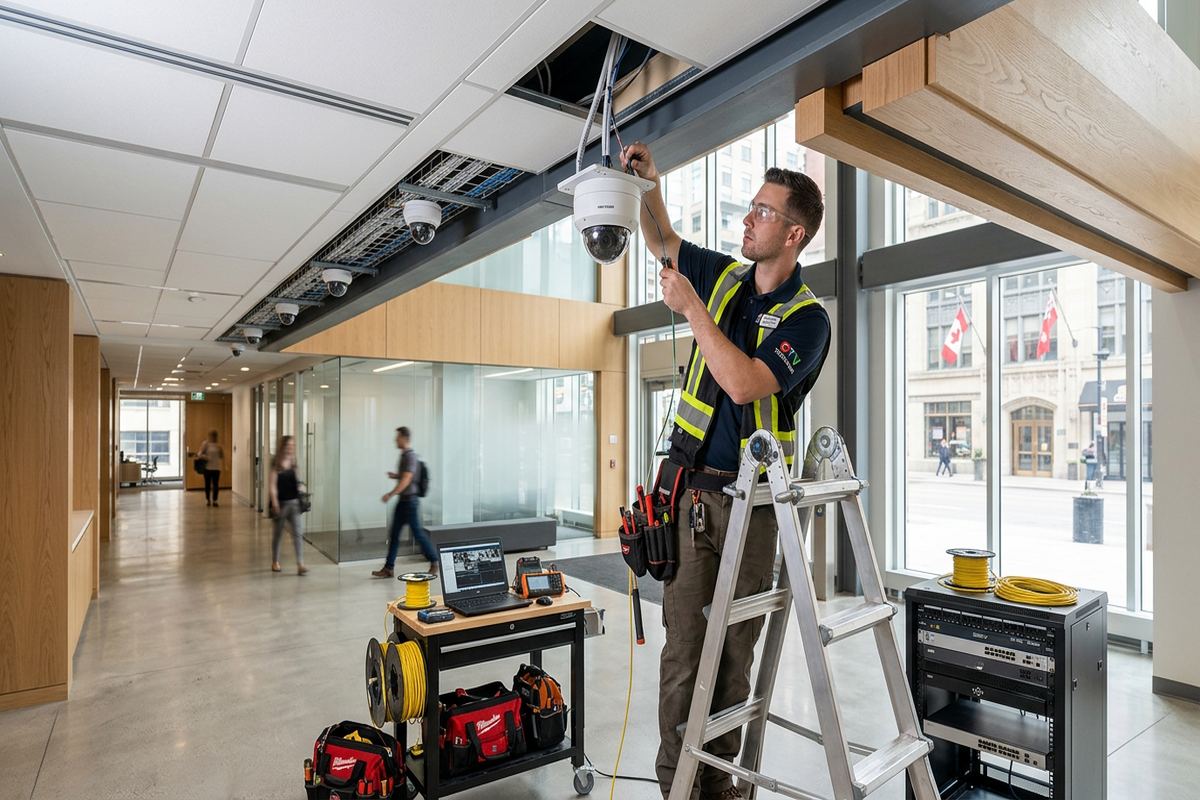
Outdoor IP cameras depend on the full connection between device, network and recorder. UnifiedLink installs continuous labelled cable runs rather than hiding couplers inside walls or inaccessible soffits. Cable type is selected for the environment, including exterior exposure where applicable, and supported along its route. At transitions, we protect the cable from sharp edges, water paths and avoidable strain. Inside the Brockville property, runs terminate at agreed network or recording locations. Labels identify each camera, making testing and future troubleshooting more direct. Any visible conduit or surface cabling follows the route documented in the scope.
Recording design is based on practical retention expectations, image settings and the number of cameras. Higher resolution, faster frame rates and continuous recording all affect storage use, so these choices are considered together rather than selected independently. We confirm whether the system records continuously, on motion or using a schedule, subject to platform capabilities. Internet service is generally needed for remote viewing but should not be confused with local recording. Where supported, a local recorder can continue storing video during an internet interruption, although remote access and notifications may be unavailable until connectivity returns.
Commissioning includes more than confirming that an image appears. Each camera is named, focused where adjustable, aimed to the agreed scene and checked during relevant lighting conditions. Recording playback, timestamps, motion events and export functions are tested on site. Remote applications are configured using accounts controlled by the customer, and administrator credentials are handed over securely. The as-built record lists device locations, cable destinations and core system information. This documented handover helps a Brockville homeowner, manager or future service provider understand what was installed without relying on an installer-owned login or undocumented settings.
- Continuous cable without hidden couplers
- Camera names and endpoints labelled
- Recording and playback tested
- Customer-controlled administrator credentials
Brockville Installation Process and Handover
The process starts with a request describing the property, desired coverage and any known construction or access constraints. Requests sent during business hours are answered the same day; after-hours requests are answered the next business day. Site assessment timing depends on the service and travel distance. At the Brockville property, we review target areas, mounting surfaces, interior pathways, network equipment, recording location and approval requirements. Photographs or plans may help, but they do not replace inspection where masonry condition, soffit access, cable distance or exterior exposure affects the installation method.
Following assessment, the written scope identifies equipment, cable routes, device placement, exclusions, equipment ownership and warranty. This is the basis for pricing and scheduling. If the building has stone walls, finished spaces, inaccessible ceilings or shared exterior elements, those conditions are addressed before work begins. Changes requested later are reviewed rather than improvised during drilling or cable pulling. With one accountable contractor handling camera mounting, low-voltage cabling, network connection and configuration, the system can be tested as a complete installation instead of leaving separate parties to resolve gaps between equipment and infrastructure.
At completion, we verify every agreed view, inspect exterior sealing, confirm recording and review operation with the customer. The owner receives their own credentials and an as-built record showing camera positions and cable destinations. We explain routine tasks such as cleaning lenses, checking recordings, managing users and reviewing alerts after seasonal changes. Brockville winters, spring freeze-thaw cycles and growing vegetation can affect views over time, so periodic visual checks are sensible. The handover also identifies any limitations noted during commissioning, including unavoidable blind spots, lighting constraints or areas excluded from the agreed scope.
- Site assessment before pricing
- Defined equipment and installation scope
- On-site aiming and configuration
- Credentials and as-built record provided
Brockville neighbourhoods we cover
- Downtown Brockville
- North Brockville
- Rivers Edge
- Butler's Creek
- Centennial
Outdoor camera installation in Brockville — common questions
Can cameras be installed on a stone Brockville home?
Yes, but the route and mounting method need to reflect the masonry’s condition and the building’s architectural details. For stone heritage homes in Brockville, we first consider existing openings, less visible elevations and alternative mounting surfaces. If masonry penetration is required, the proposed location, fastening and sealing method are defined before work. The aim is secure mounting with limited visual and physical impact.
Will outdoor cameras work through a Brockville winter?
Outdoor-rated equipment can operate in Eastern Ontario conditions when it is installed correctly. Reliability depends on more than the camera rating: connectors need protection, cable entries require appropriate sealing, and mounts must suit the surface. We also consider snow storage, ice, wind exposure and freeze-thaw movement. No installation eliminates every weather risk, so customers should inspect views and housings periodically after severe conditions.
Do I need condo or landlord approval?
Usually, approval should be confirmed whenever a camera, cable, conduit or penetration affects an exterior or shared building element. Brockville condo owners should check condominium rules and obtain any required written authorization. Tenants should secure landlord permission and clarify who owns the equipment after the tenancy. We can provide proposed camera locations and cable routes in the written scope for review by the relevant owner or manager.
Can I view my Brockville cameras remotely?
Remote viewing is available when the selected camera system supports it and the property has suitable internet and network service. We configure supported applications on site using customer-controlled credentials. Local recording and remote access are separate functions; an internet outage may stop live remote viewing while a properly configured local recorder continues storing footage. Exact behaviour depends on the equipment, network design and recording platform included in the scope.
How many outdoor cameras does my property need?
The number depends on the areas requiring evidence, property layout, viewing distance, lighting and desired detail. A Brockville home may need separate views for an entrance and driveway because one wide camera cannot always identify both people and vehicles. Commercial properties often have additional delivery, parking or loading areas. We determine camera count during the site assessment rather than recommending a standard package without seeing the property.
What happens after the cameras are installed?
We aim and configure the cameras on site, verify recording and playback, test supported motion functions and review remote access. The Brockville customer receives their own administrator credentials and an as-built record identifying camera locations and cable destinations. We also explain routine operation, footage export and basic maintenance. Any known limitations, such as unavoidable blind spots, difficult lighting or excluded areas, are reviewed during handover.
Coverage in Brockville is confirmed against the address before we quote. See everything we install in Brockville or the province-wide outdoor camera installation page.