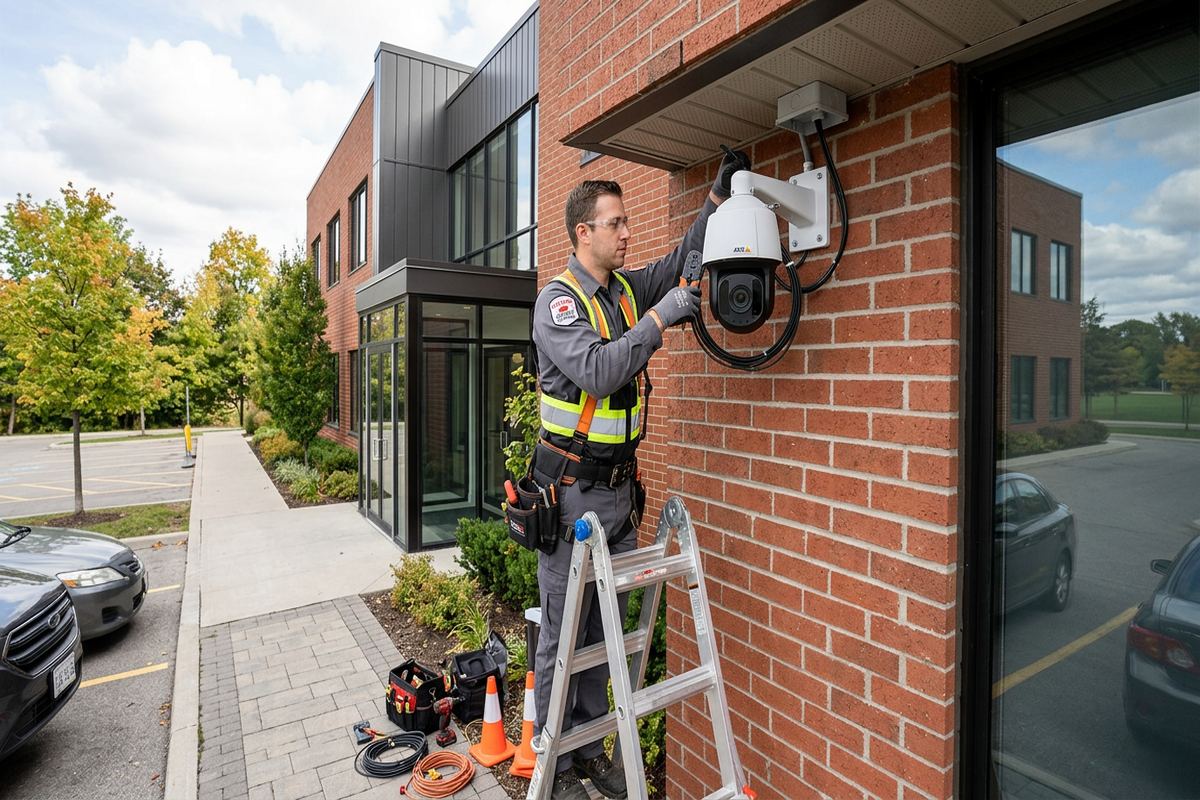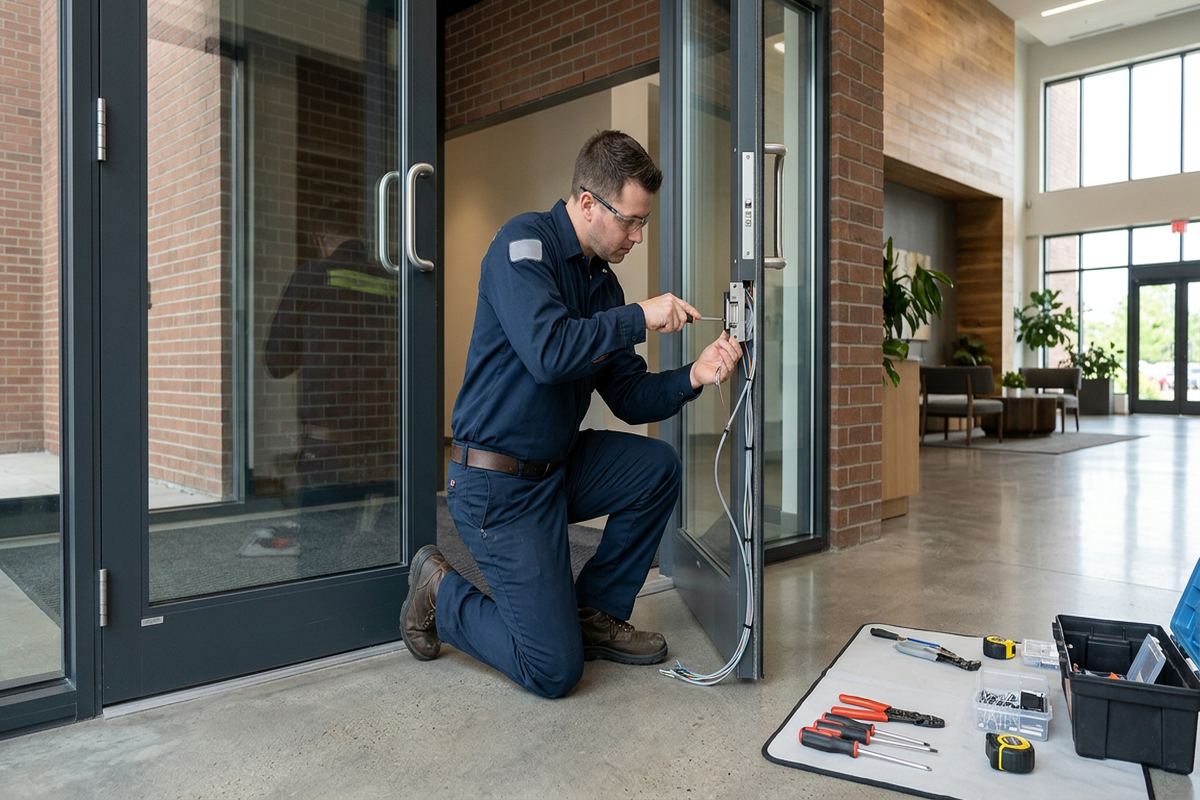
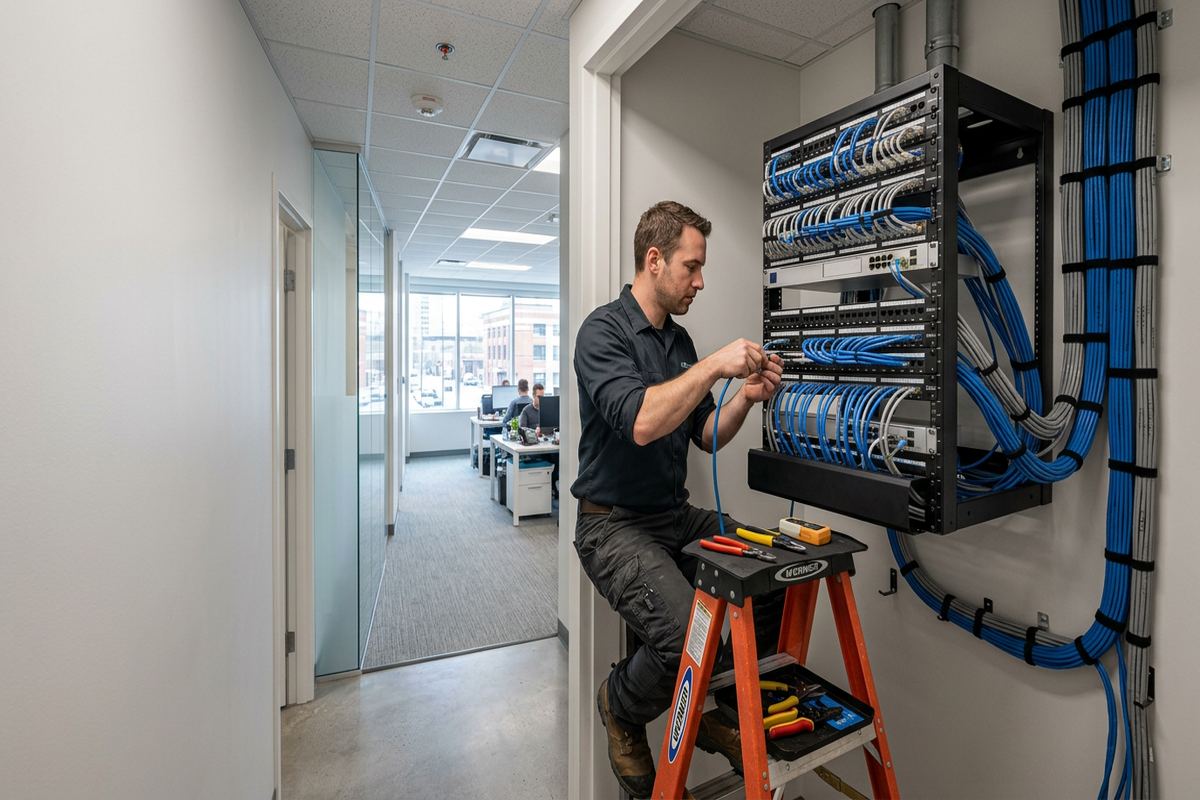
UnifiedLink installs structured cabling for homes, offices, shops, industrial units and multi-use properties in Brockville. We plan cable routes around the building, install continuous labelled runs, terminate and test each connection, configure network equipment on site, and provide an as-built record. Work can cover new construction, renovations, expansions and replacement of disorganized or outdated cabling.
Structured Cabling Planning for Brockville Properties
A structured cabling installation starts with understanding how the property is used, not simply counting outlets. During a site assessment, UnifiedLink reviews work areas, equipment locations, available pathways, construction materials and future connection needs. Brockville properties range from stone heritage homes near Downtown Brockville to newer frame construction in North Brockville and Rivers Edge. Those differences affect drilling, pathway access and mounting choices. The resulting plan identifies suitable cable types, termination points, rack or enclosure locations, wireless access point positions and practical routes through finished or unfinished areas.
Older buildings often contain several generations of telephone, coaxial and data wiring, sometimes with undocumented splices or abandoned cables. Existing wiring may be useful, but it should not be assumed suitable for current network speeds or Power over Ethernet devices. We inspect accessible pathways and identify where reuse, removal or replacement makes sense. In stone or solid masonry construction, surface raceway, basement routes and carefully selected penetrations may reduce disturbance. In frame construction, wall cavities and attic spaces can provide concealed routes when access, insulation and vapour barriers allow appropriate installation.
Before pricing, UnifiedLink completes a site assessment suited to the requested work and travel distance. The written scope covers equipment, cable routes, device placement, exclusions, equipment ownership and warranty. This gives a Brockville homeowner, landlord or business operator a clear basis for reviewing the proposed installation. It also helps prevent assumptions about patch panels, network switches, cabinets, electrical work, wall repairs or internet service. Where a condo board, landlord or property manager controls common areas, penetrations or risers, required approvals should be confirmed before installation is scheduled.
- Site assessment before project pricing
- Review of pathways, materials and existing wiring
- Planned outlet, rack and device locations
- Written scope with routes and exclusions
- Approval requirements identified before installation
Cabling for Homes Across Brockville
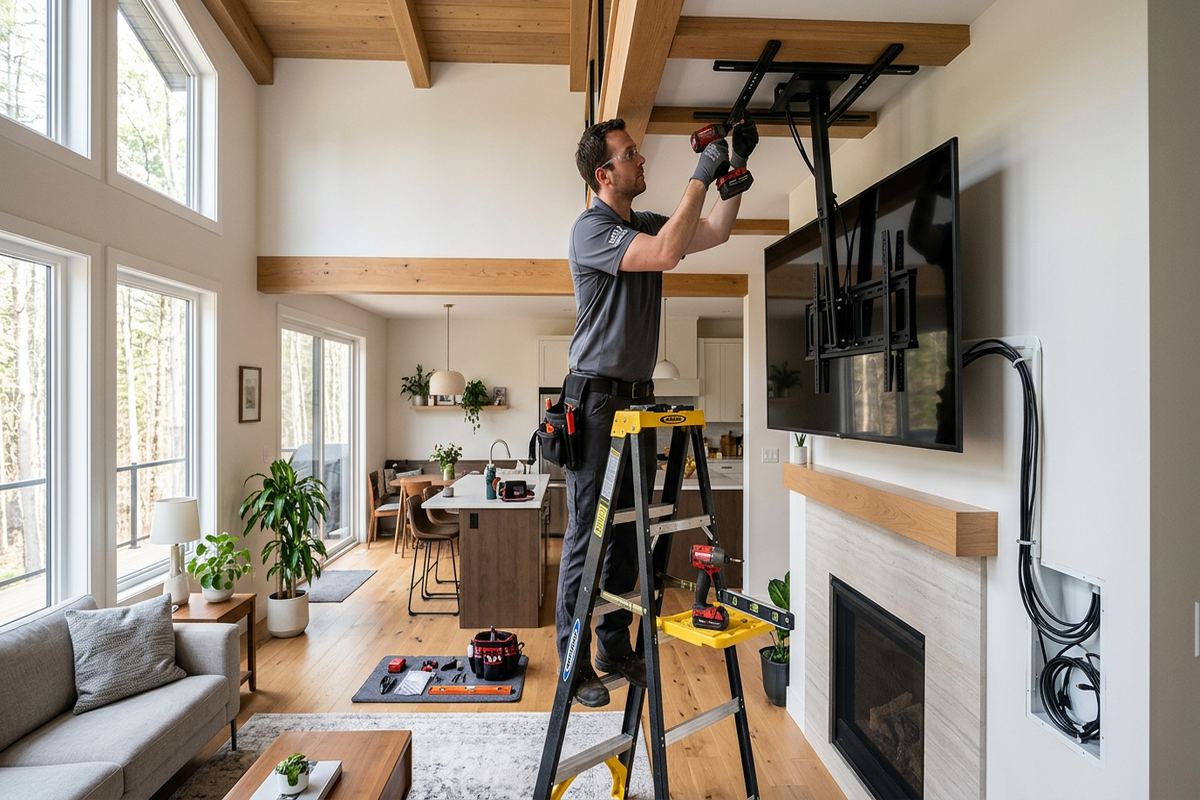
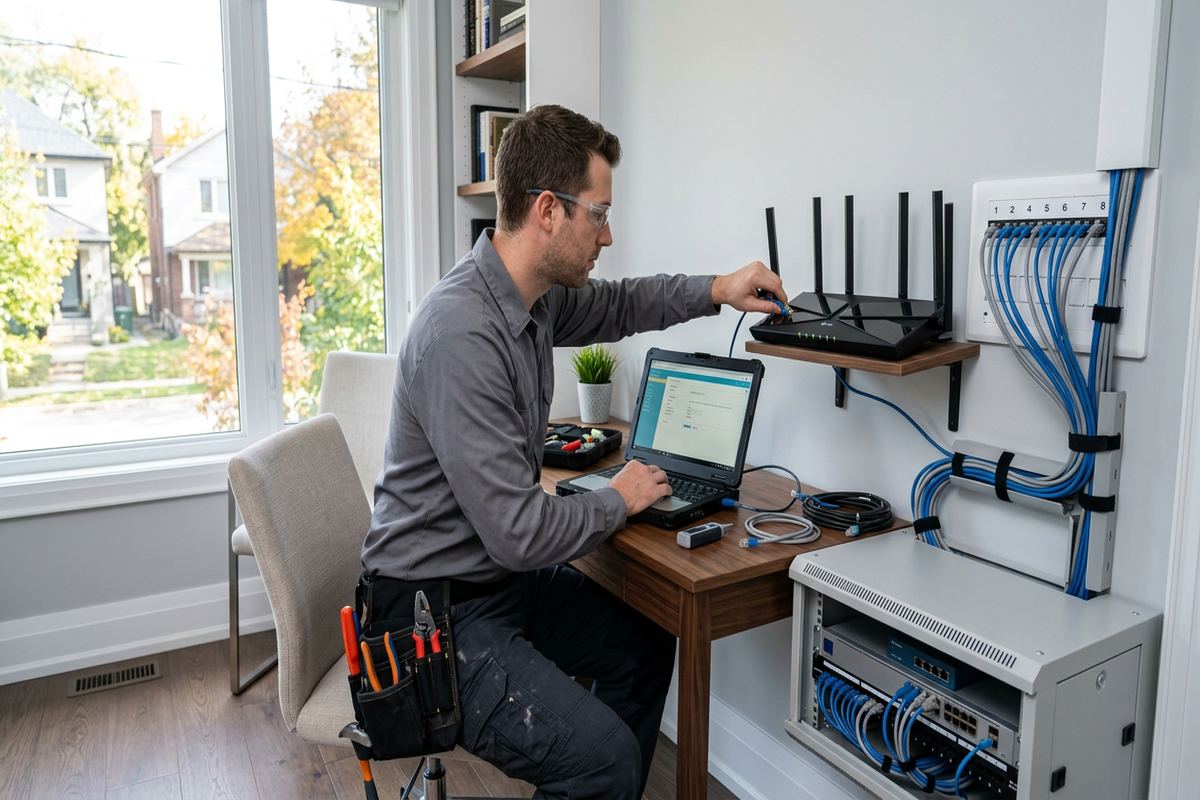
Home networks now support more than desktop computers. Televisions, wireless access points, cameras, door stations, workspaces, audio equipment and smart-home controllers may all benefit from dependable wired connections. In Brockville homes, we plan a central termination area with enough space, ventilation and power access for the modem, router, switch and patch panel. Runs are placed according to actual device locations rather than distributed evenly without purpose. This approach reduces visible patch cords, avoids reliance on wireless connections where cable is practical, and makes later troubleshooting considerably more orderly.
Renovation timing can make a substantial difference to routing options. Open walls and ceilings allow cables to be installed with less surface work, while finished stone heritage homes call for discreet, low-impact mounting. Basement joist spaces, utility rooms, closets and existing chases may offer useful paths, but every route must be checked for electrical separation, moisture and physical protection. Around Butler's Creek and Centennial, additions or converted rooms can also create changes in construction from one section to another. Cable routes are adjusted rather than forcing one method throughout the property.
Riverfront properties require particular attention to exterior exposure, moisture pathways and equipment placement. Any exterior cable should be rated for its environment, supported correctly and routed to avoid locations where snow, ice or runoff can pull or damage it. Penetrations must be appropriately sleeved or sealed so freeze-thaw movement and wind-driven moisture do not create an entry point. Indoor terminations should remain in dry, accessible locations rather than against damp foundation areas. These details support a serviceable installation without using conspicuous exterior routes that detract from the building.
- Home office and entertainment connections
- Wired links for access points and cameras
- Central patch panel or network enclosure
- Discreet routes in finished living areas
- Exterior-rated cable where exposure requires it
Business Structured Cabling in Brockville
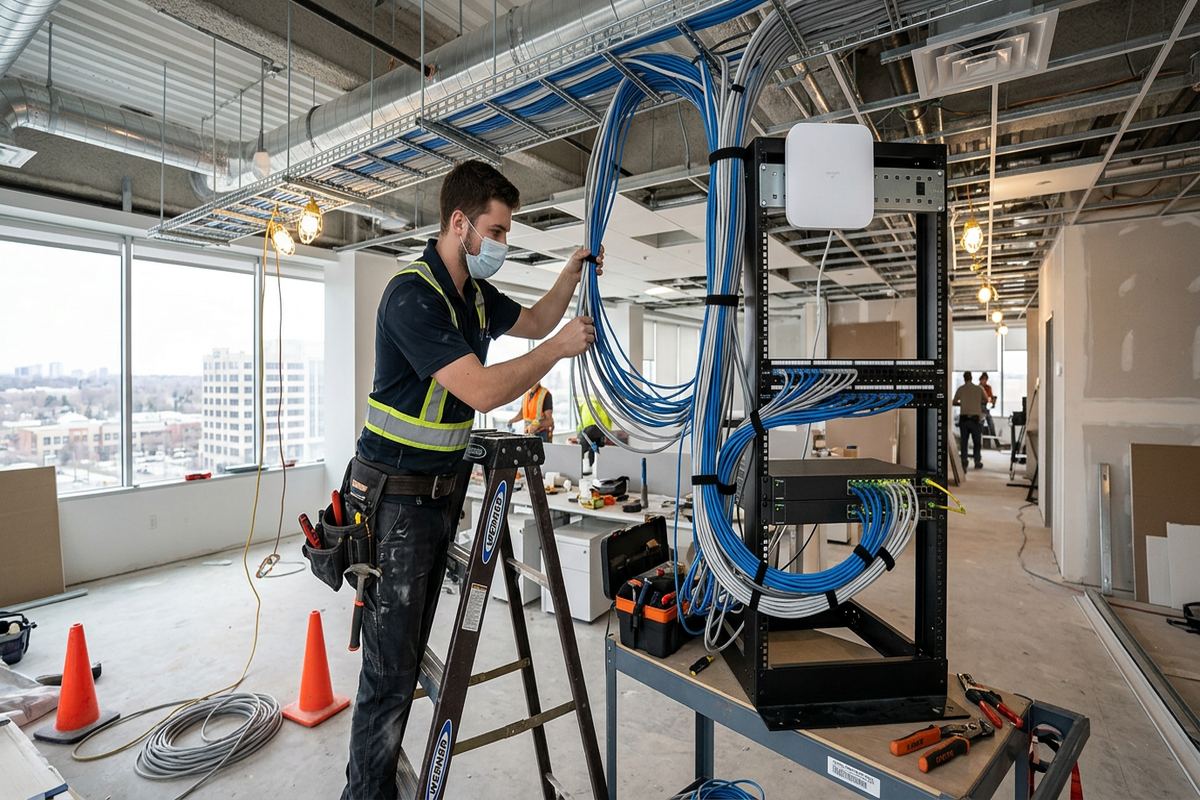
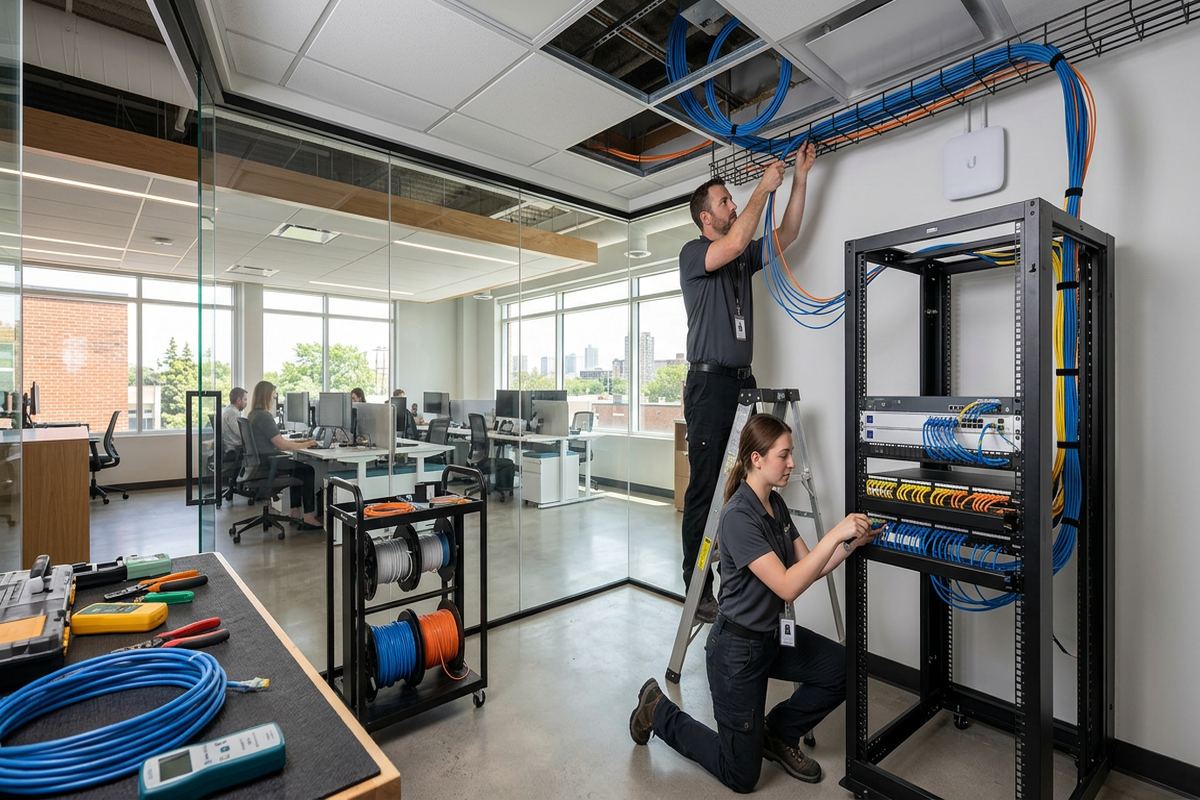
Commercial cabling must reflect daily operations, equipment density and the possibility of layout changes. UnifiedLink installs data runs for desks, phones, printers, wireless access points, cameras, access control equipment, displays and other networked devices. In Downtown Brockville storefronts and offices, limited ceiling access or shared walls may require coordinated routing and compact termination locations. Commercial strips may offer suspended ceilings but still require attention to fire separations, neighbouring units and landlord rules. Each run is labelled at both ends and connected to an organized patching point.
Industrial units present different conditions from offices or homes. Longer pathways, high ceilings, exposed structure and areas subject to impact may require tray, conduit, protective supports or carefully placed drops. Cable selection and routing should account for electrical equipment, motors, lighting systems and other potential sources of interference. Network cabinets need enough clearance for patching and maintenance without obstructing production or storage. Where a Brockville unit combines a front office, warehouse and exterior devices, we divide the route into practical zones and document how each section connects to the central network.
Business work is planned to limit unnecessary interruption, although access and sequencing depend on the building and project scope. Existing racks and patch panels are reviewed before new connections are added, since crowded or unidentified infrastructure can make even a small expansion difficult to support. We distinguish active cables from abandoned ones and identify dependencies that should not be disturbed. For tenant improvements, responsibilities for pathways, equipment and restoration are documented. One accountable contractor manages the agreed cabling work, configuration and handover, reducing gaps between the installer, customer and other project participants.
- Office, retail and industrial data cabling
- Connections for phones, cameras and access control
- Organized racks, cabinets and patch panels
- Coordination with landlords and project trades
- Documented active and abandoned infrastructure
Brockville, Ontario
Structured cabling installation in Brockville, scoped in writing first
Book a site assessment and get equipment, routes, exclusions, and warranty on paper before anything is installed.
Cable Routes in Masonry and Frame Buildings
Construction type determines which cable route is practical and how much visible work may be necessary. Solid stone and masonry walls cannot be treated like hollow drywall partitions. Drilling locations need to consider wall thickness, finishes, concealed services and the visual effect on the property. For Brockville's stone heritage homes, we first look for basement paths, service chases, cabinetry, trim lines or unobtrusive raceway locations. Low-impact mounting may preserve original materials while still placing outlets where devices can be connected without long cords across floors or doorways.
Frame buildings often permit concealed cable runs, but access is not automatic. Insulation, blocking, vapour barriers, plumbing and electrical wiring can interrupt an otherwise direct path. Exterior walls should be approached carefully to avoid unnecessary disturbance to air and moisture control layers. Attic routes also require proper support and separation rather than laying cable loosely over insulation. When a finished route cannot be concealed responsibly, a neat surface raceway may be preferable to repeated exploratory openings. The proposed method is explained during scoping so the expected appearance and limitations are understood.
Mixed construction is common in renovated buildings, additions and converted commercial spaces. A route may begin in an open basement, cross a thick foundation wall, pass through a frame addition and finish above a suspended ceiling. Each transition needs suitable support and protection. Penetrations through fire-rated assemblies or shared tenant separations may also require specific treatment by the appropriate trade. UnifiedLink records the agreed pathway and identifies exclusions where wall repair, hazardous material work, electrical service or specialized restoration falls outside the structured cabling scope. This keeps installation responsibilities clear.
- Routes matched to wall construction
- Low-impact options for heritage finishes
- Supported pathways through attics and basements
- Raceway where concealed access is unsuitable
- Clear treatment of pathway transitions
Exterior Cabling and Brockville Winters
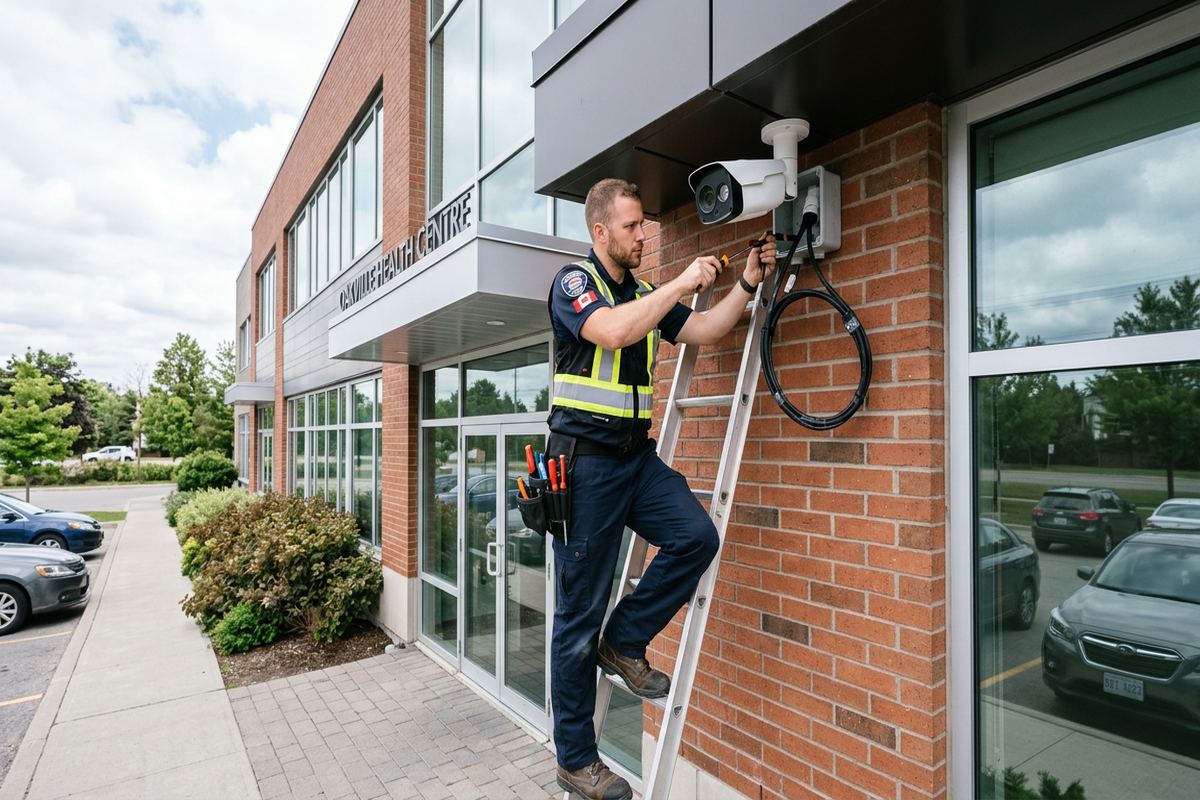
Exterior network links may serve cameras, detached structures, wireless access points, gates or other devices, but indoor cable should not be placed outside simply because the route is short. Exposure to sunlight, moisture and seasonal temperature changes calls for cable and hardware suited to the environment. Brockville winters add snow loads, ice and repeated freeze-thaw cycles around mounting points and penetrations. Routes should avoid downspouts, roof drainage, snow-clearing areas and low points where water can collect. Supports must hold the cable without crushing it or leaving loose sections to move in wind.
A wall penetration is part of the building envelope and should be planned accordingly. We select an entry location that allows an appropriate downward approach or drip loop where applicable, then sleeve or seal the opening for the wall material and exposure. Stone, brick, siding and poured concrete each require different drilling and fastening considerations. Sealant alone does not correct a poorly chosen route. On riverfront properties, discreet mounting must also account for wind-driven moisture and visible elevations, balancing service access with a low-impact appearance that suits the property.
Detached garages, workshops and outbuildings require a review of distance, pathway and electrical conditions before copper data cable is selected. In some circumstances, fibre or a properly designed wireless bridge may be more suitable, particularly where electrical grounding differences or cable length create concerns. Underground routes need an approved pathway and cable suitable for the installation environment; shallow, unprotected burial is not an acceptable substitute. The written scope identifies the connection method, customer-supplied infrastructure and any trenching, conduit, electrical or restoration work that is excluded from UnifiedLink's cabling work.
- Outdoor-rated cable and compatible hardware
- Sealed entries for masonry and siding
- Routes protected from snow and runoff
- Options for detached buildings
- Defined trenching and conduit responsibilities
Termination, Labelling and Network Testing
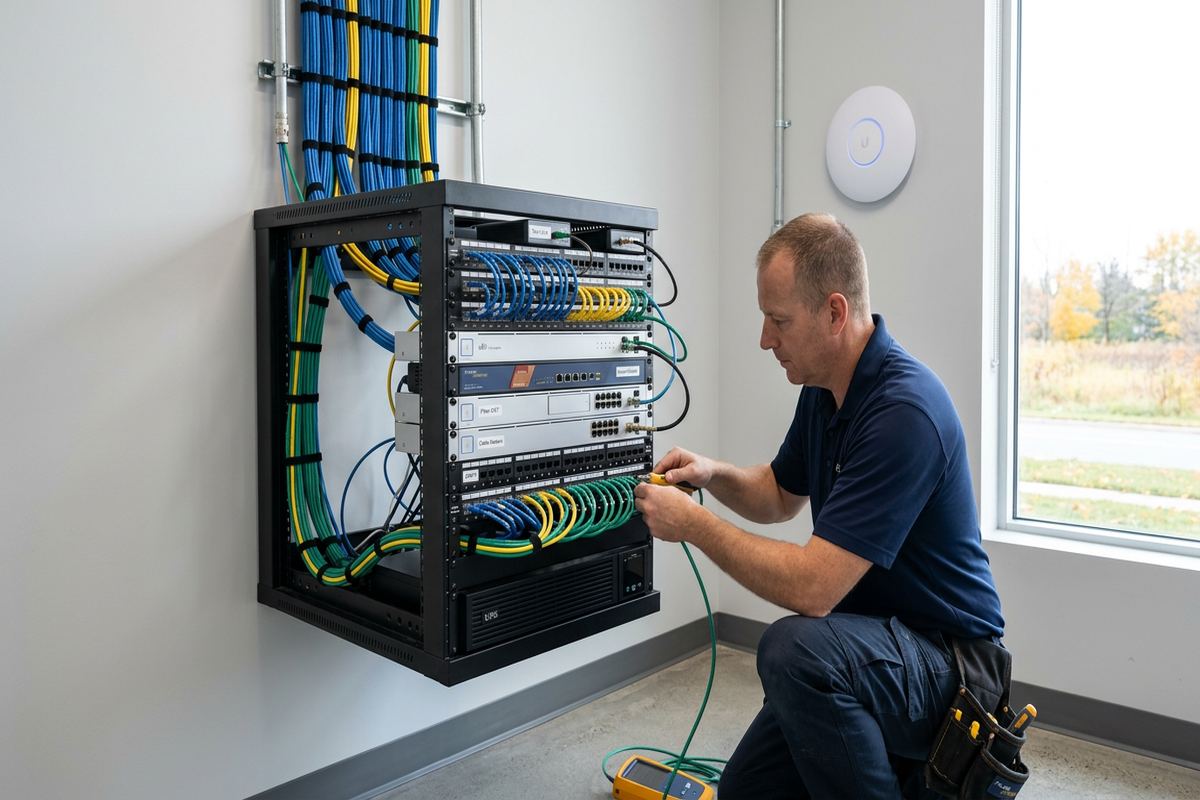
Good cabling remains understandable after ceilings close and furniture moves. UnifiedLink installs continuous labelled cable runs between the agreed outlet and termination point, avoiding undocumented splices that complicate testing and repair. At the central location, runs terminate on a suitable patch panel or enclosure rather than becoming an unorganized bundle. Labels correspond at both ends and are reflected in the as-built record. Patch cords can then connect only the required services, allowing a Brockville property owner or future technician to identify circuits without tracing every cable from the beginning.
Testing checks the installed link rather than relying on whether a connected device happens to work. The appropriate test approach depends on the cable category, connectors, length and project requirements. Results can identify termination faults, incorrect wire mapping, excessive distance or physical damage before the connection is handed over. Fibre links require their own termination, cleaning and test procedures. Any required level of formal test documentation should be established in the written scope, especially for commercial projects where an IT provider, consultant, tenant or equipment vendor has defined acceptance requirements.
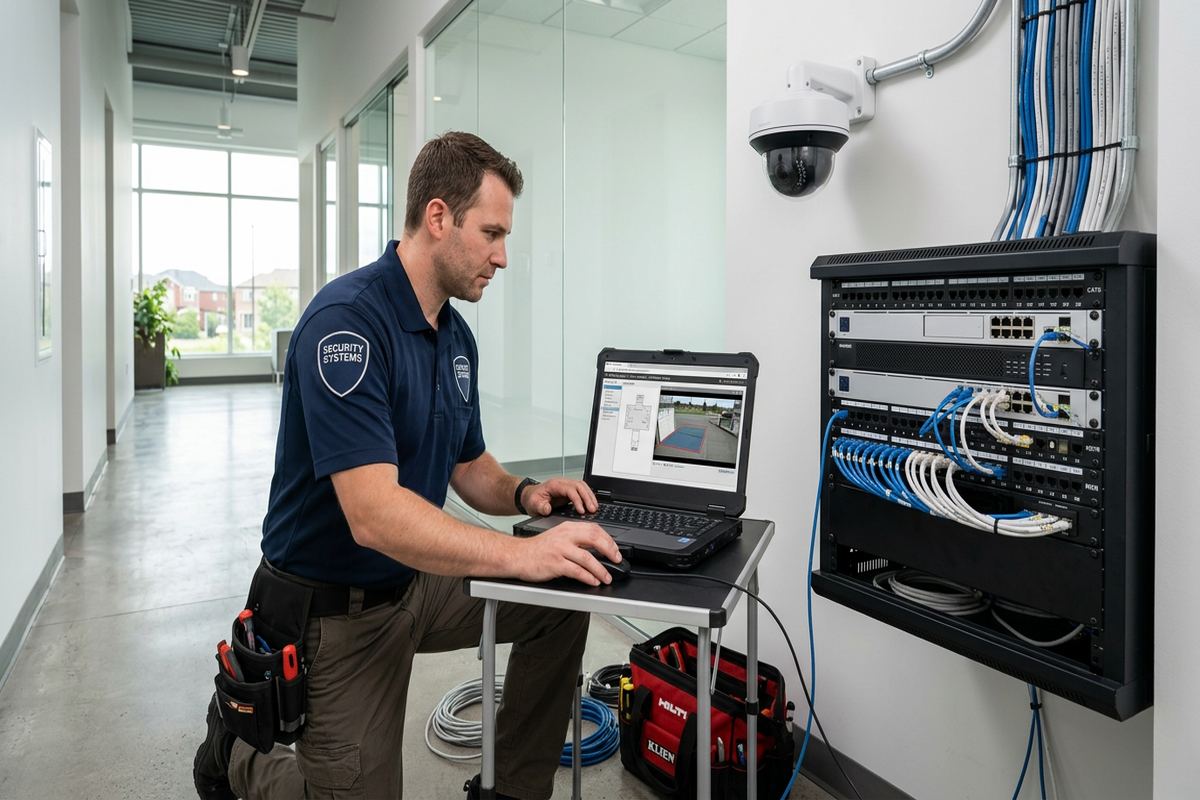
On-site configuration connects the physical cabling to the agreed network equipment and intended services. This may include patching switch ports, setting up supplied wireless access points or confirming that connected devices obtain network access, depending on scope. Internet service, software subscriptions and third-party systems remain distinct from the cable installation unless specifically included. Handover uses the customer's own credentials rather than installer-controlled accounts. UnifiedLink provides an as-built record showing outlet identifiers and termination details, helping Brockville customers manage later moves, additions and troubleshooting without depending on undocumented installer knowledge.
- Continuous runs without hidden splices
- Labels matched at both cable ends
- Patch panels arranged for service access
- Testing appropriate to the installed medium
- Customer credentials and as-built record
Upgrading Existing Brockville Network Cabling
Slow or unstable connectivity is not always caused by the internet provider. Damaged terminations, improvised extensions, unsuitable cable, overloaded wireless coverage and poorly located equipment can produce similar symptoms. An assessment separates cabling issues from router, switch, device or service problems before replacement is proposed. In Brockville homes and businesses, we inspect accessible runs, termination quality and network layout, then identify which components can remain. Selective replacement may be practical when pathways and cables are sound, while widespread undocumented work may justify a more systematic reorganization.
Expansion should be planned around both immediate connections and realistic future changes. Adding a few spare runs to an accessible area during renovation can be more practical than reopening finishes later, but unnecessary outlets and oversized equipment add complexity without benefit. We discuss likely workspace changes, wireless coverage, cameras, displays, access control and internet equipment before finalizing quantities. In North Brockville homes, this may mean supporting a basement workspace and ceiling access points. In a Downtown Brockville business, the priority may instead be flexible desk positions, point-of-sale equipment and tenant-specific patching.
Removal of abandoned cable depends on accessibility, ownership and the effect on occupied spaces. Cables serving another tenant, security system or building function must not be removed without confirmation. Where old wiring remains, it can be separated and identified so it does not obscure active infrastructure. Rack cleanup may include rerouting patch cords, replacing damaged terminations and updating labels within the agreed scope. For leased or condominium properties, the customer should obtain permission before changes to common rooms, risers, exterior walls or shared pathways. Approval conditions can then be incorporated into the installation plan.
- Assessment of cabling and network layout
- Selective replacement where practical
- Capacity planning for likely additions
- Identification of active and abandoned runs
- Approval planning for shared property areas
From Brockville Site Assessment to Handover
The process begins with a request describing the property, connection needs and known building constraints. Requests sent during business hours are answered the same day; after-hours requests are answered the next business day. Site assessment timing depends on the service and travel distance. At the property, UnifiedLink reviews device locations, cable pathways, construction, equipment space and access restrictions. Photos, drawings or renovation plans can help, but they do not replace checking actual conditions where route feasibility depends on finished walls, masonry, shared areas or concealed building services.
After assessment, the written scope sets out equipment, cable routes, device placement, exclusions, equipment ownership and warranty. Customers can review whether patch panels, cabinets, switches, wireless equipment, fibre components or surface raceway are included. The document also identifies assumptions about access, power, internet service, ceiling tiles, furniture movement and restoration. For Brockville commercial or rental properties, landlord requirements and permitted work hours should be settled before scheduling. If site conditions change after walls open or inaccessible areas become visible, the route and scope can be reviewed before additional work proceeds.
Installation concludes with termination, labelling, applicable testing and on-site configuration included in the scope. The customer receives control through their own credentials, not an account retained by the installer. An as-built record identifies cable runs and termination points for future reference. We review the installed arrangement and note any customer actions, third-party work or excluded items that remain. With one accountable contractor for the agreed work, Brockville homeowners and businesses have a defined contact for the cabling installation, equipment configuration and handover rather than separate responsibility for each stage.
- Same-day business-hours request response
- Assessment timing based on service and travel
- Detailed written scope before work
- Installation, configuration and documented handover
- One contractor accountable for agreed work
Brockville neighbourhoods we cover
- Downtown Brockville
- North Brockville
- Rivers Edge
- Butler's Creek
- Centennial
Structured cabling installation in Brockville — common questions
Can you run network cable through a Brockville stone home?
Yes, subject to accessible and suitable routes. Stone heritage homes may need basement pathways, existing chases, cabinetry routes or discreet surface raceway instead of extensive drilling. UnifiedLink assesses wall construction and finishes before proposing a route. The written scope identifies visible sections, penetrations and exclusions so the owner can review the expected appearance before installation begins.
Do I need landlord or condo approval?
Approval may be required when cabling crosses common areas, enters a shared communications room, penetrates an exterior wall or changes a building-controlled pathway. Brockville tenants and condominium owners should confirm requirements with the landlord, property manager or board. UnifiedLink can document the proposed routes and mounting locations, but the customer remains responsible for obtaining property approvals before work is scheduled.
Can you reuse the cabling already installed?
Existing cable can sometimes be reused if its type, route, condition, length and terminations suit the intended network. We do not assume a working link is suitable for every speed or Power over Ethernet device. A Brockville site assessment can identify practical reuse, selective replacement and abandoned wiring. Any testing or retermination included in the project is defined in the written scope.
How do you protect exterior cable during Brockville winters?
Exterior routes use cable and hardware appropriate to the exposure, with supports positioned away from drainage, snow-clearing areas and locations prone to ice movement. Entries are selected and sealed for the wall material, whether stone, brick, concrete or siding. Freeze-thaw conditions, wind-driven moisture and service access are considered during route planning, particularly for riverfront properties and detached structures.
Will I receive labels and network documentation?
Yes. UnifiedLink installs continuous labelled runs, with identifiers corresponding at the outlet and patching location. Handover includes an as-built record showing the installed termination details. On-site configuration uses the customer's own credentials. If a Brockville commercial project requires a particular test report format, port schedule or drawing standard, that requirement should be included in the written scope before installation.
When can you assess my Brockville property?
Requests sent during business hours are answered the same day, while after-hours requests are answered the next business day. The timing of a Brockville site assessment depends on the requested service and travel distance. During the visit, UnifiedLink reviews construction, pathways, device positions, equipment space and approvals. Pricing follows the assessment and is based on a written scope rather than assumptions about hidden conditions.
Coverage in Brockville is confirmed against the address before we quote. See everything we install in Brockville or the province-wide structured cabling installation page.