UnifiedLink installs commercial alarm systems for Brockville offices, shops, warehouses, multi-unit properties and other business sites. We assess the building before pricing, then define sensors, keypads, signalling, cable routes and responsibilities in writing. Installation accounts for local masonry, older construction, winter conditions, exterior sealing and the operating needs of each property.
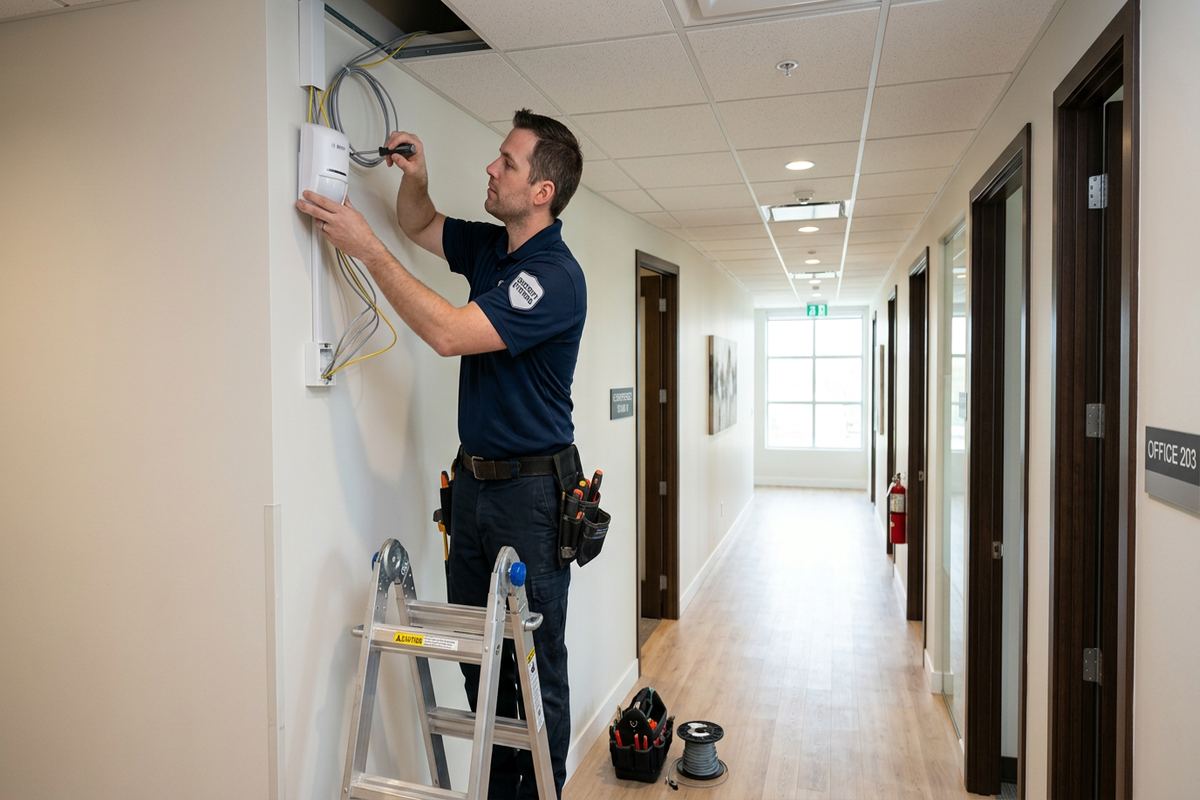
Commercial Alarm Planning for Brockville Properties
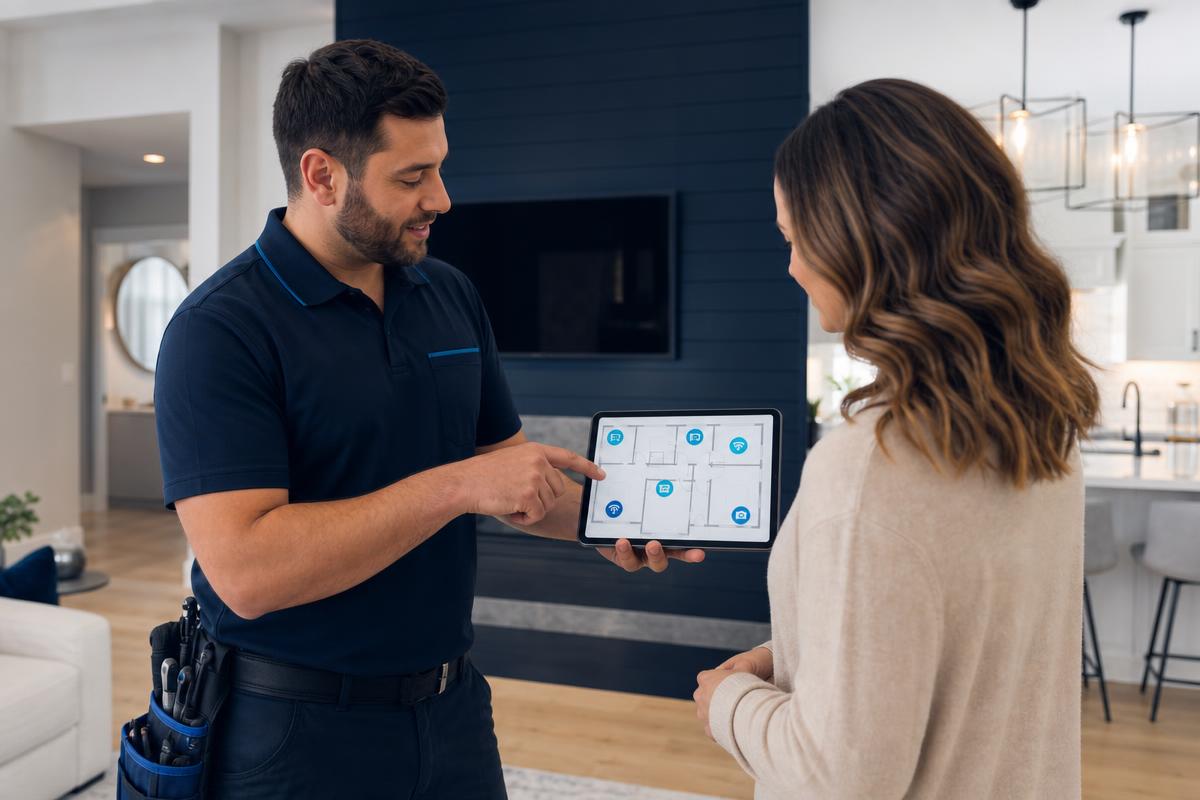
A commercial alarm installation should begin with how the Brockville property is used, not with a standard equipment package. We review entrances, public areas, staff-only rooms, loading points, windows, roof access and spaces containing valuable equipment or records. Operating hours, cleaning schedules, deliveries and authorized users all affect the design. The assessment also identifies likely false-alarm sources, available communications, power locations and practical cable routes. This produces a system that supports daily operations while giving staff clear ways to arm, disarm and respond to events.
Building construction changes the installation approach. Downtown Brockville properties may contain thick stone or brick walls, finished ceilings, older additions and limited pathways between floors. North Brockville offices, commercial strips and newer units may use steel studs, suspended ceilings or shared service spaces. We determine where wired devices are practical, where wireless components may reduce disruption and where surface raceway is more appropriate than opening finishes. Penetrations are planned carefully, especially around masonry, storefront glazing and fire-rated assemblies, so the alarm work does not create avoidable damage or maintenance problems.
Before pricing, UnifiedLink completes a site assessment suited to the service and travel distance. The resulting written scope identifies the proposed equipment, device placement, cable routes, exclusions, equipment ownership and warranty. It also clarifies whether monitoring, permits, telephone service, cellular service, internet connectivity or electrical work must be arranged separately. That detail gives Brockville owners, landlords and facility managers a practical basis for comparison. It also reduces uncertainty when a project includes occupied offices, multiple tenants, restricted work periods or areas that cannot be interrupted during normal business operations.
- Entry, window and interior risk review
- Operating schedules and user requirements
- Wired, wireless and hybrid system options
- Defined cable routes and device locations
- Written exclusions and ownership terms
Alarm Devices and Detection Coverage in Brockville
Effective detection comes from combining devices according to the actual paths an intruder could use. Door contacts provide clear perimeter status, while motion detectors add interior coverage after an entry point is breached. Glass-break detection may suit exposed storefront windows, and hold-up devices can support businesses handling controlled goods or sensitive transactions. We position each component around room geometry, shelving, partitions, heating sources and staff movement. In Brockville commercial premises, this often means treating front customer areas, rear service doors, stockrooms and upper-floor access as distinct alarm zones.
Device selection also needs to reflect environmental conditions. Unheated vestibules, loading bays, detached storage areas and riverside locations may expose equipment to temperature swings, moisture or condensation. A sensor intended for a stable office may not perform properly in those spaces. We review product operating ranges and mounting surfaces before specifying equipment. Exterior devices require suitable ratings, secure attachment and carefully sealed penetrations. Freeze-thaw cycles around Brockville can enlarge weak gaps, admit water and loosen poorly chosen fasteners, so sealing and mechanical support are treated as installation details, not cosmetic finishing.
Alarm zones should provide useful information rather than a single general signal. Separate zoning can distinguish a front entrance from a rear door, office movement from warehouse activity, or one tenant area from another. This helps authorized users interpret events and can simplify partial arming when employees remain in selected spaces. Zone names are written in plain language and matched to the final record. Where compatible equipment is selected, event notifications and user permissions can also be configured by role, allowing management to control access without sharing one code among every employee.
- Door and overhead-door contacts
- Motion and glass-break detection
- Hold-up and panic devices where appropriate
- Environmental review for exposed spaces
- Clear zone names and event descriptions
Wired, Wireless and Hybrid Alarm Options
Choosing between wired and wireless equipment depends on access, finish requirements, expansion plans and the condition of the building. Continuous wired connections are often appropriate during renovations, in open industrial units or above accessible ceilings. Wireless devices can reduce disruption in finished offices, leased premises and stone buildings where new pathways would be intrusive. A hybrid panel can combine both approaches. UnifiedLink does not assume one format is universally preferable; the recommendation follows the assessment, including battery service needs, signal paths, equipment compatibility and the customer’s plans for future layout changes.
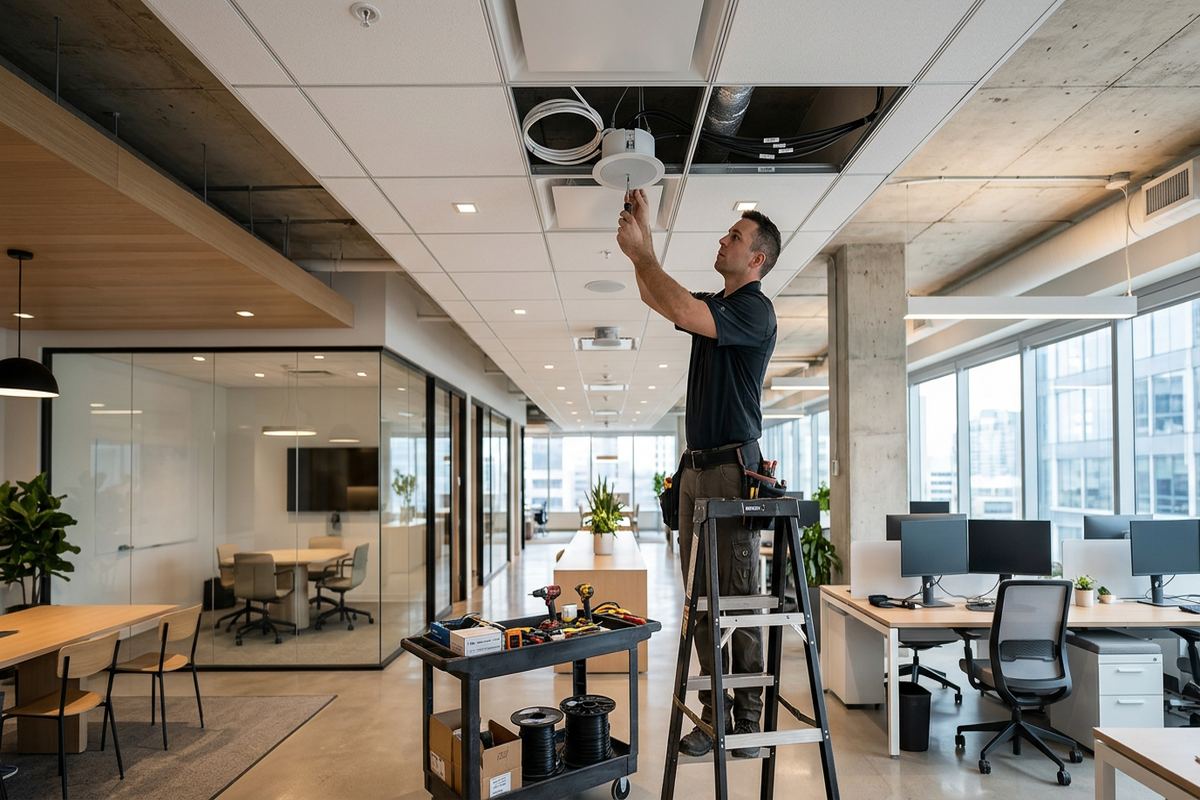
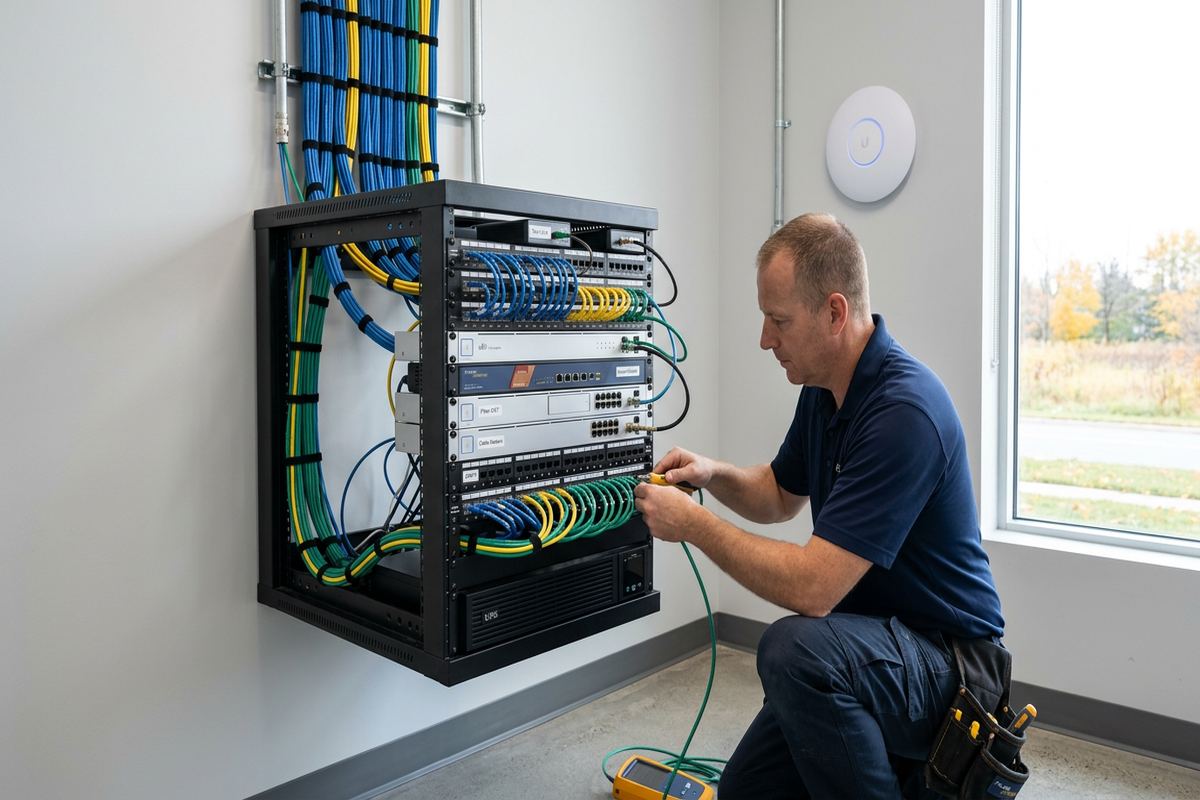
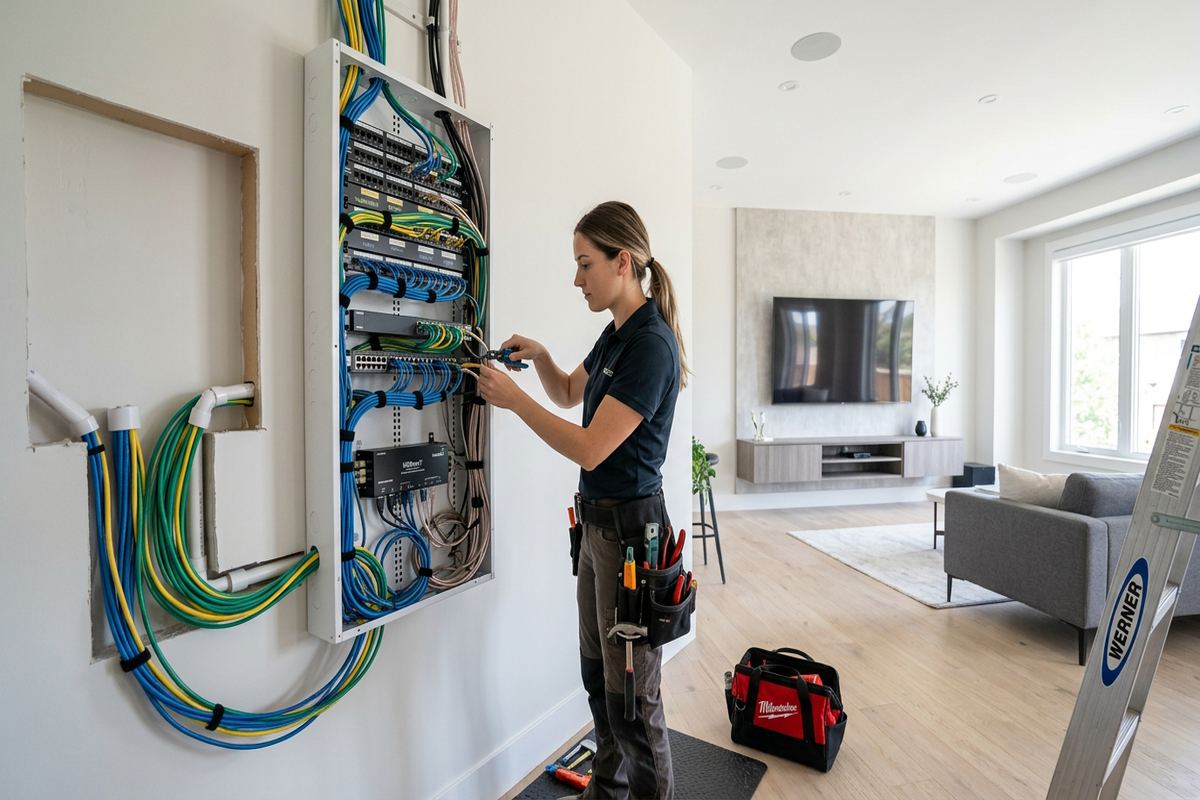
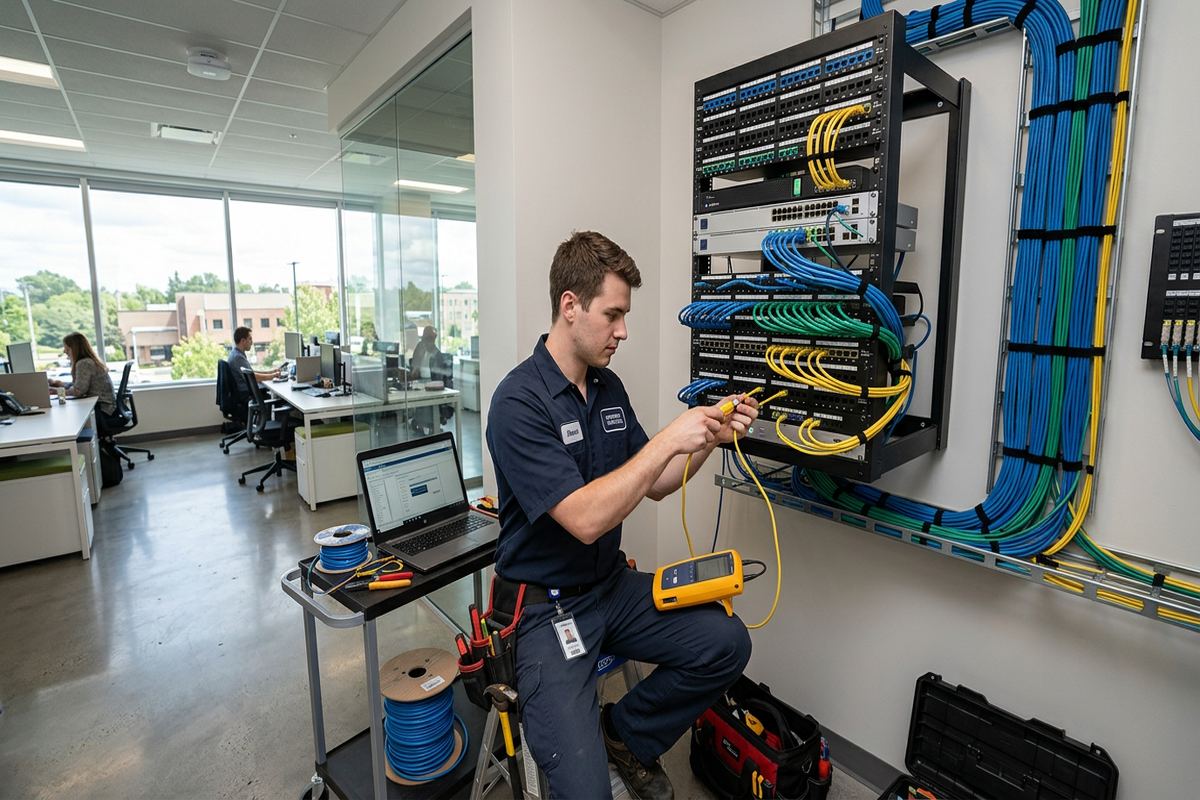
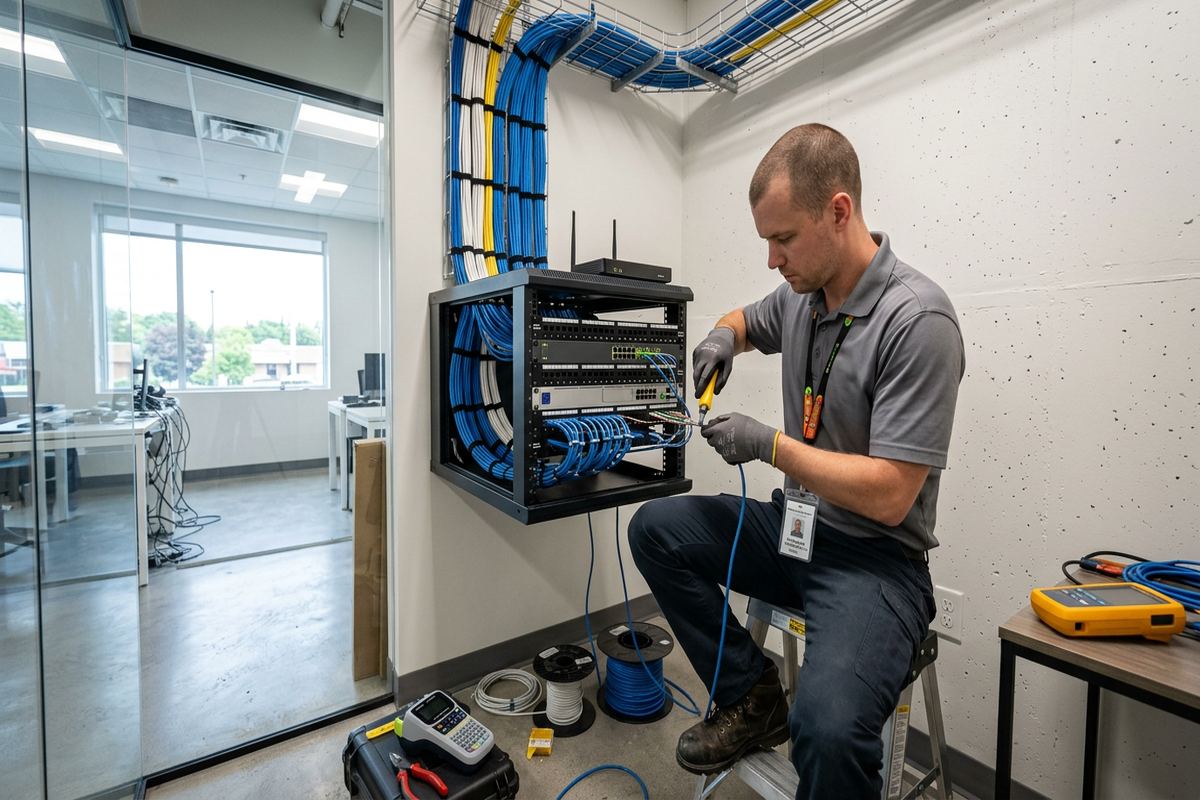
When cabling is installed, each run is continuous and labelled at the equipment end and device location. Routes are selected to avoid unnecessary exposure, interference and inaccessible junctions. In commercial strips or multi-unit buildings, pathways may pass near other tenants, shared ceilings or landlord-controlled rooms, so authorization must be confirmed before work starts. Cable support, bend radius and separation from electrical conductors are considered throughout installation. The objective is a serviceable system whose wiring can be traced later, rather than a collection of hidden splices that complicates troubleshooting or future expansion.
Wireless alarm equipment still requires deliberate planning. Masonry, metal shelving, reinforced walls, utility rooms and long floor plans can weaken or redirect radio signals. We verify proposed locations on site and account for changes that may occur when stock, machinery or partitions are added. Battery-powered devices also need an understood maintenance cycle, even when the control panel reports low-battery conditions. For Brockville heritage properties, wireless components can be useful for low-impact mounting, but they are selected only after confirming that communication is dependable across the required areas.
- Wired systems for accessible pathways
- Wireless devices for finished interiors
- Hybrid panels for mixed construction
- Continuous, labelled alarm cable runs
- Signal checks around masonry and metal
Brockville, Ontario
Commercial alarm system installation in Brockville, scoped in writing first
Book a site assessment and get equipment, routes, exclusions, and warranty on paper before anything is installed.
Discreet Installation for Older Brockville Buildings
Stone heritage homes adapted for professional use and older commercial buildings require restrained installation methods. Thick masonry can make concealed wiring difficult, while decorative trim, plaster and original woodwork may be inappropriate places for routine fastening. We look for existing service routes, basement or attic access, reversible mounting options and discreet surface pathways. Device coverage still matters, but placement can often be adjusted without making the equipment visually dominant. Any drilling into stone or mortar is considered in relation to the substrate, moisture exposure and the owner’s requirements before work proceeds.
Riverfront properties can present additional exposure to wind-driven rain, moisture and changing temperatures. Exterior contacts, sirens or communication equipment must be suitable for their locations, and penetrations need sealing that remains effective through Brockville winters. Fasteners are chosen for the mounting material rather than used interchangeably across stone, brick, concrete, wood and metal cladding. Cable entries should shed water instead of directing it toward the wall assembly. Where a device can be protected under an overhang or moved to a less exposed position without reducing coverage, that option is considered during planning.
Low-impact work also depends on permissions. A business operating from a condominium unit, leased storefront or managed commercial property may need approval for exterior devices, common-area cabling, visible raceway or penetrations through shared walls. Downtown Brockville projects can involve landlord standards or building-specific restrictions that must be understood before installation. UnifiedLink records known constraints in the scope, but the customer remains responsible for obtaining required landlord, condominium or property-management authorization. Confirming these conditions early avoids relocating devices after finishes have been disturbed or equipment has already been configured.
- Existing pathways used where practical
- Mounting suited to stone and brick
- Weather-sealed exterior penetrations
- Discreet raceway for finished spaces
- Approval checks for shared property
Alarm Communication and Monitoring Readiness
An alarm panel needs a reliable method to communicate events, whether it reports to a monitoring provider, sends supported notifications or serves as a local system. Available options depend on the selected equipment and services at the property. We review cellular coverage, network availability, telephone infrastructure where relevant, and the location of communication modules. Internet-dependent features also rely on the customer’s network and power continuity. The written scope distinguishes installation and configuration from third-party monitoring contracts, data plans or communication services, preventing assumptions about who supplies and maintains each part.
Monitoring arrangements should match the site’s contacts and response procedures. The business must decide who receives calls or notifications, who can attend the Brockville property, and how changes in staff are communicated to the monitoring provider. Opening and closing schedules, duress procedures and verification rules may also affect configuration. UnifiedLink can prepare compatible alarm equipment for the intended connection and configure supported reporting details on site, but monitoring acceptance depends on the chosen provider. Customers should confirm contract terms, cancellation requirements, event handling and any permit responsibilities directly with that provider.
Communication equipment should not be placed where it is easily disconnected or where radio performance is poor. Panels, cellular modules, network interfaces and backup batteries need accessible but controlled locations with suitable environmental conditions. In industrial units, utility rooms can contain electrical noise, dust or equipment that obstructs signals. In storefronts, publicly accessible back rooms may offer insufficient protection. We assess these trade-offs and document the final location. Where the alarm depends on customer network equipment, responsibilities for router changes, passwords, internet outages and future information-technology support are made clear.
- Cellular and network pathway review
- Monitoring-provider compatibility checks
- Defined call lists and user contacts
- Protected panel and communicator locations
- Third-party service responsibilities documented
Commercial Alarm Installation Process in Brockville
Once the scope is accepted, installation is coordinated around access, occupants and business operations. Device locations are confirmed before drilling, and any site changes are discussed rather than improvised. Technicians install the panel, power components, contacts, detectors, keypads and communication hardware included in the agreement. Cable runs are supported and labelled, while visible pathways are kept orderly. Brockville shops and offices may require work around customer hours; warehouses may require coordination with loading activity, lifts or restricted zones. These constraints are identified during planning and reflected in the installation sequence.
Configuration takes place on site so zones, entry delays, arming modes and user functions correspond with actual movement through the property. A rear staff entrance may need a different delay from the public entrance, while a stockroom or office suite may remain armed independently. We test device activation, tamper conditions, audible outputs and supported reporting paths. Doors and overhead doors are checked in their normal operating positions. If building hardware is loose, misaligned or unsuitable for a contact, that condition is reported because reliable detection depends on the physical opening as well as the alarm device.
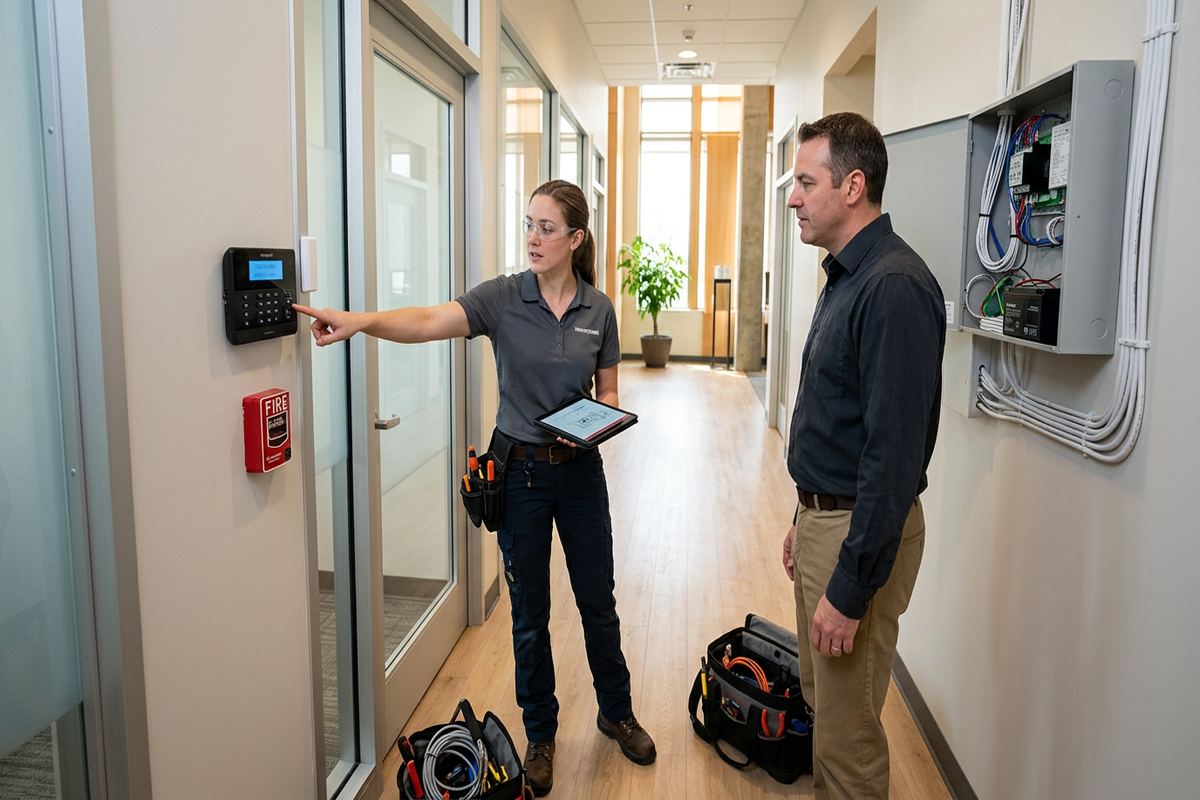
Handover is completed using the customer’s own credentials, not an installer-controlled account intended to remain in place. Authorized representatives receive practical guidance on arming, disarming, bypassing approved zones, acknowledging faults and managing users within the selected system’s capabilities. UnifiedLink also provides an as-built record showing the installed arrangement and labelled cable information available from the work. Equipment ownership and warranty follow the written scope. This approach gives the Brockville customer control of the system and a useful reference for service, staffing changes, renovations or later additions.
- Installation coordinated with business access
- Device positions confirmed before drilling
- Zones and delays configured on site
- Functional testing of installed components
- Customer-controlled credentials at handover
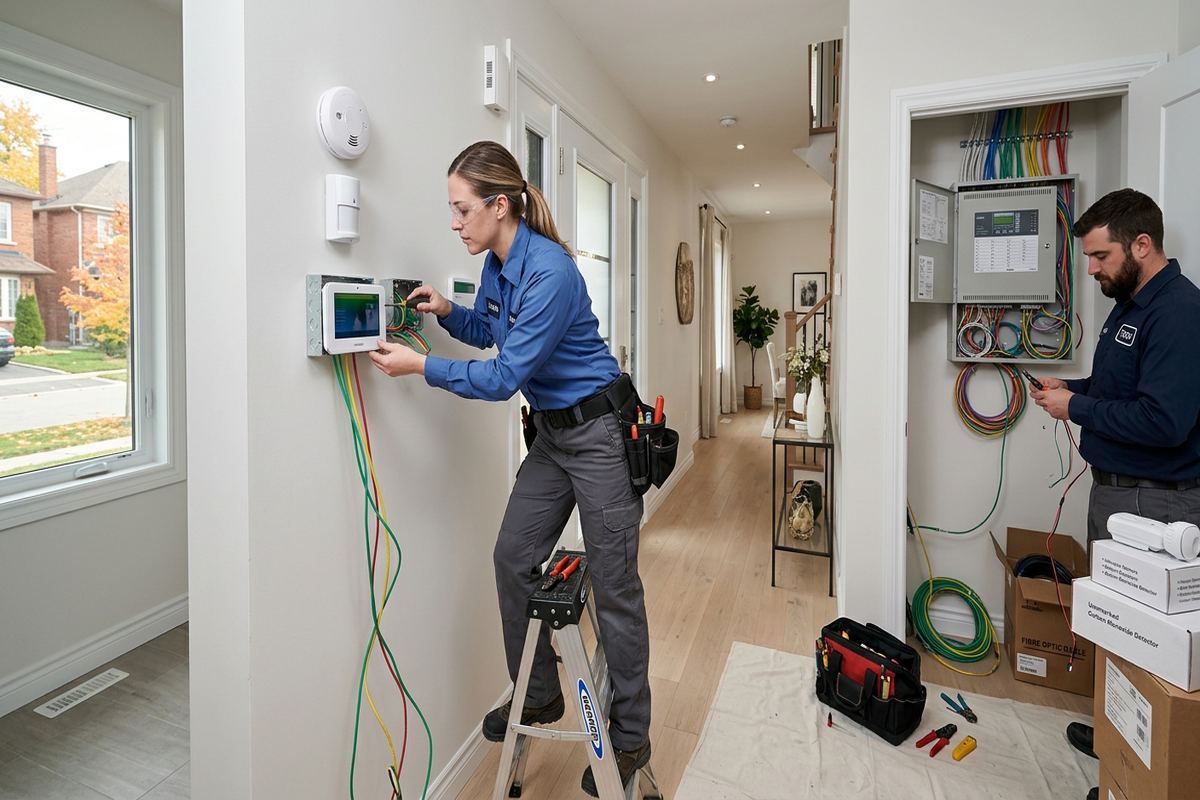
Alarm Systems for Brockville Business Types
Retail and customer-facing premises commonly need perimeter detection after closing, controlled staff access and clear separation between sales floors and stock areas. Downtown Brockville storefronts may combine street entrances, rear delivery doors, basements and upper floors within one narrow building. That layout can require several detection methods rather than relying on one motion sensor. Glass areas, display arrangements and seasonal decorations are considered when positioning devices. Where staff arrive before opening or leave after closing, keypad locations and entry delays should support safe, simple use without creating unnecessarily long unprotected intervals.
Offices, clinics and professional spaces often prioritize records, equipment rooms, medication storage or private work areas. In North Brockville and Centennial, these sites may occupy purpose-built units, converted premises or shared buildings with common corridors. The alarm design should distinguish the tenant boundary from landlord-controlled doors and avoid assuming that common access is protected. Individual user codes help management remove access when roles change, while event history can support internal review. Sensitive rooms may be separately zoned, provided that daily workflows and emergency egress remain practical for authorized occupants.
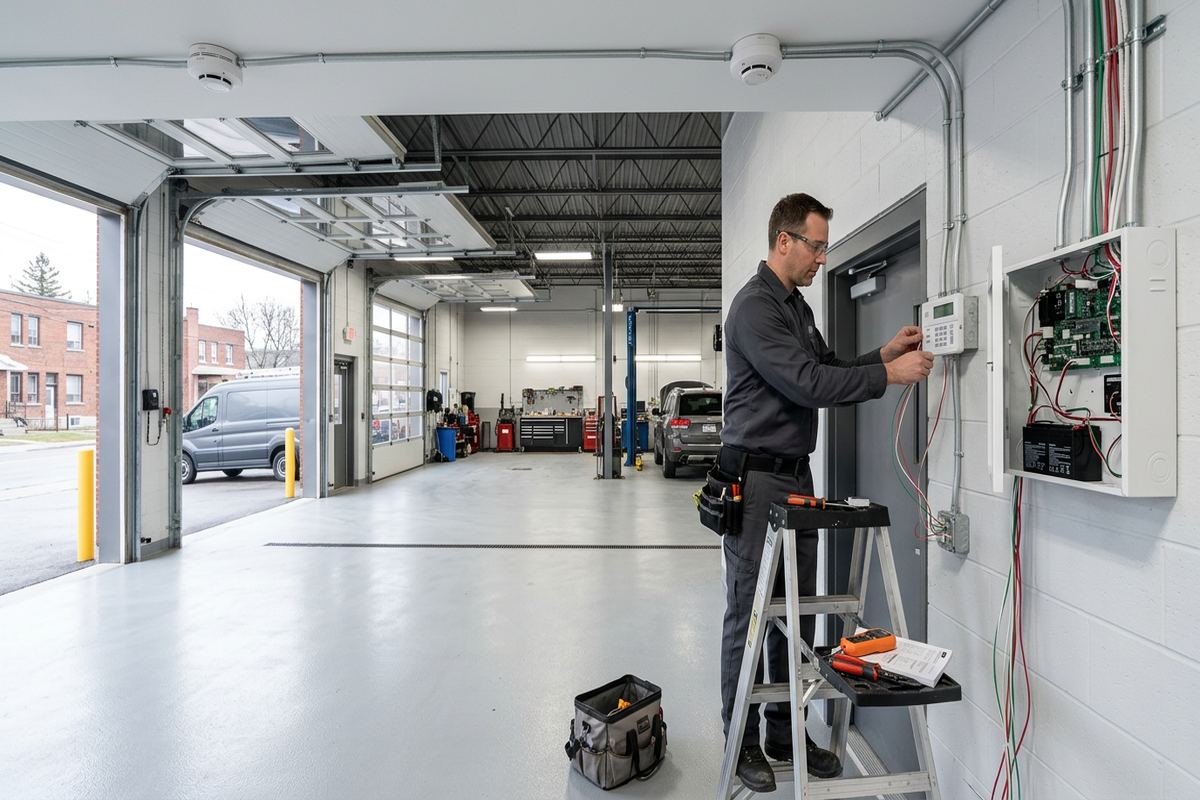
Warehouses, workshops and light industrial units bring larger openings, longer distances and harsher interior conditions. Overhead doors can move, flex and become misaligned, making contact selection and mounting important. Dust, heaters, high racks and changing inventory can affect motion detection and wireless communication. Butler’s Creek or other mixed commercial areas may also include detached storage, fenced yards or multiple suites with different operating hours. We divide the site into manageable zones, assess communication paths and identify where physical door repair, improved lighting or another security measure should complement the alarm installation.
- Retail perimeter and stockroom protection
- Office and sensitive-room zoning
- Warehouse overhead-door contacts
- Multiple schedules and tenant areas
- Detection planned around changing inventory
Service, Changes and Alarm Expansion in Brockville
Commercial alarm systems need periodic attention because buildings and operations change. New shelving can obstruct a detector, a renovated doorway may no longer align with its contact, and employee turnover can leave outdated user permissions. Management should review users, call lists and arming procedures whenever staffing or responsibilities change. Visible devices can be checked for damage, while panel faults and low-battery notices should be investigated rather than routinely cleared. Brockville’s seasonal temperature changes also make exterior contacts, seals and exposed cable entries worth inspecting after severe winter conditions.
Expansion is easiest when the original work is documented. If a Brockville business adds offices, takes over an adjacent unit or changes a warehouse layout, the as-built record helps identify panel capacity, existing zones and cable routes. We assess whether current equipment can support the requested additions and whether older components remain compatible. A new device should not be attached merely because a spare terminal appears available. Power requirements, communication limits, software support, warranty implications and monitoring-provider acceptance all need review before the scope for an addition is finalized.
UnifiedLink provides one accountable contractor for the alarm installation work described in the scope, including planned cabling, device installation, configuration, testing and handover. Requests sent during business hours are answered the same day; after-hours requests are answered the next business day. This response wording concerns the request, not a guaranteed arrival or emergency response time. Site assessment timing depends on the service and travel distance. For urgent alarm events, customers should follow their monitoring provider’s procedures and contact emergency services when personal safety, fire or an active crime is involved.
- User and contact-list reviews
- Checks after renovations or door changes
- Expansion assessment before adding devices
- As-built records for future service
- Clear separation from emergency response
Brockville neighbourhoods we cover
- Downtown Brockville
- North Brockville
- Rivers Edge
- Butler's Creek
- Centennial
Commercial alarm system installation in Brockville — common questions
Can you install an alarm in an older Brockville building?
Yes. Older Brockville buildings often need extra planning because stone, brick, plaster, original trim and previous renovations can limit cable routes. We assess the structure before pricing and consider existing pathways, discreet raceway, wired, wireless or hybrid equipment. Mounting into masonry is planned for the specific substrate, and visible work is kept low-impact where practical.
Do I need landlord or condominium approval?
Possibly. Brockville tenants and condominium owners may need written approval for exterior sirens, common-area cabling, visible raceway, wall penetrations or equipment attached to shared property. The building owner or condominium corporation determines its requirements. We can document proposed locations and routes in the scope, but the customer is responsible for obtaining the necessary property approvals before installation.
Will the alarm work during an internet outage?
That depends on the panel, communication method and services selected for the Brockville property. Some systems can use cellular reporting or maintain local alarm functions when internet service is unavailable. Backup batteries may support equipment for a limited period, subject to system load and battery condition. We explain communication dependencies, network responsibilities and included backup components in the written scope.
Can you connect the system to alarm monitoring?
We can install and configure compatible equipment for an intended monitoring connection when that work is included in the scope. Monitoring itself is supplied under separate third-party terms unless explicitly stated otherwise. Brockville customers should confirm provider compatibility, call-list procedures, contract conditions, permits and communication charges before activation. We do not assume that every panel or communicator is accepted by every provider.
How disruptive is installation for an operating business?
Disruption depends on the building, cable access and number of devices. For Brockville shops, offices and industrial units, we plan work around customer areas, deliveries, restricted rooms and normal operating periods where practical. Device positions are confirmed before drilling. Finished masonry or plaster may lead to wireless equipment or discreet surface pathways when concealed cabling would cause unnecessary disturbance.
What documentation do I receive after installation?
At handover, the system is configured with the customer’s own credentials. UnifiedLink provides an as-built record of the installed arrangement and available labelled cable information, along with practical guidance for authorized users. The written scope also records equipment, placement, routes, exclusions, ownership and warranty. Brockville customers can use these records when planning service, staffing changes, renovations or system expansion.
Coverage in Brockville is confirmed against the address before we quote. See everything we install in Brockville or the province-wide commercial alarm system installation page.