UnifiedLink installs commercial security camera systems for businesses, institutions and managed properties in Brockville. We plan coverage around entrances, service areas, parking, inventory and other practical risks. Each project begins with a site assessment and proceeds under a written scope covering camera locations, cable routes, recording, access, exclusions, ownership and warranty.
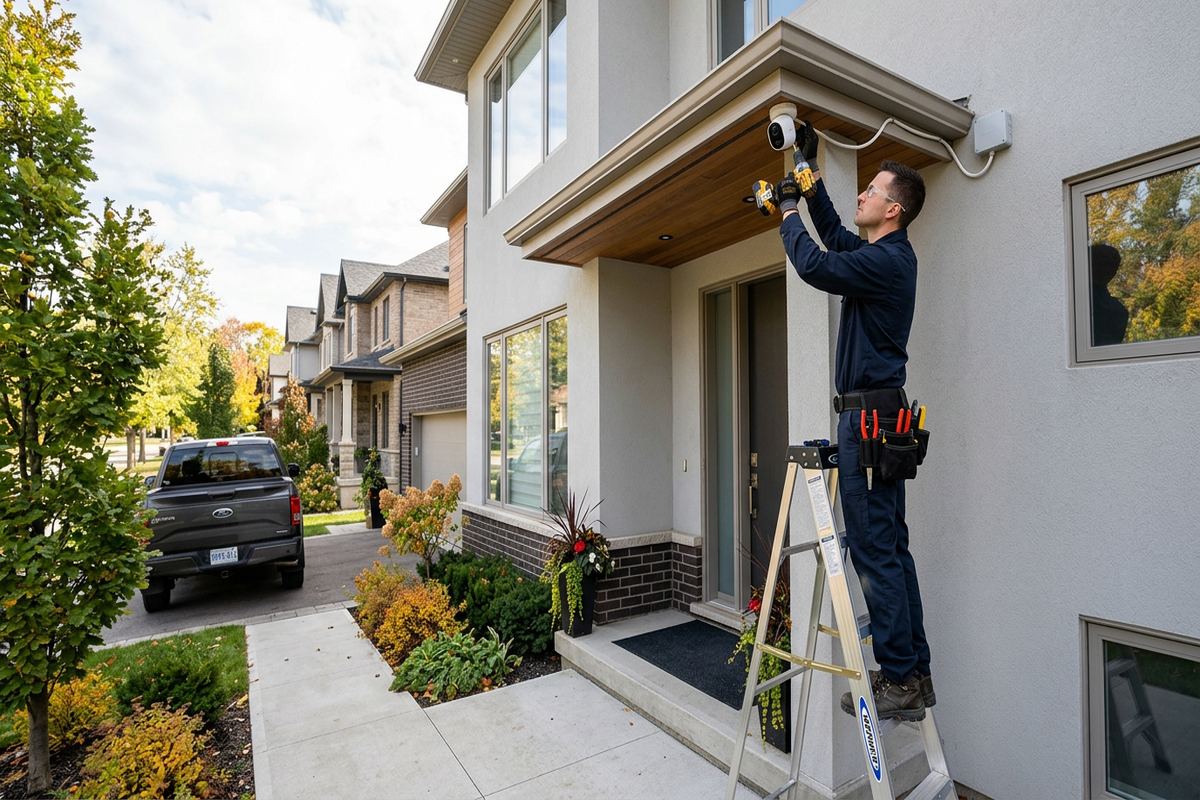
Commercial Camera Planning for Brockville Properties
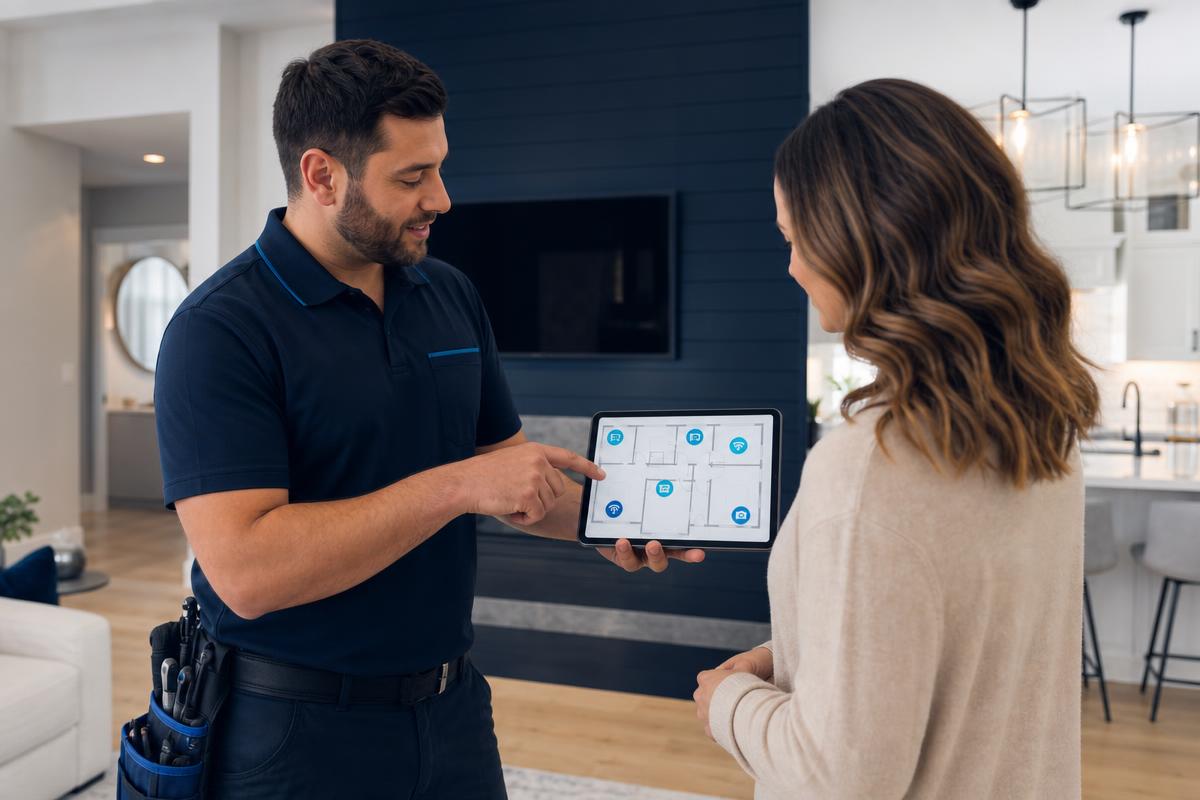
A useful camera system starts with the incidents and areas the property operator needs to review. During a Brockville site assessment, we examine entrances, customer areas, loading points, parking, cash-handling locations, restricted rooms and exterior approaches. Camera positions are selected for identifiable views rather than a high device count. We also consider lighting changes, likely obstructions, ceiling height and the distance between the subject and camera. This process helps determine whether each location needs an overview, a narrower identification view or both, while avoiding unnecessary coverage of neighbouring property.
Brockville buildings do not all accept the same installation method. Downtown Brockville includes older commercial premises where stone or brick walls, finished interiors and limited ceiling access can constrain cable routes. North Brockville and newer commercial areas may provide suspended ceilings, accessible utility rooms and straightforward network pathways. We inspect the actual construction before specifying equipment or labour. The resulting written scope identifies proposed device placement, cable routes, recorder or server location, equipment ownership, exclusions and warranty, so the customer can review what will be installed before work begins.
Operational requirements shape the recording design as much as the building does. A small office may need simple event review, while a retail location, industrial unit or multi-tenant property may require separate permissions, longer evidence retention or several monitoring stations. We discuss who can view live video, who can export footage and how administrators will manage users. Storage estimates account for camera resolution, frame rate, activity and recording mode. Final capacity depends on the agreed settings and retention objective rather than an unsupported promise that every installation will retain footage for the same period.
- Entrance, parking and loading-area coverage review
- Camera purpose defined before placement
- Lighting and obstruction checks
- Written scope before installation
- Storage based on agreed recording settings
Camera Coverage for Brockville Businesses
Good coverage separates general awareness from evidence that may help explain an event. A wide camera over a sales floor can show movement but may not provide a useful face at an entrance. Conversely, a narrow entrance view will not describe activity across an entire room. For Brockville businesses, we map these different viewing tasks and identify where overlapping perspectives are justified. Placement also accounts for shelving, seasonal displays, vehicle positioning and doors that can block a scene. The objective is a practical set of views that staff can understand and retrieve without searching through unnecessary cameras.
Exterior coverage requires attention to both image quality and the surrounding property. Cameras aimed across a parking lot can be affected by headlights, low winter sun, blowing snow, rain and reflections from wet pavement. We choose mounting heights and fields of view that reduce avoidable glare while keeping the relevant area large enough in the image. Infrared illumination is assessed carefully because nearby walls, soffits or signs can reflect light back into the lens. Where ambient lighting is inconsistent, configuration and supplementary lighting considerations are documented rather than assuming a camera specification alone will solve the scene.
Commercial strips and industrial units often have shared drives, neighbouring entrances or common loading areas. A camera should cover the customer’s operational boundary without unnecessarily recording private windows or unrelated spaces. In Brockville, that may require a tighter lens, a changed mounting angle or privacy masking within the system. We also discuss signage and internal policies with the property operator, while leaving legal determinations to the customer’s appropriate advisers. For leased premises, proposed drilling, exterior devices and cable pathways should be approved by the landlord before installation, particularly where common walls or façades are involved.
- Overview and identification views distinguished
- Headlight and low-sun effects considered
- Privacy masking configured where appropriate
- Shared property boundaries reviewed
- Landlord approval requirements identified
Discreet Mounting on Brockville Masonry and Exteriors
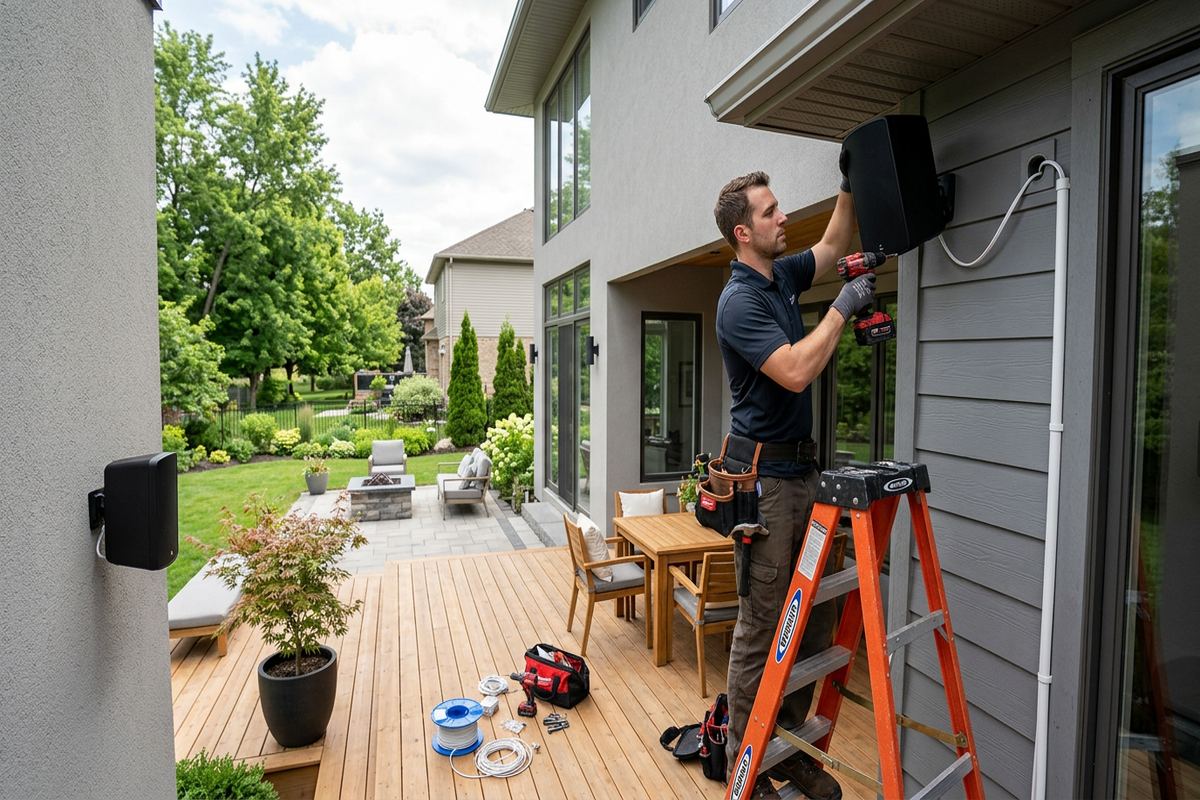
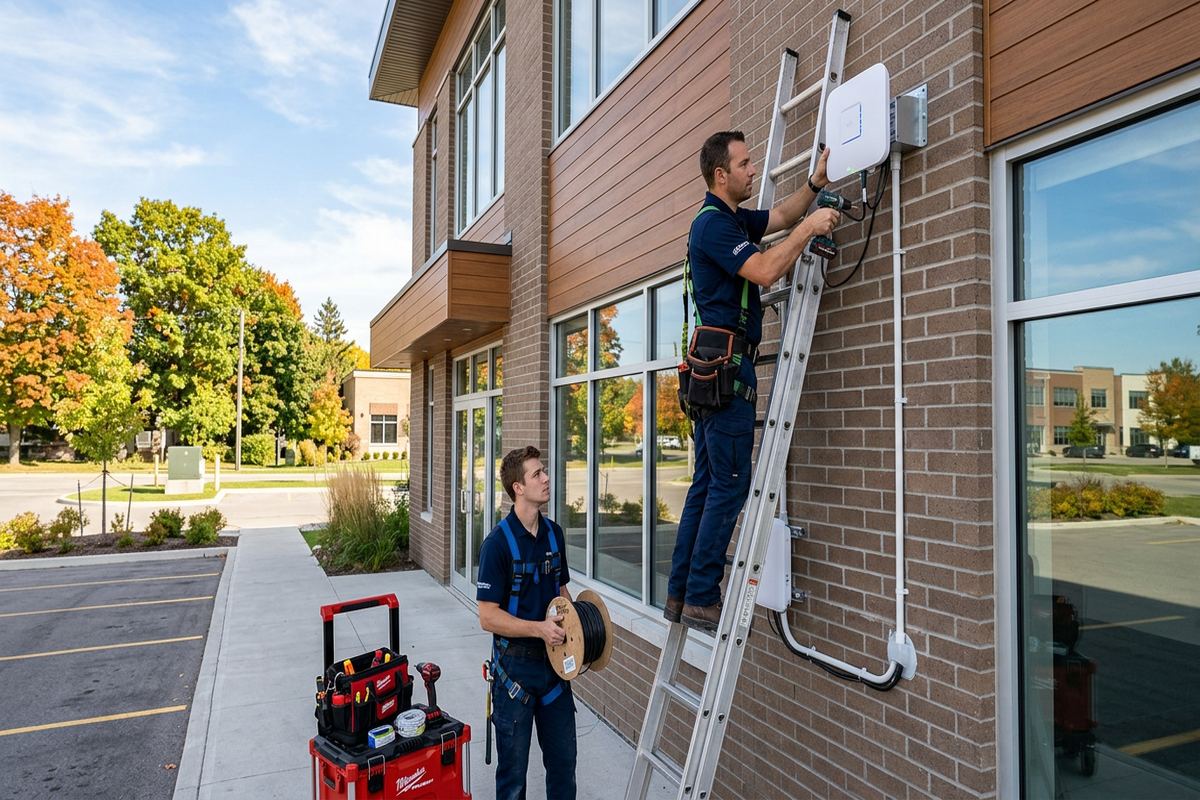
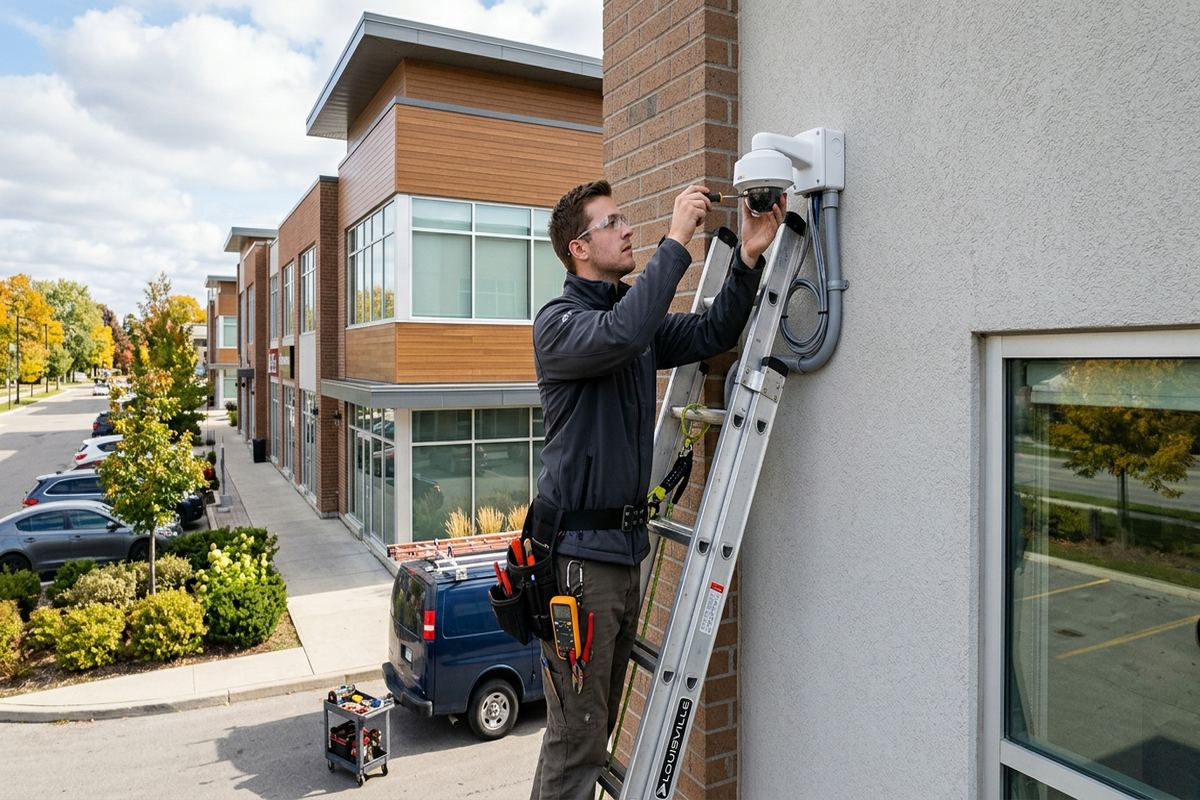
Stone heritage buildings and riverfront properties in Brockville call for discreet, low-impact mounting. We look for existing penetrations, service routes, soffits or less prominent mounting surfaces before proposing holes through visible masonry. Camera colour, bracket size and cable entry position can also reduce visual impact without compromising the required view. Where direct attachment is necessary, the substrate must be identified correctly; stone, mortar, brick, wood trim and modern cladding require different anchors and drilling methods. The written scope records the intended route and mounting approach so appearance and access issues can be reviewed in advance.
Exterior penetrations must manage water rather than merely hide a cable. Freeze-thaw cycles can enlarge weak openings, and poorly placed sealant can trap moisture or fail as materials move. We use suitable exterior-rated components, form controlled cable entries and seal around penetrations according to the mounting surface and exposure. Drip paths, junction-box orientation and connector protection are considered together. Riverfront exposure may increase wind-driven moisture on some façades, making sheltered placement valuable where it still supports coverage. Any uncertainty involving fragile heritage material is raised before work proceeds, not discovered through unnecessary drilling.
Frame construction presents a different set of choices from solid masonry. A cable may pass through an accessible wall cavity, attic or service space, but insulation, vapour control layers and concealed utilities still need care. On masonry buildings, surface pathways may be more practical and less disruptive than opening finished interiors. In both cases, visible conduit or raceway is planned for straight, supportable routes rather than improvised around architectural details. Downtown Brockville tenants should also confirm façade and common-area permissions with the building owner, while condominium operators may need board or property-management approval before exterior equipment is attached.
- Low-impact mounting routes reviewed first
- Anchors matched to the actual substrate
- Exterior entries sealed against moisture
- Freeze-thaw exposure considered
- Condo and landlord approvals checked
Brockville, Ontario
Commercial security camera installation in Brockville, scoped in writing first
Book a site assessment and get equipment, routes, exclusions, and warranty on paper before anything is installed.
Cabling and Network Design in Brockville
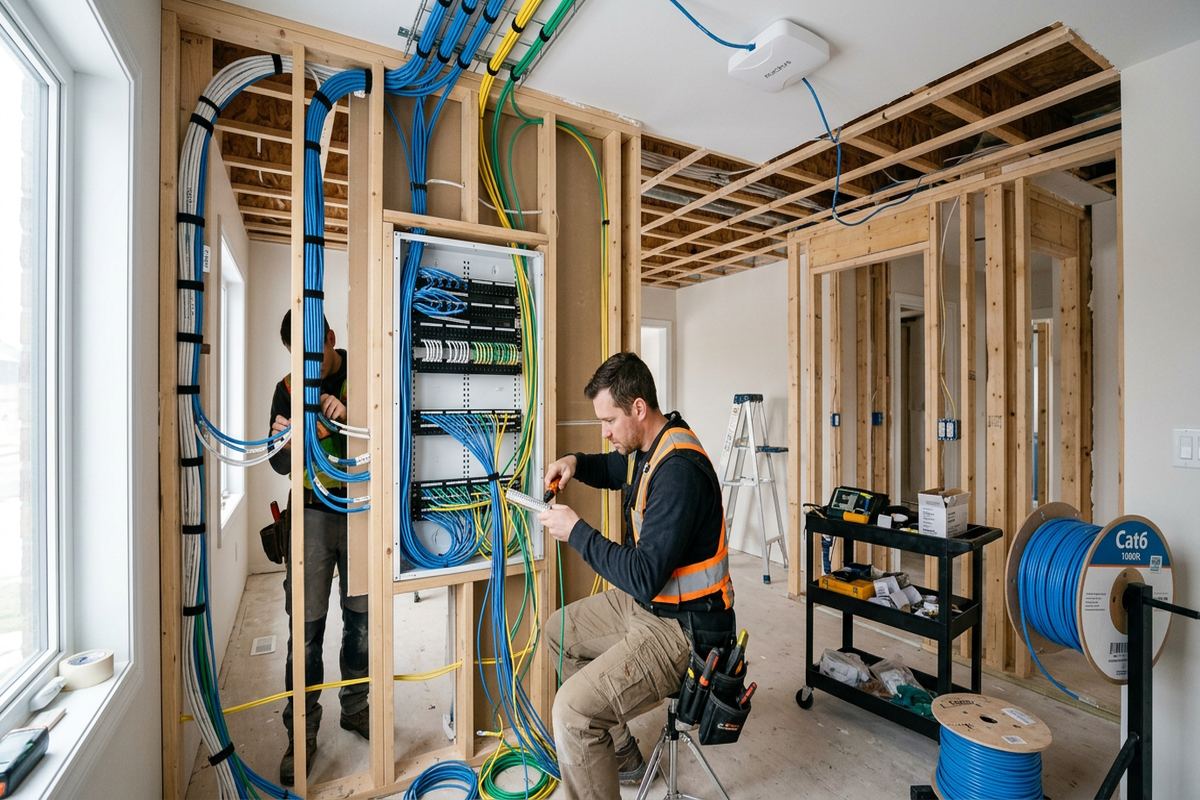
Reliable video depends on the path between each camera and the recording or network equipment. UnifiedLink installs continuous labelled cable runs rather than hidden intermediate joins that complicate testing and future service. Routes are planned around electrical interference, heat sources, moving equipment, sharp edges and areas vulnerable to physical damage. Where pathways cross exposed warehouse or service areas, appropriate support and protection are considered. Every run is identified at both ends, allowing a technician or customer representative to match a camera with its switch or patch-panel position without tracing an unmarked bundle through the building.
Power and bandwidth are checked before cameras are added to an existing network. Power over Ethernet capacity must account for the number and requirements of connected devices, while uplinks need enough headroom for the selected streams. We assess whether cameras should use a dedicated switch, a separated network segment or existing managed infrastructure. Coordination with the customer’s IT provider may be required where addressing, firewall rules, remote access or corporate standards are controlled centrally. We do not assume that an available port is suitable simply because it provides a physical connection; its power, speed and configuration must also support the design.
Recorder and switch locations need ventilation, power and controlled access. Placing equipment above a dusty stockroom shelf or beside a source of heat can shorten service life and make troubleshooting difficult. For Brockville retail sites, offices and industrial units, we review available communications rooms, cabinets and utility spaces, then identify any required rack, enclosure or backup-power provisions in the scope. Cable distances are checked against the chosen transmission method. If an outbuilding, detached gate or remote parking area exceeds a practical copper route, fibre or a properly engineered wireless link may be considered.
- Continuous cable runs without concealed joins
- Labels applied at both cable ends
- PoE and bandwidth capacity checked
- IT coordination included where required
- Recorder location assessed for heat and access
Recording, Remote Viewing and User Access
Recording settings are configured around the customer’s review needs and available storage. Resolution, frame rate, compression, motion rules and schedules all influence image detail and retention. Higher settings are not automatically useful if they consume capacity without improving the evidence required from a scene. We tune each camera according to its purpose, then confirm that recordings can be located and played back. Event markers or motion search may reduce review time, although results depend on scene activity and system capabilities. The agreed configuration is documented so later changes can be evaluated against the original operating objective.
Remote viewing should be convenient without leaving shared or default administrator credentials in use. During handover, the customer receives access through their own credentials and controls who remains authorized. Where the platform supports roles, users can be limited to appropriate cameras or functions rather than receiving full administrative control. Internet service quality, firewall policies and mobile-device requirements are reviewed before remote access is promised. Some organizations prefer local-only viewing, while others require managed access from several locations. The selected approach is included in the scope and coordinated with responsible IT personnel where applicable.
A video export is only helpful if authorized staff know how to produce it correctly. We demonstrate live viewing, timeline review, event search and export using the installed platform. Staff should understand the difference between exporting a short clip, preserving the original time range and taking an image from playback. We also review system time, camera naming and basic status indicators because these details matter during an incident. Brockville customers receive an as-built record at handover, along with the agreed equipment information and credentials, creating a reference for future administration, additions or troubleshooting.
- Per-camera recording settings configured
- Customer-controlled user credentials
- Role-based access used when supported
- Playback and export demonstrated on site
- As-built record supplied at handover
Brockville Installation Process and Coordination
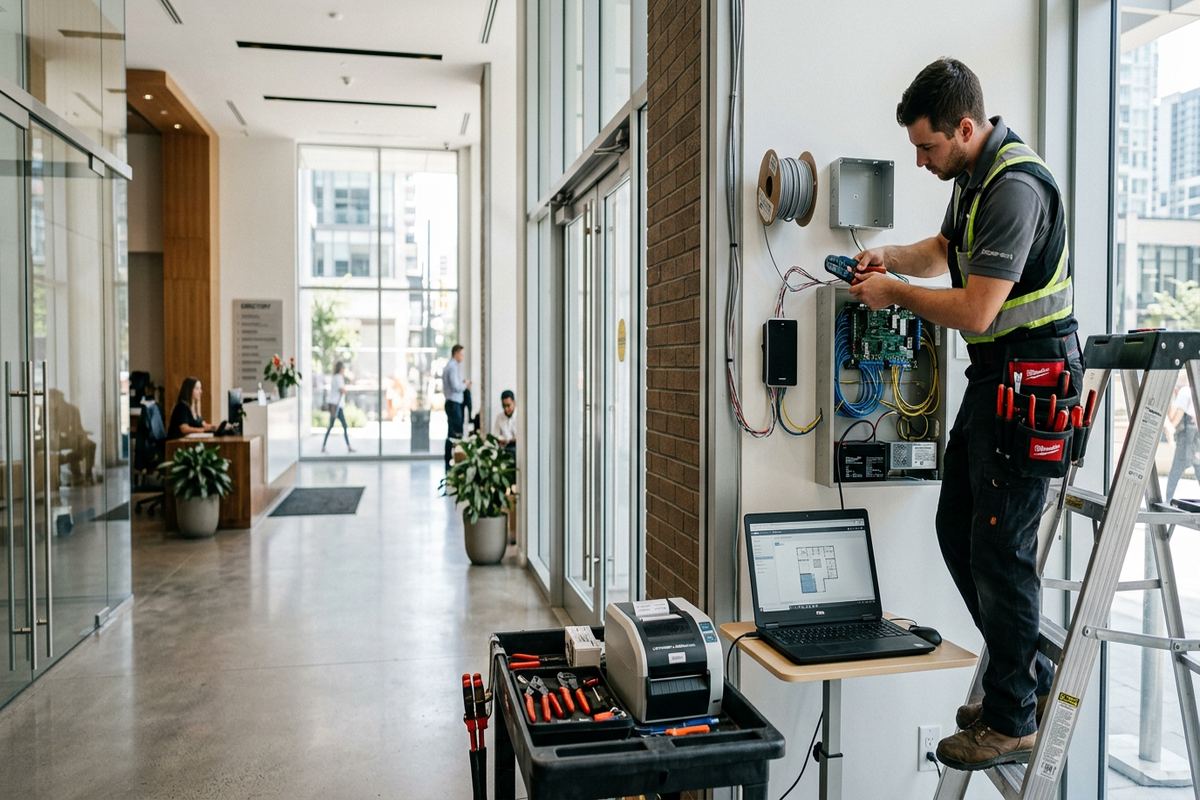
Before pricing, UnifiedLink conducts a site assessment appropriate to the service and property. Timing depends on the work involved and travel distance. The assessment confirms construction, access, mounting surfaces, cable pathways, network conditions and the views each camera must provide. It also identifies operating constraints such as customer traffic, production schedules, restricted rooms or high work areas. For occupied Brockville premises, installation can then be sequenced to reduce disruption where practical. Conditions that cannot be verified, including concealed pathways or third-party network changes, are clearly noted rather than treated as guaranteed assumptions.
Following the assessment, the customer receives a written scope covering equipment, cable routes, device placement, exclusions, equipment ownership and warranty. This document provides a common reference for the property owner, tenant, manager, IT provider and installer. If landlord, condominium or heritage-related permission is required, approval should be completed before the affected work starts. Changes requested after approval are documented because moving a camera can alter cable length, coverage, labour and materials. A defined scope prevents informal decisions on site from producing gaps between what the customer expected and what the finished system can deliver.
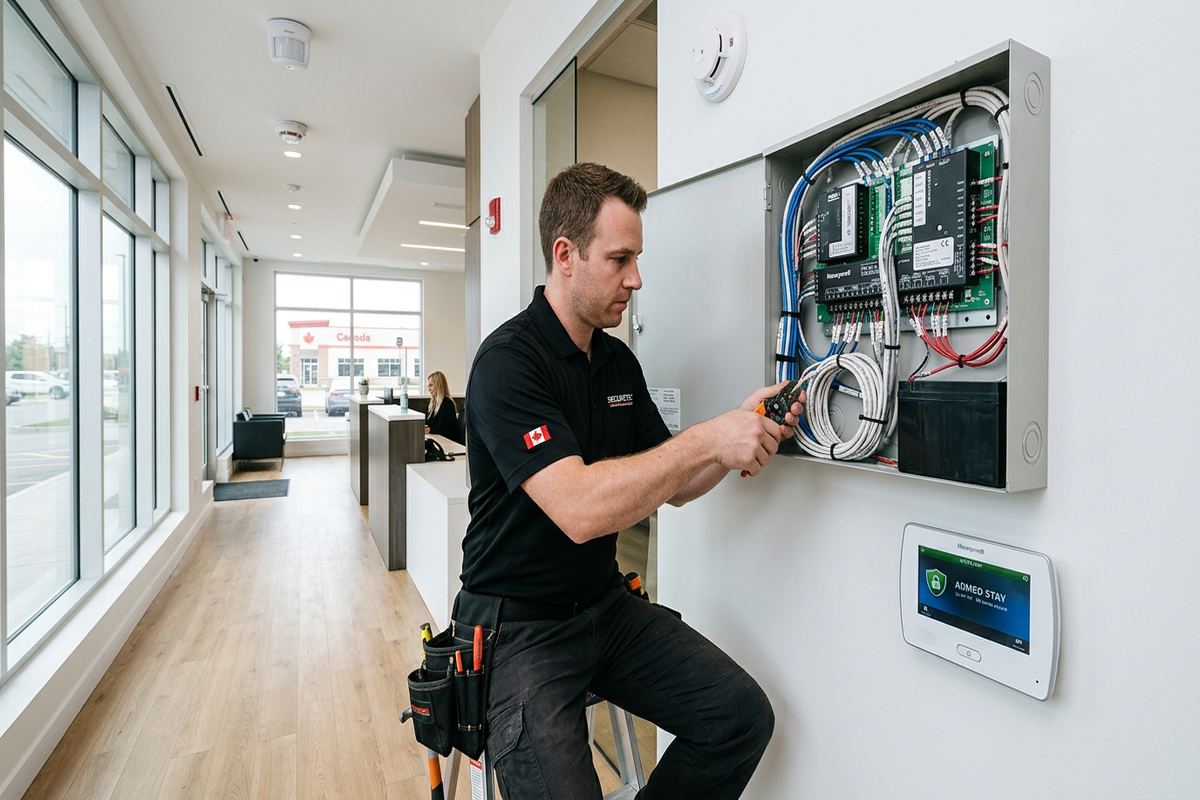
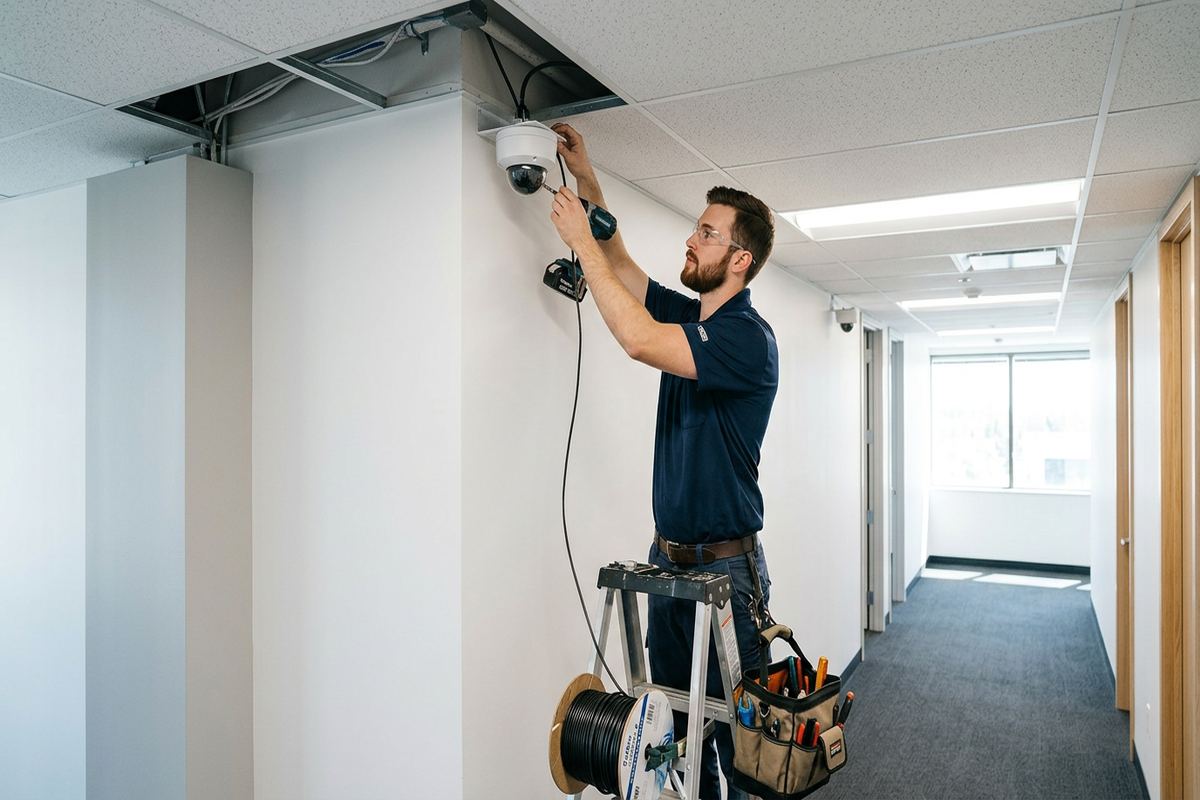
Installation includes mounting, continuous labelled cable runs, termination, equipment connection and on-site configuration within the agreed scope. Cameras are aimed using actual scene conditions, and accessible views are checked with the customer’s operational priorities in mind. We test recording, playback and authorized remote access where included. Handover uses the customer’s own credentials and includes an as-built record identifying the installed arrangement. UnifiedLink remains one accountable contractor for the low-voltage work described in the scope, reducing ambiguity between camera mounting, cabling and configuration responsibilities during the project.
- Site assessment completed before pricing
- Work coordinated around occupied premises
- Scope shared with relevant stakeholders
- On-site aiming and configuration
- One contractor accountable for scoped work
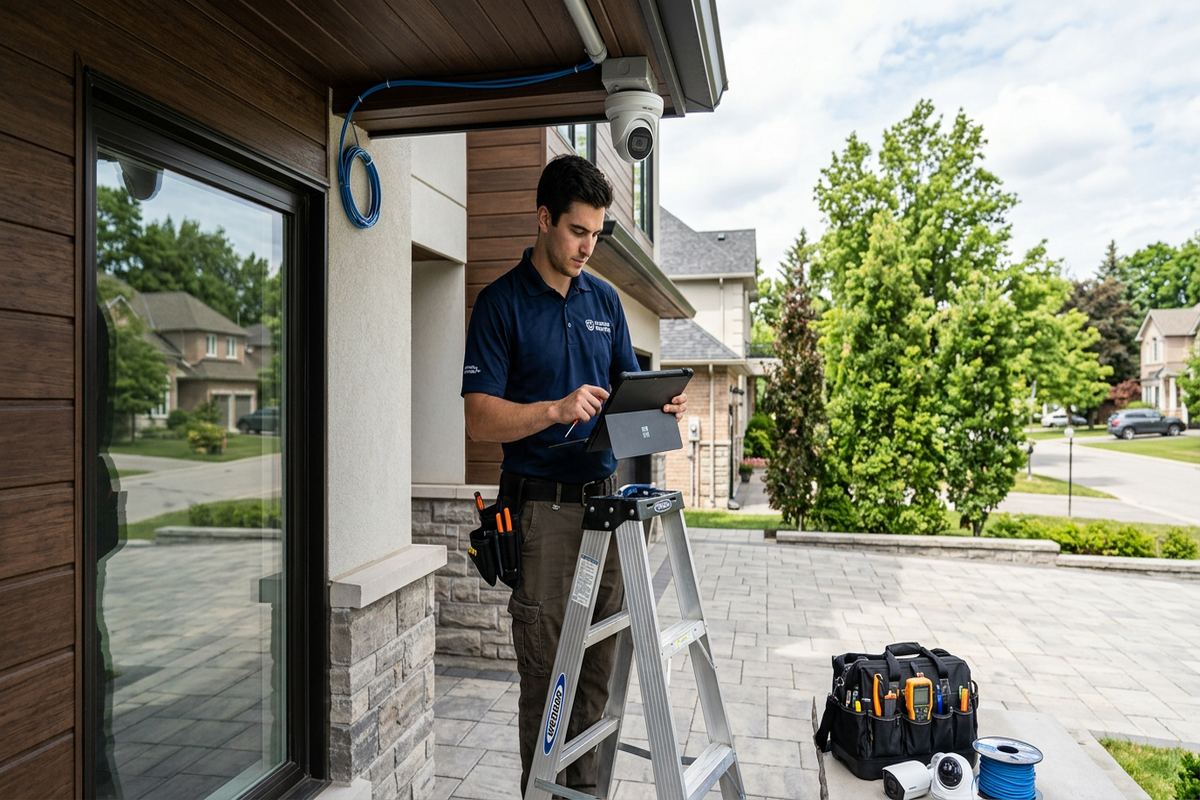
Upgrades and Troubleshooting for Brockville Camera Systems
An existing system does not always require complete replacement. We first identify the installed camera types, cabling, recorder, network equipment, power supplies and available documentation. Some components may remain useful if they support the required resolution, security and recording functions. Others may be proprietary, unsupported or unable to interoperate with current equipment. In Brockville’s older buildings, existing cable routes can be valuable, but a cable should be tested rather than accepted based on appearance. The assessment distinguishes reusable infrastructure from components that would limit reliability or leave important areas without suitable coverage.
Common faults include intermittent cameras, night images washed out by nearby surfaces, inaccurate system time, failed storage, overloaded PoE switches and remote access tied to a former employee’s account. Troubleshooting follows the signal path instead of replacing parts at random. We check power, physical connections, network status, camera configuration, recorder health and playback. Exterior failures receive additional inspection for water entry, damaged seals and movement at the mounting point. Brockville winters can expose weak connectors or penetrations through repeated cold, moisture and freeze-thaw conditions, especially where junction boxes were installed without suitable orientation or protection.
Expansion planning should consider the capacity of the complete system. Adding several cameras may require more switch power, network bandwidth, recording channels, storage or monitor layouts. It can also change how staff search for footage if naming and user permissions are not updated. We document additions and revise the as-built record so the current arrangement remains understandable. For phased Brockville projects, backbone cabling, rack space and switch capacity can be planned with likely future areas in mind, but unused capacity is described accurately rather than presented as unlimited or guaranteed to support unknown equipment.
- Existing infrastructure assessed before replacement
- Cable and PoE faults isolated methodically
- Night image problems investigated
- Exterior seals and connectors inspected
- Expansion capacity checked across the system
Commercial Camera Applications Across Brockville
Downtown Brockville businesses often balance useful security views with older interiors, shared walls and visually sensitive façades. Entry cameras may need to handle bright exterior light behind arriving visitors, while rear service doors can require weather-resistant coverage and protected cable routes. Stone or brick construction may favour carefully aligned surface raceway instead of disruptive wall opening. Where upper floors contain residences or separate tenants, camera angles and access permissions need particular attention. A landlord’s approval may also be required for exterior mounting, common corridors or use of shared communications spaces before installation can proceed.
Properties in North Brockville, Centennial and Butler’s Creek can include offices, commercial strips, mixed-use premises and industrial units with broader parking or loading requirements. These sites may need layered views across public entrances, staff doors, yards and receiving areas. Vehicle routes, snow storage, delivery trailers and seasonal landscaping can obstruct a camera that appears well positioned during a brief visit. We discuss these changing conditions during planning and avoid placing critical views where routine operations will repeatedly block them. Exterior equipment is mounted and sealed for its actual exposure rather than treated like an indoor device under a nominal overhang.
Riverfront properties and locations near Rivers Edge may experience open exposure, reflections and moisture that affect mounting choices and images. Discreet attachment remains important where architecture and exterior appearance are prominent. We consider wind-driven rain, winter conditions, low sun and reflective water or glazing when selecting angles. No single camera specification removes every environmental issue, so placement, shielding, lighting and configuration are treated as parts of the same design. Requests sent during business hours are answered the same day; after-hours requests are answered the next business day, while assessment timing depends on service requirements and travel distance.
- Downtown heritage constraints considered
- Parking and loading activity mapped
- Seasonal snow obstructions reviewed
- Riverfront exposure included in placement
- Local requests handled under stated availability
Brockville neighbourhoods we cover
- Downtown Brockville
- North Brockville
- Rivers Edge
- Butler's Creek
- Centennial
Commercial security camera installation in Brockville — common questions
How much does commercial camera installation cost in Brockville?
Pricing depends on the number and type of views, building construction, cable routes, access requirements, storage objectives and network work involved. UnifiedLink completes a site assessment before pricing. You then receive a written scope covering equipment, camera placement, cable routes, exclusions, equipment ownership and warranty, allowing the proposed work to be reviewed on a defined basis.
Can cameras be installed on a stone building?
Yes, but Brockville stone and masonry buildings require careful planning. We first consider existing penetrations, soffits and less visible routes. If attachment to masonry is necessary, the substrate, anchor method, cable entry and sealing approach must be appropriate. Fragile or visually sensitive materials are identified before drilling, and landlord or other property approvals remain the customer’s responsibility.
Do I need landlord or condo approval?
Approval may be required when cameras, conduit or cabling affect an exterior façade, common area, shared wall or building service space. This is particularly relevant for leased Downtown Brockville premises, condominiums and multi-tenant commercial properties. Customers should secure the necessary written permission before affected work starts. The proposed locations and routes in our written scope can support that approval process.
Can I view my Brockville cameras remotely?
Remote viewing can be configured when the selected system, internet connection and network policies support it. We use customer-controlled credentials rather than leaving access under an installer account. User roles can be limited where the platform permits. If your Brockville business has managed IT, firewall rules, network separation and mobile access may need coordination with that provider before remote viewing is enabled.
Will exterior cameras work through Brockville winters?
Exterior-rated equipment can be selected for the expected location, but dependable operation also relies on correct mounting, protected connections and properly sealed penetrations. Brockville freeze-thaw cycles, snow, moisture, headlights and low winter sun can affect hardware or images. We assess exposure, junction-box orientation, nearby reflective surfaces and changing obstructions when planning exterior camera positions.
Can you upgrade our existing camera system?
Yes, subject to an assessment of the installed cameras, recorder, cabling, switches, power and system compatibility. Existing infrastructure in a Brockville property may be reusable, but it should be tested. We identify what can remain, what limits the required result and whether an upgrade needs additional storage, PoE capacity, network bandwidth or new cable routes.
Coverage in Brockville is confirmed against the address before we quote. See everything we install in Brockville or the province-wide commercial security camera installation page.