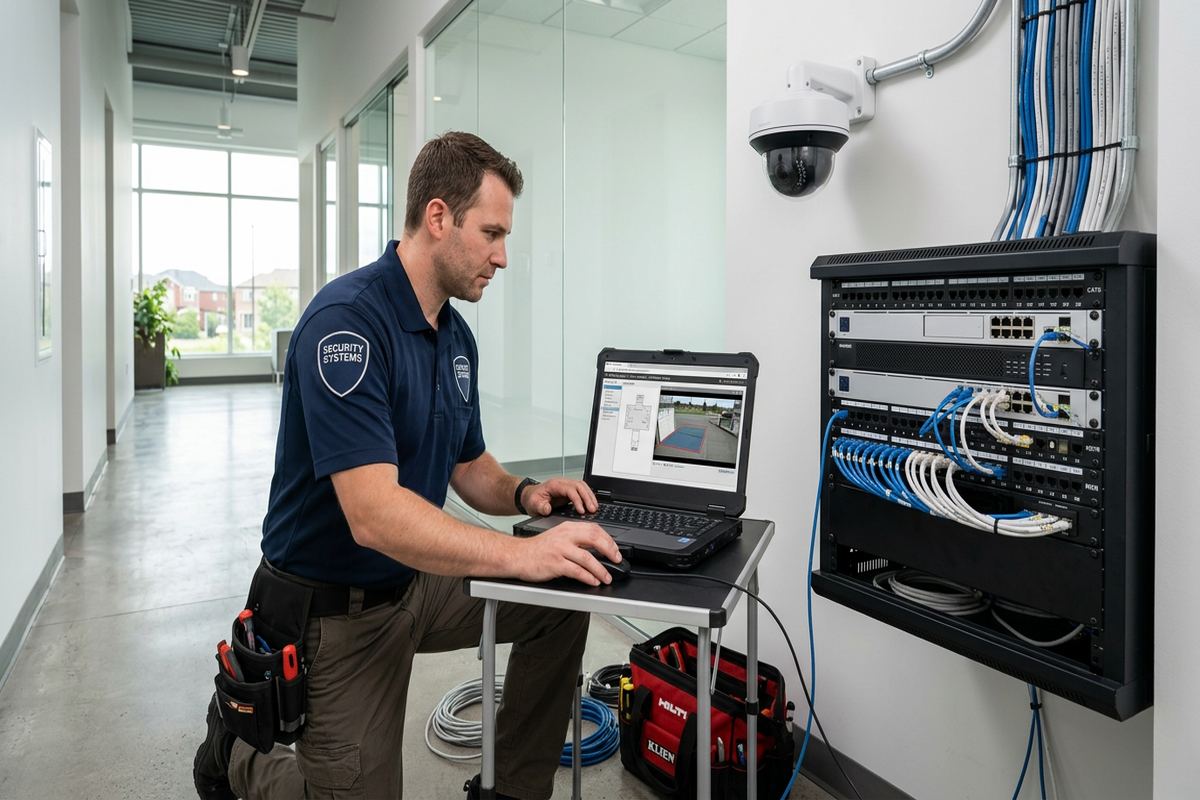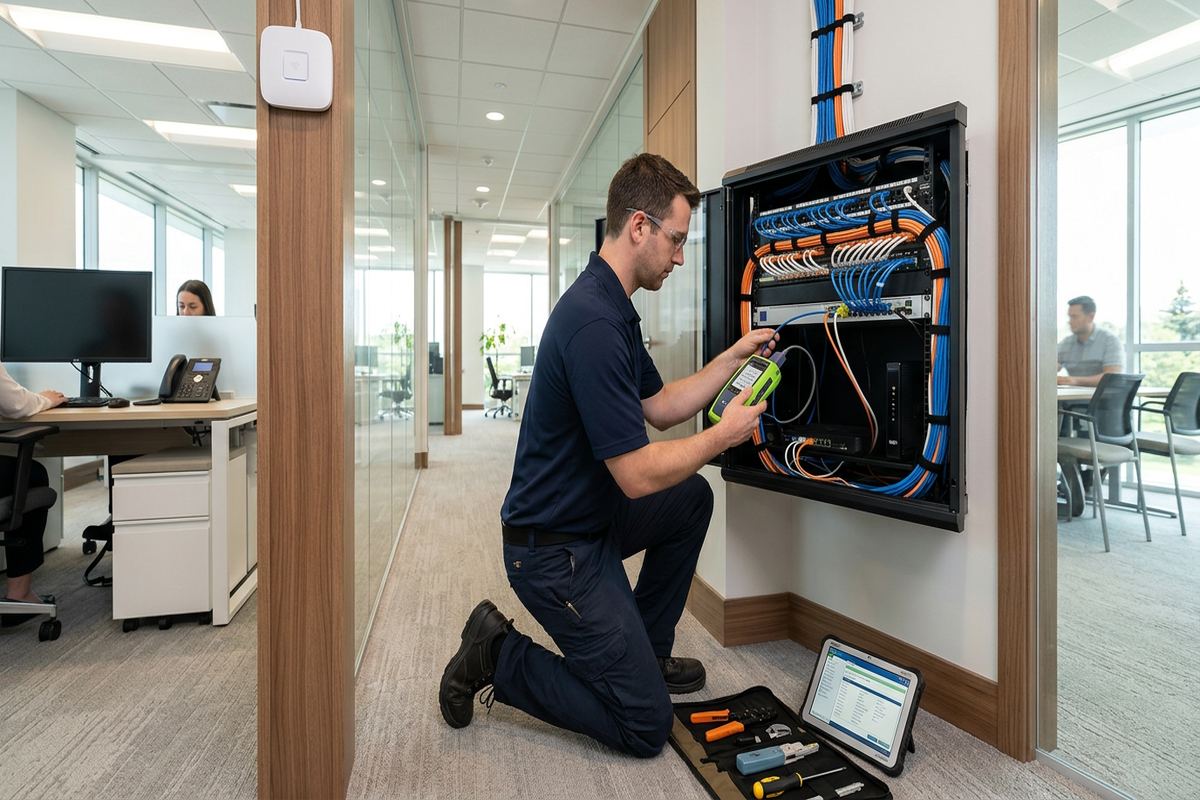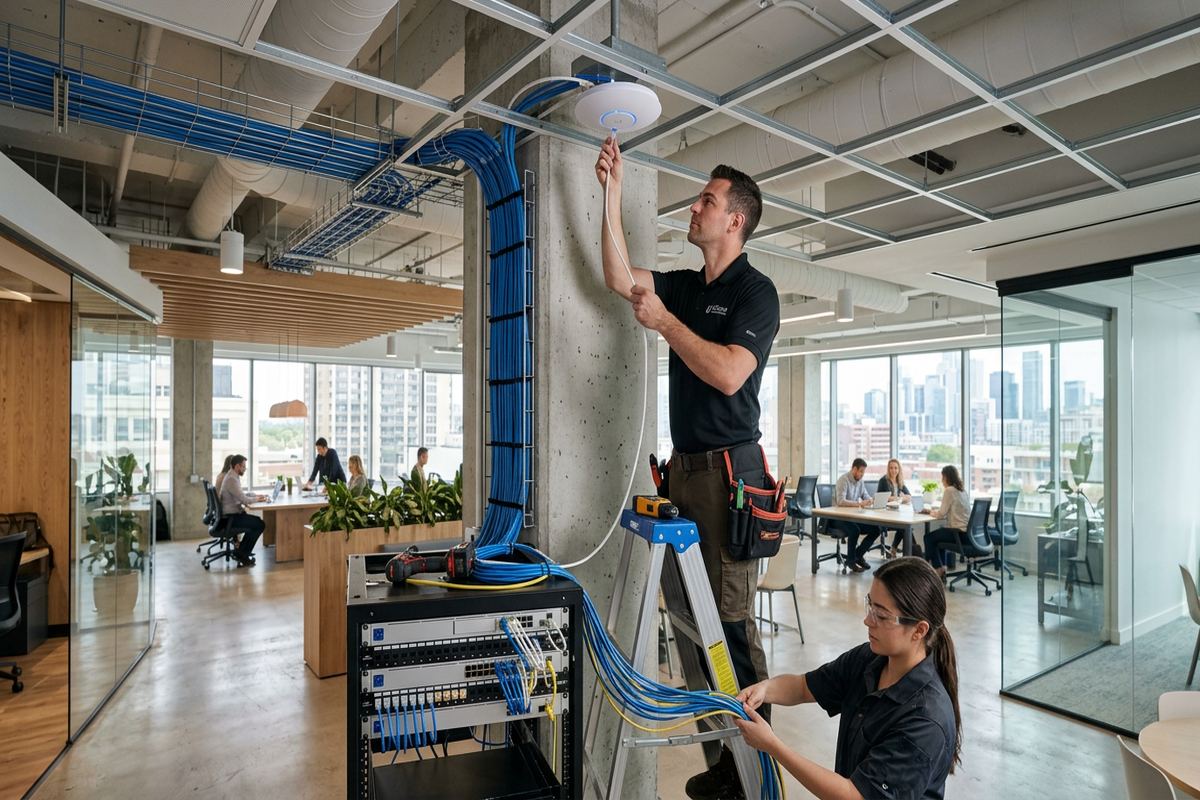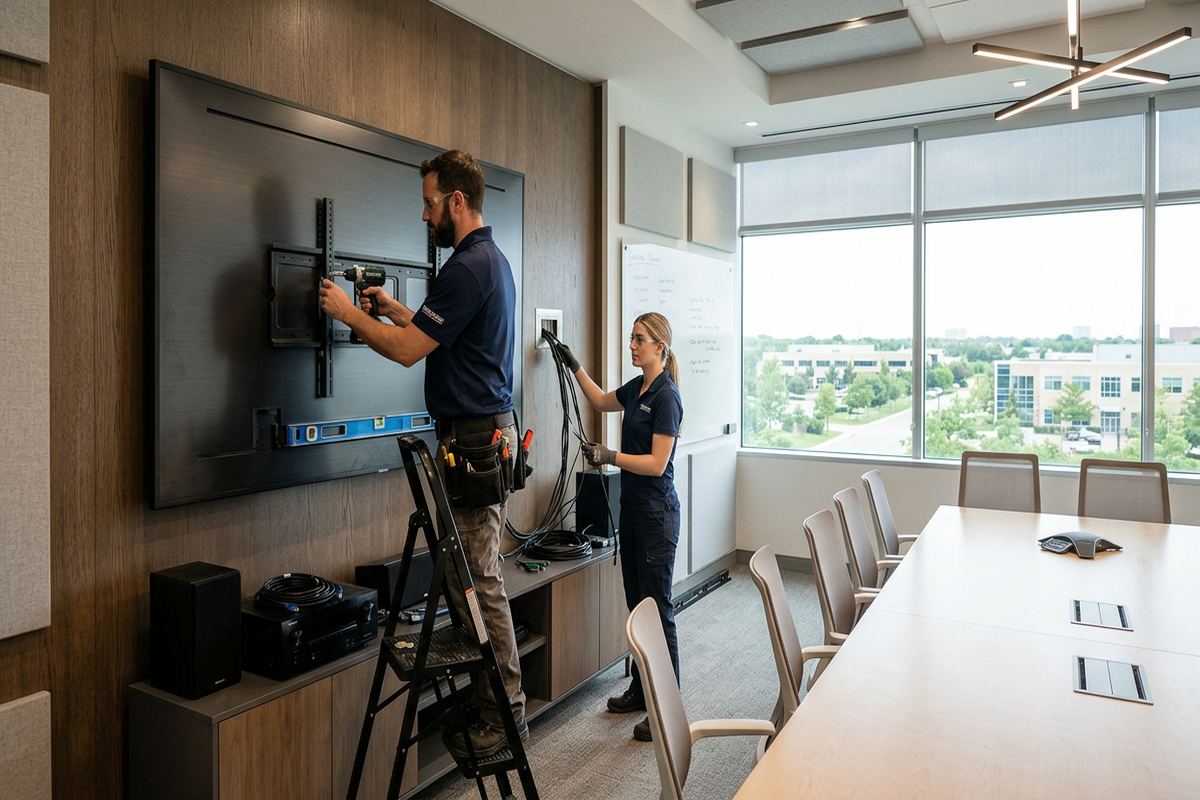
UnifiedLink installs commercial networks for Brockville offices, shops, professional spaces, multi-unit properties and industrial facilities. Work can include structured cabling, fibre, network racks, switches and managed Wi-Fi. We assess the site before pricing, plan practical cable routes and provide a written scope so you know what will be installed, where it will go and what is excluded.
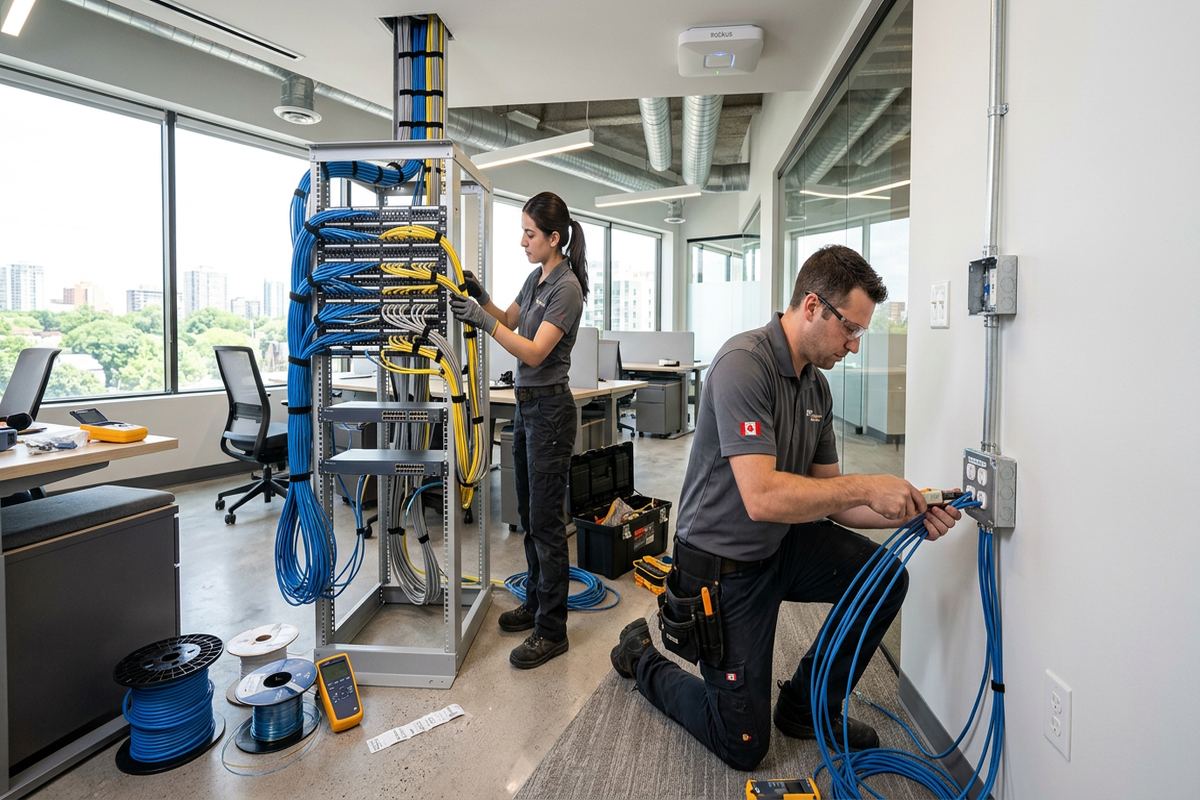
Commercial Network Installation for Brockville Properties
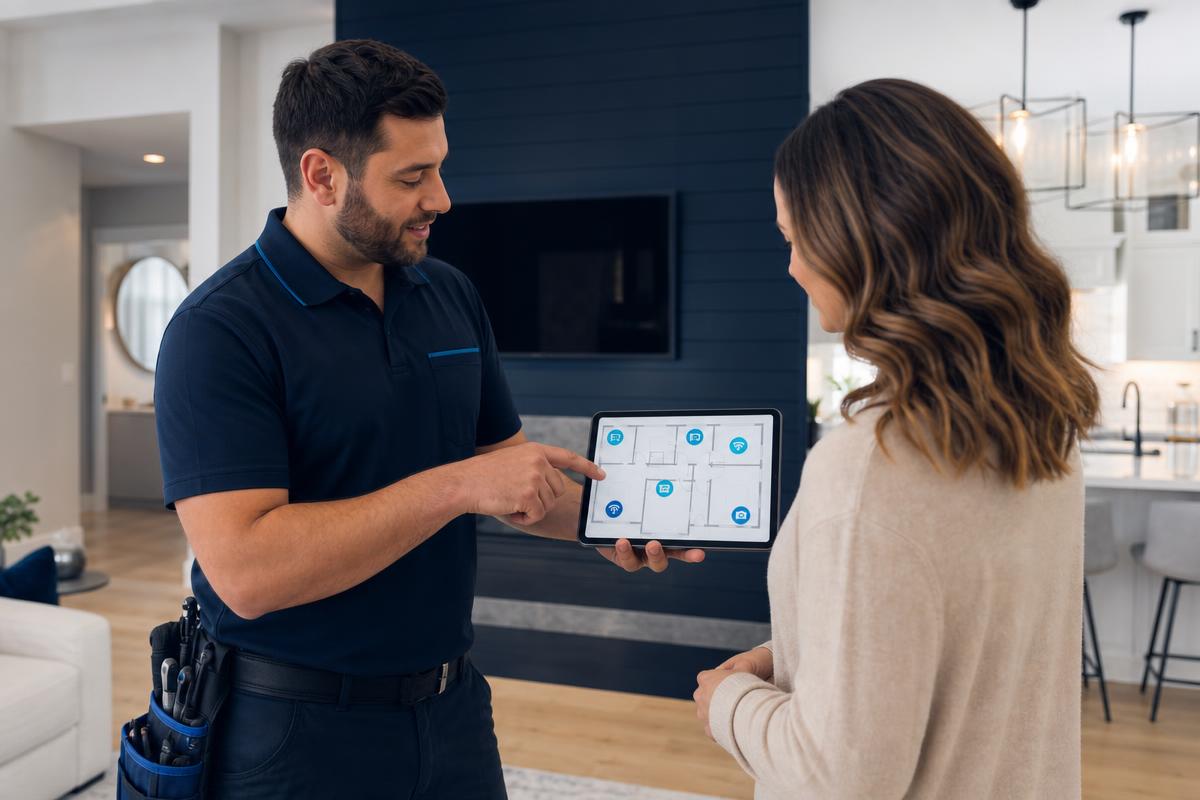
A commercial network should support daily operations without leaving cables, devices or responsibilities unclear. UnifiedLink plans and installs wired and wireless infrastructure for Brockville businesses, including offices, retail units, clinics, restaurants, workshops and shared commercial buildings. The process starts with a site assessment covering the incoming internet service, floor plan, construction type, equipment locations and expected device load. From there, we define cable routes, outlet positions, rack requirements, Wi-Fi coverage and any coordination needed with the internet provider, landlord, electrician or other trades before installation begins.
Brockville has a varied building stock, so the same installation approach does not fit every property. A stone building in Downtown Brockville may require discreet routes that avoid unnecessary drilling into visible masonry, while a newer frame-built unit in North Brockville may offer accessible ceiling spaces and straightforward pathways. Riverfront properties can also need careful equipment placement and exterior sealing. We consider wall construction, ceiling access, utility spaces, moisture exposure and future serviceability when selecting routes, fasteners, enclosures and mounting methods for each part of the network.
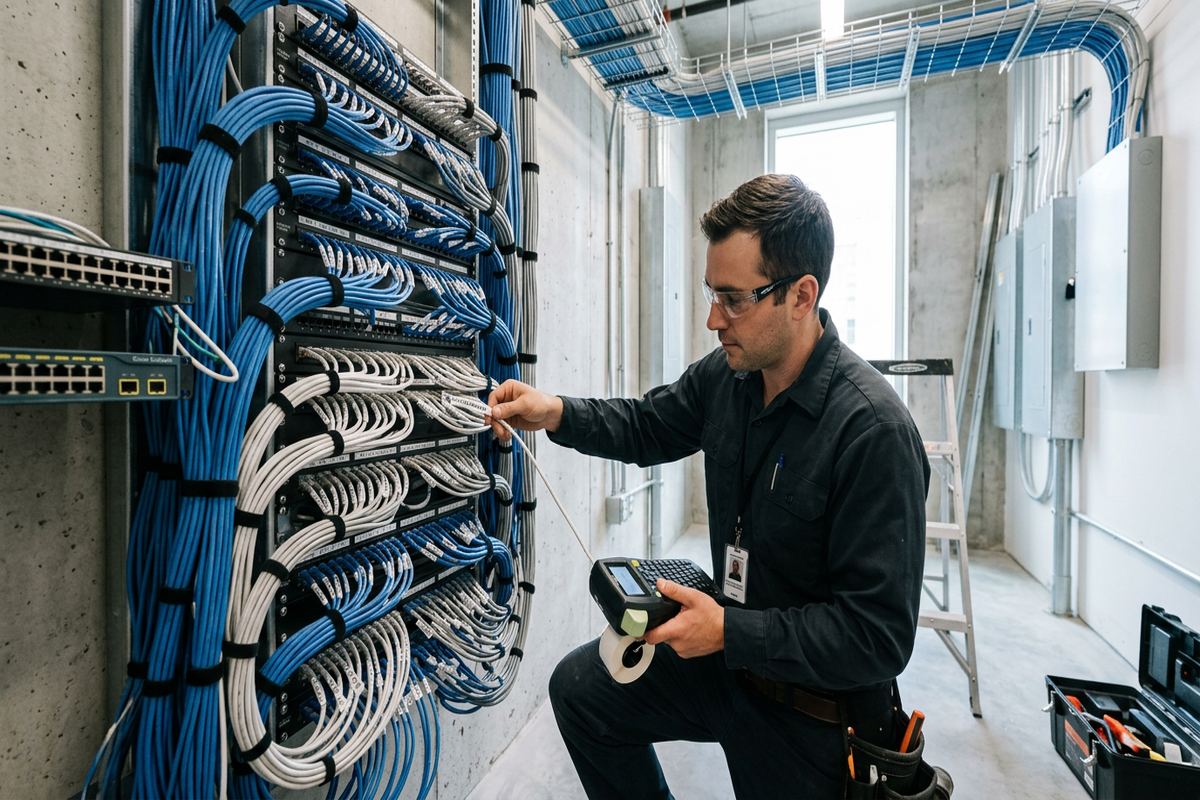
The completed system should be understandable to the people who operate and maintain it. We install continuous labelled cable runs, terminate them at planned outlets and patch panels, and configure network equipment on site where included in the scope. Handover uses the customer’s own administrative credentials rather than installer-owned accounts. We also provide an as-built record showing relevant cable labels, outlet locations and installed equipment. This gives the business a practical reference for troubleshooting, adding users, moving equipment or arranging later work without tracing every connection again.
- Site assessment before pricing
- Copper and fibre backbone options
- Rack, cabinet and patch-panel installation
- Business Wi-Fi access point placement
- Customer-owned administrative credentials
Planning a Brockville Business Network
Good planning begins with how the business actually uses its space. Staff workstations, payment terminals, printers, phones, cameras, access control panels, displays and building systems may all depend on the network, but they do not necessarily belong on the same segment or require identical connections. During a Brockville site assessment, we review current devices, planned expansion, internet service entry, power availability and areas where dependable wired connections matter most. This helps prevent a design based only on today’s desk count while overlooking meeting rooms, warehouse scanners, guest access or future tenant changes.
A written scope turns those observations into a defined installation plan. It covers proposed equipment, cable categories, cable routes, device placement, exclusions, equipment ownership and warranty details. Where existing equipment will remain, the scope can identify what will be reused and what cannot be verified until it is tested. It also notes work that depends on others, such as electrical receptacles, internet provider activation, landlord permission or access above a shared ceiling. Clear boundaries are particularly useful in leased commercial spaces, where building infrastructure and tenant-owned network equipment may have different responsibilities.
Capacity decisions should be based on applications and physical layout rather than broad coverage claims. Wired connections usually suit fixed equipment and high-traffic devices, while Wi-Fi supports mobile users and locations where cabling to each endpoint is impractical. Switch capacity, Power over Ethernet requirements, uplink speed, rack space and spare ports should be considered together. In Butler’s Creek or Centennial properties with room to expand, allowing organized capacity for additional outlets can simplify later changes. The aim is a maintainable network with sensible room for growth, not unnecessary hardware.
- Application and device review
- Internet handoff location planning
- Defined equipment ownership
- Power over Ethernet calculations
- Allowance for practical expansion
Structured Cabling and Network Racks
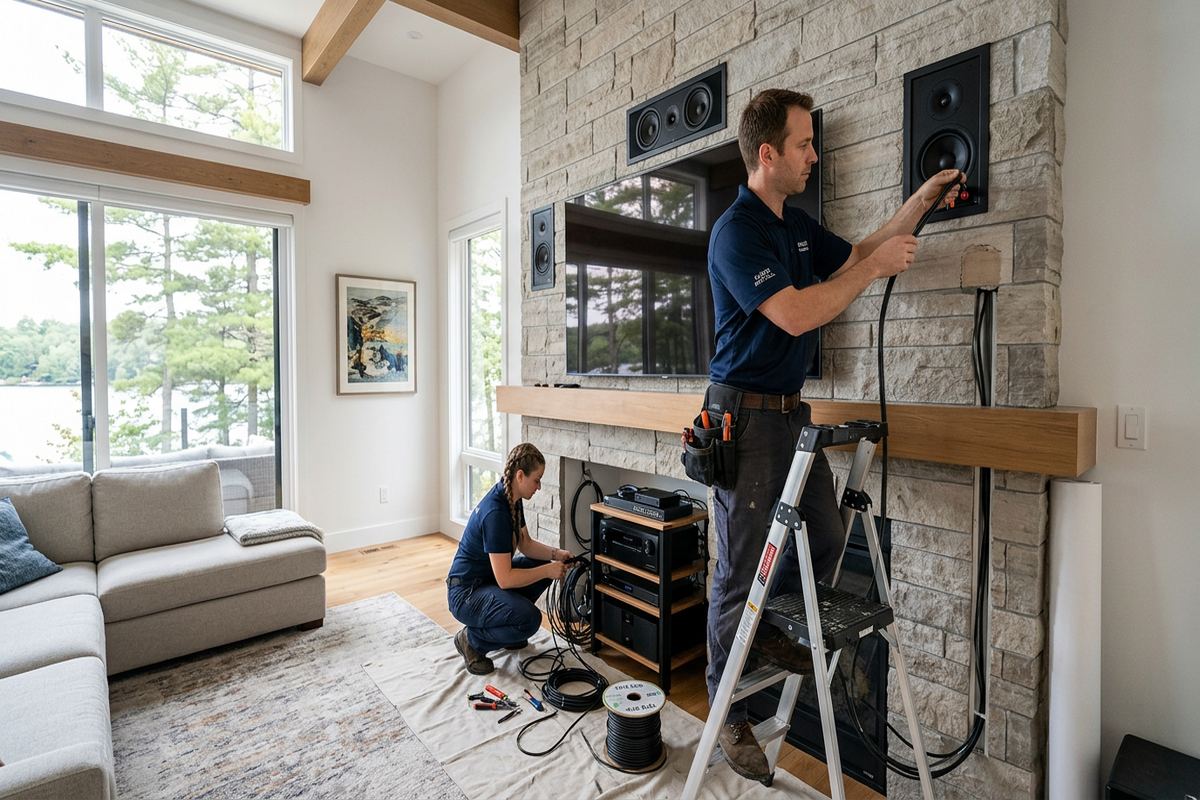
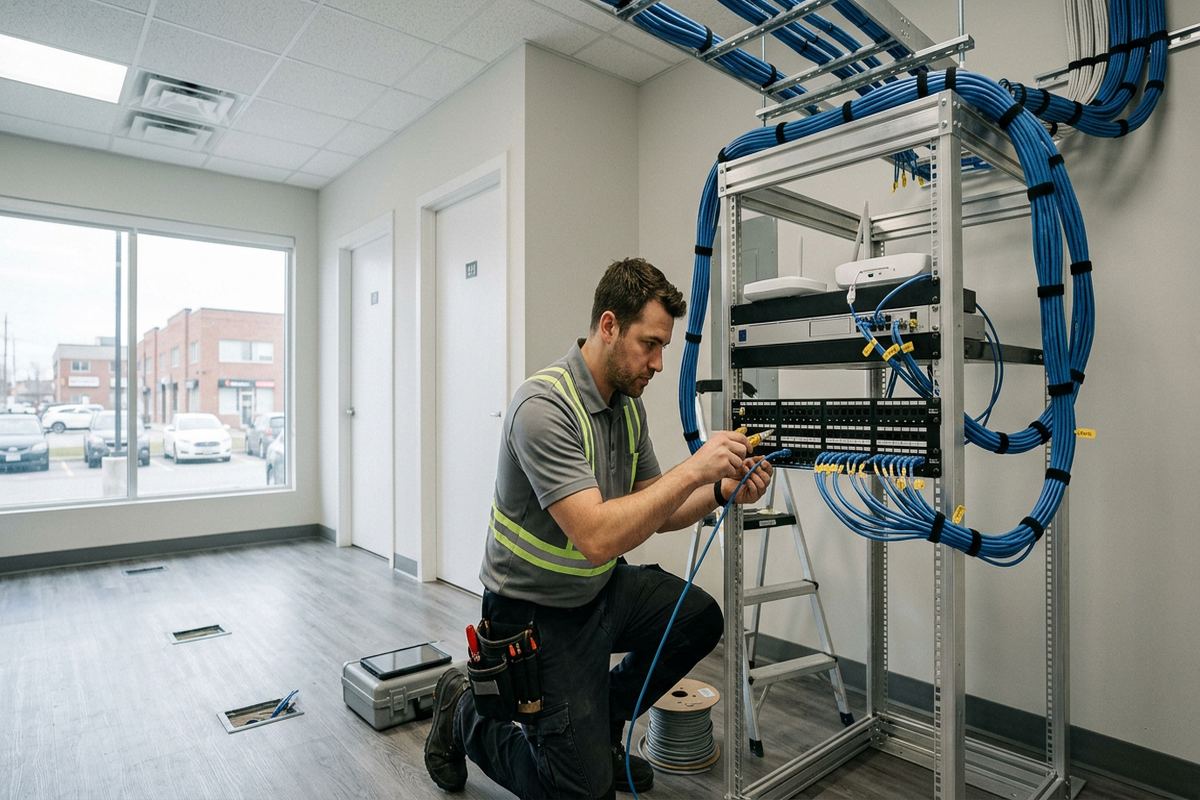
Structured cabling provides the permanent pathways between network equipment and connected devices. Each run should follow an approved route, respect bend limits and separation requirements, and end at a labelled termination point. UnifiedLink installs continuous labelled cable runs rather than concealing intermediate joins that complicate testing and repair. Depending on the scope, cabling may serve work areas, wireless access points, VoIP phones, security cameras, access control equipment or displays. Routes are planned around accessible ceilings, service rooms, surface pathways and existing penetrations while limiting disruption to occupied areas and finished surfaces.
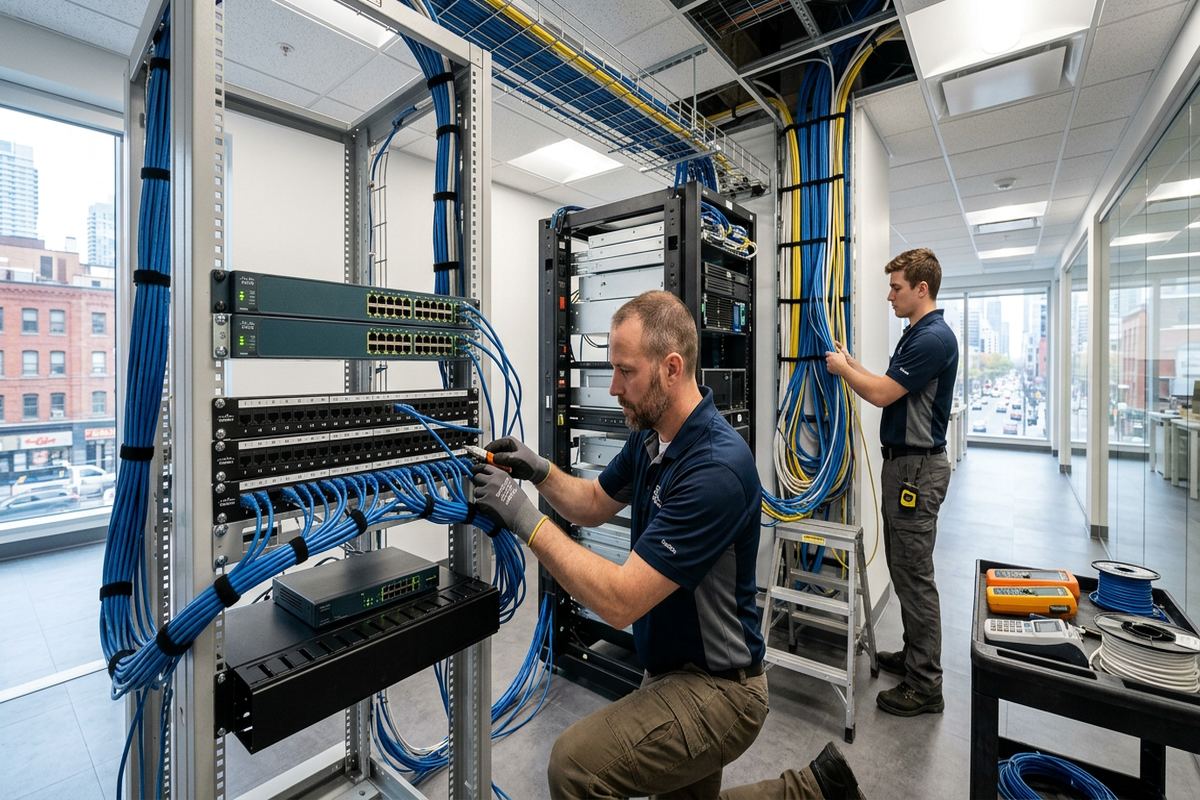
Rack and cabinet organization matters because even a correctly wired system becomes difficult to service when patching is undocumented or equipment is unsupported. We can install wall-mounted cabinets or floor racks where the room, equipment load and access conditions permit. Patch panels, horizontal or vertical management, switches and related devices are arranged to keep labels visible and cables serviceable. Ventilation, clearance, electrical supply and physical security are reviewed before placement. In smaller Brockville shops, a compact cabinet may be suitable; larger offices or industrial units may require more rack capacity and dedicated pathways.
Testing confirms whether installed cabling performs as intended and whether outlet labels correspond with the rack. Results and documentation depend on the agreed scope, cable type and project requirements, so required reporting should be identified before work starts. Existing cabling can also be inspected, traced and tested when its origin or condition is uncertain. Older renovations sometimes leave abandoned lines, mixed labelling or cables routed through unsuitable areas. Identifying reusable infrastructure can reduce unnecessary work, but questionable cable should not be treated as dependable solely because a connected device currently shows a network link.
- Continuous home-run cable installation
- Clearly matched outlet and rack labels
- Patch panels and cable management
- Existing cable tracing and testing
- Copper or fibre pathway planning
Brockville, Ontario
Commercial network installation in Brockville, scoped in writing first
Book a site assessment and get equipment, routes, exclusions, and warranty on paper before anything is installed.
Commercial Wi-Fi Design in Brockville
Reliable commercial Wi-Fi depends on access point location, construction materials, channel conditions and user demand. Placing one device near the internet modem rarely provides consistent service across divided offices, stock rooms or multiple floors. In Brockville’s stone heritage properties, thick masonry can reduce signal between rooms and levels, while metal shelving, mechanical equipment and concrete walls create different obstacles in commercial and industrial spaces. We assess intended coverage areas and wired backhaul options, then position access points to serve users without relying on repeated wireless hops or improvised desktop extenders.
Business wireless networks often need separate access for staff, guests and connected systems. Segmentation can limit unnecessary communication between device groups and make policies easier to manage. The exact design depends on the selected firewall, switches, access points and applications, along with any requirements imposed by a corporate IT provider. We configure included equipment on site and record relevant network details for handover. Administrative access is transferred using the customer’s own credentials, allowing the owner or authorized technology provider to maintain control after installation rather than depending on an installer-controlled account.
Coverage must also be balanced with capacity. A meeting room full of mobile devices presents a different demand than a corridor where users pass through briefly, and a restaurant dining area differs from a warehouse aisle. Outdoor or semi-exposed areas require equipment and mounting methods suitable for the location. Riverfront exposure, winter weather and repeated freeze-thaw cycles make exterior penetrations and cable transitions especially important in Brockville. Exterior work should use appropriate pathways, drip management and sealing methods, with device placement chosen to limit water entry and physical damage.
- Wired backhaul for access points
- Staff and guest network separation
- Coverage planned around masonry walls
- Indoor and exterior access point options
- Customer-controlled network administration
Low-Impact Installation for Older Buildings
Older and architecturally sensitive properties require more route planning than open commercial construction. Stone walls can be difficult to penetrate cleanly, may conceal irregular cavities and should not be drilled without understanding the proposed route on both sides. In Downtown Brockville, discreet surface raceway, existing service paths or less visible utility areas may offer a lower-impact alternative. We discuss visible finishes and mounting locations during the assessment so the written scope reflects acceptable methods. The objective is not to hide every component at any cost, but to produce a neat, serviceable installation without avoidable damage.
Frame construction presents different opportunities and constraints. Accessible basements, attics or dropped ceilings may provide useful routes, although insulation, fire separations, plumbing and electrical systems can limit access. Exterior walls can introduce vapour barriers and temperature changes that should not be disturbed casually. Where a cable must pass outdoors, the pathway and entry point need suitable support and sealing. Brockville winters, snow accumulation and freeze-thaw movement can expose weak penetrations over time, so indoor routes are preferred when practical and exterior transitions are planned for the actual environment rather than treated as ordinary interior cabling.
Permission can be as important as the technical design. Condo corporations, commercial landlords and property managers may control common walls, risers, exterior façades, ceiling spaces or telecommunications rooms. Before installation, the customer should confirm required approvals and any building rules governing work hours, access, insurance documentation or restoration. UnifiedLink can define proposed routes and mounting points for review, but authorization remains a property matter. This step helps avoid arriving on site with a workable design that cannot proceed because a shared pathway, exterior location or building-controlled room has not been approved.
- Discreet routes through heritage interiors
- Surface raceway where appropriate
- Careful masonry and frame assessment
- Weather-conscious exterior sealing
- Routes documented for approval
Networks for Offices, Shops and Industrial Units
Office networks must support predictable connections across workstations, meeting rooms, phones, printers and shared services. A renovation or office move is a useful time to place outlets according to furniture plans rather than extending loose patch cords after occupancy. In North Brockville and Centennial commercial spaces, accessible ceilings may simplify distribution, but routes still need coordination with lighting, heating systems and fire separations. We can work from an approved floor plan, identify outlet labels before termination and centralize cabling in an appropriate rack location so moves and additions remain manageable after staff begin using the space.
Retail and hospitality environments add payment devices, guest Wi-Fi, displays, cameras and back-office systems to the network. These devices should not be connected casually to one unrestricted wireless network. Cable routes must also avoid customer trip hazards, exposed patching and mounting locations vulnerable to impact or tampering. In Downtown Brockville storefronts, limited back-room space or finished heritage interiors may influence cabinet size and access point placement. Installation planning considers trading hours, access to work areas and the need to leave active equipment stable when new infrastructure is being added around it.
Industrial units, workshops and warehouses can involve longer pathways, high ceilings, metal structures, dust and equipment that affects wireless propagation. The network design may need fibre between areas, protected cable routes, elevated access points or enclosures selected for the location. Device placement should reflect how scanners, computers, cameras or controllers are used on the floor rather than relying only on an office-oriented plan. Where lifts, shutdowns or restricted work zones are involved, those conditions are identified in advance. Electrical work or specialized supports outside low-voltage scope can then be coordinated with the appropriate trade.
- Office moves and renovation cabling
- Retail and payment network planning
- Warehouse wireless access points
- Protected industrial cable routes
- Coordination with other trades
Installation, Configuration and Handover
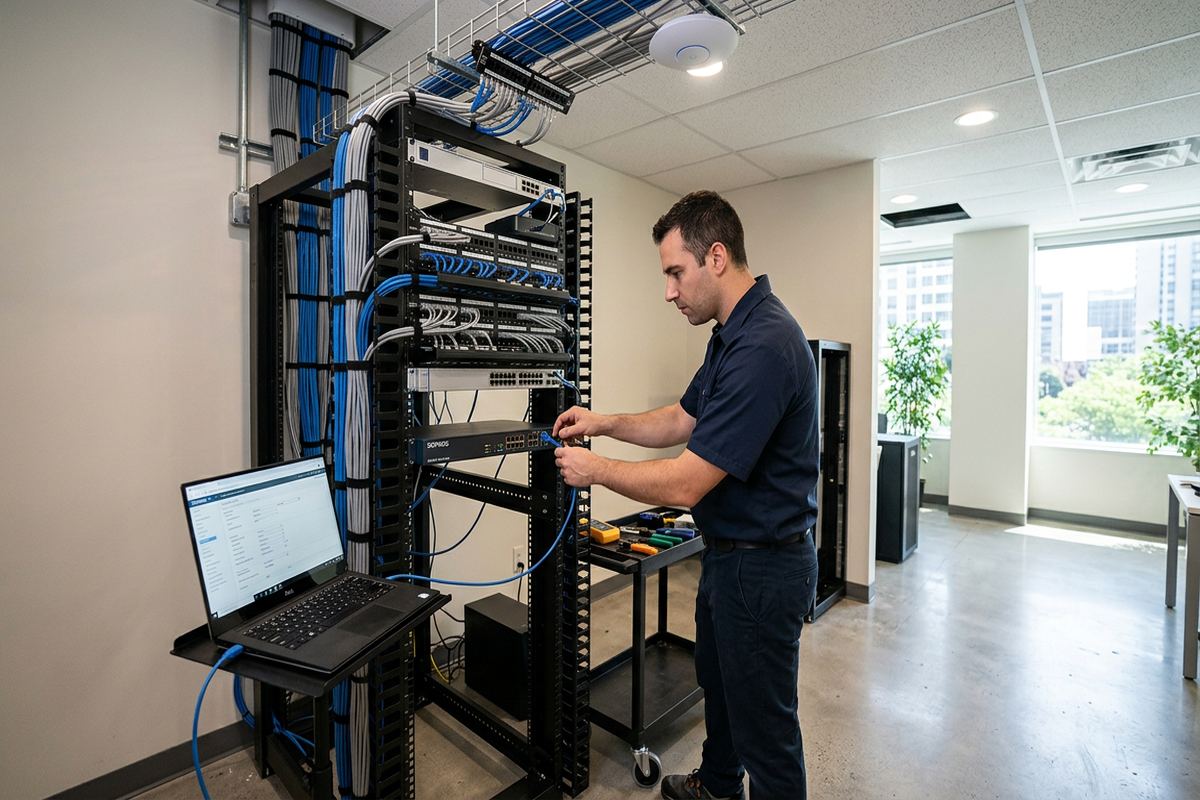
Once the scope is accepted and required access is confirmed, installation follows the approved device positions and pathways. Work may include pulling cable, installing supports, mounting outlets, terminating patch panels, assembling the rack and connecting specified network equipment. We keep labels consistent from the field outlet to the rack so technicians can identify each run without guesswork. If site conditions reveal a blocked route, concealed obstruction or construction detail that changes the plan, the route is reviewed rather than altered without explanation. This keeps the finished Brockville installation aligned with the agreed scope and building requirements.
On-site configuration can include switches, access points and other included network components, provided the required settings and responsibilities are defined. Coordination may be needed with an internet provider, managed IT company, software vendor or corporate administrator. UnifiedLink handles the physical network installation and agreed configuration without assuming control of services outside the scope. Passwords and administrative accounts are established with the customer’s own credentials. If another provider will manage the system, relevant records can be prepared for an authorized handoff so ownership and ongoing support responsibilities remain clear.
Handover is part of the installation rather than an optional afterthought. The customer receives an as-built record appropriate to the project, identifying installed equipment, cable labels and relevant device locations. We review basic physical organization and explain where incoming service, patching and network hardware are located. Warranty and equipment ownership are set out in the written scope, including any customer-supplied or reused components. With one accountable contractor for the agreed low-voltage work, the customer has a defined contact for questions about installation details instead of sorting responsibility among separate cabling and Wi-Fi installers.
- Installation follows the written scope
- Consistent end-to-end cable labels
- On-site equipment configuration
- Customer-owned credentials at handover
- As-built installation record
Arranging Network Installation in Brockville
The first step is to describe the property, current issue and intended result. Helpful details include the Brockville address, building type, number of floors, approximate device count, internet provider status and whether the space is occupied, under renovation or awaiting possession. Floor plans and photographs can support early discussion, but they do not replace an assessment where routes, wall construction and equipment locations must be verified. Requests sent during business hours are answered the same day, while after-hours requests are answered the next business day. Site assessment timing depends on the service and travel distance.
At the assessment, we review accessible pathways, proposed outlet areas, rack or cabinet placement, wireless coverage needs and limitations created by finishes or shared building infrastructure. Businesses in Rivers Edge, Butler’s Creek, Downtown Brockville and other local areas may have very different construction and access conditions despite being close geographically. Any need for landlord, condo or property manager approval should be identified before work is scheduled. We also discuss whether existing cabling, switches or access points are expected to remain, since reuse may require tracing, testing and confirmation of compatibility.
Pricing follows the site assessment rather than being based on an assumed outlet count alone. The written scope covers equipment, cable routes, device placement, exclusions, equipment ownership and warranty, giving the customer a defined basis for approval. Changes can then be discussed before installation rather than discovered during handover. UnifiedLink can provide one accountable contractor for the agreed cabling, network hardware installation and on-site configuration. The result is a Brockville commercial network built around the property, users and operational requirements, with labelled infrastructure and records that remain useful after the project is complete.
- Same-day reply during business hours
- Assessment timing based on service and travel
- Written scope before installation
- Approvals identified before scheduling
- Single contractor for agreed network work
Brockville neighbourhoods we cover
- Downtown Brockville
- North Brockville
- Rivers Edge
- Butler's Creek
- Centennial
Commercial network installation in Brockville — common questions
Do you assess my Brockville property before quoting?
Yes. Pricing follows a site assessment because cable routes, construction, ceiling access, device locations and existing infrastructure affect the work. The written scope identifies equipment, proposed routes, placement, exclusions, ownership and warranty. Requests received during business hours are answered the same day; after-hours requests are answered the next business day. Assessment timing depends on the service and travel distance.
Can you install network cable in a stone building?
Yes, subject to site conditions and approval of the proposed methods. Brockville stone buildings often need discreet routes that avoid unnecessary penetrations through visible masonry. Existing service paths, utility areas or surface raceway may be suitable alternatives. We review wall construction and finishes before defining the route, and any landlord, condo or heritage-related property approvals remain the customer’s responsibility.
Will you reuse my existing network cabling?
Existing cabling may be reusable if its type, route, condition, termination and performance are suitable. We can trace and test lines within the agreed scope, but a working link alone does not confirm that a cable will support the intended application. Brockville properties with several past renovations may contain abandoned or inconsistently labelled runs, so verification should occur before they are included in the final design.
Can staff and guest Wi-Fi be separated?
Yes. Where the selected network equipment supports it, staff, guest and connected-device traffic can be separated and configured according to the agreed requirements. The appropriate design depends on the firewall, switches, access points and any corporate IT policies. We configure included equipment on site and hand over administrative access using the Brockville customer’s own credentials, with relevant details added to the project record.
Do exterior network devices need special protection?
Exterior equipment and pathways need to suit the mounting location and exposure. In Brockville, winter temperatures, snow, moisture and freeze-thaw cycles make cable support, entry-point sealing and drip management important. Riverfront properties may require particularly careful placement. We prefer protected indoor routes where practical and specify exterior methods in the written scope when an outdoor access point, camera connection or building-to-building pathway is required.
Can you work in a leased or condo commercial unit?
Yes, once the required permissions and access arrangements are in place. Brockville landlords, condo corporations or property managers may control exterior walls, risers, common ceilings and telecommunications rooms. We can document proposed routes and mounting points for review. The customer is responsible for obtaining approvals, while the written scope can identify building restrictions, excluded restoration work and coordination required with electricians, internet providers or other trades.
Coverage in Brockville is confirmed against the address before we quote. See everything we install in Brockville or the province-wide commercial network installation page.