UnifiedLink installs outdoor speaker systems for homes, businesses and shared properties in Brockville. We plan speaker placement, amplification, wiring and controls around the listening area, building construction and expected use. Installations account for heritage masonry, riverfront exposure, winter freeze-thaw cycles and approval requirements, with discreet mounting and properly sealed exterior penetrations.
Outdoor Speaker Planning for Brockville Properties
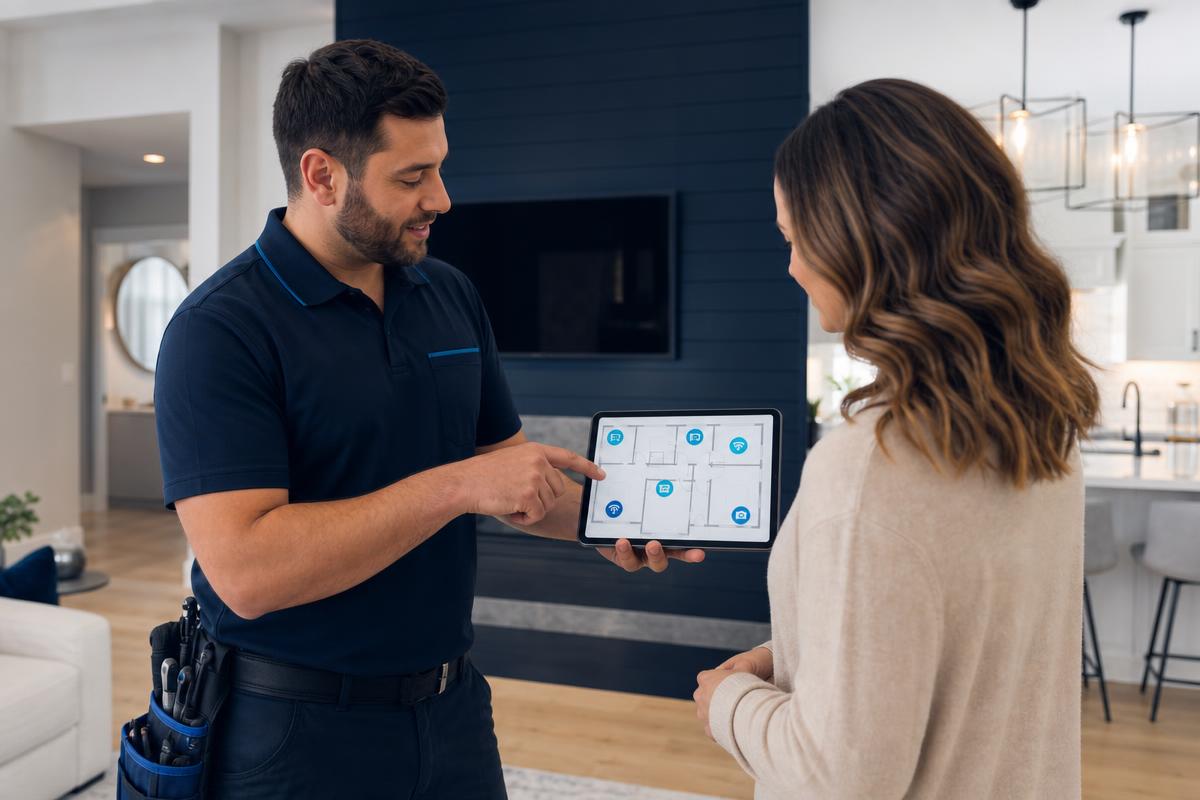
A useful outdoor audio system begins with the area people actually occupy, not the number of speakers listed on a box. During a Brockville site assessment, we review patios, decks, gardens, pools, walkways or customer seating areas and note where sound should remain controlled. Speaker direction, mounting height and spacing affect intelligibility, bass balance and how far audio carries. We also identify nearby windows, adjoining yards and reflective stone surfaces that may create harsh sound or unwanted spill beyond the intended listening zone.
Brockville properties vary considerably in layout and construction. A compact Downtown Brockville courtyard may need carefully aimed wall speakers at modest levels, while a larger riverfront property may benefit from several speakers distributed through the landscape. More speakers operating evenly can often provide better coverage than a small number driven loudly. We consider normal listening positions, seasonal furniture, vegetation and future property changes so that the design remains practical without placing equipment where it obstructs movement, views or routine maintenance.
The assessment also establishes how the outdoor system will connect to indoor equipment. Depending on the requirement, audio may come from a dedicated amplifier, an existing receiver, a commercial mixer or a multi-zone system. We check available outputs, supported speaker loads, control options and suitable equipment locations before recommending connections. Pricing follows the site assessment, with a written scope covering equipment, cable routes, device placement, exclusions, equipment ownership and warranty. This makes system boundaries clear before drilling, cabling or mounting begins.
- Listening-area and sound-spill review
- Speaker spacing and aiming plan
- Amplifier compatibility assessment
- Proposed cable routes and penetrations
- Written scope before installation
Weather-Resistant Installation in Brockville
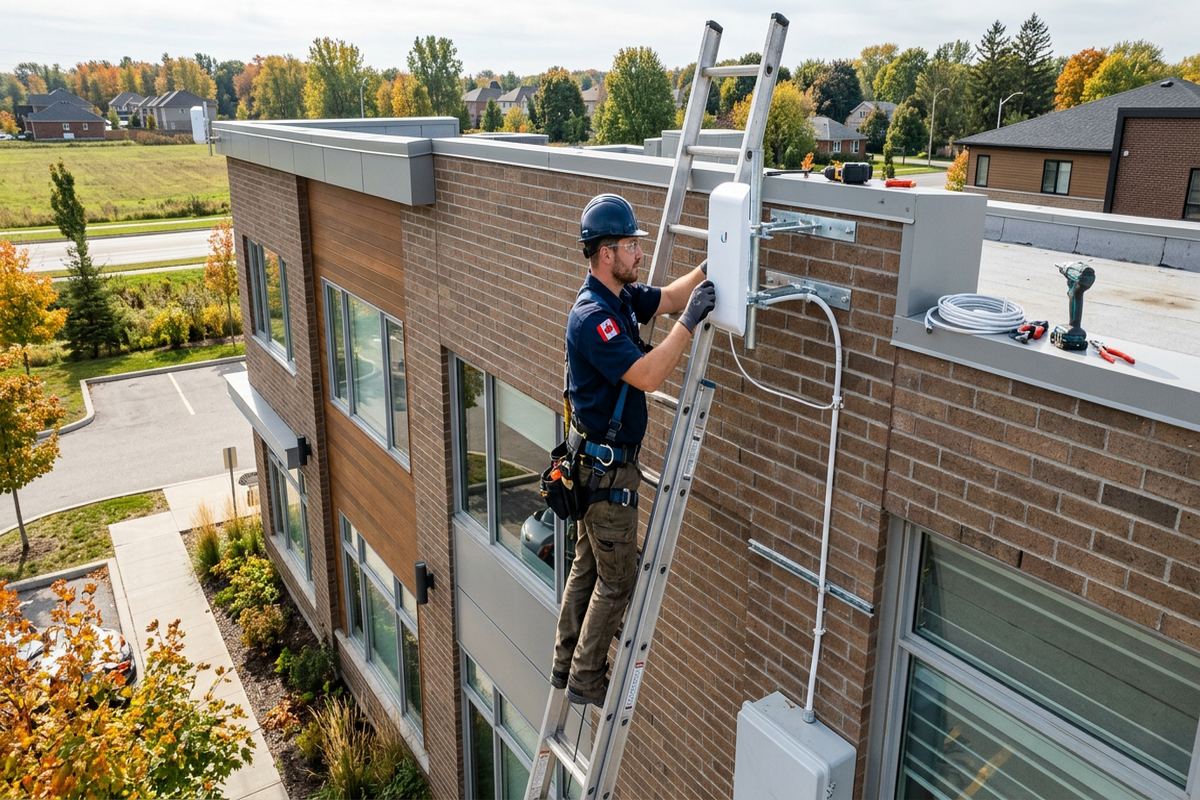
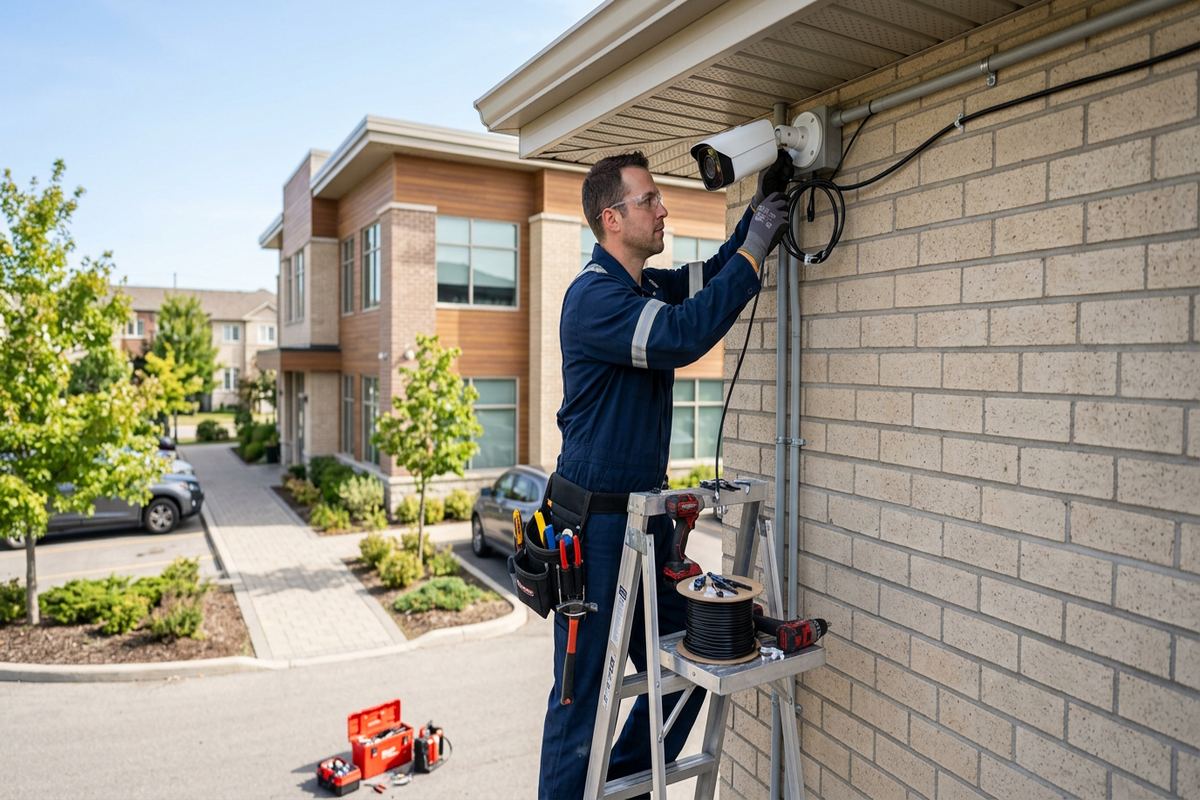
Outdoor equipment in Brockville faces rain, snow, wind, sunlight and repeated freeze-thaw cycles. A speaker labelled for outdoor use still depends on correct orientation, stable mounting and protected connections. We select mounting positions that limit direct water collection and avoid creating places where ice can pry against brackets or cable entries. Exposed connectors receive appropriate protection, while cable loops and entry points are arranged to shed water. The goal is a durable installation, not simply equipment that survives its first season.
Exterior penetrations require particular care because water can travel along cable or enter gaps around fasteners. We choose entry locations based on wall construction, interior access and drainage, then seal penetrations with materials suitable for the surface and exposure. Cable is supported rather than left loose against siding, masonry or roofing. Where a route approaches grade, we account for snow accumulation, landscaping work and standing water. Continuous labelled cable runs reduce hidden joins and make later inspection, repair or system changes more straightforward.
Riverfront properties can have greater exposure to wind-driven moisture, while open decks may provide little shelter from sun and snow. Equipment placement therefore considers prevailing exposure as well as sound coverage. We do not treat an eave as complete weather protection if runoff, drifting snow or condensation can still reach a device. For seasonal properties, controls and amplifiers should remain in an appropriate interior environment. The written scope identifies outdoor-rated components and explains any maintenance, storage or operational limits relevant to the selected system.
- Outdoor-rated speakers and connection hardware
- Sealed, water-shedding cable entries
- Mounting planned for freeze-thaw movement
- Supported exterior cable routes
- Exposure review for riverfront sites
Discreet Mounting on Heritage and Modern Buildings
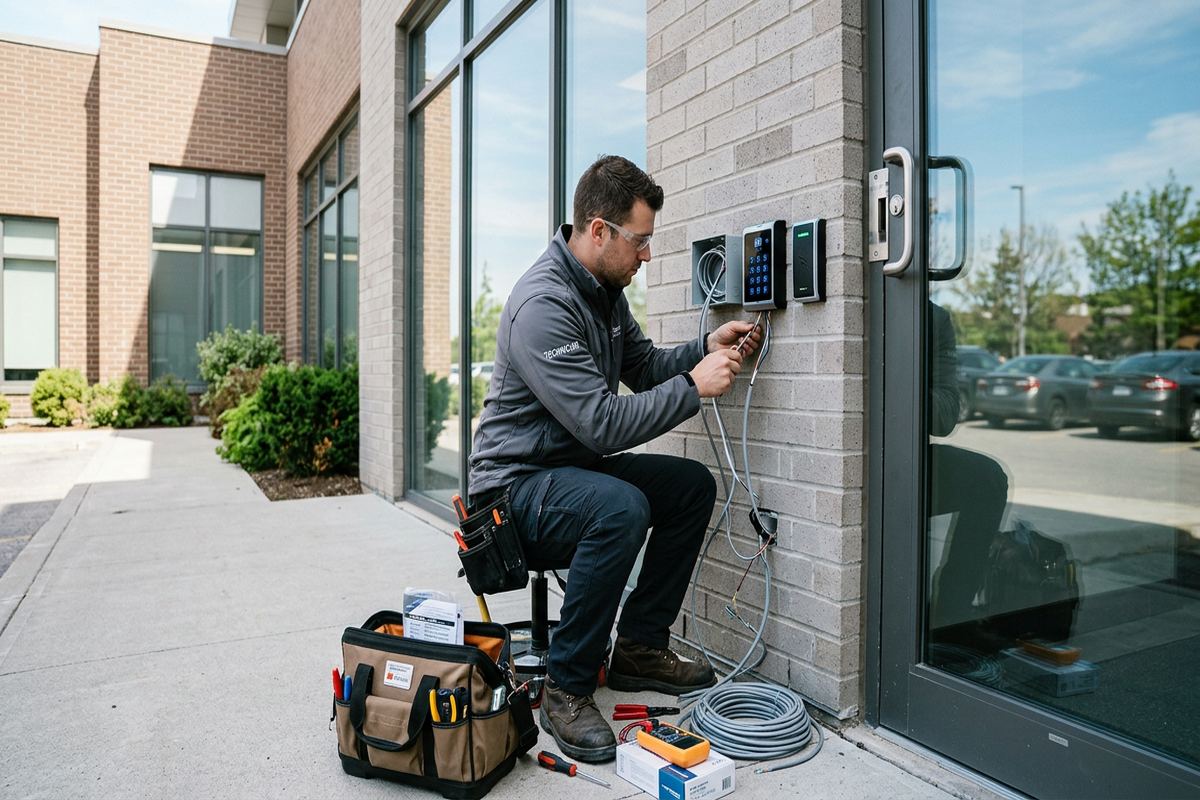
Stone heritage homes in Brockville call for low-impact mounting and a clear understanding of the wall assembly. Drilling into historic masonry without planning can damage stone faces, mortar joints or concealed finishes. Where mounting is appropriate, bracket locations and fasteners are chosen for the substrate, speaker weight and expected wind load. Cable routes may follow architectural lines, enter through a less visible frame section or use another practical path. We discuss visible changes before work begins rather than deciding placement after holes have been made.
Frame construction presents different issues. Vinyl, wood and fibre-cement siding are finishes, not structural anchors, so speaker brackets must connect to suitable backing or framing. We assess trim details, rain-screen cavities, soffits and interior access before selecting hardware. Penetrations are kept limited and sealed without preventing intended drainage behind the cladding. In newer areas such as North Brockville or Centennial, existing utility spaces may offer clean cable paths, but finished basements and insulated walls can still require careful routing and clearly stated access limitations.
Discretion involves more than hiding cable. Speakers should relate to the building’s lines, remain reachable for service and avoid dominating a façade or river view. Colour, bracket projection and aiming angle all influence the finished appearance. Landscape speakers may suit some gardens, although they require routes protected from gardening tools, settlement and moisture. We balance appearance with serviceability because equipment concealed in an inaccessible cavity creates future problems. Any proposed surface raceway, visible cable or landscape route is identified in the scope before installation proceeds.
- Low-impact heritage mounting approach
- Substrate-appropriate anchors and brackets
- Cable routes aligned with building details
- Visible raceway disclosed in advance
- Service access retained after mounting
Brockville, Ontario
Outdoor speaker installation in Brockville, scoped in writing first
Book a site assessment and get equipment, routes, exclusions, and warranty on paper before anything is installed.
Speaker Coverage for Patios, Gardens and Pools
Even coverage lets listeners hear music or speech without forcing the nearest speaker to an uncomfortable level. For a residential patio, we generally aim speakers toward the property and occupied area rather than outward over neighbouring lots. Long or irregular yards may need separate coverage zones, particularly where a deck, pool and garden sit at different elevations. Brockville’s stone walls, fences and hard landscaping can reflect high frequencies, so placement and aiming are adjusted after listening tests instead of relying only on a drawing.
Poolside installation adds safety and routing considerations. Speakers and cable paths must stay clear of circulation areas, covers, gates and maintenance equipment. Amplifiers and power supplies belong in suitable locations away from water exposure, and any electrical work outside the low-voltage scope must be completed by the appropriate trade. Landscape routes are planned around drainage, frost movement and likely digging areas. We also discuss whether the owner wants one shared volume level or separate control for spaces used differently throughout the day.
Properties in Rivers Edge and Butler’s Creek may have open yards where sound travels farther than expected, especially when vegetation is sparse. Distributed speakers can keep levels lower near property boundaries while maintaining useful coverage at seating positions. On-site configuration includes balancing channels or zones, setting practical level limits where supported and confirming control from the intended devices. Final aiming is completed with the owner’s normal use in mind, whether the system is primarily for background music, gatherings, announcements or television audio.
- Patio, deck and garden coverage mapping
- Inward aiming to limit sound spill
- Separate zones for distinct activity areas
- Pool-area routing and equipment review
- On-site listening and level adjustment
Brockville Commercial Outdoor Audio
Restaurants, retail sites, offices and hospitality properties use outdoor audio for background music, paging or scheduled programming. The design should support the operational purpose without making staff manage a complicated system. We review seating layouts, entrances, service areas and expected noise conditions, then plan speakers and controls accordingly. A Downtown Brockville patio may require compact, carefully directed coverage, while a commercial strip can involve a longer façade and multiple zones. Each arrangement needs suitable amplification and accessible, secure control points.
Commercial systems must also fit the building’s communications and operating environment. We confirm whether outdoor audio needs to integrate with an existing mixer, indoor music system, paging source or network-based controller. Speaker type and amplifier loading are matched as a complete system rather than selected independently. Cable routes avoid unnecessary exposure in customer areas and are labelled at the rack or equipment location. Where tenant improvements affect common walls, façades or shared pathways, work proceeds only after the required property or landlord approvals are in place.
Industrial units may need outdoor paging at loading areas, fenced yards or staff entrances rather than music reproduction. These sites can have machinery noise, large reflective walls and long cable distances that change the equipment approach. We assess speech intelligibility, mounting height, coverage direction and safe access for installation. The scope distinguishes audio work from electrical supply, network changes or structural work by others. After installation, staff receive a practical handover covering normal source selection, level control and any zone or schedule functions included in the project.
- Background music and paging designs
- Multi-zone commercial speaker coverage
- Integration with mixers and source equipment
- Labelled rack and equipment connections
- Staff handover for daily operation
Amplifiers, Zones and Audio Controls
An outdoor speaker is only one part of the signal path. The amplifier must suit the speaker configuration, cable distance, number of zones and expected listening level. Connecting too many speakers to an unsuitable receiver can cause shutdowns, distortion or equipment damage. We verify available channels, impedance requirements and supported wiring methods before installation. Larger distributed systems may use a different architecture from a small residential pair. Recommendations are based on the complete load and control requirement, not on speaker appearance alone.
Control options range from a simple local input to app-based streaming, wall controls or integration with an existing multi-room system. We clarify who will operate the system, which devices need access and whether guests or staff should have limited control. Reliable operation also depends on the property’s Wi-Fi or wired network when network audio is used. If coverage is weak near the patio, that issue should be addressed rather than assuming an outdoor speaker installation will correct it. Account ownership and subscriptions remain with the customer.
On-site configuration includes naming zones, checking left and right assignments where relevant, setting source behaviour and testing each speaker from the normal control device. We avoid leaving systems tied to installer accounts. At handover, the customer receives control using their own credentials, along with an as-built record showing equipment and cable information. For Brockville businesses, this documentation helps future staff or service providers understand the installation. For homeowners, it removes guesswork when changing internet service, mobile devices or audio sources later.
- Amplifier and speaker-load verification
- Independent zone control where required
- Streaming and source configuration
- Customer-owned account setup
- As-built system and cable record
Approvals and Cable Routing in Brockville
Ownership and approval affect what can be mounted outside. Condo corporations may control balconies, exterior walls and common pathways even when the speaker serves one unit. Tenants in Brockville should obtain landlord approval for drilling, visible raceway or equipment attached to the building. Commercial occupants may also need property-management consent and coordinated access to utility or ceiling spaces. We identify these dependencies during assessment, but the customer remains responsible for securing required permissions unless the written scope assigns a specific coordination task.
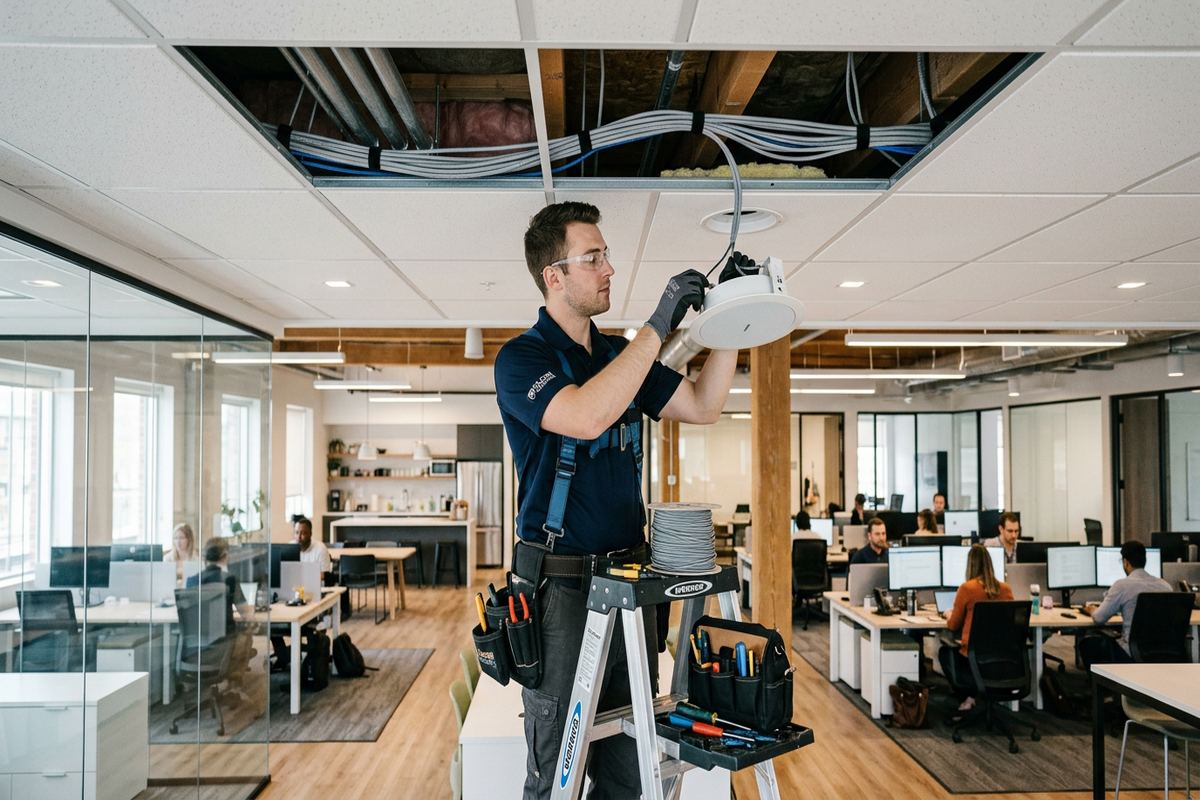
Cable routing is planned from the amplifier to each speaker before installation starts. We prefer continuous labelled runs, avoiding concealed splices that can corrode or become difficult to locate. Interior routes may pass through basements, utility rooms, ceiling spaces or unfinished areas, while exterior portions require suitable cable and support. Masonry buildings often offer fewer concealed pathways than frame construction, so a discreet surface route may be the least disruptive option. Any necessary access holes, removable finishes or excluded restoration work are described in the written scope.
One accountable contractor coordinates the low-voltage audio work, including speaker mounting, cable installation, terminations, configuration and testing within the agreed scope. If the project requires a new electrical receptacle, structural modification, lift access or restoration beyond low-voltage work, those items are identified rather than assumed. This is especially important in older Downtown Brockville buildings, where wall cavities and previous renovations may not match visible construction. A route can be adjusted on site only after its effect on appearance, access and scope is discussed.
- Condo and landlord approval review
- Continuous labelled speaker cabling
- Routes planned before drilling begins
- Clear exclusions for work by others
- Coordinated low-voltage installation and testing
Testing, Handover and Outdoor Audio Service
Installation is followed by testing from source to speaker, not merely a check that sound is present. We listen for consistent output, distortion, incorrect polarity and unexpected level differences between areas. Mounts, exposed cable supports and sealed entries receive a final visual review. For zoned systems, controls are tested independently so that one area does not unintentionally affect another. Brockville weather can expose small installation weaknesses over time, making proper support and sealing as important as the initial audio adjustment.
The handover explains how to select sources, adjust zones, connect approved devices and shut down or restart equipment when necessary. Customers receive their own credentials for configured services or control platforms rather than relying on an installer account. An as-built record documents speaker locations, cable identification and core equipment details included in the installation. We also review practical care, such as avoiding pressure washing directly at speakers or connections and reporting loose brackets, damaged cable or water entry before continued operation causes a larger fault.
Service requests sent during business hours are answered the same day, while after-hours requests are answered the next business day. Site assessment timing depends on the service and travel distance. When troubleshooting an existing Brockville outdoor system, useful details include which zones are affected, whether the issue changes with the source, and any recent construction, network or weather event. We assess the complete signal path because a silent speaker may result from cabling, amplification, control settings, network connectivity or the speaker itself.
- Source-to-speaker operational testing
- Final bracket and seal inspection
- Customer control and credential handover
- As-built installation documentation
- Structured troubleshooting for existing systems
Brockville neighbourhoods we cover
- Downtown Brockville
- North Brockville
- Rivers Edge
- Butler's Creek
- Centennial
Outdoor speaker installation in Brockville — common questions
Can you mount speakers on a Brockville stone home?
Yes, where the masonry condition and proposed location allow secure, low-impact mounting. Brockville’s stone heritage homes require careful review of stone, mortar, trim and interior access before drilling. We choose fasteners and cable routes for the actual substrate, discuss visible changes in advance and may recommend an alternative mounting surface when direct attachment could damage historic material or create water-entry risks.
Will outdoor speakers stay installed through winter?
Outdoor-rated speakers can remain installed year-round when their specifications allow it and they are mounted correctly. In Brockville, brackets, cable supports, connections and penetrations must account for snow, ice and repeated freeze-thaw cycles. Placement should shed water rather than collect it. Amplifiers and non-weather-rated source equipment remain in a suitable interior location, with any manufacturer care requirements reviewed during handover.
How many speakers does my patio need?
The number depends on patio dimensions, listening positions, nearby boundaries, mounting options and the level of coverage expected. A small Brockville courtyard may need one carefully placed pair, while a long deck or combined pool and garden area can benefit from distributed speakers or separate zones. We assess the site before pricing and plan for even sound at moderate levels rather than relying on a few speakers playing loudly.
Can outdoor speakers use my existing receiver?
Possibly. We first check the receiver’s available channels, supported speaker load, zone functions and condition. Existing equipment must safely support the proposed number and type of speakers. We also confirm how sources and volume will be controlled. If the receiver is unsuitable, the written scope will identify an appropriate amplifier or system change rather than connecting a configuration that may distort, shut down or damage equipment.
Do I need condo or landlord approval?
Often, yes. Brockville condo corporations may control exterior walls, balconies, soffits and common cable pathways. Tenants generally need landlord permission before drilling or attaching equipment. Commercial occupants may require approval from property management for façade work or access to shared spaces. Obtain the relevant written permission before installation. We can provide proposed device locations and cable-routing information to support the approval process.
Can you limit sound reaching neighbouring properties?
Speaker placement and configuration can reduce unnecessary spill, although no outdoor system can guarantee that sound remains within a property line. In Brockville, we aim speakers toward occupied areas, use distributed coverage where suitable and adjust levels during on-site testing. Fences, stone walls, open riverfront exposure and yard elevation can change how sound travels, so these conditions are considered during the site assessment.
Coverage in Brockville is confirmed against the address before we quote. See everything we install in Brockville or the province-wide outdoor speaker installation page.