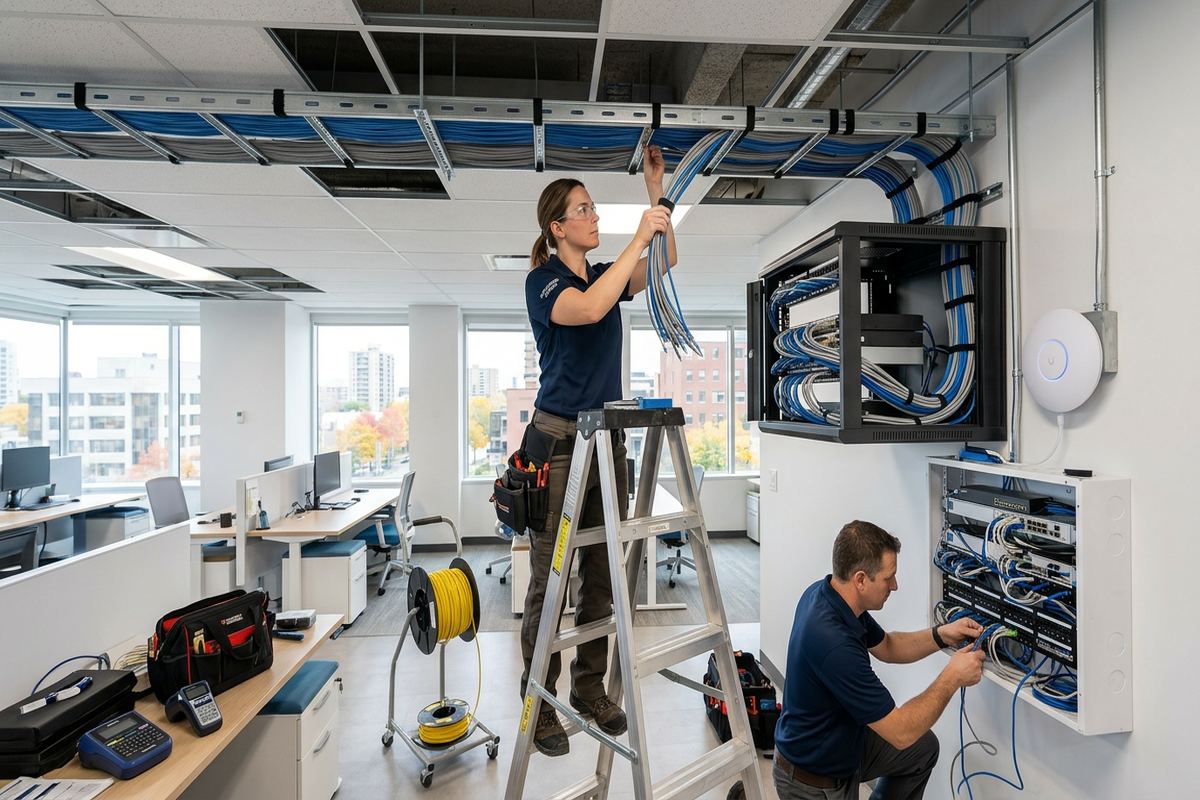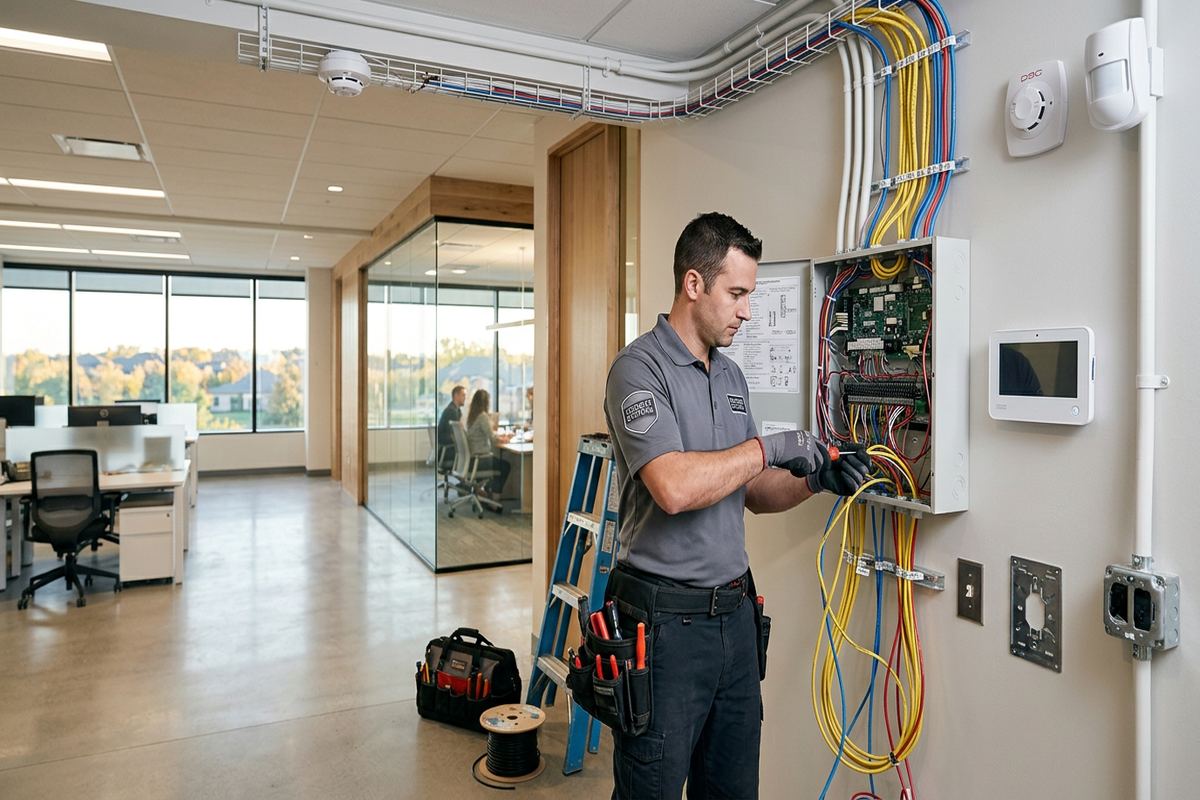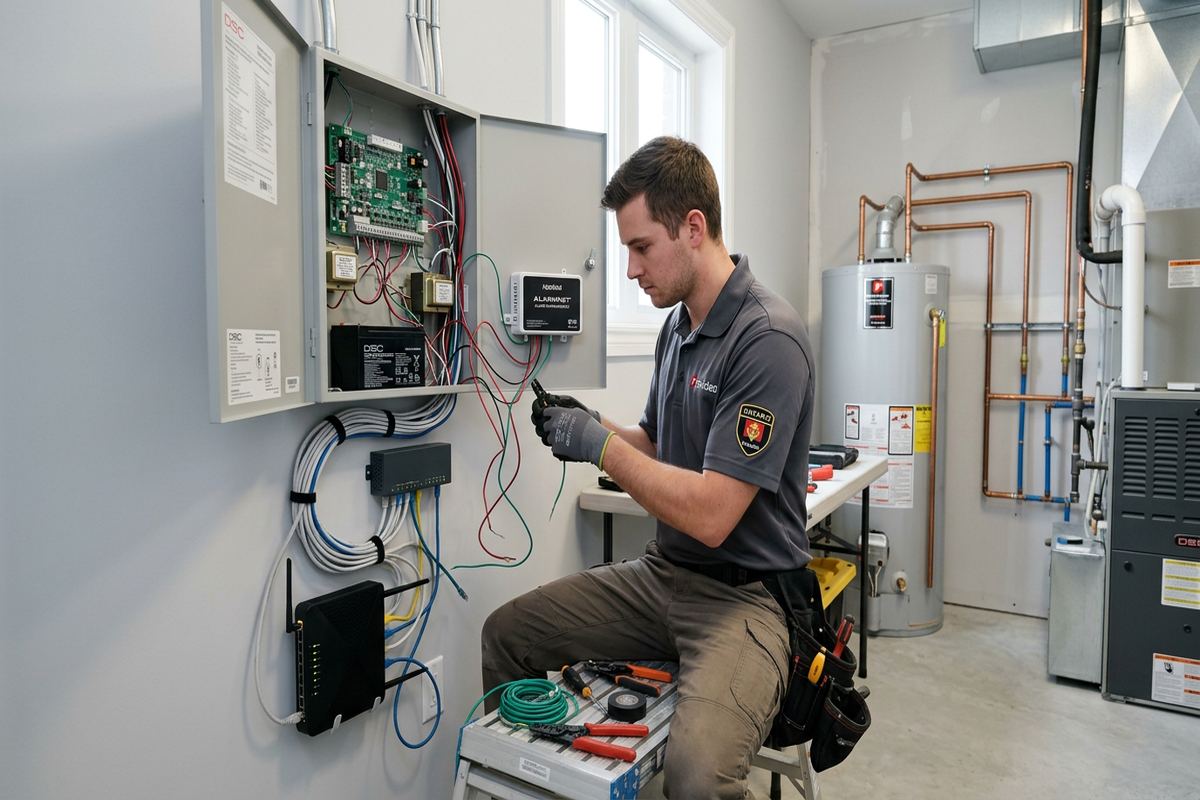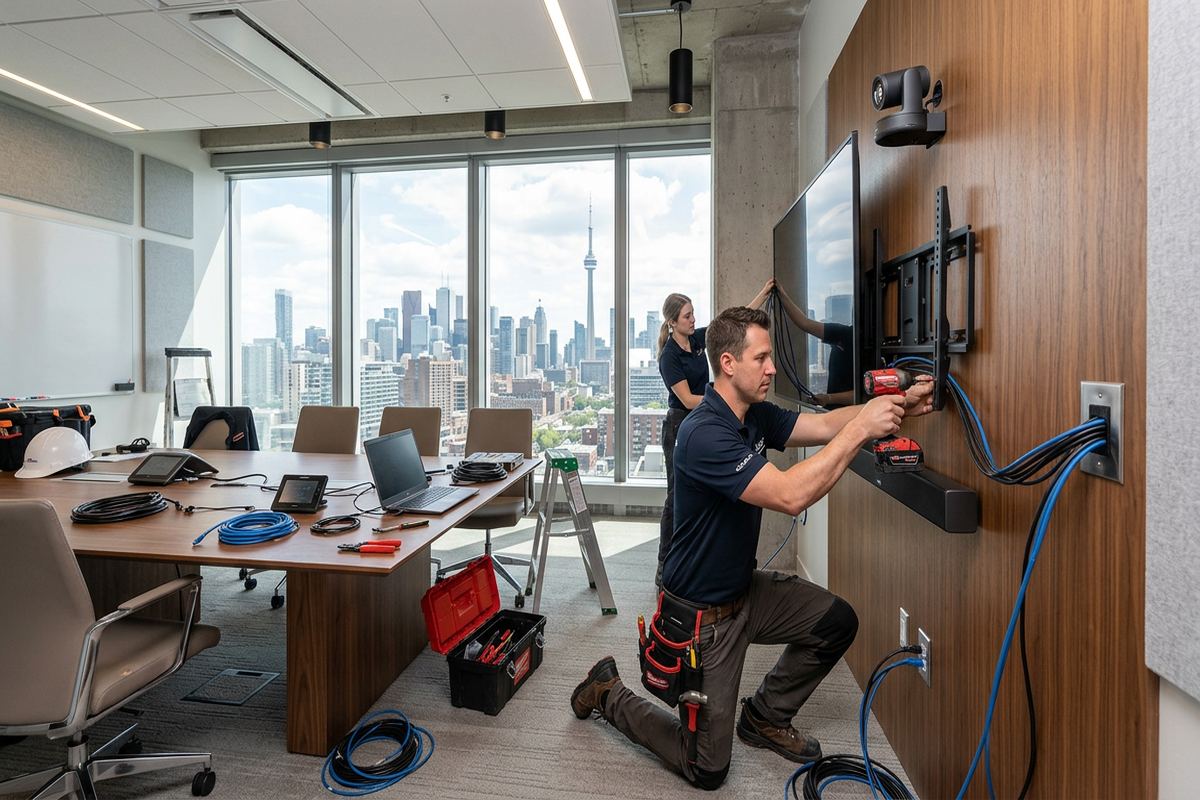
UnifiedLink installs wireless alarm systems for homes and businesses across Barrie and Simcoe County. We assess the property, plan sensor and control locations, configure the system on site and explain how it works. Each project receives a written scope covering equipment, placement, exclusions, ownership and warranty, followed by a documented handover using the customer’s own credentials.
Wireless Alarm Planning for Barrie Properties
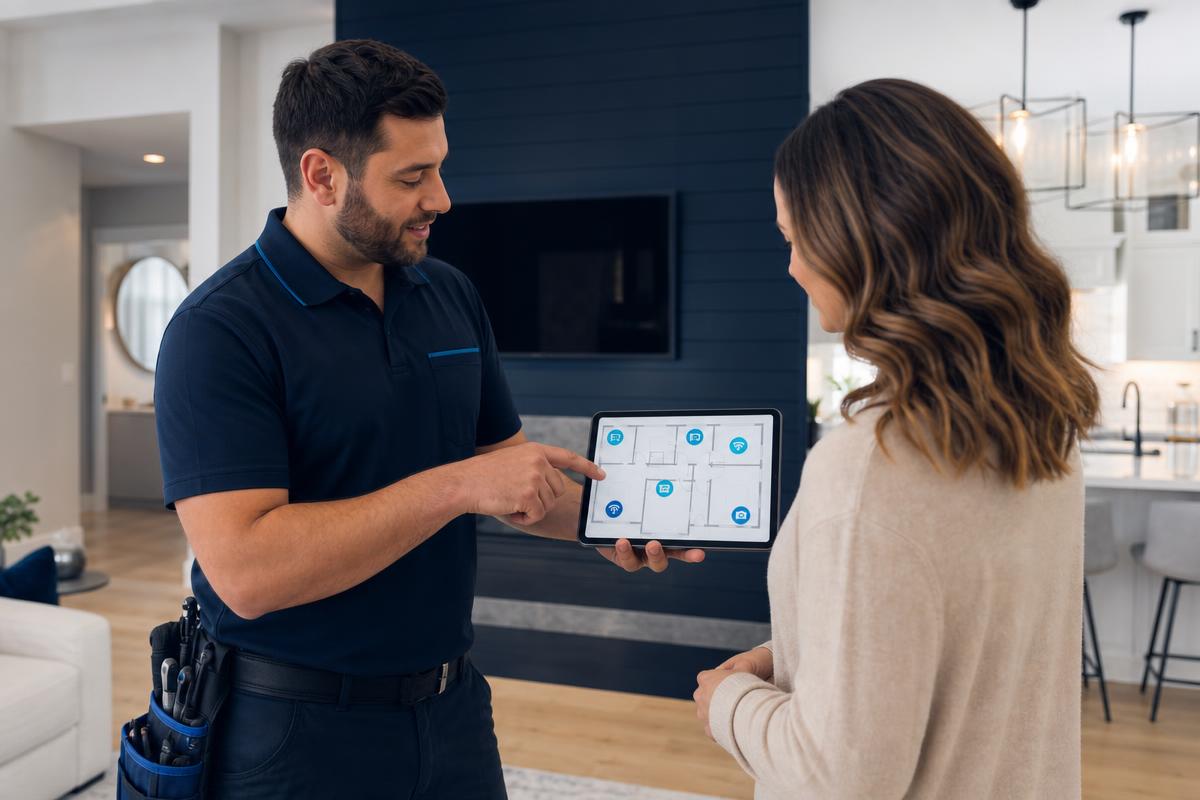
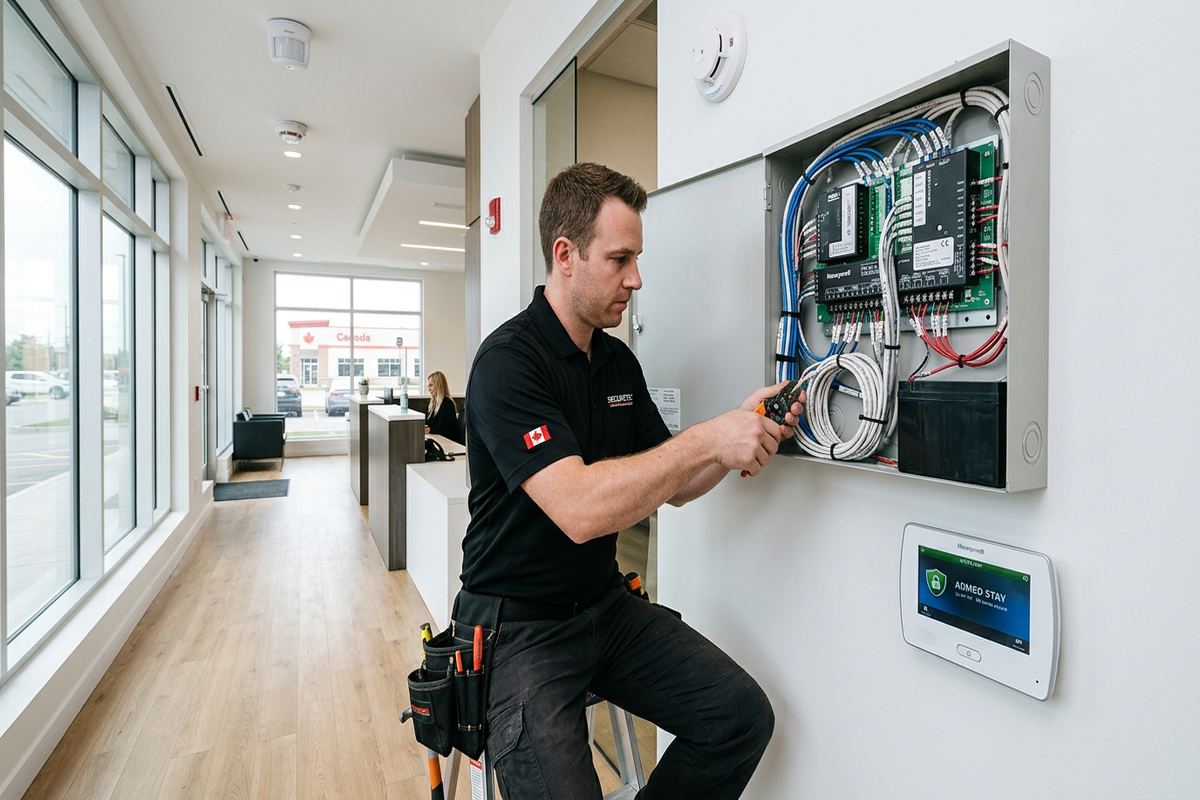
A reliable wireless alarm begins with a property assessment rather than a box of devices placed wherever convenient. In Barrie, layouts vary from older Downtown Barrie buildings and established Allandale houses to open-plan homes in south-end subdivisions. We review entrances, accessible windows, attached garages, basement routes, stairways and areas containing higher-value equipment. The assessment also considers normal movement through the property, including children, pets, employees and deliveries. This information guides sensor selection and placement while reducing blind spots, nuisance alarms and unnecessary devices that complicate daily use.
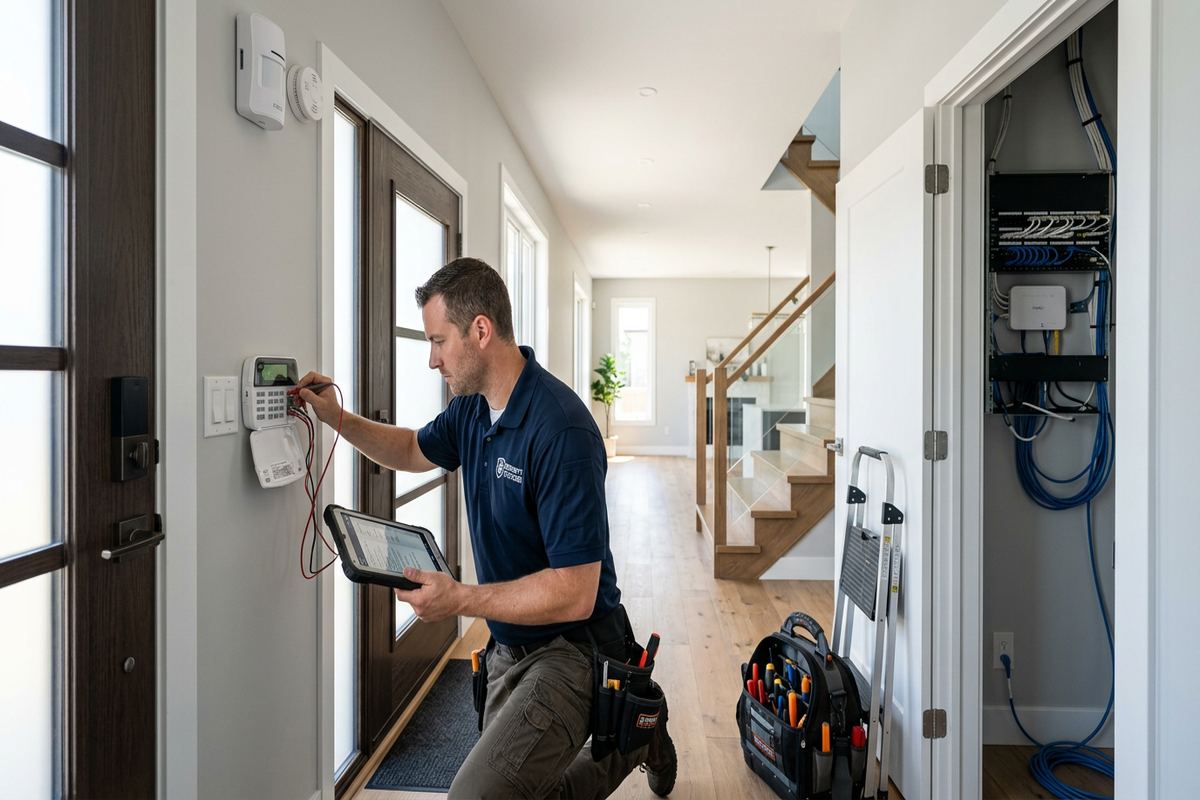
Wireless does not mean every component operates without wiring. Door contacts, motion detectors and some keypads may communicate by radio, while the main control panel still needs dependable power and may use Ethernet or cellular communication. We identify suitable panel locations, available outlets and practical communication paths before preparing the scope. Equipment should not be hidden inside metal cabinets, beside sources of interference or in locations that make future service difficult. Where a wired connection improves reliability, we explain why and include the proposed route instead of making assumptions during installation.
Before pricing, UnifiedLink provides a site assessment suited to the service and travel distance. The resulting written scope identifies equipment, device placement, expected cable routes, exclusions, equipment ownership and warranty details. This step is useful for waterfront homes, rental properties, commercial units and newly finished houses where drilling or visible equipment may require additional approval. It also gives the owner a chance to confirm which doors, rooms and outbuildings need coverage. Changes can then be discussed before installation, when they are easier to evaluate and document clearly.
- Property assessment before pricing
- Written equipment and placement scope
- Entry-point and movement review
- Communication and power planning
Choosing Wireless Alarm Devices in Barrie
Device selection should match the opening, room and risk rather than follow a standard package. Typical systems combine door and window contacts, indoor motion detectors, keypads, sirens and a central control unit. Glass-break detection may suit rooms with broad glazing, while water, low-temperature or smoke-related devices may be considered where compatible with the selected alarm platform and applicable requirements. We explain what each device detects, what it does not detect and how it reports an event. Owners can then choose practical coverage without assuming that one sensor protects an entire floor or every possible entry.
Barrie homes often have attached garages, walkout basements, patio doors and seasonal access points that deserve separate consideration. A contact may confirm that a door opened, while a motion detector can provide interior backup after entry. Detached structures require a radio and environmental review because distance, construction and temperature can affect communication. For businesses in small commercial plazas, device planning may also include rear service doors, stock rooms, offices and shared vestibules. The final design balances detection coverage with how people actually unlock, enter, close and move through the property each day.
Wireless devices depend on batteries and stable radio communication, so their locations must support both operation and future maintenance. We test communication at proposed mounting points instead of relying only on advertised range. Masonry walls, metal doors, mirrors, mechanical equipment and dense utility areas can weaken signals or create inconsistent paths. Frame construction is generally easier for radio coverage, but insulation, ductwork and multiple finished levels still matter. If a location is marginal, options may include moving the control panel, changing the sensor position or selecting compatible equipment that extends communication more appropriately.
- Door and window contacts
- Indoor motion detection
- Keypads, sirens and control panels
- Signal testing at proposed locations
Installation for Barrie Winters and Building Conditions
Barrie’s winters and repeated freeze-thaw cycles affect how alarm equipment should be mounted near exterior openings. Outdoor-rated devices must be selected where exposure is expected, and penetrations need suitable sealing to limit water entry. Even indoor contacts near doors can experience condensation, drafts or movement as materials expand and contract. We place devices on stable surfaces, protect required openings and avoid mounting methods that can loosen with seasonal movement. Exterior alarm components are evaluated for temperature rating, precipitation exposure and direct sunlight rather than being treated like equipment installed in a conditioned interior room.
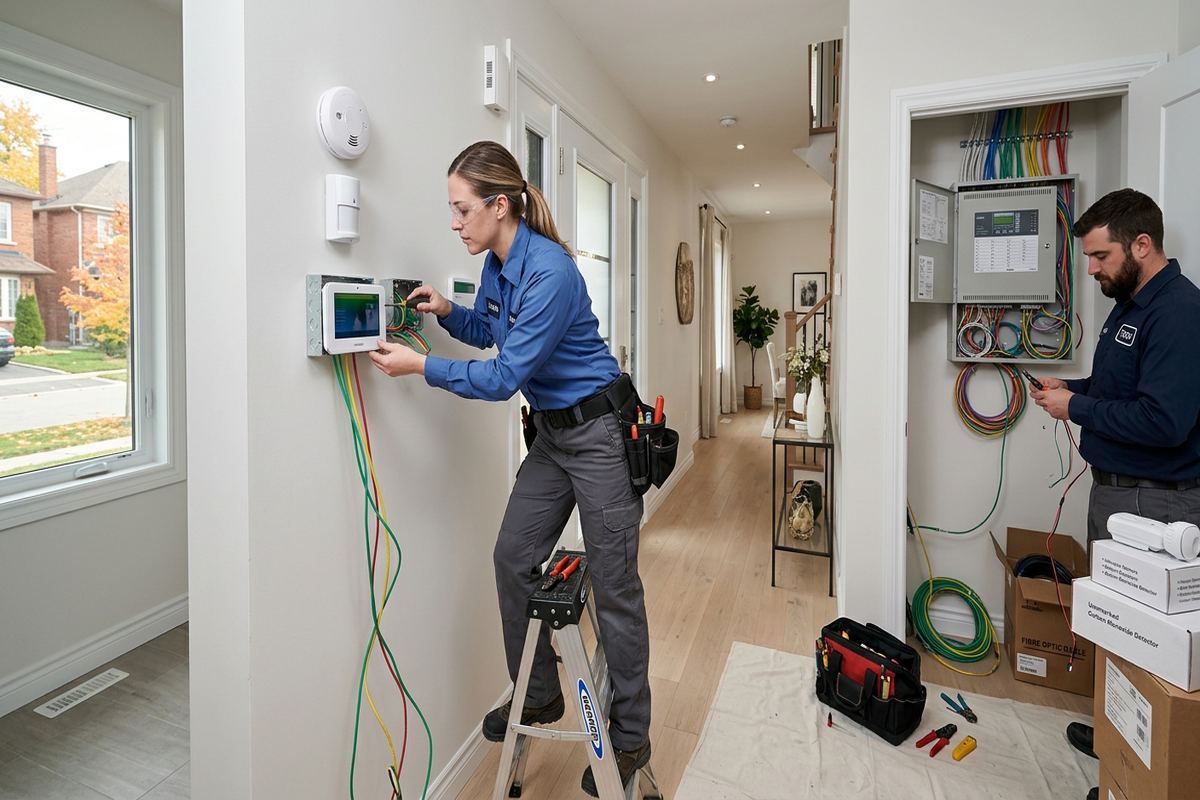
Construction type changes the installation method. Older masonry properties may require different anchors and drilling techniques than frame houses in Holly, Painswick or Innis-Shore. Brick, concrete block, finished wood, vinyl frames and metal commercial doors each present different mounting surfaces. A wireless contact must align correctly when the opening is closed, remain clear of hardware and tolerate ordinary use. Where a visible cable run is required for panel power or communication, we plan the route, use continuous labelled cable and avoid unsupported shortcuts that make later troubleshooting harder or leave the installation untidy.
Waterfront homes can add humidity, wind exposure, seasonal occupancy and detached-building considerations. A sensor that works reliably in a central hallway may not be appropriate inside an unheated boathouse, garage or porch. We verify the rated operating environment before recommending equipment for those locations. Seasonal owners should also consider how local notifications, remote access and communication paths behave during an internet or power interruption. Alarm functions vary by platform and service arrangement, so the scope identifies included capabilities and exclusions rather than implying that every event will always reach every user or destination.
- Temperature-appropriate device selection
- Sealed exterior penetrations
- Mounting suited to masonry or framing
- Continuous labelled cable where required
Barrie, Ontario
Wireless alarm installation in Barrie, scoped in writing first
Book a site assessment and get equipment, routes, exclusions, and warranty on paper before anything is installed.
Alarm Coverage for Barrie Homes
Home alarm design should support normal routines without making the system difficult to use. During the assessment, we discuss the doors residents use, whether the garage is a regular entrance, where pets spend time and which areas may need separate protection at night. Keypad and app controls are located or configured so users can arm and disarm without crossing protected areas unnecessarily. In Ardagh Bluffs and the south end, larger floor plans may need careful radio testing between finished basements, upper floors and garage entries rather than assuming one central panel reaches every device.
Renovations and additions can create less obvious vulnerabilities. A former exterior door may now open into a mudroom, new basement windows may sit near grade, or an addition may introduce rooflines that provide access to upper openings. We review the current building instead of relying on original plans. Existing alarm equipment is also inspected before reuse because compatibility, ownership and condition cannot be assumed. If components remain tied to another provider or account, the written scope states what can be integrated, what must be replaced and which functions depend on separate services.
Condominium and rental installations require another layer of planning. Owners, tenants and landlords should confirm who can approve drilling, device mounting, shared-entry work or changes near fire and life-safety equipment. Condominium rules may restrict work on doors, frames, corridors and other common elements even when the alarm serves one unit. UnifiedLink can define the proposed work clearly for approval, but the customer remains responsible for obtaining required permissions. The handover also establishes whose credentials control the system, helping avoid an installer, previous occupant or unrelated property manager retaining routine account access.
- Coverage based on household routines
- Pet and nighttime mode planning
- Existing equipment compatibility review
- Condo and landlord approval considerations
Wireless Alarm Systems for Barrie Businesses
Small commercial plazas, professional offices and street-level units need alarm layouts based on operations as well as physical access. A front entrance may handle customers all day, while rear doors, delivery points and stock areas have different schedules and users. We document opening and closing routines, staff-only rooms and spaces that may remain occupied after public hours. This helps establish practical alarm areas and user permissions. In Downtown Barrie, mixed-use or adjoining premises can also require attention to shared walls, common corridors and landlord-controlled areas that are outside an individual tenant’s scope.
Commercial strips and industrial units often contain metal framing, overhead doors, concrete block and equipment that can affect wireless performance. Loading areas may also experience colder temperatures, vibration and dust compared with finished offices. We test device communication under site conditions and choose mounting points that remain accessible for inspection and battery replacement. Door contacts for frequently used service entries require firm alignment and protection from routine impacts. If a wireless approach is unsuitable at a particular opening, we explain the limitation and propose a documented alternative rather than placing a marginal device simply to avoid cabling.
Account management matters when several employees use the alarm. Individual user codes help an owner add or remove access without distributing one shared credential to everyone. Available permissions, schedules and event records depend on the selected platform, so they are configured according to the approved scope. We can also coordinate alarm work with access control, cameras, structured cabling or network improvements when those systems are part of the project. One accountable contractor then manages the defined low-voltage work, while each system retains its own purpose, limitations and documentation.
- Front and rear entry protection
- Staff-specific alarm credentials
- Stock and service-area coverage
- Coordination with other low-voltage systems
Configuration, Testing and Barrie Handover
Physical installation is followed by complete on-site configuration. Each enrolled sensor is named by its actual location, such as east patio door or second-floor office, rather than receiving a vague number that is difficult to interpret later. We set available entry delays, alarm areas, user permissions and notification options according to the written scope. Sirens, keypads, control units and communication paths are checked as applicable. Clear naming is particularly useful in larger Barrie homes and multi-room businesses because an alert immediately identifies the affected opening or area for the owner.
Testing covers more than confirming that a device appears in an app. We open protected doors and windows, walk-test motion areas, verify tamper indications where supported and confirm that signals reach the control unit consistently. Communication and notification functions are tested within the limits of the selected equipment and service. Users also practise routine arming, disarming and alert review before handover. If pets, HVAC movement or business activity could affect a detector, we review those conditions and adjust approved settings or placement while remaining within the device manufacturer’s intended installation requirements.
At handover, the customer receives control through their own credentials rather than an account retained by the installer. We provide an as-built record showing installed device locations and other relevant system details. The owner is shown how to manage users, recognize common status messages and perform routine checks. Equipment ownership and warranty terms follow the written scope. This documentation is valuable when a Barrie property changes managers, tenants or service providers because the next authorized person can understand what was installed without reconstructing the system from unlabelled devices and incomplete account information.
- Location-based sensor naming
- Functional testing of every device
- Customer-controlled account credentials
- As-built system record
Wireless Reliability and Ongoing Maintenance in Barrie
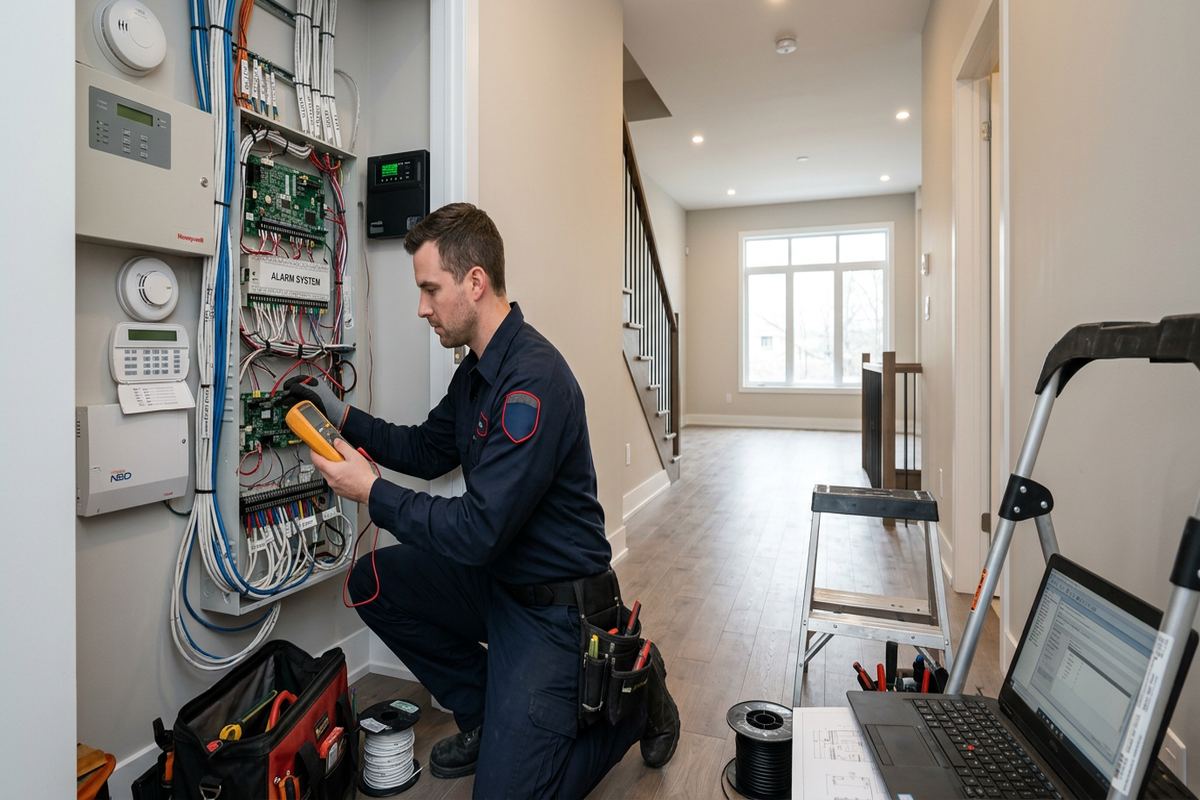
Wireless alarm systems require routine attention after installation. Batteries eventually need replacement, openings can shift and renovations may change radio conditions or movement patterns. Owners should respond to low-battery, tamper and communication warnings rather than clearing them repeatedly. Periodic testing confirms that contacts still align, motion detectors have not been blocked and users remember normal operation. In Barrie, seasonal changes can be especially relevant at exterior doors and unheated spaces. A device showing intermittent trouble during a cold period should be investigated before it becomes a persistent fault.
Internet, cellular and local alarm operation are related but not identical. Some systems can continue sounding locally when internet service is unavailable, while remote notifications or app control may depend on a working communication path. Cellular features can require compatible equipment and a separate service arrangement. Backup battery duration also varies with the panel, battery condition and connected load. We explain the selected system’s behaviour during common outages and record included communication methods in the scope. This gives the owner a realistic operating plan instead of a broad promise that every function remains available indefinitely.
Changes should be documented as the property evolves. Replacing a door, finishing a basement, adding shelving or moving a business partition can alter sensor alignment and coverage. New Wi-Fi equipment or metal storage may also affect some wireless paths. Contacting the installer before or during a renovation makes it easier to protect devices and preserve intended operation. Where cabling is added, UnifiedLink uses continuous labelled runs and updates relevant records. Keeping device names, user lists and the as-built information current reduces confusion when troubleshooting or transferring responsibility to another authorized person.
- Battery and communication warning review
- Seasonal contact alignment checks
- Outage behaviour explained clearly
- Records updated after system changes
Arranging Wireless Alarm Installation in Barrie
The process starts with a discussion about the Barrie property, current concerns and desired daily operation. Useful details include property type, approximate layout, number of exterior openings, existing alarm equipment, internet availability and any detached or unheated areas. For a business, we also ask about staff access, delivery doors, operating schedules and landlord requirements. These details help determine the appropriate assessment. They do not replace an on-site review, since construction materials, mounting surfaces, power and radio conditions need to be checked before a final scope and pricing can be prepared.
During the assessment, we walk through proposed protection areas and identify practical device positions. Customers can raise concerns about appearance, pets, children, accessibility, tenant responsibilities or future renovations. We then prepare a written scope covering equipment, cable routes, device placement, exclusions, equipment ownership and warranty. Site assessment timing depends on the service and travel distance. Requests sent during business hours are answered the same day, while after-hours requests are answered the next business day. This response wording concerns the request itself and does not promise a particular installation or assessment date.
Once the scope is accepted and required property approvals are in place, installation can be coordinated around access to the work areas. Furniture, stock or stored items may need to be moved so devices can be mounted and tested properly. UnifiedLink completes the defined installation, configures the system on site and provides the customer’s credential-based handover with an as-built record. For projects involving alarms, cameras, access control, cabling, Wi-Fi, audio or displays, one accountable contractor can coordinate the approved low-voltage scope without blurring the purpose of each system.
- Initial property and needs discussion
- On-site assessment before pricing
- Written scope before installation
- Documented configuration and handover
Barrie neighbourhoods we cover
- Downtown Barrie
- Ardagh Bluffs
- Painswick
- Holly
- Allandale
- Innis-Shore
Wireless alarm installation in Barrie — common questions
Will a wireless alarm work in an older Barrie home?
It often can, but older construction needs an on-site radio and mounting assessment. Masonry, metal ductwork, additions and multiple finished levels can reduce signal strength. UnifiedLink tests proposed device locations and checks power and communication options before finalizing the scope. Where wireless performance is marginal, we explain whether relocation, compatible signal-extension equipment or a wired connection would provide a more dependable result.
Can you install sensors on exterior doors during winter?
Yes, provided the mounting surface and device environment are suitable. Barrie freeze-thaw conditions can affect alignment, sealants and materials around exterior openings. We select appropriate mounting methods, check door movement and seal necessary penetrations. Devices exposed outdoors or in unheated areas must also have suitable operating ratings. Indoor equipment is not automatically appropriate for a porch, detached garage or other exposed location.
Do I need approval in a Barrie condo or rental?
Possibly. Condominium rules may limit drilling or mounting on entrance doors, frames, corridors and other common elements. Tenants may also need written landlord approval before equipment is attached or wiring is installed. UnifiedLink can provide a clear proposed scope for review, but the customer must obtain the required permissions. Work affecting shared fire, security or building systems requires particular care and separate authorization.
Can existing wireless alarm devices be reused?
Reuse depends on the equipment’s model, condition, ownership, lock status and compatibility with the proposed control platform. Devices left by a previous Barrie owner or tenant may still be associated with another account or service provider. We inspect identifiable equipment and state what can be retained in the written scope. Unsupported, damaged or incompatible components may need replacement rather than being included without reliable testing.
What happens if my internet goes down?
The result depends on the selected alarm equipment and communication arrangement. Local siren functions may continue without internet, while app access and remote notifications can be interrupted. A compatible cellular connection may provide another path but can involve a separate service. During a Barrie installation, we explain expected outage behaviour, test configured communications and document what is included rather than promising uninterrupted operation under every condition.
How soon can I arrange an assessment in Barrie?
Requests sent during business hours are answered the same day, and after-hours requests are answered the next business day. Site assessment timing depends on the requested service and travel distance within Barrie or elsewhere in Simcoe County. The initial discussion helps establish the property type, existing equipment and approximate scope. An assessment is completed before pricing so device positions, construction conditions and communication requirements can be reviewed properly.
Coverage in Barrie is confirmed against the address before we quote. See everything we install in Barrie or the province-wide wireless alarm installation page.