UnifiedLink installs in-ceiling speakers for homes and businesses across Barrie and Simcoe County. We plan speaker placement, amplifier requirements, cable routes and control options before cutting the ceiling. Each installation includes labelled cabling, on-site configuration and a documented handover using the customer’s own system credentials.
In-Ceiling Speaker Installation Planning in Barrie
A useful in-ceiling audio system starts with room measurements, listening goals and an inspection above the intended speaker positions. UnifiedLink checks ceiling construction, joist direction, insulation, lighting, plumbing and heating components before proposing locations. Speaker quantity and spacing depend on room shape, ceiling height, furnishings and whether the system is intended for background music, television sound or focused listening. This planning is particularly important in open-concept homes, where sound from one zone can easily spill into kitchens, hallways or upper floors without appropriate placement and level control.
Barrie properties present varied installation conditions. Waterfront homes may include additions, vaulted ceilings or renovated rooms with limited access above. Fast-growing south-end subdivisions often use engineered floor systems, dense mechanical layouts and open living areas that require careful cable routing. Older buildings around Downtown Barrie and Allandale may contain plaster, strapping, masonry partitions or previous renovations that are not visible from below. A site assessment identifies these constraints before pricing and reduces the risk of avoidable openings, obstructed speaker locations or cable routes that conflict with other building systems.
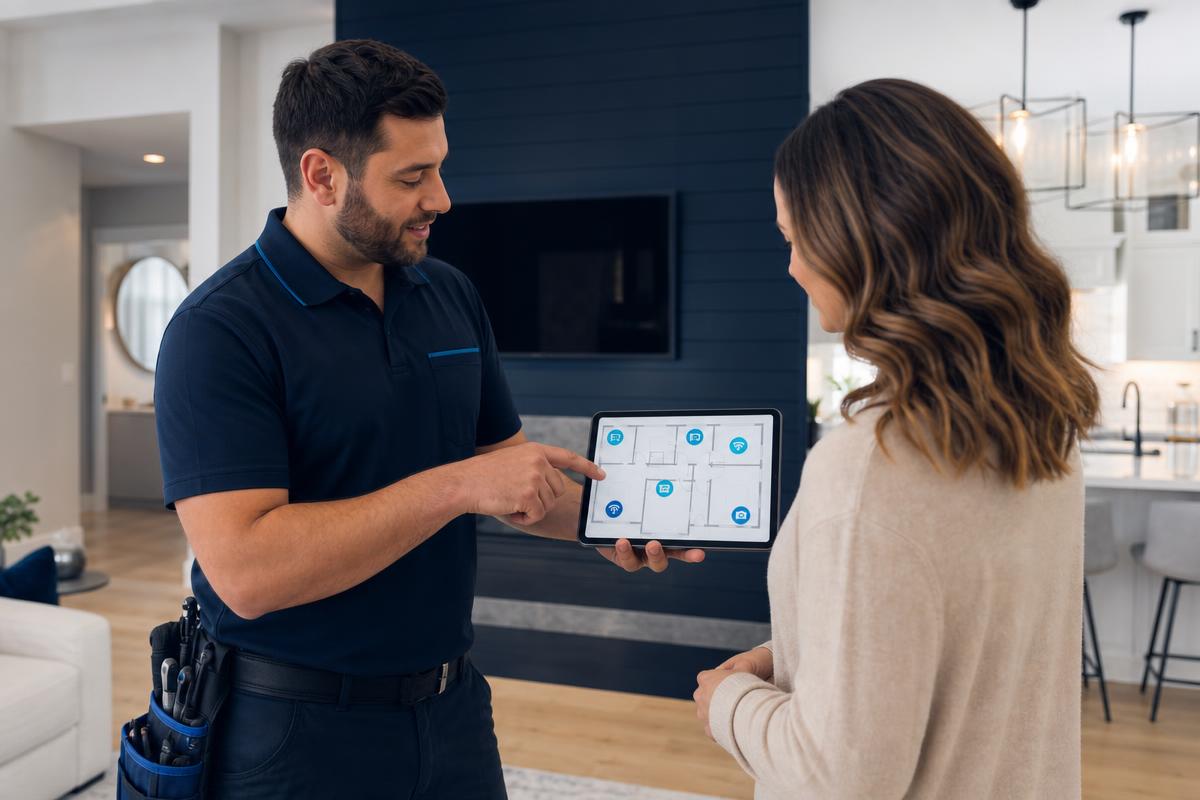
Following the assessment, the written scope identifies equipment, proposed cable routes, device placement and relevant exclusions. It also states who owns supplied equipment and describes the applicable warranty. If several rooms are involved, the scope separates zones and identifies the amplifier channels, controls and source devices serving each area. This gives the owner a practical reference before work begins. Site assessment timing depends on the service and travel distance; requests submitted during business hours are answered the same day, while after-hours requests are answered the next business day.
- Room dimensions and ceiling heights
- Joist direction and cavity access
- Lighting, ductwork and plumbing conflicts
- Listening zones and volume requirements
- Amplifier location and ventilation
- Cable routes and finishing limits
Choosing Speakers for Barrie Homes and Businesses
Speaker selection should match the room rather than simply filling every available ceiling bay. Driver size, dispersion pattern, mounting depth and power handling affect how evenly the room sounds and how well the system works at normal listening levels. Directional tweeters can help aim higher frequencies toward occupied areas, while wide-dispersion models may suit kitchens, offices and retail spaces. Moisture-resistant products are considered for bathrooms, covered outdoor areas and some waterfront applications, but product suitability still depends on the manufacturer’s location rating and the actual exposure expected at each position.
For home projects in Ardagh Bluffs, Holly, Painswick and Innis-Shore, owners often want music distributed through kitchens, dining areas, bedrooms and finished basements. These rooms do not always require the same speaker type or volume capability. A television room may need defined front channels and a subwoofer, while a kitchen benefits from broad, even coverage at modest levels. Bedrooms generally need independent control so one zone does not dictate the listening level elsewhere. UnifiedLink designs these differences into the channel layout instead of treating the entire property as one undivided speaker circuit.
Commercial audio has different priorities, including understandable announcements, predictable coverage and straightforward staff operation. Small commercial plazas may contain narrow retail units with exposed structure, suspended ceilings or shared demising walls. Offices, clinics and industrial units may require several controlled areas without sending the same level into reception, workspaces and staff rooms. Equipment must also fit available electrical, network and rack conditions. Where ceiling construction or business operations limit installation access, the proposed scope identifies practical work areas, cable pathways and any coordination required with the landlord, property manager or other trades.
- Flush-mount and low-profile speaker options
- Wide or directional sound dispersion
- Independent room and zone control
- Moisture-rated models where appropriate
- Home theatre channel planning
- Commercial paging and music layouts
Speaker Placement and Audio Coverage
Good placement aims for consistent sound without forcing individual speakers to operate loudly. In a rectangular room, a balanced layout usually considers seating positions, work surfaces and circulation paths rather than placing speakers only where ceiling access is easiest. Kitchens require attention to cabinets, islands and noisy appliances. Living rooms need coordination with televisions and primary seating. In commercial spaces, shelving, partitions and customer traffic affect the useful coverage area. UnifiedLink maps these factors before creating openings, then checks proposed points with detection tools and small exploratory methods where existing conditions remain uncertain.
Ceiling speakers should not be crowded against walls, recessed lights, return-air grilles or bulkheads. These features can create uneven reflections, restrict mounting hardware or place a speaker beside a source of mechanical noise. They may also conceal framing or ductwork that makes the preferred location unusable. Stereo pairs are oriented consistently, while multi-speaker zones are spaced to limit loud and quiet areas. For television audio, speaker positions follow the screen and seating relationship. Background-music systems use a different approach, prioritizing broad coverage and comfortable levels across the occupied part of the room.
Sound transfer must also be considered, especially between bedrooms, rental units, offices and neighbouring commercial occupancies. An open-backed ceiling speaker sends some energy into the cavity, and the surrounding structure can carry vibration farther than expected. Back boxes, acoustic treatment or lower operating levels may reduce transfer, although no ceiling speaker installation can guarantee complete sound isolation. Condo corporations, landlords and property managers may impose requirements for penetrations, wiring and work hours. Owners are responsible for obtaining approvals, but UnifiedLink can provide equipment details and the proposed installation scope for review before scheduling.
- Even coverage across occupied areas
- Consistent stereo pair orientation
- Clearance from lights and air grilles
- Coordination with screens and seating
- Sound-transfer considerations between rooms
Barrie, Ontario
In-ceiling speaker installation in Barrie, scoped in writing first
Book a site assessment and get equipment, routes, exclusions, and warranty on paper before anything is installed.
Concealed Audio Cabling in Barrie Properties
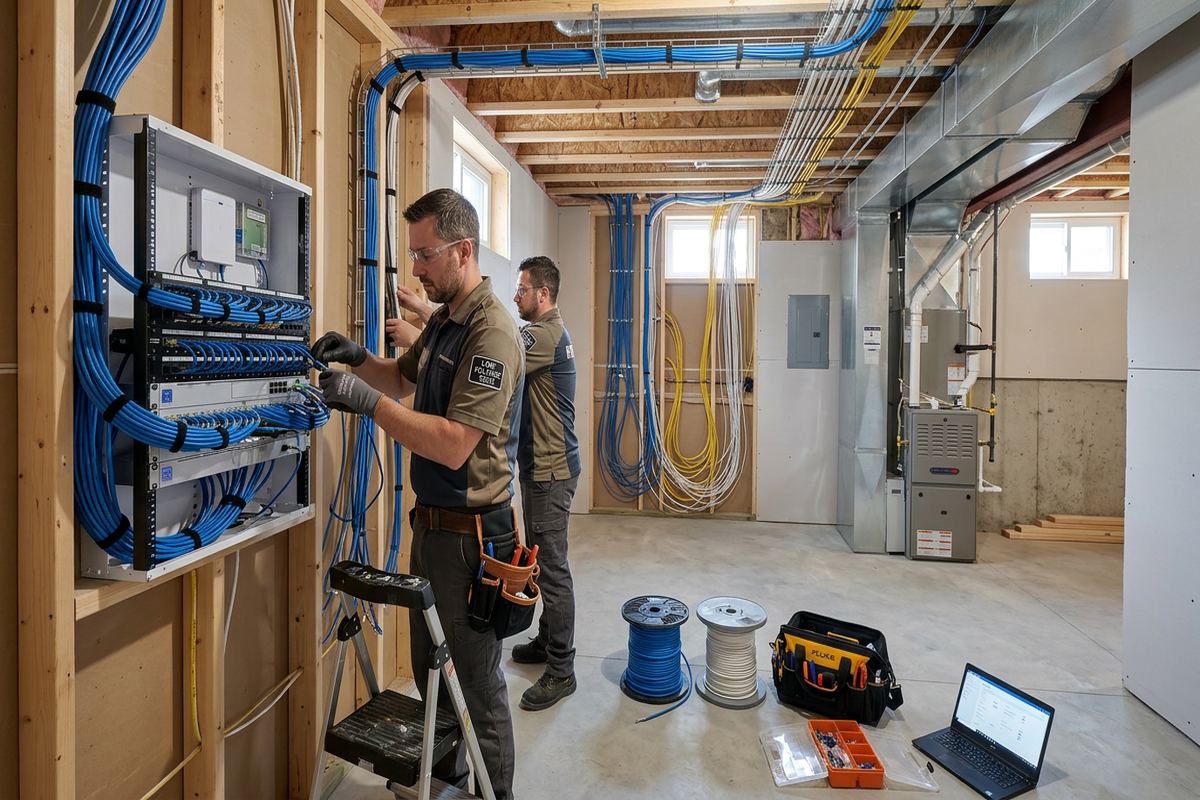
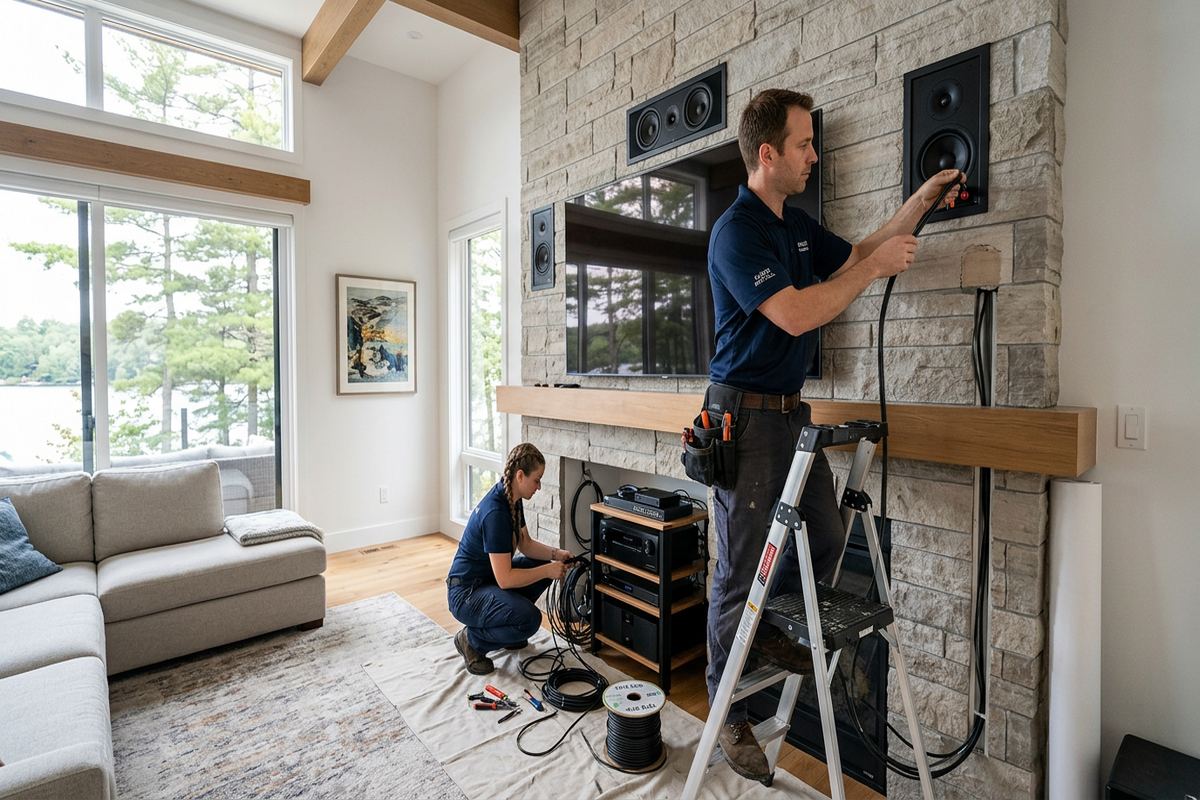
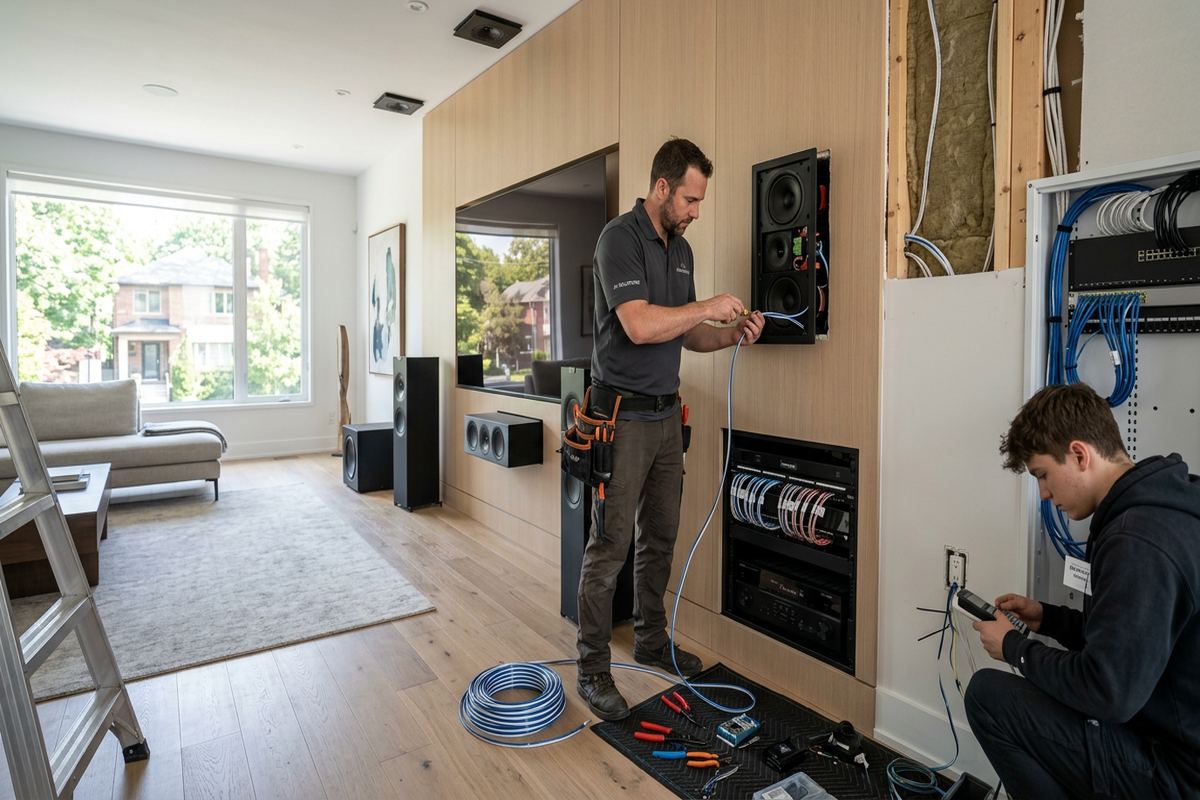
Every speaker requires a suitable cable path back to an amplifier, receiver or local connection point. UnifiedLink installs continuous labelled cable runs rather than concealing unnecessary joints inside inaccessible cavities. Cable gauge is selected for run length, speaker load and amplifier requirements. Routes are kept clear of sharp edges, hot surfaces and sources of electrical interference, with appropriate support through accessible ceiling or service areas. Labels at both ends identify the destination and channel, making later troubleshooting or equipment replacement more direct. Any unavoidable exposed pathway is discussed before it becomes part of the installation scope.
Frame construction generally permits routing through joist spaces, basements, attics or unfinished utility areas, but obstructions can still include blocking, engineered beams and tightly packed mechanical services. Masonry buildings around older parts of Barrie may require surface raceway, strategic use of closets or limited openings for drilling between framed sections. Plaster ceilings need a different cutting approach than modern drywall because vibration can loosen surrounding material. The assessment distinguishes these conditions and identifies where patching, painting, hazardous-material investigation or specialist restoration falls outside the low-voltage installation work unless specifically included in writing.
Winter conditions influence some cable routes even when the speakers are indoors. Attics can be cold, difficult to access and affected by insulation or air-sealing requirements. Penetrations near exterior walls must not create paths for condensation or drafts. Barrie’s freeze-thaw cycles also matter when an audio system extends to covered patios or other exterior listening areas. Exterior penetrations require suitable fittings, drip management and sealing compatible with the wall material. Brick, siding and poured concrete each call for different fastening and sealing methods, and outdoor equipment must carry ratings appropriate to its actual exposure.
- Continuous home-run speaker cabling
- Permanent labels at both cable ends
- Gauge matched to distance and load
- Protected routes through accessible cavities
- Exterior penetrations sealed appropriately
- Raceway options for difficult structures
Installing Ceiling Speakers Without Guesswork
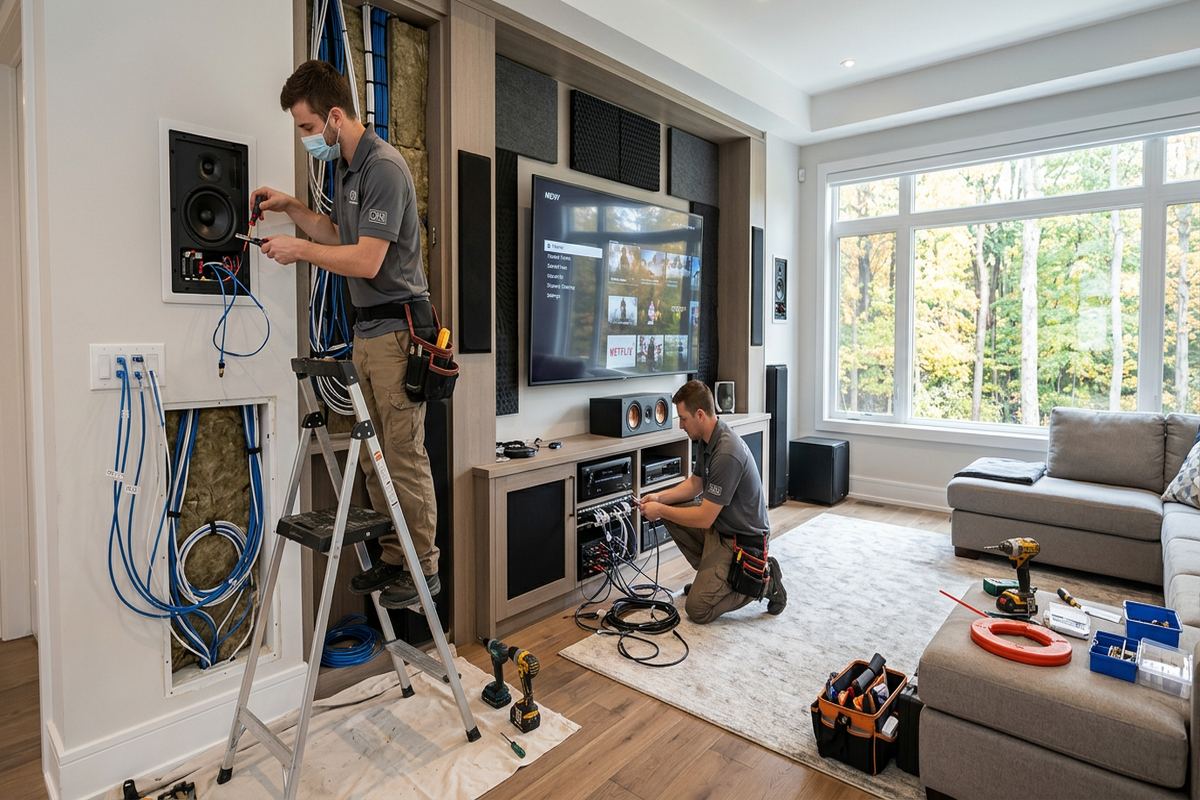
Installation begins by confirming the approved layout against visible fixtures and the conditions found on site. Each cutout is marked with the manufacturer’s template, checked for symmetry and tested for hidden obstructions before the full opening is made. This sequence matters because ceiling drawings and stud finders cannot reveal every pipe, brace or cable. When an obstruction requires movement, the revised position is reviewed for coverage and appearance rather than shifted arbitrarily. Dust control and floor protection are established around the work area, with particular care in occupied homes, furnished offices and customer-facing commercial premises.
After the openings are prepared, speaker cable is pulled, supported and tested before the units are connected. Polarity remains consistent throughout the system so paired speakers operate together rather than cancelling parts of the audio signal. Mounting clamps are tightened evenly against sound ceiling material without crushing the drywall. Where tiles, thin panels or unusual ceiling finishes cannot safely support the product, suitable brackets or backing may be needed. Grilles are fitted only after orientation and mechanical security are checked. Paintable grilles must be prepared according to the speaker manufacturer’s instructions to avoid blocking perforations or damaging fabric.
In Barrie renovation projects, ceiling conditions sometimes differ from what was expected during the assessment. An undocumented layer, inaccessible cavity or concealed mechanical component can prevent the planned route. UnifiedLink stops and explains material changes instead of making unapproved openings or substitutions. The owner can then choose a revised location, visible raceway or a change in system design. Work that affects fire separations, common building elements or regulated assemblies may require coordination with other qualified parties. These limits are documented so responsibility for repairs, permits or specialist work remains clear to everyone involved.
- Template-based speaker cutouts
- Obstruction checks before full openings
- Consistent speaker polarity
- Evenly secured mounting clamps
- Protection for floors and furnishings
- Documented approval for material changes
Amplifiers, Zones and Controls for Barrie Audio Systems
The amplifier is sized according to speaker impedance, channel count, expected listening levels and the manufacturer’s operating limits. Connecting too many speakers to one output can place an unsuitable load on the equipment, while an oversized or poorly configured amplifier can damage speakers if level limits are ignored. Multi-zone amplifiers allow separate rooms to play different sources or operate at independent volumes. Traditional receivers may be more appropriate for television-focused rooms. UnifiedLink confirms the intended use first, then connects speakers in a layout that the selected equipment can support without improvised or undocumented wiring arrangements.
Control options range from physical keypads and volume controls to phone applications and integrations with compatible automation platforms. The right choice depends on who operates the system and how reliable the local network is. A wall control can be easier for guests or staff, while an application provides source selection and grouping without adding controls to every room. Network-connected audio components require stable Wi-Fi or wired Ethernet at the equipment location. UnifiedLink checks these dependencies during planning because audio problems caused by weak wireless coverage cannot be corrected solely through speaker placement or amplifier adjustment.
Equipment location deserves the same attention as speaker placement. Amplifiers produce heat and need ventilation, accessible power and enough clearance for service. A closed cabinet may require airflow provisions, while a rack or utility space should remain reachable without moving stored items. Waterfront homes and some seasonal properties may also have temperature or humidity conditions that fall outside equipment specifications. In commercial settings, controls should be protected from casual adjustment while remaining usable by authorized staff. The final scope identifies the central equipment location, connection method and any network or electrical work expected from others.
- Load calculations for connected speakers
- Independent zones and source selection
- App, keypad or wall-control options
- Network requirements checked in advance
- Ventilated and serviceable equipment locations
- Level limits configured where supported
Configuration, Testing and Handover
Once the physical installation is complete, UnifiedLink configures available channel assignments, zones, source names and operating limits on site. Each speaker is tested for output, polarity and obvious distortion. Paired and grouped rooms are checked from typical listening positions rather than only beside the amplifier. Where equipment provides equalization, delay or balance controls, adjustments are made within the practical capabilities of that platform. Configuration cannot correct major placement problems, so testing also confirms that the installed layout performs as intended before grilles, controls and equipment areas receive their final inspection.
The customer receives control of the system through their own credentials rather than an installer-owned account. Applications are connected to the appropriate customer profile, and basic operation is reviewed with the owner or designated staff. The handover explains source selection, room grouping, volume control and routine restart steps. It also notes dependencies such as internet service, streaming subscriptions or third-party applications. UnifiedLink does not assume ownership of customer accounts. Keeping access under the owner’s credentials simplifies future changes and prevents normal use from depending on continued access to an outside installer account.
An as-built record is provided at handover to document speaker locations, cable labels, equipment connections and relevant configuration details. This record helps when furniture layouts change, ceilings are renovated or an amplifier is replaced. Any agreed exclusions or unresolved items are identified rather than left implicit. One accountable contractor manages the low-voltage audio scope, reducing confusion over who installed and labelled each run. If other trades are involved, their responsibilities remain separate and recorded. The completed system is reviewed against the written scope so the owner can identify questions before the project is closed.
- On-site zone and source configuration
- Output and polarity testing
- Customer-owned system credentials
- Practical operating walkthrough
- As-built cable and device record
- Final review against written scope
Audio Upgrades Across Barrie and Simcoe County
An existing audio system can often be improved without replacing every installed component, but compatibility must be checked first. Older ceiling speakers may have unknown impedance, deteriorated surrounds or wiring that was joined behind finished surfaces. Legacy volume controls can also be unsuitable for a new amplifier. UnifiedLink tests accessible wiring, identifies connected zones and reviews equipment specifications before recommending reuse. When labels are missing, tracing is needed to establish which cable serves each speaker. Reusing sound components can be practical when their condition and electrical requirements are understood, not simply assumed from their appearance.
Renovations create opportunities to install cable before ceilings and walls are closed. In fast-growing south-end areas such as Painswick and Innis-Shore, basement finishing, kitchen changes and home additions can support planned multi-room audio if coordination occurs early. Pre-wiring allows cable routes to avoid plumbing, electrical work and future cabinetry while preserving options for later speaker installation. Speaker positions still need documentation because wiring alone does not confirm that a cavity will remain clear. UnifiedLink coordinates the low-voltage scope with available construction drawings and site conditions while keeping responsibility for other trades clearly defined.
Service is available for suitable residential and commercial properties in Barrie and surrounding Simcoe County. The local mix includes waterfront homes, newer subdivisions, small commercial plazas, offices and industrial units, each with different access and operating constraints. Downtown spaces may need work staged around occupants, while landlord-controlled units can require written approval before ceilings or common pathways are altered. Whether the project is a single listening room or several controlled zones, the process starts with an assessment and written scope. This keeps equipment choices, routes, ownership, warranty and exclusions visible before installation proceeds.
- Testing of reusable speakers and wiring
- Cable tracing for unlabelled systems
- Pre-wiring during renovations
- Phased installation for future rooms
- Residential and commercial audio upgrades
- Coverage across Barrie and Simcoe County
Barrie neighbourhoods we cover
- Downtown Barrie
- Ardagh Bluffs
- Painswick
- Holly
- Allandale
- Innis-Shore
In-ceiling speaker installation in Barrie — common questions
How many in-ceiling speakers does my room need?
The quantity depends on room dimensions, ceiling height, listening position, furnishings and intended volume. A small room may use one stereo-input speaker or a pair, while an open living area may need several speakers for even coverage. For Barrie homes, UnifiedLink assesses the room and ceiling cavities before confirming speaker numbers and placement in the written scope.
Can speakers be installed in a finished ceiling?
Yes, provided suitable cavities and cable routes are available. Finished ceilings in Barrie properties may conceal joists, ductwork, plumbing, insulation or older layers of plaster. UnifiedLink checks proposed positions and routing options before making full cutouts. Some installations may require limited access openings, surface raceway or a revised location, particularly where masonry, engineered framing or inaccessible floors prevent concealed cabling.
Are in-ceiling speakers suitable for bathrooms or covered patios?
They can be when the selected product is rated for the expected moisture and exposure. Bathrooms, waterfront properties and covered outdoor areas around Barrie require attention to humidity, temperature changes and direct weather. Exterior penetrations must also be sealed for the wall material and local freeze-thaw conditions. A covered location does not automatically make an indoor speaker suitable for outdoor use.
Do I need an amplifier for in-ceiling speakers?
Most passive in-ceiling speakers require a compatible amplifier or receiver. The correct unit depends on speaker impedance, quantity, listening level, number of zones and desired sources. Some systems use networked amplifiers for independent rooms, while television audio may use a home theatre receiver. UnifiedLink checks the electrical load and control requirements before specifying connections for a Barrie installation.
Can I control different rooms separately?
Yes, if the speakers, amplifier channels and controls are designed as separate zones. Each zone can have independent volume, and compatible equipment may allow different sources in different rooms. Control may be through an application, wall keypad or physical volume control. Barrie homes and businesses should also have reliable network coverage where app-based or streaming equipment depends on Wi-Fi or Ethernet.
Do I need condo, landlord or property manager approval?
Approval may be required when work affects common elements, fire separations, leased premises or landlord-owned ceilings. This is relevant to Barrie condos, commercial plazas and rental units. The owner or tenant is responsible for obtaining authorization, but UnifiedLink can provide the proposed equipment, speaker locations and cable scope for review. Work is not represented as approved until the responsible party has confirmed permission.
Coverage in Barrie is confirmed against the address before we quote. See everything we install in Barrie or the province-wide in-ceiling speaker installation page.