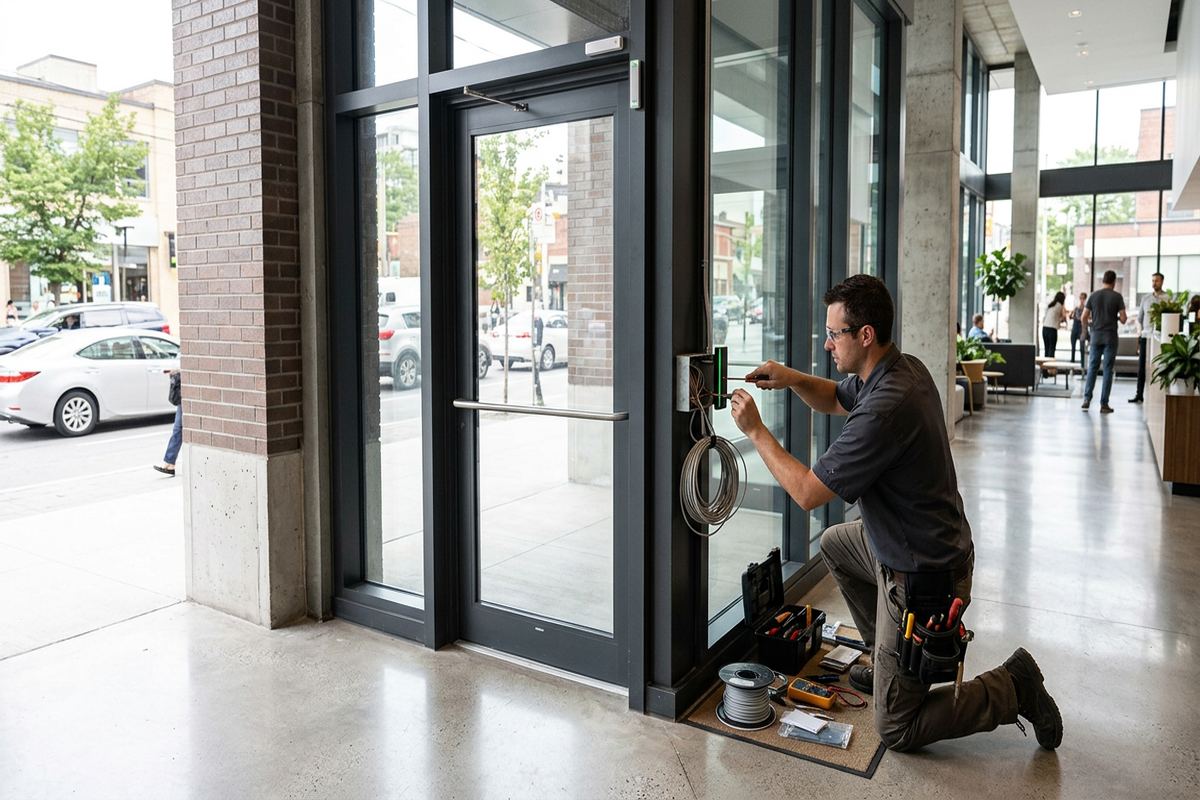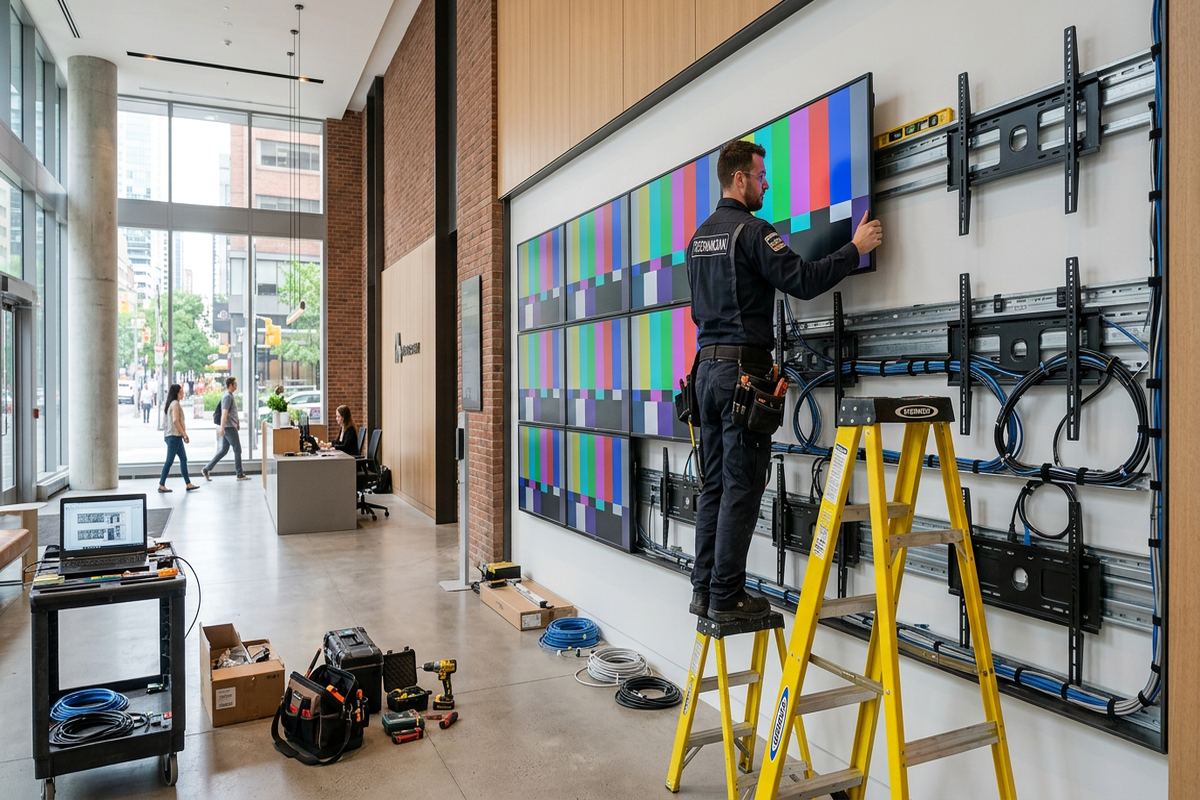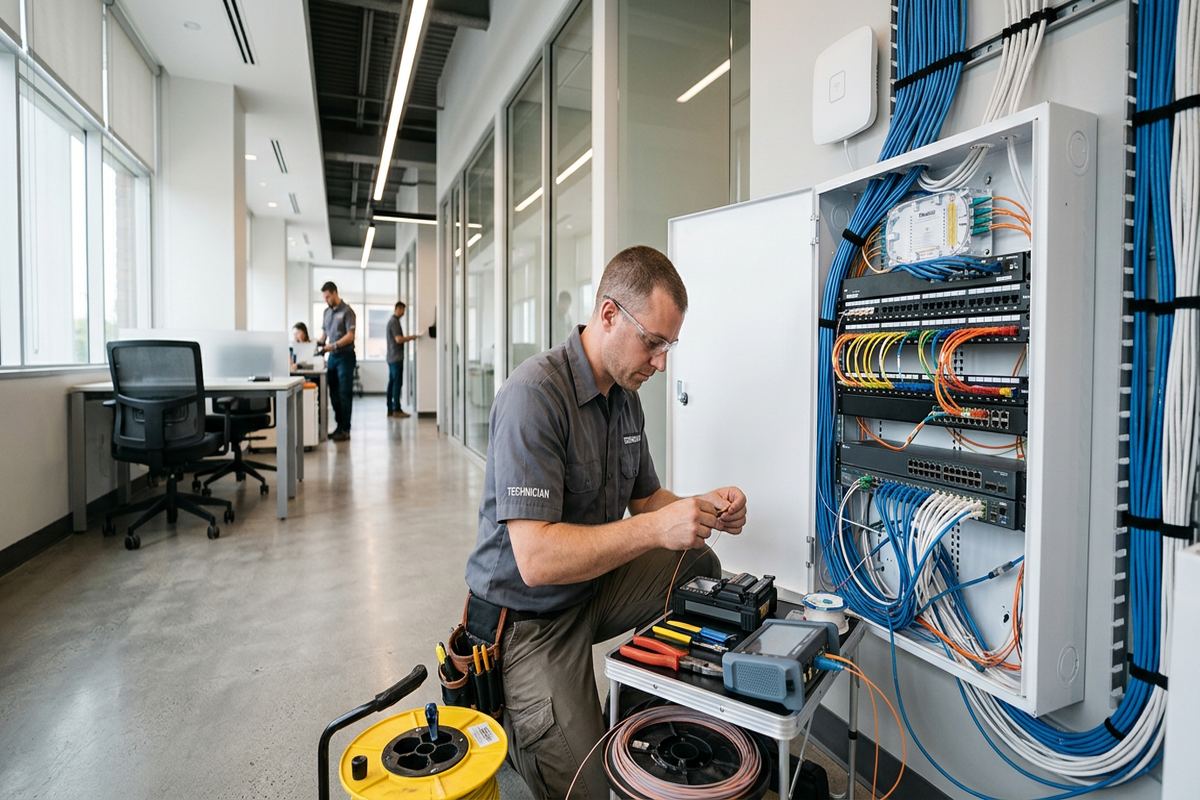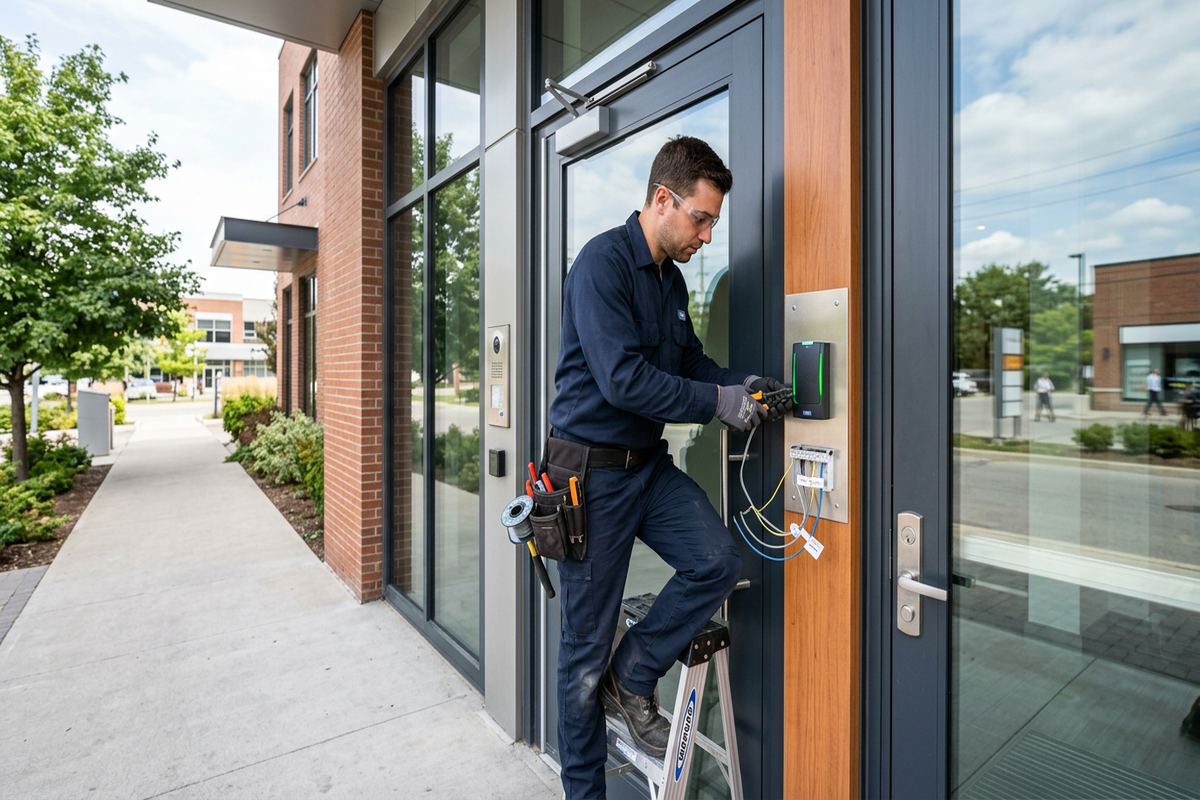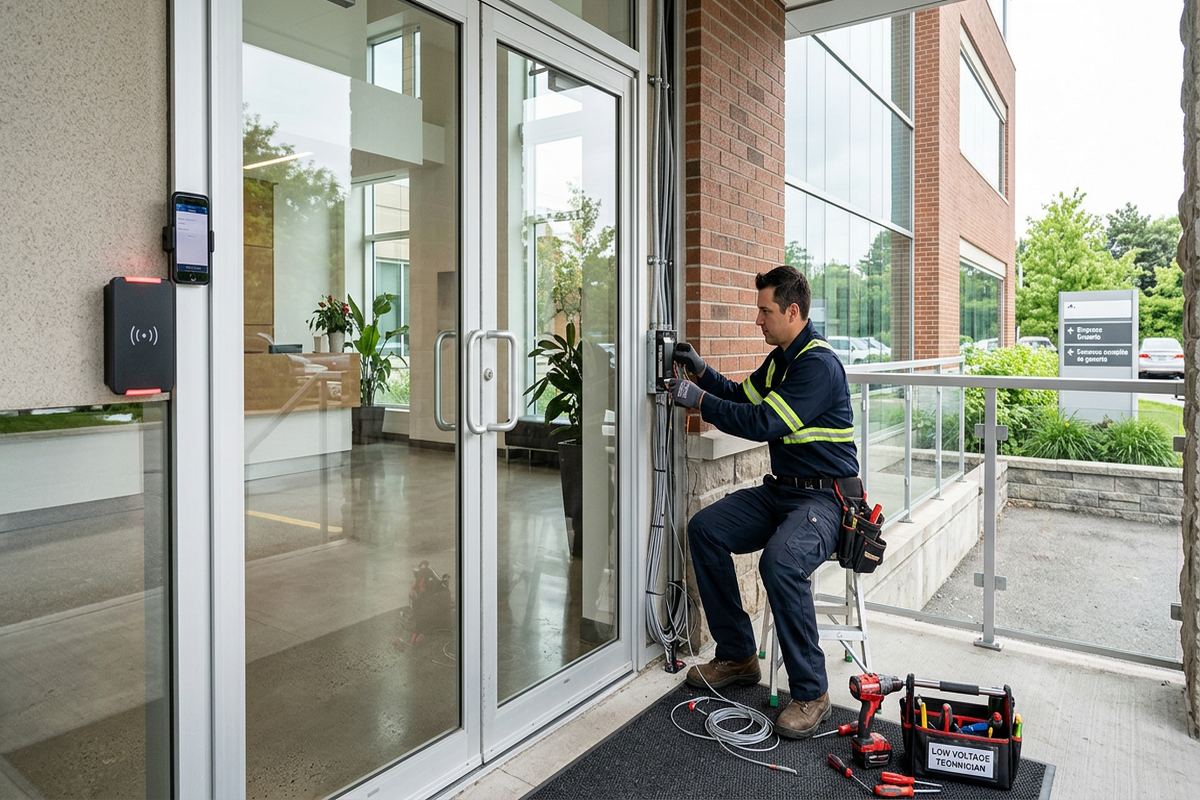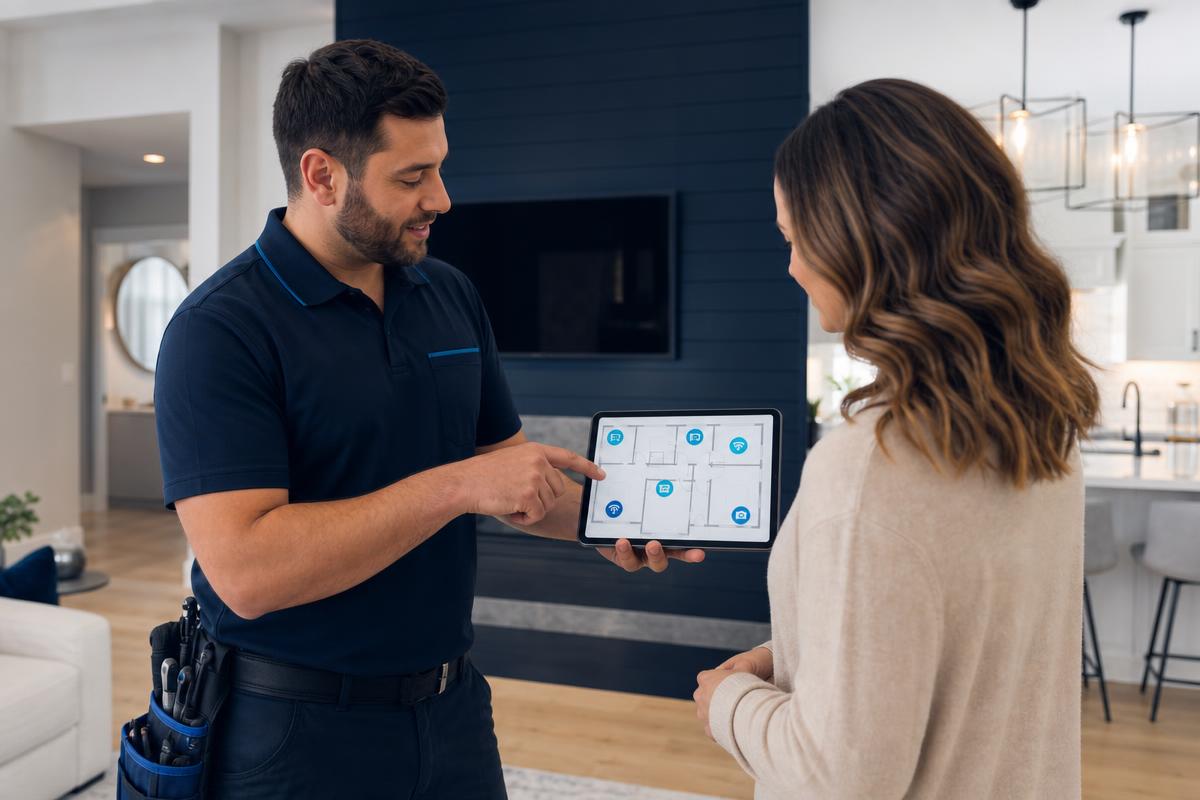
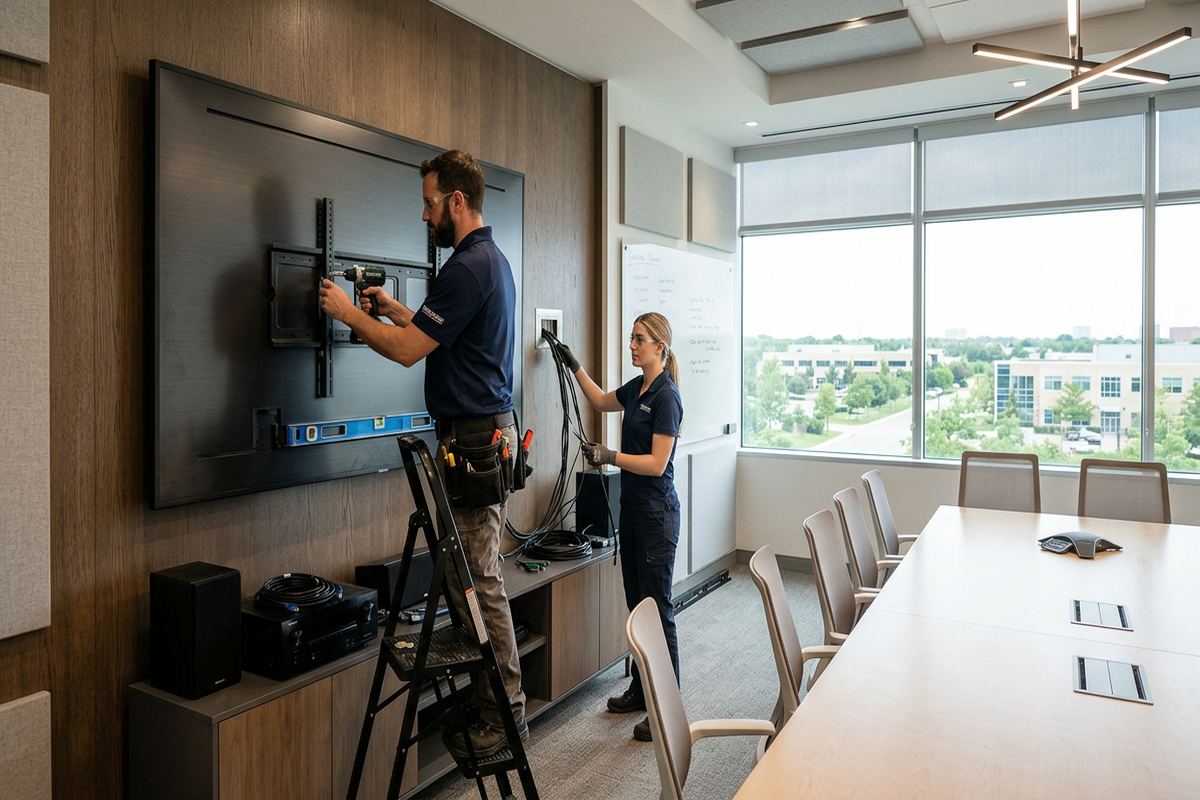
UnifiedLink provides fireplace TV mounting for homes and commercial spaces in Barrie and across Simcoe County. We assess the wall assembly, fireplace clearances, viewing position, power and cable routes before preparing a written scope. Installation can include the bracket, concealed low-voltage cabling, display configuration, equipment connections and a documented handover.
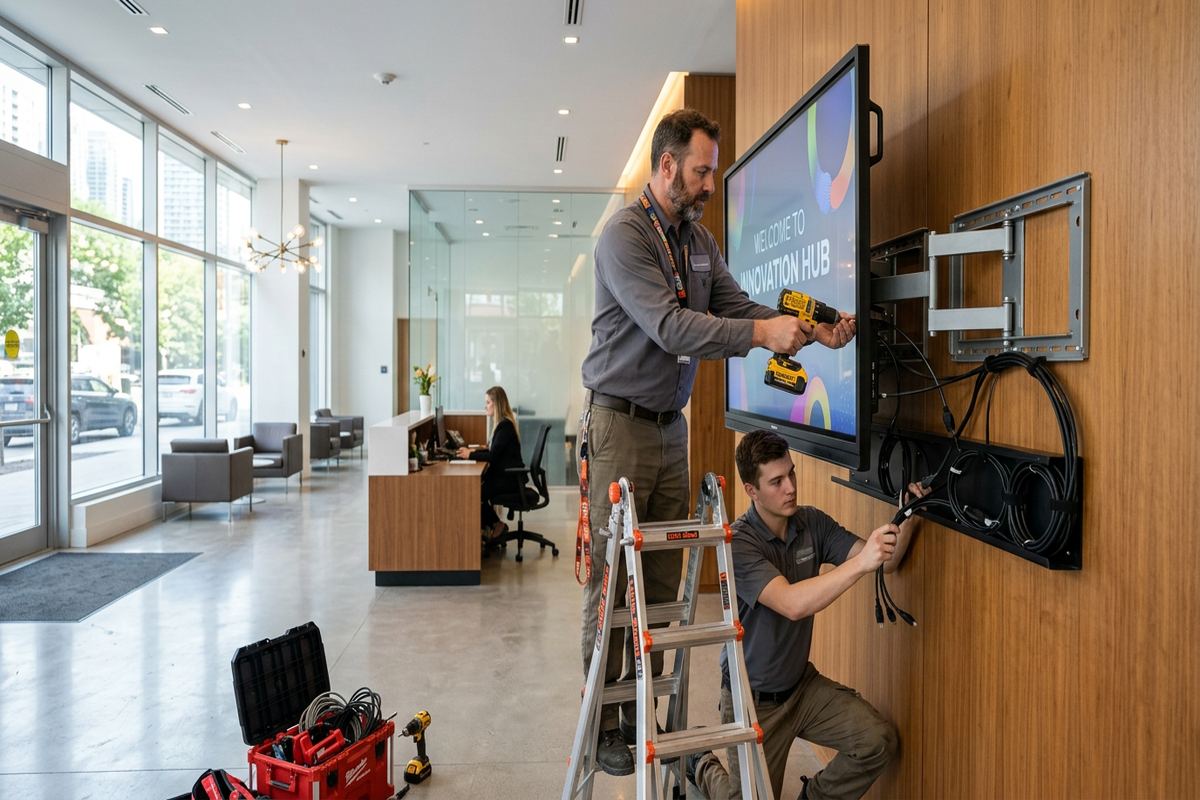
Fireplace TV Mounting in Barrie: Planning First
Mounting a television above a fireplace starts with confirming that the wall, mantel, and firebox can support a safe layout. We assess the structure, identify combustible clearances, review the television manufacturer’s limits, and plan a viewing height that suits the room. In Barrie homes, the finish may hide wood framing, concrete, brick, stone veneer, or a framed chase around a factory-built fireplace. Those assemblies require different anchors and cable routes. A site assessment comes before pricing so the written scope reflects what is actually behind and around the proposed display.
The fireplace and television must be considered as separate systems with overlapping requirements. A bracket can be firmly attached while the screen remains too close to heat, too high for comfortable viewing, or difficult to service. We look at the firebox opening, mantel projection, surround materials, nearby vents, and the television’s specified operating environment. If the proposed position is unsuitable, we explain the constraint and discuss practical alternatives, such as mounting beside the fireplace, changing the display size, or using an appropriate height-adjustable bracket where the wall structure permits it.
Room layout also affects the result. Seating distance, ceiling height, windows, glare, speaker placement, and traffic paths determine whether an above-fireplace location will work in daily use. Waterfront homes may have large windows and strong reflections, while newer south-end subdivisions often use open-concept rooms with limited alternative wall space. Our assessment considers those conditions before holes are made. The resulting plan defines display placement, bracket type, cable access, equipment location, finishing expectations, exclusions, and any separate electrical work required for a complete and serviceable installation.
- Fireplace type and mantel projection reviewed
- Viewing height checked from normal seating
- Glare and room layout considered
- Alternative positions identified when needed
Heat, Clearances, and Viewing Height in Barrie
Heat exposure cannot be judged by appearance alone. Gas inserts, wood-burning fireplaces, electric units, and factory-built appliances release and redirect heat differently. Existing Barrie properties may also have replacement inserts installed inside older masonry openings, making the visible surround an incomplete guide to construction. We review available fireplace documentation, required clearances, vent locations, and mantel details. Where operating conditions remain uncertain, the television should not be mounted until the fireplace requirements are confirmed. Installation does not override the instructions or limitations established by the fireplace, bracket, or display manufacturer.
A high mounting point can cause neck strain and make the screen feel disconnected from the seating area. The correct position depends on screen size, seating distance, eye level, recline, mantel height, and the amount of vertical space available. In compact rooms around Downtown Barrie or Allandale, even a moderate television may sit too high above a traditional mantel. We mark the proposed screen outline when useful, allowing the customer to judge the position from primary seats before approving drilling, cable openings, or permanent bracket placement.
Barrie winters create another consideration for fireplaces used frequently during colder months. A layout that seems acceptable while the appliance is off may be exposed to sustained heat when the fireplace operates for several hours. Freeze-thaw conditions matter primarily for exterior walls, chimneys, and outdoor fireplace installations, where movement and moisture can affect finishes and penetrations. For exterior displays, the scope must address weather-rated equipment, corrosion-resistant hardware, drip paths, cable entry points, and compatible sealing rather than treating the work like an ordinary indoor installation.
- Manufacturer clearances take priority
- Screen outline can be marked for review
- Frequent winter fireplace use considered
- Exterior penetrations require compatible sealing
Wall Structure and Fireplace Types
The finish surrounding a fireplace does not reveal what can carry the television. Full masonry, masonry veneer, tile over backer board, drywall over framing, and manufactured stone over a framed chase all require different drilling and fastening methods. We determine where the structural support is located and whether the proposed bracket holes can land correctly. Anchors are selected for the confirmed substrate rather than the visible finish. Decorative stone or tile must not be treated as the sole supporting material, and uncertain backing may require further investigation or a revised mounting plan.
Older homes in Downtown Barrie and Allandale may include solid masonry chimneys, plaster finishes, irregular framing, or renovations completed in several stages. Newer properties in Painswick, Holly, and Innis-Shore commonly use framed fireplace chases, but backing and service cavities still vary between builders and models. Stud finders alone do not answer every structural question around foil insulation, metal framing, dense finishes, or layered wall assemblies. Controlled inspection, existing drawings, accessible openings, and careful measurement help establish a reliable fastening plan while limiting unnecessary disturbance to finished surfaces.
Fireplace surrounds can be brittle and expensive to repair, so drilling locations and techniques must suit the material. Tile edges, grout lines, natural stone, brick faces, and mortar joints respond differently to drilling pressure and vibration. The bracket footprint must also sit flat without rocking across an uneven surface. If levelling spacers, stand-offs, backing, or surface modification is needed, that requirement belongs in the scope before installation. We also account for bracket arm movement because a full-motion mount places different loads on the wall than a fixed or tilting bracket.
- Substrate confirmed before anchor selection
- Masonry and frame walls handled differently
- Brittle finishes drilled with suitable methods
- Bracket movement included in load planning
Barrie, Ontario
Fireplace TV mounting in Barrie, scoped in writing first
Book a site assessment and get equipment, routes, exclusions, and warranty on paper before anything is installed.
Concealed Power and Cabling in Barrie
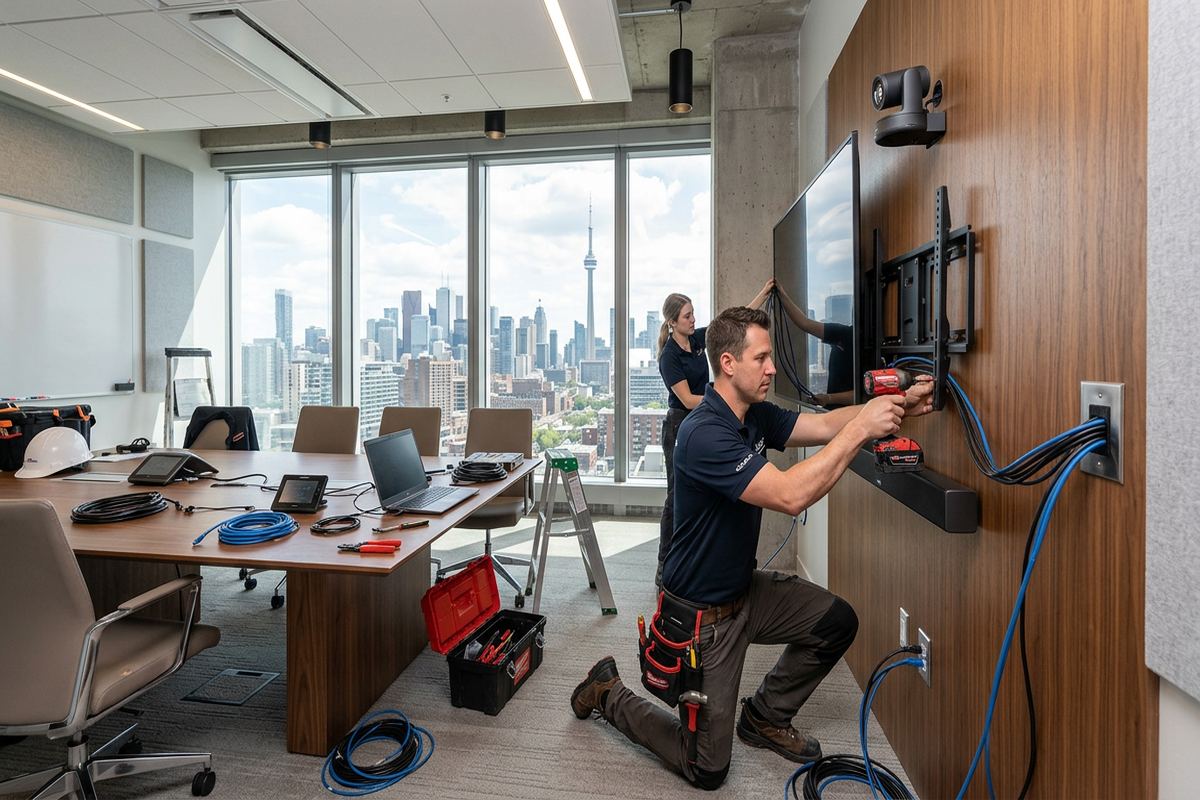
A clean fireplace installation requires a planned route for power, network, HDMI, audio, and control cabling. Low-voltage cables should not share openings or pathways improperly with electrical wiring, and ordinary flexible cords should not be hidden inside walls. We inspect accessible cavities, adjacent rooms, basements, attics, built-in cabinets, and service openings to find a practical route. Where electrical work or a new receptacle is required, that portion must be completed using an appropriate method and identified clearly in the scope rather than improvised during display mounting.
Framed chases in newer Barrie subdivisions may provide a route to a cabinet beside the fireplace, although blocking, insulation, ducts, and fire-stopping can interrupt the cavity. Masonry fireplaces generally require another approach, such as a carefully positioned surface raceway, a route through adjacent framing, or equipment located near the display. We discuss the visible result before proceeding. Continuous labelled low-voltage cable runs are used wherever new permanent cabling is installed, avoiding inaccessible couplers and undocumented joins that make later troubleshooting or equipment replacement more difficult.
Cable planning should anticipate the equipment that will remain after installation. A television may connect to a soundbar, receiver, streaming player, game console, network switch, control system, or commercial content source. HDMI length and capability, Ethernet category, audio return requirements, and device ventilation all matter. Spare pathway capacity may be sensible where access will become difficult after finishing. The written scope identifies cable routes, connection points, visible raceways, customer-supplied equipment, exclusions, equipment ownership, and warranty terms, giving the Barrie customer a defined installation rather than assumptions made on site.
- Power and low-voltage routes kept appropriate
- Continuous cable runs labelled at both ends
- Visible raceways agreed before installation
- Connected equipment included in route planning
Choosing a Fireplace TV Mount
Bracket selection begins with the television’s size, weight, mounting pattern, connection layout, and intended movement. A fixed mount keeps the display close to the wall but offers limited access. A tilting model can improve the viewing angle when the screen must sit higher. Full-motion brackets provide side-to-side positioning but create greater leverage and need adequate structural support. Height-adjustable fireplace mounts may lower the screen for viewing, although mantel depth, heat clearances, handle position, and the required movement envelope must all be evaluated before one is specified.
Serviceability is as important as appearance. Inputs, power connections, streaming devices, and control modules need enough clearance for installation and future replacement. A very slim bracket can press cables sharply against the wall or block access to side-facing ports. We check connector orientation and use cable management that allows required bracket movement without pinching or pulling. If a soundbar is attached below the television, its weight, mounting interface, acoustic position, and movement must be considered with the display instead of added as an unsupported accessory after installation.
Commercial installations in Barrie’s small plazas may use fireplace-style feature walls in reception areas, restaurants, showrooms, or waiting spaces. The display may operate for longer periods and require controlled access, scheduled power, network content, or a lockable bracket. Mounting also needs to account for public circulation and equipment tampering. Industrial units with finished office areas can present metal framing, concrete demising walls, or surface-mounted services. We adapt the bracket and cable plan to the actual substrate and operating purpose, not simply the room’s decorative finish.
- Fixed, tilting, and full-motion options assessed
- Mount matched to display specifications
- Connector clearance preserved
- Public-area access and tampering considered
Barrie Homes, Condos, and Commercial Spaces
Barrie’s property mix includes waterfront homes, fast-growing south-end subdivisions, older urban houses, condominiums, and small commercial plazas. Each setting introduces different constraints. Waterfront properties may use large glazed walls, substantial stone finishes, or exterior entertaining areas exposed to wind and moisture. New subdivisions often have factory-built fireplaces within framed feature walls. Older houses may combine masonry chimneys with later inserts and renovated finishes. The assessment focuses on the specific assembly because neighbourhood, age, or appearance alone cannot confirm framing, backing, clearance, or cable access.
Condo work may require approval from the corporation or property manager, especially where drilling could affect a shared wall, concrete structure, fire separation, or building service. Renters and commercial tenants should obtain landlord permission before permanent mounting or concealed cabling begins. UnifiedLink can describe the proposed device placement and cable route for an approval request, but the customer remains responsible for securing required authorization. Rules for work hours, elevator use, parking, noise, and contractor access should be confirmed before scheduling at Barrie condominium and managed commercial properties.
Outdoor fireplace walls and covered patios require a separate equipment and sealing plan. An indoor television or bracket is not automatically suitable for cold, condensation, wind-driven rain, or seasonal temperature changes. Penetrations through exterior finishes must be positioned and sealed to reduce water entry while preserving drainage and avoiding damage to the wall assembly. Barrie’s freeze-thaw cycles can worsen small moisture problems around masonry and cladding. We therefore review exposure, mounting hardware, cable jackets, enclosure ratings, receptacle location, and seasonal storage expectations before defining exterior work.
- Local building types assessed individually
- Condo and landlord approvals addressed early
- Exterior-rated components specified where required
- Freeze-thaw exposure included in sealing plans
Installation, Configuration, and Handover
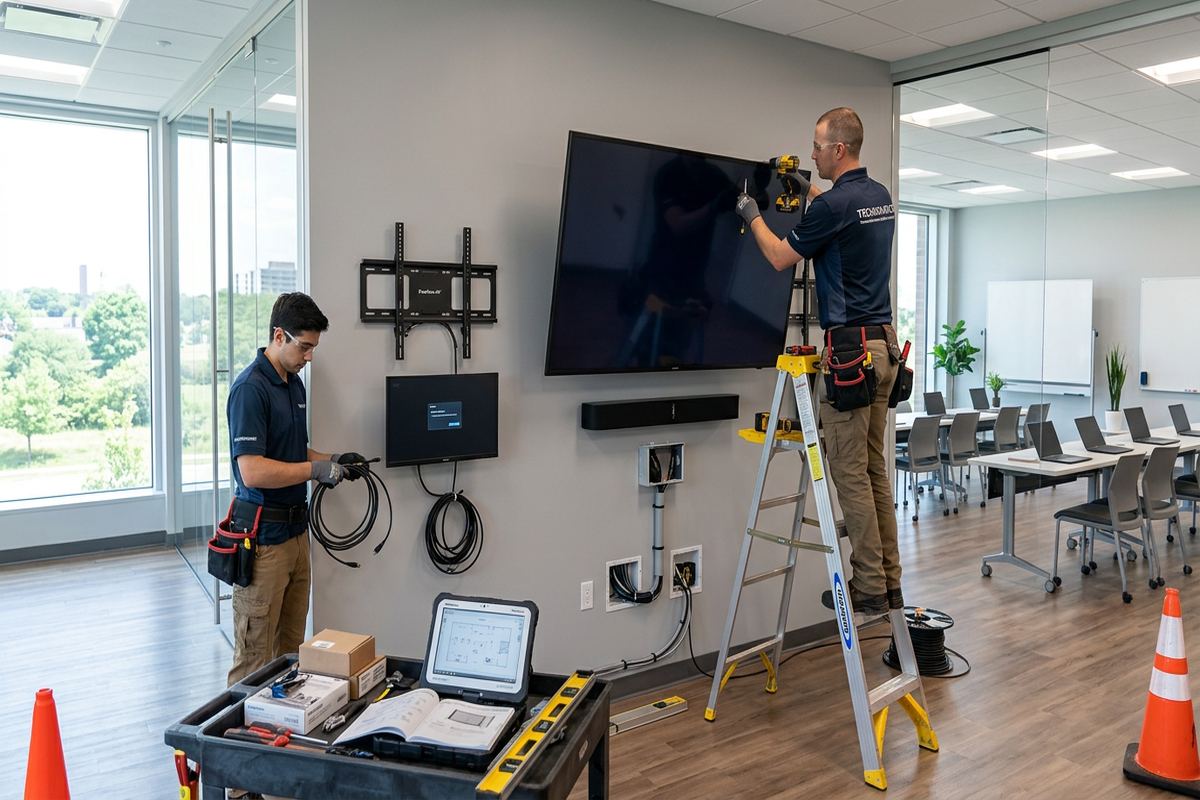
On installation day, the approved display position and cable route are verified before drilling. Finished surfaces are protected, the substrate is checked at fastening locations, and the bracket is levelled and secured using hardware appropriate to the confirmed structure. Cables are routed according to the scope, labelled, and tested before the television is placed. The display is then attached according to its mounting instructions, adjusted for alignment and movement, and checked to ensure cables do not bind when a tilting or articulating bracket changes position.
Configuration can include connecting source equipment, selecting inputs, establishing network access, setting basic picture and audio options, and confirming control from the television remote or other included devices. Customers use their own account and network credentials; those credentials remain under their control. We do not create ongoing dependency on installer-owned accounts. Where a soundbar, receiver, streaming device, or commercial source is included, the handover confirms normal operation and identifies any equipment limitations, subscription requirements, weak wireless coverage, or customer-supplied components that affect performance.
A completed Barrie installation includes a practical handover rather than only a mounted screen. The customer receives an explanation of bracket movement, connected inputs, equipment location, and basic operation. An as-built record documents the installed device placement and relevant cable information. Equipment ownership and warranty responsibilities follow the written scope, helping distinguish UnifiedLink-supplied components from customer-supplied products. Using one accountable contractor for the defined low-voltage and mounting work also reduces gaps between bracket installation, cabling, equipment connection, configuration, testing, and final documentation.
- Position reconfirmed before drilling
- Cables labelled and tested
- Configuration uses customer-owned credentials
- As-built information provided at handover
Scope and Site Assessment for Barrie Projects
Pricing follows a site assessment because fireplace walls contain variables that photographs cannot always resolve. We review the television, bracket requirements, fireplace type, wall finish, likely substrate, cable route, power availability, connected equipment, room access, and finishing expectations. Assessment timing depends on the service details and travel distance within Barrie and Simcoe County. Requests sent during business hours are answered the same day, while after-hours requests are answered the next business day. That response confirms next steps rather than promising an installation or assessment time before the project is understood.
The written scope records equipment, device placement, bracket type, cable routes, visible finishes, exclusions, equipment ownership, and warranty details. It can also identify customer responsibilities such as providing the television, obtaining condo approval, arranging authorized electrical work, clearing furniture, or confirming fireplace documentation. If wall investigation reveals a condition that differs from the agreed assumptions, work should pause for review rather than continue with an unsuitable fastening or routing method. This process keeps changes visible and allows the Barrie customer to approve a revised approach before additional work proceeds.
Useful information for the initial request includes the property type, neighbourhood, fireplace model if known, television make and size, photographs of the full wall, close views of the surround, and images of nearby cabinets or outlets. Mention whether the property is in Ardagh Bluffs, Painswick, Holly, Innis-Shore, Downtown Barrie, Allandale, or elsewhere in Simcoe County, as travel and building context help with planning. Also identify desired connected devices, concealed-cable expectations, tenancy or condo restrictions, and whether the fireplace wall is indoors or exposed to exterior conditions.
- Assessment completed before pricing
- Written scope defines responsibilities and exclusions
- Timing depends on service and travel distance
- Photos and equipment details support planning
Barrie neighbourhoods we cover
- Downtown Barrie
- Ardagh Bluffs
- Painswick
- Holly
- Allandale
- Innis-Shore
Fireplace TV mounting in Barrie — common questions
Can any TV be mounted above a fireplace?
No. The television must fit the available area, bracket, wall structure, and operating conditions. In Barrie, fireplace construction ranges from older masonry chimneys to framed chases around factory-built units. We check manufacturer requirements, mantel projection, expected heat exposure, mounting height, connector access, and the confirmed supporting substrate before recommending an above-fireplace position.
How do you know if the fireplace is too hot?
We review the fireplace type, manufacturer documentation, required clearances, mantel arrangement, vents, and likely heat path. Usage during a Barrie winter may be much heavier than during an initial warm-weather visit, so the assessment must consider sustained operation. If safe operating conditions cannot be confirmed, we will recommend resolving that uncertainty or choosing another display location.
Can you hide all cables behind the fireplace wall?
That depends on the wall assembly and accessible route. Framed chases may contain blocking, insulation, ducts, fire-stopping, or electrical wiring, while masonry walls may have no usable cavity. We plan compliant power and low-voltage pathways separately. If fully concealed routing is impractical, the Barrie project scope can identify an agreed surface raceway or another equipment location.
Do I need condo or landlord approval?
Possibly. Barrie condo corporations and property managers may regulate drilling into concrete, shared walls, fire separations, or other common elements. Tenants should obtain landlord permission before permanent mounting or concealed cabling. UnifiedLink can provide a clear description of proposed placement and cable routing for an approval request, while the customer remains responsible for obtaining authorization before work begins.
Can you mount a TV over an outdoor fireplace?
Outdoor mounting is possible only when the display, bracket, cabling, connections, and installation method suit the exposure. Barrie freeze-thaw cycles, condensation, wind-driven moisture, and seasonal temperature changes require attention to equipment ratings and penetration sealing. We assess the wall assembly, drainage, weather exposure, hardware, receptacle location, and whether covered conditions still allow moisture to reach the equipment.
What information should I send for an assessment?
Provide photographs of the entire fireplace wall, close views of the surround, the television make and size, the fireplace model if available, and the proposed equipment list. Include your Barrie neighbourhood, property type, nearby outlet and cabinet locations, and whether condo or landlord approval applies. Photos help with planning, although final pricing follows the required site assessment.
Coverage in Barrie is confirmed against the address before we quote. See everything we install in Barrie or the province-wide fireplace tv mounting page.