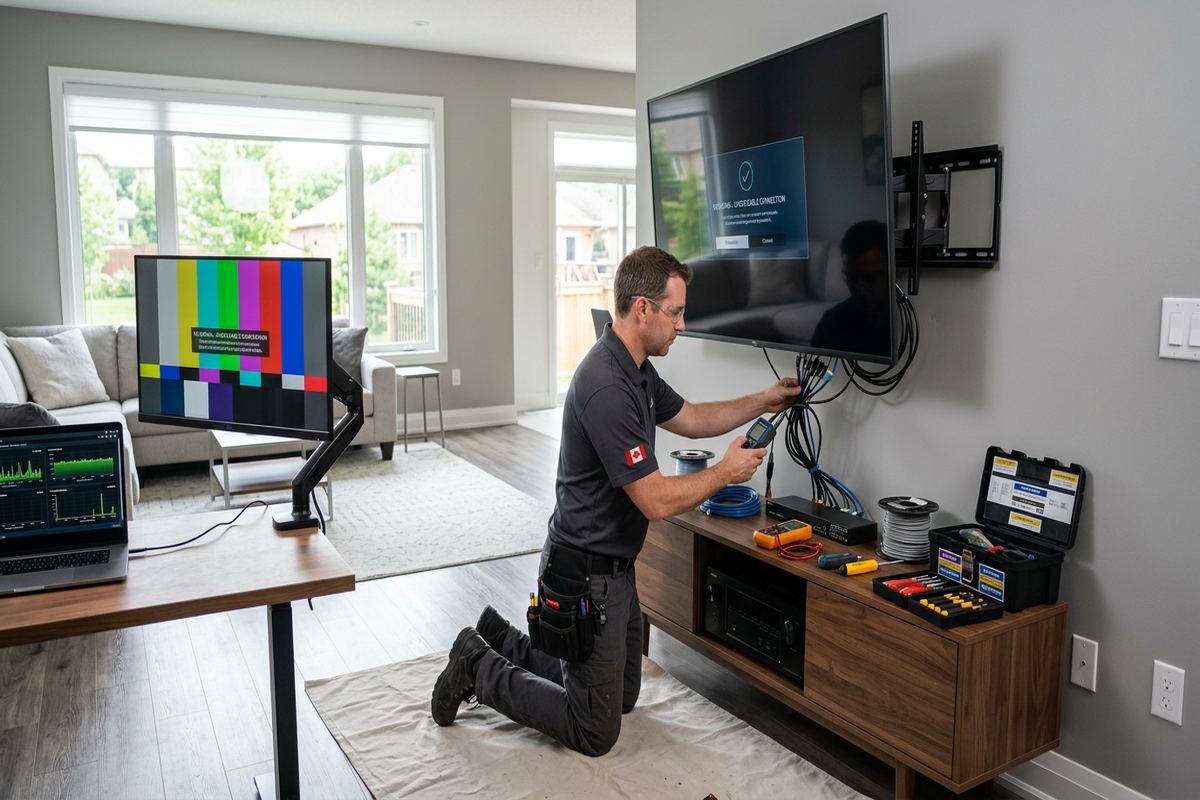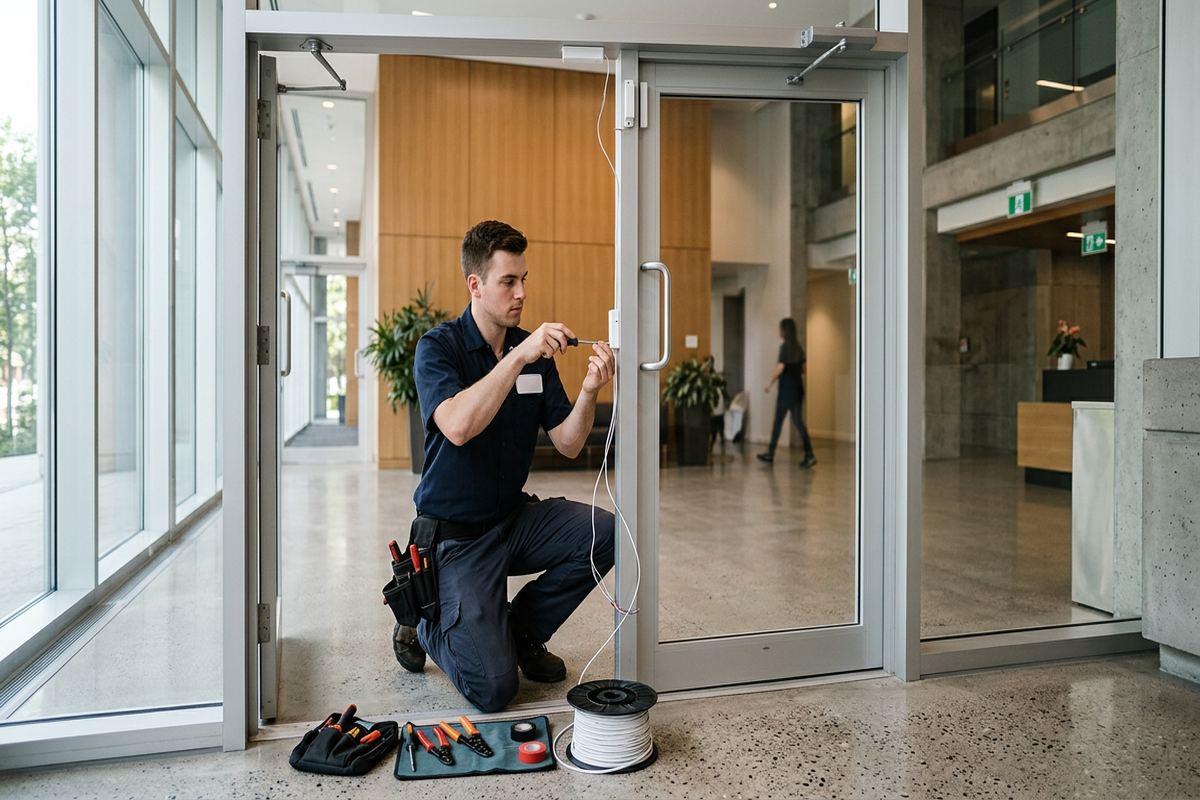
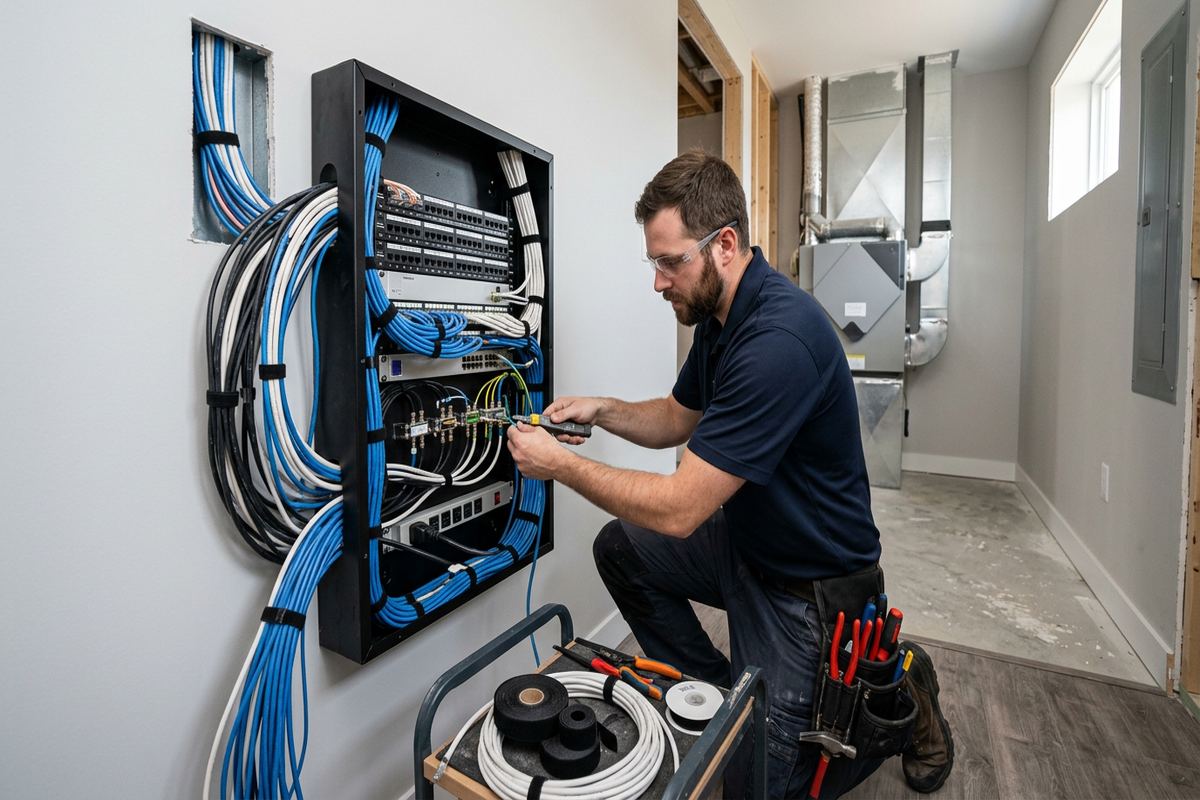
UnifiedLink installs low-voltage cabling for homes, commercial spaces and industrial units across Barrie and Simcoe County. We plan routes for networks, cameras, access control, alarms, Wi-Fi, audio and displays. Each project begins with a site assessment and proceeds under a written scope covering placement, routing, ownership, exclusions and warranty.
Low-Voltage Cabling for Barrie Properties
Low-voltage cabling forms the physical foundation for networks, cameras, alarms, access control, Wi-Fi access points, audio systems and connected displays. A reliable installation depends on more than pulling wire between two locations. Cable type, route length, bend radius, separation from electrical wiring, termination method and environmental exposure all affect performance. UnifiedLink assesses those conditions before pricing. The resulting written scope identifies equipment, proposed routes, device placement, exclusions, equipment ownership and warranty, helping property owners understand exactly what will be installed before work starts at their Barrie home or business.
Barrie presents a varied mix of waterfront homes, fast-growing south-end subdivisions and small commercial plazas. Each property type creates different routing questions. A finished waterfront residence may require discreet pathways that avoid unnecessary exterior penetrations, while a newer house in Painswick or Innis-Shore may have accessible basement ceilings but limited routes between finished floors. Commercial plaza units often include suspended ceilings, shared service areas and landlord requirements. Planning around the actual construction reduces visible wiring, avoids unsuitable shortcuts and gives future technicians a clearer, safer system to inspect, modify or expand.
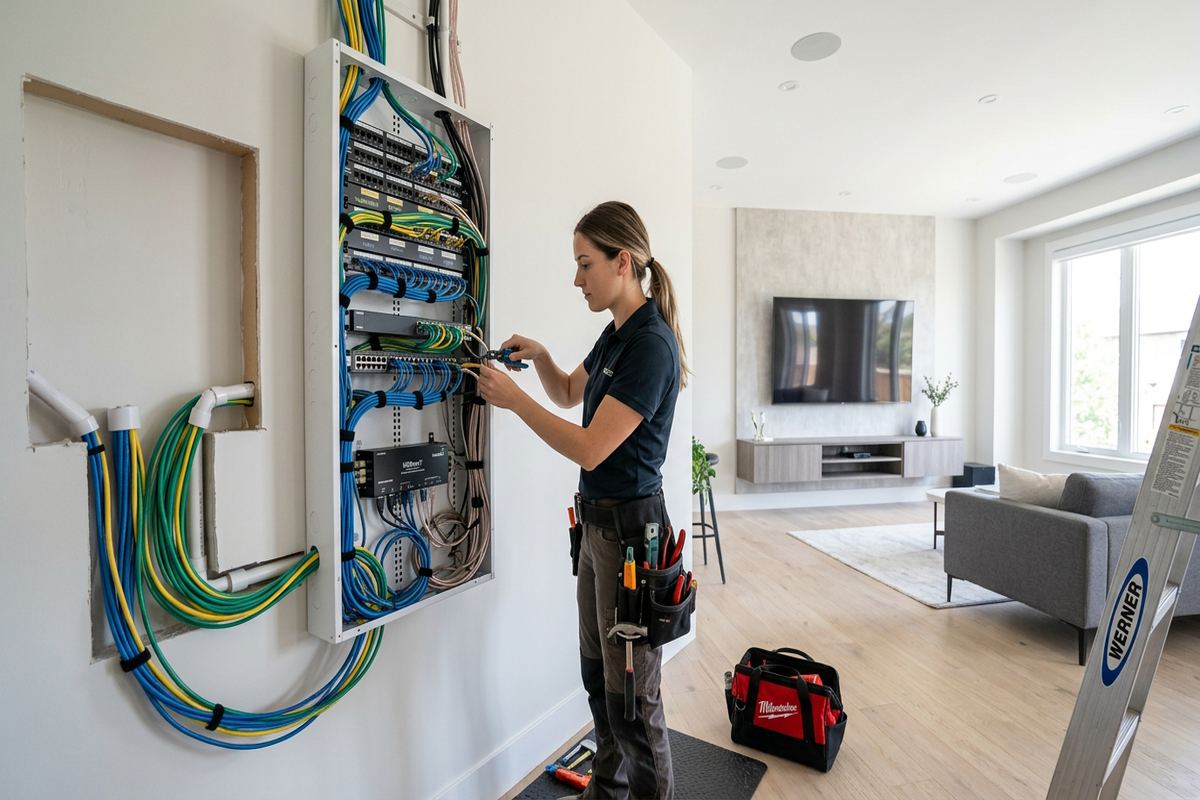
The goal is a structured installation rather than an accumulation of unrelated cables. Continuous labelled runs are routed from defined equipment locations to each outlet or device, then terminated and tested for their intended use. Where several services share a pathway, cables are organized so network, surveillance, alarm, audio and access-control wiring remain identifiable. UnifiedLink also configures connected equipment on site when included in the scope. At handover, the customer receives access using their own credentials and an as-built record showing completed cable locations and relevant system details.
- Data and network cabling
- Camera and alarm wiring
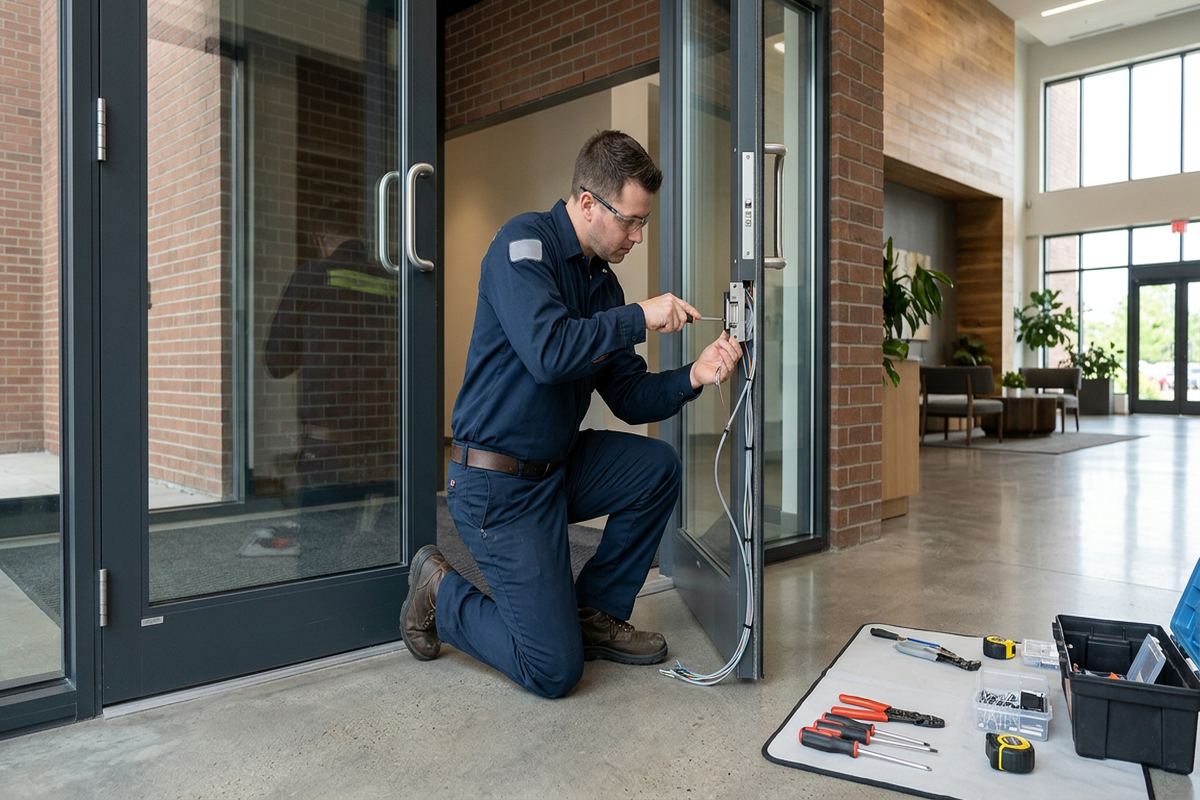
- Access-control cable pathways
- Wi-Fi access-point cabling
- Audio and display connections
Planning Cable Routes in Barrie
A useful cable plan begins with what each room, device and work area needs now, while allowing sensible capacity for likely changes. During the site assessment, UnifiedLink reviews the proposed rack, cabinet or control-panel location, available pathways, finished surfaces and access restrictions. Device positions are checked against practical coverage and connection requirements rather than selected only for convenience. In Barrie homes, this can include ceiling access points, exterior cameras, television locations and office outlets. In commercial spaces, the plan may also cover counters, desks, doors, stock areas, utility rooms and shared communications spaces.
Building age and construction method strongly influence the installation approach. Older properties around Downtown Barrie and Allandale may contain additions, plaster finishes, masonry sections or framing that does not align between floors. Newer subdivisions in Holly and the south end can have finished basements, insulated garages and tightly sealed exterior assemblies. A route that appears direct on a drawing may be blocked by beams, ducts, fire separations or plumbing. The assessment identifies accessible alternatives before cutting begins and records any areas where concealed conditions could require a documented change to the agreed scope.
Cable selection must match both the signal and the installation environment. Indoor data cable is not appropriate for every outdoor, underground or damp route, and unsupported cable should not be placed loosely above ceilings. The plan considers jacket rating, pathway fill, support, distance and potential electrical interference. It also distinguishes low-voltage wiring from line-voltage work. If another trade must provide power, conduit or construction access, that dependency belongs in the written scope. Clear boundaries help the Barrie property owner coordinate work without assuming that every required task falls under one contractor’s electrical authority.
- Route and pathway review
- Device-location planning
- Cable-type selection
- Trade dependency identification
- Written scope before installation
Cabling for Homes and Renovations
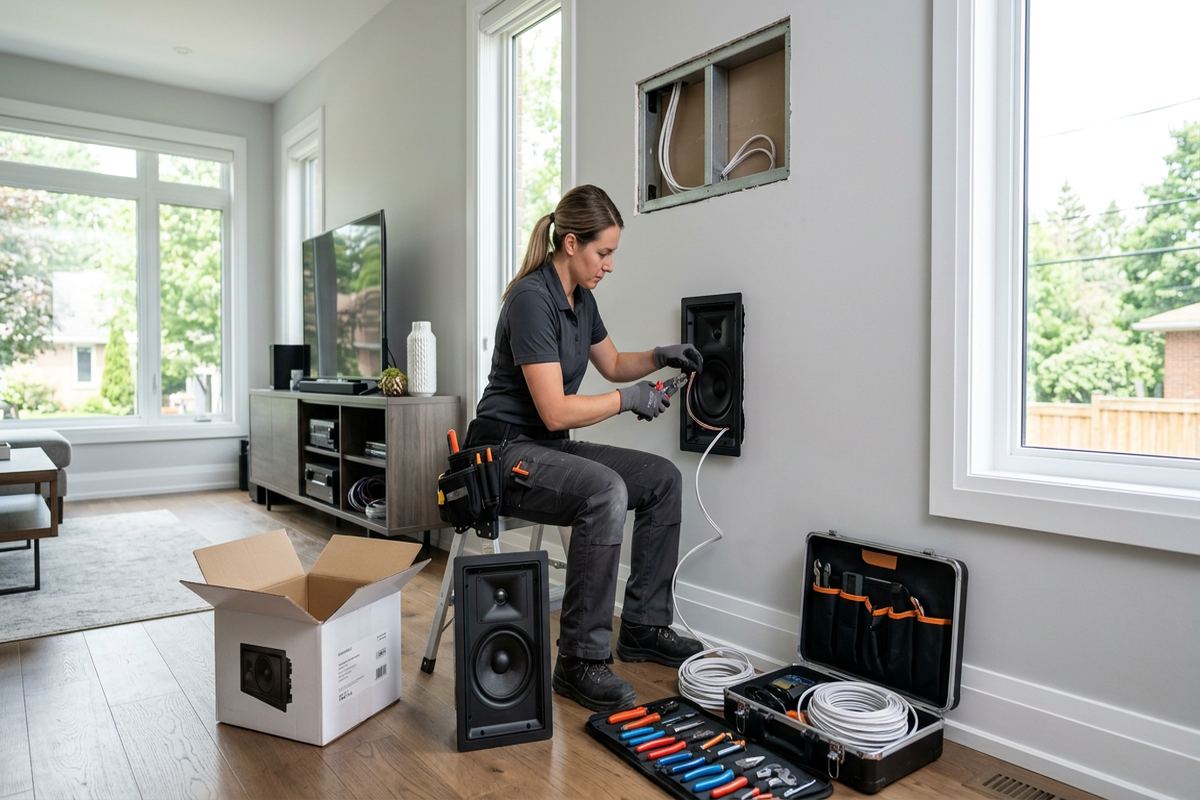
Residential cabling is easiest to use when outlet and device locations reflect daily routines. A home office may need fixed network connections for computers and phones, while ceiling-mounted Wi-Fi equipment requires a suitable central position and a dedicated cable run. Cameras need views that are useful without placing connectors in exposed locations. Television and audio wiring should account for cabinetry, wall mounts and source equipment. UnifiedLink reviews these details with the homeowner and documents the agreed placements, reducing uncertainty once walls or ceilings are opened and helping avoid cables that end in inaccessible or impractical positions.
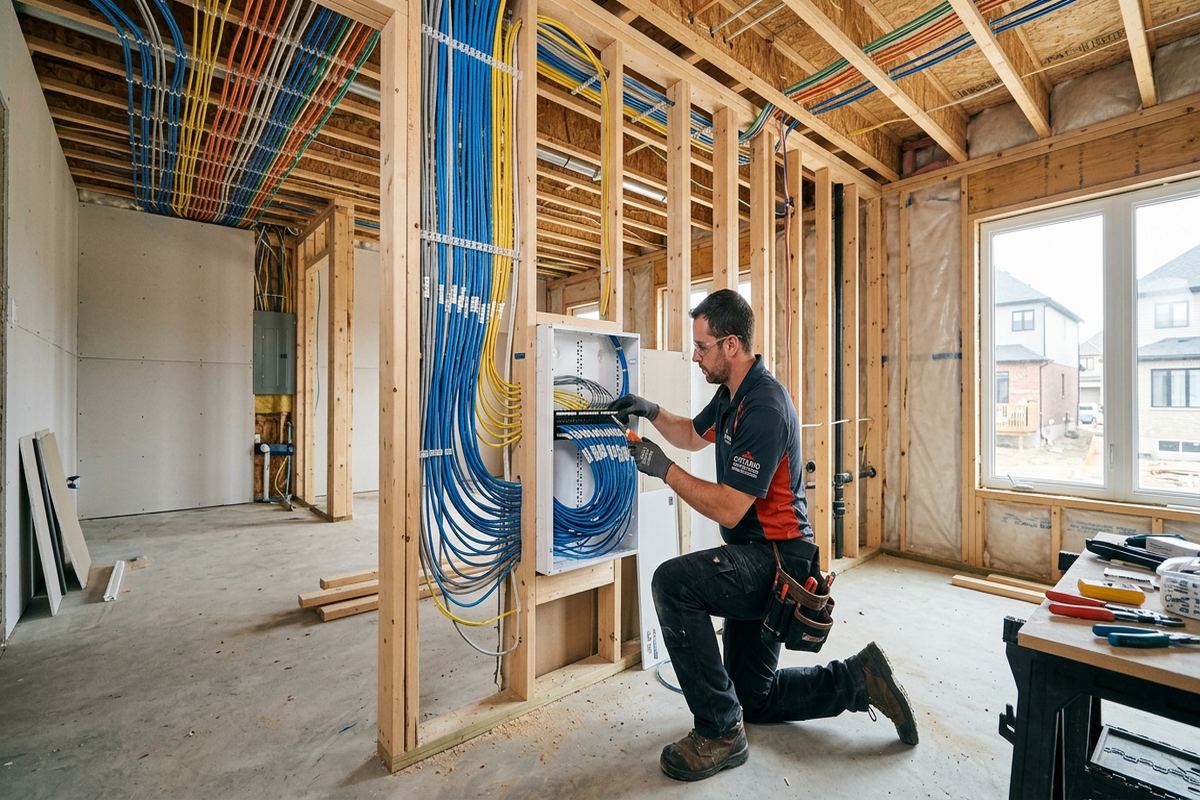
Renovations create an opportunity to install cabling before insulation and drywall close the pathways. Coordination matters because framing changes, cabinet layouts and mechanical work can quickly alter a planned route. UnifiedLink can work from the current site conditions and the agreed device plan, but concealed spaces still require verification. For occupied Barrie homes, routes may instead use basements, attics, closets, garages or carefully selected exterior sections. The preferred option balances appearance, serviceability and disruption rather than relying on a single technique for every room or construction style.
Approvals can affect residential projects even when the cabling itself is straightforward. Condo owners may need permission before opening common walls, entering shared ceiling spaces or mounting equipment on an exterior surface. Tenants should obtain landlord approval for penetrations, fixed devices and communications-cabinet changes. Waterfront properties may also have exposed elevations where wind, moisture and seasonal temperature changes deserve extra consideration. UnifiedLink identifies known access and approval requirements during planning, but the owner or authorized manager remains responsible for securing permissions. Work proceeds according to the approved route and documented property constraints.
- Home-office network outlets
- Ceiling Wi-Fi access points
- Camera and doorbell pathways
- Television and audio cabling
- Renovation-stage rough-ins
Barrie, Ontario
Low-voltage cabling installation in Barrie, scoped in writing first
Book a site assessment and get equipment, routes, exclusions, and warranty on paper before anything is installed.
Exterior Cabling in Barrie Weather
Barrie winters make exterior cable routing and sealing important design issues. Freeze-thaw cycles can stress poorly sealed penetrations, while snow, wind-driven moisture and ice may affect exposed connectors or low mounting points. Exterior-rated cable and suitable fittings are selected where the route leaves a conditioned space. Penetrations should be positioned, formed and sealed to limit water entry rather than depending on an exposed connector for protection. Drip management and mechanical support are considered as part of the route, especially for cameras, wireless links and other devices mounted on outside walls or detached structures.
Masonry and frame construction require different fastening and penetration methods. Brick veneer is not treated as though it were structural concrete, and a framed wall may contain insulation, vapour-control layers, plumbing or electrical conductors behind the finish. Mounting hardware must suit the substrate and the device load without creating an oversized opening. On mixed-material Barrie properties, a route may pass through a basement rim area, garage wall or masonry section before reaching the device. The assessment helps select a practical entry point and identifies surfaces that require special access, restoration or another trade.
Outdoor routes should remain serviceable after the first winter. Cable is supported, protected from sharp edges and kept away from places where shovels, vehicles, ladders or routine property maintenance could damage it. Connections are placed in appropriate enclosures or protected locations when required by the system design. For detached garages or outbuildings, the route may need conduit or a separately coordinated pathway rather than an exposed span. UnifiedLink records the completed route so the owner knows where exterior cable enters the building and how it reaches the associated cabinet, recorder, switch or control equipment.
- Exterior-rated cable where required
- Sealed building penetrations
- Substrate-appropriate mounting
- Protected connector locations
- Documented exterior routes
Commercial Cabling Across Barrie
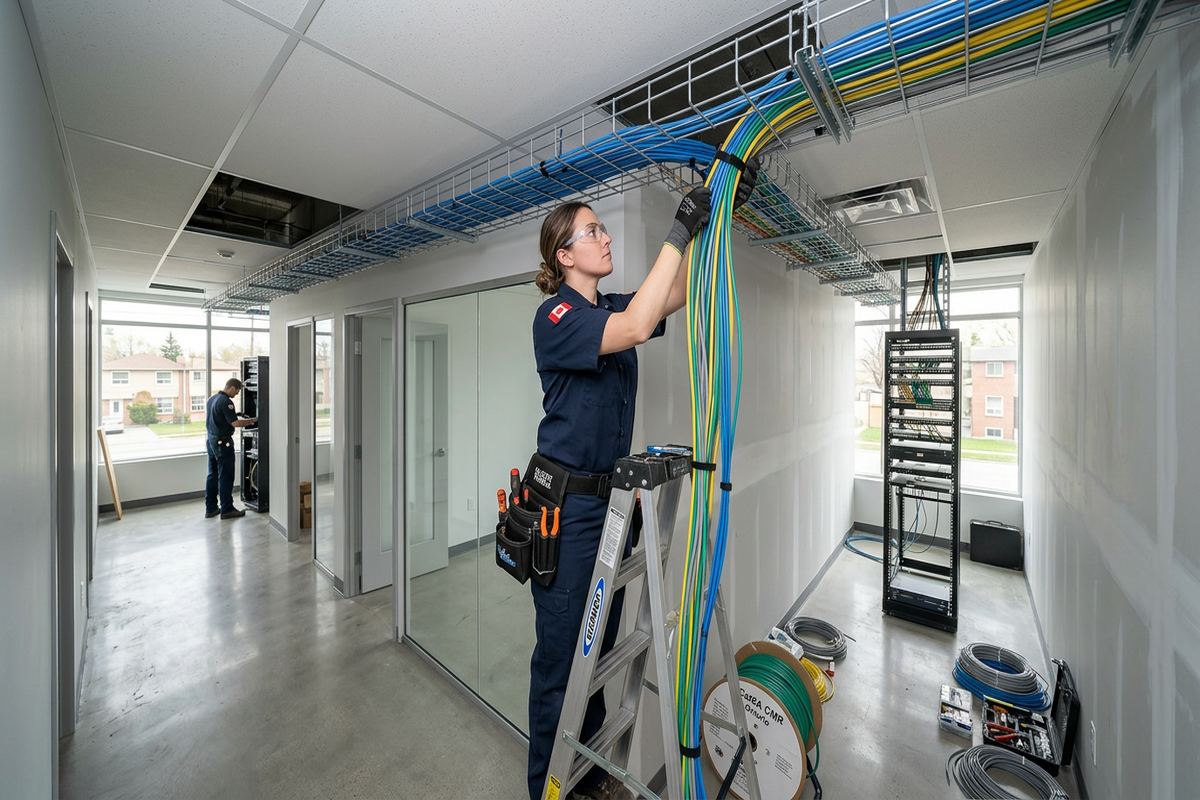
Small commercial plazas in Barrie often require cabling that fits around operating hours, neighbouring units and existing building services. A retail, clinic or office installation may include network outlets, wireless access points, cameras, displays, alarm devices and controlled doors. Above-ceiling space can appear open while still containing ducts, sprinkler piping, electrical systems and fire separations that restrict routes. UnifiedLink reviews these conditions before pricing and defines the included work. The plan also identifies whether access above another tenant, landlord coordination or after-hours building entry is needed before installation can proceed.
Industrial units and mixed office-warehouse spaces present another set of conditions. Long distances, high ceilings, loading areas, metal structure and equipment movement can affect cable pathways and device placement. Cable must be supported by suitable infrastructure rather than draped across building systems or attached wherever space happens to be available. Camera, Wi-Fi and network locations are reviewed for their intended coverage and connection distance. If lifts, conduit, protected drops or work by another trade are required, those items are identified in the scope so the business can coordinate site access and responsibilities.
Changes to an occupied business network should be staged carefully. Existing labels may be incomplete, patch panels may contain abandoned connections, and a communications cabinet may not have enough usable space for new terminations. UnifiedLink traces relevant cabling where practical, separates confirmed information from assumptions and documents new work consistently. On-site configuration can be included for connected systems, followed by testing and handover. The customer retains their own administrative credentials rather than relying on an installer-controlled account, and the as-built record provides a reference for staff, property managers and future service providers.
- Retail and office cabling
- Plaza-unit network infrastructure
- Warehouse device connections
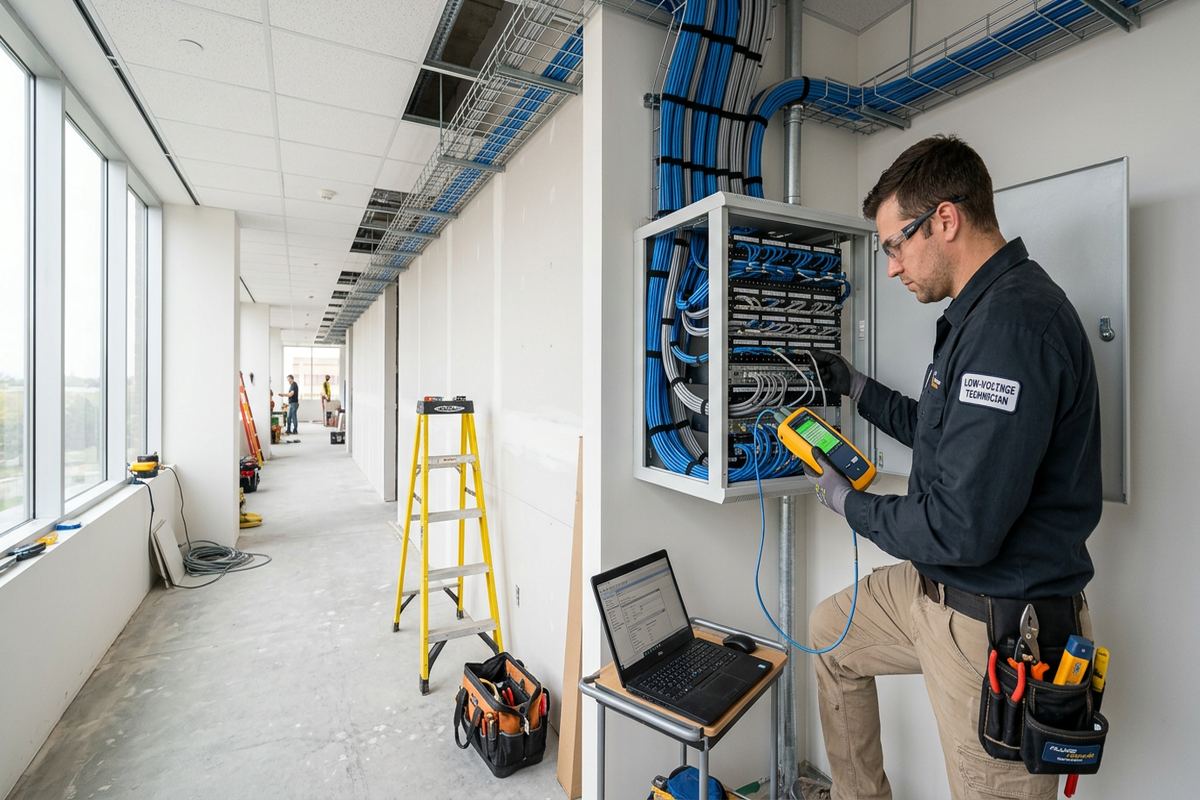
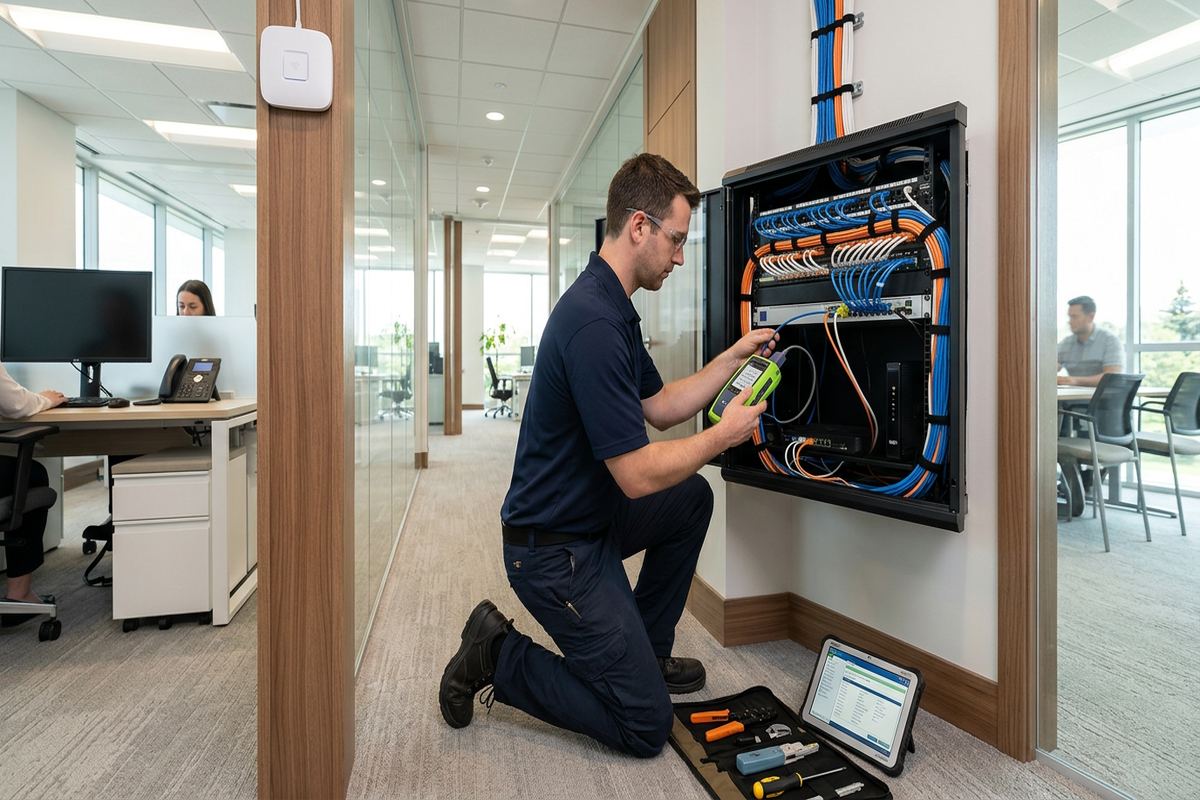
- Labelled rack terminations
- Tenant and landlord coordination
Installation, Termination and Testing
Once the scope is approved, installation follows the agreed routes and device locations. Cable is pulled with attention to manufacturer limits, pathway conditions and separation from sources of interference. Continuous runs are preferred between the defined termination points, avoiding hidden joins that complicate troubleshooting. Each run receives a consistent identifier at both ends, and groups of cables are supported and organized according to the space. Where site conditions differ from what could be observed during assessment, UnifiedLink discusses the issue before making a material route or scope change, preserving a clear record of the decision.
Termination is matched to the cable and connected equipment. Network runs may end at patch panels, jacks or approved device plugs depending on the design, while alarm, access-control and audio wiring uses the appropriate terminals and strain relief. Excess conductor should not be left exposed, and cabinets should remain understandable after installation. Labels connect field devices with their corresponding panel or rack positions. This method is particularly useful in multi-room Barrie properties, where several ceiling, exterior and office cables may converge in one location and otherwise look identical during later maintenance.
Testing confirms that the installed run supports its intended connection and that termination errors are addressed before handover. The exact test method depends on cable type and project scope; not every low-voltage cable uses the same instrument or acceptance criteria. UnifiedLink records relevant results and verifies connected devices during on-site configuration where included. Testing does not replace internet-provider service, third-party monitoring or configuration controlled by another vendor. Those boundaries are explained in the scope, allowing the owner to distinguish installed cabling performance from issues arising elsewhere in the complete system.
- Continuous cable runs
- Consistent end-to-end labels
- Appropriate termination hardware
- Testing suited to cable type
- Documented scope changes
Upgrades and Troubleshooting in Barrie
Existing low-voltage systems often contain a mixture of active, abandoned and unidentified cable. Before adding new equipment, UnifiedLink can inspect accessible pathways, cabinets and termination points to determine what is reasonably reusable. A cable’s presence does not prove that it is correctly routed, undamaged or suitable for the new application. Testing and visual inspection help establish its condition, while unavailable sections remain documented as concealed. In Barrie renovations and tenant improvements, this review can prevent new devices from being connected to wiring whose destination, rating or history is uncertain.
Poor Wi-Fi, intermittent cameras or unreliable network outlets are not always caused by the cable, so troubleshooting starts by separating physical-layer issues from device, power, configuration and service-provider problems. Accessible connectors, patching, cable condition and equipment links are checked in a logical order. If replacement is required, the proposed route and affected finishes are reviewed before work begins. In locations such as Ardagh Bluffs homes or Downtown Barrie commercial units, finished construction may limit access, making a carefully planned replacement more practical than repeated temporary repairs to an unknown concealed run.
Upgrades should also address documentation and cabinet organization. Removing or clearly identifying abandoned patch cords, correcting labels and separating customer equipment from unrelated building wiring can make future service more efficient. However, cables are not removed merely because they appear unused; ownership and impact must first be understood, especially in leased or multi-tenant premises. The written scope identifies what will stay, what will be replaced and what remains outside the work area. At completion, the updated as-built record reflects the new installation rather than presenting assumptions about inaccessible legacy wiring.
- Accessible cable inspection
- Fault isolation and testing
- Replacement-route planning
- Cabinet and patching cleanup
- Updated cable records
Barrie Site Assessment and Handover
Every quoted installation starts with a site assessment because drawings and photographs rarely show all relevant pathway conditions. UnifiedLink reviews the property, intended devices, cable destinations, mounting surfaces and access limitations before pricing. The assessment may also identify landlord permissions, condo rules, ceiling access, parking or equipment-placement decisions that the customer must resolve. Timing depends on the service and travel distance. Requests received during business hours are answered the same day, while after-hours requests are answered the next business day. These response terms apply to the initial request, not a guaranteed attendance or completion time.
Following the assessment, the customer receives a written scope covering equipment, cable routes, device placement, exclusions, equipment ownership and warranty. This document is the basis for the installation and should be reviewed before approval. It clarifies whether patching, painting, power, conduit, internet service, monitoring or third-party integrations are included or require separate arrangements. For a Barrie homeowner, manager or business owner, the scope also provides a place to confirm aesthetic preferences and access conditions. Any later changes can then be discussed against a clear starting point rather than informal assumptions.
Handover closes the gap between completed work and practical ownership. UnifiedLink reviews relevant device operation, provides the customer access through their own credentials and supplies an as-built record of the completed installation. Labels and records help identify cable endpoints, equipment locations and important configuration details without exposing passwords inappropriately. One accountable contractor coordinates the included low-voltage work, even when another trade or service provider has a separate role. The result is a system the Barrie customer can understand, administer and reference when planning maintenance, renovations or future additions.
- Assessment before pricing
- Detailed written scope
- Customer-owned credentials
- As-built installation record
- One accountable low-voltage contractor
Barrie neighbourhoods we cover
- Downtown Barrie
- Ardagh Bluffs
- Painswick
- Holly
- Allandale
- Innis-Shore
Low-voltage cabling installation in Barrie — common questions
What types of low-voltage cable do you install in Barrie?
UnifiedLink installs cabling for data networks, Wi-Fi access points, security cameras, alarms, access control, audio and displays. The cable type depends on signal requirements, distance, pathway and environmental exposure. A site assessment at the Barrie property is completed before pricing so the written scope can identify suitable cable, termination points and routes.
Can you run cable through a finished Barrie home?
Often, but the available route depends on construction and access. Basements, attics, closets, garages and selected exterior pathways may provide options in finished homes. Masonry, insulation, fire separations and completed ceilings can limit access. UnifiedLink assesses the property first, explains likely penetrations and records the agreed route before installation begins.
How do you protect exterior cabling from Barrie winters?
Exterior routes are planned for moisture, snow and freeze-thaw conditions. Where required, UnifiedLink uses exterior-rated cable, suitable fittings, supported pathways and protected connector locations. Building penetrations are positioned and sealed for the assembly. The exact approach depends on whether the wall is masonry, frame construction or another material and whether conduit is available.
Do I need condo, landlord or property-manager approval?
Approval may be required if work affects common walls, shared ceilings, exterior surfaces or building communications spaces. Barrie condo owners and commercial tenants should confirm applicable rules before installation. UnifiedLink can document proposed routes and device positions for review, but the owner or authorized tenant is responsible for securing permissions and arranging access to controlled areas.
Can you reuse cabling already in my building?
Existing cable may be reusable if its type, condition, route and termination suit the new system. UnifiedLink inspects accessible sections and performs appropriate testing, but concealed conditions cannot always be confirmed. The written scope will distinguish cable approved for reuse from wiring that should be replaced or remains outside the assessed work area.
What do I receive when the installation is finished?
Barrie customers receive handover for the included system, access using their own credentials and an as-built record showing completed cable routes and relevant equipment details. New runs are labelled, and connected equipment is configured on site when included in the scope. Warranty, ownership, exclusions and any third-party responsibilities are documented in the written scope.
Coverage in Barrie is confirmed against the address before we quote. See everything we install in Barrie or the province-wide low-voltage cabling installation page.