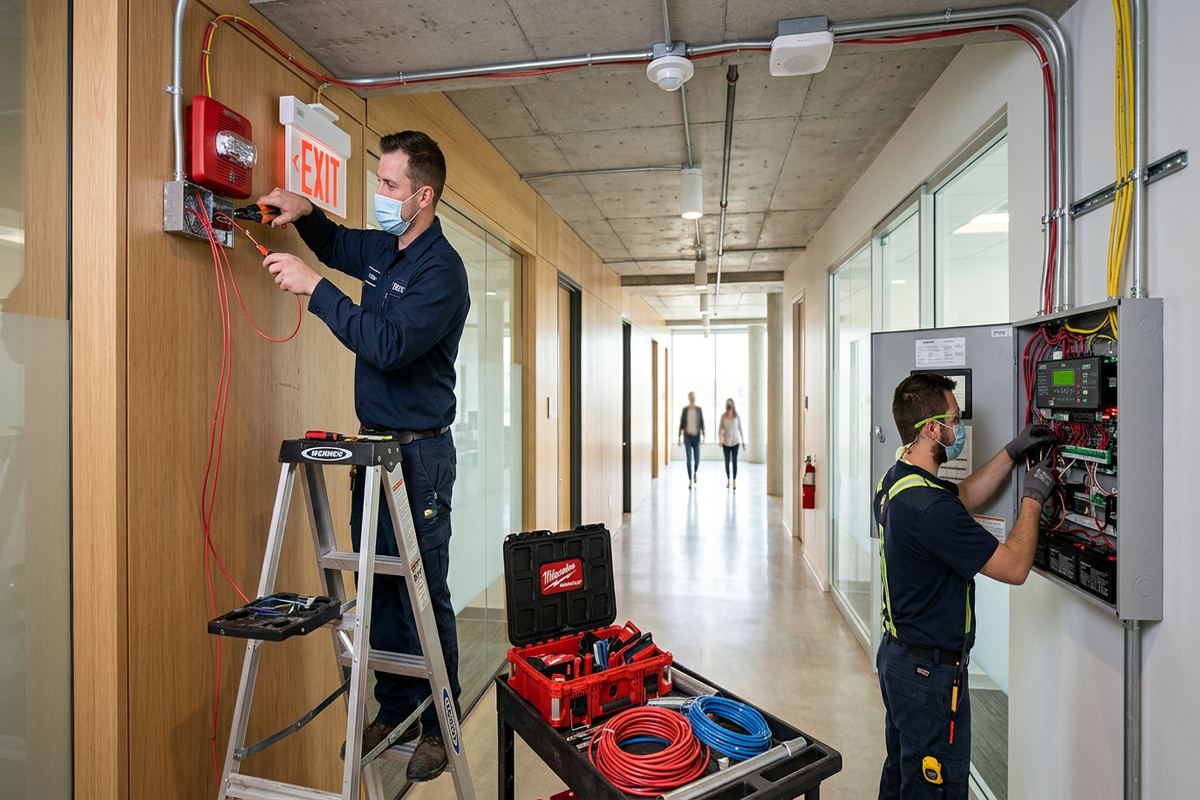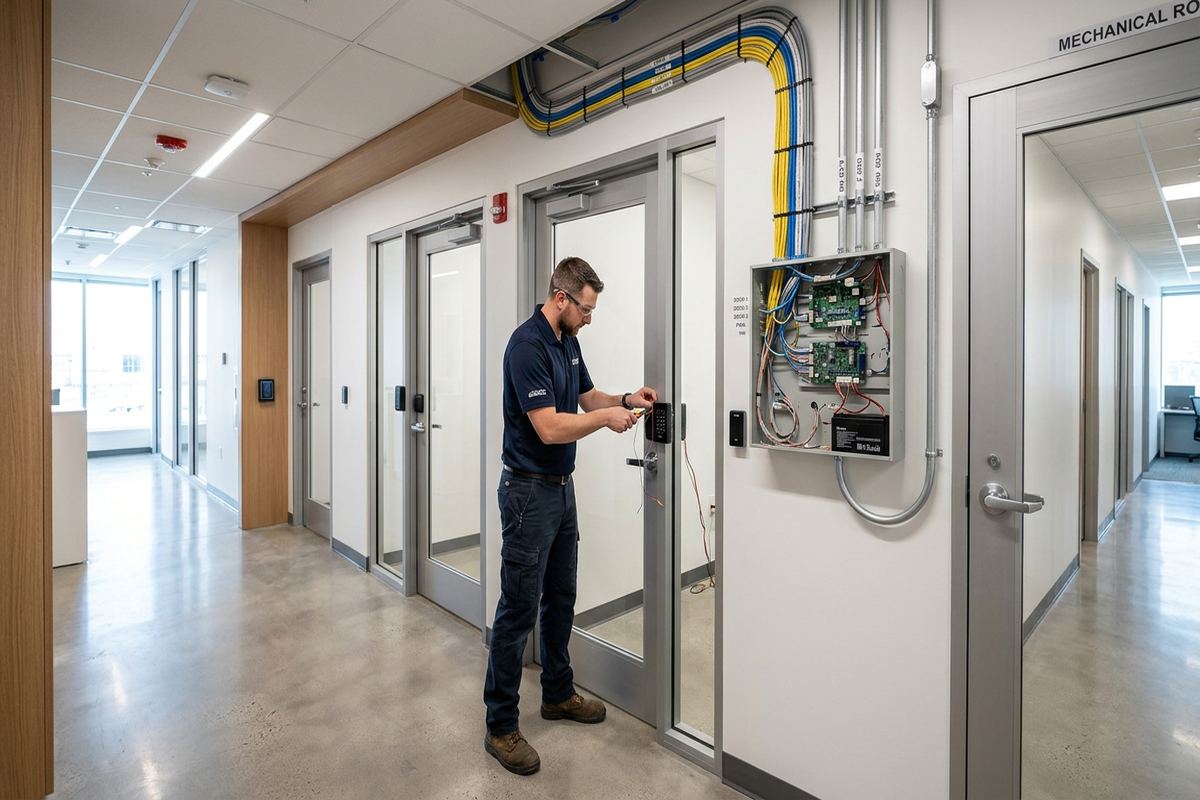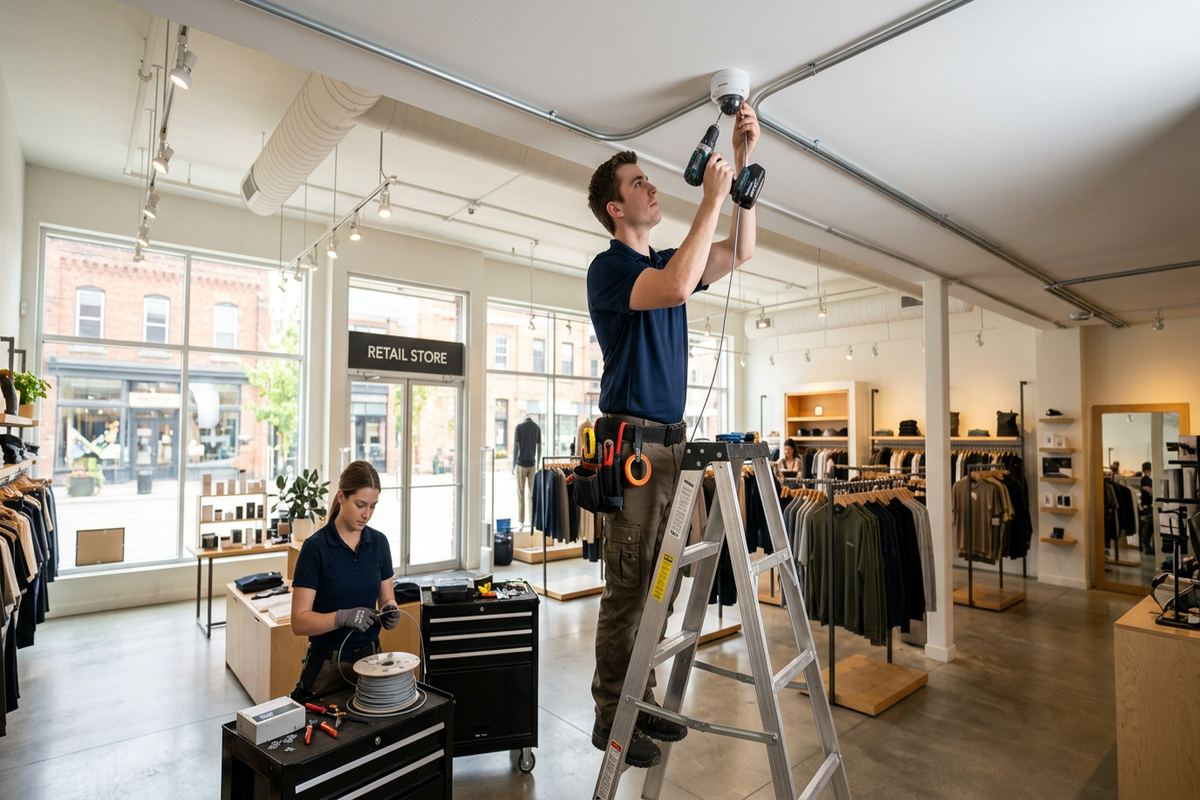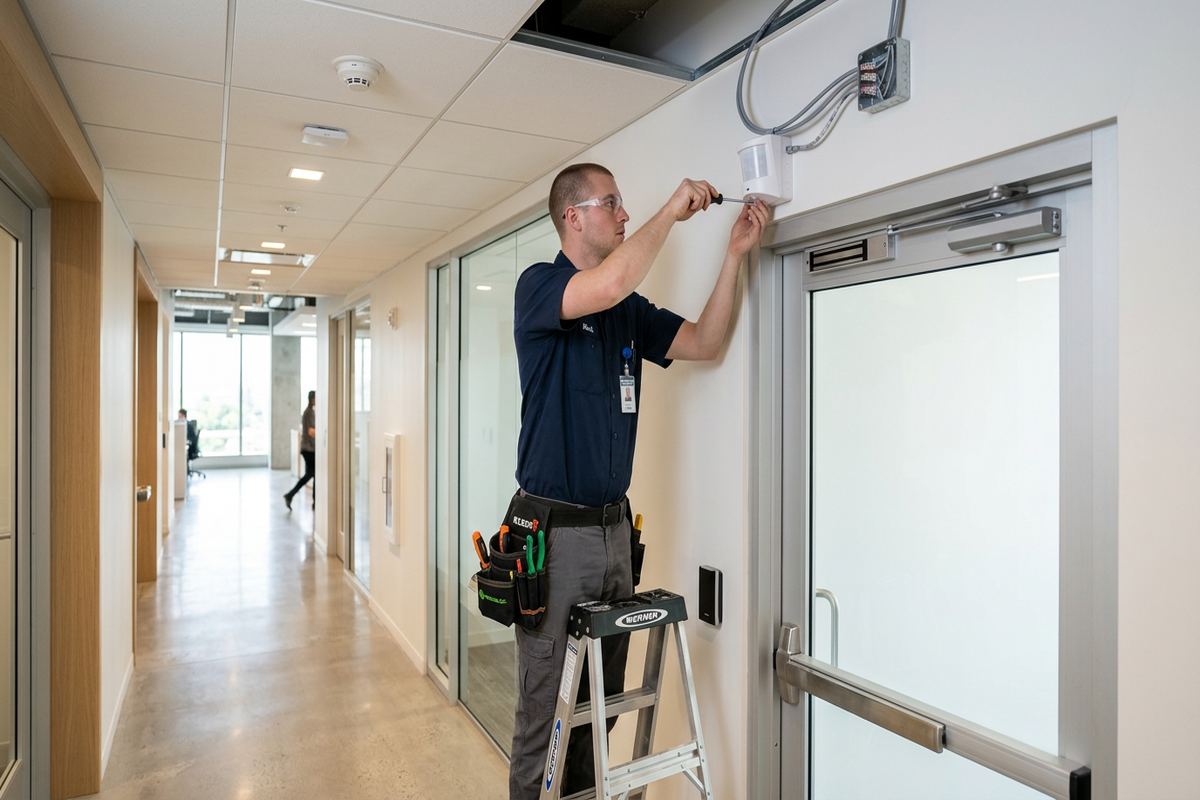
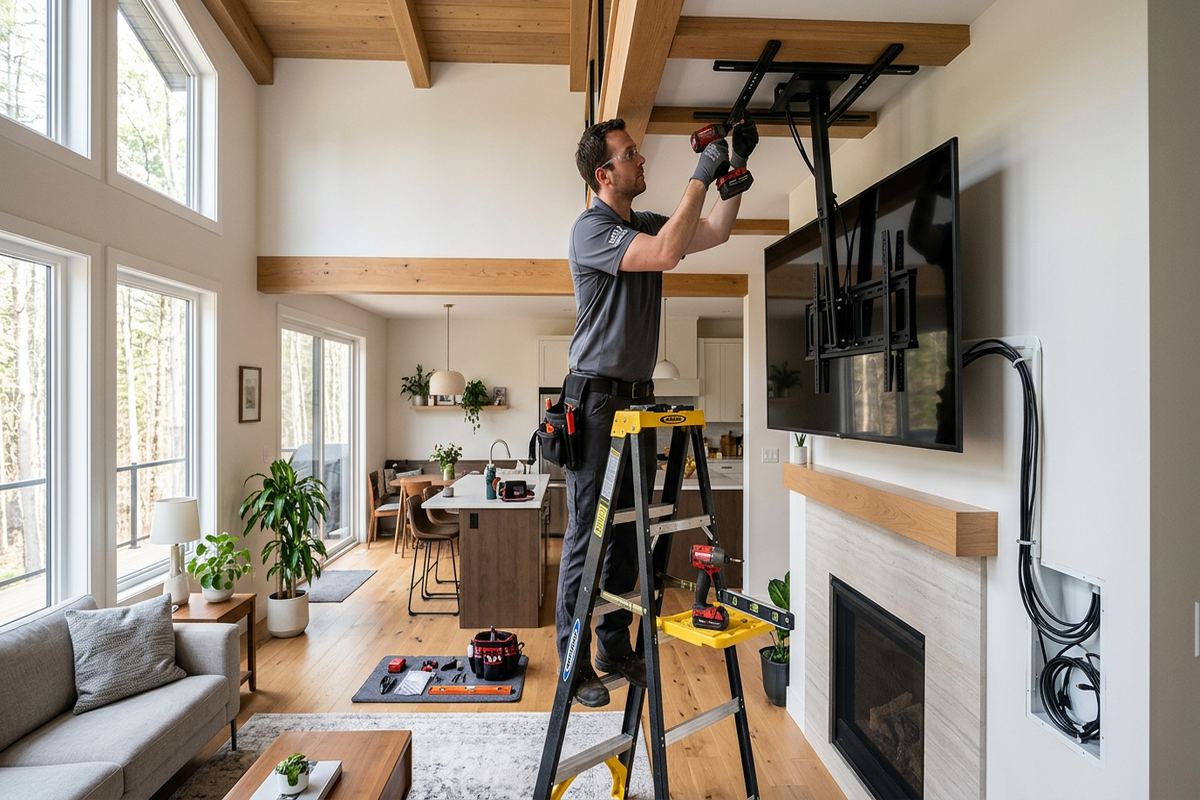
UnifiedLink provides TV wall mounting in Barrie for houses, condos, offices, shops and other commercial spaces. We assess the wall, viewing position, bracket, wiring and connected equipment before pricing. Installation can include concealed cable routes, display configuration and a clear handover using your own account credentials.
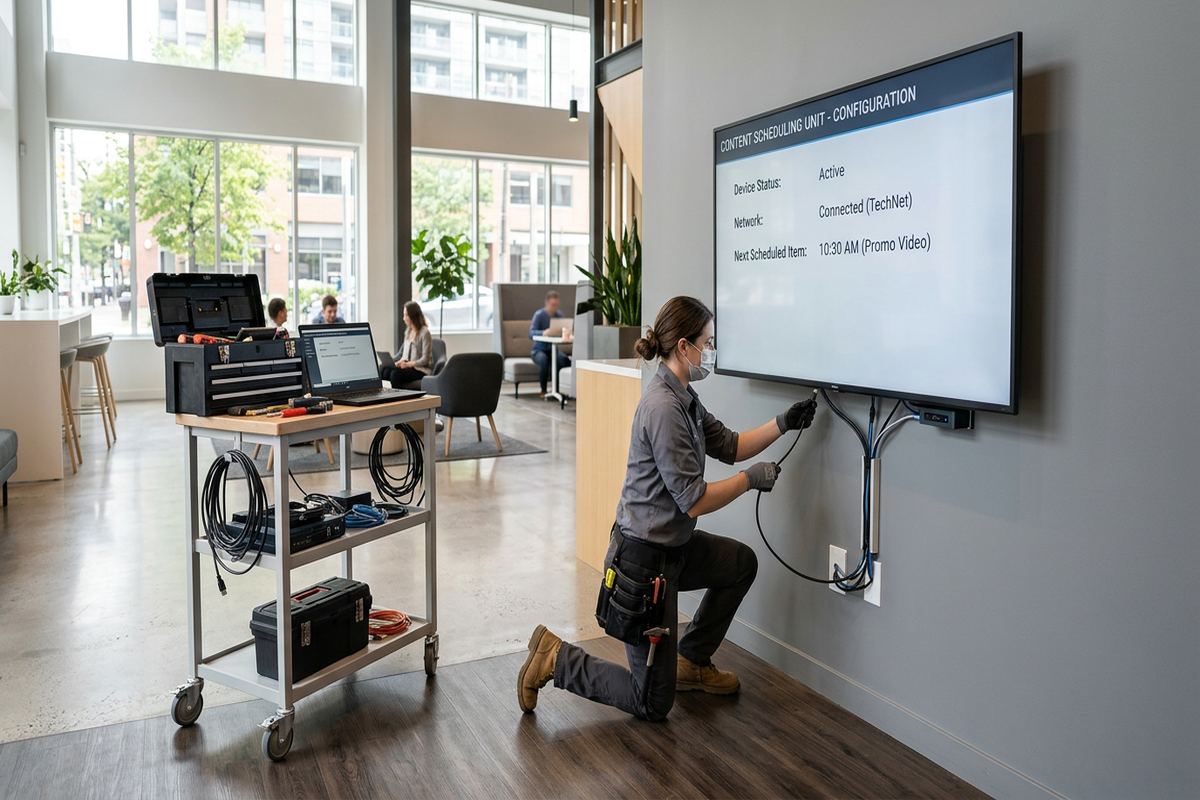
TV Wall Mounting for Barrie Properties
A secure TV installation starts with the wall rather than the display. Barrie includes older buildings near Downtown and Allandale, newer frame-built homes in south-end subdivisions, waterfront properties and varied commercial units. Those settings may involve wood studs, steel studs, concrete, brick, masonry veneer or walls altered during previous renovations. We inspect the proposed location, identify the likely structure and confirm whether the bracket and fasteners suit both the display and substrate. This avoids treating every wall as standard drywall over predictable framing when local building conditions can differ considerably.
Room use determines where a screen should sit. A living-room television needs comfortable sightlines from the main seating area, while a bedroom display may require clearance above furniture and a controlled downward tilt. In an office, waiting room or small commercial plaza, visibility, accessibility and protection from casual contact can matter more than a residential viewing position. We review screen height, glare, mounting orientation, ventilation and access to ports before drilling. The goal is a stable installation that remains practical when someone needs to connect, replace or troubleshoot equipment later.
UnifiedLink handles the display, bracket, cable route and connected devices as one defined scope. Before pricing, we complete a site assessment appropriate to the service and travel distance. The written scope identifies equipment, device placement, proposed cable routes, exclusions, equipment ownership and warranty terms. That process gives Barrie property owners a practical record of what will be mounted and what preparation may be required. It also identifies work that should be coordinated with an electrician, cabinet installer, internet provider, landlord, condominium corporation or other party before installation begins.
- Fixed, tilting and full-motion bracket installation
- Wood, steel, concrete and masonry wall assessment
- Residential and commercial display positioning
- Written scope before installation
Planning a TV Position in Barrie
Placement decisions should account for the whole room, not simply an empty section of wall. We consider seating distance, natural eye line, window orientation, reflected light and the position of doors or walkways. Waterfront homes can have large windows and strong changing daylight, while open-concept homes in Painswick or Innis-Shore may have several possible viewing zones. A full-motion mount can address some layout issues, but it also adds leverage to the wall and requires space for movement. The supporting structure must therefore be verified before that bracket type is approved.
Fireplaces create one of the most common placement questions. A display above a mantel may appear convenient, but the position can be too high, exposed to heat or difficult to cable without opening finished surfaces. We review the fireplace type, mantel depth, wall construction and available route to power and source equipment. We do not assume that an existing outlet or recessed box confirms adequate mounting support. Where the proposed location is unsuitable, we explain practical alternatives, such as using an adjacent wall, changing the bracket style or adjusting the room layout.
The display must also fit its surroundings after it is mounted. Soundbars, media consoles, game systems, streaming devices and set-top boxes all affect height and cable access. We measure clearances and confirm whether equipment will remain visible, sit in furniture or be placed behind the screen using suitable accessories. If cabinetry is planned, mounting dimensions should be coordinated before millwork is finalized. Barrie homeowners renovating a living area benefit from deciding these details early, because bracket position, electrical work, blocking and low-voltage cable routes are easier to manage before the wall receives its final finish.
- Sightline and glare review
- Fireplace location assessment
- Clearance for soundbars and furniture
- Bracket movement and access planning
Wall Types and Mounting Hardware
Different wall assemblies require different mounting methods. Conventional wood framing may offer direct attachment to studs, although spacing and location can affect bracket choice. Steel-stud walls require hardware and techniques suited to the assembly rather than ordinary wood screws. Concrete or solid masonry can provide strong support when the correct anchors and drilling methods are used. Brick veneer, hollow block and brittle finishes need separate consideration. In Barrie, a visual inspection and suitable detection methods help establish the likely structure, but concealed conditions can only be confirmed as the work proceeds carefully.
Renovations can make an apparently simple wall less predictable. Extra layers of drywall, resilient channels, plaster, furring strips, decorative panels and abandoned openings may sit behind the visible finish. Older areas such as Downtown Barrie and Allandale can include modified construction from several renovation periods, while newer subdivisions may use engineered framing and service cavities. We check for likely plumbing, electrical wiring and other concealed services before selecting fastener positions. No scanning method can identify every hidden condition, so the installation plan combines available detection, measurements, building knowledge and controlled drilling.
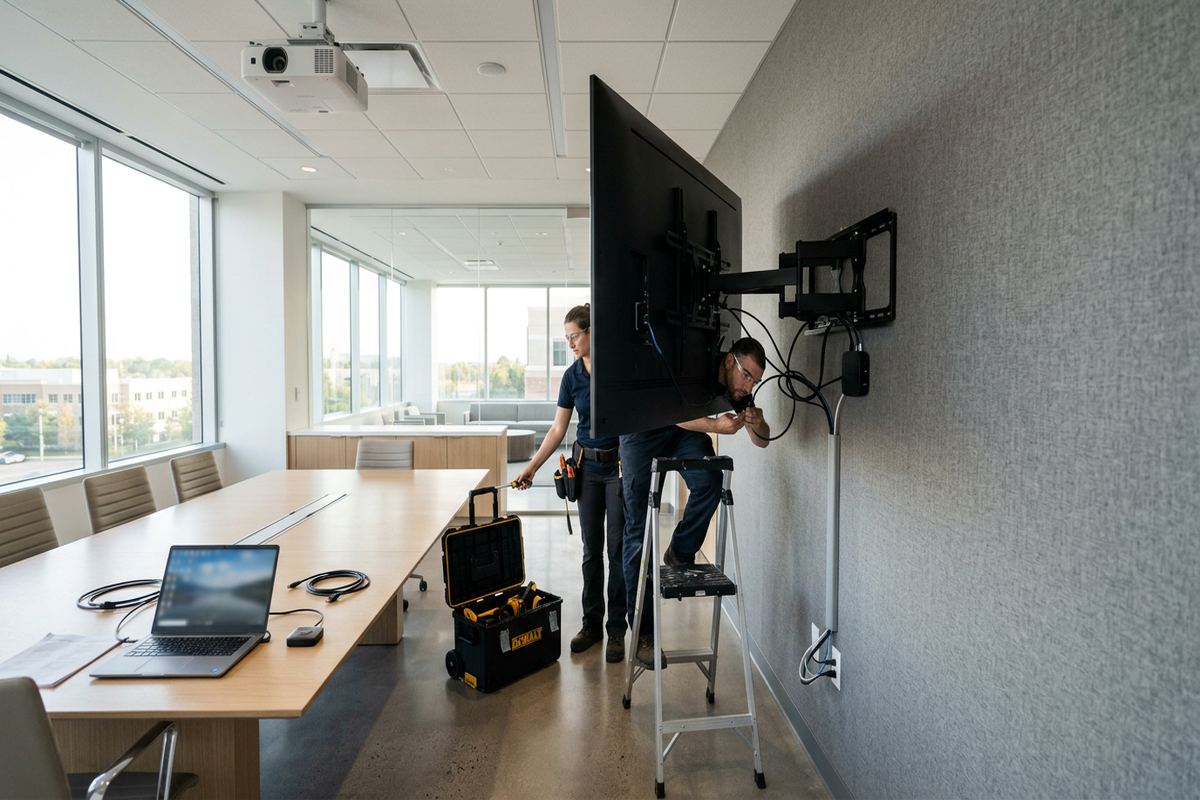
Bracket selection depends on more than screen size. The display’s mounting pattern, weight, connection layout and manufacturer requirements must align with the bracket specifications. A fixed mount keeps the screen close to the wall, a tilting mount can improve higher placements, and an articulating mount allows lateral movement but places greater forces on the attachment points. We verify compatibility before installation and maintain access for ventilation and cables. If a customer supplies the bracket, it is still assessed for suitability; supplied hardware is not automatically used merely because it came in the package.
- Stud and substrate assessment
- Bracket compatibility verification
- Fasteners selected for wall construction
- Controlled drilling around concealed services
Barrie, Ontario
TV wall mounting in Barrie, scoped in writing first
Book a site assessment and get equipment, routes, exclusions, and warranty on paper before anything is installed.
Concealed Cabling for Barrie TV Installations
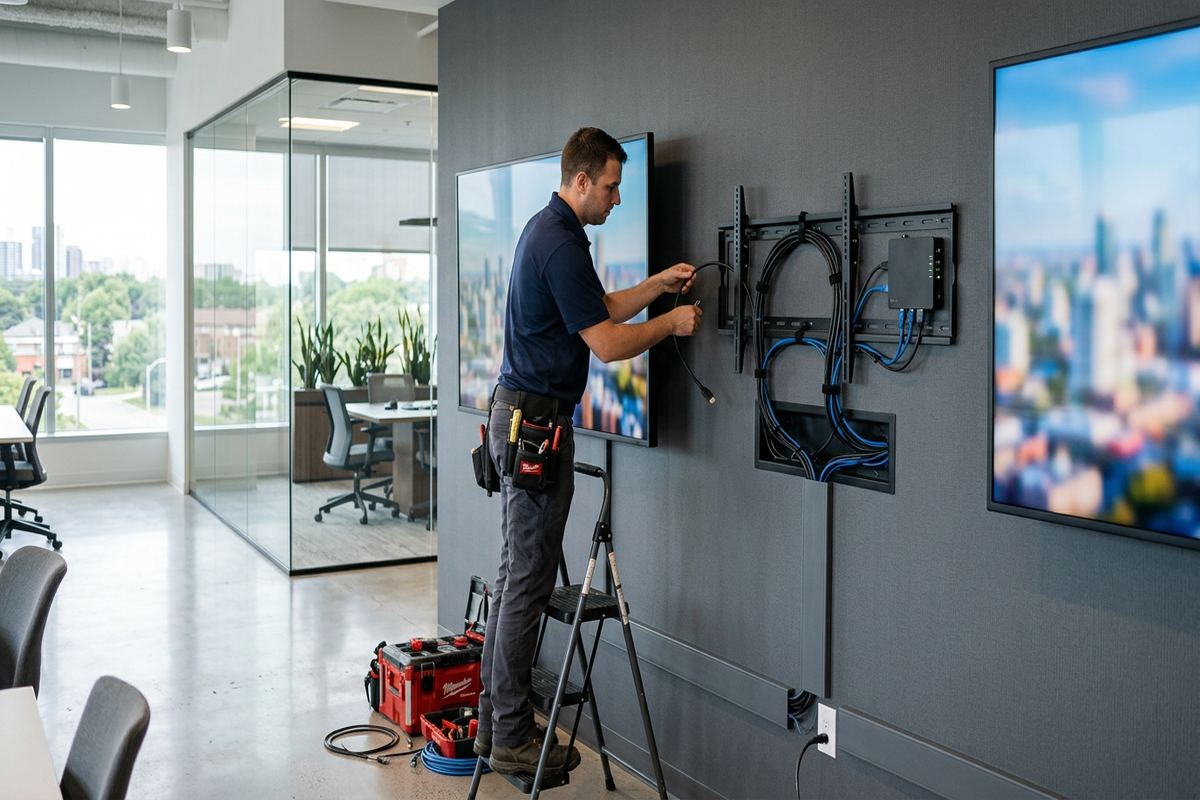
A wall-mounted screen looks incomplete when signal and power arrangements were not planned together. UnifiedLink can route low-voltage cabling for network, audio and video connections where the wall construction and access allow it. Continuous labelled cable runs reduce unnecessary junctions and make future identification easier. Cable paths are planned around framing, insulation, fire blocking and finished surfaces. In Barrie homes with basements or accessible utility spaces, routing options may be straightforward; finished lower levels, exterior walls and tightly insulated assemblies can require a different path or limited openings that are repaired separately if included.
Electrical power must be handled appropriately. Flexible extension cords and ordinary detachable power cords should not be hidden inside a wall unless the product and installation are specifically approved for that use. If a new receptacle or electrical relocation is needed, that portion should be completed by a qualified electrical contractor. We can coordinate the low-voltage layout so power, network and audiovisual connections finish in practical locations behind the screen or near source equipment. The written scope distinguishes UnifiedLink’s work from electrical, drywall, painting or cabinetry work, preventing assumptions about who is responsible for each part.
Cable capacity should reflect both current equipment and reasonable future needs. A television may use Wi-Fi today but later require a wired network connection, soundbar link, antenna feed or another source. We discuss the route length, connector limitations and whether conduit is practical before walls are closed. HDMI performance can depend on cable design and distance, so long routes need appropriate components rather than an arbitrary cable. Each included run is labelled at accessible ends, and the as-built record notes the final route and termination points to support future servicing or equipment changes.
- Continuous labelled low-voltage runs
- Network and audiovisual cable planning
- Electrical work clearly separated
- As-built route documentation
Mounting TVs in Condos and Rentals
Condominium and rental installations require permission checks before holes are made. Barrie condo owners may need to follow corporation rules concerning work hours, elevator booking, contractor access, noise and alterations to common elements. Tenants should obtain written landlord approval that clearly covers wall mounting and any concealed cabling. UnifiedLink can define the proposed device location and cable route for an approval request, but the property owner or tenant remains responsible for securing permission. Work does not proceed on the assumption that an interior-looking wall is automatically available for alteration.
Shared walls can contain concrete, steel framing, acoustic assemblies or fire-rated components that must not be casually modified. A wall between suites may also include services or construction details that are not obvious from inside the room. We review available building information, visible conditions and management requirements before selecting an attachment method. If the proposed route could affect a rated assembly or common element, further authorization or a revised plan may be required. Surface-mounted raceway can sometimes avoid invasive routing while keeping low-voltage cables orderly, although its appearance and placement should be agreed upon beforehand.
Move-out considerations also affect the mounting plan. A renter may prefer fewer penetrations, a fixed bracket and surface cable management, while an owner may prioritize concealed infrastructure for long-term use. We document bracket ownership, supplied equipment and exclusions so there is no confusion about what remains with the property. If the television will be removed later, the original installation scope does not automatically include patching, painting or bracket removal. In Barrie rental properties, documenting these boundaries helps landlords, tenants and property managers understand the installation and their separate restoration responsibilities.
- Condo rules reviewed before scheduling
- Landlord approval confirmed by customer
- Surface raceway options considered
- Equipment ownership recorded in writing
Commercial TV Wall Mounting in Barrie
Commercial displays serve different purposes from a home television. Barrie’s small commercial plazas may use screens for menus, customer information, internal announcements or entertainment, while offices may need meeting-room displays for presentations and video calls. We consider viewing distance, operating hours, screen orientation, control access and the risk of accidental contact. The mounting location must support routine operation without blocking exits, creating protrusion hazards or making service unnecessarily difficult. Where several parties are involved, one accountable low-voltage contractor can coordinate mounting, signal cabling, network connections and on-site display configuration.
Commercial strips and industrial units often combine concrete block, demising walls, exposed structure and previously renovated tenant spaces. A display may need to mount on masonry, steel-stud construction or a finished wall with unknown backing. We assess the substrate and discuss whether cables should run above a suspended ceiling, through an accessible service area or in surface raceway. Exterior walls may contain insulation and vapour-control layers that should not be disturbed without a defined method. Device placement also needs to respect shelving, sprinkler coverage, doors, customer circulation and planned changes to the space.
Multi-display projects require consistent measurements and a clear control plan. Screens mounted at different heights or with mismatched angles can make a reception area, training room or menu installation difficult to use. We establish reference lines, mounting dimensions and cable destinations before drilling. Configuration may include network connection, input selection, basic display settings and verification with the intended source equipment. At handover, the Barrie business receives its own credentials rather than an installer-owned account, along with an as-built record identifying installed devices, labelled runs and relevant connection points.
- Office and customer-facing display mounting
- Masonry and steel-stud installation planning
- Consistent multi-screen alignment
- Customer-owned credentials at handover
Exterior and Seasonal Considerations
Outdoor television mounting needs equipment and methods intended for the environment. A standard indoor display is not automatically suitable for a covered deck, seasonal room or exterior wall. Moisture, wind-driven precipitation, sunlight, temperature changes and insects can affect both the screen and its connections. Barrie winters add prolonged cold, snow and freeze-thaw cycles, making enclosure suitability and water management important. We review the proposed level of exposure, manufacturer requirements and mounting surface before proceeding. If equipment is not rated for the location, that limitation is identified rather than concealed by the installation.
Any exterior penetration must be planned to reduce water entry. Fasteners and cable openings can interrupt cladding, masonry joints, membranes or drainage planes if placed without regard to the wall assembly. Appropriate sealing depends on the substrate and exposure; simply applying a bead of sealant around a bracket is not a universal solution. Waterfront homes may face more direct weather at exposed elevations, while covered installations can still receive wind-driven moisture. We define the penetration and sealing approach, preserve drainage paths where possible and identify situations requiring a building-envelope specialist or another trade.
Seasonal movement can also affect exterior cables and mounting components. Materials expand and contract, sealants age, and accumulated ice or snow can place stress on poorly located wiring. Cable routes should avoid low points that collect water and positions vulnerable to shovels, ladders or roof runoff. Corrosion resistance and connector protection must match the application. After severe weather or visible movement, the owner should inspect the installation and arrange service if anything has loosened or deteriorated. Exterior mounting in Barrie is therefore treated as a building-envelope task, not merely indoor mounting performed outside.
- Outdoor equipment suitability reviewed
- Freeze-thaw exposure considered
- Exterior penetrations planned and sealed
- Drainage and cable protection maintained
Barrie Installation, Configuration and Handover
Installation day begins by confirming the approved position, equipment and cable route against the written scope. The work area is protected as appropriate, measurements are checked and likely concealed services are reviewed before drilling. After the bracket is secured, the display is fitted, levelled and tested through its intended range of movement. Included cables are routed and labelled, and connected equipment is placed where it can ventilate and remain serviceable. If unexpected structure or services are discovered, work pauses so the customer can review the revised method, scope implications or alternative location.
On-site configuration focuses on practical operation rather than leaving a mounted screen without tested sources. We can connect included streaming devices, soundbars, network links or business source equipment and confirm basic input switching. Account-based services are set up with the customer’s own credentials; UnifiedLink does not retain ownership of the customer’s operational accounts. Password entry may be completed privately by the customer. The final test covers the agreed functions, cable connections, bracket movement and remote operation. Advanced calibration or work on unsupported third-party systems is included only when specifically identified in the scope.
Handover gives the owner a usable record of the completed work. The as-built information notes device placement, cable routes and labelled connection points to the extent covered by the project. We explain normal bracket operation, access limitations and relevant care considerations without overstating what the wall or equipment can support. Requests sent during business hours are answered the same day, while after-hours requests are answered the next business day. Site assessment timing in Barrie depends on the service and travel distance, allowing the visit to match the property and proposed installation.
- Position reconfirmed before drilling
- Display and sources tested on site
- Customer controls account credentials
- As-built record supplied at handover
Barrie neighbourhoods we cover
- Downtown Barrie
- Ardagh Bluffs
- Painswick
- Holly
- Allandale
- Innis-Shore
TV wall mounting in Barrie — common questions
Can you mount a TV above my fireplace in Barrie?
Possibly, but the location needs assessment first. We check viewing height, heat exposure, mantel clearance, wall construction, power and low-voltage cable routes. Some fireplace walls contain masonry, framing offsets or concealed venting that restrict attachment and routing. If the proposed position is unsuitable, we can explain alternatives on an adjacent wall or recommend a different bracket and screen height.
Do I need to supply the TV bracket?
You may supply a bracket, or suitable equipment can be included in the written scope. Any customer-supplied bracket is checked for its rated capacity, mounting pattern, movement, condition and compatibility with the wall. Screen size alone does not establish suitability. Full-motion brackets require particular attention because their extended position places greater leverage on the wall attachments.
Can you hide the cables inside the wall?
Low-voltage cables can often be concealed when framing, insulation, fire blocking and access permit a compliant route. Barrie homes vary from older renovated construction to newer tightly insulated walls, so routing cannot be confirmed from appearance alone. Electrical power is treated separately; a qualified electrical contractor may be needed for a new receptacle. Surface raceway is an alternative where concealed routing is impractical.
Can you mount a TV in my Barrie condo or rental?
Yes, provided the required approvals are in place. Condo corporations may regulate drilling, work hours, access and alterations to common or fire-rated assemblies. Tenants should obtain written landlord permission before work begins. We can document the proposed mounting location and cable route, but the customer is responsible for securing approval. Surface cable management may reduce invasive work where concealed routing is restricted.
Do you install outdoor televisions?
We assess outdoor mounting in Barrie based on equipment ratings, exposure, wall construction and cable entry. The screen, bracket, connectors and related hardware must suit moisture, temperature changes and the intended environment. Freeze-thaw conditions and wind-driven precipitation make exterior penetration and sealing important. Indoor equipment is not presented as suitable for outdoor use merely because the location has a roof or partial cover.
What happens after the television is mounted?
We test the agreed display functions, connected sources, bracket movement and included cabling. Configuration is completed on site using the customer’s own credentials, and passwords can be entered privately. The handover includes an as-built record of installed devices, labelled runs and relevant cable routes. We also explain access points, operating limits and any exclusions that may affect later equipment changes or wall restoration.
Coverage in Barrie is confirmed against the address before we quote. See everything we install in Barrie or the province-wide tv wall mounting page.