
UnifiedLink installs whole-home audio systems in Barrie, including architectural speakers, outdoor audio, amplifiers, source equipment and structured cabling. We assess the property before pricing, plan practical listening zones and document the proposed work. Each system is configured on site and handed over using the customer’s own credentials, with clear operating guidance and an as-built record.
Whole-Home Audio Planning for Barrie Properties
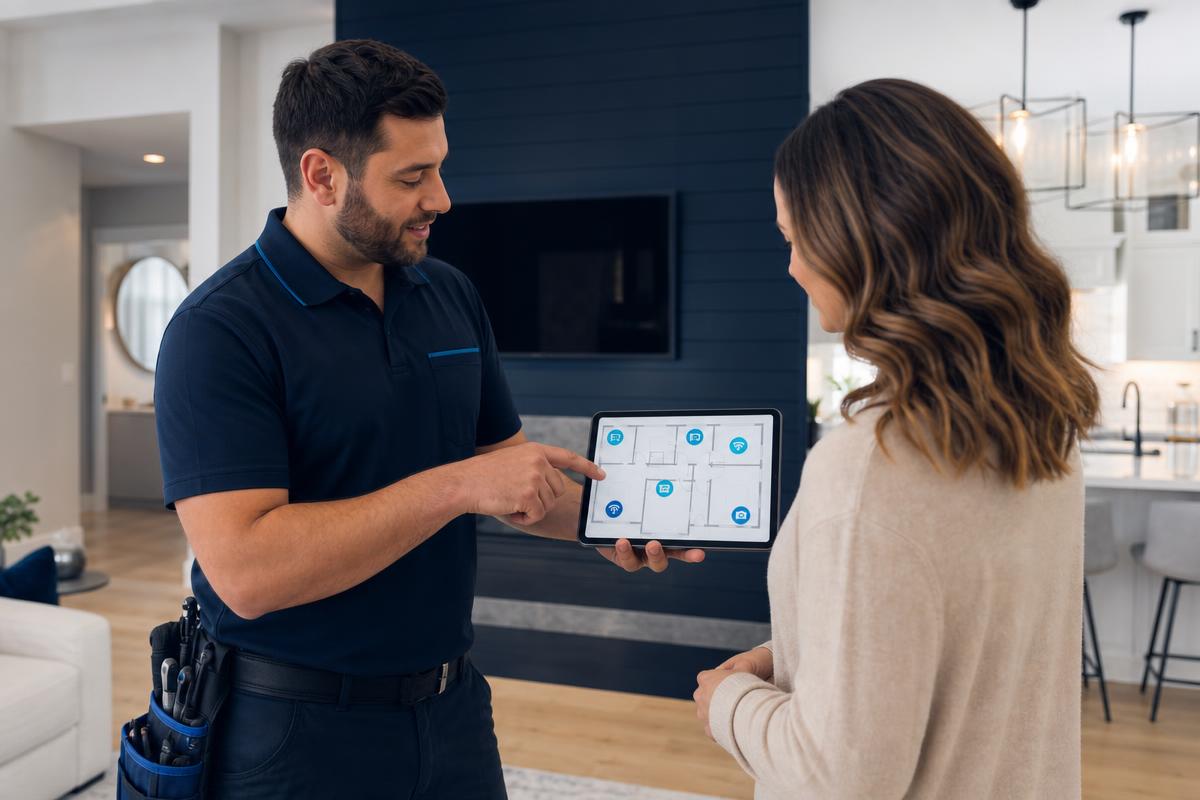
A useful whole-home audio system begins with how the property is used, not with a speaker count. During a site assessment, we discuss where people listen, which rooms should operate together and where independent control is needed. A kitchen and patio may form one everyday zone, while bedrooms, offices and entertainment rooms remain separate. We also review likely volume levels, preferred music sources and television integration. This planning keeps controls understandable and helps avoid systems that are oversized, difficult to operate or unable to provide even coverage at comfortable listening levels.
Barrie has a varied property mix, from waterfront homes and established houses near Downtown Barrie and Allandale to newer construction in Painswick and Innis-Shore. Each building type affects speaker depth, cable access and equipment location. Older homes may have plaster, masonry sections or finished basements with limited pathways. Newer frame construction can be easier to cable before finishes are complete, but engineered floors, insulation and fire blocking still require careful investigation. We identify these constraints before proposing cable routes, speaker positions or openings in finished surfaces.
The written scope sets out the proposed equipment, listening zones, cable routes, device placement and exclusions. It also identifies equipment ownership and applicable warranty information, so responsibilities are clear before installation begins. If audio work depends on electrical changes, cabinetry, patching, painting or another trade, that dependency is documented rather than assumed. This approach is especially useful during renovations, when several contractors may be working around the same ceiling or wall spaces. UnifiedLink remains the accountable contractor for the low-voltage audio installation, configuration, testing and documented handover.
- Room-by-room listening and control review
- Speaker and amplifier compatibility planning
- Documented cable routes and equipment locations
- Clear exclusions and trade dependencies
- Assessment before pricing
Speaker Placement and Listening Zones in Barrie
Speaker placement determines whether music sounds balanced at normal volume or becomes loud in one seat and weak in another. We consider room dimensions, ceiling height, furniture layout, reflective surfaces and expected listening positions. Open kitchens and living rooms often need several speakers operated at lower output rather than one pair driven loudly. Hallways and small rooms usually need a different approach. Where stereo separation is impractical, a dual-voice-coil speaker may suit a compact space. The objective is consistent, usable coverage without filling ceilings with more devices than the room requires.
Zone design should match daily routines. A homeowner may want the kitchen, dining area and deck grouped for gatherings, but separately controlled during ordinary use. Bedrooms may require local volume control, while a home office should not depend on the main living-area zone. We map those relationships before selecting amplification because each independently controlled area affects channel count, power requirements and control options. For homes in Holly, Ardagh Bluffs and south-end subdivisions, planning spare capacity can also support a future finished basement, exercise room or exterior entertaining area without replacing the central equipment immediately.
Ceiling speakers are not automatically appropriate for every location. Vaulted ceilings can produce uneven projection, and shallow joist spaces may not accommodate the required back depth. In some waterfront homes, large glazed areas and hard finishes create reflections that influence position and speaker selection. Wall-mounted, cabinet, pendant or surface speakers may provide a more practical result. We also account for lights, heating registers, sprinklers, beams and ceiling access panels. Final locations are confirmed against visible room features so the installation looks intentional while preserving service access to surrounding building systems.
- Independent or grouped audio zones
- Coverage planned around actual room use
- Ceiling, wall and surface speaker options
- Coordination with lights and mechanical fixtures
- Capacity planning for later expansion
Concealed Audio Cabling and Equipment Locations
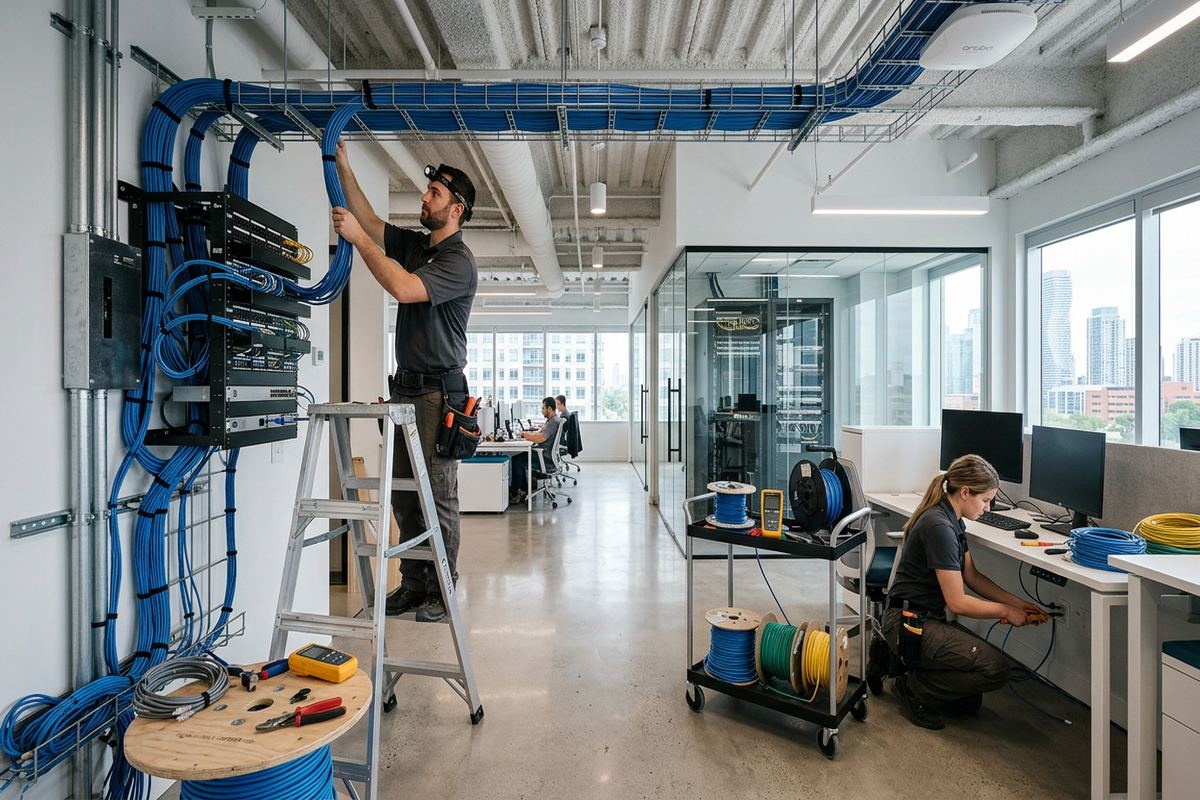
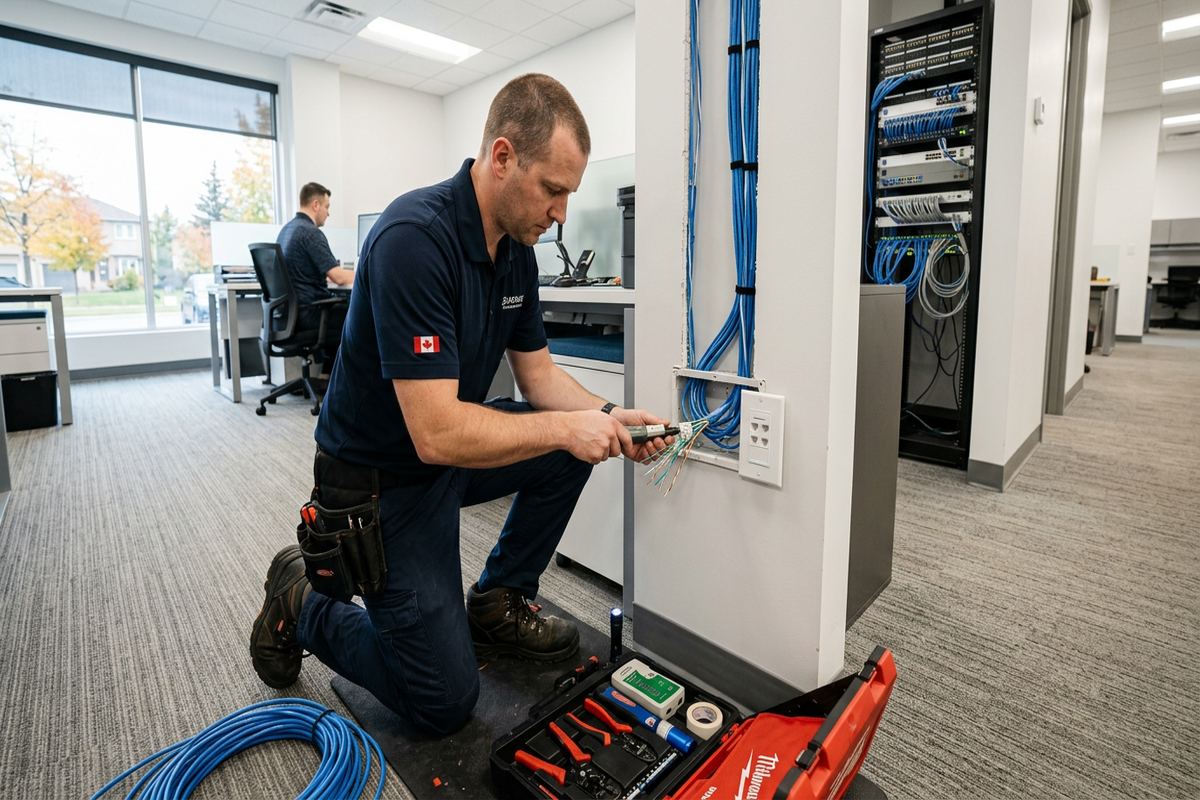
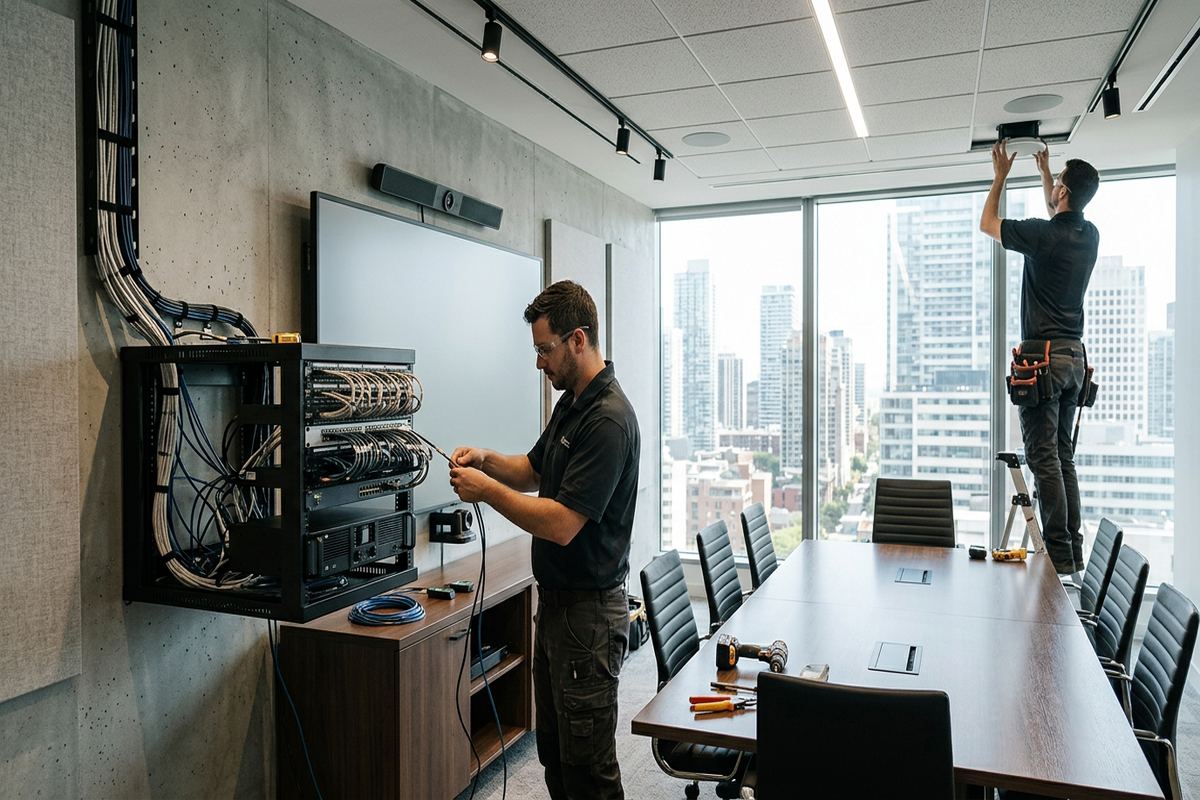
Reliable audio depends on suitable cable, sensible routing and accessible terminations. UnifiedLink installs continuous labelled cable runs between speakers, controls and the central equipment location wherever the design permits. We avoid unnecessary hidden joins, which can complicate troubleshooting and introduce inconsistent connections. Cable type is selected for the application, including in-wall ratings and conductor size appropriate to run length and speaker load. Network cabling may also be required for streaming devices, control interfaces or wireless access points. At the rack or cabinet, labels correspond with the documented zones so future service does not rely on guesswork.
Finished homes require a different cabling strategy from open renovations. Before cutting, we use available plans, visual inspection and appropriate detection methods to assess likely routes. Frame walls may contain insulation, blocking and plumbing, while masonry walls often require surface raceway, cabinetry routes or another agreed method. In older Barrie building stock, concealed conditions cannot always be confirmed until limited access is made. The scope explains expected access points and who is responsible for repair or finishing. We favour practical routes that reduce disruption without promising that every cable can be installed invisibly in every structure.
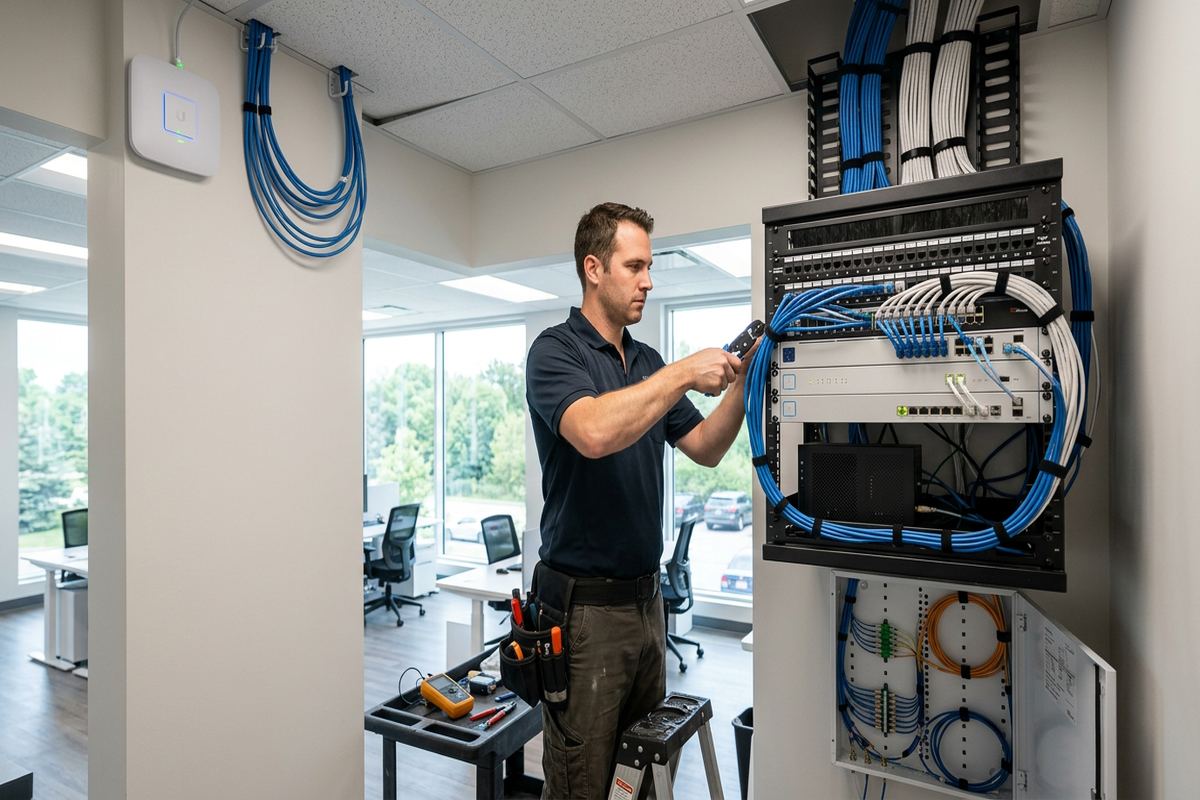
The equipment location needs ventilation, power, network connectivity and enough space for service. Placing amplifiers inside a tightly packed cabinet can lead to heat accumulation and difficult maintenance. We review shelf depth, door clearance, fan needs and cable entry before confirming the position. Basements and utility areas can work well if they remain dry, accessible and reasonably conditioned. Garages and unheated spaces need closer consideration because Barrie winters expose equipment to low temperatures and moisture changes. Central components are kept away from plumbing risks and arranged so labels and connections remain visible.
- Continuous cable runs without hidden splices
- Labels matched to each audio zone
- In-wall-rated cable where required
- Planned access for ventilation and service
- Network connections for compatible sources
Barrie, Ontario
Whole-home audio installation in Barrie, scoped in writing first
Book a site assessment and get equipment, routes, exclusions, and warranty on paper before anything is installed.
Outdoor Audio for Barrie Weather
Outdoor audio needs more than indoor speakers placed beneath an eave. Equipment must suit the exposure, mounting surface and seasonal conditions. Barrie’s winters, wind-driven precipitation and repeated freeze-thaw cycles can stress brackets, penetrations and cable entries. We select exterior-rated components for the planned location and position them to limit direct exposure where practical. Mounting methods differ for wood framing, masonry and finished cladding. Penetrations are sealed using materials compatible with the surface, while cable entries are arranged to reduce water tracking toward the building or device.
Coverage outdoors is usually better with several carefully aimed speakers operating at moderate levels than with a small number played loudly. This helps keep sound within the intended patio, deck or pool area and reduces unnecessary spill toward neighbouring properties. Waterfront lots and open rear yards may have fewer surfaces to contain sound, so direction and mounting height matter. We discuss how the area is used, where people sit and whether the outdoor zone should follow the kitchen or operate independently. Landscape speakers may be considered where building-mounted devices cannot provide suitable coverage.
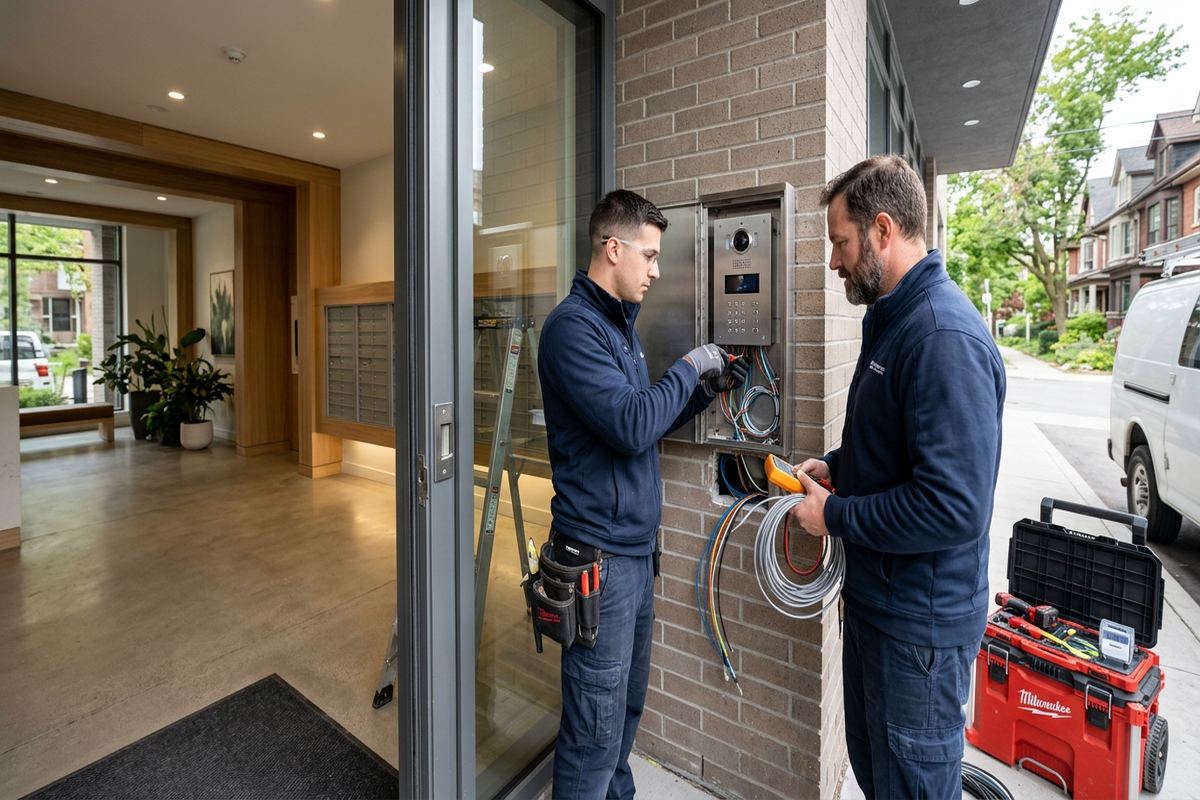
Exterior wiring routes must remain durable through snow, ice, landscaping work and seasonal movement. Exposed cable is avoided unless it is specifically rated and suitably protected. Underground pathways require products and methods appropriate to the environment, with routes documented for future yard work. We inspect proposed entry points around siding, brick and foundation areas before drilling. Where a deck, soffit or exterior finish is under warranty, the owner may need approval from the builder or contractor. Outdoor audio is tested from normal listening positions, not only directly beneath each speaker.
- Exterior-rated speakers and mounting hardware
- Sealed penetrations for local weather exposure
- Coverage aimed toward occupied areas
- Protected exterior and underground cable routes
- Independent patio and yard controls
Audio Sources, Controls and Network Readiness
Modern whole-home audio can combine streaming services, televisions, local media players and other sources, but compatibility should be confirmed before equipment is ordered. We review how each source connects, whether it can be shared across zones and what control method household members prefer. Some systems use dedicated applications, while others support wall controls or integration with compatible automation platforms. The design also considers what happens when internet access is unavailable. Straightforward controls and clearly named zones make the system easier for guests, family members and staff to use without changing settings accidentally.
Streaming audio relies on the home network, even when the final connection to the speaker is wired. Weak wireless coverage, congested access points or poorly located network equipment can make an otherwise capable audio system seem unreliable. During assessment, we review connectivity at equipment and control locations. Where needed, structured cabling or Wi-Fi improvements can be included as a separate part of the scope. Fast-growing Barrie subdivisions may contain tightly spaced homes with many neighbouring wireless networks, so channel conditions and access-point placement deserve attention rather than assuming one router will serve every floor and outdoor area.
At handover, UnifiedLink configures the system on site with the customer’s own accounts and credentials. We do not build normal operation around installer-owned logins. Zones receive recognisable names, source behaviour is checked and available volume limits can be set where the selected platform supports them. We demonstrate routine operation, including grouping rooms, selecting sources and recovering from common connection issues. The as-built record identifies installed devices, principal cable routes and zone labels. Customers should retain their account recovery details and subscription information because access to third-party streaming services remains under their control.
- Streaming and television source integration
- Clearly named rooms and audio zones
- Network assessment for connected equipment
- Customer-owned accounts and credentials
- On-site operating demonstration
Renovations, Condos and Commercial Audio in Barrie
Renovation timing can substantially affect installation options. Running speaker and network cable before insulation and drywall usually permits more direct routes and fewer finished-surface openings. We coordinate device positions with reflected ceiling plans, cabinetry and lighting before walls close. In occupied Barrie homes, work may need to proceed room by room with agreed access and protection measures. If asbestos, unknown materials or structural concerns are suspected, specialist review may be required before intrusive work continues. Our scope identifies the low-voltage work and separates it from electrical, structural, drywall, painting and millwork responsibilities.
Condo installations require attention to ownership boundaries and building rules. Ceilings, exterior walls, corridors and risers may be common elements even when they are beside the unit. Before drilling or routing cable, owners should confirm condominium approval requirements, permitted work hours and contractor access procedures. Similar restrictions apply to tenants, who need written landlord approval for permanent speakers, cabling and penetrations. Surface-mounted speakers or non-invasive pathways may provide alternatives where concealed work is not allowed. We document the proposed locations so the owner or tenant can submit a clear plan for review.
Small commercial plazas, professional offices and light industrial units around Barrie may use distributed audio for background music, staff areas, waiting rooms or training spaces. These projects require zoning based on occupancy and operating needs rather than residential habits. We consider ceiling type, ambient noise, control access and whether public areas need restricted volume settings. Music licensing and content permissions remain the business owner’s responsibility. In leased premises, landlord approval may be necessary, particularly for roof, exterior, demising-wall or common-area work. Installation can be coordinated around stated access hours without promising uninterrupted business operations.
- Pre-drywall and finished-space installation options
- Condo board and landlord approval planning
- Coordination with cabinetry and lighting layouts
- Background audio for small commercial spaces
- Documented responsibilities between trades

Installation, Configuration and Handover
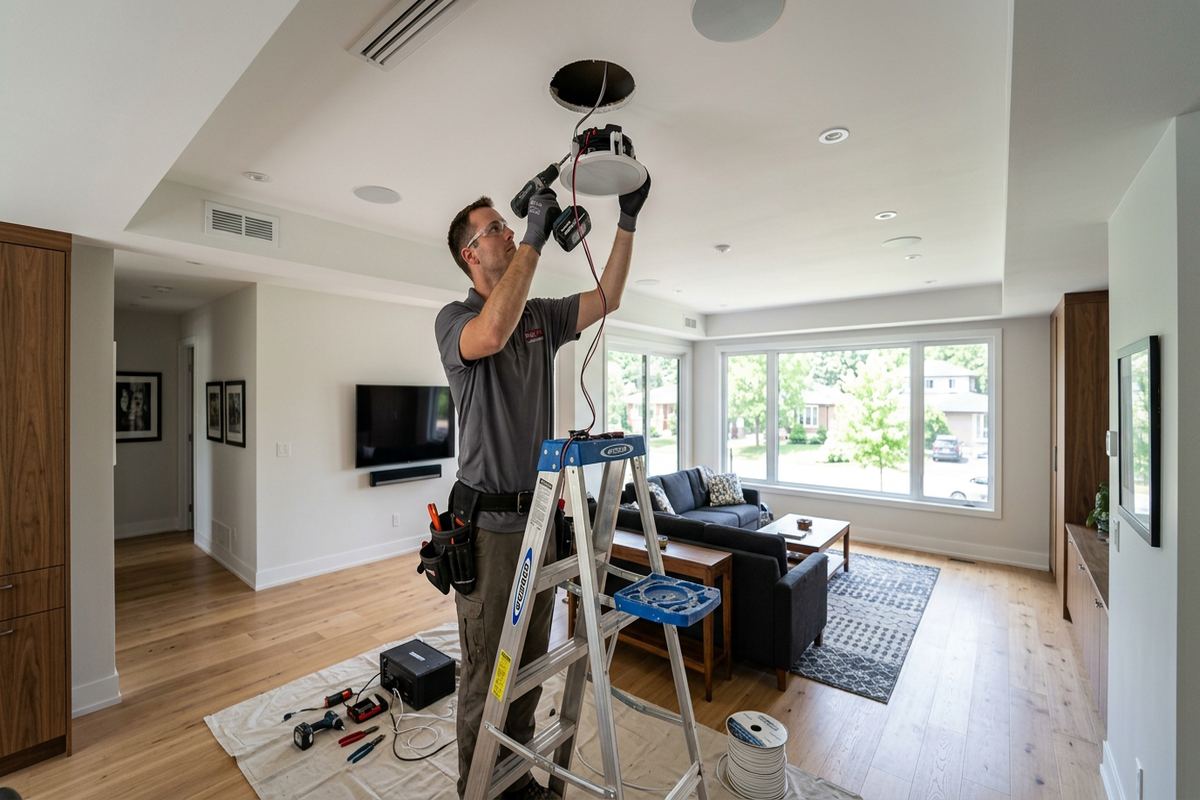
Once the scope is approved, installation follows the documented device locations and routes, subject to concealed conditions found on site. Speakers are aligned consistently, cut-outs are checked before enlargement and visible hardware is positioned with surrounding finishes in mind. Cable runs are labelled at termination points and tested before equipment is commissioned. If site conditions require a significant route or placement change, we discuss the effect before proceeding. One accountable contractor manages the low-voltage audio work, reducing gaps between cable installation, equipment connection and final configuration while keeping dependencies on other trades visible.
Commissioning covers more than confirming that sound comes from every speaker. We verify zone assignments, channel operation, source selection, network connectivity and control behaviour. Polarity and level settings are checked so paired speakers work together correctly and adjacent rooms do not have unexpected volume differences. Outdoor areas are tested from intended seating locations when conditions allow. Where televisions or third-party control systems are included, supported functions are confirmed within the agreed scope. Any platform limitations discovered during setup are explained plainly, rather than hidden behind default settings that may confuse later operation.
Handover leaves the customer able to operate and maintain the system without depending on undocumented installer knowledge. We provide an as-built record showing principal equipment, zone names, cable identification and relevant route information. The system is handed over with the customer’s own credentials, and normal controls are demonstrated on the devices they plan to use. Equipment ownership and warranty information follow the written scope. We also point out ventilation needs, accessible reset locations and basic checks to perform before requesting service, such as confirming power, network status and source availability.
- Consistent speaker alignment and finishing
- Cable and zone testing before commissioning
- Source, control and network verification
- Customer credential-based handover
- As-built installation record
Requesting a Barrie Whole-Home Audio Assessment
Pricing follows a site assessment because room construction, cable access, source requirements and zone count all affect the work. Useful preparation includes a floor plan, renovation drawings, photographs of possible equipment locations and a list of desired listening areas. For new construction, electrical and reflected ceiling plans can help identify conflicts early. For finished properties, access to utility rooms, basements, attics and relevant cabinets allows a more accurate route review. We then prepare a written scope covering equipment, placement, pathways, exclusions, ownership and warranty rather than relying on an informal speaker count.
When comparing approaches, look beyond the visible speaker model. Amplifier capacity, impedance, ventilation, network design, cable quality and control usability determine how the complete system performs. Clarify whether quoted work includes cable installation, terminations, source configuration, testing and documentation. Also ask how exterior penetrations will be sealed and how repairs to exploratory openings are handled. Barrie properties vary widely between Downtown buildings, Allandale houses, waterfront homes and newer Innis-Shore construction, so a standard package may overlook important structural or environmental conditions that should be resolved before installation begins.
Requests sent during business hours are answered the same day, while after-hours requests are answered the next business day. Site assessment timing depends on the service and travel distance. When contacting UnifiedLink, describe the Barrie neighbourhood, property type, renovation stage, desired rooms and any outdoor areas. Mention whether walls are open, whether the property is a condo or rental and whether other trades are scheduled. Those details help determine what information and access will be needed for the assessment, but final recommendations and pricing follow review of the actual site.
- Site assessment completed before pricing
- Written equipment and installation scope
- New-build and retrofit planning
- Clear property and access requirements
- Same-day business-hour request response
Barrie neighbourhoods we cover
- Downtown Barrie
- Ardagh Bluffs
- Painswick
- Holly
- Allandale
- Innis-Shore
Whole-home audio installation in Barrie — common questions
Can you install whole-home audio in a finished Barrie house?
Yes, although cable routes depend on the building. Finished frame homes may permit access through basements, attics, closets or aligned wall cavities. Masonry, insulation and fire blocking can require alternate routes or limited openings. We assess the Barrie property before pricing and document expected pathways, exclusions and responsibility for patching or painting.
How many audio zones does my home need?
The right number depends on how rooms are used. Open kitchens and living areas may work as one group while bedrooms, offices, patios and basements remain independent. During the Barrie site assessment, we map normal listening routines, control preferences and future expansion before selecting amplifier capacity or proposing a final zone count.
Will outdoor speakers withstand Barrie winters?
Outdoor speakers and hardware must be rated for their planned exposure. Barrie’s snow, moisture and freeze-thaw conditions also make mounting, cable protection and penetration sealing important. We select suitable exterior components and installation methods, but no location is maintenance-free. Owners should periodically inspect exposed hardware, landscaping routes and sealant conditions.
Do I need condo or landlord approval?
Often, yes. A Barrie condominium may treat ceilings, exterior walls, risers and corridors as common elements, while a landlord may restrict permanent cabling or penetrations. The owner or tenant is responsible for obtaining approval. We can provide documented device locations and proposed routes to support the building or landlord review process.
Can television sound play through the installed speakers?
It can when the television, audio system and connection method are compatible. The design must account for source switching, delay, control and whether television sound is needed in one room or several Barrie home zones. We confirm available connections during assessment and identify platform limitations in the written scope before equipment is selected.
What information is provided after installation?
UnifiedLink provides an as-built record identifying principal equipment, zone names, cable labels and relevant route information. We configure the system on site using the customer’s own credentials and demonstrate routine controls. Equipment ownership and warranty details follow the written scope, giving the Barrie property owner a practical reference for operation, future additions and service.
Coverage in Barrie is confirmed against the address before we quote. See everything we install in Barrie or the province-wide whole-home audio installation page.