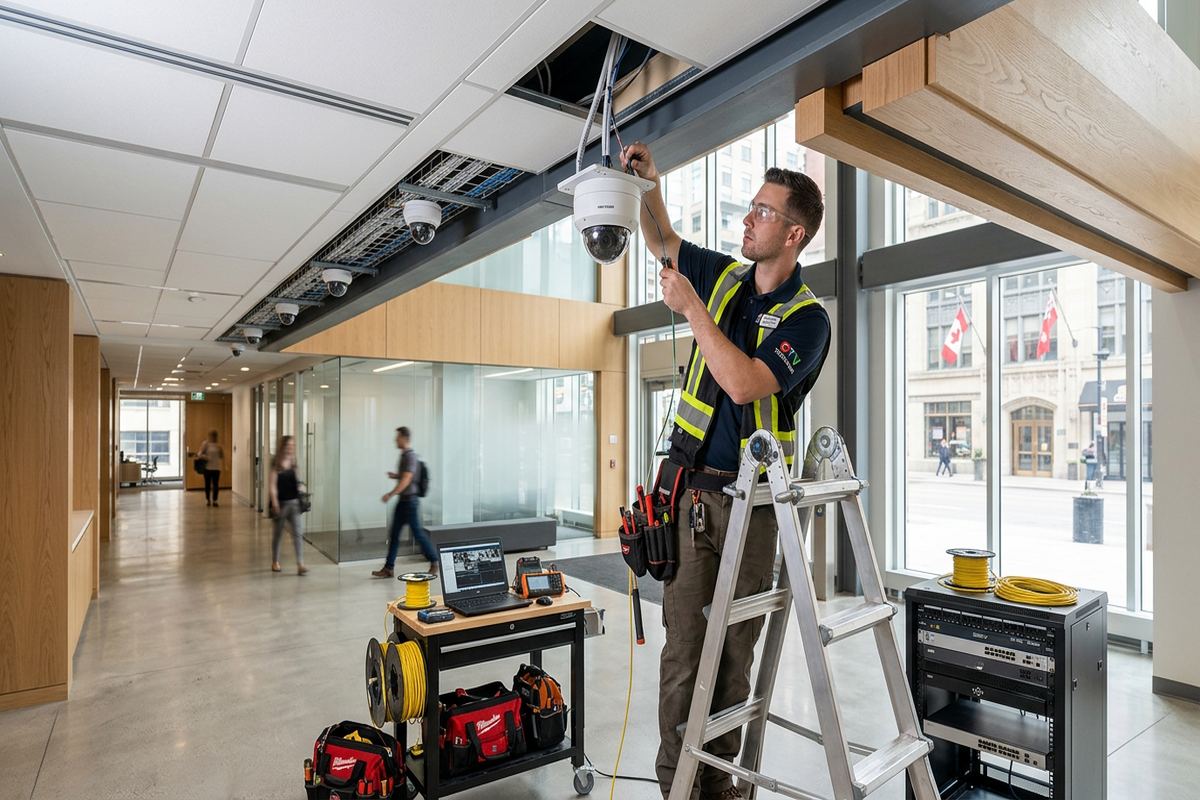
UnifiedLink installs wired and wireless security camera systems for homes and small properties across Barrie and Simcoe County. Each project begins with a site assessment covering sightlines, lighting, cable routes, network capacity and exterior mounting conditions. We then provide a written scope and complete the installation, configuration, testing and handover under one accountable contractor.
Planning Home Security Cameras in Barrie
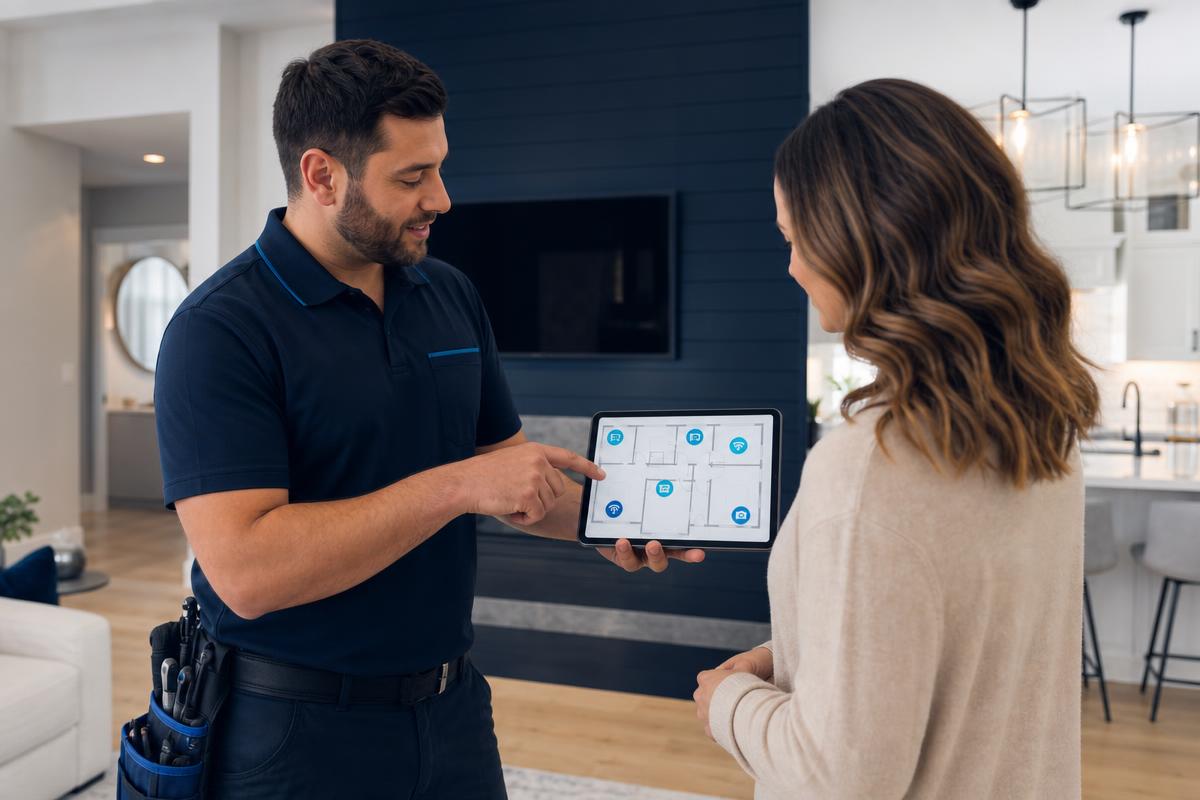
A useful camera system starts with the areas you need to observe, not with a device count. During a Barrie site assessment, we review entrances, driveway approaches, side passages, decks, garages and any route hidden from normal view. Camera height, lens angle and expected identification distance are considered together. We also note porch lights, vehicle headlights, deep shadows and seasonal obstructions. The resulting plan separates general awareness from locations where facial or vehicle detail matters, helping avoid cameras that show activity but cannot provide useful evidence when an incident occurs.
Barrie properties vary from established houses near Downtown Barrie and Allandale to newer frame-built homes in Holly, Painswick and Innis-Shore. Those differences affect cable routing, mounting surfaces and equipment locations. An older finished basement may require a different route than an unfinished utility area in a south-end subdivision. Masonry, siding, soffits and insulated garage walls each require suitable fasteners and penetrations. We identify practical routes before pricing so the written scope reflects the building rather than relying on assumptions that could change once installation has started.
The assessment also establishes what the cameras should record and how footage will be accessed. Some owners want continuous recording around entrances, while others prefer motion-based recording with notifications. We discuss retention goals, image resolution, available internet service and whether remote viewing is required. For a rental, condominium or shared property, the owner may need landlord, condominium corporation or property-management approval before cable is run or an exterior device is mounted. Camera views must remain focused on the property and avoid unnecessary coverage of neighbouring windows, yards or shared private spaces.
- Entrances, driveways and concealed approaches reviewed
- Day and night sightlines considered
- Mounting surfaces checked before pricing
- Approval requirements identified in advance
Camera Placement for Barrie Homes
Placement decisions should balance useful detail with resistance to tampering and weather exposure. A camera mounted too high may capture the top of a person’s head, while one mounted too low can be easily reached or blocked. At front doors and attached garages, we consider approach direction, door swing, parked vehicles and porch columns. Side-yard cameras need enough width to cover gates without looking directly into adjacent homes. Around waterfront homes, open exposure, glare and wind-driven precipitation can make mounting orientation and lens selection especially important throughout changing seasons.
Night performance depends on more than a camera’s infrared specification. Reflective soffits, pale brick, nearby walls, spider webs and snow can return infrared light into the lens and reduce useful detail. In Barrie winters, snowbanks may also alter lower sightlines or trigger repeated motion events. We position devices to reduce close reflective surfaces and configure detection zones around expected movement. Where existing exterior lighting helps, we assess whether it creates an even scene or harsh backlighting. Testing after dark may be recommended when a critical entrance has complicated lighting or deep shadows.
Driveway coverage requires a clear purpose. A broad overview can show arrivals and departures, but reliable vehicle or facial detail normally requires a narrower view at an appropriate distance. We identify where vehicles pause, how they enter the property and whether headlights point toward the camera. Doorbell cameras can add eye-level context, although they do not replace wider coverage of a porch or walkway. For detached garages and sheds, we examine power, network reach and underground or overhead routing options rather than assuming a wireless connection will remain dependable through walls and changing weather.
- Door, gate and garage approaches covered
- Mounting height matched to identification needs
- Infrared reflections and snow considered
- Detached structures assessed for reliable connectivity
Weather-Ready Exterior Installation in Barrie
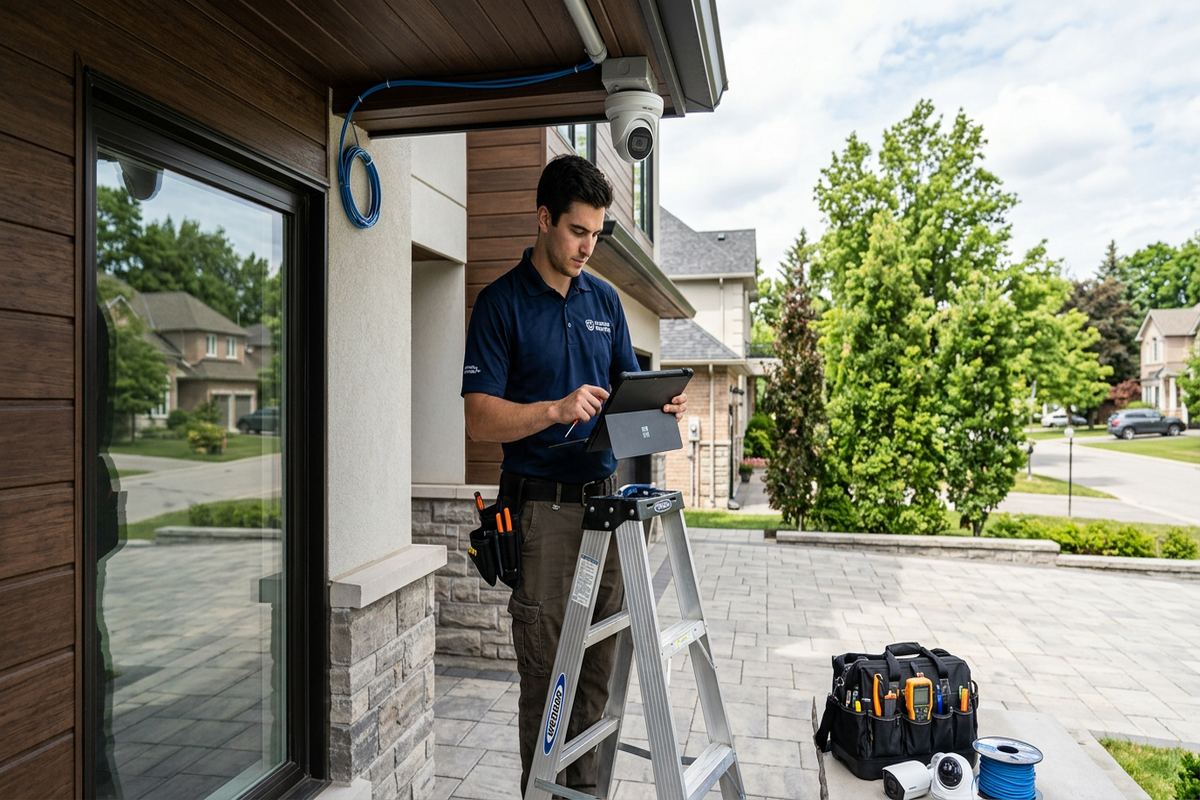
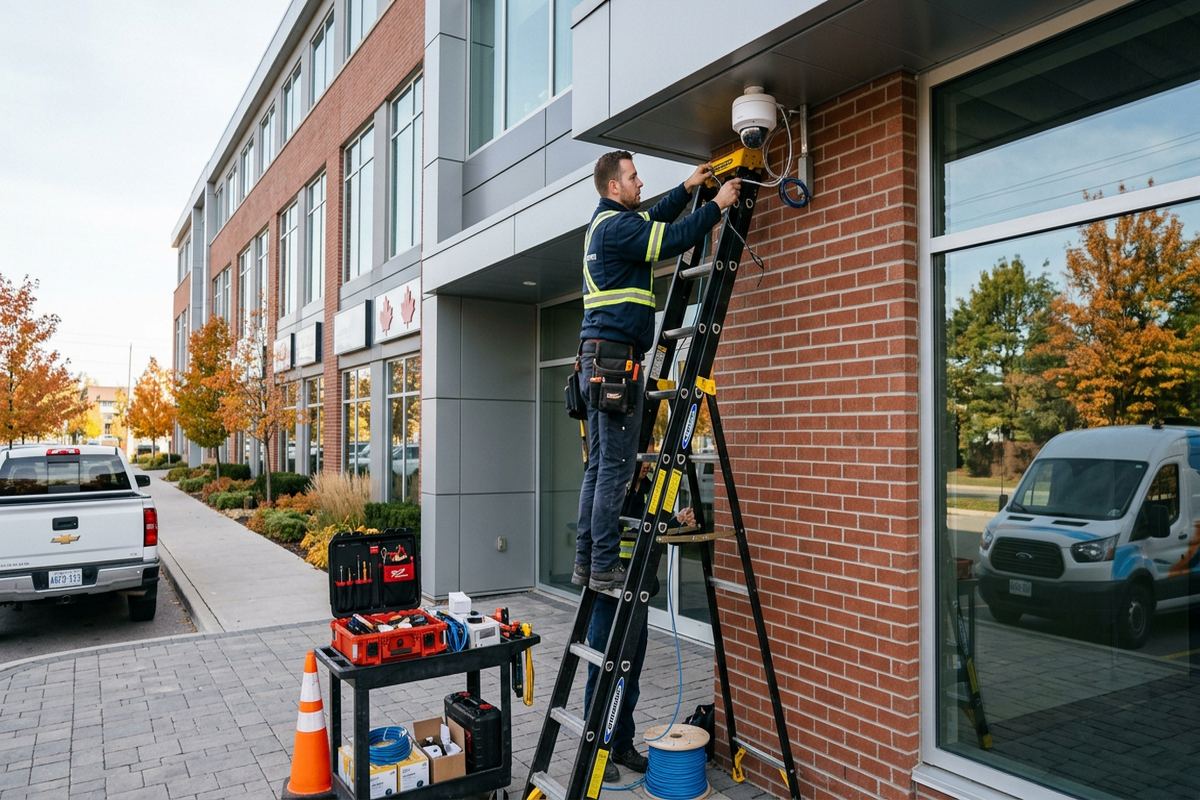
Exterior installation in Simcoe County must account for cold, moisture and repeated freeze-thaw cycles. A weather-rated camera still depends on a correctly prepared mounting point. Cable entries are positioned to limit water travel, penetrations are sealed with materials suitable for the surface, and drip management is used where necessary. Connections are protected rather than left exposed behind a loosely fitted base. We avoid routing cable where ice movement, snow removal equipment or roof drainage can damage it. Device temperature ratings are reviewed against the intended location, particularly for exposed corners and detached buildings.
Mounting methods change with the exterior finish. Brick and concrete require appropriate anchors and careful drilling that avoids unnecessary damage to masonry. Frame construction with vinyl, aluminium or fibre-cement siding may need a mounting block or attachment to solid backing so the camera remains stable. Soffits can provide a discreet route, but thin panels alone are not always suitable support. The written scope identifies expected mounting surfaces and visible conduit where concealed routing is impractical. This allows homeowners to understand how the finished installation will look before work proceeds.
Barrie’s seasonal conditions also affect maintenance. Wind can shift branches into view, insects can gather around infrared emitters, and road salt or airborne debris may leave residue on exposed lenses. Waterfront homes can have particularly open, wind-exposed elevations. Cameras should remain reachable for safe cleaning without being easy to tamper with. After installation, we explain basic lens inspection and show how to confirm that the image has not moved. A stable mount, protected connector and well-sealed penetration provide a stronger foundation than relying only on the camera’s enclosure rating.
- Penetrations sealed for exterior conditions
- Mounts matched to masonry or siding
- Connectors protected from water exposure
- Cable kept clear of ice hazards
Barrie, Ontario
Home security camera installation in Barrie, scoped in writing first
Book a site assessment and get equipment, routes, exclusions, and warranty on paper before anything is installed.
Wired, Wireless and Network Camera Options
The word wireless often describes how a camera communicates, not how it receives power. Battery cameras reduce cabling but need charging, may wake after motion begins and can be affected by cold-weather battery performance. Plug-in Wi-Fi cameras still require a nearby receptacle and dependable signal. Wired Power over Ethernet cameras carry power and data over one network cable, supporting stable continuous recording when installed correctly. We explain these trade-offs during the assessment so equipment is selected for the coverage goal, building layout and maintenance expectations rather than convenience alone.
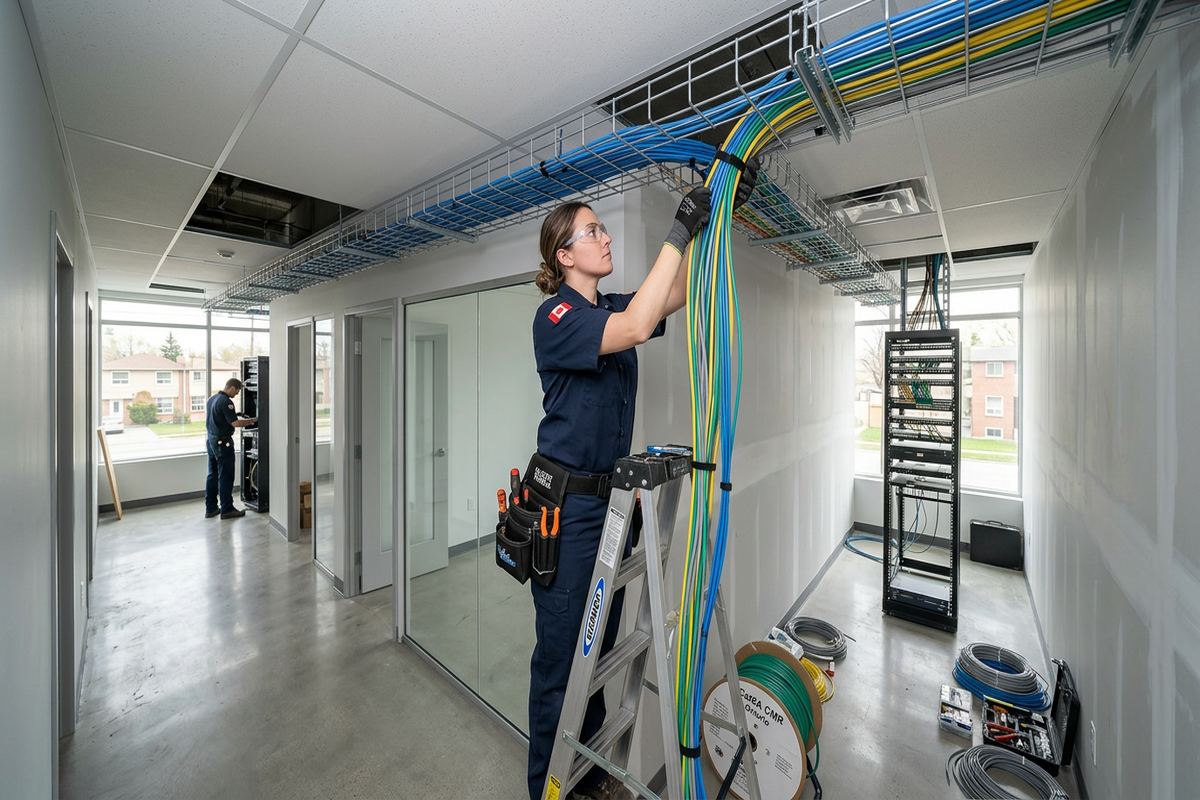
For wired systems, UnifiedLink installs continuous labelled cable runs between each camera and the designated network or recording location. Routes may pass through basements, attics, utility rooms, garages or surface-mounted conduit, depending on access and finish requirements. We avoid hidden couplers and unnecessary joins that complicate future troubleshooting. In older Barrie homes, finished spaces and mixed renovations may limit concealed pathways. Newer south-end subdivisions can also have insulated or fire-separated garage assemblies that require careful planning. Any expected access limitations, visible routing or owner-provided preparation is documented in the scope.
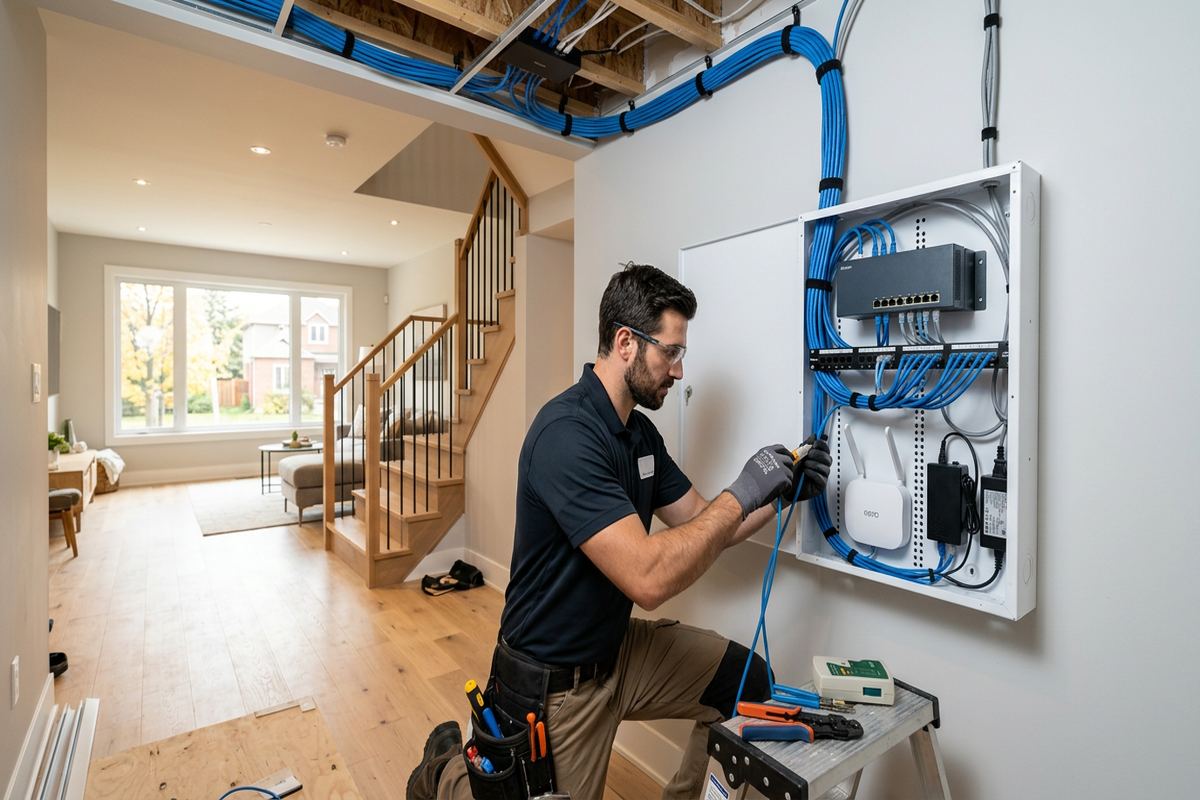
Network capacity matters because multiple high-resolution cameras create steady local traffic and remote viewing uses internet upload capacity. We review the router, switching, Wi-Fi coverage and available equipment location before recommending an architecture. Cameras should not depend on a weak signal at the far edge of a house. Where appropriate, a dedicated recorder and Power over Ethernet switch keep video traffic organized. Remote access is configured on site using supported methods, without unnecessary port forwarding. The customer receives administrative access through their own credentials rather than an installer-controlled account.
- Wired and wireless limitations explained
- Continuous labelled cables without hidden joins
- Network and upload capacity reviewed
- Customer-controlled accounts configured on site
Recording, Notifications and Secure Access in Barrie
Recording design determines what remains available after an event. A local network video recorder can store footage on site and support continuous schedules, while some cameras rely on memory cards or vendor cloud services. Each option has different dependencies, maintenance needs and ownership terms. We review desired retention, camera count, resolution and recording mode before specifying storage. Retention is an estimate because motion levels and scene complexity vary. Busy streets, moving trees and snowfall can create more recorded activity than a quiet rear entrance, so configuration must reflect the actual Barrie property.
Notifications are most useful when they identify meaningful activity without reporting every shadow or passing vehicle. During on-site configuration, we set motion areas, schedules and supported person or vehicle filters. A camera facing a sidewalk may need a restricted detection zone, while a fenced side gate can use a tighter area. Snow, rain, insects, headlights and moving branches can still affect analytics, so no detection method should be described as infallible. We show the owner how to adjust sensitivity and confirm alerts, allowing settings to be refined as seasons and household routines change.
Secure access begins with account ownership. UnifiedLink completes handover using the customer’s own credentials and reviews password, multifactor authentication and user-permission options supported by the selected system. Household members, property managers or staff can receive separate access where the platform permits, avoiding shared administrator passwords. We demonstrate live view, playback, clip export and basic system-health checks on the owner’s phone or computer. The handover also includes an as-built record showing device names and cable destinations, making later service, network changes or camera replacement easier to manage.
- Storage sized around stated retention goals
- Detection zones configured for each view
- Remote access uses customer-owned credentials
- Playback and clip export demonstrated
Installation Across Barrie Property Types
A detached house usually offers several possible routes, but the cleanest path depends on basement finish, attic access and garage construction. In Ardagh Bluffs or Holly, cameras may need to cover double driveways, fenced side yards and rear walkouts without creating blind spots. In Allandale or Downtown Barrie, older additions and renovations can interrupt otherwise direct cable routes. We inspect these conditions before proposing concealed cabling. Where a route cannot be hidden without disruptive finishing work, low-profile conduit can provide a serviceable alternative that is clearly identified in the written scope.
Condominiums, townhouses and rental homes require an additional approval check. Exterior walls, corridors, parking areas and balconies may be common elements even when they appear connected to one unit. A condominium corporation, landlord or property manager may restrict drilling, device appearance, cable routing or views of shared areas. We can document the intended location and route, but the customer remains responsible for obtaining required permission. Interior cameras may avoid exterior alterations, although placement must still respect occupants and visitors. Approval should be confirmed before equipment is ordered or an installation date is finalized.
Small commercial plazas and industrial units in Barrie can use similar camera technology, but their operating needs differ from a residence. Entrances, service doors, loading areas, cash points and shared parking approaches may require separate views and permissions. Network equipment may be located in a utility room controlled by a landlord, and ceiling spaces can involve access or fire-separation requirements. We coordinate the camera scope with available pathways and responsible parties. The goal is one documented installation plan, not an improvised extension of a residential package into a more complex building.
- Older and newer building layouts assessed
- Concealed routes prioritized where practical
- Condo and landlord approvals confirmed by owner
- Commercial and industrial pathways reviewed
What the Installation Process Includes
Every project begins with a site assessment before pricing. The visit confirms camera objectives, mounting points, cable routes, recording location, network conditions and access constraints. Site assessment timing depends on the service and travel distance. Afterward, UnifiedLink provides a written scope covering equipment, cable routes, device placement, exclusions, equipment ownership and warranty. This document gives both parties a common reference for the work. If a requested view cannot be achieved reliably from the proposed location, we explain the limitation and offer practical alternatives before installation rather than after devices are mounted.
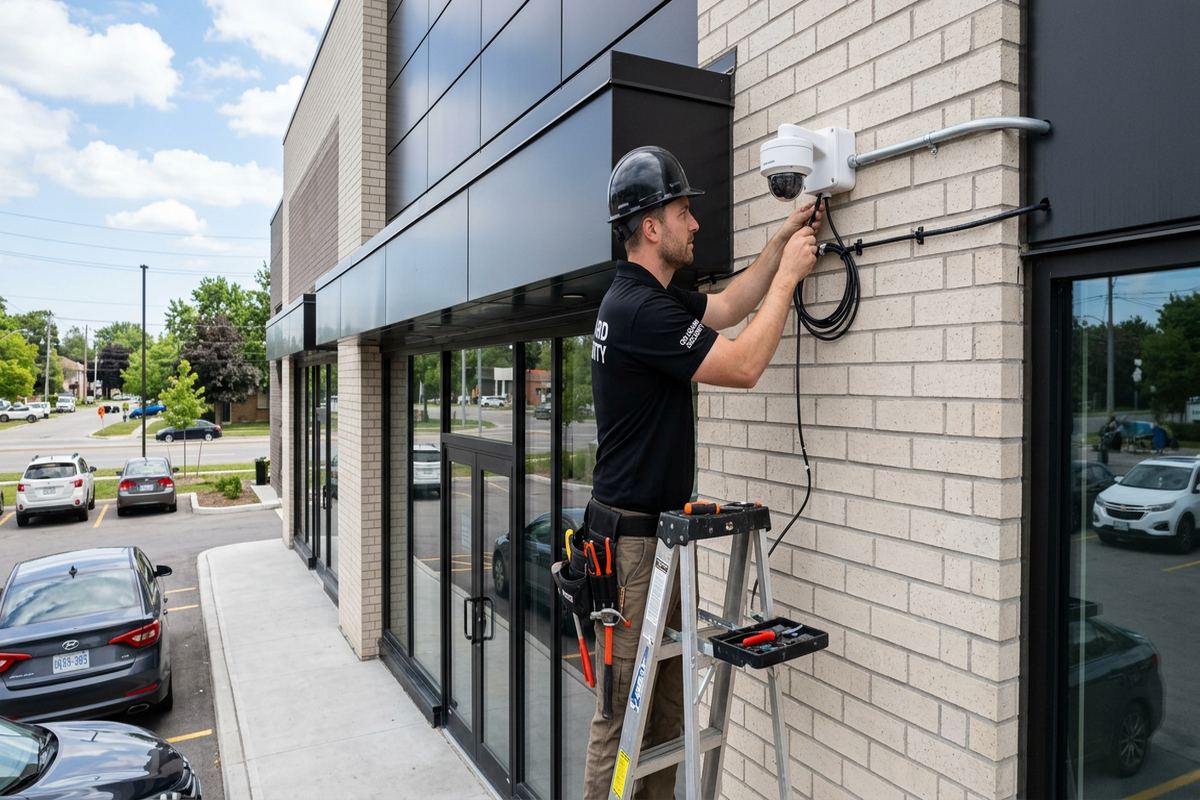
On installation day, we protect the immediate work area, install approved routes and label each continuous cable run at the relevant endpoints. Exterior devices are fixed to suitable backing or anchors, entries are sealed, and exposed cable is mechanically protected where needed. The recorder, switch or supporting network equipment is placed in the agreed location with ventilation and service access considered. We then aim each camera using live images rather than estimating its field of view from the ground. Work remains tied to the written scope, with any necessary change discussed before proceeding.
Configuration and handover are part of the installation rather than separate assumptions. We set recording schedules, time settings, supported detection features, user access and remote viewing, then verify live video and playback from each camera. The customer receives credentials under their own account, equipment ownership information and an as-built record of camera names, cable destinations and major system components. We also explain routine checks and how to export a clip. With one accountable contractor handling cabling, mounting, network setup and testing, responsibility does not shift between unrelated installers.
- Assessment completed before pricing
- Written scope defines work and exclusions
- Each camera aimed and tested on site
- As-built record supplied at handover
Maintaining a Barrie Camera System
Camera systems benefit from simple, scheduled checks, especially after severe weather or changes around the property. Owners should confirm that each image is clear, the displayed time is correct and recorded footage can be played back. Exterior lenses may need careful cleaning, while branches, new fencing, stored materials or seasonal decorations can obstruct a previously clear view. In Barrie, freeze-thaw movement and snow loads make it sensible to inspect exposed mounts and conduit visually. A camera showing live video is not enough if its recorder has stopped retaining footage.
Network or internet changes can also affect remote access. Replacing a router, changing Wi-Fi credentials or moving a recorder may disconnect cameras even when the devices remain functional. The as-built record helps identify cable destinations and connected equipment during those changes. Software and firmware updates should come from the equipment manufacturer and be applied with awareness of compatibility and current settings. Passwords should not be reused across household services, and access for former occupants, employees or contractors should be removed. These practices reduce avoidable access problems without depending on undocumented installer accounts.
When adding cameras later, the existing recorder, storage, switch capacity, network bandwidth and power budget should be reviewed first. An unused recorder channel does not necessarily mean every supporting component can handle another device. New construction, a finished basement, a detached structure or changed landscaping may also alter the best cable route. UnifiedLink can assess the existing installation and provide a revised written scope for an expansion. Requests sent during business hours are answered the same day; after-hours requests are answered the next business day. Assessment timing depends on service requirements and travel distance.
- Playback checked instead of live view alone
- Mounts and lenses inspected seasonally
- Account access reviewed after occupancy changes
- Expansion capacity verified before adding cameras
Barrie neighbourhoods we cover
- Downtown Barrie
- Ardagh Bluffs
- Painswick
- Holly
- Allandale
- Innis-Shore
Home security camera installation in Barrie — common questions
Do I need wired cameras for my Barrie home?
Not always. Wired Power over Ethernet cameras are generally suited to stable, continuous recording, while battery or Wi-Fi models can work where cable access is limited. Barrie winters, exterior wall construction, signal strength and charging access all affect the choice. A site assessment compares practical cable routes, network coverage, recording requirements and maintenance expectations before equipment is specified.
Will cameras work during a power or internet outage?
Local recording can continue without internet if the cameras, recorder and network switch still have power and are configured for on-site storage. Remote viewing and cloud-dependent features usually require internet access. A suitable uninterruptible power supply may provide limited outage support, but runtime depends on the connected load and battery condition. We document the selected system’s dependencies during the Barrie installation.
Can you install cameras on brick or vinyl siding?
Yes, provided the mounting location and backing are suitable. Brick requires appropriate drilling and anchors, while vinyl siding may need a mounting block or attachment to solid structure. For Barrie’s freeze-thaw conditions, cable entries must be positioned and sealed carefully. We inspect the surface before pricing and identify visible conduit or other mounting requirements in the written scope.
Do I need approval for a condo or rental?
Possibly. Barrie condominium corporations and landlords may control exterior walls, balconies, corridors, parking areas and cable penetrations. Even a wall beside your unit may be a common element. The property owner or occupant is responsible for obtaining written approval where required. We can provide proposed device locations and routes to support that request, but installation should not proceed until permission is confirmed.
How much footage can the system retain?
Retention depends on camera count, resolution, frame rate, compression, recording schedule, storage capacity and activity in each scene. Snowfall, traffic and moving trees can increase recorded motion at some Barrie properties. We calculate storage around the stated goal, but retention remains an estimate because scenes change. During handover, we show you how to check the oldest available footage and confirm recording health.
What information do I receive after installation?
You receive access through your own credentials, a demonstration of live view, playback and clip export, plus an as-built record showing camera names and cable destinations. The written scope also covers equipment, placement, exclusions, equipment ownership and warranty. For Barrie properties with several network or utility areas, this documentation makes future troubleshooting, router replacement and system expansion more manageable.
Coverage in Barrie is confirmed against the address before we quote. See everything we install in Barrie or the province-wide home security camera installation page.