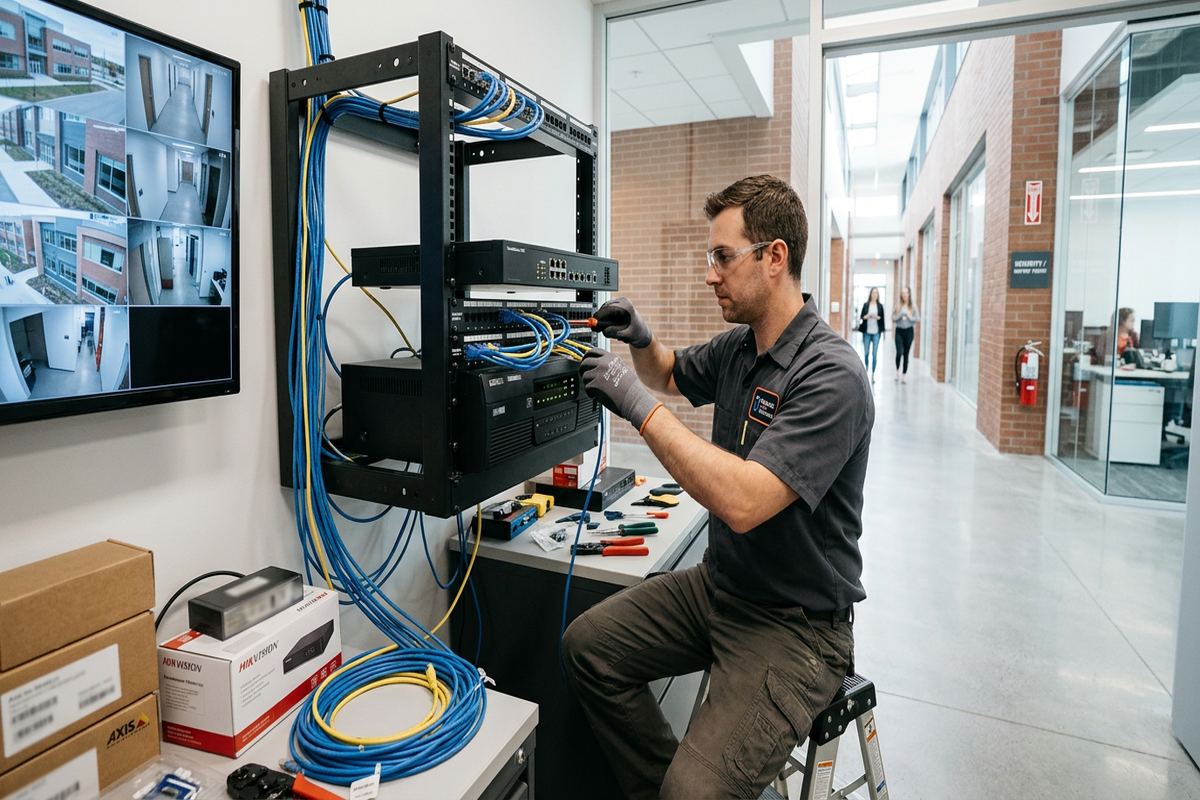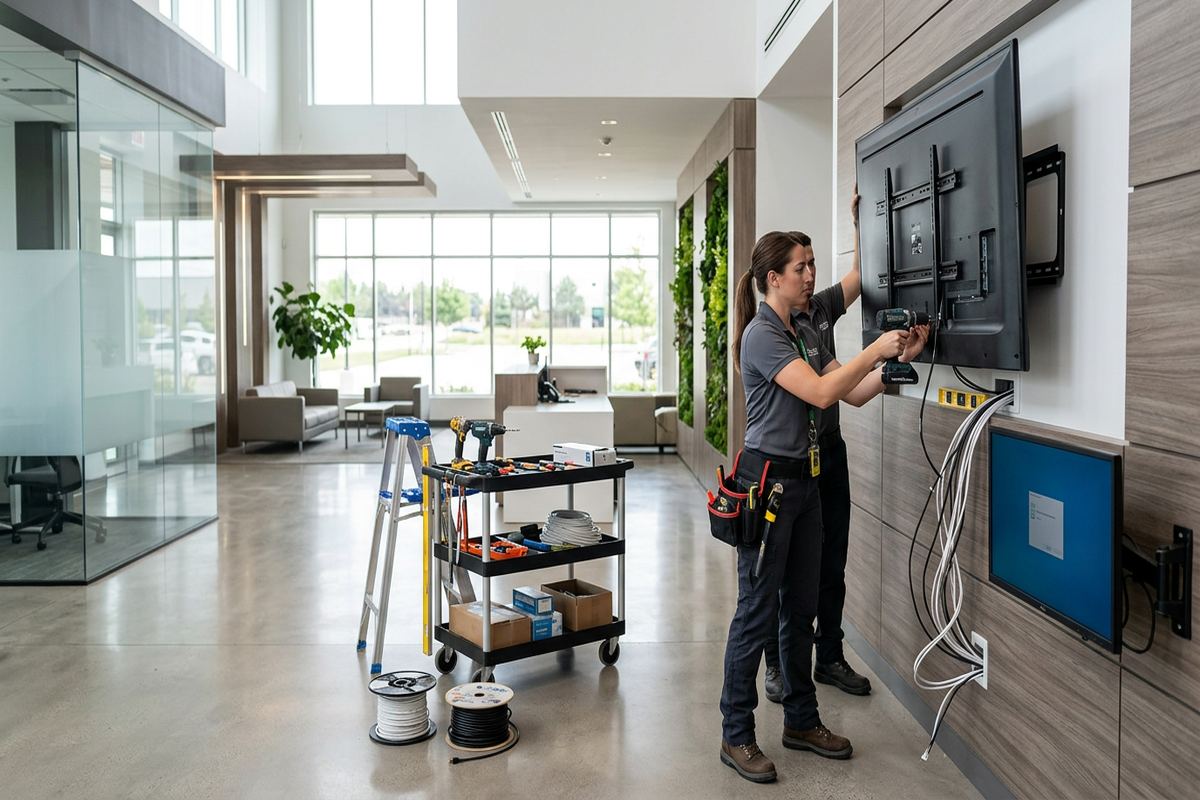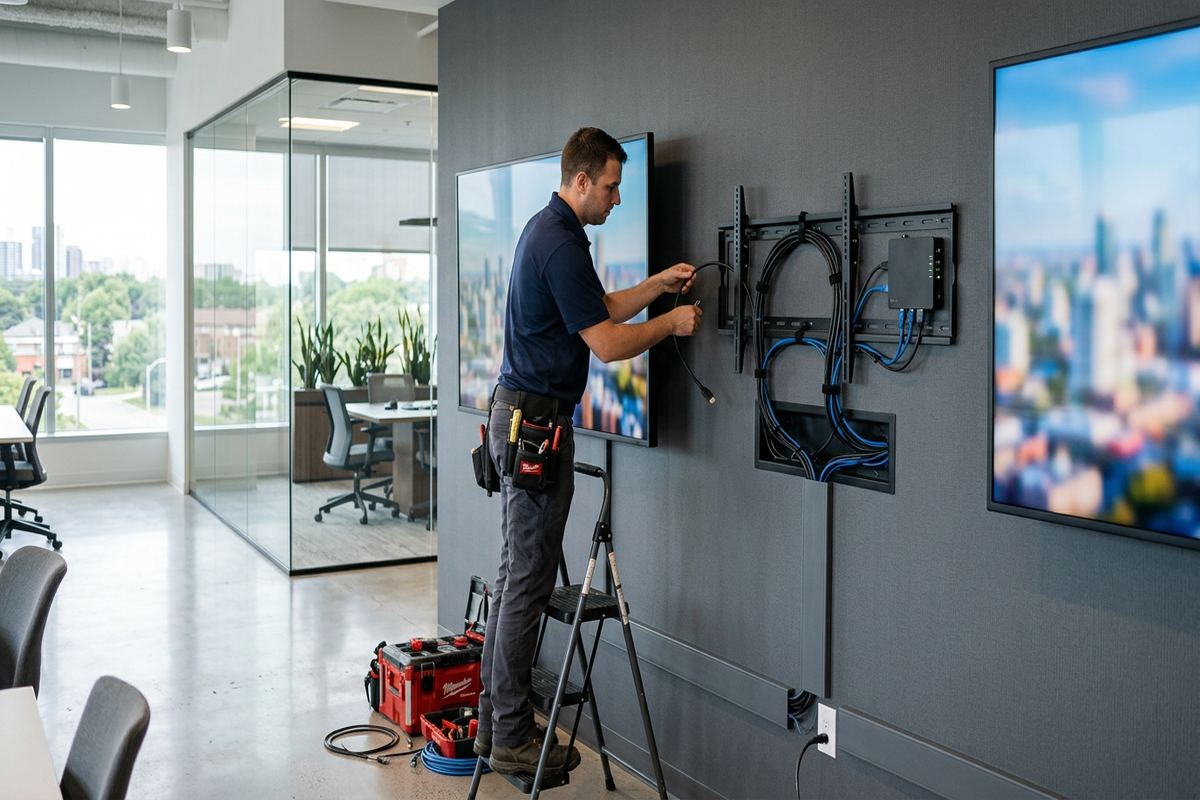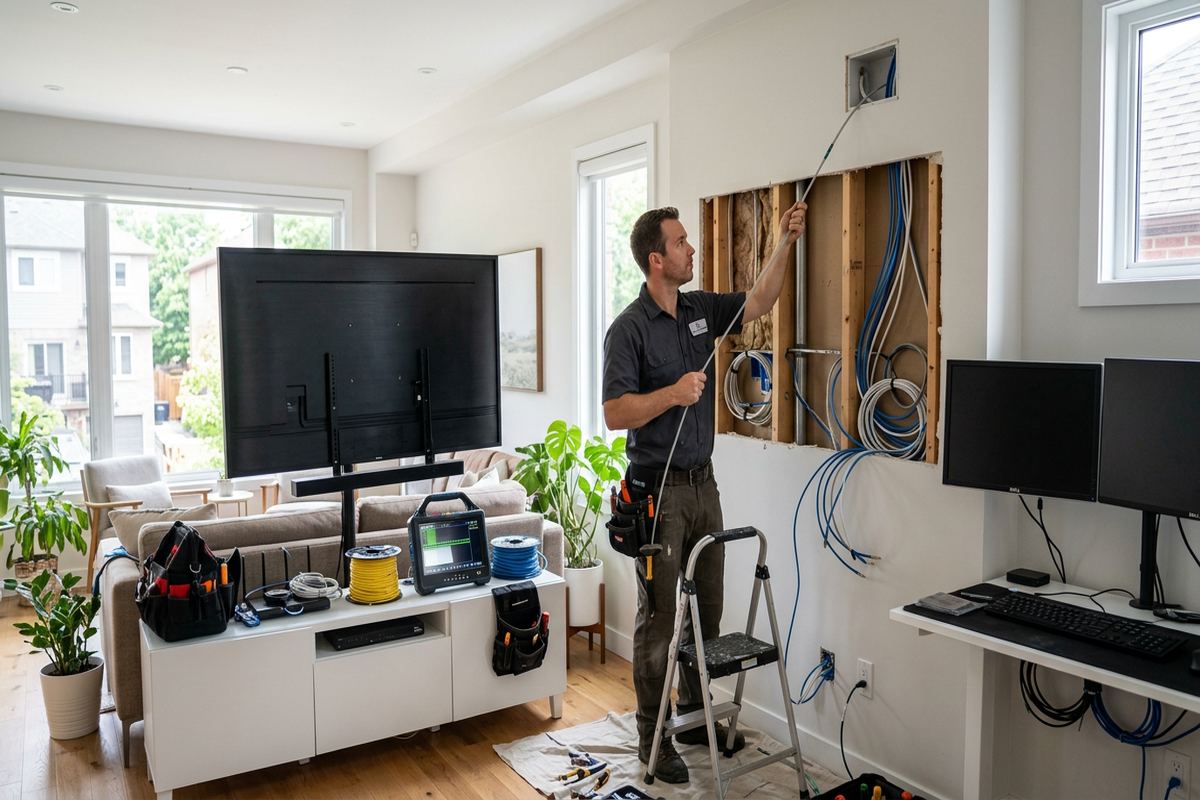
UnifiedLink installs outdoor televisions for Barrie homes and commercial properties. We assess the mounting surface, weather exposure, power, signal path, glare and viewing distance before preparing a written scope. Installation includes secure mounting, sealed penetrations, concealed or protected cabling, on-site configuration and a practical handover using credentials that remain under your control.
Planning an Outdoor TV Installation in Barrie
Outdoor televisions need more planning than indoor displays because the mount, power, signal path and viewing position all face environmental exposure. In Barrie, winter temperatures, wind-driven rain and repeated freeze-thaw cycles make exterior penetrations especially important. We begin by checking the wall, soffit, nearby receptacles, network coverage, glare and expected seating area. The assessment also identifies whether the television is designed for full shade, partial sun or direct exposure. Those findings guide device placement and help avoid a screen that is difficult to watch or maintain.
Barrie properties present very different installation conditions. A waterfront home may have an exposed deck with strong wind and reflected sunlight, while a south-end subdivision may offer a covered frame-built patio with easier cable access. Small commercial plazas can involve masonry walls, shared façades and limited pathways above finished ceilings. We inspect the construction rather than applying one mounting method everywhere. Stud location, brick condition, cladding type, drainage planes and interior access all affect the fasteners, brackets and cable protection specified for the work.
Before pricing, UnifiedLink completes a site assessment appropriate to the service and travel distance. The written scope identifies equipment, cable routes, display placement, exclusions, equipment ownership and warranty details. It also clarifies whether electrical work, carpentry, masonry repair, network upgrades or owner-supplied equipment are involved. This process gives homeowners, property managers and businesses one reference for the installation. It reduces uncertainty around where cables will enter the building, what will remain visible and which existing systems must support the completed outdoor television setup.
- Exposure, sunlight and viewing-angle review
- Wall, soffit and structure assessment
- Power and network pathway checks
- Written equipment and installation scope
- Clear exclusions and ownership details
Weather-Ready Mounting for Barrie Properties
A secure outdoor mount depends on the supporting structure, not simply the exterior finish. Vinyl siding, fibre-cement panels, brick veneer, poured concrete and wood framing each require a different approach. Fasteners must reach suitable structure without crushing cladding or creating an unmanaged water path. Where a mounting block or spacer is appropriate, it must support the bracket while allowing the exterior assembly to drain correctly. We also consider bracket movement, television weight, service access and wind exposure before selecting a fixed, tilting or articulating mounting arrangement.
Freeze-thaw movement can enlarge poorly sealed holes and allow moisture to reach sheathing, framing or interior finishes. For Barrie installations, exterior penetrations are kept deliberate, limited and accessible wherever possible. Cable entries receive suitable bushings, drip management and exterior-rated sealing materials selected for the surrounding surface. Cables exposed outside are protected from abrasion, ultraviolet light and accidental pulling. The objective is not to cover a weak route with sealant, but to create a stable pathway that manages water and remains practical to inspect or service later.
Placement beneath a roof does not automatically make a television fully protected. Wind can carry precipitation into covered patios, and melting snow may drain toward a wall or soffit. We assess overhang depth, prevailing exposure, roof runoff and nearby irrigation before confirming placement. The display must also have enough ventilation around it and should not sit where a door, barbecue lid or movable furniture can strike it. These details are documented before mounting so the final location balances protection, viewing comfort and access to controls or connected equipment.
- Fasteners matched to the supporting structure
- Exterior-rated sealing at planned penetrations
- Protected cables with managed drip paths
- Mount clearance for ventilation and service
- Placement away from runoff and impact risks
Display Selection and Viewing Conditions
Outdoor display selection starts with environmental rating and brightness, not screen size alone. A television intended for a sheltered, shaded area may be unsuitable beside a bright pool deck or on an open commercial patio. We review the manufacturer’s permitted temperature range, moisture exposure limits, ventilation requirements and mounting instructions. Screen reflections are checked from the expected seating positions at relevant times of day when practical. This helps determine whether changing the wall, mount angle or display class will produce a more usable result than simply choosing a larger screen.
Viewing distance and mounting height should suit the way the area is actually used. A screen serving a dining table generally needs a different position from one facing lounge seating, a hot tub or a restaurant patio. Mounting too high can cause neck strain, while mounting too low can expose the television to impacts and blocked sightlines. We account for furniture, railings, doors, columns and seasonal coverings. An articulating mount may improve alignment, but it also increases leverage on the wall and requires enough clearance for safe movement.
Customer-supplied televisions can be incorporated when their specifications and condition suit the proposed location. We verify the mounting pattern, weight, input requirements and stated outdoor limitations before confirming compatibility. Indoor televisions installed outside may face moisture, condensation, temperature and warranty concerns even when placed under an overhang. Those limitations are identified rather than hidden. If a protective enclosure is being considered, the assessment covers ventilation, access, reflections and mount loading because an enclosure changes both the physical installation and the thermal environment around the display.
- Sunlight and reflection assessment
- Viewing height based on actual seating
- Display ratings checked for the location
- Mount pattern and weight verification
- Enclosure ventilation and access review
Barrie, Ontario
Outdoor TV installation in Barrie, scoped in writing first
Book a site assessment and get equipment, routes, exclusions, and warranty on paper before anything is installed.
Outdoor TV Cabling Across Barrie Homes
A clean installation requires a planned route for power, video, network and control connections. In frame-built homes around Holly, Painswick and Innis-Shore, access may be available through unfinished basements, garages, attic edges or adjacent interior walls. Finished spaces, insulation and fire separations can limit those options. We trace a practical pathway before opening surfaces and identify any areas where concealment is not feasible. Where exterior routing is necessary, suitable raceway or protected cable methods are considered so the result remains orderly and serviceable through Barrie’s changing seasons.
Masonry properties and older building stock can require a different pathway. Downtown Barrie buildings may contain brick, concrete, layered renovations or limited ceiling access, while Allandale properties can combine older framing with later additions. Drilling locations are selected only after considering structure, utilities and interior finishes. Brick faces and mortar joints are not treated as interchangeable mounting surfaces. We explain where surface raceway, conduit or a visible transition may be preferable to unnecessary demolition, particularly when the route must pass between original construction and a newer patio or addition.
UnifiedLink installs continuous labelled cable runs rather than concealing unnecessary couplers inside inaccessible walls. Cable type is matched to distance, signal format and exposure, with separation from electrical conductors where required. Service loops and terminations are arranged so equipment can be removed without damaging the cable route. If an electrician is required for a new receptacle or circuit, that dependency is identified in the scope. Low-voltage planning and display placement are coordinated with electrical requirements, reducing the chance that power and signal connections end up on conflicting sides of the television.
- Continuous labelled low-voltage cable runs
- Concealed routes where construction permits
- Protected raceway for exposed sections
- Serviceable terminations and equipment access
- Electrical dependencies identified before work
Network, Streaming and Audio Setup
Streaming performance depends on a reliable connection at the television, not merely a strong signal inside the house. Exterior walls, foil-backed insulation, masonry and metal cladding can weaken Wi-Fi at patios and decks. During the Barrie site assessment, we test the intended location and review the existing router or access-point arrangement. A wired network connection is often preferred when a practical cable route exists. If coverage is inadequate, the scope can identify an outdoor-rated access point or another network improvement instead of assuming the television will remain stable on marginal Wi-Fi.
Source equipment also needs an appropriate home. Media players, cable receivers, control devices and HDMI extenders may not tolerate the same conditions as the outdoor display. They can sometimes be placed inside and connected over a planned cable system, avoiding a weather-exposed shelf or improvised box. Distance and video format determine whether a direct HDMI cable, network-based extension or another method is suitable. We confirm device compatibility and control requirements before installation, including how remotes, applications or control signals will work when source equipment is located away from the screen.
Outdoor audio may come from the television, a soundbar, distributed speakers or an existing audio system. Each option affects cabling, weather exposure and everyday operation. We check whether audio equipment is rated for its placement and whether the television can control volume in the intended configuration. On-site configuration includes available display, source, network and audio settings within the agreed scope. At handover, the customer uses credentials they own and control. We do not make personal streaming accounts a hidden dependency of the installation or retain access to them after completion.
- Wi-Fi coverage checked at display location
- Wired networking considered where practical
- Source equipment kept in suitable conditions
- Audio paths planned with display controls
- Customer-owned accounts used during handover
Barrie Condos, Rentals and Shared Properties
Condominium and rental installations require permission before exterior surfaces are altered. Balcony walls, railings, soffits and exterior receptacles may form part of a common element even when they appear to belong to one unit. Barrie condo owners should review corporation rules and obtain written approval where required. Tenants need landlord authorization for drilling, cable routing and permanent mounting. UnifiedLink can describe the proposed location and route in the written scope, but property approvals remain the customer’s responsibility and must be secured before installation proceeds.
Balconies present specific safety and exposure concerns. A television or movable mount cannot obstruct exits, project into a shared path or create a falling-object risk. Railings are not assumed to be suitable supports, and temporary clamps are not treated as equivalent to a properly engineered mounting surface. Wind exposure can be stronger above ground level than at a sheltered backyard patio. We assess the available wall, clearances and cable management while respecting building restrictions. If no safe, approved installation method is available, that limitation is documented rather than bypassed.
Shared properties also require careful decisions about equipment ownership and future access. A landlord may supply the display while a tenant controls streaming accounts, or a condominium corporation may control network infrastructure serving an amenity area. The scope identifies known ownership boundaries and who is expected to approve changes. Cable routes are labelled, and the as-built record notes device locations and relevant pathways. This documentation helps when a tenant moves, a display is replaced or building maintenance requires access without relying on undocumented holes, hidden adapters or unknown account credentials.
- Condo and landlord approvals identified
- Common-element restrictions respected
- Balcony safety and wind exposure reviewed
- Equipment ownership recorded in writing
- As-built documentation supports future changes
Commercial Outdoor Displays in Barrie
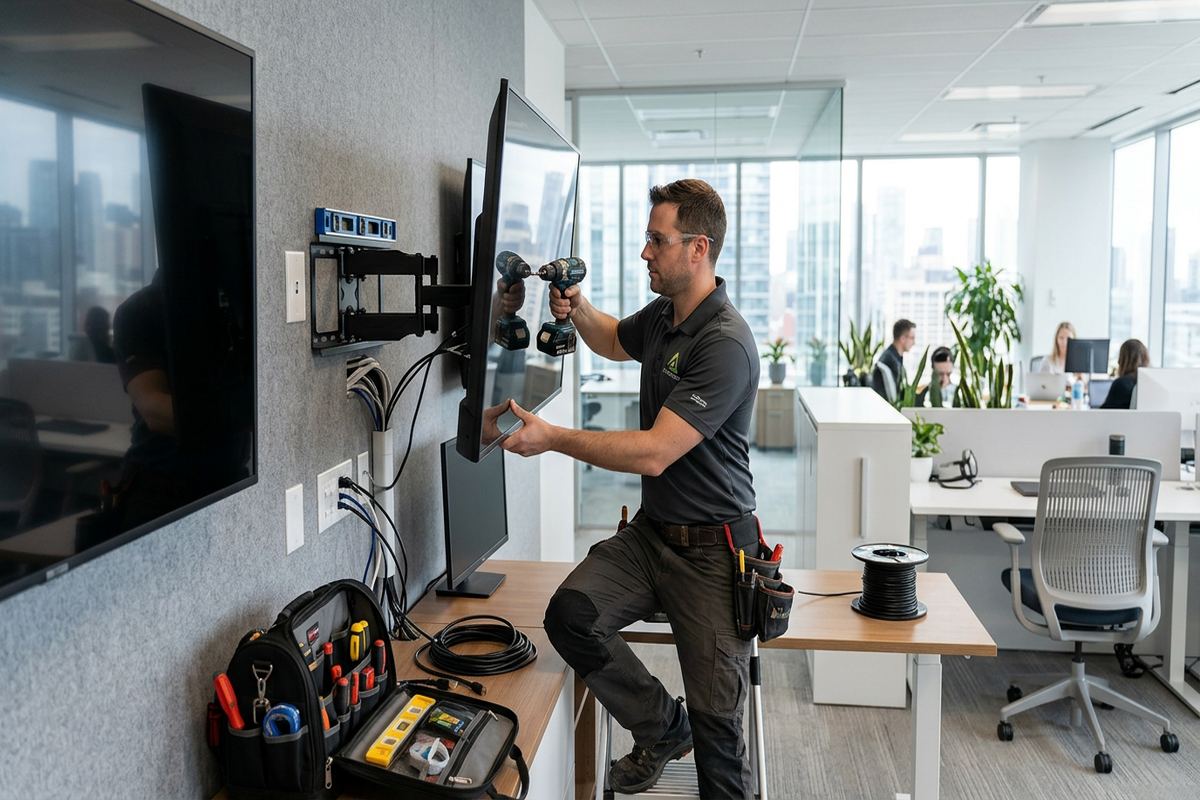
Small commercial plazas in Barrie may use outdoor displays for patios, customer areas, menu information or monitored programming. These projects involve more than attaching a television to brick. We review public sightlines, mounting height, tamper exposure, operating hours, source control and access for maintenance. The installation must avoid creating hazards around walkways, doors and service areas. Where a display is visible from public space, the owner should also confirm any property-management, lease, signage or content requirements that apply to the intended use before equipment is installed.
Commercial strips and industrial units often combine concrete block, steel framing, brick veneer and suspended ceilings. Cable pathways may need to pass through stock rooms, offices or shared service spaces before reaching an exterior wall. We identify fire separations and landlord-controlled areas that could affect the route, and we do not assume an open ceiling permits unrestricted drilling. Equipment can be positioned in a controlled interior location when suitable, with labelled connections running to the display. This approach supports maintenance and reduces avoidable exposure of source devices or network hardware.
For restaurants and customer-facing businesses, operation should be straightforward for authorized staff. We can configure agreed inputs, network connections, audio behaviour and basic display settings on site. Handover explains how to start the system, select sources and perform routine shutdown without sharing personal credentials. The as-built record identifies installed devices and cable routes, while the written scope states exclusions and warranty information. One accountable contractor coordinates the low-voltage display work, reducing fragmented responsibility between separate mounting, cabling and configuration providers.
- Public-area placement and sightline review
- Tamper and accidental-impact considerations
- Routes planned through mixed construction
- Central source equipment where suitable
- Staff handover using controlled credentials
Completing Your Barrie Outdoor TV Project
Once the scope is approved and required permissions are in place, installation follows the documented mounting and cable plan. The work area is reviewed before drilling in case furniture, finishes or site conditions have changed. Brackets are secured to suitable structure, cable entries are protected and low-voltage runs are labelled at service points. The television is mounted with the specified clearances, then checked for alignment and safe movement where an articulating bracket is used. Visible routes and transitions are finished according to the agreed scope rather than improvised during installation.
Configuration takes place with the installed system connected to available power, network and source equipment. We verify display operation, input selection, network connectivity and agreed audio functions. Streaming services are tested only with customer-controlled credentials and active subscriptions. The handover covers mount movement, basic operation, ventilation, cleaning limitations and signs of water entry or cable damage that should prompt inspection. For seasonal Barrie use, customers should follow the display manufacturer’s temperature, storage and operating guidance rather than assuming every outdoor television can remain active during all winter conditions.
The completed handover includes an as-built record showing relevant equipment and cable routes, along with the customer’s written scope and applicable warranty information. Ownership of equipment is confirmed, and credentials remain with the customer. Requests sent during business hours are answered the same day; after-hours requests are answered the next business day. Site assessment timing depends on the service and travel distance. This process gives Barrie homeowners, landlords and businesses a defined path from initial assessment through mounting, setup and future service without unsupported promises about a property we have not inspected.
- Installation follows the written scope
- Mount and connections tested on site
- Customer credentials retained by customer
- As-built cable and device record supplied
- One accountable low-voltage contractor
Barrie neighbourhoods we cover
- Downtown Barrie
- Ardagh Bluffs
- Painswick
- Holly
- Allandale
- Innis-Shore
Outdoor TV installation in Barrie — common questions
Can any television be installed outdoors in Barrie?
Not every television is suitable for outdoor use. Barrie’s moisture, winter temperatures and freeze-thaw conditions can exceed the limits of an indoor model, even beneath an overhang. We check the manufacturer’s environmental rating, permitted temperatures, ventilation needs and warranty terms. If you already own the television, its specifications and mounting compatibility are reviewed during the site assessment before installation is confirmed.
Do I need an electrician for the installation?
That depends on the available power. If a suitable exterior receptacle is already positioned near the planned Barrie installation, electrical changes may not be needed. A new receptacle, circuit or alteration to line-voltage wiring requires the appropriate electrical work. UnifiedLink identifies this dependency during assessment and coordinates the low-voltage route and display position so power and signal connections are placed logically behind or near the television.
Will Wi-Fi work on my patio?
It may, but indoor coverage does not guarantee a stable outdoor connection. Masonry, metal cladding, insulated exterior walls and distance from the router can reduce signal quality. We check coverage at the proposed Barrie display location. Where practical, a labelled wired network run provides a more consistent connection. If needed, the scope can include a suitable network improvement rather than relying on an untested signal.
Can you mount a TV on brick?
Yes, when the brick assembly and supporting condition are suitable. Brick veneer, solid masonry and concrete block are different structures and cannot be treated the same way. We inspect the wall, choose suitable attachment points and plan sealed cable penetrations. Older Downtown Barrie or Allandale properties may also have layered renovations behind the masonry, so the route and mounting method are confirmed before drilling begins.
Do I need condo or landlord approval?
Usually, approval should be checked before any permanent exterior work. A Barrie condominium may classify balcony walls, railings, soffits or receptacles as common elements. Tenants also need landlord permission for drilling and cable routing. We can provide a written scope describing the proposed equipment, location and route, but the owner or tenant is responsible for securing all required corporation, landlord or property-management approvals.
What do I receive when the work is finished?
UnifiedLink configures the agreed display, source, network and audio functions on site, then explains basic operation and maintenance considerations. You retain control of your own credentials and accounts. The handover includes an as-built record of relevant equipment and cable routes, along with the written scope, ownership details and applicable warranty information. Labelled cable runs make later display replacement or troubleshooting more straightforward.
Coverage in Barrie is confirmed against the address before we quote. See everything we install in Barrie or the province-wide outdoor tv installation page.