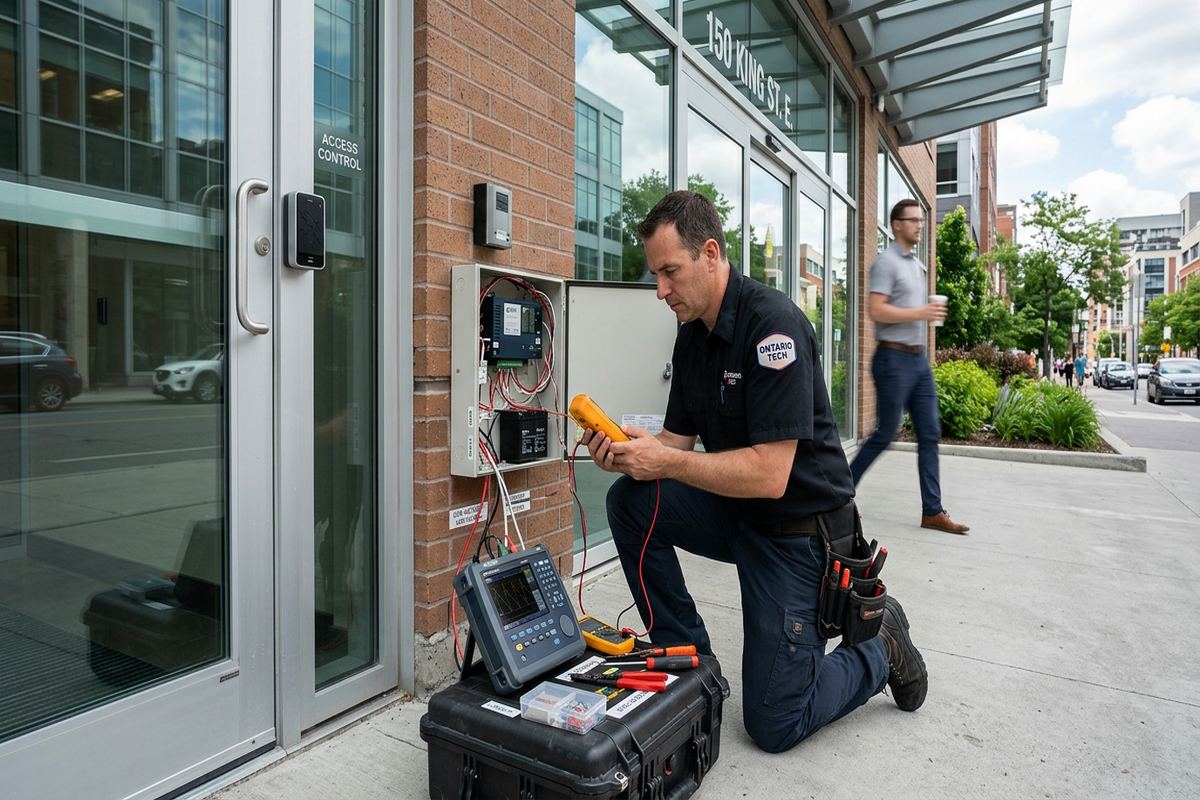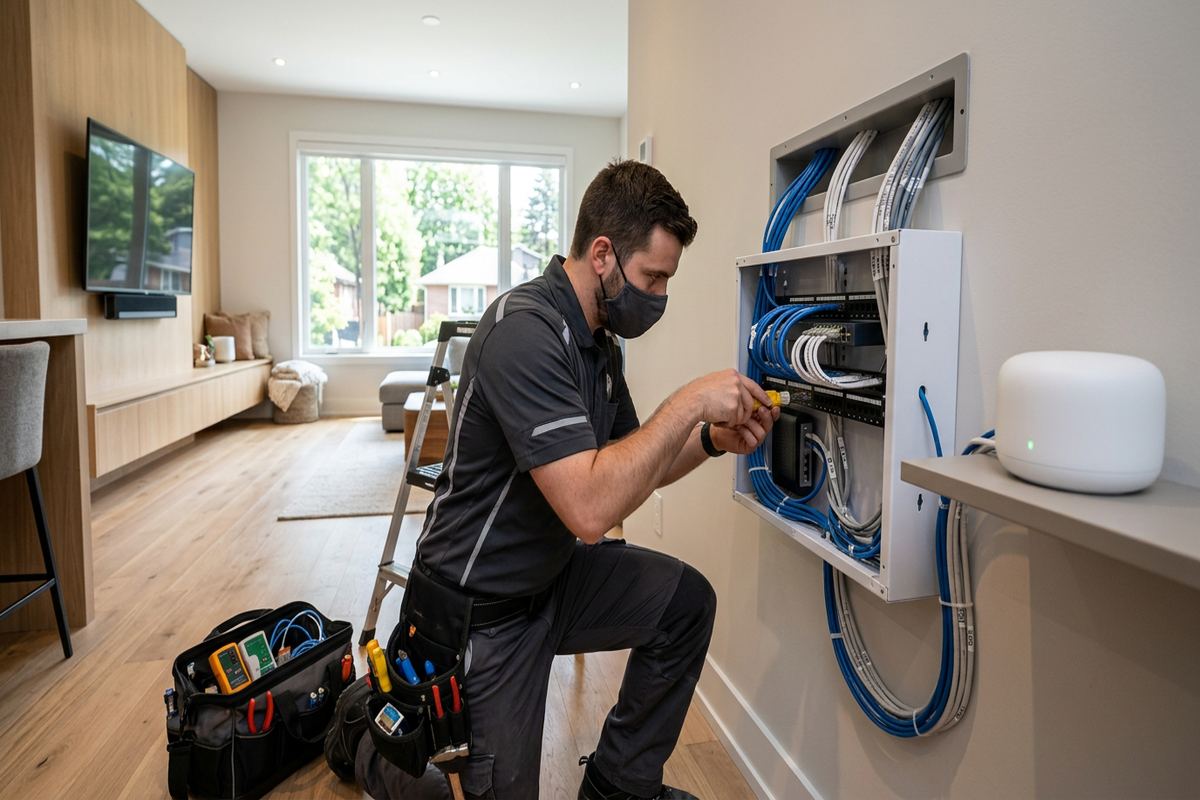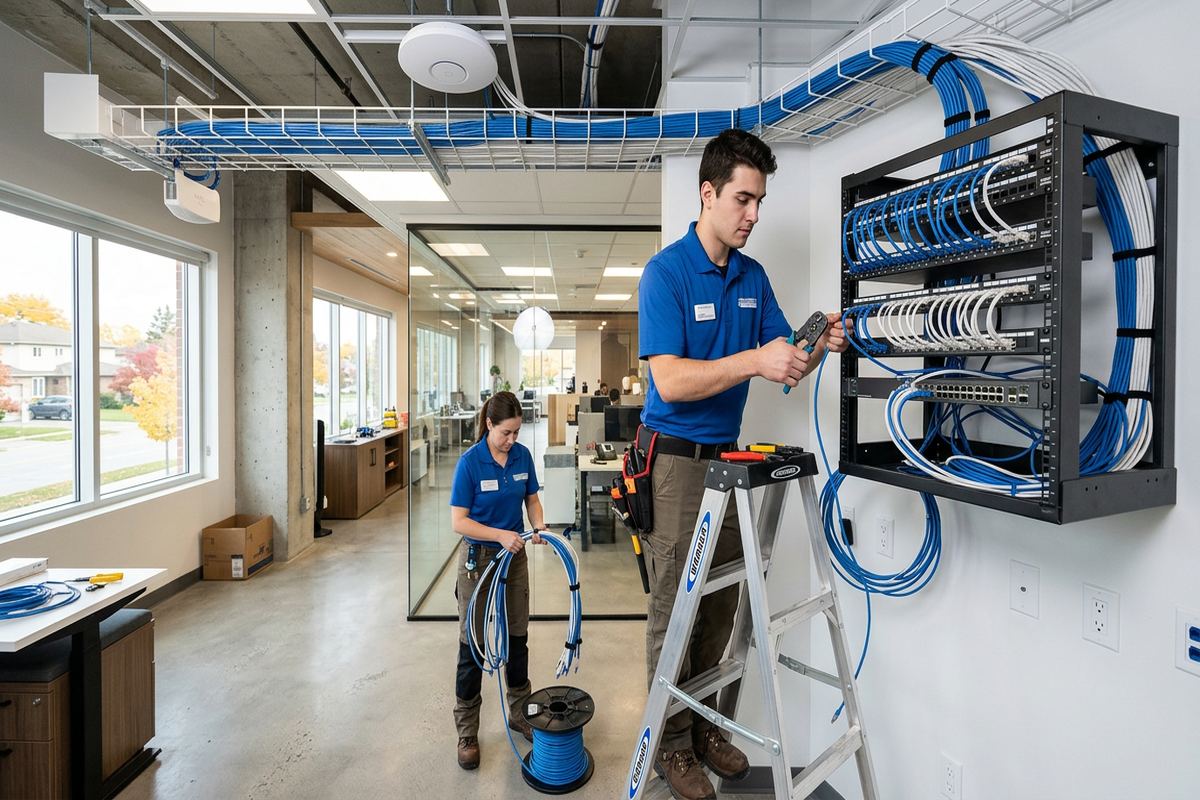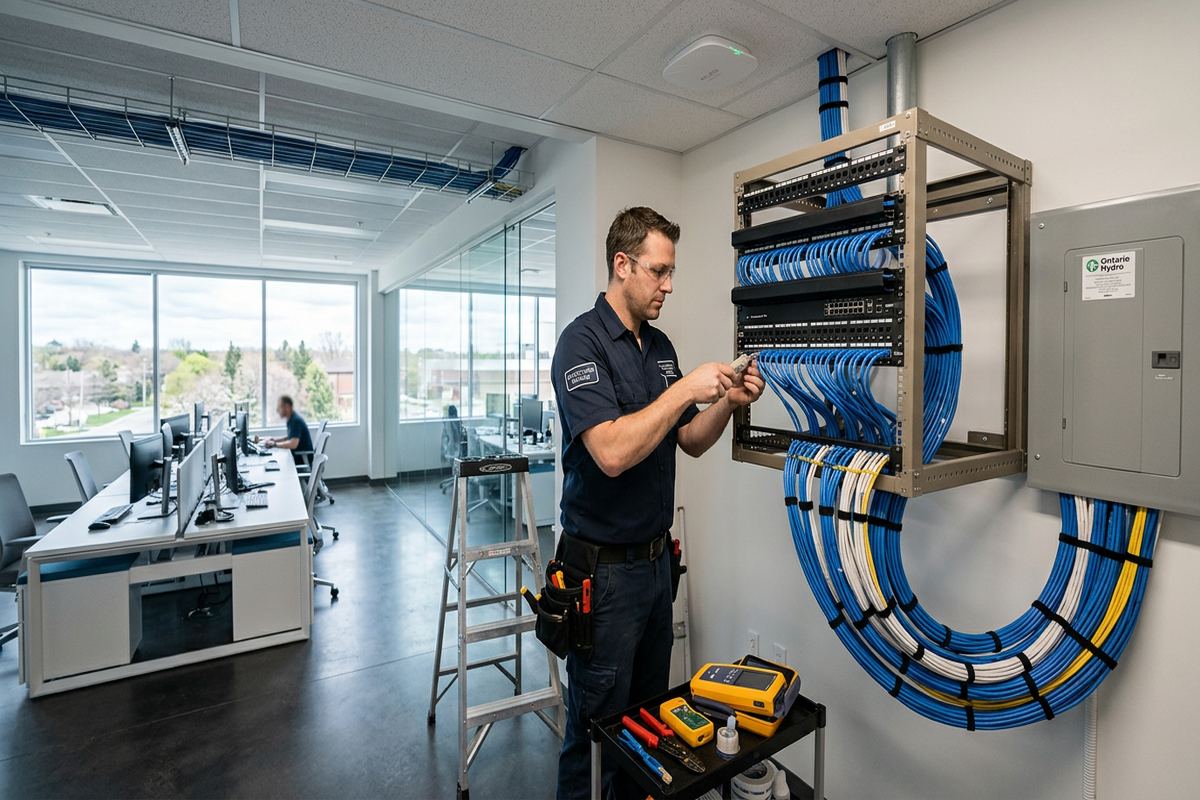
UnifiedLink installs wired and wireless home networks across Burlington and Halton Region. We assess the property, plan cable routes and access-point locations, then configure the system on site. The result is practical coverage for everyday internet use, work, streaming, security devices and connected equipment, with labelled cabling and clear handover records.
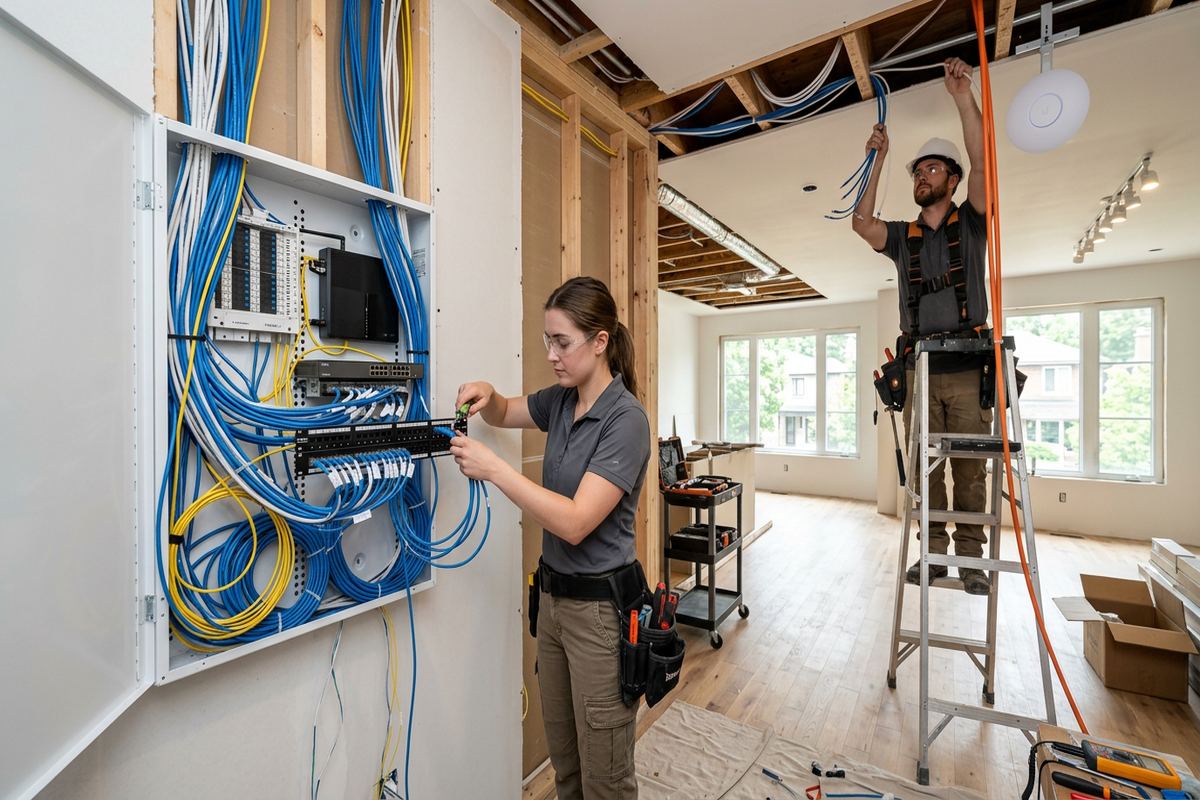
Home Network Installation for Burlington Properties
A reliable network starts with the building, not with a box of wireless equipment. During a Burlington site assessment, UnifiedLink reviews internet entry points, construction materials, floor layout, equipment locations and the devices that need service. Lakefront homes, mid-century bungalows and newer multi-level properties each affect signal travel differently. The assessment also identifies practical cable routes, suitable access-point locations and places where wired connections will be more dependable than Wi-Fi. Pricing follows this visit so the proposed system reflects the property instead of relying on assumptions or a generic equipment package.
Many network problems are caused by placement rather than internet speed. A router hidden beside an electrical panel, inside a cabinet or at one end of a bungalow may leave bedrooms, offices and outdoor areas with weak service. Masonry walls, metal ductwork, mirrors, heated floors and dense mechanical spaces can further reduce wireless performance. We consider these obstacles before selecting equipment. Where one access point cannot serve the space properly, additional wired access points can be positioned to create consistent coverage without depending on unstable wireless repeaters or placing visible equipment where it does not belong.
The written scope sets out the proposed equipment, cable routes, device placement, exclusions, equipment ownership and warranty. This gives Burlington homeowners and property managers a clear basis for reviewing the work before installation begins. It can also identify work that requires landlord, condominium corporation or property-management approval. Once approved, UnifiedLink acts as one accountable contractor for cabling, mounting, termination, configuration and handover. That avoids separate installers making conflicting decisions about pathways, network settings or responsibility when a connection does not perform as expected after the equipment is installed.
- On-site property and coverage assessment
- Router, switch and access-point planning
- Written scope before installation
- Home office and streaming connections
- Network support for connected devices
Planning Wi-Fi Coverage Across Burlington Homes
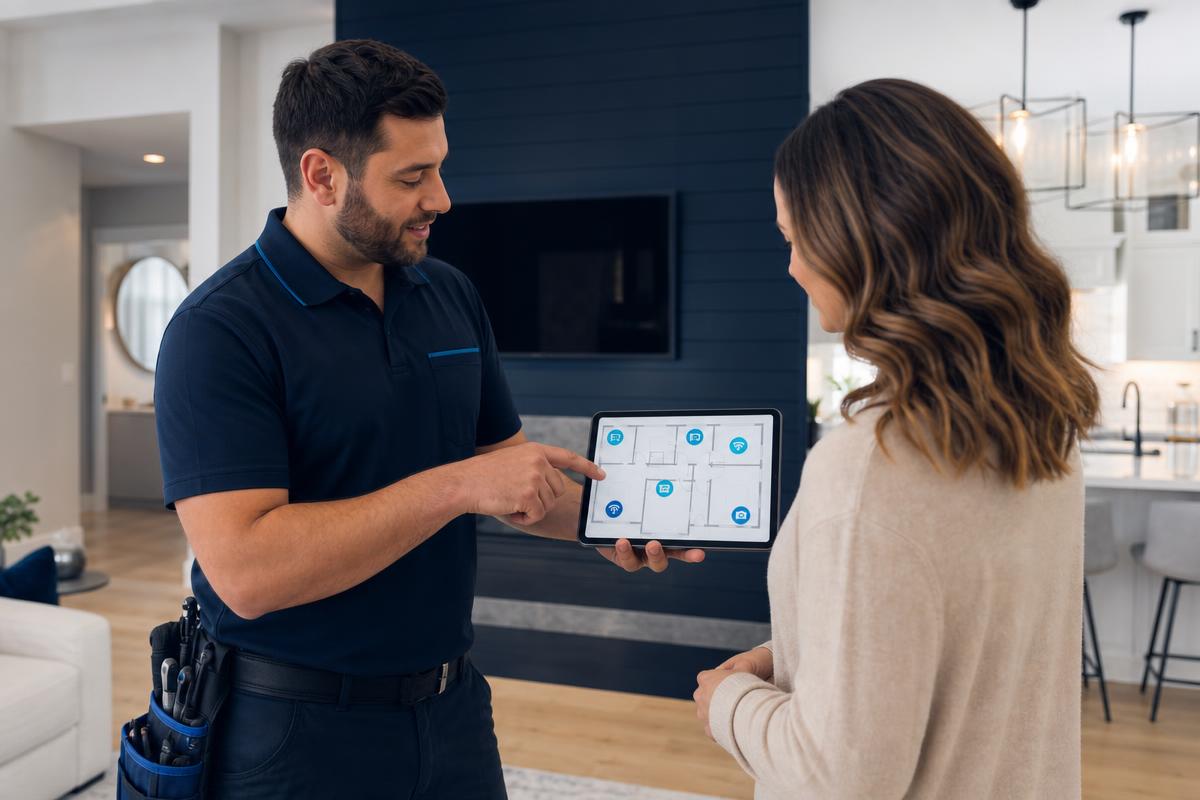
Coverage planning in Burlington needs to account for varied housing layouts. A long Roseland bungalow may need access points separated horizontally, while a taller home in Alton Village may require coverage distributed between floors. In Millcroft, finished basements and home offices can create additional service areas below the main network equipment. We review where people actually use phones, computers, televisions and smart devices, then place access points around those needs. The objective is useful coverage in occupied areas, rather than a strong reading beside the router and unreliable performance everywhere else.
Wireless design also depends on how the network will be used. Video meetings, cloud backups, streaming displays, gaming systems and security cameras can operate at the same time, placing different demands on local connections. Wired links are normally preferred for fixed, high-use devices because they reduce wireless congestion and provide predictable connectivity. Wi-Fi remains important for mobile equipment and locations where cabling is impractical. A balanced Burlington installation assigns each device to the connection type that suits it, rather than forcing every television, workstation and camera onto the same wireless network.
Access-point mounting requires both technical and visual planning. Ceiling locations often provide broad coverage, but joist direction, vapour barriers, finished surfaces and nearby electrical systems affect the route. Wall mounting may be more appropriate in some renovated homes or spaces with inaccessible ceilings. Equipment should remain reachable for service without becoming a prominent feature of the room. Before drilling, we confirm the proposed location and pathway. The installation scope can distinguish between concealed routes, unfinished-area routes and any surface raceway needed where fishing cable through existing construction is not reasonably possible.
- Coverage based on occupied areas
- Wired backhaul for access points
- Separate planning for each floor
- Practical, serviceable mounting locations
- Reduced reliance on wireless repeaters
Wired Network Cabling in Burlington
Structured cabling gives fixed devices a direct path back to the network switch. UnifiedLink installs continuous labelled cable runs rather than joining short sections inside hidden walls or ceilings. Each route is planned around framing, masonry, insulation, plumbing, electrical wiring and finished surfaces. Mid-century Burlington bungalows can offer workable basement or attic access, although renovations may have closed former pathways. Newer homes can present different constraints, including tightly finished utility areas and limited routes between floors. The assessment determines what can be concealed and where a visible but orderly pathway may be necessary.
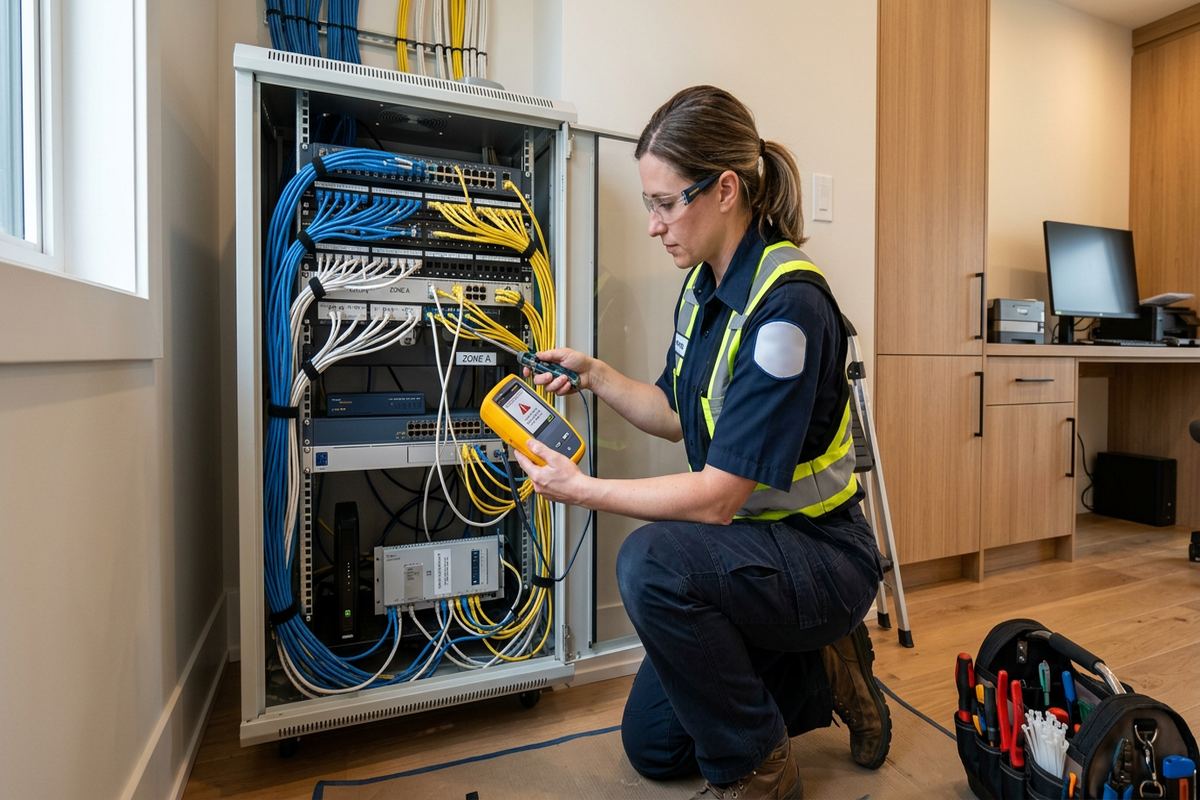
Cable selection depends on the application and environment, not simply the highest category printed on a package. The scope considers run length, pathway conditions, required network speeds, power delivery to compatible devices and whether a cable enters an exterior or unconditioned area. Indoor cable is kept within appropriate spaces, while outdoor routes require materials and fittings suited to moisture and temperature changes. Terminations are completed at defined wall outlets, patch panels or equipment locations. Labels at both ends make future troubleshooting, moves and equipment replacement much easier for the property owner or another technician.
A central network location should be dry, ventilated, powered and accessible. It may contain the internet provider’s equipment, router, switch, patch panel and supporting hardware, depending on the design. Placing these components in a cramped sealed cabinet can lead to heat, difficult service access and disorganized patching. In Burlington homes with utility rooms, finished basements or compact electrical areas, we review clearances before choosing the location. The completed installation keeps permanent cabling distinct from replaceable patch cords and records the outlet labels, allowing each room connection to be identified without tracing cables repeatedly.
- Continuous cable without hidden joins
- Labels at both cable ends
- Organized patch-panel termination
- Routes planned around utilities
- Suitable indoor and outdoor cable
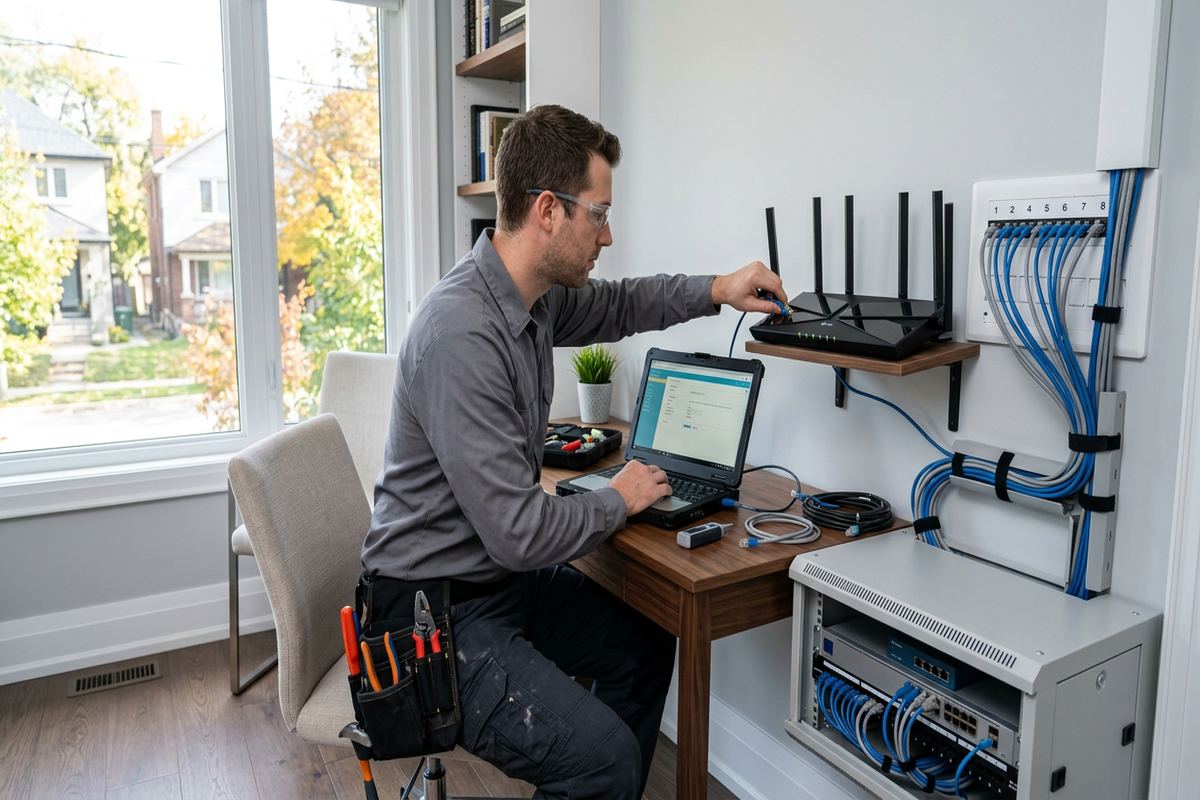
Burlington, Ontario
Home network installation in Burlington, scoped in writing first
Book a site assessment and get equipment, routes, exclusions, and warranty on paper before anything is installed.
Exterior Connections and Burlington Weather
Outdoor network work must withstand Burlington winters, summer rain and repeated freeze-thaw cycles. Cable passing through an exterior wall needs a controlled entry point, suitable protection and careful sealing. Openings are positioned to reduce water exposure, and penetrations are finished to direct moisture away from the building envelope. A cable should not be pinched through a window, left loose against sharp masonry or routed where ice and snow can pull on it. These details matter for detached garages, exterior access points, cameras, garden workspaces and other connected equipment outside the main building.
Masonry and frame construction require different drilling and fastening methods. Brick veneer should not be treated like solid structural masonry, and siding needs mounting details that avoid crushing or leaving unsealed gaps. On lakefront properties, exposed locations may experience more wind-driven rain and weather than sheltered walls. We select routes that limit unnecessary exposure and support the cable at appropriate intervals. Exterior loops, entry fittings and mounting surfaces are reviewed as part of the pathway, rather than addressed after interior cabling has already been pulled to an unsuitable exit point.
Detached structures need more than a strong indoor Wi-Fi signal pointed through several walls. Garages, workshops and pool buildings may require a dedicated wired connection or a properly designed wireless bridge, depending on distance, visibility, electrical conditions and pathway options. Copper links between buildings can present grounding and electrical-potential concerns, so fibre may be considered where appropriate. UnifiedLink documents the selected approach and equipment boundaries in the written scope. Burlington property owners then know which components serve the outbuilding and what access will be needed for installation, testing and future maintenance.
- Sealed exterior cable penetrations
- Weather-suitable mounting hardware
- Routes protected from ice and moisture
- Options for detached buildings
- Masonry-appropriate drilling and fastening
Secure Network Configuration and Handover
Installation is not complete when the access points power on. UnifiedLink configures the router, switches and wireless equipment on site according to the agreed design. Network names, authentication, updates, device roles and management access are reviewed without leaving the customer dependent on an installer-owned account. Where supported by the selected equipment, separate networks can be created for household devices, guests, work equipment or connected building systems. Segmentation can reduce unnecessary access between device groups, although the exact arrangement should remain understandable enough for the owner to operate after handover.
Connected products often arrive with inconsistent setup requirements. Televisions, thermostats, speakers, printers, doorbells and older smart devices may support different wireless bands or security settings. We can provide the network connection and assist with agreed device onboarding, but manufacturer accounts, subscriptions and third-party service limitations remain distinct from the local network. The scope identifies which devices are included so expectations are clear. In a Burlington home with many connected systems, this structured approach prevents a simple network installation from becoming an undefined attempt to repair every application, account or unsupported consumer product.
At handover, the customer receives control using their own credentials, along with an as-built record of the completed installation. The record can identify outlet labels, equipment locations, access-point placement and other relevant details from the final work. We explain basic operation, including how to recognize the main network equipment and where connections terminate. Passwords should be stored securely by the owner rather than written on visible equipment. This process gives Burlington clients practical information for future internet-provider changes, renovations, troubleshooting or expansion without making routine access dependent on UnifiedLink.
- On-site router and Wi-Fi configuration
- Customer-owned administrative credentials
- Optional guest and device networks
- Agreed device onboarding
- As-built network record
Networks for Burlington Renovations and Retrofits
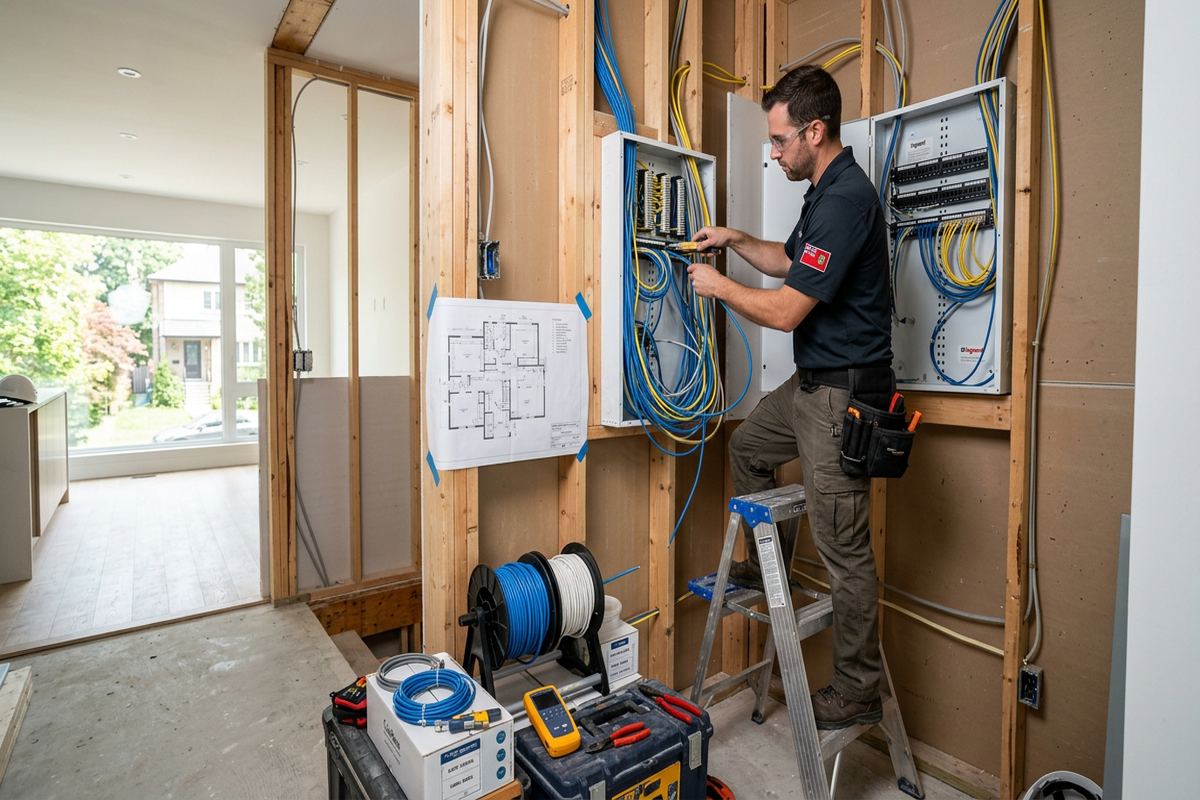
Renovation work provides the best opportunity to install network pathways before walls and ceilings are closed. In Burlington additions, basement finishes and whole-home renovations, early coordination can place data outlets, access-point cables and a central equipment area without unnecessary surface work later. We review drawings where available and confirm field conditions with the contractor or owner. Cable routes must remain separated from electrical wiring as required and protected from screws, sharp edges and later trade work. Photographing concealed routes can also support the final as-built record and help locate cabling after finishes are installed.
Existing finished homes require a more selective approach. Routes may use unfinished basement ceilings, attic spaces, closets, utility chases or carefully chosen wall cavities. No installer can assume every cavity is open; blocking, insulation, plumbing and previous renovations may prevent an intended path. In Aldershot and Tyandaga, property age and renovation history can be as important as the original layout. We discuss alternatives before creating openings. If access holes or repair work may be required, the written scope identifies exclusions and responsibilities so the owner can arrange any separate finishing work with appropriate trades.
Condominiums, rental homes and managed properties can impose additional conditions. Owners may need written approval before cabling crosses common elements, enters service spaces or changes an exterior surface. Tenants should have landlord authorization for permanent drilling or equipment mounting. Building rules may also limit working hours, elevator use, parking and access to telecommunications rooms. UnifiedLink can define the proposed route and device locations for the approval process, but authorization remains the customer’s responsibility. Confirming these details before scheduling protects the Burlington property and avoids arriving with equipment that cannot legally or practically be installed.
- Pre-wire planning before drywall
- Retrofit routes through accessible spaces
- Coordination with renovation trades
- Condo and landlord approval considerations
- Clear finishing-work exclusions
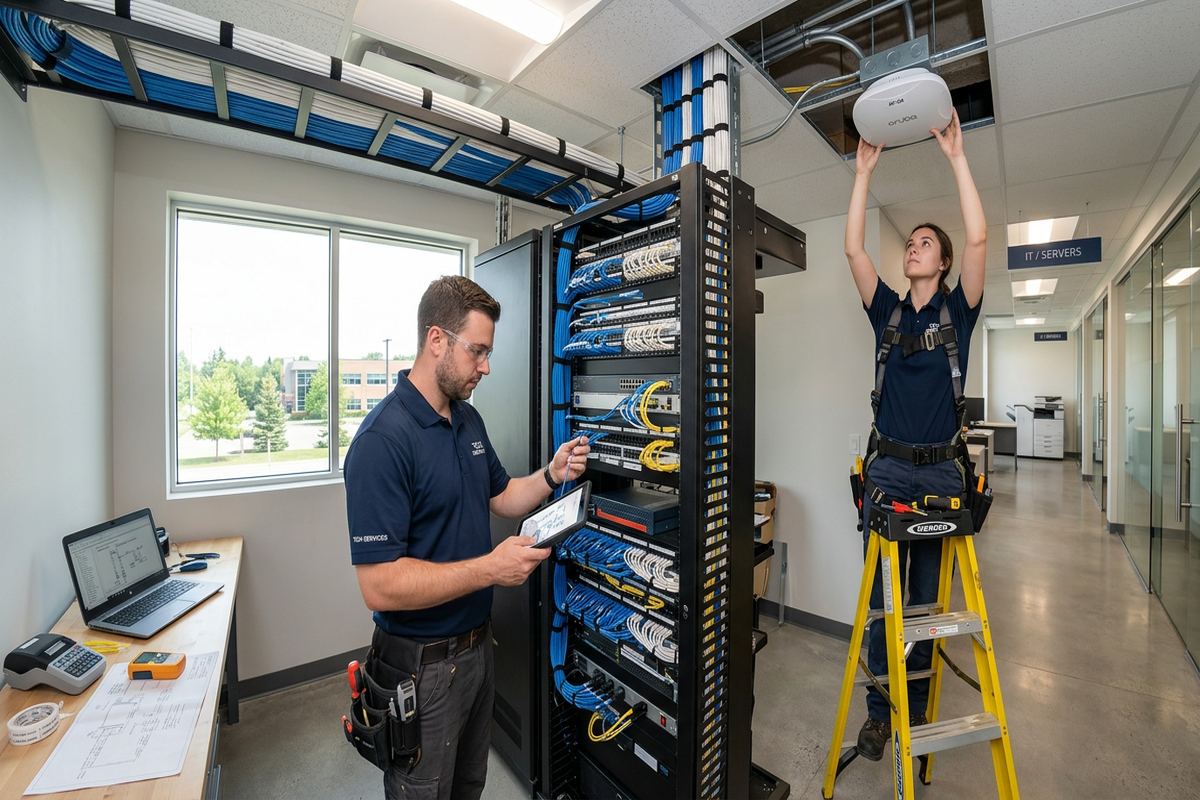
Small Business Networks in Burlington
Small commercial plazas form a significant part of Burlington’s local property mix. Retail units, clinics, offices and service businesses often need dependable connections for workstations, payment terminals, displays, phones, printers, cameras and guest Wi-Fi. These devices should not automatically share one unrestricted network. UnifiedLink assesses the tenancy, internet entry point, equipment location and cable pathways above ceilings or through back rooms. The design can separate operational systems from public access while keeping the arrangement manageable for staff. Any connection to landlord-controlled spaces or building infrastructure is identified before work proceeds.
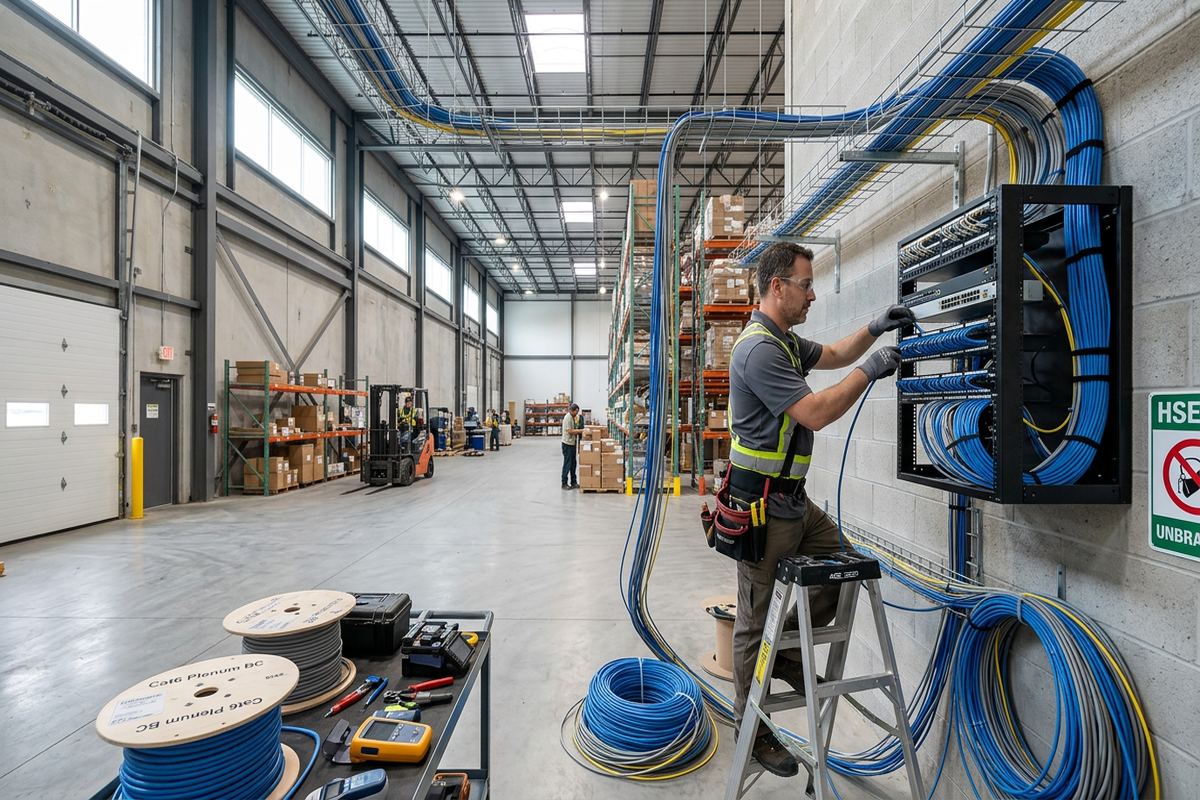
Commercial strips and light industrial units can include concrete block walls, metal shelving, high ceilings and neighbouring wireless networks. These conditions affect both signal coverage and mounting choices. A single router at the front counter may not serve stockrooms, offices or work areas at the rear. Access points can be connected by labelled cabling and placed around actual usage zones. In industrial-style units, mounting height must still permit service and avoid lifts, doors, stored materials or production activity. The assessment accounts for those conditions instead of applying a residential placement plan to a commercial floor.
Network changes should be scheduled around the operational needs of the business. Replacing a router, moving internet equipment or reorganizing a switch can interrupt connected services, even when the physical work is straightforward. We identify known dependencies and agree on a practical sequence before changing live connections. Third-party systems may require support from their provider if fixed addressing, firewall rules or account access is involved. Burlington business owners receive a written scope defining UnifiedLink’s work and exclusions, helping everyone distinguish the local network installation from internet-provider, software-vendor and managed-service responsibilities.
- Retail and office network layouts
- Connections for fixed business devices
- Staff and guest network separation
- Access points for divided units
- Documented third-party dependencies
Starting a Burlington Home Network Project
The first step is a discussion about the property, current internet service and specific trouble areas. Useful details include floor plans, renovation status, existing cable locations, construction type and the devices that require wired or wireless service. Photographs can help with initial context, but they do not replace a site assessment where routes, access and mounting conditions need to be confirmed. Requests sent during business hours are answered the same day, while after-hours requests are answered the next business day. Site assessment timing depends on the service and travel distance.
During the Burlington assessment, we test assumptions against the actual building. The installer reviews possible pathways, ceiling access, masonry, utility spaces, exterior penetrations and equipment placement. For coverage work, existing wireless conditions and intended use areas are considered alongside visible construction barriers. The visit also establishes whether approvals, access arrangements or other trades are needed. This is the point to discuss future plans such as an office move, basement completion, detached garage connection or additional security devices, allowing the proposed network to accommodate realistic expansion without installing unnecessary equipment.
After assessment, UnifiedLink prepares pricing based on a written scope rather than an unsupported remote estimate. The scope covers equipment, cable routes, device placement, exclusions, equipment ownership and warranty. Once accepted and scheduled, one accountable contractor completes the agreed cabling, mounting and on-site configuration. Finished runs are labelled, and the system is handed over with the customer’s own credentials and an as-built record. This process gives Burlington homeowners and small businesses a defined installation, clear responsibility and documentation that remains useful when internet service, room use or connected equipment changes later.
- Same-day reply during business hours
- Assessment before project pricing
- Detailed written installation scope
- One accountable network contractor
- Documented configuration and handover
Burlington neighbourhoods we cover
- Downtown Burlington
- Aldershot
- Alton Village
- Millcroft
- Roseland
- Tyandaga
- Orchard
Home network installation in Burlington — common questions
Do I need a site assessment first?
Yes. Burlington homes vary widely in layout, construction and available cable pathways, so UnifiedLink completes a site assessment before pricing. We review the internet entry point, existing equipment, coverage problems, mounting locations and possible routes. The resulting written scope identifies equipment, cable routes, device placement, exclusions, ownership and warranty before you approve the work.
Can you improve Wi-Fi without changing my internet provider?
Often, yes. Weak coverage inside a Burlington property may result from router placement, building materials or reliance on one wireless device rather than the provider’s connection itself. We assess the local network and can recommend wired access points or equipment placement changes. Provider service issues remain separate, and we will identify when the incoming connection appears to require attention from the provider.
Can network cable be installed in a finished bungalow?
Usually there are options, but the route depends on access. Burlington’s mid-century bungalows may allow cabling through an unfinished basement, attic, closet or selected wall cavity. Renovations, insulation and blocking can limit those paths. We inspect the property, explain concealed and visible alternatives, and identify any access holes or finishing work that falls outside the network installation scope.
Can you connect a detached garage or outdoor area?
Yes, where a suitable pathway or wireless link can be designed. Burlington weather, freeze-thaw conditions and exterior exposure affect cable, mounting and sealing choices. Depending on distance and site conditions, the connection may use outdoor-rated cabling, fibre or a wireless bridge. We assess electrical and structural conditions before recommending an approach and document exterior routes in the scope.
Do I need condo or landlord permission?
Possibly. Permanent drilling, cabling through common elements, access to telecommunications rooms and exterior mounting may require written approval. Burlington condominium rules and individual lease terms vary, so the owner or tenant is responsible for securing authorization. UnifiedLink can provide proposed routes and device locations for review, then schedule installation after access conditions and permitted work have been confirmed.
Will I control the network after installation?
Yes. UnifiedLink completes on-site configuration and hands the system over using credentials owned by you, not an installer-controlled account. You also receive an as-built record covering relevant equipment locations, access points and labelled outlets. This makes future changes easier if you switch internet providers, renovate the Burlington property or ask another qualified technician to service the network.
Coverage in Burlington is confirmed against the address before we quote. See everything we install in Burlington or the province-wide home network installation page.