UnifiedLink installs home alarm systems for houses, condos, rental properties and mixed-use sites across Burlington. We assess the property, identify practical sensor locations, plan cable routes and configure the system on site. Each project receives a written scope before work begins, followed by testing, customer-controlled credentials and clear handover documentation.
Home Alarm Planning for Burlington Properties
An effective alarm installation begins with the building rather than a standard equipment package. During a Burlington site assessment, we review doors, accessible windows, attached garages, basement entries, exterior structures and the routes occupants normally use. We also discuss pets, schedules, household access and whether monitoring or local notification is preferred. This creates a practical detection plan without placing unnecessary devices in low-risk areas. The resulting written scope identifies equipment, cable routes, device locations, exclusions, equipment ownership and warranty information before installation work is scheduled.
Burlington properties vary considerably between neighbourhoods and construction periods. A mid-century bungalow in Roseland may have finished basement ceilings, older window assemblies and limited cable pathways, while a newer Alton Village house may include open utility spaces but more complex entry arrangements. Lakefront homes can also have detached buildings, broad glazing and exposed exterior approaches. We account for these differences when selecting door contacts, motion detectors, glass-break sensors, keypads, sirens and communication equipment. Device placement follows actual access risks, usable pathways and the condition of each mounting surface.
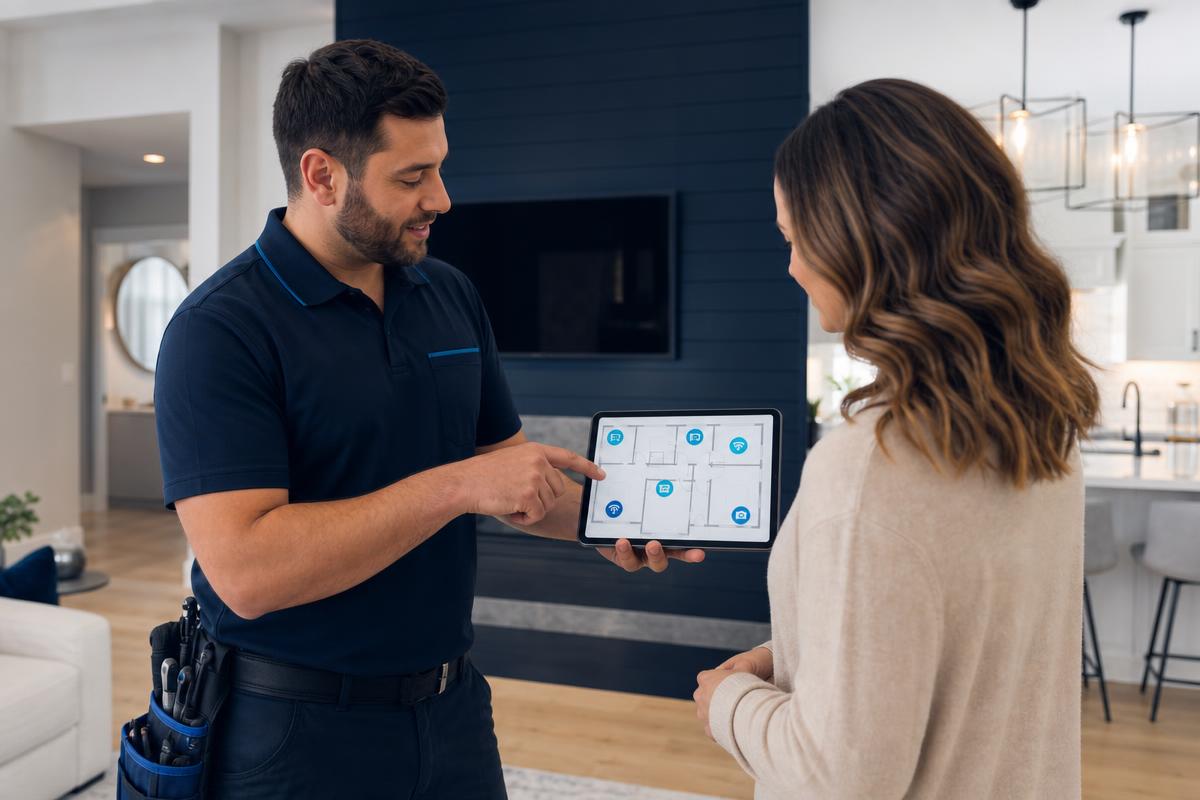
Alarm planning should also reflect how occupants will operate the system every day. We establish arming areas, entry and exit delays, user permissions, notification rules and suitable keypad or app access. If cleaners, relatives, tenants or contractors need temporary access, separate user credentials can provide clearer activity records than a shared code. The design can also divide a home, garage, workshop or small business area into partitions where appropriate. Before handover, we confirm normal routines with the customer and adjust the configuration so security does not become an avoidable daily obstacle.
- Door, window and accessible opening review
- Pet and occupancy considerations
- Wired, wireless or hybrid design options
- Defined alarm zones and user permissions
- Written scope before installation
Alarm Equipment Selected for the Site
Alarm components need to suit both the risk and the construction around them. Recessed contacts can provide a discreet result where doors and frames allow careful drilling, while surface contacts may be safer for steel doors, decorative trim or difficult replacement windows. Motion detectors require clear fields of view and should avoid heating vents, direct sunlight and moving curtains. Glass-break detection may support rooms with extensive glazing, but it is not automatically suitable for every layout. We explain what each device covers, what can trigger it and where another detection method may be more reliable.
A typical system may include a control panel, keypads, door contacts, motion detectors, sirens, smoke or carbon monoxide interfaces, panic functions and a communications module. Final equipment depends on the assessment, desired operation and compatibility with existing devices. We do not assume that older sensors, keypads or cabling can be reused safely. Existing components are inspected and tested before being included in the scope. Where reuse is practical, the written plan records what remains, what is replaced and which party owns each installed component following project completion.
Power and communications deserve the same attention as visible sensors. The control equipment requires a suitable electrical source, battery backup and a location that is accessible for service but not obvious from primary entry points. Internet-connected features depend on reliable network coverage and suitable account setup, while cellular communication may depend on signal conditions at the property. We test relevant connections on site and configure agreed notification paths. Credentials are created for the customer rather than retained under an installer-controlled account, helping preserve access and control after the system is handed over.
- Control panels and user keypads
- Door, window and motion detection
- Glass-break and panic functions
- Battery backup and communications modules
- Review of compatible existing equipment
Wired, Wireless and Hybrid Alarm Options
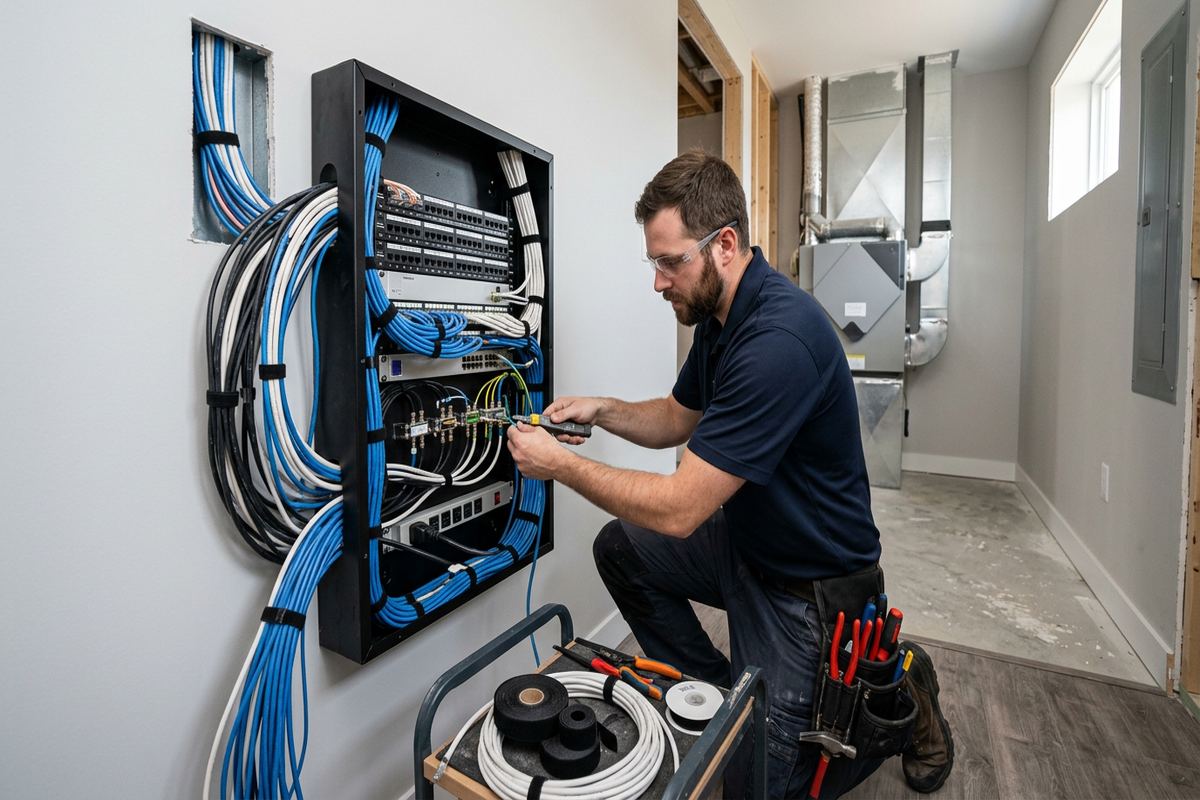
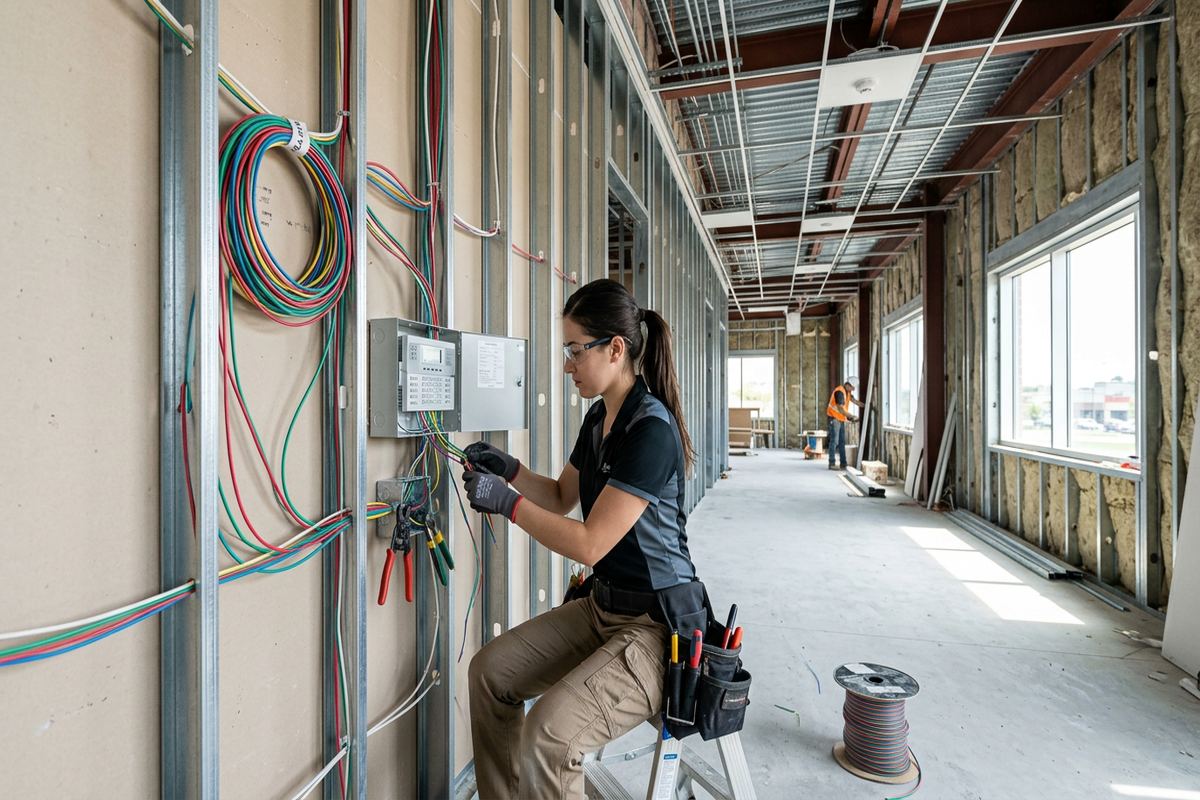
Wired alarm devices remain useful where cable pathways are available or can be created without disproportionate disruption. Continuous labelled runs reduce hidden connection points and make later troubleshooting easier. In unfinished basements, utility rooms and accessible attic areas, cable can often be routed neatly to central equipment. Finished Burlington homes may require more detailed planning around plaster, masonry, built-in cabinetry or renovated ceilings. We identify expected access work in the scope rather than assuming every route is open. Any required patching or work by another trade is also listed as an exclusion when applicable.
Wireless equipment can reduce invasive routing, particularly in finished homes, condos and rental properties. It still requires deliberate placement, secure mounting, battery planning and communication testing. Dense walls, metal framing, mechanical equipment and long distances between detached structures can affect radio performance. A wireless label does not remove the need for a site assessment. We check practical signal conditions and explain battery maintenance responsibilities. For condo units, mounting locations may also be limited by corporation rules, common-element boundaries or restrictions on drilling into exterior doors, windows and surrounding assemblies.
Hybrid systems combine wired zones with wireless expansion and can be practical during renovations or panel replacements. Existing wired door contacts may remain serviceable while new wireless devices cover an addition, garage or area without accessible cable routes. The approach can preserve useful infrastructure without depending on every older component. We document zone assignments and label both retained and new wiring at the panel. This provides a clearer record for future testing, renovations or ownership changes. Compatibility is confirmed before installation because device generations and proprietary wireless protocols are not automatically interchangeable across alarm manufacturers.
- Continuous labelled wired connections
- Wireless signal testing at the property
- Hybrid expansion for renovated spaces
- Battery and maintenance planning
- Compatibility checks before reuse
Burlington, Ontario
Home alarm system installation in Burlington, scoped in writing first
Book a site assessment and get equipment, routes, exclusions, and warranty on paper before anything is installed.
Burlington Construction and Weather Considerations
Freeze-thaw cycles, wind-driven rain and winter temperature changes affect exterior alarm equipment and cable entry points. Outdoor sirens, gate contacts and devices serving detached garages need hardware rated for their intended environment. Penetrations should be positioned to limit water exposure, sealed with compatible materials and arranged so cable does not direct moisture into the wall. On Burlington lakefront properties, exposed elevations may require additional attention to mounting stability and corrosion risk. Exterior devices are not treated like indoor components placed under an overhang; each location is assessed for actual exposure and service access.
Masonry and frame construction call for different installation methods. Brick veneer requires careful anchor selection and penetration planning, while solid masonry can make concealed routing more difficult. Frame walls often offer cavities for cable, although insulation, fire blocking and previous renovations can interrupt expected routes. Mid-century bungalows may contain finished layers or additions that differ from the original structure. We verify accessible pathways instead of relying only on drawings or assumptions. Mounting methods are selected to support the equipment without damaging door operation, window drainage paths, cladding or weather-resistant building details.
Cold conditions can also influence contacts installed on garage doors, gates and exterior accessory buildings. Materials move as temperatures change, and a narrowly aligned magnet may produce intermittent faults after seasonal shifting. We allow practical alignment tolerances, protect exposed cable and test openings repeatedly before completion. Where an exterior device cannot be installed reliably, we recommend another detection strategy rather than forcing unsuitable hardware into place. Burlington winters also make service access relevant: equipment should not require unsafe ladder work or removal of snow-covered components for routine battery checks, testing or basic maintenance.
- Weather-suitable exterior equipment
- Sealed and protected cable penetrations
- Mounting methods for masonry or framing
- Seasonal contact alignment checks
- Accessible locations for future service
Installation, Configuration and Testing
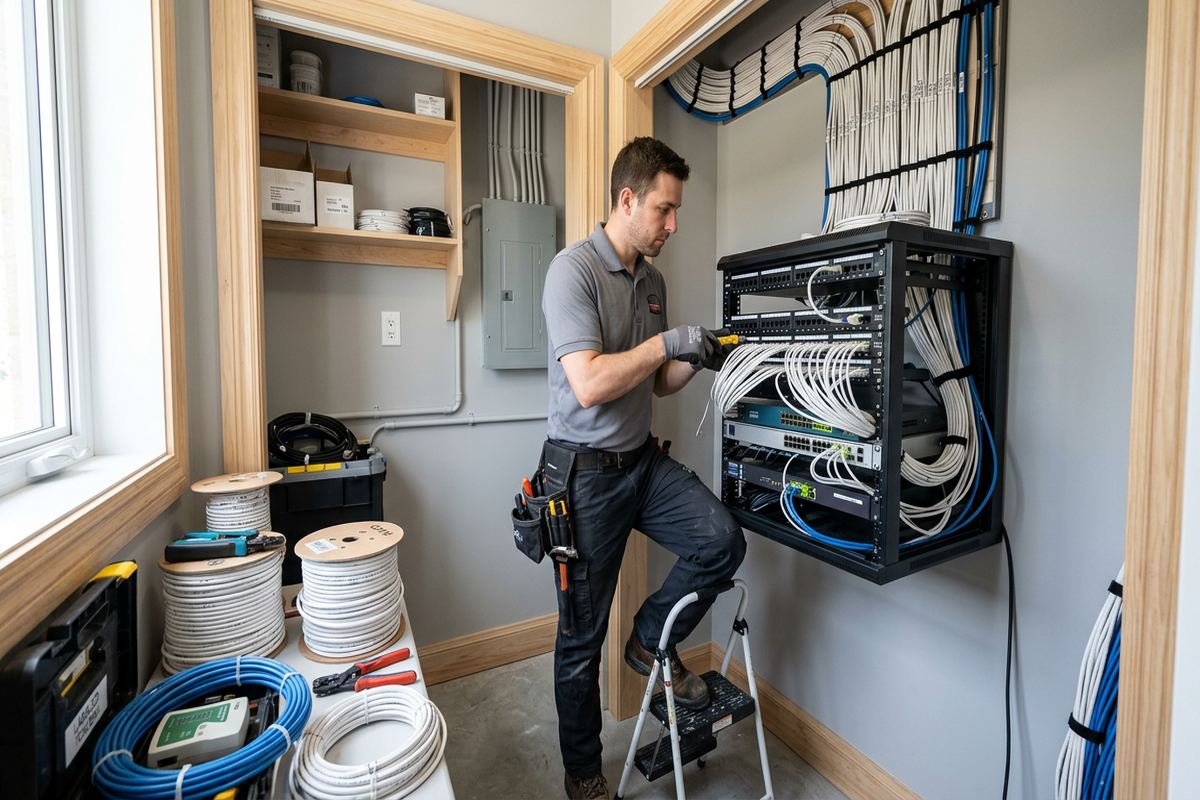
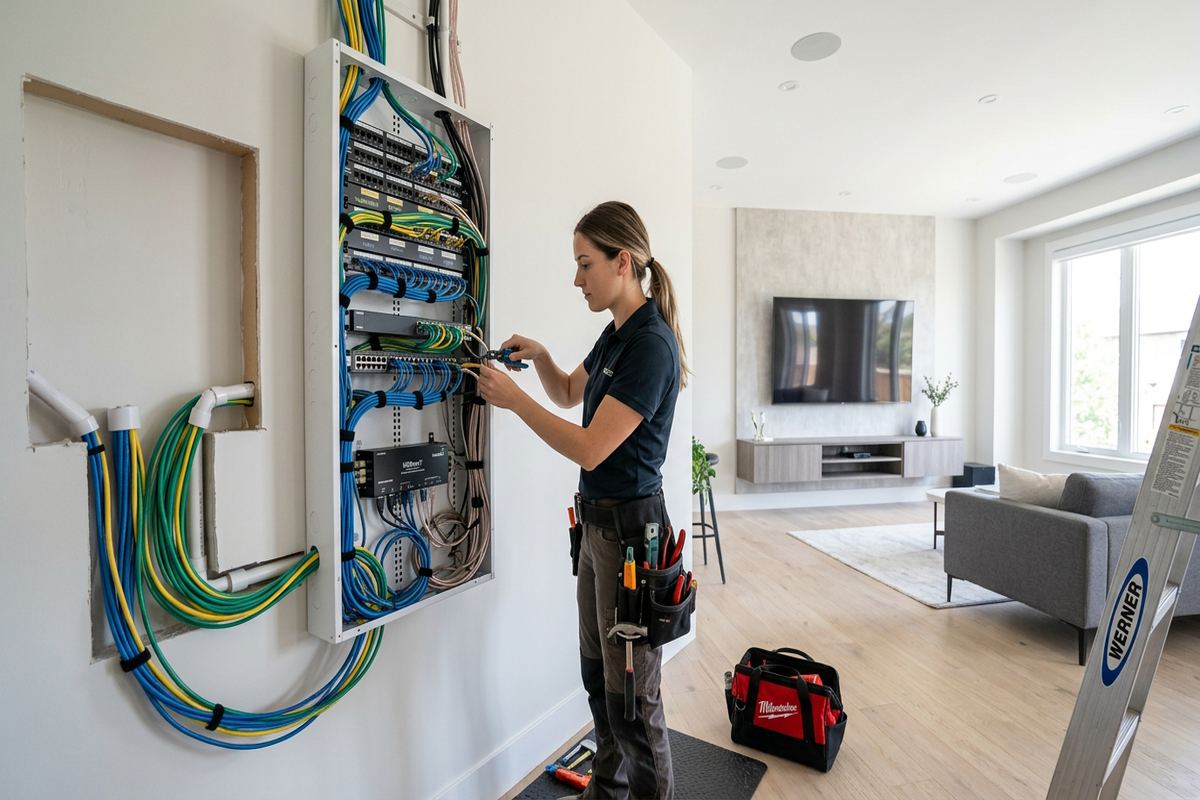
Installation follows the approved device plan and cable routes in the written scope. Wired connections use continuous labelled cable runs wherever specified, with the panel end organized for identification and future service. Surface-mounted cable is supported and routed to avoid door hardware, sharp edges and obvious damage points. Devices are fixed to suitable substrates rather than trim or finishes that cannot hold them securely. If site conditions reveal a blocked route or hidden construction issue, we discuss the change before proceeding. This keeps the final installation aligned with the documented work and customer expectations.
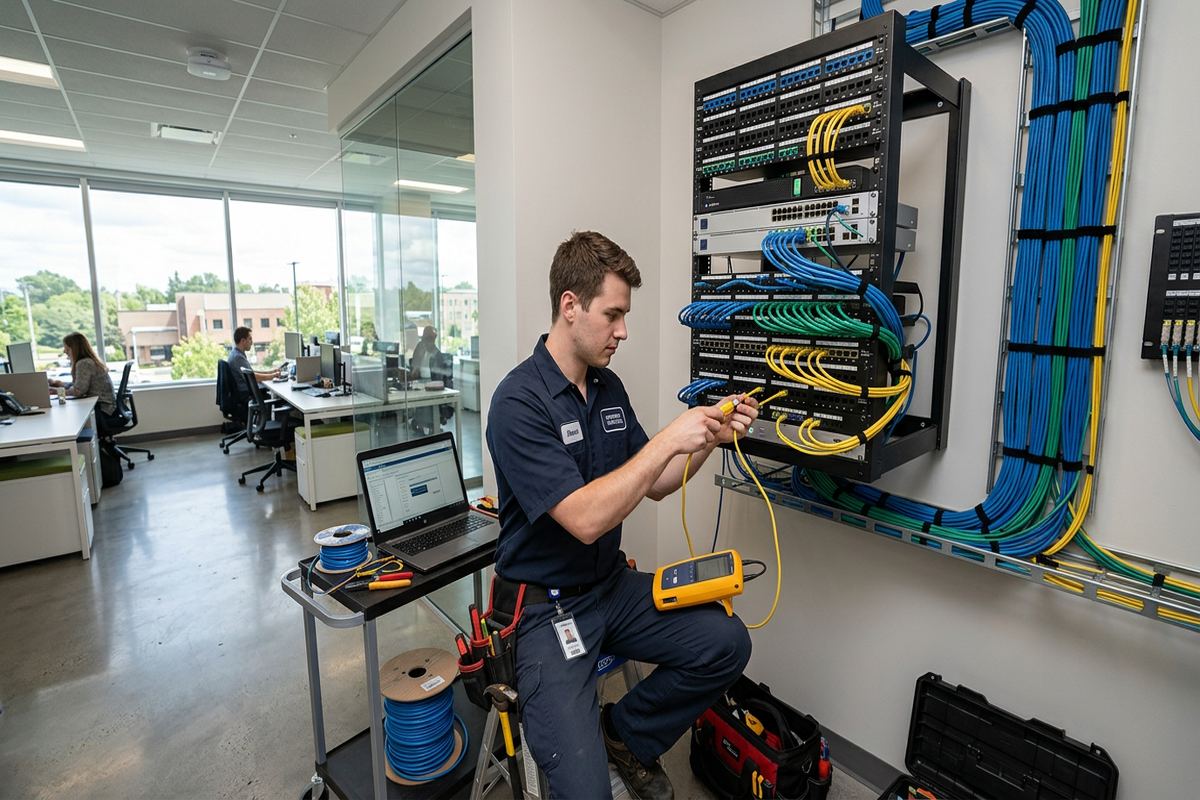
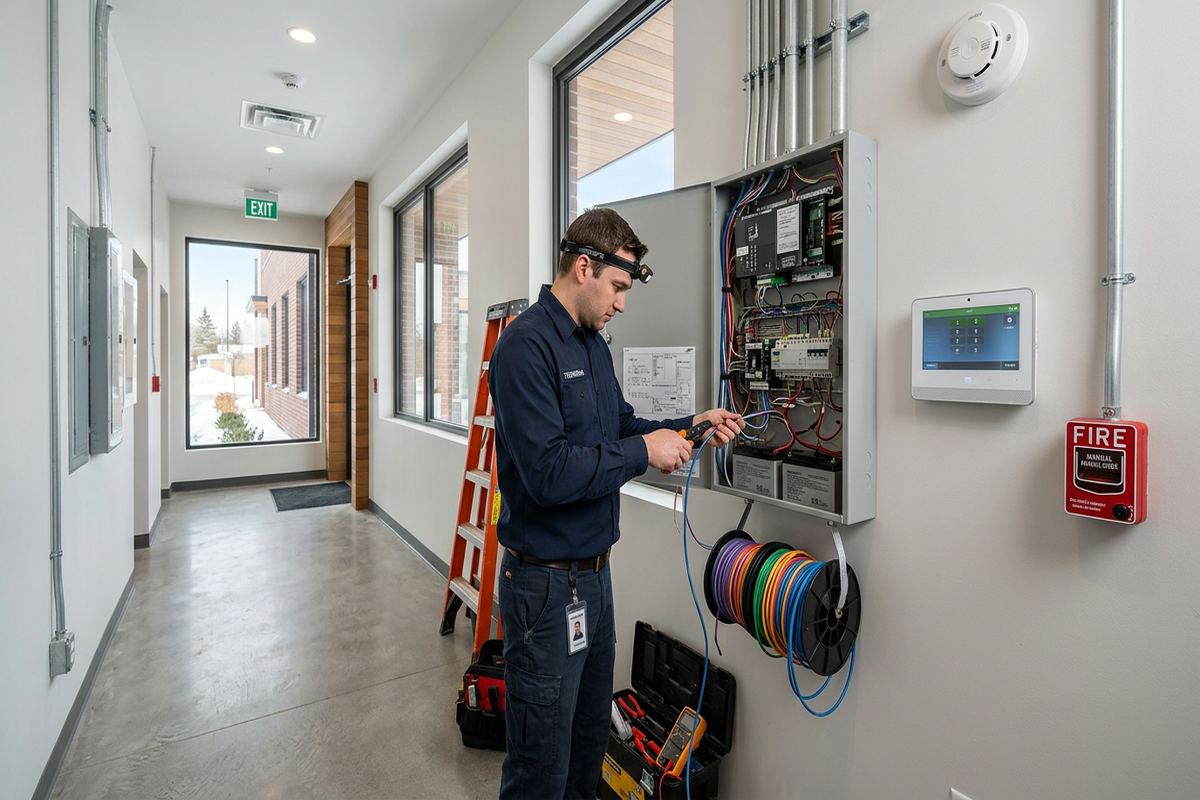
Once hardware is installed, configuration translates the physical devices into useful alarm behaviour. We name zones clearly, set agreed entry and exit delays, establish partitions where required and configure user permissions. Notifications and communication paths are then tested according to the selected system. Each contact is opened, each motion area is walked and each audible device is checked under controlled conditions. We also test tamper functions and backup operation where supported. The objective is to confirm both detection and reporting, rather than assuming that a device is working because it appears online at the control panel.
Handover takes place on site using the customer’s own credentials. We demonstrate arming, disarming, bypassing a zone, responding to common alerts and managing authorized users. The customer receives an as-built record showing installed devices, zone names and relevant cable or panel information. Equipment ownership and warranty details follow the written scope. We do not leave unexplained installer access as the customer’s only way to manage the system. Where monitoring or third-party services are involved, account responsibilities and applicable contacts are clarified so the owner knows which party handles each part of ongoing operation.
- Organized panel terminations
- Clear names for every alarm zone
- On-site detection and notification testing
- Customer-controlled account credentials
- As-built system record at handover
Home Alarm Upgrades in Burlington
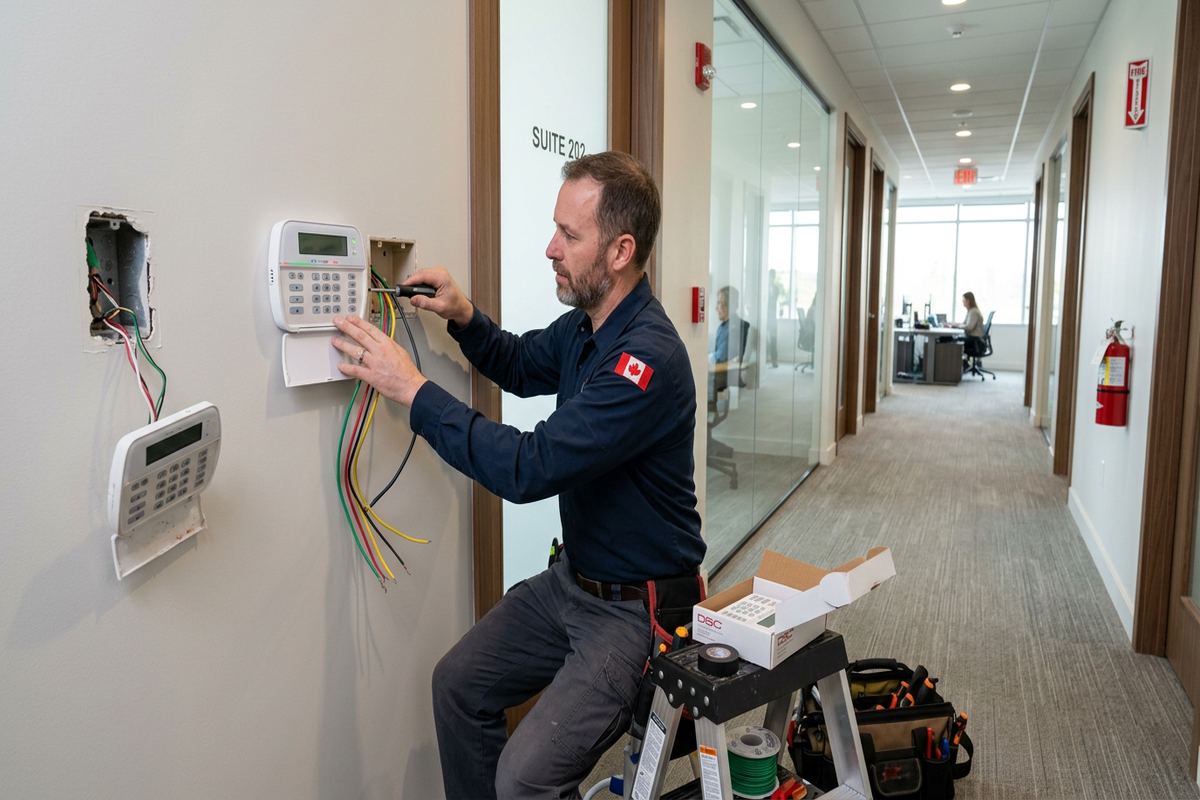
An older alarm panel does not always require complete removal, but age alone cannot determine what should remain. We inspect accessible wiring, contacts, resistors, keypads, power supplies, backup batteries and communication methods. Unlabelled cables are traced where practical, and suspect zones are tested individually. In Aldershot and Tyandaga homes that have undergone several renovations, wiring may pass through abandoned additions or terminate behind finished surfaces. The assessment separates reusable infrastructure from unknown or unreliable components, allowing the scope to identify retained equipment without presenting assumptions as confirmed site conditions.
Panel replacement can provide current user interfaces and communication options while retaining proven wired detection. However, older devices may use different electrical arrangements, resistor values or proprietary connections. We check compatibility before committing to reuse. A zone that appears normal at rest may still fail to report correctly when opened, tampered with or disconnected. Testing therefore includes actual operation, not only a panel status check. If retained wiring cannot be traced or repaired predictably, wireless expansion may provide a less disruptive alternative, particularly in finished spaces where opening walls would create unnecessary restoration work.
Renovations are a useful time to improve alarm infrastructure. Before drywall closes, cables can be routed to doors, windows, keypads, sirens and future device locations with fewer visible surfaces. Coordination matters because framing changes, spray foam, cabinetry and mechanical work can quickly block planned paths. UnifiedLink acts as one accountable low-voltage contractor for the alarm scope and can document routes before concealment. In Burlington additions or basement projects, we confirm which openings are changing and whether temporary alarm operation is needed during construction. Final programming and testing occur after doors, windows and finishes are stable.
- Existing panel and wiring assessment
- Testing before older devices are reused
- Modernization with hybrid equipment
- Pre-wire planning during renovations
- Documented retained and replaced components
Approvals for Condos, Rentals and Mixed-Use Sites
Condo installations require confirmation of what belongs to the unit owner and what forms part of the common elements. Exterior doors, window frames, corridor walls and shared communication rooms may be controlled by the condominium corporation. Before drilling or routing cable, the owner should obtain required approval and provide applicable building rules. Wireless devices can reduce penetrations but do not override those restrictions. In Downtown Burlington units, access scheduling, elevator protection and contractor procedures may also affect the work. These requirements are identified before installation so device choices reflect the property’s actual permissions.
Rental properties need clear authorization from the landlord or property manager, particularly where equipment is fixed to doors, walls or shared entrances. The scope should also establish who owns the alarm hardware, who controls administrative credentials and who receives alerts. Tenants can receive individual user codes without taking over the owner’s account. When occupancy changes, access can then be updated without replacing the system. We avoid informal arrangements that leave former occupants with active credentials. Any monitoring account, internet dependency or ongoing service controlled by another provider is documented separately from the physical installation work.
Small commercial plazas and mixed-use properties require separation between private premises and common areas. A shop beneath a residence, for example, may need independent arming, separate users and distinct notification rules. Shared rear corridors or utility rooms should not be treated as part of a tenant’s alarm area without owner approval. Commercial strips and industrial units may also have overhead doors, loading areas or exposed service entrances needing suitable contacts and protective mounting. We review responsibility boundaries with the customer and keep the alarm scope limited to areas where access and installation authority are confirmed.
- Condo corporation approval review
- Landlord authorization before fixed work
- Separate credentials for tenants and staff
- Partitioning for mixed-use properties
- Defined private and common-area boundaries
Arranging Alarm Installation Across Burlington
UnifiedLink serves Downtown Burlington, Aldershot, Alton Village, Millcroft, Roseland, Tyandaga and Orchard, as well as other properties across Burlington and Halton Region. Local projects commonly include lakefront homes, mid-century bungalows and small commercial plazas, each requiring a different access and device strategy. The first step is a discussion about the property, existing equipment and desired operation. A site assessment follows before pricing. Its timing depends on the service and travel distance, and the assessment findings are used to prepare a written, property-specific scope.
The written scope covers equipment, device placement, expected cable routes, exclusions, equipment ownership and warranty. This is the point to confirm whether monitoring, app access, smoke or carbon monoxide integration, detached structures or temporary construction conditions are included. It also identifies customer responsibilities such as approvals, internet access or access to locked areas. Clear boundaries matter when several trades, a property manager or a monitoring provider are involved. UnifiedLink remains the accountable contractor for the agreed installation while recording third-party dependencies that can affect operation but fall outside the physical alarm work.
Requests sent during business hours are answered the same day, while after-hours requests are answered the next business day. Site assessment timing depends on the requested service and travel distance. Before the visit, customers can gather any available alarm records, renovation drawings, condo rules or landlord approvals and note recurring faults with the existing system. After installation, the completed testing, customer credentials and as-built record provide a defined operational baseline. Future changes can then refer to documented zones and equipment rather than relying on labels, passwords or installation details that were never formally handed over.
- Coverage across Burlington and Halton Region
- Site assessment before pricing
- Written equipment and installation scope
- One accountable low-voltage contractor
- Documented testing and customer handover
Burlington neighbourhoods we cover
- Downtown Burlington
- Aldershot
- Alton Village
- Millcroft
- Roseland
- Tyandaga
- Orchard
Home alarm system installation in Burlington — common questions
Can you reuse my existing alarm wiring?
Often, but it must be inspected and tested first. Many Burlington bungalows and renovated homes have usable wired contacts alongside unlabelled, damaged or abandoned cables. We trace accessible runs, operate each proposed zone and confirm panel compatibility. The written scope identifies what can remain, what should be replaced and any wiring that cannot be verified without opening finished surfaces.
Do wireless alarms work in older Burlington homes?
Wireless alarm equipment can work well, but wall construction, metal ductwork, masonry and distance between devices affect performance. Older Burlington houses may also contain additions built with different materials. We assess proposed locations and test practical communication conditions rather than assuming coverage. Battery maintenance, mounting limitations and any detached garage or exterior-building requirements are included in the system planning.
Do I need approval for a condo alarm?
Possibly. Burlington condominium corporations may control exterior doors, window frames, corridor walls, common wiring spaces and other shared elements. Owners should confirm corporation rules before drilling, cable routing or changing door hardware. We can adapt the design to approved areas, but wireless equipment does not remove the need for authorization. Building access procedures and permitted working arrangements should also be confirmed before scheduling.
Can the alarm cover a detached garage?
Yes, when a reliable wired or wireless connection can be established and the selected devices suit the environment. Burlington winters, freeze-thaw movement and moisture exposure affect contact alignment, cable protection and mounting. We assess the distance, available power, construction and communication path. If conventional contacts are unsuitable, we discuss another detection method rather than installing hardware likely to produce intermittent faults.
Can family members or tenants have separate codes?
Most suitable systems support individual user credentials, subject to the selected equipment. Separate codes help a Burlington homeowner, landlord or small business identify access and remove one user without changing everyone else. Permissions can sometimes be limited by partition or function. Administrative credentials are handed to the customer, and temporary users are configured according to the agreed operating plan.
What happens during alarm system handover?
We test installed detection, audible functions and agreed communication paths, then demonstrate normal operation on site. The Burlington customer receives their own credentials and an as-built record showing device and zone information. We explain arming, disarming, bypassing, user management and common alerts. Equipment ownership, warranty details and any responsibilities involving monitoring, internet service or other providers follow the written scope.
Coverage in Burlington is confirmed against the address before we quote. See everything we install in Burlington or the province-wide home alarm system installation page.