UnifiedLink installs home security camera systems across Burlington and surrounding Halton Region communities. Each project starts with a site assessment to plan useful views, cable routes, recording, network capacity and exterior mounting. The result is a documented system configured on site, handed over using your own credentials and supported by a written scope before work begins.
Planning Home Security Cameras in Burlington
A useful camera system begins with coverage planning rather than a device count. During a Burlington site assessment, we review entrances, driveway approaches, side passages, gates, garages and likely paths around the property. Camera height, lens angle and expected identification distance are considered for each view. We also note lighting, landscaping, rooflines and locations where soffits or walls may block the image. This process helps avoid overlapping cameras, large blind spots and views that capture plenty of property but too little detail when an event needs to be reviewed.
Burlington properties require different approaches because their layouts and construction vary considerably. A lakefront home may have broad grounds, exposed elevations and strong reflected light, while a mid-century bungalow may offer straightforward attic access but limited mounting height. Newer homes in Alton Village or Orchard can have finished basements, insulated garages and tightly enclosed soffits that complicate concealed cable routes. Small commercial plazas introduce shared walls, public walkways and tenant boundaries. The assessment connects these physical conditions to practical camera placement instead of applying the same design to every building.
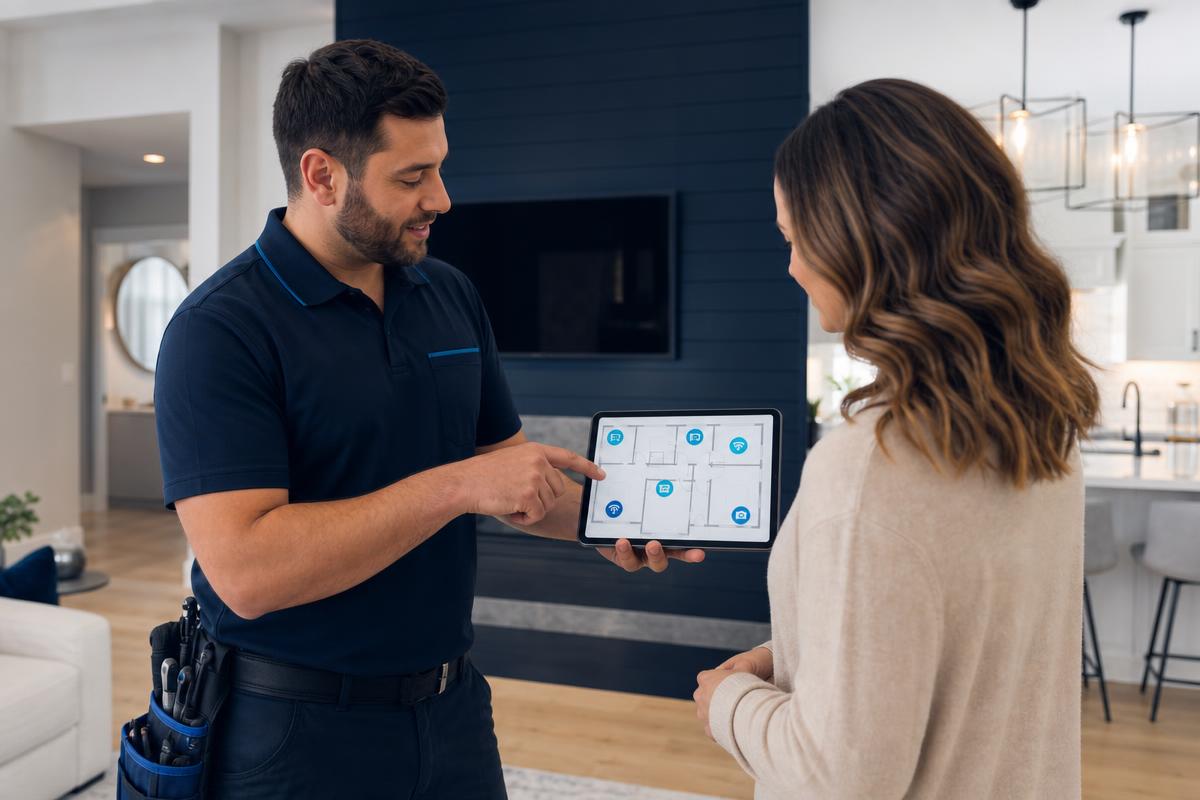
Before installation, UnifiedLink provides a written scope covering equipment, cable routes, device placement, exclusions, equipment ownership and warranty. It identifies where cameras and recording equipment will be located, what network connections are needed and which surfaces may require visible conduit or access openings. This gives the property owner an opportunity to confirm priorities before cables are installed. It also separates included work from assumptions about electrical service, internet performance, repairs or third-party systems. Site assessment timing depends on the service requested and the travel distance within or beyond Halton Region.
- Entrance, driveway and perimeter coverage review
- Lighting and night-image conditions assessed
- Proposed device locations documented before installation
- Recorder and network locations planned
- Written scope identifies exclusions and ownership
Camera Placement for Burlington Homes
Placement decisions should reflect what a homeowner needs to verify after an incident. A wide driveway overview can establish direction of travel, but a narrower entrance view is usually needed for useful facial detail. At front doors, cameras must account for porch columns, deep overhangs and seasonal decorations. Side-yard devices need angles that avoid fences filling most of the image. In Roseland and Millcroft, larger setbacks or mature landscaping may require separate views for the house and property approach rather than expecting one camera to cover both areas effectively.
Height is a balance between resistance to casual tampering and the image angle needed for identification. Cameras mounted excessively high often show the tops of heads, especially near doors or narrow walkways. Lower placements can provide better detail but must be positioned away from easy reach and accidental impact. We review eaves, brick courses, door frames and garage structures before selecting a mounting point. Existing coach lights and security lighting are considered because direct glare, insects and rapid exposure changes can reduce night performance even when the camera includes infrared illumination.
Neighbouring privacy is part of responsible placement in Burlington’s denser residential areas. The field of view should concentrate on the customer’s entrances, yard and access routes rather than adjacent windows or private outdoor spaces. Where a broad lens includes unnecessary areas, camera positioning and privacy masking can reduce what is displayed or recorded. Doorbell cameras and devices facing shared condo corridors may also be subject to condominium rules. Landlords and tenants should confirm who can authorize drilling, cabling and recording before the installation date, particularly where exterior walls or common areas are involved.
- Door views designed for facial detail
- Driveway coverage separated from entrance coverage
- Mounting heights balance detail and tamper resistance
- Privacy masking configured where appropriate
- Lighting glare checked at proposed angles
Exterior Mounting for Burlington Weather
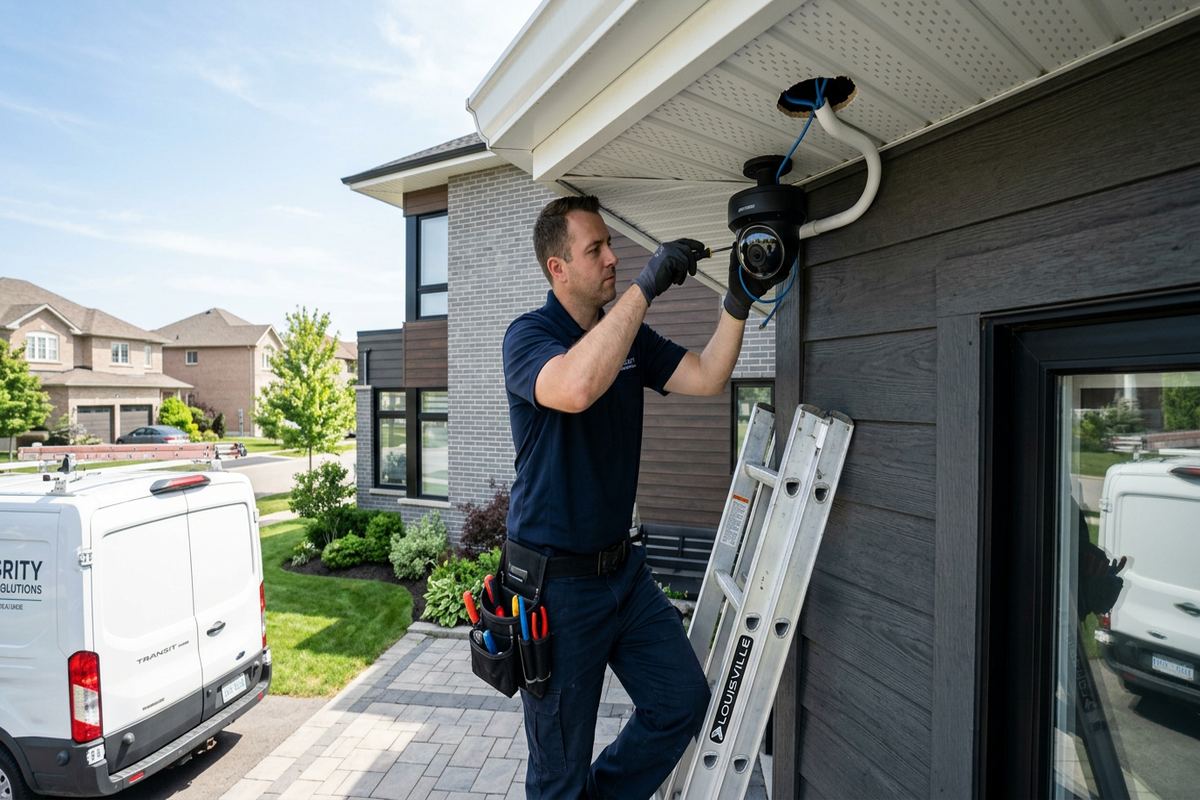
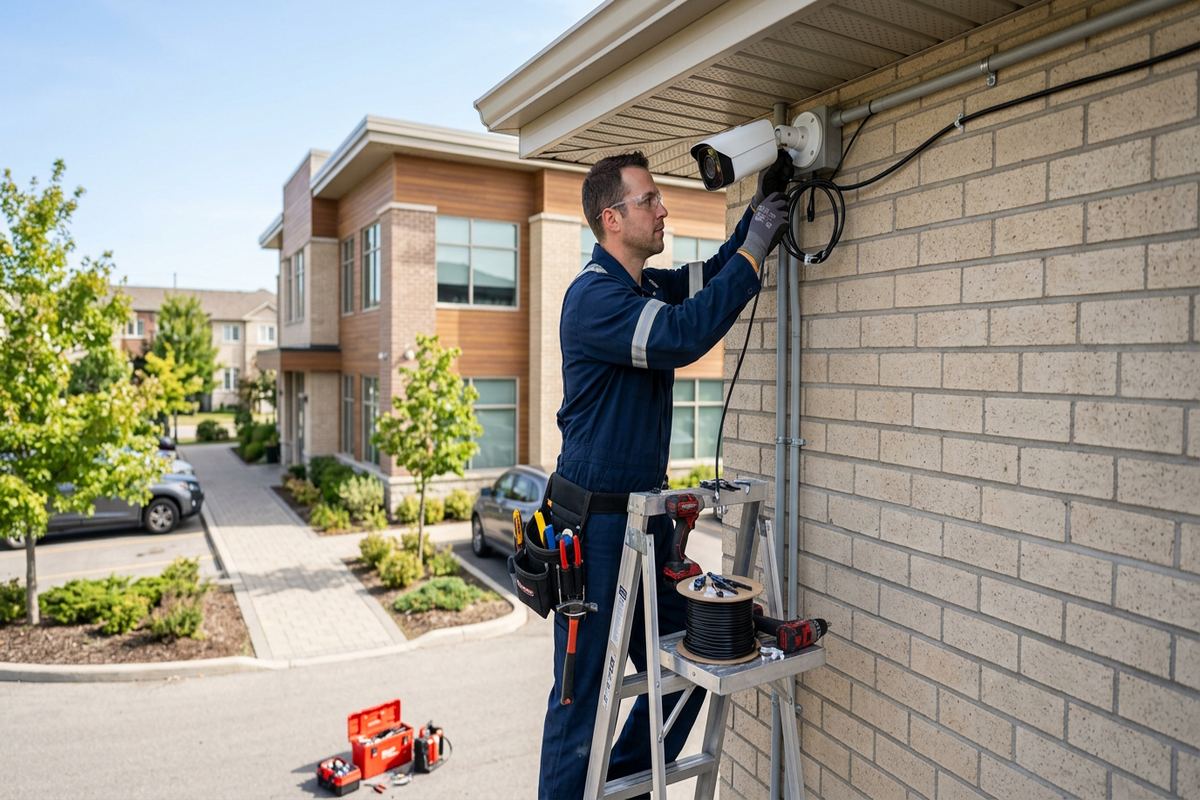
Southern Ontario winters place repeated stress on exterior camera mounts and cable entries. Freeze-thaw cycles can enlarge poorly sealed penetrations, while wind-driven rain can follow cables toward a wall opening. We use suitable exterior mounting methods, form drip loops where needed and seal penetrations according to the surface and exposure. Connections are kept inside protected junction points rather than left loose behind a camera. On Burlington lakefront properties, open exposure can make mounting orientation and weather protection especially important, even when the selected device itself is intended for outdoor use.
Masonry and frame construction require different fastening and cable-routing methods. Brick should be treated as a finished exterior surface, with mount locations selected to avoid unnecessary damage and unstable edges. Frame walls and soffits require confirmation that the device can be secured properly rather than attached only to thin cladding. Mid-century bungalows may provide attic routes near the eaves, although insulation, renovations and low roof clearances can restrict access. The selected path must protect the cable, preserve the building envelope and leave a neat transition between indoor and outdoor sections.
Camera performance can change with the seasons. Snow may reflect infrared light, bare branches can alter sightlines, and summer foliage may conceal an area that looked open during a winter assessment. Icicles, roof runoff and snow-clearing activity also affect mounting locations around garages and walkways. We plan views with these changes in mind and avoid placing devices where normal maintenance is likely to strike them. In Tyandaga or Aldershot, sloped lots and mature trees can create additional elevation differences, making an on-site review more reliable than selecting locations from photographs alone.
- Penetrations sealed for freeze-thaw exposure
- Drip loops added where cable entry requires them
- Mounts selected for masonry or frame walls
- Outdoor connections protected in suitable junction points
- Seasonal foliage and snow reflection considered
Burlington, Ontario
Home security camera installation in Burlington, scoped in writing first
Book a site assessment and get equipment, routes, exclusions, and warranty on paper before anything is installed.
Cabling and Network Design in Burlington
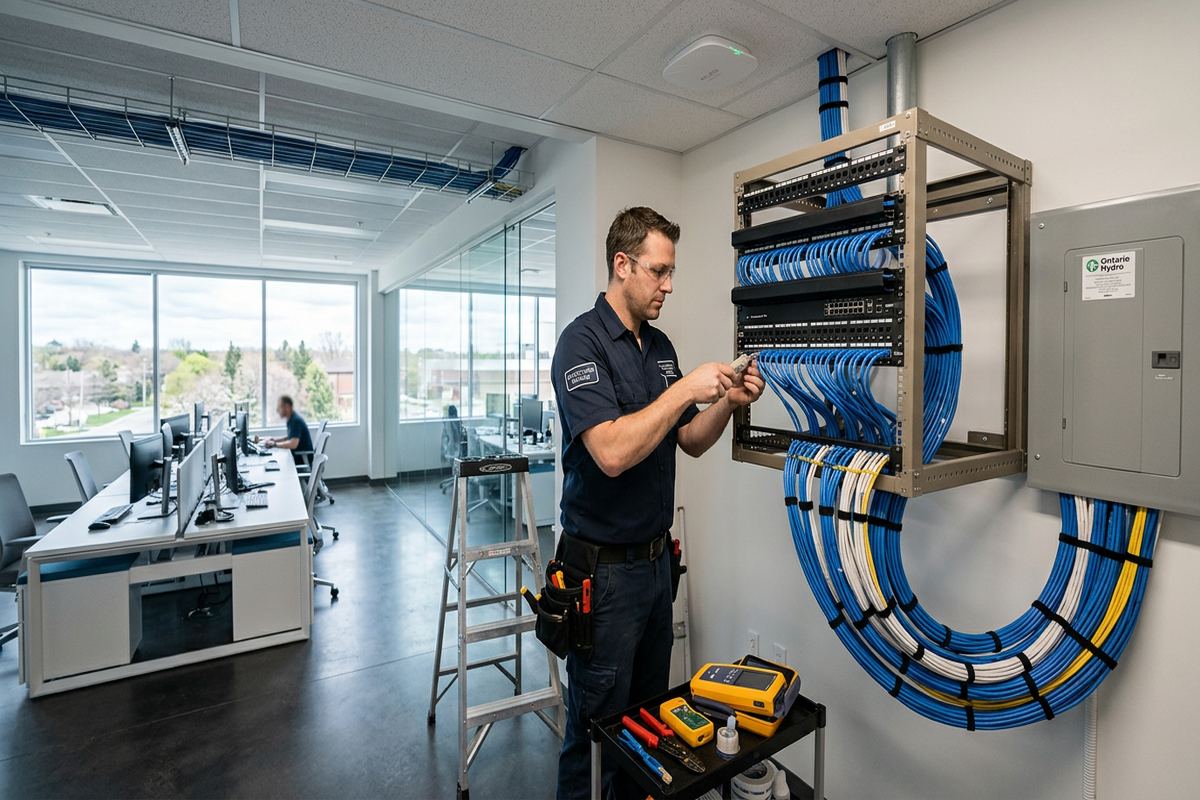
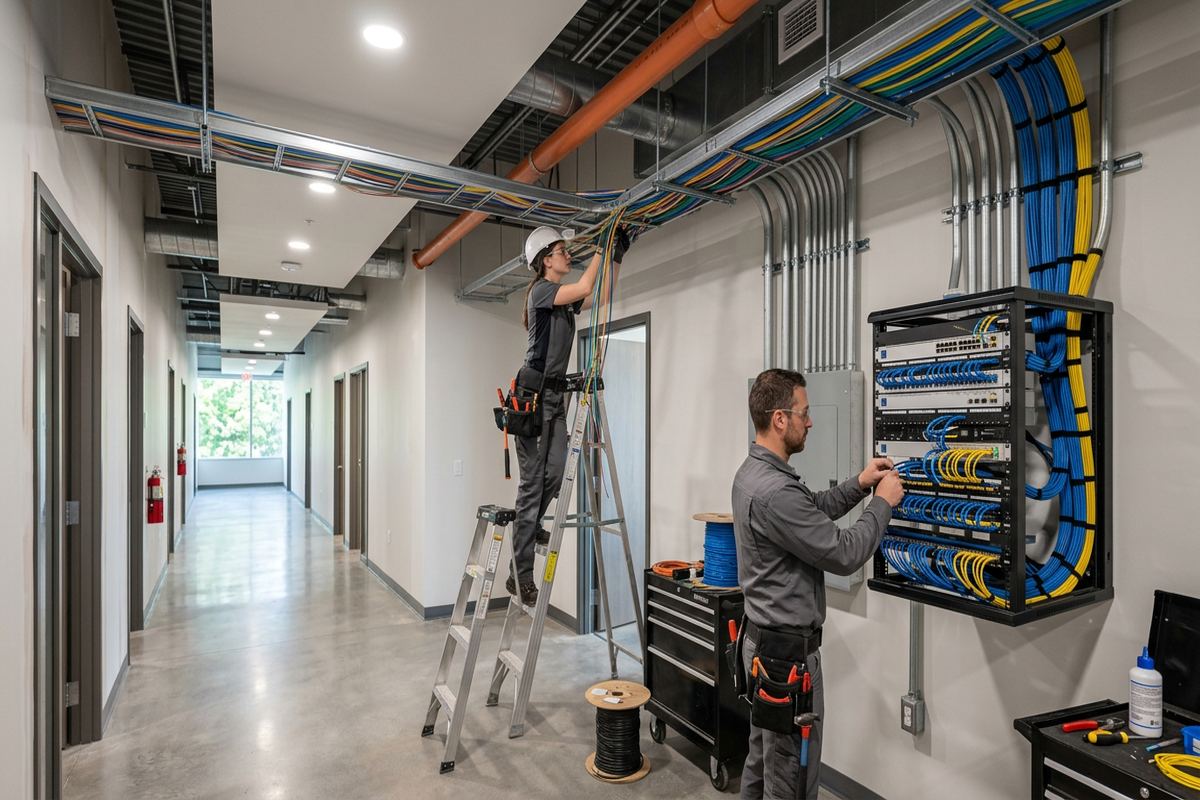
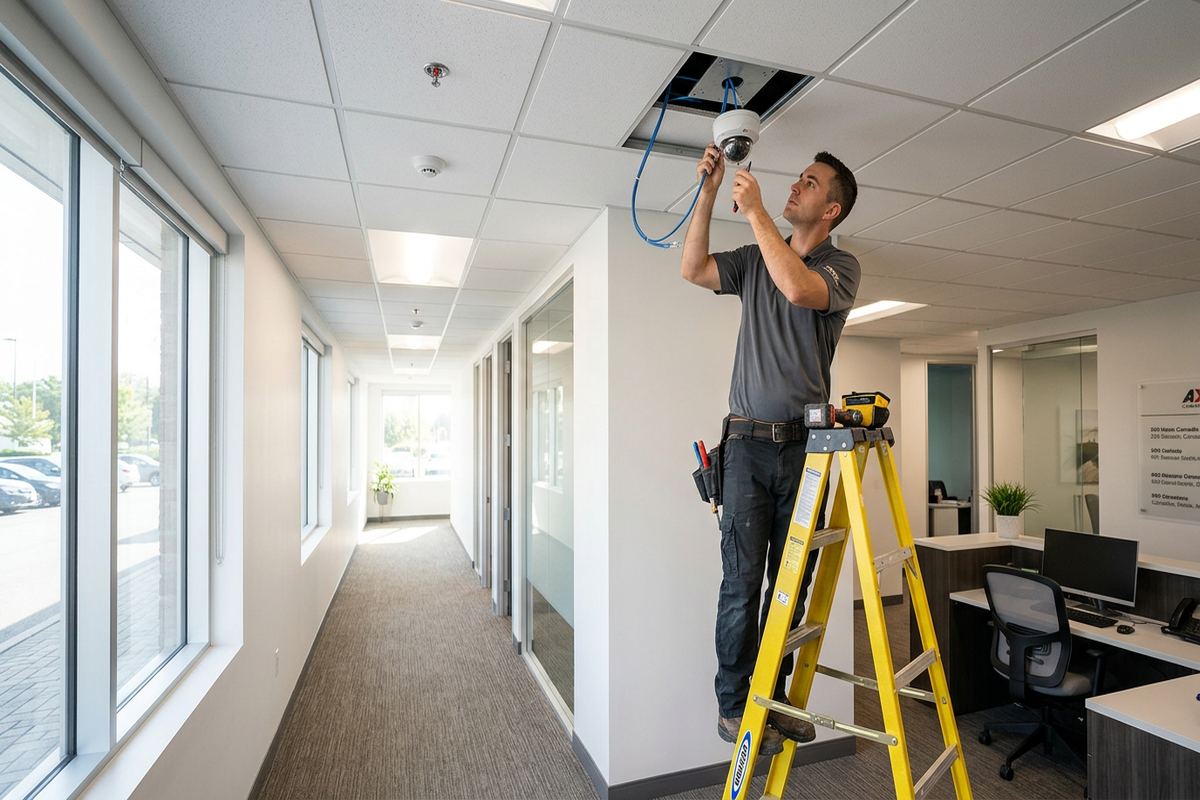
Wired cameras are commonly connected with dedicated low-voltage cable to a recorder or network switch. UnifiedLink installs continuous labelled cable runs so each camera can be traced at the equipment location and device end. Routes may pass through attics, unfinished basements, utility rooms or garages, depending on access and building construction. Where concealed routing is not practical, surface pathways or conduit can be discussed in the written scope. We avoid undocumented splices hidden in inaccessible spaces, since they complicate testing and can create intermittent faults that are difficult to isolate later.
Older Burlington homes may have renovations from several periods, making cable access less predictable than the floor plan suggests. Finished ceilings, fire blocking, additions and converted garages can interrupt an otherwise direct route. Newer construction may be equally constrained by spray foam, tightly packed insulation and completed basement finishes. The site assessment identifies likely pathways and access limitations before installation begins. If exploratory access, patching or work by another trade could be required, that condition is addressed in the scope rather than treated as an unspoken part of camera installation.
Network capacity matters when cameras share infrastructure with streaming, work-from-home devices, automation and guest Wi-Fi. We review the proposed camera bandwidth, switch ports, power delivery and connection between the recorder and router. A local recorder can continue capturing footage when internet service is unavailable, provided the cameras and recording network remain powered and connected. Remote viewing still depends on the customer’s internet connection and mobile service. Configuration includes secure account setup using the customer’s own credentials, rather than leaving long-term access tied to an installer-controlled email address or generic password.
- Continuous cable runs labelled at both ends
- Routes assessed through attics, basements and garages
- Power and switch capacity reviewed
- Recorder kept on the local network
- Customer-owned credentials used for remote access
Recording, Alerts and Image Quality
Recording settings should match the purpose of each camera and the available storage. Continuous recording provides a complete timeline, while motion-based recording can make review faster but depends on accurate event detection. A mixed approach may suit entrances, driveways and quieter perimeter areas differently. During configuration, we set schedules, recording modes and image parameters supported by the selected equipment. Retention is influenced by camera count, resolution, frame rate, compression, activity and storage capacity, so it should be estimated from the actual design rather than promised as a fixed number of days.
Alerts are most useful when they identify meaningful activity without notifying the user for every shadow, branch or passing headlight. Detection zones can focus on a walkway, porch, gate or vehicle approach, while excluding a busy street or neighbouring movement where the equipment allows. In Downtown Burlington, tighter lots and nearby pedestrian traffic often require careful zone boundaries. Sensitivity and object detection settings are configured on site, then may need adjustment after the system has observed normal daytime, nighttime and weather conditions. No analytic feature should be treated as a substitute for reviewing recorded video.
Night image quality depends on more than the resolution printed on a camera specification. Available light, infrared range, surface reflection, lens position and subject movement all influence usable detail. A white soffit close to the lens can reflect infrared illumination, while a dark yard beyond it remains underexposed. Bright signs and vehicle headlights can create the opposite problem. We test views after mounting and adjust angle, exposure or supplemental lighting recommendations where practical. The aim is to capture the intended area consistently, not simply produce an impressive still image under favourable daylight conditions.
- Continuous or event recording configured by area
- Detection zones reduce irrelevant motion alerts
- Retention estimated from the final system design
- Night views tested after mounting
- Mobile notifications configured with the customer
Security Cameras for Mixed Burlington Properties
Although the service is intended for homes, many Burlington properties combine residential and commercial considerations. A residence above or beside a business may share parking, entrances or network services. Small commercial plazas need views that distinguish tenant doors, delivery areas and common vehicle approaches without creating unnecessary coverage of neighbouring premises. Industrial units may require loading-door, yard and reception coverage, along with longer cable routes and protected equipment locations. These projects benefit from one documented plan that assigns each camera a clear purpose and identifies who will control recordings and user access.
Condominiums and managed properties require approvals before work affects common elements. Exterior walls, shared corridors, parking structures, balconies and some windows or door frames may fall under condominium control even when they appear to serve one unit. Burlington owners should obtain written permission and any installation requirements before drilling or running cable. Tenants need landlord authorization for permanent changes. UnifiedLink can document proposed device positions and routes for review, but the customer remains responsible for securing property approvals and confirming rules about recording shared spaces, audio and signage where applicable.
Lakefront homes, bungalows and newer subdivisions also differ in where recording equipment can be kept safely. A recorder should be accessible for service but not left in an obvious or easily disturbed location. Utility rooms, secure cabinets and suitable network spaces may work, provided ventilation, power and cable access are adequate. Damp basements, unconditioned spaces and crowded electrical areas can be unsuitable. For a plaza or industrial unit, equipment ownership and access should be especially clear when landlords, tenants or property managers share infrastructure. Those details are recorded in the written project scope.
- Residential and business entrances planned separately
- Condo and landlord approvals confirmed by customer
- Shared-space coverage reviewed for privacy
- Recorder locations checked for ventilation and access
- Equipment ownership documented in writing
Installation and Handover in Burlington
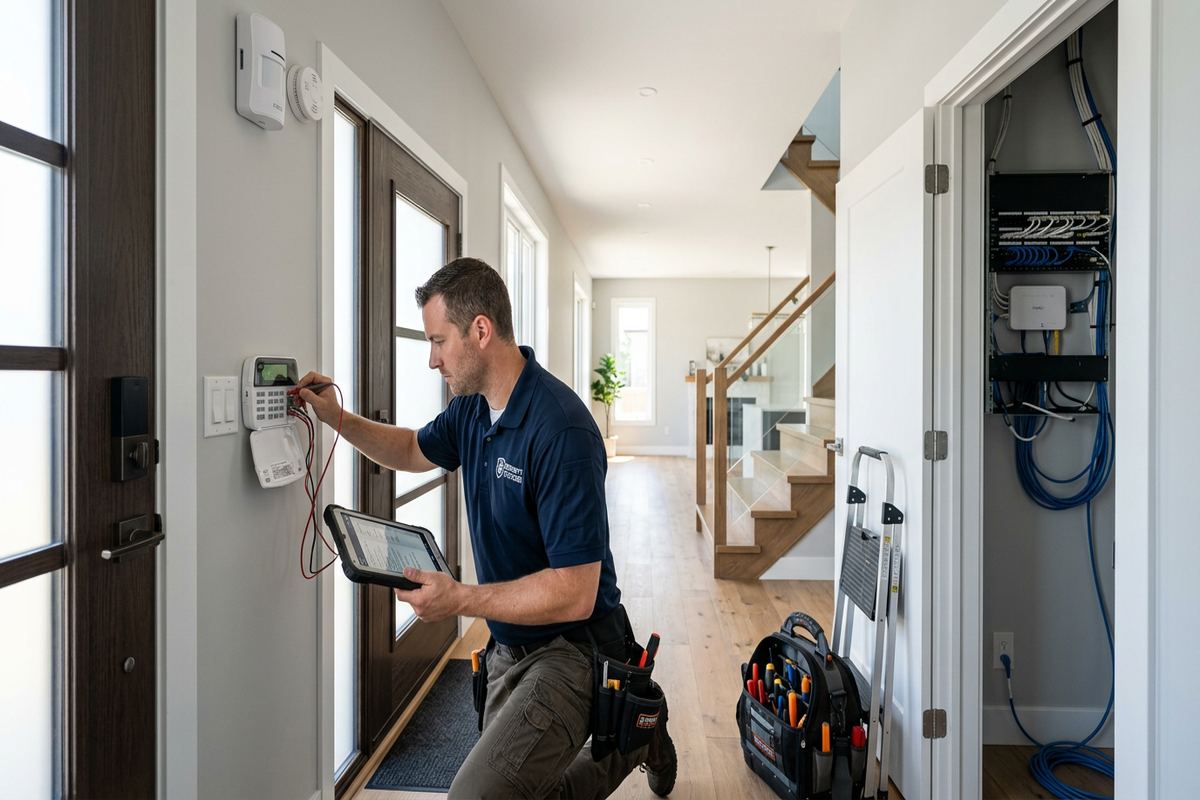
On installation day, device locations and cable routes are confirmed before permanent work starts. Cameras are mounted, cables are terminated and labelled, and network or recorder connections are tested on site. Each view is checked from the monitoring interface rather than judged only from the camera’s physical direction. Where work involves occupied homes, we coordinate access to rooms, attics, basements and garages identified in the scope. One accountable contractor manages the low-voltage installation, configuration and handover, reducing gaps between separate cabling, camera and network providers.
Handover includes showing the customer how to view live video, search recordings, export available clips and manage common notifications. Accounts are established with the customer’s own credentials, and authorized users can be added according to the platform’s capabilities. We also provide an as-built record identifying installed devices and cable information. The record is useful when a camera is moved, network equipment changes or another technician needs to understand the system later. Passwords should be stored by the customer using an appropriate secure method rather than written into general project documents.
Requests sent during business hours are answered the same day, while after-hours requests are answered the next business day. This response wording applies to initial contact, not a guaranteed installation or emergency attendance time. Site assessment timing depends on the requested service and travel distance. For Burlington projects, useful preparation includes identifying priority views, locating the internet equipment and recorder area, gathering condo or landlord permissions, and noting any planned renovations. Clear access to proposed cable paths helps the assessment establish a realistic scope without relying on assumptions about concealed construction.
- Locations reconfirmed before permanent mounting
- Every camera view tested on site
- Mobile and recorder functions demonstrated
- As-built cable and device record supplied
- One contractor handles cabling through handover
Maintaining a Burlington Camera System
A camera system should be checked periodically because buildings, landscaping and network conditions change. Owners can review whether lenses are clean, timestamps are correct, recordings can be searched and each device still shows the intended scene. Trees and shrubs may grow into a view, while a new light fixture can introduce glare. Router replacements, internet-provider changes and mobile phone upgrades can also affect remote access without stopping local recording. Testing export functions before footage is urgently needed helps confirm that the owner understands the process and that storage is operating as expected.
Exterior cameras in Burlington should be visually inspected after severe winter weather or nearby building work. The check should look for shifted angles, damaged conduit, loose junction covers and deteriorated sealing, without disturbing properly installed penetrations. Salt, dust, spider webs and water spotting can reduce image clarity, particularly around infrared-equipped cameras. Cleaning must follow the equipment manufacturer’s guidance to avoid scratching domes or damaging coatings. If a mount appears loose or water entry is suspected, the equipment should be assessed rather than repeatedly repositioned by force or covered with unsuitable sealant.
Future expansion is easier when the original installation is labelled and documented. Additional cameras may require recorder channels, storage, switch capacity, power budget and cable pathways beyond what the first design included. Changing to higher-resolution devices can also increase bandwidth and retention requirements. The as-built record provides a starting point for reviewing those effects. Whether the property is in Aldershot, Orchard, Roseland or another Burlington community, expansion should follow the same process as the original work: assess the site, define useful views, confirm infrastructure and document the revised scope before installation.
- Recording and playback checked periodically
- Lenses kept clear using approved methods
- Winter damage and shifted angles inspected
- Network changes reviewed for remote-access effects
- Expansion planned against recorder and switch capacity
Burlington neighbourhoods we cover
- Downtown Burlington
- Aldershot
- Alton Village
- Millcroft
- Roseland
- Tyandaga
- Orchard
Home security camera installation in Burlington — common questions
How many cameras does my Burlington home need?
The number depends on the entrances, property layout, desired identification areas and available cable routes. A Burlington bungalow with a front door, driveway and two side passages may need a different design from a larger lakefront property with detached buildings. The site assessment defines each required view first, then determines how many cameras are needed without adding devices that only duplicate coverage.
Can you install cameras on brick homes?
Yes. Many Burlington homes use brick or mixed masonry and frame construction. Mounting requires suitable fasteners, careful device placement and properly sealed cable entries. The route is planned to avoid unnecessary penetrations and unstable masonry edges. If a concealed route is not practical, an appropriate surface pathway or conduit option can be included in the written scope for approval before work starts.
Will the cameras work during an internet outage?
A properly designed local recorder can continue recording while the internet is unavailable, as long as the cameras, network equipment and recorder remain powered and connected locally. Remote viewing and mobile alerts generally require internet access. During a Burlington installation, UnifiedLink reviews the network arrangement and explains which functions are local, which depend on outside connectivity and what happens after service is restored.
Do I need condo or landlord approval?
Approval may be required when cameras, cable or mounting hardware affect exterior walls, balconies, shared corridors or other common elements. Burlington condo owners should check their corporation’s rules and obtain written permission before installation. Tenants should receive landlord authorization for drilling and permanent cabling. UnifiedLink can provide proposed locations and routes for review, but the customer is responsible for obtaining the required permissions.
How long will recorded footage be kept?
Retention depends on the number of cameras, resolution, frame rate, compression, recording schedule, scene activity and installed storage. It cannot be determined accurately from camera count alone. After the Burlington system design is established, retention can be estimated using the proposed settings. Actual results can vary as activity changes, so playback and available history should be checked after the system has operated normally.
Can I view my Burlington cameras on my phone?
Yes, when the selected system supports mobile access and the property has a suitable internet connection. UnifiedLink configures access on site using the customer’s own credentials and demonstrates live view, playback and available notifications. The customer controls authorized users. Mobile performance depends on internet and cellular conditions, while local recording can remain separate from remote access when the recorder and cameras continue operating on the property network.
Coverage in Burlington is confirmed against the address before we quote. See everything we install in Burlington or the province-wide home security camera installation page.