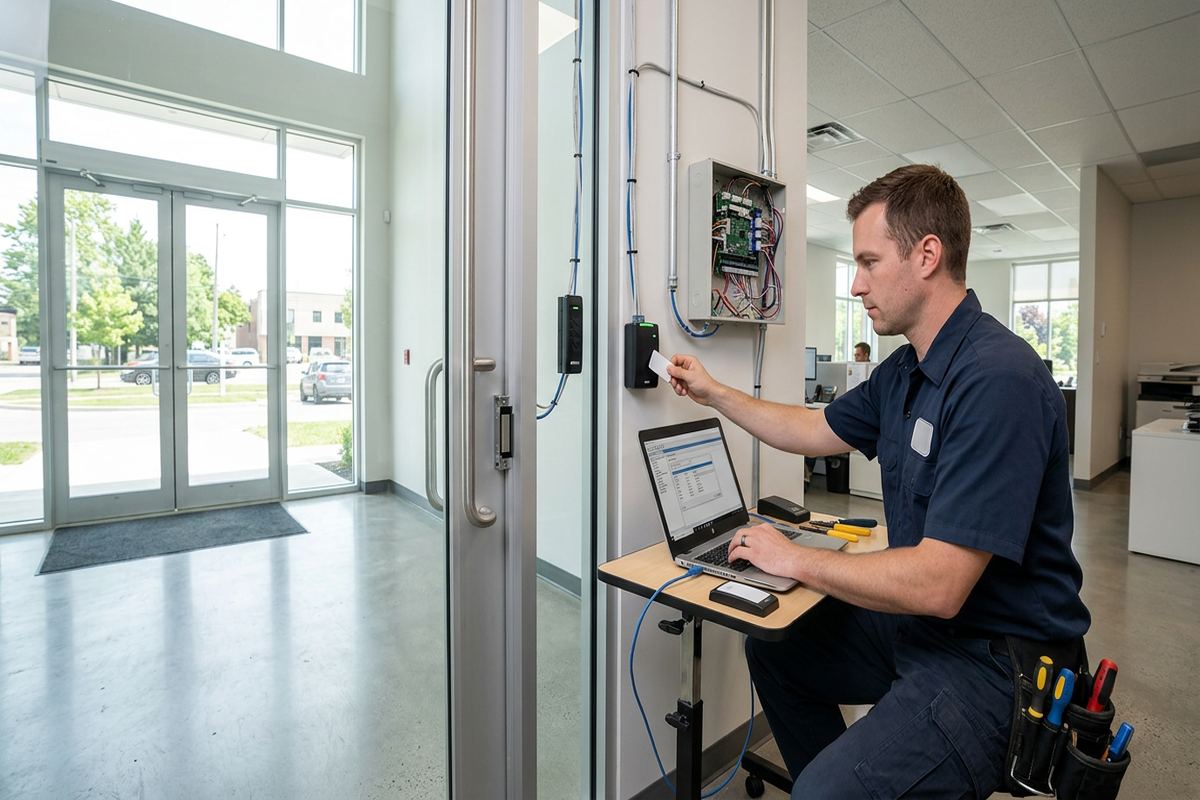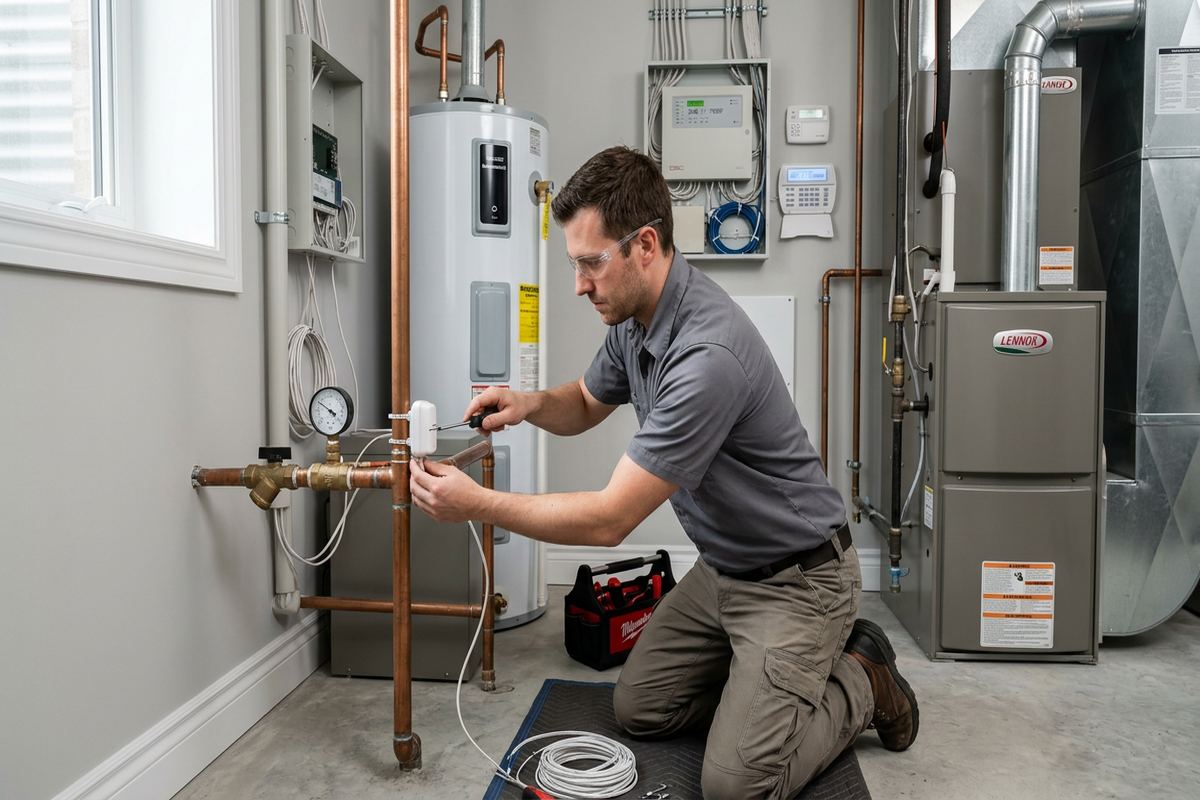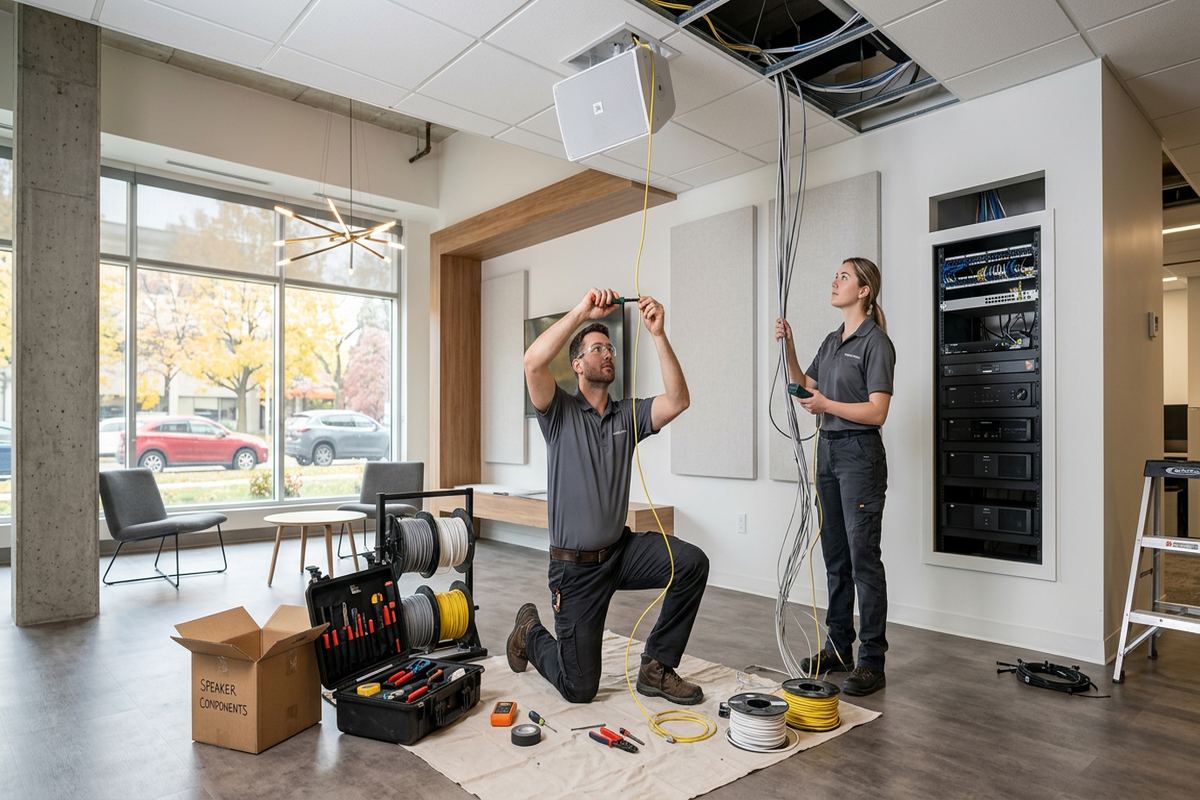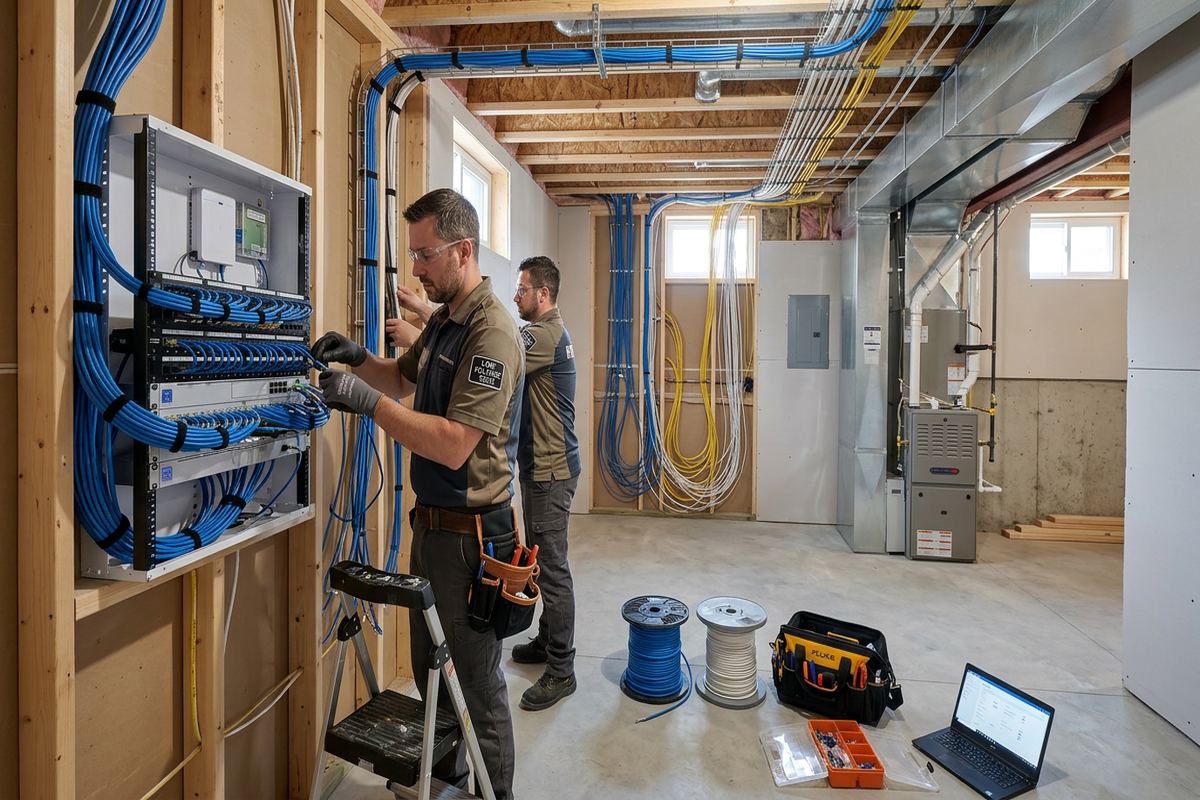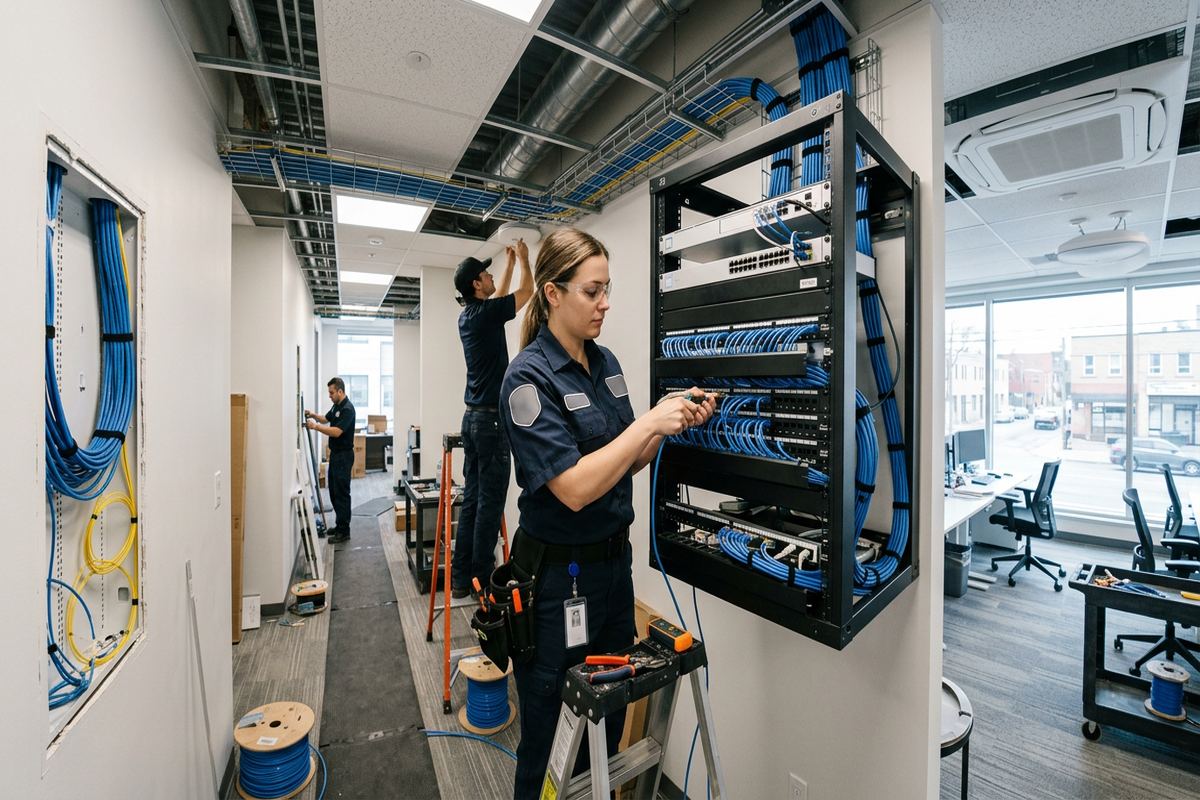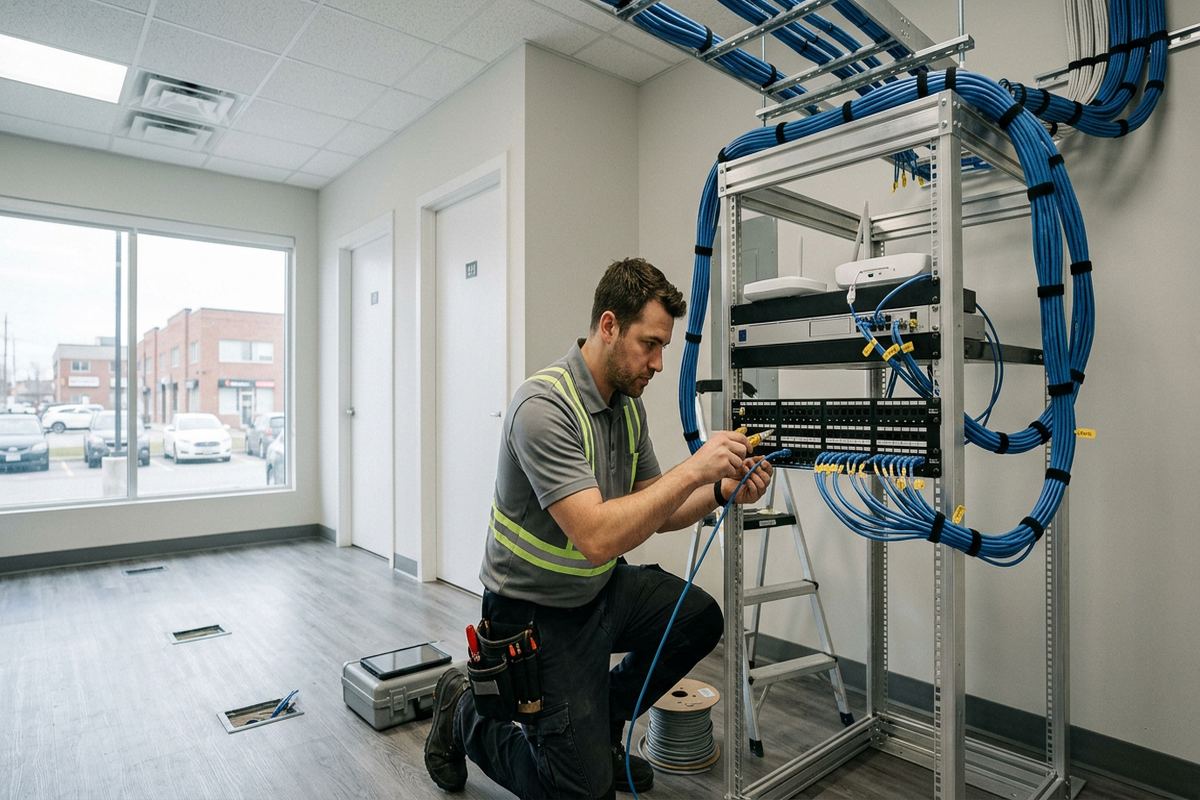
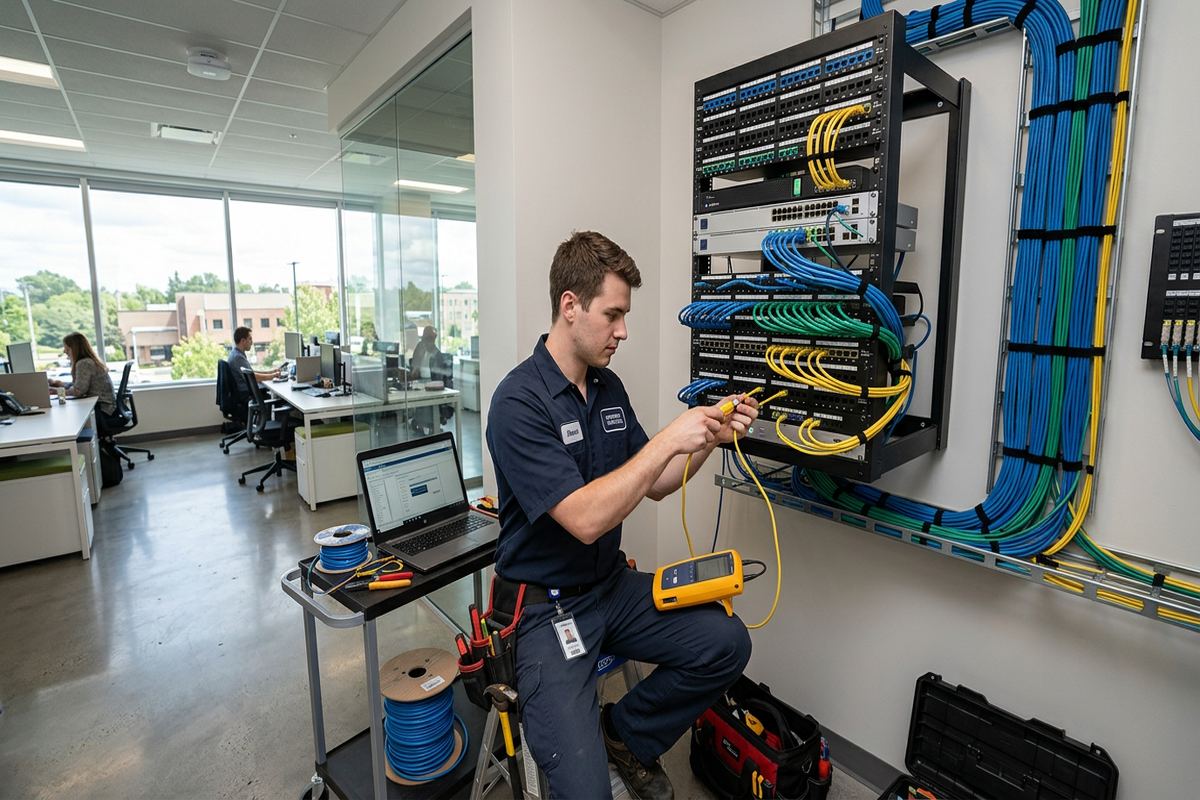
UnifiedLink installs structured cabling for Burlington homes, offices, shops and industrial units. We plan cable routes, install continuous labelled runs, terminate and test each connection, then provide a clear handover record. The result is an organized physical network ready for internet service, Wi-Fi access points, computers, cameras, phones, displays and other connected equipment.
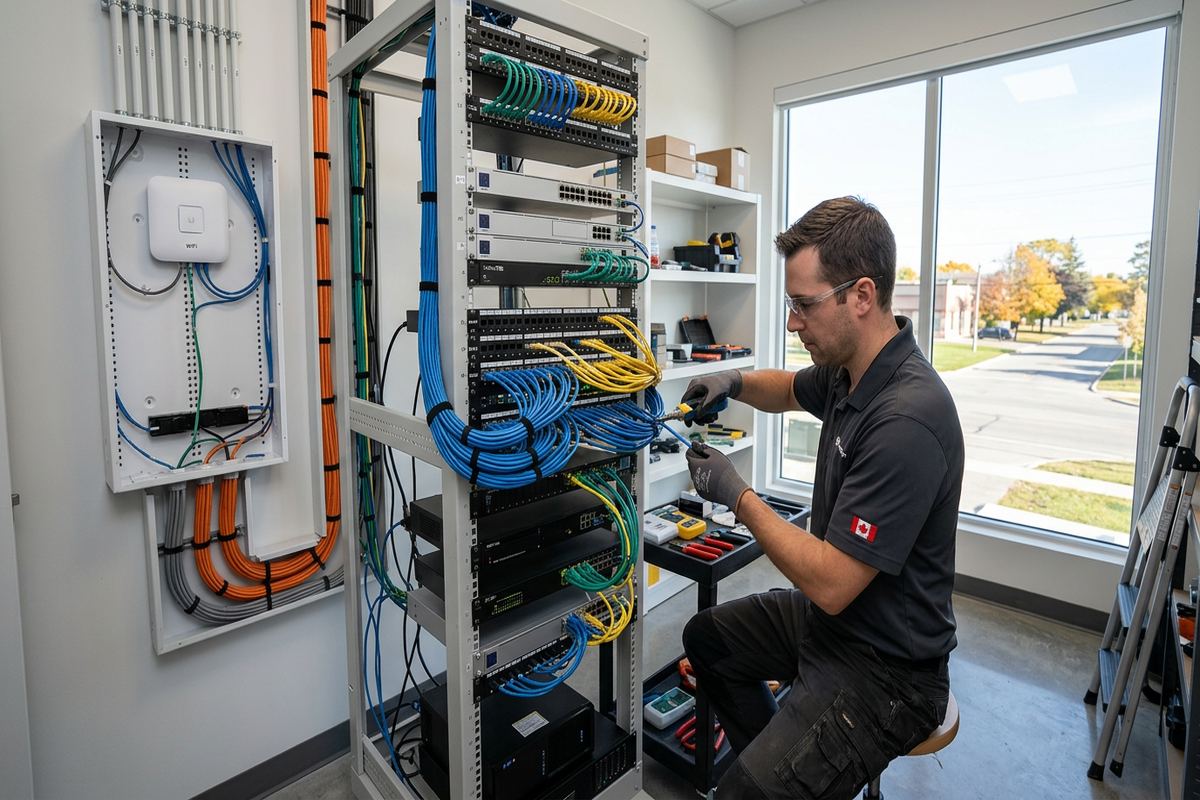
Structured Cabling for Burlington Properties
A structured cabling system gives network devices a permanent, organized path back to a central location. In Burlington, that may mean connecting a lakefront home office, a renovated bungalow, a commercial plaza unit or a larger industrial workspace. UnifiedLink plans the outlet locations, cable routes, rack or cabinet position, terminations and labelling as one coordinated installation. Each run is installed continuously between endpoints wherever practical, rather than being joined behind walls. This approach supports easier testing, troubleshooting, equipment changes and future expansion without relying on undocumented cables or improvised connections.
Local building construction has a direct effect on the cabling method. Mid-century bungalows in Roseland or Aldershot may have finished basements, tight attic spaces, plaster, masonry fireplaces or additions built at different times. Newer homes in Alton Village and Orchard often have more accessible utility areas, but insulation, vapour barriers and finished ceilings still restrict routes. Small commercial plazas can include concrete block walls, shared ceiling spaces and landlord-controlled service rooms. A site assessment identifies these conditions before pricing, allowing cable paths and restoration expectations to be documented instead of assumed.
Structured cabling can carry data for computers, wireless access points, VoIP phones, security cameras, access control components, audio systems and network-connected displays. The cable type and termination hardware should match the application, distance, environment and connected equipment. Copper Ethernet is common within buildings, while fibre may be appropriate between separate structures, network rooms or electrically noisy areas. UnifiedLink defines which cables, jacks, patch panels, cabinets and pathways are included. Equipment ownership, exclusions and warranty details are also recorded in the written scope before installation work begins.
- Home and business network cabling
- Copper Ethernet and fibre options
- Patch panels, jacks and cabinets
- Routes documented before installation
- Connections labelled at both ends
Planning Cable Routes in Burlington
Good route planning starts with the devices people use, not simply with the nearest unfinished wall. During a Burlington site assessment, UnifiedLink reviews modem or service-entry locations, network equipment, desk positions, televisions, access points, cameras and possible future devices. Routes are then considered against joist direction, attic access, basement finishes, fire separations and electrical infrastructure. The objective is to keep runs serviceable, protect cable from damage and avoid unnecessary openings. Device placement and cable routing are documented in the written scope, along with areas where access panels or limited restoration may be required.
Masonry and frame construction need different installation techniques. A wood-frame wall may permit concealed routing from a basement or attic, provided blocking, insulation and other obstructions allow it. Brick, poured concrete and concrete block usually require surface pathways, carefully selected penetrations or access from an adjacent framed wall. In Downtown Burlington commercial spaces, an exposed ceiling can simplify distribution but still requires orderly support and separation from power. Lakefront properties may also need closer review of damp areas and exterior walls before selecting pathways, hardware and suitable cable jackets.
Existing cabling is checked before anyone assumes it can be reused. A wall jack may be connected with older telephone cable, split between rooms, damaged during renovations or left unterminated above a ceiling. Labels can also be missing or incorrect. UnifiedLink traces accessible runs and determines whether they suit the intended network connection. Reuse may be practical when the cable category, condition, route and termination are appropriate. Otherwise, replacement is included in the proposed scope. This prevents an organized new network from depending on hidden links that cannot be verified or maintained.
- Device locations reviewed first
- Concealed and surface routes considered
- Electrical separation maintained
- Existing cables traced where accessible
- Openings and exclusions documented
Cabling Burlington Homes and Renovations
Home networks increasingly need wired connections beyond a single office. A Burlington installation may include ceiling drops for Wi-Fi access points, Ethernet at televisions, connections for workstations, camera runs and spare cables to practical expansion points. In a mid-century bungalow, the central network location is often chosen around basement access and incoming services. In a multistorey home, several pathways may need to converge at a utility room or cabinet. UnifiedLink balances concealed routing with access, ventilation, cable length and the ability to replace network equipment without disturbing finished living areas.
Renovation timing can make a major difference to the finished result. When walls or ceilings are open, cable can be supported, separated and routed more directly before insulation and drywall are installed. For occupied homes in Millcroft, Tyandaga or Orchard, routing may instead use unfinished mechanical rooms, closets, attics, existing conduits or carefully placed surface raceway. UnifiedLink coordinates the cabling scope with the homeowner or contractor, but does not assume another trade will supply pathways or complete terminations. Responsibilities and installation limits are stated clearly before work starts.
Condominiums and rental properties require an approval check before drilling, opening common walls or placing equipment outside the unit. A condominium corporation may control risers, corridor ceilings, telecommunications rooms, exterior walls and penetrations through rated assemblies. Landlords may also specify acceptable routes, restoration methods or ownership of installed cabling. Burlington customers should obtain the necessary written permission before the installation date. UnifiedLink can describe the proposed work and device locations for review, while the customer remains responsible for securing approvals unless the written scope expressly assigns that coordination elsewhere.
- Home offices and entertainment locations
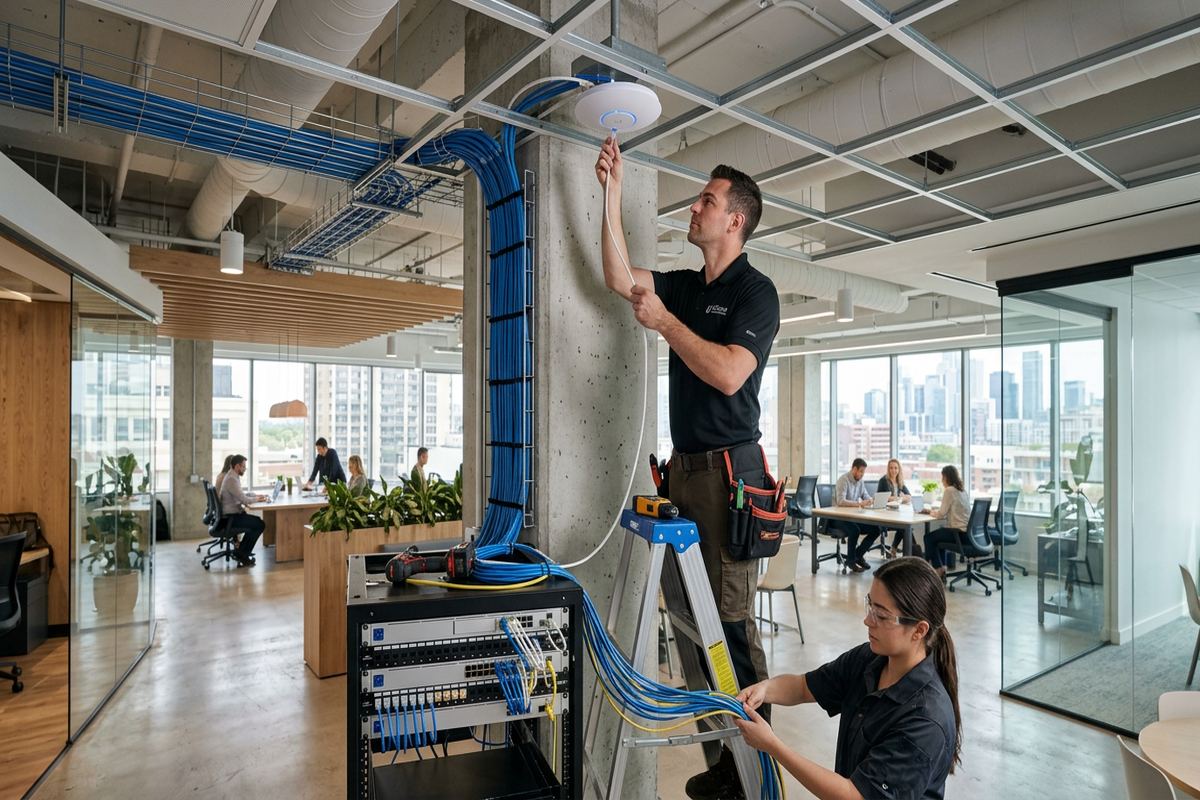
- Ceiling drops for Wi-Fi access points
- Renovation and retrofit routing
- Condo requirements considered
- Spare runs for planned expansion
Burlington, Ontario
Structured cabling installation in Burlington, scoped in writing first
Book a site assessment and get equipment, routes, exclusions, and warranty on paper before anything is installed.
Commercial Cabling in Burlington
Small commercial plazas make up a significant part of Burlington’s local project mix. These spaces often change between retail, office, clinic or service uses, leaving behind cables from several previous occupants. UnifiedLink identifies active and abandoned runs, plans a suitable network location and installs labelled connections for desks, payment systems, printers, phones, access points and other approved devices. Cable supports and pathways are selected for the ceiling and wall construction. The completed layout is intended to be understandable to the customer rather than dependent on unexplained bundles above ceiling tiles.
Industrial units and mixed office-warehouse spaces introduce longer routes, high ceilings and greater exposure to physical damage or electrical interference. Network cables may need dedicated supports, conduit, armoured pathways or fibre between areas, depending on the environment. Equipment locations must also remain reachable for maintenance without interfering with loading, storage or production activities. UnifiedLink reviews the actual operating space before proposing a method. The written scope identifies cable types, routes, termination points and any access equipment or pathway work included, so site responsibilities are clear before installation begins.
Tenant projects require coordination with both business operations and property rules. A Burlington landlord may restrict roof penetrations, shared service-room access, exterior cable, core drilling or attachments to structural elements. Work above a suspended ceiling may also encounter fire separations or services belonging to neighbouring units. UnifiedLink documents the intended routes and flags approvals that must be obtained. Scheduling can be planned around reasonable access requirements, but concealed conditions may still require a revised route. Any material scope change should be reviewed before additional work proceeds rather than handled as an undocumented field decision.
- Retail and professional office cabling
- Industrial unit network distribution
- Tenant and landlord coordination
- Organized rack and cabinet layouts
- Abandoned cable review
Exterior and Between-Building Cabling
Exterior network routes must account for Burlington winters, precipitation and repeated freeze-thaw cycles. Indoor cable should not be exposed outside simply because the route is short. The installation method may require outdoor-rated cable, conduit, drip loops, suitable fittings and sealed entries selected for the wall assembly. Penetrations must be positioned to reduce water entry and avoid creating a path into insulation or finished interiors. UnifiedLink reviews mounting surfaces and transitions before installation, especially on lakefront homes where exposed elevations may face persistent wind and moisture conditions.
Brick, siding, concrete and metal cladding each require compatible fastening and sealing methods. A penetration through brick is not treated like one through a framed wall, and attachments should not rely on weak mortar, loose trim or unsupported conduit. Cable bends and entry points must also remain within the limits of the selected product. Where a route crosses an exterior wall, UnifiedLink considers drainage direction, serviceability and the condition of the mounting surface. Existing deterioration or inaccessible cavities may require another route or preparatory work outside the cabling scope.
Separate buildings such as detached garages, workshops or neighbouring commercial sections need additional planning. Copper data cable between structures can be affected by distance, grounding conditions and electrical potential differences, making fibre a useful option in many circumstances. Aerial and underground routes also require suitable pathways, clearances and property approval. UnifiedLink assesses the endpoints and available conduit before recommending a connection method. Trenching, excavation, utility locating or civil work is included only when specifically stated. The handover record identifies the installed medium, route and termination points for future service.
- Outdoor-rated materials where required
- Wall entries sealed for conditions
- Brick and siding methods assessed
- Fibre considered between buildings
- Exterior routes recorded at handover
Network Rooms, Racks and Terminations
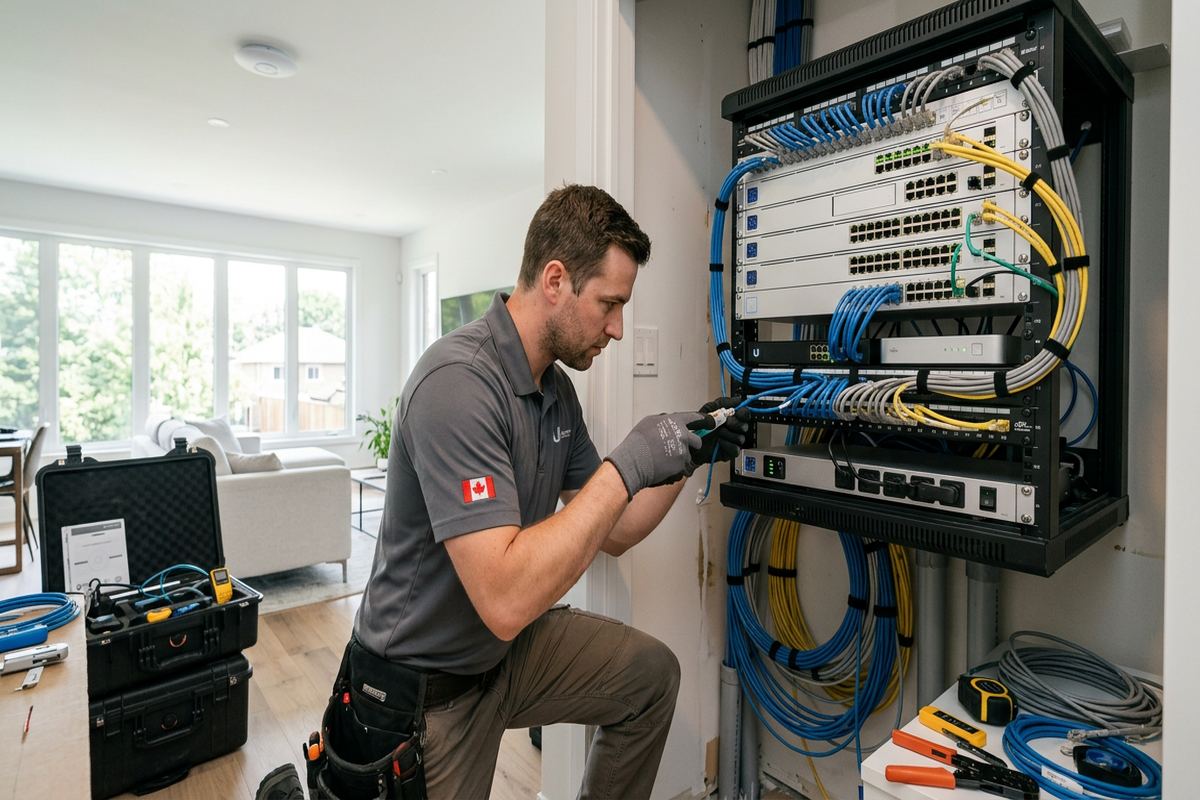
The central termination point should support both present equipment and routine maintenance. In Burlington homes, a wall-mounted enclosure, backboard or compact rack may fit near the service entry, provided the area is dry, ventilated and accessible. Businesses may need a larger cabinet with patch panels, cable management and space for switches or other network devices. UnifiedLink reviews mounting structure, nearby power and cable approach paths. The scope distinguishes between supplied cabling hardware and customer-owned network equipment, preventing uncertainty about what remains with the property after the installation is completed.
Consistent termination and labelling make the system practical to operate. Horizontal cable runs are landed on specified jacks or patch panels and labelled at both ends using a logical identifier. Patch cords can then connect the permanent cabling to switches, computers or other equipment without changing the building cable. Excessively tight bends, unsupported bundles and loose cable across equipment are avoided. Where existing racks are reused, UnifiedLink checks available capacity and general condition. Reorganization of unrelated legacy equipment is included only if it appears in the written scope, not assumed as part of new runs.
Power, heat and physical access influence equipment reliability even though they are not data-cabling functions. A cabinet placed in a damp corner, crowded mechanical space or sealed cupboard can make service difficult and may expose electronics to unsuitable conditions. Network switches and power supplies also need an appropriate electrical source provided by a qualified electrical contractor where new line-voltage work is required. UnifiedLink coordinates device positioning around these constraints and identifies dependencies. The final arrangement keeps patching visible, labels readable and customer-owned equipment accessible without pulling on permanent cable or disturbing nearby building services.
- Patch panels and wall jacks
- Readable endpoint identifiers
- Rack and cabinet planning
- Customer equipment ownership documented
- Cable management for service access
Testing and Handover in Burlington
Testing confirms whether each installed connection is correctly terminated and mapped to its intended endpoint. UnifiedLink tests the completed runs using methods appropriate to the cable and agreed scope, then corrects installation issues found within its work. Basic connection testing is different from formal performance certification, so the required test standard should be established before pricing if a consultant, landlord or corporate policy demands specific reports. Burlington commercial customers should provide those requirements early. This avoids discovering at handover that a project requires documentation or test equipment that was not included in the original installation scope.
On-site configuration can connect approved network components and confirm that designated outlets operate with the available equipment. Internet speed, however, also depends on the service provider, modem, router, switches, Wi-Fi conditions and connected device capabilities. Structured cabling addresses the permanent physical links but cannot correct every network or provider issue. UnifiedLink separates cabling faults from configuration or service limitations during commissioning. When customer accounts or managed devices are involved, the system is handed over using the customer’s own credentials rather than installer-controlled accounts that could create avoidable access problems later.
Handover includes an as-built record showing the installed runs and their identifiers, based on the agreed project scope. The record gives the customer a useful reference for patching, troubleshooting and future additions. Any approved route changes made during installation are reflected so the document represents the completed work rather than only the initial plan. UnifiedLink also reviews relevant equipment locations and ownership details with the customer. For Burlington properties with tenant turnover or multiple service providers, keeping this record with building documents can reduce confusion when another person needs to understand the network.
- Installed runs tested on site
- Test requirements agreed in advance
- Configuration with customer credentials
- As-built cabling record supplied
- Route changes documented
Arranging a Burlington Cabling Project
A useful request begins with the property type, address area, intended devices and approximate number of connections. Photos of the network location, unfinished areas, ceiling construction and possible routes can help establish what needs to be assessed, but they do not replace an on-site review where building conditions affect the work. Burlington projects may differ substantially between a Roseland bungalow, an Alton Village home and a unit in a commercial strip. UnifiedLink conducts a site assessment before pricing so the proposed installation reflects actual access, construction and operational requirements.
Following the assessment, the written scope covers equipment, cable types, routes, device placement, exclusions, ownership and warranty. It also identifies assumptions such as clear access, customer-supplied equipment, landlord permission or pathways provided by another trade. Customers can review these details before authorizing the project. If concealed obstructions or changed requirements affect the agreed method, the implications are discussed rather than silently altering the installation. One accountable contractor manages the defined low-voltage work, giving the customer a clear point of contact for installation, configuration, testing and the final project record.
Requests sent during business hours are answered the same day, while after-hours requests are answered the next business day. Site assessment timing depends on the service and travel distance. Before the visit, customers should identify restricted rooms, parking or loading arrangements, alarm procedures and permitted work periods. Commercial tenants should confirm access to shared telecommunications spaces, and homeowners should move stored items away from likely utility areas when practical. These preparations help the Burlington assessment focus on viable routes and equipment placement without implying that a final price can be established before conditions are reviewed.
- Site assessment before pricing
- Written equipment and routing scope
- Exclusions and ownership made clear
- One accountable low-voltage contractor
- Business-hour requests answered same day
Burlington neighbourhoods we cover
- Downtown Burlington
- Aldershot
- Alton Village
- Millcroft
- Roseland
- Tyandaga
- Orchard
Structured cabling installation in Burlington — common questions
What cable type should I install in my Burlington property?
The correct cable depends on device speed, run length, pathway, environment and future plans. Copper Ethernet is common for outlets, access points and cameras, while fibre may suit separate buildings, long routes or electrically noisy areas. UnifiedLink reviews the property before specifying cable. The written scope identifies the proposed type, terminations and intended use rather than applying one cable choice to every Burlington installation.
Can you add network cabling without opening every wall?
Often, but the available method depends on the building. Burlington bungalows may offer basement or attic routes, while finished multistorey homes can require closets, existing conduit or surface raceway. Masonry walls may also limit concealed access. UnifiedLink plans practical routes during the site assessment and documents expected openings or visible pathways. Concealed installation is not promised until the relevant wall, ceiling and access conditions have been reviewed.
Do I need condo, landlord or property-manager approval?
Approval is commonly required when work affects common elements, exterior walls, shared service rooms, rated assemblies or building-owned pathways. Burlington condominium corporations and commercial landlords may have their own forms, contractor rules and permitted work periods. Customers should obtain written permission before installation. UnifiedLink can provide the proposed routes and device locations for review, but approval responsibilities remain with the customer unless the written scope states otherwise.
Can existing cables in my Burlington building be reused?
Existing cable can sometimes be reused after its type, condition, route and terminations are checked. Older telephone wiring, split cables, damaged runs or unidentified links may not support the intended network. UnifiedLink traces and tests accessible cabling where included in the scope. If a run cannot be verified or does not suit the application, replacement is recommended rather than building a new network around an uncertain connection.
Will you test and label every installed connection?
Yes. New runs within the agreed scope are labelled at their endpoints and tested using the method specified for the project. If a Burlington business requires formal certification reports for a consultant, landlord or internal standard, that requirement must be identified before pricing because it differs from basic connection testing. The handover also includes an as-built record showing the installed run identifiers and relevant termination locations.
How quickly can a Burlington site assessment be arranged?
Requests submitted during business hours are answered the same day, and after-hours requests are answered the next business day. The timing of a Burlington site assessment depends on the service and travel distance. Providing the property type, neighbourhood, approximate outlet count, intended devices and access restrictions helps define the visit. Pricing follows the assessment because cable routes, construction, ceiling access and equipment requirements must first be reviewed.
Coverage in Burlington is confirmed against the address before we quote. See everything we install in Burlington or the province-wide structured cabling installation page.