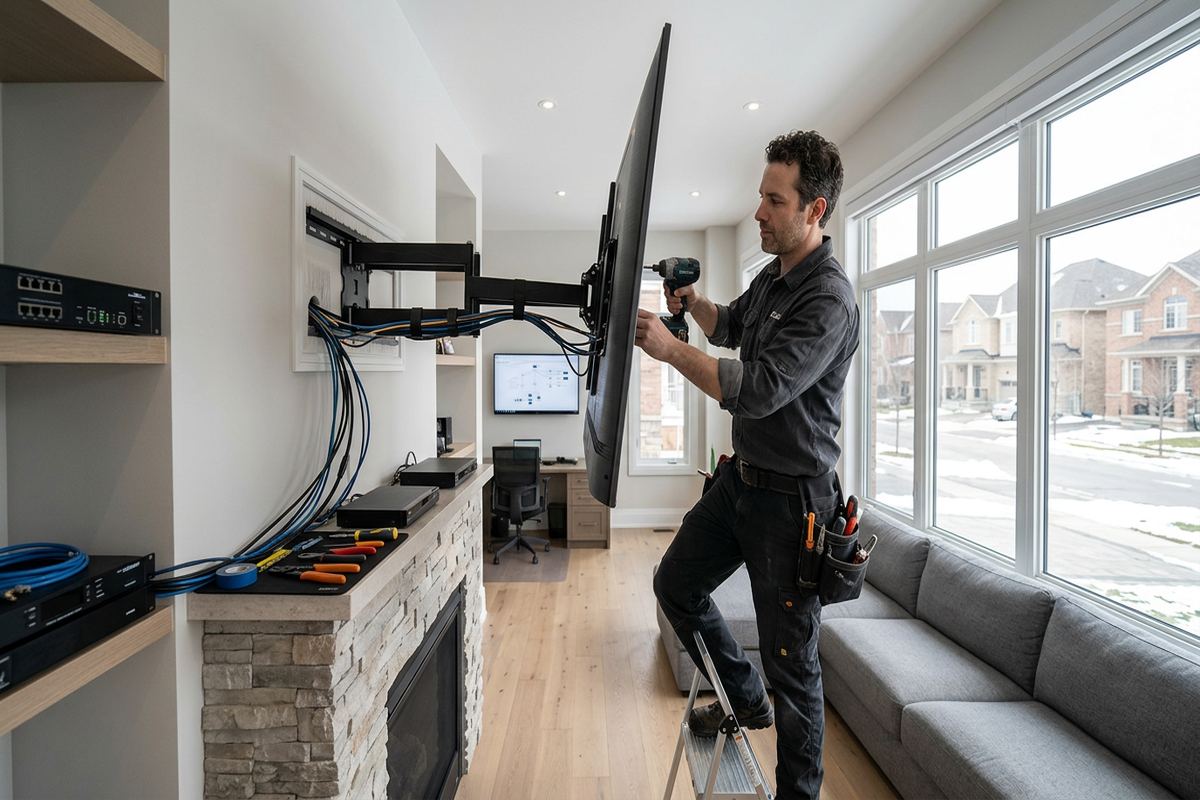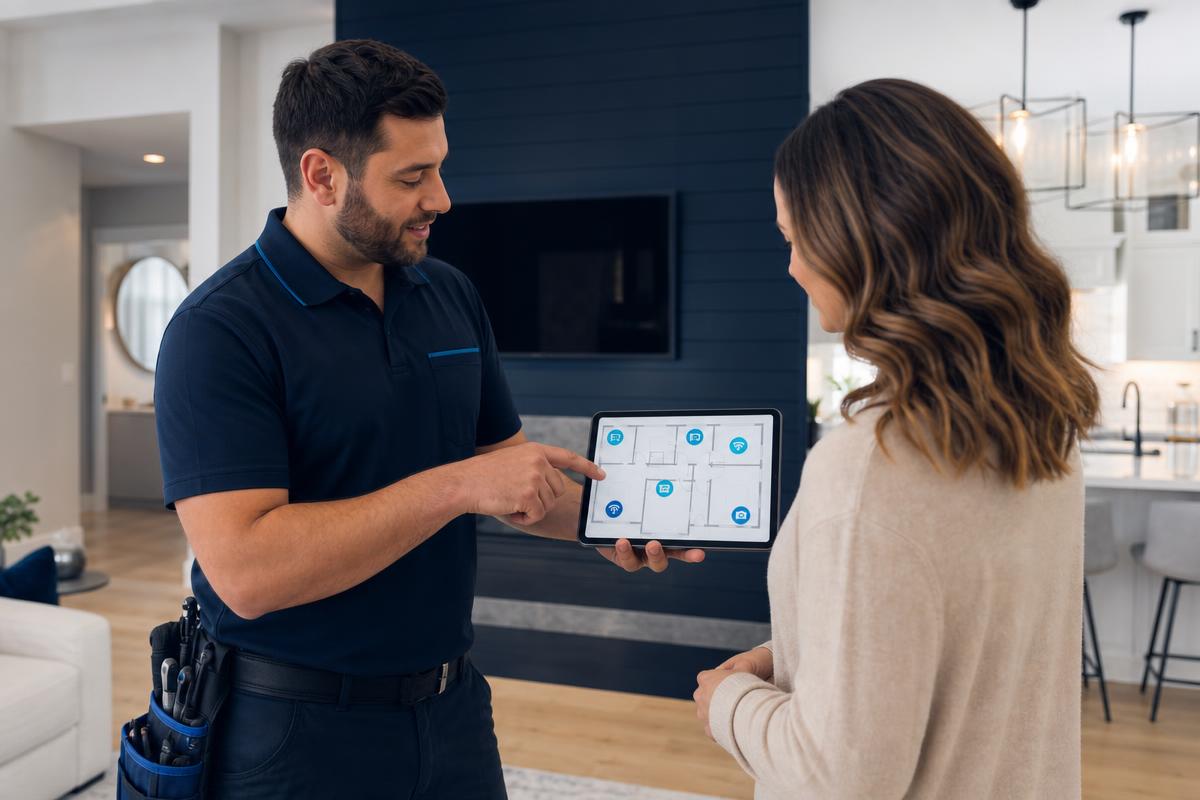
UnifiedLink installs commercial alarm systems for Burlington shops, offices, plazas and industrial units. We assess the property, document the scope and install intrusion devices, control equipment and cabling around actual operating needs. Each system is configured on site and handed over using the customer’s own credentials, with clear records for future service or expansion.
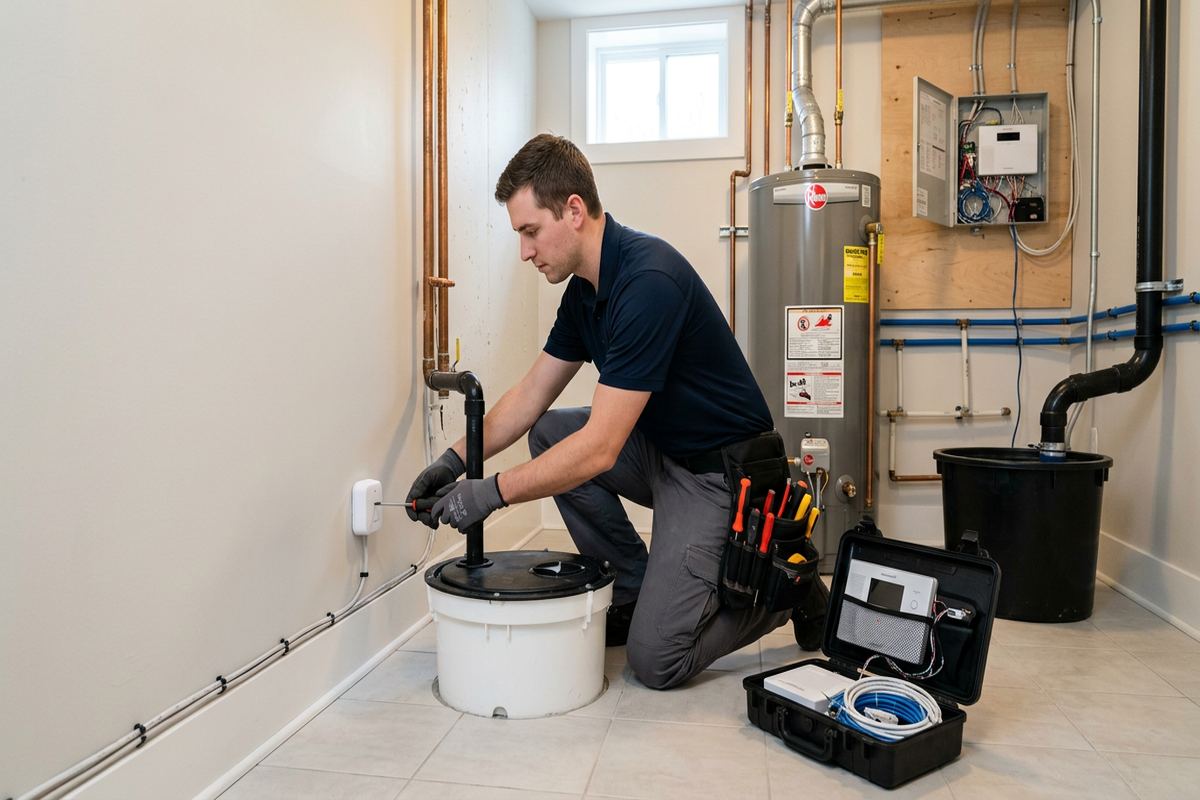
Commercial Alarm Planning for Burlington Properties
Commercial alarm design starts with how the Burlington property is actually used, not with a standard device package. We review entrances, loading points, public counters, offices, storage rooms and after-hours movement. The assessment also considers who needs access, when the building is empty and how staff will arm or disarm the system. For a small plaza unit, this may mean separate protection for the storefront, rear delivery door and shared service corridor. The result is a practical alarm plan tied to daily operations rather than unnecessary hardware or confusing control layouts.
Burlington’s building mix requires different installation approaches. A storefront in Downtown Burlington may have finished walls, shared ceilings and landlord restrictions, while an industrial unit may expose cable routes, overhead doors and warehouse areas. Mid-century bungalows converted for professional use can contain older framing, additions and limited pathways between floors. Before pricing, UnifiedLink completes a site assessment and identifies accessible routes, likely drilling points and device positions. This reduces assumptions and allows the written scope to distinguish included installation work from repairs, electrical work or building changes handled by others.
The written scope covers equipment, cable routes, device placement, exclusions, equipment ownership and warranty. It also identifies alarm zones, user controls and any planned connection to compatible communications or monitoring services. Commercial tenants should confirm landlord approval before holes are drilled or equipment is attached to common elements. Condominium businesses may also need approval from property management or a corporation. These details matter because an alarm installation must protect the occupied space without interfering with shared fire, access, electrical or building systems that fall outside the tenant’s authority.
- Site assessment before pricing
- Entry, interior and perimeter risk review
- Documented equipment and cable routes
- Landlord and condominium approval considerations
- Clear equipment ownership and warranty terms
Alarm Equipment Selected for the Site
An effective commercial system combines appropriate detection devices with controls that staff can operate consistently. Depending on the assessed risks, the design may include door contacts, motion detectors, glass-break detection, panic devices, sirens, keypads and a central alarm panel. Device selection is based on room layout, likely movement, door construction and environmental conditions. A detector suitable for a compact office may not suit a warehouse with shelving, suspended heaters or large temperature changes. UnifiedLink explains what each proposed device covers and where its practical detection limits begin.
Door and window construction affects contact placement. Burlington commercial plazas often combine aluminum storefront frames, glass doors, masonry party walls and frame-built interior partitions. Surface contacts can be appropriate where concealed wiring is not practical, while recessed contacts may provide a cleaner result when the frame and approval conditions allow drilling. Overhead and service doors need hardware intended for their movement and clearances. Cable must remain protected from hinges, tracks, carts and stored goods. Each opening is reviewed individually instead of assuming that one contact style works throughout the building.
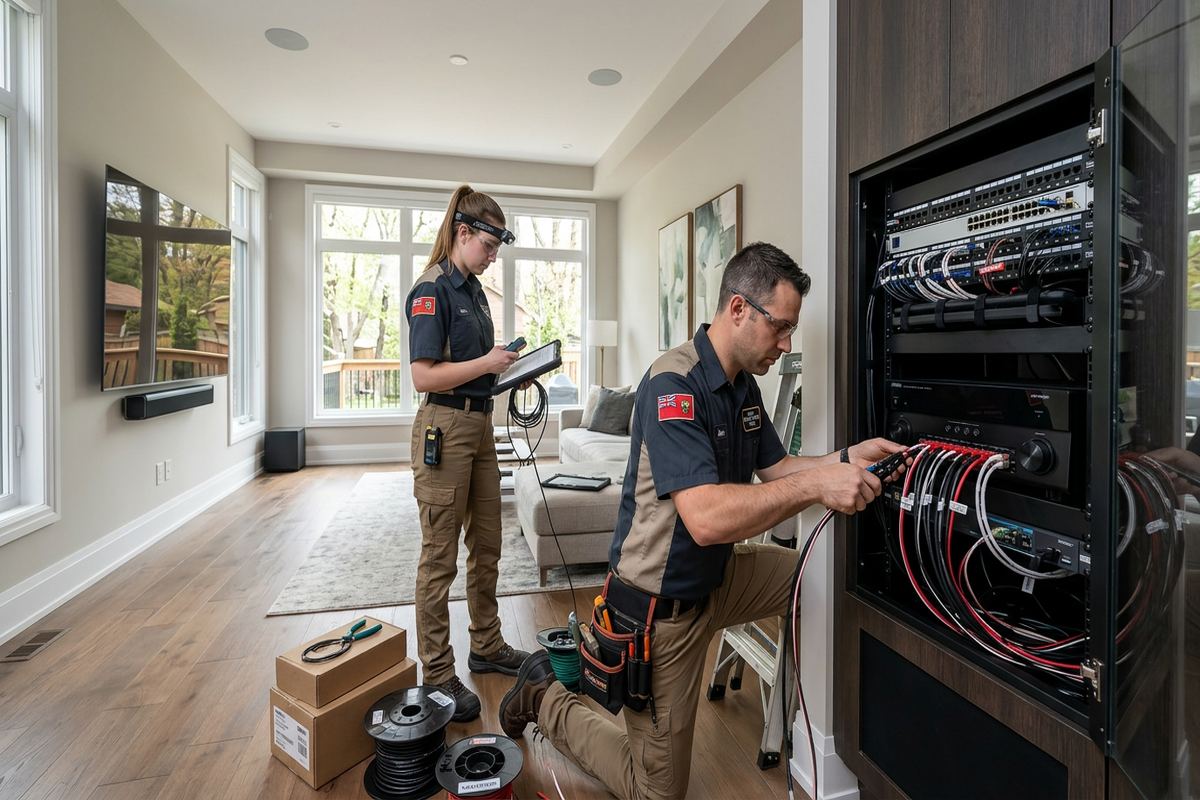
Control equipment must match the number of areas, users and operating schedules required by the business. A single keypad may be sufficient for a small office, while a multi-tenant or divided workplace may need partitions that can be armed independently. User permissions can limit who changes settings, reviews events or manages other users. Communications options depend on the selected panel, available internet or cellular services and any monitoring arrangement chosen by the customer. We document these dependencies so the alarm system is not presented as independent of services it requires to communicate externally.
- Door and window contacts
- Motion and glass-break detection
- Panic buttons and audible devices
- Alarm panels, keypads and partitions
- User permission planning
Detection Zones and Staff Workflows
Zone planning makes alarm events easier to understand and troubleshoot. Instead of grouping unrelated devices under vague labels, we assign useful descriptions such as front entrance, stockroom motion or rear shipping door. Clear naming helps staff identify whether an event reflects an open door, movement in a protected area or a device requiring inspection. It also supports future service because technicians can compare the panel record with the as-built information. For Burlington businesses with several rooms or entrances, logical zones reduce guesswork when opening, closing or responding to an alarm notification.
Arming procedures should follow the way employees enter and leave. We review the normal opening route, the final exit used at closing and any staff who work outside regular hours. Entry and exit delays can then be configured around realistic movement without leaving excessive time before protection becomes active. Businesses with cleaners, contractors or delivery personnel may need separate user codes and limited permissions. Shared codes make event records less useful and create avoidable administration when someone leaves. Individual credentials provide clearer control, provided the business maintains an internal process for removing access promptly.
Alarm operation can also be coordinated with access control or video surveillance when those systems are present, but their responsibilities remain distinct. An access system controls authorized entry, cameras provide recorded or live visual information, and an intrusion alarm reports specified conditions while armed. Integration should be planned rather than assumed. We verify compatible interfaces, define what an event is expected to trigger and document exclusions. This prevents ambiguous automations, such as assuming every door unlock will automatically disarm every alarm partition, which may be unsuitable for divided premises or after-hours access.
- Clearly named detection zones
- Practical entry and exit delays
- Individual staff user codes
- Separate permissions for contractors
- Defined links to cameras or access control
Burlington, Ontario
Commercial alarm system installation in Burlington, scoped in writing first
Book a site assessment and get equipment, routes, exclusions, and warranty on paper before anything is installed.
Cabling and Installation in Burlington Buildings
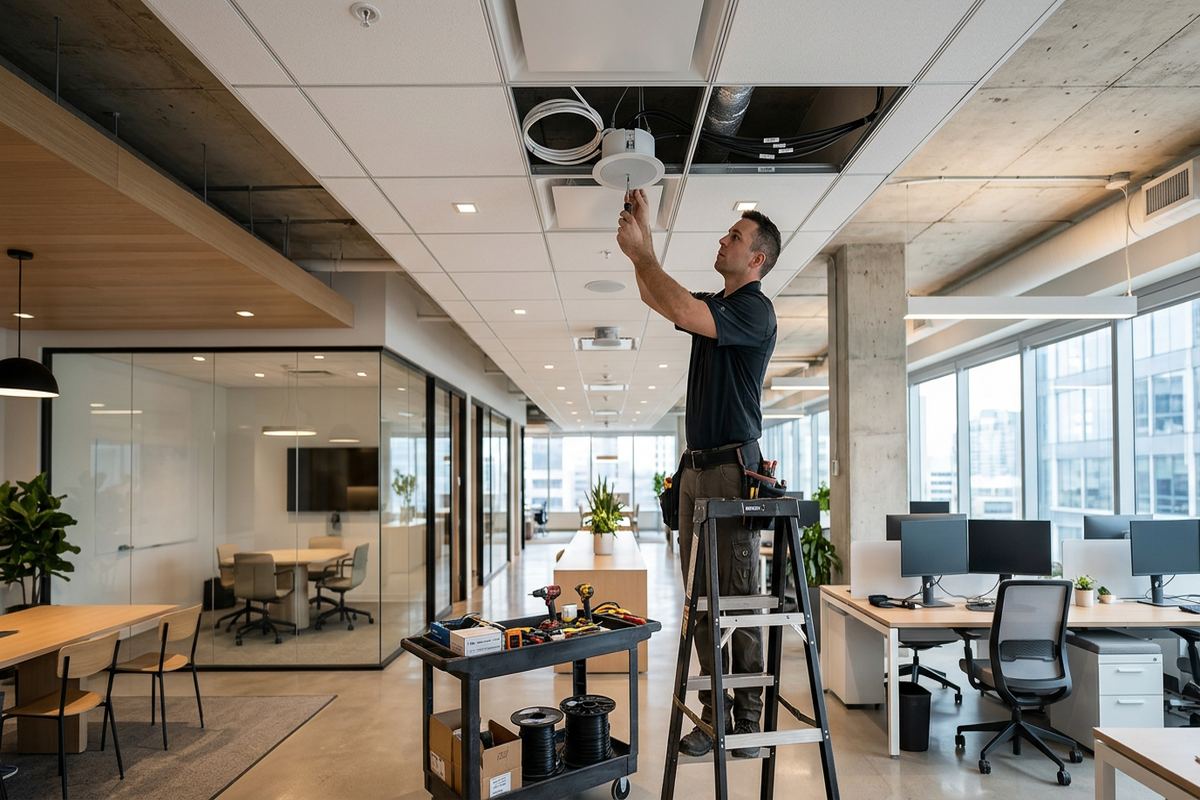
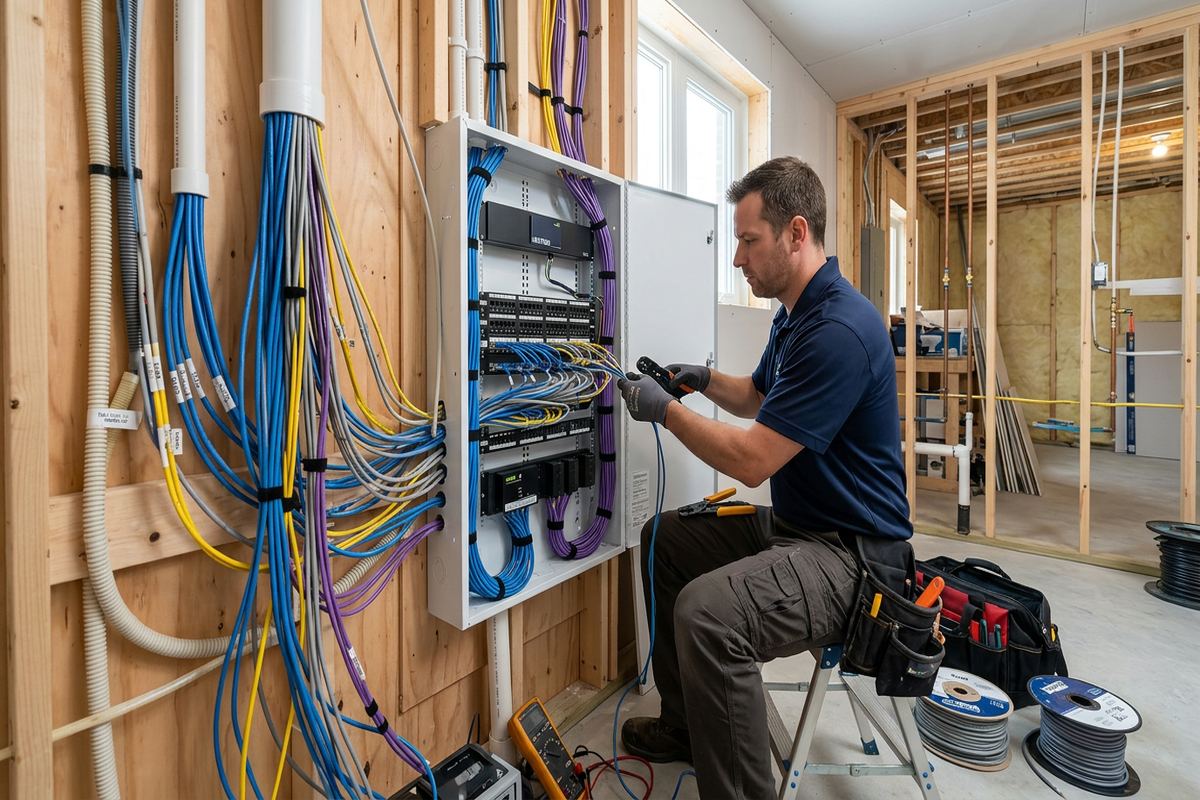
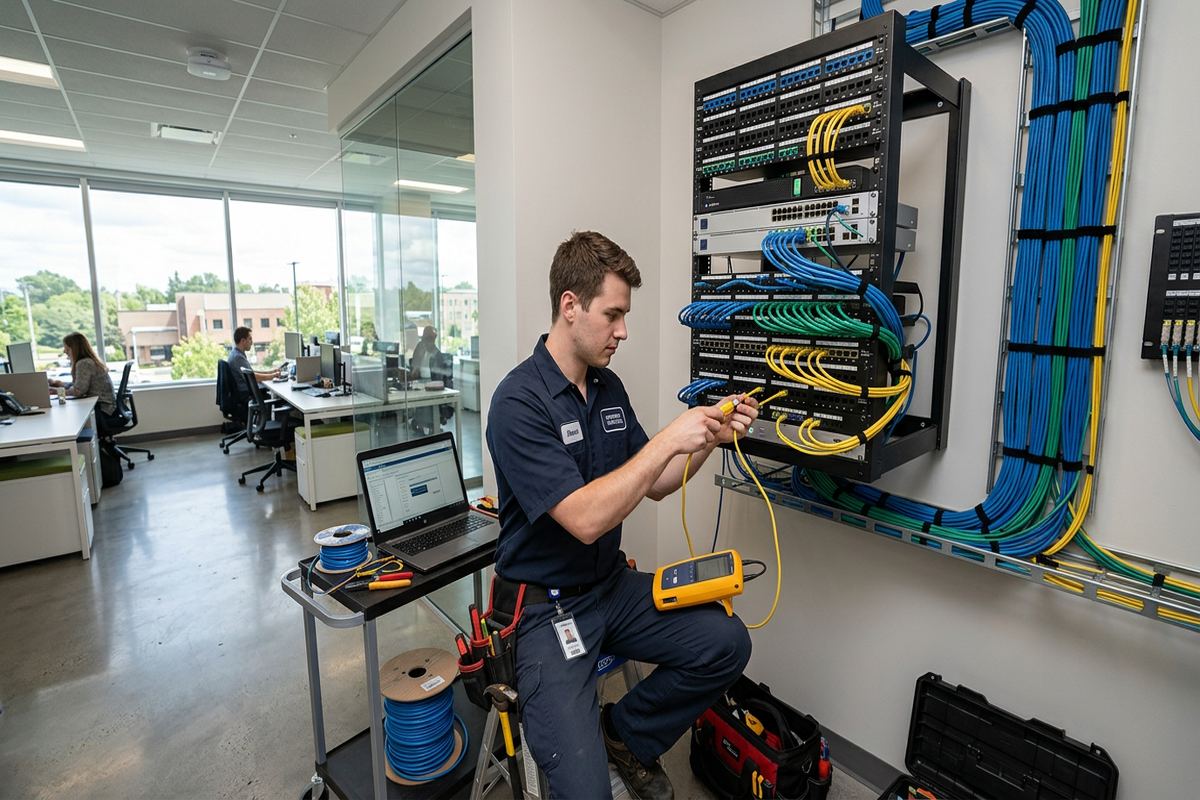
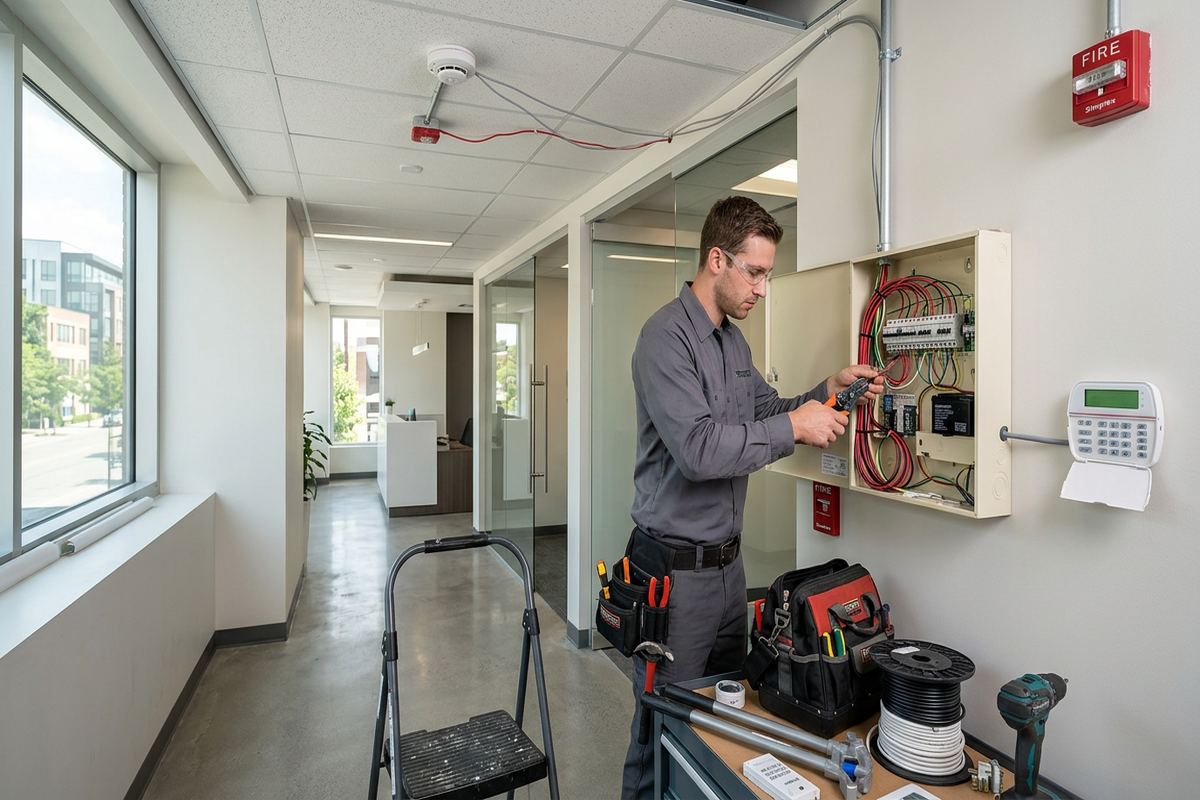
Reliable alarm installation depends on cable routes that are protected, serviceable and documented. UnifiedLink installs continuous labelled cable runs between devices and their termination points, avoiding hidden intermediate joins where practical. In finished Burlington offices, routes may pass above accessible ceilings or through approved wall cavities. Open industrial units may use supported pathways suited to exposed construction. We keep alarm cabling clear of hazards and account for existing electrical, data, sprinkler and mechanical services. Penetrations and supports are planned to suit the surface rather than using one fastening method everywhere.
Masonry and frame construction require different tools, anchors and sealing methods. Brick, block and concrete can support robust mounting, but careless drilling may damage finishes, strike concealed services or create moisture paths. Frame walls can offer easier cable access, although insulation, fire stops and renovations may block the expected route. Older commercial conversions in Roseland or Aldershot may include several construction types within one property. The assessment identifies visible conditions, while installation proceeds carefully where concealed conditions remain unknown. Any route change affecting scope is discussed before work continues.
Exterior alarm devices face Burlington winters, wind-driven rain and repeated freeze-thaw cycles. Outdoor sirens, contacts or related equipment must be rated for the intended location and mounted where water cannot collect around entries or cable openings. We use suitable exterior fastening and sealing methods while preserving drainage paths in frames and wall systems. Cable entry points are positioned to reduce exposure and mechanical damage. Exterior work also considers snow clearing, salt, ladders, delivery traffic and building maintenance so devices are not placed where ordinary operations are likely to strike or obstruct them.
- Continuous labelled alarm cable runs
- Routes suited to finished or open ceilings
- Fastening for masonry and frame walls
- Sealed exterior cable penetrations
- Protection from traffic and maintenance work
Burlington Storefronts, Plazas and Industrial Units
Small commercial plazas account for much of the local project environment, and their alarm needs often extend beyond the visible storefront. Rear service doors, shared corridors, rooftop access points and utility rooms can create less obvious entry paths. In areas such as Alton Village, Orchard and Millcroft, tenant improvements may also change wall layouts without updating older alarm zones. We trace accessible existing wiring, confirm which devices remain useful and identify abandoned or damaged components. Reuse is recommended only where equipment condition, compatibility, ownership and cable routing can be reasonably established.
Commercial strips commonly place several tenants beneath one roof, making boundaries important. An alarm installed for one unit should not depend on entering a neighbouring space for routine service unless written access arrangements exist. Shared doors and common vestibules require agreement about who controls them and how after-hours events are handled. Landlord-owned devices must be distinguished from tenant-owned equipment before replacements begin. Our scope records these boundaries, including equipment ownership and excluded common areas, so the business understands what its system protects and what remains under property management or another contractor.
Industrial units introduce larger spaces, higher ceilings and moving equipment. Standard motion placement may be affected by racking, loading activity, suspended heaters, fans or changing stock levels. Overhead doors need contacts and cabling that tolerate normal door travel without entering tracks or pinch points. Office and warehouse areas may also require separate alarm partitions because their operating hours differ. During assessment, we review accessible mounting locations from floor level and identify where lifts, special access or coordination with building staff may be required for installation and later maintenance.
- Storefront and rear-door protection
- Defined tenant and common-area boundaries
- Assessment of reusable alarm wiring
- Warehouse detection planning
- Overhead door contact installation
Approvals, Monitoring and Communications
Alarm equipment does not operate in isolation from building rules and communications services. A Burlington tenant may need written landlord permission for exterior devices, façade penetrations, common ceiling access or work inside shared electrical and communication rooms. Condominium corporations can have additional requirements for common elements, working hours and contractor access. Customers are responsible for obtaining applicable approvals unless the written scope assigns specific coordination tasks. Confirming these conditions early avoids designing a route or device location that property management will not permit after equipment has been ordered or installation has started.
Monitoring is a separate service relationship from physical alarm installation. If professional monitoring is required, the selected panel and communication method must be compatible with the monitoring provider’s requirements. Internet-based communication can depend on customer network equipment and power, while cellular communication depends on supported hardware, service and signal conditions. We document the intended connection and configure on-site components included in the scope, but do not describe unconfirmed third-party service as guaranteed. The customer should understand recurring provider responsibilities, cancellation terms and who receives notifications before choosing a monitoring arrangement.
Commercial alarm systems may need to coexist with fire alarm, sprinkler supervisory or life-safety equipment, but intrusion work should not be treated as a substitute for those regulated systems. Any proposed interface requires clear responsibility and suitable equipment. We identify apparent boundaries during assessment and exclude work that is outside the agreed low-voltage alarm scope. Where another contractor or authority must complete part of the work, that dependency is recorded. This approach helps prevent an intrusion device, siren or panel output from being mistaken for approved fire detection or emergency notification equipment.
- Landlord approval for penetrations
- Condominium common-element coordination
- Compatible monitoring communications
- Documented third-party dependencies
- Clear separation from life-safety systems
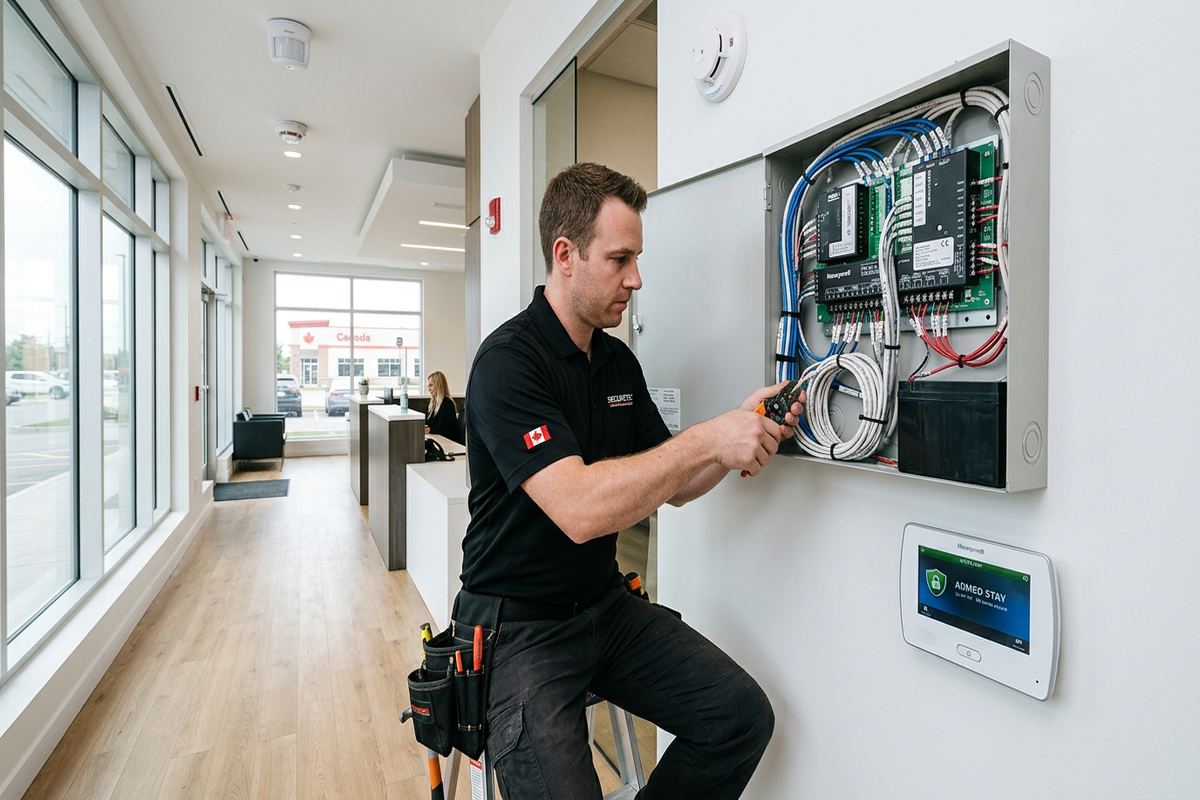
Configuration and Handover in Burlington
Installation is followed by on-site configuration using the agreed zone names, entry delays, user permissions and communication settings. Each installed device is checked from its actual location so the panel response can be compared with the written design. Door contacts are tested through normal opening and closing, while motion or glass-break devices are checked according to their intended function and manufacturer requirements. Audible devices and panic controls are reviewed with the customer before testing because occupants, neighbours or monitoring contacts may need advance notice. Any unresolved dependency is documented rather than hidden.
Handover uses the customer’s own credentials instead of leaving the business dependent on an installer-controlled account. An authorized customer representative receives operating guidance for routine arming, disarming, user management and event review within the capabilities of the selected system. We also explain basic responsibilities such as keeping contact lists current, removing former users and reporting changes to doors, walls or room layouts. For Burlington businesses with rotating managers, assigning internal ownership of alarm administration is important. Without that responsibility, codes and notification lists can become outdated even when the installed hardware remains functional.
The customer receives an as-built record describing installed device locations, zone labels and relevant cable or equipment information within the agreed scope. This record supports future troubleshooting, renovations and expansion. Equipment ownership and warranty terms are stated in writing, along with exclusions and third-party services. UnifiedLink remains one accountable contractor for the installation work it scopes, including cabling, device mounting, configuration and handover. If another provider handles monitoring, internet service, electrical work or building approvals, those responsibilities remain identified separately so service questions can be directed to the appropriate party.
- On-site device and zone testing
- Customer-controlled administrator credentials
- Staff operating guidance
- As-built device and zone record
- Written ownership and warranty information
Expanding a Commercial Alarm System
A commercial alarm should be reviewed when the premises or operating pattern changes. New partitions can block motion coverage, shelving can conceal devices, and a replaced door can leave an old contact misaligned or disconnected. Businesses may also add a rear office, secure storage room or second shift that requires different partitions and permissions. In Burlington’s changing plaza units, renovations often inherit cabling from several previous tenants. An assessment separates active runs from abandoned wiring and determines whether the existing panel has suitable capacity and compatibility before additional devices are proposed.
Expansion planning is easier when the original installation has clear labels and an accurate as-built record. Continuous cable runs allow each device path to be followed without relying on undocumented joins hidden above ceilings or inside walls. If a Burlington business adds access control, cameras or network equipment later, existing pathways and panel locations can be reviewed for space and separation. Sharing a cable or power supply is not assumed merely because systems are nearby. Each addition is assessed for compatibility, electrical requirements, communication needs and the effect of failure on other building functions.
The next step is to request a site assessment with details about the property, business use and known concerns. Photos, floor plans, landlord rules and information about existing equipment can help prepare for the visit, but they do not replace on-site review. Requests sent during business hours are answered the same day, while after-hours requests are answered the next business day. Site assessment timing depends on the service and travel distance. After assessment, UnifiedLink provides a written scope so the customer can review equipment, routes, exclusions, ownership and warranty before installation proceeds.
- Renovation and layout-change reviews
- Existing panel capacity assessment
- Identification of abandoned wiring
- Planning for future integrated systems
- Written scope before expansion work
Burlington neighbourhoods we cover
- Downtown Burlington
- Aldershot
- Alton Village
- Millcroft
- Roseland
- Tyandaga
- Orchard
Commercial alarm system installation in Burlington — common questions
Do Burlington businesses need a site assessment before pricing?
Yes. UnifiedLink completes a site assessment before pricing because door construction, ceiling access, cable routes and operating needs vary between Burlington properties. The visit also identifies landlord restrictions, exterior mounting conditions and existing equipment that may or may not be reusable. Timing depends on the requested service and travel distance. The resulting written scope defines equipment, placement, routes, exclusions, ownership and warranty.
Can you reuse an existing commercial alarm system?
Existing equipment can sometimes be reused, but compatibility and condition must be assessed first. In Burlington plazas and renovated units, panels, contacts and wiring may belong to a landlord or previous tenant, and labels may no longer match the layout. We check accessible components, ownership and available documentation. Reuse is included only when it can be supported within a clear written scope.
Do I need landlord or condo approval?
Approval may be required if the work affects exterior walls, storefront frames, common ceilings, shared communication rooms or other common elements. Burlington commercial tenants should check their lease and ask property management before installation. Condominium owners should confirm corporation requirements as well. UnifiedLink can document proposed routes and device locations, but responsibility for securing approvals remains with the customer unless coordination is specifically included in writing.
Will the alarm work during an internet outage?
That depends on the panel, communication path, backup power and monitoring arrangement. Local detection and audible functions may differ from external notification capabilities when internet service is unavailable. Some systems support compatible cellular communication, but service and signal conditions must be confirmed. For a Burlington installation, the written scope identifies the intended communication method and any customer network or third-party service dependencies.
Can the system have separate staff codes?
Yes, where supported by the selected alarm panel. Separate user codes provide clearer event records and make it easier to remove access when an employee or contractor no longer needs it. Permissions can also be limited for specific users or alarm partitions. During handover, the authorized Burlington business representative receives customer-controlled credentials and guidance for routine user administration within the system’s available features.
How are exterior devices protected from Burlington weather?
Exterior devices are selected and mounted for their intended environment. Burlington winters bring moisture, freezing conditions and freeze-thaw cycles that can affect exposed contacts, fasteners and cable entries. We use suitable sealing and mounting methods while avoiding blocked drainage paths. Locations are also reviewed for snow clearing, salt, delivery traffic and maintenance activity that could strike or obstruct the equipment.
Coverage in Burlington is confirmed against the address before we quote. See everything we install in Burlington or the province-wide commercial alarm system installation page.