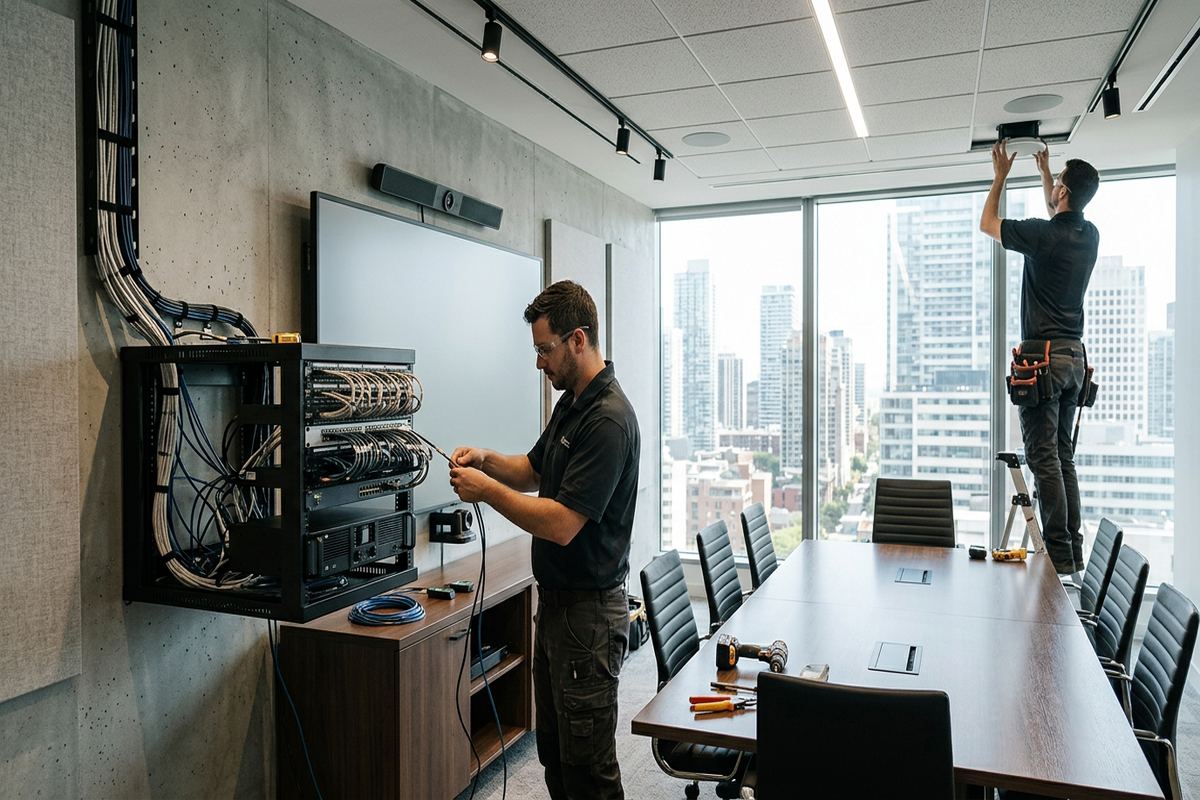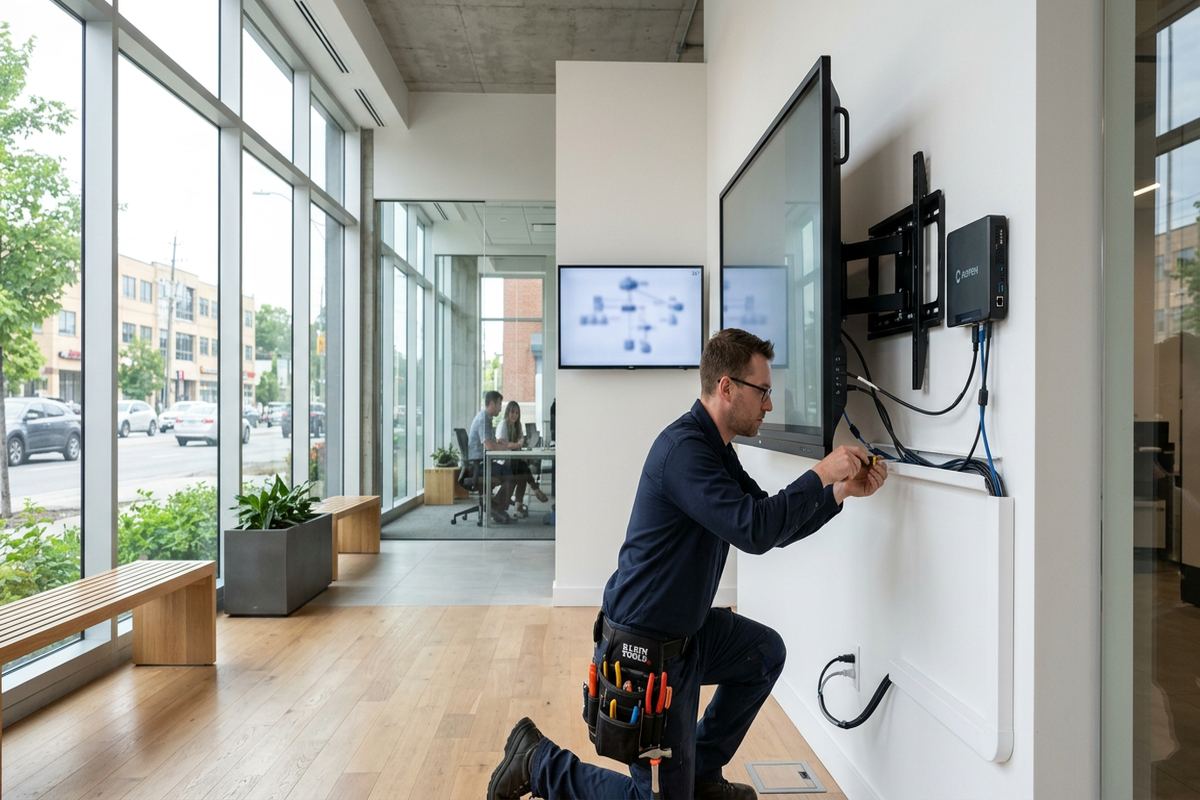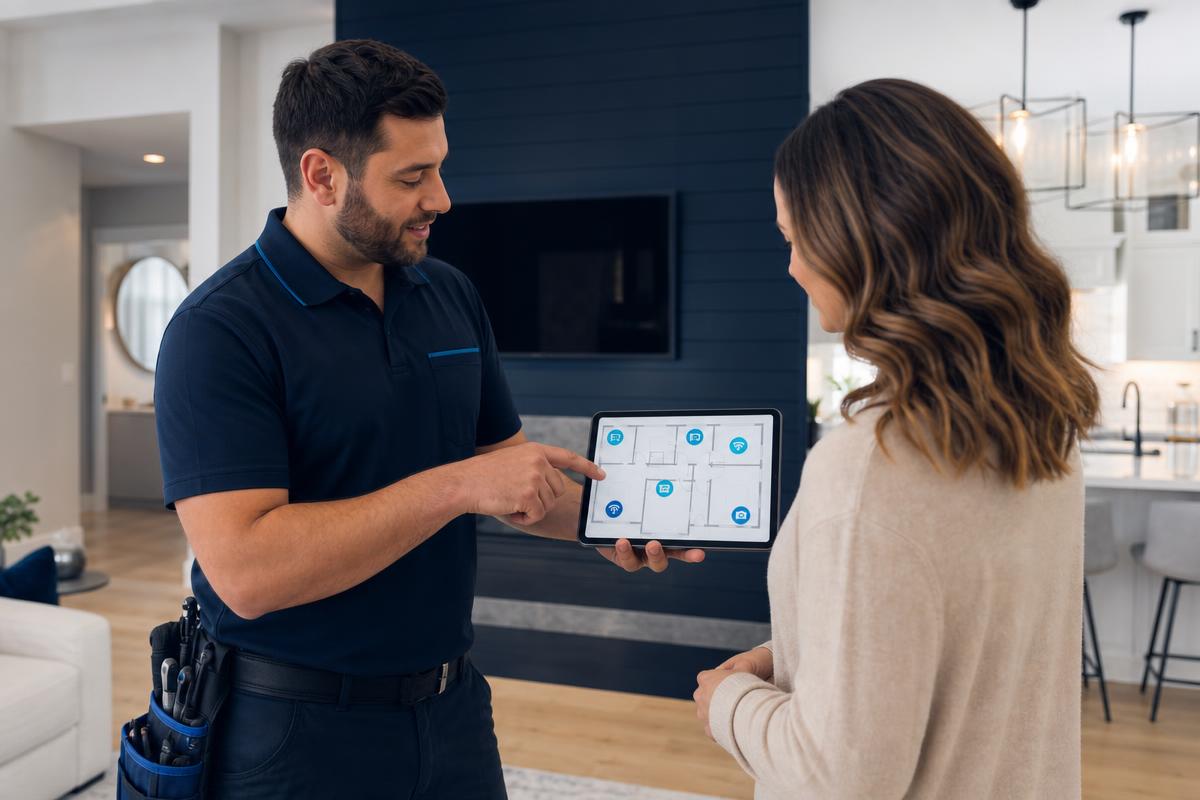
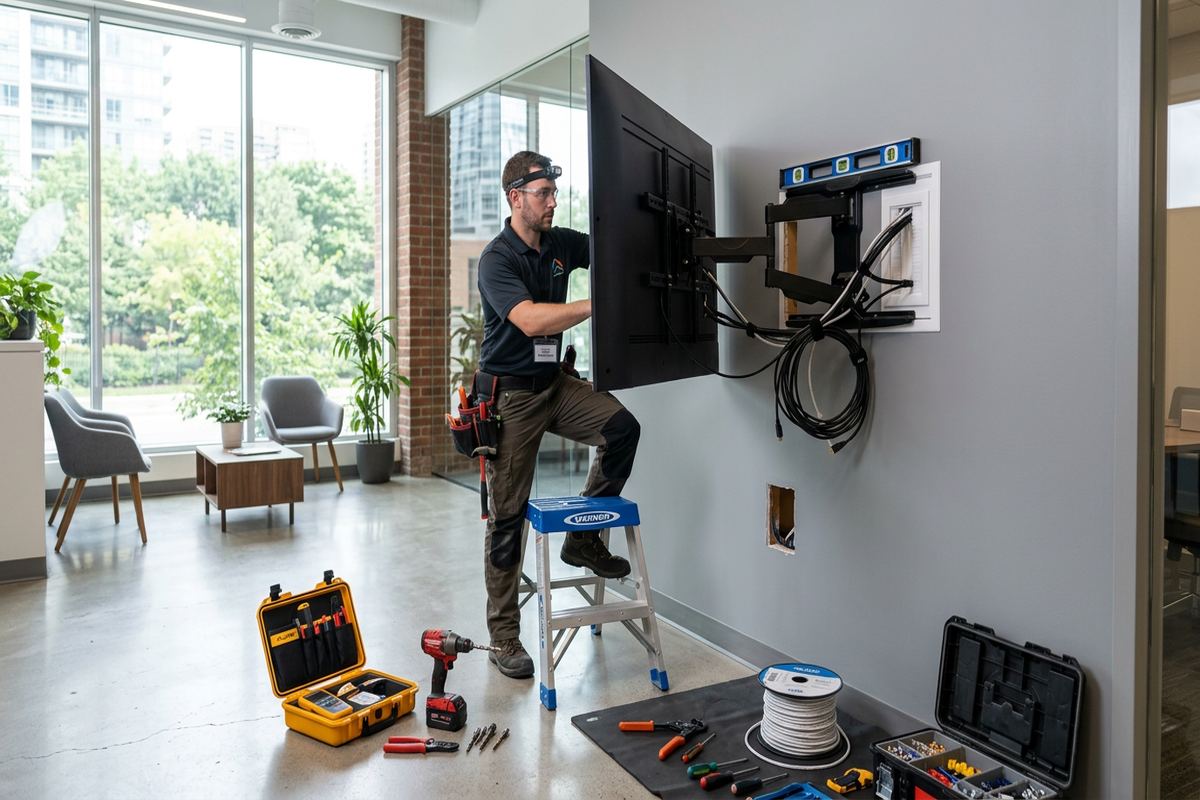
UnifiedLink installs outdoor televisions for Burlington homes and commercial properties. We plan the display position, mounting method, power and signal connections, cable routes, weather sealing and network access before installation. Each system is configured on site and handed over using the customer’s own credentials, with labelled cabling and an as-built record.
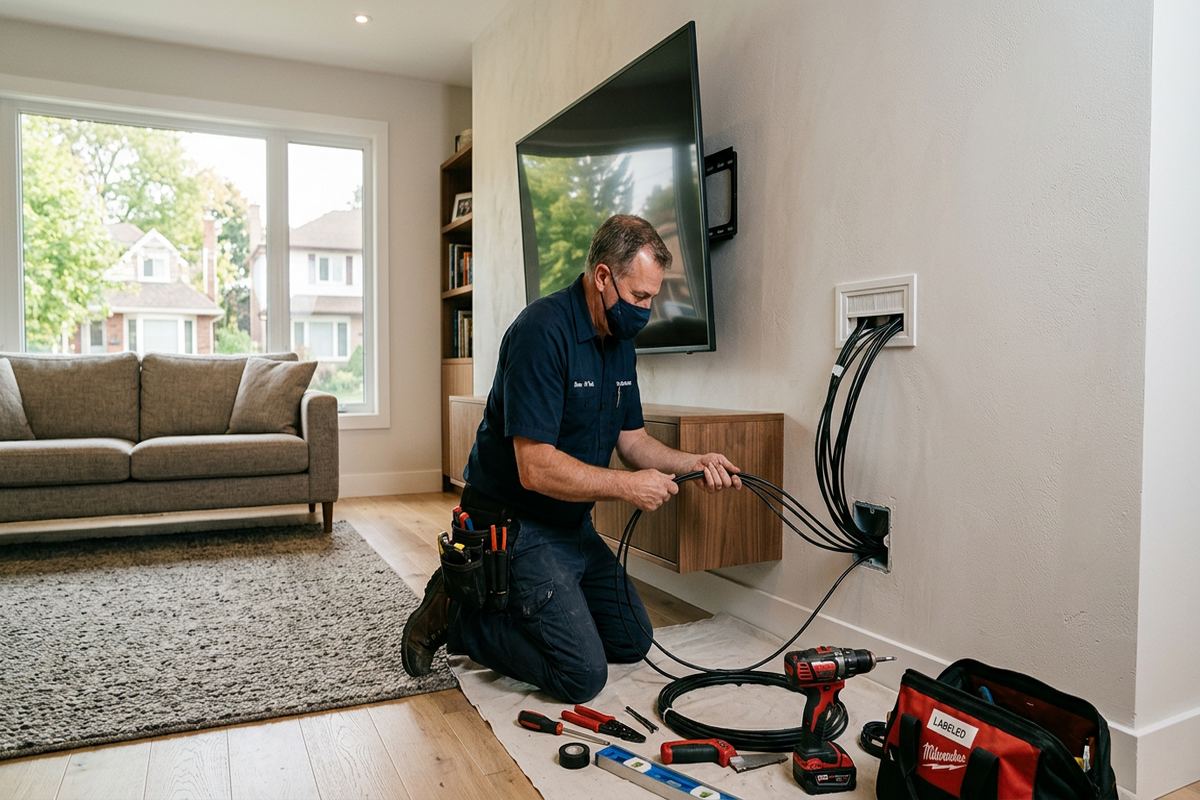
Outdoor TV Planning for Burlington Properties
An outdoor television needs more planning than an indoor display moved onto a patio. In Burlington, the location must account for direct sun, reflected glare, wind-driven rain, winter temperatures and repeated freeze-thaw cycles. We assess viewing distance, seating position, screen height and likely sightlines before selecting a mounting approach. The assessment also covers nearby power, network coverage, signal sources and practical cable routes. This prevents the display position from being chosen in isolation while connections, weather exposure and future maintenance are treated as afterthoughts during installation.
Local building stock changes how the work should be approached. Lakefront homes can have exposed yards and stronger weather effects, while mid-century bungalows may contain finished additions, older wall assemblies or limited pathways between indoor equipment and an exterior wall. Small commercial plazas introduce shared façades, tenant boundaries and operating-hour considerations. In Downtown Burlington, Aldershot and Roseland, the installation plan may also need to preserve finished masonry, landscaping or architectural details. We identify those constraints during the site assessment and include the agreed approach in the written scope.
The written scope sets out the proposed television location, mount, cable route, device placement and required configuration. It also records exclusions, equipment ownership and applicable warranty information, so the responsibilities of the installer and customer remain clear. Where concealed routing is practical, we describe the surfaces and spaces involved. Where it is not, we propose an exterior-rated pathway with appropriate supports and sealing. Pricing follows the site assessment because access, wall construction, cable distance and integration requirements vary considerably between Burlington properties and outdoor living areas.
- Viewing distance, height and glare assessment
- Wall construction and mounting-surface review
- Power, network and source-device planning
- Documented cable route and device placement
- Written ownership, exclusions and warranty details
Choosing an Outdoor Display and Mount
Purpose-built outdoor televisions are designed for conditions that indoor models are not intended to tolerate. The correct model depends on whether the screen sits in a fully shaded enclosure, a covered patio with open sides or a brighter area exposed to changing daylight. Brightness, operating-temperature range, ingress protection and manufacturer placement requirements all matter. UnifiedLink can install customer-supplied equipment or include equipment selection in the project scope. In either case, the proposed display and mount must suit the location rather than relying on an indoor product protected only by a loose cover.
Mount selection is based on display weight, wall construction, viewing direction and expected movement. A fixed mount provides a simple profile, while a tilting mount can help with higher positions and reflected light. An articulating arm allows directional adjustment but places different loads on the attachment points, particularly when extended. We verify that the mounting surface and fasteners are suitable for the intended arrangement. The scope also considers service access, connector clearance and whether the television can be removed without disturbing nearby finishes, trim, outdoor cabinetry or permanent weatherproofing components.
Screen placement should balance visibility with protection. Mounting beneath a roof overhang may reduce precipitation and direct sunlight, but it does not automatically eliminate moisture, condensation, cold or wind exposure. A fireplace, barbecue, heater or cooking area can introduce heat, smoke and grease that affect equipment life and serviceability. We review manufacturer clearances and avoid routing cables through locations exposed to excessive heat. For Burlington patios and yards, the final position is selected around actual site conditions, not only the most visually convenient section of wall.
- Outdoor-rated display suitability review
- Fixed, tilt or articulating mount options
- Manufacturer clearance requirements checked
- Connector and future service access maintained
- Heat, moisture and glare sources considered
Burlington Mounting, Cabling and Weather Sealing
Exterior mounting methods differ between brick, concrete block, stone veneer, siding and frame construction. Masonry may provide a strong attachment surface, but fastener selection, embedment and mortar condition must be considered. Veneer cannot always carry loads in the same way as structural masonry. On frame walls, attachment should reach suitable framing or an approved structural backing arrangement rather than relying on cladding. Burlington’s mix of bungalows, newer subdivisions and renovated lakefront properties means wall appearance alone does not confirm what lies behind the exterior finish or how the assembly drains.
Cable penetrations require deliberate placement and sealing. Openings should shed water, avoid trapping moisture and remain compatible with the exterior material. Sealants and fittings must suit the substrate and exposure, especially where winter freeze-thaw movement can open poorly prepared joints. We use continuous labelled cable runs and support exposed pathways appropriately. Drip loops, exterior-rated enclosures or conduit may be included where the design calls for them. The goal is a maintainable installation that limits water entry without blocking intended drainage paths in siding, masonry cavities or other wall components.
Signal cables are planned separately from power requirements and are not used as a substitute for compliant electrical work. The television may need a suitable outdoor receptacle, surge protection or electrical changes by the appropriate electrical trade. We identify those dependencies before mounting begins. Network, HDMI and control connections are routed according to distance and equipment requirements, with transition points kept accessible where possible. In Millcroft, Tyandaga and Orchard homes with finished basements or enclosed patios, route planning can reduce unnecessary openings while preserving access for future troubleshooting or display replacement.
- Fasteners matched to the wall assembly
- Continuous, labelled low-voltage cable runs
- Exterior penetrations prepared and sealed
- Accessible transition and connection points
- Electrical dependencies identified before installation
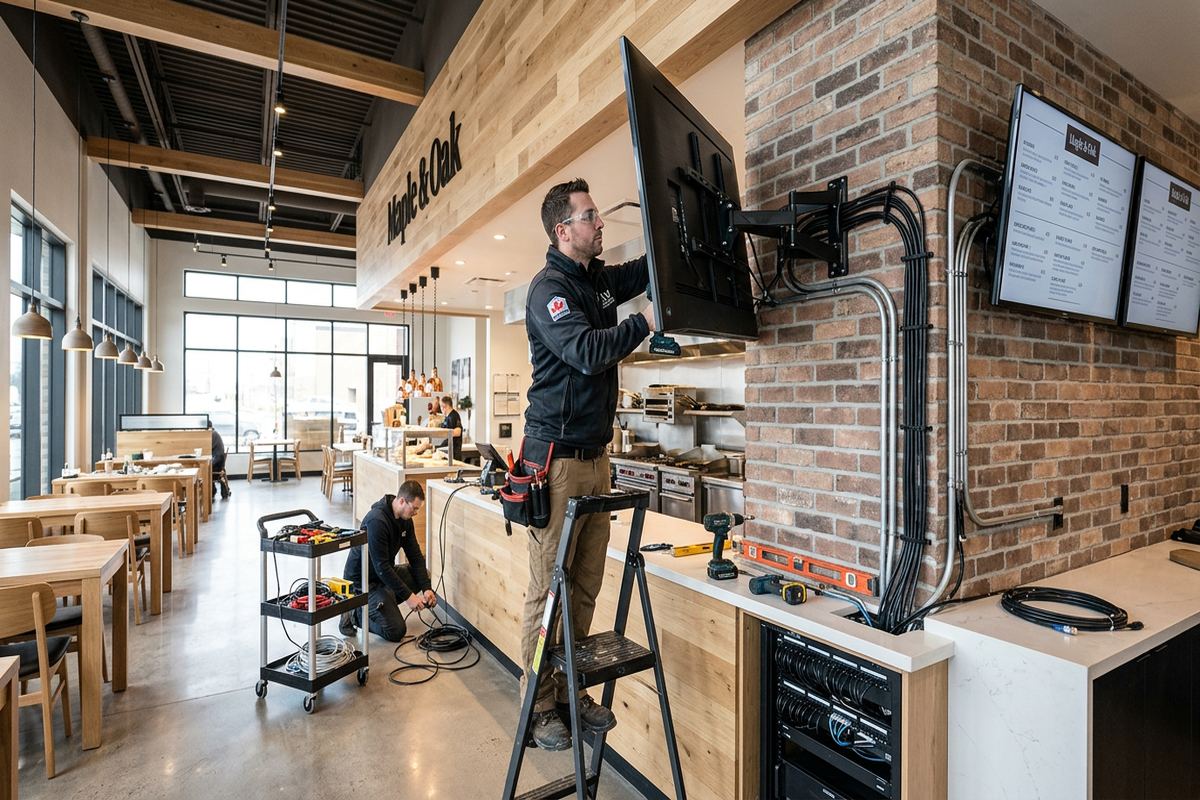
Burlington, Ontario
Outdoor TV installation in Burlington, scoped in writing first
Book a site assessment and get equipment, routes, exclusions, and warranty on paper before anything is installed.
Network, Streaming and Source Connections
Outdoor streaming performance depends on more than the television’s built-in Wi-Fi indicator. Exterior walls, foil-backed insulation, masonry, metal doors and distance from the indoor access point can weaken a connection at the patio. We test or assess coverage where the display will operate and recommend wired Ethernet or improved wireless coverage when appropriate. A wired connection can provide a stable pathway for streaming and updates, but the cable type, route, termination and surge considerations must suit the environment. Network changes are documented so the system remains understandable after handover.
Source equipment can be located at the television, inside the building or in a shared equipment area. Each arrangement affects cable length, control signals, heat exposure and service access. Long HDMI pathways may require active cabling, extenders or a network-based distribution method rather than a standard patch lead. We confirm intended sources such as streaming devices, receivers, media players or commercial signage players before finalising the pathway. Equipment placed outdoors needs a suitable protected location, while indoor equipment should remain reachable without requiring repeated removal of the mounted television.
Configuration is completed on site using the customer’s own accounts and credentials. We can connect the display to the intended network, confirm source switching, set practical picture options and test control functions included in the scope. Credentials remain with the customer rather than being tied to an installer-owned account. For businesses in Burlington’s small commercial plazas, the handover can also identify which staff role manages content or streaming access. The as-built record notes device locations, cable labels and relevant connection details without unnecessarily recording private passwords.
- Wi-Fi coverage reviewed at the display
- Wired network options where practical
- HDMI distance and extension requirements assessed
- Customer-owned accounts used for setup
- Source locations recorded at handover
Outdoor Audio for Burlington Viewing Areas
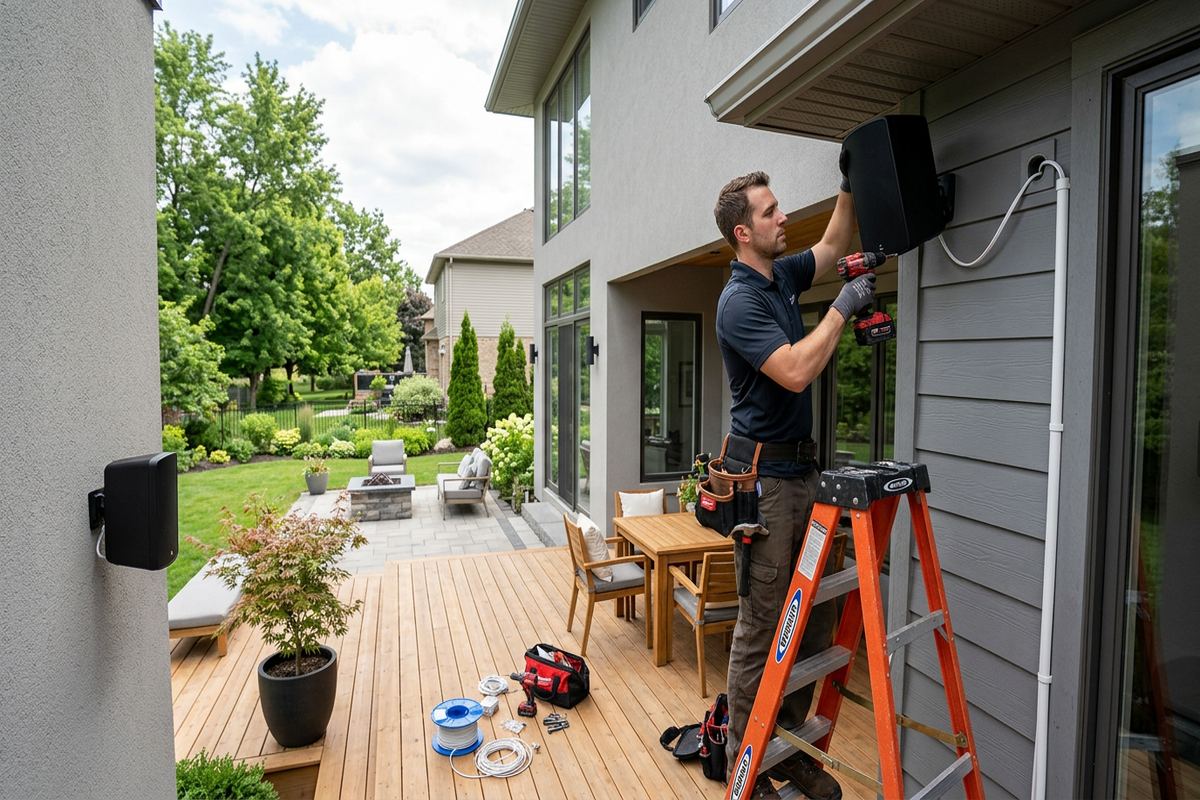
Television speakers may be difficult to hear outdoors because sound disperses without room boundaries and competes with traffic, conversation and wind. Simply increasing volume can create uneven listening levels and disturb neighbouring properties. We plan audio around the seating area, intended use and available mounting locations. Options may include a compatible outdoor soundbar, weather-resistant speakers or connection to an existing distributed audio system. The equipment must be suitable for its exposure level, and cable routes should be coordinated with the display installation rather than added as an unrelated pathway later.
Speaker placement affects clarity, coverage and the amount of volume required. A pair of correctly positioned speakers can serve a defined patio more effectively than one loud source beside the screen. For compact lots in Alton Village or Orchard, aiming sound toward the seating area can help limit spill beyond the property. Larger Aldershot or lakefront yards may require zones rather than excessive output from one location. We document amplifier placement, speaker wiring and control method, including any equipment that remains inside a conditioned mechanical room, cabinet or structured wiring area.
Audio control should remain straightforward for the people using the space. Depending on the system, television volume may operate through the normal remote, an app, a receiver or a dedicated controller. We test the agreed control path and explain how to select the correct input, adjust volume and shut the system down. If existing audio equipment is being reused, compatibility is checked before it is included in the scope. The handover identifies customer-owned components and installed cabling, helping a future service technician distinguish permanent infrastructure from portable source devices.
- Outdoor-rated audio equipment options
- Speaker coverage planned around seating
- Neighbour-conscious direction and zoning
- Control method tested on site
- Audio cabling included in documentation
Installation for Condos, Tenants and Commercial Sites
Condominium balconies and terraces may be subject to rules governing exterior attachments, visible cabling, electrical use and changes to common elements. Approval should be obtained before drilling or permanently mounting equipment. Some buildings may prohibit exterior displays or require drawings, insurance documents or specific working hours. UnifiedLink can describe the proposed low-voltage work and mounting approach for the customer’s approval process, but the property owner or condominium corporation makes the final decision. We do not proceed on assumptions where ownership of the wall, railing or façade is unclear.
Tenants should obtain written landlord approval before an outdoor television installation alters a wall, patio or commercial unit. The approval should address mounting holes, cable penetrations, equipment ownership and removal obligations at the end of the tenancy. For leased units in Burlington commercial strips, coordination may also be needed with property management and neighbouring occupants. We can plan work around accessible service areas and agreed operating constraints. Any restoration work, landlord requirements or excluded surfaces are identified in the project scope rather than being left unresolved until installation day.
Commercial outdoor displays may support hospitality areas, staff spaces, customer information or scheduled media. These applications require attention to content sources, lockable controls, network separation and who can change settings. An industrial unit may offer straightforward surface-mounted pathways, while a finished plaza storefront can require discreet routing through shared or restricted spaces. We assess access equipment, wall height and public-area risks before pricing. The final setup includes tested inputs, customer-controlled credentials and an as-built record so the business is not dependent on undocumented installer settings.
- Condo approval requirements identified early
- Landlord consent confirmed before alterations
- Commercial operating constraints documented
- Public-area equipment access considered
- Customer-controlled content and account setup
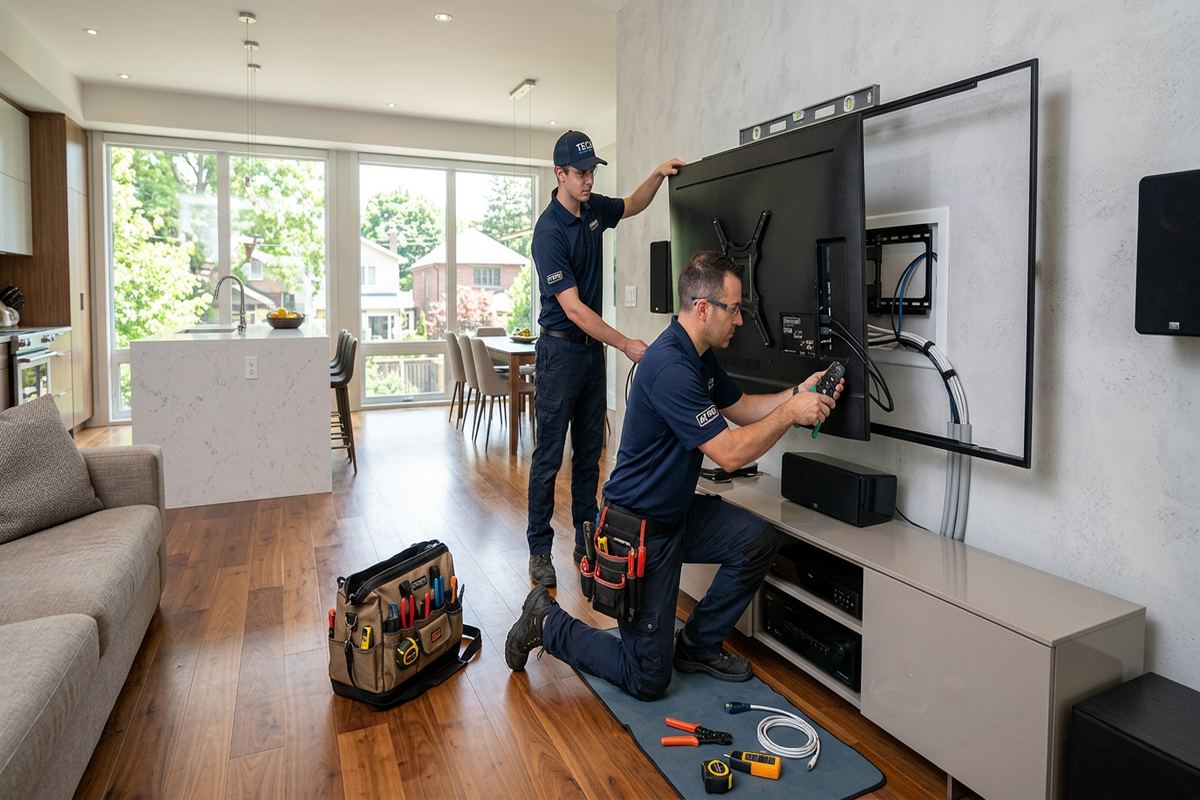
Burlington Winter Conditions and Ongoing Care
An outdoor television remains exposed even when it sits under a roof. Burlington winters bring cold periods, moisture and freeze-thaw cycling that can affect seals, fittings, covers and cable entry points. Equipment should be operated and stored within the manufacturer’s stated temperature limits. Snow and ice should not be allowed to accumulate against the display or connection area. A cover may reduce dirt and direct exposure when correctly fitted, but it does not convert an indoor television into an outdoor-rated product or replace suitable installation practices.
Seasonal inspection helps identify physical changes before they affect operation. Customers can look for loose covers, cracked sealant, displaced conduit, insect activity, corrosion or cables pulled by furniture and landscaping work. The screen should be cleaned only with products and methods allowed by its manufacturer. Pressure washing near the display, mount, receptacle or cable entry should be avoided. After major exterior renovations, roofing work or patio changes, the installation should be checked because new drainage patterns, relocated fixtures or altered structures can change the original exposure and clearances.
If a display will not be used for an extended period, follow the manufacturer’s guidance for shutdown, disconnection and winter storage. Some outdoor models are designed to remain installed within specified conditions, while other equipment may need removal. Connection points should not be left open when a source device is taken indoors. UnifiedLink can document removable components and cable endpoints during handover. This is useful for Burlington homeowners who close seasonal outdoor areas, as well as businesses that change patio layouts or media equipment at different times of year.
- Manufacturer temperature limits reviewed
- Freeze-thaw exposure considered in sealing
- Seasonal physical inspection recommended
- Safe cleaning practices explained
- Removable components and endpoints documented
From Burlington Site Assessment to Handover
Every project begins with information about the property, intended screen size, viewing area and available services. A site assessment follows before pricing, allowing us to inspect the mounting surface, access, cable route, weather exposure, network conditions and source equipment. Assessment timing depends on the service and travel distance. Requests sent during business hours are answered the same day; after-hours requests are answered the next business day. This initial process gives Burlington customers a practical scope based on their actual patio, yard, terrace or commercial area rather than a generic installation package.
Once the approach is agreed, the written scope covers equipment, cable routes, device placement, exclusions, equipment ownership and warranty. Installation then includes the specified mounting and low-voltage work, continuous labelled cable runs and on-site configuration. We test the display, sources, network connection and included controls under the available conditions. If concealed conditions differ from what could reasonably be observed, the issue is discussed before the scope changes. One accountable contractor coordinates the display, network, low-voltage cabling and related system configuration included in UnifiedLink’s work.
Handover is treated as part of the installation rather than an optional final step. The customer receives control of the system through their own credentials, along with an explanation of normal operation and any relevant equipment limitations. An as-built record identifies cable routes, labels, device locations and connection points included in the project. This documentation supports future display replacement, network changes or troubleshooting. For Burlington homes and businesses, it also provides a clear record when ownership, tenants, property managers or service providers change after the original installation has been completed.
- Site assessment completed before pricing
- Detailed written scope provided
- One contractor accountable for included work
- System tested and configured on site
- Customer credentials and as-built record handed over
Burlington neighbourhoods we cover
- Downtown Burlington
- Aldershot
- Alton Village
- Millcroft
- Roseland
- Tyandaga
- Orchard
Outdoor TV installation in Burlington — common questions
Can I use a regular indoor TV outside in Burlington?
An indoor television is generally not designed for Burlington’s moisture, temperature changes, condensation or freeze-thaw conditions. A covered patio reduces direct exposure but does not create an indoor environment. We recommend selecting equipment according to the manufacturer’s approved placement and operating range. The site assessment considers shade, precipitation, winter exposure and ventilation before the display is included in the written scope.
Can you mount an outdoor TV on brick?
Yes, when the masonry and underlying wall assembly provide a suitable attachment. Burlington homes can have structural brick, concrete block, stone or non-structural veneer, and those surfaces do not all support the same mounting method. We inspect the wall, select an appropriate fastening approach and plan penetrations carefully. Mortar condition, drainage cavities, mount movement and display weight are considered before installation.
Will my patio Wi-Fi support streaming?
It depends on the access-point location, exterior wall materials, distance and interference around the property. Masonry and foil-backed insulation can significantly weaken indoor Wi-Fi outdoors. During a Burlington site assessment, we review coverage at the proposed screen position. If needed, the scope can include a wired network connection or suitable Wi-Fi improvements, with labelled cabling and documented equipment locations.
Do I need condo or landlord approval?
Usually, approval should be confirmed whenever mounting or cabling affects a leased property, condominium common element, exterior wall, balcony or terrace. Burlington condominium corporations and landlords may control drilling, visible cables, working hours and equipment placement. The customer is responsible for obtaining permission. UnifiedLink can provide a description of the proposed mounting and low-voltage work to support that approval process.
What happens to the TV during winter?
That depends on the display model and its manufacturer’s operating and storage limits. Some outdoor televisions can remain installed within specified conditions, while other equipment or source devices may require removal. Burlington freeze-thaw cycles make sound sealing and periodic inspection important. We explain removable connections, cover use and shutdown considerations at handover, but the manufacturer’s care instructions remain the controlling guidance.
What is included in the installation handover?
UnifiedLink tests the connections, configures included functions on site and gives the Burlington customer control through their own credentials. We explain source selection, network use, audio control and normal shutdown where applicable. The handover also includes an as-built record covering installed device locations, labelled cable routes and connection points. Equipment ownership, exclusions and applicable warranty information are established in the written scope.
Coverage in Burlington is confirmed against the address before we quote. See everything we install in Burlington or the province-wide outdoor tv installation page.