UnifiedLink installs whole-home audio systems for houses, seasonal properties and small commercial spaces across Fort Erie. We plan speaker locations, audio zones, equipment storage, controls and cable routes around the building. Indoor and weather-rated outdoor systems are configured on site, documented and handed over using credentials owned by the customer.
Whole-Home Audio Planning in Fort Erie
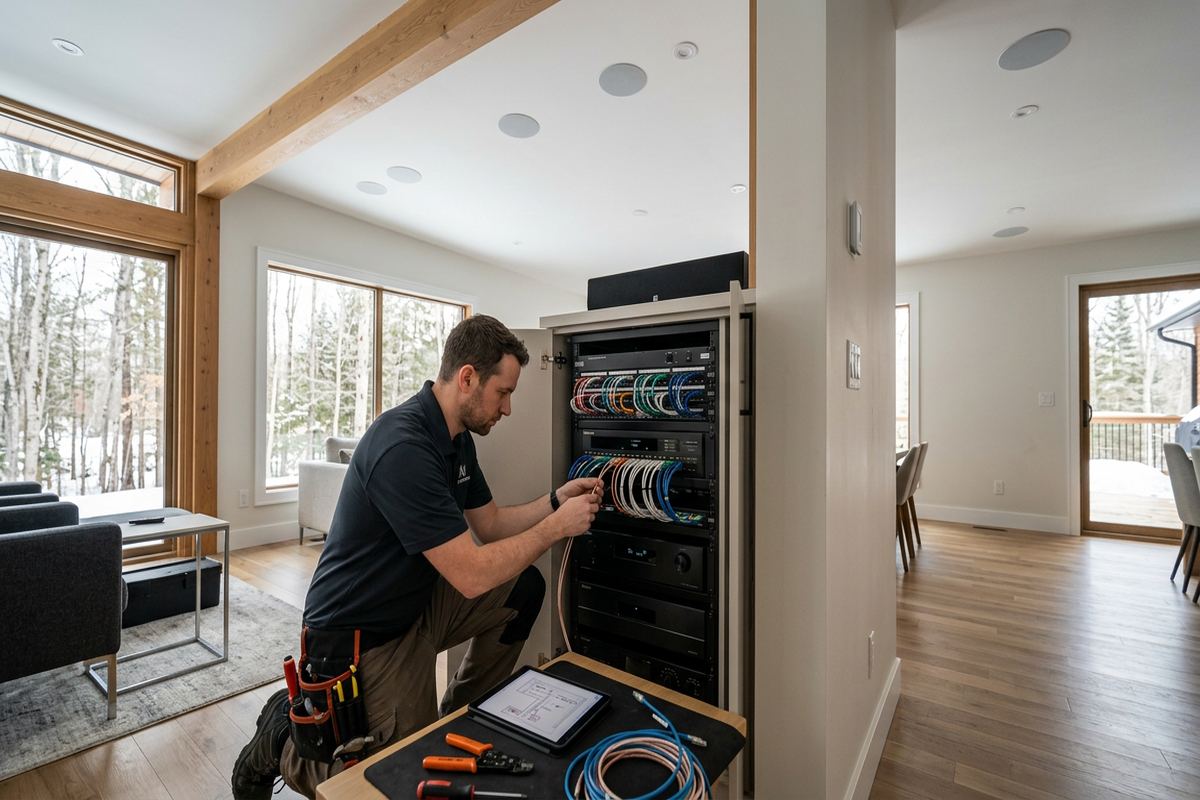
A useful audio system begins with decisions about where sound is needed, how each area will be used and who should control it. During a Fort Erie site assessment, we review listening areas, preferred sources, available network service and practical equipment locations. A kitchen may need simple background audio, while a living room requires television integration and clearer stereo placement. Patios, garages and workshops create different coverage demands. These details determine speaker type, amplifier capacity, zone layout and wiring before openings are made or equipment is ordered.
Whole-home audio does not mean every speaker must play the same source at the same volume. Separate zones allow bedrooms, entertaining areas, exterior spaces and work areas to operate independently. We discuss whether controls should use wall keypads, handheld remotes, mobile applications, voice platforms or a practical combination. The design also accounts for household members, guests and seasonal occupants who need straightforward operation. Where internet service is inconsistent, hardwired connections and local playback options can reduce dependence on wireless streaming for everyday use throughout the property.
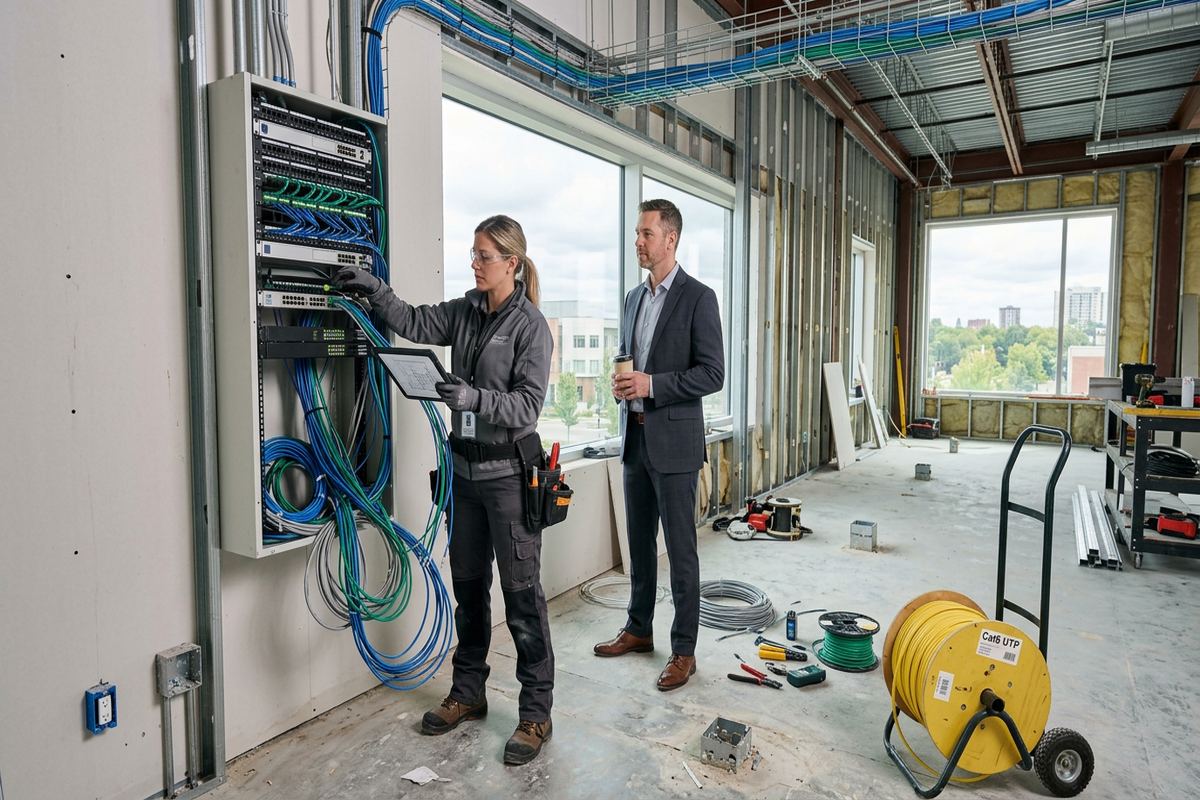
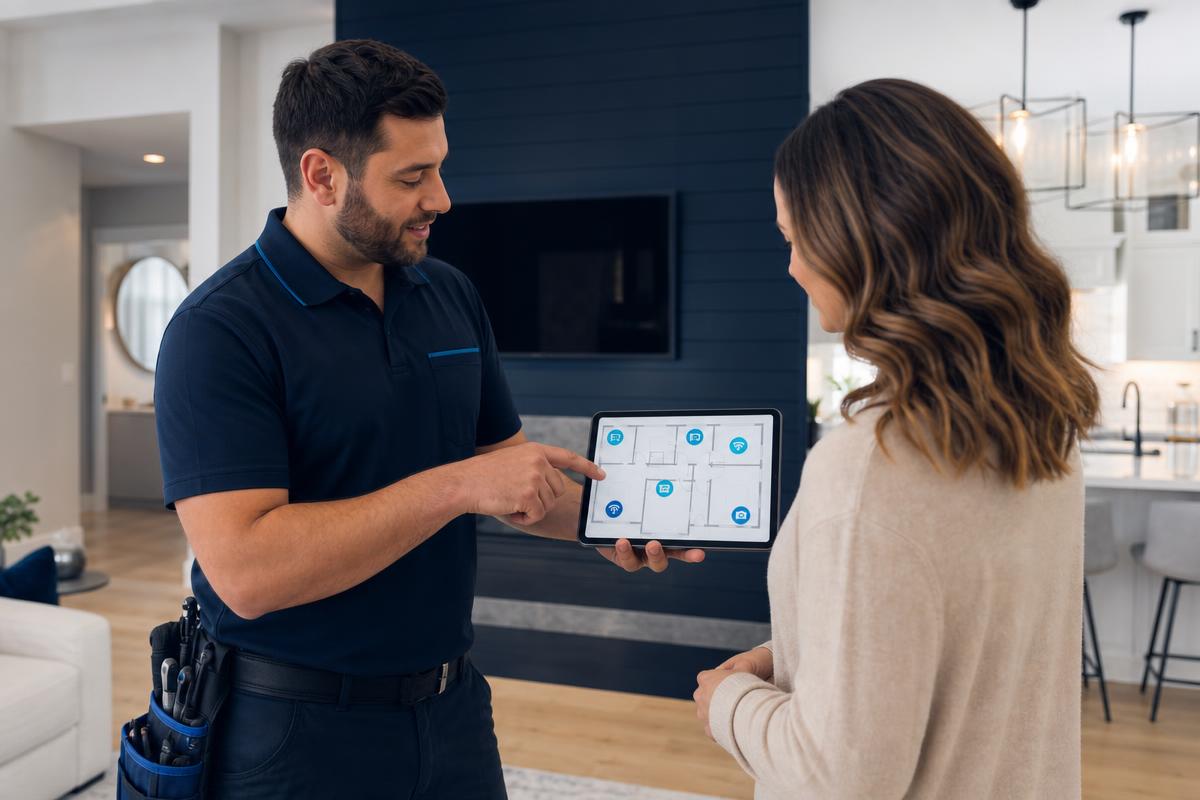
Following the assessment, UnifiedLink provides a written scope covering proposed equipment, device placement, cable routes, exclusions, equipment ownership and warranty. This gives the owner a clear basis for reviewing the installation before work starts. The plan can also identify electrical work, patching, painting or cabinetry that falls outside the low-voltage scope. For renovations and new construction, coordination with the builder helps place backing, conduit and cable before finishes close. Existing homes require route testing and careful decisions about access points, basements, attics and finished ceilings.
- Room-by-room listening and control review
- Defined indoor and outdoor audio zones
- Speaker, amplifier and source selection
- Documented routes, exclusions and ownership
- Planning for renovation or finished construction
Speaker Placement for Fort Erie Homes
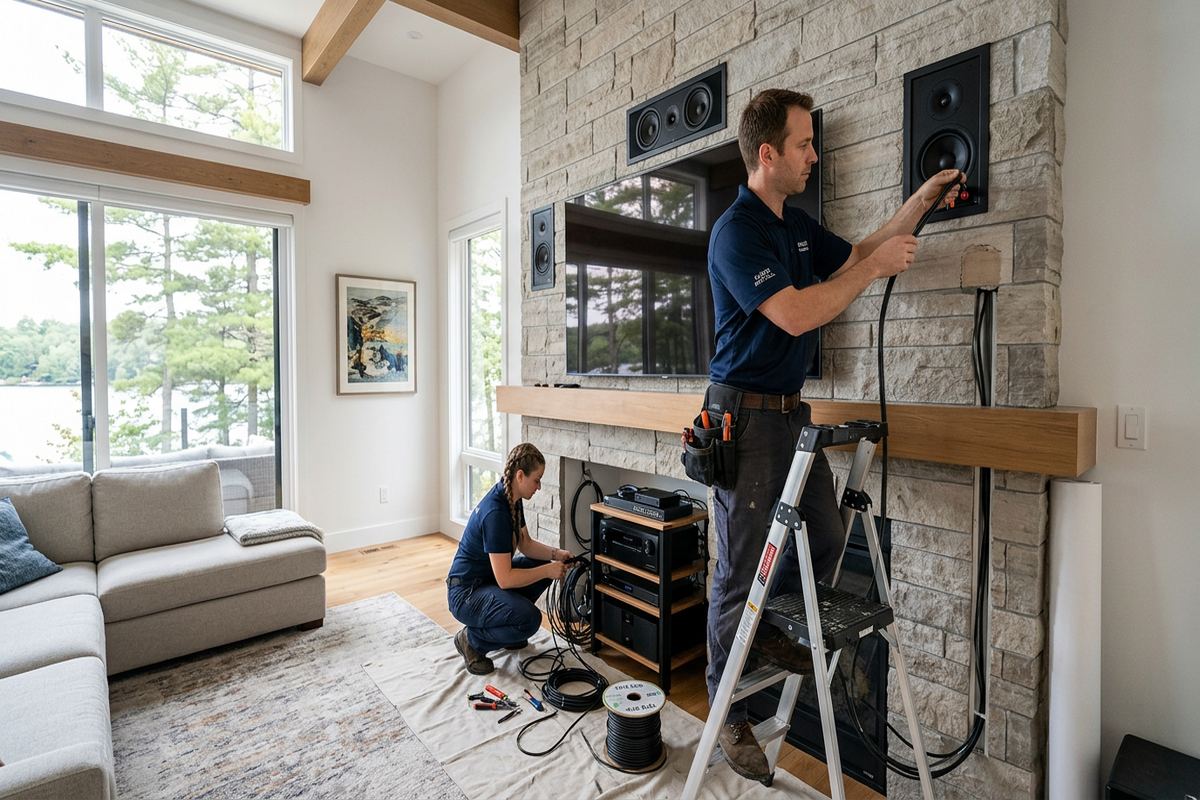
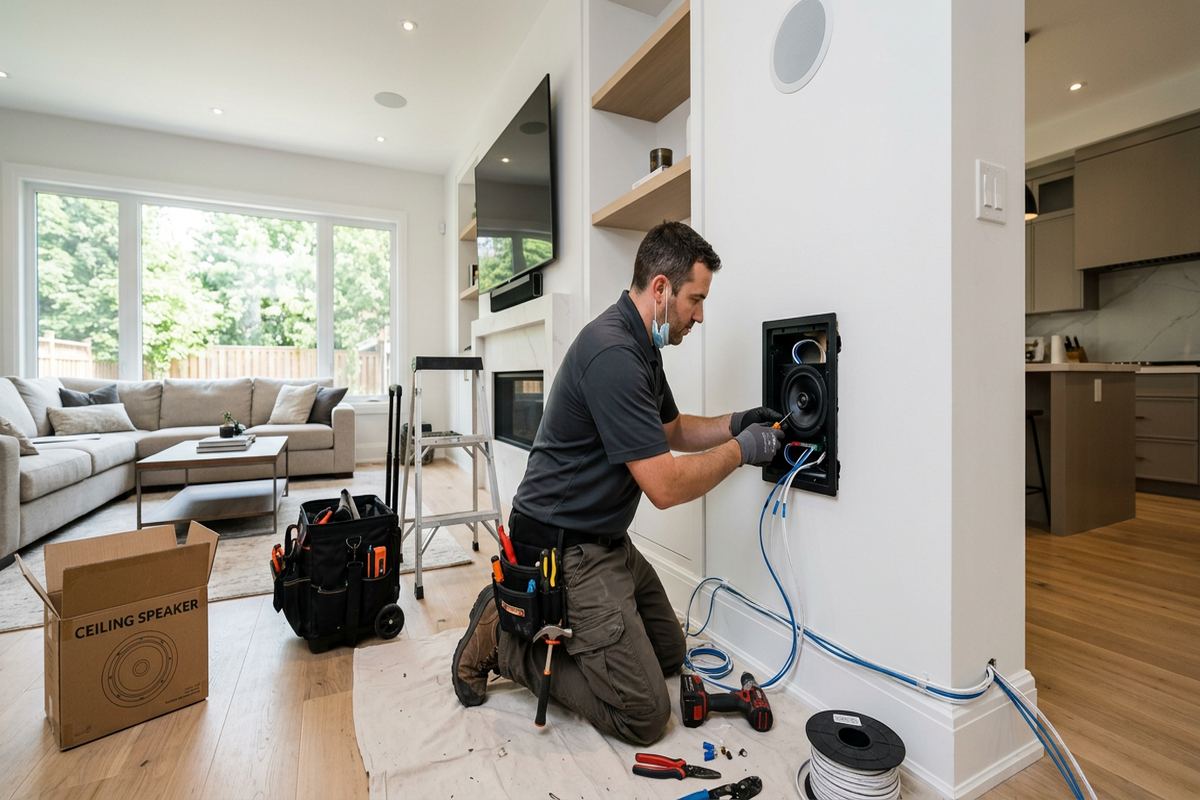
Speaker placement affects clarity, coverage and usable volume more than simply adding extra devices. In Fort Erie homes, ceiling height, open stairways, hard flooring and large lake-facing windows can produce reflective spaces that need balanced positioning. Ceiling speakers work well for even background sound when joist access permits, while in-wall or surface-mounted models may suit rooms with restricted cavities. Stereo pairs should preserve left and right separation around the main listening position. We also keep speakers away from obvious obstructions, noisy mechanical equipment and locations likely to be covered by furniture.
Older and altered buildings require investigation before a layout is finalized. Masonry walls may need surface pathways, carefully placed penetrations or alternate speaker locations, while frame construction can provide concealed routes through joist and stud spaces. Additions do not always share the original framing direction, and previous renovations can hide blocking, wiring or plumbing. Properties in Bridgeburg and Ridgeway can therefore call for different installation methods even when room layouts appear similar. Small exploratory openings are discussed first, and visible pathways are planned to remain orderly where concealment is not practical.
Bathrooms, kitchens and utility areas need equipment selected for their environment rather than ordinary room speakers installed by convenience. Humidity, cooking residue, temperature variation and nearby water sources affect placement and product choice. Speakers should not interfere with lighting, ventilation, cabinetry or access panels. For television areas, we review whether the goal is distributed programme sound, improved dialogue or a dedicated surround arrangement. These functions can share sources, but they require different speaker geometry and amplification. Clear design boundaries prevent a background music system from being mistaken for a purpose-built theatre.
- Coverage matched to room shape and surfaces
- Ceiling, wall or surface-mounted speaker options
- Routes adapted for masonry and frame walls
- Moisture-aware placement in kitchens and bathrooms
- Television audio planned for its intended use
Indoor Audio Zones and Everyday Control
Daily operation should remain understandable after the installer leaves. We configure zone names around familiar spaces, such as Kitchen, Patio or Primary Bedroom, rather than equipment terminology. Users can then select a source, group rooms and adjust volume without remembering technical labels. Volume limits may be applied where appropriate to protect speakers and avoid accidental high output. If several people use the system, we review account access and permissions during setup. The objective is a consistent control method that works for permanent residents, visitors and people managing a Fort Erie seasonal home.
Streaming services, televisions, turntables and locally stored music each connect differently. Some sources can be shared across every zone, while others remain tied to one room or require additional hardware. We confirm those limitations during design instead of assuming every application or device will integrate. Customer-owned accounts are used for supported online services, and passwords are not placed in project notes. During handover, the customer receives the credentials, system settings and basic operating guidance needed to manage playback, updates and authorized users without depending on an installer-owned account.
Reliable control also depends on the home network. Audio players using wireless connections need suitable signal strength in equipment cupboards, exterior areas and distant rooms. Fixed components can often use structured network cabling, reducing wireless congestion and improving predictable communication. We assess available switch ports, router placement and wireless coverage as part of system planning, but recommend network changes only where the audio installation needs them. A separate guest network, device isolation or managed network may affect discovery and control, so those settings must be considered before commissioning grouped zones and mobile applications.
- Clearly named rooms and playback groups
- Shared or independent sources by zone
- Customer-owned streaming and control accounts
- Practical volume limits where required
- Network checks for connected audio devices
Fort Erie, Ontario
Whole-home audio installation in Fort Erie, scoped in writing first
Book a site assessment and get equipment, routes, exclusions, and warranty on paper before anything is installed.
Outdoor Audio for Fort Erie Conditions
Border-adjacent businesses, lakefront properties and seasonal homes make weather-rated exterior gear a standard consideration in Fort Erie. Outdoor speakers must be designed for moisture, temperature changes and ultraviolet exposure; an indoor speaker beneath a shallow overhang is not an equivalent substitute. Placement considers prevailing exposure, drainage, listening direction and the distance between the speaker and amplifier. The aim is even sound near seating areas, not excessive volume projected toward neighbouring properties. Patios, pools, decks and detached structures may each require separate coverage and cable planning.
Freeze-thaw cycles can loosen unsuitable fasteners and stress poorly sealed penetrations. Exterior mounting therefore requires compatible hardware, stable backing and penetrations sealed for the wall assembly. Brick, concrete, siding and wood trim each call for different anchors and sealing details. Cable entry points should shed water rather than trap it, and outdoor junctions need suitable fittings. At Crystal Beach and other exposed areas, speaker position must account for wind-driven precipitation and open approaches from the lake. Seasonal shutdown plans may also affect where amplifiers and source equipment are housed.
Outdoor volume control can be handled through an application, a protected local control or a combination of both. The right arrangement depends on whether occupants normally carry a phone outside and whether guests need access. Equipment serving exterior zones is generally kept in a dry, serviceable interior location when cable distance and construction allow. We identify any limitations caused by detached garages, finished yards or difficult underground routes. Where trenching or restoration is required, the written scope clarifies responsibility, pathway requirements and coordination before exterior surfaces or landscaping are disturbed.
- Weather-rated speakers for exposed locations
- Sealed penetrations matched to exterior finishes
- Coverage directed toward intended listening areas
- Dry, accessible amplifier locations
- Defined routes for detached buildings and yards
Cabling and Equipment Locations
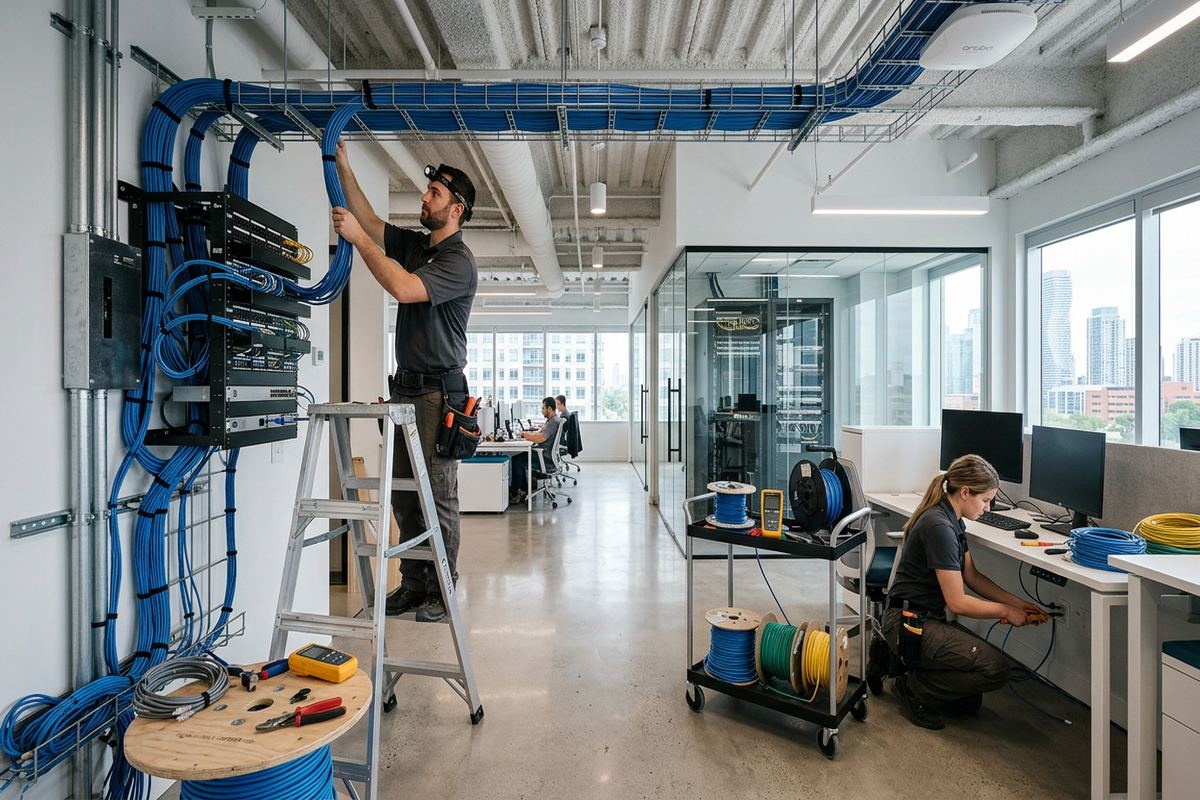
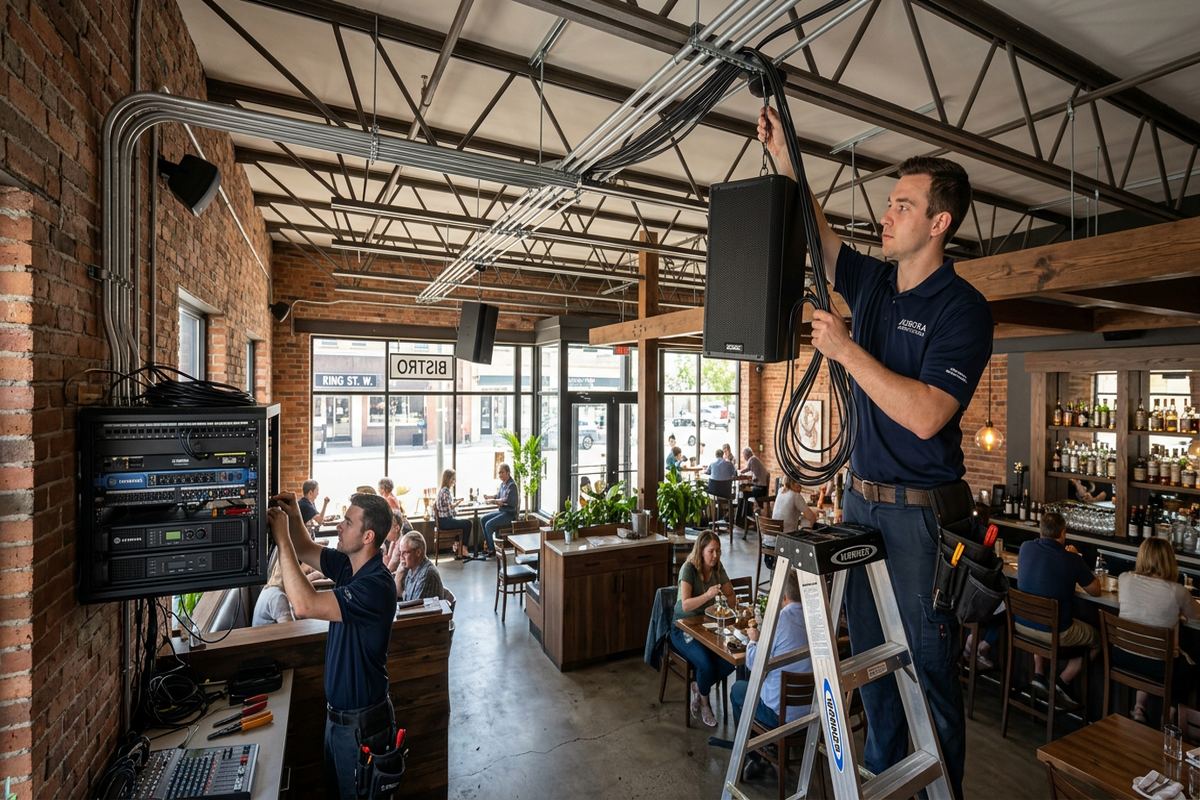
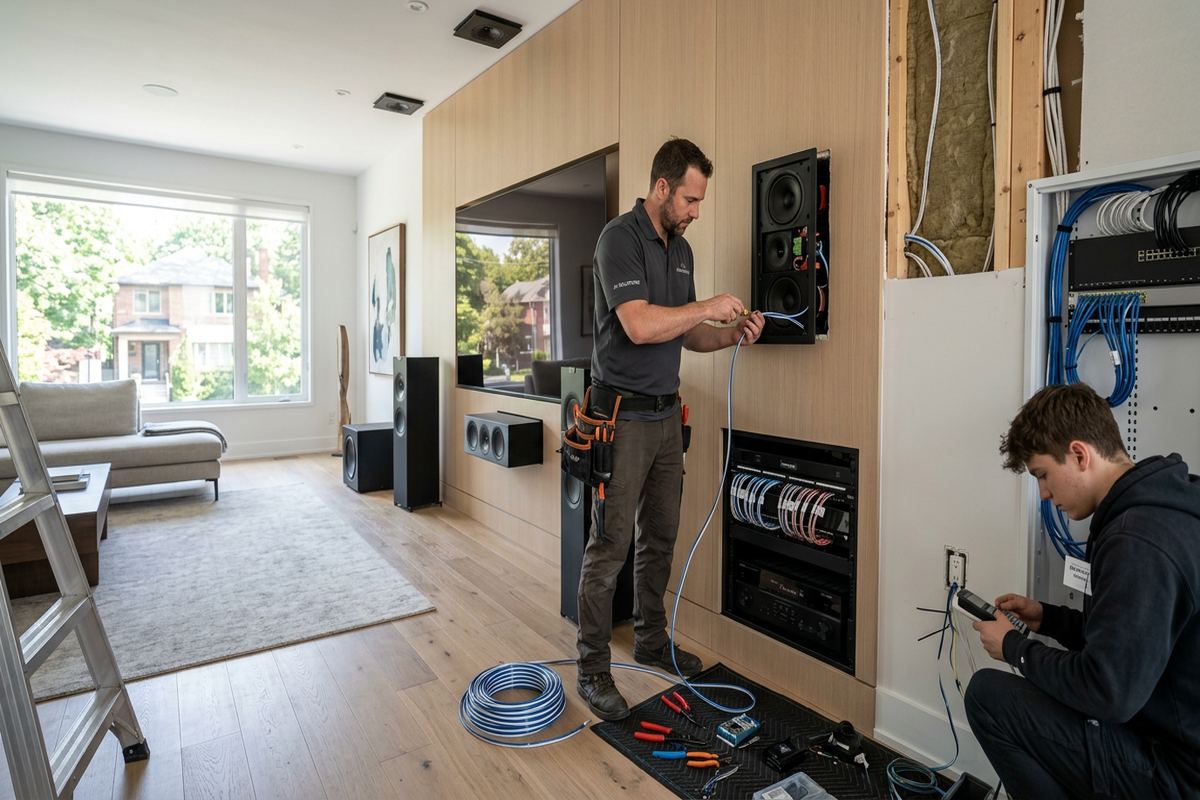
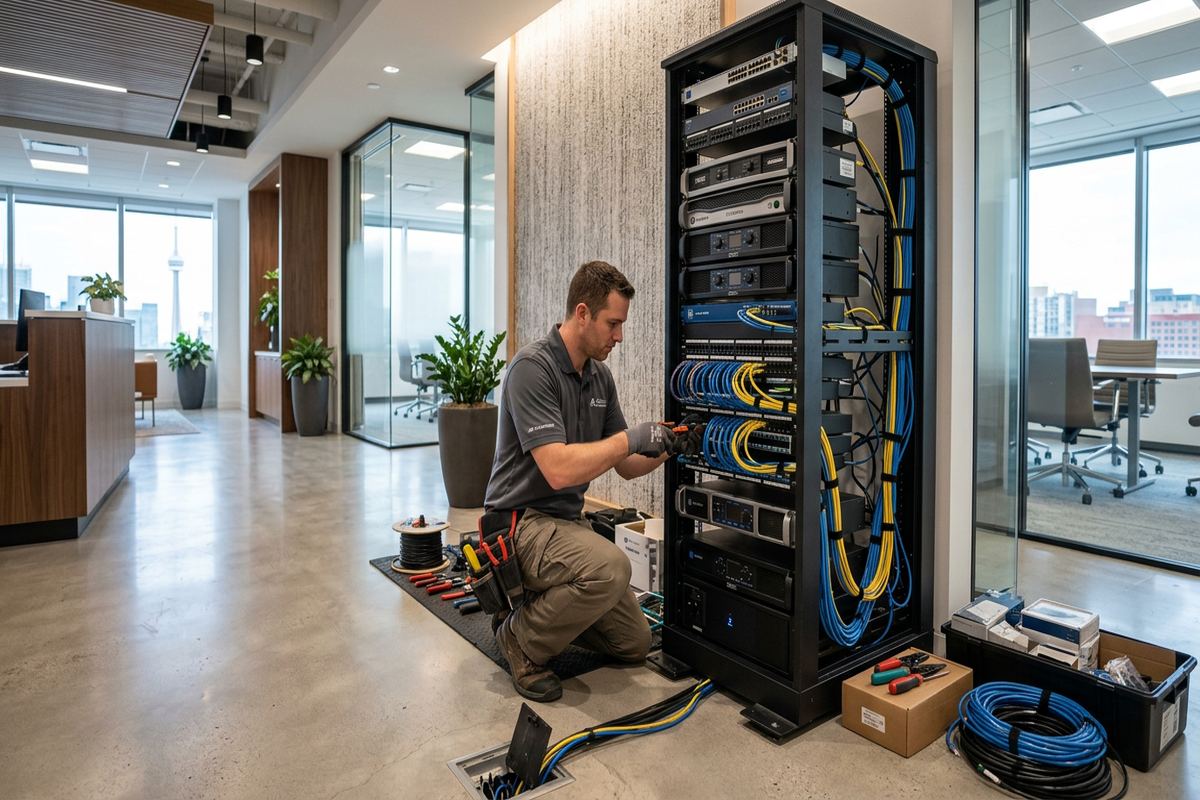
A distributed system depends on cable routes that remain identifiable and serviceable. UnifiedLink installs continuous labelled runs between speakers, controls and the designated equipment location, avoiding concealed splices that complicate testing and future repairs. Cable type is selected for the signal, distance, pathway and installation environment. Speaker wire, network cable and control cabling are kept clear of electrical conductors where required and supported rather than left loose above ceilings. At termination points, labels correspond with the zone schedule so another technician or owner can understand the system later.
Central equipment may be placed in a utility room, structured wiring area, cabinet or ventilated rack location. The space needs suitable power, network access, airflow and room for service without blocking household equipment. Enclosed cabinetry can trap amplifier heat, while damp basements and unconditioned garages may be unsuitable for electronics. In Fort Erie seasonal properties, equipment accessibility also matters when the building is being opened or closed for part of the year. We review clearances, shelf capacity and cable entry before choosing a location solely because it is hidden.
Finished properties often require a combination of concealed wiring and carefully selected visible pathways. Basements and attics may provide access, but insulation, fire separations, low roofs and finished ceilings can restrict movement. We do not assume that every proposed ceiling speaker can be reached without investigation. In masonry buildings or commercial units, surface raceway may provide a cleaner, more maintainable result than extensive cutting. Penetrations through rated assemblies or shared walls require appropriate coordination. The installation scope identifies known access requirements and notes areas where conditions cannot be confirmed until work begins.
- Continuous runs without concealed cable splices
- Labels matched to each room and zone
- Ventilated, serviceable equipment placement
- Supported cable and orderly terminations
- Visible raceway where concealment is impractical
Audio Installation Across Fort Erie Properties
Property type changes the installation approach. A detached frame house in Stevensville may offer basement and attic routes, while a brick building in Bridgeburg can require surface pathways or limited interior openings. Lakefront and seasonal homes need added attention to exterior exposure, humidity and equipment shutdown procedures. Renovated cottages may combine original framing with newer additions, creating unexpected route changes between rooms. A site assessment allows these conditions to shape the design, rather than forcing the same speaker package and labour assumptions onto every Fort Erie building.
Condos, rental homes and leased commercial spaces may require written approval before drilling, exterior mounting or routing cable through common elements. Owners should confirm responsibilities with the condominium corporation, landlord or property manager before installation. We can provide equipment locations and route details from the proposed scope to support that review, but approval remains with the appropriate party. Shared walls also demand care around sound transfer and penetrations. In rental settings, account ownership and removable versus permanent equipment should be decided early, especially when the occupant and property owner have different responsibilities.
Commercial strips, border-adjacent businesses and industrial units may use distributed audio for customer areas, offices, training rooms or staff spaces. These projects require attention to operating hours, ceiling construction, ambient noise and control access. Music licensing, content policy and public-address requirements are separate considerations for the business to address. In a warehouse or workshop, speaker coverage and mounting protection can matter more than discreet appearance. We define whether the system is intended for background music, television audio or announcements, because each purpose can require different equipment, zoning and commissioning.
- Methods adapted to masonry or frame construction
- Planning for additions and seasonal properties
- Condo and landlord approval considerations
- Business zones matched to actual use
- Industrial mounting and ambient-noise review
Fort Erie Installation and Commissioning
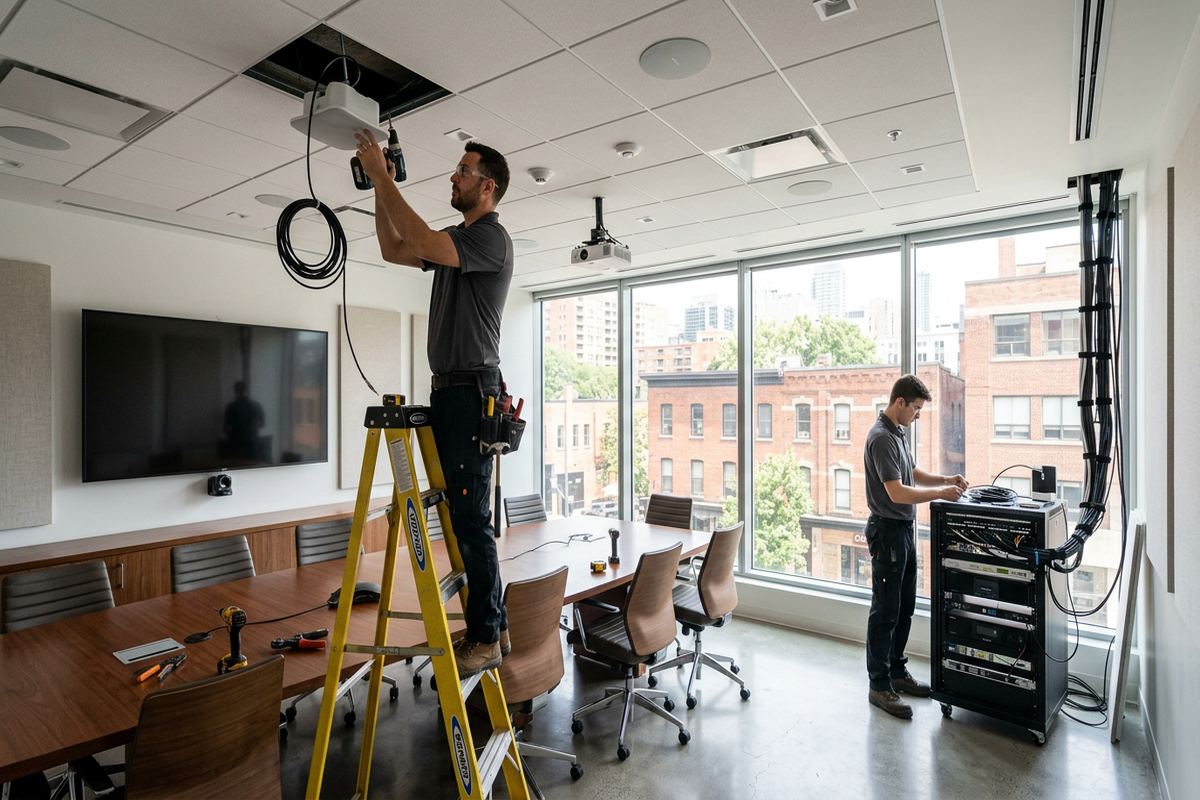
Installation starts from the accepted scope and confirmed device positions. Before cutting finished surfaces, technicians verify accessible routes and review changes caused by hidden construction or site conditions. Speaker openings are aligned carefully, brackets are secured to appropriate backing and cables are labelled at both ends. Exterior work includes suitable mounting and sealing for the wall finish. One accountable contractor manages the low-voltage audio work, helping avoid gaps between cabling, speaker installation and configuration. Any required changes are discussed rather than quietly substituted during the project.
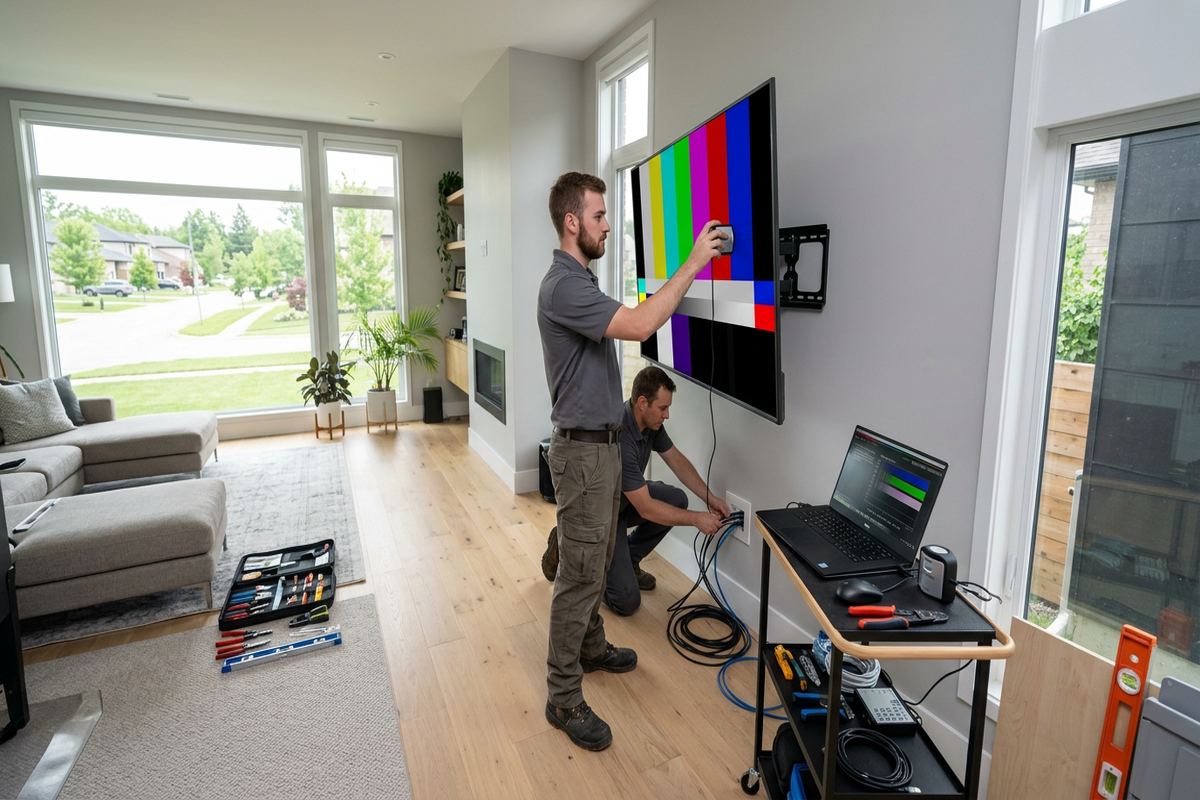
Commissioning includes checking cable continuity, speaker polarity, zone assignment, source operation and practical volume levels. Network-connected components are configured on site using customer-authorized accounts and available network information. We listen for obvious vibration, imbalance or incorrect grouping in the completed areas and adjust supported settings where needed. Outdoor zones are checked from their intended listening locations, not only beside the equipment. If a source, application or third-party device has a limitation outside the approved scope, it is identified during handover so the owner understands what is operating and what remains separate.
At completion, the customer receives an as-built record showing installed devices, zone names and relevant cable or equipment information. Handover uses the customer’s own credentials, reducing dependence on installer-controlled accounts for normal administration. We demonstrate source selection, grouping, volume adjustment and basic recovery steps appropriate to the installed platform. Warranty information and equipment ownership follow the written scope. For a Fort Erie seasonal home or managed property, an authorized local contact can participate in handover when the owner wants another person familiar with startup and routine operation.
- Position verification before finished surfaces are opened
- On-site source and zone configuration
- Cable, polarity and playback testing
- Customer-owned credentials at handover
- As-built record for future reference
Requesting Whole-Home Audio Service in Fort Erie
To prepare for a site assessment, identify the rooms and exterior areas where audio is wanted, along with the sources people actually use. Photographs, renovation drawings and notes about accessible basements or attics can help frame the discussion, but they do not replace an on-site review. Mention planned televisions, turntables, network upgrades, cabinetry or landscape work that could affect the design. For properties in Ridgeway, Douglastown or elsewhere in Fort Erie, also note whether the building is occupied year-round, seasonal, rented or subject to approval requirements.
The assessment reviews construction, likely routes, speaker positions, control preferences and the proposed equipment location. It also identifies dependencies such as electrical receptacles, network coverage, patching, trenching or third-party approvals. Site assessment timing depends on the service and travel distance. Requests sent during business hours are answered the same day, while after-hours requests are answered the next business day. Pricing follows the assessment because room geometry, finished construction, exterior exposure and integration requirements directly affect the scope. This process avoids basing an installation on an incomplete room count alone.
A useful request does not need a finished equipment list. It is often better to describe the result: consistent music on the main floor, independent bedroom controls, television sound in one zone or patio coverage that stays near the seating area. UnifiedLink can then match speaker types, amplification and controls to those needs and the building. The resulting written scope records equipment, cable routes, placement, exclusions, ownership and warranty. That document gives the Fort Erie property owner a practical reference for approving, coordinating and later maintaining the whole-home audio installation.
- Assessments based on the actual property
- Planning for indoor and exterior listening areas
- Dependencies identified before installation
- Written scope provided before work proceeds
- Same-day replies during business hours
Fort Erie neighbourhoods we cover
- Bridgeburg
- Crystal Beach
- Ridgeway
- Stevensville
- Douglastown
Whole-home audio installation in Fort Erie — common questions
Can you add whole-home audio to an existing Fort Erie house?
Yes, subject to practical cable access and the building’s construction. Basements, attics, closets and renovation openings can support concealed routes, while masonry or fully finished areas may require surface raceway or alternate speaker positions. A Fort Erie site assessment is completed before pricing so the scope can reflect access, finishes, equipment locations and any patching or electrical work outside the low-voltage installation.
What speakers should I use outside near Lake Erie?
Exterior speakers should be weather-rated and mounted with hardware and sealing methods appropriate to the wall finish. Fort Erie lakefront exposure, winters and freeze-thaw cycles make sheltered placement alone insufficient protection for indoor equipment. We consider moisture, wind-driven precipitation, sunlight, drainage and intended listening direction. Amplifiers and source equipment are normally kept in a dry, serviceable location where the cable route permits.
Can different rooms play different music?
Yes. A properly designed multi-zone system can let separate rooms play different supported sources or group selected areas together. The available combinations depend on the amplifier, source devices, streaming platform and network. During planning, we define which Fort Erie rooms need independent control, which can share amplification and whether exterior areas should remain separate from bedrooms or main living spaces.
Will you connect the system to my television?
Television audio can be integrated, but the right method depends on whether you want basic distributed sound, clearer front-room audio or a dedicated surround system. Those are different designs. We review the television’s outputs, equipment location, control expectations and delay between rooms. The written Fort Erie installation scope identifies included interfaces and notes any television, application or third-party limitations.
Do I need condo or landlord approval?
Possibly. Fort Erie condo corporations, landlords and property managers may control drilling, exterior attachments, common walls, ceiling spaces or cable routes through shared areas. The owner or tenant should confirm approval requirements before work begins. UnifiedLink can document proposed device locations and pathways to support that review, but authorization must come from the party responsible for the building or common elements.
How do I arrange a Fort Erie site assessment?
Send the property location, preferred audio areas, building type and any known renovation or exterior plans. Requests received during business hours are answered the same day; after-hours requests are answered the next business day. Site assessment timing depends on the service and travel distance. After reviewing the Fort Erie property, UnifiedLink prepares a written scope before pricing or installation proceeds.
Coverage in Fort Erie is confirmed against the address before we quote. See everything we install in Fort Erie or the province-wide whole-home audio installation page.