UnifiedLink installs low-voltage cabling for homes, commercial spaces and industrial units across Fort Erie. We plan routes, install continuous labelled runs, terminate and test connections, configure attached systems on site, and provide an as-built record. Exterior work accounts for Niagara Region winters, freeze-thaw cycles and the needs of border-adjacent businesses, lakefront properties and seasonal homes.
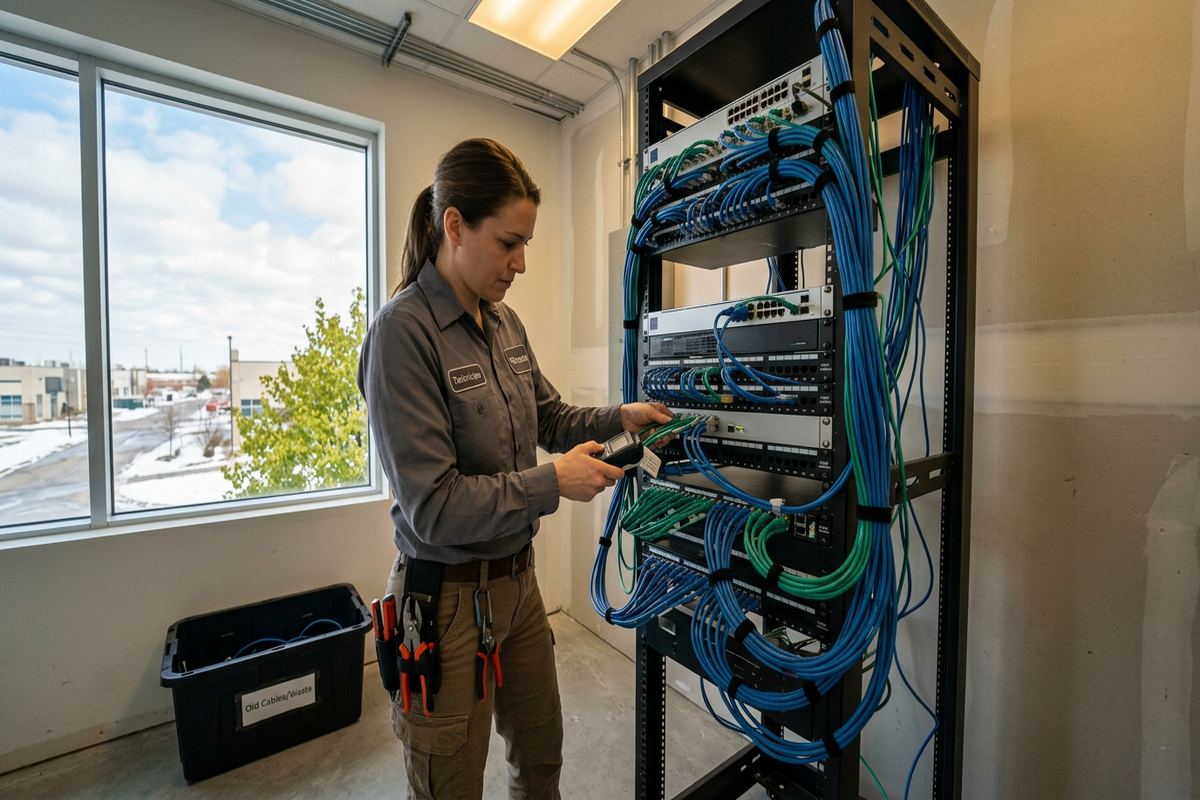
Low-Voltage Cabling Planned for Fort Erie Properties
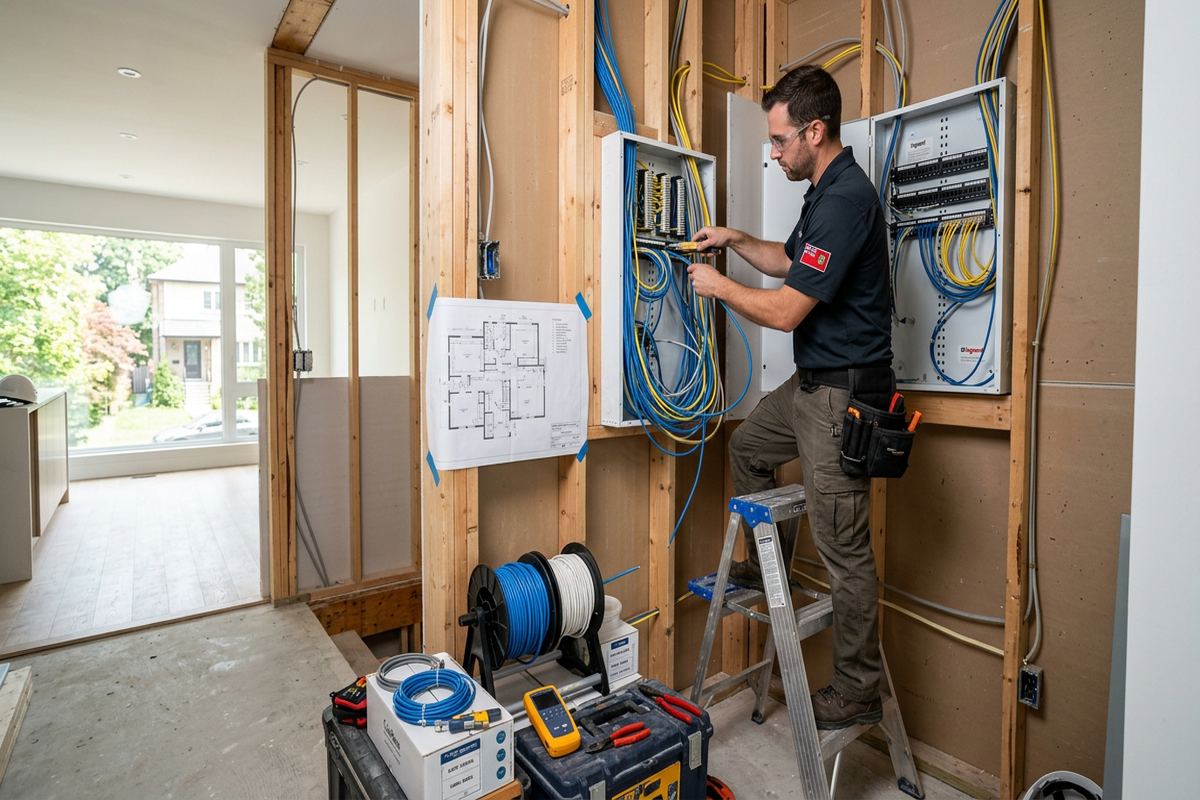
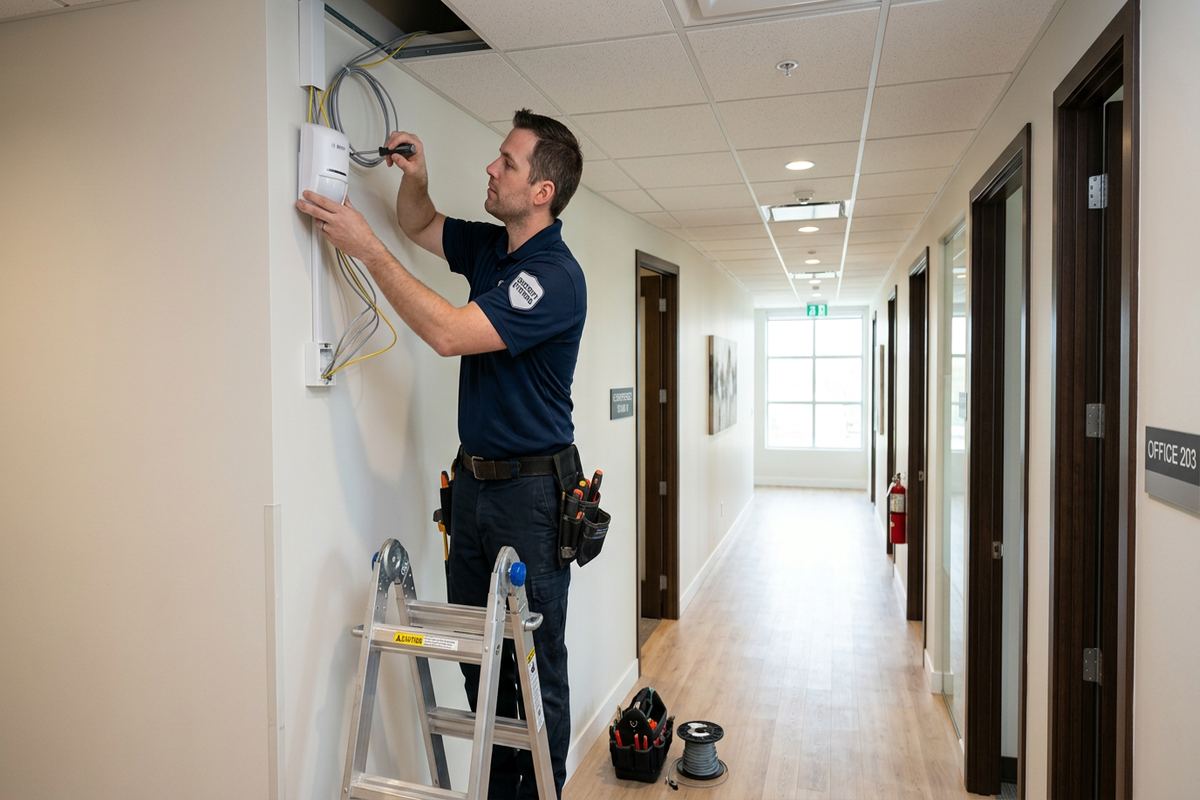
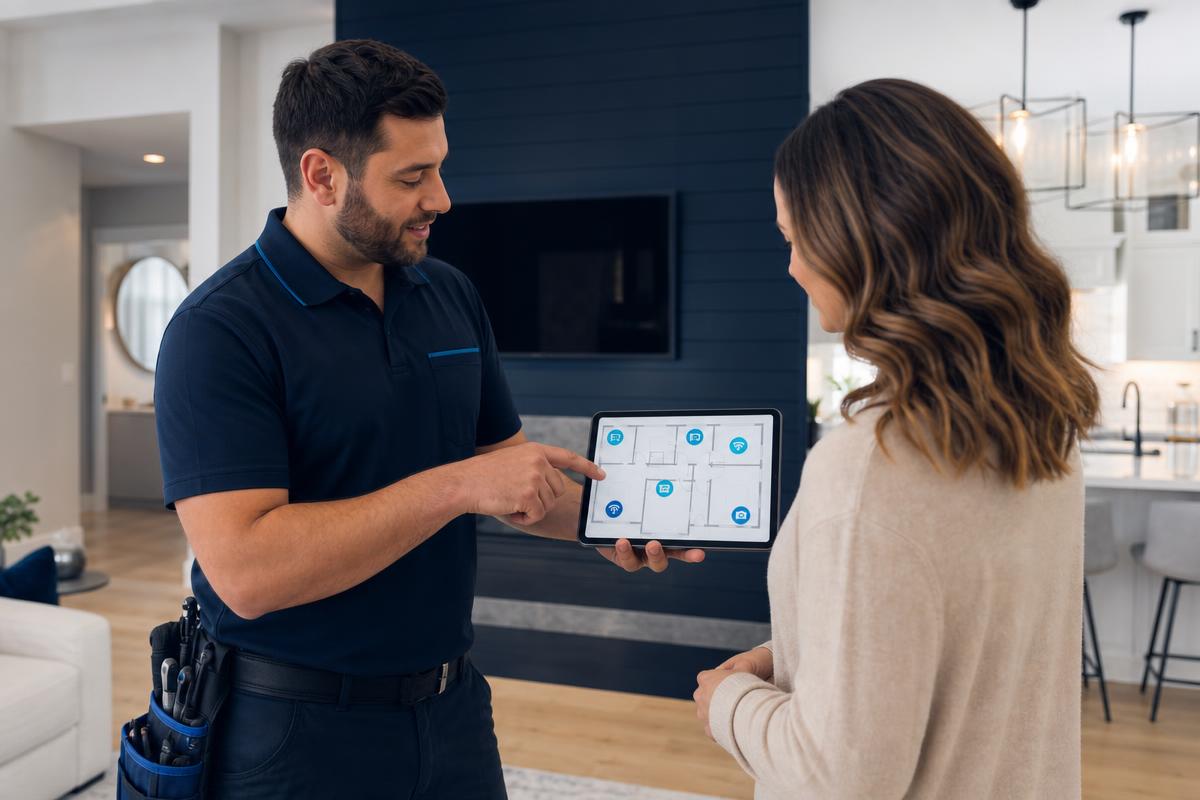
A useful cabling system begins with a site assessment, not a generic materials list. In Fort Erie, we review the building layout, construction type, service entrances, existing wiring and the equipment each cable must support. Camera coverage, wireless access points, alarm devices, door controllers, speakers and displays all have different placement and pathway requirements. We identify practical routes through basements, ceilings, utility rooms and exterior walls while limiting unnecessary openings. The resulting plan accounts for cable length, separation from electrical wiring, future access and suitable locations for racks, cabinets, power supplies and network equipment.
Building age and construction affect how low-voltage cable can be installed. Older masonry buildings may have limited wall cavities, previous renovations and concealed obstructions, while newer frame construction usually provides different routing options. Commercial strips can include shared walls, suspended ceilings and landlord-controlled service areas. Industrial units may require protected pathways around equipment, loading areas or higher ceilings. We inspect these conditions before proposing the work. Where concealed routing is impractical, neatly installed surface raceway, conduit or other mechanical protection can provide an accessible and serviceable alternative without treating every property as if it were new construction.
Following the assessment, UnifiedLink prepares a written scope covering equipment, proposed cable routes, device placement, exclusions, equipment ownership and warranty details. This establishes what will be installed and clarifies any work requiring another trade, owner approval or building access. Site assessment timing depends on the requested service and travel distance. Requests sent during business hours are answered the same day, while after-hours requests are answered the next business day. Pricing is provided only after the relevant site conditions and system requirements have been reviewed, reducing assumptions about pathways, materials and labour.
- On-site review of pathways and construction
- Cable planning matched to connected equipment
- Written scope before installation begins
- Clear exclusions and ownership details
Cabling for Networks, Security and Building Systems
Low-voltage infrastructure often supports several systems within one property. Category cable may serve computers, phones, wireless access points, cameras, intercoms or access control devices, but each connection still needs appropriate design and termination. Coaxial, speaker, alarm and control wiring have their own requirements. We select cable according to the device, transmission distance, installation environment and pathway. Combining the planning stage can reduce duplicated routes and crowded penetrations, while keeping systems logically separated. The objective is an organized infrastructure that technicians can identify, test and modify without tracing unidentified wires through finished areas.
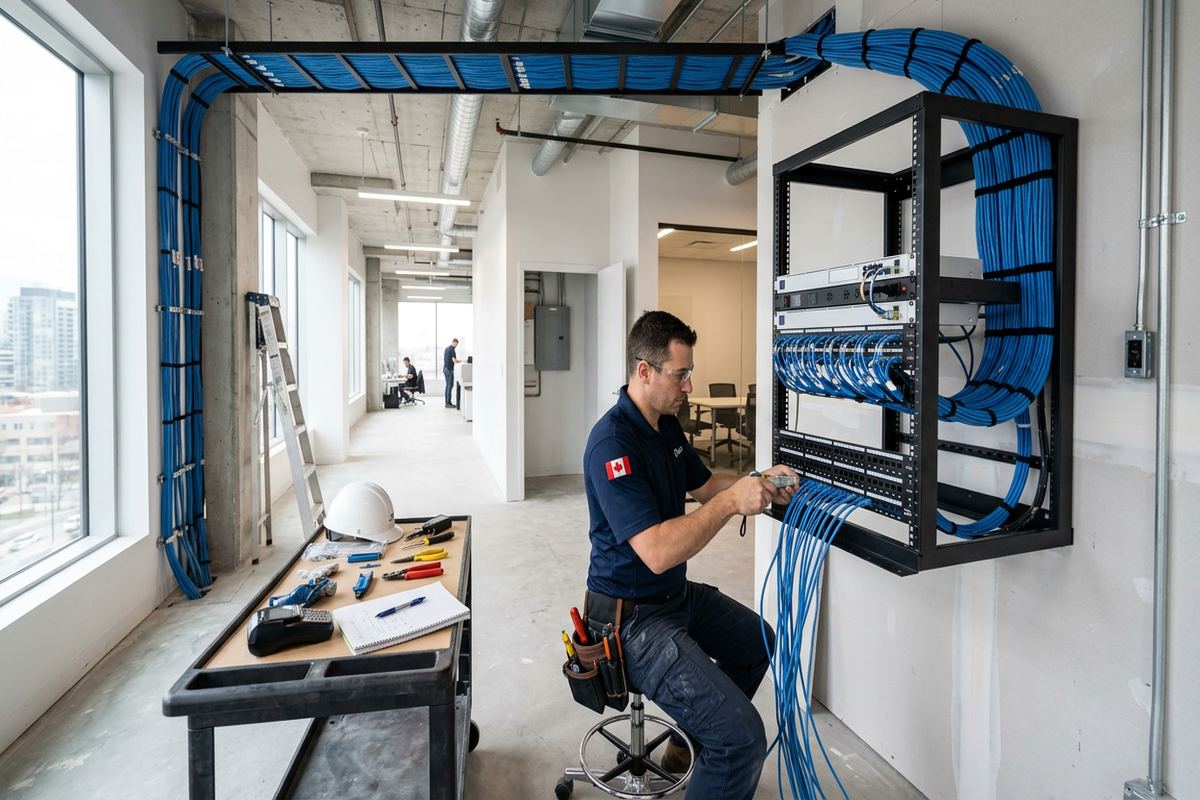
For Fort Erie businesses, reliable pathways can be especially important where point-of-sale devices, office networks, surveillance and controlled entrances operate together. Border-adjacent businesses may need exterior cameras, gate communications or links between operational areas. Commercial strips often require coordination around customer hours, shared ceiling spaces and existing tenant improvements. Industrial units can call for stronger mechanical protection and carefully selected mounting locations. We document which cables serve each system, label both ends and terminate them at agreed outlets, patch panels, enclosures or device positions so routine troubleshooting does not depend on guesswork.
Residential cabling can support home offices, televisions, audio, cameras, doorbells and dependable Wi-Fi coverage. Lakefront and seasonal homes may also benefit from planned connections for remote monitoring and exterior devices, provided the equipment and network are suitable for unattended periods. We do not assume wireless service can replace every cable. A wired backbone can give access points, cameras and fixed equipment a stable connection while keeping devices off weak or congested wireless links. During planning, we discuss active equipment, likely furniture placement and future needs so outlets are installed where they can be used.
- Data and network cabling
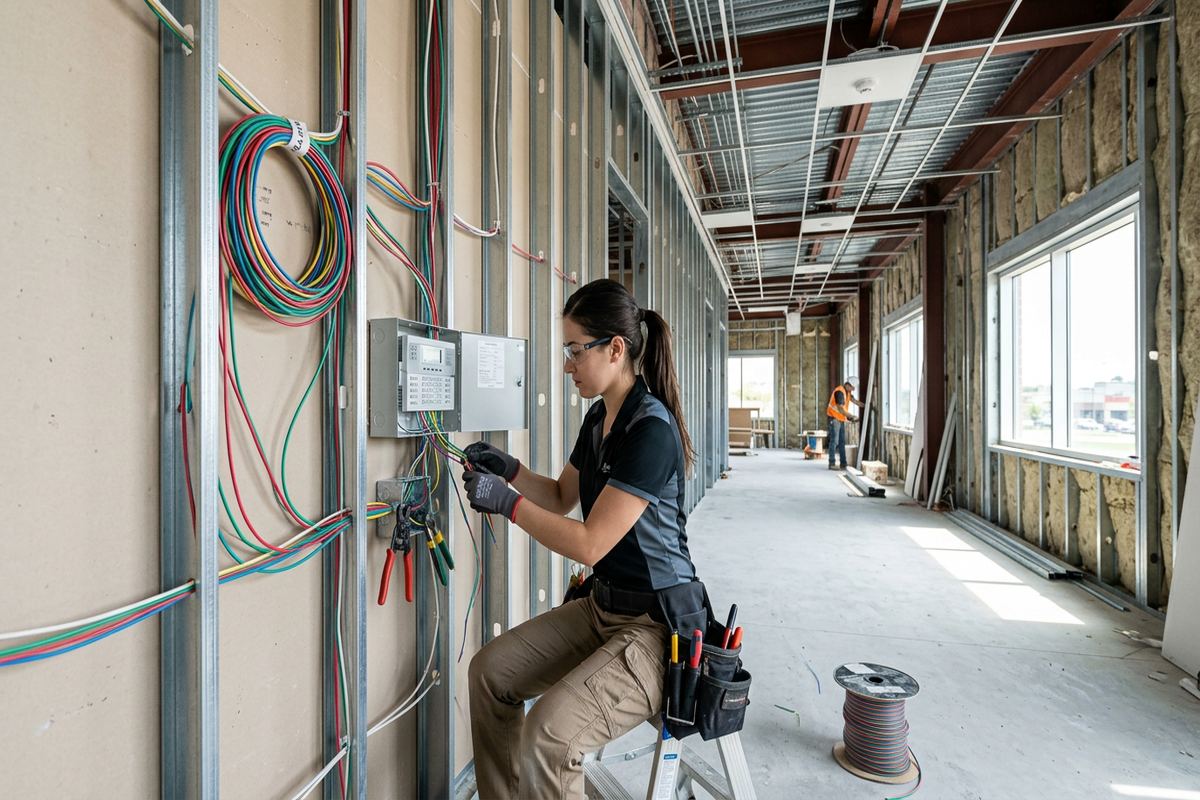
- Camera and alarm device wiring
- Access control and intercom pathways
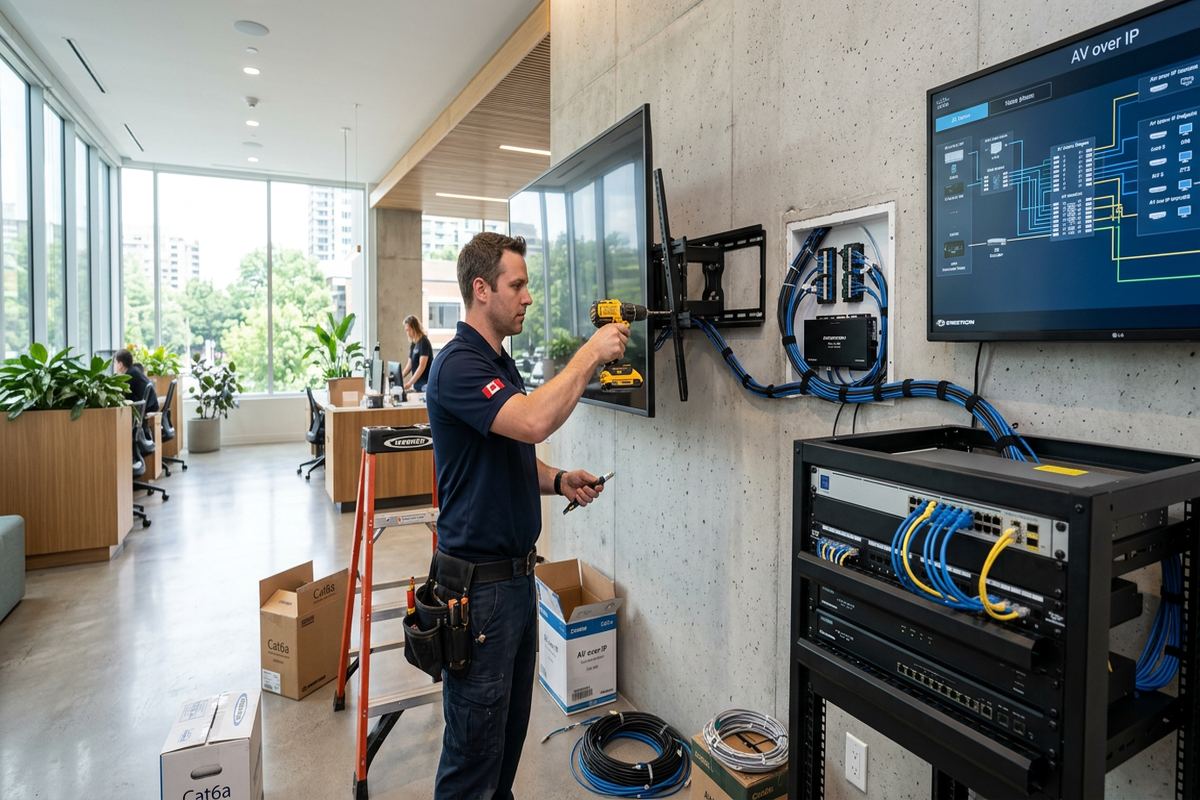
- Audio, display and control connections
- Residential and commercial infrastructure
Exterior Cabling in Fort Erie Weather
Exterior installations in Fort Erie require materials and methods suited to moisture, wind, cold temperatures and repeated freeze-thaw cycles. Border-adjacent businesses, lakefront properties and seasonal homes make weather-rated exterior gear a standard consideration rather than an optional upgrade. We assess cable jacket ratings, enclosures, connectors, mounting surfaces and transitions between outdoor and indoor spaces. Indoor cable is not simply extended outdoors because a route appears convenient. Exposed sections need suitable protection, controlled bend radius and secure support, while every penetration needs detailing that limits water entry and remains serviceable if a device is replaced.
Mounting on brick, concrete, siding or wood framing calls for different fasteners and sealing methods. Masonry penetrations must avoid damaged joints and uncontrolled water paths, while siding installations need stable attachment to structure rather than reliance on thin cladding alone. Cable entries are positioned and sealed to discourage water from following the cable indoors. Drip loops, weather-rated boxes and protected connector locations may be used where appropriate. We also consider snow accumulation, roof runoff, vehicle movement and routine maintenance access before placing cameras, wireless bridges, speakers or other exterior low-voltage devices around a Fort Erie property.
Seasonal use creates another practical concern: equipment may remain exposed while nobody is present to notice a loose fitting, damaged cable or failed connection. We therefore keep outdoor routes deliberate, mechanically secure and visible enough for inspection where possible. Cables are not left unsupported across façades or pinched through windows and doors. For detached structures, gates or remote mounting points, we assess distance, pathway and grounding or electrical coordination before defining the solution. Some links may be better served by fibre, conduit or a properly designed wireless bridge than by an unprotected copper run.
- Outdoor-rated cable and enclosures
- Sealed exterior wall penetrations
- Mounting suited to masonry or siding
- Routes planned around snow and runoff
- Protected connections for seasonal properties
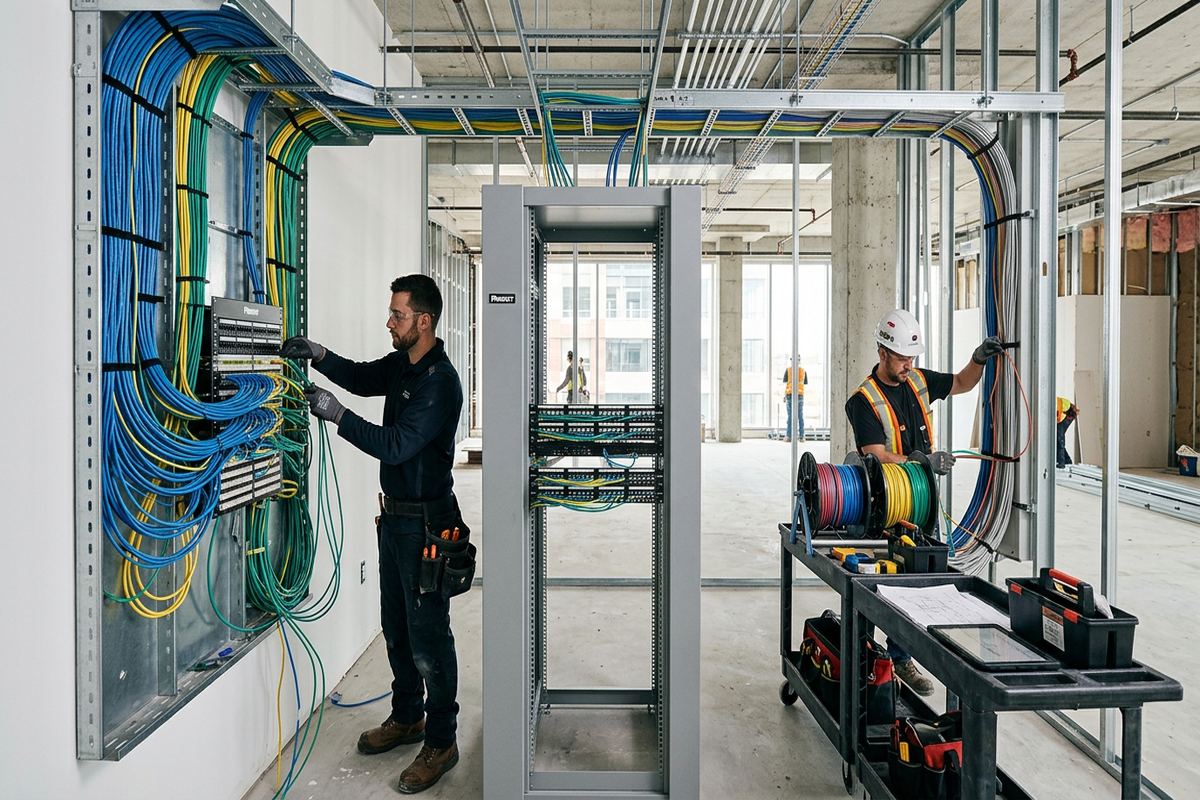
Fort Erie, Ontario
Low-voltage cabling installation in Fort Erie, scoped in writing first
Book a site assessment and get equipment, routes, exclusions, and warranty on paper before anything is installed.
Continuous Runs, Termination and Testing
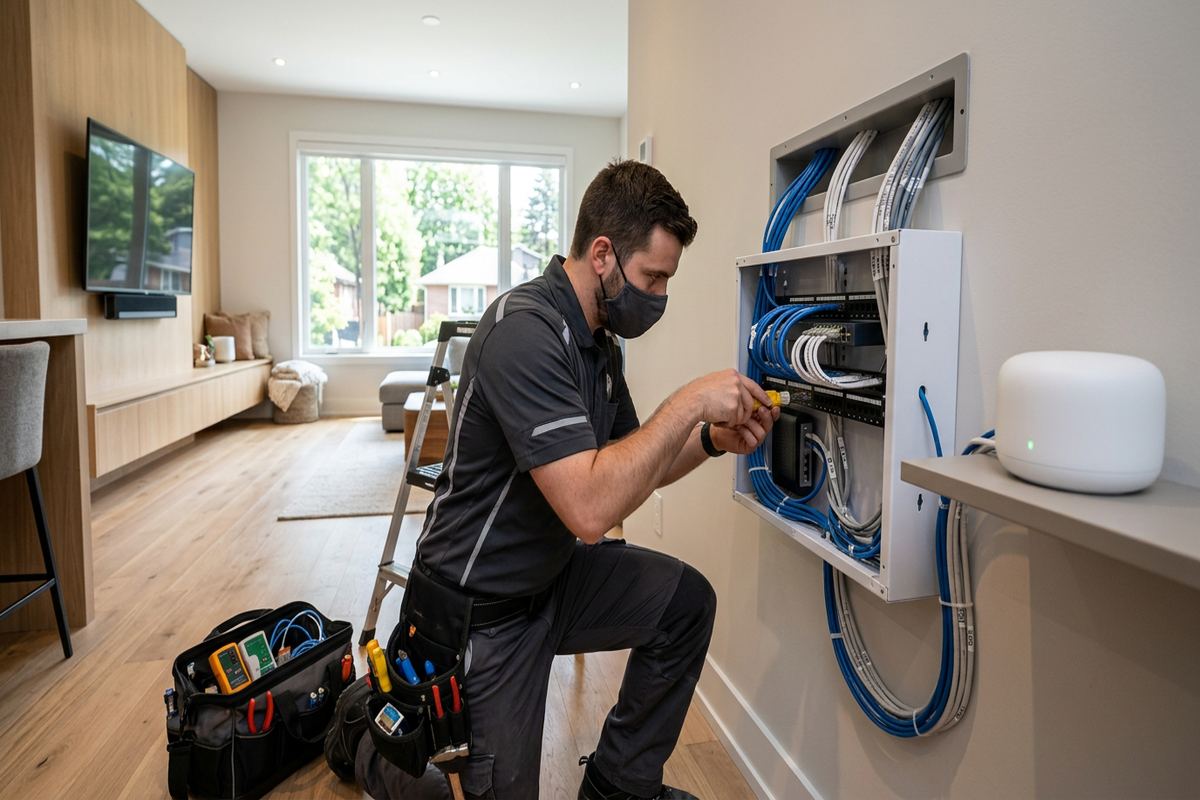
Installation quality depends on what happens between the two visible endpoints. UnifiedLink installs continuous labelled cable runs along the agreed pathways, avoiding hidden splices that complicate testing and future service. Cables are supported with suitable hardware rather than resting on ceiling tiles, wrapped around pipes or stretched across access openings. We maintain practical separation from electrical conductors and avoid sharp bends, crushing and excessive pulling force. At distribution points, cables are organized so labels remain readable and service loops are controlled. This approach provides a cleaner installation and makes changes easier when rooms, tenants or connected equipment change.
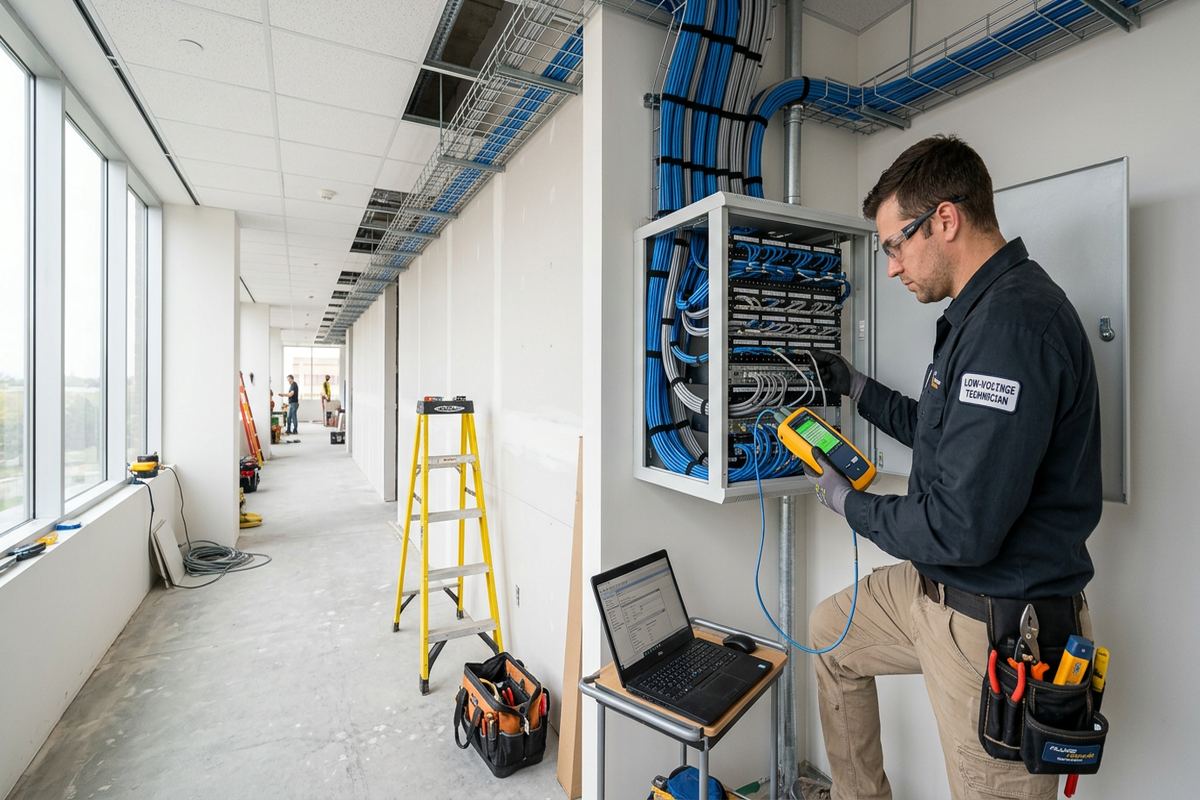
Termination is completed for the selected cable and hardware, whether that means patch panels, keystone jacks, camera connections, alarm terminals, speaker plates or other system-specific endpoints. Each run is identified at both ends using a consistent naming method. Testing then confirms continuity and connection quality appropriate to the service being installed. If an existing cable is being reused, we inspect and test it rather than assuming its jacket, route or termination remains suitable. Results and limitations are explained before equipment is connected, particularly where inaccessible legacy wiring prevents full verification or fails to support the intended application.
Neat cabling also reduces avoidable service disruption. In an office or retail space, a technician should be able to identify the correct outlet and patch-panel position without disconnecting unrelated devices. In a home, labelled connections help owners understand which room, camera or access point each cable serves. Fort Erie properties with multiple buildings, additions or renovated areas benefit from especially clear naming because pathways may cross different construction types. We include the installed routes and endpoint identities in the as-built record, giving the customer a practical reference rather than leaving system knowledge with the installer.
- No concealed cable splices
- Labels applied at both endpoints
- Appropriate termination for each system
- Installed runs tested before handover
- Organized racks, panels and enclosures
Retrofit Cabling Across Fort Erie Communities
Retrofit work rarely follows a single method across Fort Erie. Bridgeburg properties can include older structures, mixed commercial uses and renovated interiors where original pathways are unclear. In Crystal Beach, seasonal and lake-oriented homes may combine additions, crawl spaces and exterior equipment exposed to harsher moisture conditions. Ridgeway buildings can present both traditional construction and updated interiors with limited access behind finished surfaces. We investigate before opening walls, then use accessible attics, basements, ceiling spaces, closets or surface pathways where appropriate. The goal is controlled work with realistic expectations about concealment and restoration.
Stevensville and Douglastown properties may include detached garages, workshops, larger lots or buildings with different construction phases. Extending a network or security connection to another structure requires more than selecting a long cable. We assess distance, underground or overhead pathway options, environmental exposure and the possibility of electrical potential differences between buildings. Conduit, fibre or a wireless link may be more appropriate depending on the site. Trenching, electrical work and major restoration are identified as included or excluded in the written scope, preventing assumptions about which contractor is responsible for each part.
Occupied homes and operating businesses need a workable installation sequence. Before starting, we confirm access to rooms, ceiling spaces, communications areas and device locations. Furniture, inventory or machinery may need to be moved by the owner, tenant or site representative. Dust control and minor drilling are planned around the construction type, but low-voltage installation is not presented as damage-free when concealed access is required. We identify expected openings and restoration responsibilities in advance. Where an alternate visible route avoids extensive disruption, we explain the trade-off between appearance, access, protection and installation complexity.
- Retrofit routes for older buildings
- Options for finished walls and ceilings
- Detached-building connection planning
- Defined access and restoration responsibilities
- Service throughout named Fort Erie communities
Approvals, Shared Buildings and Tenant Spaces
Ownership and approval must be established before cabling is attached to common or rented property. Fort Erie condo owners may need authorization for exterior cameras, hallway devices, penetrations, shared telecommunications rooms or equipment mounted on common elements. Tenants in commercial strips often require landlord approval before cables enter shared ceilings, risers, façades or utility spaces. UnifiedLink can provide a proposed route and device plan for review, but the customer remains responsible for obtaining required permissions unless the written scope states otherwise. Installation is scheduled after access conditions and approving contacts are clear.
Shared buildings also require attention to boundaries between private equipment and building infrastructure. A tenant network cabinet, camera recorder or access controller should not be connected through another occupant’s space without documented authorization and a maintainable pathway. We identify demarcation points, available communications rooms and any existing pathways that may be used. Fire separations and rated assemblies are treated as building features that cannot be casually drilled or left unsealed. Where specialized firestopping, electrical work, lift access or hazardous-material review is required, that work is coordinated or listed as an exclusion before installation proceeds.
Commercial and industrial sites may have operational rules beyond basic property approval. Loading schedules, controlled areas, food preparation spaces, production equipment and public access can affect cable routes and working hours. We ask the site contact to identify restricted zones, required escorts and shutdown limitations during assessment. One accountable contractor manages the agreed low-voltage scope, reducing handoffs between separate camera, network and access control cabling crews. When another trade is necessary, connection points and responsibilities are recorded so the customer can see where UnifiedLink’s work ends and the related work begins.
- Condo and landlord approval planning
- Shared-space route documentation
- Clear private and common boundaries
- Coordination with other required trades
- Defined access and work restrictions
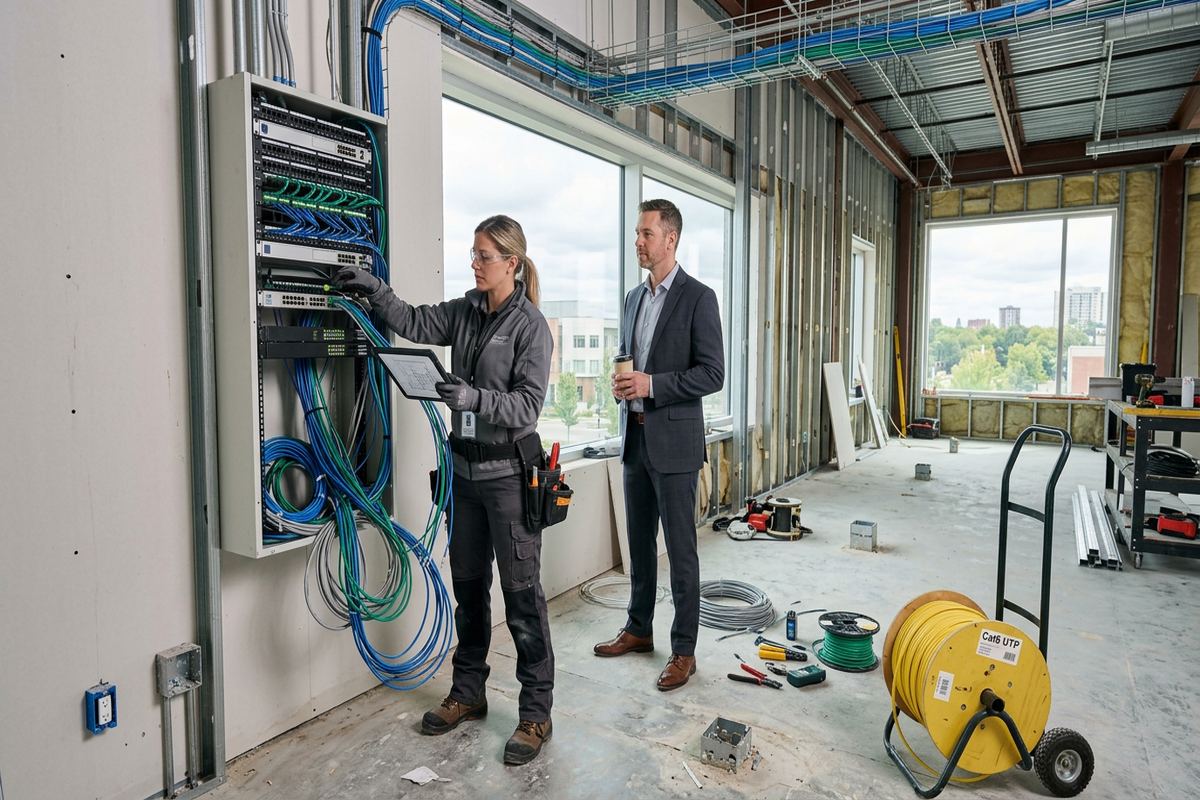
Fort Erie Installation and On-Site Configuration
Once the scope is approved, installation follows the documented route and device plan. We confirm any site changes before substituting pathways or moving endpoints. Cables are pulled, supported, labelled, terminated and tested, followed by installation or connection of the equipment included in the scope. For active systems, on-site configuration can include network settings, device naming, user permissions and basic operational checks. Configuration is tied to the installed service; it does not replace an organization’s broader information technology policies, internet service, electrical supply or third-party software administration unless those items are specifically included.
Camera, access control, Wi-Fi, alarm, audio and display systems each require different commissioning checks. A camera needs usable framing and network communication, while an access-controlled door requires coordination between readers, locks, request-to-exit devices and door hardware. Wireless access points should be placed according to the building layout and available wired backhaul, not simply centred on a floor plan. Audio and display connections need compatible sources, destinations and control methods. At Fort Erie sites, exterior devices are also checked for secure mounting, protected connections and suitable orientation before the work is presented for handover.
Changes discovered during installation are documented rather than quietly absorbed into an unclear final result. Concealed obstructions, unusable existing cable, inaccessible ceiling areas or owner-requested device moves can affect materials and labour. We explain the issue, propose a practical revision and update the scope where necessary before proceeding with additional work. This protects the agreed design and gives the customer control over decisions. It also ensures the as-built record reflects the actual installation, including approved route changes, revised endpoint labels and equipment locations that differ from the original plan.
- Installation follows the written scope
- Equipment configured on site
- System-specific commissioning checks
- Documented approval for material changes
- Exterior devices checked before handover
Documented Handover for Fort Erie Customers
Handover should leave the property owner in control of the installed system. UnifiedLink provides access using the customer’s own credentials rather than retaining an installer-owned account as the only administrative login. We review the basic operation of included equipment, identify major connection points and explain how labelled cables correspond with outlets or devices. Where software, cloud services or manufacturer accounts are involved, ownership and ongoing subscription responsibilities are clarified. Passwords should be stored securely by the customer, and access for former staff, tenants or contractors should be removed when no longer required.
The as-built record documents the installation completed at the Fort Erie property. Depending on the project, it can identify cable labels, endpoint locations, principal routes, rack or enclosure positions and relevant equipment details. It is not a substitute for architectural or engineering drawings, but it provides a practical service reference. Owners can use it when adding an access point, relocating a workstation, replacing a camera or discussing future expansion. Seasonal homeowners may also keep the record with property management information so an authorized local contact can identify equipment without relying on memory.
Future service is simpler when ownership, warranty and exclusions were established before work began. The written scope and handover materials distinguish customer-owned equipment from any service or platform administered by another provider. They also record known limitations, such as reused cable, inaccessible pathways or areas reserved for later expansion. If support is requested, clear labels and records help narrow the issue to cabling, connected equipment, power, network service or user configuration. Fort Erie customers receive one accountable contractor for the agreed low-voltage work, from assessment and installation through configuration and documented handover.
- Customer-controlled administrative credentials
- As-built cable and endpoint record
- Basic system operation reviewed
- Equipment ownership clearly documented
- Known limitations recorded for future service
Fort Erie neighbourhoods we cover
- Bridgeburg
- Crystal Beach
- Ridgeway
- Stevensville
- Douglastown
Low-voltage cabling installation in Fort Erie — common questions
Do you provide a site assessment before pricing?
Yes. UnifiedLink assesses the Fort Erie property before providing pricing. We review construction, cable routes, device locations, exterior exposure, access and existing infrastructure. Assessment timing depends on the service and travel distance. Requests received during business hours are answered the same day, and after-hours requests are answered the next business day.
Can you run cable in an older Fort Erie building?
Usually, but the routing method depends on access and construction. Older masonry or renovated buildings may have blocked cavities, fragile finishes or no continuous concealed pathway. We inspect attics, basements, ceilings and utility spaces, then explain whether concealed cable, surface raceway or conduit is practical. Expected openings and restoration responsibilities are included in the written scope.
What cable do you use for outdoor devices?
The cable and hardware are selected for the device, pathway and exposure. Fort Erie winters, freeze-thaw cycles and lakefront conditions can require outdoor-rated cable, weather-rated boxes, protected connectors and properly sealed penetrations. We also consider siding, brick, concrete, runoff and snow accumulation. Indoor-rated cable is not used as an exposed outdoor substitute.
Do I need condo or landlord approval?
Approval may be required for common walls, hallways, shared ceilings, telecommunications rooms, exterior mounting or building penetrations. Fort Erie condo owners and commercial tenants should confirm requirements with the corporation, property manager or landlord. We can document proposed cable routes and device positions for review, while responsibility for obtaining permission is clarified in the written scope.
Can you connect a detached garage or workshop?
Yes, subject to a site assessment. For Fort Erie properties with detached structures, we review distance, available conduit, environmental exposure, power arrangements and the required network capacity. Copper is not always the appropriate choice between buildings. Fibre or a designed wireless bridge may provide a safer or more practical link, depending on the site.
What do I receive after installation?
You receive a handover using your own credentials, along with an as-built record of the completed Fort Erie installation. The record can include cable labels, endpoint locations, principal routes and equipment positions. We also review basic operation, clarify equipment ownership and warranty details, and document relevant exclusions or limitations such as reused wiring or inaccessible pathways.
Coverage in Fort Erie is confirmed against the address before we quote. See everything we install in Fort Erie or the province-wide low-voltage cabling installation page.